18 Open Shelves Without Clutter for Stylish Storage
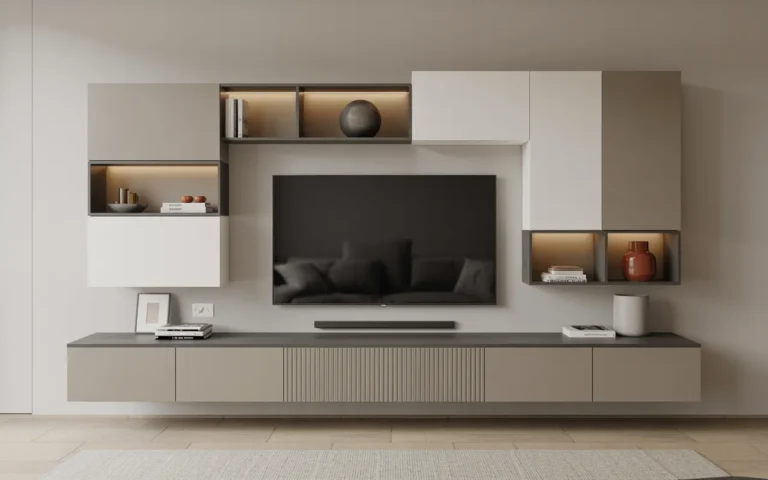
Are you tired of your shelves looking messy or overcrowded? Styling open shelves without clutter can completely transform any room, turning ordinary storage into a stunning display. In this article, we explore 18 creative ideas to organize, decorate, and elevate your shelves while keeping everything visually calm and Pinterest-ready. From layered frames to decorative baskets, each approach is designed to maximize aesthetic appeal without sacrificing functionality. I’ve noticed that even small changes, like adding plants or rotating seasonal decor, instantly refresh a space. These tips will inspire you to create shelves that are both practical and beautifully curated, leaving your room feeling airy, stylish, and inviting.
1. Minimalist Wood Shelves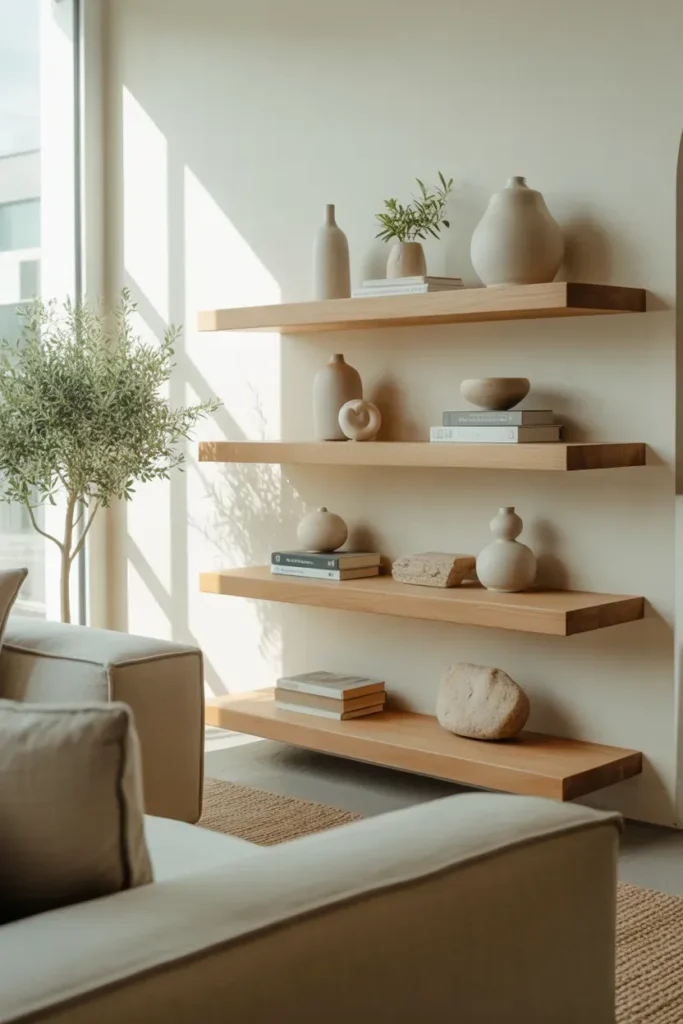
- Creates a clean, calm storage display
- Keeps visual clutter to a minimum
- Adds warmth through natural wood texture
- Works beautifully in small or modern homes
A simple set of wood shelves can completely change the way a room feels. Instead of heavy cabinets or overcrowded storage, light floating shelves allow everyday items to breathe visually. Neutral decor pieces like ceramic vases, stacked books, and small plants create a balanced display that looks intentional rather than busy. I’ve noticed that limiting shelf items to just a few meaningful objects instantly makes a space feel calmer and more organized. The natural wood texture also adds warmth, which helps minimalist interiors avoid looking too stark or empty.
In my experience, spacing objects thoughtfully is the real secret to maintaining open shelves without clutter. Leaving empty space between decor pieces allows each item to stand out while keeping the overall design airy and visually relaxing. This approach works particularly well in living rooms, bedrooms, or even small apartments where too much furniture can feel overwhelming. When styled carefully, minimalist wood shelves become both functional storage and a stylish focal point that feels light, modern, and Pinterest-worthy.
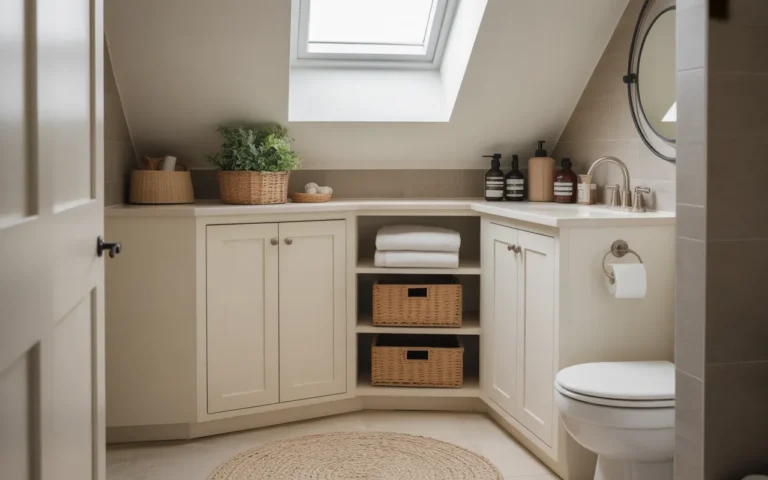
2. Neutral Basket Storage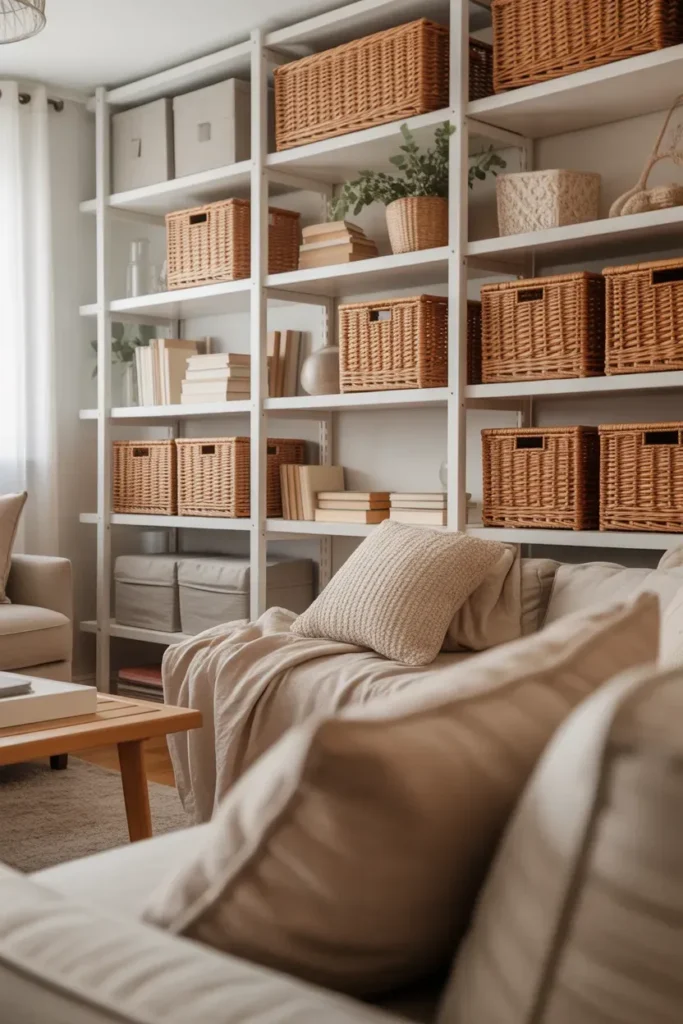
- Hides everyday items while keeping shelves tidy
- Adds texture and warmth to open shelving
- Perfect for organizing small household essentials
- Helps create a cozy, styled look
Baskets are one of the easiest ways to make shelves look organized without sacrificing storage. Instead of displaying every small item, woven baskets neatly hide everyday essentials while maintaining a beautiful visual balance. I’ve noticed that mixing two or three baskets with simple decor pieces keeps shelves feeling full but never crowded. The natural texture of rattan or wicker also adds softness to modern interiors, preventing shelves from looking too rigid or flat.
Another benefit of basket storage is flexibility. You can easily swap out seasonal items, blankets, or small accessories without disrupting the overall design. In my experience, using baskets in neutral tones—like beige, cream, or light brown—keeps shelves looking cohesive and calm. This technique works especially well in living rooms, bedrooms, and entryways where storage needs change often. With the right balance, baskets help create shelves that feel warm, organized, and effortlessly stylish.
3. Color-Coordinated Book Stacks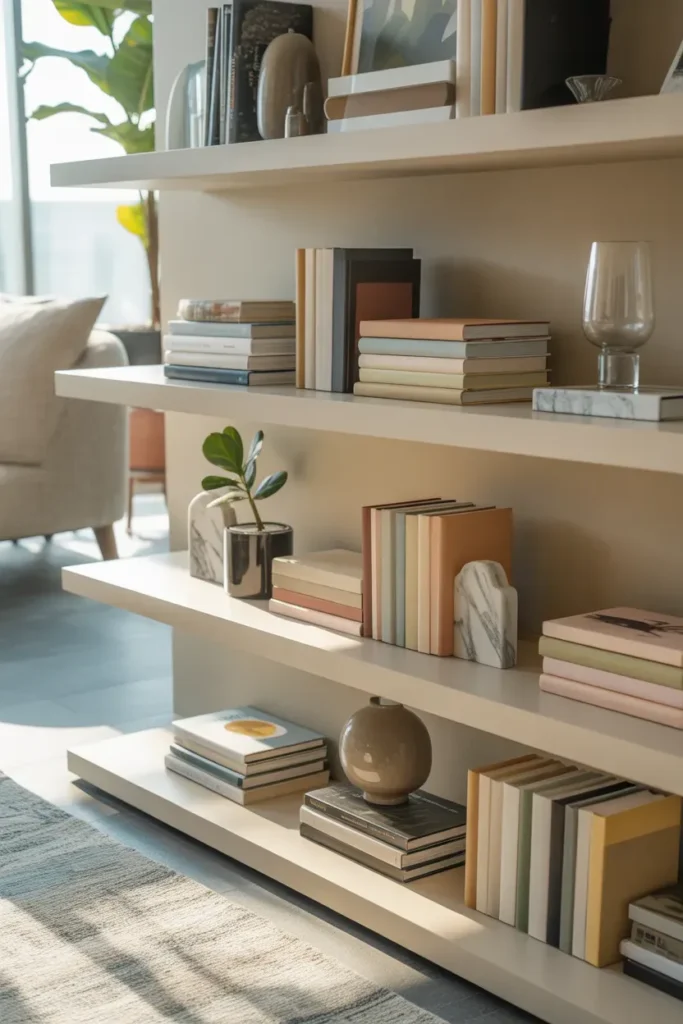
- Turns books into decorative elements
- Creates a visually pleasing color balance
- Keeps shelves organized and intentional
- Perfect for modern and stylish interiors
Books can easily overwhelm shelves if they’re stacked randomly, but arranging them by color creates a completely different effect. Suddenly, the shelf feels curated and visually pleasing rather than messy. Soft color groupings—like neutral tones, pastels, or muted earth shades—help build a calm visual flow across the shelf. I’ve seen this technique transform ordinary storage into a design feature that looks polished and thoughtful.
Another advantage of color-coordinated stacks is that they naturally guide the eye across the shelf without overwhelming the space. Mixing horizontal stacks with vertical rows adds variety while maintaining structure. In my experience, adding a small plant, sculpture, or decorative object between book groups helps break up the arrangement and keep the design balanced. The result is a shelf that feels creative, organized, and beautifully styled rather than overcrowded.
4. Glass Jar Pantry Display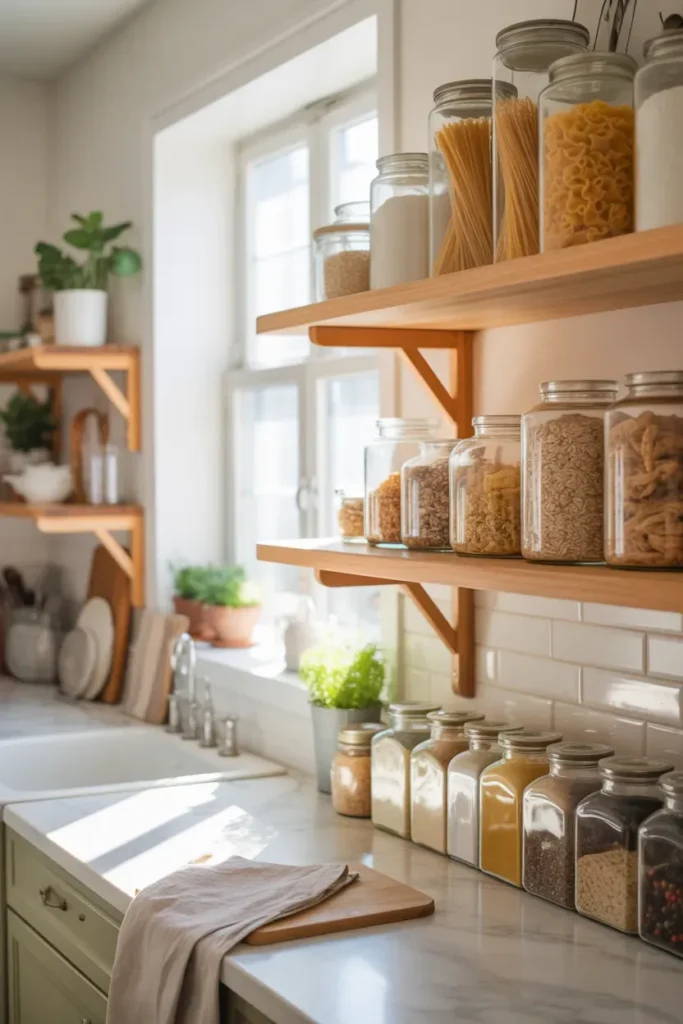
- Keeps pantry ingredients organized and visible
- Creates a clean, uniform storage look
- Adds texture through glass and natural materials
- Makes everyday cooking more convenient
A glass jar display instantly brings order to kitchen shelving. Instead of cluttered packaging and mismatched containers, clear jars create a calm, uniform visual flow. I’ve noticed that when pantry staples like rice, pasta, and oats are stored in matching jars, the entire kitchen feels more intentional and organized. The transparency also makes it easy to see what you have, which saves time during cooking and grocery planning.
Another benefit is the subtle decorative effect glass jars create. When lined up neatly with wooden lids or metal tops, they add texture and elegance without feeling overstyled. In my experience, combining jars with a few practical items like cutting boards or herb plants keeps shelves both functional and visually balanced. This approach works especially well for creating open shelves without clutter, turning everyday ingredients into a beautiful kitchen display.
Also view: 17 Attic TV Room Ideas for Stylish Home Design
5. Layered Decor Styling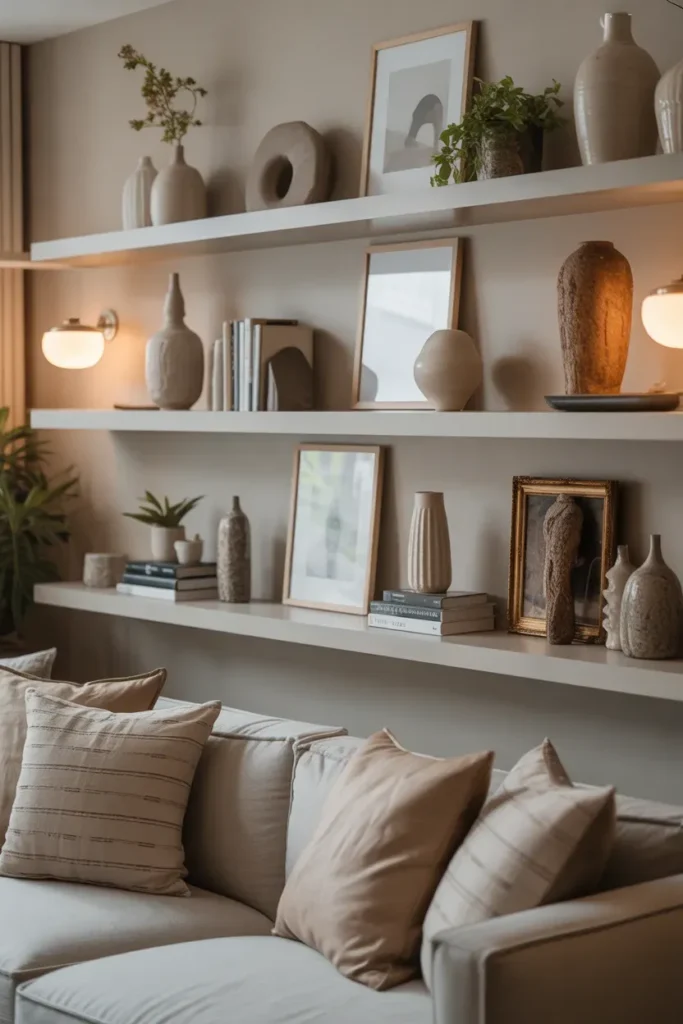
- Creates depth and visual interest
- Makes shelves look professionally styled
- Helps balance decorative and functional items
- Prevents flat or empty-looking displays
Layering is one of the easiest ways to elevate shelf styling. Instead of placing items in a straight line, overlapping objects like framed art, books, and vases adds depth and dimension. I’ve noticed that when items are placed at slightly different heights and distances, shelves feel more curated and less rigid. This technique helps avoid the flat, showroom look that can make open shelving feel lifeless.
In my experience, the key to successful layering is keeping the color palette simple. When objects share similar tones or materials, the arrangement looks intentional rather than cluttered. For example, combining neutral ceramics, wood accents, and soft greenery creates harmony while still adding variety. The final result feels relaxed and sophisticated, making the shelves look styled by a professional designer while still being practical for everyday living.
6. Floating Corner Shelves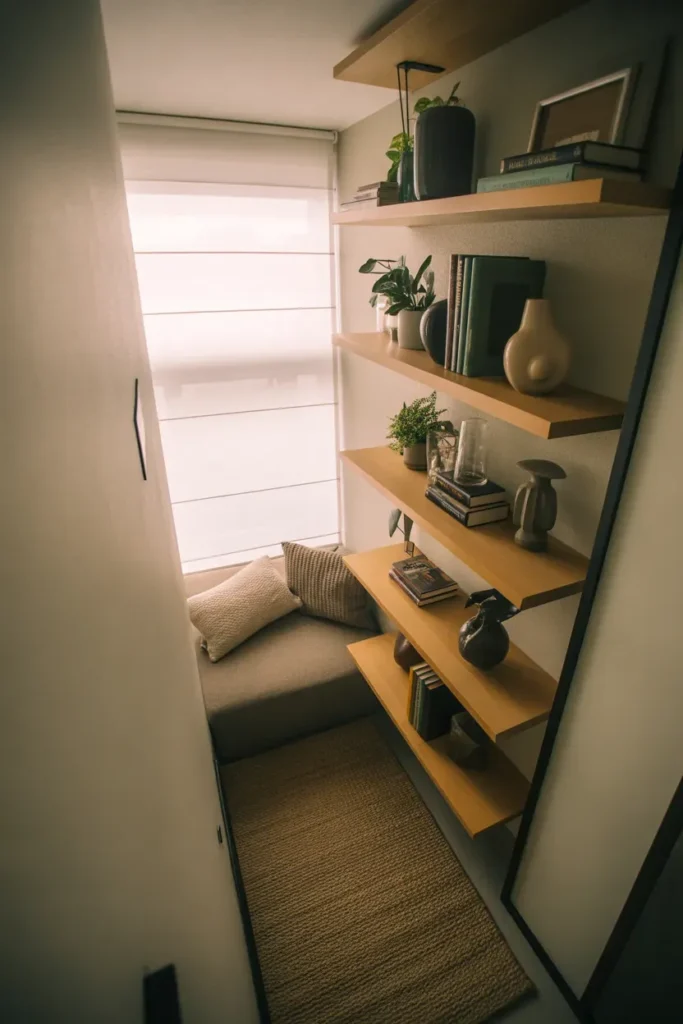
- Makes use of unused corner space
- Adds stylish storage without bulky furniture
- Keeps rooms feeling open and airy
- Ideal for small apartments or compact rooms
Corners are often the most overlooked areas in a room, but floating shelves can transform them into useful storage. Instead of leaving the space empty, corner shelves provide a vertical display that keeps the floor clear. I’ve seen this work particularly well in small apartments where every inch of space matters. By adding just a few decorative pieces and plants, the corner instantly becomes a cozy visual feature.
Another advantage is how naturally corner shelves help control clutter. Because the space is smaller, it encourages thoughtful styling rather than overcrowding. In my experience, placing a small stack of books, a plant, and one decorative object is usually enough to create balance. This simple arrangement keeps the corner looking clean and intentional while still providing practical storage for everyday items.
7. Monochrome Shelf Styling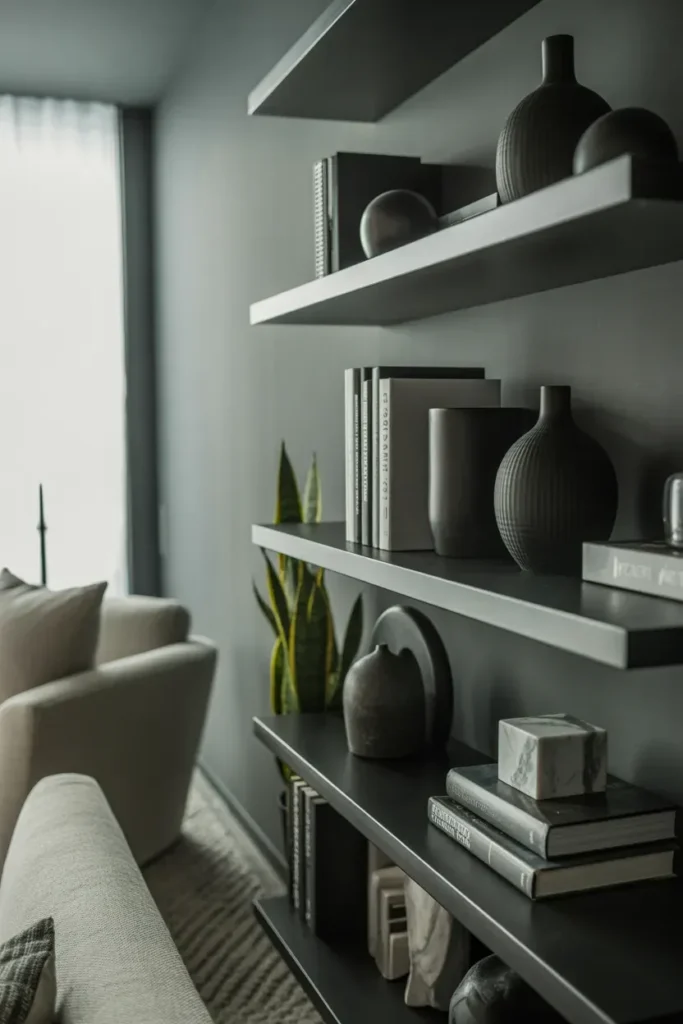
- Creates a sleek and cohesive shelf design
- Keeps decor visually calm and organized
- Works well in modern or minimalist homes
- Makes styling look intentional and polished
A monochrome shelf arrangement instantly gives a room a refined and sophisticated feel. When decor items follow a consistent color palette, the shelves look curated rather than crowded. I’ve noticed that sticking to shades of black, gray, or soft neutrals helps unify objects that might otherwise feel random. Books, vases, and small sculptures blend seamlessly when their tones complement each other, creating a display that feels calm and balanced.
Another advantage of monochrome styling is its simplicity. Because the colors are limited, it’s easier to experiment with shapes and textures without overwhelming the space. In my experience, mixing materials like matte ceramics, glossy glass, and natural stone keeps the display interesting while maintaining harmony. This approach transforms simple shelves into a modern design statement while still feeling relaxed and effortless.
8. Plant-Focused Shelving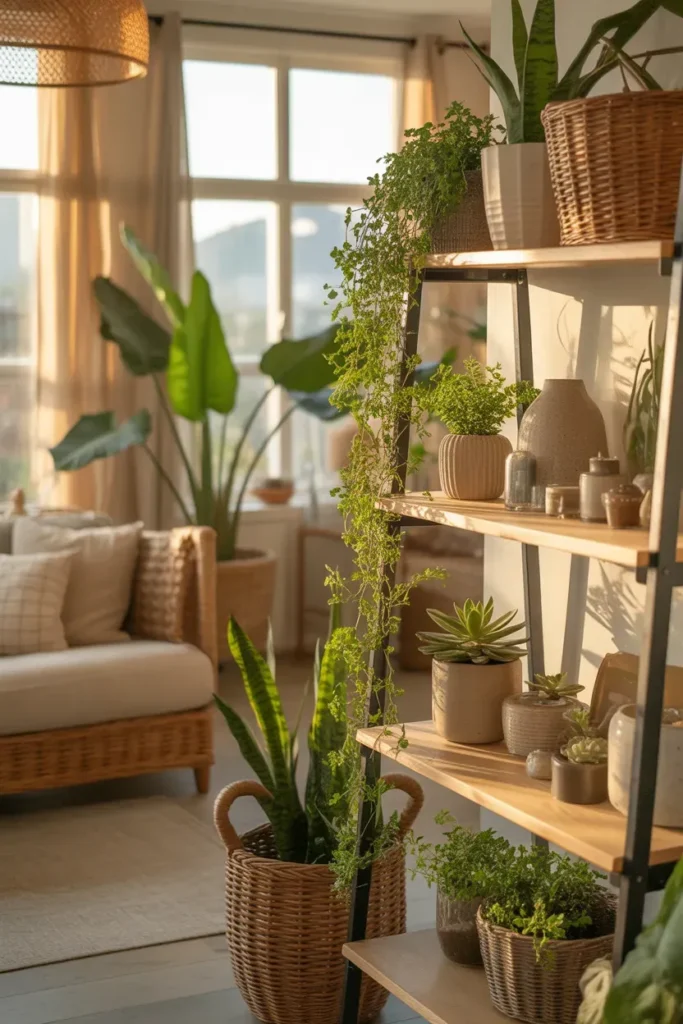
- Brings natural life and freshness indoors
- Softens the look of open shelving
- Adds color without cluttering the space
- Creates a calming, organic atmosphere
Plants have a way of transforming ordinary shelves into something lively and inviting. Instead of filling the space with many decorative objects, greenery naturally adds texture and movement. I’ve noticed that trailing plants like pothos or ivy work especially well because they gently cascade over the edge of the shelf, adding visual softness. The result is a display that feels relaxed, natural, and full of life.
Another benefit is that plants instantly make a space feel more welcoming. Even a small collection of greenery can brighten a room and improve the overall mood. In my experience, mixing different leaf shapes and planter materials creates a balanced yet organic look. When styled thoughtfully, plant-focused shelves feel fresh, calming, and beautifully simple while still offering stylish storage.
9. Mixed Texture Display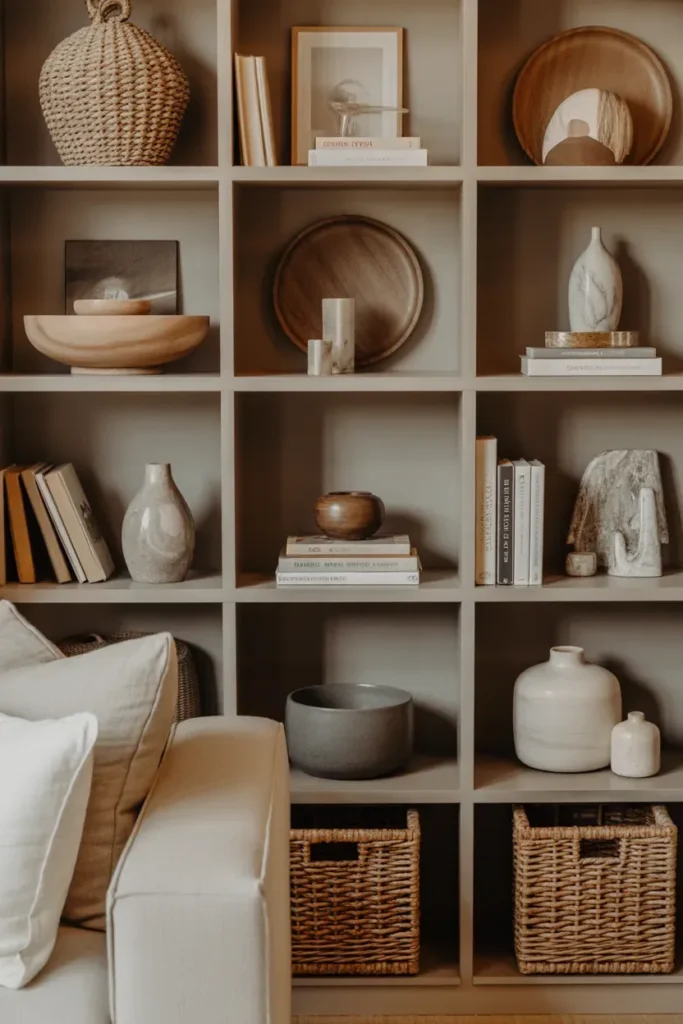
- Adds depth and richness to shelf styling
- Prevents displays from looking flat or boring
- Combines materials for visual interest
- Creates a cozy and curated aesthetic
Mixing textures is one of the easiest ways to make shelves look thoughtfully styled. Instead of focusing only on color, combining materials like wood, ceramic, glass, and linen creates visual depth. I’ve noticed that when different textures sit side by side, the display feels more dynamic and inviting. Even simple objects like bowls or books look more interesting when paired with contrasting materials.
This technique also helps shelves feel curated rather than overly decorative. In my experience, the key is balance—too many textures can feel chaotic, but a few carefully chosen ones create harmony. Pairing soft textiles with smooth ceramics or natural wood produces a cozy, layered effect. The result is a shelf that feels warm, elegant, and visually engaging without appearing crowded or overwhelming.
10. Symmetrical Shelf Layout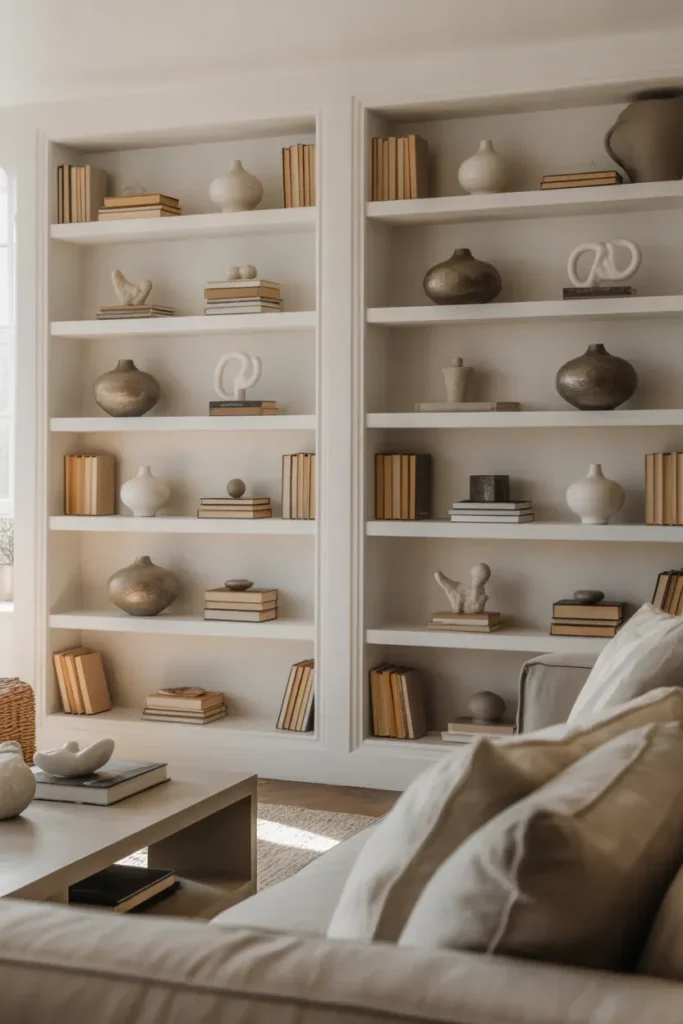
- Creates a clean and balanced visual structure
- Makes shelf styling feel organized and intentional
- Works well for living rooms or offices
- Helps prevent overcrowded shelf arrangements
A symmetrical layout can instantly make shelves look organized and thoughtfully designed. By placing similar items on both sides of the shelf, the arrangement feels calm and visually balanced. I’ve noticed that pairing objects like matching vases, book stacks, or framed art pieces naturally creates harmony without requiring many decorations. The eye appreciates the structure, which makes the entire room feel more polished and relaxing.
Another benefit of symmetry is that it prevents shelves from becoming cluttered. Because the layout follows a clear visual pattern, it encourages restraint when adding decor. In my experience, keeping the center of the shelf slightly open while balancing objects on each side creates the most pleasing result. This approach makes shelves appear curated and elegant, even when using only a handful of simple items.
11. Art Leaning Shelves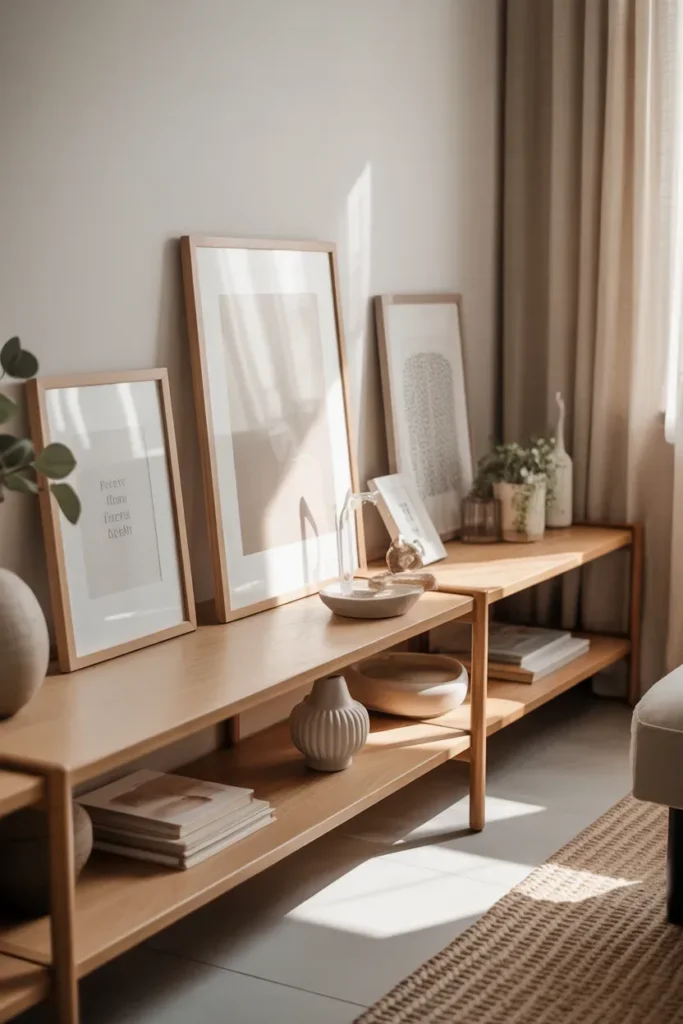
- Adds personality through art and prints
- Creates depth without drilling extra holes
- Makes shelves feel relaxed and stylish
- Easy to change artwork whenever desired
Leaning framed art on shelves is a simple trick that adds instant style. Instead of hanging every picture on the wall, placing frames slightly angled against the wall creates a relaxed, layered look. I’ve seen this technique transform plain shelves into a gallery-like display while still keeping things casual. It also makes it easy to swap prints or photos whenever you want a fresh look.
Another advantage is how this styling creates depth. When frames sit behind smaller decor items like candles or plants, the shelf gains dimension without feeling crowded. In my experience, mixing different frame sizes keeps the arrangement visually interesting while maintaining balance. The result is a shelf display that feels artistic, personal, and beautifully curated.
12. Soft Neutral Styling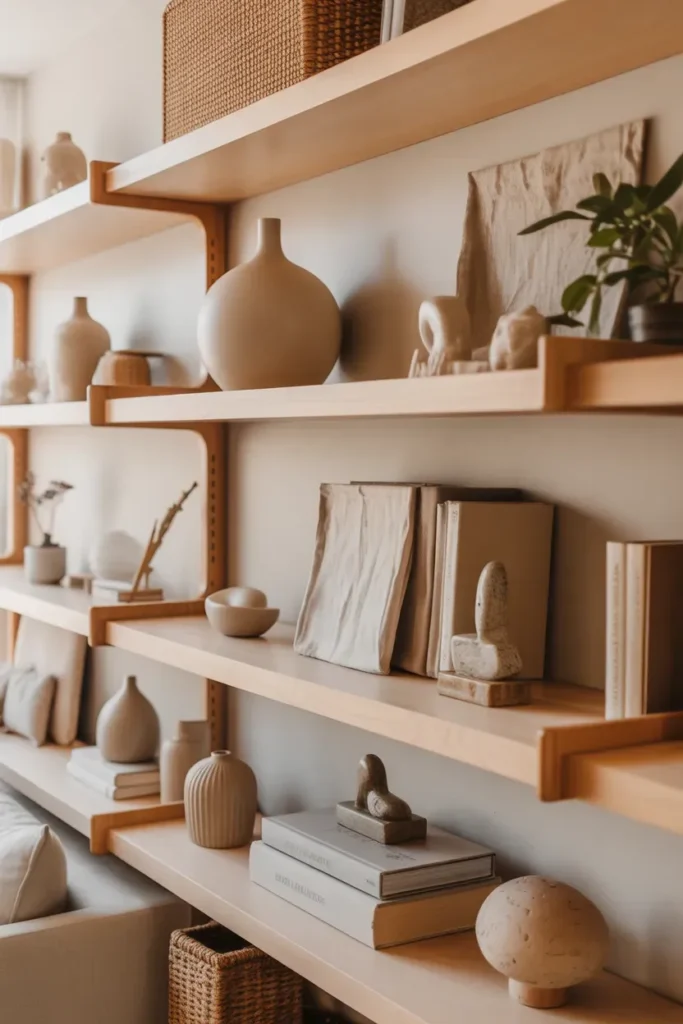
- Creates a calm and relaxing shelf display
- Keeps visual noise to a minimum
- Blends easily with most interior styles
- Makes spaces feel bright and airy
Soft neutral decor can instantly make shelves feel calm and harmonious. When the color palette stays within warm whites, beige, and light wood tones, the display feels effortless and balanced. I’ve noticed that neutral styling allows textures to shine, making even simple objects feel elegant. Instead of overwhelming the space with bold colors, the focus shifts to materials and shapes.
Another reason this approach works so well is its versatility. Neutral shelves blend naturally with many interior styles, from modern to Scandinavian or Japandi. In my experience, combining ceramics, natural wood, and linen textures creates just enough variation to keep the shelves interesting. The final result feels peaceful, sophisticated, and beautifully styled without appearing busy.
13. Layered Frames Display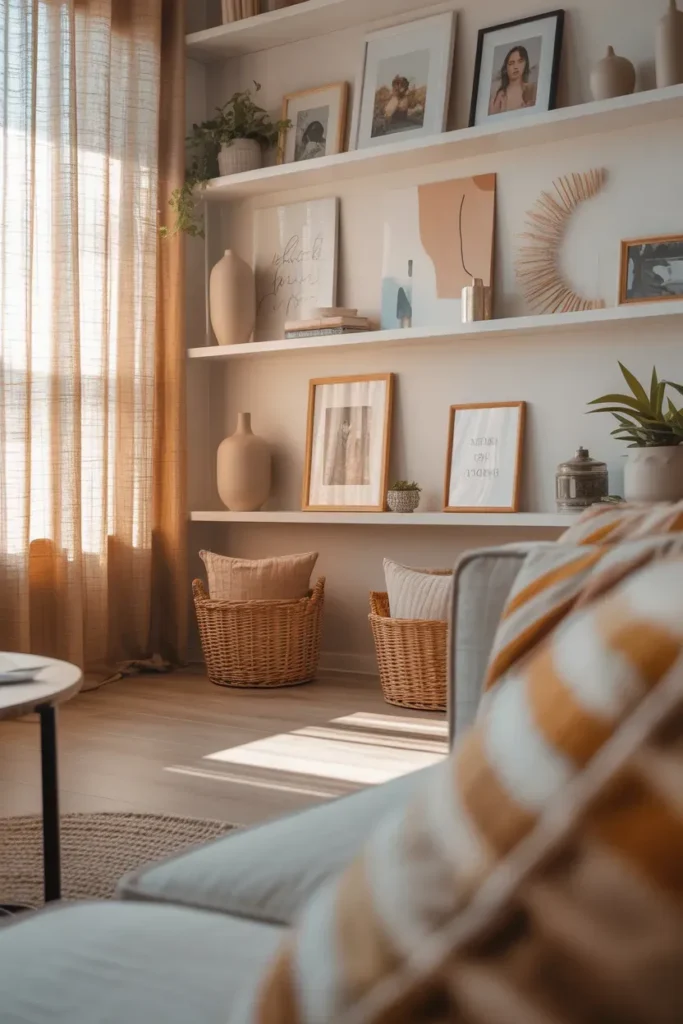
- Adds a personal and artistic touch
- Creates depth and visual interest
- Easy to update with seasonal or new prints
- Keeps shelves organized and stylish
Layering frames on shelves gives walls and shelves a dynamic, gallery-like feel. I’ve noticed that combining different frame sizes and materials adds depth, making even simple decor look intentional. Instead of overcrowding the shelf with objects, mixing framed art with a few small decorative pieces creates a balanced, visually pleasing arrangement that feels curated and modern.
Another benefit is flexibility. Frames can be easily swapped or rotated to match seasonal decor or changing moods. In my experience, placing smaller plants or decorative objects in front of frames enhances depth and keeps the display interesting. This approach ensures shelves remain functional, organized, and stylish while feeling uniquely personal.
14. Tiered Shelf Arrangement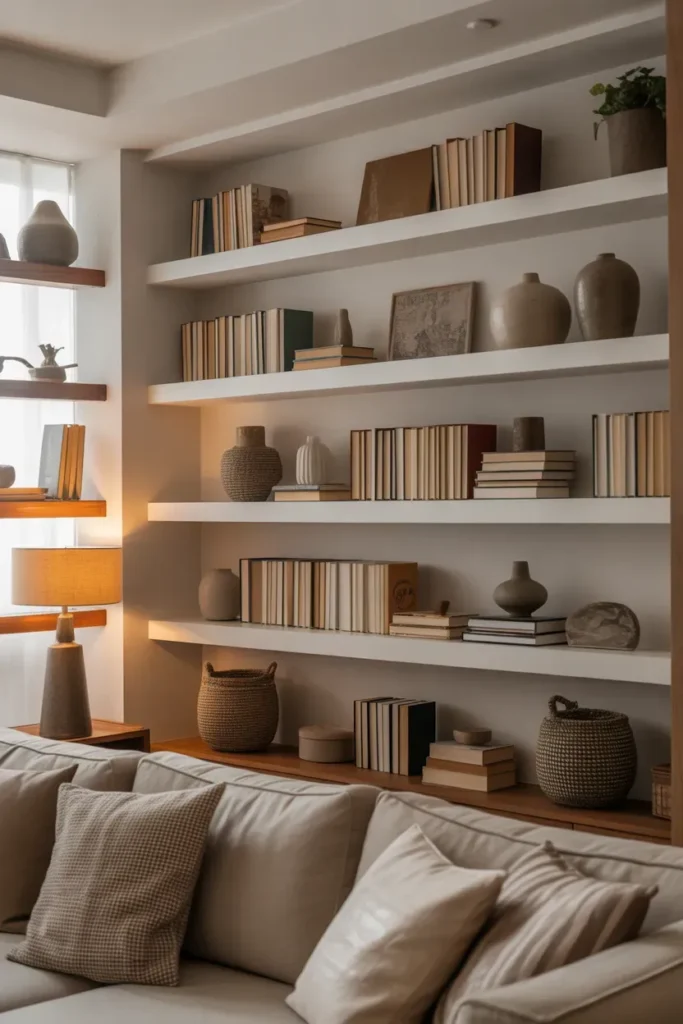
- Uses vertical space efficiently
- Creates visual hierarchy and depth
- Makes shelves look curated and intentional
- Ideal for books, decor, and small plants
Tiered shelving is perfect for visually balancing different objects. By arranging decor in varied heights and layers, shelves appear more curated and less flat. I’ve seen this technique help maintain open shelves without clutter because the tiered setup encourages mindful placement of each item. Each layer tells its own visual story while complementing the overall arrangement.
Additionally, tiered arrangements draw the eye upward, making rooms feel more spacious. In my experience, combining taller decor like vases with smaller items such as candles or stacked books adds contrast and interest. This method turns simple shelves into a stylish focal point while maintaining functional storage and aesthetic appeal.
15. Minimal Kitchen Display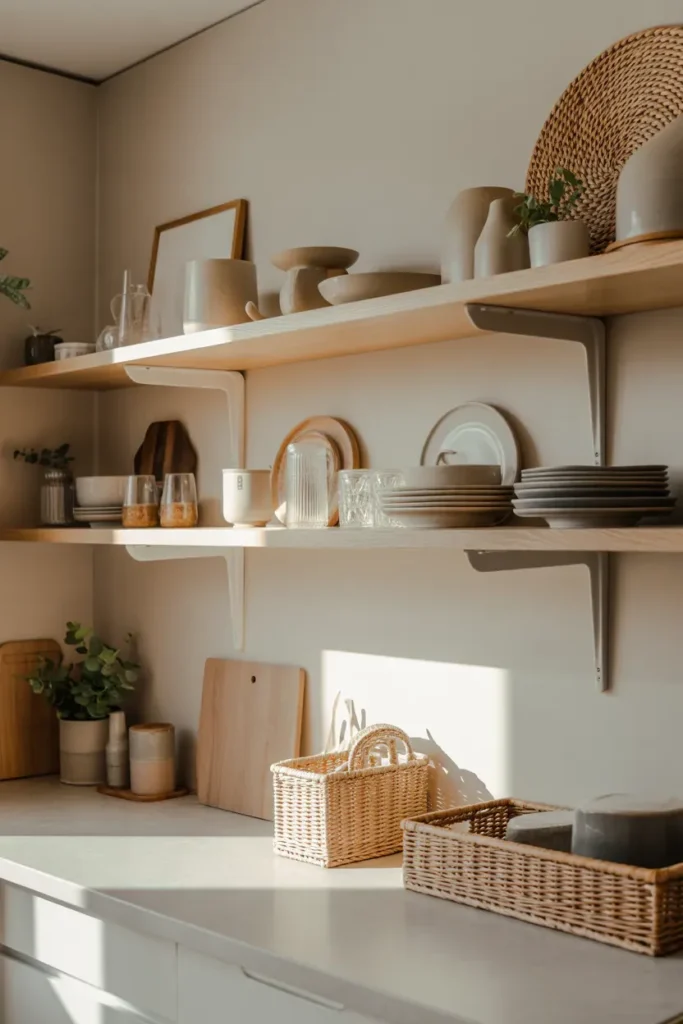
- Keeps kitchen essentials accessible and tidy
- Prevents cluttered countertop look
- Adds a clean, modern aesthetic
- Works well in small or open-plan kitchens
Minimalist kitchen shelves allow functional items to double as decor. Instead of crowding the shelves with every dish or utensil, displaying only essentials in an organized manner keeps the space airy. I’ve noticed that neutral-toned plates, bowls, and glassware can create a sleek visual rhythm that complements any kitchen design while maintaining practicality.
This approach also encourages intentional organization. Only keeping what is needed on display prevents clutter from building up, making everyday tasks more convenient. In my experience, pairing kitchenware with a few decorative touches like small plants or ceramic jars creates a balanced, stylish, and highly functional open shelf display.
16. Decorative Basket Storage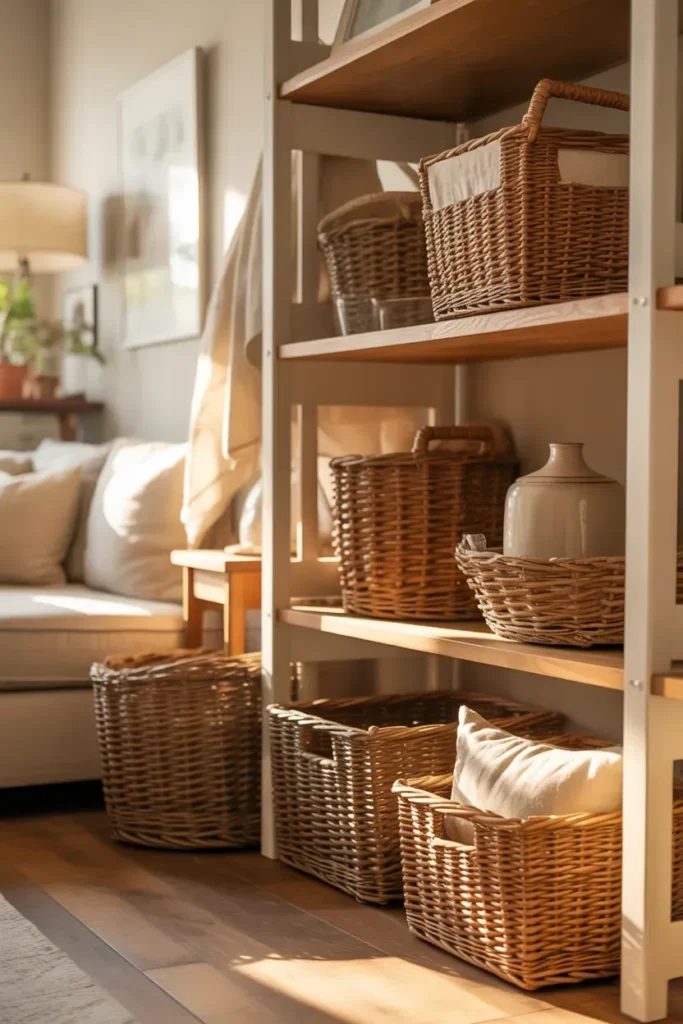
- Provides concealed storage for small items
- Adds natural texture and warmth
- Keeps shelves looking tidy and organized
- Enhances farmhouse or boho aesthetics
Decorative baskets are a practical way to reduce visible clutter while adding texture and charm. I’ve noticed that using baskets of different sizes on open shelves creates balance and interest, while also hiding items like cords, office supplies, or toys. They allow for easy storage without sacrificing style, which is perfect for maintaining open shelves without clutter.
Another advantage is their versatility. In my experience, baskets work in almost any room, from living spaces to kitchens and bedrooms. Mixing materials like woven rattan, seagrass, or soft fabric adds depth and warmth. This method ensures that shelves remain visually appealing while keeping everyday items neatly contained.
17. Minimal Book Styling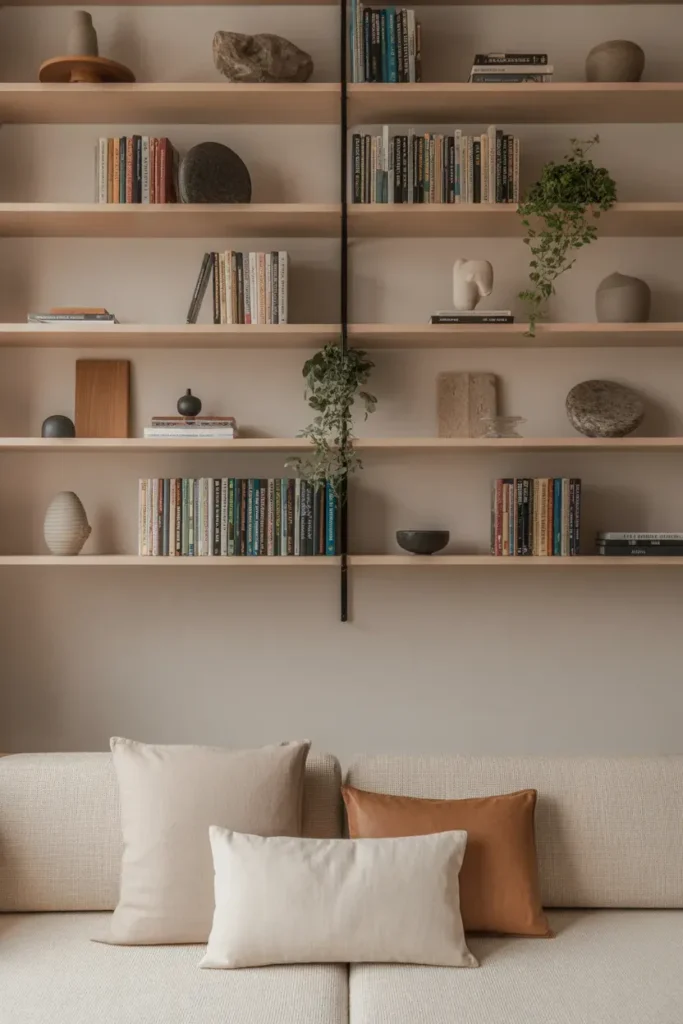
- Keeps book collections organized and visually appealing
- Combines books with decorative accents
- Creates a neat, clean look
- Perfect for minimalist or contemporary interiors
Books are essential for personality but can easily look cluttered. Minimal book styling emphasizes neat stacks, consistent color palettes, and deliberate spacing between items. I’ve seen this approach transform a crowded shelf into a sleek, curated display. By alternating books with decorative objects or small plants, the shelves feel intentional and well-styled.
This technique also encourages mindful organization. In my experience, pairing vertical stacks with horizontal arrangements adds dimension without crowding the space. It’s an easy way to make open shelves look polished, functional, and aesthetically pleasing, achieving a balance of utility and Pinterest-worthy style.
18. Seasonal Decor Rotation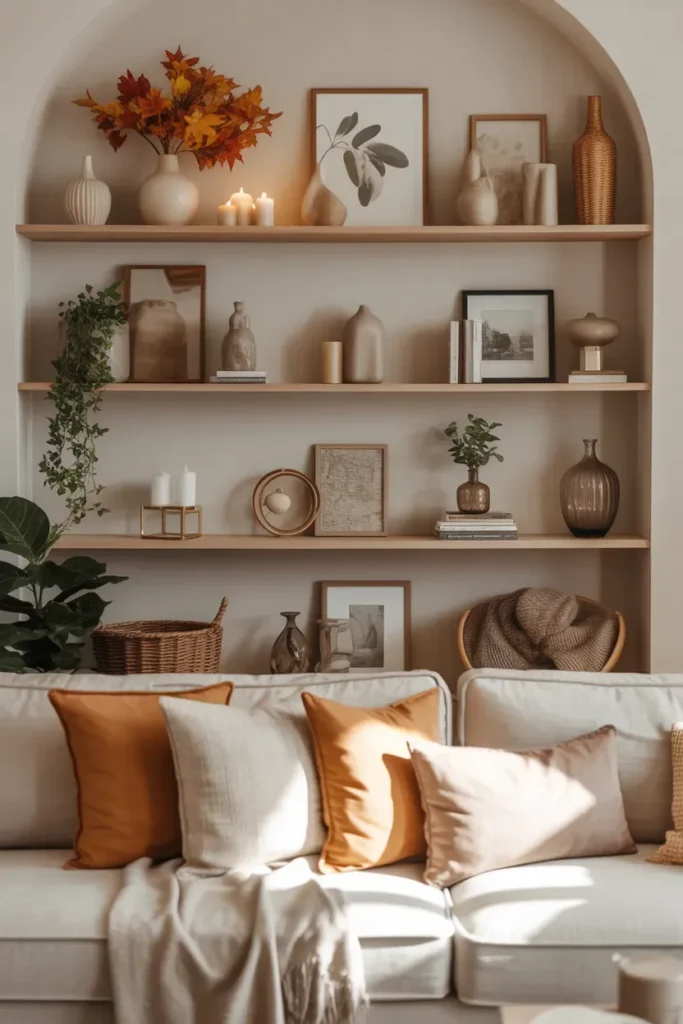
- Keeps shelves fresh and visually interesting
- Allows for seasonal personalization
- Prevents long-term clutter accumulation
- Adds warmth and character to any room
Rotating decor by season is an excellent way to keep open shelves feeling fresh and organized. I’ve noticed that swapping small items like vases, candles, or seasonal greenery every few months brings life to shelves without adding clutter. This method ensures shelves remain engaging while reflecting personal style and the time of year.
Seasonal rotation also encourages intentional decor choices. In my experience, planning a limited number of changes each season prevents overcrowding and keeps the display cohesive. By updating only a few items at a time, open shelves maintain a stylish, clutter-free appearance that stays Pinterest-worthy year-round.
Conclusion:
Styling open shelves without clutter doesn’t have to be complicated. By applying ideas like layered textures, plant displays, or minimalist arrangements, you can transform your shelves into organized, Pinterest-worthy focal points. I’ve seen how thoughtful styling choices can instantly elevate a room’s mood and feel more inviting. Save this post for inspiration, try a few ideas in your own space, and share it with friends who love beautiful, clutter-free interiors. With the right balance of function and style, your open shelves can become both practical and visually stunning, creating a lasting impact in your home.