
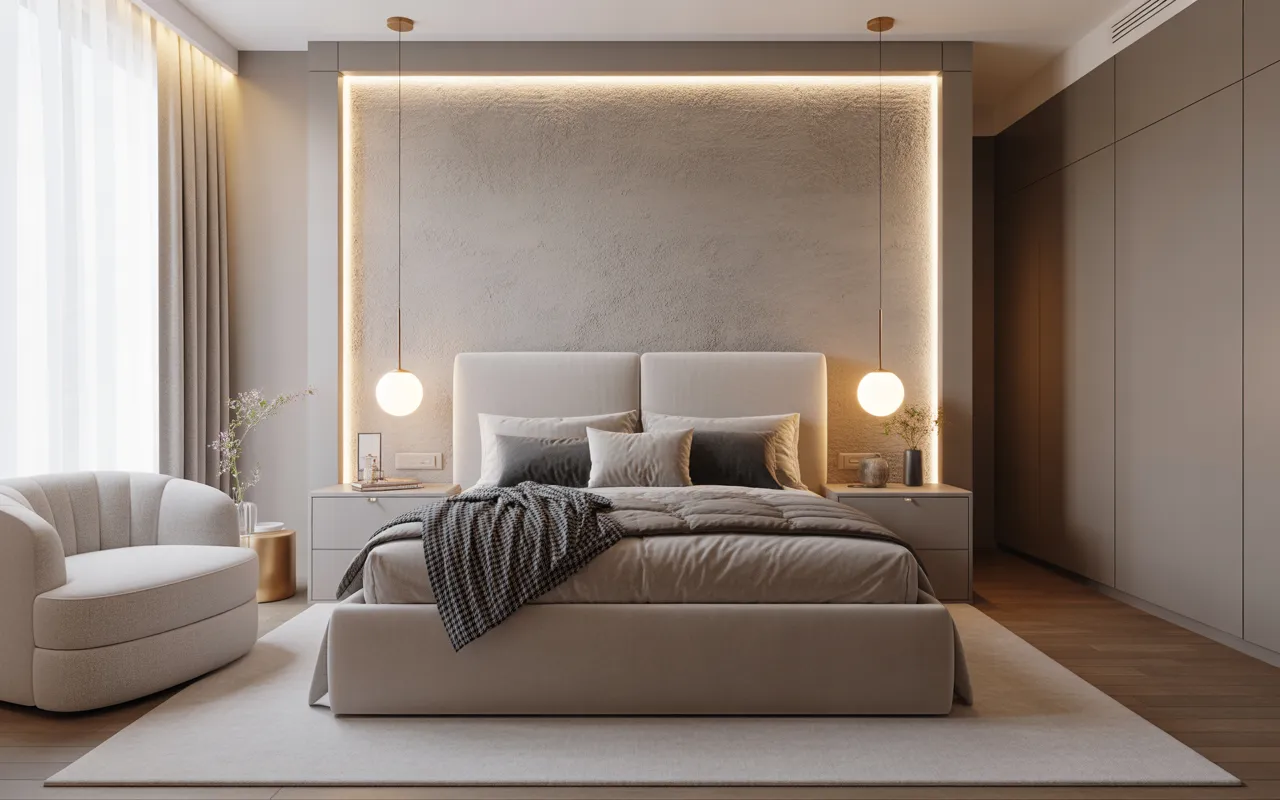
23 Elegant Bedroom Design Ideas That Define Modern Sophistication
An elegant bedroom does not need a full renovation. It needs a calm palette, good layers, and furniture that earns its place. Most of the rooms in this list use neutrals, soft light, and one or two strong pieces, and that restraint is exactly what makes them feel expensive.
Work through the ideas in any order. A tall headboard, floor length curtains, or a better rug can change the whole room in a weekend. Start with the bed, since it takes up the most visual space, then fix the lighting and the walls around it.
Each idea below keeps the same routine. Three short paragraphs explain what to do and why it works, three quick bullets sum up the moves, and the shop table gives you a practical place to start comparing pieces.
This post contains affiliate links. If you buy through them, I may earn a small commission at no extra cost to you.
1. Neutral Luxury with Soft Layered Textures

Start with the bed and build the layers in thin steps. A plain white or ivory duvet works as the base, then add a folded quilt at the foot, a light throw, and two sleeping pillows in front of two euros. Keep every layer in the same warm neutral family so nothing fights for attention.
Keep tones close: Ivory, oatmeal, stone, and soft taupe sit well together and hide small mismatches in fabric dye lots. Mix matte cotton with one slightly shiny fabric, like a washed linen or a low sheen sateen, so the bed reads as layered rather than flat. If a color looks yellow under your bulbs, swap the bulb first before you replace the bedding.
Wash and steam first: Wrinkled layers look cheap no matter what they cost. Wash new bedding before you style it, steam the duvet cover once it is on the bed, and shake the throw out instead of folding it into sharp creases. A quick steam on the pillow shams takes two minutes and makes the whole bed look freshly made by a hotel.
- Base duvet in ivory or warm white, no busy print
- Add one quilt and one throw in nearby neutral tones
- Steam bedding after making the bed for a clean finish
Shop This Look
2. Statement Headboard for Instant Elegance

A tall headboard gives a plain room a focal point in one move. Look for a height of at least 48 inches for a queen bed so it still shows above stacked pillows. Upholstered panels in boucle, linen, or a soft velvet read as elegant without needing ornate carving or tufting you have to dust.
Measure before you buy: Check the distance from the floor to the top of your mattress, then add the pillow height you actually sleep with. The visible part of the headboard should be at least 18 inches above the pillows. Wall mounted panels are a good fix in rentals because they hang from two screws and leave the bed frame untouched.
Keep the wall simple: A strong headboard does not need much art above it. Leave the wall bare, or hang one wide, low piece at least six inches above the top edge. If the headboard fabric is textured, keep the bedding plain so the two do not compete. Small bedside lamps with fabric shades soften the hard lines on either side.
- Headboard at least 48 inches tall for a queen bed
- Upholstered boucle, linen, or velvet over carved wood
- Leave the wall above mostly bare
Shop This Look
3. Soft Lighting for a Calm, Luxurious Mood

Overhead light alone makes an elegant room feel flat and a bit harsh. Aim for three light sources at different heights instead. Bedside lamps for reading, a soft ceiling fixture on a dimmer, and one low accent light, like a small lamp on a dresser, cover most evenings without the big light at all.
Pick warm bulbs: Bulbs in the 2700K range give skin and wood a warm tone that suits neutral bedding. Keep every bulb in the room at the same temperature so the light does not split into warm and cool patches. Dimmers matter more than fancy fixtures here, because low light at night is what gives the room its calm feel.
Use shades that diffuse: Fabric and frosted glass shades spread light sideways instead of throwing it straight down. Linen shades are forgiving and cheap to replace when they yellow. If your lamps sit lower than your pillows, raise them on a stack of books or choose taller bases so the light lands on the page, not in your eyes.
- Three light sources at three different heights
- All bulbs matched at 2700K with dimmers where possible
- Fabric shades to soften and spread the light
Shop This Look
4. Minimalist Decor with High-End Finishes

Minimal rooms only look high end when the few things in them are finished well. That means solid drawer fronts, metal or stone lamp bases, and bedding without loose threads. Remove anything that does not get used weekly, then upgrade the two or three surfaces you touch every day, starting with drawer pulls and lamp switches.
Spend on touch points: Handles, switches, and the top of the nightstand get seen up close every day. Brushed brass or matte black pulls cost little and change plain drawers fast. A stone tray on the dresser keeps bottles and jewelry in one place, which stops a minimal room from drifting back into clutter within a week.
Hide the daily mess: Cords, chargers, and remotes undo a clean room faster than anything. Run cords behind the nightstand, keep one charging spot inside a drawer, and use a lidded box for remotes and lip balm. If it does not have a home, it ends up on the bed, so assign homes before you buy decor.
- Remove anything not used at least weekly
- Upgrade pulls and handles before buying new furniture
- One lidded box and one tray to contain daily items
Shop This Look
5. Floor-to-Ceiling Curtains for Drama and Softness

Curtains hung high and wide make a standard window look taller and the ceiling higher. Mount the rod four to six inches below the ceiling and extend it past the window frame on both sides. Panels should just kiss the floor or break slightly, never stop a few inches short like trousers that shrank.
Choose lined panels: Lining gives thin fabric weight so it hangs in straight folds instead of ballooning. It also blocks morning light better, which matters in a bedroom. Linen look polyester washes well and costs far less than real linen, and from two feet away most guests cannot tell the difference.
Steam them in place: Hang the panels, then steam them where they hang so the folds set in the right direction. Train the bottom of each panel with a loose tie for two days if the fabric wants to flare out. Keep the color within one shade of the wall for a soft look, or go two shades darker for gentle contrast.
- Rod mounted near the ceiling, wider than the frame
- Panels that kiss the floor, never hover above it
- Lined fabric for weight, light control, and clean folds
Shop This Look
6. Soft Monochrome Color Palette

A monochrome palette works when you vary texture instead of color. Pick one base tone, like warm gray or soft white, then use it in paint, bedding, curtains, and the rug at slightly different depths. The room feels calm because the eye is not stopping at every new color, and it feels finished because no single piece looks accidental.
Test shades together: Paint chips lie under store lights. Bring fabric swatches home and look at them next to the wall in morning and evening light before you commit. A gray that reads blue at noon may be perfect at night, or the other way round. Keep one slightly darker tone for the bed throw so the bed still stands out.
Add one dark anchor: All pale rooms can float away and feel washed out. One darker piece, a charcoal cushion, a walnut frame, or black lamp bases, grounds the scheme. Keep it to one or two items so the calm stays. Wood counts as a neutral here and adds the warmth a single color scheme often lacks.
- One base color used at three or four different depths
- Texture changes where color does not
- One dark anchor piece to ground the room
Shop This Look
7. Hotel-Inspired Symmetry

Matched nightstands, lamps, and pillows give a bedroom the settled feel of a good hotel room. Symmetry is easy to copy and forgiving for beginners because you buy most things in pairs. Set the bed in the center of the wall first, then build outward so both sides carry the same visual weight.
Balance weight, not objects: The two sides do not need identical items, just similar size and height. A lamp and a stack of books on one side can balance a lamp and a plant on the other. What matters is that neither side looks empty next to the other. Check the balance from the doorway, since that is the view you get most often.
Keep surfaces half empty: Hotel rooms feel calm because the nightstand holds three things, not nine. Lamp, water glass, and one book is enough. Move chargers into the drawer and keep a small dish for rings and watches. When both sides stay clear, the whole bed wall looks deliberate instead of lived in by accident.
- Center the bed, then build out in matched pairs
- Balance visual weight when exact pairs are not possible
- Limit each nightstand to about three items
Shop This Look
8. Textured Accent Wall for Depth

A textured wall behind the bed adds depth without color or pattern to tire of. Limewash paint, grasscloth style wallpaper, thin wood slats, and plaster effect panels all work at different budgets. Keep the texture fine rather than chunky, since you see this wall at close range every morning and heavy texture collects dust.
Start with paint effects: Limewash or a plaster finish paint is the cheapest route and can be painted over later. Apply it with crisscross brush strokes and accept the soft variation, since that uneven tone is the point. Test a two foot square behind where the headboard will sit before you commit to the full wall.
Light it from the side: Texture shows best under raking light from a lamp or window at an angle. Flat overhead light hides it completely. If the wall looks plain in photos, the light is the problem, not the finish. Keep the other three walls plain and smooth so the room does not feel busy from every angle.
- Fine texture only, nothing chunky or high relief
- Limewash paint is the lowest cost starting point
- Side light from lamps shows the texture best
Shop This Look
9. Elegant Neutral Bedding Layers

Neutral bedding looks elegant when the layers have different weights and finishes. Start with smooth sheets, add a mid weight duvet, then a textured coverlet or quilt folded across the lower third of the bed. Stick to white, ivory, and stone so you can mix sets you already own without buying a full new set at once.
Fold with intention: A coverlet folded in thirds at the foot of the bed is the simplest styled look and it hides a plain duvet. Keep pillow order consistent: sleeping pillows at the back, shams in front, one long lumbar cushion last. That order takes under a minute once you practice it and reads as deliberate from the door.
Mind the fabric mix: Too much shine looks dated, too much matte looks flat. Pair one low sheen fabric, like sateen shams, with matte cotton and a nubby throw. Wash whites together with an oxygen cleaner every few washes so the layers stay the same white instead of drifting apart into cream and gray.
- Three layers at three different weights
- Lumbar cushion last for a finished bed front
- Mix one low sheen fabric with matte basics
Shop This Look
10. Minimal Artwork with Impact

One large piece of art beats a wall of small frames in a calm bedroom. Choose a single abstract or landscape print at least 24 inches wide and hang it over the bed or dresser with space around it. Soft colors and a thin frame keep it quiet, while the size gives it presence without needing bold subject matter.
Get the height right: Hang art so its center sits near eye level, about 57 inches from the floor, and keep six to eight inches between the frame and the headboard or dresser top. Art hung too high is the most common mistake in bedrooms and it makes even good pieces look lost. Mark the spot with tape and live with it for a day first.
Use one frame finish: Match the frame to one metal or wood already in the room, like the lamp bases or the bed frame. A single repeated finish ties the art to the furniture without any color matching stress. Large prints in standard sizes cost far less to frame, so check frame sizes before you fall for an odd sized print.
- One large piece instead of many small frames
- Center of art near 57 inches from the floor
- Frame finish repeated from elsewhere in the room
Shop This Look
11. Warm Wood Accents for Balance

Cool neutral rooms need wood to stop them feeling cold. Walnut, white oak, and warm teak tones all sit well with gray, ivory, and greige. You do not need new furniture to get the effect. A wood bench at the foot of the bed, wood frames, or a pair of wood nightstands covers most of the visible surface near the bed.
Repeat the tone twice: One wood item looks like an accident, two or three in the same tone family look planned. They do not need to match exactly, just stay warm or cool together. Avoid mixing orange toned pine with gray washed wood in the same view, since that clash is what makes rooms feel thrown together.
Keep wood off the floor clash: If your floor is wood, the rug should sit between the floor and any wood furniture so the tones do not fight at the same level. A light rug under a walnut bench separates the two browns cleanly. When in doubt, go one shade darker than the floor for furniture so each surface reads clearly.
- Warm wood repeated in two or three places
- Keep wood tones in one warm or cool family
- Use the rug to separate furniture wood from floor wood
Shop This Look
12. Soft Upholstered Furniture

Upholstered pieces soften a room full of hard edges. An upholstered bench, a fabric covered ottoman, or a single reading chair with padded arms gives the eye a rest from wood and metal. Choose tight weave fabrics in neutral tones so the pieces work if you later change the bedding color or move them to another room.
Place one piece well: A bench at the foot of the bed is the easiest win because it also catches throws and clothes that would land on the floor. Keep its width about 80 percent of the bed width so it does not crowd the corners. A chair needs a clear corner and a small light nearby or it becomes a clothes pile within a month.
Check cleanability first: Bedroom upholstery gets less wear than a sofa, but makeup, lotion, and coffee still find it. Performance fabrics and removable covers save real grief. Ask how the fabric cleans before you buy, and keep a small upholstery cleaner in the house for the first spill instead of shopping in a panic later.
- One upholstered bench or chair softens hard furniture
- Bench width near 80 percent of the bed width
- Removable covers or performance fabric preferred
Shop This Look
13. Subtle Metallic Accents

A little metal lifts neutral rooms and catches the light. Brushed brass, aged bronze, and soft nickel read as elegant, while bright chrome and rose gold date quickly. Use metal in small repeats: lamp bases, drawer pulls, a tray, and picture frames. Four small hits of the same finish look planned, one big shiny piece looks random.
Pick one finish and commit: Mixing brass lamps with chrome pulls and black frames in one small room makes each item look like a mistake. Choose the finish from something fixed, like door handles, then match the rest to it. Matte and brushed versions of the same metal can mix fine, since the tone stays consistent even when the shine differs.
Keep shine low near the bed: High shine surfaces next to the bed reflect lamp light into your eyes at night. Save polished pieces for the dresser or entry wall and keep the nightstand zone brushed or matte. This is a small detail, but it is the kind that separates rooms that photograph well from rooms that actually rest well.
- One metal finish repeated in about four small places
- Brushed or matte finishes near the bed
- Avoid bright chrome and rose gold for staying power
Shop This Look
14. Calm Color Blocking

Color blocking in a bedroom means large calm areas of two or three related tones, not bright panels. Paint the headboard wall a deeper shade of the room color, keep the bedding in the lightest tone, and let the curtains or rug carry the middle tone. The blocks are big and quiet, so the room still rests easy.
Work from one paint card: Paint cards are arranged in families for exactly this job. Pick the card you like and use three steps on it: lightest for bedding and ceiling, middle for curtains and rug, deepest for the one wall. Because the undertones match, the colors cannot clash, and you skip weeks of second guessing swatches.
Keep edges clean: Blocks only work when the lines between them are tidy. That means a crisp paint edge at the ceiling, curtains that end at the floor, and a rug that sits fully under the bed. Sloppy edges turn a calm scheme into a patchy one fast, so spend your time on tape lines and hems rather than more decor.
- Two or three tones from a single paint card
- Deepest tone on the headboard wall only
- Crisp edges at paint lines, hems, and rug borders
Shop This Look
15. Clean Lines and Low-Profile Furniture

Low, clean lined furniture makes ceilings look higher and rooms feel calmer. Platform beds, simple drawer fronts, and legs that show floor underneath all help. The style suits small rooms most of all, because every piece takes up less visual space even when the footprint stays the same size on the floor plan.
Show some floor: Furniture raised on legs lets light run underneath, which reads as extra space to the eye. Aim for at least a few inches of clearance under the bed and dresser. Skirted and boxy bases that sit flat on the floor make the same room feel heavier, and they trap dust where you cannot reach it easily.
Limit the piece count: Low profile rooms fall apart when too many small items creep in. Keep the list short: bed, two nightstands, dresser, one chair or bench. If a piece has no clear job, it leaves. Storage moves into drawers and closed baskets so the clean lines are not broken by piles on every surface.
- Platform or low frame bed to lift the ceiling feel
- Legs that show floor under main pieces
- Short furniture list, storage hidden in drawers
Shop This Look
16. Statement Pendant Lighting

Pendant lights over the nightstands free up the whole table surface and look sharp doing it. Hang them so the bottom of the shade sits about 20 inches above the nightstand top, roughly at shoulder height when you sit up in bed. Use the same warm bulbs as the rest of the room so the light matches at night.
Check the switch reach: Pretty pendants fail when you have to get out of bed to turn them off. Choose plug in pendants with an inline switch you can reach from the pillow, or have hardwired ones put on a bedside switch. Test the reach before the final hang height is set, not after the holes are drilled.
Match scale to the table: Small nightstands need slim pendants, around eight to ten inches wide. Oversized shades over a small table look top heavy and swing into the wall. Keep the finish in line with your other metal so the pendants join the room scheme instead of starting a new one at eye level.
- Bottom of shade about 20 inches above nightstand
- Switch reachable from the pillow, always
- Slim shades for small nightstands
Shop This Look
17. Soft Luxury Rugs Underfoot

A soft rug changes how a bedroom feels the second your feet hit the floor. Choose a pile you can sink your toes into on the waking side of the bed, and size it so both feet land on the rug, not half on and half off. An 8 by 10 rug under a queen bed, pulled out on both sides, covers most layouts.
Layer over plain carpet: Wall to wall carpet does not cancel this idea. A softer, lighter rug on top adds the texture change your feet notice and defines the bed zone visually. Keep the top rug low enough in pile that doors still swing and the vacuum can handle it without a fight every single week.
Test the backing: A rug that creeps is a daily annoyance and a trip risk at night. Use a proper rug pad cut two inches smaller than the rug on all sides. Wool and wool blend rugs cost more but shed their early fluff and then last for years, while cheap synthetics can feel great in the shop and thin out within a season.
- Rug sized so both feet land fully on it
- Rug pad cut slightly smaller than the rug
- Wool blends for softness that lasts
Shop This Look
18. Elegant Built-In Storage

Built in storage keeps an elegant room clear without daily tidying battles. Fitted wardrobes, a window seat with drawers, or shelves built into the headboard wall all hide the bulk that freestanding pieces leave on show. If a full build is out of budget, tall flat pack wardrobes trimmed with molding get close to the same look.
Plan the inside first: Pretty doors over a badly planned interior still end in piles. Map what you own before ordering: long hanging, short hanging, folded stacks, and shoe space in real counts. Adjustable shelves cost little extra and let the layout change when your wardrobe does, instead of forcing your clothes to fit a fixed grid.
Paint it into the room: Built ins look most expensive when they match the wall color exactly, since they read as part of the room rather than furniture added later. Use the same paint in a slightly tougher finish for the doors. Matching handles in your chosen metal finish finish the job and tie the storage wall to the rest of the room.
- Plan interior layout from a real count of your clothes
- Paint built ins the same color as the walls
- Adjustable shelves so the layout can change
Shop This Look
19. Calm Greige Color Palette

Greige, the mix of gray and beige, suits bedrooms that get mixed light through the day. It stays warm under evening lamps and does not turn blue at noon like many true grays. Use it on walls as the base, then layer bedding a step lighter and curtains a step deeper so the room has gentle depth without a second color to manage.
Sample on two walls: Greige shifts more than most colors between walls. Paint a large sample on the wall behind the bed and the wall opposite the window, then check both morning and night. North facing rooms usually need the warmer end of the greige range, while bright south facing rooms can take the grayer end without turning cold.
Pair with warm wood and white: Greige needs clean white trim and bedding to look fresh rather than muddy. Warm wood furniture keeps it from drifting gray and dull. If the room still feels flat, the fix is usually texture, a nubby throw or woven blind, rather than another color layered on top of the palette.
- Greige walls with bedding lighter and curtains deeper
- Large samples checked on two walls, day and night
- Clean white trim stops greige looking muddy
Shop This Look
20. Sculptural Accent Furniture

One sculptural piece gives a plain room a point of interest without clutter. A curved chair, a round side table with a shaped base, or an arched floor lamp all count. Place it where the eye lands from the door and give it empty space around it, since a shaped piece squeezed between boxes loses the very effect you bought it for.
Choose shape over pattern: In a neutral room, shape does the work that pattern does elsewhere. Curves soften the straight lines of the bed and dresser, while one angular piece can sharpen a room that feels too soft. Buy the piece in a plain finish so the outline stays the star and the item still fits if you repaint later.
Keep the count at one: Two statement shapes start to argue with each other in a bedroom sized room. One strong piece plus quiet basics is the formula that keeps the room calm. If you already own a dramatic headboard, count that as your statement and let the chair be plain instead of adding a second showpiece.
- One shaped piece only, with space around it
- Plain finish so the outline does the work
- Count a dramatic headboard as the statement piece
Shop This Look
21. Discreet Wall Paneling

Wall paneling adds structure to plain walls without color or wallpaper pattern. Thin molding strips in rectangles, vertical slats, or a half wall of beadboard all work. Painted the same color as the wall, paneling reads as shadow lines that shift through the day, which is a quiet effect that suits bedrooms better than bold contrast trim.
Start behind the bed: The headboard wall is the safest place to begin because the bed hides the lower half, so small measuring errors stay out of sight. Use a level and a spacer block so every rectangle matches. Ready made molding kits cost more than raw strips but save hours of angled cuts for a first timer.
Keep the profile thin: Deep, chunky paneling belongs in hallways and dining rooms. In a bedroom, strips under an inch deep give the shadow line without eating floor space or catching dust on wide ledges. Fill every joint, sand once, and paint two coats so the paneling reads as one surface with the wall behind it.
- Panel the headboard wall first, bed hides mistakes
- Thin strips under one inch deep for bedrooms
- Paint paneling and wall as one color
Shop This Look
22. Serene Nature-Inspired Accents

A few natural pieces keep a polished room from feeling like a showroom. A small olive or eucalyptus stem in a plain vase, a woven basket, a linen cushion, or a piece of light driftwood style decor adds life without color noise. Keep the palette green, tan, and white so the natural items blend into the neutral scheme instead of popping against it.
Use odd numbers, small scale: Three stems, one basket, one tray is plenty for a bedroom. Natural items should support the room, not become a collection that needs dusting every week. Faux stems have improved a lot and suit bedrooms where real plants get forgotten, but keep them small and matte, since shiny plastic leaves give the game away at close range.
Put green where light lands: Plants, real or faux, look best near the window or under a lamp where natural light would fall. A green stem in a dark corner reads as a dark blob instead of a fresh accent. The dresser top near the window is usually the strongest spot, with the nightstand getting a smaller stem if the room is large.
- Natural accents in green, tan, and white only
- Small scale, odd numbers, no collections
- Place greenery where light naturally falls
Shop This Look
23. Thoughtfully Styled Minimal Decor

Minimal decor works when every item left out is chosen and placed with care. Edit the room down to the pieces you notice and like: a tray with two items, one stack of books, a single candle, a small plant. The test is simple. If you would not miss it in a week, it does not need to sit out in the room.
Edit in rounds: First round, remove everything from surfaces and clean them. Second round, put back only the items you use daily. Third round, add back two or three decorative pieces and stop, even if space remains. Empty space is part of the look, and filling every gap is what pulls a styled room back into ordinary clutter.
Give groups a base: Loose items look messy, the same items on a tray or a book look styled. Group in threes on a base whenever you can: candle, small plant, and a dish on one tray reads as one decision. This trick costs nothing and is the fastest way to make existing decor look more considered overnight.
- Remove all surface items, then add back in rounds
- Stop while some empty space still remains
- Group loose items in threes on a tray or book
Shop This Look
How to Start
Start with the bed wall and nothing else. Clear both nightstands, strip the bed to plain sheets, and look at the room from the doorway. That bare view shows you what actually needs work, which is usually the headboard height, the lighting, and one wall, not the long list of small decor you thought you needed.
Set the palette first: Pick your base neutral and one metal finish before you buy a single item. Three paint samples, one bedding swatch, and the lamp finish you like, all checked together in evening light, will stop most bad purchases. Write the choices down so later buys have something to match instead of relying on memory in a shop.
Work in one weekend blocks: Weekend one is bedding, lamps, and bulbs. Weekend two is curtains and the rug. Weekend three is the wall, whether that is paint, paneling, or one large art piece. Small blocks keep the room usable while you work and let you live with each change before spending on the next layer.
- Clear the bed wall and judge the room from the doorway
- Fix palette and metal finish before buying anything
- Bedding and light first, curtains and rug second, walls third
Shop This Look
Common Mistakes
- Buying every item in the same flat fabric, so the neutral room looks dull instead of calm and layered
- Hanging curtains at the window frame instead of near the ceiling, which makes the window and room look shorter
- Mixing three or four metal finishes in one small room, so lamps, pulls, and frames all clash quietly
- Using cool white bulbs in a warm neutral room, which turns ivory bedding gray and washes out wood tones
- Hanging small art too high above the bed instead of one larger piece at eye level with space around it
- Filling every surface after styling, until the minimal look disappears under chargers, bottles, and loose paper
- Choosing a rug that is too small, leaving feet half on the rug and half on the cold floor every morning
Frequently Asked Questions
How do I make a neutral bedroom look elegant instead of boring?
Vary texture instead of adding color. Pair smooth sheets with a nubby throw, matte walls with one low sheen fabric, and plain bedding with a shaped chair or textured wall. Keep the tones close and let light and fabric do the work. One darker anchor piece, like a walnut bench, stops the room washing out.
What is the best first purchase for a more sophisticated bedroom?
Bedding and lamps, in that order. The bed fills most of the view and good layers photograph and feel better at once. Lamps with warm bulbs fix the light that makes every other choice look wrong. A headboard comes third, since it is the biggest single change but also the one that needs careful measuring.
How high should I hang curtains in a bedroom?
Mount the rod four to six inches below the ceiling and wider than the window frame on both sides. Panels should touch the floor or break slightly on it. Curtains hung at the frame and ending above the floor shorten the wall and are the fastest way to make a finished room look like a rental.
Can I mix wood tones in an elegant bedroom?
Yes, if they stay in the same family. Warm woods mix with warm woods, cool gray washed woods mix with cool tones. Repeat each tone at least twice so it looks planned, and use the rug to separate furniture wood from a wood floor. The clash to avoid is orange pine beside gray washed oak in the same view.
Where can I find more elegant bedroom ideas in this style?
Start with these elegant master bedroom decor ideas for more layouts, palettes, and furniture combinations in the same calm style. They pair well with the ideas here, since both lists lean on neutral layers, warm light, and a short list of well finished pieces rather than lots of small decor.
The Finishing Touch
The last pass in an elegant bedroom is mostly removal. Take out one item per surface, straighten the throw, and set the lamps on timers so the room greets you with warm light instead of a dark doorway. Small habits like that hold the look together far longer than any single purchase.
For more room photos and layout ideas in this direction, browse these bedroom ideas on Houzz and save the rooms that share your palette. Comparing real rooms side by side makes your next choice easier, whether that is a headboard shape, a curtain color, or a rug size for your floor plan.
Go slowly from here. Live with each change for a week before adding the next layer, and let the room stay a little plain while you decide. Elegant rooms are rarely finished in a day. They are built by people who stopped adding things at the right moment and kept the surfaces clear.



One Comment