33 Winter House Exteriors That Capture the Beauty of the Season
Winter House can make a house exterior feel completely different. Bare trees, soft snow, evergreen branches, warm lights, and darker skies naturally create a cozy setting around the home. Even a simple exterior can look beautiful when the seasonal details are chosen carefully.
You do not need a major renovation to give your home a winter-ready appearance. Small changes such as a fresh wreath, warm outdoor lighting, natural greenery, wooden accents, or a few winter planters can make the entrance feel much more inviting.
The best winter house exteriors usually balance seasonal decoration with the existing architecture. A modern home may look better with simple greenery and clean lighting, while a traditional cottage can handle fuller garlands, lanterns, and rustic details.
Here are 33 winter house exterior ideas to help you create a home that feels warm, welcoming, and connected to the season.
1. Classic Winter House With Evergreen Garlands
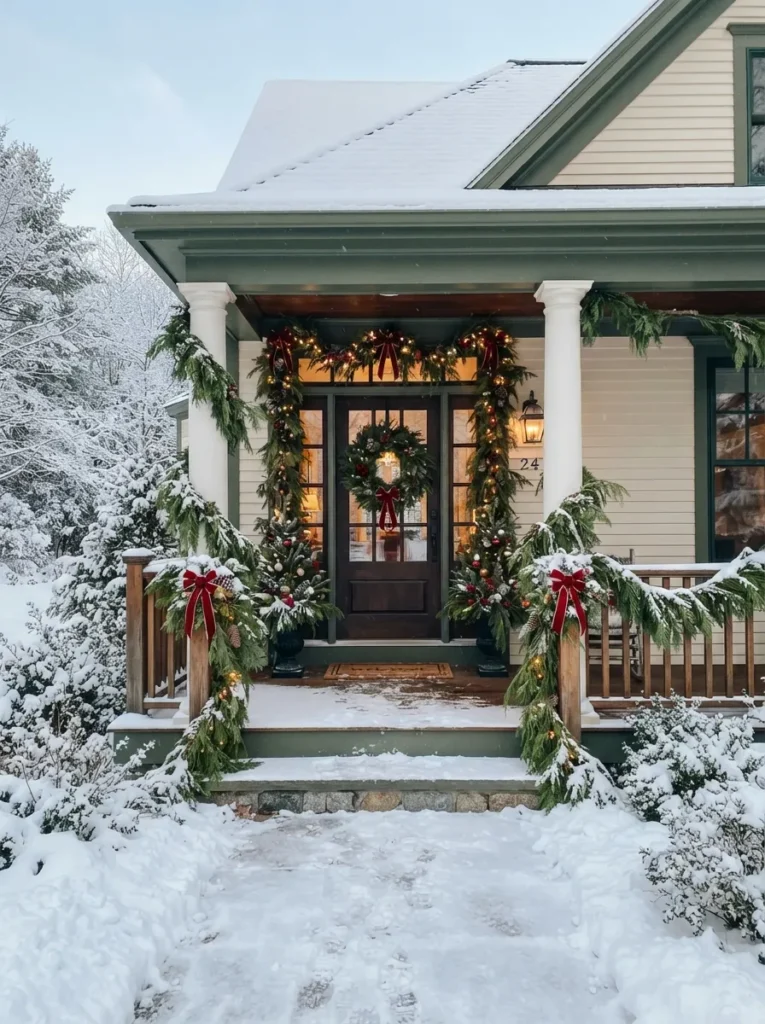
Evergreen detail: Wrap evergreen garlands around the front door, porch railing, or columns. The rich green color looks especially attractive against a pale winter sky or snowy surroundings.
Warm entrance: Add a simple wreath to the front door and place matching lanterns near the steps. Warm bulbs can make the entrance feel inviting without making the decoration look excessive.
Easy update: Use real or artificial greenery depending on your climate and maintenance preference. Artificial garlands are especially practical if you want the same look throughout the entire winter.
Also view: 25 Christmas Balcony Ideas for a Festive Outdoor Glow
2. Snow-Covered Cottage Exterior
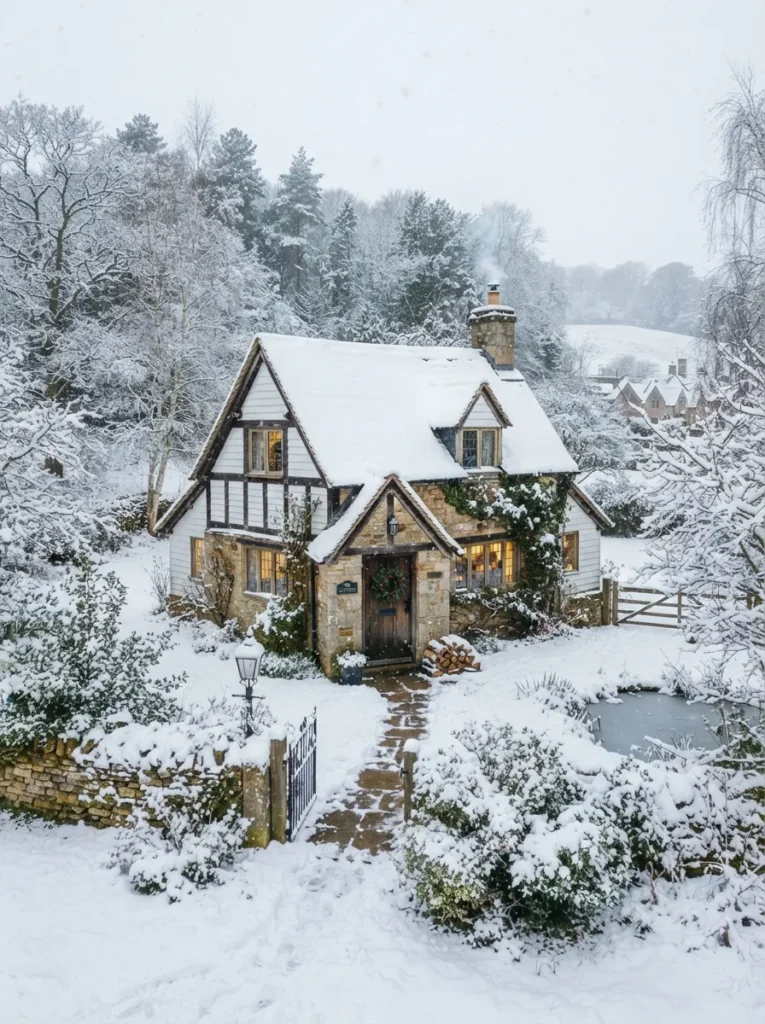
Cottage charm: A small cottage can look especially beautiful during winter. White snow against stone, wood, or painted siding creates a soft seasonal appearance without requiring much decoration.
Natural accents: Add a few evergreen shrubs, bare branches, or simple winter planters around the entrance. These details work with the landscape instead of competing with it.
Cozy finish: Warm lighting around the porch can make the house look welcoming after sunset. Choose fixtures with a soft glow rather than very bright outdoor lights.
3. Modern Black and White Winter Exterior
Clean contrast: Black siding or trim paired with white snow creates a crisp and modern winter look. The strong contrast works particularly well on simple house designs.
Greenery: Add evergreen branches in dark planters near the entrance. The greenery brings a natural color into the otherwise simple palette.
Lighting idea: Keep the lighting minimal. A few warm wall sconces or small pathway lights can highlight the architecture while keeping the exterior clean.
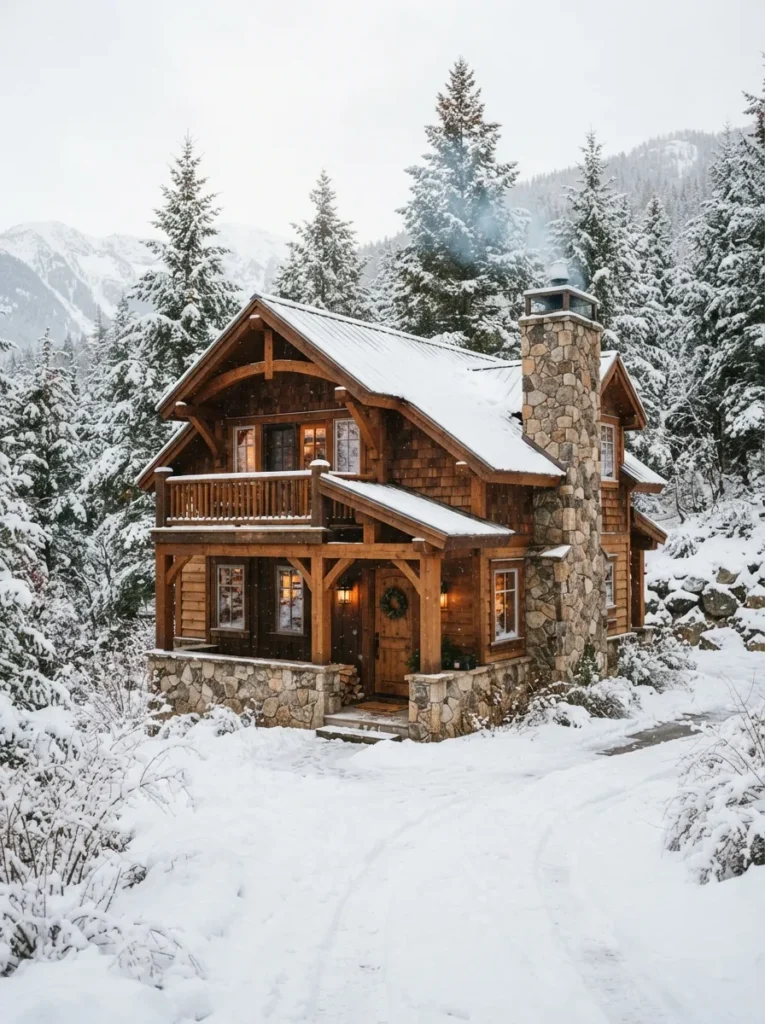
4. Rustic Cabin-Inspired Winter Exterior
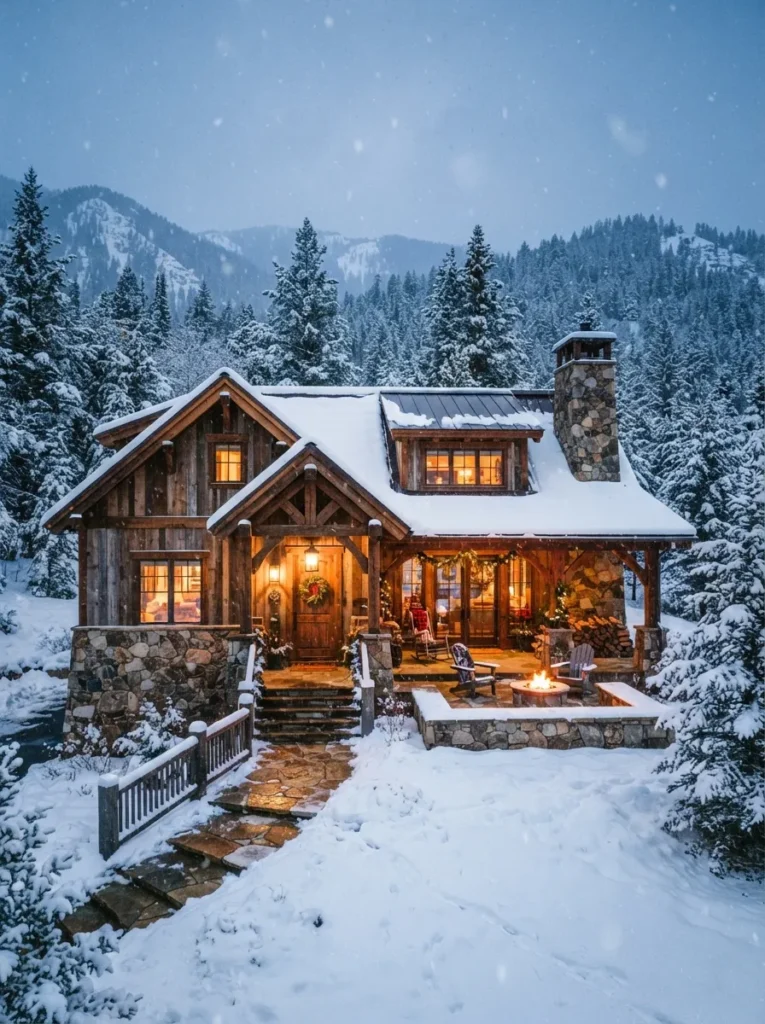
Wooden texture: Wood siding, timber details, and natural stone instantly give a home a cabin-inspired appearance. These materials feel especially appropriate during the colder months.
Seasonal greenery: Place pine branches, cedar, or small evergreen trees around the porch. You can also add a simple wreath made from natural-looking greenery.
Comfortable entrance: A wooden bench, stacked firewood, or a pair of rustic lanterns can make the porch feel more lived-in. Keep the arrangement practical rather than crowded.
5. Winter Exterior With Warm String Lights
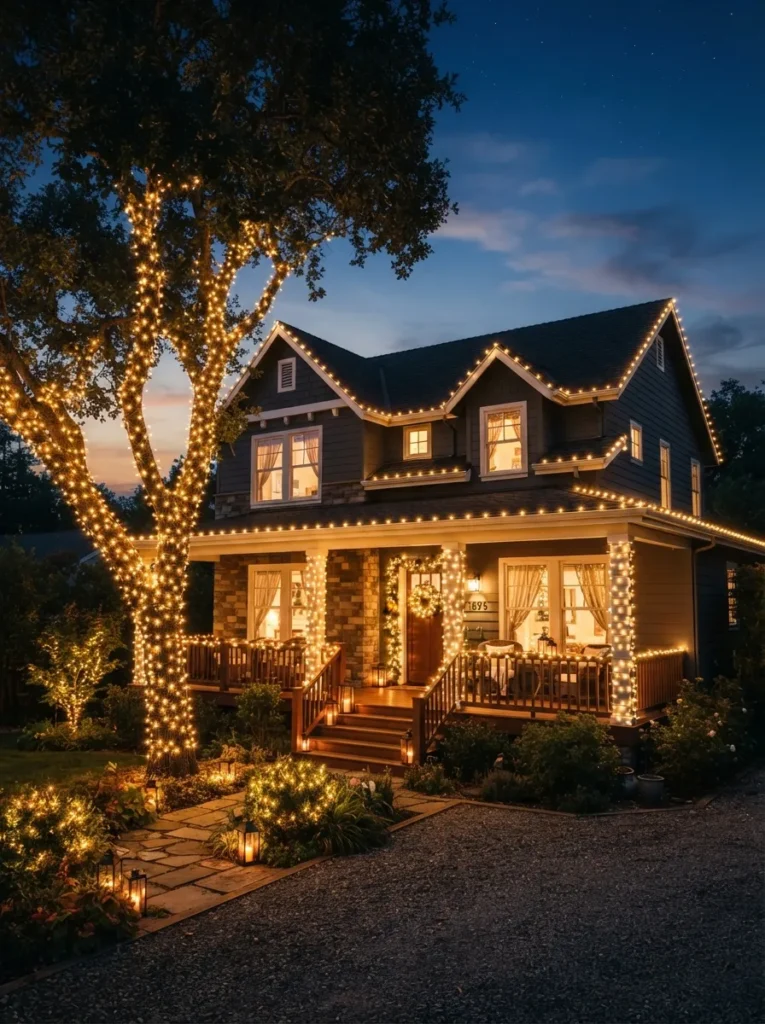
Soft glow: String lights can transform a house exterior once the sun goes down. Wrap them around porch railings, roof edges, trees, or columns for a gentle seasonal glow.
Warm bulbs: Choose warm white bulbs for a cozy appearance. They work especially well with wood, brick, stone, and neutral-colored siding.
Keep it balanced: Avoid covering every surface with lights. Focus on one or two architectural features so the house still looks clean during the daytime.
6. Elegant White Winter House
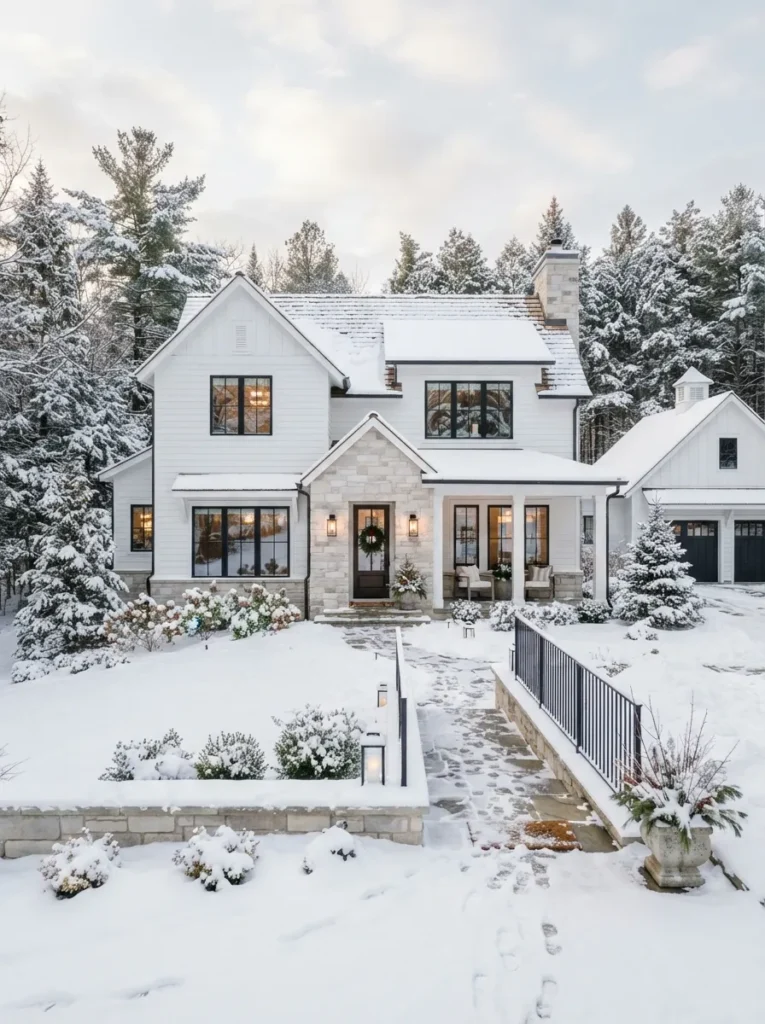
White palette: A white exterior naturally fits the winter season. White siding, pale stone, and snow can create a calm and refined appearance.
Green contrast: Evergreen wreaths and deep green planters help prevent the exterior from looking too plain. A few natural elements are often enough.
Black accents: Black door hardware, lanterns, window frames, or railings can add definition. This gives the home a more structured appearance while keeping the winter palette simple.
7. Brick House With Winter Greenery
Brick backdrop: Red or brown brick provides a warm background for winter decoration. It also pairs naturally with green foliage and wooden accents.
Front door: Hang a full evergreen wreath on the door. Add a few branches around the entryway if you want a fuller seasonal arrangement.
Porch styling: Use planters filled with evergreen branches, pinecones, or winter berries. These details can stay attractive even when flowers are no longer in season.
8. Scandinavian-Inspired Winter Exterior
Simple design: Scandinavian-style exteriors often look best with a restrained color palette and natural materials. Keep the decoration simple with greenery, wood, and soft lighting.
Minimal greenery: Use one wreath, a few evergreen branches, or small potted trees. There is no need to cover the entire porch.
Natural warmth: Wooden planters, a simple bench, or a natural fiber doormat can add warmth while maintaining the clean style.
9. Winter Farmhouse Exterior
Farmhouse details: A farmhouse exterior works well with wooden signs, lanterns, greenery, and classic porch furniture. These pieces create a relaxed winter atmosphere.
Layered entrance: Place a wreath on the door, add greenery around the frame, and use matching planters on both sides. Repeating similar elements creates a balanced look.
Practical touch: Choose outdoor-safe materials that can handle cold weather. Metal lanterns, weather-resistant planters, and durable greenery are useful choices for the entire season.
10. Cozy Front Porch for Winter
Seating area: A porch does not have to be used only during warm weather. Add a bench or outdoor chair with a weather-resistant cushion to create a cozy winter corner.
Textural layers: Blankets may work in covered areas, while woven baskets, wood, and greenery can provide visual warmth outdoors.
Lighting: Place lanterns beside the seating area or near the door. The warm light helps the porch feel comfortable even when temperatures drop.
11. Winter House With Oversized Wreath
Statement piece: An oversized wreath can become the main feature of a winter entrance. Choose one that is large enough to stand out without covering important door details.
Natural look: Evergreen branches, pinecones, berries, and simple ribbon can create a traditional winter appearance. A plain greenery wreath works well for a more understated home.
Balance: If the wreath is large, keep the rest of the entrance simple. Two planters or a pair of lanterns may be all you need.
12. Stone House Surrounded by Evergreens
Stone texture: Natural stone looks beautiful during winter because its earthy texture contrasts with snow and greenery. It also gives the exterior a strong, grounded appearance.
Evergreen framing: Plant or arrange evergreens around the front entrance to frame the house. Different heights can make the landscaping feel more natural.
Soft lighting: Small lights along pathways can highlight the stone and greenery after dark. Keep them low and warm for a relaxed appearance.
13. Blue Winter House Exterior
Cool color palette: Blue siding can create a beautiful winter backdrop. Pale blue works well with white trim, while navy can give the home a stronger, more dramatic appearance.
Seasonal greenery: Add dark green wreaths and small evergreen trees near the door. These colors work naturally with blue siding.
Warm contrast: Warm outdoor lights keep the cool color palette from feeling too cold. Use them around the entrance for a welcoming effect.
14. Traditional Red Door Winter Exterior
Red focal point: A red front door immediately draws attention and works especially well during winter. It also pairs beautifully with evergreen branches.
Greenery: Add a simple wreath and matching garland around the entrance. The traditional red and green combination creates a familiar seasonal look.
Keep the rest neutral: White, gray, brown, or natural wood elements can balance the stronger door color. This keeps the exterior from feeling overly decorated.
15. Winter Exterior With Lanterns
Lantern display: Lanterns are one of the easiest ways to create a warm winter entrance. Place them beside the door, along the steps, or on porch furniture.
Different heights: Use lanterns in two or three sizes to create visual interest. They can also be grouped with small evergreen branches or pinecones.
Safety first: Choose lanterns designed for outdoor use. If using candles, consider weather-resistant LED alternatives for a safer long-term display.
16. Neutral Winter Exterior With Natural Materials
Neutral palette: Beige, cream, gray, taupe, and soft brown can create a calm winter exterior. These colors work well with natural surroundings.
Material mix: Combine wood, stone, greenery, and metal instead of relying on decoration alone. The different textures add interest without needing bright colors.
Simple doorway: A greenery wreath and two neutral planters can finish the entrance. This approach is ideal if you prefer seasonal decoration that does not look too festive.
17. Winter Exterior With Mini Evergreen Trees
Small trees: Place matching evergreen trees on both sides of the front door. They create height and make the entrance feel more complete.
Simple containers: Use wooden boxes, black pots, galvanized containers, or woven baskets depending on the home’s style.
Seasonal detail: Add small lights or simple ribbons if you want more decoration. Leaving the trees mostly natural can also create a beautiful winter look.
18. Victorian-Inspired Winter House
Architectural details: Victorian homes often have decorative trim, porches, railings, and interesting rooflines. Winter greenery can emphasize these details.
Full garland: Wrap greenery around porch railings and columns. Use a matching wreath to connect the different areas visually.
Classic colors: Deep green, burgundy, cream, and warm gold can work beautifully with traditional architecture. Use only a few colors to keep the exterior coordinated.
19. Winter Exterior With Wooden Accents
Natural wood: Wooden planters, signs, benches, and decorative boxes can make a winter porch feel warm. Wood works especially well with neutral siding and stone.
Seasonal arrangement: Fill a wooden planter with evergreen branches, pinecones, and winter berries. This can serve as a focal point beside the front door.
Aged character: Reclaimed-looking or weathered wood can add rustic character. Choose pieces that are treated for outdoor conditions so they remain useful throughout the season.
20. Minimal Winter Front Entrance
Less decoration: A minimal winter exterior can look just as beautiful as a heavily decorated one. Start with a clean doorway, one wreath, and a pair of simple planters.
Color control: Stick to two or three colors. Green, white, and natural wood are easy combinations that work with many house styles.
Clean lighting: Add one or two warm lights near the door. This provides enough evening atmosphere without making the entrance visually busy.
21. Winter House With Red Berry Accents
Berry color: Red winter berries can add a small amount of color to an otherwise neutral exterior. They look especially attractive against white, gray, green, or natural wood.
Where to use them: Add berries to wreaths, porch planters, window boxes, or garlands. A little goes a long way.
Natural arrangement: Combine berries with evergreen branches and pinecones. This creates a fuller seasonal display while keeping the materials connected to nature.
22. Snowy Gray House Exterior
Gray backdrop: Gray siding can create a calm winter appearance, especially when paired with white trim. It also works with both traditional and modern architecture.
Warm details: Add wood, greenery, and warm lighting around the entrance. These elements provide contrast without changing the home’s overall color scheme.
Simple landscaping: Evergreen shrubs can add structure when other plants lose their leaves. Keep the landscaping neat so the house remains the main focus.
23. Winter House With Decorated Windows
Window greenery: Windows can become part of the winter design instead of leaving all the decoration around the front door. Small wreaths or greenery can create a repeated pattern.
Balanced arrangement: Matching decorations on several windows can make the exterior feel coordinated. You do not have to decorate every window.
Evening effect: Warm interior lights visible through the windows can add to the cozy appearance. Keep curtains slightly open where appropriate to let the home’s warmth show from outside.
24. Winter Exterior With a Cozy Wooden Bench
Bench placement: A wooden bench under a covered porch can become a useful and decorative part of the winter entrance. Place it where it does not block the doorway or walking path.
Seasonal styling: Add a small evergreen arrangement beside the bench and a simple wreath behind it. This creates a layered appearance without needing many decorative pieces.
Practical design: Choose outdoor-rated wood or a weather-resistant finish. The bench should be able to handle moisture, cold temperatures, and regular use.
25. Modern Winter Exterior With Vertical Lighting
Architectural lighting: Modern homes often benefit from lighting that emphasizes their straight lines and simple shapes. Wall sconces can highlight the front door and exterior walls.
Warm temperature: Warm white lighting can soften a modern exterior. It creates contrast with cool winter weather without making the house look overly festive.
Minimal decoration: Pair the lighting with one large wreath or a few evergreen planters. Let the architecture remain visible.
26. Winter Cottage With Window Boxes
Window boxes: Fill window boxes with evergreen branches, pinecones, berries, and other winter-safe materials. They can add seasonal detail without taking up porch space.
Repeated color: Use similar greenery across the window boxes and front door. Repetition helps connect different parts of the exterior.
Low maintenance: Artificial greenery can work well if you want the arrangement to stay fresh-looking for several months. Choose realistic textures and natural colors.
27. Black Front Door With Evergreen Decor
Dark focal point: A black door creates a strong backdrop for winter greenery. The deep color makes wreaths and lighter decorations stand out clearly.
Green and wood: Pair the door with evergreen branches and natural wooden planters. These materials keep the entrance from looking too stark.
Lighting detail: Brass or warm metal hardware can add a subtle glow. A warm porch light will also soften the dark color after sunset.
28. Winter House With Natural Pinecone Decor
Pinecone details: Pinecones are inexpensive, natural-looking, and easy to include in winter arrangements. Use them in wreaths, planters, baskets, or along porch steps.
Mixed greenery: Combine pinecones with cedar, pine, eucalyptus-style foliage, or other winter greenery. Different textures make a simple arrangement look fuller.
Rustic finish: Add wood containers or simple metal buckets for a relaxed outdoor appearance. This style works especially well with cottages, cabins, and farmhouse exteriors.
29. Winter Exterior With a Festive Door Garland
Full doorway: A garland around the door can make the entrance feel instantly more seasonal. Use greenery that follows the shape of the door without covering the frame completely.
Add texture: Pinecones, berries, ribbon, or small ornaments can be added to the greenery. Keep the additions consistent with the home’s existing colors.
Keep it secure: Outdoor garlands need to be attached properly so wind does not pull them loose. Use suitable hooks and supports designed for exterior surfaces.
30. Warm Wood and Stone Winter Exterior
Material combination: Wood and stone create a naturally warm exterior. Both materials also look attractive against snow, frost, and winter greenery.
Entrance framing: Use stone around the doorway or steps and wooden planters near the entrance. A simple evergreen wreath can tie the materials together.
Soft atmosphere: Warm lighting placed near the door and along pathways can highlight the textures. Avoid very bright lights that flatten the natural appearance.
31. Elegant Winter Exterior With Gold Accents
Subtle gold: Gold can give a winter exterior a refined appearance when used in small amounts. Consider gold-toned lanterns, door hardware, ribbon, or planter details.
Green backdrop: Deep evergreen greenery works well with warm metallic accents. A simple wreath can bring the colors together.
Keep it restrained: Too much metallic decoration can make the exterior feel busy. Choose one or two gold details and let the architecture provide the rest of the visual interest.
32. Winter House With a Covered Porch
Covered comfort: A covered porch provides more opportunities for winter decoration because many items have some protection from rain and snow. It can also create a comfortable transition between indoors and outdoors.
Layered styling: Add a wreath, garland, lanterns, planters, and a small bench if space allows. Arrange the pieces so the entrance remains easy to use.
Seasonal flexibility: Choose decorations that can stay in place throughout winter. You can change small details later without replacing the entire arrangement.
33. Simple and Welcoming Winter House Exterior
Balanced look: Sometimes the best winter exterior is simply a clean entrance with a wreath, evergreen plants, and warm lighting. You do not need dozens of decorations to make the home feel seasonal.
Natural colors: Greenery, wood, white, gray, and brown create a timeless winter palette. These shades also work well after the holiday season has passed.
Final touch: Keep the pathway clear and the entrance well lit. A welcoming winter exterior should look beautiful, but it should also feel easy to approach and comfortable to use.
How to Choose the Right Winter House Exterior Style
Start with the architecture of your home. A rustic cabin can handle natural wood, pinecones, lanterns, and fuller greenery, while a modern home may look better with simple planters, clean lighting, and one strong wreath.
Next, think about the colors already present on the exterior. You do not have to completely change the home’s palette for winter. Instead, add seasonal colors that work with the siding, roof, door, stone, and landscaping.
Finally, consider the weather in your area. Wind, rain, snow, and freezing temperatures can affect which decorations remain attractive. Outdoor-safe materials and secure attachments will help the design last longer.
How to Make a Winter House Exterior Feel Cozy
Lighting is one of the easiest ways to create a cozy winter appearance. Warm white bulbs around the doorway, porch, or pathway can make the exterior feel welcoming after dark.
Greenery also adds warmth because it introduces texture and color during a season when many plants are bare. Evergreen branches, small trees, wreaths, and winter planters can all work without requiring major changes.
Do not forget the entrance itself. A clean pathway, attractive door, simple mat, and balanced planters can make the house feel cared for. Even a small porch can look inviting when every piece has a clear purpose.
Winter House Exterior Ideas for Small Homes
Small homes do not need large decorations. A single wreath, two compact planters, and a pair of lanterns can create a complete winter entrance without taking up valuable space.
Vertical decoration can also help. Hang greenery around the door, use narrow planters, or add a simple wall-mounted lantern rather than spreading decorations across the floor.
Keep the pathway open and avoid oversized pieces that make the entrance difficult to use. The goal is to make a small exterior feel welcoming, not crowded.
How to Keep Winter Exterior Decor Looking Fresh
Choose materials based on the conditions your exterior will face. If the porch is exposed to rain or snow, select decorations that can handle moisture and temperature changes.
Secure wreaths, garlands, planters, and lights carefully. Strong wind can move lightweight decorations, while wet conditions can make some materials heavier than expected.
Check the exterior regularly throughout winter. Remove damaged greenery, clear snow from walkways, replace broken lights, and keep the entrance clean. Small maintenance tasks can make a seasonal display look much better.
Final Thoughts
A beautiful winter house exterior does not have to be complicated. The strongest designs often rely on a few dependable elements such as evergreen greenery, warm lighting, natural materials, seasonal wreaths, and a clean entrance.
Think about what already works with your home’s architecture and colors, then add winter details around it. Whether you prefer a rustic cabin look, a modern black-and-white exterior, a traditional red-and-green entrance, or a quiet neutral style, there are plenty of ways to make your home feel ready for the season.
The key is balance. Choose decorations that add warmth without hiding the home’s best features, and make sure everything can handle the outdoor conditions in your area. With the right combination of texture, greenery, lighting, and simple seasonal accents, your house can look beautiful throughout the winter.
Frequently Asked Questions
What colors work best for a winter house exterior?
White, green, gray, brown, black, red, and natural wood tones all work well for winter exteriors. You can choose a traditional combination such as red and green or keep things simple with white, greenery, and wood.
How can I decorate my house exterior for winter?
Start with the front door and work outward. Add a wreath, evergreen branches, planters, lanterns, or warm outdoor lighting. Choose only the pieces that fit your home’s size and architecture.
How do I make my front porch look cozy in winter?
Use warm lighting, evergreen greenery, a wreath, and comfortable-looking furniture if your porch is covered. Natural materials such as wood and stone can also make the space feel warmer.
What greenery is best for winter outdoor decoration?
Evergreen branches are popular because they retain their color during cold weather. Pine, cedar, fir, and similar greenery can work well in wreaths, garlands, planters, and window boxes.
Can I decorate a modern house for winter?
Yes. Modern homes often look best with simple winter decoration. Try a large wreath, clean-lined planters, evergreen branches, and warm architectural lighting.
How can I decorate a small front porch for winter?
Keep the design compact. Use a wreath on the door, narrow planters on each side, and one or two small lanterns. Avoid oversized furniture or decorations that block the entrance.
What lighting is best for a winter exterior?
Warm white outdoor lighting usually creates a comfortable and welcoming appearance. String lights, wall sconces, pathway lights, and lanterns can all work depending on the style of the house.
How can I make winter decorations last longer?
Choose weather-resistant materials and secure decorations properly. Check them regularly for moisture damage, wind damage, or broken lights and replace anything that no longer looks safe or attractive.
Do winter house exteriors need Christmas decorations?
No. Winter decoration can remain seasonal without being specifically Christmas-themed. Evergreen greenery, neutral colors, lanterns, pinecones, and warm lighting can stay attractive throughout the winter.
What is the easiest winter exterior update?
A wreath and a pair of evergreen planters are among the easiest updates. Add warm lighting around the doorway if you want an even stronger seasonal effect.
If you want, I can also create the 16:9 featured image, SEO meta description, and 5 SEO-friendly title options for this article.