20 Attic Kitchen Ideas for Dreamy Small Kitchens
Dreaming of turning your attic into a cozy, beautiful kitchen? These 20 Attic Kitchen Ideas for Dreamy Small Kitchens will show you how to transform tricky sloped ceilings and small layouts into charming, functional cooking spaces.
Attic kitchens often feel challenging at first—limited height, unusual angles, and compact floor plans can make design decisions difficult. But with the right ideas, these unique spaces can become some of the most stylish and inviting kitchens in a home. In my experience, attic kitchens actually offer incredible design potential because their architecture naturally creates cozy, character-filled rooms.
In this guide, you’ll discover smart layouts, space-saving storage, warm lighting ideas, and beautiful design details that make small attic kitchens feel brighter, larger, and more welcoming. I’ve noticed that even small upgrades—like skylights, floating shelves, or soft color palettes—can completely change the feeling of a compact kitchen. If you’re looking for inspiration that blends creativity with practicality, these ideas will help you design a dreamy attic kitchen you’ll truly love.
1. Skylight Breakfast Nook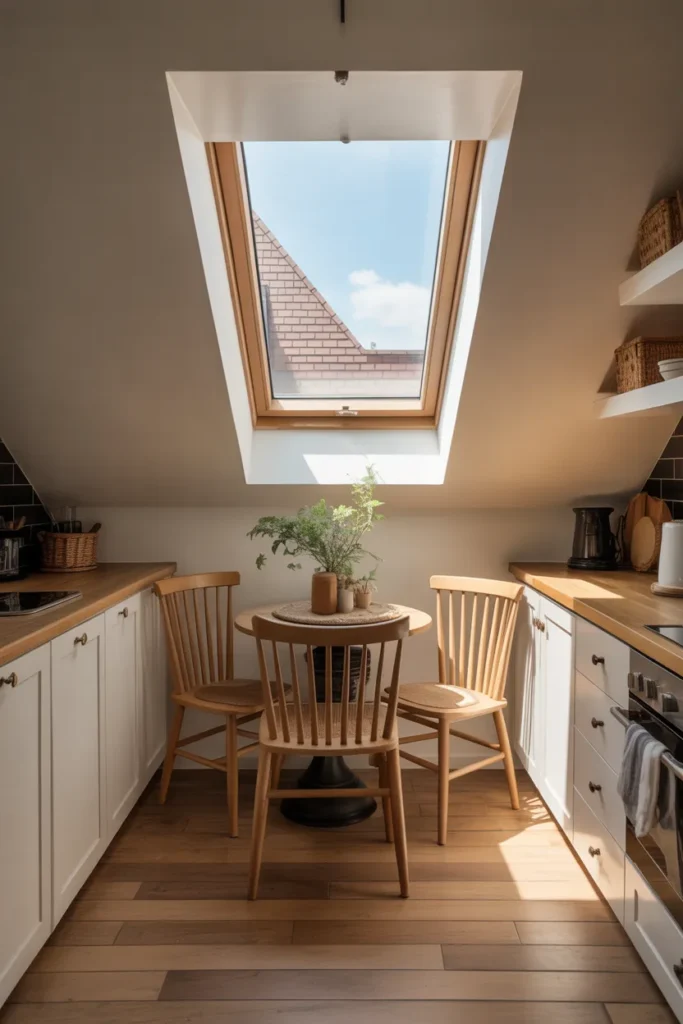
- Brings natural light into a small attic kitchen
- Creates a cozy dining corner in limited space
- Makes sloped ceilings feel open and bright
- Perfect for morning coffee or quick meals
A skylight breakfast nook instantly transforms a small attic kitchen into a warm, welcoming space. Natural light pours in from above, making the entire room feel brighter and more open. In smaller kitchens under sloped ceilings, light becomes incredibly important for preventing the space from feeling cramped. I’ve noticed that placing a small dining table directly under the skylight creates a natural focal point where sunlight highlights the area beautifully, turning an otherwise unused corner into a charming and functional spot.
This idea works especially well when paired with light wood furniture and neutral tones that reflect sunlight throughout the room. In my experience, homeowners often underestimate how much skylights improve attic layouts. The combination of sunlight and smart furniture placement helps the room feel spacious despite limited square footage. Many attic kitchen ideas focus on maximizing vertical light, and this approach does exactly that while also creating a dreamy breakfast corner that feels relaxing and practical.
2. Sloped Ceiling Cabinets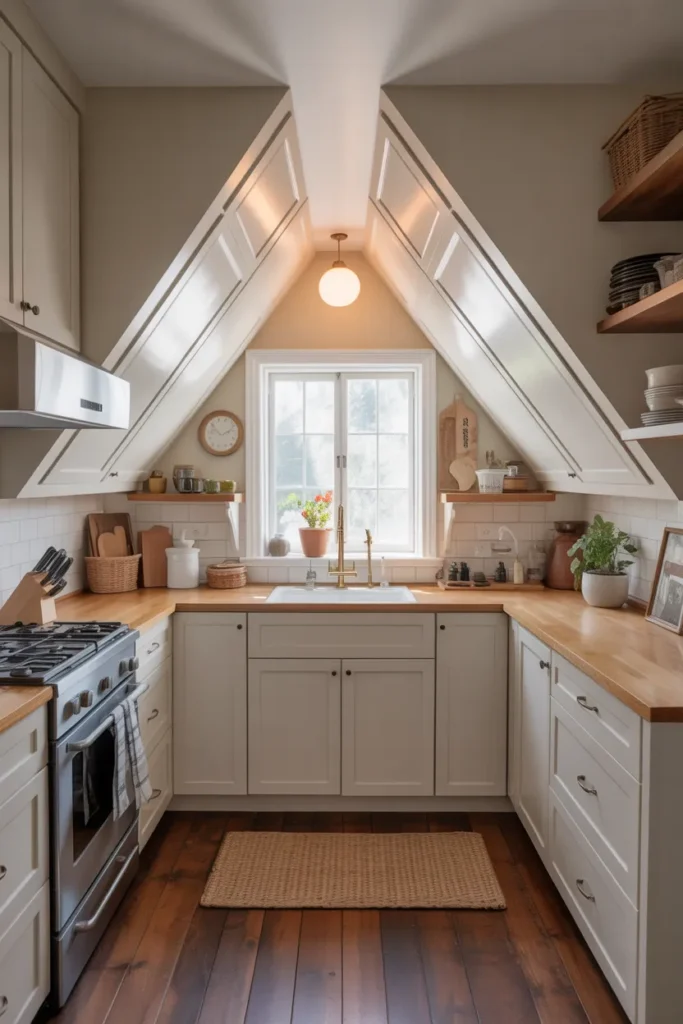
- Uses awkward roof angles for smart storage
- Keeps the kitchen organized without wasting space
- Creates a seamless built-in look
- Perfect for narrow attic layouts
Sloped ceilings can feel limiting at first, but custom cabinets designed to match the roofline can turn that challenge into a major advantage. Instead of leaving awkward empty areas under the ceiling, cabinetry fills the space neatly while maintaining a clean, cohesive look. I’ve seen this approach completely transform tight attic kitchens by providing valuable storage while keeping the layout visually streamlined and organized.
Many homeowners assume cabinets must follow standard shapes, but attic kitchens benefit from more creative solutions. In my experience, tailoring cabinetry to the ceiling angle makes the kitchen feel purpose-built rather than cramped. This technique allows you to store dishes, pantry items, and appliances without cluttering countertops. Among attic kitchen ideas, this strategy stands out because it makes the most of architectural quirks while maintaining a stylish and highly functional cooking space.
3. Compact Galley Layout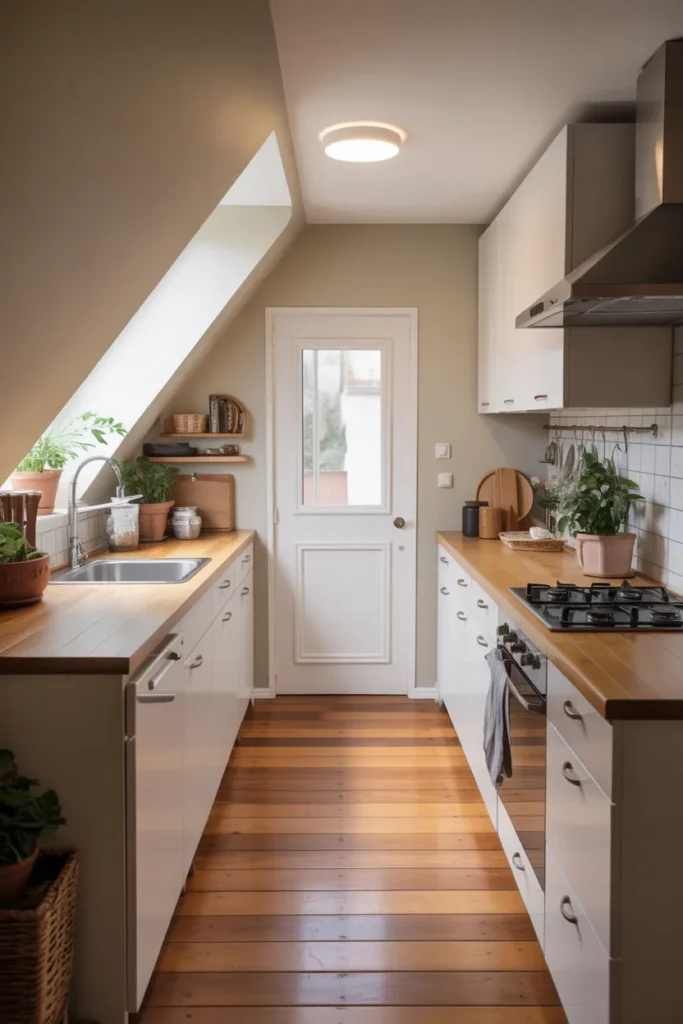
- Maximizes efficiency in narrow attic spaces
- Keeps everything within easy reach
- Works well under sloped ceilings
- Creates a clean, organized cooking zone
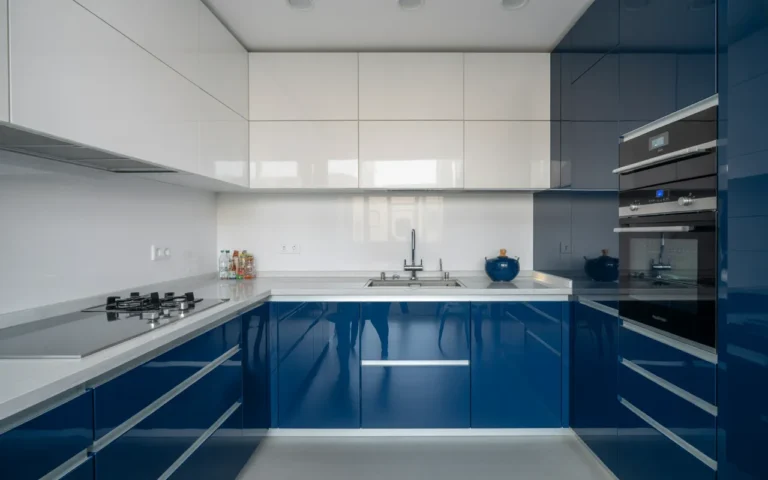
A compact galley layout is one of the most practical solutions for small attic kitchens. By placing cabinets and appliances along two parallel walls, the design keeps everything within easy reach while maximizing the available floor area. I’ve noticed that this setup works especially well in attic spaces because it follows the natural shape of the room, allowing the center walkway to remain open and comfortable.
Another benefit of the galley layout is its efficiency for cooking and meal preparation. With countertops, storage, and appliances all close together, movement becomes seamless and intuitive. In my experience, adding bright lighting and light-colored cabinets helps prevent the space from feeling too enclosed. Many attic kitchen ideas focus on clever space planning, and this layout proves that even the narrowest attic rooms can become highly functional and visually appealing kitchens.
Also view: 16 Dining Room Cabinet Ideas for Smart Storage
4. Rustic Wood Beams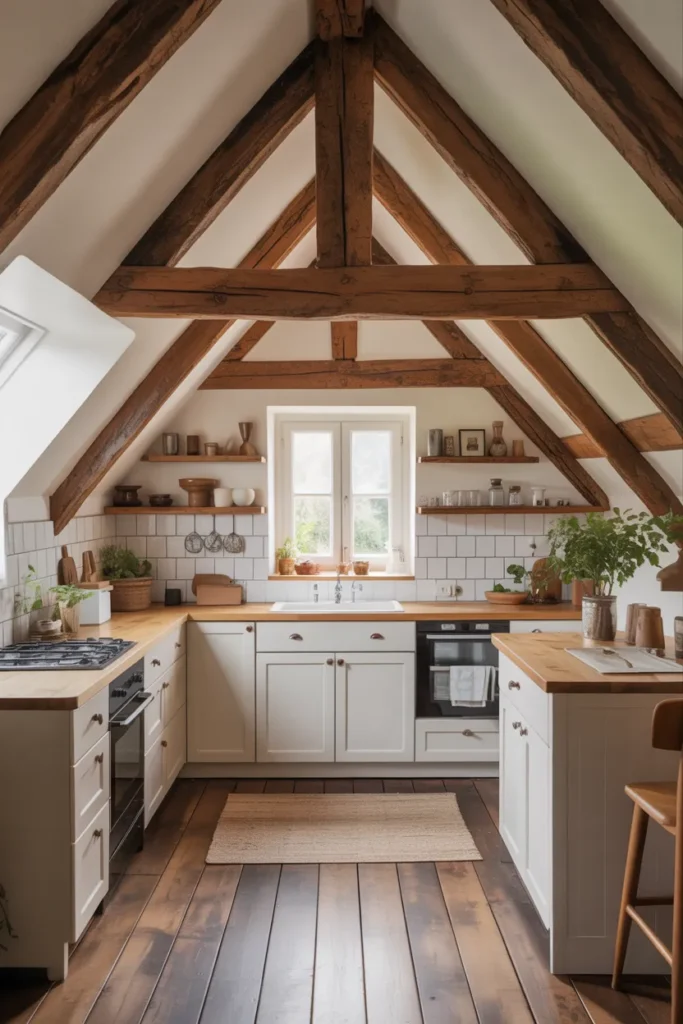
- Adds character and architectural charm
- Makes the attic feel cozy and welcoming
- Highlights the unique roof structure
- Pairs beautifully with neutral kitchen colors
Exposed wooden beams instantly bring warmth and personality to an attic kitchen. Instead of hiding the structural elements, this design celebrates them as part of the room’s character. The natural texture of the wood contrasts beautifully with lighter cabinets and walls, creating a balanced and visually inviting space. I’ve noticed that beams naturally draw the eye upward, making small attic kitchens feel more interesting and architecturally rich rather than confined.
Another reason this idea works so well is that beams emphasize the unique shape of attic ceilings. In my experience, homeowners who highlight these architectural features often end up with kitchens that feel far more custom and cozy. When combined with warm lighting and natural materials, the space feels like a charming retreat. Many attic kitchen ideas focus on maximizing charm, and exposed beams accomplish that effortlessly while preserving the unique character of the attic structure.
5. Mini Kitchen Island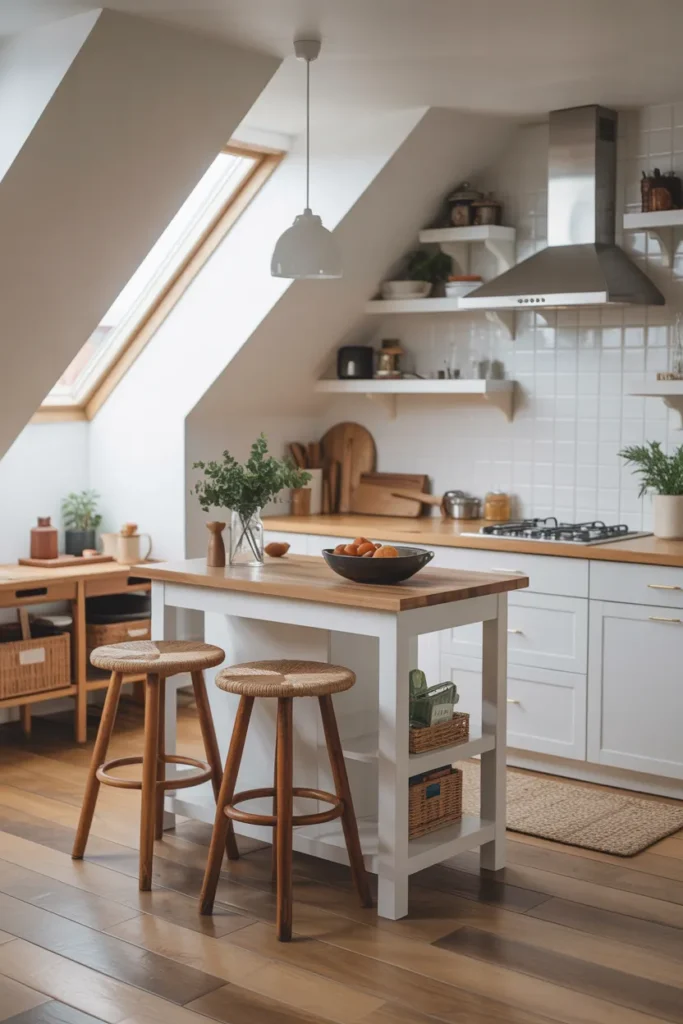
- Adds extra prep space in a small kitchen
- Provides casual seating for quick meals
- Creates a central focal point
- Improves kitchen workflow and movement
A mini kitchen island can dramatically improve the functionality of a small attic kitchen. Even a narrow island provides extra counter space for meal prep, serving, or placing small appliances. I’ve noticed that compact islands also help define the kitchen area, especially in open attic layouts where boundaries between spaces can feel unclear.
What makes this idea particularly effective is choosing the right size and shape for the space. In my experience, slim islands with open sides or stools work best in attic kitchens because they keep the room feeling airy. Adding a light-colored countertop or natural wood surface enhances brightness and warmth. Among attic kitchen ideas, this approach is popular because it combines practicality with style while making the kitchen feel more complete and functional.
6. Open Floating Shelves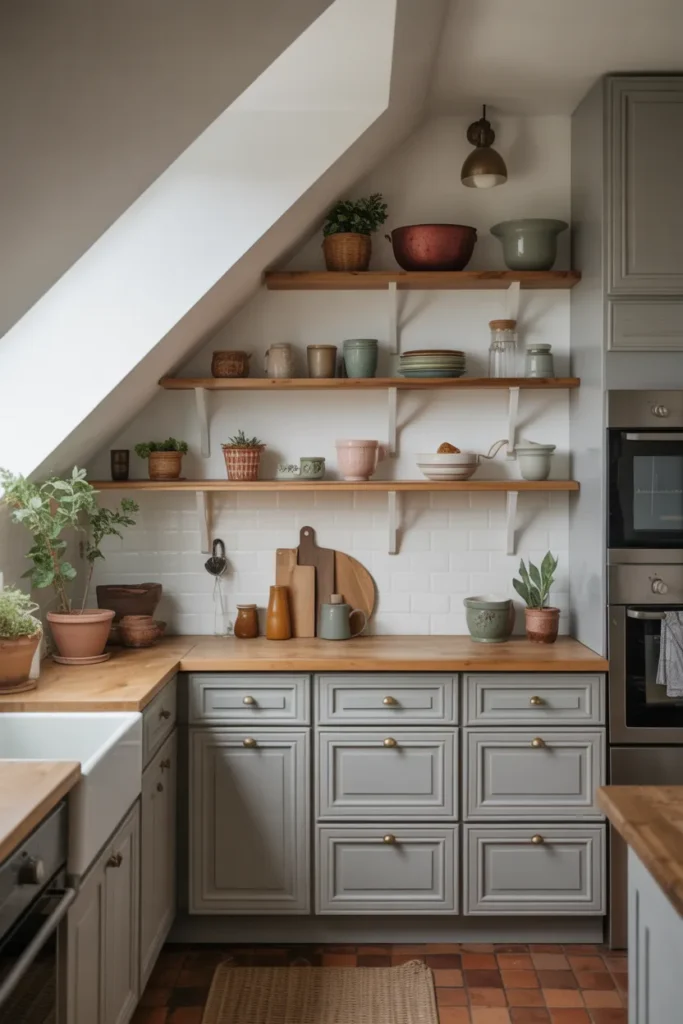
- Keeps the kitchen visually open and airy
- Makes small spaces feel less crowded
- Allows easy access to everyday dishes
- Adds decorative styling opportunities
Floating shelves are one of the easiest ways to make an attic kitchen feel more open and spacious. Traditional upper cabinets can sometimes make sloped ceilings feel heavier, but open shelves maintain visibility and light flow throughout the room. I’ve noticed that this approach works especially well in small attic kitchens where every inch of visual space matters.
Another advantage is the opportunity to combine storage with decoration. In my experience, displaying neatly stacked dishes, jars, or small plants adds personality without creating clutter. Keeping items organized and color-coordinated helps maintain a clean look while still adding charm. Many attic kitchen ideas embrace open shelving because it keeps the kitchen functional while allowing homeowners to express their personal style in a simple, beautiful way.
7. Skylight Over Sink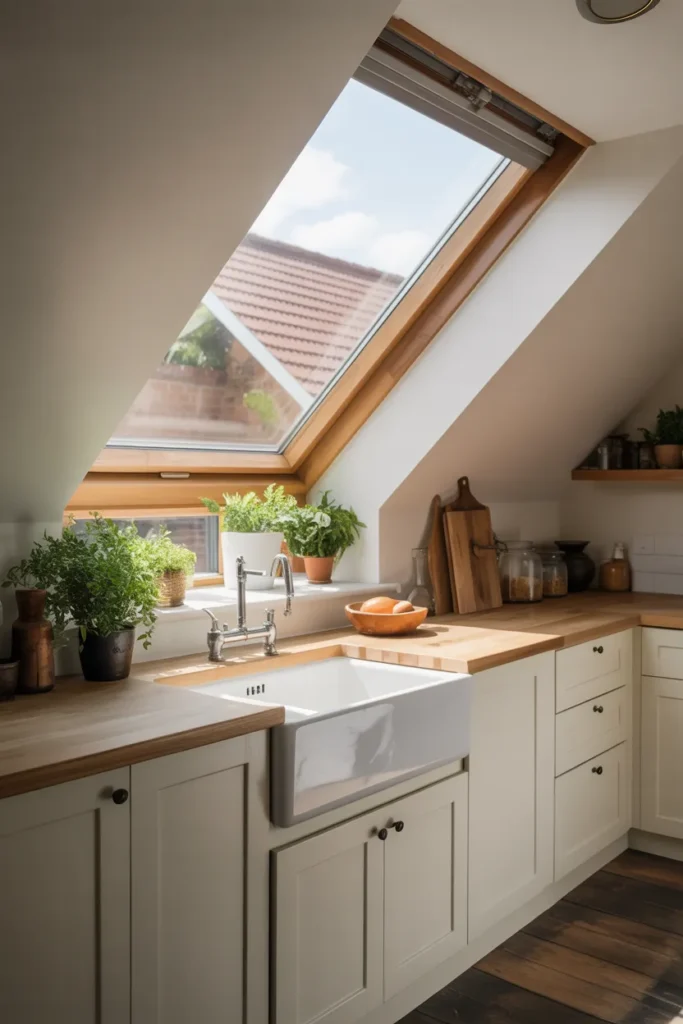
- Brings natural light directly into the work area
- Makes washing dishes feel less like a chore
- Enhances the airy feel of a small attic kitchen
- Highlights the sloped roof design beautifully
Placing the kitchen sink under a skylight is one of the most satisfying design decisions for an attic kitchen. Natural light pours directly into the workspace, making daily tasks feel brighter and more pleasant. I’ve noticed that this simple change can dramatically improve the overall mood of a kitchen, especially in attic spaces where vertical wall windows are limited.
Beyond practicality, this setup also enhances the visual appeal of the space. The light from above highlights the sink area, turning it into a small focal point. In my experience, homeowners often say that washing dishes becomes surprisingly relaxing when sunlight streams in overhead. Many attic kitchen ideas focus on maximizing natural light, and placing a skylight above the sink is one of the most effective and beautiful ways to achieve that.
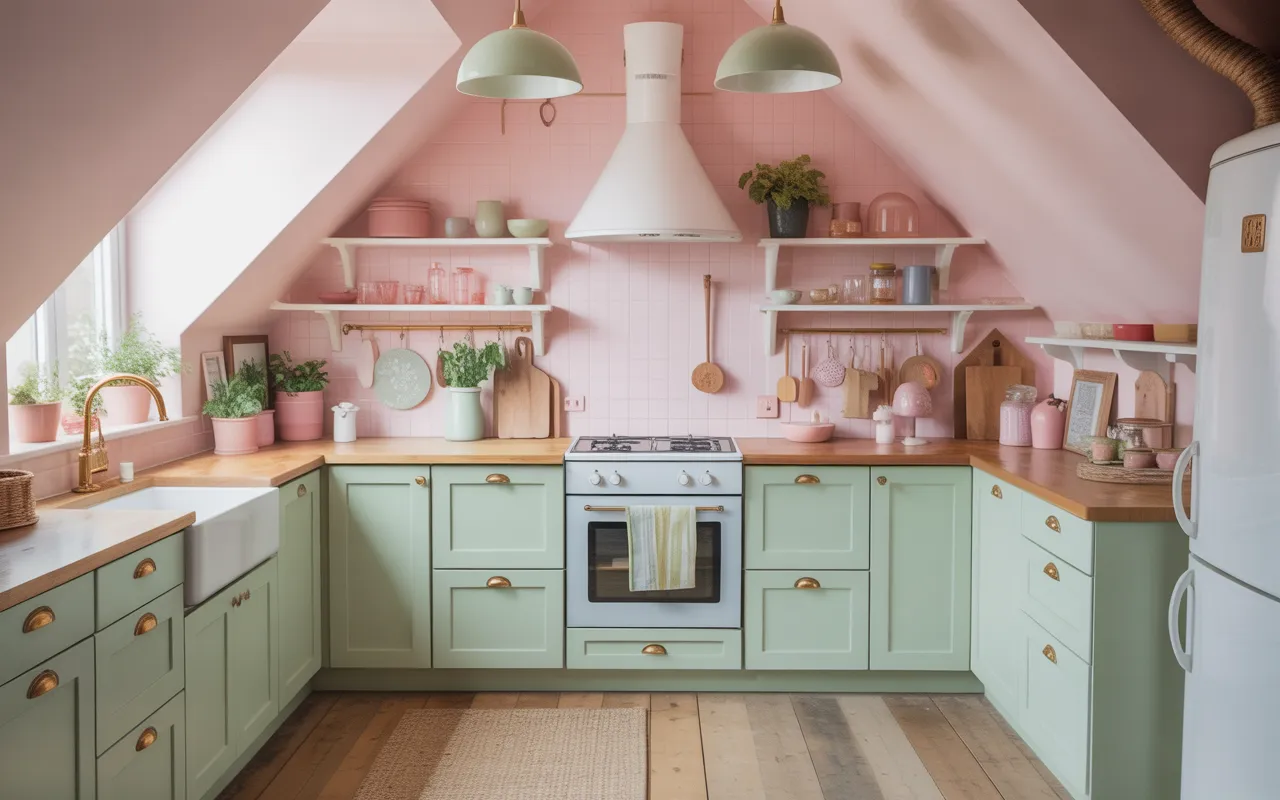
8. Pastel Color Cabinets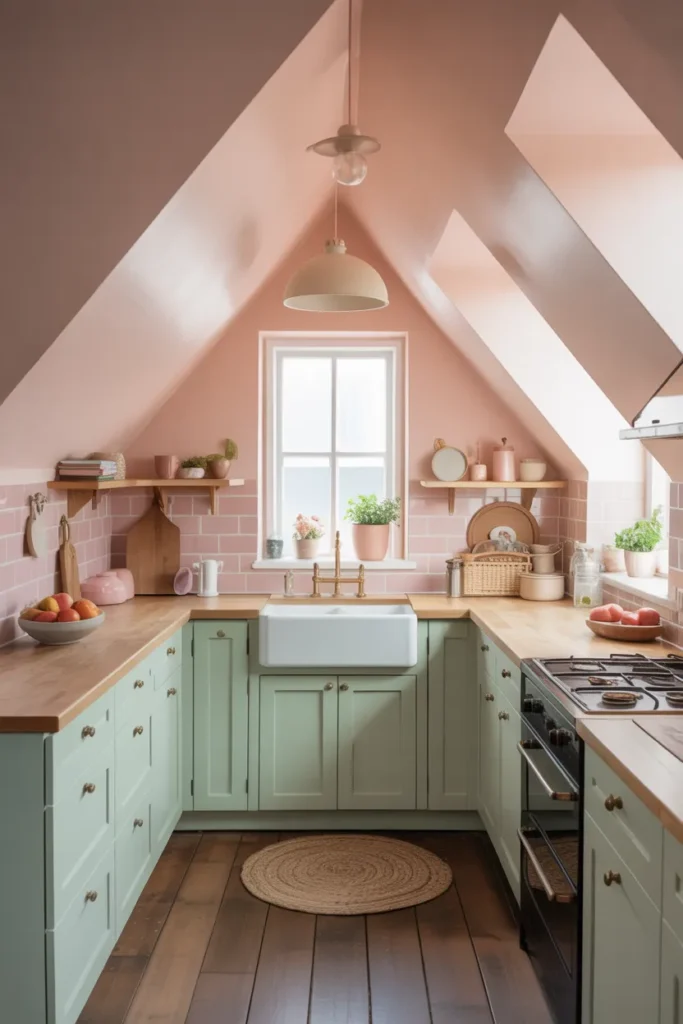
- Adds color without overwhelming the space
- Keeps the kitchen feeling light and airy
- Enhances the dreamy attic aesthetic
- Works beautifully with natural wood textures
Pastel cabinets can instantly give an attic kitchen a dreamy and cheerful personality. Soft tones like mint green, powder blue, or pale pink bring subtle color while still maintaining brightness. I’ve noticed that lighter hues work particularly well in attic kitchens because they reflect light and make smaller spaces feel more open and inviting.
Another benefit of pastel cabinetry is how easily it pairs with natural materials. In my experience, combining pastel cabinets with wooden countertops or light flooring creates a balanced look that feels warm and welcoming. These gentle color choices soften the angles of sloped ceilings and create a relaxing atmosphere. Many attic kitchen ideas embrace pastel palettes because they enhance charm while keeping the space visually light and comfortable.
9. Built-In Breakfast Bar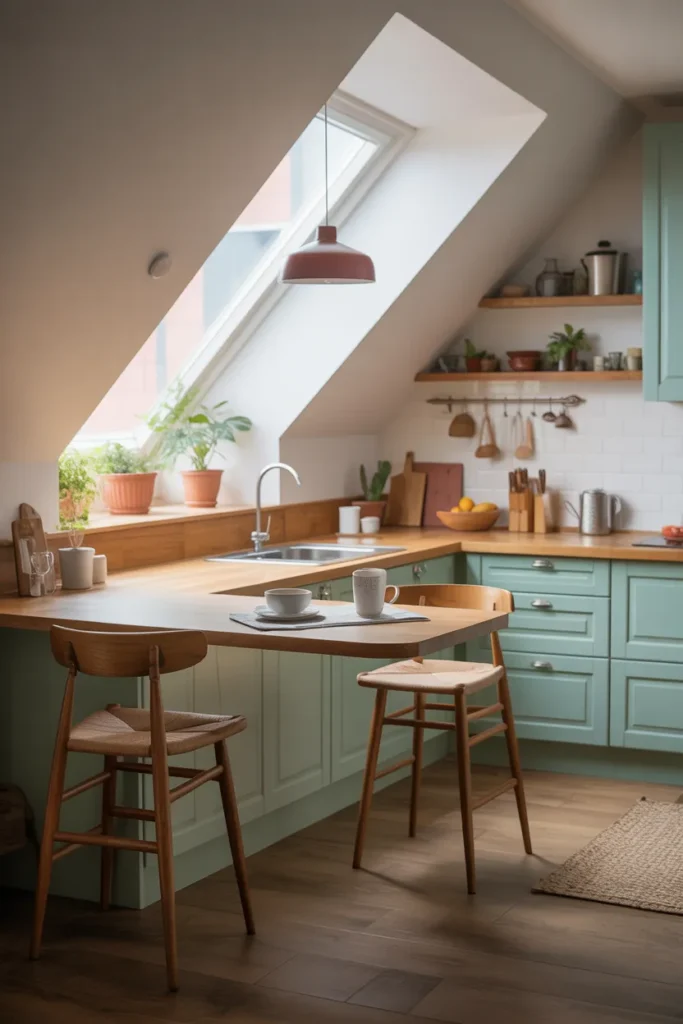
- Saves space while adding dining functionality
- Creates a casual spot for quick meals
- Uses wall space efficiently
- Makes the kitchen feel more complete
A built-in breakfast bar is a smart solution for attic kitchens where space is limited. Instead of adding a full dining table, extending the countertop slightly creates a compact area for eating, working, or enjoying coffee. I’ve noticed that this approach works especially well in narrow attic kitchens where traditional dining furniture might feel too bulky.
Another advantage is how naturally it integrates into the kitchen layout. In my experience, placing stools under the counter keeps the walkway clear while still offering comfortable seating. This type of setup helps the kitchen feel multifunctional without overcrowding the room. Among attic kitchen ideas, built-in breakfast bars stand out because they maximize practicality while maintaining a clean and stylish look.
10. White and Wood Palette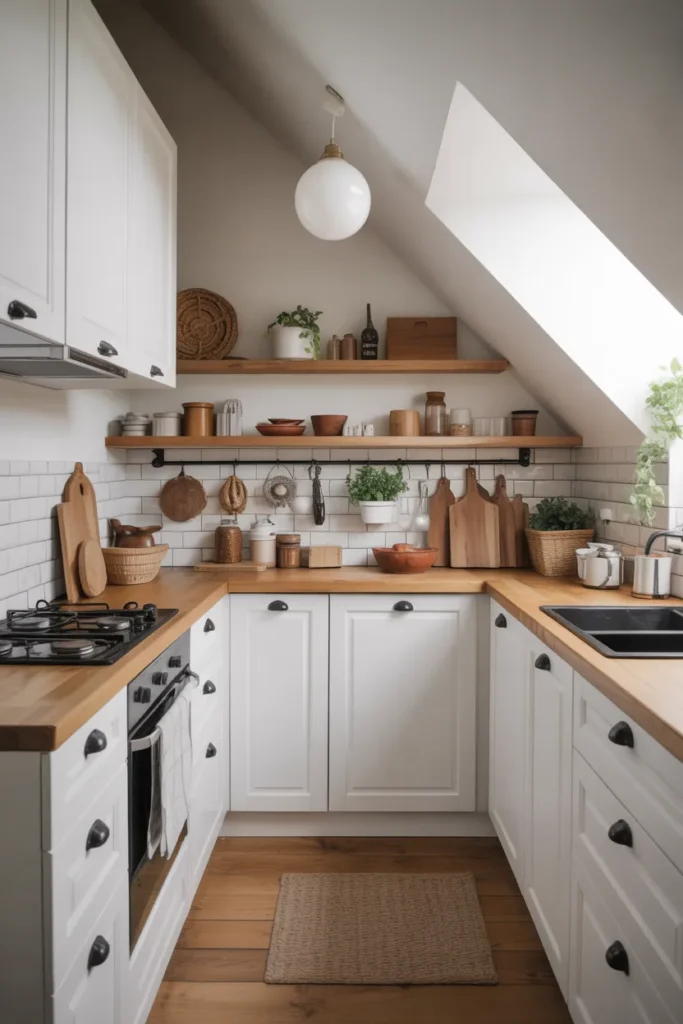
- Creates a bright and airy visual balance
- Reflects natural light throughout the kitchen
- Makes a small attic space feel larger
- Blends warmth with clean minimal style
A white and wood palette is one of the most reliable ways to brighten a compact attic kitchen. Crisp white cabinets reflect light beautifully, while natural wood elements add warmth and texture. I’ve noticed that this combination helps small attic spaces feel open without looking sterile or overly minimal. The contrast between soft wood tones and bright white surfaces creates a balanced, welcoming atmosphere.
Another reason designers love this pairing is its versatility. In my experience, it works well with nearly every kitchen style, from Scandinavian to modern farmhouse. Wooden shelves, countertops, or flooring introduce natural warmth that softens the sloped attic ceilings. Many attic kitchen ideas rely on this palette because it maximizes brightness while keeping the space visually calm, cozy, and timeless for everyday living.
11. Glass Cabinet Doors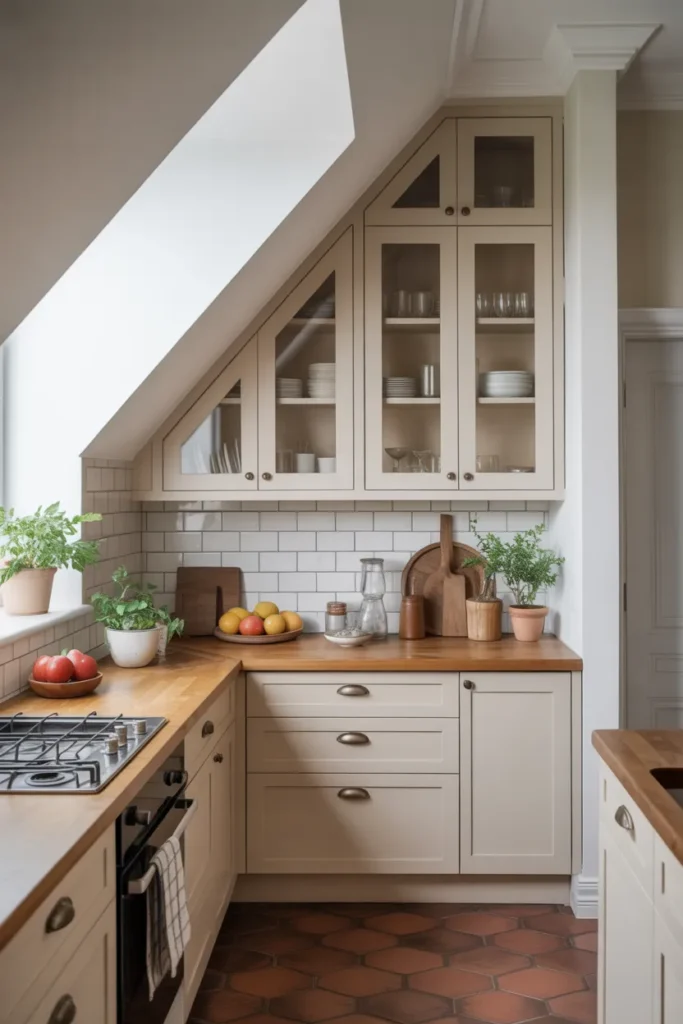
- Makes cabinets feel lighter and less bulky
- Adds visual depth to small kitchens
- Displays beautiful dishes or glassware
- Enhances brightness with reflective surfaces
Glass cabinet doors can make a surprising difference in the feel of an attic kitchen. Instead of solid cabinet fronts that may appear heavy, glass panels create openness and depth. I’ve noticed that this small design change helps upper cabinets feel lighter, which is especially helpful in kitchens with sloped ceilings where visual space is already limited.
Another benefit is the opportunity to display well-organized dishware or decorative pieces. In my experience, keeping items color-coordinated or neatly stacked behind glass instantly elevates the kitchen’s appearance. Soft interior cabinet lighting can further enhance the look by highlighting glassware and ceramics. Many attic kitchen ideas include glass-front cabinets because they add elegance while keeping the room bright and visually spacious.
12. Compact L-Shaped Layout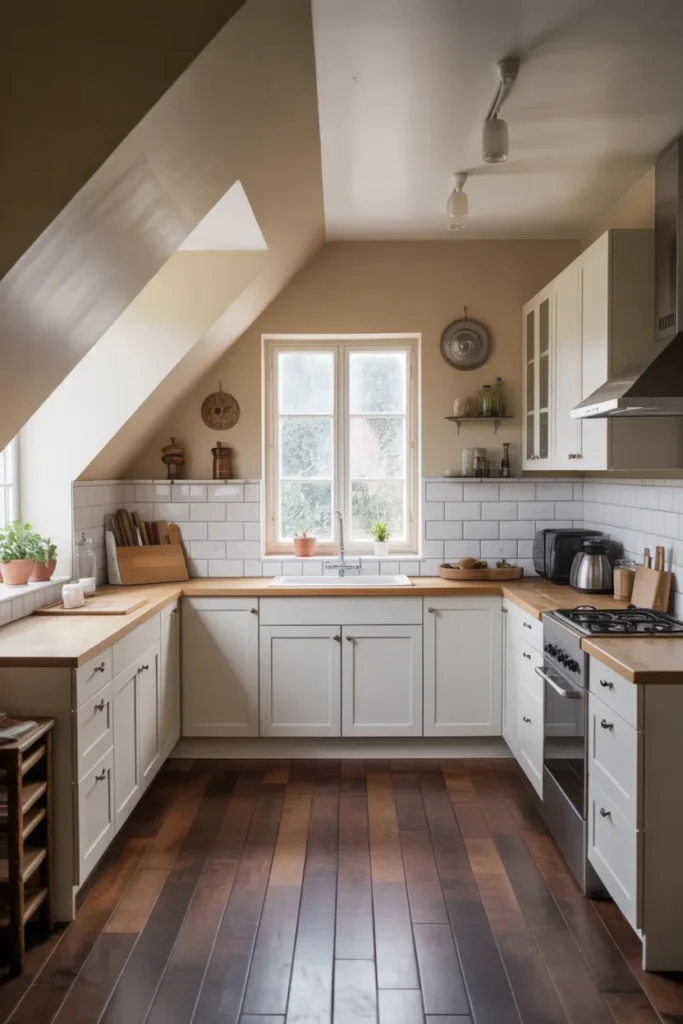
- Maximizes corner space efficiently
- Improves cooking workflow in small kitchens
- Leaves open floor space for movement
- Fits naturally under sloped attic ceilings
An L-shaped layout is one of the most practical solutions for an attic kitchen. By placing cabinets and appliances along two connected walls, the design creates an efficient cooking triangle while leaving the center area open. I’ve noticed that this layout works particularly well in attic spaces where the ceiling height varies across the room.
Another reason this design works so well is its flexibility. In my experience, homeowners can easily add floating shelves, corner storage, or small appliances without overcrowding the space. The layout naturally adapts to angled ceilings and unusual room shapes. Many attic kitchen ideas use the L-shaped design because it maximizes functionality while maintaining a comfortable, open feeling within a compact kitchen.
13. Warm Pendant Lighting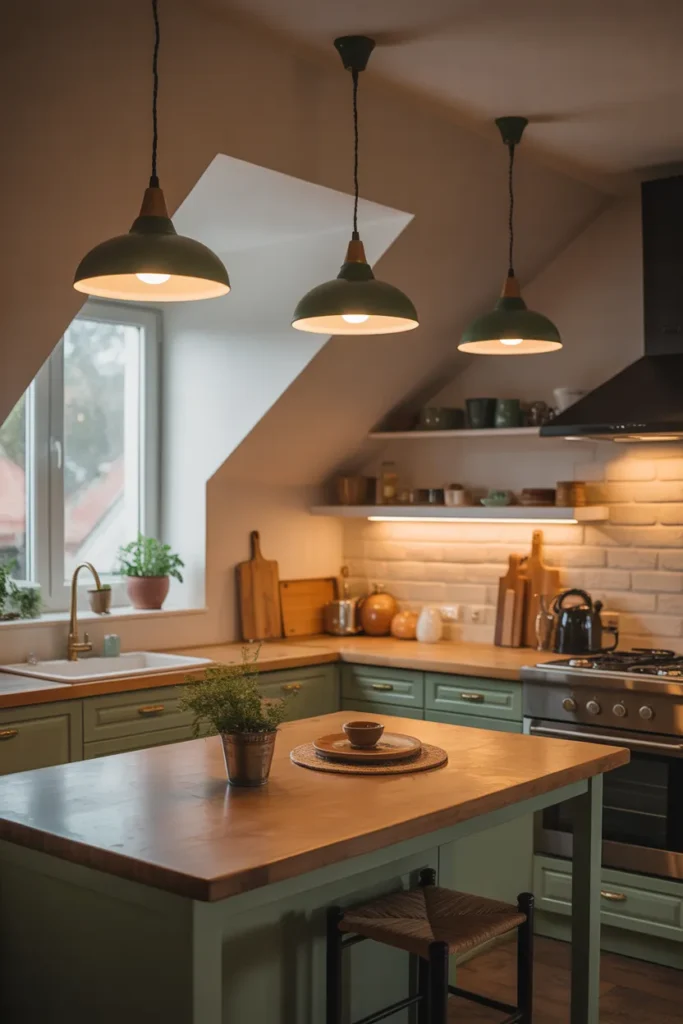
- Adds warm ambient lighting to the space
- Creates a cozy kitchen atmosphere at night
- Highlights key areas like counters or islands
- Enhances the visual style of the room
Lighting can completely transform how an attic kitchen feels, and warm pendant lights are one of the most effective ways to create a cozy atmosphere. Suspended fixtures draw attention downward, balancing the sloped ceiling while softly illuminating work areas. I’ve noticed that warm lighting makes small kitchens feel far more inviting compared to harsh overhead lights.
Another benefit is how pendant lighting adds personality to the kitchen design. In my experience, choosing fixtures with brass, glass, or matte black finishes can subtly elevate the entire space. Placing pendants above counters, islands, or breakfast bars creates a gentle visual anchor in the room. Many attic kitchen ideas rely on layered lighting like this because it enhances both function and atmosphere without overwhelming the compact layout.
14. Hidden Under-Eave Storage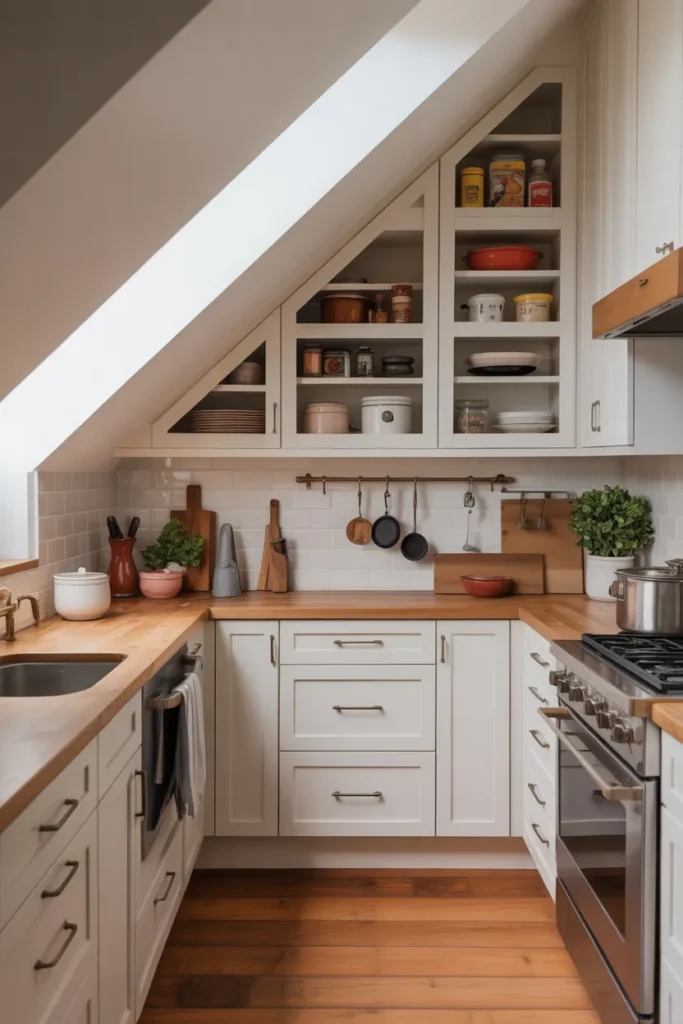
- Uses awkward attic angles efficiently
- Adds hidden storage without clutter
- Keeps the kitchen organized and tidy
- Maximizes every inch of available space
Attic kitchens often include tricky low areas where traditional cabinets cannot fit. Instead of leaving those spaces unused, hidden under-eave storage turns them into practical compartments. I’ve noticed that custom cabinets built into these angled areas can hold pantry items, cookware, or small appliances while maintaining a clean visual appearance.
This approach also keeps the kitchen feeling uncluttered. In my experience, concealed storage helps smaller kitchens stay organized because everyday items remain accessible but out of sight. Flat cabinet fronts or push-open doors blend smoothly into the wall, preserving a minimalist look. Many attic kitchen ideas rely on this clever storage solution because it transforms otherwise wasted architectural space into valuable functionality.
15. Skylight Dining Nook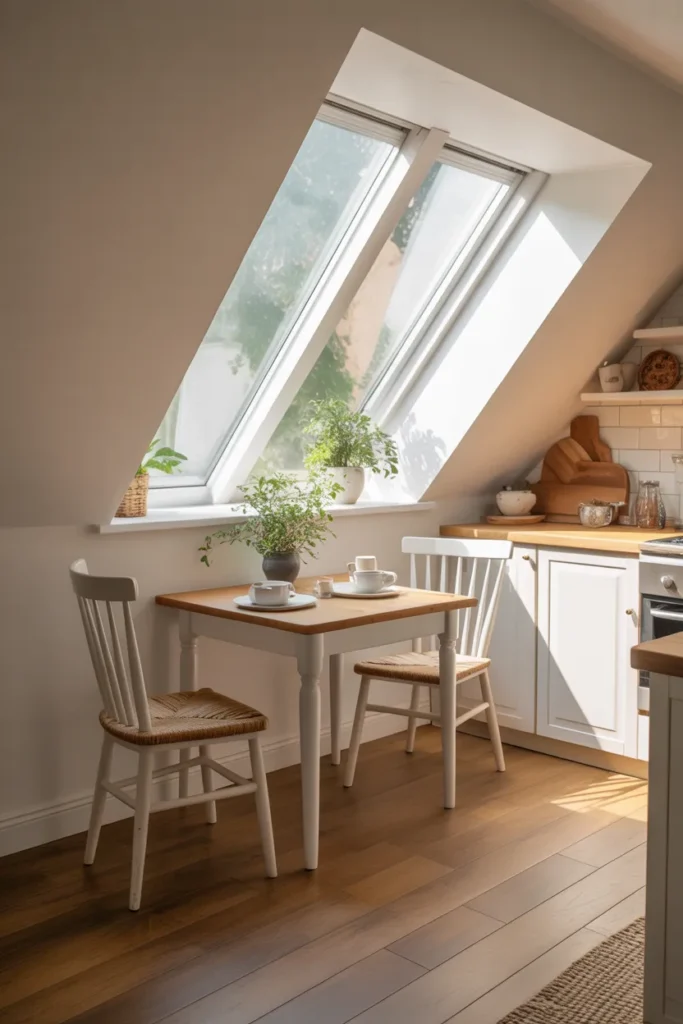
- Creates a cozy dining corner in small spaces
- Uses natural light for a cheerful breakfast area
- Adds charm and personality to the kitchen
- Makes the attic feel more livable and relaxed
A skylight dining nook can turn a simple attic kitchen into a charming everyday retreat. Placing a small table beneath a skylight allows natural daylight to brighten the dining area throughout the day. I’ve noticed that this type of setup often becomes a favorite spot for morning coffee or quiet meals.
Another reason this idea works so well is its simplicity. In my experience, even a small round table and two chairs can make the kitchen feel more complete and welcoming. Natural light from above softens the angles of the attic ceiling and creates a peaceful atmosphere. Many attic kitchen ideas include cozy dining corners like this because they transform compact kitchens into warm, multifunctional living spaces.
16. Matte Black Accents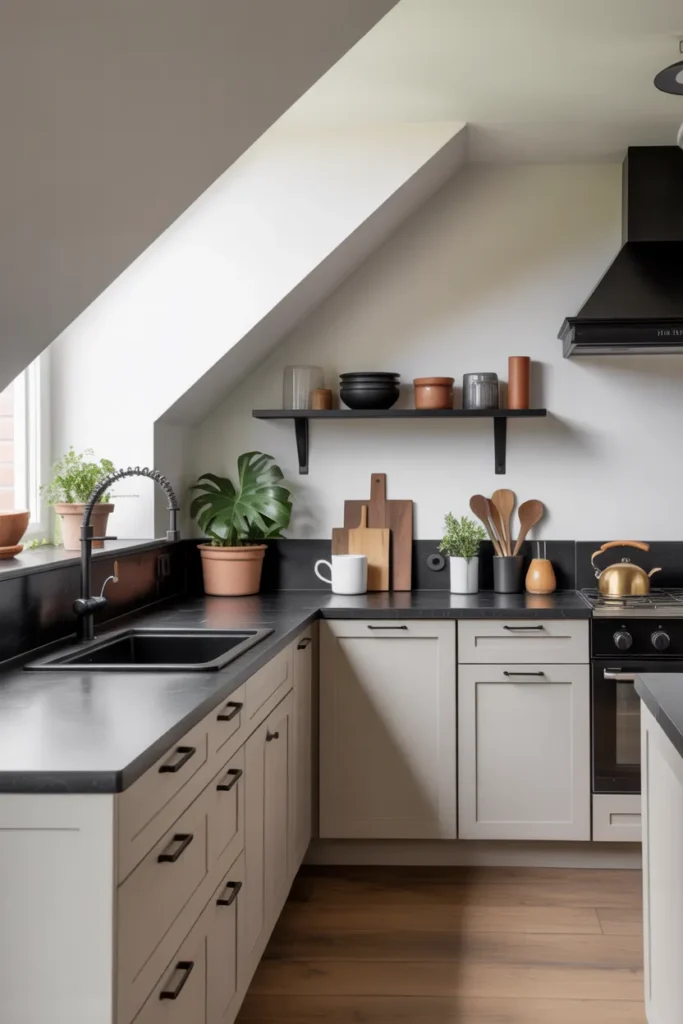
- Adds contrast to light-colored kitchens
- Creates a modern, stylish visual edge
- Highlights fixtures and hardware details
- Works beautifully with white or wood tones
Matte black accents are a simple way to introduce contrast and modern style into an attic kitchen. Small elements like cabinet handles, faucets, and light fixtures instantly stand out against light cabinetry and countertops. I’ve noticed that these darker details help anchor the design visually, preventing the kitchen from feeling too soft or overly neutral.
Another advantage is how easily black accents blend with different materials. In my experience, matte black pairs beautifully with wood, marble, and white surfaces often used in attic kitchens. These touches add sophistication without overwhelming the space. Many attic kitchen ideas incorporate dark hardware because it sharpens the overall look while still maintaining the light, airy feeling small attic kitchens need.
17. Marble Countertops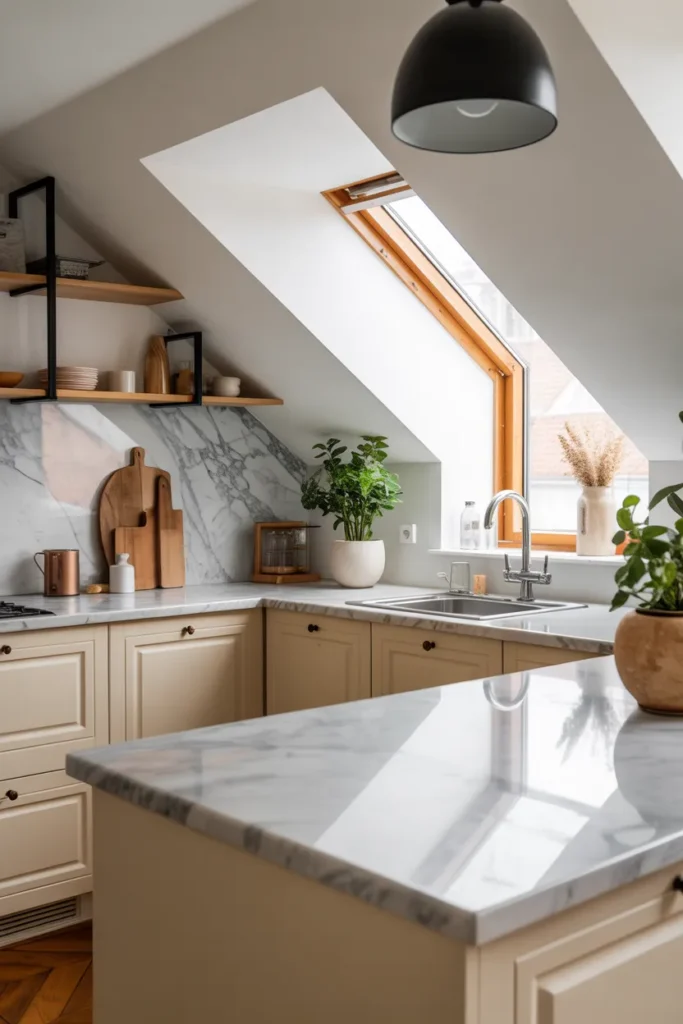
- Adds elegance and visual texture
- Reflects natural light across the kitchen
- Elevates the look of small kitchens
- Works well with neutral color palettes
Marble countertops bring a sense of elegance that can instantly elevate a small attic kitchen. The subtle veining patterns create visual movement while keeping the space light and refined. I’ve noticed that marble surfaces reflect natural light beautifully, which helps brighten kitchens that rely heavily on skylights or limited windows.
Beyond appearance, marble also introduces a timeless quality that many homeowners appreciate. In my experience, pairing marble countertops with simple cabinets allows the stone’s natural pattern to become the centerpiece of the design. Even a small marble workspace can make the kitchen feel more polished. Among attic kitchen ideas, marble is often chosen because it adds luxury while maintaining the airy brightness needed in compact attic spaces.
18. Cozy Cottage Style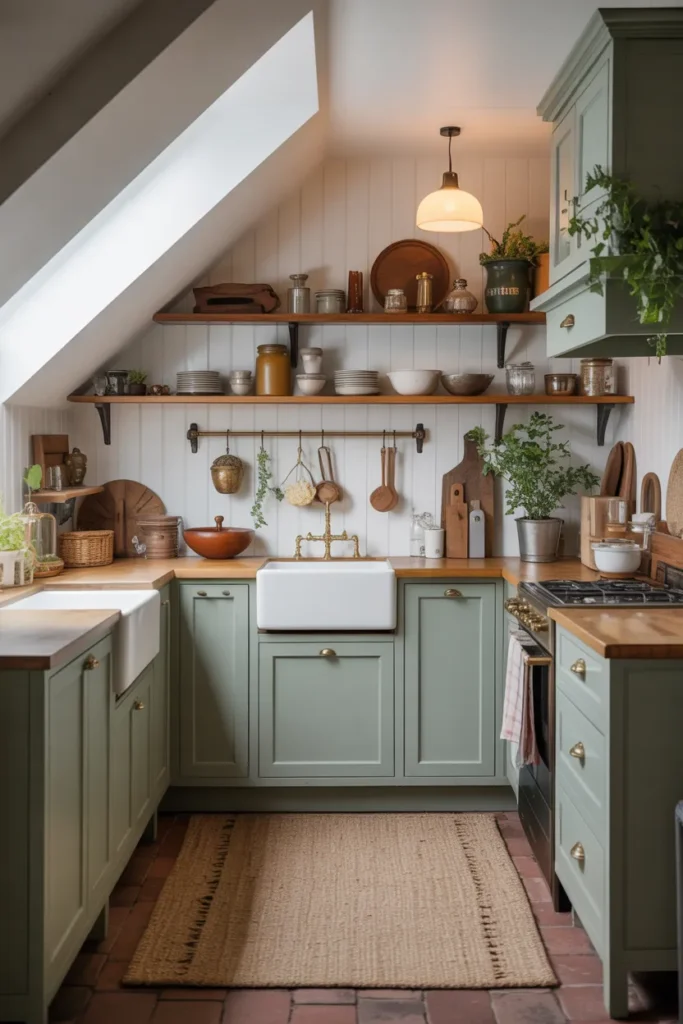
- Creates a warm, welcoming atmosphere
- Adds vintage charm and personality
- Works beautifully in small attic spaces
- Combines comfort with timeless design
Cottage style feels naturally suited for attic kitchens because both emphasize warmth and character. Soft cabinet colors, open shelves, and vintage-style details create a welcoming environment that feels lived-in and comfortable. I’ve noticed that cottage-inspired kitchens often make attic spaces feel less like converted storage areas and more like cozy heart-of-the-home rooms.
Another reason this style works so well is its flexibility with textures and decor. In my experience, mixing wood countertops, ceramic dishes, and small floral accents adds charm without overwhelming the space. Gentle colors soften the angles of the sloped ceiling and make the kitchen feel relaxed. Many attic kitchen ideas lean toward cottage styling because it highlights the intimate, cozy nature of attic living beautifully.
19. Slim Galley Layout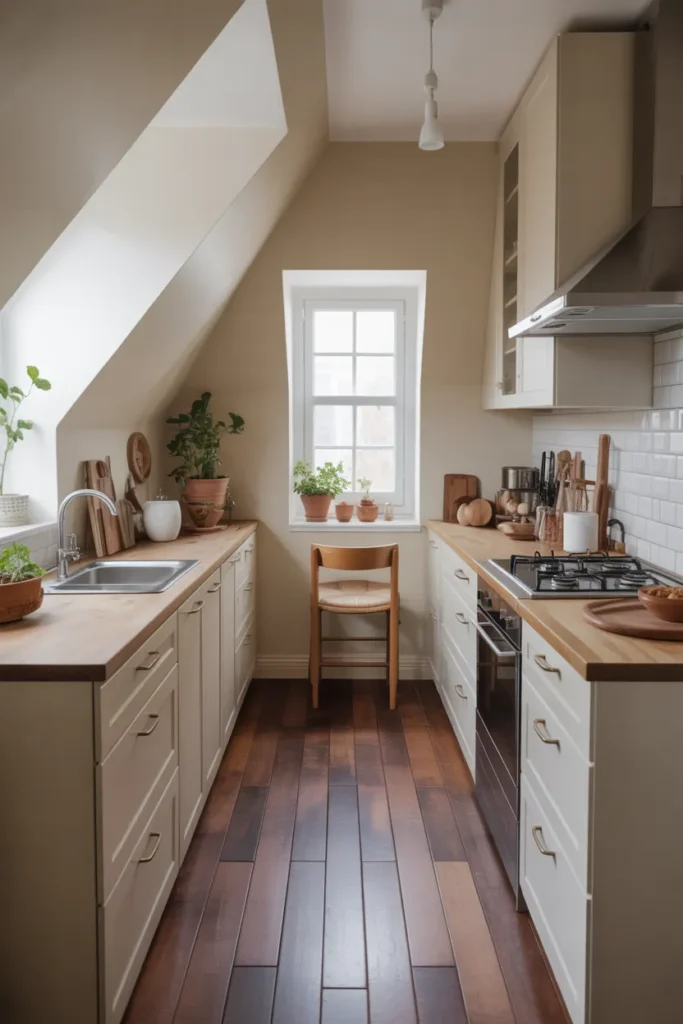
- Maximizes narrow attic floor plans
- Keeps everything within easy reach while cooking
- Creates a clean, organized kitchen flow
- Makes the most of limited wall space
A slim galley layout can be the perfect solution for narrow attic kitchens. By placing cabinets and appliances along two parallel walls, the design creates an efficient cooking corridor where everything is easily accessible. I’ve noticed that this setup often works especially well in attic conversions where the room naturally forms a long, narrow shape.
Another reason this layout is effective is how it keeps the central walkway clear. In my experience, limiting bulky furniture allows the kitchen to feel more spacious even within tight dimensions. Light-colored cabinetry and reflective surfaces can further enhance the sense of openness. Many attic kitchen ideas use galley layouts because they maximize storage and functionality while maintaining a clean, uncluttered design.
20. Plant-Filled Kitchen Corner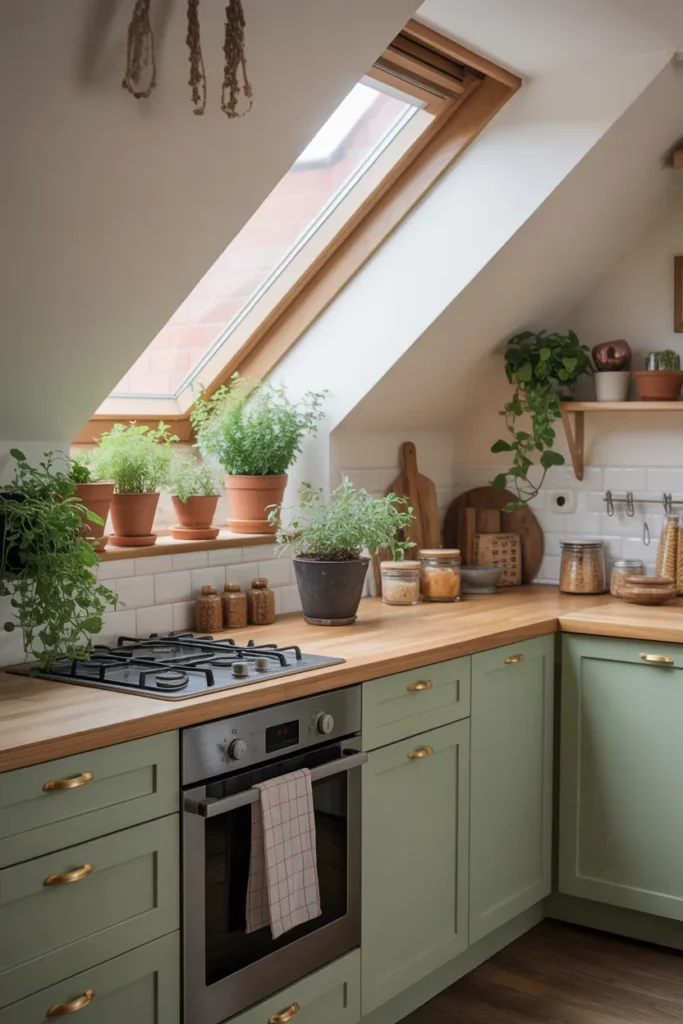
- Adds freshness and natural color
- Softens hard kitchen surfaces visually
- Improves the cozy atmosphere of the space
- Works beautifully with skylight lighting
Adding plants to an attic kitchen can instantly bring life and softness to the space. Small herbs, trailing plants, or leafy greenery placed near skylights thrive in the natural light that attic rooms often provide. I’ve noticed that even a few well-placed plants can make a kitchen feel more vibrant and welcoming.
Plants also help balance the harder surfaces commonly found in kitchens. In my experience, greenery softens countertops, cabinets, and tiled backsplashes, creating a calmer environment overall. Floating shelves or window ledges make perfect display spots without taking up valuable counter space. Many attic kitchen ideas include plants because they enhance warmth, improve visual balance, and make the kitchen feel fresh and naturally inviting.
Conclusion
Designing a beautiful kitchen in a small attic space is absolutely possible with the right ideas and thoughtful details. These 20 Attic Kitchen Ideas for Dreamy Small Kitchens show how smart layouts, natural light, cozy materials, and clever storage can transform even the smallest attic into a warm and functional cooking area.
In my experience, attic kitchens often become some of the most charming spaces in a home because of their unique architecture and cozy atmosphere. Even simple changes—like adding skylights, open shelves, or soft lighting—can completely elevate the space.
If you found inspiration here, save this post on Pinterest for later, try one or two ideas in your own kitchen, and share it with anyone planning a small kitchen makeover.