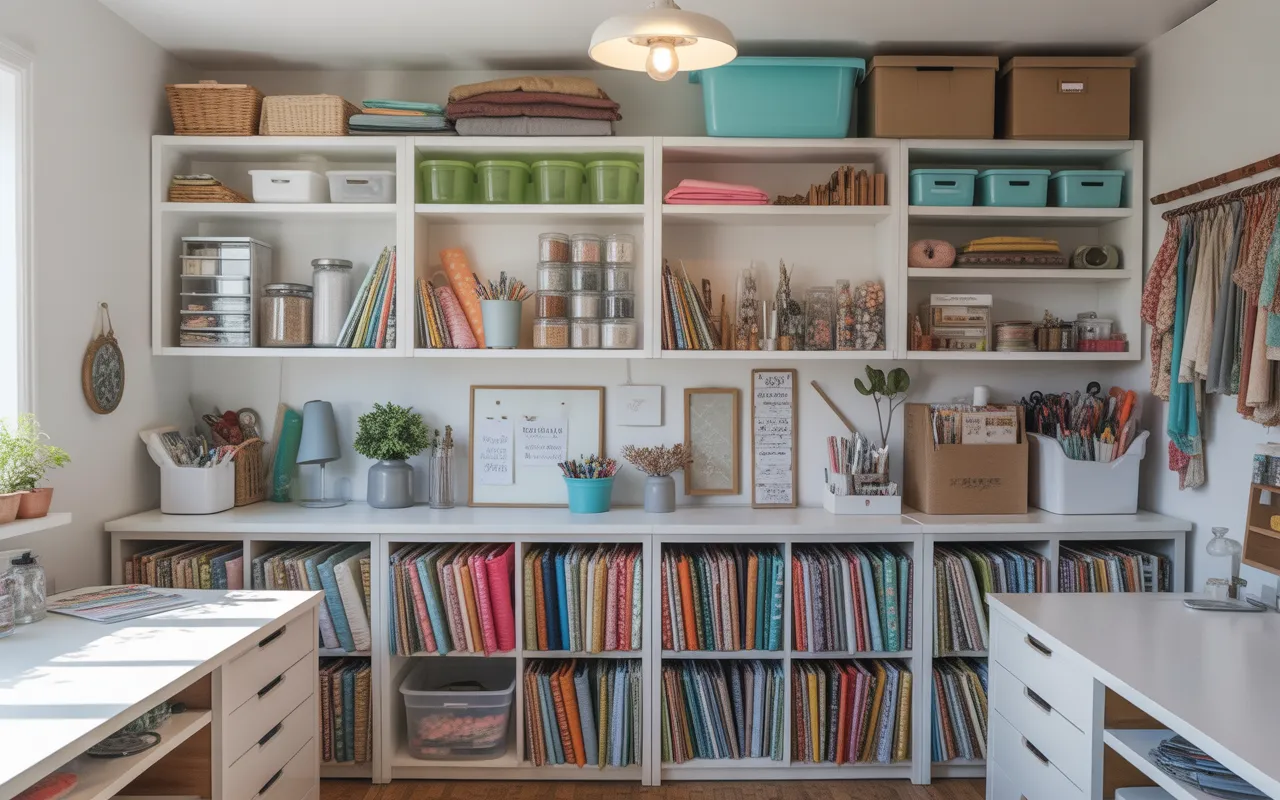
20 Craft Room Organization Ideas for Creative Spaces
Looking to turn your craft room into a beautifully organized and inspiring space? These 20 Craft Room Organization Ideas for Creative Spaces are designed to help you declutter, maximize storage, and make every supply accessible while keeping your creative vibe intact. Whether you struggle with overflowing fabrics, scattered paints, or tangled ribbons, these ideas offer practical solutions that work in real homes. In my experience, small changes like adding rolling drawers, pegboards, or floating shelves can completely transform a room, making crafting easier and more enjoyable. Each idea combines style, functionality, and Pinterest-worthy appeal to inspire your own creative haven.
1. Floating Shelves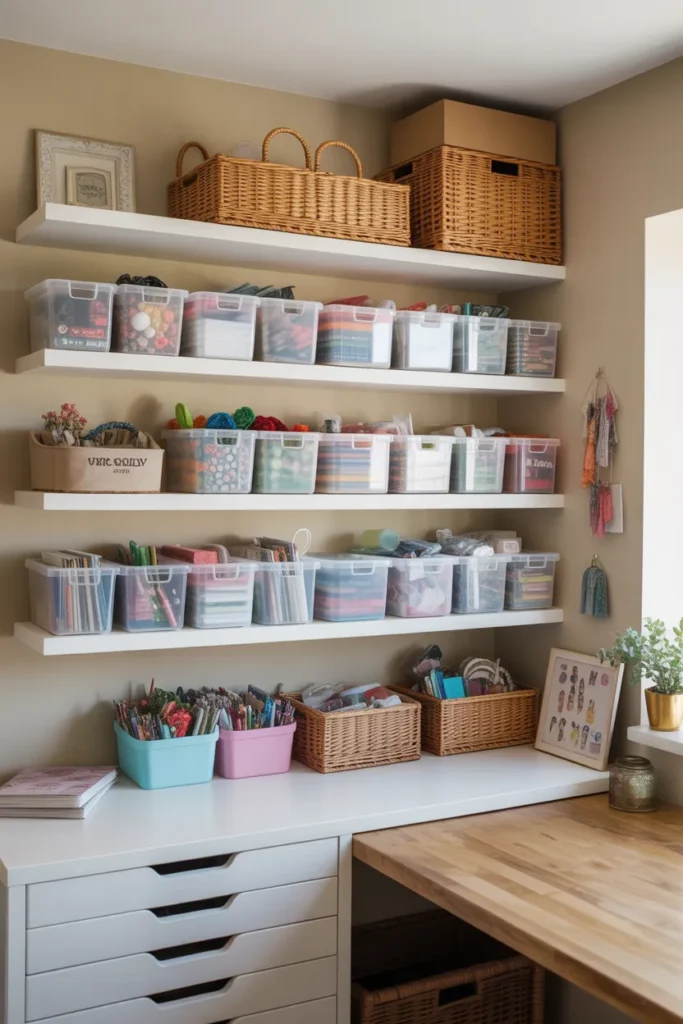
- Maximizes vertical wall space for storage.
- Keeps frequently used supplies within easy reach.
- Creates a visually tidy and inspiring workspace.
- Works well in small or medium-sized craft rooms.
Floating shelves are a simple yet effective way to organize a craft room. By using vertical wall space, they free up your work surface while keeping essential supplies accessible. I’ve noticed that visually displaying materials in clear bins or baskets not only keeps the room tidy but also makes it easier to find what you need quickly. This approach works especially well for small spaces, as it eliminates clutter and allows light to flow freely across the room. Floating shelves combine function with style, creating an inspiring, creative environment that feels open and organized.
Another advantage is their flexibility in styling and placement. Shelves can be installed above tables, along empty walls, or even above storage units. In my experience, combining floating shelves with labels or color-coded bins helps maintain order while keeping the room visually appealing. The arrangement of supplies becomes part of the décor, adding both charm and functionality. Floating shelves are a versatile solution that supports creative workflow, making it easier to focus on projects while maintaining a clean and motivating craft space.
2. Pegboard Wall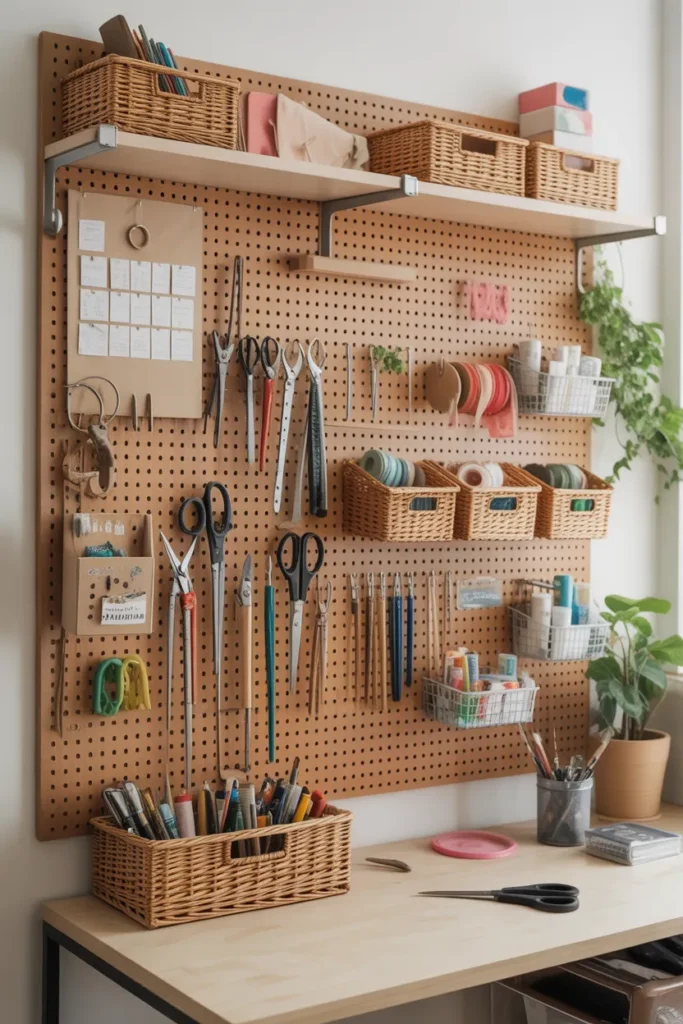
- Offers customizable vertical storage for tools and materials.
- Keeps small supplies visible and easily accessible.
- Supports an organized, efficient workflow.
- Ideal for maximizing small wall spaces.
A pegboard wall is one of the most versatile craft room organization ideas. By hanging tools, scissors, ribbons, and paintbrushes on hooks or baskets, you keep everything within arm’s reach while maintaining visual order. I’ve seen pegboards transform chaotic spaces into highly functional creative zones. They also encourage users to return items to their designated spots, making cleanup effortless. This type of organization works in both small and large rooms, allowing you to customize the layout as your craft supplies evolve. The result is a workspace that feels both practical and visually inspiring.
Another benefit of pegboards is their adaptability to different styles. You can paint them to match your décor, add shelves for jars, or incorporate magnetic strips for small metal items. In my experience, pegboards help maintain a sense of control over supplies while keeping everything visible and within reach. The visual impact of neatly arranged tools adds energy and creativity to the room. For crafters who want a functional yet stylish setup, pegboards are a must-have organizational solution.
3. Rolling Storage Cart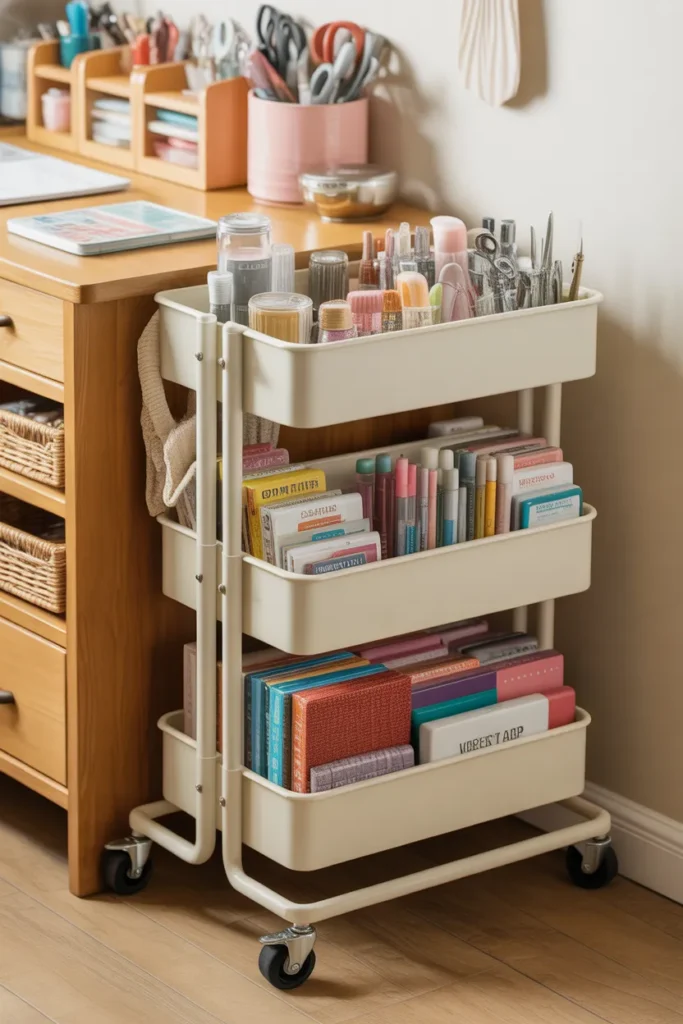
- Provides mobile storage for craft supplies.
- Easily moved around the room as needed.
- Ideal for small spaces needing flexible organization.
- Keeps frequently used items within easy reach.
A rolling storage cart is a practical solution for craft room organization, offering mobility and easy access to supplies. I’ve noticed that carts help crafters work efficiently because you can move them to your table or corner as needed. They are especially helpful in small spaces where floor area is limited, allowing you to keep essential tools nearby without crowding your workspace. The multi-tier design also maximizes vertical space, giving each supply type its own dedicated section. Rolling carts are versatile, functional, and visually neat, making them a go-to for creative spaces that need flexibility.
Another advantage is how they can double as display and storage. By arranging colorful supplies in labeled bins, the cart becomes part of the room’s décor while maintaining order. In my experience, this setup works well for both adults and kids, encouraging creative exploration while keeping everything organized. Rolling carts can also be tucked away when not in use, freeing floor space. Their combination of practicality and visual appeal makes them one of the most effective craft room organization ideas.
4. Wall-Mounted Bins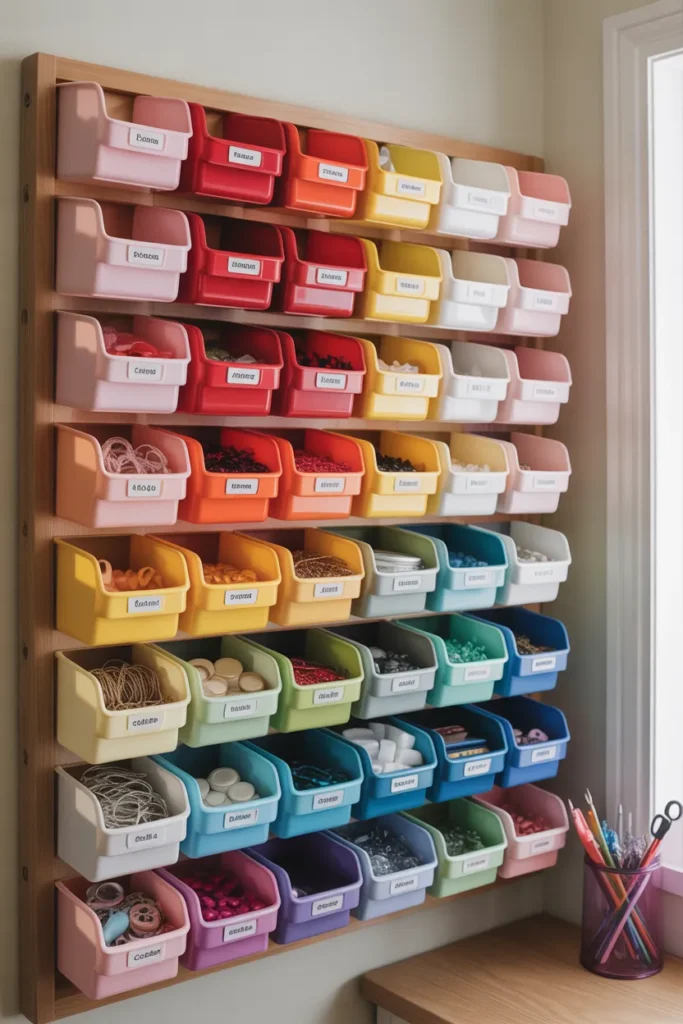
- Keeps small supplies visible and easy to reach.
- Frees up desktop and floor space.
- Adds colorful, organized visual interest to walls.
- Works well for beads, buttons, and small tools.
Wall-mounted bins are a clever way to maximize vertical space while keeping craft materials organized and accessible. I’ve noticed that having supplies clearly visible encourages a more efficient workflow, as you can quickly grab what you need without searching through drawers or cabinets. These bins are particularly useful for small items like beads, threads, and buttons, reducing clutter and keeping surfaces clean. By arranging bins in a neat, color-coordinated way, you also add a vibrant, inspiring element to your craft room. This method is both functional and visually appealing, perfect for small creative spaces.
Another advantage of wall-mounted bins is flexibility in customization. You can mix clear and colored containers, label each section, or adjust heights to suit your workflow. In my experience, this type of storage is ideal for maintaining organization over time because it’s easy to return items to their designated spots. It also works in small or medium rooms where floor space is limited. Combining practicality and aesthetics, wall-mounted bins are a standout solution for keeping a craft room tidy and inspiring.
Also view: 13 Small Walk In Closet Ideas for Smart Storage
5. Drawer Dividers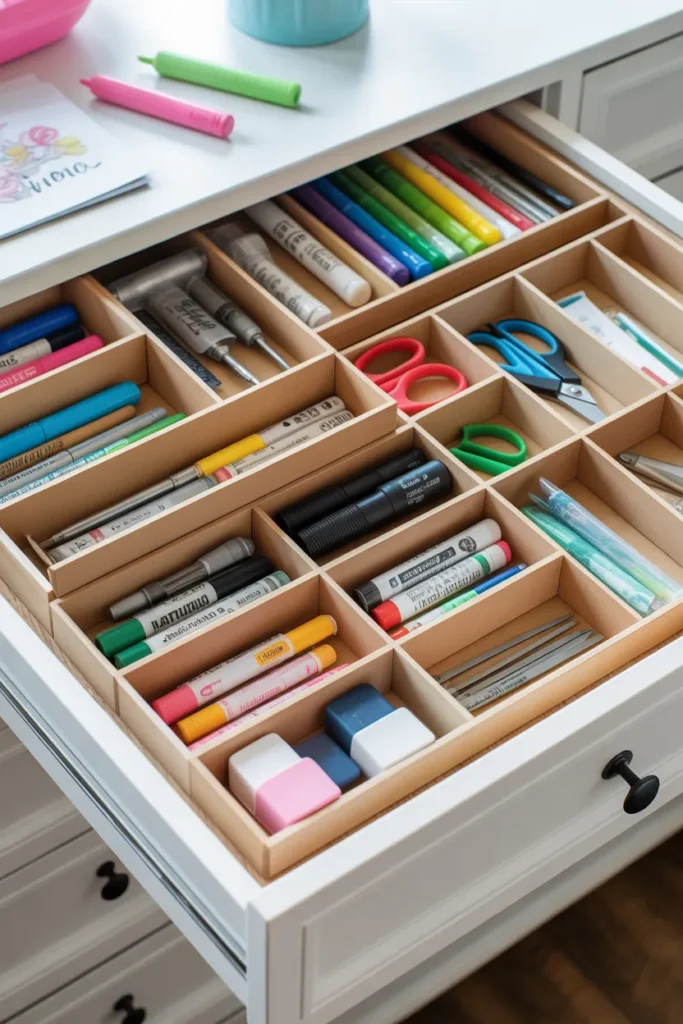
- Keeps small tools and supplies separated.
- Prevents cluttered drawers and wasted time searching.
- Ideal for pens, scissors, paints, and embellishments.
- Supports a tidy, stress-free crafting workflow.
Drawer dividers are an essential component of craft room organization, ensuring that small tools and supplies remain neatly separated. I’ve seen how dividing drawers into specific sections saves time and reduces frustration, particularly when working on detailed projects. By designating compartments for markers, scissors, adhesives, and other frequently used items, you maintain order and keep your workspace efficient. Dividers also protect delicate materials from damage caused by shifting or overcrowding. This simple yet effective solution transforms messy drawers into well-structured storage, making it easier to focus on creativity rather than tidying up constantly.
Another benefit of drawer dividers is their adaptability to various storage types. They can be used in wooden, plastic, or metal drawers, and their arrangement can be changed as your collection of craft supplies evolves. In my experience, customizing dividers to fit the exact size of your items creates a professional, organized feel in any craft room. They are a low-cost, high-impact solution that supports both functionality and visual tidiness, helping you maintain an inspiring creative space.
6. Pegboard Baskets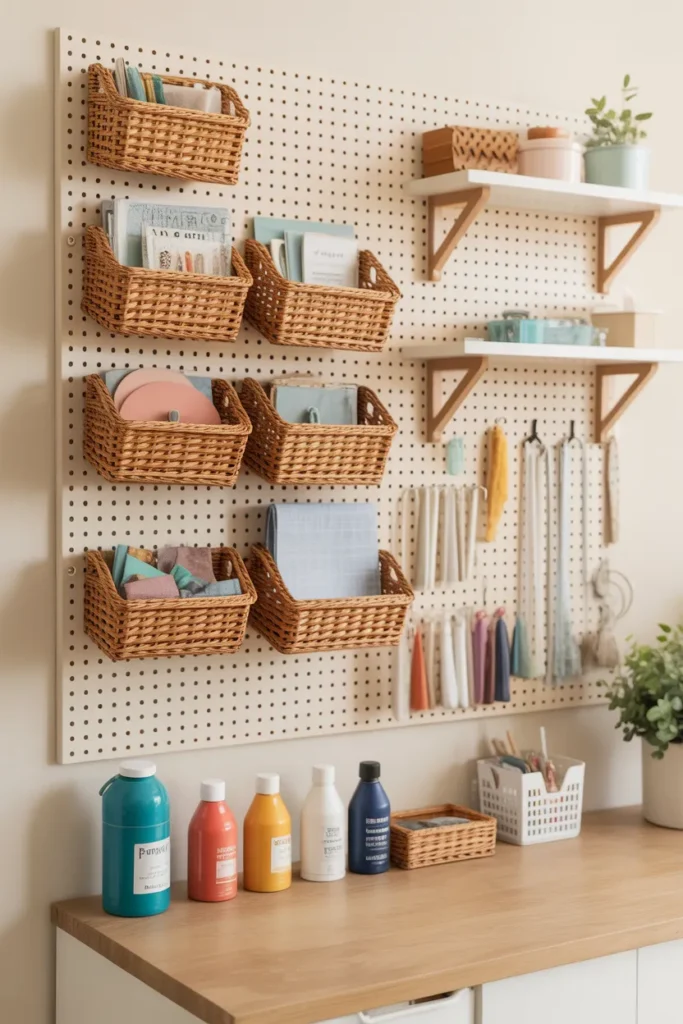
- Adds versatile, customizable storage to a pegboard.
- Keeps materials off counters and easy to access.
- Perfect for medium-sized craft supplies like ribbons and paints.
- Enhances visual order and inspires creativity.
Pegboard baskets are a functional way to extend the versatility of a pegboard in a craft room. I’ve noticed that hanging baskets on pegboards helps store medium-sized items that might otherwise clutter countertops, such as fabric scraps, ribbons, or paint bottles. The open design allows you to see contents at a glance, keeping everything accessible and organized. This setup also keeps frequently used materials within arm’s reach, supporting a smooth workflow. By combining baskets with hooks and shelves, you can create a highly efficient vertical storage system that saves floor space and maintains a tidy, visually appealing craft environment.
Another advantage is the ability to customize the layout as your craft needs change. In my experience, pegboard baskets are flexible, allowing you to rearrange or swap sizes for different projects. They also add depth and texture to the room’s décor, turning practical storage into a design feature. Using baskets in this way maximizes vertical space, enhances accessibility, and contributes to a clean, inspiring workspace that supports creativity and productivity.
7. Clear Acrylic Jars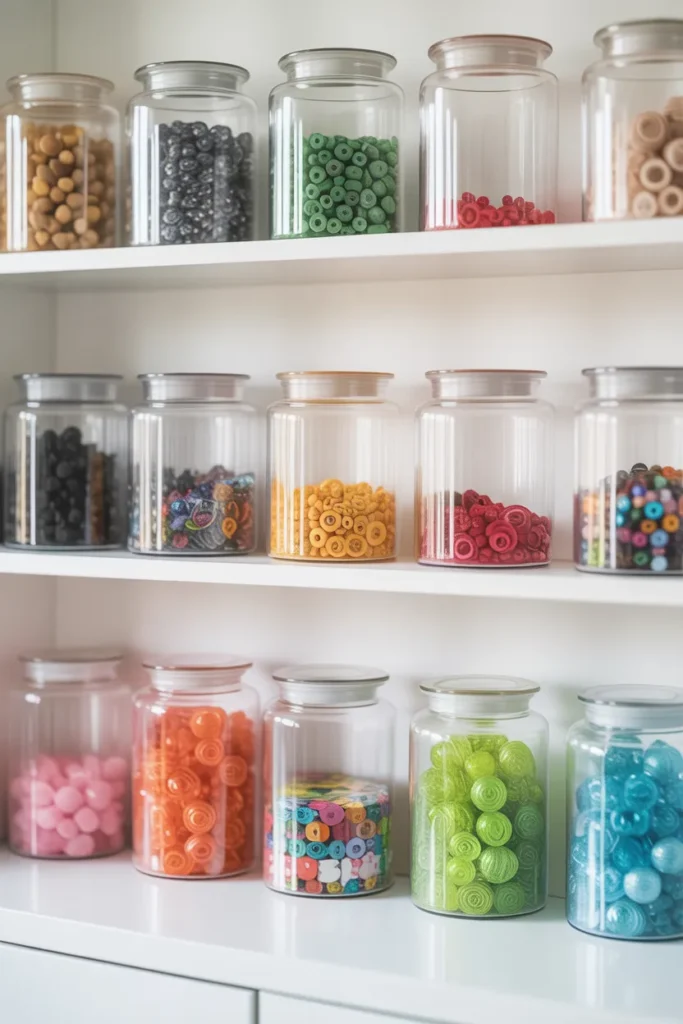
- Makes small supplies visible at a glance.
- Adds color and charm to shelves while staying organized.
- Protects items from dust and spills.
- Supports quick access and efficient crafting workflow.
Clear acrylic jars are a visually appealing and practical way to store small craft items. I’ve seen them transform shelves from cluttered to organized instantly, as the transparency lets you quickly locate beads, buttons, or embellishments. Grouping jars by color or type also adds a decorative, inspiring element to your craft room. Beyond aesthetics, these jars protect materials from dust while keeping them within easy reach. For crafters who value both functionality and style, acrylic jars provide an elegant solution that encourages creativity without sacrificing order or workspace efficiency.
Another advantage of clear jars is their versatility in placement and size. In my experience, stacking or grouping jars by category can create a visually cohesive display while maximizing shelf space. They also work well in combination with labels, allowing you to maintain long-term organization. Clear acrylic jars are low-cost, durable, and visually appealing storage options that enhance both functionality and inspiration, helping your craft room stay tidy and motivating for every project.
8. Hanging Baskets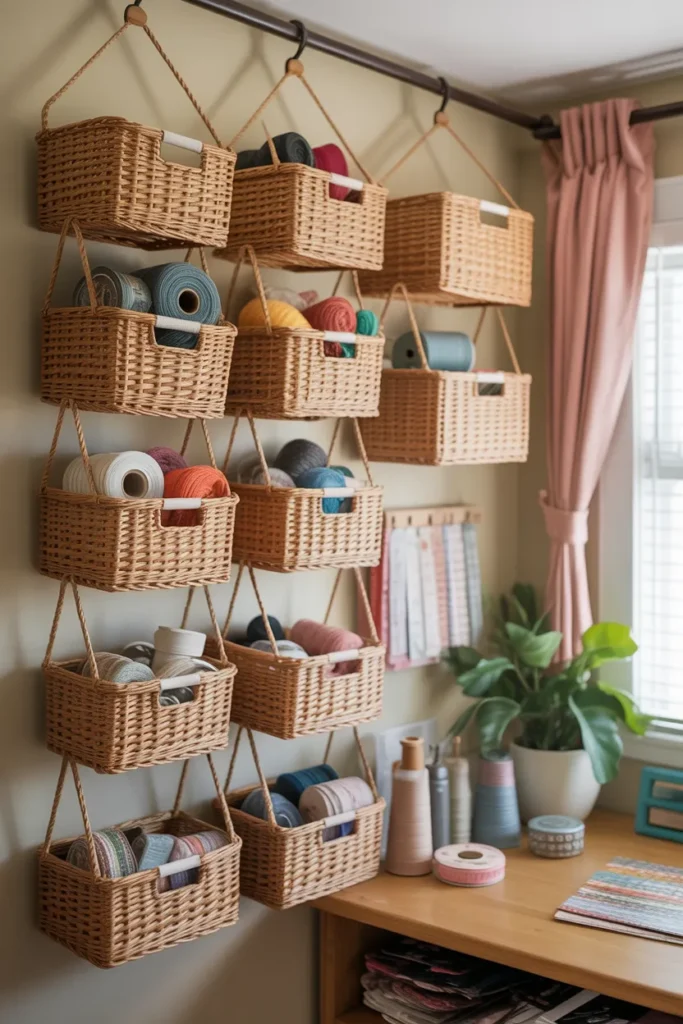
- Frees up counter and floor space.
- Provides easy access to lightweight materials.
- Adds vertical interest and visual appeal.
- Ideal for yarn, ribbons, and fabric scraps.
Hanging baskets are a creative way to organize lightweight craft supplies while freeing up valuable counter space. I’ve noticed that this vertical storage approach works particularly well in small craft rooms, where tabletop space is limited. By suspending baskets above your work area, you can keep yarn, fabric scraps, and ribbon rolls within reach without cluttering surfaces. This method also adds visual interest, giving the room a layered, airy feel. Hanging baskets combine practicality and style, allowing you to access your most-used supplies quickly while maintaining an inspiring, open, and functional workspace.
Another benefit of hanging baskets is their flexibility and adaptability. In my experience, you can adjust heights, change basket sizes, or reposition them as your supply needs evolve. They also encourage tidiness because lightweight items are easier to store and retrieve without creating mess. Hanging baskets are a smart, visually appealing solution that adds both organization and creativity to your craft room, making it more efficient, inspiring, and enjoyable to work in.
9. Modular Cubes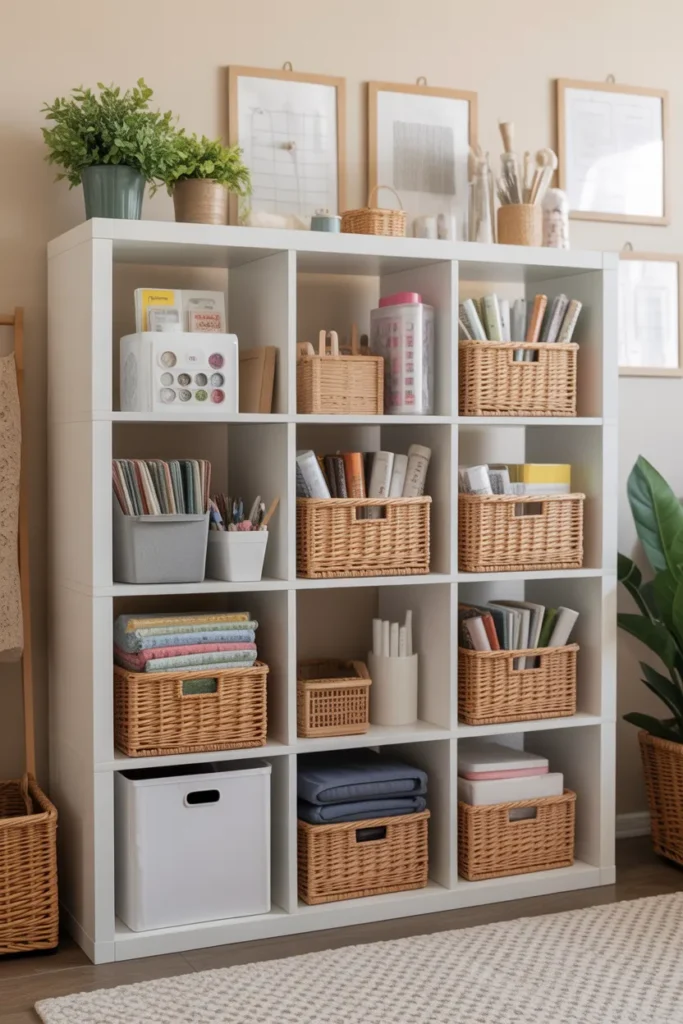
- Offers customizable storage for bins and baskets.
- Allows easy rearrangement to fit changing needs.
- Works well for both small and bulky craft supplies.
- Creates a clean, visually organized room layout.
Modular cubes are an excellent solution for versatile craft room organization. I’ve seen how their adaptability allows crafters to arrange storage for both small and bulky items like fabric, paper, or paint supplies. Each cube can hold baskets, bins, or folded materials, creating a visually cohesive and easily accessible setup. The modular design also supports reconfiguration over time, which is useful as your supply collection grows or changes. Using cubes maximizes floor space while maintaining order, resulting in a craft area that feels open, tidy, and visually inspiring without sacrificing functionality.
Another advantage of modular cubes is their ability to blend style with utility. In my experience, combining open cubes with closed baskets or decorative boxes keeps the room visually appealing while hiding less attractive items. Their flexibility means you can expand, stack, or reposition units as needed, creating a long-term organizational solution. Modular cubes help maintain a clean, inspiring, and efficient creative space that adapts to your craft projects and personal style.
10. Labelled Containers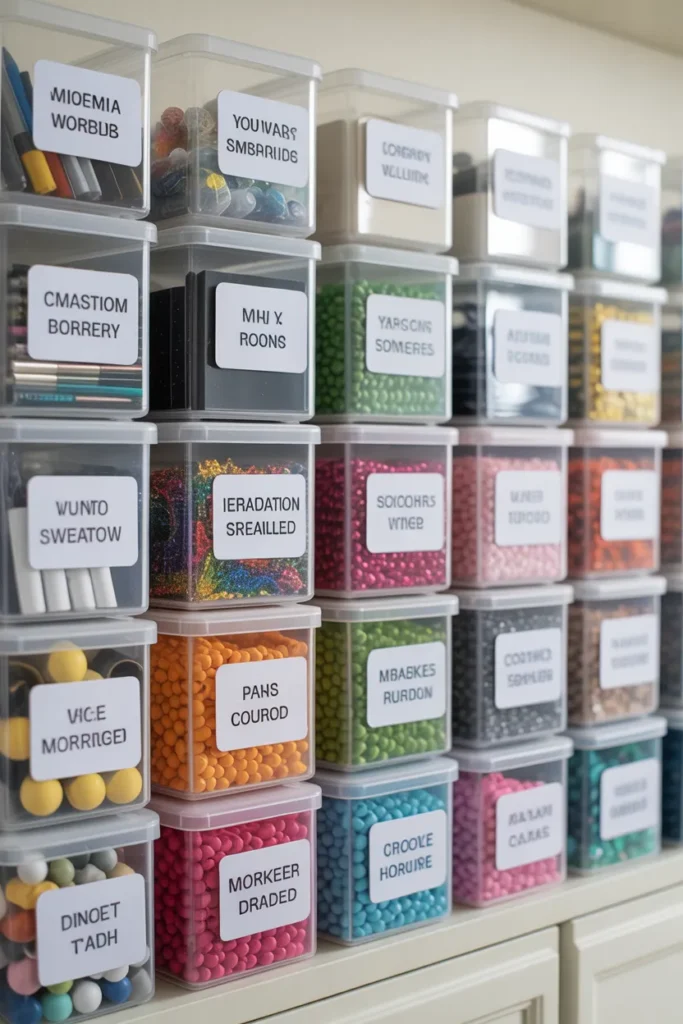
- Makes it easy to find supplies quickly.
- Encourages consistent organization over time.
- Perfect for pens, markers, beads, and small tools.
- Adds a visually neat and structured aesthetic.
Labelled containers are a simple yet effective craft room organization idea. I’ve noticed that clearly marked containers drastically reduce time spent searching for materials, creating a smoother workflow. By assigning each type of supply a dedicated labeled container, you can maintain long-term order and prevent clutter from accumulating. This method works well for pens, markers, beads, or any small items that tend to get misplaced. The combination of clear containers and clean labels also adds a visually appealing structure, making your craft room look organized, inviting, and inspiring for creative work.
Another benefit of labeled containers is flexibility and scalability. In my experience, you can easily add new containers or reassign labels as your supply collection grows. Labels also encourage everyone using the space to return items to their proper place, maintaining consistency. This strategy is especially helpful in shared or multi-purpose craft rooms, ensuring that organization is simple and sustainable. Labeled containers are an accessible, practical solution that keeps your creative space tidy, efficient, and visually appealing.
11. Hanging Rods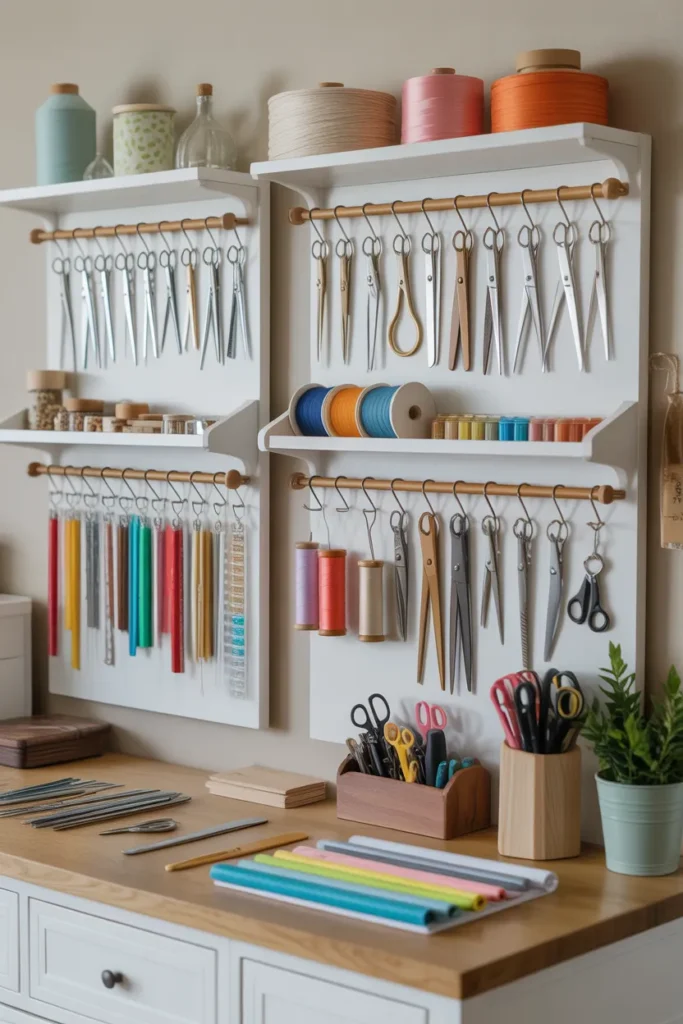
- Frees up desktop and drawer space.
- Keeps tools and materials within easy reach.
- Works well for scissors, ribbons, and thread.
- Supports a streamlined and functional workflow.
Hanging rods are a practical way to keep craft tools organized and accessible. I’ve seen how using rods with hooks or clips allows you to store scissors, ribbons, and spools of thread without taking up valuable counter or drawer space. This method keeps your workspace clear and functional, supporting a smooth workflow. Hanging rods also make it easier to quickly grab what you need while keeping everything visible. By organizing supplies vertically, you maximize space in small or medium-sized rooms, maintaining both efficiency and a visually tidy, inspiring creative area.
Another advantage of hanging rods is their adaptability and simplicity. In my experience, you can add multiple rods at different heights, use S-hooks, or integrate small baskets to expand storage options. This setup works well in any craft room size and encourages a habit of returning tools to their designated spot, preserving organization. Hanging rods are a low-cost, high-impact solution that keeps supplies accessible, workspace clear, and the creative environment neat and motivating.
12. Corkboard Display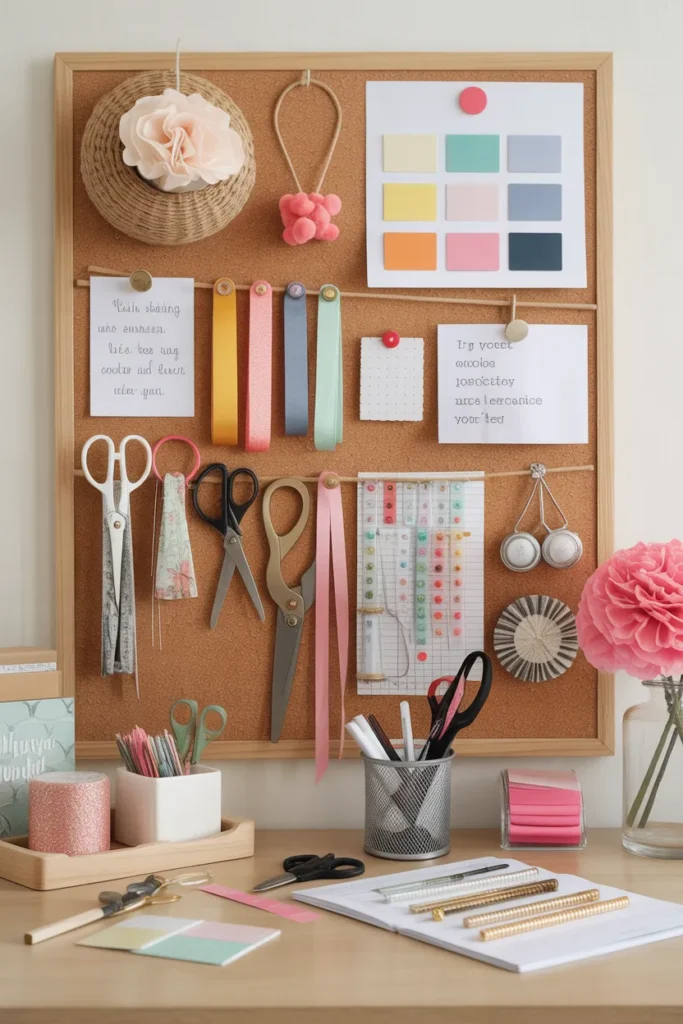
- Keeps small tools and inspiration visible.
- Supports vertical, organized storage.
- Encourages creativity and efficient access to supplies.
- Adds personal, decorative touch to the workspace.
A corkboard display is both functional and visually inspiring for a craft room. I’ve noticed that using a corkboard to hang small tools, notes, and embellishments keeps them accessible while adding personality to the space. This method works particularly well for ribbons, scissors, and reminders, allowing you to see everything at a glance. Corkboards also encourage creativity by providing a space for mood boards, project ideas, or color swatches. By combining organization with decorative elements, you create a practical and motivating workspace that keeps supplies in order while inspiring your next craft project.
Another advantage is the ability to change and update the display easily. In my experience, corkboards allow for quick rearrangement of tools, notes, and inspiration pieces without taking up desk space. This flexibility keeps the workspace fresh and adaptable as projects change. Corkboards provide a visual organization system that is functional, inspiring, and easy to maintain, making them a valuable addition to any creative craft room.
13. Rolling Carts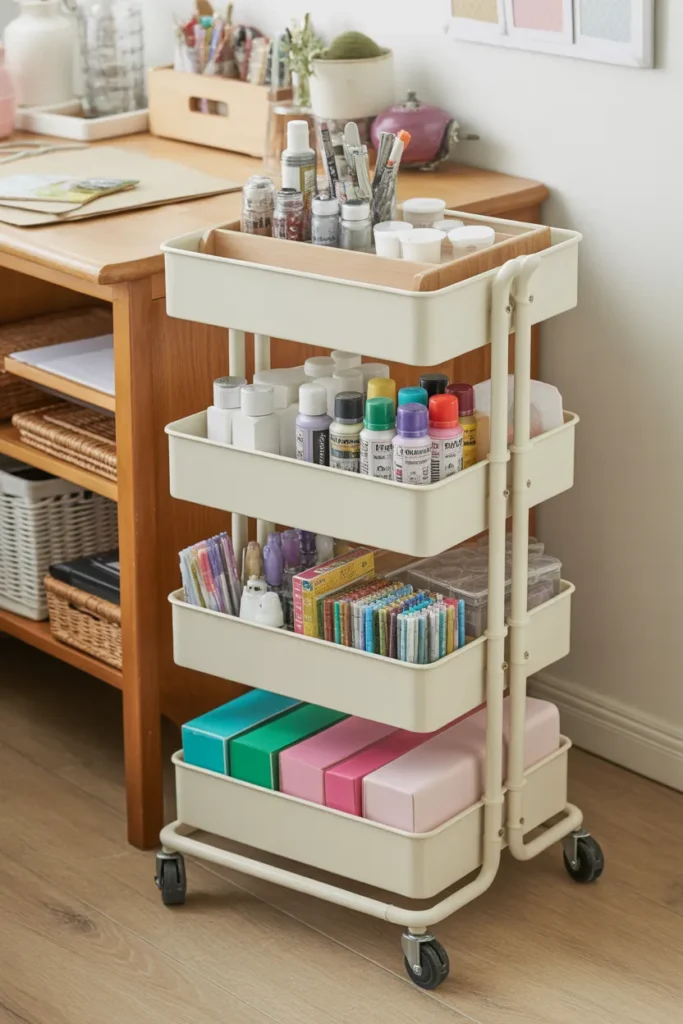
- Provides mobile storage that can move around the room.
- Keeps frequently used supplies within easy reach.
- Perfect for small to medium-sized items like paints and ribbons.
- Maximizes efficiency without sacrificing visual organization.
Rolling carts are an excellent solution for a flexible and organized craft room. I’ve noticed that having a mobile storage unit allows you to move supplies closer to your work area as needed, which is especially helpful in small spaces. The tiers provide designated spots for different types of materials, keeping everything neat and visible. Rolling carts also reduce clutter on your main worktable, enabling a more efficient workflow. With quick access to paints, markers, and ribbons, these carts combine mobility and practicality, making crafting easier and more enjoyable.
Another benefit of rolling carts is their adaptability for evolving needs. In my experience, you can swap bins, add new tiers, or change what is stored on each level as your supply collection grows. Their mobility allows you to share or reorganize materials quickly without permanent fixtures. Rolling carts are both practical and visually appealing, making them a valuable addition to any craft room that needs versatile, accessible, and organized storage.
14. Open Shelving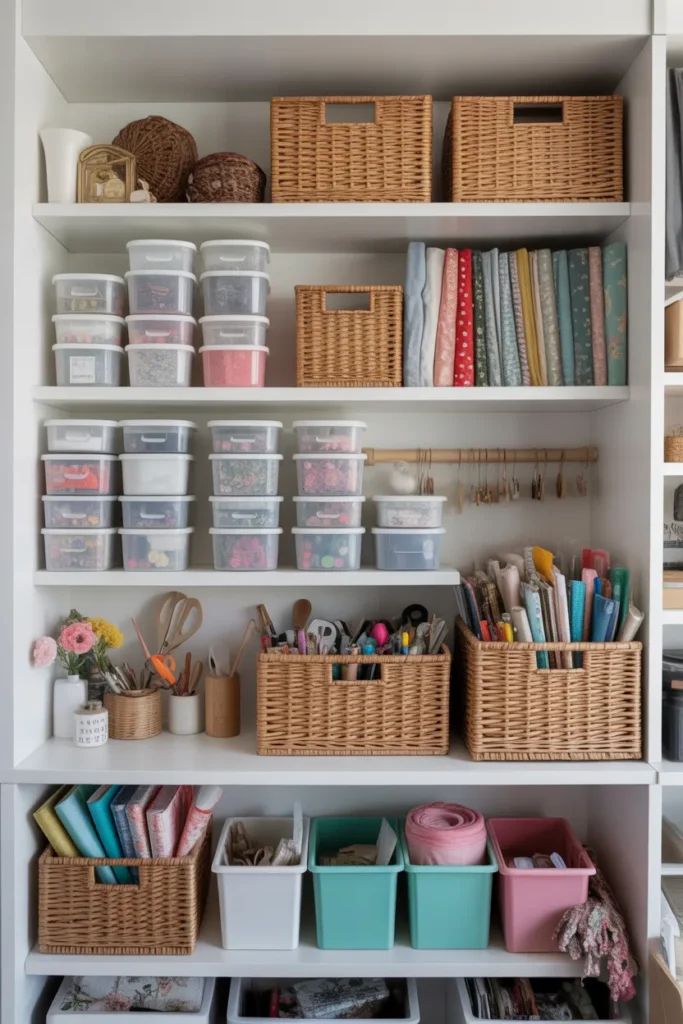
- Displays craft supplies clearly for easy access.
- Encourages consistent organization.
- Works well for bins, jars, and folded fabrics.
- Adds visual structure and aesthetic appeal.
Open shelving is a simple way to keep your craft supplies visible, accessible, and organized. I’ve seen how displaying materials on shelves encourages tidiness because everything is easy to see and reach. This approach is perfect for bins, jars, and folded fabrics, as it keeps frequently used items within arm’s reach while maintaining a clean, open layout. Open shelving also adds a decorative element, giving the room a bright, airy feel. By combining functionality with style, open shelving transforms a cluttered craft space into an organized, inspiring, and efficient creative environment.
Another advantage of open shelving is adaptability and scalability. In my experience, you can mix baskets, jars, and folded materials to customize the look and function of each shelf. Adjusting shelf heights allows storage of items of various sizes, making it perfect for a growing supply collection. Open shelving is an easy, visually appealing solution that maximizes accessibility while maintaining a neat, inspiring craft room that supports productivity and creativity.
15. Overhead Racks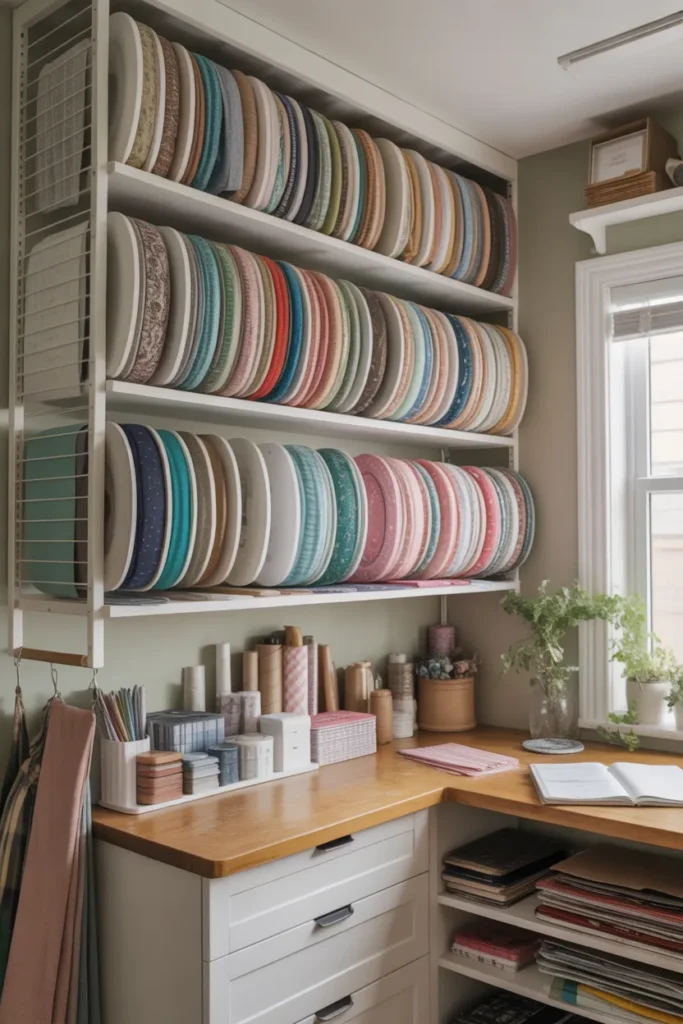
- Utilizes unused vertical space above work areas.
- Keeps lightweight items off counters and floors.
- Ideal for ribbons, fabrics, and craft rolls.
- Enhances room organization and workflow efficiency.
Overhead racks are a clever solution for maximizing vertical space in a craft room. I’ve noticed that storing lightweight fabrics, ribbons, and craft rolls above the work area keeps counters and floors clear, creating a clutter-free workspace. This elevated storage method also makes it easier to spot supplies at a glance, improving efficiency while crafting. By using previously unused overhead space, you maintain an open, airy feel in the room while keeping your materials organized. Overhead racks combine functionality and accessibility, making them a practical addition to any creative space.
Another benefit is flexibility and long-term usability. In my experience, overhead racks can be installed above tables or along walls, and baskets or hooks can be repositioned as your storage needs change. This approach not only maximizes space but also encourages a neat, organized, and inspiring environment. Overhead racks are ideal for small or medium craft rooms, helping you maintain order and efficiency without sacrificing visual appeal or creativity.
16. Pegboard Wall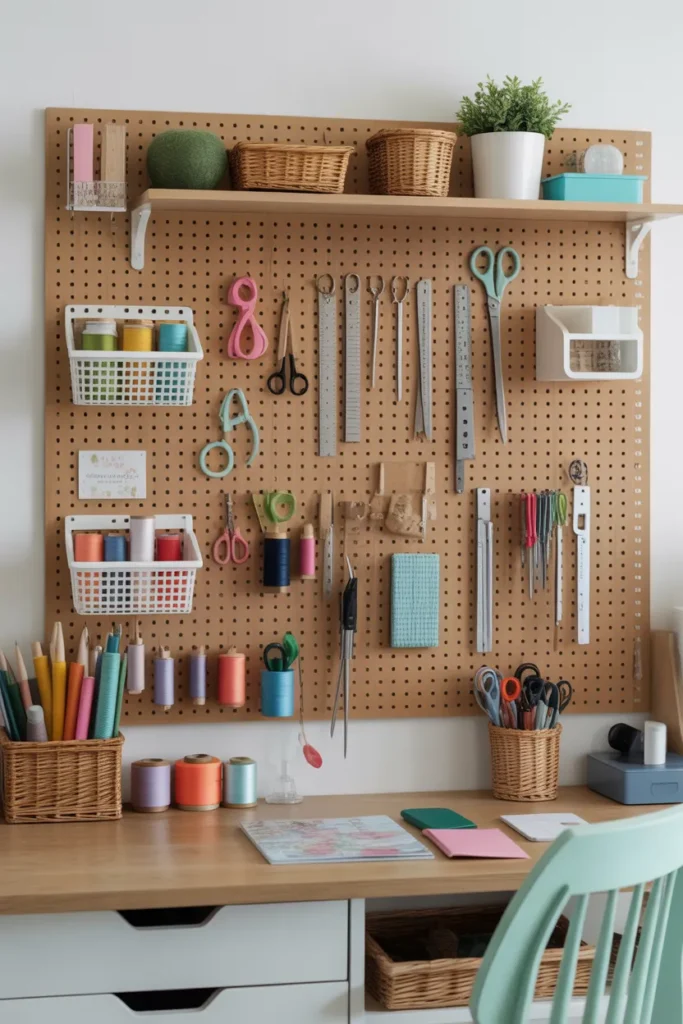
- Maximizes wall space for frequently used tools.
- Keeps supplies visible and accessible.
- Allows customizable arrangement of hooks and baskets.
- Adds a clean, functional, and visually appealing element.
A pegboard wall is a versatile solution for craft room organization. I’ve seen how using a pegboard keeps tools like scissors, rulers, and thread spools neatly displayed and easy to grab. This method works particularly well for vertical storage, freeing up desk and drawer space while maintaining an inspiring workspace. The modular nature of pegboards allows you to adjust hooks, baskets, and shelves as your craft needs evolve. Pegboards not only improve functionality but also add a decorative, structured look that enhances both accessibility and visual appeal in any creative space.
Another advantage of pegboards is their adaptability for future projects. In my experience, you can easily reposition items or add new accessories to accommodate different tools, craft materials, or supplies. This flexibility encourages organization and ensures the workspace remains tidy over time. A pegboard wall is a functional, stylish, and long-term solution that keeps your craft room efficient, motivating, and visually organized for any creative endeavor.
17. Rolling Drawers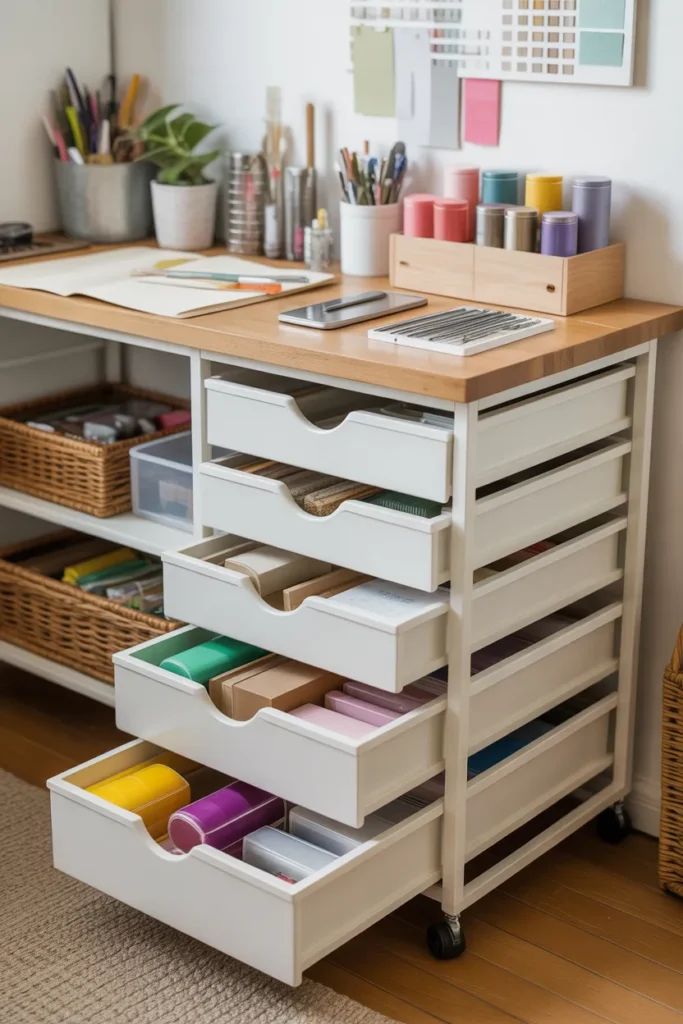
- Provides mobile, hidden storage for small to medium supplies.
- Keeps work surfaces clear and organized.
- Ideal for paints, fabrics, and markers.
- Supports a clean and efficient workflow.
Rolling drawers are perfect for keeping craft supplies organized and out of sight while remaining accessible. I’ve noticed that having a mobile drawer unit allows you to move materials close to your workspace when needed, keeping counters free from clutter. Each drawer can be designated for a specific type of supply, which reduces search time and improves workflow efficiency. These units also make it easy to tuck away materials at the end of a project, maintaining a tidy and visually appealing craft room. Rolling drawers combine mobility, practicality, and visual simplicity.
Another benefit of rolling drawers is their adaptability in different room setups. In my experience, you can position them under tables, next to workstations, or even stack multiple units to expand storage capacity. This flexibility is especially helpful in small craft rooms where every inch matters. Rolling drawers provide a functional, space-saving, and visually neat storage solution that enhances organization, accessibility, and creative productivity.
18. Floating Shelves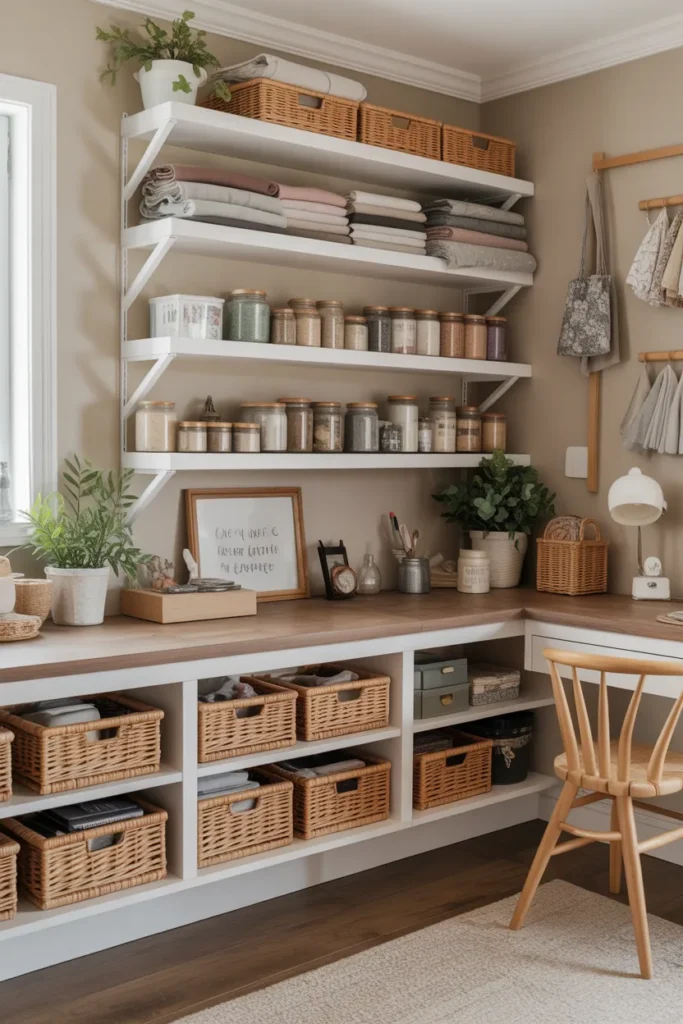
- Frees up floor space while displaying materials.
- Ideal for frequently used or decorative supplies.
- Creates a clean, modern, and visually airy look.
- Encourages a neat and accessible workspace.
Floating shelves are an elegant way to organize a craft room while keeping the floor clear. I’ve noticed that placing jars, baskets, and folded fabrics on wall-mounted shelves makes materials visible and accessible without cluttering work surfaces. This approach works especially well for frequently used supplies and decorative items, adding both function and style. Floating shelves create an open, airy feel in the room, making even small spaces appear larger. By combining practical storage with visual appeal, these shelves support an organized, inspiring, and productive creative environment for crafters.
Another advantage of floating shelves is their flexibility in styling and placement. In my experience, you can arrange them at different heights, mix basket types, or add decorative accents to suit your craft needs and aesthetic preferences. This adaptability allows for long-term organization that grows with your projects. Floating shelves are a space-saving, visually appealing solution that enhances accessibility, maintains neatness, and elevates the overall creative ambiance of your craft room.
19. Modular Cubes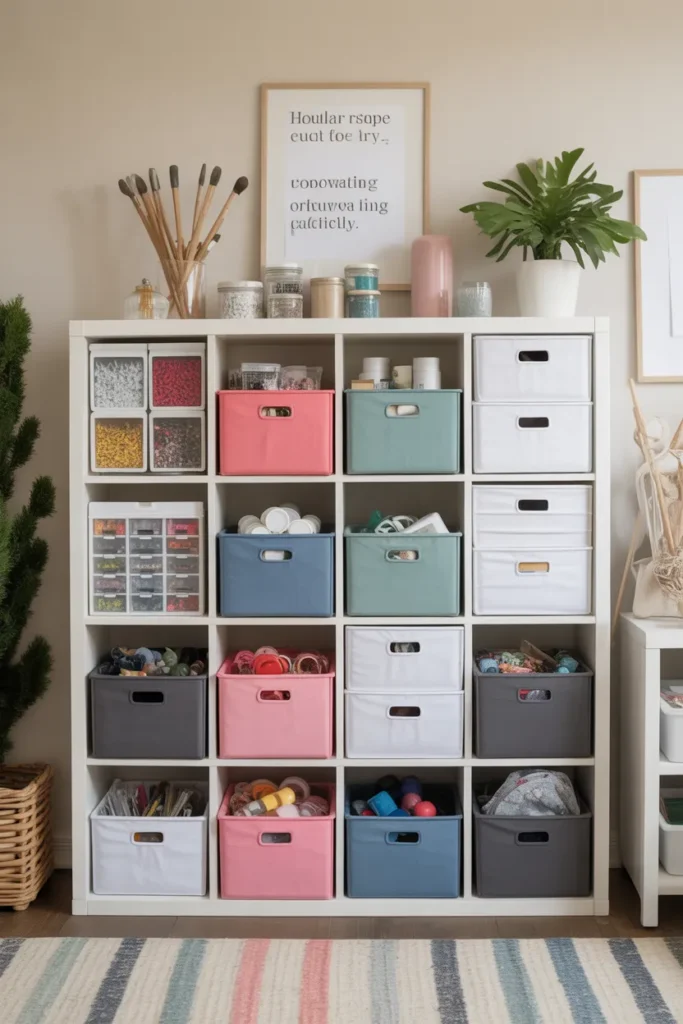
- Offers customizable storage for diverse materials.
- Each cube can store different supplies neatly.
- Easy to reorganize or expand as needed.
- Keeps the room visually balanced and tidy.
Modular cubes are a versatile solution for craft room organization. I’ve noticed that each cube can hold different types of supplies—bins for beads, jars for paint, or fabrics—making it easy to categorize everything efficiently. This method supports a clean, balanced visual layout while maximizing storage space, especially in smaller rooms. Modular cubes are also adaptable; you can stack, rearrange, or add new cubes as your collection grows. Their flexibility allows you to maintain both accessibility and organization while creating a neat, inspiring environment that encourages creativity and productivity.
Another benefit of modular cubes is their scalability and multi-functionality. In my experience, you can combine cubes of different sizes to fit any wall or corner, creating customized storage tailored to your craft room’s needs. This approach makes it simple to keep supplies organized over time while maintaining a visually appealing and functional space. Modular cubes are an accessible, practical, and aesthetically pleasing solution that supports a tidy, efficient, and motivating craft room.
20. Wall-Mounted Bins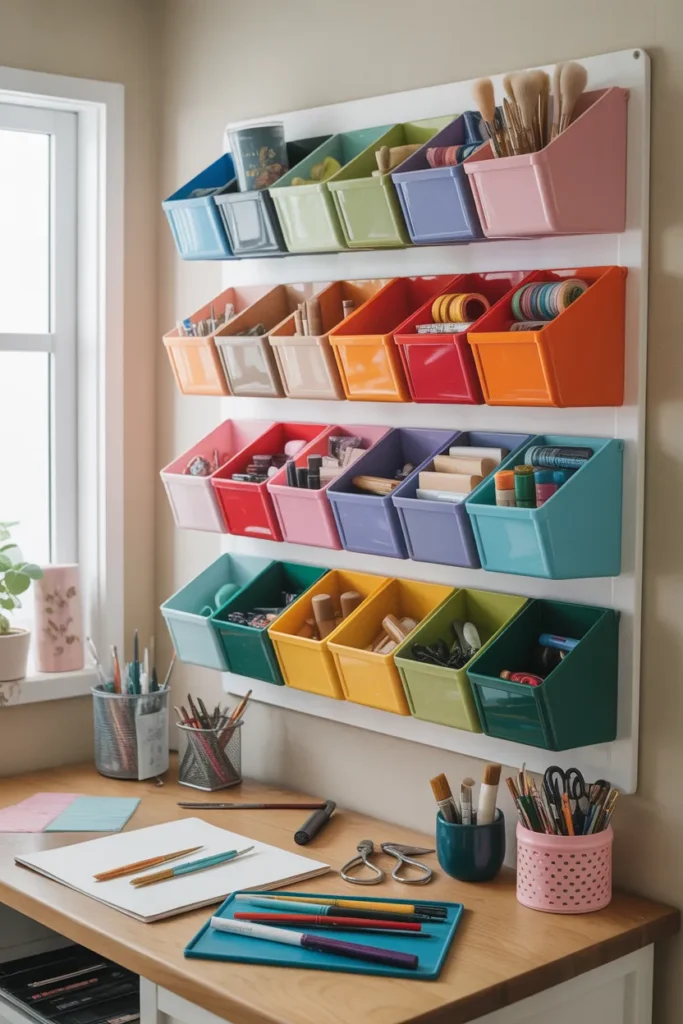
- Keeps small supplies off counters and floors.
- Ideal for tools, ribbons, and brushes.
- Enhances accessibility while maintaining neatness.
- Utilizes vertical space efficiently.
Wall-mounted bins are a smart way to organize craft supplies while keeping work surfaces clear. I’ve seen how placing ribbons, brushes, and markers in elevated bins makes them easy to reach while maintaining a tidy workspace. This approach maximizes vertical space, leaving the floor and desk free for projects and movement. Wall-mounted bins also add a colorful, visually appealing element that can complement the room’s décor. By combining functionality with style, these bins transform cluttered craft areas into organized, inspiring, and highly efficient creative spaces that make crafting smoother and more enjoyable.
Another advantage of wall-mounted bins is flexibility and accessibility. In my experience, you can arrange bins at different heights, mix colors or sizes, and swap contents as your supply needs change. This system ensures that frequently used materials are always within arm’s reach while keeping the room organized. Wall-mounted bins are a practical, space-saving, and visually engaging storage solution that enhances both productivity and aesthetic appeal in any craft room.
Conclusion :
By implementing these 20 Craft Room Organization Ideas for Creative Spaces, you can create a room that is both functional and visually inspiring. I’ve seen how simple additions like modular cubes, overhead racks, and wall-mounted bins can transform cluttered areas into tidy, efficient, and motivating workspaces. Each tip is designed to enhance accessibility, encourage creativity, and maintain a beautiful, Pinterest-ready aesthetic. Save this post to revisit these ideas, try one or more in your own space, and share with fellow crafters who need organization inspiration. With the right strategies, your craft room can truly become a creative sanctuary.