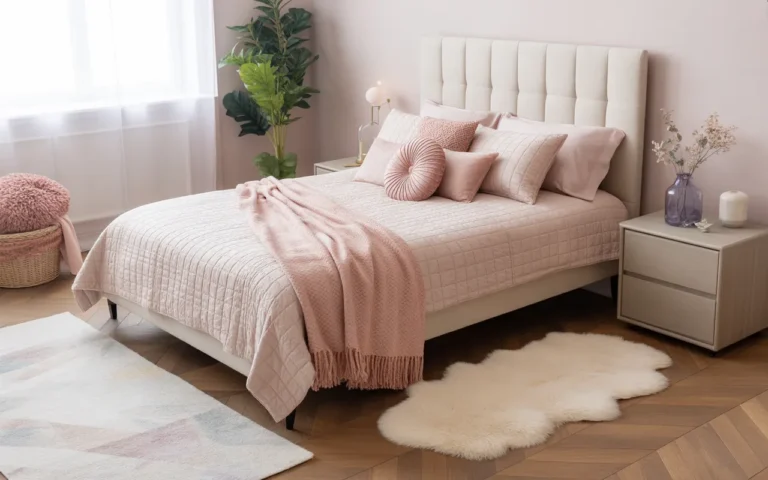
22 Room Decor Ideas to Refresh Your Bedroom & Make a Lasting Impression
A bedroom refresh does not need new furniture or a paint job to feel real. The fastest changes are layers and light: better bedding, a rug in the right size, curtains hung properly, and surfaces cleared down to a few chosen pieces. Most rooms in this list were fixed with exactly those moves.
Pick two or three ideas that match your room and do them properly rather than attempting all twenty two at once. A well made bed with good lamps changes more than ten small ornaments scattered around the same tired setup. Order matters too, so start with the bed and work outward to the walls and floor.
Each idea below keeps the same simple format. Three short paragraphs explain the move and the details that make it land, three bullets give the quick version, and the shop table offers a practical starting point for comparing pieces in the right size and style.
This post contains affiliate links. If you buy through them, I may earn a small commission at no extra cost to you.
1. Soft Neutral Layering for a Calm Reset
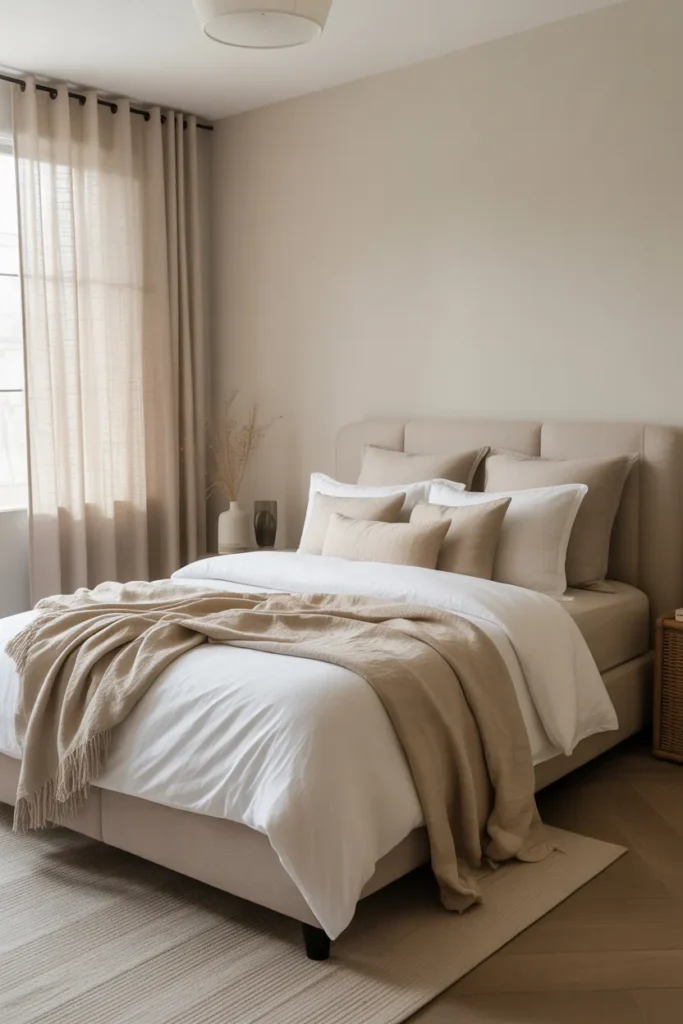
Neutral layering is the quickest calm reset a bedroom can get. Whites, ivory, oatmeal, and pale gray layered across bedding, curtains, and a rug make the room feel clean without looking empty. The trick is texture. Smooth sheets, a nubby throw, a woven cushion, and a soft rug in the same tones give the eye plenty to rest on.
Build from the bed out: The bed covers the most space, so set the tones there first and match everything else to it. Curtains one shade deeper than the bedding and a rug one shade lighter than the curtains gives gentle depth. If a piece in the room cannot sit inside that range, it is usually the piece that has been bothering you.
Wash everything first: A reset fails on tired fabric. Wash or replace yellowed pillow inserts, steam the duvet, and shake rugs outside before styling anything. Fresh neutrals only look fresh when they are actually clean. This costs an afternoon and nothing else, and it makes every later purchase look better than it would have on day one.
- Bedding, curtains, and rug in one close neutral range
- Texture changes where color stays the same
- Wash and steam all fabric before styling
Shop This Look
2. Statement Headboard That Steals the Spotlight
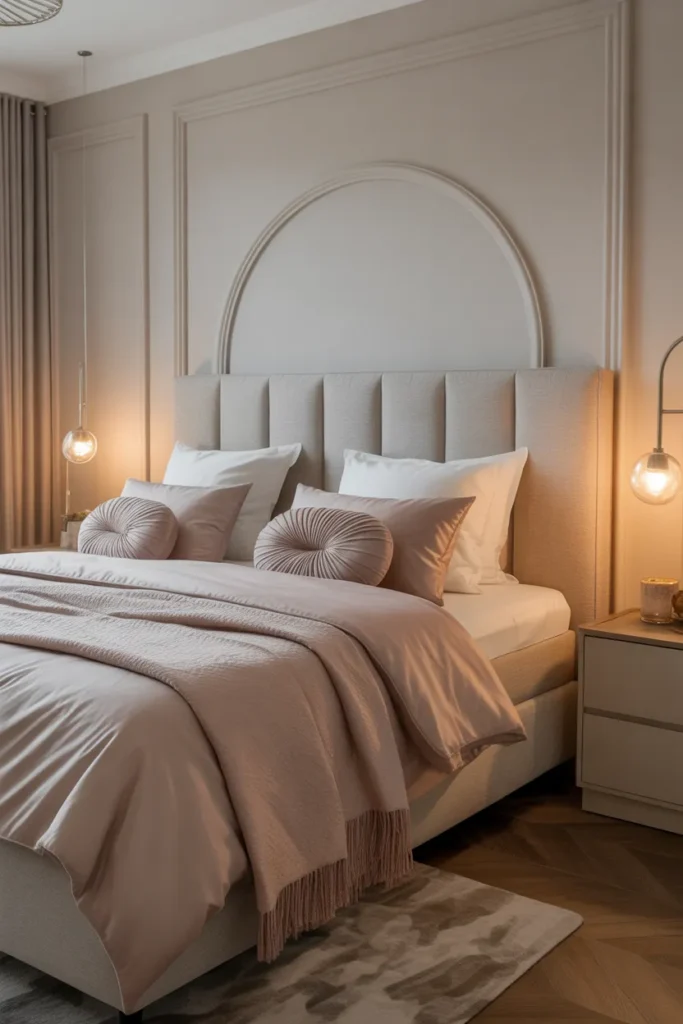
A headboard is the one piece guests and photos notice first in a bedroom. Tall upholstered styles in linen, boucle, or velvet give a plain bed a finished front, while wood panel styles suit rooms that already have soft fabric elsewhere. If the budget is tight, an oversized cushion arrangement against the wall copies the look for a season.
Get the proportions right: For a queen bed, look for a headboard at least 48 inches tall and close to the full width of the bed. Short, narrow headboards look lost behind pillows and read as an afterthought. Wall mounted panels help in rentals, since they fix with small screws and come down without taking the bed frame with them.
Style the wall lightly: A strong headboard needs little above it. Leave the wall bare or hang one wide piece of art with a clear gap between frame and headboard top. Busy galleries over a bold headboard fight for the same attention. Keep bedside lamps simple in shape so the bed wall has one clear star.
- Headboard at least 48 inches tall for a queen
- Full bed width, upholstered or panel style
- Little or nothing on the wall above it
Shop This Look
3. Cozy Lighting That Changes the Mood Instantly
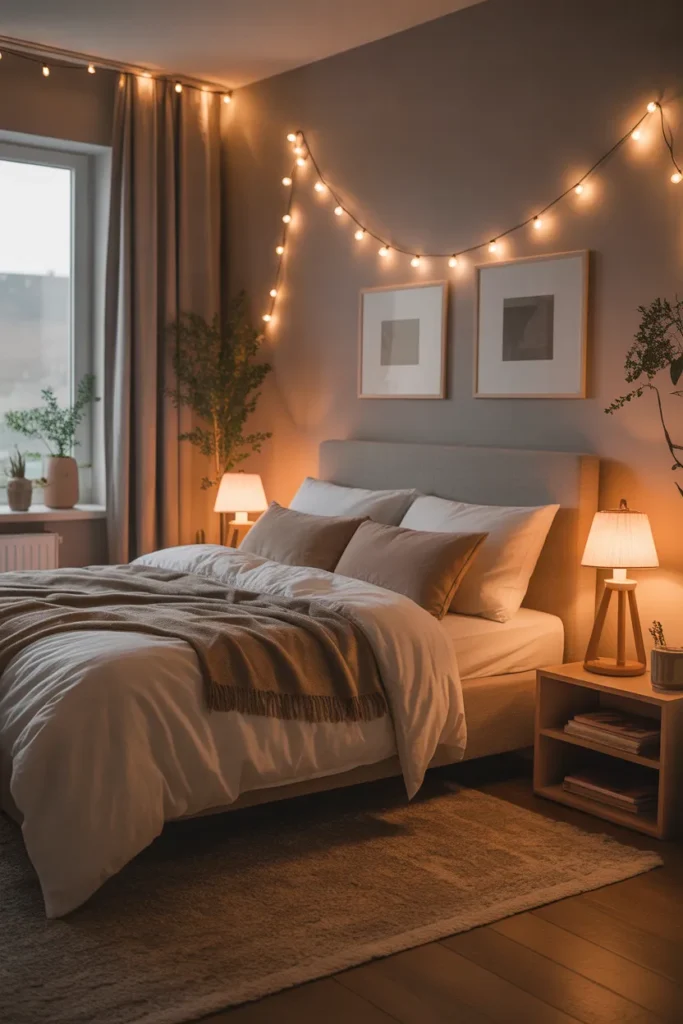
Lighting changes a bedroom mood faster than paint does. One ceiling light leaves corners dark and faces shadowed, while lamps at bed height make the same room feel warm by seven in the evening. Add two bedside lamps and one more low light source, then test the room at night before you judge any other decor in it.
Use warm bulbs everywhere: Bulbs near 2700K suit bedrooms and make wood and skin tones look healthy. Keep every bulb in the room at the same temperature, since a mix of warm and cool light makes even a tidy room feel unsettled. Dimmable bulbs or lamps with two settings cover reading and winding down without extra fixtures.
Place light where life happens: A lamp by the reading chair, light over the dresser mirror, and bedside lamps for the bed covers the real uses. Decorative string lights and candles sit on top of that base, not instead of it. If you squint or use your phone torch for anything at night, that spot needs a proper light.
- Two bedside lamps plus one more low light source
- All bulbs matched near 2700K, dimmable if possible
- Light placed at the bed, chair, and mirror first
Shop This Look
4. Textured Bedding for Instant Luxury
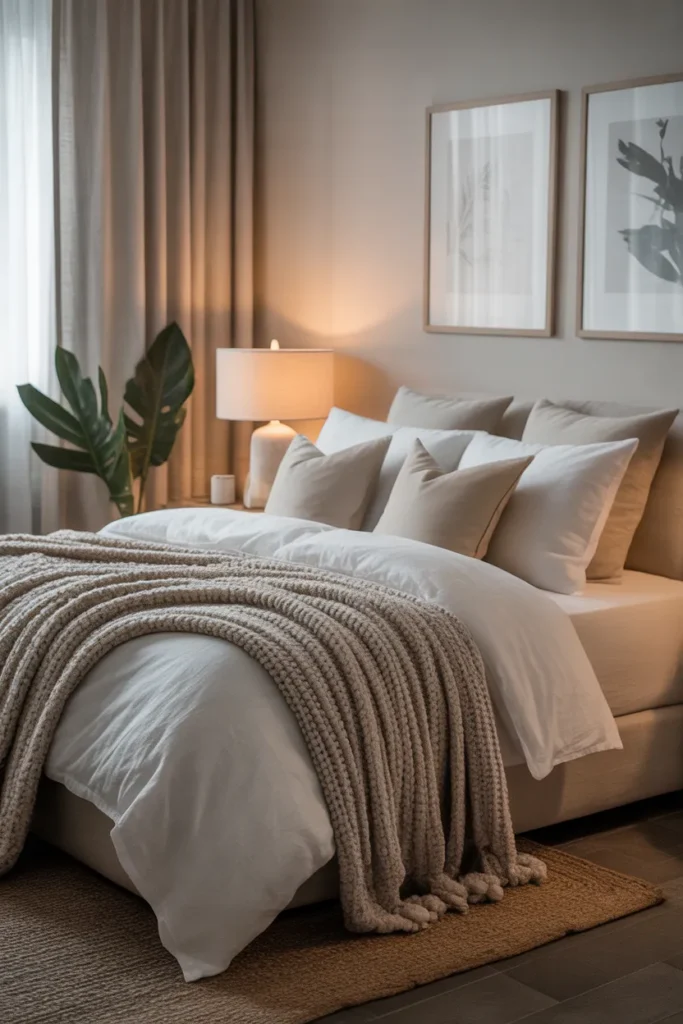
Texture on the bed is what separates a flat made bed from one that looks inviting. A quilted coverlet, a waffle weave blanket, or a linen duvet with a soft rumple adds depth in photos and in person. Keep the colors quiet and let the weave do the work, since patterned bedding dates faster than plain textured fabric.
Layer by weight: Light coverlet over the duvet in summer, folded throw at the foot in winter, and swap as the seasons turn. Two layers is the everyday sweet spot for most rooms. More than three starts to look staged and makes the bed a chore to remake, which means it stops getting made at all by Thursday.
Touch it before you buy: Bedding texture is a feel purchase as much as a look purchase. Scratchy decorative throws end up on the floor, and stiff coverlets crackle every time you roll over. If you shop in person, run the fabric over your inner arm. Online, favor cotton and linen with clear wash instructions over mystery blends.
- Quilt, waffle, or linen weave for visible texture
- Two layers for everyday, third is seasonal
- Natural fibers that feel soft against skin
Shop This Look
5. Minimal Nightstands with Thoughtful Styling
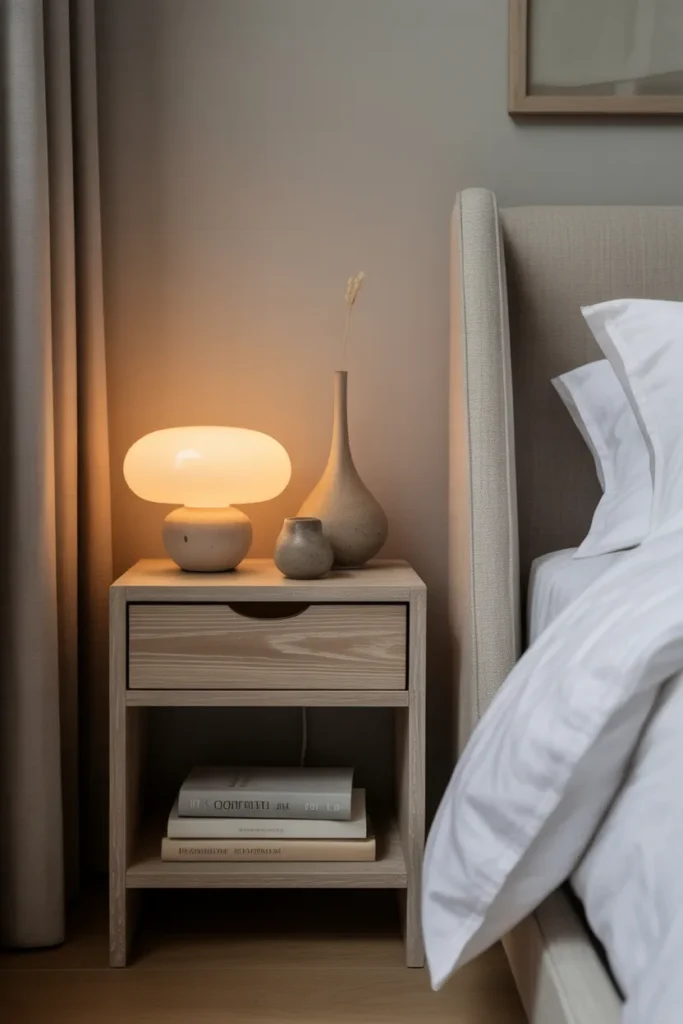
Nightstands look best with very little on them. Lamp, book, water glass, and a small dish for jewelry is a complete setup for most people. When the top stays clear, the whole bed wall looks calmer, and you stop knocking things over in the dark. Drawers or a lower shelf can hold the rest without showing it.
Give clutter a drawer home: Chargers, remotes, hand cream, and spare cables belong in the drawer or in a small box on the lower shelf. One charging spot per side, with the cord run behind the nightstand, ends the cable tangle on the floor. If the drawer is full, the answer is a sort out, not a bigger pile on top.
Style with one soft item: A tiny plant, a candle, or a small stack of two books adds life without crowding. Keep heights varied: lamp tall, book flat, plant small. Three items at the same height look like a lineup. Wipe the top weekly, since pale nightstands show dust and water rings quickly at close range.
- Lamp, book, glass, and one small dish on top
- Chargers and extras inside the drawer
- One soft styling item, heights varied
Shop This Look
6. Accent Wall That Instantly Refreshes the Space

One painted or papered wall behind the bed refreshes a room for the price of a weekend. Deep green, warm clay, navy, and soft charcoal all work behind neutral bedding, and limewash or simple panel molding suits people who want texture over color. Test a large patch first and live with it through a full day of light changes.
Prepare the wall properly: Fill holes, sand rough patches, and wash off dust before paint or paper goes on. Most accent wall failures are prep failures that show through the finish. Use proper tape for ceiling and skirting edges, since a wobbly line at the top of the wall is the detail everyone ends up staring at.
Keep the other walls quiet: The accent carries the room, so the other three walls stay plain and light. Bedding and curtains in soft neutrals let the wall color lead without a fight. If you later tire of the color, repainting one wall is a morning of work, which is exactly why this idea suits renters and cautious decorators alike.
- Accent on the headboard wall only
- Large test patch checked morning and evening
- Other walls and bedding kept plain and light
Shop This Look
7. Mirrors That Reflect Light and Style
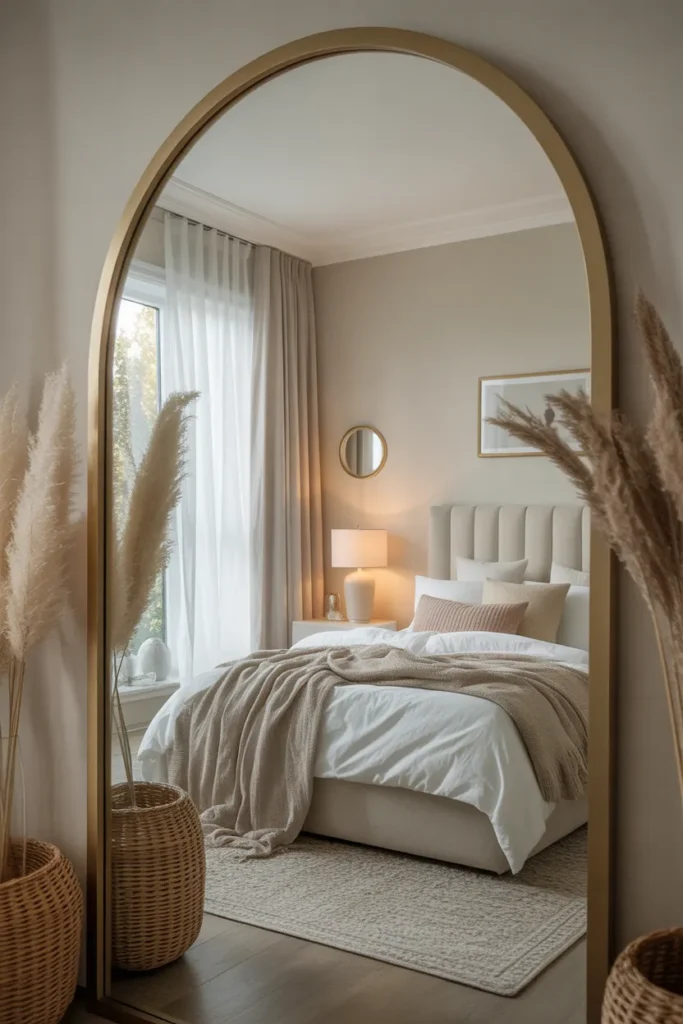
A well placed mirror makes a bedroom brighter and feels bigger without moving a wall. Hang or lean one opposite or beside the window so it catches daylight and throws it back into the room. Round mirrors soften a room full of straight furniture lines, while a tall leaner suits a dressing corner near the wardrobe.
Check what it reflects: A mirror shows whatever sits opposite it, so aim it at the window, the made bed, or a plant, never at a cluttered wardrobe or the laundry basket. Stand where you will see it most, from the bed and the door, and adjust the angle before fixing anything to the wall for good.
Fix leaners safely: Large leaning mirrors must be fixed to the wall at the top with a strap or bracket, especially in homes with children or pets. A mirror that slides is a serious hazard, not a styling detail. Smaller mirrors belong hung on proper fixings rated for their weight, not on a single hopeful nail.
- Mirror placed to catch window light
- Reflection checked from bed and doorway
- Leaning mirrors strapped to the wall at the top
Shop This Look
8. Layered Rugs for Extra Warmth
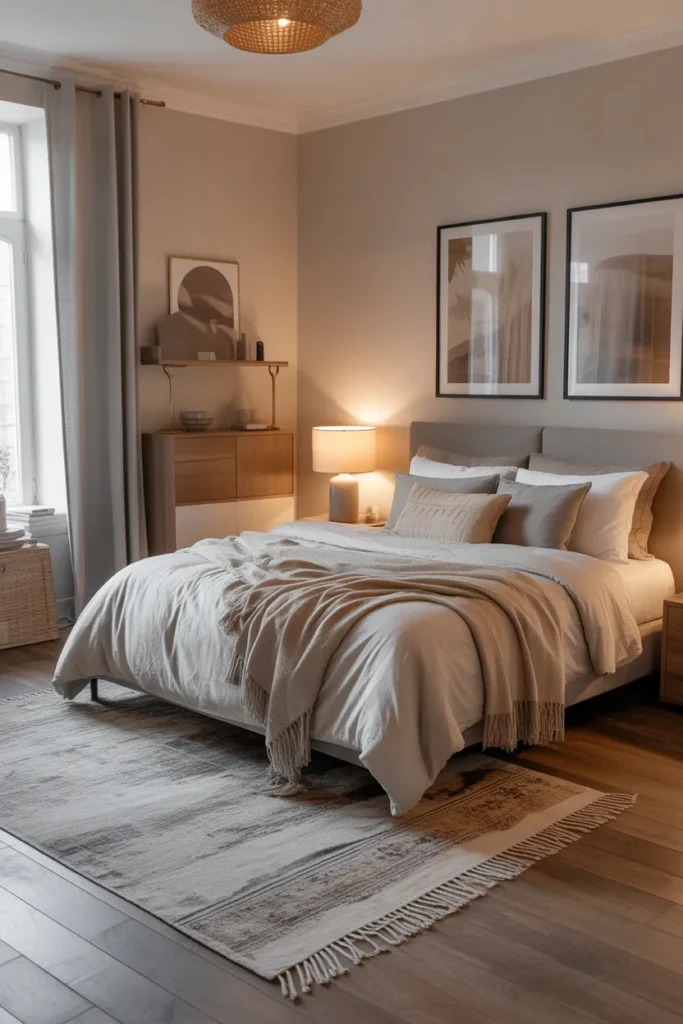
Layering rugs sounds fancy but it is simple. A large plain rug sets the base and a smaller softer or patterned rug sits on top where your feet land. This covers worn carpet, adds warmth in rented rooms where you cannot change the floor, and lets you use a smaller nice rug that would look lost on its own.
Size the base rug first: The base should run under the bed and out on both sides by at least 18 inches, so the nightstands sit near its edge and the waking side is fully covered. A base that is too small makes the layering look like a mistake. Neutral jute, wool look, or low pile plain rugs make the calmest base for a patterned top layer.
Anchor the top layer: Thin rugs on top of rugs creep and curl at the corners, which is a trip risk in the dark. Use rug tape or a thin pad between the layers and keep the top rug where feet land flat, beside the bed. Vacuum both layers weekly, lifting the top one now and then so dust does not build up unseen.
- Large plain base rug under and around the bed
- Smaller soft rug on top at the waking side
- Tape or pad between layers to stop creep
Shop This Look
9. Soft Curtains That Frame the Room Beautifully

Curtains frame a bedroom window and finish the wall more than most people expect. Hang them high and wide so the window looks taller, and let panels fall to the floor in soft folds. Sheer layers under heavier panels give privacy in the day and darkness at night, which is the combination bedrooms actually need.
Measure twice, hang once: Measure from where the rod will sit, near the ceiling, down to the floor, then add panel width at one and a half to two times the window width for proper fullness. Skimpy panels pulled flat look like sheets on a line. Ready made panels in standard lengths suit most rooms if the rod height is set to match them.
Steam the folds in: New curtains hang in creases straight from the packet. Steam them after hanging so the folds fall straight, and tie them loosely for a day if they flare at the bottom. This small step is the difference between curtains that look fitted and curtains that look borrowed from another window.
- Rod high near ceiling and wider than the frame
- Panels one and a half to two times window width
- Steam after hanging so folds fall straight
Shop This Look
10. Decorative Pillows That Add Personality
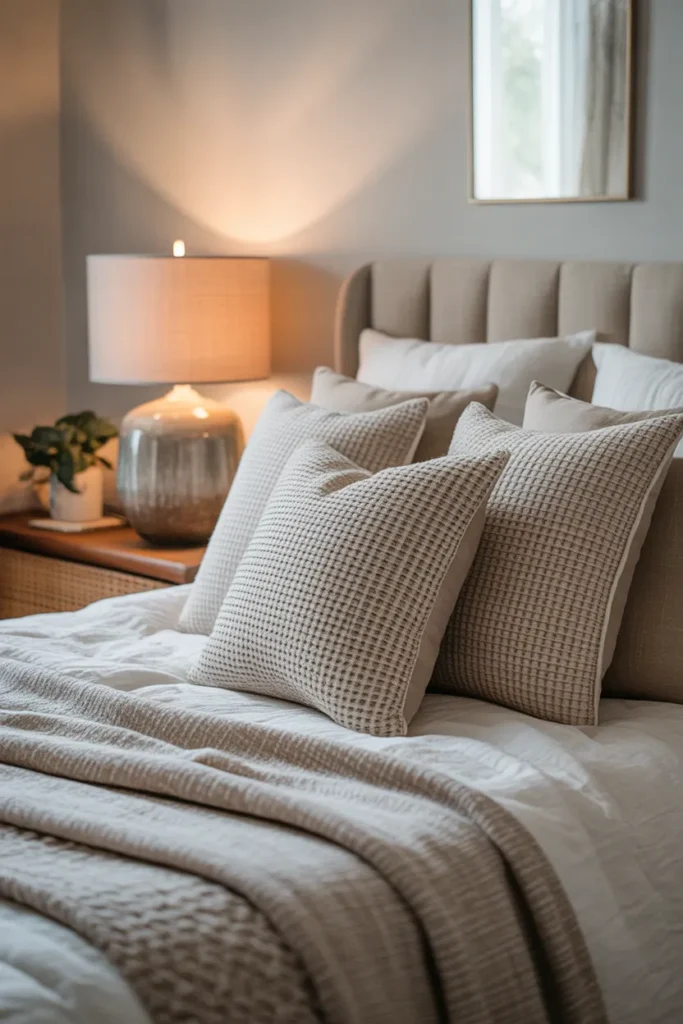
Pillows are the cheapest personality a bed can get. Two sleeping pillows, two shams, and one or two cushions in a color or texture you love is a full arrangement for most beds. Covers swap in minutes, wash easily, and store flat, so this is the safe place to use the color you were too nervous to paint on a wall.
Mix size and texture: Combine one large square, one smaller cushion, and one long lumbar rather than three identical squares in a row. Velvet, linen, and knit covers in the same color family look collected instead of matched from a single display. Keep inserts plump, since a limp cushion makes the whole bed look tired.
Limit the nightly pile: If it takes more than a minute to clear the bed at night, there are too many cushions and they will end up living on the floor. Three decorative pieces is the practical ceiling for most couples. Store out of season covers in the linen cupboard and rotate them rather than adding more to the bed.
- Shams plus two or three decorative cushions maximum
- Mixed sizes with one long lumbar shape
- Covers in one color family, varied textures
Shop This Look
11. Wall Art That Feels Calm and Curated
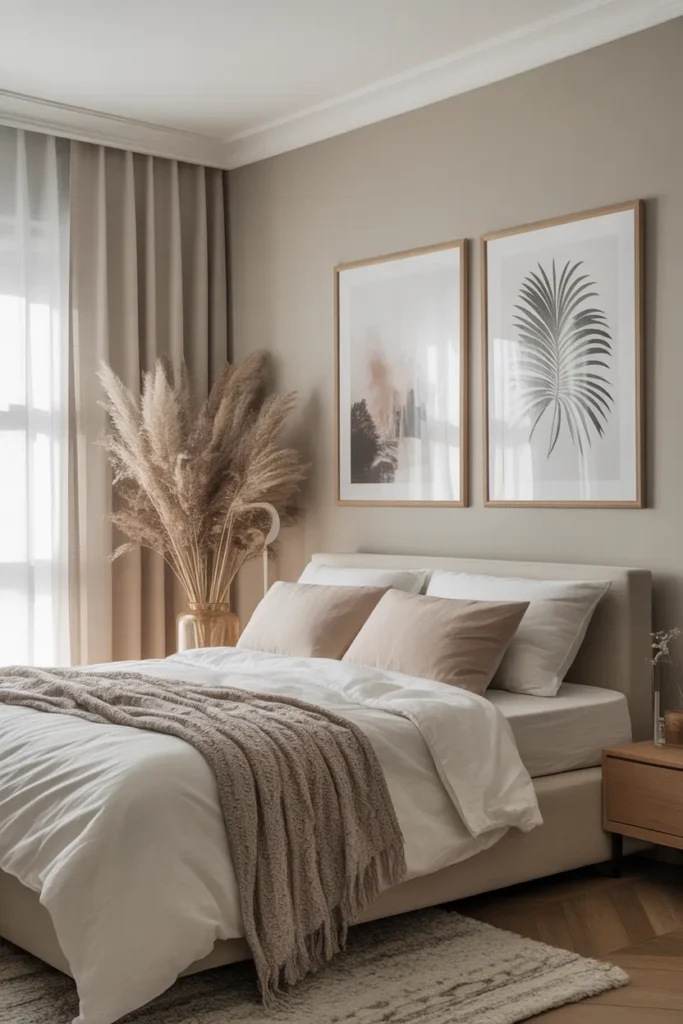
Calm art suits bedrooms better than loud art for most sleepers. Soft landscapes, simple line work, and pale abstracts in thin frames keep walls interesting without waking the room up. Hang pieces over the bed or dresser in ones or twos, with breathing space around them, and let the colors echo the bedding so the wall joins the scheme.
Hang at the right height: Center art near eye level, about 57 inches from the floor, and keep six to eight inches between a frame and the furniture below it. Pieces hung near the ceiling are the most common bedroom mistake and they make good art look like an afterthought. Tape the outline on the wall and live with it a day before drilling.
Use pairs and singles well: One large piece over a queen bed or a matched pair over the nightstands both work. Odd little frames scattered across a big wall do not. If you rent, large prints in light frames hang happily on removable strips rated for the weight, and standard sizes keep framing costs low.
- Soft subjects and pale colors for a restful wall
- Center near 57 inches, gap above furniture
- One large piece or a matched pair, not scatter
Shop This Look
12. Bench or Ottoman at the Foot of the Bed
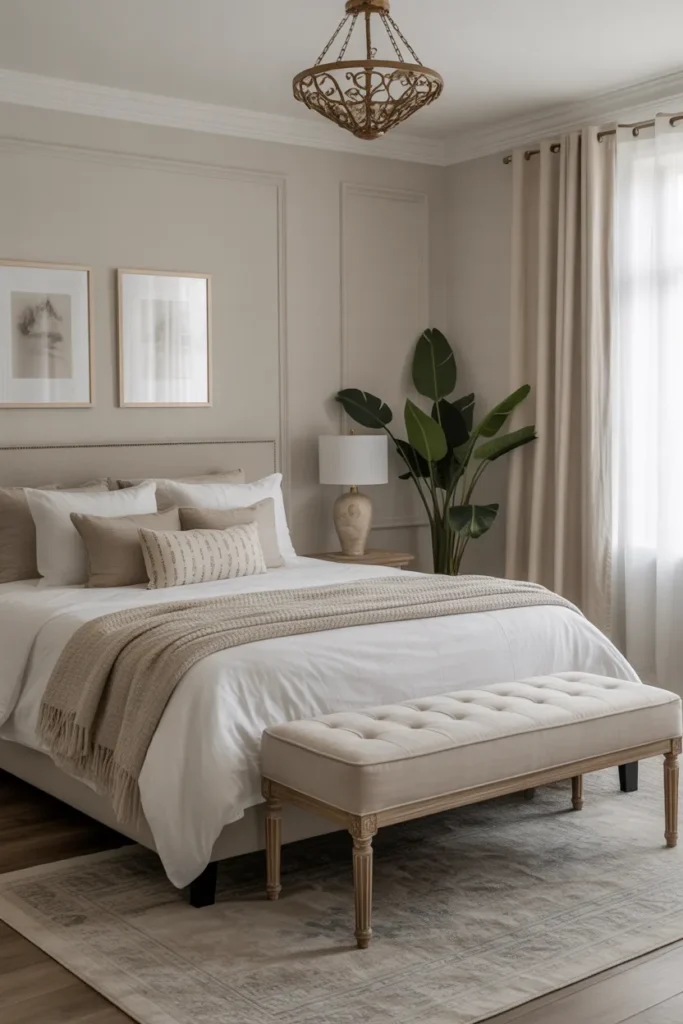
A bench or ottoman at the foot of the bed is useful every single day. It catches the throw, holds tomorrow clothes, gives you a seat to put shoes on, and finishes the bed like a frame. Upholstered styles add softness, wood styles add structure, and storage versions hide spare blankets in rooms short on cupboards.
Size it to the bed: Aim for a bench a little narrower than the bed, roughly 80 to 90 percent of its width, and a height close to the mattress top or just below. A bench that towers over the bed or blocks half the walkway earns its keep nowhere. Leave clear space at both ends so the room still flows.
Keep it clear enough to use: A bench buried under a permanent pile stops being furniture and becomes a shelf. Set a rule: overnight clothes only, cleared each morning. Storage benches help because the pile can go inside in ten seconds. Wipe or vacuum upholstery monthly, since the foot of the bed collects dust and pet hair fast.
- Width near 80 to 90 percent of the bed width
- Height at or just below mattress top
- Cleared daily, storage version hides the pile
Shop This Look
13. Indoor Plants for a Fresh, Lived-In Feel
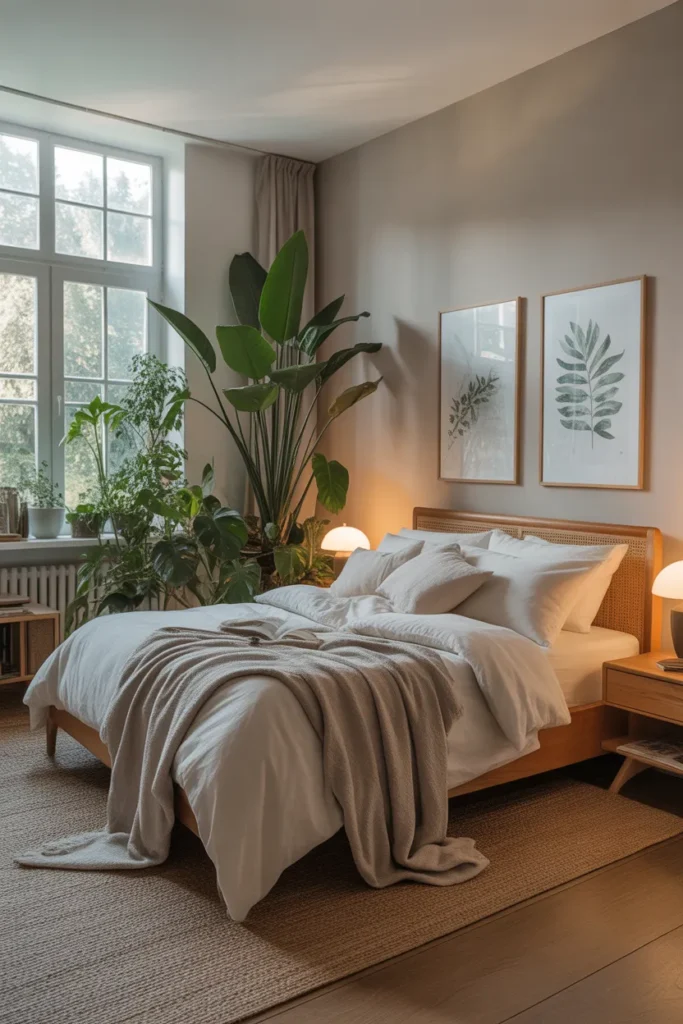
One or two plants make a bedroom feel lived in and soften all the fabric and wood. A trailing pothos on a shelf, a snake plant in the corner, or a small fern on the dresser all cope with bedroom light. Group plants where the light is, keep pots in one material family, and the green reads as styling rather than a plant collection taking over.
Match plant to light: Snake plants and pothos forgive low light and missed watering, which suits most bedrooms and most owners. Sun lovers on a dim windowsill fail slowly and look sad for months. Be honest about your light and your habits, and choose the plant that will still be alive and decent looking at Christmas.
Keep soil tidy: Bare soil and dusty leaves undo the fresh effect fast. Top pots with a layer of small stones or bark, wipe leaves monthly, and use a plain saucer so watering does not mark the dresser. Faux plants are a fair backup for dark corners, but keep them small and matte and dust them just the same.
- Forgiving plants matched to your real light level
- Pots in one material family for a calm look
- Stones on soil and wiped leaves for a tidy finish
Shop This Look
14. Cozy Reading Corner for Added Character
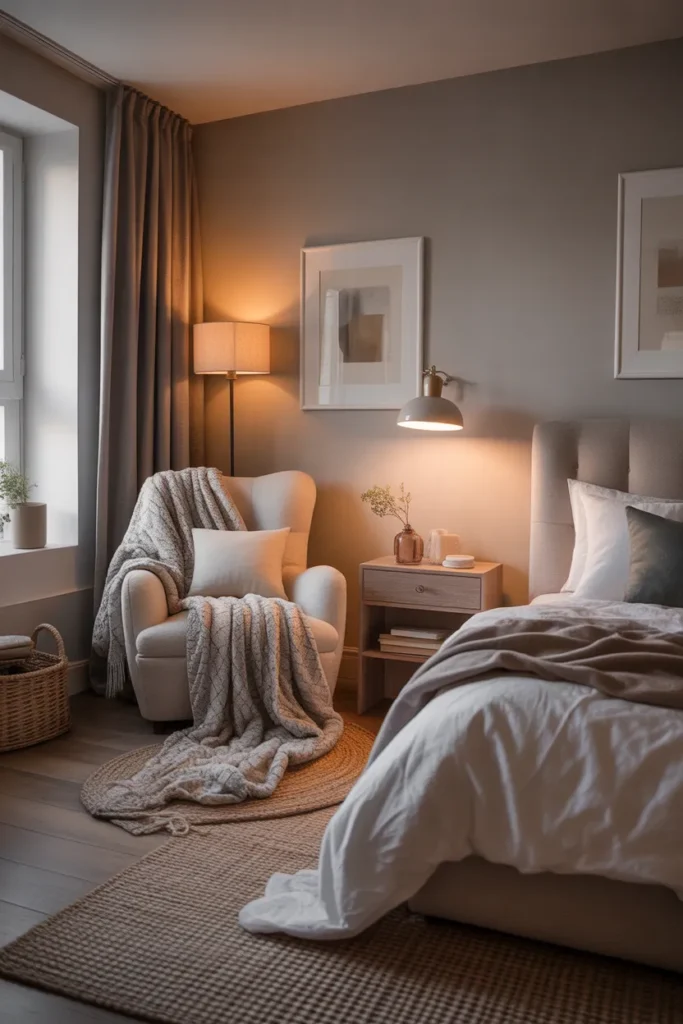
A reading corner gives a bedroom a second job and a lot of character. One comfortable chair, a small side table, a lamp at shoulder height, and a throw over the arm covers it. Place it in the corner with the best natural light, usually near the window, and the spot will get used daily instead of becoming storage.
Choose the chair honestly: A reading chair needs a back you can lean into and arms at a sensible height, not just good looks. Sit in it for ten minutes in the shop if you can. Online, check seat depth and read the reviews about comfort, since a pretty chair nobody sits in is the most expensive ornament in the room.
Light it for pages: Reading light should come over your shoulder at about head height when seated, warm in tone and bright enough to read without strain. A small adjustable lamp beats a decorative one here. Keep a basket or the side table for the current book and glasses so the corner stays ready instead of drifting into a clothes chair.
- Chair, side table, and warm lamp in the best light corner
- Comfort checked properly before buying
- Book and glasses kept in a basket by the chair
Shop This Look
15. Matching Decor for a Cohesive Look
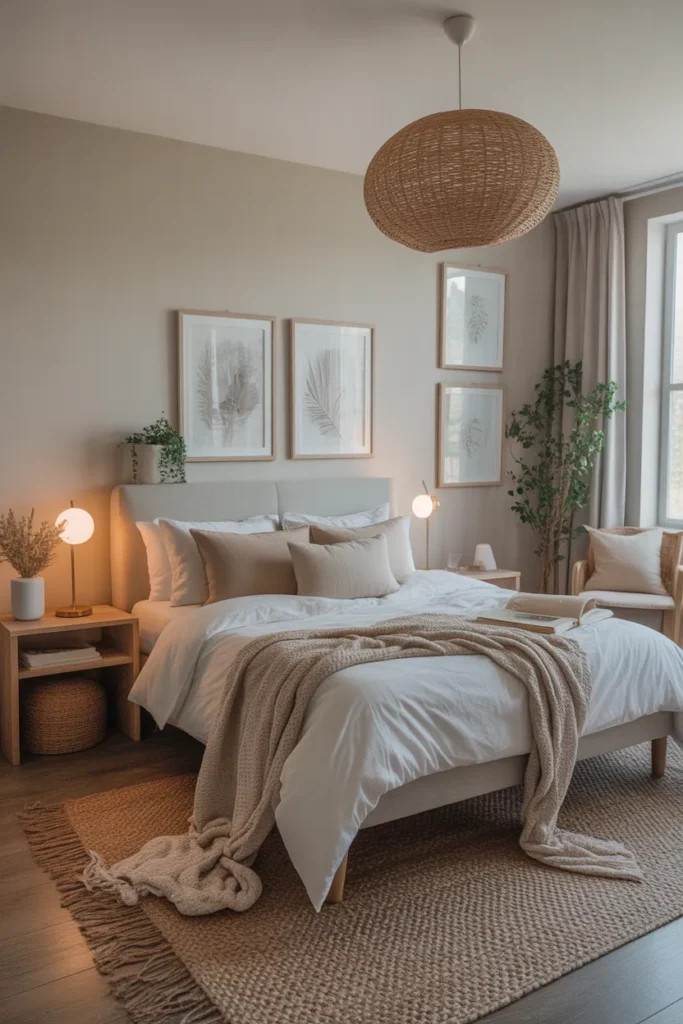
Matching pieces calm a room down fast. Lamp pairs, cushion pairs, and one repeated metal or wood finish across the room make separate buys look like a plan. You do not need a full matched furniture suite. Two or three repeats of the same finish and color family are enough for the eye to read the room as pulled together.
Repeat finishes three times: A finish seen once looks random, twice looks like a pair, three times looks designed. Count your brass, black, or oak across lamps, handles, frames, and the mirror, and add one small piece if the count sits at one. This is a cheap fix because the third repeat can be as small as a tray or a frame.
Match the big tones first: Wood that clashes in tone, orange pine beside gray oak, breaks cohesion more than any small item can fix. Keep the large pieces, bed, dresser, and floor rug, in one warm or cool family. Small mixed items matter far less once the big tones agree with each other across the room.
- One metal and one wood finish repeated three times
- Large furniture tones in one warm or cool family
- Pairs for lamps and cushions where possible
Shop This Look
16. Warm Lighting That Sets the Mood
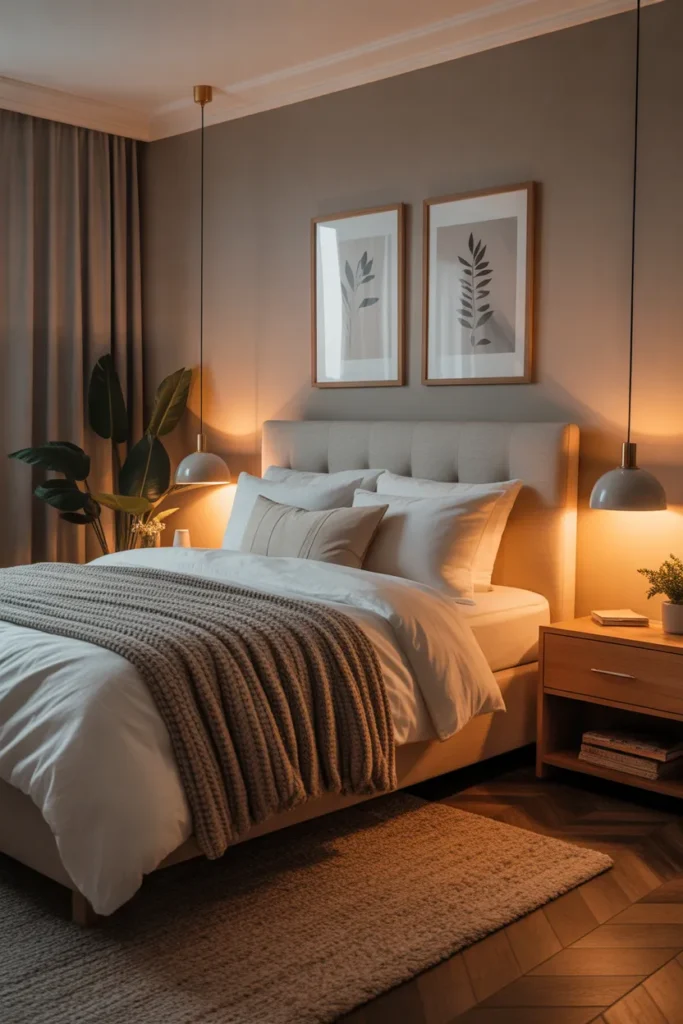
This second lighting idea is about evening mood specifically. By nine at night the ceiling light should be off and the room should run on lamps, a soft glow that tells your brain the day is done. Warm pools of light around the bed and chair make even plain furniture look kind, and harsh rooms feel gentler without changing a thing.
Add light at low levels: A small lamp on the dresser, a low light near the reading chair, and bedside lamps give three soft pools instead of one flat glare. Candles add to it for evenings in, real or battery, but they are the garnish. Timers on lamps help the room feel welcoming when you walk in rather than dark and flat.
Banish the big light habit: Fit the ceiling light with the warmest dim bulb you can, or simply stop using it after dinner for a week and see how the room feels. Most people never go back. If the ceiling fitting is an ugly bright panel, a fabric shade or a new cover is a cheap fix that softens everything under it.
- Ceiling light off in the evening, lamps only
- Three low warm pools of light around the room
- Timers so lamps greet you at the door
Shop This Look
17. Floating Shelves for Style and Storage
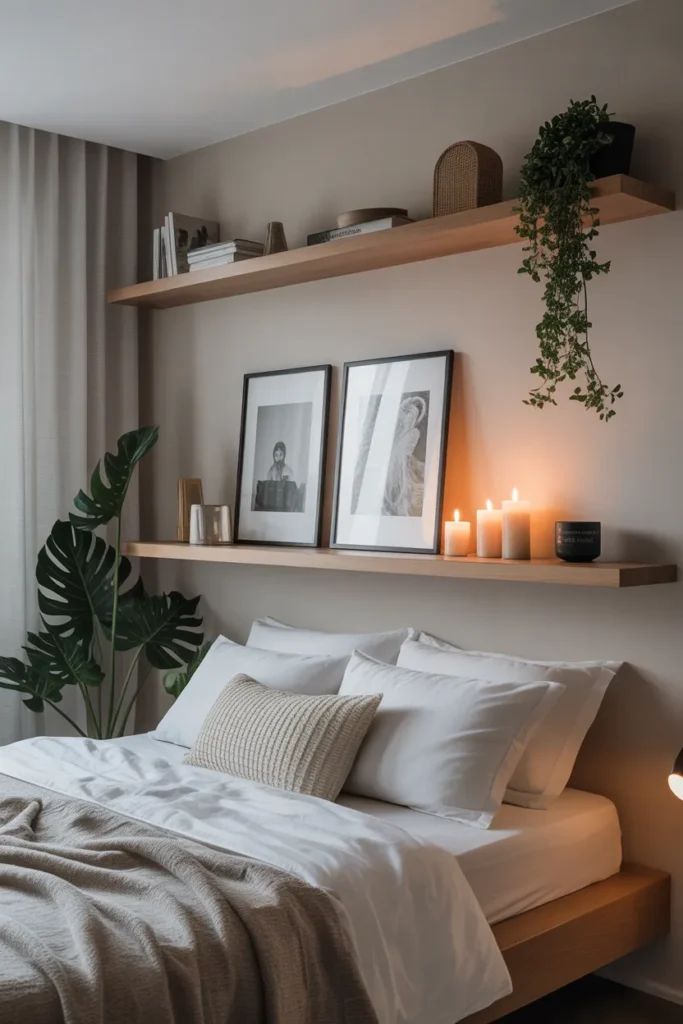
Floating shelves add storage and display space without floor bulk. Two shelves over a dresser or beside the bed hold books, a plant, framed photos, and the small things that make a room yours. Keep the styling loose and light, since crowded floating shelves sag visually long before they sag on the wall.
Fix them properly: Shelves over or near a bed must be fixed into studs or with anchors rated well above the load. Books are heavier than they look. Level each shelf carefully, because a slight tilt shows against every straight line in a bedroom and the eye catches it from the doorway every single time.
Style in loose groups: Books lying flat with a small object on top, one plant, one framed photo, then a gap. Gaps are part of the styling. Change the display with the seasons if you like, but keep the total count low so the shelves stay a feature rather than becoming the room overflow storage by stealth.
- Two shelves maximum in a bedroom display spot
- Fixed into studs or rated anchors, perfectly level
- Loose groups with clear gaps between them
Shop This Look
18. Textured Bedding for Everyday Comfort
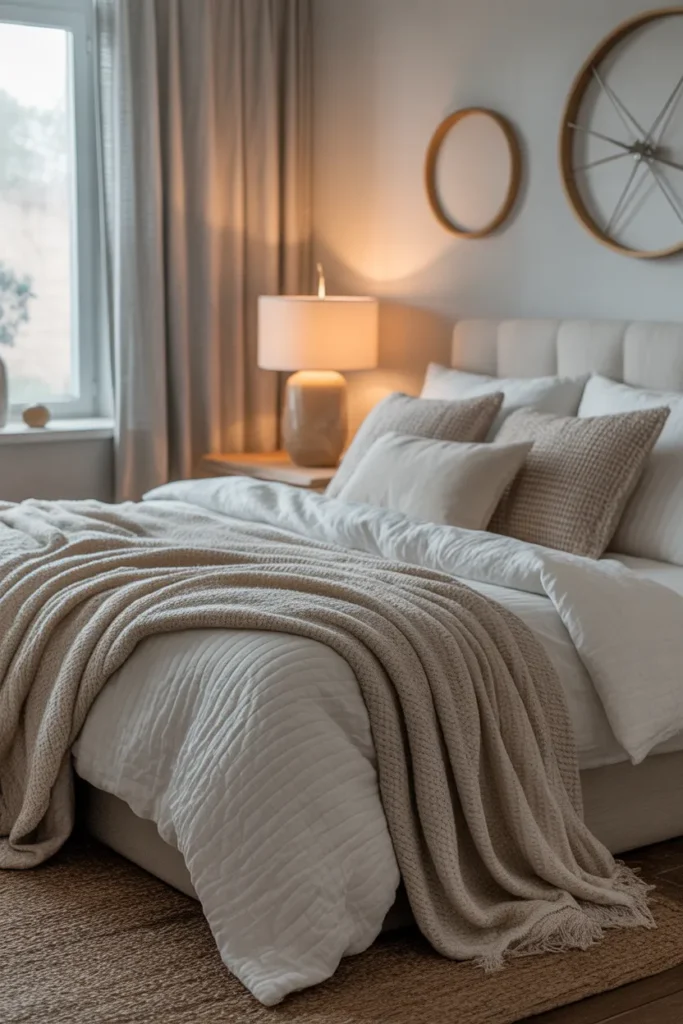
This bedding idea is about daily comfort rather than looks. Soft worn in cotton, a duvet at the right weight for the season, and pillows that suit how you sleep matter more at three in the morning than any color scheme. Refresh tired bedding in stages: pillows first if yours have gone flat, then sheets, then the duvet when budget allows.
Buy for the season: One duvet rarely suits the whole year. A light summer duvet plus a throw for cool nights beats sweating under a winter weight one until October. Tog ratings and fill weights are printed on most duvets, so check yours before replacing like with like and repeating the same hot mistake for another few years.
Keep a spare set: One spare set of sheets means the bed can be remade straight from the wash without waiting for the dryer, which is when beds stay unmade all day. Plain white or one neutral spare set mixes with everything you own. Store it folded inside one of its pillowcases in the linen cupboard to keep the set together.
- Pillows replaced first when they go flat
- Duvet weight matched to the season
- One plain spare set stored inside its pillowcase
Shop This Look
19. Subtle Color Accents for Visual Balance
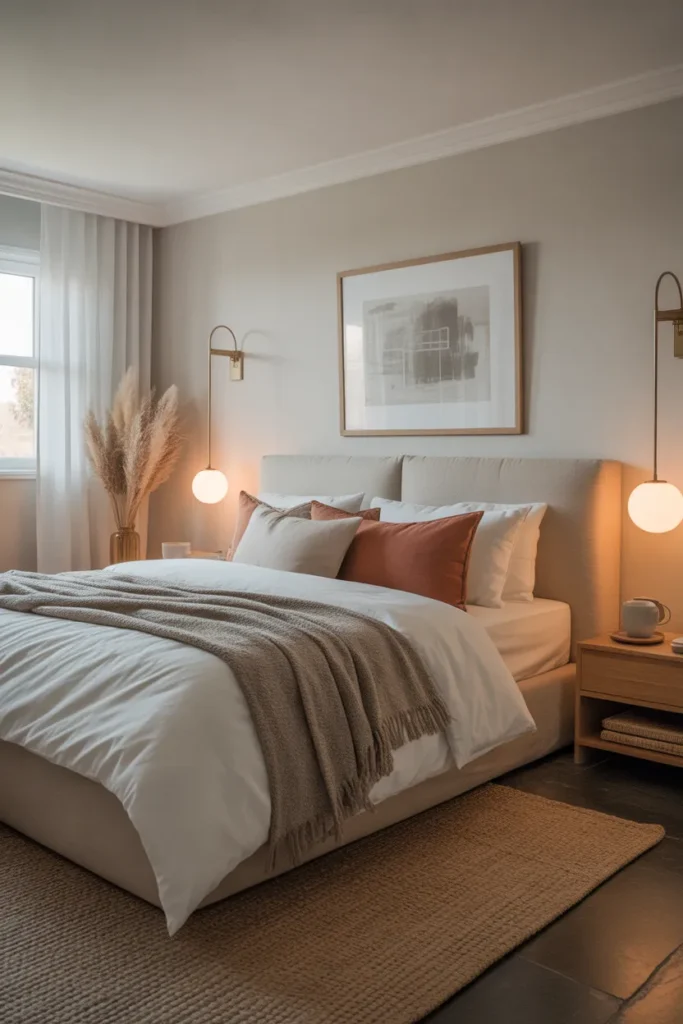
Small color accents wake a neutral bedroom without risking the calm. One cushion color, repeated in a throw and a small art print, is a complete accent scheme. Sage, clay, dusty blue, and muted rust all sit well with warm neutrals and can be swapped in an afternoon when you fancy a change next season.
Repeat the accent three times: A single red cushion looks lost, three touches of the same tone look planned. Keep the accent share small, around ten percent of the visible color in the room, so the base palette still leads. Match tones loosely rather than exactly, since dye lots vary and near matches look more natural than forced ones.
Keep accents off the walls: Paint is a commitment, cushions are not. Put your accent color only on items you can swap in minutes: textiles, art, a plant pot, a book cover. That way the room can turn from sage in spring to clay in autumn with one storage box, and the walls and furniture never need touching.
- One accent color repeated in three small places
- Accent kept near ten percent of the room color
- Color only on swappable items, never the paint
Shop This Look
20. Clean and Minimal Nightstand Styling
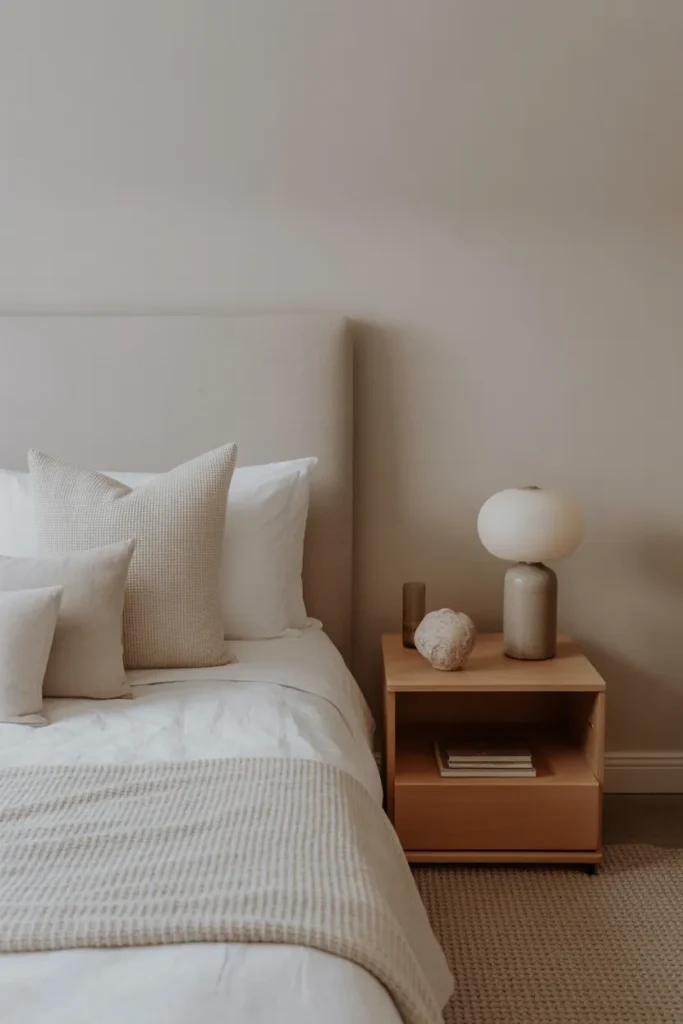
A tidy nightstand top is a small daily pleasure. The working set is short: lamp, alarm or phone, water, book, and a dish for the bits that come out of pockets. Everything else moves to the drawer. Style the top in a loose triangle, tall lamp at the back, book flat, dish in front, and the surface looks set rather than scattered.
Deal with the cable once: Run one charger cable behind the nightstand and fix it with a clip so the end stays on the top instead of sliding to the floor every night. A small lidded box hides earbuds, spare glasses, and medicines that look messy loose. Ten minutes of cable tidying pays you back every single evening.
Reset it in the morning: Thirty seconds while the bed is made: glass to the kitchen, book squared, dish emptied of coins weekly. Tiny resets stop the slow build that turns a styled nightstand into a dumping spot by the end of the month. Guests notice this surface more than almost any other in the room.
- Five working items on top, everything else in the drawer
- Charger cable clipped behind so it stays put
- Thirty second morning reset with the bed making
Shop This Look
21. Cozy Throws for Effortless Warmth
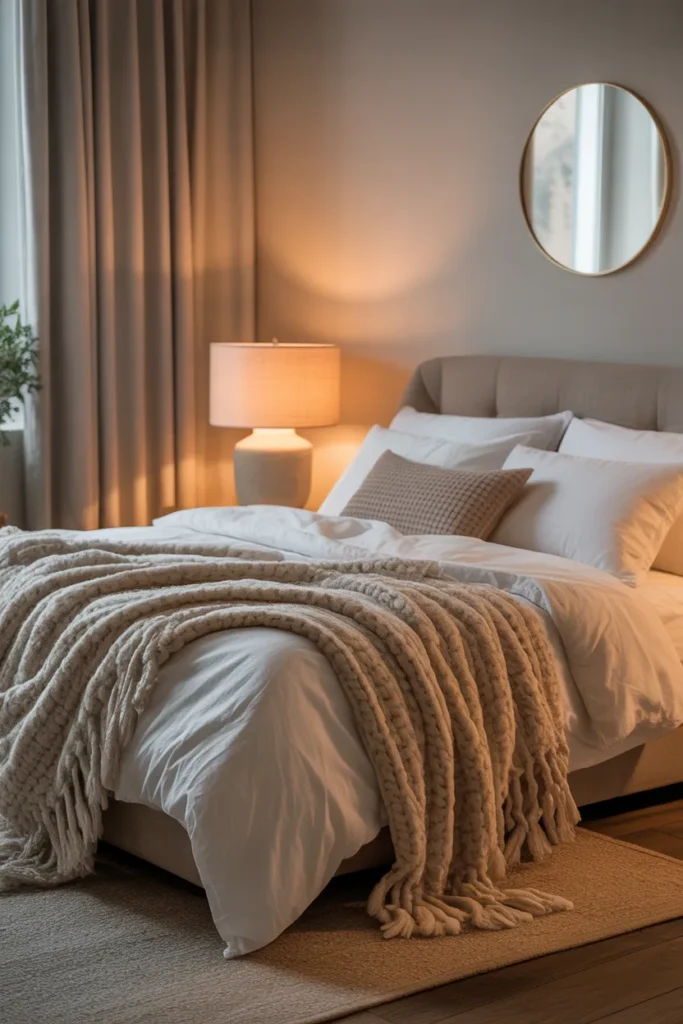
A throw at the foot of the bed or over a chair arm is the softest refresh on this list. It adds color, texture, and actual warmth for cold feet at reading time. Choose a weight you will really use, light knit for summer evenings and a heavier weave for winter, and fold or drape it the same way each day so it reads as styling.
Drape it simply: Across the foot of the bed in a loose fold, or over one corner, are the two drapes that always work. Fussy fan folds and ladders of throws look staged in real bedrooms. One good throw, well placed, beats three thin ones competing. If it slides off nightly, a slightly heavier knit usually stays where you put it.
Wash it on rotation: Throws collect dust, pet hair, and snack crumbs faster than any other textile in the room. Wash on a gentle cycle monthly, or shake outside weekly between washes. Keep the bedroom throw for the bedroom rather than dragging it to the sofa, so it stays clean and the bed always has its layer ready.
- One good throw placed at the foot of the bed
- Loose simple drape, no fussy folding
- Washed monthly or shaken outside weekly
Shop This Look
22. Personal Touches That Make the Space Meaningful
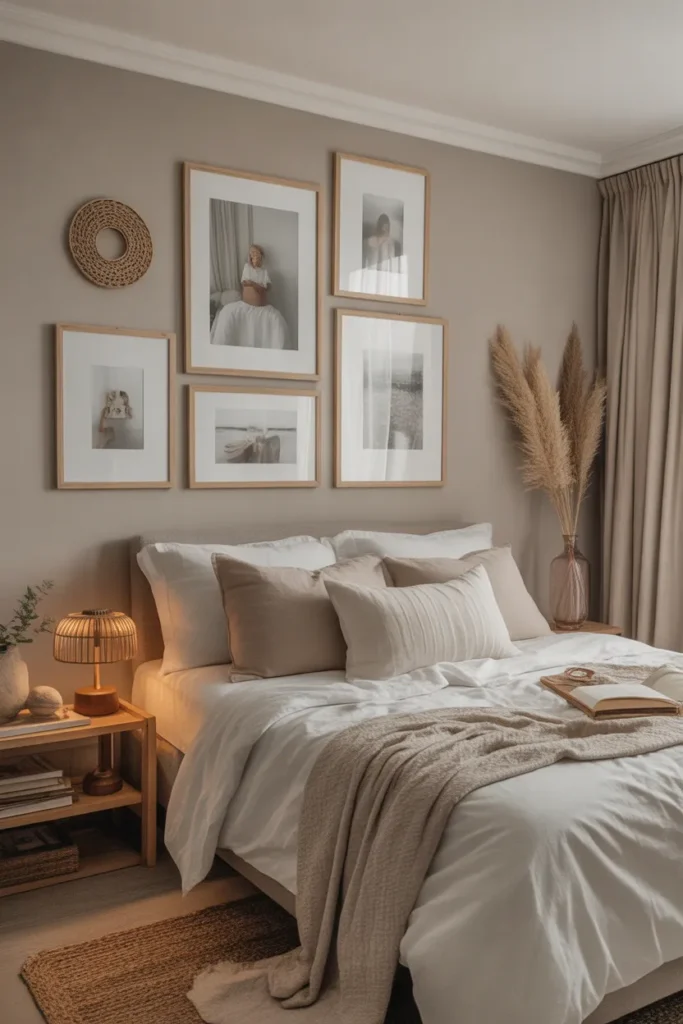
Personal pieces are what make a refreshed bedroom yours instead of a showroom copy. Framed photos, a keepsake on the dresser, books you actually read, art from a trip, these carry the room. The rule is edit, not remove. Choose the few items that still mean something and give them space, rather than lining every surface with everything you own.
Display fewer, better: Pick three to five personal items for the whole room and place them where you will see them daily: dresser, nightstand, and one shelf. The rest can live in a memory box in the cupboard, safe and kept, without crowding your mornings. Rotating items seasonally keeps the display fresh and gives stored pieces their turn.
Mix personal with plain: A framed photo beside a plain plant, a keepsake on a stack of neutral books. Personal items look stronger next to calm basics than next to more souvenirs. Keep frames in one or two finishes across the room so different memories still read as one display rather than a jumble sale table.
- Three to five personal items displayed for the room
- Rest stored safely in a memory box
- Frames kept to one or two finishes throughout
Shop This Look
How to Start
Start by stripping the room back. Take the decor off the surfaces, pull the bedding, and clean properly. Then look at the bare room in daylight and in lamplight. Most people find the bones are fine and the tired feeling was coming from clutter, flat light, and fabric that needed a wash rather than from the furniture itself.
Refresh in the right order: Bedding first, because it is the biggest surface and the one you feel. Lighting second, because it changes every other color in the room. Curtains and rug third, walls and art last. This order stops you buying art to match curtains you end up replacing, and it spreads the cost over a few weekends without the room ever looking half done.
Set a stop point: Decide in advance what done looks like for this round, like bed, lamps, and curtains refreshed, and stop there for a month. Bedrooms collect extras fast when every shopping trip adds one more cushion. A stop point keeps the refresh calm, cheap, and finished, which is the whole point of the exercise.
- Strip surfaces and clean before judging the room
- Order of work: bedding, lighting, curtains and rug, then walls
- Agree a stop point and live with it for a month
Shop This Look
Common Mistakes
- Buying lots of small decor before fixing bedding and lighting, so the room costs more and still looks tired
- Hanging curtains at the frame and art near the ceiling, which shrinks the walls and wastes two easy wins
- Choosing a rug that is too small for the bed, leaving it floating in the middle of the floor like a mat
- Piling on so many cushions that making the bed takes five minutes and the cushions end up living on the floor
- Mixing warm and cool bulbs in the same room, so neutral colors shift and nothing quite matches at night
- Leaving nightstands and dressers crowded, which undoes the calm of every other refresh in the room
- Copying a showroom exactly and removing every personal item, until the room looks nice and feels like nobody lives there
Frequently Asked Questions
What is the fastest way to refresh a bedroom without redecorating?
New or freshly washed bedding, warm lamps on both sides of the bed, and cleared surfaces. Those three moves usually take one weekend and little money, and they change how the room feels at the times you use it most. Curtains hung higher come next when you are ready for one more step.
How many cushions should a styled bed have?
Two sleeping pillows, two shams, and two or three decorative cushions is plenty for a queen bed. More than that slows bed making and pushes cushions onto the floor at night. Mix sizes and textures rather than adding count, and use one long lumbar cushion as the front piece for a clean finish.
What size rug works under a queen bed?
An 8 by 10 foot rug is the common fit. Place it under the bed with the top edge near the nightstands and let it extend out on both sides and at the foot, so your feet land on the rug from any side. In a small room, two runners at each side of the bed give a similar feel for less cost.
How do I refresh a rented bedroom I cannot paint?
Lean on textiles and light. Bedding, curtains hung on a tension or existing rod, a large rug over the rental carpet, lamps with warm bulbs, and art on removable strips change almost everything a guest sees. Keep receipts and original fittings stored safely so the room goes back cleanly when you move.
Where can I find more bedroom decor ideas like these?
Browse these bedroom decor inspirations for more color schemes, layouts, and styling combinations in the same practical style. They work well alongside this list, since both focus on layers, light, and a few well chosen pieces rather than a full room of new furniture.
The Finishing Touch
The finishing touch is a clear floor, a made bed, and lamps doing the evening work. Walk the room once from the door and remove the one thing that catches your eye for the wrong reason. That single edit, repeated weekly, is what keeps a refreshed bedroom looking refreshed instead of slowly sliding back.
For more layouts and color combinations before your next change, look through these bedroom ideas on Houzz and save the rooms closest to your size and light. Real rooms at a similar scale are a better guide than styled photos of bedrooms three times your size.
Then stop and enjoy it for a while. A bedroom earns its keep at night and first thing in the morning, not in how often it changes. Small resets, fresh bedding, clear surfaces, warm light. That steady routine is what makes the lasting impression, for guests and for you.