12 Living Room Divider Ideas That Elevate Home Style
Living room divider ideas are design solutions that create visual separation between zones while maintaining flow, light, and functionality within a shared space. These 12 living room divider ideas will show you stylish ways to define areas, improve organization, and elevate the overall look of your home.
The best dividers do more than split a room they create rhythm, balance, and intention. A thoughtfully placed divider can make a home feel calmer, more spacious, and more refined. Whether your style leans modern, organic, minimalist, or eclectic, the right divider introduces texture, depth, and character. Here are 12 ideas worth saving and stealing.
Why Living Room Divider Ideas Work So Well
Open-concept living became increasingly popular through modern and mid-century design movements, prioritizing flexibility and social connection. Living room divider ideas evolved as a way to preserve openness while still creating functional zones for relaxing, working, dining, and entertaining. Unlike traditional walls, dividers maintain visual continuity while improving organization.
The most effective dividers rely on materials that feel substantial without becoming heavy. Think white oak slats, matte black steel frames, smoked glass panels, woven rattan screens, linen drapery, and fluted wood details. Color palettes often feature warm white, greige, soft charcoal, walnut brown, muted sage, and natural wood tones.
These solutions are especially popular today because homeowners want multipurpose spaces. As homes increasingly accommodate remote work, hobbies, and family life, zoning has become essential. Pinterest trends consistently show growing interest in room separation techniques that preserve natural light and flexibility.
Small spaces can absolutely benefit from dividers. The key is choosing options that allow visibility through or around them. Open shelving, glass partitions, and vertical slats often work better than solid walls because they define space without making a room feel boxed in.
Style at a Glance
| Element | Functional Zoning | Visual Separation |
|---|---|---|
| Philosophy | Define spaces without walls | Preserve openness and flow |
| Materials | White oak, steel, glass | Rattan, linen, fluted wood |
| Color Palette | Warm white, greige | Walnut, charcoal |
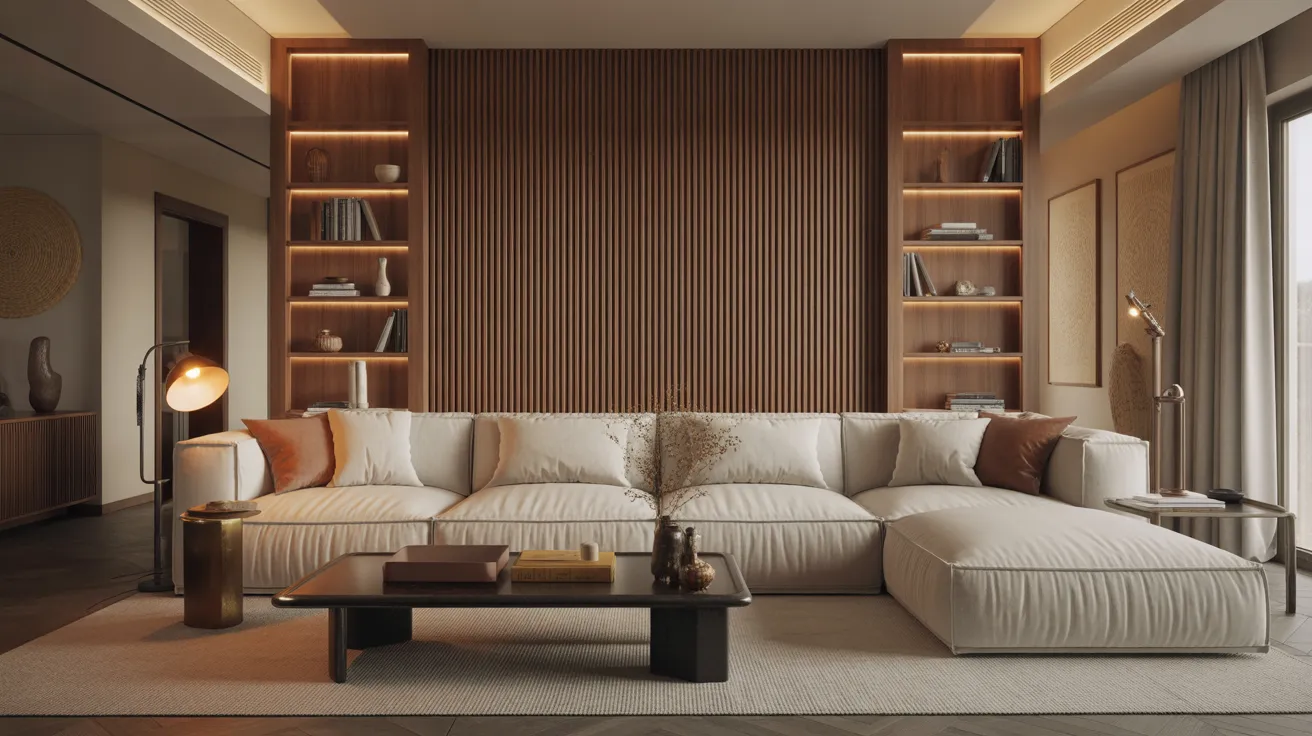
1. White Oak Vertical Slat Divider
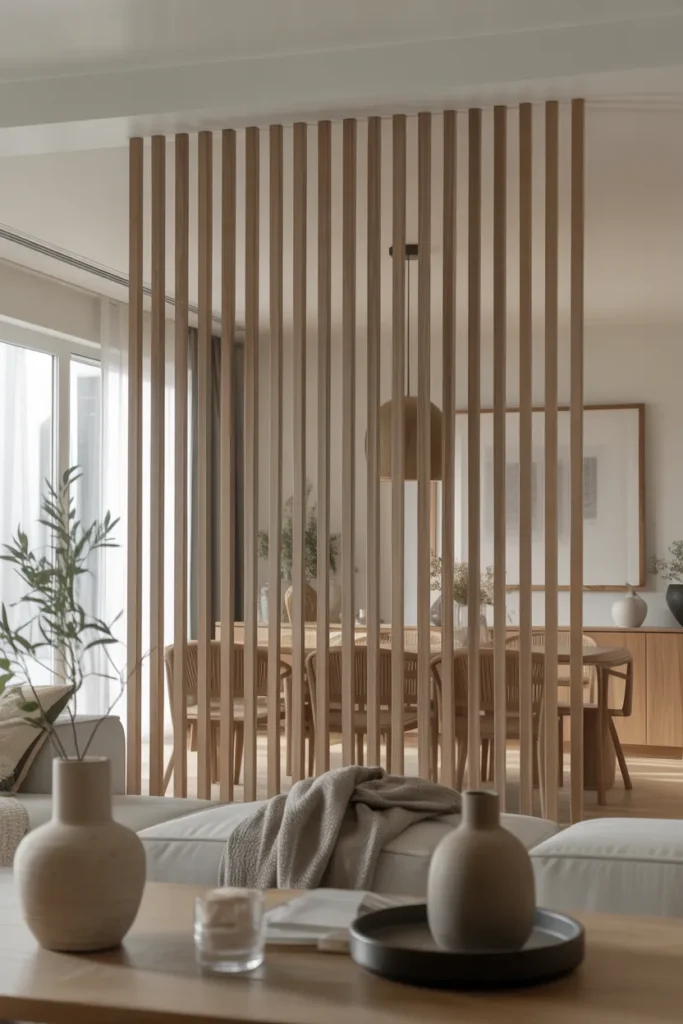
Vibe: Grounded and architectural.
Why it works: Vertical slats create separation through rhythm rather than mass. The negative space between boards allows daylight to move through the room while visually defining different functions.
How to get it: Use evenly spaced white oak slats positioned 2–3 inches apart. Extending them from floor to ceiling creates a custom built-in appearance without major renovation.
Quick Win: Install a ready-made slatted panel behind a sofa to instantly create a distinct seating zone.
Shop The Look
| Product |
|---|
| White oak room divider slat panel |
| Matte ceramic floor vase |
| Neutral linen curtain set |
| Black metal side table |
| Olive branch faux stem set |
Also view: 14 Small Bedroom Ideas for Smart Storage Solutions
2. Double-Sided Open Bookshelf Divider
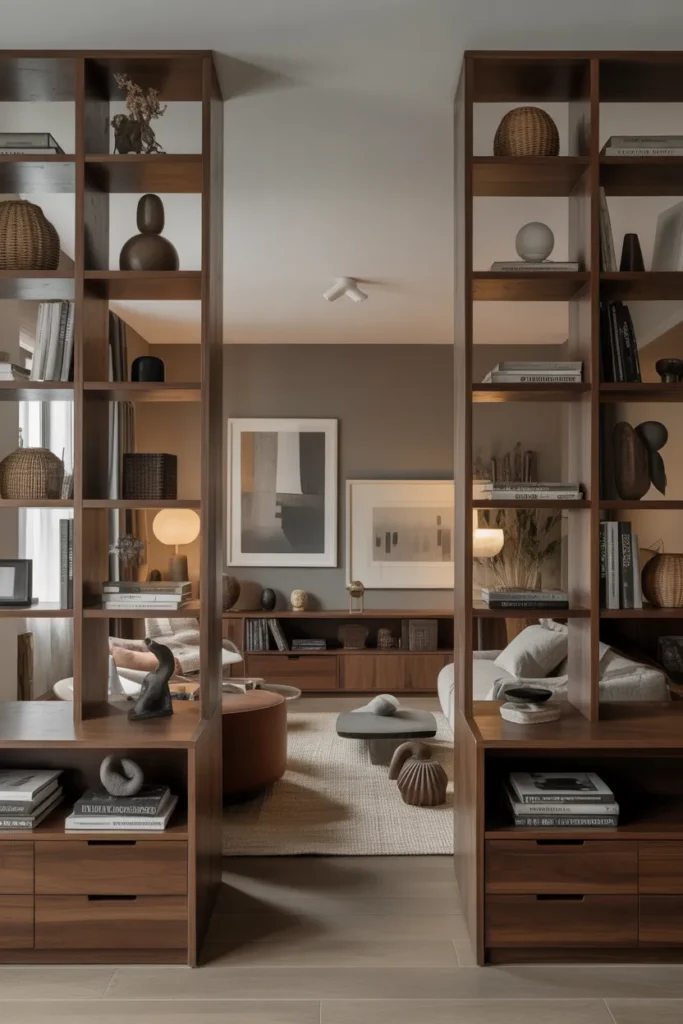
Vibe: Layered and collected.
Why it works: Open shelving balances visual weight across a room while creating practical storage. Because both sides remain visible, the divider feels lighter than a traditional partition.
How to get it: Choose shelves with open backs and style no more than 70% of each compartment. Leaving breathing room prevents visual clutter.
Shop The Look
| Product |
|---|
| Open walnut cube bookshelf |
| Decorative storage baskets |
| Neutral hardcover book set |
| Travertine sculpture decor |
| Minimalist picture frames |
3. Ceiling-Mounted Linen Curtain Divider
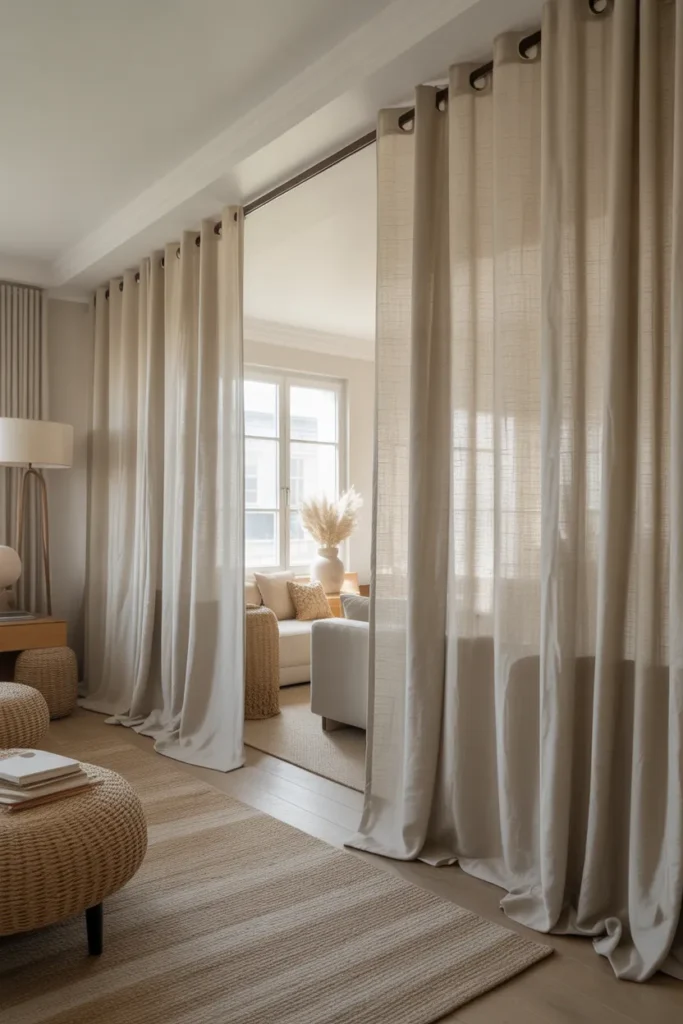
Vibe: Hushed and soft.
Why it works: Fabric introduces texture while maintaining flexibility. Light filters through linen beautifully, creating subtle boundaries rather than abrupt divisions.
How to get it: Mount a recessed ceiling track and choose linen-blend panels that lightly skim the floor. Keep fabric tones close to wall colors for cohesion.
Quick Win: Use extra-wide linen curtain panels to divide a workspace from the living area in one afternoon.
Shop The Look
| Product |
|---|
| Linen blend curtain panels |
| Ceiling curtain track system |
| Textured ceramic lamp |
| Woven storage basket |
| Neutral area rug |
4. Black Metal and Glass Partition
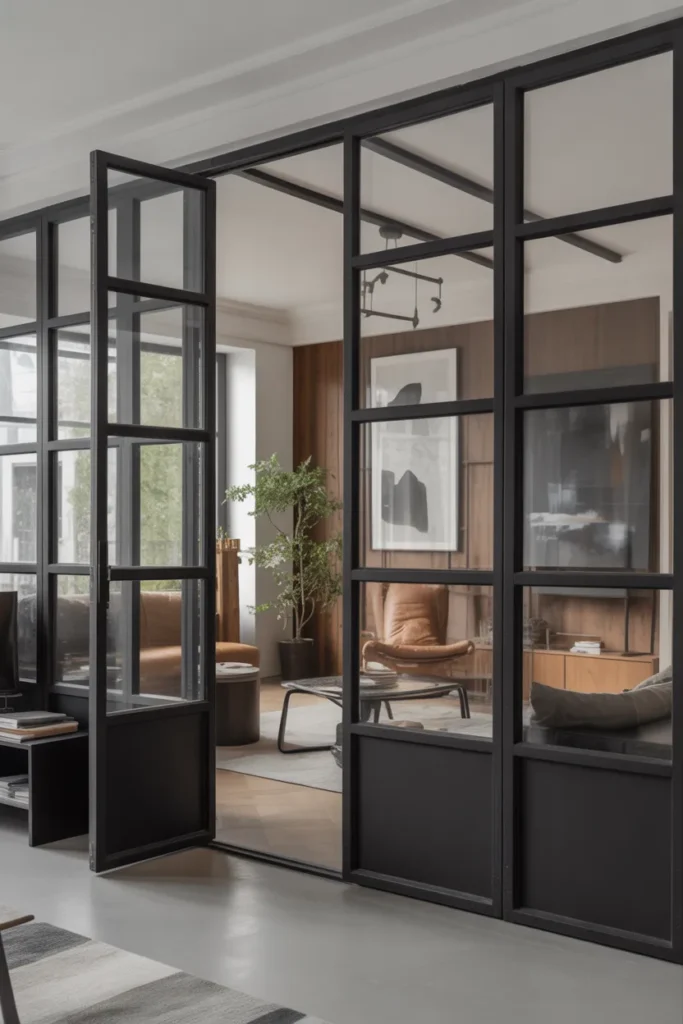
Vibe: Luminous and sophisticated.
Why it works: Glass preserves sightlines while steel framing adds structure. The contrast between transparency and dark framing creates strong architectural interest.
How to get it: Use slim-profile black frames rather than bulky industrial grids. Position the partition where natural light can pass through both spaces.
Shop The Look
| Product |
|---|
| Black steel room divider |
| Modern leather accent chair |
| Abstract black-and-white artwork |
| Indoor olive tree |
| Glass-top side table |
5. Fluted Wood Divider Wall
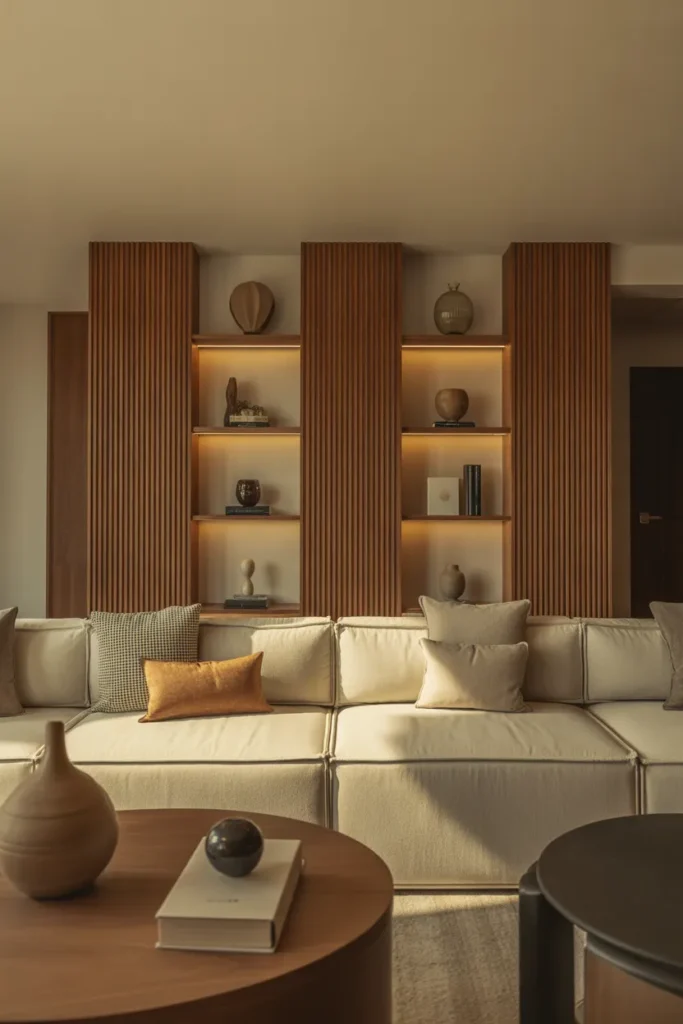
Vibe: Sun-warmed and rich.
Why it works: Fluting creates texture through shadow and repetition. The vertical grooves add depth without requiring multiple materials or colors.
How to get it: Apply flexible fluted wood panels to a narrow divider wall and add LED strip lighting behind the edges for subtle dimension.
Quick Win: Use peel-and-stick fluted panels on a simple partition to achieve a custom designer look.
Shop The Look
| Product |
|---|
| Walnut fluted wall panels |
| LED strip lighting kit |
| Bronze decorative bowl |
| Neutral throw blanket |
| Textured ceramic planter |
6. Rattan Folding Screen Divider
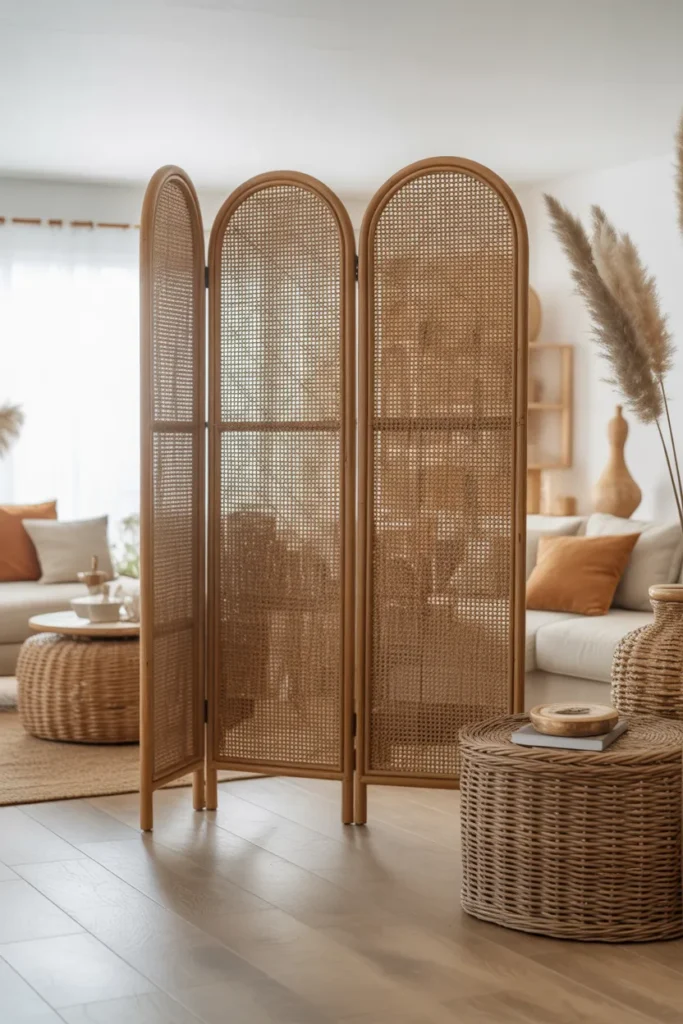
Vibe: Layered and organic.
Why it works: Natural fibers soften hard architectural lines while introducing texture. The woven construction maintains airflow and visibility.
How to get it: Choose a three-panel screen with an open weave rather than a tightly woven version. This keeps the divider feeling light and flexible.
Shop The Look
| Product |
|---|
| Natural rattan folding screen |
| Pampas grass stems |
| Woven floor basket |
| Linen accent pillow covers |
| Oak finish side table |
7. Built-In Divider With Storage Niches
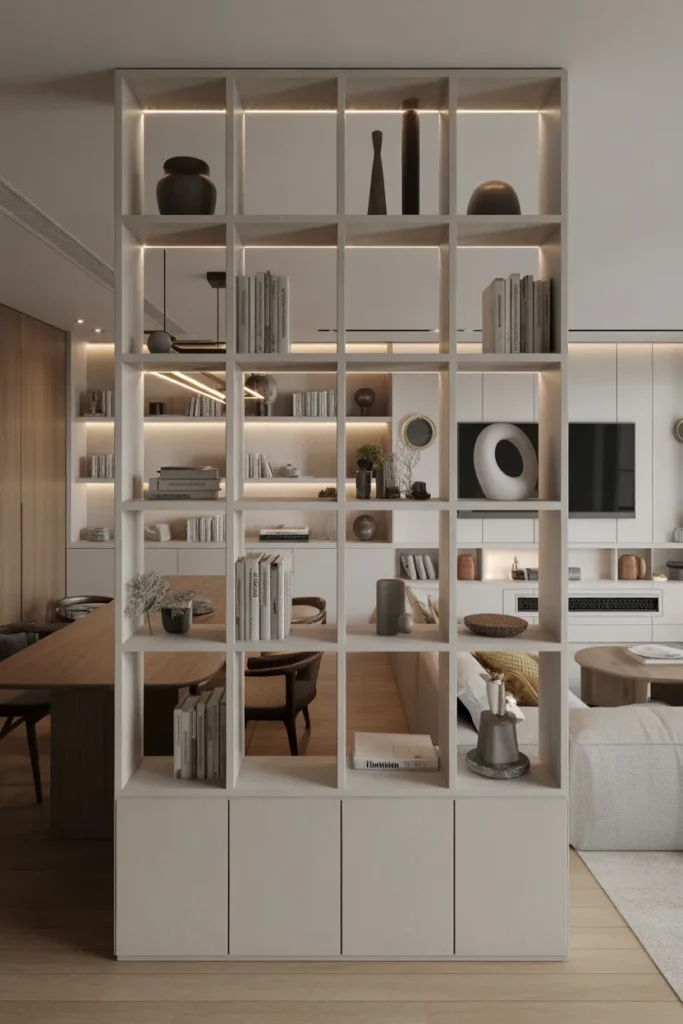
Vibe: Grounded and intentional.
Why it works: This solution combines zoning and storage in one architectural feature. Open niches reduce visual heaviness while creating opportunities for styling, making the divider feel like furniture rather than a wall.
How to get it: Design niches in varying sizes to avoid a grid-like appearance. Keep approximately 30% of the shelves empty so the divider feels airy instead of crowded.
Quick Win: Add floating box shelves to an existing half wall for a similar effect without custom construction.
Shop The Look
| Product |
|---|
| White oak floating box shelves |
| Rechargeable LED puck lights |
| Travertine decorative objects |
| Neutral hardcover coffee table books |
| Matte ceramic vase set |
8. Floating Fireplace Room Divider
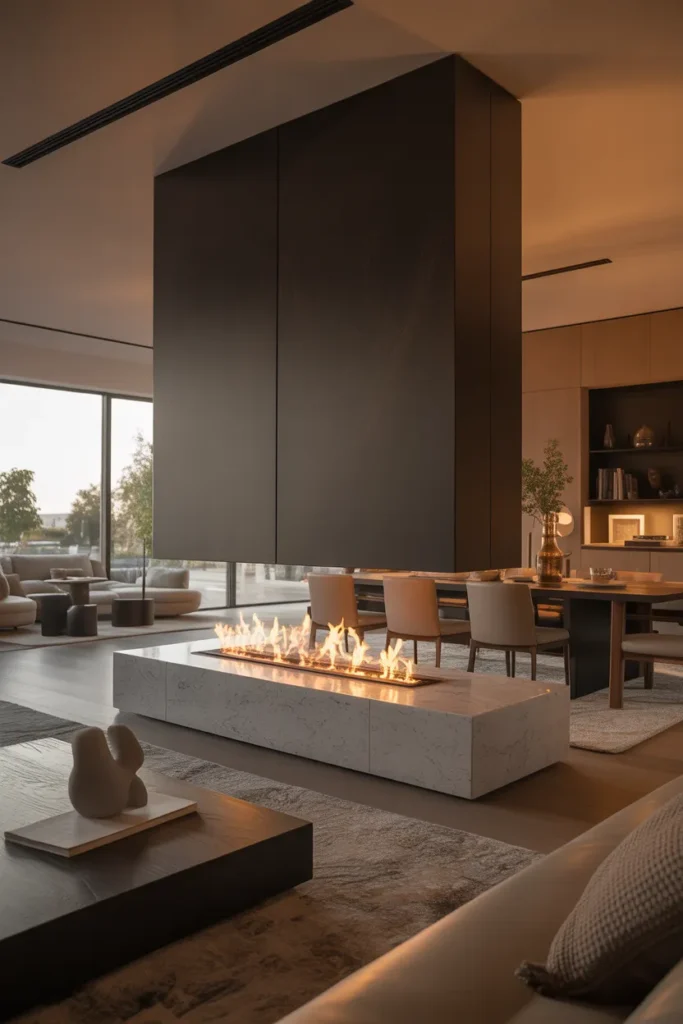
Vibe: Luminous and inviting.
Why it works: A fireplace naturally becomes a focal point while dividing spaces through visual weight. Because both sides benefit from the feature, the room remains connected despite clear zoning.
How to get it: Use a slim linear electric fireplace with a stone-look surround. Position seating to face the feature from both zones whenever possible.
Shop The Look
| Product |
|---|
| Linear electric fireplace insert |
| Stone veneer wall panels |
| Textured knit throw blanket |
| Sculptural candle holder set |
| Walnut media console |
9. Large Planter Divider Wall
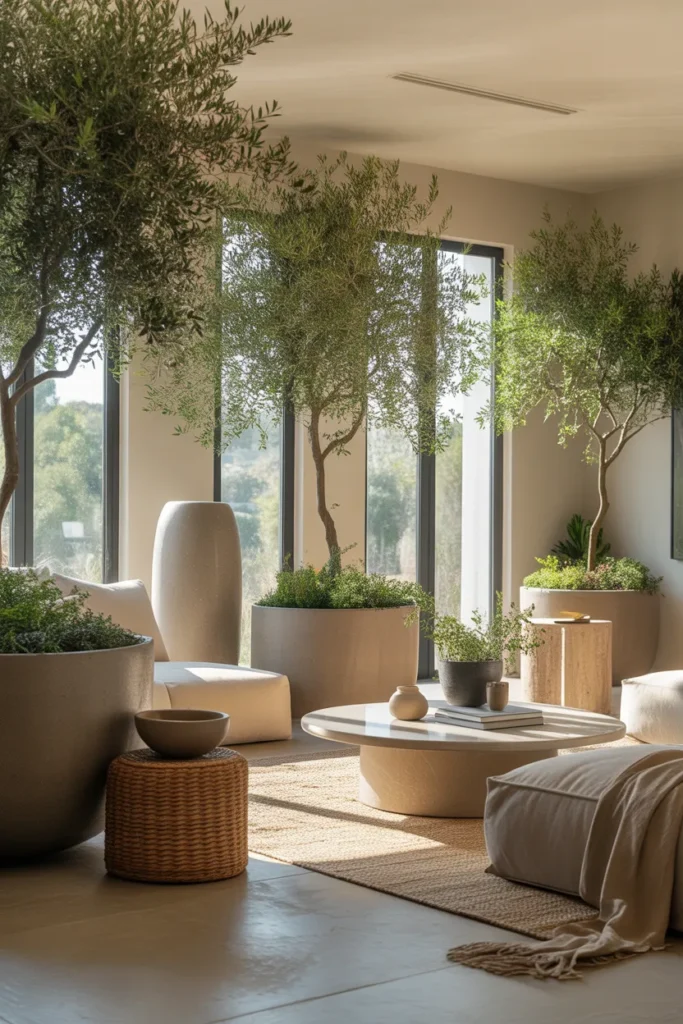
Vibe: Still and refreshing.
Why it works: Plants define pathways and boundaries while maintaining openness. Their organic shapes soften rigid room layouts and add height without introducing bulky structures.
How to get it: Use three oversized planters of varying heights rather than one continuous row. This creates a more natural transition between spaces.
Quick Win: Group tall faux olive trees in matching planters to create instant separation without maintenance.
Shop The Look
| Product |
|---|
| Extra-large matte planter pots |
| Faux olive tree set |
| Natural seagrass baskets |
| Linen upholstered ottoman |
| Ceramic decorative bowl |
10. Half-Height Wood Divider Wall
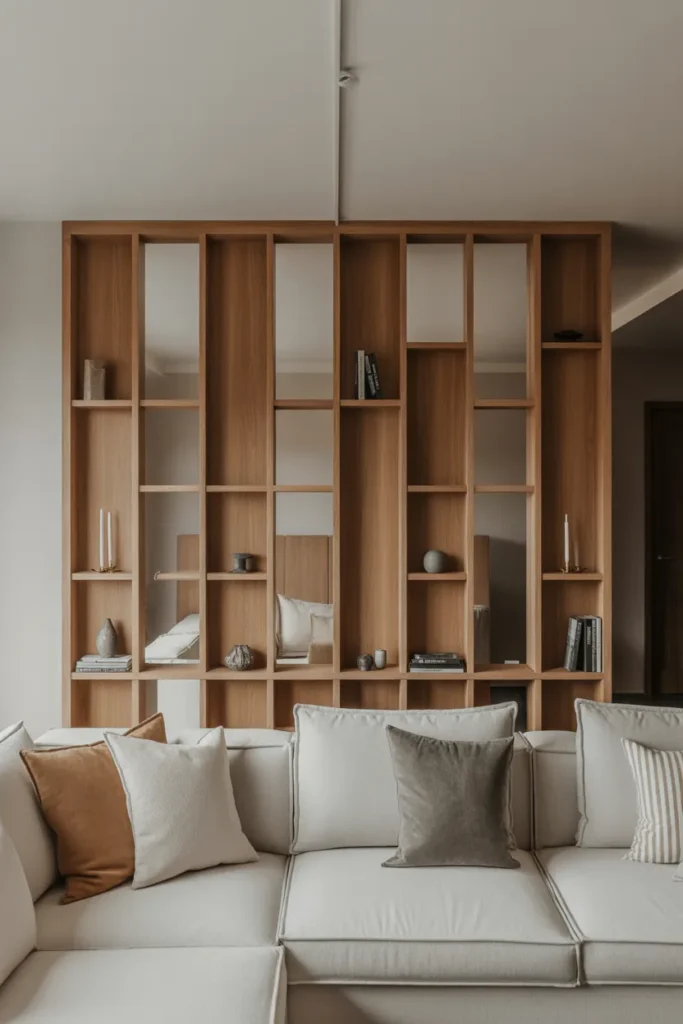
Vibe: Balanced and calm.
Why it works: Half-height dividers establish clear boundaries while preserving sightlines across the room. Their lower profile prevents smaller spaces from feeling enclosed.
How to get it: Keep the divider between 42 and 48 inches tall. Use the top surface as a styling ledge with restrained decorative accents.
Shop The Look
| Product |
|---|
| White oak console divider |
| Ceramic candle holders |
| Decorative book set |
| Textured stone tray |
| Small sculptural vase |
11. Curved Arch Divider Feature
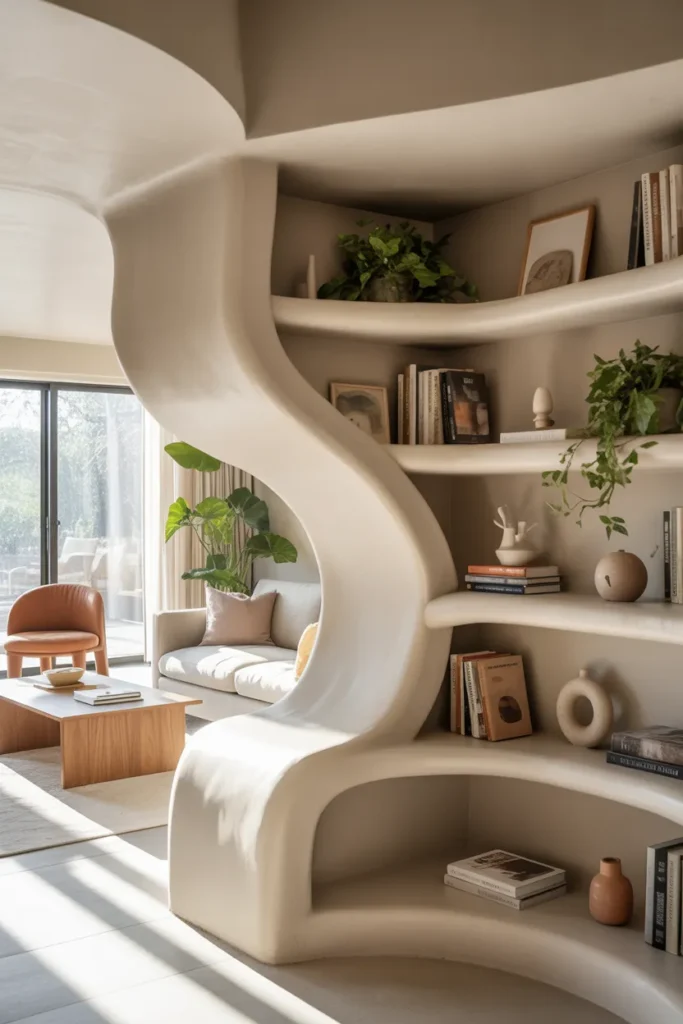
Vibe: Soft and architectural.
Why it works: Curves counterbalance the straight lines found throughout most homes. The arch creates a sense of transition while keeping both areas visually connected.
How to get it: Use lightweight framing and drywall to create a shallow decorative arch. Finish it in the same paint color as surrounding walls for a seamless appearance.
Quick Win: Add a freestanding arched bookshelf to mimic the effect without construction.
Shop The Look
| Product |
|---|
| Arched bookshelf unit |
| Plaster-look decorative vase |
| Neutral accent chair |
| Built-in style wall sconces |
| Decorative greenery stems |
12. Multifunctional Divider Console With Seating
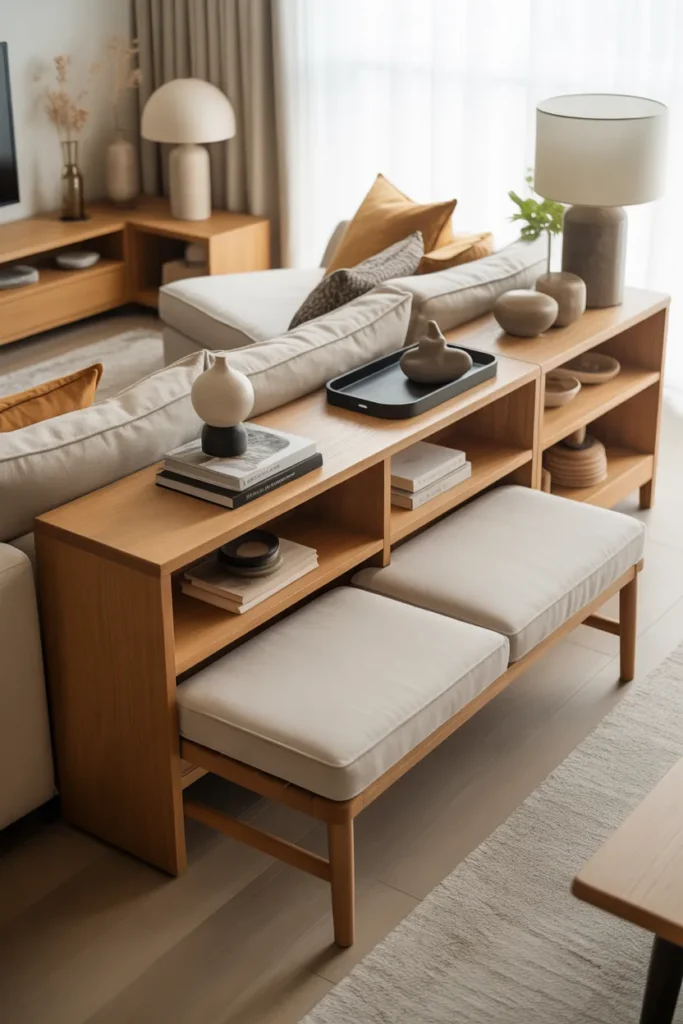
Vibe: Layered and efficient.
Why it works: Multifunctional pieces maximize every square foot. The divider defines zones while providing seating, storage, and display surfaces within the same footprint.
How to get it: Choose a console at least 14 inches deep with concealed storage. Pair it with a slim upholstered bench tucked underneath when not in use.
Shop The Look
| Product |
|---|
| Storage console table |
| Upholstered entry bench |
| Decorative wood tray |
| Ceramic table lamp |
| Neutral woven baskets |
How to Start Your Living Room Divider Transformation
The single best first move is adding an open bookshelf divider. It creates immediate zoning, adds storage, and allows light to travel throughout the room. Unlike permanent construction, it can also adapt as your needs change.
The most common mistake is choosing a divider that’s too solid for the space. Large opaque partitions often block natural light and make rooms feel smaller. Prioritize designs with transparency, open shelving, slats, or glass whenever possible.
For under $50, start with a tall faux olive branch arrangement, a woven storage basket, and a rechargeable accent light for shelf styling. These small additions instantly make any divider feel intentional and finished.
A basic divider refresh can happen in a single weekend for $100–$500. Built-in solutions usually range from $1,500–$5,000 or more depending on materials and customization. The key is improving function first, then layering in design details over time.
Frequently Asked Questions About Living Room Divider Ideas
What is the best living room divider for an open-concept home?
The best living room divider depends on how much separation you need. Open bookshelves, slatted wood partitions, and glass dividers are popular because they preserve light while defining zones. For flexibility, a folding screen or curtain divider works well. If you want a built-in appearance, white oak slat walls are one of the most timeless options.
Which colors work best with living room divider ideas?
Neutral palettes tend to create the most cohesive look. Warm white, greige, soft charcoal, natural oak, and walnut brown complement most divider materials. If you want contrast, matte black metal dividers pair beautifully with light walls. Keeping the divider within the room’s existing palette helps it feel integrated rather than separate.
How much does it cost to add a room divider in a living room?
Budget-friendly options such as folding screens, curtains, and shelving units can cost between $100 and $500. Mid-range divider solutions typically range from $500 to $1,500. Custom-built slat walls, fireplaces, or architectural partitions often start around $1,500 and can exceed $5,000 depending on materials and labor.
Can living room divider ideas work in small apartments?
Yes, and they often work even better in compact spaces because they create functional zones without requiring additional rooms. Open shelving, glass panels, and plant dividers help maintain sightlines and prevent visual heaviness. Avoid solid floor-to-ceiling walls unless the apartment has abundant natural light.
Which divider lets the most natural light through?
Glass partitions are the clear winner for preserving daylight. Clear tempered glass framed in slim black steel allows sunlight to move freely while still defining separate spaces. White oak slat dividers are another excellent option because the gaps between slats maintain brightness and airflow.
Ready to Create Your Dream Living Room Divider Design?
These 12 living room divider ideas showcase a wide range of approaches, from natural materials and architectural features to flexible layouts and multifunctional furniture. Remember that defining a space doesn’t require a major renovation—small, thoughtful changes often create the biggest impact. Start today by identifying one area of your living room that serves multiple purposes and sketching a simple divider solution for it. When the design comes together, your home will feel more organized, intentional, and comfortable without sacrificing openness. Save your favorite ideas now and return to them when you’re ready to transform your space with a divider that works as hard as it looks good.