17 Bathroom Tile Ideas to Transform Your Space
Tiles do more work in a bathroom than almost anything else. They cover the walls and floors, take all the water and steam, and set the whole mood of the room. If you are hunting for bathroom tile ideas that actually hold up in real life, this list gives you seventeen options that range from simple to bold.
Costs vary a lot here. A small refresh with peel-and-stick tile or a grout color change can cost roughly 50 to 150 dollars. Retiling a shower or floor with mid-range ceramic or porcelain usually lands between 400 and 1,500 dollars in materials, while real marble and large slabs climb well past that. I have learned that the tile itself is often the cheapest part of the job. The grout, sealer, and tools add up fast, so budget for those from the start.
One thing I keep noticing: the bathrooms that look best are not always the expensive ones. They are the ones where the grout color was chosen on purpose and the layout was planned before the first tile went up. Below you will find seventeen bathroom tile ideas, each with practical tips, common pitfalls, and a small shopping list so you can start planning today.
This post contains affiliate links. If you buy through them, I may earn a small commission at no extra cost to you.
1. Classic Subway Tile Bathroom
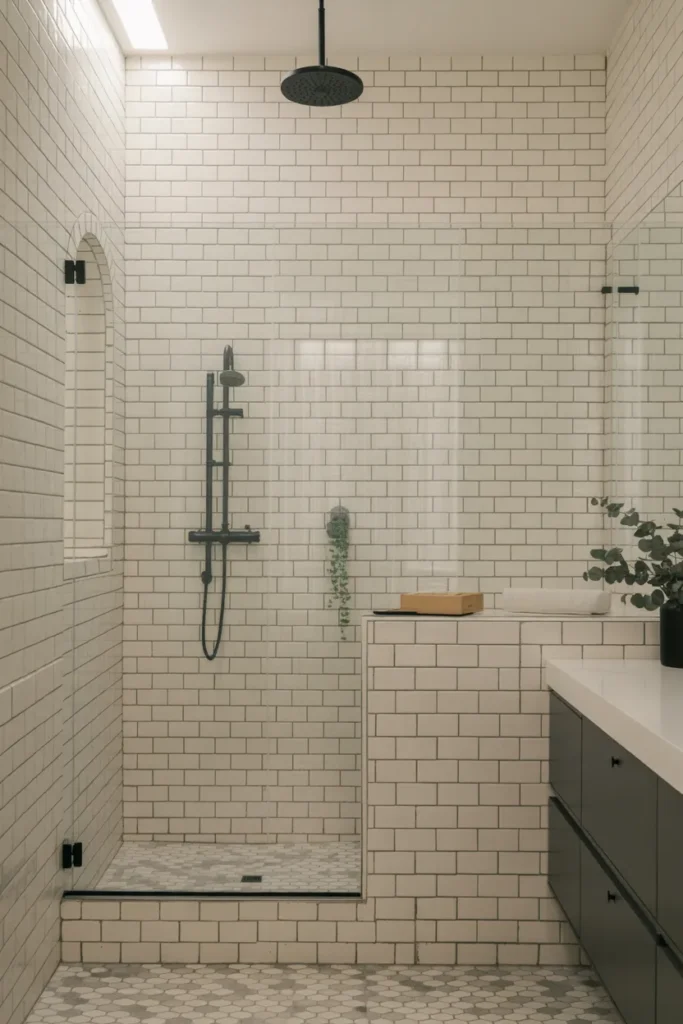
White subway tile in a running bond pattern is the safest choice you can make in a bathroom, and that is exactly why it works. It bounces light around, makes small rooms feel bigger, and it never looks dated. A basic white ceramic subway tile costs roughly 2 to 6 dollars per square foot, so covering a shower surround often lands between 150 and 500 dollars in tile.
Plan the layout: Start your rows from the center of the wall and work outward, so the cut tiles at the corners are equal on both sides. This keeps the finished wall symmetrical. One honest warning: cheap subway tile can vary slightly in size within the same box, so open several boxes and mix them as you work to avoid a wavy pattern.
Seal the grout well: White grout shows every bit of soap scum and mildew, so a penetrating grout sealer is worth the extra twenty minutes it takes. Reapply it once a year in the shower. This look suits anyone who wants a clean bathroom that will still look right in ten years, especially renters-friendly refreshes and small hall baths.
- Use 1/16 inch spacers for tight, clean grout lines that look more professional.
- Keep a few extra boxes of the same tile for future repairs, since dye lots change.
- Choose a bright white tile if your bathroom has no window, since it reflects the most light.
Shop This Look
| TILE | SPACERS | SEALER |
|---|---|---|
| White Ceramic Subway Tile | 1/16 Inch Tile Spacers | Penetrating Grout Sealer |
| Shop → | Shop → | Shop → |
2. Hexagonal Mosaic Tile Accent
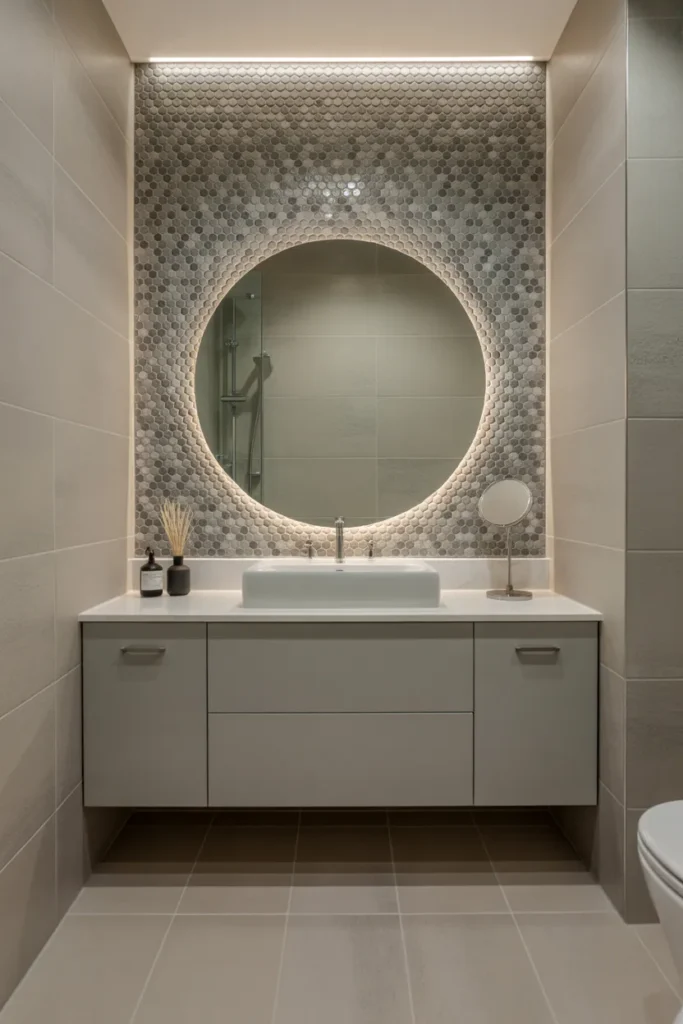
A strip of hexagonal mosaic tile on one wall or inside a shower niche adds shape and texture without taking over the whole room. Because it usually covers a small area, this accent costs roughly 60 to 200 dollars in materials even with a slightly pricier tile. The honeycomb shape reads as playful but still classic, which is a hard balance to find.
Cut from the back: Hex mosaic sheets have a mesh backing, and the easiest way to trim them is to cut through the mesh with a sharp utility knife or tile nippers before setting. One honest warning: tiny hex tiles eat grout, so buy more grout than you think you need and work in small sections before it skins over.
Match the scale: Small hexagons (one or two inches) suit shower floors and niches, while larger three or four inch hexes look better on a feature wall. This idea works for anyone who wants a bit of pattern but finds busy tile floors too much. It pairs well with plain large tiles everywhere else.
- Use unsanded grout for mosaic sheets, since sanded grout can scratch small tiles.
- Press each sheet firmly with a grout float so the hexes sit level with each other.
- Seal natural stone hex tiles before grouting, because grout can stain the stone.
Shop This Look
| TILE | NIPPERS | GROUT |
|---|---|---|
| Hexagon Mosaic Tile Sheets | Ceramic Tile Nippers | White Unsanded Grout |
| Shop → | Shop → | Shop → |
3. Marble Tile Elegance
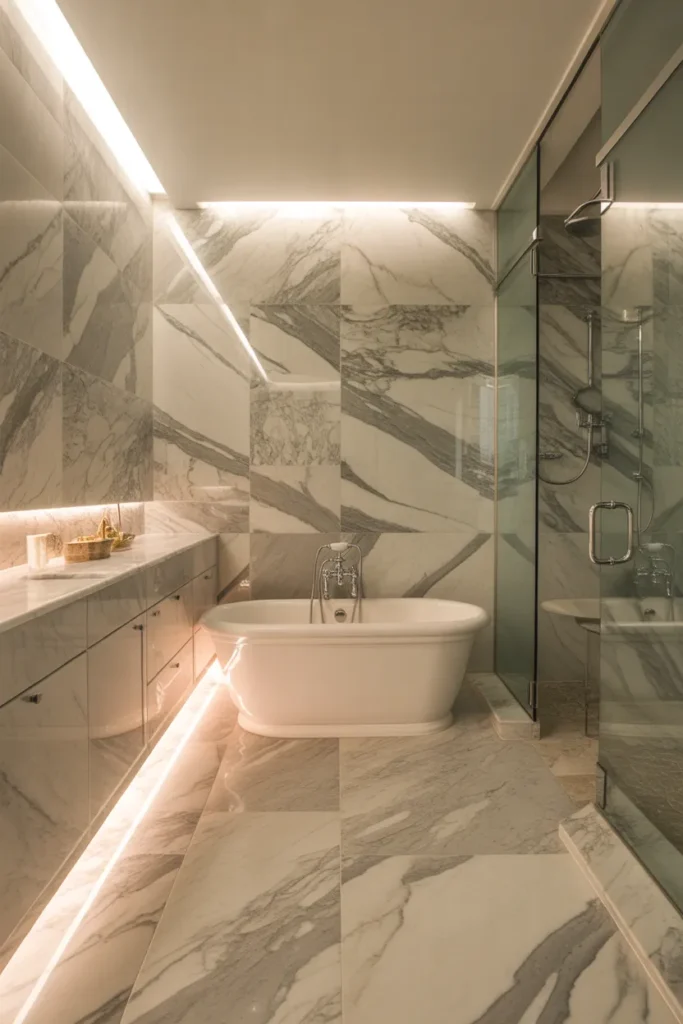
Real marble tile brings a soft, veined look that porcelain copies try hard to match. Carrara and similar marbles usually cost 8 to 20 dollars per square foot for tile, so a full bathroom gets expensive fast. Used on a shower wall or a single vanity wall, though, the cost stays reasonable at roughly 300 to 800 dollars for the tile and setting materials.
Choose honed over polished: Honed marble has a soft matte finish that hides etching and water marks much better than a glossy polish. One honest warning: marble is a natural stone and it stains. Red wine, hair dye, and acidic cleaners can leave marks that do not come out, so keep those away from it.
Seal before and after grout: A quality marble sealer applied before grouting keeps the grout from staining the stone, and a second coat after grouting protects the finished surface. This idea suits people who love the classic high-end hotel look and are willing to do a little maintenance to keep it that way.
- Buy from a single lot number so the veining and color stay consistent across boxes.
- Avoid vinegar and bleach based cleaners on marble, since acids etch the surface.
- Keep a marble polishing powder on hand for small dull spots that develop over time.
Shop This Look
4. Patterned Ceramic Tile Floor
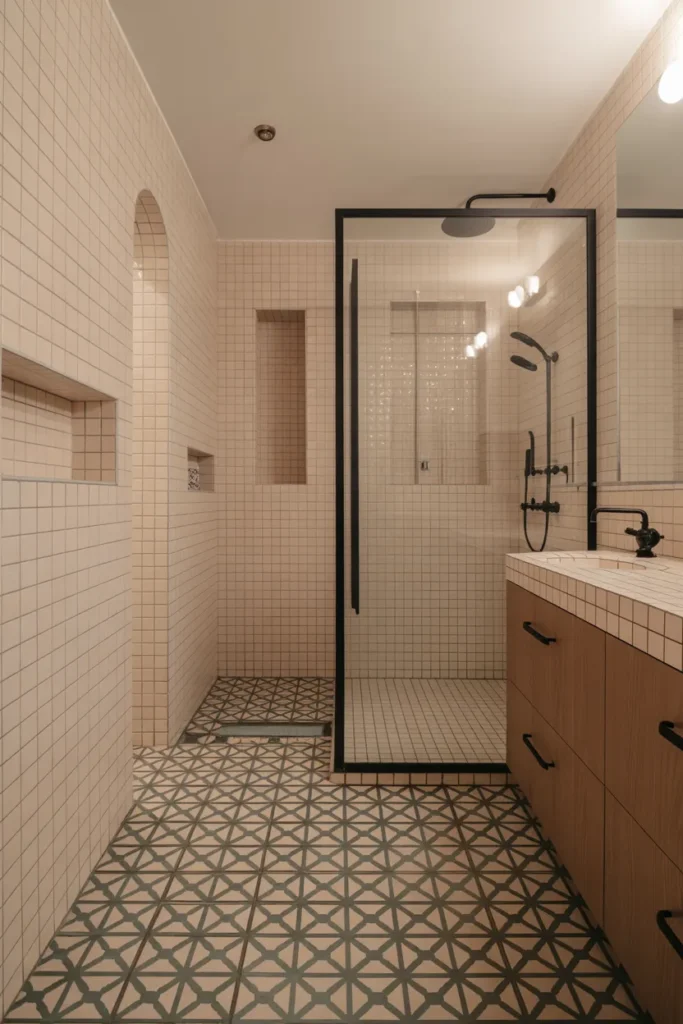
A patterned ceramic floor gives a small bathroom instant character, often for less than you would expect. Porcelain tiles printed with cement-style patterns cost roughly 4 to 10 dollars per square foot, so a typical bathroom floor runs 200 to 600 dollars in tile. Because the floor becomes the star, the walls can stay plain and cheap.
Dry lay the pattern first: Lay the tiles out on the floor before mixing any mortar, and photograph the arrangement from above. Patterned tiles have a repeat, and rotating them randomly avoids an obvious grid of identical squares. One honest warning: patterned tile shows every chip, so order at least ten percent extra for cuts and mistakes.
Keep the rest simple: White or pale walls, plain towels, and simple fixtures let the floor be the focus without the room feeling busy. This idea suits people who want a statement bathroom on a middle budget. It works especially well in powder rooms, where guests actually notice the floor.
- Choose a slip resistant finish, since bathroom floors get wet and smooth tiles turn slick.
- Seal the grout even on porcelain tile floors to keep dirt out of the lines.
- Save your dry lay photo so a future repair uses tiles facing the right direction.
Shop This Look
| TILE | SPACERS | SEALER |
|---|---|---|
| Patterned Cement Look Tile | Tile Leveling Spacers | Grout Sealer Spray |
| Shop → | Shop → | Shop → |
5. Subway Tile with Dark Grout
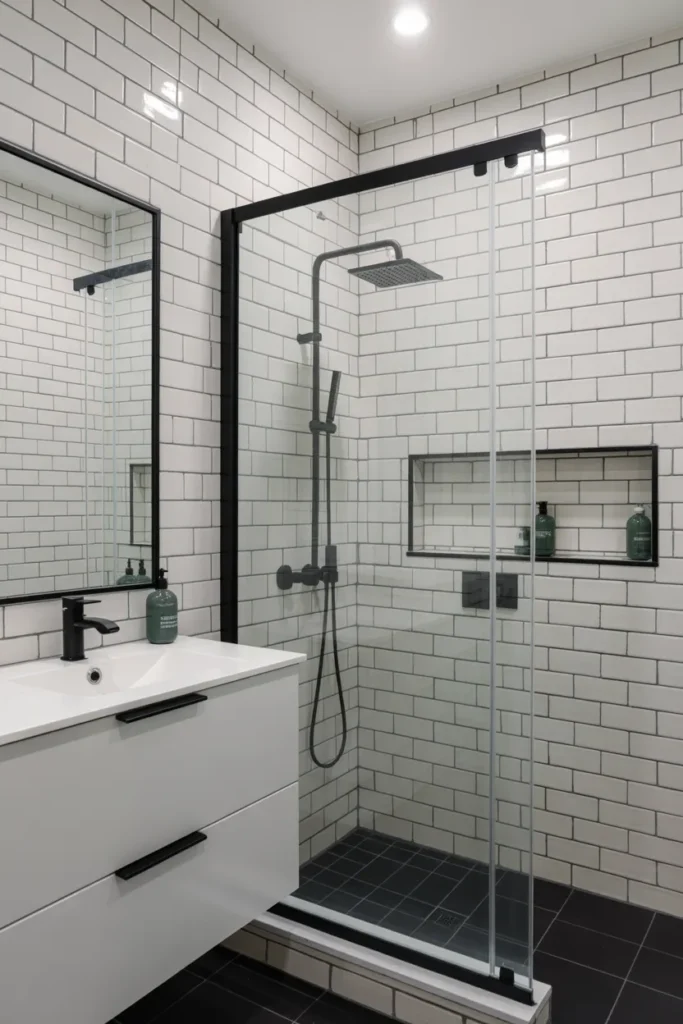
White subway tile paired with dark charcoal or black grout turns a plain wall into a graphic pattern. The tile itself is the same cheap ceramic as ever, roughly 2 to 6 dollars per square foot, and the dark grout adds almost nothing to the material cost. The result looks far more expensive than it is, which is why this combination is everywhere right now.
Wipe carefully while grouting: Dark grout stains white tile fast if you smear it around during cleanup, so wipe diagonally across the lines with a damp sponge and rinse often. One honest warning: uneven grout lines become very obvious against white tile, so take your time with spacers and keep the lines straight.
Seal to lock the color: Dark grout can fade unevenly in wet areas, so a penetrating sealer helps the color stay consistent. This look suits modern and industrial style bathrooms, and it is a smart pick for families, because dark grout hides dirt and staining far better than white.
- Test the grout color on a spare tile first, since wet grout dries darker than it looks in the bag.
- Use a grout release on textured tile so dark pigment does not settle into the surface.
- Avoid highly polished white tile with dark grout, because any haze shows as a gray film.
Shop This Look
| TILE | GROUT | SEALER |
|---|---|---|
| White Ceramic Subway Tile | Charcoal Grey Tile Grout | Penetrating Grout Sealer |
| Shop → | Shop → | Shop → |
6. Large-Format Porcelain Tiles
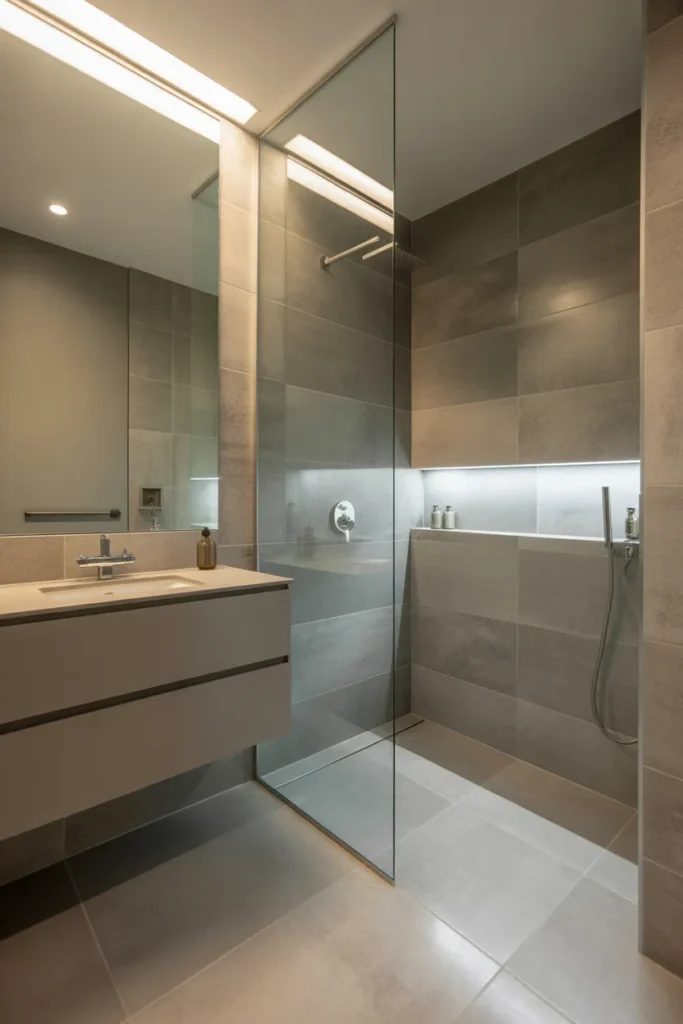
Large format tiles, usually 12 by 24 inches or bigger, make a bathroom feel calmer because there are fewer grout lines breaking up the surface. Porcelain in these sizes costs roughly 5 to 12 dollars per square foot. Fewer tiles mean less grout to clean, which anyone who has scrubbed a mosaic shower floor will appreciate.
Check the wall is flat: Big tiles follow every bump in the wall or floor, so the surface needs to be flat before you start. A suction cup tile lifter helps you set heavy tiles without chipping the edges. One honest warning: large tiles are hard to cut around pipes and corners, so a wet saw and a good blade are not optional.
Use leveling clips: Tile leveling clips keep the faces of large tiles perfectly even and prevent one edge from sitting higher than the next. This idea suits modern bathrooms and small spaces, where the continuous surface makes the room look bigger. It is less suited to a DIY first project, because the tiles are heavy and unforgiving.
- Buy a diamond blade rated for porcelain, since standard blades chip the edges.
- Back butter each tile with mortar so large tiles bond fully and do not sound hollow.
- Choose rectified edges for tight grout lines that stay narrow and even.
Shop This Look
| TILE | CLIPS | BLADE |
|---|---|---|
| Large Format Porcelain Tile | Tile Leveling Clips | Porcelain Diamond Saw Blade |
| Shop → | Shop → | Shop → |
7. Chevron Patterned Tile Accent
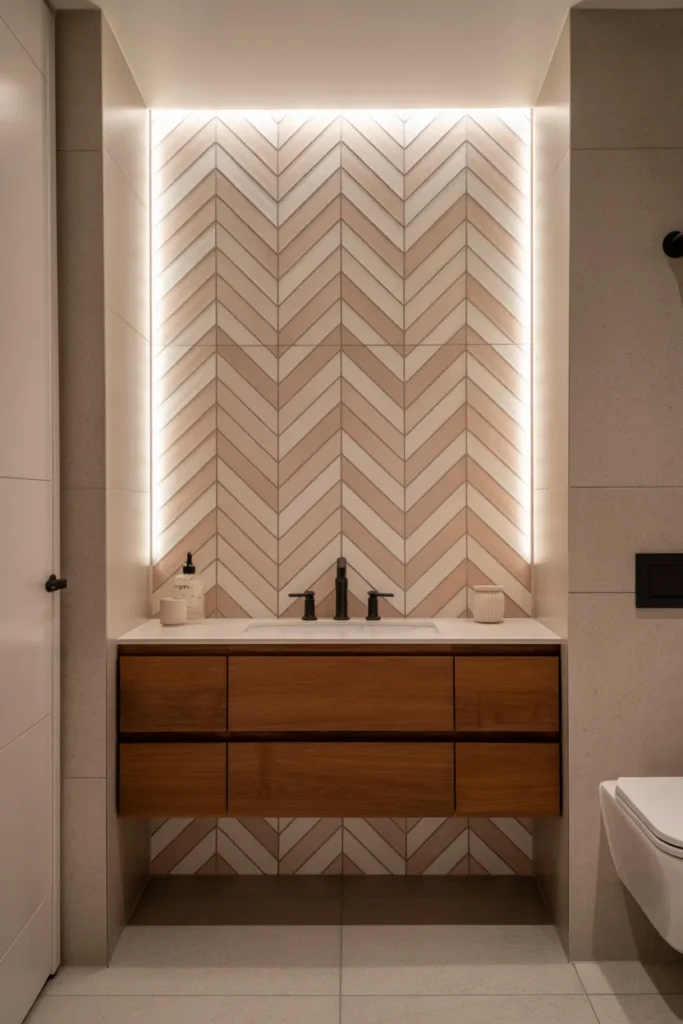
A chevron pattern, where rectangular tiles meet at a sharp point, adds movement and a designer feel to one wall. The tiles are usually standard planks or rectangles, costing roughly 4 to 10 dollars per square foot, so a single accent wall runs 150 to 400 dollars in tile. It reads as dressier than a plain layout without needing expensive material.
Find the center line: Snap a level vertical line down the middle of the wall and build the chevron outward from it, so the points stay centered. One honest warning: chevron produces a lot of angled cuts, and each cut takes time, so this wall will take twice as long as a straight stack. Do not rush it.
Finish the edges: Chevron ends leave zigzag edges, so a tile trim or pencil liner along the sides gives a clean border. This idea suits anyone who wants one striking wall, like behind the vanity or in the shower, while keeping the rest of the bathroom simple and calm.
- Order fifteen percent extra tile, because angled cuts waste more than straight ones.
- Cut the 45 degree angles with a wet saw for crisp points that meet cleanly.
- Use a grout color close to the tile color so the pattern reads as texture, not stripes.
Shop This Look
8. Hexagonal Floor Tiles with Neutral Walls
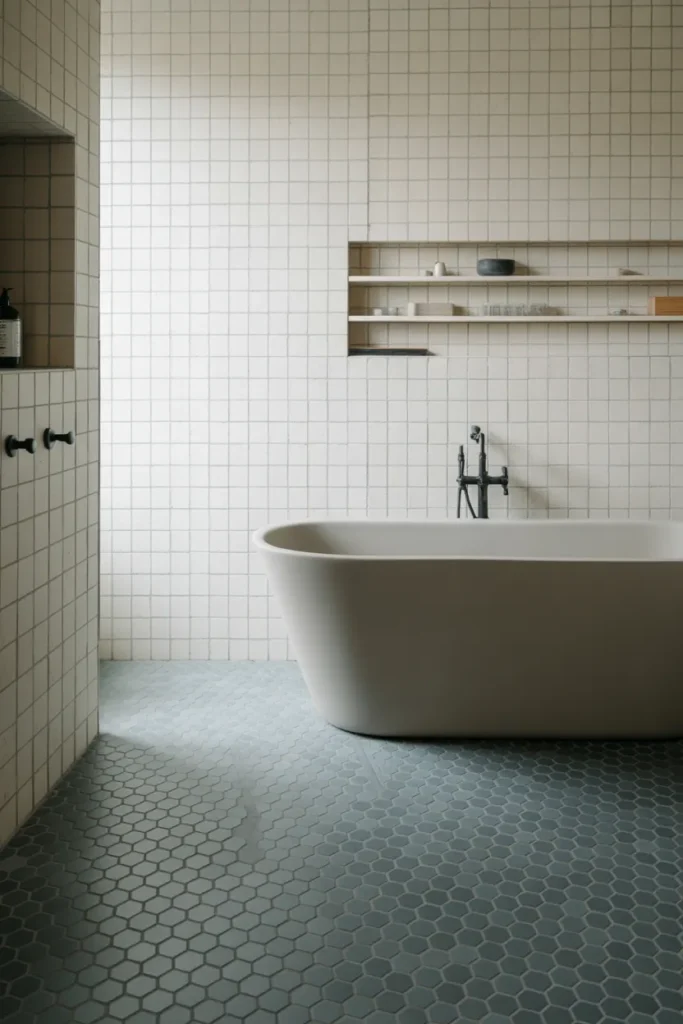
Hexagonal floor tiles with plain neutral walls give the bathroom shape on the floor and calm above. Hex porcelain floor tile costs roughly 4 to 9 dollars per square foot, so most bathroom floors run 200 to 500 dollars in tile. The small tiles also give your feet more grip, which is a real safety plus on a wet floor.
Start at the doorway: Lay your first rows where people will see them coming in, and let the cut tiles hide under the vanity or tub. One honest warning: hex tiles with many grout lines are harder to keep clean, so choose a mid-tone grout instead of bright white and your future self will thank you.
Pick a slip resistant finish: Bathroom floor tiles should have some texture or a matte finish, not a glossy polish. This idea suits families and anyone who wants a floor that looks interesting but hides dust and footprints. Pair it with warm white walls and simple wood or black fixtures.
- Use a grout float to press hex sheets evenly so no tile sits higher than its neighbor.
- Seal natural stone hexagons before grouting to protect them from grout stains.
- Keep leftover tile and grout labeled together for easy repairs years later.
Shop This Look
| TILE | GROUT | SEALER |
|---|---|---|
| Hexagon Porcelain Floor Tile | Grey Sanded Tile Grout | Matte Stone Tile Sealer |
| Shop → | Shop → | Shop → |
9. Mosaic Tile Shower Feature
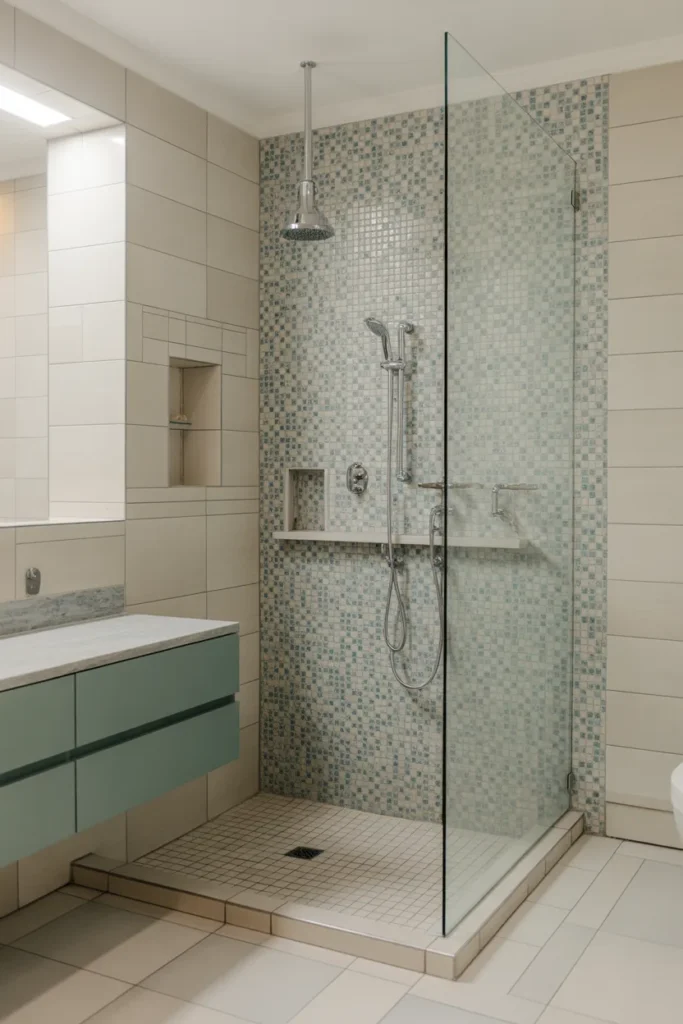
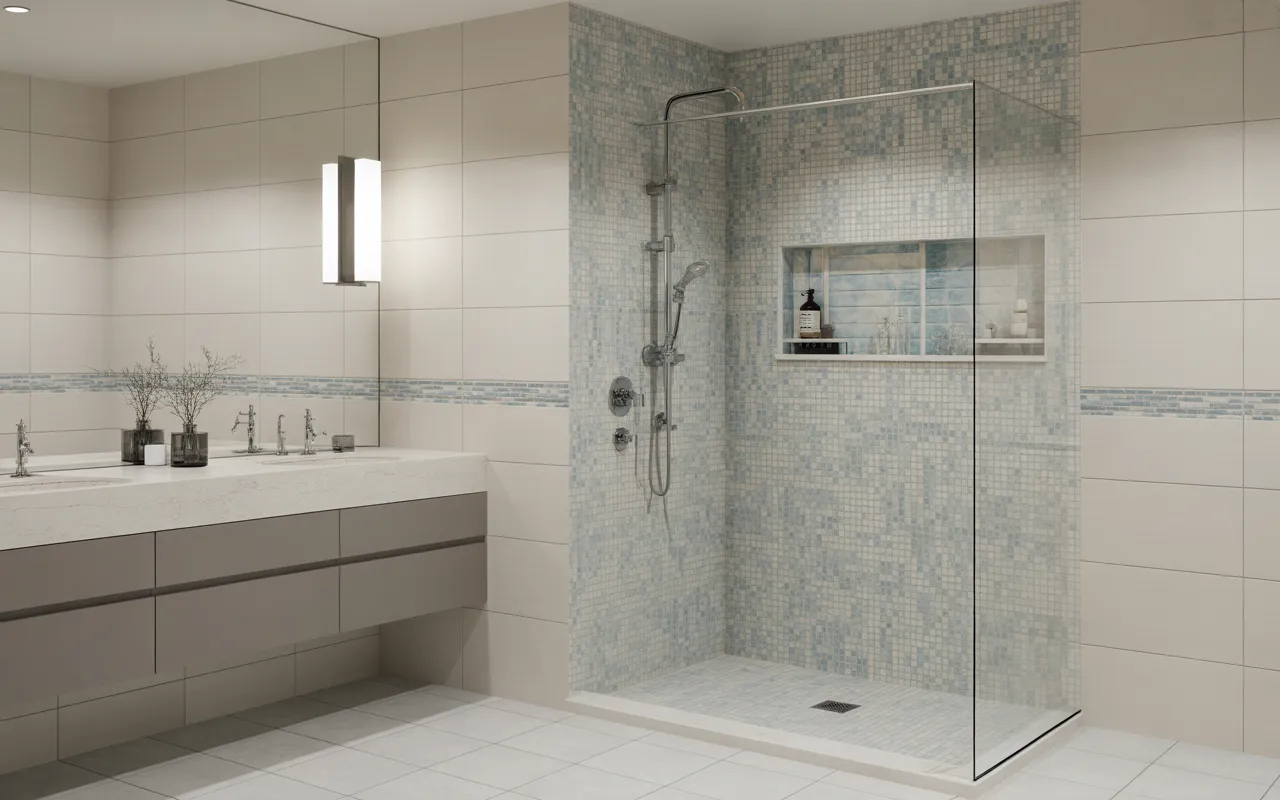
A mosaic tile feature wall inside the shower turns the most used corner of the bathroom into the prettiest one. Glass or stone mosaic sheets cost roughly 8 to 18 dollars per square foot, so a single feature wall usually runs 250 to 700 dollars. Because it is a contained area, the higher price per tile does not break the whole budget.
Waterproof behind it: A mosaic feature wall only works if the wall behind it is waterproofed first, with a membrane or waterproof backer board. Tile and grout are not waterproof on their own. One honest warning: glass mosaics can be slippery and hard to cut, so practice cuts on spare sheets before touching the wall.
Seal stone mosaics: If you use natural stone mosaic, seal it before grouting and again after, since stone drinks up grout color. This idea suits people who want a spa like shower without redoing the whole bathroom. Keep the other shower walls plain so the mosaic stays the star.
- Use a white thinset behind glass mosaic, because gray thinset shows through and dulls the color.
- Keep grout lines even by nudging sheets while the mortar is still wet.
- Clean grout haze off glass mosaic the same day, since it gets harder to remove later.
Shop This Look
| TILE | MEMBRANE | GROUT |
|---|---|---|
| Glass Mosaic Shower Tile | Waterproof Tile Membrane | White Unsanded Grout |
| Shop → | Shop → | Shop → |
10. Subway Tiles with Herringbone Pattern
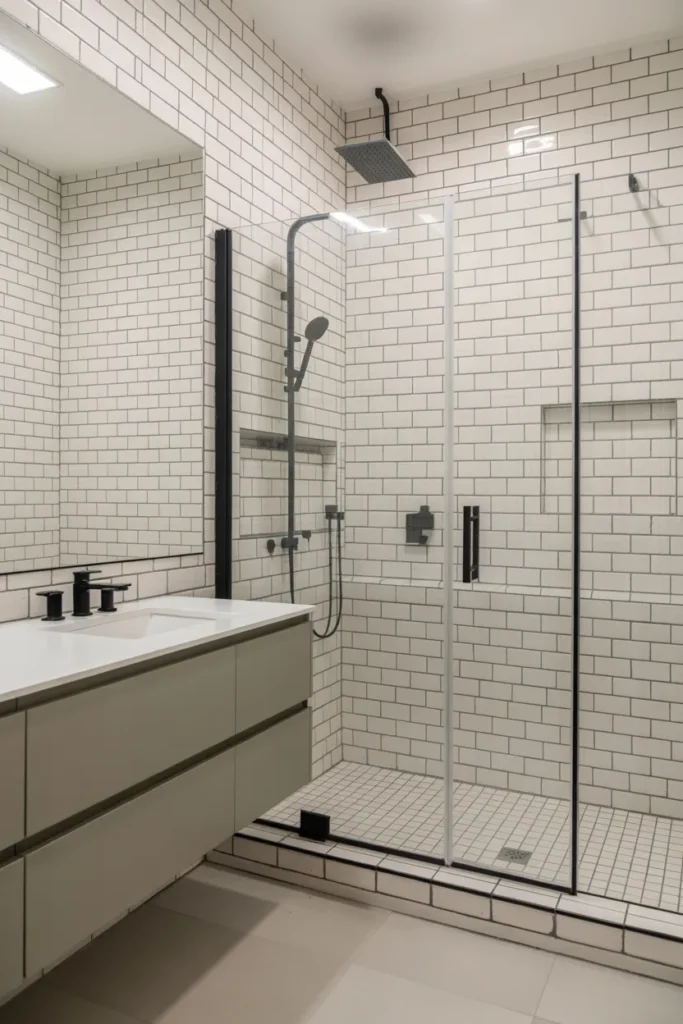
Setting plain subway tiles in a herringbone pattern gives you a custom look from the cheapest tile on the shelf. The tile still costs roughly 2 to 6 dollars per square foot, but the angled layout makes it look like a design choice instead of a budget choice. It works on a shower wall, a backsplash behind the vanity, or a small floor.
Mark a 45 degree guide: Snap a diagonal reference line on the wall and build the pattern from the center outward, checking the angle with a square as you go. One honest warning: herringbone doubles your cutting and your waste, so order at least fifteen percent extra tile and do not plan to finish the wall in one evening.
Use tile wedges: Small wedges keep the angled joints consistent while the mortar sets. This idea suits anyone who loves the herringbone look but wants to spend the money on labor and care rather than on pricey tile. Keep the grout color close to the tile so the pattern stays soft instead of harsh.
- Cut a few sample angles first to confirm your saw setting before committing to the wall.
- Work in small sections so the mortar does not dry before the angled tiles are placed.
- Step back every few rows to check the pattern from across the room.
Shop This Look
| TILE | WEDGES | GROUT |
|---|---|---|
| White Ceramic Subway Tile | Tile Leveling Wedges | Light Grey Unsanded Grout |
| Shop → | Shop → | Shop → |
11. Terrazzo Tiles for a Playful Touch
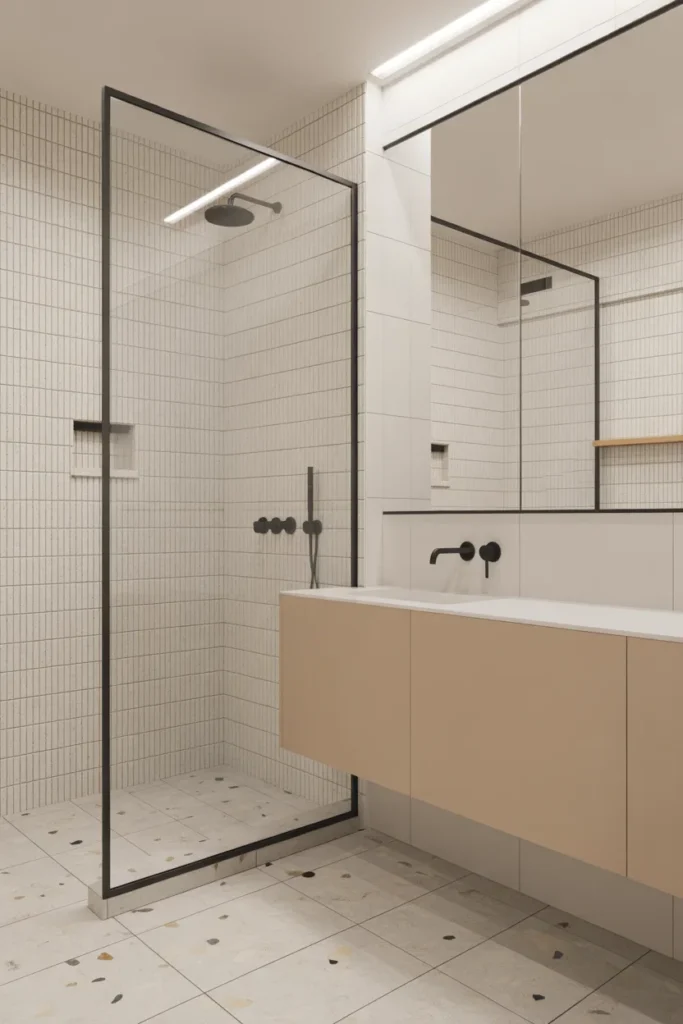
Terrazzo look tile, with its scattered chips of stone in a cement base, adds playful confetti-like pattern to a bathroom without being loud. Porcelain versions cost roughly 6 to 14 dollars per square foot, so a floor or a shower wall runs 300 to 800 dollars. Real poured terrazzo is far pricier, so the porcelain look is the practical route for most people.
Apply grout release first: The speckled surface can trap grout pigment in its tiny pits, so brush on a grout release before you grout. One honest warning: busy terrazzo fights with other patterns, so keep the rest of the bathroom plain and let the tile carry the whole design.
Seal it properly: A stone sealer keeps the surface stain resistant, which matters in a room full of soap and cosmetics. This idea suits mid century and playful modern styles, and it works well for people who want pattern without the fussiness of a geometric print. It hides dust and water spots better than most patterned tiles.
- Choose large format terrazzo look tile to reduce grout lines and installation time.
- Match the background color to your wall paint so the room feels connected.
- Test your sealer on a spare tile to confirm it does not darken the surface.
Shop This Look
| TILE | RELEASE | SEALER |
|---|---|---|
| Terrazzo Look Porcelain Tile | Grout Release Pre Sealer | Natural Stone Sealer |
| Shop → | Shop → | Shop → |
12. Subway Tiles with Contrasting Grout
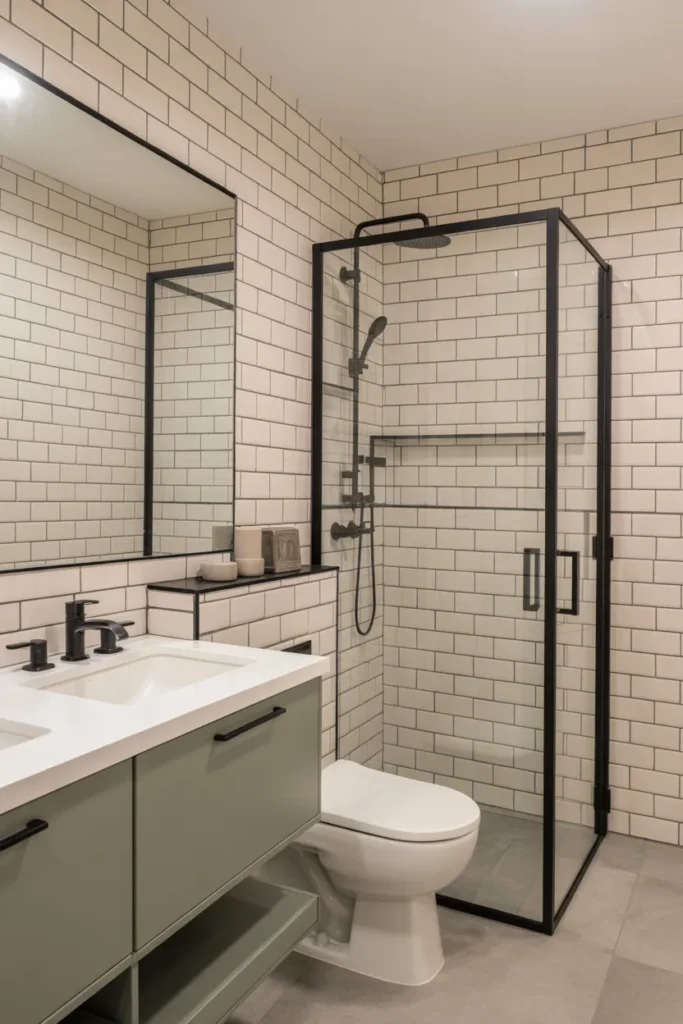
Contrasting grout, like a bold blue or warm gray against white subway tile, turns the humble brick pattern into a deliberate design feature. The tile is still the budget friendly 2 to 6 dollars per square foot, and a bag of colored grout costs about the same as standard grout. The whole trick is in the color choice, which makes it one of the cheapest ways to customize a bathroom.
Sample on spare tile: Grout looks very different wet, dry, and against your wall color, so mix a small batch and grout a sample board first. One honest warning: colored grout can be uneven if you mix partial bags, so mix the full bag at once or measure powder and water carefully for each batch.
Refresh grout anytime: A grout colorant pen can recolor old grout lines without regrouting, which makes this look easy to update later. This idea suits renters and anyone who wants personality without ripping out tile. It also works well in kids bathrooms, where the color hides stains.
- Pick a grout color one or two shades off the tile for contrast that stays tasteful.
- Wear gloves when grouting, because colored grout stains hands and skin badly.
- Seal colored grout to protect the color from fading in wet shower areas.
Shop This Look
13. Large Marble Slabs for Seamless Elegance
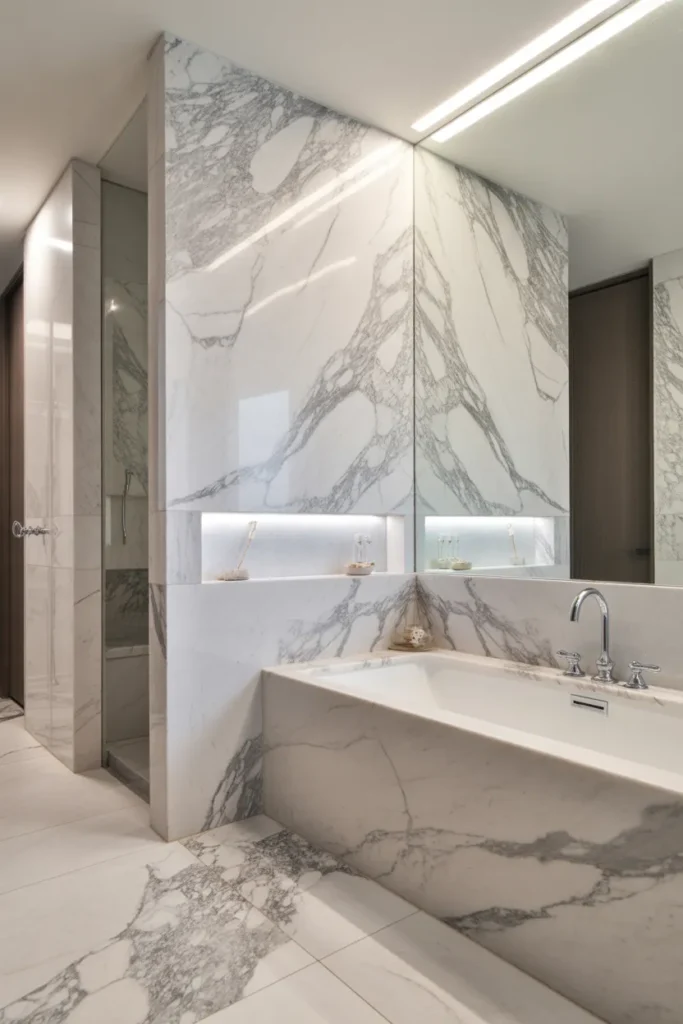
Large marble slabs with almost no grout lines create the seamless, high end look of a luxury hotel bathroom. This is the priciest idea on the list. Real marble slabs run 20 dollars per square foot and up, and a single shower wall can easily cost 1,000 to 3,000 dollars before installation. Porcelain slabs printed to look like marble are the budget alternative at roughly half the price.
Hire a pro for setting: Large slabs are heavy, fragile, and unforgiving, so this is not a DIY job for most people. One honest warning: even sealed marble can stain, so if you use real slabs, keep acidic cleaners and colored cosmetics off them from day one.
Polish and seal: A marble polish brings back the shine on dull spots, and a penetrating sealer is the only thing standing between your slab and a stain. This idea suits people building a true statement bathroom with a generous budget. It works best in larger bathrooms, where the unbroken veining has room to show.
- Inspect each slab in person if possible, since veining varies and photos lie.
- Use a white thinset behind light marble so gray mortar does not shadow through.
- Ask your installer about book matching, where two slabs mirror each other for drama.
Shop This Look
| SLAB | POLISH | SEALER |
|---|---|---|
| Marble Look Porcelain Slab | Marble Polish Cream | Marble Impregnating Sealer |
| Shop → | Shop → | Shop → |
14. Black and White Checkerboard Tiles
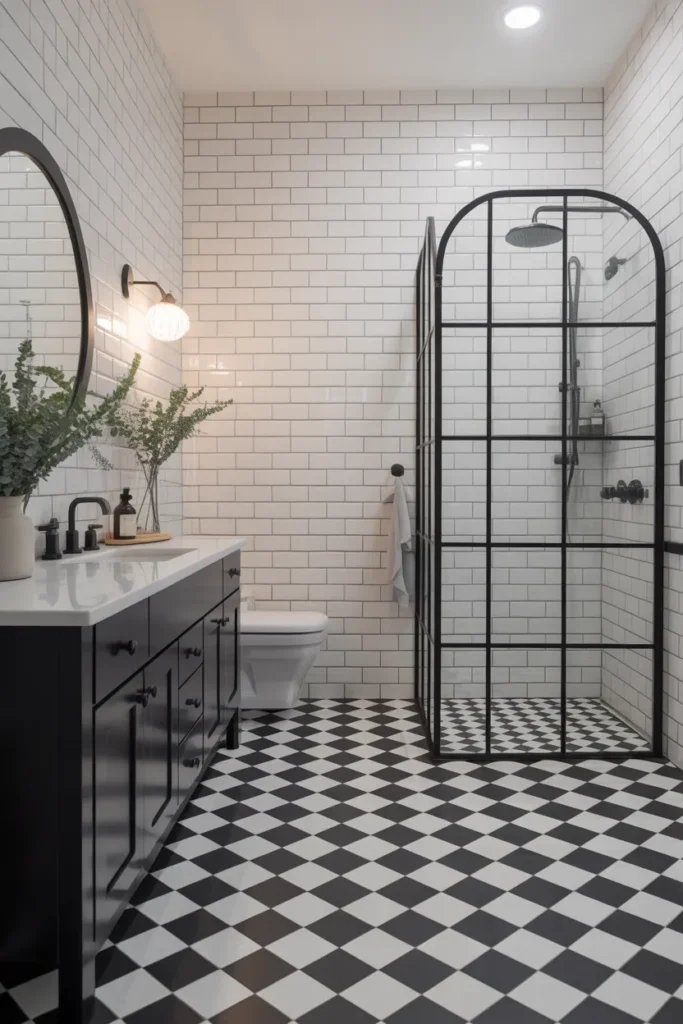
Black and white checkerboard tile is a vintage classic that keeps coming back, and it suits bathrooms of almost any size. Square porcelain tiles in black and white cost roughly 3 to 8 dollars per square foot, so a bathroom floor usually runs 200 to 500 dollars in tile. It adds energy without adding color, which keeps it flexible.
Start from the center: Find the center of the room and lay a dry run of tiles in both directions so the border cuts are even on all sides. One honest warning: checkerboard magnifies any crooked layout, so check that your rows are square with a tape measure, not just by eye.
Use a good cutter: A snap tile cutter handles square porcelain easily and gives clean edges for the border cuts. This idea suits traditional, retro, and even farmhouse bathrooms. It pairs best with simple white walls and chrome fixtures so the floor stays the boldest thing in the room.
- Keep tiles from the same lot together so the blacks and whites match across boxes.
- Use a dark grout near black tiles and light grout near white ones, or one mid gray throughout.
- Small bathrooms can handle a smaller tile, like six inch squares, to keep the pattern in scale.
Shop This Look
| TILE | CUTTER | GROUT |
|---|---|---|
| Black White Porcelain Tile | Manual Snap Tile Cutter | Grey Sanded Tile Grout |
| Shop → | Shop → | Shop → |
15. Geometric Patterned Wall Tiles
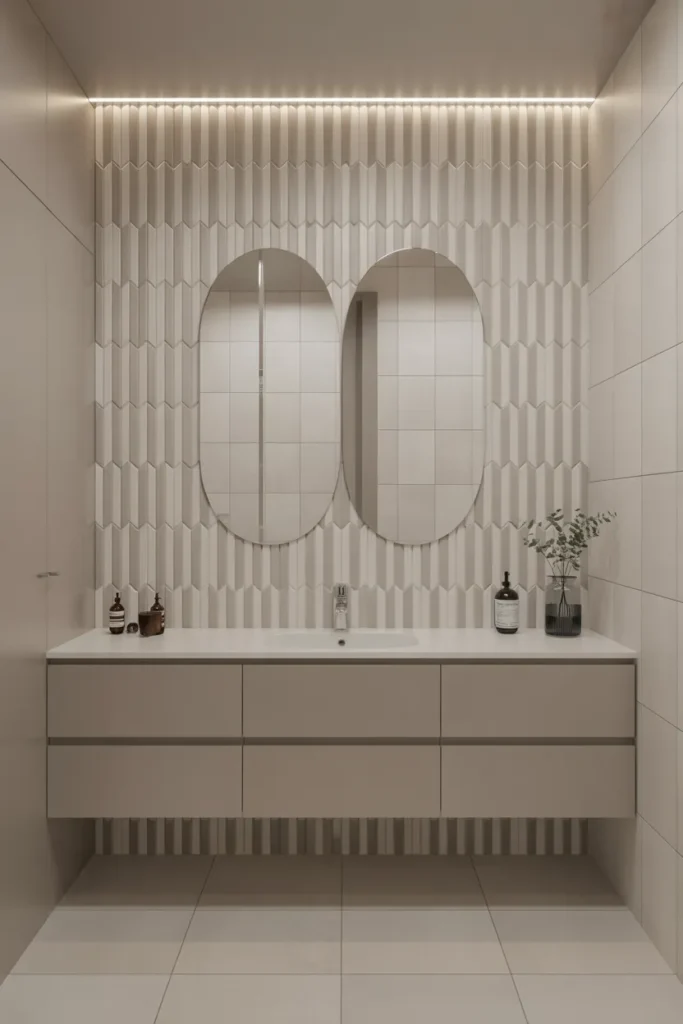
Geometric patterned wall tiles bring a graphic, modern punch to a bathroom without any extra color if you stick to a neutral palette. Printed porcelain wall tiles cost roughly 5 to 12 dollars per square foot, so one feature wall runs 200 to 500 dollars. The pattern does the decorating, so you can skip art and accessories on that wall entirely.
Buy the right adhesive: Patterned wall tiles need a polymer modified thinset that bonds well to vertical surfaces, especially for heavier porcelain. One honest warning: the pattern repeat means every tile has a correct rotation, so check the back for arrows and keep them all pointing the same way.
Keep grout lines thin: Rectified patterned tiles allow tight joints that do not interrupt the design. This idea suits modern and eclectic bathrooms, and it is a good fit for people who like bold looks but want them contained to one wall. The floor and other walls should stay quiet.
- Dry lay the first two rows to confirm the pattern flows correctly before mixing mortar.
- Use a grout color that matches the lightest tone in the tile so lines disappear.
- Protect the finished wall from dust during the rest of the remodel with a drop cloth.
Shop This Look
| TILE | ADHESIVE | SPONGE |
|---|---|---|
| Geometric Patterned Wall Tile | Polymer Modified Thinset Mortar | Tile Grout Sponge |
| Shop → | Shop → | Shop → |
16. Subway Tile with Vertical Stack
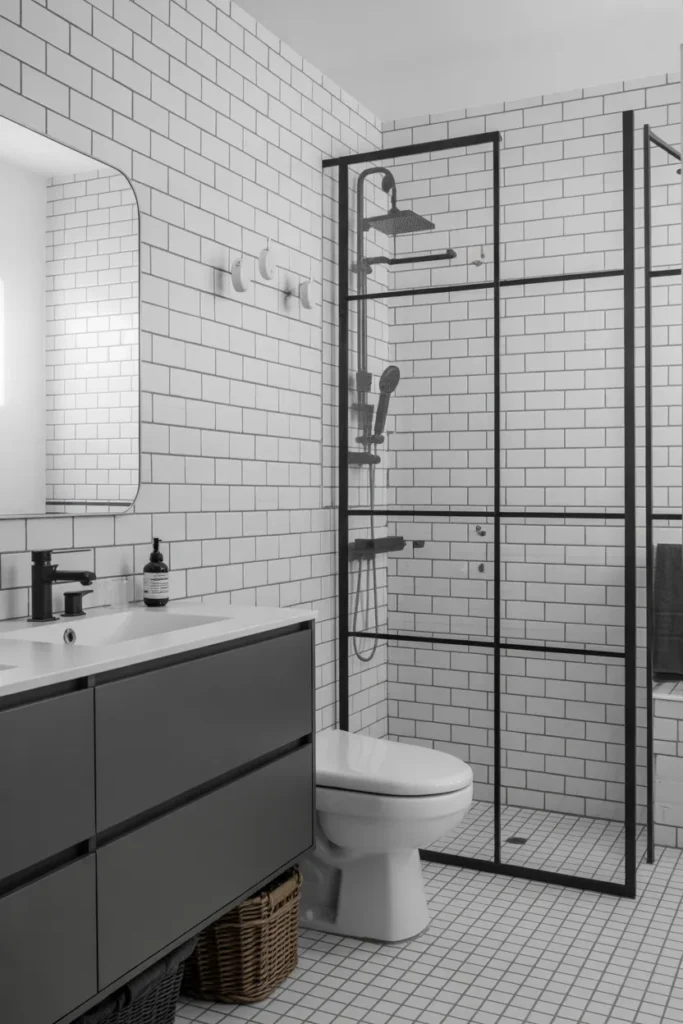
Stacking subway tiles vertically instead of in the usual running bond gives the same cheap tile a completely different, more modern feel. The tile still costs roughly 2 to 6 dollars per square foot, and the vertical lines draw the eye upward, which can make a low ceiling feel a little taller. It is a small change with a big visual payoff.
Keep columns plumb: Use a level on every few tiles, because a drifting column is obvious when all the lines run straight up. Leveling clips help keep the tile faces even. One honest warning: vertical stack shows lippage more than offset patterns, so flatten your mortar with the notched side of the trowel held at a consistent angle.
Choose grout wisely: A grout color close to the tile keeps the look calm and modern, while a dark grout turns each column into a stripe. This idea suits contemporary bathrooms and narrow spaces, where the vertical lines add a sense of height. It is one of the easiest pattern upgrades for a first time tiler.
- Snap vertical layout lines on the wall before spreading any mortar.
- Use 1/16 inch spacers for tight joints that look sharp and intentional.
- Cut the top row carefully, since the ceiling line is where mistakes show most.
Shop This Look
| TILE | CLIPS | GROUT |
|---|---|---|
| White Ceramic Subway Tile | Tile Leveling Clips | Light Grey Unsanded Grout |
| Shop → | Shop → | Shop → |
17. Herringbone Pattern Floor Tiles
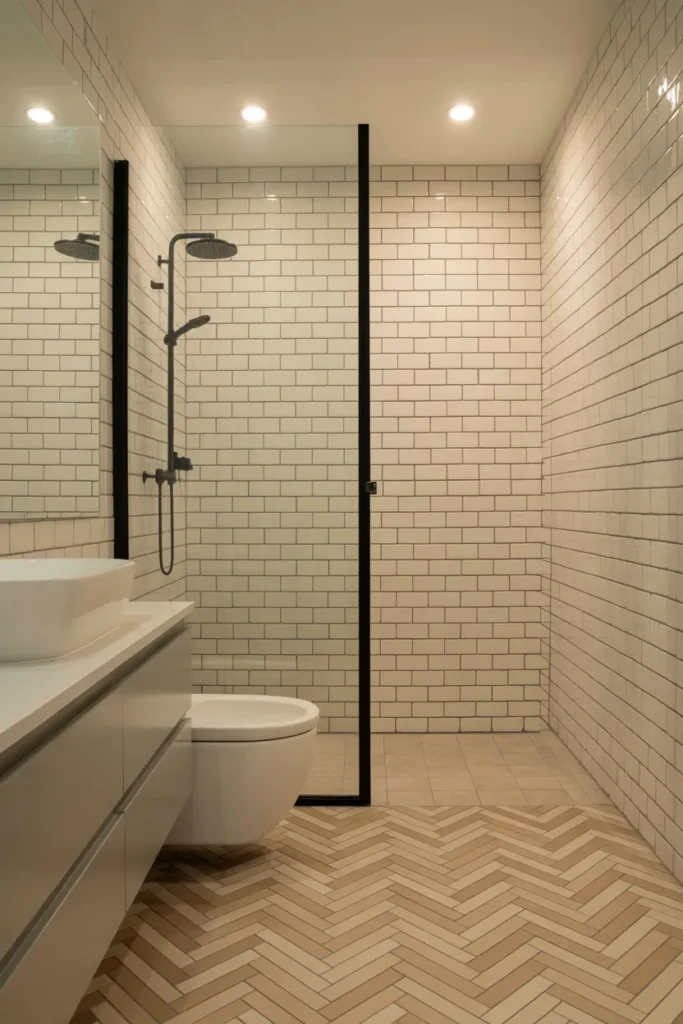
A herringbone floor turns simple rectangular tiles into a classic woven pattern that looks great in small bathrooms. Wood look porcelain planks in a herringbone layout cost roughly 4 to 10 dollars per square foot, so most bathroom floors run 250 to 600 dollars in tile. The pattern adds warmth and movement without needing any bold color.
Snap your center lines: Find the center of the room and snap chalk lines in both directions, then build the herringbone outward so the pattern stays centered. One honest warning: herringbone on a floor creates many small angled cuts along the walls, so a wet saw and patience are both required.
Seal the grout: A floor has more grout lines in a herringbone layout, so sealing keeps them from soaking up dirt and moisture. This idea suits anyone who loves the look of wood floors but wants the water resistance of tile. It works in traditional, transitional, and even modern bathrooms depending on the tile finish.
- Order fifteen percent extra tile to cover the many angled cuts around the edges.
- Use a mid tone grout that hides dust between cleanings on the floor.
- Check the pattern from the doorway often, since that is the view everyone sees.
Shop This Look
| TILE | SPACERS | SEALER |
|---|---|---|
| Wood Look Herringbone Tile | Tile Spacers 1/8 Inch | Grout Sealer Spray |
| Shop → | Shop → | Shop → |
How to Start
Start by measuring the wall or floor you want to tile, then add ten percent to the square footage for cuts and waste. Fifteen percent is safer for angled patterns like herringbone or chevron. Bring those numbers to the store or use them when ordering online, because running out of tile mid project is one of the most common and most avoidable headaches.
Next, pick your grout color at the same time as your tile. Grout is not an afterthought. It changes the whole look of the finished wall, and it is much easier to decide at home with a sample board than under store lights. Buy your sealer, spacers, and a basic trowel in the same trip so you are not making three runs in one weekend.
If you are new to tiling, practice on a small area first. A laundry room backsplash or a single shower niche teaches you everything about spreading mortar and setting tile before you commit to a whole bathroom. Watch one full installation video for your specific tile type, because mosaic sheets and large format tiles behave very differently.
For a first shopping trip under 60 dollars, you can cover the basics of a small accent project:
- A box of tile spacers and a pack of leveling clips, so your grout lines stay even.
- A small bottle of penetrating grout sealer and a grout float for application.
- A grout sponge, a bucket, and a margin trowel for mixing and cleanup.
Shop This Look
| TOOLS | SPACERS | SEALER |
|---|---|---|
| Tile Installation Tool Kit | Tile Spacers Assorted Pack | Penetrating Grout Sealer |
| Shop → | Shop → | Shop → |
Common Mistakes
- Wrong grout color: Grout picked under store lighting often looks completely different at home. Always sample it against your tile in the actual bathroom light before committing to a full bag.
- Skipping the waterproofing: Tile and grout are not waterproof, so a shower without a membrane or waterproof backer will leak into the wall. This is the mistake that causes the most expensive damage.
- Not ordering extra tile: Running out of tile means a new dye lot that may not match. Order ten percent extra for simple layouts and fifteen percent for angled patterns.
- Starting in the wrong corner: If you start from one corner, the cut tiles pile up on one side and the wall looks lopsided. Start from the center and work outward for balanced cuts.
- Using the wrong grout type: Sanded grout scratches glass and polished tile, while unsanded grout crumbles in wide joints. Match the grout to the tile and the joint width.
- Grouting too fast: Spreading grout over a huge area at once lets it skin over before you can shape the lines. Work in small sections and clean as you go.
- Skipping the sealer: Unsealed grout and natural stone absorb water and stains from day one. Sealing takes under an hour and protects the work for a year or more.
Frequently Asked Questions
What is the cheapest way to update bathroom tile?
Changing the grout color with a grout colorant pen or refreshing old grout with a deep clean and a new coat of sealer costs under 50 dollars and can make old tile look new. Peel and stick tile over a backsplash is another low cost option that runs roughly 30 to 80 dollars for a small area.
Can I tile over existing tile?
Yes, if the existing tile is firmly bonded and flat. Rough up the glossy surface, use a polymer modified thinset rated for tiling over tile, and make sure the extra thickness does not cause problems at doorways or fixtures. If any old tiles are loose or hollow, remove them first.
How do I choose tile for a small bathroom?
Light colors and larger tiles with fewer grout lines make a small bathroom feel bigger. Vertical layouts draw the eye up, and a single feature wall keeps the room from feeling busy. For more small bathroom guidance, see my notes on small bathroom tile, where I cover layouts that open up tight spaces.
How often should I seal grout and stone tile?
Once a year is a good rule for showers and floors that see daily water. Test it by dripping water on the grout. If the water beads up, the sealer is still working. If it soaks in and darkens the grout, it is time to reseal.
Is marble too high maintenance for a family bathroom?
Real marble stains more easily than porcelain, so it needs more care in a busy family bathroom. Honed marble hides marks better than polished, and a good sealer helps, but porcelain printed to look like marble gives you the same look with almost no maintenance. Many families choose the porcelain route and never regret it.
The Finishing Touch
Before you call any tile project done, do a slow walkthrough with a bright light held at an angle to the walls. Angled light reveals uneven grout lines, haze on the tile, and any lippage you missed during the day. Clean off any remaining grout haze with a damp cloth, touch up the caulk lines where tile meets the tub or floor, and give everything a final wipe before the first shower.
If you could change one thing about your plan right now, make it the grout color decision. It is the single choice people second guess most, and it costs almost nothing to change on paper before you start. Tape a few grout color samples next to your tile in the bathroom and look at them morning and evening. Pick the one you still like on the second day.
One action you can take today: measure your space and write down the square footage, then price out your top two tile choices online. That single step turns a vague idea into a real budget, and it takes about fifteen minutes. If the numbers work, order a sample tile or two so you can see the color in your own light before committing.
Good tile work lasts decades, so the planning is worth it. For more real world examples of how designers use tile to fix tricky bathrooms, Houzz has a helpful piece on visual tricks with bathroom tile that is worth a look: New This Week: 4 Visual Tricks With Bathroom Tile. Pick the idea that fits your budget and your patience, and enjoy the process.