23 Cottage House Interiors Ideas with Rustic Style
Cottage interiors have a way of making a house feel like a home fast. The look is built on natural materials, soft color, and pieces that feel collected over time instead of bought in one weekend. Nothing in a cottage space feels stiff or precious, and that is exactly the point.
The rustic side of cottage style keeps things grounded. Warm neutrals, raw wood, stone, and worn textures give every room depth without making it feel heavy. You do not need a farmhouse or a country address to pull it off either, because these ideas work in apartments, suburban homes, and new builds too.
Below are 23 cottage house interior ideas with rustic style, room by room. Each one comes with practical tips and a small shopping list so you can start where you are. Pick the rooms that bother you most and work from there.
This post contains affiliate links. If you buy through them, I may earn a small commission at no extra cost to you.
1. Warm Neutral Color Palette with Rustic Textures

A warm neutral palette is the easiest foundation for a cottage interior. Creams, soft taupes, warm whites, and honeyed beiges let natural textures do the talking. Walls in these tones feel calm instead of flat, and they make wood grain and stone stand out more than any bold color could.
Pick your anchors: choose two or three neutrals and repeat them through the whole house so rooms flow into each other. A warm white on walls, a sandy beige on upholstery, and a deeper taupe on accents is a safe trio that rarely goes wrong. Test paint in morning and evening light because warm neutrals shift a lot.
Layer the texture: texture is what keeps neutrals from feeling boring, so stack it on purpose. Pair smooth plaster walls with nubby wool, rough linen, and aged wood. When everything in the room is a slightly different texture, the palette feels rich even though the colors stay quiet.
- Stick to warm undertones so every room feels connected
- Add texture in at least three materials per room
- Keep one dark accent, like walnut or iron, for contrast
Shop This Look
2. Exposed Wooden Beams for Authentic Charm

Nothing says cottage like a ceiling with real wooden beams overhead. They add instant history and structure, drawing the eye up and making rooms feel taller and more grounded at once. Even simple box beams in a warm stain can change the whole mood of a plain room.
Match the wood tone: beams should feel related to the other wood in the room, not identical to it. If your floors are a medium oak, beams in a slightly darker walnut or a whitewashed finish will sit together nicely. Exact matches often look flat, while tones in the same family look collected.
Fake it convincingly: if your ceiling is drywall, lightweight faux beams made from molded polyurethane are a solid option. They install with construction adhesive and screws, cost far less than real timber, and look convincing from below. Paint or stain them once hung and most guests will never guess.
- Keep beams chunky, since thin ones read as decorative trim
- Stain samples on the ceiling first, not on the floor
- Leave wiring for future pendant lights before installing
Shop This Look
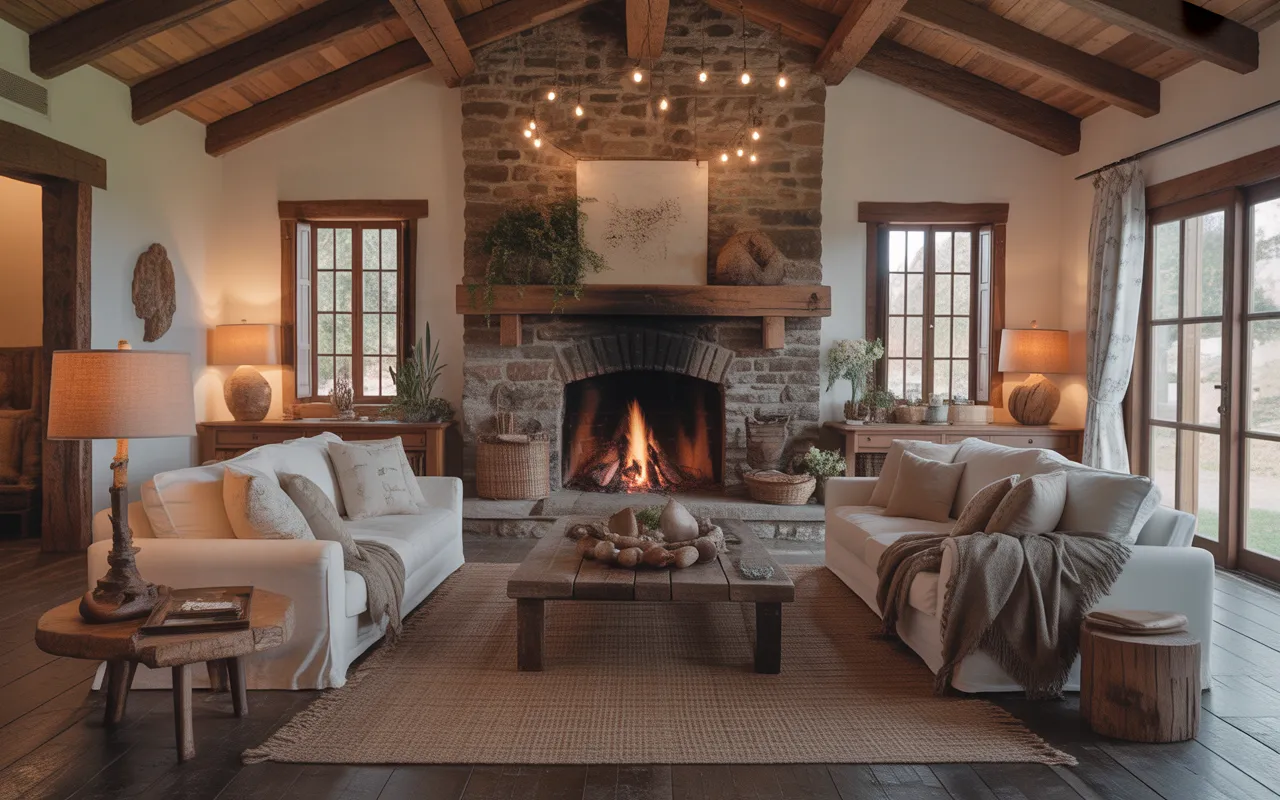
3. Cozy Living Room with Stone Fireplace

A stone fireplace is the natural gathering point of a cottage living room. The rough texture of the stone contrasts beautifully with soft sofas and throws, and the whole arrangement invites people to sit down and stay. Even when the fire is not lit, the fireplace gives the room a solid center.
Style the mantel simply: a stone fireplace already has plenty of visual weight, so the mantel does not need much. A long wooden beam, a couple of candlesticks, and one piece of art or a round mirror is enough. Leave some empty space on purpose because clutter fights the calm the stone creates.
Arrange seating inward: angle your chairs and sofa toward the fireplace rather than the television. Two armchairs flanking the hearth with a small round table between them makes a natural conversation spot. This layout is what turns a living room into a room people actually live in.
- Keep mantel decor to three items or fewer
- Face seating toward the hearth for a natural gathering spot
- Add a woven basket of logs beside the fireplace, even if it is gas
Shop This Look
4. Rustic Wooden Furniture with Natural Finishes

Rustic wooden furniture with natural finishes gives a cottage interior its backbone. Pieces with visible grain, knots, and slight wear look better the longer you own them. They also hide everyday scuffs far better than lacquered modern furniture ever will.
Mix the eras: you do not need a matched set, and in fact you should avoid one. A farmhouse table with simple modern chairs, or an old dresser used as a media console, looks more authentic than anything bought as a collection. Let each piece have its own character and the room will feel layered instead of staged.
Oil beats varnish: natural oil finishes sink into the wood and can be refreshed with a rag whenever a spot looks dry. Polyurethane sits on top and chips when it fails. For a table you actually eat at, a hardwax oil finish handles heat and water marks gracefully.
- Choose solid wood over veneer for pieces that take abuse
- Mix old and new pieces instead of buying matched sets
- Refresh oil finishes once a year to keep wood fed
Shop This Look
5. Soft Textiles for a Cozy Cottage Feel

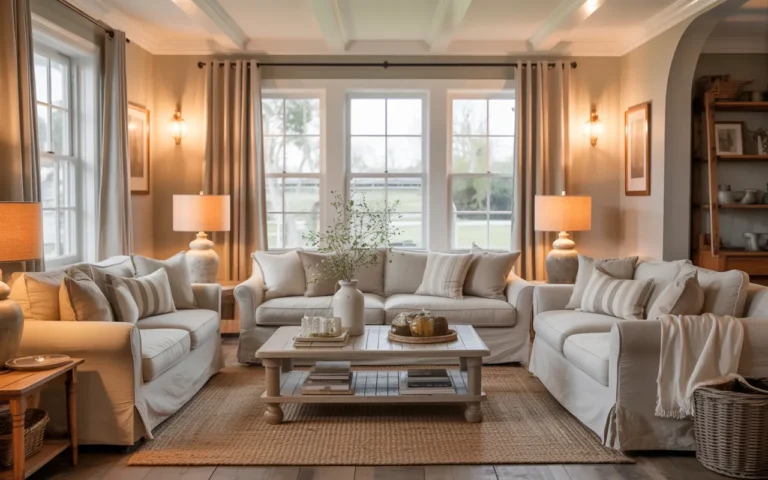
Soft textiles are what make a cottage feel like a cottage instead of a cabin. Linen, cotton, wool, and washed quilts bring warmth without weight. A sofa draped with a throw and stacked with cushions is an invitation you can see from the doorway.
Stick to natural fibers: cotton and linen age well, breathe better, and wash without fuss. A linen sofa cover softens with every wash, and a wool throw keeps its loft for years. Synthetic fabrics pill and shine in ways that fight the relaxed cottage look.
Layer with intent: start with your base upholstery, then add a throw across one arm, two or three cushions in mixed textures, and a folded quilt at the foot of the bed. Each layer should differ in texture, not just color. That contrast is what makes a room feel finished rather than decorated.
- Choose washable covers for anything near food or pets
- Mix linen, wool, and cotton in the same palette
- Fold throws in thirds for a lived-in drape
Shop This Look
6. Farmhouse-Style Kitchen with Open Shelving

A farmhouse kitchen with open shelving feels warm, personal, and practical all at once. Thick wooden shelves on brackets hold everyday dishes within reach, and the display becomes part of the decor. It suits cottage style because it shows the honest, working side of a kitchen.
Edit before you hang: open shelves only look good with things you actually use. Pull everything out of your cabinets first, keep your prettiest everyday dishes and glasses, and donate the rest. Shelves packed with mismatched clutter will make the whole kitchen feel smaller.
Use thick, simple boards: shelves should look sturdy, at least two inches thick, mounted on simple black iron or wood brackets. Two or three shelves per wall is plenty. Keep the bottom shelf for daily items and the top for the things you rarely touch.
- Limit shelves to items you use weekly
- Stack plates and bowls; group glasses in even numbers
- Wipe shelves monthly since open storage collects dust
Shop This Look
7. Vintage-Inspired Dining Area with Wooden Table

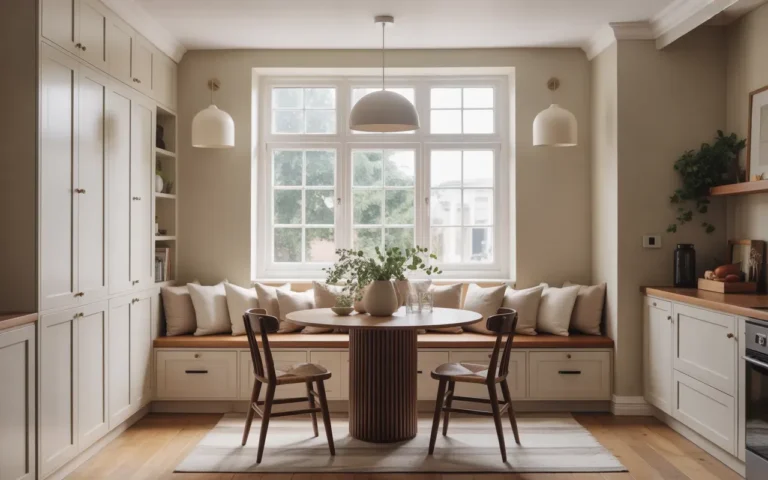
A vintage-inspired dining area starts with a wooden table that looks like it has stories. Farmhouse trestle tables, old pine harvest tables, or even a scarred oak table from a flea market all work. The table is the anchor, so let it be the most characterful piece in the room.
Pair mismatched chairs: identical chair sets look showroom-new, which fights the vintage mood. Mix a couple of Windsor chairs with a bench on one side, or paint chairs the same color while keeping their shapes different. A unifying paint color is all it takes to tie a mixed set together.
Ground it with a rug: a dining rug in jute or a faded vintage pattern softens the hard surfaces and defines the eating zone in an open plan. Size it so chairs stay on the rug when pulled out, usually about 24 inches beyond the table on each side. It also quiets the scrape of chair legs on wood floors.
- Let the table be the statement, keep everything else simple
- Add a bench on one side for flexible seating
- Hang a low pendant light about 30 inches above the table
Shop This Look
8. Natural Stone Accents for Rustic Appeal

Natural stone accents bring the outdoors in without trying too hard. A rough stone windowsill, a slate hearth, or a chunk of granite used as a side table all add weight and texture. Stone is one of those materials that never dates because it was never trendy to begin with.
Think small and heavy: you do not need a stone wall to get the effect. A mortar bowl on the kitchen counter, stone bookends, or a tray of river rocks on a coffee table can carry the whole idea. Small stone objects feel collected, which suits cottage style better than big installations.
Mix stone with wood: stone reads cold on its own, so always pair it with something warm. A stone vase on a wooden table, a marble board against a wooden backsplash, or slate coasters on an oak coffee table balances the temperatures. The contrast is what makes both materials look better.
- Use stone in small doses unless it is the fireplace
- Pair every stone accent with nearby wood or textile
- Seal porous stone in kitchens and bathrooms
Shop This Look
9. Cottage Bedroom with Layered Bedding

A cottage bedroom is all about the bed, and layered bedding is how you make it the star. Sheets, a quilt, a folded duvet, and a throw stacked together look generous and inviting. The layers also work practically, since you can peel them back on warm nights.
Build in this order: flat sheet, lightweight quilt, duvet folded in thirds across the foot, then a throw tossed loosely over one corner. Pillows go tallest at the back and smallest at the front. This order never fails and takes about two minutes once you have done it a few times.
Stay in one family: cottage bedding works best when everything belongs to the same color family, like all whites and creams or all soft blues. Add pattern in just one or two layers, a ticking stripe or a small floral, so the bed feels collected rather than matched. Solid plus one pattern is the safest formula.
- Layer at least three pieces on top of the sheet
- Keep all bedding in one color family
- Limit pattern to one or two layers
Shop This Look
10. Woven Rugs and Natural Fiber Flooring

Woven rugs in jute, sisal, and seagrass are cottage staples for good reason. They are tough, affordable, and add texture underfoot in every room. A large natural fiber rug can pull a whole sitting area together in an afternoon.
Layer for comfort: natural fiber rugs can feel rough under bare feet, so layer a softer vintage-style rug on top in living areas and bedrooms. The jute underneath adds size and texture, the top rug adds softness and pattern. This layered look is very cottage and very forgiving of stains.
Watch the moisture: jute and sisal hate water, so keep them out of entryways that get wet and skip them in bathrooms. Seagrass handles humidity better and works in kitchens. For high-traffic wet zones, choose a washable cotton rug instead and save the jute for dry rooms.
- Size rugs so front legs of furniture sit on them
- Layer a soft rug over jute for barefoot comfort
- Keep natural fiber rugs out of damp areas
Shop This Look
11. Cozy Reading Nook with Wooden Accents

Every cottage home deserves a reading nook, even if it is just a corner. All you need is a comfortable chair, good light, and a small surface for tea. Tucked into a bay window or an unused alcove, a nook becomes the seat everyone fights over.
Get the chair right: the chair is the whole point, so pick one you can sit in for an hour. A deep armchair or a wooden rocker with a thick cushion both work. Add a small ottoman if you have the space, because feet-up reading is the entire purpose of the nook.
Light it well: a nook fails without proper reading light. A floor lamp with a warm bulb positioned over the shoulder of the chair works best. If the nook is by a window, you get daylight for free, but you still need the lamp for evenings.
- Place the nook where you naturally pause, not in a dead corner
- Add a basket or small shelf for current books
- Keep a throw within arm’s reach of the chair
Shop This Look
12. Rustic Open Shelving for Display and Storage

Rustic open shelving works beyond the kitchen too. In a living room, hallway, or bathroom, chunky wooden shelves on simple brackets display books, plants, and collected objects beautifully. They add storage without the bulk of a cabinet.
Group in threes: objects look best on shelves when grouped in odd numbers with varied heights. A stack of books, a small plant, and a framed photo makes a complete vignette. Repeat this rhythm across the shelf and the whole thing looks styled instead of stored.
Mind the brackets: brackets are visible in open shelving, so treat them as part of the design. Black iron brackets suit rustic style perfectly and disappear against most walls. Space them no more than 32 inches apart so a loaded shelf never sags.
- Use brackets as a design feature, not an afterthought
- Leave breathing room between groups of objects
- Anchor tall shelves to wall studs for safety
Shop This Look
13. Cottage Bathroom with Natural Materials

A cottage bathroom built from natural materials feels calm and timeless. Wood, stone, cotton, and ceramic beat plastic and chrome every time in this style. Even small swaps, like a wooden stool instead of a metal one, shift the whole mood.
Warm up the vanity: a wooden vanity or a converted antique dresser with a vessel sink is the fastest way to cottage-ify a bathroom. Wood softens all the hard tile and porcelain around it. Seal it well with a marine-grade finish and it will handle the humidity.
Soften with textiles: bathrooms get cold and echoey, so add cotton and waffle-weave towels, a small washable rug, and maybe a linen shower curtain. Natural textiles warm up the acoustics and the temperature feel of the room at the same time.
- Choose a wooden vanity or dresser conversion
- Use cotton or linen textiles instead of synthetics
- Add one plant that likes humidity, like a fern
Shop This Look
14. Antique Décor for Vintage Character

Antique decor gives a cottage interior the one thing new things cannot: a past. An old clock, a worn trunk, or a set of brass candlesticks adds character that no mass-produced item can fake. These pieces make a house feel settled and loved.
Hunt with a list: flea markets and estate sales are gold mines, but wandering without a plan leads to clutter. Make a short list of what your rooms actually need, like a side table or a mirror, and buy only from the list. You will still find treasures, just ones you have room for.
Check before you buy: open drawers, check chair joints, and smell old upholstery before committing. Surface wear is fine and even desirable, but wobbly legs and musty cushions are projects, not purchases. A quick inspection saves you from hauling home regrets.
- Shop with a short list of what rooms need
- Accept patina, reject structural damage
- Clean and wax old wood before placing it
Shop This Look
15. Soft Lighting with Warm Tones

Soft, warm lighting is what makes a cottage feel cozy after dark. Harsh overhead lights flatten a room, while low lamps with warm bulbs create pools of light that flatter wood and fabric. Aim for light that feels like candlelight, not a waiting room.
Go low and warm: table lamps and floor lamps at sitting height do most of the work. Choose bulbs around 2700K, which reads warm without going orange. One overhead fixture on a dimmer covers the rest, but you should rarely need it at full power.
Layer three sources: every room needs ambient light, task light, and a little accent glow. A floor lamp by the chair, a table lamp on the console, and a small lamp or candles on the mantel covers all three. When all three are on, the room feels finished.
- Use 2700K bulbs for a warm cottage glow
- Put overheads on dimmers and keep them low
- Add one candle or small glow per room
Shop This Look
16. Rustic Entryway with Wooden Bench

A rustic entryway sets the tone for the whole house in about ten seconds. A wooden bench gives people a place to sit while they pull on boots, and it anchors the space visually. This is the first impression, so make it warm.
Bench plus storage: choose a bench with a lower shelf or baskets underneath for shoes. Hang hooks above at a comfortable height for coats, and add a small tray for keys and sunglasses. An entryway that works beats an entryway that just looks good.
Keep it welcoming: a runner rug, a small plant, and one piece of art or a mirror finish the space. The mirror is especially useful in a dark hallway because it bounces light around. Keep the palette consistent with the rest of the house so the entry feels like the start of the story.
- Use a bench with shoe storage underneath
- Hang sturdy hooks for coats and bags
- Add a mirror to brighten a dark hallway
Shop This Look
17. Cottage-Inspired Kitchen Island with Wood Top

A kitchen island with a thick wood top brings farmhouse warmth into the busiest room in the house. Butcher block or reclaimed timber works for chopping, serving, and gathering. It also breaks up the hard surfaces of tile and stainless steel.
Size it to the room: leave at least 36 inches of walkway on all sides, 42 if two cooks work at once. An island that is too big will cramp the kitchen instead of helping it. Measure with painter’s tape on the floor before you commit to a size.
Finish for food: a wood island top needs a food-safe finish since it doubles as a work surface. Mineral oil or a butcher block conditioner is easy to reapply and keeps the wood from drying out. Sand and re-oil once a year and the top will outlast the cabinets.
- Keep 36 to 42 inches of clearance on every side
- Use a food-safe oil finish on the wood top
- Add two or three stools for casual seating
Shop This Look
18. Linen Curtains for Soft Natural Light

Linen curtains filter daylight the way cottage interiors need it: soft, warm, and slightly diffused. They let light in while softening the view, and their natural slubs and wrinkles look relaxed instead of messy. Heavy drapes would feel wrong here; linen is the right weight.
Hang them high and wide: mount the rod four to six inches above the window frame and extend it six to eight inches past each side. This makes windows look bigger and lets the linen panels stack off the glass during the day. Panels should just kiss the floor for a casual look.
Double up for privacy: if you need privacy at night, add a simple roller shade or a second sheer layer behind the linen. Keep the linen panels as the visible layer and hide the practical layer. You get the soft look with none of the fishbowl feeling.
- Hang rods high and wide to enlarge windows
- Choose unlined linen for the softest light
- Layer a hidden shade behind for night privacy
Shop This Look
19. Wooden Ceiling Panels for Added Texture

Wooden ceiling panels add texture where people least expect it: overhead. Beadboard, shiplap, or simple tongue-and-groove boards turn a flat white ceiling into a cottage feature. The lines draw the eye along the room and add instant character.
Choose the right board: beadboard reads classic cottage, wide shiplap reads farmhouse, and simple planks read cabin. For most cottage interiors, a narrow beadboard painted warm white hits the sweet spot. Keep the finish simple so the texture does the talking.
Paint it light: a wood ceiling can darken a room fast, so paint panels a warm white or soft cream unless the room gets tons of light. The paint settles into the grooves and highlights the texture while keeping the room bright. Leave beams natural for contrast if you have them.
- Pick beadboard for the most classic cottage look
- Paint panels light to keep rooms bright
- Run boards along the longest wall for best effect
Shop This Look
20. Indoor Plants for a Fresh Cottage Feel

Indoor plants give cottage interiors the freshness the style needs. Green leaves against warm wood and neutral fabric keep rooms from feeling dusty or heavy. Plants also make a room feel cared for in a way no object can.
Start with the easy ones: pothos, snake plants, and ZZ plants survive low light and forgetful watering. A trailing pothos on a bookshelf or a snake plant in a corner adds life with almost no effort. Buy small and let them grow into the space.
Use natural pots: terracotta, woven baskets, and simple ceramic pots suit cottage style far better than plastic. Group plants in odd numbers at different heights for a natural look. A plant on the floor, one on a stool, and one on a shelf makes a complete little arrangement.
- Choose low-maintenance plants if you are a beginner
- Pot everything in terracotta or woven baskets
- Group plants in odd numbers at varied heights
Shop This Look
21. Rustic Loft-Style Bedroom with Wooden Beams

A rustic loft-style bedroom with wooden beams feels like a hideaway. The beams overhead make the bed feel sheltered, and an open loft layout keeps the room airy. It is the coziest version of a bedroom without feeling closed in.
Keep furniture low: in a loft bedroom, low-profile furniture keeps sightlines open and the space feeling calm. A platform bed, a low dresser, and floor cushions suit the proportions. Tall furniture competes with the beams and makes the room feel busy.
Soften every surface: loft bedrooms can echo, so textiles matter even more here. A thick rug under the bed, curtains on any windows, and layered bedding absorb sound and add warmth. The beams give structure; the textiles give comfort.
- Use low furniture to keep the loft feeling open
- Add a large rug to warm up the floor
- Hang curtains to soften acoustics and light
Shop This Look
22. Stone Accent Walls for Natural Texture

A stone accent wall gives a cottage interior permanent texture and a serious focal point. Real or faux stone cladding on one wall adds depth that paint never can. It works best in living rooms, bedrooms behind the bed, or around a fireplace.
One wall is enough: stone is heavy visually, so limit it to a single accent wall per room. The wall behind the bed or the fireplace wall are the natural candidates. Covering every wall would turn cottage cozy into cave, and the installation cost climbs fast.
Consider stone veneer: thin stone veneer panels are much lighter and easier to install than full stone. Many are designed for DIY with construction adhesive, and they look convincing once grouted. Pick a veneer with varied tones so it reads as natural rather than manufactured.
- Limit stone to one accent wall per room
- Choose veneer panels for easier DIY installation
- Pair the stone wall with warm wood furniture
Shop This Look
23. Vintage Accessories for Personal Touch

Vintage accessories are the personal touch that makes a cottage interior yours. Old books, framed family photos, a found oil painting, or a chipped enamel pitcher tell your story. These small things do more for character than any big furniture purchase.
Display what you love: the rule for accessories is simple: only display things you genuinely like. If a flea market find makes you smile, it belongs out. If something was a gift you feel guilty about, box it. Authentic collections beat styled shelves every time.
Rotate seasonally: you do not have to show everything at once. Swap a few accessories with the seasons: dried flowers and pumpkins in fall, fresh greens in winter, wildflowers in spring. Rotation keeps the house feeling fresh without buying anything new.
- Display only pieces you truly love
- Group small items on trays to avoid clutter
- Rotate a few accessories each season
Shop This Look
How to Start
Start with the room that bothers you most, not the one that photographs best. You will stay motivated if your daily space improves first. Walk through that room and list what feels wrong: too dark, too cluttered, too cold, or too stiff. That list is your real starting point.
Next, pick your neutral palette before buying anything. Choose wall colors and two or three repeat fabrics, then carry samples with you when you shop. A palette decided in advance keeps every purchase pulling in the same direction and saves you from expensive mismatches.
Finally, tackle the biggest texture first, usually paint or a rug, then layer in wood and textiles. Work from large surfaces to small objects so the foundation is right before you style the details. One finished room beats five half-started ones every time.
- Fix the room you use most, not the showpiece
- Lock in your palette before shopping
- Work big to small: paint and rugs before accessories
Shop This Look
Common Mistakes
- Buying everything in one weekend so the house looks staged instead of collected
- Choosing cool gray tones that fight the warm cottage palette
- Skipping texture and wondering why neutrals look flat and boring
- Overfilling open shelves until they read as clutter, not display
- Using bright white overhead lighting that kills the cozy mood
- Matching every wood tone exactly so the room looks like a furniture set
- Hanging curtains too low and too narrow so windows look smaller than they are
Frequently Asked Questions
What is the difference between cottage style and farmhouse style?
Cottage style is softer and more layered, with an emphasis on comfort and collected pieces. Farmhouse style leans more structured and utilitarian, with cleaner lines and a working-farm feel. They share materials like wood and stone, but cottage interiors are generally cozier and less formal.
Can I get a cottage look in a new build home?
Yes, and it is mostly about adding texture and history. Faux beams, beadboard, vintage furniture, and layered textiles can give a new build real cottage character. Start with architectural details like trim and paneling, since those change the feel of the bones themselves.
What colors work best for cottage interiors?
Warm neutrals are the safest foundation: creams, warm whites, soft taupes, and sandy beiges. Muted greens, dusty blues, and soft terracotta work well as accents. Avoid stark whites and cool grays, which clash with the warm materials cottage style depends on.
Is cottage style expensive to achieve?
It can be one of the most budget-friendly styles because vintage and secondhand pieces are central to the look. Thrift stores, flea markets, and estate sales are your best sources. Spend your money on paint, good lighting, and one or two solid furniture pieces, then fill in with finds.
How do I keep a cottage interior from looking cluttered?
Edit ruthlessly and give objects room to breathe. Group small items on trays, leave empty space on shelves, and keep surfaces about two-thirds full at most. For more cozy decorating ideas with a similar spirit, see these cottagecore bedroom ideas that balance charm with calm.
The Finishing Touch
A cottage interior is finished when every room feels soft, warm, and a little bit personal. You will know you are there when guests walk in and immediately relax. That feeling comes from texture and warmth, not from perfection.
When you are ready for more inspiration, browse this collection of cottage style interior design ideas to see how designers mix old and new in real homes. One new idea is often all it takes to unlock the next room.
Take your time with the final layers. Live with each change for a week before deciding what is next. Cottage homes are built slowly, and the slow ones always look the most loved.