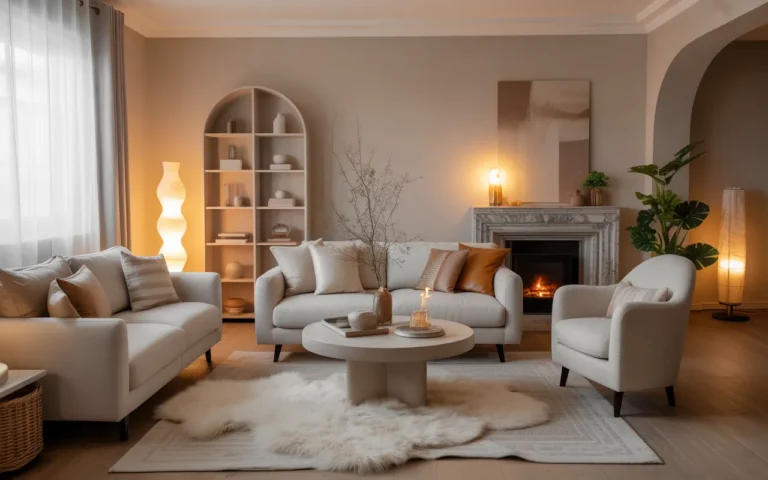
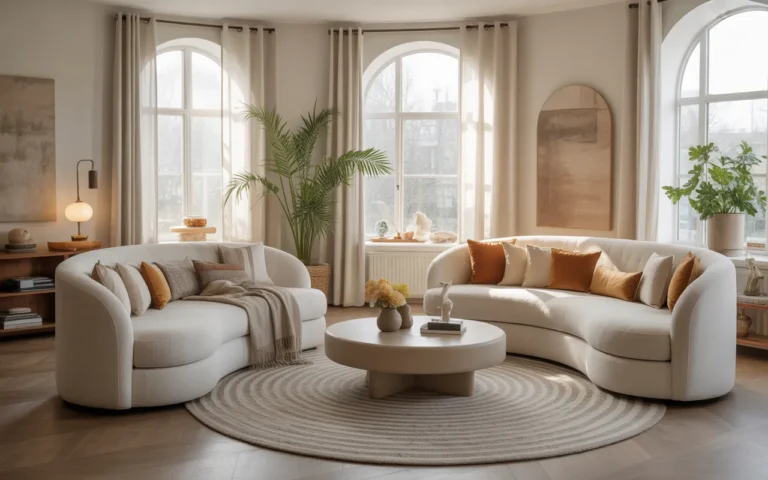
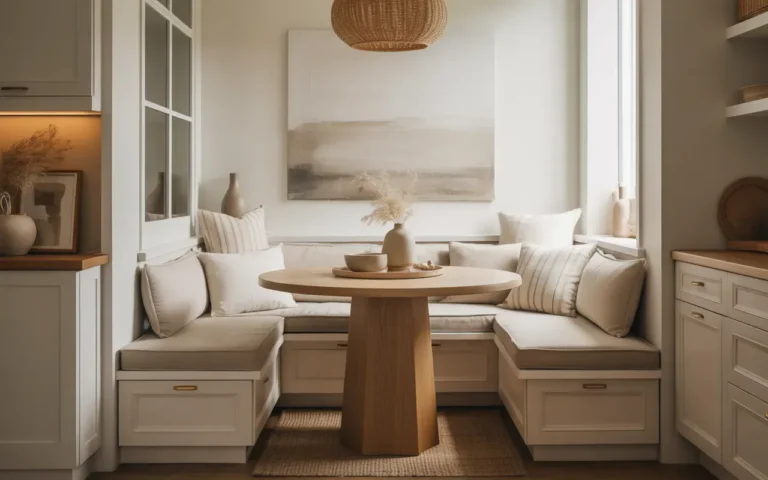
23 Earthy Living Room Ideas Natural Warm Interiors
Earthy living rooms have a staying power that trend-driven styles do not. They are built on warm neutrals, real wood, and natural texture, so they feel settled instead of decorated. This post contains affiliate links. If you buy through them, I may earn a small commission at no extra cost to you. The 23 ideas below give you practical ways to get that grounded look at almost any budget.
An earthy living room is really just a room that borrows its palette from nature. Think warm beige, soft brown, clay, sand, muted green, and the natural tones of wood, stone, linen, and jute. Nothing here is precious. The furniture is comfortable, the surfaces show their grain, and the whole room reads as calm and livable the moment you walk in.
This style works in real houses, not just magazine shoots. Stains show less on a textured jute rug than on a flat gray one. Linen slipcovers wash well. Wood scratches can be sanded out. If you have kids, pets, or a busy household, earthy materials tend to age gracefully instead of looking tired.
Use the ideas below as a menu, not a checklist. Pick two or three that fit your space and budget, and start there. A single warm neutral repaint or a set of wood and woven accents can change a room more than a full furniture overhaul.
1. Earthy Living Room with Warm Neutral Tones

Warm neutrals are the foundation of almost every earthy living room. Creams, taupes, warm grays, and soft beiges sit quietly together and let texture do the talking. When the walls and big furniture pieces share the same warm family, the room feels connected instead of pieced together. Budget note: a gallon of warm neutral paint usually runs $40 to $70, which makes a wall refresh the cheapest room makeover you can buy.
Anchor big surfaces: Start with the largest surfaces. If your sofa is a cool gray, try a warm beige or oatmeal slipcover instead of replacing the whole piece. Curtains, the rug, and the main upholstery should all lean warm, not icy. Small contrast is fine, a dark wood side table or a black lamp base gives the eye somewhere to land, but keep the overall temperature cozy.
Layer small shifts: Once the base is set, layer in subtle variation. A cream throw over a beige sofa, a tan pillow next to a sand-colored one, a slightly deeper tone on the rug. These small shifts keep a neutral room from looking flat. Natural light warms these colors up even more, so rooms with good sun exposure look especially inviting. Pairs well with: natural wood frames, jute rugs, and linen textiles, all of which pick up the same warm undertones.
- Repaint one or two walls in a warm neutral to shift the room’s whole temperature.
- Swap cool-toned textiles for beige, cream, and oatmeal versions of the same items.
- Add one darker wood or bronze accent so the soft palette has contrast.
Shop This Look
2. Earthy Living Room with Natural Wood Accents

Wood is the fastest way to make a room feel earthy. One solid wood coffee table or a set of floating wood shelves changes the temperature of a room in a way that paint alone cannot. Look for pieces that show their grain, knots included. Budget note: a solid acacia or mango wood coffee table typically costs $120 to $300, while small wood side tables and shelves run $40 to $90.
Mix wood tones: You do not need matching wood tones. In fact, a room with two or three wood finishes looks more collected and less showroom-like than one where everything matches. Just keep the undertones friendly, warm oaks and walnuts sit well together, and both pair fine with painted white furniture as a contrast.
Try small accents: If new furniture is not in the budget, wood accents still work. A wooden tray on an ottoman, a set of wood picture frames, or a live-edge floating shelf all add the same warmth in smaller doses. Even driftwood or branch decor in a corner basket brings in that natural texture. Works best with: neutral upholstery and woven textiles, which let the wood grain be the visual highlight.
- Anchor the room with one statement wood piece, like a coffee table or media console.
- Mix two wood finishes instead of buying a matched set for a collected look.
- Use small wood trays, frames, and shelves when big furniture is out of budget.
Shop This Look
3. Cozy Earthy Living Room with Textured Fabrics

Texture is what makes an earthy room feel cozy instead of just beige. Chunky knits, boucle, waffle weaves, and nubby wool all catch the light differently, so the room has depth even when the colors stay quiet. Budget note: a quality chunky knit throw runs $40 to $80, and a pair of textured pillow covers usually costs $25 to $50.
Pair smooth with rough: Layer textures the way you layer colors. Pair a smooth linen sofa with a rough jute rug, then add a soft knit throw and a couple of boucle or wool pillows. The contrast between smooth and nubby is what makes each fabric read. If everything is the same weave, the effect disappears.
Swap it seasonally: This is also one of the easiest ideas to refresh seasonally. Heavier knits and faux fur in winter, lighter cotton and gauze weaves in summer. The sofa and rug stay put while the throw blankets rotate. Works best with: a simple, solid-color sofa, since a busy patterned base would fight the texture for attention.
- Mix at least three different weaves, like knit, linen, and jute, in one seating area.
- Choose textured pillows in solid warm neutrals so the fabric itself is the detail.
- Rotate throws seasonally for a cheap refresh without buying new furniture.
Shop This Look
4. Earthy Living Room with Indoor Plants

No other addition says earthy as directly as living plants. A tall fiddle leaf fig or olive tree in the corner, a trailing pothos on a shelf, and a few small succulents on the coffee table give the room real, breathing texture. Budget note: a healthy medium houseplant in a ceramic pot costs $25 to $60, and a quality artificial tree runs $70 to $150 if you prefer zero maintenance.
Group in odd numbers: Group plants in odd numbers and vary their heights. One tall floor plant, one medium plant on a stand, and one small plant on a table reads as intentional. Matching ceramic or terracotta pots pull the group together even when the plants are different species. If your room is short on natural light, stick to low-light plants like snake plants and ZZ plants instead of fighting your windows.
Soften hard edges: Plants also soften hard edges. A trailing vine draped over a bookshelf or a palm next to a sharp-lined sofa makes the whole setup feel less rigid. They are the one decor item that genuinely changes over time, which keeps the room feeling alive. Works best with: terracotta and stone pots, which echo the same soil-and-clay palette as the rest of the room.
- Place one tall statement plant in an empty corner to fill vertical space.
- Use matching pots so different plants look like one planned collection.
- Choose plants your light level supports instead of forcing a light-hungry species.
Shop This Look
5. Earthy Living Room with Stone and Natural Elements

Stone brings a cool, solid contrast into a room full of soft fabrics. A travertine side table, a marble coffee table, or even a rough stone sculpture adds weight and permanence. Budget note: small stone decor pieces like trays and bookends cost $30 to $70, while a travertine or marble side table usually runs $150 to $300.
Start small: You do not need a full stone fireplace to get the effect. A stone-topped side table next to a linen armchair, or a set of agate coasters on a wood coffee table, introduces the material in a way that feels natural rather than staged. Honed finishes (matte, not polished) look more earthy than glossy ones.
Pair natural companions: Mix stone with its natural companions: wood, clay, and plants. A stone vase holding eucalyptus stems on a wooden console is a simple arrangement that covers three earthy materials at once. Stone also ages well. Minor marks blend into the natural pattern instead of looking like damage. Works best with: warm wood tones and soft textiles, which keep the stone from making the room feel cold.
- Start with a stone tray, bookends, or vase before committing to stone furniture.
- Choose honed or matte stone finishes for a more natural, earthy feel.
- Style stone pieces with wood and plants so the hard material feels balanced.
Shop This Look
6. Earthy Living Room with Clay and Terracotta Accents

Terracotta is the color of fired earth, and it warms up a neutral room without pushing it toward bright orange. A couple of clay vases on the mantel, terracotta planters for your indoor plants, or a clay table lamp base adds a sun-baked glow. Budget note: handmade-style terracotta vases run $20 to $50 each, and a set of three nested planters usually costs $40 to $70.
Keep it as accent: Use terracotta as an accent, not a base. Two to four pieces in a room is usually the right amount. More than that and the color starts to dominate instead of warming. Let the pieces sit against cream, beige, and wood so the rust tones stand out properly.
Use it year-round: Clay decor works in every season, which is part of its appeal. It reads autumnal in fall, but in summer the same vases with fresh greenery feel like a Mediterranean courtyard. Unglazed or matte clay looks the most earthy. Glazed terracotta leans more decorative. Pairs well with: olive green and sage, which sit right next to terracotta in the natural color wheel and calm its warmth.
- Keep terracotta to two or four accent pieces so it warms without dominating.
- Choose unglazed or matte clay finishes for the most natural look.
- Pair clay pieces with green plants or sage textiles to balance the warmth.
Shop This Look
7. Earthy Living Room with Linen and Cotton Textiles

Linen and cotton are the workhorse fabrics of an earthy living room. Linen has a relaxed, slightly rumpled look that makes a sofa feel inviting instead of stiff, and cotton keeps everything soft and washable. Budget note: linen-look curtain panels run $30 to $60 a pair, and a set of cotton pillow covers usually costs $20 to $40.
Begin with curtains: Start with the curtains. Floor-length linen panels in an off-white or flax tone soften a whole wall of windows and filter light into a warm glow. Then move to pillows and throws. Linen wrinkles, which is part of its charm, so do not iron it flat. That lived-in crease is the look you are paying for.
Save cotton for wear: Cotton works best where things get dirty. Cotton slipcovers, washable cotton throws, and cotton rug pads stand up to real life. Blend the two fabrics freely. A cotton throw on a linen sofa, linen pillows on a cotton slipcover. They are in the same family and they behave the same way in the wash. Works best with: warm wood furniture and jute rugs, which pick up the natural fiber story across the whole room.
- Hang floor-length linen curtains to soften windows and warm the light.
- Use cotton where things need washing, like throws and slipcovers.
- Let linen wrinkle naturally instead of pressing it flat.
Shop This Look
8. Earthy Living Room with Soft Brown Color Palette

Brown gets an unfair reputation as a dull color, but soft browns are some of the warmest tones you can put in a living room. Think camel, cocoa, taupe, and milk chocolate rather than dark espresso. Budget note: a set of brown velvet or linen pillow covers costs $25 to $45, and a camel-toned throw blanket runs $35 to $75.
Use brown as middle: Brown works as the middle of an earthy palette. It sits deeper than beige but stays warmer than gray, so it grounds a room without dragging it down. A cocoa accent chair, a camel throw, or brown leather ottoman gives the eye a resting place in an otherwise light room.
Avoid going heavy: The risk with brown is going too heavy. Keep it to furniture pieces and larger textiles, then balance it with plenty of cream, sand, and white around it. Brown against brown looks muddy, but brown against cream looks rich. Pairs well with: cream upholstery, light wood tones, and brass or bronze metal accents that pick up the warm undertones.
- Use soft browns on one or two anchor pieces, not every surface in the room.
- Surround brown furniture with cream and sand textiles to keep it from looking heavy.
- Pick warm browns like camel and cocoa over cool, grayish browns.
Shop This Look
9. Earthy Living Room with Woven and Rattan Decor

Woven and rattan pieces bring handcrafted texture into a room with almost no effort. A rattan armchair, a seagrass basket for throws, or a woven pendant light all read as earthy the moment they are placed. Budget note: woven storage baskets run $25 to $55, rattan pendant lights cost $60 to $130, and a rattan accent chair usually runs $150 to $300.
Scatter, don’t cluster: Spread woven pieces around the room rather than clustering them. One basket by the sofa, one woven tray on the coffee table, one rattan chair in the corner. Scattered pieces look collected. A full matching set of rattan furniture can tip into beach-theme territory, which is a different style entirely.
Stay practical: Rattan and woven materials are also practical. Seagrass baskets hide clutter, woven trays corral remotes, and rattan furniture is light enough to move when you rearrange. They are lightweight, durable, and they work in small rooms where heavy furniture would overwhelm. Works best with: white or cream upholstery, which gives the natural cane and fiber tones a clean backdrop to stand against.
- Use woven baskets for throw and toy storage that doubles as decor.
- Swap one overhead light for a rattan or woven pendant for instant warmth.
- Keep rattan to a few scattered pieces instead of a full matching set.
Shop This Look
10. Earthy Living Room with Minimal Natural Styling

Earthy and minimal go together well because natural materials do not need much styling to look good. A simple oak bench, a neutral rug, and one ceramic vase can carry a whole corner. Budget note: this is one of the cheapest looks to achieve, since buying less is the whole point. One good oak side table runs $60 to $120.
Choose fewer, better: The trick is choosing a few pieces with real quality instead of many pieces that are just okay. A well-made wooden stool, a thick hand-loomed rug, a handmade vase. Each one gets space to be noticed. Clutter is the enemy here, so edit honestly. If a surface does not need an object, leave it bare.
Keep it comfortable: Minimal does not mean empty. Keep the pieces that make the room comfortable: a good reading lamp, a soft throw, enough seating. The difference is that everything has a purpose. When every item earns its place, the room feels calm instead of cold. Works best with: pale, quiet walls and natural light, which let the few materials you chose show their texture.
- Keep surfaces mostly clear and let two or three quality pieces carry the room.
- Choose one natural material per piece so each item reads clearly.
- Remove rather than add when the room starts feeling busy.
Shop This Look
11. Earthy Living Room with Warm Beige Layers

Beige layered on beige sounds boring until you see it done right. The key is layering different shades and textures so the room reads as rich, not flat. A warm beige wall, a slightly lighter sofa, a deeper beige rug, and cream and tan textiles on top. Budget note: beige pillow covers and throws are among the cheapest decor swaps, usually $20 to $60 per piece.
Stay in warm undertones: Work in a range of three to five beige tones. Keep them all on the warm side, anything with a pink or yellow undertone rather than gray. The undertone consistency is what makes the layers blend instead of clashing. Hold fabric swatches together in daylight before buying, because store lighting lies.
Let texture lead: Texture does the heavy lifting in a beige room. A nubby knit throw, a smooth leather cushion, a rough jute rug, all in tones of beige. The eye reads the texture differences as the pattern. Add one wood piece or a green plant for contrast so the room does not feel washed out. Pairs well with: warm wood floors or furniture, which give the soft palette something solid to sit against.
- Use three to five beige shades with the same warm undertone.
- Layer different textures in the same tone so the room has depth.
- Add one wood piece or green plant for contrast against the softness.
Shop This Look
12. Earthy Living Room with Organic Shapes

Nature does not make straight lines, and a room full of them can feel stiff. Round coffee tables, curved armchairs, arched mirrors, and oval rugs soften a living room the way river stones soften a landscape. Budget note: a round wood coffee table runs $100 to $250, and an arched mirror usually costs $70 to $160.
Start with one piece: You do not need to replace everything. One curved piece changes the feel of a room full of rectangles. A round rug under a square coffee table, a kidney-shaped throw pillow on a straight sofa, or a pebble-shaped side table next to a boxy armchair. The contrast is the point.
Improve the flow: Organic shapes also help with flow. Round tables are easier to walk around in tight rooms, and curved chairs pull people into conversation instead of lining them up. In small living rooms, a round rug and coffee table can make the space feel less cramped than square versions. Works best with: natural materials like wood, rattan, and bouclé, which already have a soft, hand-shaped quality.
- Add one curved or round piece to a room full of straight lines.
- Use round rugs and tables in tight rooms for easier movement.
- Mix one organic shape per seating area instead of curving everything.
Shop This Look
13. Earthy Living Room with Soft Lighting Layers

Harsh overhead light ruins an earthy room faster than any wrong furniture choice. Warm, layered lighting is what makes the same room feel golden at night instead of clinical. Budget note: a good rattan or fabric floor lamp runs $70 to $150, and warm LED bulbs cost $10 to $20 for a multipack.
Layer the light: Build three layers: ambient, task, and accent. A floor lamp with a fabric or woven shade for ambient light, a table lamp by the reading chair for task light, and a candle or small lantern for accent. Dimmer switches on the main lights are worth every penny of the $15 they cost.
Watch bulb temperature: Bulb temperature matters more than most people think. Stick to 2700K warm white everywhere. Anything labeled daylight or cool white will flatten all your warm neutrals and make wood look gray. When every bulb matches, the room glows evenly. Works best with: woven, paper, or fabric lampshades, which diffuse light softly instead of throwing hard glare.
- Replace cool white bulbs with 2700K warm white in every fixture.
- Add a floor lamp and a table lamp so no room relies on the ceiling light alone.
- Put dimmers on main lights to shift the mood from daytime to evening.
Shop This Look
14. Earthy Living Room with Leather Accents

Leather is animal, aged, and honest, which makes it a natural fit for an earthy room. A cognac or saddle-brown leather ottoman, a worn leather armchair, or even leather-wrapped handles adds a rich layer that fabric alone cannot give. Budget note: genuine leather ottomans and poufs run $120 to $250, while quality faux leather throw pillows cost $25 to $50.
Embrace the patina: Leather gets better with use. Scratches, creases, and a darkened patina all make it look more authentic, which is the opposite of most furniture. This makes it a smart pick for households where furniture takes a beating. Wipe it down, condition it once or twice a year, and it outlasts fabric upholstery.
Limit the leather: Keep leather pieces to one or two per room. A leather ottoman plus a leather magazine sling is plenty. Too much leather turns earthy into lodge. Faux leather has improved a lot and works fine for pillows and small pieces if real leather is out of budget. Pairs well with: soft fabrics like linen and wool, which balance the smooth, heavy look of leather with something light.
- Start with one leather piece, like an ottoman or a pair of pillows.
- Choose cognac, saddle, or caramel tones over black for an earthy feel.
- Condition real leather once or twice a year to keep it supple.
Shop This Look
15. Earthy Living Room with Handmade Decor

Handmade pieces have small irregularities that mass-produced decor cannot fake, and those irregularities are exactly what make a room feel human. A hand-thrown ceramic vase, a handwoven wall hanging, or a hand-knotted pillow cover adds soul. Budget note: handmade ceramic vases run $30 to $80, and small-batch woven wall hangings cost $40 to $100.
Mix with basics: You do not need to buy everything from artisans to get this effect. One or two genuine handmade pieces mixed with simpler store-bought basics gives the room its character. A single handmade vase on a plain wood console does more than a shelf full of factory decor.
Choose unique pieces: This is also the idea that makes your room different from everyone else’s. Nobody else has your exact handmade bowl or weaving. Buy from local craft fairs, small shops, or independent makers online. The pieces come with a story, and that story becomes part of how the room feels. Works best with: simple, quiet backgrounds like plain plaster walls and natural wood, which let handmade details get noticed.
- Start with one or two handmade pieces instead of a full artisan overhaul.
- Mix handmade statement items with simple basics to keep costs down.
- Buy from local makers and small shops for pieces with real character.
Shop This Look
16. Earthy Living Room with Sunlit Neutral Palette

A room with strong natural light is halfway to earthy already. Sunlight warms up neutrals, shows off wood grain, and makes plants thrive. The job here is to work with the light, not against it. Budget note: sheer curtain panels cost $20 to $40 a pair, and a light-reflecting mirror runs $50 to $120.
Keep windows sheer: Keep window treatments light. Sheer or semi-sheer curtains in white or cream let the sun through while softening the glare. Heavy dark curtains in a sunny room feel wrong, like wearing a coat indoors. If you need privacy, layer sheers with a light-filtering blind instead of going dark.
Bounce the light: Place a mirror opposite or beside the windows to bounce light deeper into the room. Light wood furniture and pale textiles multiply the effect, so a sunlit room can get away with fewer lamps. Save your lighting budget for the evening hours when the sun is gone. Works best with: pale, warm-toned walls and floors, which reflect sunlight instead of absorbing it.
- Use sheer or semi-sheer curtains to keep sunlight flowing through the room.
- Hang a mirror across from the windows to double the natural light.
- Choose pale furniture and textiles that reflect light instead of soaking it up.
Shop This Look
17. Earthy Living Room with Layered Natural Textures

Layering is what separates a flat room from a rich one. A jute rug under a smaller wool rug, a linen sofa under a knit throw under a wool pillow, a wood table under a woven tray holding a stone bowl. Budget note: layering a smaller rug over an existing one costs $60 to $150, and stacked throw pillows run $40 to $80 for a set.
Tighten the colors: The rule is simple: vary the texture while keeping the color family tight. Jute, wool, linen, rattan, and raw wood all feel different to the eye and the hand, but in cream and tan tones they harmonize. When textures are layered but colors are scattered, the room looks busy. When colors are tight but textures vary, it looks curated.
Build from the floor: Start from the floor up. Rug first, then upholstery, then pillows, then throws, then small decor on the tables. Each layer adds a little more texture than the one below it. Stop when the room feels full but not crowded. There is a fine line, and your eye will tell you when you cross it. Pairs well with: a restrained color palette of three to four warm neutrals, which keeps the layering from turning chaotic.
- Layer a smaller textured rug over a larger flat rug for instant depth.
- Stack textures from floor to sofa to tables, increasing detail as you go up.
- Keep colors in one warm family while varying every texture.
Shop This Look
18. Earthy Living Room with Soft Green Accents

Sage, olive, and eucalyptus greens are nature’s own accent color, and they slide into an earthy room without effort. A couple of sage pillows, an olive throw, or a green ceramic vase connects the room to the plants and the outdoors. Budget note: sage pillow covers run $20 to $40 for a set, and green ceramic vases cost $25 to $60.
Stay muted: Stay in the muted greens. Bright kelly or lime green fights the earthy palette, but dusty sage and deep olive sit right in. These tones work the way brown works: they deepen the room without cooling it down. Two or three green pieces are enough. The plants themselves already add green, so you do not need much more.
Pair with terracotta: Green pairs beautifully with terracotta and wood, which is why it appears in so many earthy rooms naturally. A sage pillow next to a terracotta vase is a combination that almost cannot fail. Keep the greens on textiles and small decor so you can swap them out if your taste shifts. Pairs well with: terracotta, warm wood, and cream upholstery, the classic earthy trio.
- Stick to muted greens like sage and olive, never bright or neon tones.
- Use green on pillows, throws, and vases so it is easy to change later.
- Let your real plants carry most of the green, with decor adding just a touch more.
Shop This Look
19. Earthy Living Room with Warm Rustic Details

Rustic does not have to mean a log cabin. A few warm rustic details, a reclaimed wood beam shelf, a weathered wood coffee table, a wrought iron lantern, give an earthy room history and character. Budget note: a rustic wood coffee table runs $130 to $280, and wrought iron lanterns cost $30 to $70 each.
Practice restraint: The key is restraint. One or two rustic pieces warm the room up. Ten rustic pieces turn it into a theme. A weathered wood table next to clean linen upholstery is the right balance: rough against smooth, old against simple.
Look for wear: Look for pieces with visible wear: saw marks, nail holes, a worn finish. New wood distressed in a factory can work too, but genuine reclaimed wood has a texture that is hard to copy. These pieces tell a quiet story, and that story makes the room feel settled. Works best with: soft modern basics like a simple sofa and neutral rug, which keep the rustic pieces from tipping the room into kitsch.
- Limit rustic pieces to one or two so they read as character, not theme.
- Pair weathered wood with smooth modern basics for balance.
- Choose pieces with genuine wear marks over factory-distressed imitations.
Shop This Look
20. Earthy Living Room with Balanced Minimal Decor

This is minimalism with warmth. The room stays uncluttered, but the pieces that remain are natural and inviting: a simple wood bench, a couple of ceramic vases, a linen throw. Nothing cold, nothing stark. Budget note: a simple wood bench runs $80 to $180, and a pair of ceramic vases costs $30 to $70.
Balance every object: Balance is the operative word. Every piece of decor should be matched by empty space. A vase on the console is balanced by a bare wall above it. A throw on the sofa is balanced by clean, unpillowed cushions. The emptiness is part of the design, not a lack of it.
Enjoy less upkeep: This approach suits people who find layered rooms stressful. Fewer objects means less dusting, less visual noise, and less money spent. The room still feels earthy because the materials are right, even though the count is low. Works best with: a strict one-in-one-out habit, so new purchases do not quietly pile up on the clean surfaces.
- Keep decor sparse and give every object room to breathe.
- Match each styled surface with an intentionally empty one.
- Stick to natural materials so the few pieces still read as earthy.
Shop This Look
21. Earthy Living Room with Cozy Seating Focus

An earthy room is meant to be lived in, and that starts with seating people actually want to sink into. Deep cushions, soft fabrics, and a layout that pulls chairs toward the conversation instead of the TV. Budget note: an oversized bouclé or linen armchair runs $200 to $300, and quality floor cushions cost $40 to $90 each.
Arrange in a circle: Arrange seating in a loose circle or U-shape around the coffee table. Leave the angles relaxed rather than squared off. An ottoman that doubles as extra seating, a couple of floor cushions for kids or guests, and one truly comfortable reading chair cover most real-life needs.
Add the small things: Comfort is also about the small things. A throw within arm’s reach of every seat, a side table close enough for a mug, a lamp that actually lights the chair for reading. When the practical details are right, the room gets used, which is the whole point. Pairs well with: a large soft rug under the seating group, which anchors the arrangement and keeps feet warm.
- Arrange chairs in a loose circle or U-shape to invite conversation.
- Keep a throw and a side table within reach of every seat.
- Add floor cushions or an ottoman for flexible extra seating.
Shop This Look
22. Earthy Living Room with Subtle Pattern Play

Pattern has a place in an earthy room as long as it stays quiet. A kilim or tribal rug, a geometric pillow, a softly striped curtain, patterns drawn from craft traditions rather than bright modern prints. Budget note: a small kilim-style rug runs $60 to $140, and patterned pillow covers cost $25 to $50 for a set.
Keep colors calm: Keep patterns in the same warm color family as the rest of the room. A rust and cream kilim, a tan and brown geometric pillow, a beige striped throw. The pattern adds movement, but the colors keep it calm. One or two patterned pieces per area is the limit. More than that and the eye has nowhere to rest.
Mix the scales: Scale matters too. Mix one large-scale pattern, like a rug, with one small-scale pattern, like a pillow. Two patterns at the same scale compete. Solid neutrals around them give each pattern its own breathing room. Works best with: plenty of solid warm neutrals, which let the patterns be accents instead of noise.
- Choose patterns in warm, earthy colors rather than bright modern prints.
- Mix one large-scale pattern with one small-scale pattern for balance.
- Surround patterned pieces with solid neutrals so they stand out cleanly.
Shop This Look
23. Earthy Living Room with Timeless Natural Warmth

The last idea is really a summary of all of them. Timeless warmth comes from choosing real materials, honest colors, and pieces you will still like in ten years. Wood, stone, clay, linen, and wool do not go out of style because they were never in style. Budget note: building this look slowly costs less than a full room redo. A solid wood console ($150 to $300) and a quality wool rug ($100 to $250) are the two best long-term buys.
Invest in neutrals: Buy the big pieces in neutral, natural forms and save the personality for things you can change cheaply. The sofa stays beige. The rug stays natural. The pillows, throws, and small decor rotate with your mood. That way the room evolves without ever needing a costly overhaul.
Prioritize comfort: Timeless also means comfortable. A room that looks warm but feels stiff will not stay loved. Make sure the seating is deep, the lighting is soft, and there is always a blanket nearby. When a room is both beautiful and easy to live in, you stop redecorating and start enjoying it. Pairs well with: everything in this list, since this idea is the thread that runs through all 23 of them.
- Invest in big pieces with natural, neutral forms that age well.
- Keep color personality to pillows and small decor you can swap cheaply.
- Prioritize real comfort alongside the look so the room gets used.
Shop This Look
How to Start
Do not try to do all 23 ideas at once. Pick the one change that would make the biggest difference in your room right now. For most people, that is either the wall color, the rug, or the lighting. One of those three resets the whole room’s feeling, and everything else builds on it.
Work in this order: walls and big surfaces first, then the rug, then the main upholstery, then wood and woven furniture, then textiles like pillows and throws, and finally small decor and plants. Each layer sits on the one before it, so you never have to undo finished work. Starter budget: a meaningful first pass, paint plus a rug plus pillows, usually lands between $200 and $500.
Live with each change for a few days before adding the next. Earthy rooms are built on restraint, and the pause keeps you from overbuying. Take a photo of the room in daylight after each step. Photos show you what your eyes miss, like a color that clashes or a corner that still feels empty. First three buys: warm neutral paint, a natural fiber rug, and 2700K warm bulbs, which together fix the color, the texture, and the light.
- Start with walls, rug, or lighting, whichever bothers you most right now.
- Build layers from big surfaces down to small decor, in that order.
- Pause between purchases and check daylight photos before buying more.
Shop This Look
Common Mistakes
- Mixing cool and warm neutrals, like icy gray walls with warm beige furniture, which makes the room feel confused instead of calm.
- Using cool white or daylight bulbs, which flatten warm colors and make wood look gray instead of golden.
- Buying a full matching set of rattan or wood furniture, which reads as a theme park instead of a collected room.
- Adding too many small decor objects, which turns a calm earthy room into visual clutter within a week.
- Choosing terracotta, rust, or brown as the main wall color instead of an accent, which overwhelms the room fast.
- Forgetting contrast entirely, so beige walls, beige sofa, and beige rug blur into one flat, washed-out surface.
- Ignoring texture, because a room with the right colors but all-smooth fabrics still looks and feels unfinished.
Frequently Asked Questions
What colors count as earthy for a living room?
Warm neutrals like beige, cream, taupe, and sand, plus soft browns, clay and terracotta tones, muted sage and olive greens, and the natural colors of wood and stone. The common thread is warmth. If a color feels like something you would find outside, soil, clay, bark, leaves, it belongs.
Can I make my living room earthy on a small budget?
Yes. Paint is the cheapest big change at $40 to $70 a gallon. After that, pillow covers, throws, and warm bulbs transform a room for under $150 total. Secondhand wood furniture and thrifted ceramic vases fill in the rest. Most of the ideas here cost under $100 per change.
Do earthy rooms work in small living rooms?
They work especially well. Light warm neutrals make small rooms feel open, natural textures add interest without visual weight, and minimal styling keeps the space from feeling crowded. A round rug and one good wood piece can carry a small room on their own.
How do I keep an earthy room from looking boring?
Layer textures and add contrast. Smooth against rough, light against dark, soft fabric against hard stone or wood. A room with five textures in beige is never boring. For more styling inspiration, see these aesthetic living room designs for ideas on mixing natural materials with intentional detail.
What is the easiest first step toward an earthy living room?
Swap your light bulbs to 2700K warm white and add one natural fiber rug. Those two changes cost under $120 and shift the whole room’s temperature immediately. From there, add wood, plants, and textured textiles one piece at a time.
The Finishing Touch
Once the big pieces are in place, the finishing touch is always something small and personal. A handmade bowl on the coffee table, a stack of well-read books on the wood shelf, a plant you have kept alive for years. These are the details no store can sell you, and they are what make the room yours.
Resist the urge to fill every surface. An earthy room needs breathing room. One styled shelf and one bare shelf. One vase with stems and one empty corner. The restraint is the design. For more inspiration on how designers layer earthy decor into minimalist spaces, this Houzz article on earthy decor in a minimalist home shows the same principles in a real house.
Finally, live in the room for a while before declaring it done. Earthy style is not a reveal, it is a slow settling. The throw gets softer, the wood gets its marks, the plant grows toward the window. That is the whole point of choosing natural materials. They get better as you use them.