16 Low Attic Bedroom Ideas for Tiny Room Solutions
Struggling to decorate a tiny attic room with barely any ceiling height? You’re not alone. These low attic bedroom ideas show how even the smallest, lowest spaces can become cozy, stylish, and surprisingly functional bedrooms.
Attic rooms often feel challenging because of slanted ceilings, awkward corners, and limited headroom. But with the right design approach, those same features can become the most charming part of the room. From floor beds and built-in storage to cozy reading nooks and clever lighting, each idea in this guide focuses on turning limitations into beautiful design opportunities.
In my experience, the key to a successful attic bedroom is working with the architecture rather than fighting it. I’ve noticed that simple choices—like lower furniture, layered textures, and smart storage—can completely change how spacious and comfortable the room feels. These ideas will help you transform a tiny attic into a warm, inviting retreat you’ll actually love spending time in.
1. Floor Mattress Setup
- Perfect solution for very low ceilings
- Makes the room feel more open and spacious
- Creates a relaxed, cozy sleeping area
- Reduces visual clutter in tiny attic rooms
- Works beautifully with minimalist styling
A floor mattress setup instantly solves one of the biggest attic challenges: limited ceiling height. Instead of forcing tall furniture into a cramped space, this design embraces the room’s natural shape. The low profile keeps the ceiling from feeling restrictive while creating a calm and relaxed sleeping zone. In many low attic bedroom ideas, lowering the bed height dramatically improves comfort and movement.
I’ve noticed that simple floor beds often make tiny attic rooms feel surprisingly spacious. Pairing linen bedding, layered rugs, and warm neutral tones adds softness without overwhelming the room. The result feels intentional, modern, and incredibly cozy—perfect for a relaxing retreat under the roofline.
2. Built-In Wall Storage
- Maximizes awkward sloped wall space
- Reduces clutter in tiny rooms
- Adds seamless storage without bulky furniture
- Keeps the room visually clean and organized
- Works well in minimalist or modern interiors
Built-in wall storage is one of the smartest ways to work with slanted ceilings. Instead of leaving awkward gaps under the roofline, custom shelving or cabinets turn those spaces into practical storage zones. This keeps the room tidy while maintaining a sleek look. Many attic bedrooms feel cluttered simply because storage options are limited.
In my experience, built-ins make tiny spaces feel professionally designed rather than improvised. When shelves follow the slope of the ceiling, the room suddenly feels balanced and intentional. Add woven baskets, books, or small decorative pieces to keep the storage both functional and visually beautiful.
3. Skylight Reading Nook
- Turns a low ceiling corner into a cozy feature
- Uses natural light from skylights beautifully
- Creates a relaxing reading or coffee space
- Adds personality to small attic rooms
- Makes the bedroom feel more layered and styled
A skylight reading nook transforms an otherwise unused low corner into a peaceful retreat. Soft cushions, textured throws, and a small side table instantly create a comfortable lounge area. The natural light from above makes the spot perfect for reading, journaling, or quiet moments during the day.
I’ve seen this work incredibly well in compact attic spaces where standing height is limited. Instead of fighting the low ceiling, this idea embraces it by creating a seated area that feels intentional and cozy. The result is a warm, inviting corner that adds charm and function.
4. Low Platform Bed
- Keeps the sleeping area comfortable under low ceilings
- Makes the room feel wider and less cramped
- Adds modern, clean-lined style
- Leaves visual space above the bed
- Perfect for minimalist attic layouts
A low platform bed is one of the easiest ways to adapt a bedroom to a shallow roofline. By lowering the sleeping surface, you create more breathing room above the bed, which instantly makes the space feel less confined. This simple adjustment works beautifully in compact attic layouts where every inch of vertical clearance matters.
I’ve noticed that platform beds also make the entire room feel calmer and more modern. Pairing one with soft linens, textured rugs, and warm wood tones creates a grounded look that feels intentional rather than cramped. The design embraces the attic’s shape instead of fighting it.
Also view: 17 Slanted Roof Bedroom Ideas for Dreamy Attic Rooms
5. Under-Slope Closet
- Uses awkward slanted areas for wardrobe storage
- Keeps clothing organized without bulky furniture
- Maximizes every inch of attic space
- Creates a clean, streamlined bedroom look
- Helps tiny rooms stay clutter-free
Turning the low wall under the roof slope into a closet is a smart space-saving strategy. Instead of placing a tall wardrobe that blocks the room, built-in closets follow the roofline and blend seamlessly into the architecture. This makes the bedroom feel more spacious while still providing practical storage.
In my experience, customized attic closets completely change how functional the room feels. Even shallow cabinets can store folded clothes, shoes, or seasonal items. When doors match the wall color, the storage visually disappears, leaving the room looking tidy and calm.
6. Soft Canopy Drapes
- Softens harsh roof angles visually
- Creates a dreamy, cozy sleeping space
- Adds texture and romantic style
- Helps define the bed area
- Makes small attic rooms feel magical
Soft canopy drapes can transform a small attic bedroom into a dreamy retreat. When fabric flows along the slope of the ceiling, it softens sharp architectural angles and creates a cocoon-like sleeping area. This trick works especially well in compact spaces where visual softness can make the room feel more relaxing.
I’ve seen lightweight linen or sheer curtains completely change the mood of an attic bedroom. The gentle movement of fabric, combined with warm lighting and layered bedding, creates a peaceful atmosphere that feels both stylish and comforting.
7. Floating Night Shelves
- Saves floor space in very small rooms
- Fits perfectly under low ceiling areas
- Keeps bedside essentials within reach
- Creates a clean, minimalist look
- Makes the space feel lighter and less crowded
Floating night shelves are a smart alternative to bulky bedside tables in rooms with limited ceiling height. By attaching small shelves directly to the wall, you free up floor space and keep the layout feeling open. This works particularly well in tight attic layouts where every inch counts.
I’ve noticed that simple floating shelves instantly make the bedroom feel more modern and intentional. Add a small lamp, a favorite book, or a tiny plant to create a styled bedside moment without overwhelming the room. The result is practical and beautifully minimal.
8. Skylight Bed Placement
- Turns natural light into a focal point
- Makes the sleeping area feel brighter
- Enhances the sense of openness in low ceilings
- Creates a calm, relaxing bedroom atmosphere
- Maximizes the attic’s architectural features
Placing the bed directly under a skylight can completely transform the mood of a small attic bedroom. Natural light pouring in from above makes the space feel brighter and more expansive, even when the ceiling height is limited. It also creates a beautiful focal point that highlights the unique architecture of the room.
In my experience, skylight bed placement adds a peaceful and almost dreamy quality to attic bedrooms. Waking up to soft morning light or watching the night sky from bed creates a cozy experience that standard bedroom layouts rarely offer.
9. Compact Corner Desk
- Creates a small work or study zone
- Uses otherwise unused corner space
- Keeps the bedroom functional and versatile
- Works perfectly with low ceiling areas
- Adds practical everyday use to the room
A compact corner desk makes it possible to include a workspace even in a very small attic bedroom. By placing the desk under the lowest section of the ceiling, you make use of space that might otherwise go unused. This keeps the main walking area open while adding practical functionality.
I’ve seen this idea work especially well for students, remote workers, or anyone who enjoys a quiet writing corner. With a simple desk lamp, a plant, and minimal decor, the workspace blends seamlessly into the bedroom while remaining useful.
10. Built-In Bench Seating
- Turns low wall areas into functional seating
- Adds hidden storage beneath the bench
- Creates a cozy lounge or reading area
- Maximizes awkward attic corners
- Enhances the layered, styled look of the room
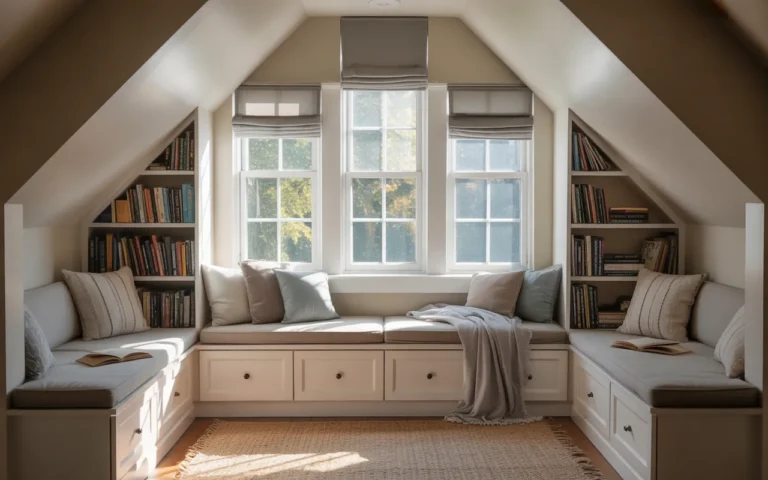
A built-in bench along a slanted wall is a smart way to transform a low ceiling section into something useful. Instead of leaving the area empty, a cushioned bench creates a cozy seating zone that feels intentional and inviting. The added storage underneath helps keep blankets, books, or seasonal items neatly organized.
I’ve noticed this idea works especially well in tiny attic bedrooms where every square foot matters. With a few pillows, soft throws, and warm lighting, the bench becomes a relaxing place to sit, read, or simply enjoy the calm atmosphere of the room.
11. Wall-Mounted Lighting
- Saves precious bedside table space
- Provides focused and cozy lighting
- Works perfectly with low ceilings
- Adds a stylish decorative element
- Makes the room feel more polished
Wall-mounted lighting is an excellent choice for attic bedrooms where space is limited. Instead of placing lamps on tables, sconces attach directly to the wall and provide focused light without crowding the room. This keeps the bedside area open and uncluttered.
In my experience, good lighting dramatically improves the comfort of small spaces. Warm wall sconces create a relaxing atmosphere while highlighting textures like bedding, rugs, and wood finishes. The result feels both practical and beautifully designed.
12. Layered Neutral Textiles
- Makes a small attic feel warmer and softer
- Adds depth without overwhelming the room
- Creates a cozy and inviting bedroom look
- Works well with minimal furniture
- Enhances the visual comfort of the space
Layering neutral textiles is one of the easiest ways to elevate a compact attic bedroom. Soft fabrics like linen, wool, and cotton add warmth and texture without taking up additional space. This approach works especially well in low attic bedroom ideas, where bulky furniture can make the room feel crowded.
I’ve seen even the simplest attic rooms feel luxurious once textures are layered thoughtfully. A chunky knit throw, soft rug, and neutral bedding instantly create a cozy retreat that feels calm, stylish, and welcoming.
13. Sliding Door Wardrobe
- Saves space compared to swing doors
- Works perfectly along slanted walls
- Keeps the bedroom looking clean and organized
- Maximizes storage in tight attic layouts
- Creates a sleek, modern design finish
Sliding door wardrobes are a brilliant solution for attic bedrooms where traditional closet doors would hit the ceiling or take up valuable floor space. By using sliding panels, storage becomes easily accessible without interfering with the room layout. This keeps the space functional while maintaining a streamlined look.
In my experience, wardrobes that follow the slope of the roof feel much more integrated into the room design. When finished with light colors or natural wood textures, the storage blends beautifully into the background while still providing practical everyday use.
14. Rustic Wood Beams
- Highlights the attic’s architectural character
- Adds warmth and natural texture
- Makes the room feel cozy and authentic
- Creates a charming focal point
- Works well with farmhouse or rustic styles
Exposed wooden beams can completely transform the personality of an attic bedroom. Instead of hiding the structure, showcasing natural beams celebrates the character of the roofline. The texture of real wood adds warmth and depth, making the room feel welcoming and full of charm.
I’ve seen this design work beautifully in both rustic and modern interiors. When paired with neutral bedding, woven textures, and soft lighting, the beams create a cozy atmosphere that feels timeless and stylish without requiring extra decoration.
15. Soft Fairy Lighting
- Creates a warm and magical atmosphere
- Highlights the shape of the slanted ceiling
- Adds soft ambient lighting
- Makes the room feel cozy and inviting
- Perfect for relaxed nighttime ambiance
Fairy lights can instantly turn a small attic bedroom into a cozy and magical retreat. Draping lights along the slope of the ceiling highlights the architecture while adding a soft glow that makes the room feel warm and relaxing. The lighting works especially well in tiny spaces where strong overhead lights might feel harsh.
I’ve noticed that gentle lighting often changes the entire mood of a bedroom. Combined with layered bedding and soft textures, fairy lights create an inviting atmosphere that feels calm, comforting, and perfect for winding down at night.
16. Mirrored Accent Wall
- Makes a tiny attic room feel visually larger
- Reflects natural light around the space
- Adds a stylish and elegant focal point
- Enhances brightness in low ceilings
- Creates a polished, designer-style finish
A mirrored accent wall is a clever design trick for visually expanding a tiny attic bedroom. Mirrors reflect natural and artificial light, helping the room appear brighter and more open even when the ceiling height is limited. The reflective surface also draws attention away from the slope, making the room feel more balanced.
In my experience, mirrors can dramatically transform small rooms when placed strategically. In compact attic spaces, they bounce light across walls and ceilings, creating a sense of depth and openness. When paired with soft textures, neutral tones, and subtle metallic accents, the result feels elegant, modern, and surprisingly spacious.
Conclusion
Designing a tiny attic bedroom may seem tricky at first, but the right ideas can completely change how the space feels and functions. These low attic bedroom ideas prove that even rooms with minimal ceiling height can become cozy, stylish, and incredibly practical. By combining smart layouts, lower furniture, and warm textures, you can turn awkward corners into beautiful features.
Try experimenting with one or two of these ideas in your own space and see how much difference thoughtful design can make. Save this post on Pinterest for future inspiration and share it with anyone looking to upgrade their attic room. I’ve seen how small design changes can truly transform a space—and your attic bedroom might become your favorite room in the house.