24 Small Living Room Ideas Maximize Every Inch
Designing a small living room can feel challenging, but with the right ideas, every inch can be used wisely. Smart layouts, multi-functional furniture, and thoughtful design choices can transform compact spaces into stylish, comfortable living areas. From vertical storage and light color palettes to clever lighting and minimal decor, small living rooms can feel open and inviting without sacrificing function. These 24 small living room ideas focus on practicality, balance, and visual flow, helping you create a space that feels larger, organized, and beautifully designed.
1. Light Color Palette with Minimal Furniture
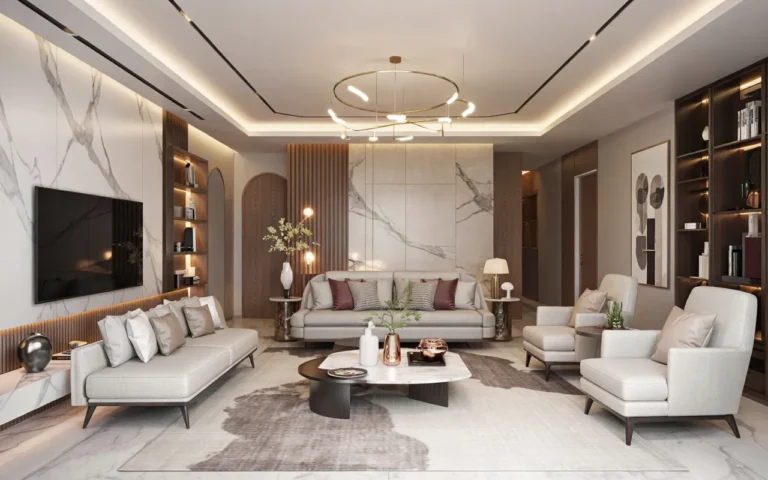
Using a light color palette instantly makes a small living room feel larger and more open. Soft whites, creams, and light grays reflect natural and artificial light, reducing visual heaviness. When paired with minimal furniture, the room avoids overcrowding and feels breathable. Choosing slim-profile sofas and chairs allows better movement while keeping the layout functional and stylish.
Minimal furniture also helps define clear zones without overwhelming the space. Clean lines and neutral tones create harmony and elegance. This approach maximizes every inch by focusing on essential pieces only, allowing the living room to feel calm, modern, and comfortably spacious.
2. Wall-Mounted Shelves for Vertical Storage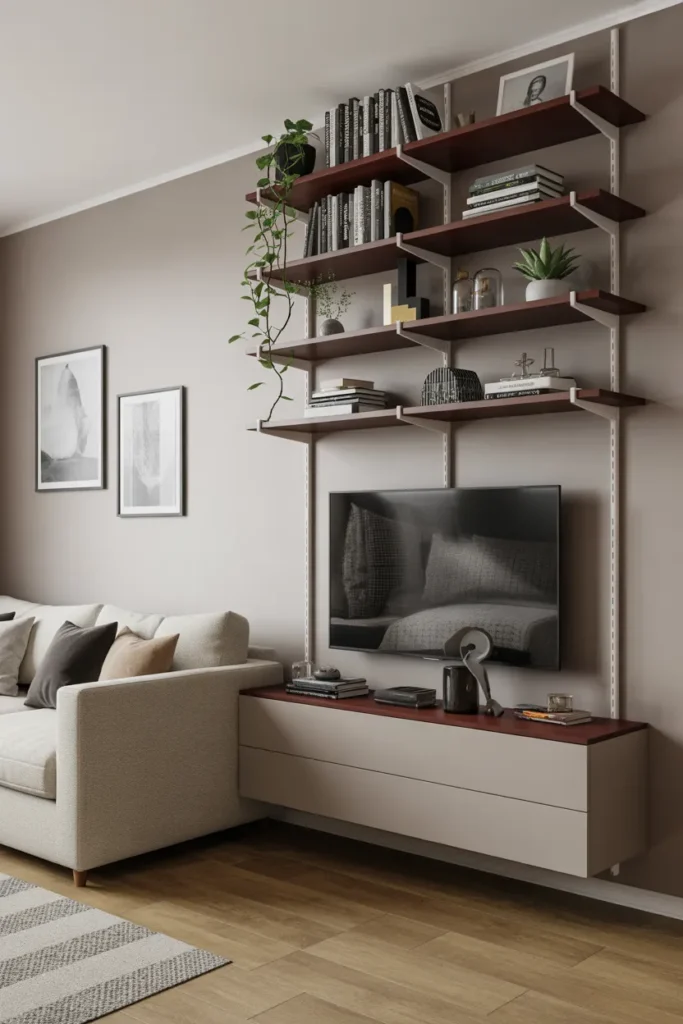
Wall-mounted shelves are a smart way to use vertical space in a small living room. Instead of bulky cabinets, floating shelves provide storage without taking up valuable floor area. They help organize books, decorative items, and daily essentials while keeping the room visually light. Vertical shelving also makes ceilings appear higher, adding depth to the room.
By styling shelves thoughtfully, the living room feels both functional and stylish. Mixing open space with neatly arranged decor prevents visual clutter. This solution maximizes every inch by transforming unused wall areas into practical storage while maintaining an open, airy layout.
3. Multi-Functional Furniture Solutions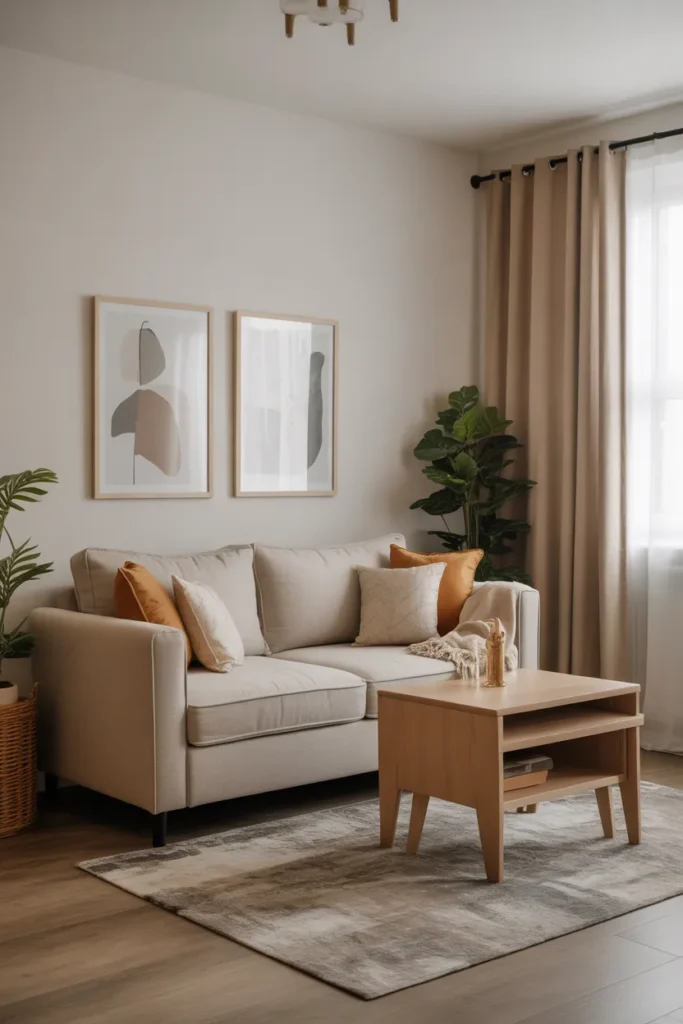
Multi-functional furniture is essential for maximizing a small living room. Pieces like storage ottomans, sofa beds, and extendable tables provide hidden storage and flexible use. These designs eliminate the need for extra furniture while maintaining comfort and style. Every item earns its place by serving more than one function.
This approach keeps the room organized and adaptable for daily living or guests. The space feels efficient yet inviting, with no wasted corners. Multi-functional furniture ensures that even the smallest living room remains practical, modern, and visually balanced.
4. Mirrors to Create Visual Space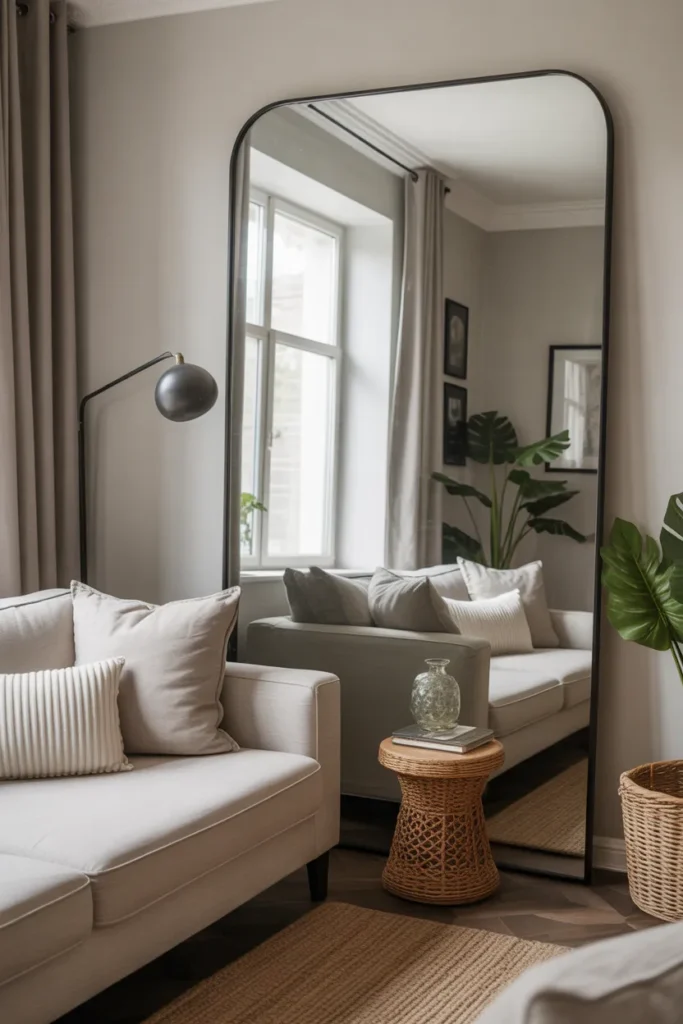
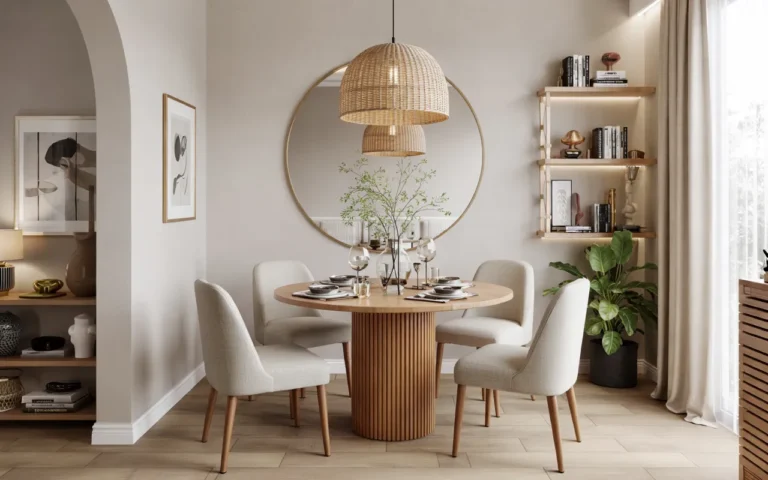
Mirrors are a powerful design tool for small living rooms. They reflect light, making the room appear brighter and more spacious. When positioned strategically, mirrors can visually double the size of the space and enhance depth. This illusion helps reduce the feeling of tightness in compact layouts.
Incorporating mirrors also adds elegance and style without clutter. Whether framed or frameless, mirrors blend functionality with decor. This simple idea maximizes every inch by expanding visual boundaries and creating a more open, inviting atmosphere.
5. Open Layout with Defined Zones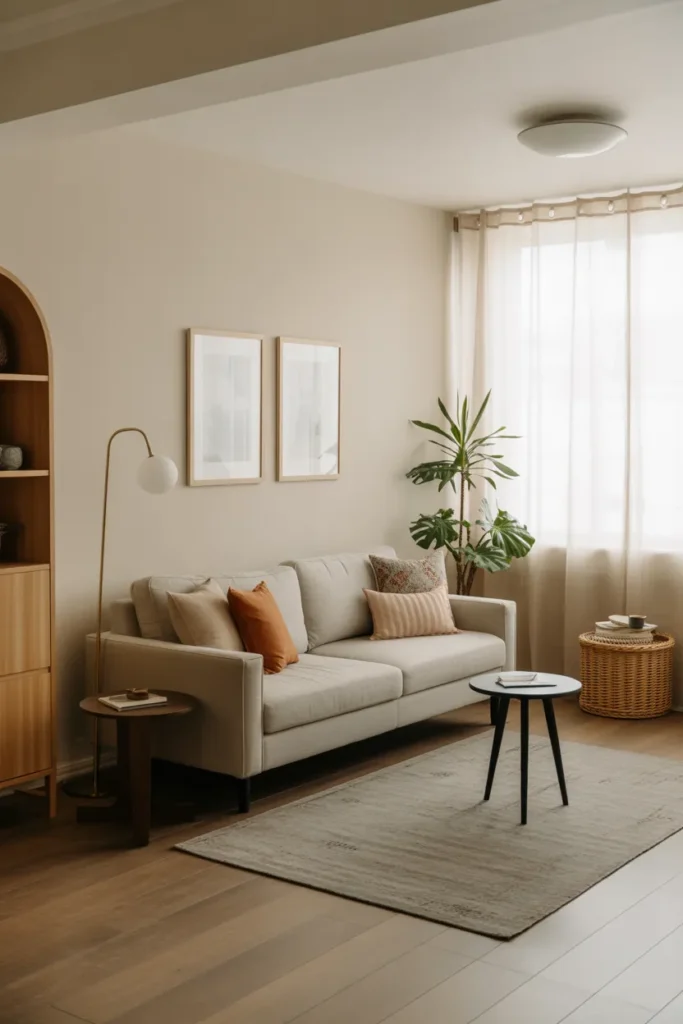
An open layout helps small living rooms feel less restricted. Instead of blocking space with large furniture, defining zones using rugs, lighting, or furniture placement creates structure without closing off areas. Each zone feels intentional while maintaining visual continuity.
This method allows the living room to serve multiple purposes, such as relaxing, entertaining, or working. Clear zones improve functionality without sacrificing openness. By avoiding unnecessary dividers, the room feels larger, balanced, and efficiently designed to maximize every inch.
Also view: 21 Stylish Sofa Ideas for Living Room Comfort
6. Slim Furniture with Raised Legs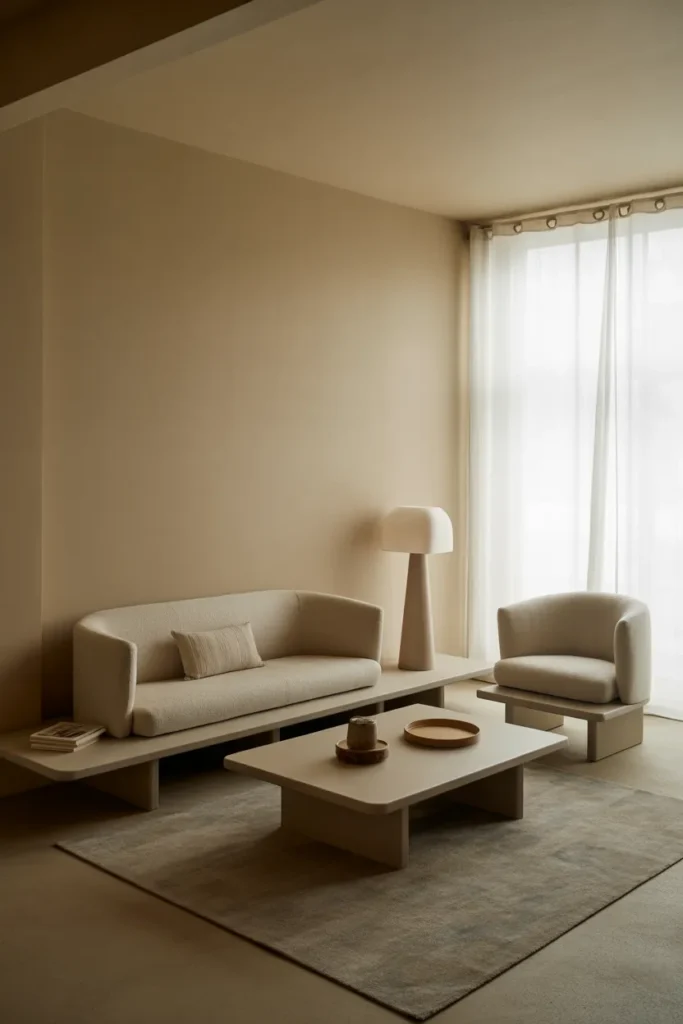
Slim furniture with raised legs is ideal for small living rooms because it reduces visual weight. When furniture sits off the floor, the space feels lighter and more open. Raised legs expose more flooring, which tricks the eye into seeing a larger room. This design works especially well with neutral upholstery and clean-lined silhouettes that don’t overpower the layout.
Beyond aesthetics, this furniture choice improves functionality and movement. Cleaning becomes easier, and the room feels less boxed in. By choosing sleek pieces with elevation, every inch of the living room is used efficiently while maintaining comfort, balance, and a modern, spacious look.
7. Built-In Seating for Space Efficiency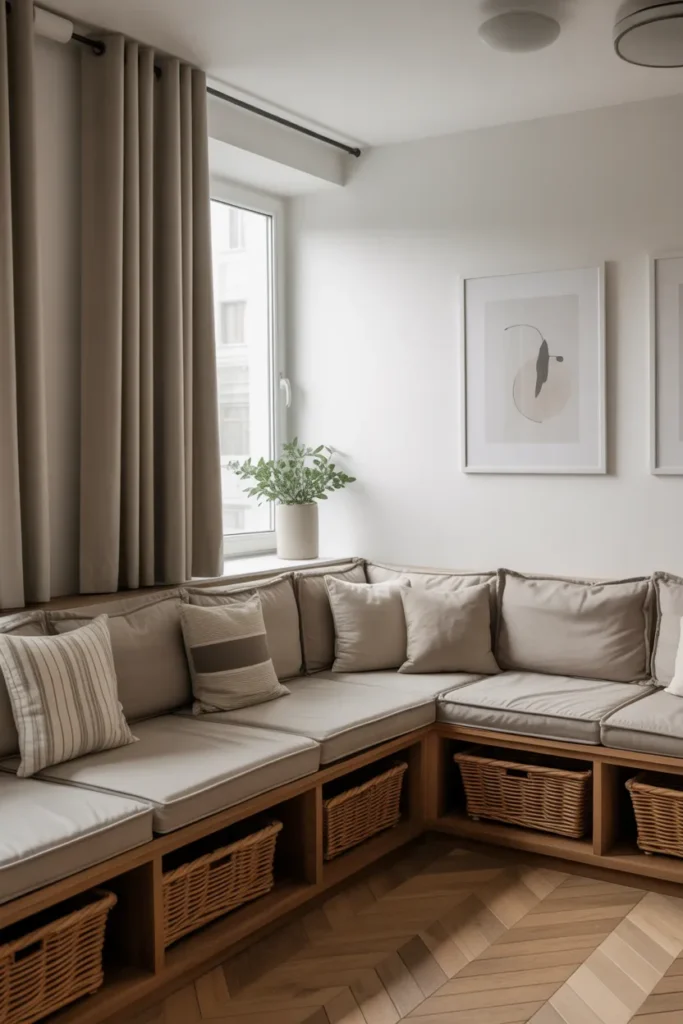
Built-in seating is a smart solution for maximizing limited living room space. It removes the need for bulky sofas while offering ample seating and storage. By aligning seating with walls, the center of the room stays open, improving flow and usability. Cushions and throw pillows add comfort without adding bulk.
This idea also allows customization to fit exact room dimensions. Storage beneath the seating keeps clutter out of sight, making the room feel organized and calm. Built-in seating uses every inch intentionally, creating a functional, cozy, and visually streamlined living area.
8. Neutral Base with Layered Textures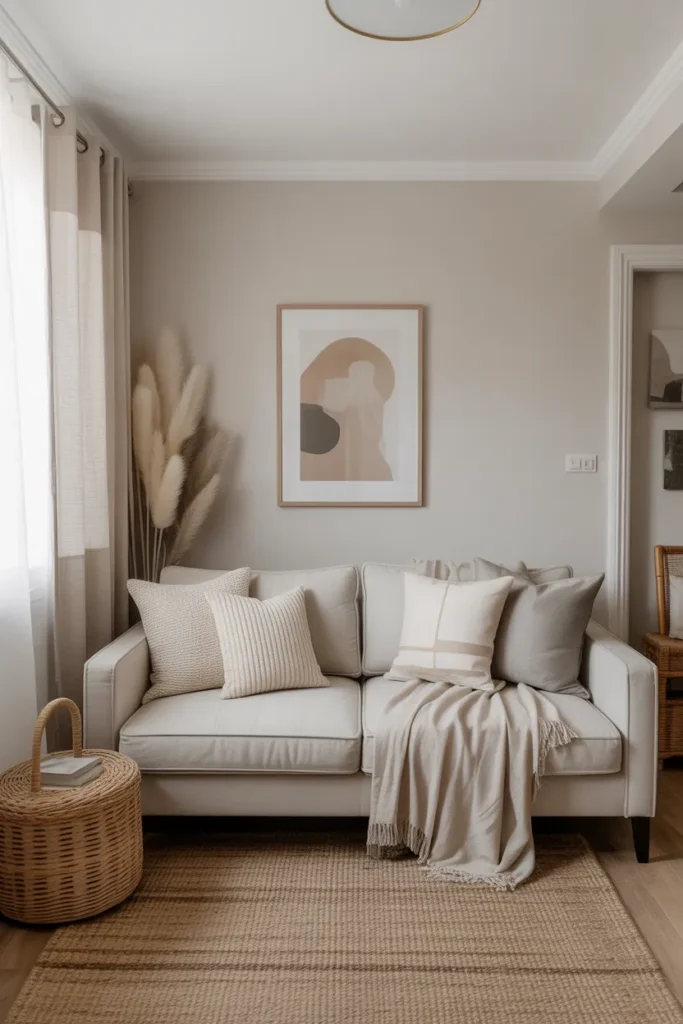
Using a neutral base helps a small living room feel open, but texture prevents it from looking flat. Layered textiles like rugs, cushions, and throws introduce warmth and interest while keeping the color palette simple. This balance creates visual depth without overwhelming the space.
Textures guide the eye gently across the room, making it feel inviting and well-designed. Instead of adding extra furniture, texture adds personality efficiently. This approach maximizes every inch by enhancing style and comfort without sacrificing openness or simplicity.
9. Compact Coffee Table Alternatives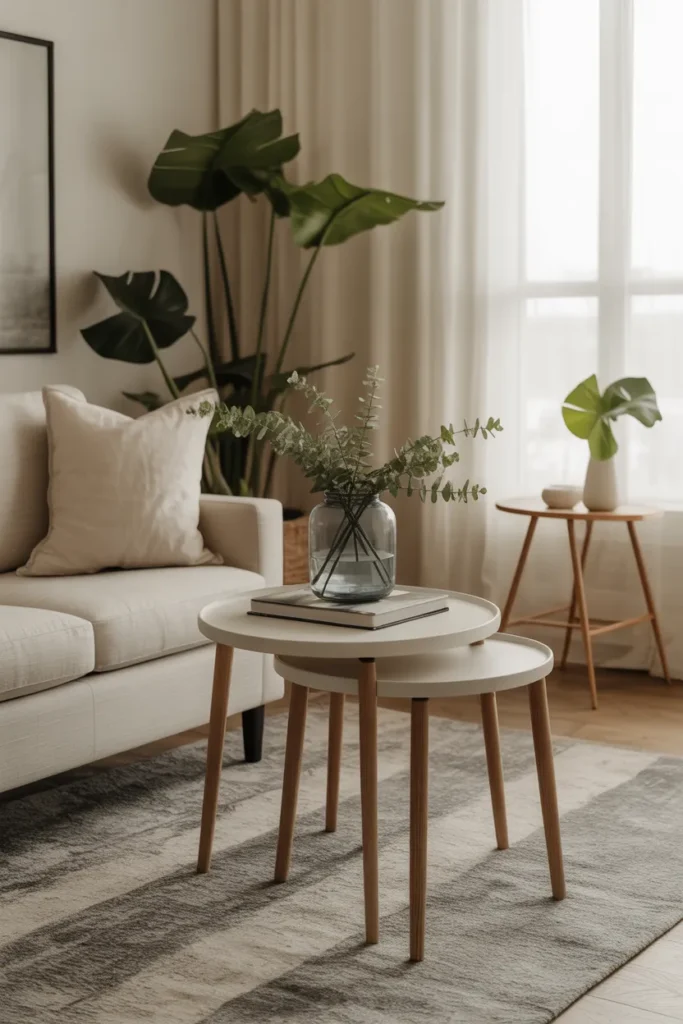
Traditional coffee tables can dominate small living rooms. Compact alternatives like nesting tables or side tables provide flexibility and save space. They can be moved easily when needed and tucked away when not in use. This adaptability keeps the room functional without feeling crowded.
These alternatives also allow better traffic flow and visual openness. By choosing lighter, smaller surfaces, the room feels more balanced and intentional. Smart table choices help maximize floor space while maintaining practicality and everyday convenience.
10. Curtains Hung High to Elevate Space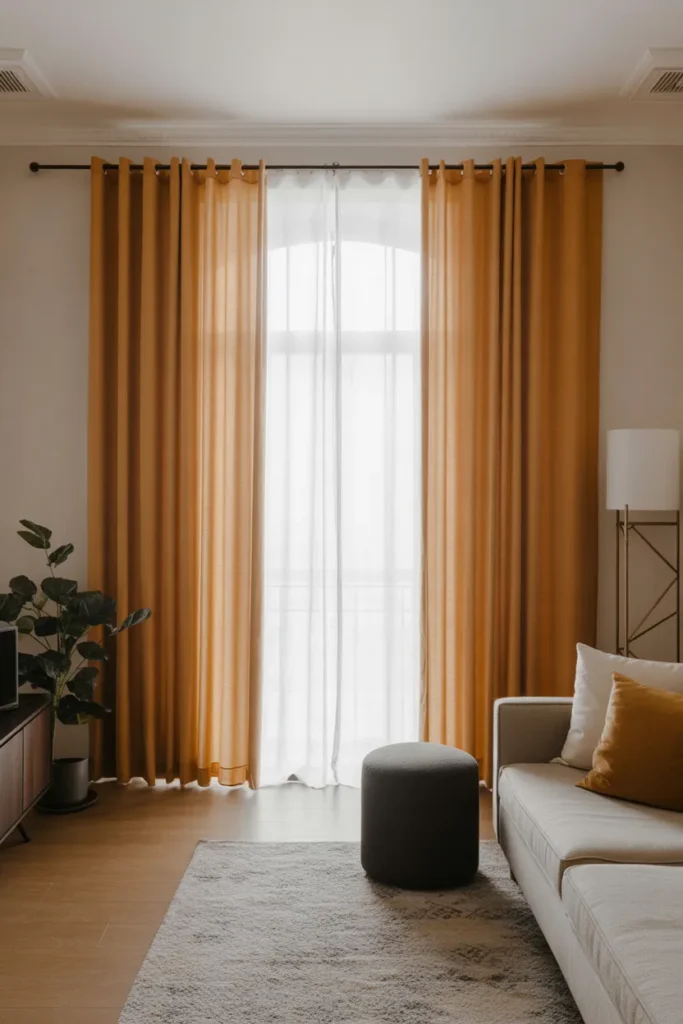
Hanging curtains higher than the window frame draws the eye upward, making ceilings appear taller. This simple trick instantly enhances the sense of height in a small living room. Floor-length curtains also create a clean, continuous vertical line that adds elegance.
Lightweight fabrics keep the look soft and airy without blocking light. This technique maximizes visual space without structural changes. Proper curtain placement transforms the room, making it feel taller, brighter, and more open while using existing elements wisely.
11. Floating Media Unit to Save Floor Space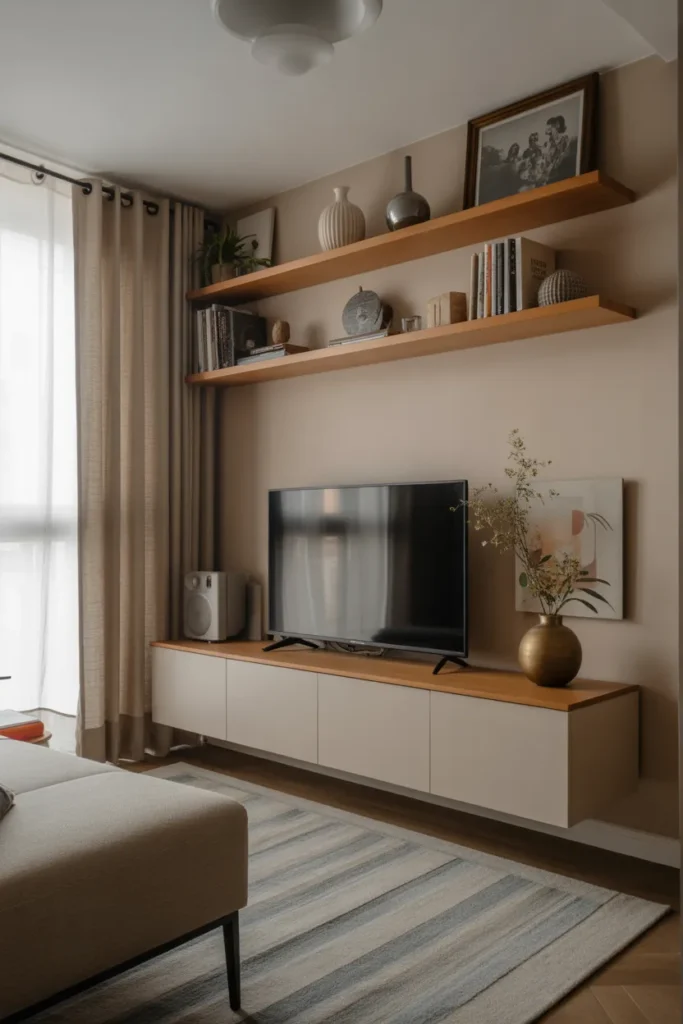
Floating media units are perfect for small living rooms because they eliminate bulky cabinets. By mounting storage on the wall, valuable floor space is freed, making the room feel larger and more organized. Cables, devices, and accessories stay neatly tucked away, reducing visual clutter and maintaining a clean look.
This setup also improves flow and balance within the room. The open floor underneath creates an airy feel while still providing practical storage. A floating media unit maximizes every inch by combining function, modern style, and smart spatial planning.
12. Corner Furniture for Unused Areas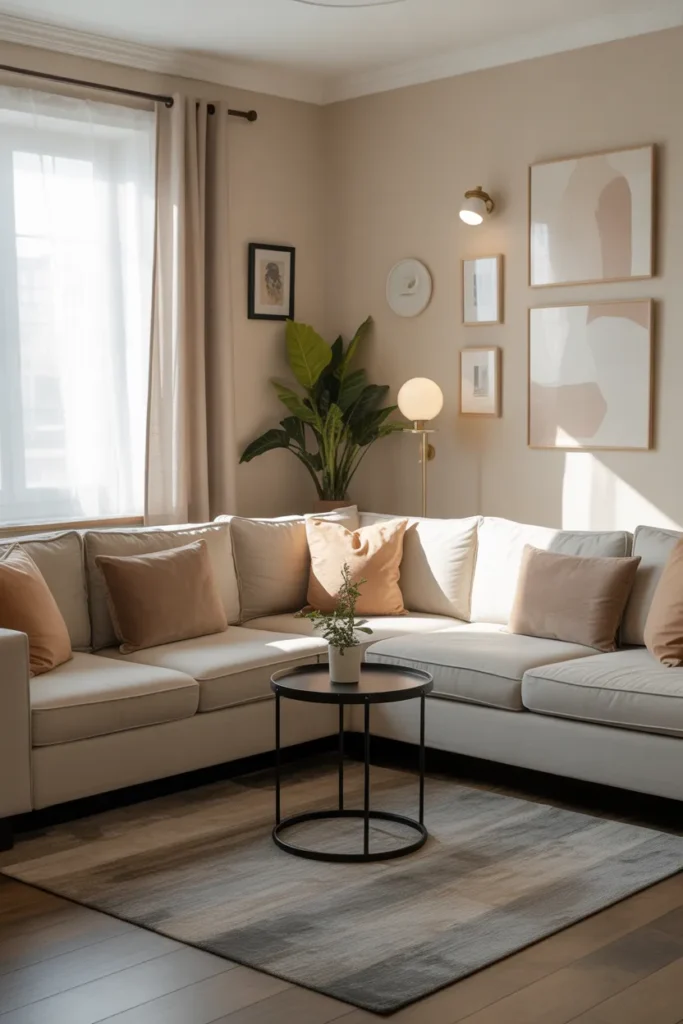
Corners are often wasted in small living rooms, but corner furniture turns them into functional zones. A corner sofa or shelf fits snugly without disrupting movement. This layout keeps the center open, which is essential for maintaining a spacious feel in tight areas.
Using corners wisely improves seating and storage without overcrowding. It helps create a balanced arrangement where every part of the room serves a purpose. Corner furniture is a smart way to maximize space while keeping the room comfortable and visually open.
13. Low-Profile Seating for Open Feel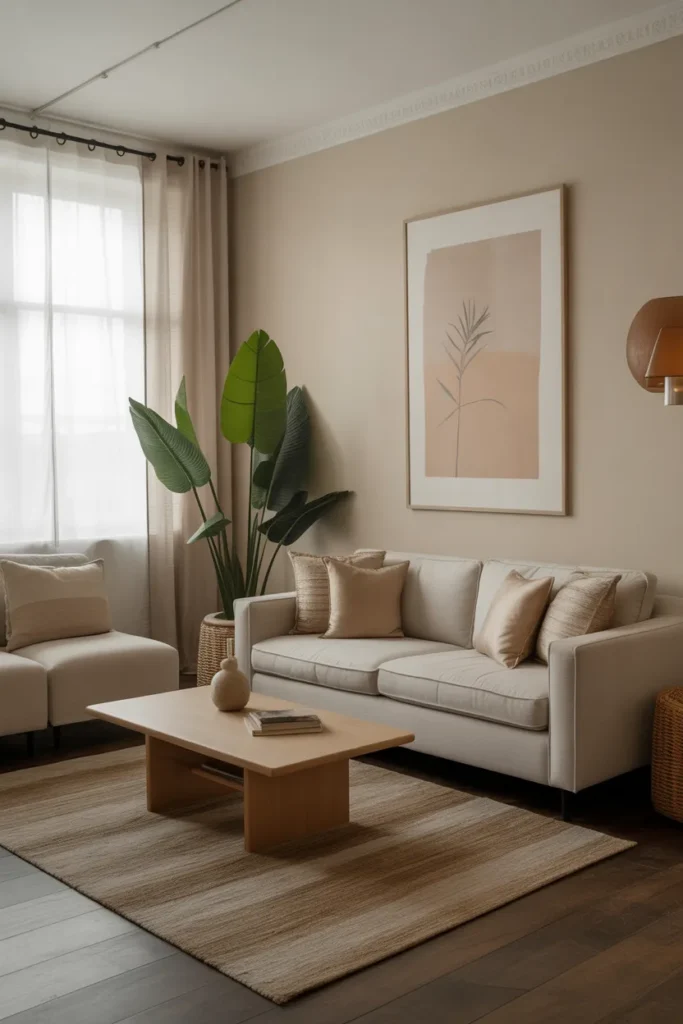
Low-profile seating makes ceilings feel higher and rooms appear wider. By keeping furniture visually low, the living room feels more expansive and less cramped. This style works well with modern or minimalist interiors and maintains a relaxed, airy atmosphere.
The open sightlines created by low seating enhance flow and comfort. It allows light to move freely through the space, reducing heaviness. Choosing low-profile furniture maximizes visual space while maintaining practicality and everyday comfort.
14. Hidden Storage to Reduce Clutter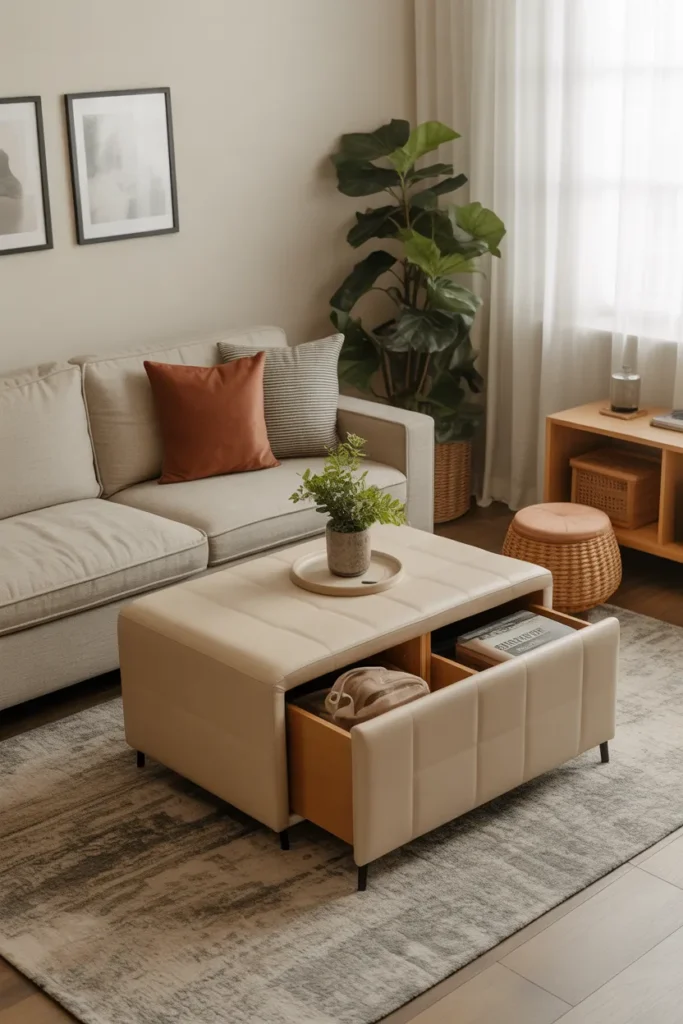
Hidden storage is essential for keeping small living rooms clutter-free. Furniture with built-in storage allows everyday items to be stored out of sight, maintaining a calm and tidy environment. This prevents the need for extra cabinets or shelves.
An organized room always feels larger and more inviting. By hiding clutter, the focus stays on layout and design rather than mess. Hidden storage maximizes every inch by combining functionality with a clean, polished appearance.
15. Statement Lighting Without Bulk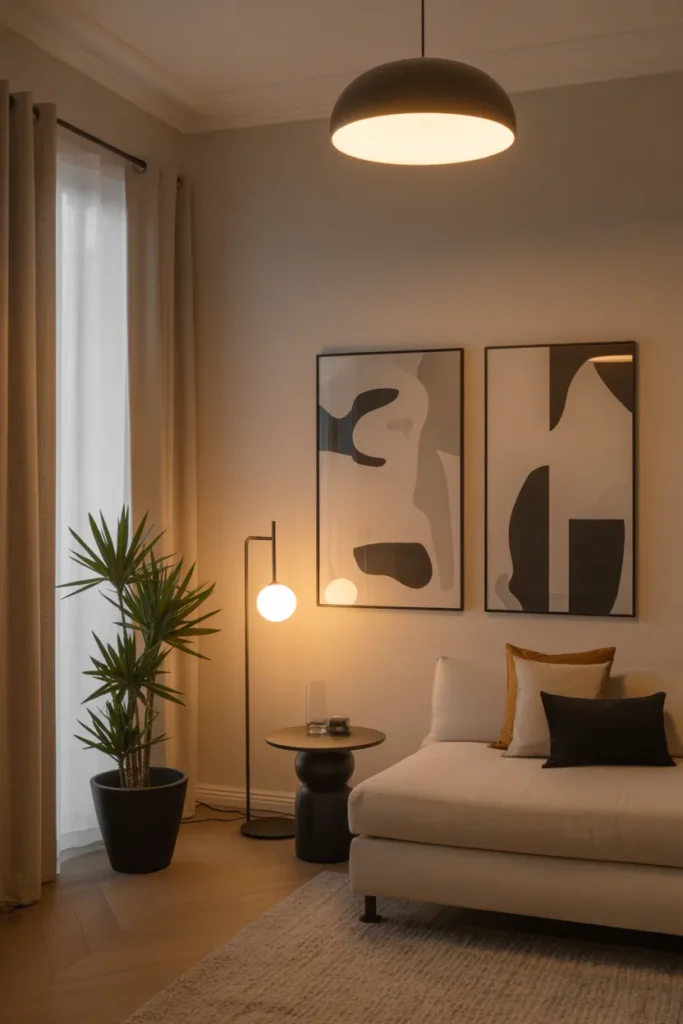
Statement lighting draws attention upward and adds personality without taking up floor space. Slim pendants or wall-mounted lights provide strong visual impact while keeping the layout open. Lighting becomes a design feature rather than a space-consuming necessity.
Proper lighting enhances depth and highlights key areas of the room. It creates warmth and dimension without adding furniture. Smart lighting choices maximize space while elevating style and atmosphere in a small living room.
16. Glass Furniture for Visual Lightness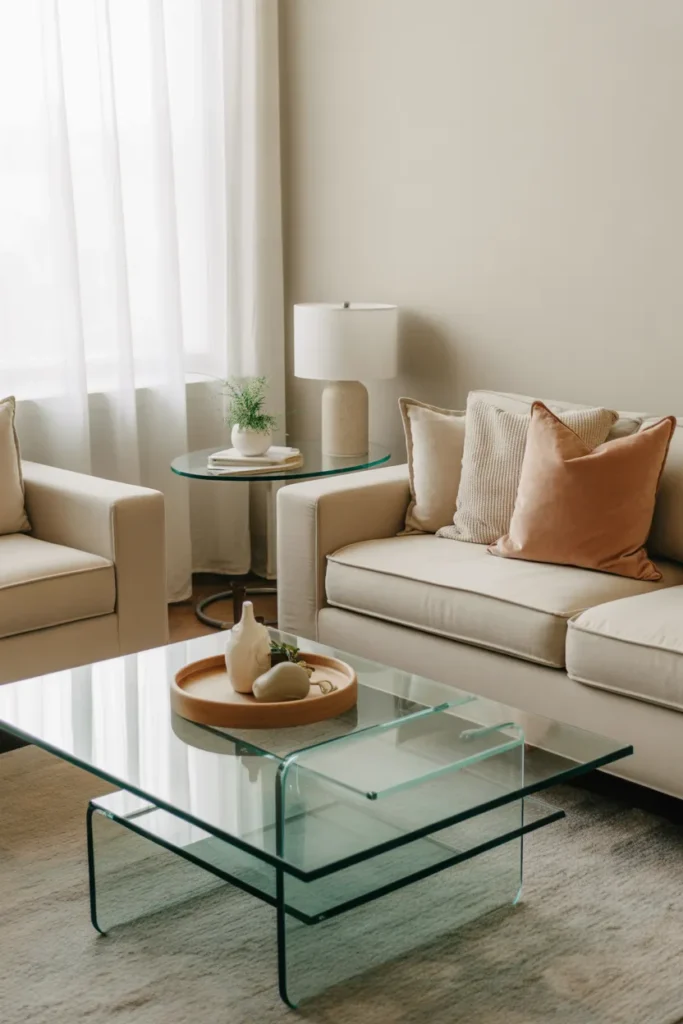
Glass furniture is ideal for compact living rooms because it visually disappears, making the area feel open and uncluttered. Clear surfaces allow light to pass through, preventing the room from feeling heavy or crowded. Even when furniture is present, the transparency maintains an airy and spacious look that enhances the overall layout.
This choice works well with both modern and classic interiors. Glass tables still provide full functionality while reducing visual weight. By choosing transparent furniture, every inch of the living room feels lighter, brighter, and more efficiently used.
17. Accent Wall to Add Depth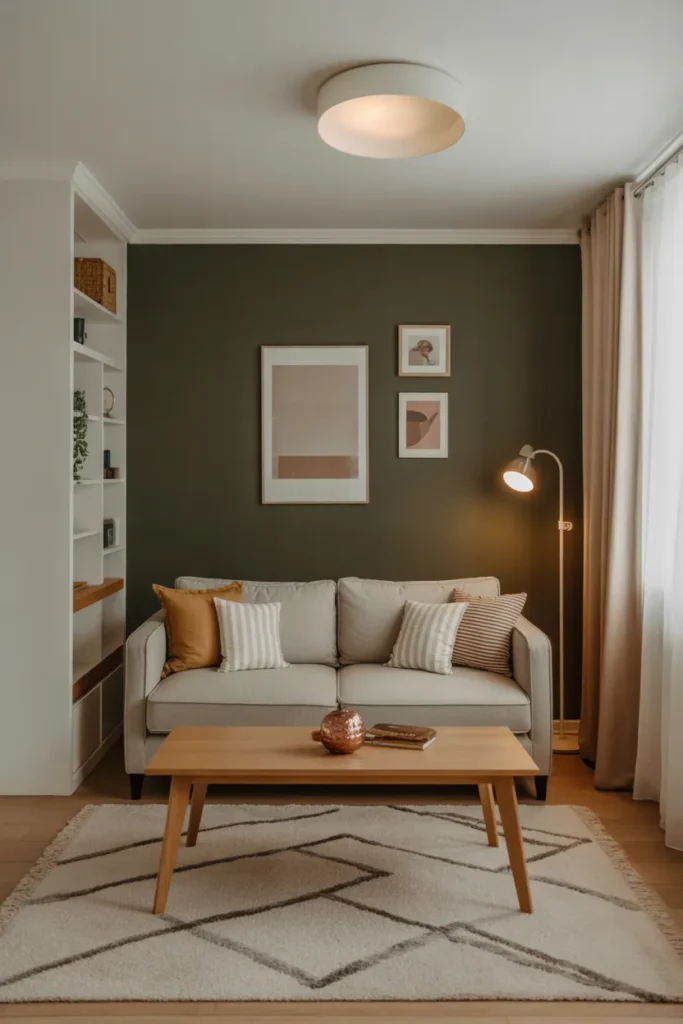
An accent wall adds visual interest and dimension to a small living room. Instead of overwhelming the space with color, focusing on one wall creates depth and structure. This technique helps define the seating area while keeping the rest of the room open and bright.
Using subtle patterns or muted tones prevents the room from feeling smaller. The accent wall becomes a focal point that enhances style without clutter. This smart use of color maximizes visual space and creates a well-balanced, intentional design.
18. Foldable or Stackable Seating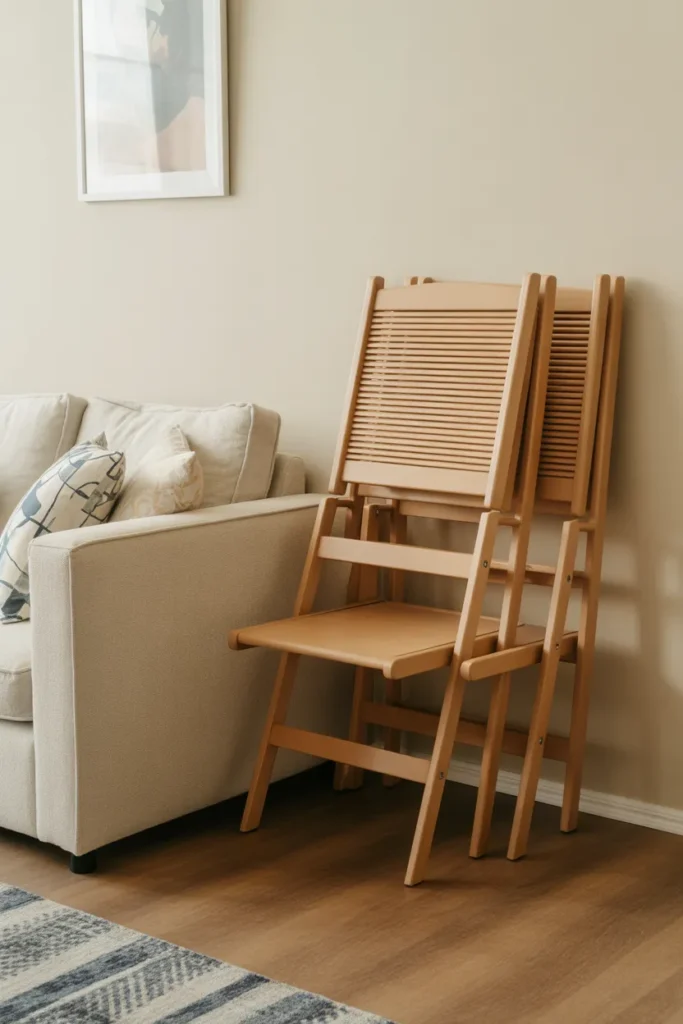
Foldable or stackable seating is perfect for small living rooms that need flexibility. These pieces can be brought out when guests arrive and stored away easily afterward. This keeps the room open and functional on a daily basis.
This solution allows the living room to adapt without permanent clutter. Lightweight designs ensure comfort while remaining practical. By using flexible seating options, the room stays organized, open, and ready for different needs without sacrificing space.
19. Rugs to Define and Expand Space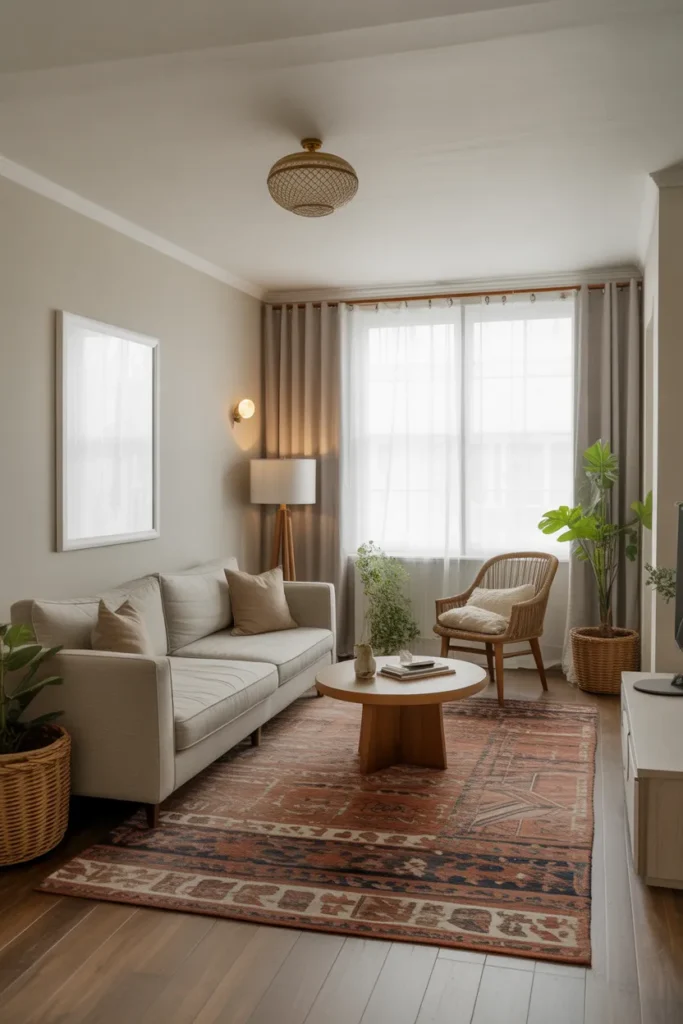
Using a rug correctly can make a small living room appear larger. A rug that extends under furniture creates a unified look, making the space feel more expansive. It visually connects furniture pieces, reducing fragmentation and clutter.
Choosing light or neutral rugs enhances openness while adding warmth. The right rug size defines zones without closing them off. This simple design trick maximizes every inch by improving flow, balance, and spatial perception.
20. Minimal Decor with Purpose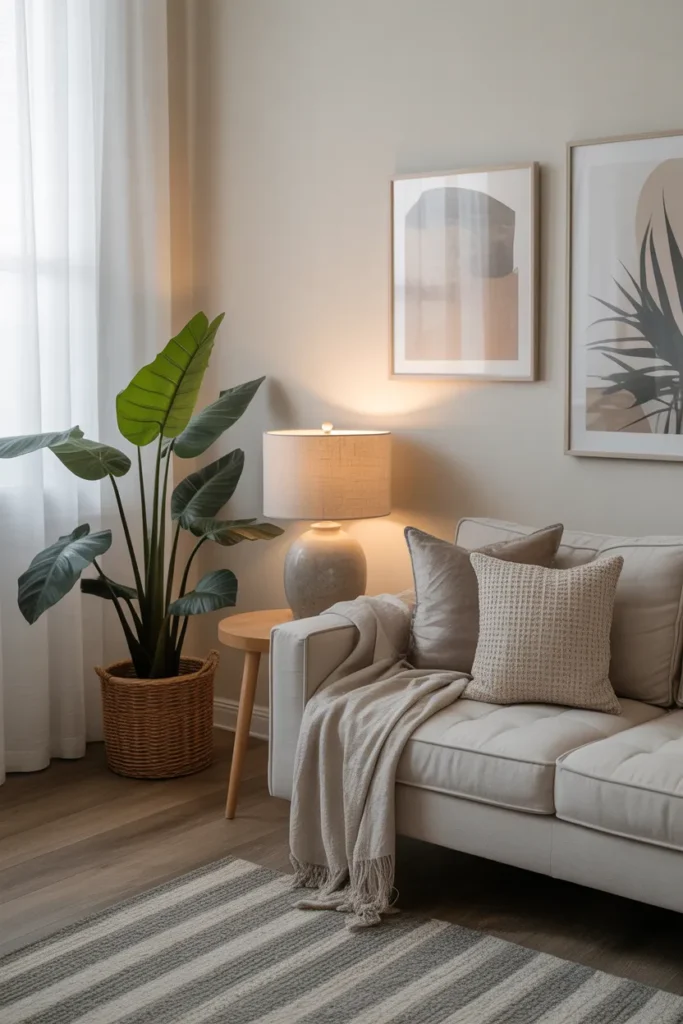
Minimal decor helps prevent small living rooms from feeling crowded. Each decorative element serves a purpose, whether functional or aesthetic. This approach keeps the focus on space, layout, and comfort rather than excess accessories.
Thoughtful styling enhances personality without overwhelming the room. By editing decor carefully, the living room remains organized and visually spacious. Purposeful minimalism maximizes every inch while maintaining a cozy, stylish, and balanced environment.
21. Wall-Mounted Lighting to Free Surfaces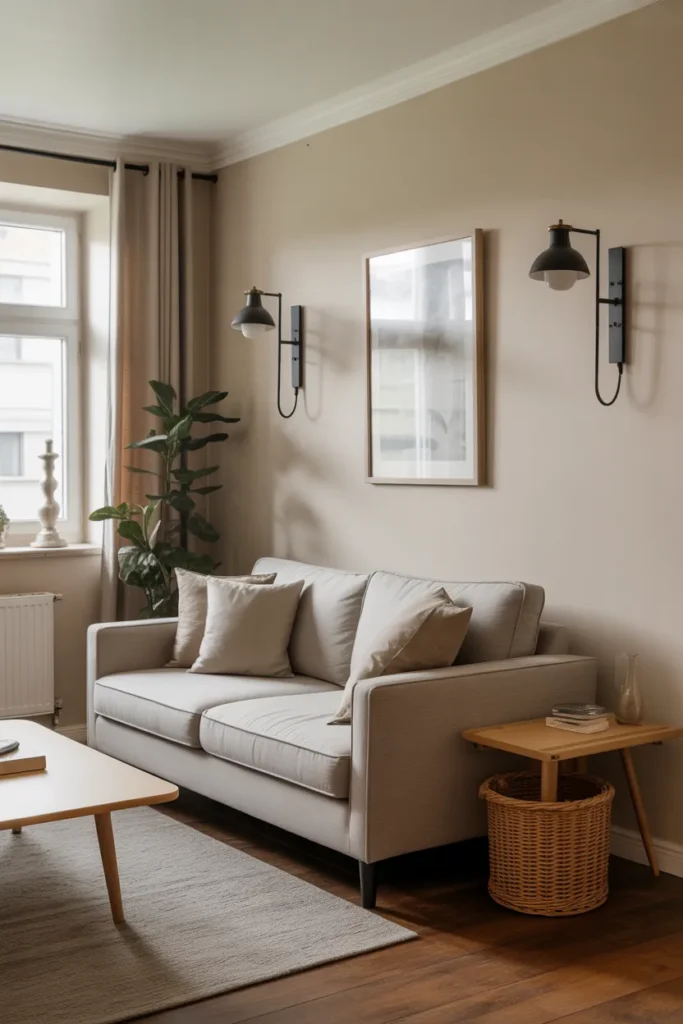
Wall-mounted lighting is a smart way to save space in compact living rooms. By removing the need for table or floor lamps, surfaces remain uncluttered and open. This creates a cleaner layout and improves movement throughout the room. The light is directed exactly where needed, making the space both functional and visually balanced.
This lighting style also adds a modern, polished look without adding bulk. It highlights key areas while keeping furniture minimal. Using wall-mounted lights maximizes every inch by combining practical illumination with a sleek, space-saving design.
22. Tall Storage Units for Vertical Use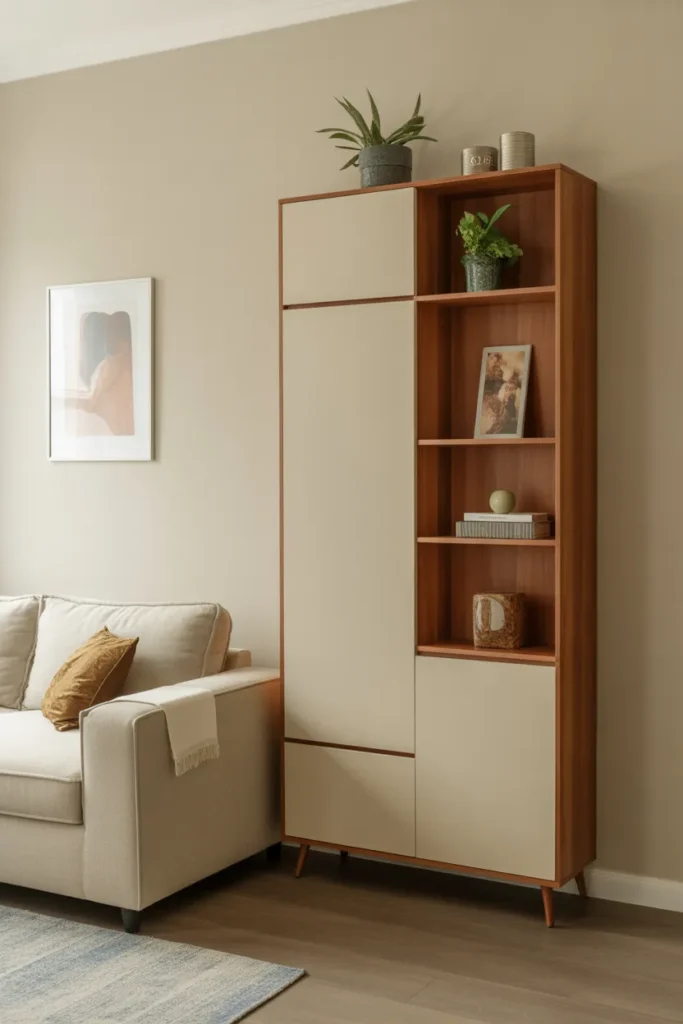
Tall storage units make excellent use of vertical space in small living rooms. Instead of spreading storage horizontally, going upward keeps the floor area open and uncluttered. These units can store books, decor, and everyday items while maintaining a slim footprint.
Vertical storage also draws the eye upward, making the room feel taller and more spacious. When styled neatly, it blends seamlessly into the room’s design. This approach maximizes storage while preserving openness and visual balance.
23. Sliding Doors Instead of Swing Doors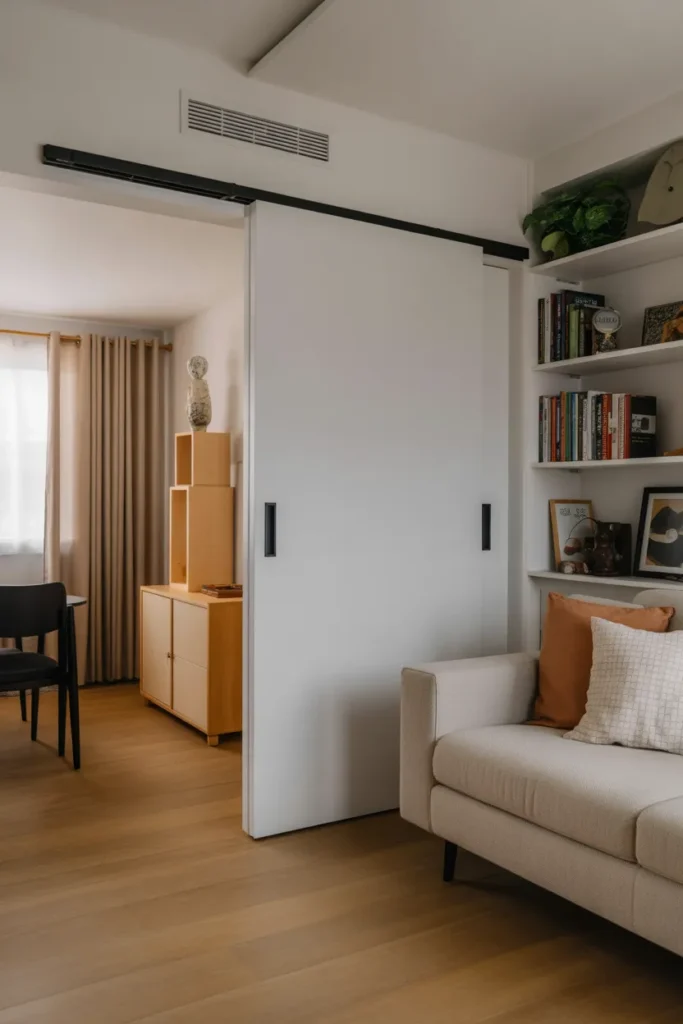
Sliding doors are ideal for small living rooms because they eliminate the clearance space required by traditional doors. This allows furniture to be placed closer to doorways without blocking movement. The result is a more efficient and flexible layout.
Sliding doors also create a seamless flow between rooms while maintaining separation when needed. Their sleek design enhances modern interiors. By saving floor space, sliding doors help maximize every inch and improve overall functionality.
24. Consistent Color Scheme for Flow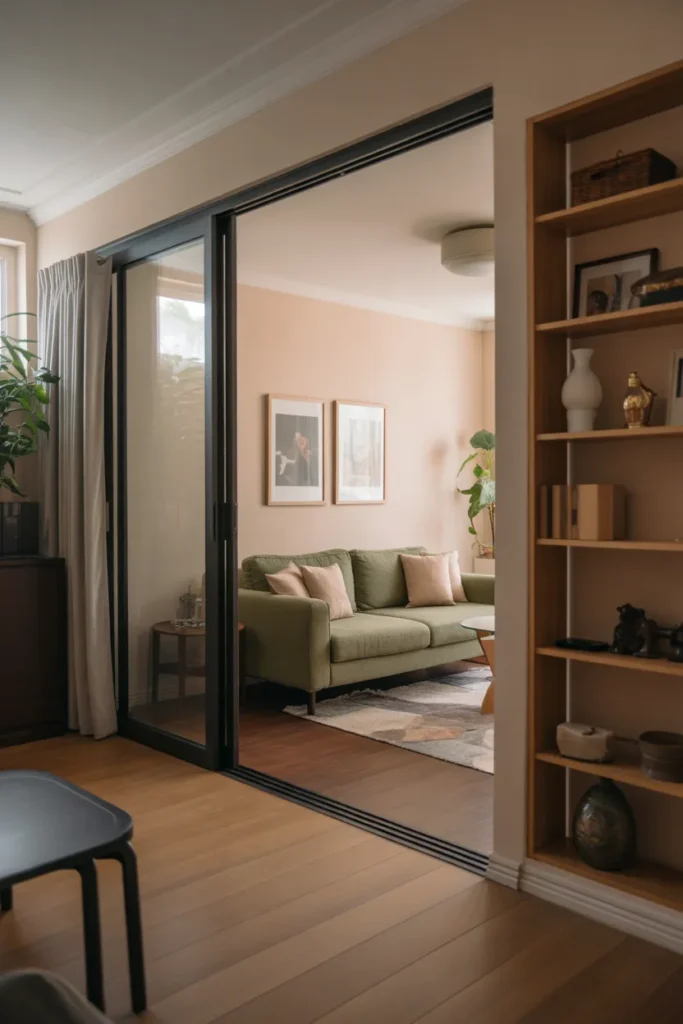
A consistent color scheme helps small living rooms feel larger and more cohesive. When colors flow naturally from one element to another, the eye moves smoothly without visual breaks. This reduces the feeling of clutter and creates a calm environment.
Using similar tones throughout the space also enhances balance and elegance. Subtle variations add interest without disrupting harmony. This design choice maximizes every inch by creating unity, openness, and a visually expanded living room.
Conclusion (70–80 words):
Small living rooms don’t have to feel cramped or limited. With smart planning, intentional furniture choices, and creative use of space, even the smallest areas can look stylish and functional. By focusing on light, layout, storage, and simplicity, you can maximize every inch without clutter. These ideas prove that thoughtful design makes a big impact, turning compact living rooms into comfortable, efficient, and visually spacious spaces that truly feel like home.