16 Modern Reclaimed Wood Furniture for Every Home
Modern reclaimed wood furniture refers to tables, shelving, beds, benches, and storage pieces built from salvaged timber — barn wood, industrial flooring, demolished building lumber, or recovered hardwoods — combined with contemporary design sensibility, clean joinery, and minimal ornamentation to create furniture that is simultaneously materially honest, environmentally considered, and genuinely contemporary in form. This article gives you 16 modern reclaimed wood furniture ideas across every room so your home has the warmth and material integrity of genuine salvaged timber without the rustic-heavy aesthetic that reclaimed wood furniture once almost always implied.
There is a particular quality in a piece of furniture built from reclaimed wood that no newly milled lumber can replicate — the nail holes that tell the story of a previous structural life, the grain pattern that developed over a century rather than a decade, the dimensional stability of old-growth timber that was allowed to grow slowly enough to develop the dense cell structure that modern plantation lumber never achieves. When that material is shaped into clean, contemporary furniture — a floating shelf with hairpin legs, a bed frame with minimal joinery, a dining table with a waterfall edge — the combination of historical material and contemporary form creates something that reads as both genuinely made and genuinely designed. Here are 16 ideas worth saving — and stealing.
Why Modern Reclaimed Wood Furniture Works So Well
Modern reclaimed wood furniture draws from the convergence of two design movements that reached their confluence in the early 21st century: the sustainability imperative that made the provenance and lifecycle of materials a legitimate design consideration, and the warm minimalism aesthetic that rejected both the sterile material palette of cold modernism and the ornamental excess of traditional furniture in favor of natural materials in simple, honest forms. Reclaimed wood is uniquely positioned at this intersection — it is the most environmentally responsible lumber choice (no new trees harvested, no new land cleared, carbon stored rather than released), and it is the most materially honest choice (the wood’s history is visible in its surface rather than concealed beneath paint or veneer).
The material palette of modern reclaimed wood furniture is broader than most people realize. Reclaimed barn siding provides the silver-grey, weathered surface texture associated with the reclaimed aesthetic. Reclaimed industrial flooring — heart pine, Douglas fir, and longleaf pine from pre-1900 mills — provides tight-grained, dense timber with the warmth of old-growth wood. Reclaimed oak beams from demolished buildings provide the structural scale needed for large dining tables and bed frames. Reclaimed teak from Indonesian construction provides exceptional weather resistance for outdoor furniture. Each source material has a distinct character — different grain patterns, different aging marks, different color families — and the designer’s skill lies in matching the specific reclaimed material to the furniture piece it will become.
The cultural moment is ideal for modern reclaimed wood furniture. The sustainability shift in consumer purchasing has made material provenance a genuine purchasing criterion rather than a marketing afterthought, and reclaimed wood provides provenance that factory lumber cannot — many pieces can trace their timber to a specific building, a specific region, or a specific era. The warm minimalism aesthetic that dominates contemporary interior design creates a strong demand for furniture that is warm in material tone and simple in form — a combination that reclaimed wood in contemporary design delivers more consistently than almost any other material approach.
Small homes and apartments benefit particularly from reclaimed wood furniture because the material’s visual richness allows single pieces to carry significant design weight — a reclaimed wood floating shelf in a small kitchen or bathroom creates more character per square foot than almost any other intervention, because the material does the design work without requiring large dimensions or complex form.
Style at a Glance
| Element | Detail |
|---|---|
| Philosophy | Historical material in contemporary form — the wood’s story visible, the furniture’s design intentional |
| Key Materials | Reclaimed barn siding, heart pine flooring, oak beams, industrial Douglas fir, reclaimed teak |
| Key Colors | Silver-grey barn wood, honey-amber heart pine, warm chocolate oak, weathered teak, aged Douglas fir red-brown |
16 Modern Reclaimed Wood Furniture for Every Home
1. Reclaimed Wood Dining Table with Steel Hairpin Legs
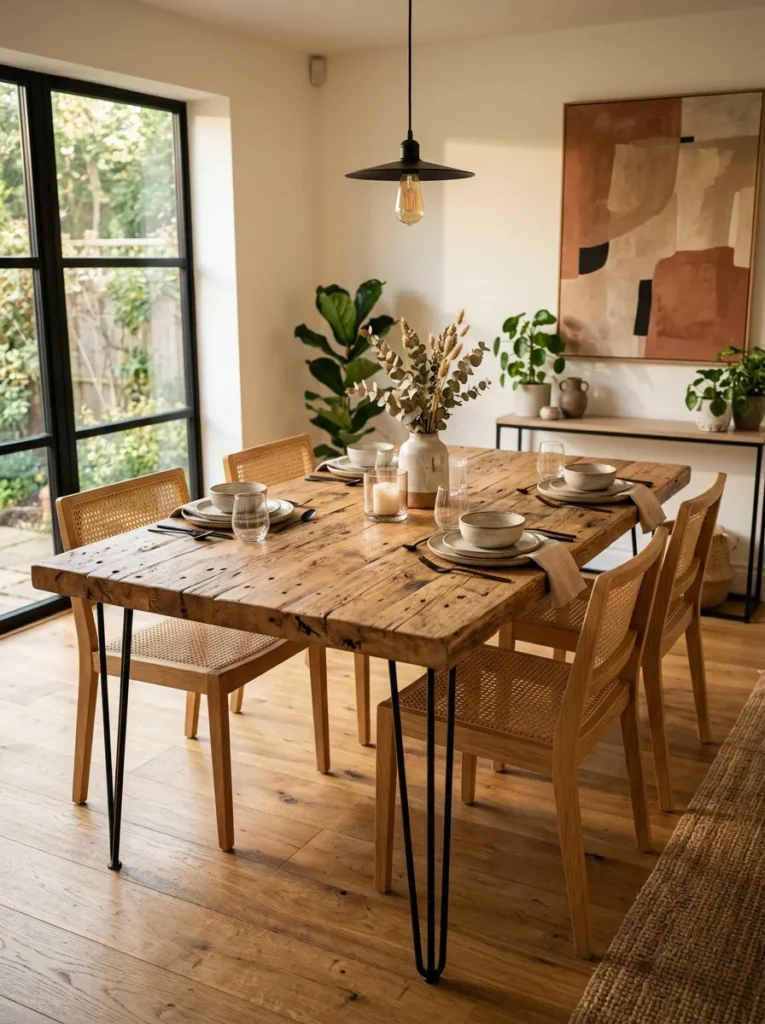
Vibe: The table is contemporary — the combination of an aged, nail-hole-marked reclaimed wood top and slim matte black hairpin legs is the furniture pairing that resolves the apparent tension between the material’s history and the room’s modern aesthetic, creating a table that reads as designed rather than salvaged.
Why it works: The hairpin leg is the design element that modernizes reclaimed wood most effectively — its slender, minimal steel profile creates maximum visual contrast with the reclaimed top’s material density, and the contrast between the slim modern legs and the heavy historic top is the source of the table’s design tension and resolution. Matte black steel is specifically the correct finish for this application because it shares no color with the warm reclaimed wood tones and therefore reads as a deliberate material juxtaposition rather than a matching attempt. The hairpin leg’s open structure keeps the table visually light despite the reclaimed top’s mass, which is critical in dining rooms where furniture weight can make a room feel heavy.
How to get it: Reclaimed wood dining table tops (without legs) are available from local salvage dealers, Etsy woodworkers, and online reclaimed wood suppliers at $400–$1,200 for a standard 36×72 inch dining table top, depending on wood species and surface preparation. Hairpin legs ($40–$120 for a set of four in the appropriate height for dining, 28–30 inches) attach to the table top with wood screws through the leg’s mounting plate. Finish the reclaimed top with a hard wax oil (Rubio Monocoat or Osmo Polyx-Oil) rather than polyurethane — hard wax oil enhances the wood’s natural grain and aging marks rather than encasing them under a plastic-looking film.
Quick Win: A reclaimed wood slab purchased from a local salvage dealer ($80–$200 for a 6-foot dining length) on a set of adjustable hairpin legs ($50–$80) creates a complete dining table for under $300 — less than most mass-market dining tables without any of the material character.
Shop The Look
- Hairpin legs set 4 matte black 28 inch dining
- Reclaimed wood slab table top barn wood
- Hard wax oil finish Rubio Monocoat natural
- Simple linen napkin set natural dining
- Pendant light dining room warm brass
Also view: 15 Clever Furniture Ideas That Maximize Small Spaces
2. Reclaimed Oak Floating Shelves for Kitchen or Living Room
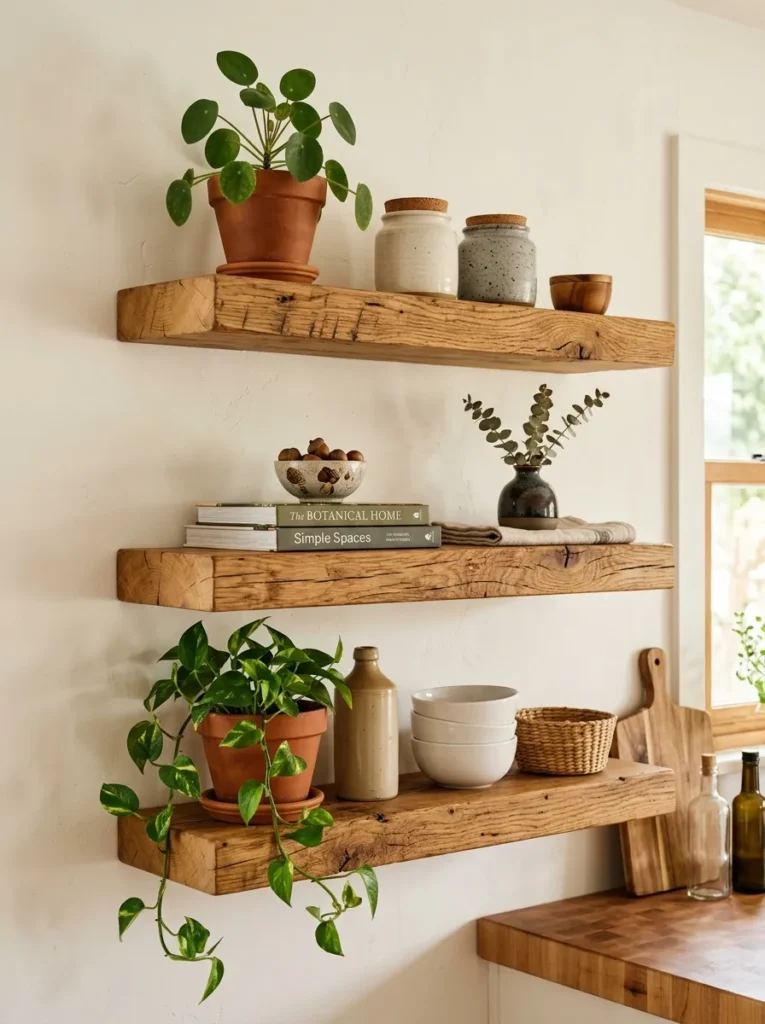
Vibe: The shelves are warm — reclaimed oak floating shelves on a white kitchen wall create the specific quality of warmth that mass-produced shelving cannot approach, where the wood’s character (aging marks, grain depth, occasional knot) reads as genuine material rather than manufactured surface.
Why it works: Floating shelves in reclaimed oak are the highest-impact reclaimed wood intervention available per square foot of material used — a 6-foot shelf at 8-inch depth uses approximately 4 board feet of timber but occupies the room’s primary wall surface at eye level, where its material character is visible at close range throughout the day. The bracket-free floating appearance is achieved through a French cleat or hidden metal bracket system that mounts to the wall studs and is completely concealed by the shelf body — the shelf appears to emerge from the wall as if it were architectural rather than furniture. Reclaimed oak specifically has the warm brown tone and visible grain that reads as intentional material choice rather than budget constraint.
How to get it: Reclaimed oak shelf blanks are available from lumber salvage dealers and specialty online retailers at $8–$20 per board foot — a 6-foot shelf at 8-inch depth costs $30–$80 in material. Cut to length, sand to 120-grit (preserving the character marks), and finish with a penetrating oil. Mount using hidden shelf brackets (Ikea EKBY or equivalent heavy-duty options) anchored into wall studs. A set of three shelves at graduated heights (24, 36, and 48 inches from the floor) creates the most visually dynamic floating shelf arrangement.
Shop The Look
- Reclaimed oak shelf blank custom cut
- Hidden shelf bracket heavy duty steel
- Hard wax oil finish natural wood
- Ceramic jar set kitchen display
- Small terracotta pot shelf plant
Also view: 15 Thoughtful Handmade Gifts That Wow Everyone
3. Reclaimed Wood Bed Frame with Minimal Joinery
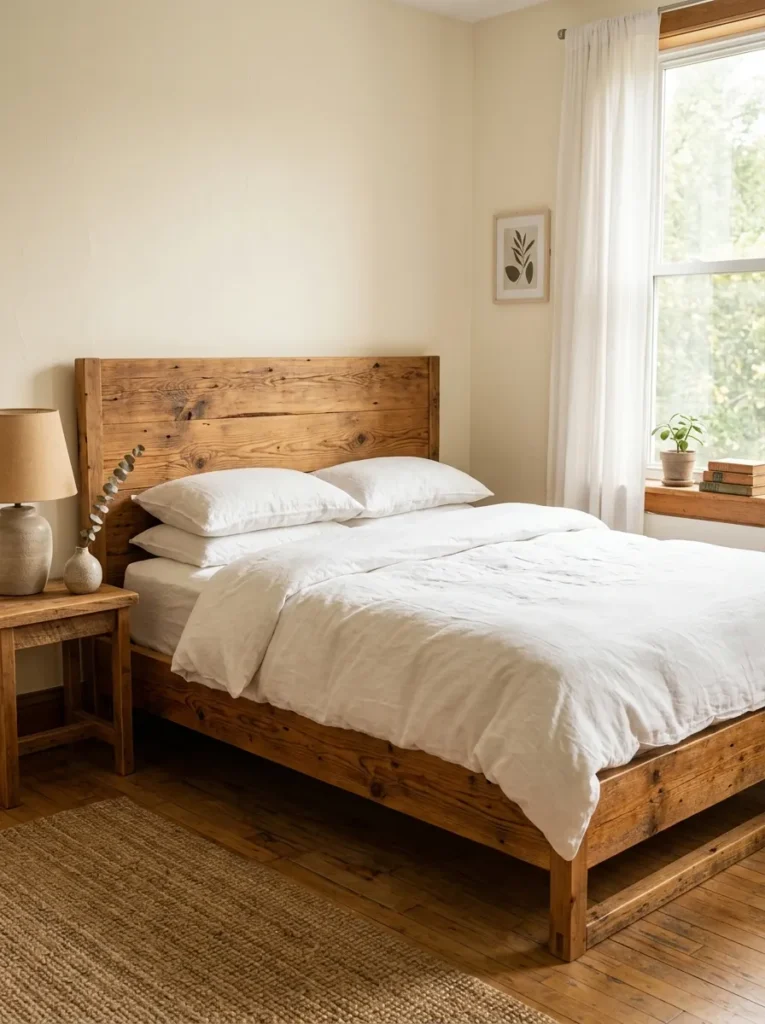
Vibe: The bedroom is restful — a reclaimed wood bed frame with simple plank construction and visible wood character creates the specific warmth of a room that feels genuinely material rather than mass-produced, where the bed’s headboard reads as the room’s primary material statement.
Why it works: A reclaimed wood bed frame with minimal joinery works because the headboard is the bedroom’s primary visual element — the largest vertical surface in the room’s primary focal view — and the character of the headboard material sets the room’s design register entirely. A reclaimed plank headboard with visible grain, slight weathering, and honest construction reads as warm and considered; the same design in new lumber reads as budget rustic. The minimal joinery approach (simple mortise and tenon or lap joint construction visible at the corners) makes the frame’s construction technique part of its aesthetic — the honest joinery is the design rather than something to be concealed by decorative elements.
How to get it: Reclaimed wood bed frames are available from furniture makers who specialize in reclaimed material at $600–$2,000 for queen and king sizes — significantly more than mass-market alternatives but furniture that will last indefinitely and improve in character over time. For a DIY build, reclaimed 2×8 or 2×10 planks assembled into a simple platform frame using pocket screws and wood glue creates a functional bed frame for $150–$300 in materials with basic woodworking tools.
Shop The Look
- Reclaimed wood bed frame queen minimal
- Reclaimed pine headboard panel simple
- White linen duvet cover organic cotton
- Ceramic table lamp warm bedroom
- Small dried botanical stem bud vase
4. Reclaimed Barn Wood Accent Wall with Integrated Shelf
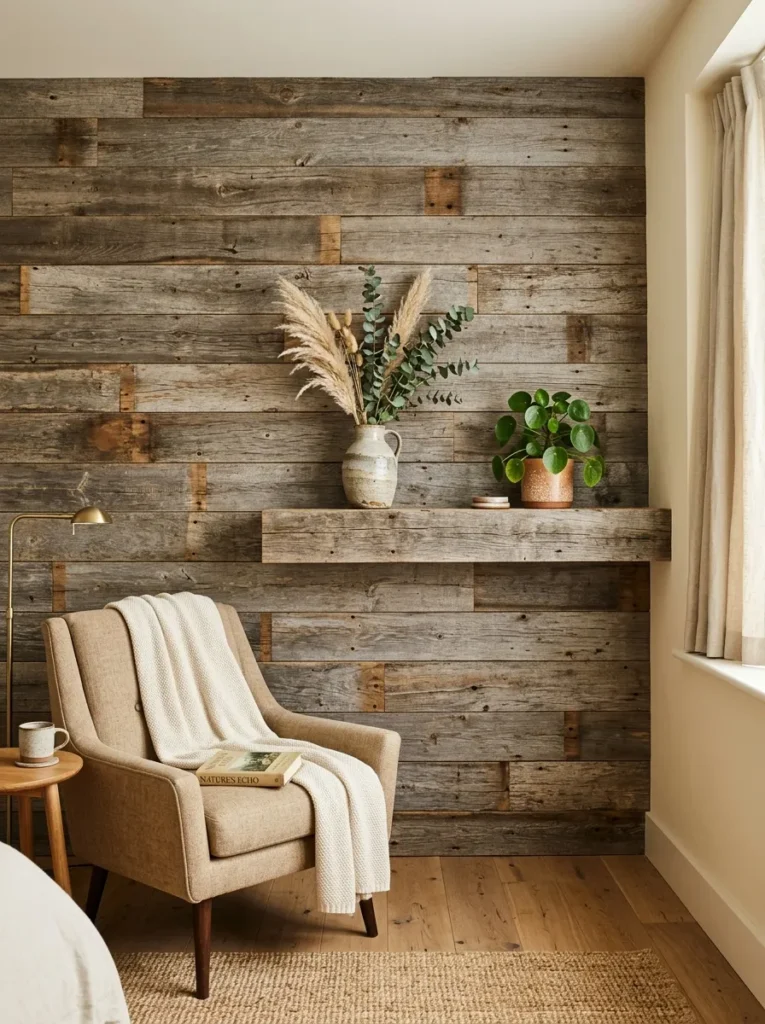
Vibe: The wall is textural — a reclaimed barn wood accent wall with its varied grey-brown tones and visible aging creates the warmest possible wall treatment available in natural materials, where the wall itself becomes the room’s primary design element and every other element in the room is organized around it.
Why it works: Reclaimed barn wood accent walls work because barn siding’s weathered surface contains a tonal range that no single paint color or wallpaper pattern can replicate — the variation between silver-grey weathered sections, warm brown aging areas, and occasional dark charcoal grain lines creates a natural color field that changes character under different light conditions. This tonal complexity is the result of genuine weathering over decades or centuries, and it reads as natural depth rather than manufactured variety. Installing an integrated shelf from the same reclaimed wood (same batch, same tonal family) at wall mid-height creates a compositional anchor that makes the wall read as designed rather than simply installed.
How to get it: Reclaimed barn wood planks are available by the square foot from architectural salvage dealers and online suppliers ($4–$10 per square foot). Apply to the wall using construction adhesive and finish nails into studs — no tongue and groove or complex joinery needed, as the planks are applied flat to the existing wall surface. Vary plank widths (mixing 4-inch, 6-inch, and 8-inch planks) for the most natural-looking installation. Seal with a clear matte finish coat to prevent dust accumulation in the wood’s texture while preserving the weathered color.
Shop The Look
- Reclaimed barn wood planks by the foot
- Construction adhesive panel mounting
- Matte clear coat sealer wood wall
- Ceramic object single display shelf
- Small plant pot terracotta shelf
5. Reclaimed Wood Coffee Table with Industrial Steel Frame
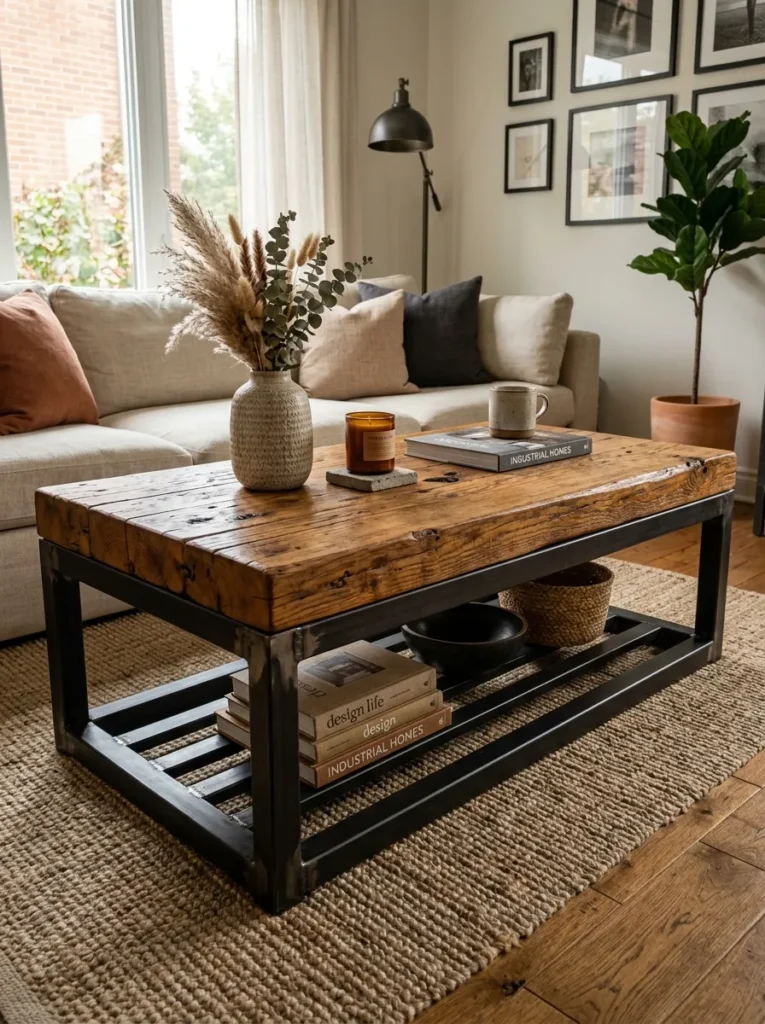
Vibe: The coffee table is industrial-modern — a thick reclaimed wood top on a welded steel frame is the furniture piece that most directly references the industrial heritage of reclaimed material while presenting it in a form appropriate for contemporary residential settings.
Why it works: The thick reclaimed wood top (3–4 inches rather than the 1–1.5 inch thickness typical of production furniture) is the critical design decision that makes a reclaimed coffee table read as intentional rather than economical — the thickness communicates material abundance and confidence in the wood’s own character as the primary design element. The welded steel frame provides structural support for the heavy top while keeping the table’s lower visual field open and visually light. Raw or matte black steel (rather than painted or powder-coated in a color) maintains the industrial material honesty that complements reclaimed wood’s own authenticity — both materials are honest about their nature and their history.
How to get it: Reclaimed wood coffee tables with steel frames are available from local metalworkers who fabricate custom steel frames ($200–$400 for a welded tube frame at coffee table dimensions) combined with a reclaimed wood top purchased separately from a salvage dealer ($60–$150 for a coffee table slab). Finish the steel frame with a matte black powder coat ($50–$80 at a local powder coating shop) or leave in raw steel treated with a clear wax for a living patina. Finish the wood top with hard wax oil for a durable, natural-looking surface.
Shop The Look
- Reclaimed wood coffee table steel frame
- Welded steel tube frame custom coffee table
- Thick reclaimed wood slab coffee table
- Hard wax oil finish Osmo natural
- Linen sofa natural modern living room
6. Reclaimed Wood Bathroom Vanity with Vessel Sink
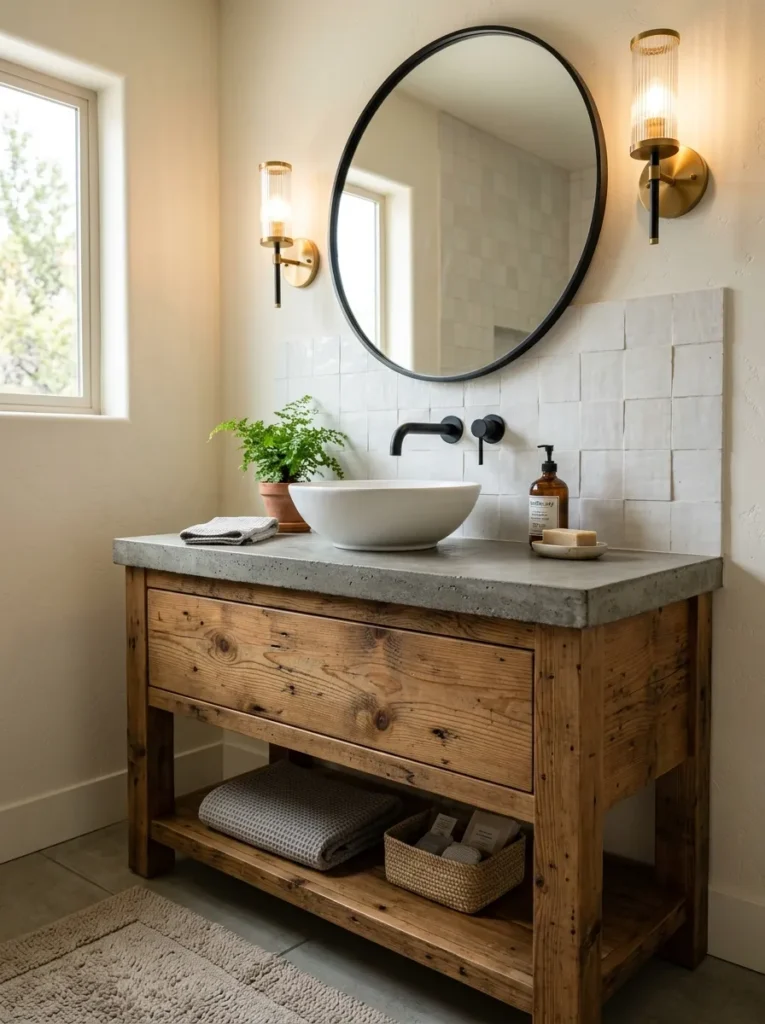
Vibe: The bathroom is spa-like — a reclaimed wood vanity base with a vessel sink on a stone top and matte black fixtures creates the material layering (aged wood, mineral stone, minimal metal) of a high-end boutique hotel bathroom at residential scale.
Why it works: The reclaimed wood vanity introduces the bathroom’s warmest material element at the lowest level of the room — the timber base grounds the space with organic warmth while the stone or concrete top provides the cool mineral quality associated with spa environments, and the matte black fixtures provide graphic precision at the hardware level. This three-material layering (warm organic wood, cool mineral stone, precise minimal metal) is the composition that bathroom designers call complete material hierarchy — each level of the room from floor to counter to fixture contributes a different material quality. Reclaimed wood requires moisture protection in bathroom environments — all exposed wood surfaces must be sealed with a waterproof finish (marine varnish or a penetrating epoxy sealer) before installation.
How to get it: Reclaimed wood bathroom vanity bases are available from specialty furniture makers at $400–$1,200. For a DIY retrofit, an existing piece of furniture (a vintage dresser or low cabinet) in solid wood can be converted to a bathroom vanity by cutting a counter opening, sealing all surfaces with marine-grade waterproof finish, and plumbing the vessel sink through the existing surface or a new stone top. The vessel sink format is preferred for reclaimed wood vanities because it places the sink above the counter rather than recessed into it, eliminating the need to make a precision sink cutout in the reclaimed material.
Shop The Look
- Reclaimed wood bathroom vanity base
- Vessel sink white ceramic round
- Matte black bathroom faucet vessel
- Natural stone vanity top slab
- Marine grade wood sealer waterproof
7. Reclaimed Wood Kitchen Island with Butcher Block Top
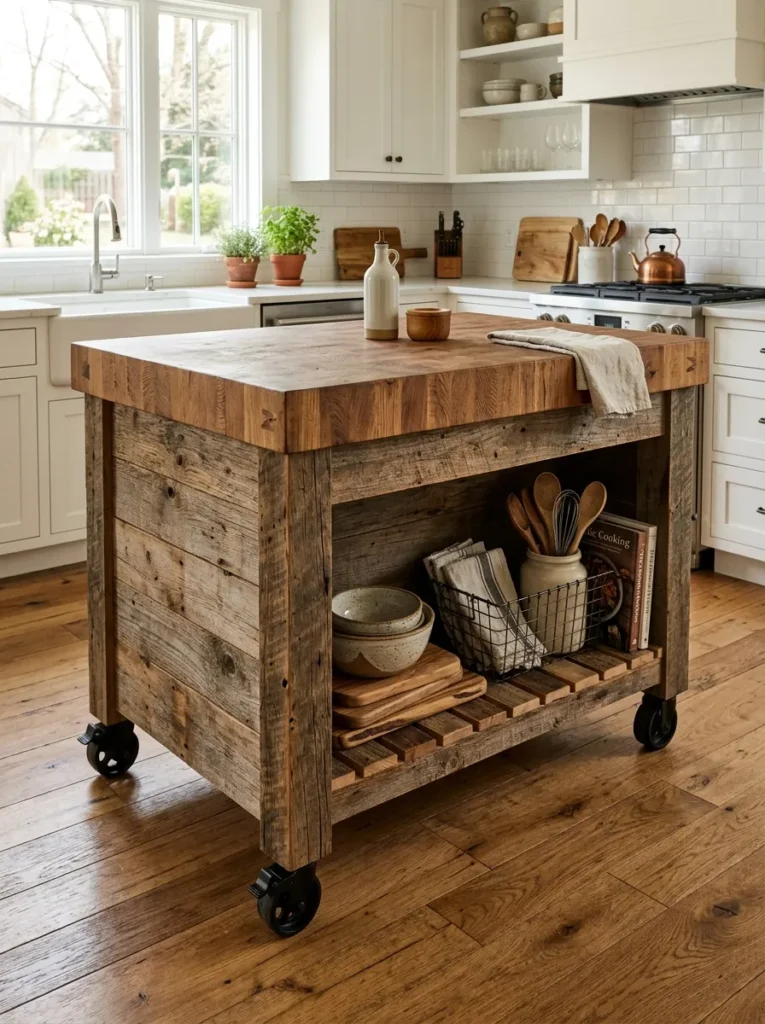
Vibe: The kitchen is warm and functional — a freestanding reclaimed wood island with a butcher block top is the kitchen element that most directly connects the cooking environment to the material tradition of genuine food preparation, where the aged wood base and thick work surface communicate functional history rather than decorative styling.
Why it works: A freestanding reclaimed wood island on casters creates kitchen flexibility that built-in islands cannot — the island can be repositioned for different cooking configurations, cleaning, or entertaining layouts, and can move with the household when relocating. The reclaimed wood paneled sides bring the kitchen’s warmth at eye level from every angle rather than from only the counter surface. Reclaimed butcher block specifically (using reclaimed maple or oak rather than new lumber) provides the food-safe work surface quality of traditional butcher blocks while maintaining the material character of the reclaimed aesthetic — the tight grain of reclaimed old-growth maple makes a cutting and preparation surface that modern plantation lumber blocks cannot match.
How to get it: Build the island base from a simple box frame (plywood carcass) faced with reclaimed barn wood planks (construction adhesive and brad nails) — the plywood provides structural stability while the reclaimed facing provides the visual character. Top with a reclaimed butcher block purchased from specialty lumber suppliers ($200–$500 for a 24×48 inch kitchen island top in reclaimed maple). Finish the butcher block with food-safe mineral oil and beeswax applied monthly. Mount four heavy-duty locking casters ($15–$25 each) on the base frame bottom for mobility.
Shop The Look
- Reclaimed butcher block top maple end grain
- Food safe mineral oil wood conditioning
- Reclaimed barn wood facing panel kit
- Heavy duty locking caster set 4 pack
- Open shelf kitchen island organization
8. Reclaimed Timber Bookshelf with Mixed Open and Closed Storage
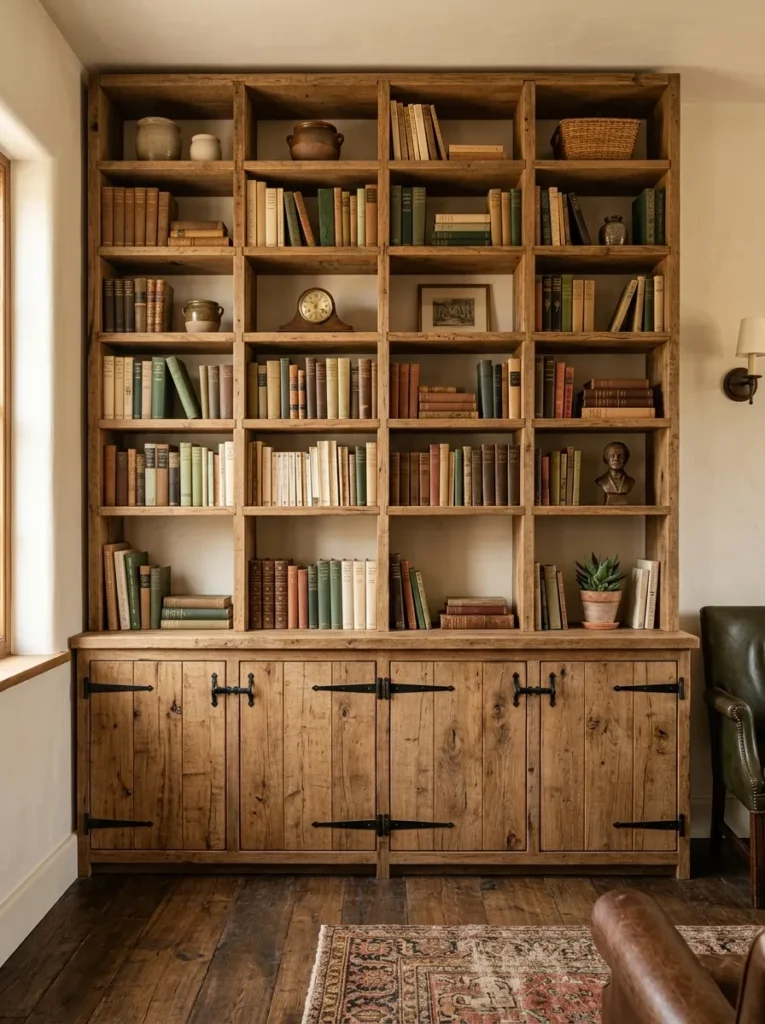
Vibe: The bookshelf is intellectual — a full-height reclaimed timber bookshelf that reads as genuinely built (visible joinery, honest material, simple form) creates the room quality of a working library rather than a styled display — the specific warmth of a room where books and their storage are taken seriously.
Why it works: Full-height bookshelves in reclaimed timber create the visual quality of built-in architectural furniture while remaining freestanding and relocatable — the timber’s warmth and material density give the piece the permanence and authority of built-in cabinetry without requiring the fixed installation that true built-ins demand. The mixed open-and-closed storage configuration is the most functional bookshelf design because it conceals everyday-use storage (papers, chargers, less-beautiful objects) behind closed doors at the more accessible lower section while displaying books and curated objects at eye level on the open upper shelves. Hand-cut joinery visible at corners — the dovetail or box joint made by a craftsperson — is the detail that distinguishes genuine custom reclaimed timber furniture from mass-produced furniture with a reclaimed aesthetic.
How to get it: Custom reclaimed timber bookshelves from a furniture maker run $800–$3,000 depending on size and complexity. A more accessible approach: purchase an existing bookshelf unit (IKEA KALLAX or similar plywood carcass) and face all visible surfaces with reclaimed wood planks using construction adhesive — the plywood provides the structural engineering while the reclaimed facing provides the material character. This hybrid approach costs $100–$300 in reclaimed facing material plus the base unit cost and produces a visually convincing result at a fraction of the custom build cost.
Shop The Look
- Reclaimed timber bookshelf custom build
- Reclaimed oak facing plank thin veneer
- Panel door simple shaker style cabinet
- Book collection display organized spines
- Ceramic object shelf display minimal
9. Reclaimed Wood Entryway Bench with Shoe Storage
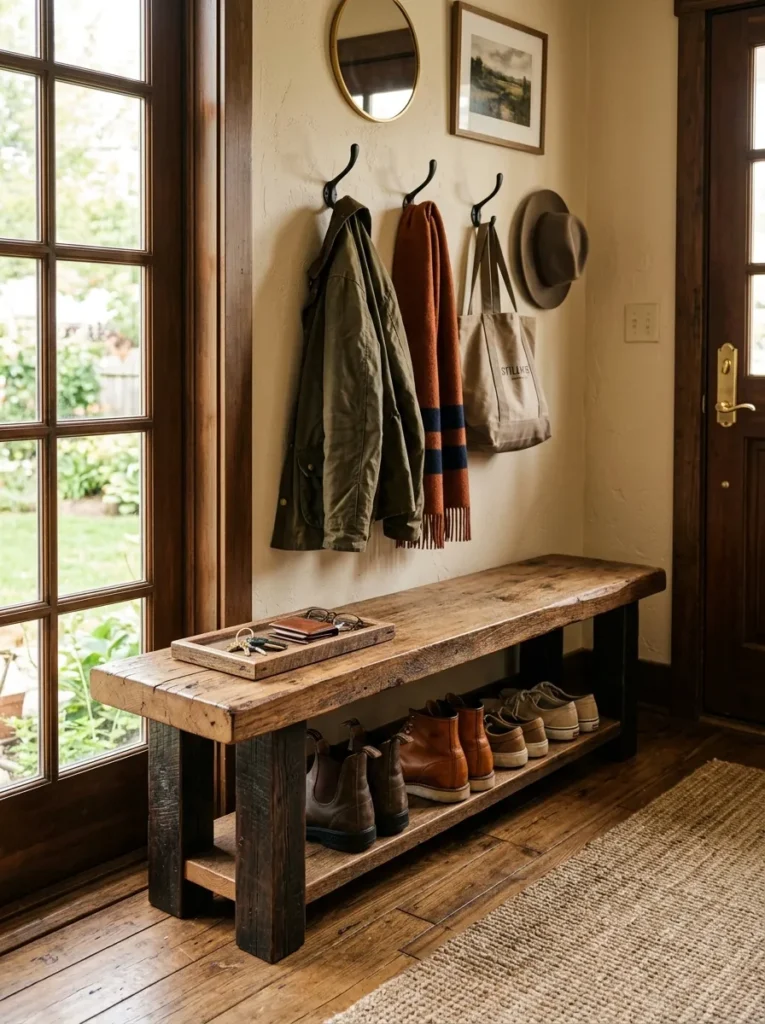
Vibe: The entryway is welcoming — a reclaimed wood bench at the front entry with shoe storage below and coat hooks above creates the functional arrival station that a well-organized home requires, where the reclaimed material communicates warmth and care from the first moment of entering.
Why it works: The entryway bench is the most functional reclaimed wood furniture piece available because it serves a genuine daily behavioral need (a place to sit when removing shoes, a surface for arriving objects) while occupying a small enough footprint that the material’s character is visible at close range — the grain, nail holes, and aging marks in a reclaimed bench top are seen from sitting height, which is closer than any other furniture surface is regularly viewed. The bench’s lower shelf (formed by a second plank between the legs) provides precisely the right depth for shoe storage without a cabinet enclosure — shoes are accessible, visible, and organized without any door mechanism or concealment required.
How to get it: Build an entryway bench from a single thick reclaimed plank ($40–$80 for a 48-inch bench length in reclaimed pine or oak, 2.5–3 inches thick) on four block legs (4×4 lumber offcuts, $10–$15 for a set of four) joined with a through-bolt or lag screw. Add a lower shelf plank between the legs at 6–8 inches from the floor — the correct height for most shoe storage. Apply a hard wax oil finish. Mount three to five coat hooks on the wall directly above the bench at 66–72 inch height. Total build cost: $60–$120.
Shop The Look
- Reclaimed wood bench plank thick oak
- Block furniture leg 4×4 natural wood
- Matte black coat hook set wall mount
- Shoe storage lower shelf entryway
- Small reclaimed wood tray key holder
10. Reclaimed Wood Outdoor Dining Table for Patio or Deck
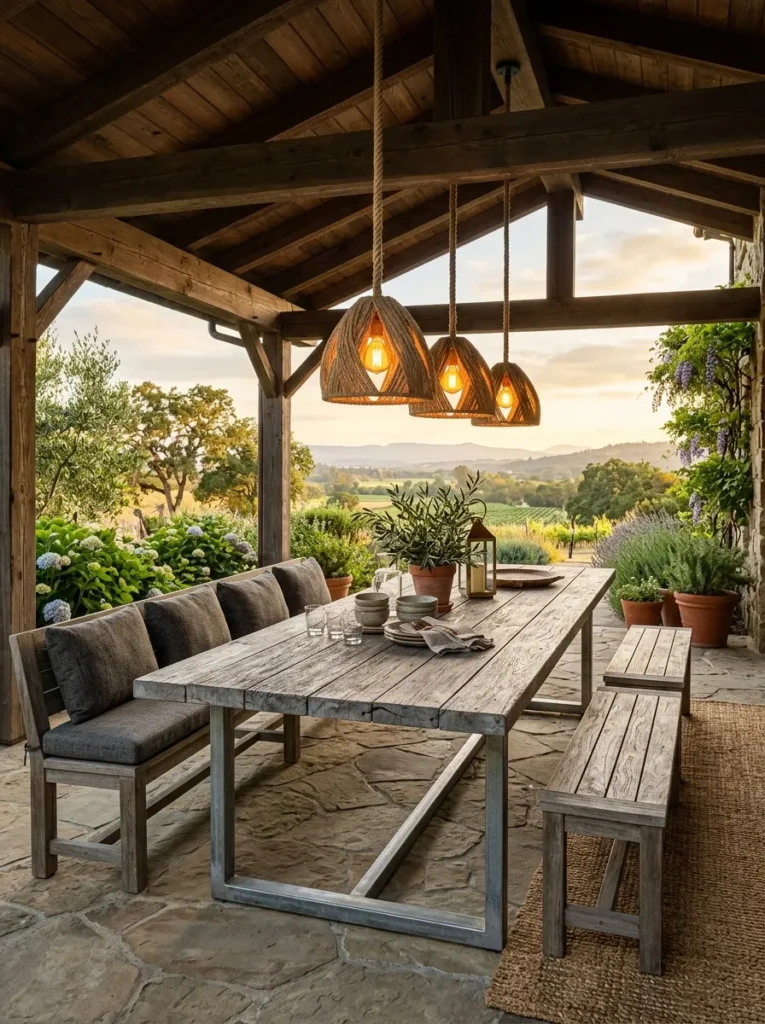
Vibe: The patio is generous — a large reclaimed wood outdoor dining table communicates that this outdoor space takes dining seriously, and the weathered wood’s silver-grey patina reads as genuinely outdoor and genuinely durable rather than designed for display.
Why it works: Reclaimed teak is the optimal reclaimed wood for outdoor furniture because teak’s natural oil content — the same property that made it the preferred material for ship decks and tropical construction — provides exceptional resistance to moisture, UV degradation, and insect damage without any applied finish. Reclaimed teak from Indonesian construction (available from specialty importers) has the additional character of previous structural use — bolt holes, saw marks, and the silver-grey patina of outdoor weathering that new teak takes decades to develop. The galvanized or powder-coated steel frame provides the structural engineering appropriate for large outdoor dining tables subject to wind loads while maintaining the material honesty that reclaimed wood demands.
How to get it: Reclaimed teak outdoor tables are available from specialty outdoor furniture retailers at $800–$2,500 for large dining table sizes. Reclaimed teak lumber is also available from import suppliers at $8–$15 per board foot for building custom outdoor tables — the joinery for outdoor dining tables is relatively simple (tabletop planks on a steel or hardwood apron and leg frame) and within the capability of an intermediate woodworker. No finish is required for reclaimed teak in outdoor applications — the natural oil content protects the wood indefinitely with an annual cleaning using a teak cleaner.
Shop The Look
- Reclaimed teak outdoor dining table large
- Powder coat steel outdoor table frame
- Outdoor bench seat cushion weather resist
- Natural rope pendant outdoor light
- Teak cleaner annual maintenance outdoor
11. Reclaimed Wood Media Console with Cable Management
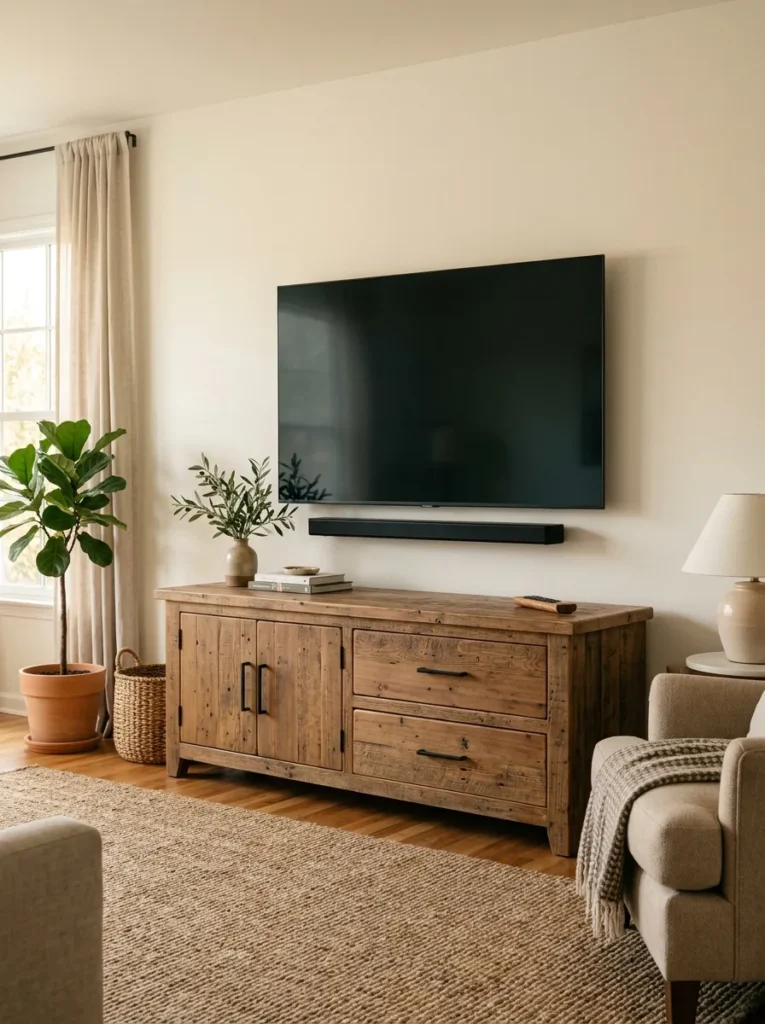
Vibe: The living room is organized — a reclaimed wood media console with good cable management is the furniture piece that reconciles the warmth of natural material with the technology requirements of a modern living room, where the warm wood surface and the wall-mounted TV read as a considered composition rather than a compromise.
Why it works: The media console is the living room furniture piece most in need of material warmth because it is positioned directly beneath the room’s largest and coldest surface — the television screen. A reclaimed wood console provides the warmest possible material counterpoint to the TV’s cold glass and plastic, and its horizontal mass and warm color ground the TV visually so it reads as part of a composed arrangement rather than a screen floating on a blank wall. Cable management through the console’s back panel (cable pass-through holes aligned with the wall outlet position) eliminates visible cables from the living room’s primary focal wall — the combination of reclaimed wood warmth and cable-free cleanliness creates the most resolved TV wall arrangement available.
How to get it: Reclaimed wood media consoles are available from furniture makers and specialty retailers at $500–$1,500. Cable management retrofit for any existing console: drill a 1.5-inch hole in the back panel aligned with the wall outlet, install a rubber cable grommet, and route all cables through the hole to the outlet — this eliminates the cable run along the baseboard that most TV setups produce.
Shop The Look
- Reclaimed wood media console low modern
- Brushed brass cabinet pull small set
- Cable management grommet set back panel
- Matte black hardware pull set console
- Sound bar minimal modern under TV
12. Reclaimed Wood Desk with Drawer and Integrated Organizer
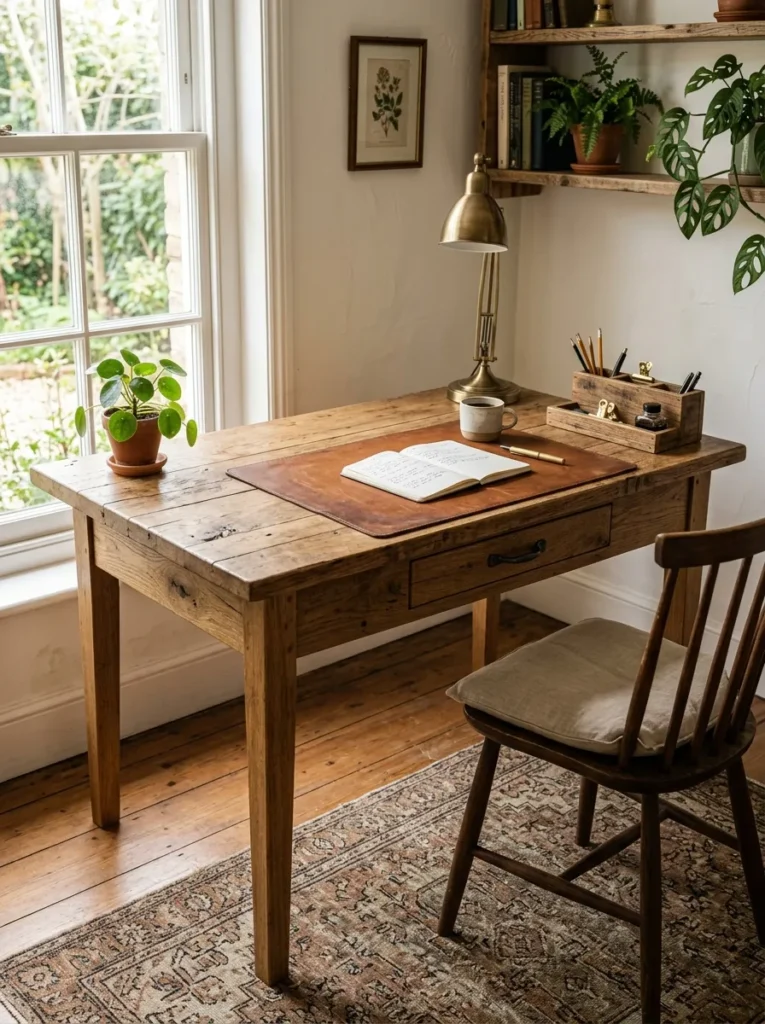
Vibe: The desk is warm and focused — a reclaimed wood writing desk with a leather pad and minimal organizer creates the working environment that productivity requires and that mass-produced office furniture almost never delivers: a surface with genuine material warmth that makes the act of sitting down to work feel considered rather than obligatory.
Why it works: The home office desk is the piece of furniture that most directly affects the quality of daily work experience — the material, proportion, and visual character of the desk surface determines whether the workspace feels like a place worth spending time. Reclaimed wood provides a desk surface with the material warmth and visual interest that new lumber cannot — the grain depth, occasional knot, and aging marks in a reclaimed top create a surface that is genuinely interesting to look at during work pauses, which contributes to the experienced quality of the workspace. A single integrated drawer at the apron level provides just enough storage for the desk’s most essential items without the bulk of a multi-drawer pedestal.
How to get it: A reclaimed wood desk top (48×24 inches for a standard single-person desk) costs $60–$150 from salvage dealers. Hairpin legs for the desk height (28–30 inches) cost $40–$80 for a set of four. A single apron drawer requires a simple wood drawer box and full-extension slides ($20–$30) mounted to a front and back apron rail — this can be the construction task that converts a basic reclaimed top-and-legs table into a functional desk.
Shop The Look
- Reclaimed wood desk top thick plank
- Hairpin leg set 4 desk height 28 inch
- Leather desk pad tan or black
- Desk drawer slide full extension set
- Small wood desk organizer natural
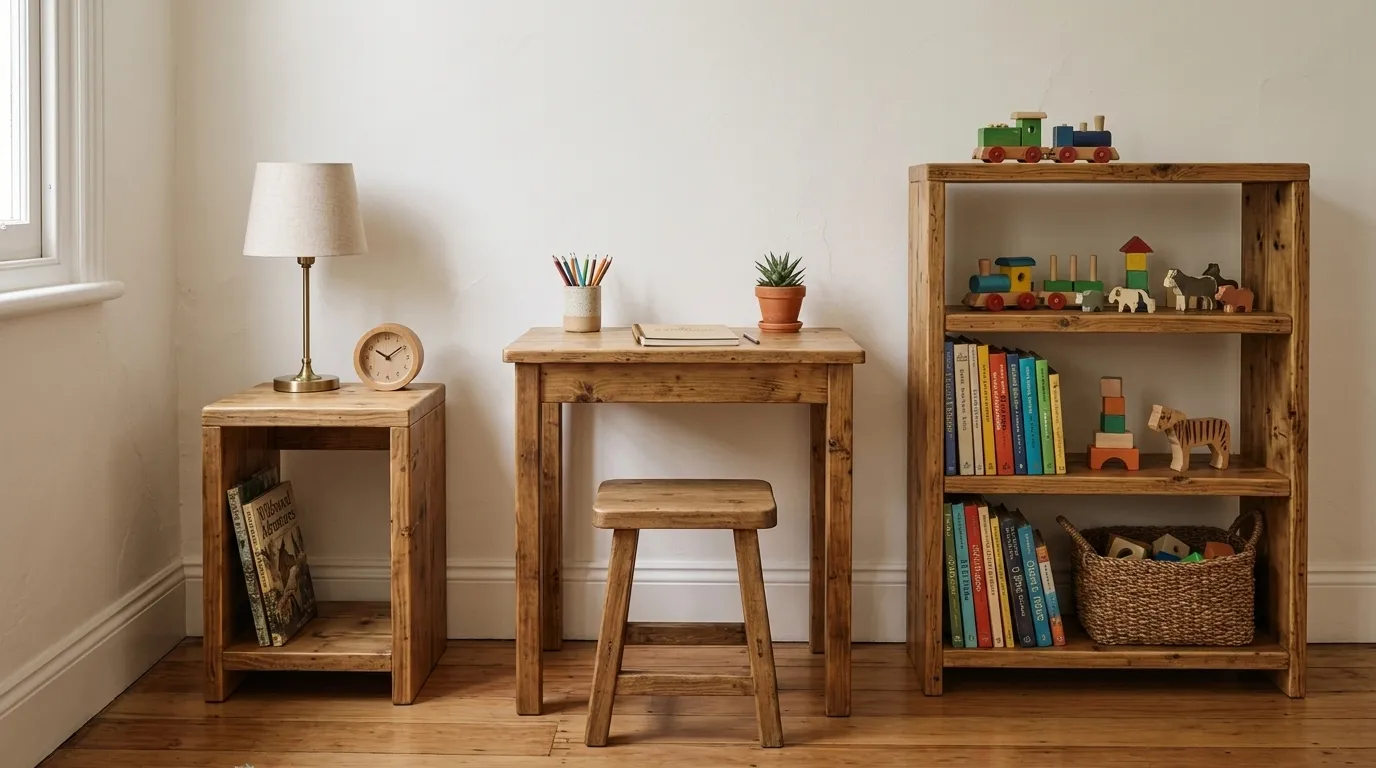
13. Reclaimed Wood Children’s Furniture Set
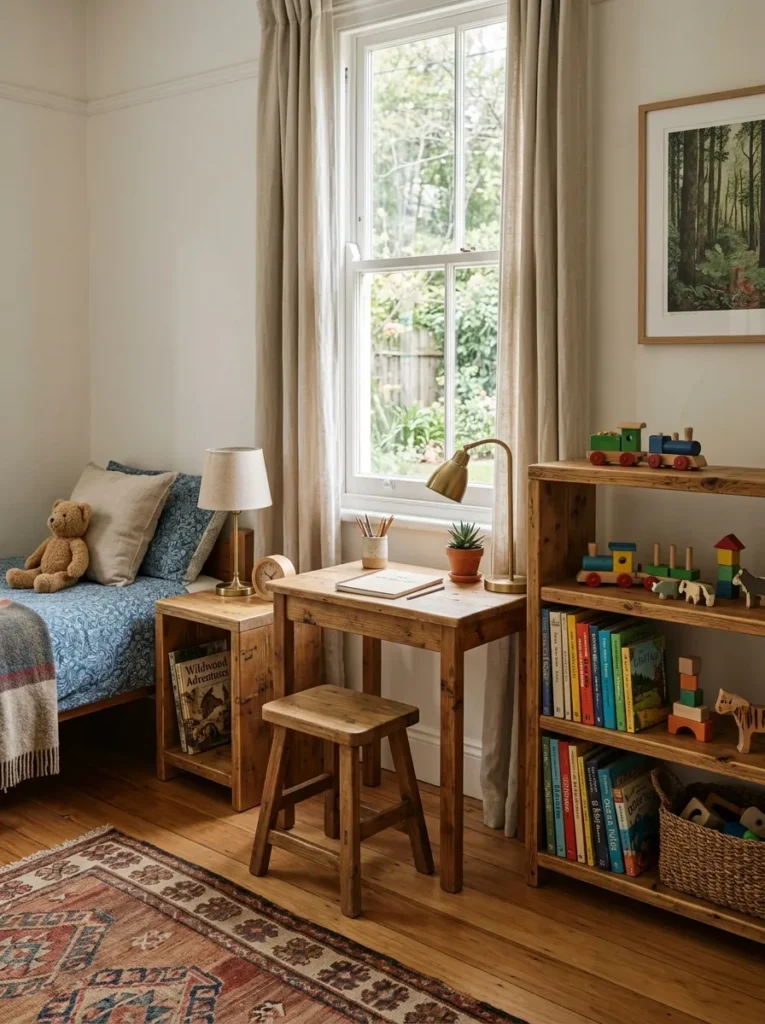
Vibe: The room is genuinely made — a children’s furniture set built from reclaimed wood is the design decision that treats a child’s space with the same material seriousness as an adult’s, communicating through the furniture’s material quality that the room and its occupant are worth investing in.
Why it works: Children’s furniture in reclaimed wood has a specific pedagogical quality — children who grow up using furniture made from genuine materials with visible history develop a material literacy that mass-produced furniture cannot provide. A reclaimed wood bookshelf with visible grain and nail holes, used daily for years of a child’s reading life, becomes a familiar material object with its own character — different from the bookshelf it replaced in a fundamental way. The furniture’s material honesty also provides practical durability: reclaimed old-growth timber is significantly more resistant to the impact, scratching, and rough use that children’s furniture reliably encounters than new plantation lumber or MDF.
How to get it: Build children’s furniture from reclaimed timber at a child-appropriate scale — a low bookshelf at 24 inches tall with three shelves, a desk at 22-24 inches height with a matching chair, and a bedside table at 18-20 inches height. All pieces from the same reclaimed source material batch (same species, same aging character) will read as a coordinated set. Sand interior edges to 220-grit specifically for children’s use — no splinter risk on any surface a child will contact.
Shop The Look
- Reclaimed pine child scale bookshelf small
- Small reclaimed wood desk children study
- Child height desk chair natural wood
- Children’s book set organized display
- Small plant pot child bedroom natural
14. Reclaimed Wood Floating Bathroom Vanity with Open Shelf
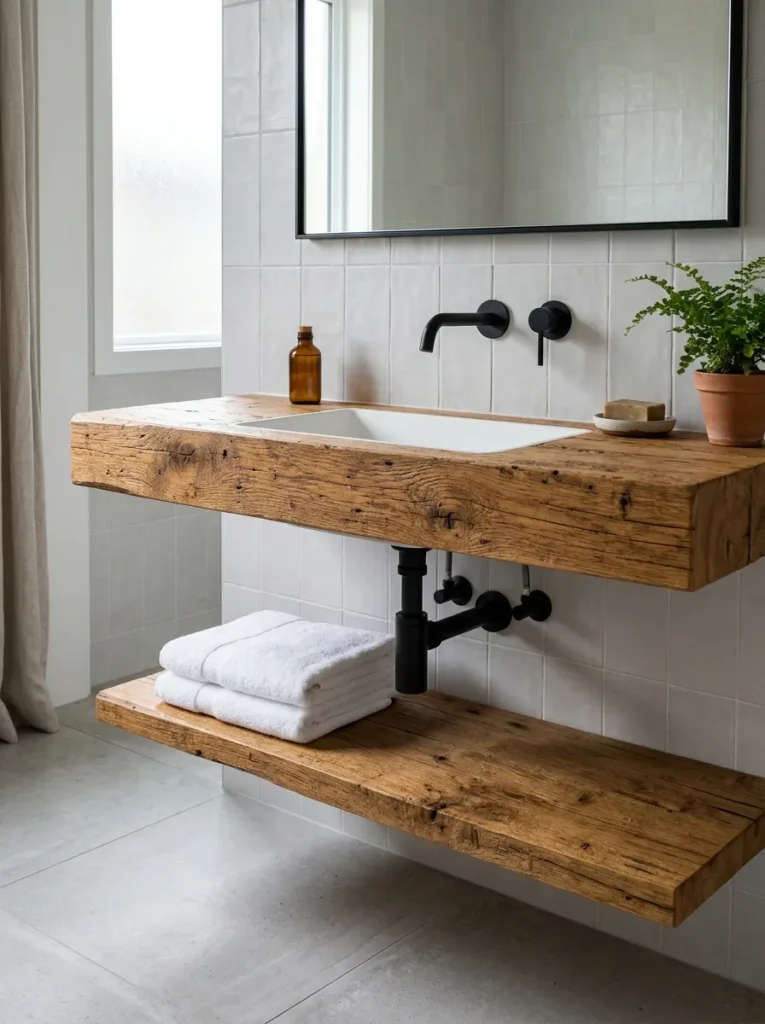
Vibe: The vanity is minimal — a floating reclaimed wood plank vanity wall-mounted above the floor creates the bathroom’s most design-resolved material moment, where the aged timber floating in space above a clean tile floor reads as a piece of suspended architecture rather than a conventional bathroom fixture.
Why it works: The floating (wall-mounted) vanity is the most spatially efficient bathroom furniture configuration because it eliminates floor contact and makes the floor continuous and fully visible, which makes the bathroom appear significantly larger than the same floor area with floor-standing furniture. The reclaimed wood plank top (a single board rather than a cabinet with a counter surface applied above) reduces the visual bulk of the vanity to its minimum — just the thickness of the plank, the sink, and the plumbing — which amplifies the floating quality. Wall-mounted plumbing (P-trap and drain visible as design elements rather than concealed in a cabinet) maintains the material honesty of the reclaimed wood approach at the plumbing level.
How to get it: Wall-mounting a reclaimed wood vanity requires blocking (additional lumber installed between wall studs during construction or as a retrofit behind drywall) to provide the structural support for the cantilever load. The plank itself mounts on a hidden French cleat or wall bracket system anchored into the blocking. Under-mount sink installation requires a precise cutout in the reclaimed plank — this cut must be made with care as reclaimed wood’s variable hardness makes routing more challenging than new lumber. Waterproofing the sink area with a marine-grade sealer applied before sink installation is essential.
Shop The Look
- Reclaimed oak vanity plank single thick
- Wall mount bathroom plumbing P-trap black
- Under mount sink white oval bathroom
- Matte black bathroom faucet wall mount
- French cleat floating vanity bracket kit
15. Reclaimed Wood Stair Treads for a Modern Home
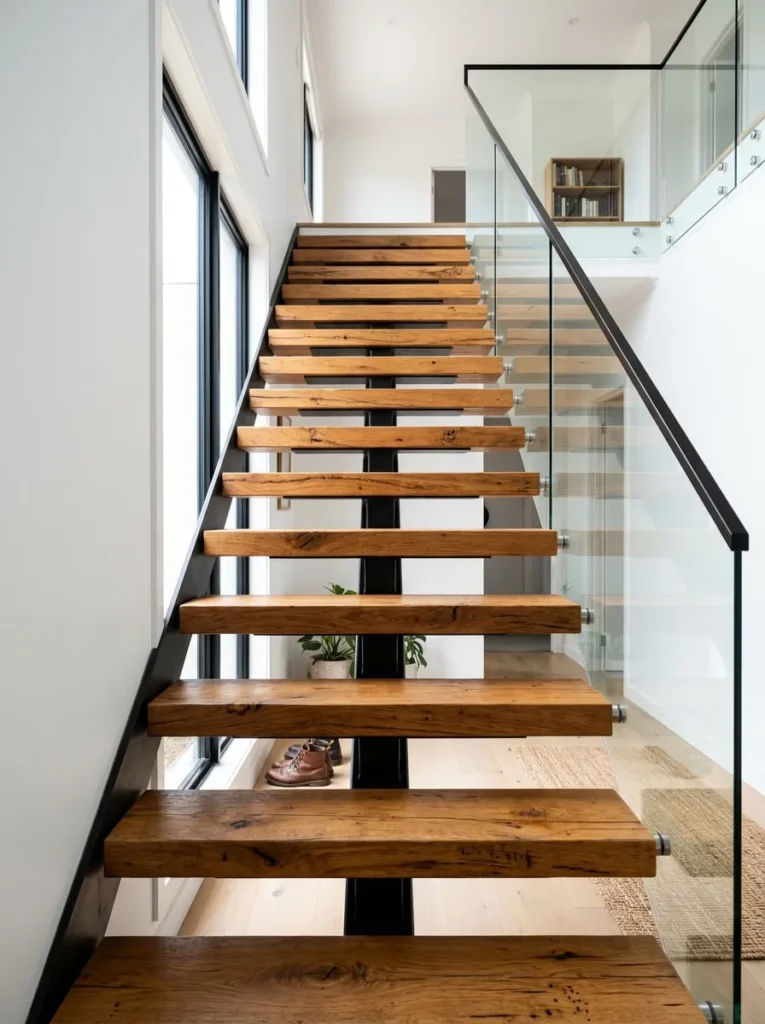
Vibe: The staircase is architectural — reclaimed wood stair treads on a modern open-riser staircase create a vertical element of material warmth that runs through the home’s full height, connecting all floors through a continuous warm material experience.
Why it works: Stair treads are the most touched and most frequently experienced furniture surface in a multi-story home — every staircase trip involves direct foot contact with the tread surface, making the material quality of treads more physically present than any other flooring surface. Reclaimed timber treads are specifically valuable in this application because the wood’s density — a property of old-growth slow-growing timber that modern plantation lumber lacks — provides exceptional resistance to the compression and wear that stair treads experience. A tread that wears through paint or finish reveals a degraded surface; a solid reclaimed oak tread that wears over years simply develops a deeper, more polished patina at the wear center.
How to get it: Reclaimed stair treads are available pre-finished from specialty reclaimed wood suppliers at $40–$100 per tread (for a standard 42-inch wide residential stair tread at 1.5-inch thickness). The tread must be the correct thickness to maintain the stair rise-run ratio — confirm the existing riser and run dimensions before selecting tread thickness. Install with construction adhesive and finish screws countersunk at the tread front and rear, filled with matching wood putty. Finish with a hard-wearing polyurethane specifically rated for stair use (higher abrasion resistance than standard floor polyurethane) to protect against the concentrated wear of foot traffic.
Shop The Look
- Reclaimed oak stair tread 42 inch thick
- Stair tread construction adhesive
- Hard wearing polyurethane stair finish
- Steel railing baluster modern minimal
- Wood putty color matched fill
16. Reclaimed Wood Outdoor Garden Bench
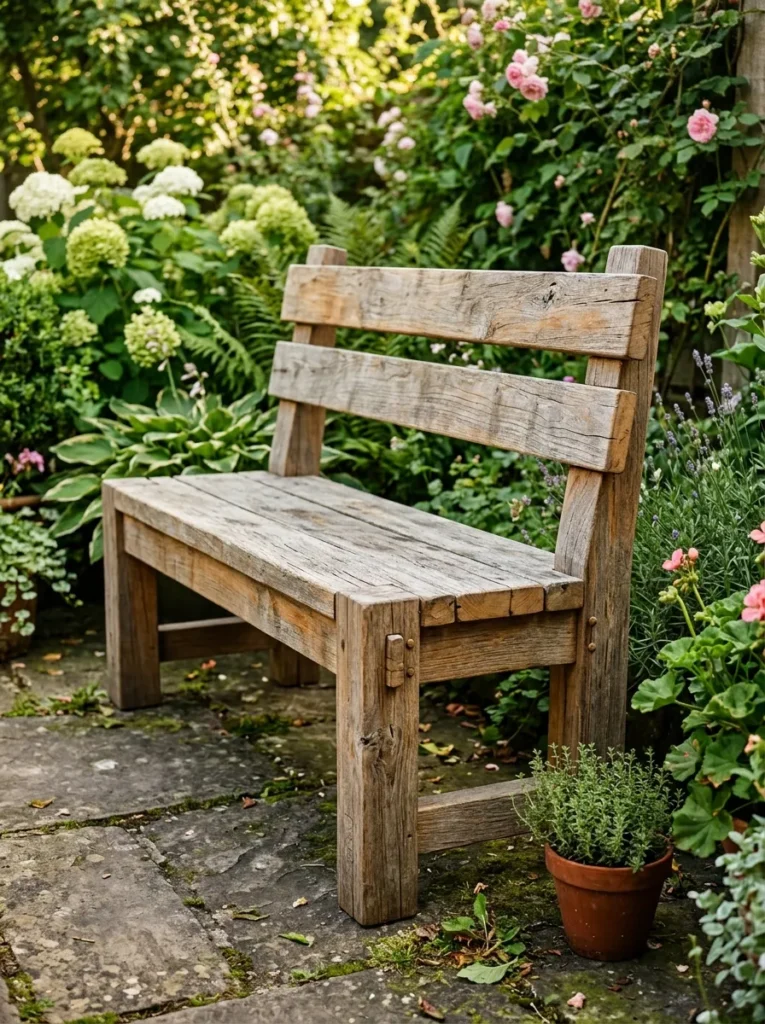
Vibe: The garden is natural — a simple reclaimed timber bench with visible mortise and tenon joinery in an outdoor garden setting is the piece of furniture that reads most directly as grown and made rather than purchased and placed, creating the quality of permanence in a garden that only genuinely material furniture achieves.
Why it works: A simple outdoor bench with visible mortise and tenon joinery — the oldest and most structurally sound woodworking joint, appearing in furniture and construction across cultures for thousands of years — communicates the design confidence of making nothing unnecessarily complex. The joint is visible because the joint is beautiful, not because it was forgotten to be concealed. Reclaimed teak or oak for an outdoor bench is the correct material choice because both species develop the silver-grey outdoor patina that reads as genuinely weathered rather than as degraded — the bench’s appearance improves with outdoor exposure in a way that treated pine or painted wood never does.
How to get it: A simple garden bench requires three structural components: two end frames (two legs connected by a stretcher, each assembled with mortise and tenon joints), a seat plank (one or two planks spanning the two end frames at seat height), and a back plank (angled slightly from the rear seat edge for ergonomic support). Reclaimed oak or teak lumber for a standard 48-inch garden bench costs $80–$150. No finish is required for reclaimed teak; reclaimed oak should be treated with a tung oil or linseed oil annually to slow the greying process if the warm brown tone is preferred over the natural silver patina.
Shop The Look
- Reclaimed teak outdoor bench plank
- Mortise and tenon joint cutter set
- Tung oil outdoor wood finish natural
- Garden setting bench planting context
- Outdoor wood cleaner teak brightener
How to Start Your Modern Reclaimed Wood Furniture Journey
The single most important first step in sourcing modern reclaimed wood furniture is to find your local reclaimed wood supplier before anything else. Reclaimed wood is a material that varies significantly in character, species, condition, and price by region — what is abundant and inexpensive in the American South (heart pine from demolished textile mills) may be scarce and expensive in the Pacific Northwest, where reclaimed Douglas fir is the dominant available species. Knowing what is locally available determines which furniture pieces are most accessible and most cost-effective to commission or build, and direct relationships with local salvage dealers provide access to specific pieces of timber that cannot be sourced remotely.
The most common mistake with modern reclaimed wood furniture is applying a finish that conceals rather than enhances the wood’s character. Conventional polyurethane applied over reclaimed wood creates a plastic-film surface that buries the grain, flattens the aging marks, and makes the material read as a surface treatment rather than a genuine material. The correct finishes for reclaimed wood are penetrating oils and hard wax oils — Rubio Monocoat, Osmo Polyx-Oil, and Waterlox Tung Oil are the three most widely available options — which penetrate the wood fiber and enhance the grain depth and color without creating a surface film. These finishes are also more repairable than polyurethane: a scratched penetrating-oil finish can be touched up locally, while a scratched polyurethane surface requires full stripping and recoating to repair invisibly.
Three reclaimed wood furniture upgrades under $100 that create an immediate, significant design impact: a single reclaimed oak floating shelf ($30–$50 in material plus bracket cost) installed in a kitchen, bathroom, or bedroom that introduces warm material character at the room’s eye-level display surface; a reclaimed wood tray ($20–$40 from a salvage dealer or craft market) used as a coffee table display organizer that introduces the material at the room’s primary horizontal surface without any construction; and a set of reclaimed wood picture frames ($15–$30 each) for an existing gallery wall that changes the wall’s material register from manufactured to genuine without replacing any art.
A complete modern reclaimed wood furniture program for a home — dining table, floating shelves, bed frame, and media console — is a 6–12 month acquisition journey rather than a single shopping trip, both because quality reclaimed furniture takes time to source and because the incremental acquisition allows each piece to be evaluated in context before the next is added. Total investment for a complete home program of genuine reclaimed wood furniture ranges from $2,000–$6,000 for a combination of custom-made and retrofit pieces to $6,000–$15,000 for fully custom work from a dedicated reclaimed wood furniture maker. The durability, sustainability, and material improvement over time of genuine reclaimed wood furniture make this investment fundamentally different from equivalent expenditure on mass-produced alternatives — reclaimed wood furniture bought today will outlast several generations of conventional furniture purchased at the same price.
Frequently Asked Questions About Modern Reclaimed Wood Furniture
How do I verify that reclaimed wood furniture is genuinely reclaimed and not new wood artificially aged?
Genuine reclaimed wood has specific material characteristics that artificial aging cannot fully replicate. Look for nail holes with genuine rust staining in the surrounding wood fibers — artificial aging can create surface marks but cannot replicate the iron tannin reaction that occurs when a steel nail rusts in contact with wood over decades. Check end grain at any cut edge: genuinely old wood has tight, fine growth rings (many rings per inch) that indicate slow, old-growth forest growth; plantation lumber has wide, loose rings indicating fast growth. Genuine reclaimed wood also typically has dimensional inconsistency — old lumber was often cut in non-standard dimensions that predate modern dimensional lumber standards. Ask the supplier for provenance documentation — a legitimate reclaimed wood dealer can identify the source building, region, and approximate age of most of their inventory.
What wood species are best for different reclaimed wood furniture applications?
Species selection should match the furniture’s use context and the structural demands of the piece. For dining and coffee tables requiring surface durability: reclaimed oak and heart pine are the best choices — both are hardwoods with Janka hardness ratings above 1,000 that resist scratching and denting in daily table use. For shelving requiring dimensional stability: reclaimed Douglas fir and old-growth pine are excellent — their old-growth density prevents the warping and seasonal movement that younger plantation lumber experiences. For outdoor furniture requiring moisture resistance: reclaimed teak is the clear best choice, followed by reclaimed white oak, which has a closed-grain structure that resists moisture absorption. For furniture requiring workability and a lighter visual weight: reclaimed ash and reclaimed maple both machine well and have lighter visual tones than oak that work in rooms with a lighter, more Scandinavian-influenced aesthetic.
How do I care for and maintain modern reclaimed wood furniture?
Maintenance depends on the finish applied. Penetrating oil and hard wax oil finishes (Rubio Monocoat, Osmo) require an annual recoat — clean the surface with a gentle soap-and-water wipe, allow to dry, and apply a thin coat of the same product with a cloth applicator. This annual maintenance is simple and keeps the surface in optimal condition indefinitely. Polyurethane-finished reclaimed wood requires only regular cleaning with a damp cloth — no annual maintenance needed, but repairs require stripping and full recoating. For bare or raw reclaimed wood (surfaces with no applied finish), clean with a slightly damp cloth and treat with mineral oil or linseed oil every six months. For all reclaimed wood furniture, avoid prolonged water contact (use coasters under wet glasses), avoid direct sustained sunlight (UV fades even reclaimed wood’s character over years), and avoid commercial cleaning products that contain solvents or harsh detergents that can strip penetrating oil finishes.
Is reclaimed wood furniture more expensive than new wood furniture and is the premium justified?
Reclaimed wood furniture at equivalent quality and custom construction typically costs 20–50% more than equivalent new wood furniture because of sourcing costs (salvage acquisition, sorting, de-nailing, and preparation before any furniture construction begins), material unpredictability (reclaimed wood requires more waste allowance than new lumber because defects are discovered during processing), and the smaller scale of most reclaimed wood furniture operations compared to production furniture manufacturers. However, the comparison is not straightforward — reclaimed wood furniture is typically compared to production furniture, while it should be compared to custom new wood furniture, which costs similarly. The environmental premium (no new trees harvested, carbon stored rather than emitted), the material premium (old-growth density and character not available in new lumber), and the durability premium (old-growth timber furniture that will outlast multiple generations of production furniture) together justify the price differential for buyers who are making a considered, long-term furniture investment.
Can reclaimed wood furniture be used in humid environments like bathrooms and kitchens?
Yes, with appropriate species selection and finish application. Reclaimed teak, reclaimed white oak, and reclaimed heart pine all have sufficient natural oil content or density to perform well in bathroom and kitchen humidity when properly finished. The critical requirement is complete surface sealing before installation in humid environments — all surfaces including the back, sides, and bottom of the piece must be sealed, not just the visible face surfaces. Unsealed reclaimed wood in a humid environment will absorb moisture unevenly, causing warping, cracking, and potential mold growth in recessed areas. Marine-grade spar varnish applied in three or more coats is the most moisture-resistant finish for bathroom applications; for kitchen surfaces, a penetrating epoxy primer followed by hard wax oil provides both deep moisture resistance and a food-safe surface appearance.
Ready to Bring Modern Reclaimed Wood Into Your Home?
These 16 ideas cover the full range of what modern reclaimed wood furniture can be in a home — from the dining table that feeds the household daily and the bed frame that frames sleep every night, to the stair treads underfoot at every floor transition and the outdoor bench that weathers into the garden over years of seasons. You do not need all 16 to bring the warmth and material integrity of reclaimed wood into your home — the most effective approach is to begin with the single furniture piece that occupies the room’s most visible position and that currently reads as most generic, most mass-produced, or most visually insufficient. Replace that one piece with a genuinely reclaimed, genuinely constructed alternative and observe how the room changes around it — how other pieces read differently in the presence of a materially genuine anchor, and how the room’s overall quality shifts upward from the introduction of one piece of furniture that genuinely deserves to be there. Start this month by visiting a local architectural salvage dealer with no purchase intention and simply learning what is available in your region — the material will suggest the furniture, and the furniture will find its room. Pin the ideas that named a piece your home is already missing — those are the ones worth building first.