19 Attic with Sloped Ceilings Ideas for Storage Hacks
Struggling to make the most of your attic with sloped ceilings? You’re not alone—and the good news is, this space holds more potential than you think. With the right ideas, even the most awkward angles can turn into beautiful, functional storage solutions.
This article is all about helping you unlock hidden space, reduce clutter, and create a room that feels open, organized, and visually stunning. Whether you’re dealing with low walls, tight corners, or tricky layouts, these ideas are designed to work with your space—not against it.
In my experience, attic spaces often become overlooked simply because they feel difficult to design. But I’ve seen how small, smart changes can completely transform them into cozy, highly functional areas. As you explore these ideas, you’ll discover practical ways to improve storage while also creating a Pinterest-worthy space you’ll love every day.
1. Built-In Floor Drawers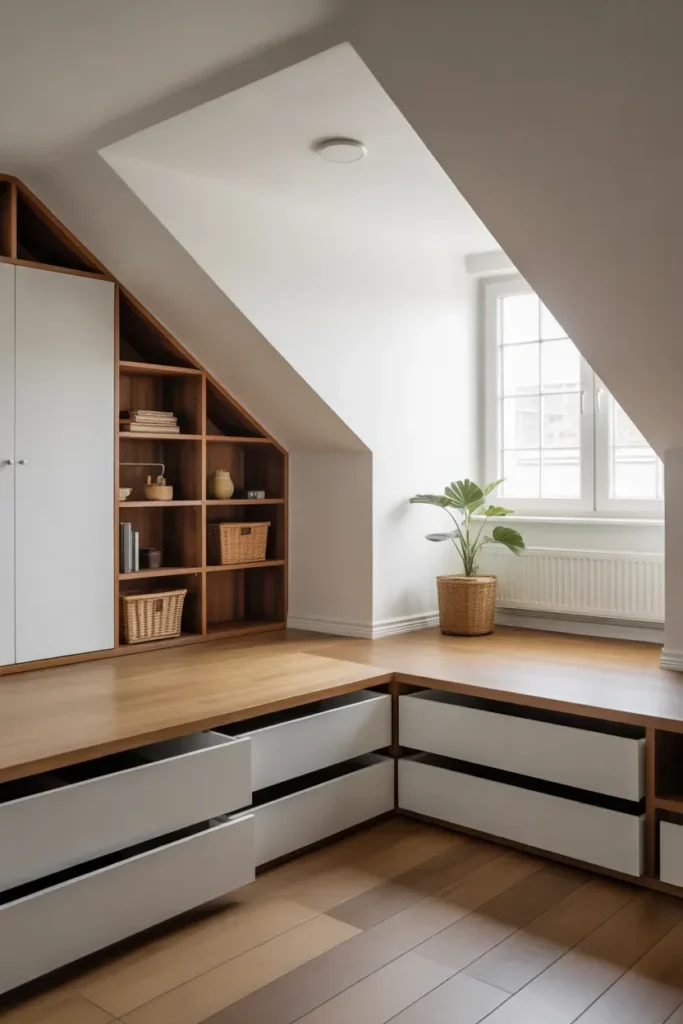
- Maximizes unused floor space under low slopes
- Keeps items hidden but easily accessible
- Maintains a clean, clutter-free look
- Perfect for seasonal storage or clothing
- Blends seamlessly into modern interiors
A clever way to unlock hidden storage is by turning the floor itself into a functional feature. Built-in drawers fit perfectly into low-height zones where traditional furniture won’t work. This approach keeps everything neatly tucked away while preserving open space, which is especially important in an attic with sloped ceilings where every inch matters. The visual result feels clean, intentional, and surprisingly spacious.
I’ve noticed that floor drawers work especially well for storing items you don’t need every day, like extra bedding or off-season clothes. Because they’re flush with the flooring, they don’t interrupt the room’s flow. Over time, this kind of hidden storage helps maintain a calm and organized environment, making the entire space feel more relaxing and thoughtfully designed.
2. Low Wall Shelving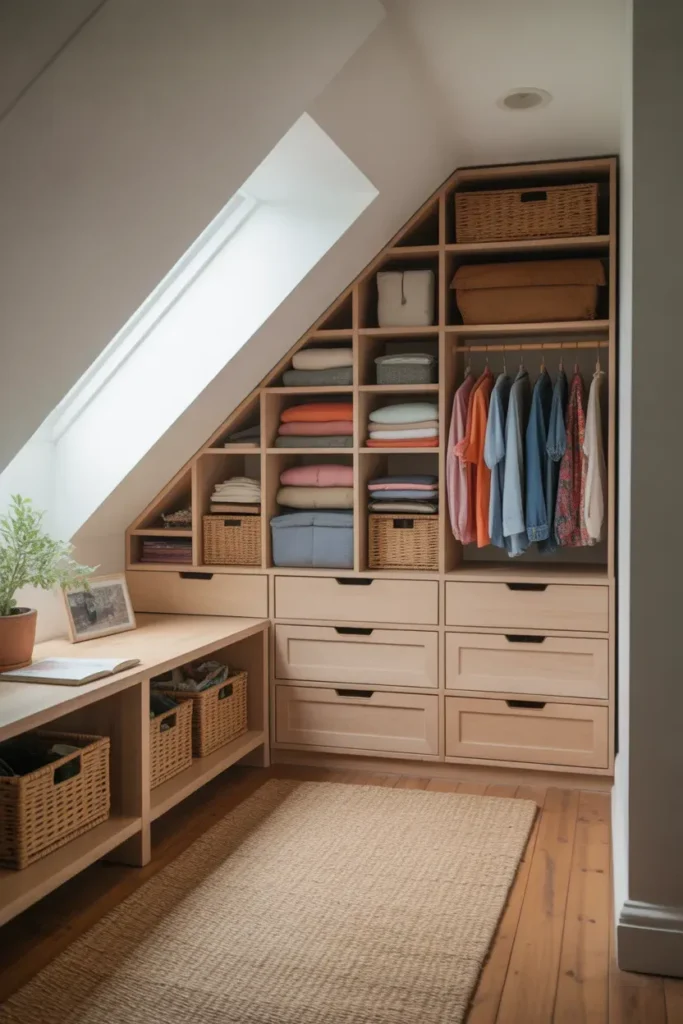
- Uses the lowest wall areas efficiently
- Adds both storage and visual interest
- Ideal for books, decor, and small essentials
- Keeps the room feeling open and light
- Enhances a cozy, styled aesthetic
Low wall shelving transforms awkward, low-height areas into practical and beautiful storage zones. Instead of leaving these spaces empty, shelves bring structure and purpose without overwhelming the room. This works especially well in compact attic layouts where vertical height is limited, allowing you to use every surface intelligently while still keeping the design visually balanced and open.
In my experience, styling these shelves with a mix of functional and decorative items creates a Pinterest-worthy look instantly. Books, baskets, and small decor pieces add personality without cluttering the space. Over time, this setup makes it easier to stay organized while also giving the room a warm, lived-in feel that feels both practical and inspiring.
3. Under-Eaves Cabinets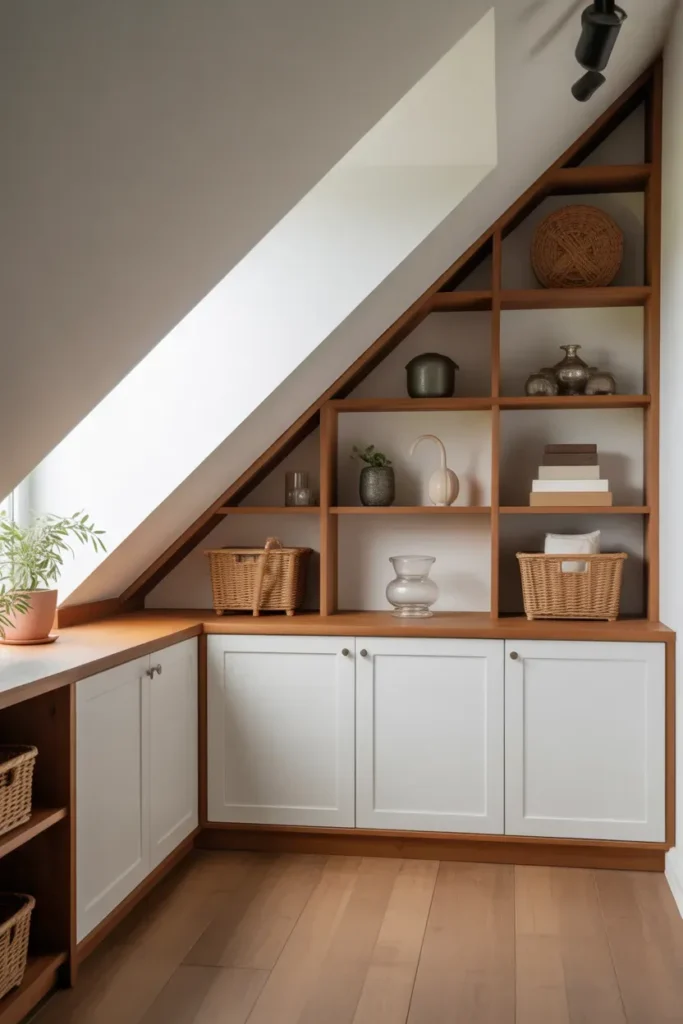
- Converts hard-to-use eaves into storage
- Keeps clutter hidden behind closed doors
- Creates a seamless, built-in look
- Works for clothing, boxes, or household items
- Enhances both function and design
Under-eaves cabinets are one of the most effective ways to handle tricky angles in attic spaces. Instead of letting those low corners go to waste, custom cabinetry turns them into valuable storage areas that feel fully integrated into the room. This solution is especially useful in an attic with sloped ceilings, where standard furniture often doesn’t fit properly.
I’ve seen this work well in both small and larger attic rooms because it keeps everything concealed while maintaining a polished look. Closed cabinets instantly reduce visual clutter, making the space feel more organized and calming. Over time, this type of storage not only improves functionality but also adds a refined, built-in elegance to the entire room.
Also view: 19 Attic with Sloped Ceilings Ideas for Storage Hacks
4. Sliding Door Storage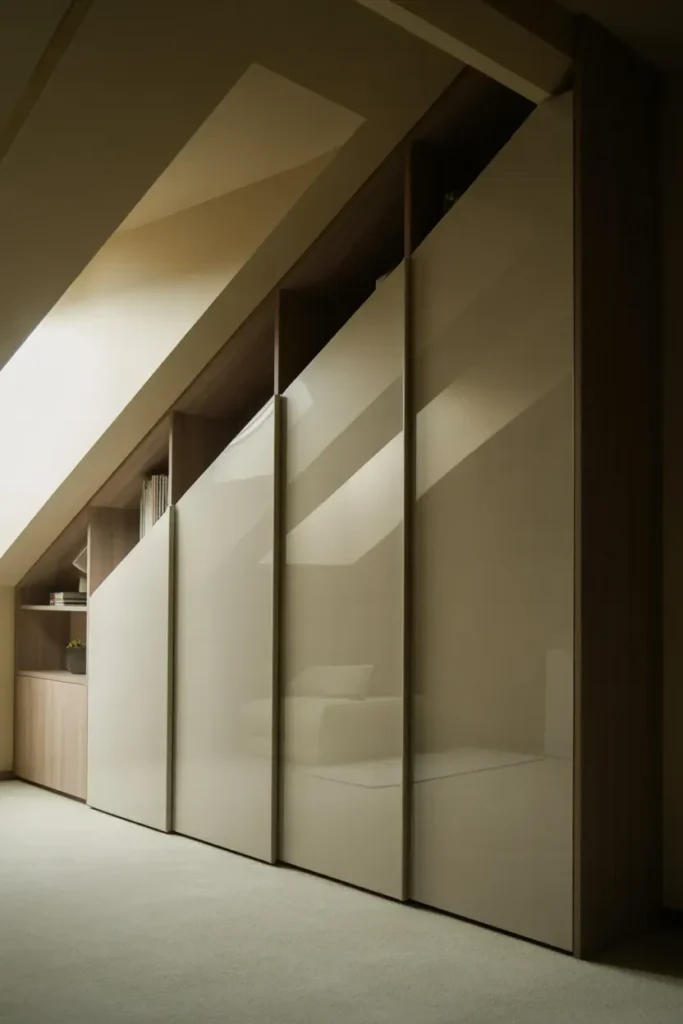
- Saves space compared to swing doors
- Keeps storage easily accessible
- Maintains a sleek, modern look
- Ideal for tight or narrow attic areas
- Reduces visual clutter instantly
Sliding door storage is a smart solution when space is limited and traditional cabinet doors feel restrictive. Instead of needing extra room to open outward, sliding panels glide smoothly, making them perfect for tight attic layouts. This is especially useful in areas with angled ceilings where movement is already limited. The overall look feels streamlined and modern while still offering practical storage.
I’ve noticed that sliding doors work best when paired with a simple, minimal design. They keep the room looking clean and uncluttered, even when storage is fully packed behind them. Over time, this setup makes daily use easier because everything stays accessible without disrupting the flow of the space, creating a more functional and visually calm environment.
5. Window Bench Storage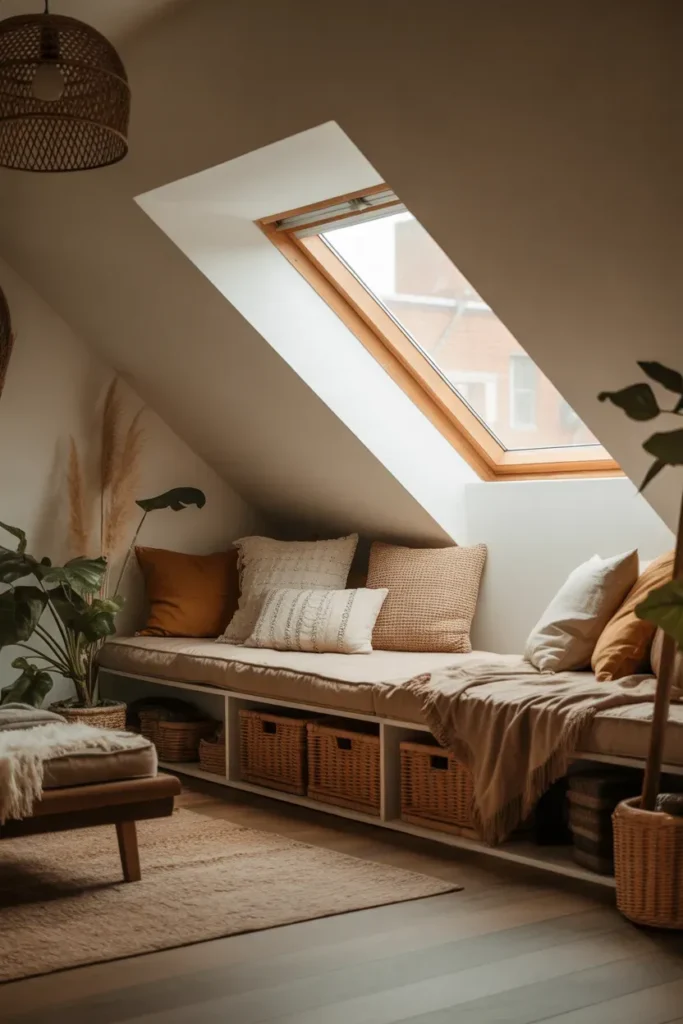
- Combines seating with hidden storage
- Makes use of natural light areas
- Perfect for reading and relaxing
- Adds warmth and personality
- Stores blankets, pillows, or books
A window bench instantly transforms an unused corner into a cozy and functional feature. By adding storage underneath, you get the benefit of both seating and organization without taking up extra space. This idea works beautifully in attic rooms where natural light from skylights creates the perfect reading nook while also enhancing the overall atmosphere.
In my experience, this setup becomes one of the most loved spots in the room. It’s not just about storage—it’s about creating a lifestyle corner that feels calm and inviting. Over time, having a dedicated cozy space like this makes the entire attic feel more livable, comfortable, and thoughtfully designed.
6. Open Beam Hooks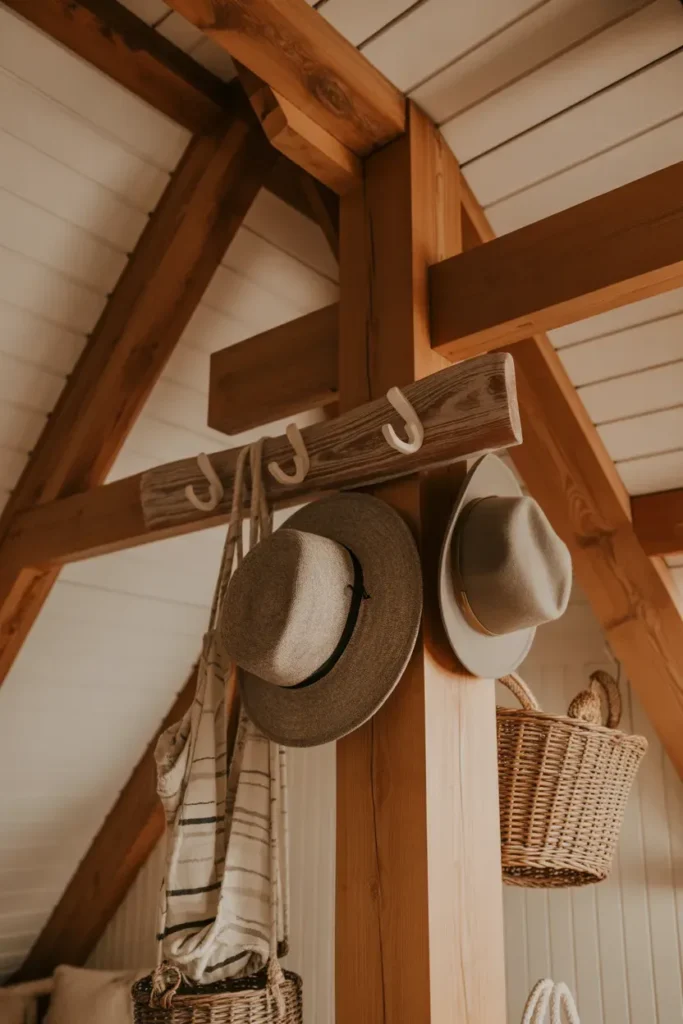
- Uses vertical beam space creatively
- Great for hanging lightweight items
- Adds a rustic, decorative touch
- Keeps essentials within easy reach
- Enhances character and texture
Open beam hooks are a simple yet highly effective way to add storage without adding bulk. By utilizing exposed beams, you turn structural elements into functional features. This works especially well in attic spaces where wall space is limited but beams are often present, providing a natural place to hang items.
I’ve seen this idea work beautifully for everyday essentials like bags, scarves, or even decorative baskets. It keeps things accessible while also adding a layer of visual interest to the room. Over time, these small functional details can make a big difference, helping the space feel more organized while still maintaining a warm and inviting character.
7. Rolling Storage Bins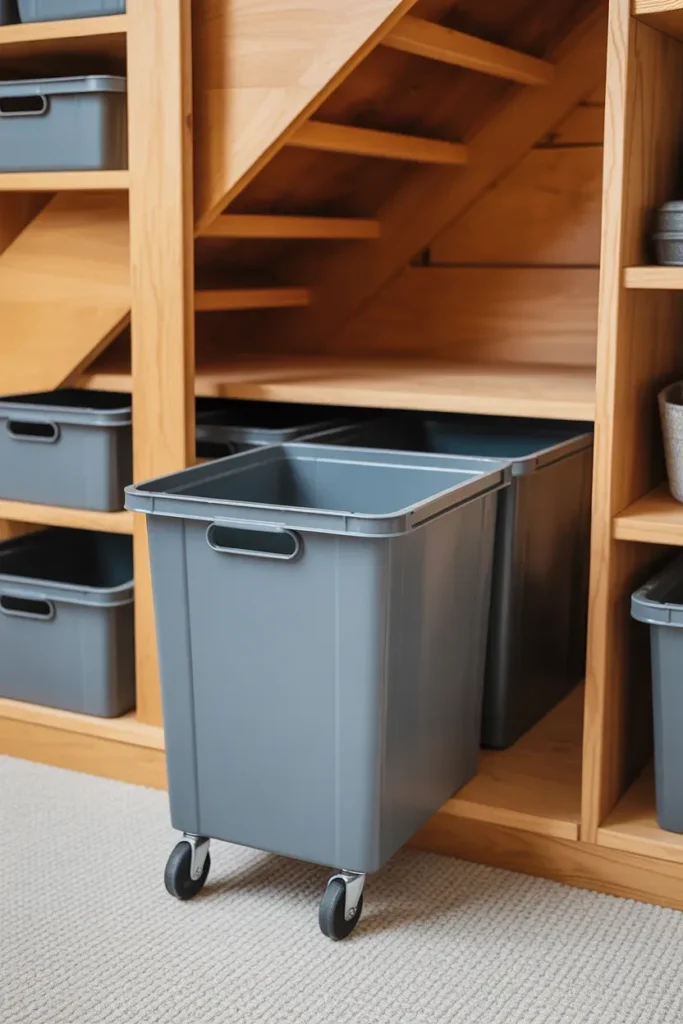
- Easily movable for flexible storage
- Perfect for low, hard-to-reach spaces
- Keeps items organized and accessible
- Great for seasonal or bulk storage
- Works in both small and large attic layouts
Rolling storage bins are a simple yet highly practical solution for awkward, low-height attic zones. Instead of struggling to reach deep corners, you can easily slide bins in and out whenever needed. This makes them especially useful in tight areas where traditional storage doesn’t work well. The mobility adds a layer of convenience that many built-in options don’t offer.
I’ve noticed that this idea works best for items you rotate throughout the year, like seasonal decor or clothing. Because everything is grouped and portable, it saves time and effort when organizing. Over time, this approach keeps the space feeling flexible and adaptable, which is essential in attic layouts where functionality needs to evolve with your needs.
8. Vertical Cube Units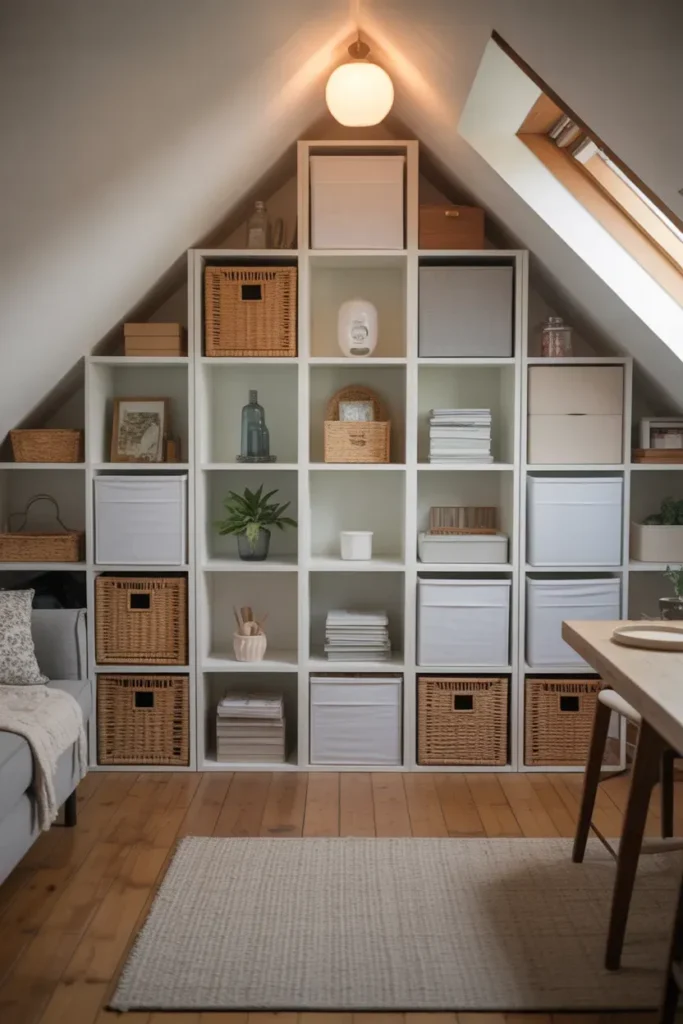
- Maximizes vertical wall space
- Offers both open and closed storage options
- Keeps items neatly categorized
- Adds structure to the room layout
- Works well with baskets for a tidy look
Vertical cube units are ideal for balancing storage and style in an attic space. By using the taller sections of the room, they help you take advantage of vertical height without interfering with sloped areas. The grid layout naturally organizes items into sections, making it easier to maintain order and avoid clutter.
In my experience, adding baskets inside the cubes makes a big difference in keeping everything visually clean. It hides smaller items while still keeping them easy to access. Over time, this setup creates a structured and organized look that feels intentional, helping the entire space feel more put together and efficient.
9. Hidden Bed Storage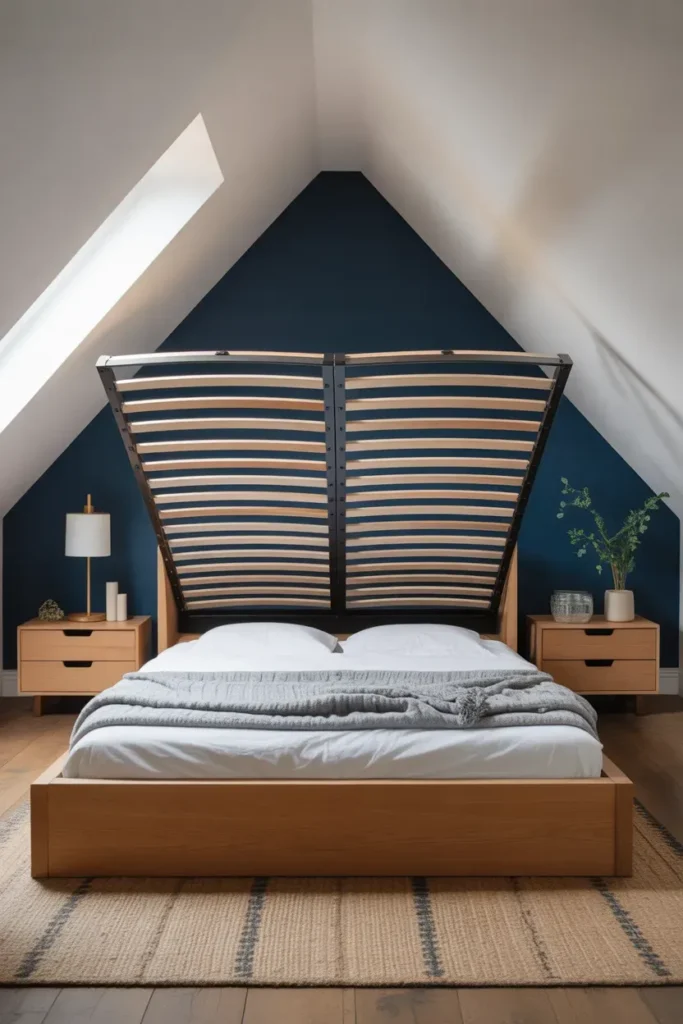
- Utilizes space beneath the bed
- Keeps clutter completely out of sight
- Ideal for clothes, linens, or storage boxes
- Maintains a clean and minimal look
- Enhances bedroom functionality
Hidden bed storage is one of the most effective ways to maximize space without adding extra furniture. By using the area beneath the bed, you create a large storage zone that stays completely out of sight. This is especially helpful in attic bedrooms where floor space is limited and every element needs to serve a purpose.
I’ve seen this work incredibly well for maintaining a calm and clutter-free environment. When everything has a hidden place, the room instantly feels more spacious and relaxing. Over time, this kind of setup makes daily living easier, as you always know where things are without sacrificing the overall aesthetic of the space.
10. Corner Ladder Shelves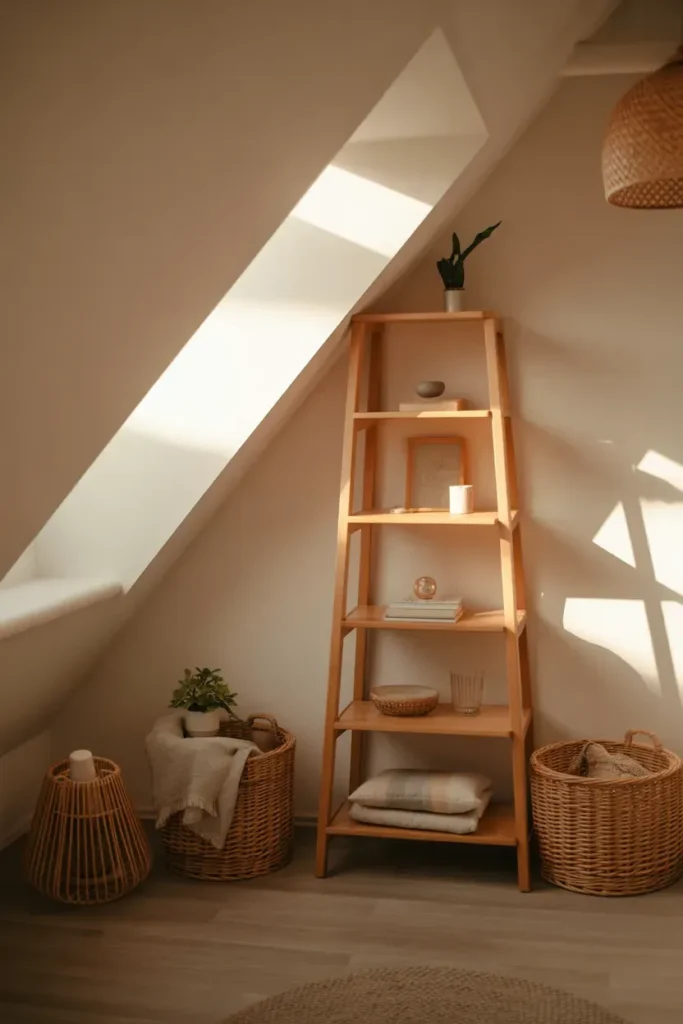
- Uses awkward corners efficiently
- Adds vertical storage without heaviness
- Perfect for decor and light essentials
- Easy to move and reposition
- Creates a styled, Pinterest-worthy look
Corner ladder shelves are perfect for filling those small, tricky spaces that often go unused. Their slim and open design makes them ideal for areas where bulky furniture would feel overwhelming. In attic rooms with angled walls, this type of shelving fits naturally without disrupting the flow, adding both function and visual charm.
In my experience, these shelves work best when styled lightly rather than overloaded. A few books, a plant, and decorative pieces create a balanced look that feels intentional and airy. Over time, this setup helps the space feel more curated and lived-in without sacrificing simplicity or comfort.
11. Hanging Closet Rods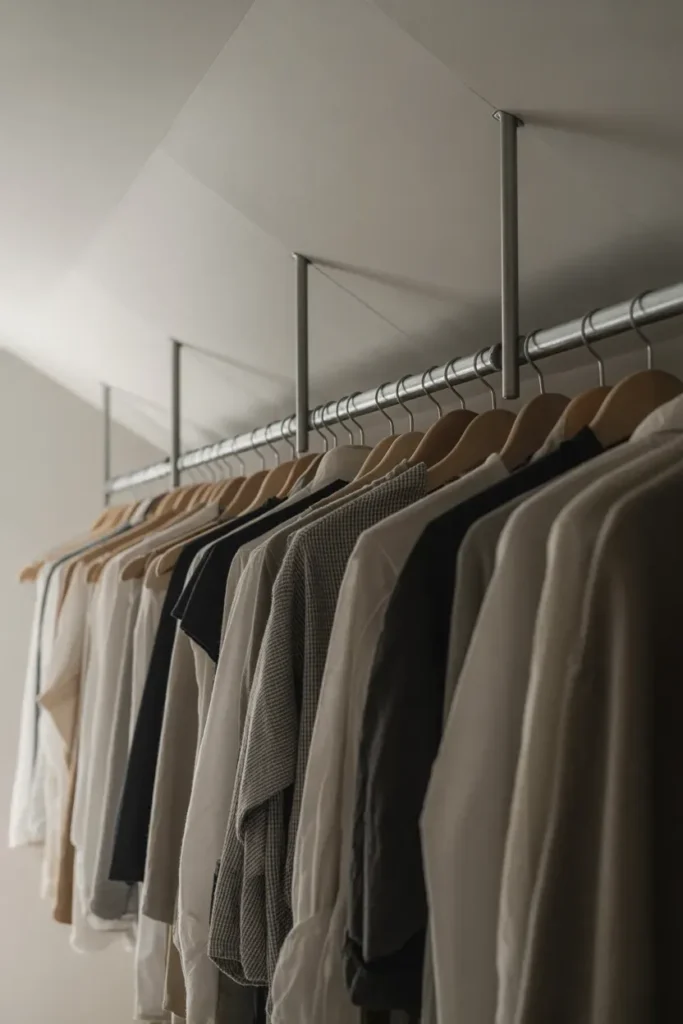
- Creates a functional clothing storage area
- Adapts to sloped ceiling angles
- Keeps outfits visible and accessible
- Saves space compared to bulky wardrobes
- Maintains a clean, open feel
Hanging closet rods are a practical way to turn an angled wall into a usable wardrobe space. Instead of struggling with standard closets that don’t fit well, this approach works with the slope, making the most of available height. It’s a simple solution that transforms an underutilized area into something highly functional.
I’ve noticed that keeping clothes visible actually makes daily routines easier. You can quickly see and access everything without digging through drawers or cabinets. Over time, this setup encourages better organization and keeps the space feeling open, especially in attic layouts where bulky furniture can quickly make the room feel cramped.
12. Floating Wall Cabinets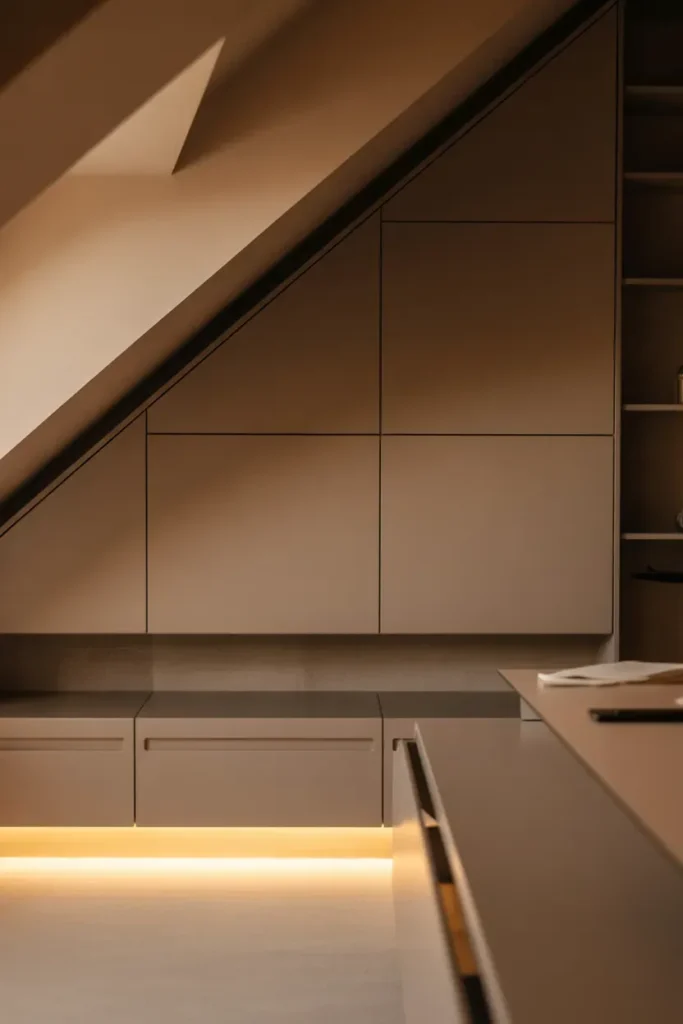
- Keeps storage off the floor
- Creates a modern, floating effect
- Adds hidden storage without bulk
- Enhances a clean, uncluttered design
- Works well in compact attic spaces
Floating wall cabinets offer a sleek and modern way to add storage without crowding the room. By lifting storage off the floor, they create a sense of openness that is especially valuable in attic spaces. This approach works beautifully along higher sections of the wall, keeping the design balanced while still providing plenty of hidden storage.
I’ve seen this work well in rooms that need a more polished and refined look. The floating effect makes the space feel lighter and more spacious, even when storage is fully utilized. Over time, this design choice helps maintain a clean and organized environment while adding a subtle touch of modern elegance.
13. Under-Stair Drawers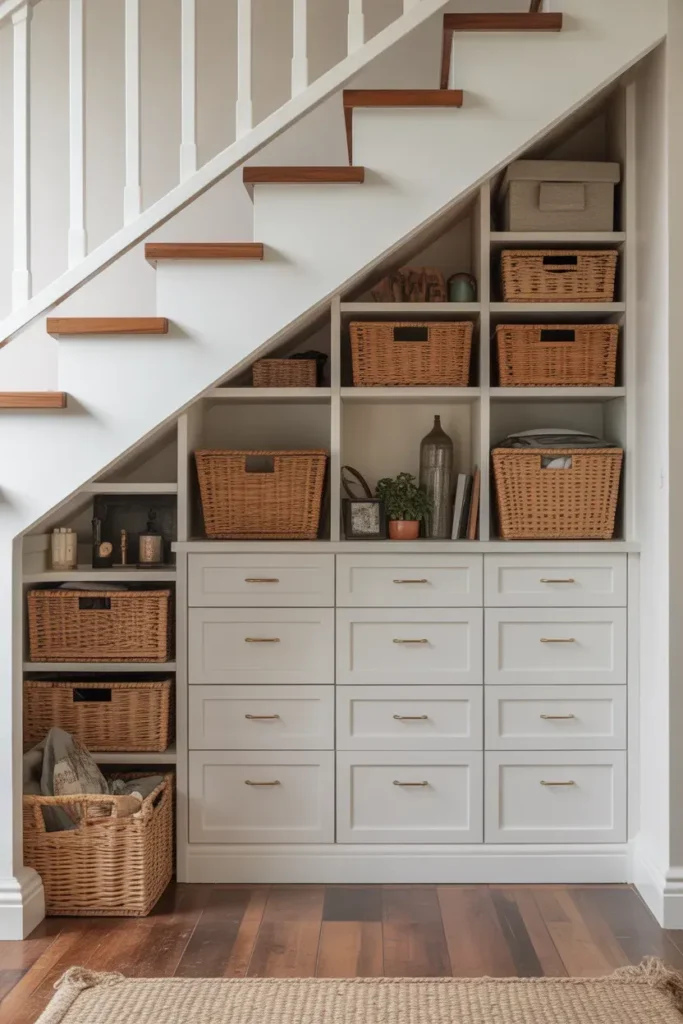
- Turns unused stair space into storage
- Keeps items neatly hidden
- Adds a built-in custom feel
- Ideal for shoes, boxes, or accessories
- Maximizes every inch of space
Under-stair drawers are a smart way to reclaim space that often goes completely unused. In attic layouts where stairs lead upward, this hidden area can become a highly functional storage zone. Instead of leaving it empty, built-in drawers create a seamless solution that blends beautifully with the overall design while improving everyday organization.
I’ve seen this work especially well in compact homes where every inch matters. It keeps clutter out of sight while still being easily accessible when needed. Over time, this kind of built-in storage makes the space feel more efficient and thoughtfully planned, helping maintain a clean and organized environment without adding visual weight.
14. Fold-Down Desk Storage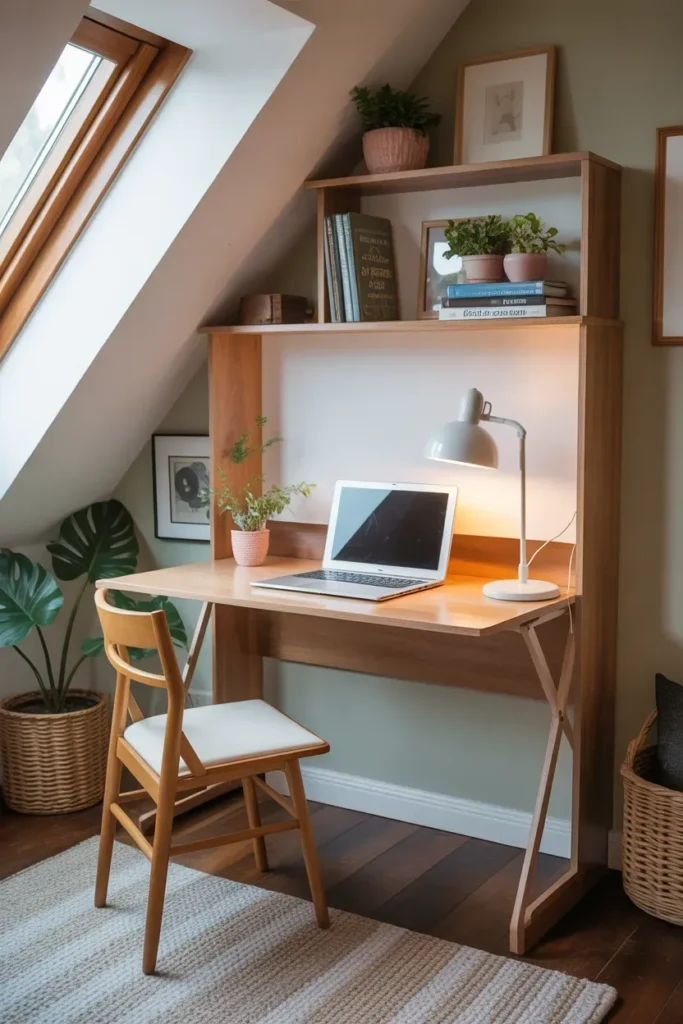
- Creates a workspace without taking space
- Folds away when not in use
- Adds hidden storage compartments
- Perfect for small attic rooms
- Keeps the area clean and flexible
A fold-down desk is a brilliant solution for adding function without permanence. In attic rooms where space is limited, having a desk that disappears when not needed keeps the area open and uncluttered. This setup is ideal for occasional work, studying, or creative tasks without committing to a full-time workspace.
In my experience, this idea works best when combined with simple storage compartments inside the desk panel. It keeps essentials organized and within reach while maintaining a clean look. Over time, this flexibility makes the space more versatile, allowing it to shift easily between work and relaxation without feeling crowded.
15. Decorative Storage Baskets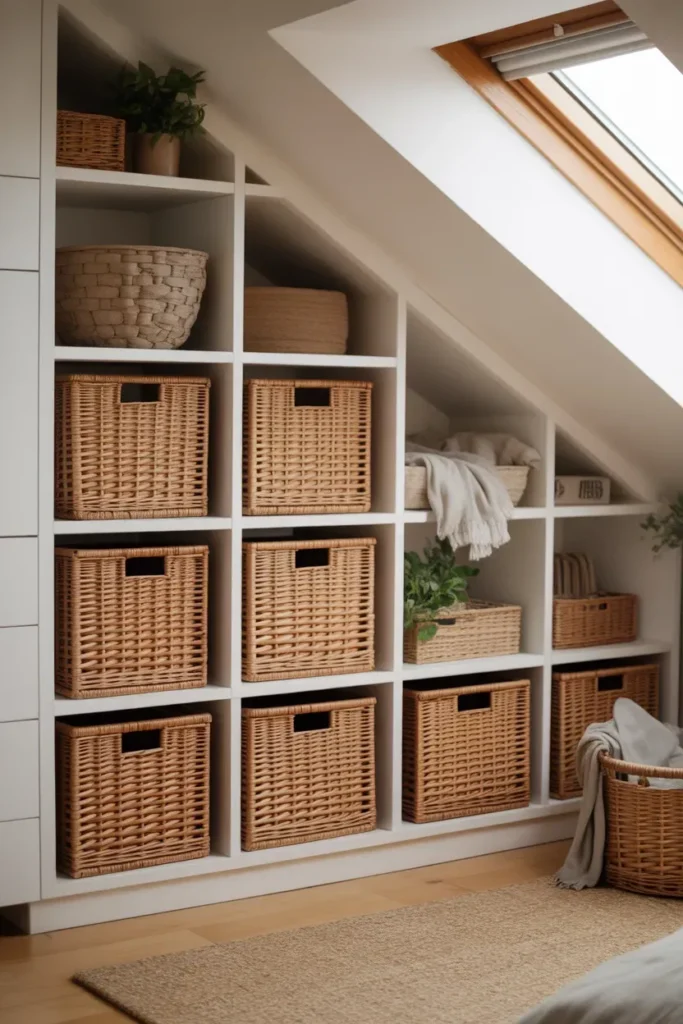
- Adds storage with a decorative touch
- Keeps items organized yet accessible
- Works in any style or layout
- Softens the overall room aesthetic
- Easy to move and rearrange
Decorative storage baskets are one of the easiest ways to combine function with style. They help organize everyday items while adding warmth and texture to the space. In attic rooms, where built-in storage may not always be possible, baskets offer a flexible solution that adapts to different layouts and needs.
I’ve noticed that using a mix of sizes and textures creates a more layered and visually interesting look. Instead of hiding storage completely, baskets allow you to display it in a way that feels intentional and cozy. Over time, this approach makes the space feel more relaxed, lived-in, and effortlessly organized.
16. Skylight Shelf Ledges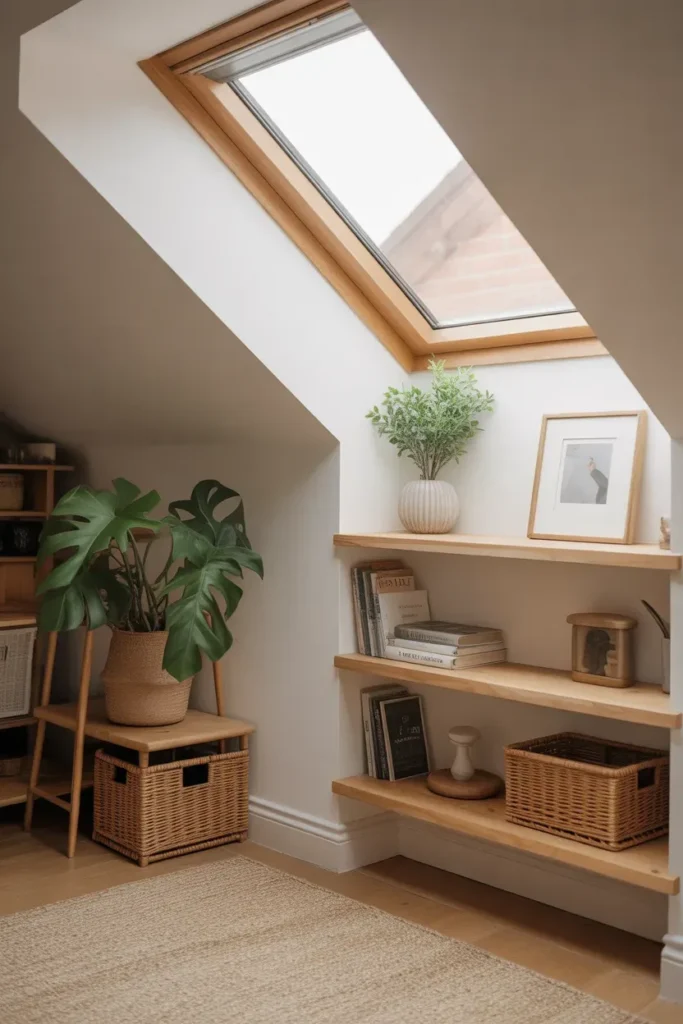
- Uses space beneath skylights efficiently
- Adds subtle storage without blocking light
- Perfect for small decor and essentials
- Enhances natural brightness in the room
- Creates a clean, styled look
Skylight shelf ledges make use of an often-overlooked area without interfering with natural light. Instead of leaving that space empty, slim shelves provide just enough room for small items while maintaining the openness of the room. This works beautifully in attic designs where light plays a key role in making the space feel larger and more inviting.
I’ve seen this work well when styled with minimal decor to avoid visual clutter. A few carefully placed items can make the space feel intentional without overwhelming it. Over time, this simple addition enhances both functionality and atmosphere, keeping the room bright, balanced, and visually appealing.
17. Compact Wardrobe Niche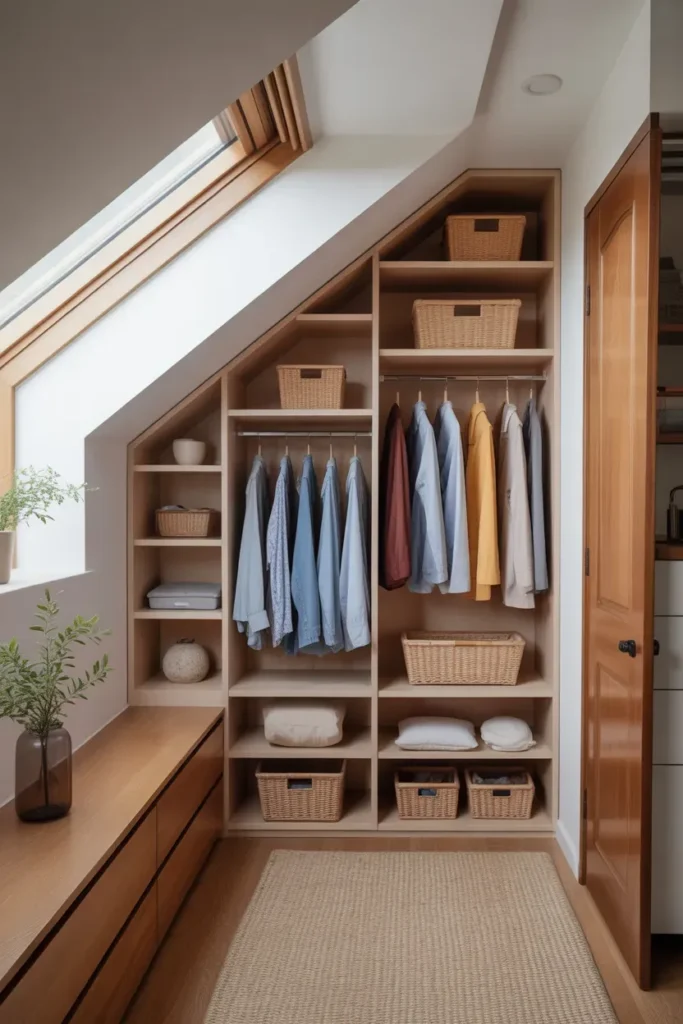
- Fits perfectly into angled wall spaces
- Provides concealed clothing storage
- Keeps the room looking clean and organized
- Maximizes awkward wall areas
- Adds a built-in, custom feel
A compact wardrobe niche is a smart way to turn awkward wall angles into functional storage. Instead of forcing standard furniture into the space, a custom-fit design follows the slope naturally. This creates a seamless look while offering practical storage for clothing and essentials, making the room feel more efficient and well-planned.
In my experience, this type of solution works best when designed to match the room’s overall style. It blends in rather than standing out, which helps maintain a calm and uncluttered atmosphere. Over time, having a dedicated storage niche like this makes the space easier to manage and more visually balanced.
18. Ceiling-Mounted Storage Racks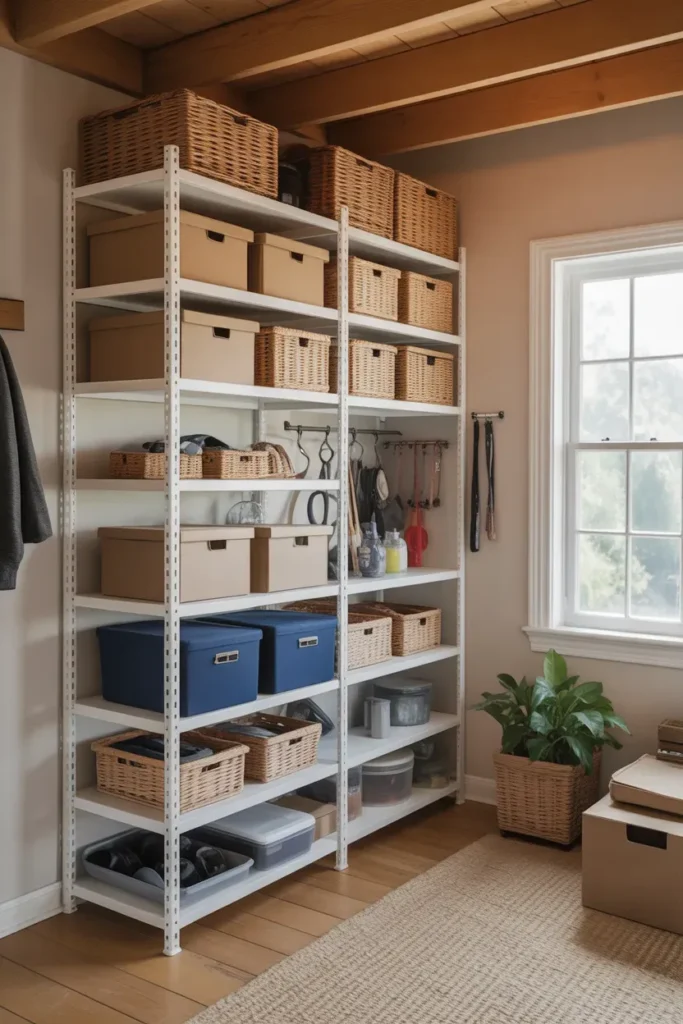
- Utilizes overhead space effectively
- Keeps floor areas clear
- Ideal for less frequently used items
- Adds a unique industrial touch
- Maximizes total storage capacity
Ceiling-mounted storage racks take advantage of vertical space that often goes unused in attic rooms. By lifting storage upward, you free up valuable floor space while still keeping items organized. This approach works especially well for things you don’t need daily, such as seasonal items or extra supplies.
I’ve noticed that this idea works best when placed in areas with slightly higher clearance to avoid crowding. When done right, it not only improves storage but also adds a bold, functional design element. Over time, using overhead space helps create a more open and efficient layout without sacrificing practicality.
19. Multi-Use Storage Ottoman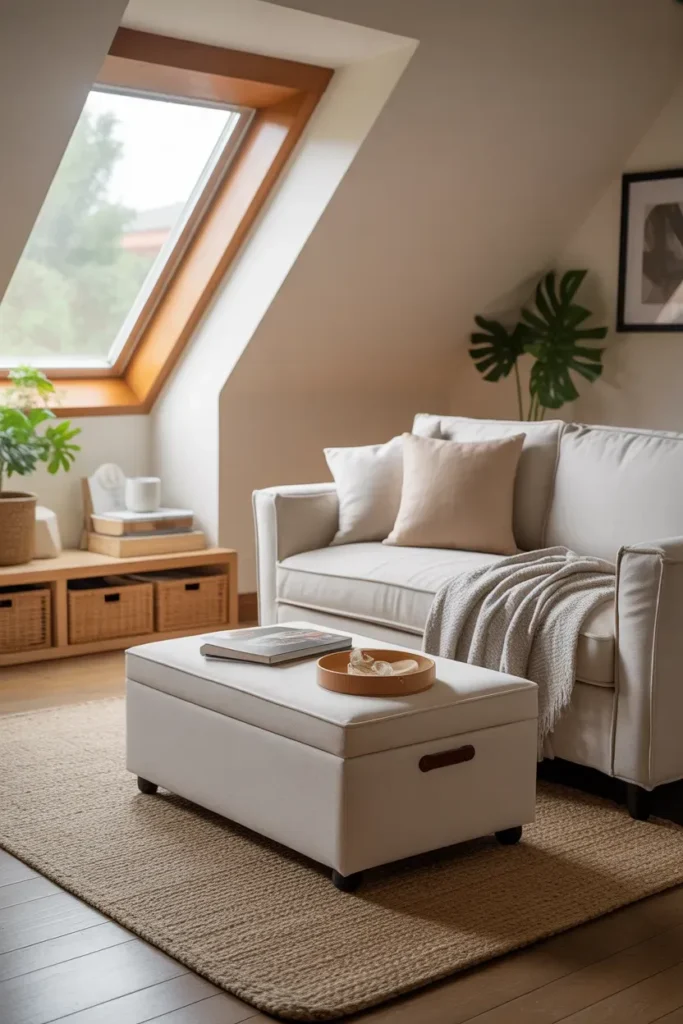
- Combines seating, storage, and style
- Perfect for small or flexible spaces
- Stores blankets, pillows, or essentials
- Adds softness and comfort to the room
- Easy to move and reposition
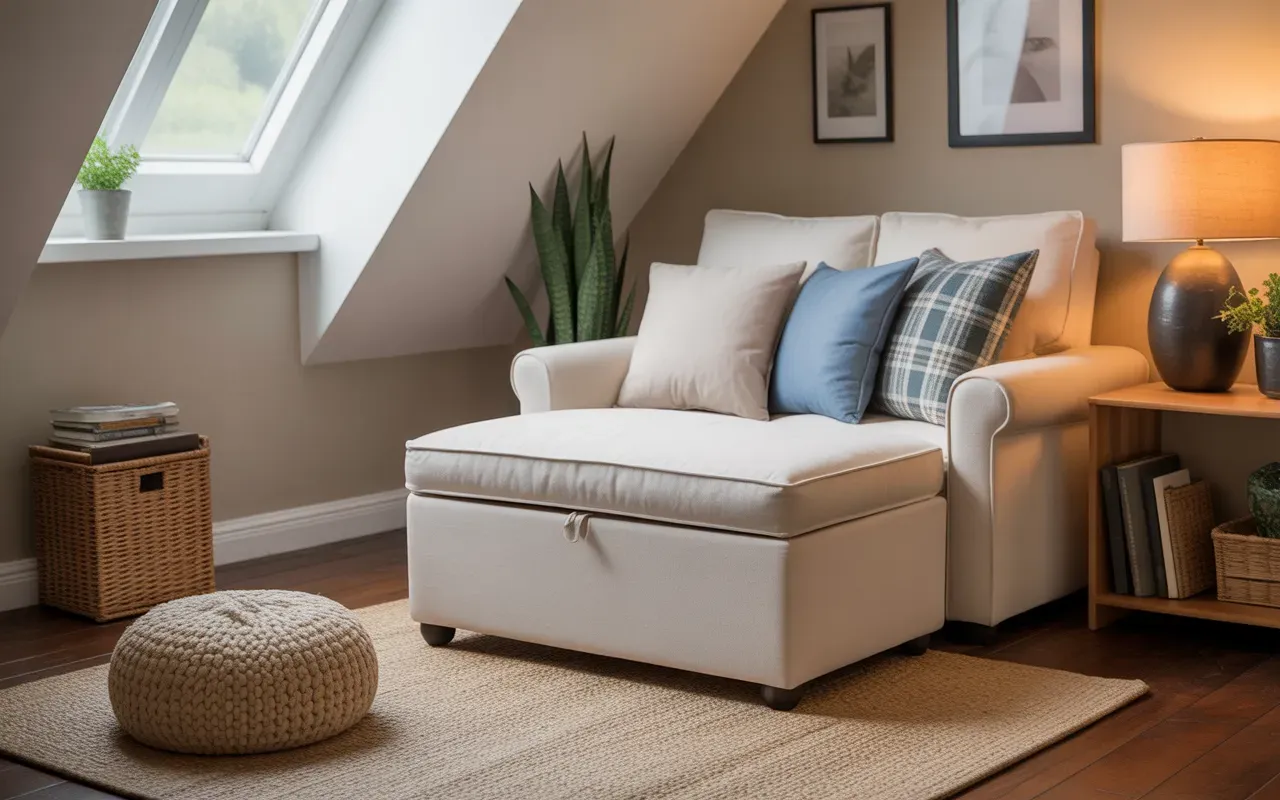
A multi-use storage ottoman is one of the simplest ways to add both function and comfort to an attic space. It works as a seat, a surface, and a hidden storage solution all at once. In rooms with limited space, this kind of flexible furniture becomes incredibly valuable, helping you avoid clutter while still keeping essentials close.
In my experience, ottomans are especially useful in relaxed areas like reading corners or bedrooms. They create a cozy, inviting feel while quietly solving storage needs. Over time, this small addition can make a big difference, giving the space a more complete and thoughtfully designed look without adding bulk.
Conclusion
Transforming your attic doesn’t require a complete renovation—just smart, thoughtful ideas that work with your space. These storage solutions show how even the most challenging attic with sloped ceilings can become organized, stylish, and incredibly functional.
I’ve seen how small changes like these can completely shift how a space feels, turning it from cluttered and unused into something truly inspiring. Now it’s your turn to bring these ideas to life.
Save this post on Pinterest for later, try one or two ideas in your own space, and share it with someone who could use a little attic inspiration. Your dream space is closer than you think.