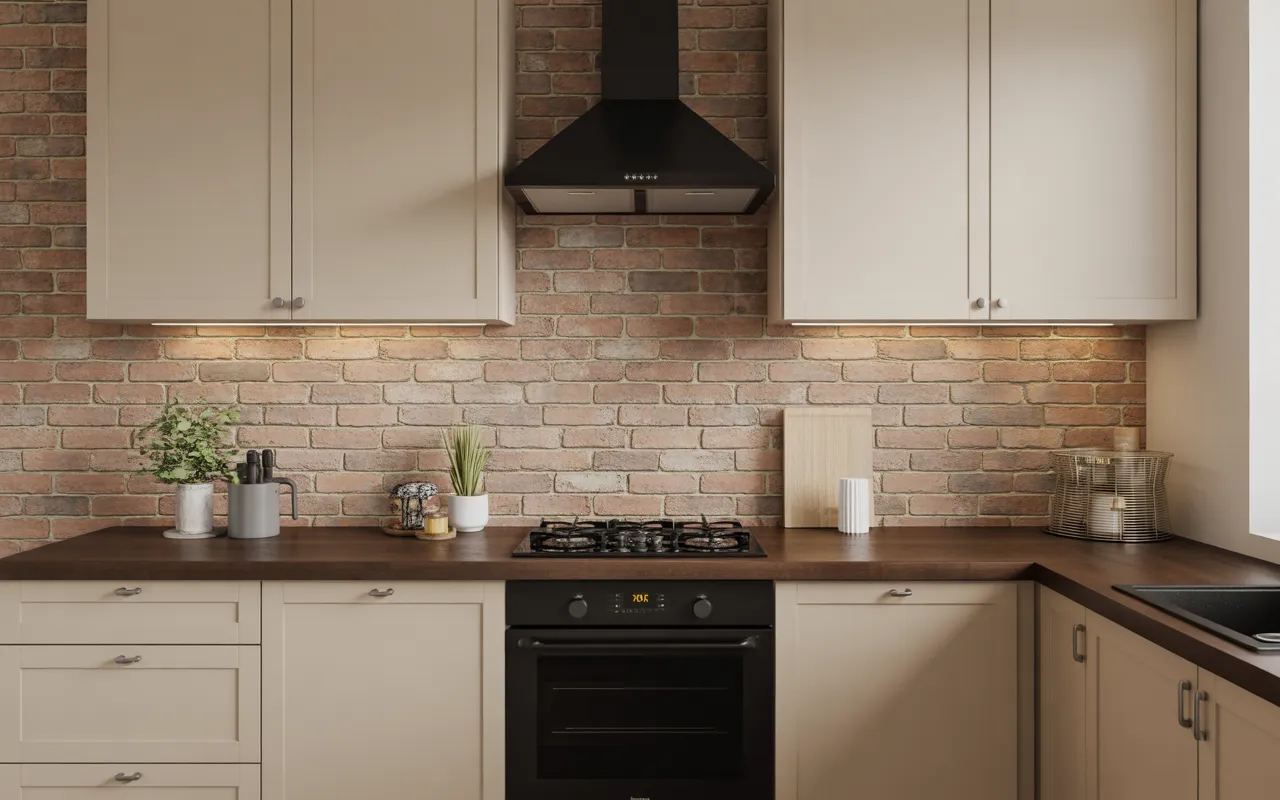
23 Brick Backsplash Kitchen Ideas with Rustic Charm
A brick backsplash adds texture that tile and paint cannot match. Real brick, thin brick veneer, and brick look panels all give a similar effect at very different prices and weights. The color range runs from classic red through whitewash to dark brown.
The 23 kitchens below show brick paired with wood cabinets, white shaker doors, black hardware, stone counters, and open shelving. Some use brick on the full wall behind the hob and shelves, others keep it to the strip between counter and uppers. Both can work if the sealing and grout are done properly.
Brick is porous, so the practical details matter here. Sealing, grout choice, and how you clean splashes behind the hob decide whether a brick backsplash stays good looking or becomes hard work. Those points run through every idea below.
This post contains affiliate links. If you buy through them, I may earn a small commission at no extra cost to you.
1. Classic Red Brick Backsplash with Wooden Cabinets
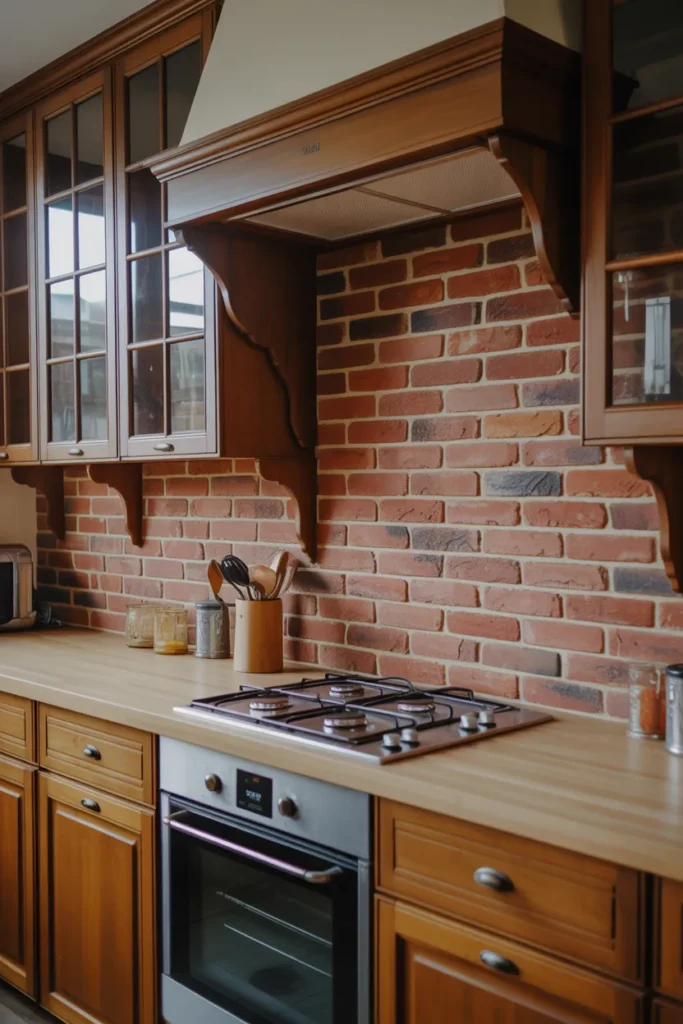
Classic red brick with wooden cabinets is the pairing most people picture first. The red tones in the brick pick up the warm tones in the wood, and the rough surface makes smooth cabinet doors look better. It suits farmhouse, country, and traditional kitchens.
Seal before you cook: Brick soaks up oil and sauce splashes, so seal it with a matte stone sealer before the kitchen is used. Matte keeps the natural look, while gloss sealers can make brick look wet and plastic. Keep the sealer away from the hob heat zone if the product warns against heat.
Choose grout with care: Light gray or off white mortar shows the brick pattern clearly. Very white grout can look too new against old style brick, and very dark grout makes the wall heavy. Test a small board with two grout colors before the whole wall is done.
- Seal brick with a matte sealer before first use
- Test grout colors on a sample board first
- Keep wood tones warm to match red brick
Shop This Look
2. Whitewashed Brick Backsplash for Soft Rustic Vibe
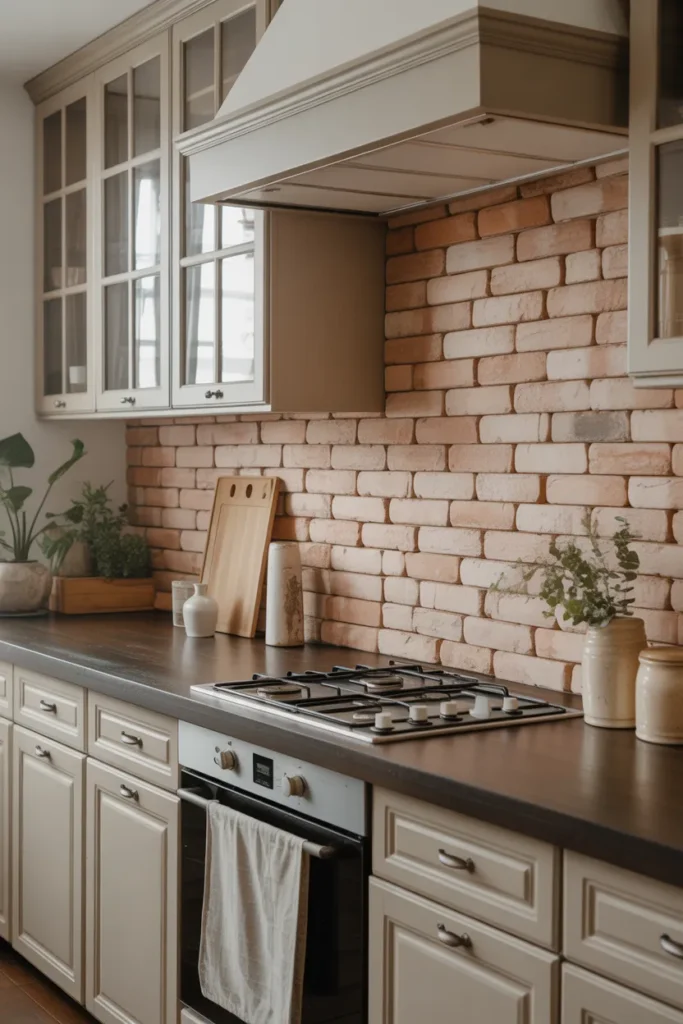
Whitewashed brick softens the red base with a thin coat of white, so you get texture without a dark wall. It brightens small kitchens and suits cottage and Scandinavian styles. The wash can be light, letting lots of red show, or heavier for a near white result.
Control the wash strength: Mix the wash thin and build it up in coats, because taking it off is much harder than adding more. Leave more color near the top of the wall and less at counter level if you want a softer work area. Photograph each coat before adding the next.
Pair it with warm wood: Plain white cabinets can make whitewash look cold. Warm wood shelves, brass handles, or a wood counter section bring the balance back. Keep textiles in cream and natural linen rather than bright white.
- Build whitewash up in thin coats
- Add warm wood or brass to stop the scheme going cold
- Keep spare wash mix for touch ups
Shop This Look
3. Exposed Brick with Industrial Accents
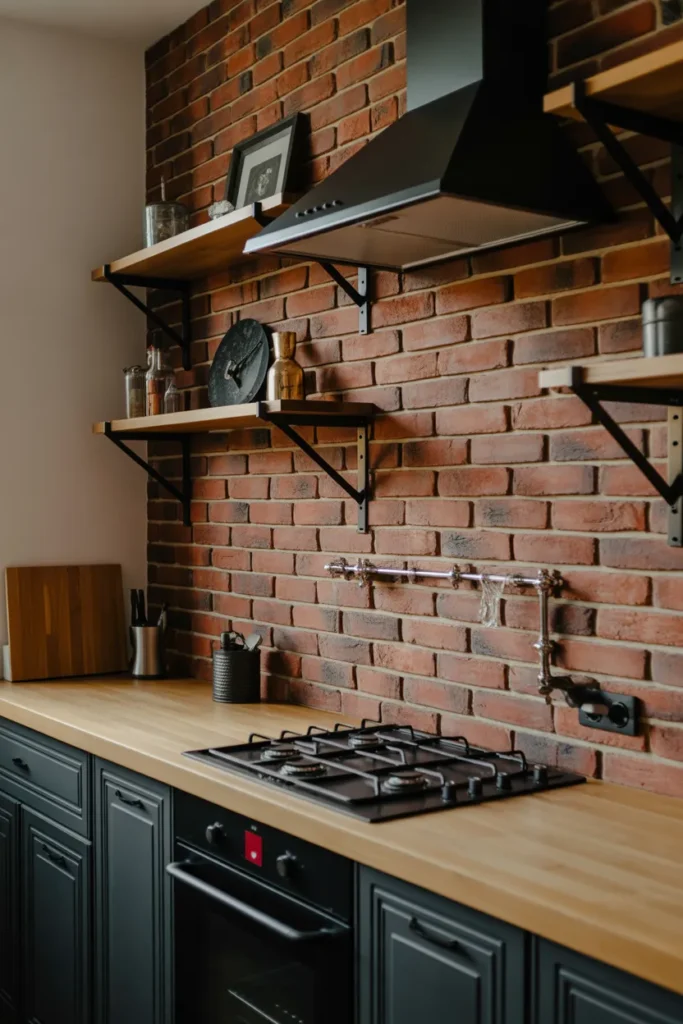
Exposed brick with industrial accents leans into metal, black steel, and open shelving. Think black framed lights, stainless work surfaces, and chunky brackets. It suits loft style homes and kitchens in converted buildings best, but one wall can work in a normal house.
Keep metal finishes tight: Black steel and stainless work together, but adding brass and chrome as well turns industrial into cluttered. Pick two metals at most and repeat them. Raw steel shelves need a clear coat or they mark easily.
Soften one element: A full industrial scheme can feel hard for daily family use. A wood counter section, fabric seat pads, or plants on the shelves take the edge off without changing the style. Keep the soft element simple and sturdy.
- Limit the scheme to two metal finishes
- Clear coat raw steel shelving
- Add one soft element such as wood or plants
Shop This Look
4. Dark Brown Brick Backsplash for Cozy Warmth
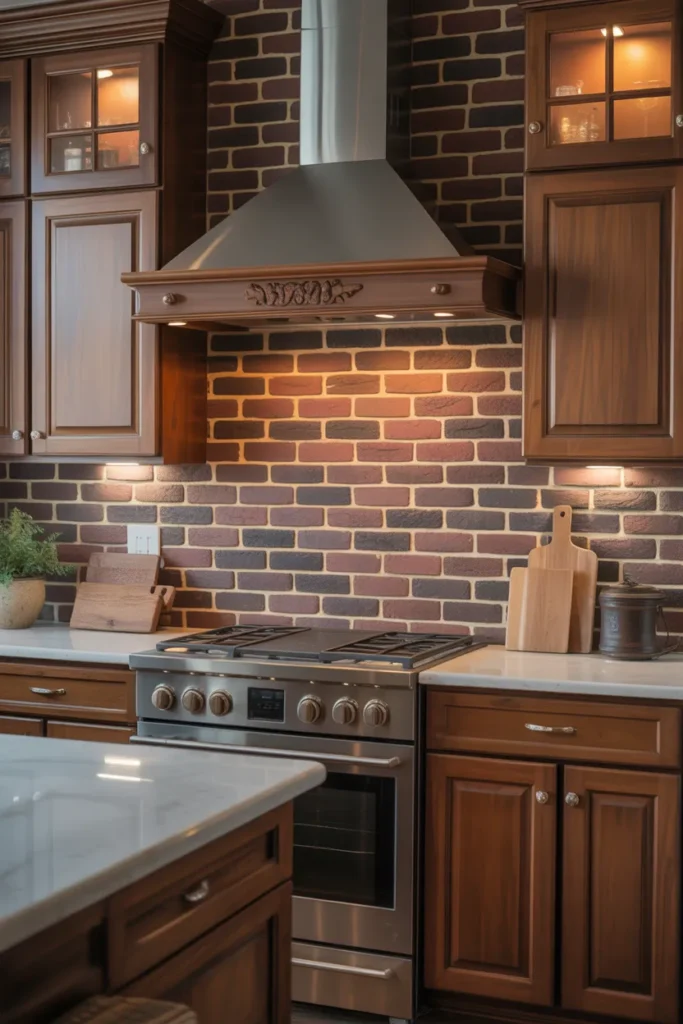
Dark brown brick gives a cozy, enclosed feel and pairs well with cream cabinets or warm wood. The wall reads almost like timber in low light. It is a strong choice, so it suits larger kitchens or one feature wall rather than every wall.
Add light at the counter: Dark brick absorbs light, so under cabinet strips are essential, not optional. Pale counters help bounce light back onto the work surface. If the kitchen is small, use dark brick behind the hob only and a lighter finish elsewhere.
Check the brown undertone: Brown brick can lean red, gray, or almost black. Put samples against your cabinets and floor in daylight. A red leaning brick with gray cabinets is a common clash.
- Fit under cabinet lighting with dark brick
- Use dark brick on one wall in small kitchens
- Check brick undertone against cabinets in daylight
Shop This Look
5. Mixed Red and Brown Brick Pattern
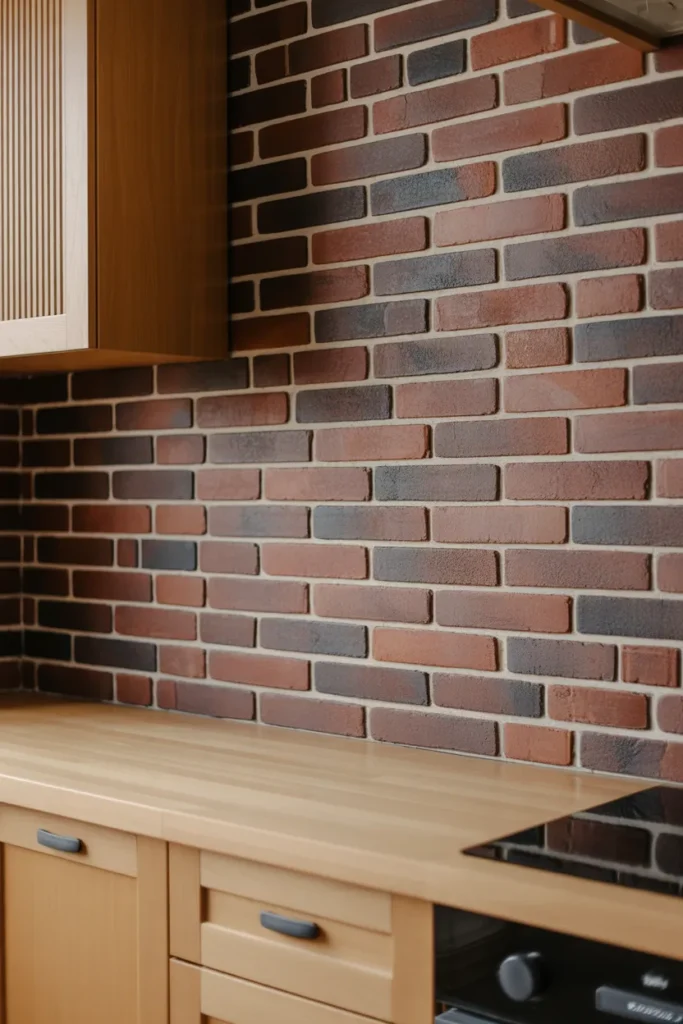
A mixed red and brown brick pattern uses the natural variation in fired clay to create movement across the wall. No two bricks match, which hides marks and dust well. It works best with plain cabinets that do not add another pattern.
Lay out the mix first: Open all the boxes and mix bricks from each before laying, or you get patches of one color. Step back every few rows and check the spread. Keep the strongest red bricks away from one corner so the wall stays even.
Keep cabinets plain: Shaker or flat doors in one color let the brick be the pattern in the room. Avoid strong wood grain or patterned counters at the same time. Plain stone or wood counters are the safe partners.
- Mix bricks from all boxes before laying
- Check the color spread every few rows
- Pair with plain cabinets and counters
Shop This Look
6. White Brick with Rustic Wooden Beams
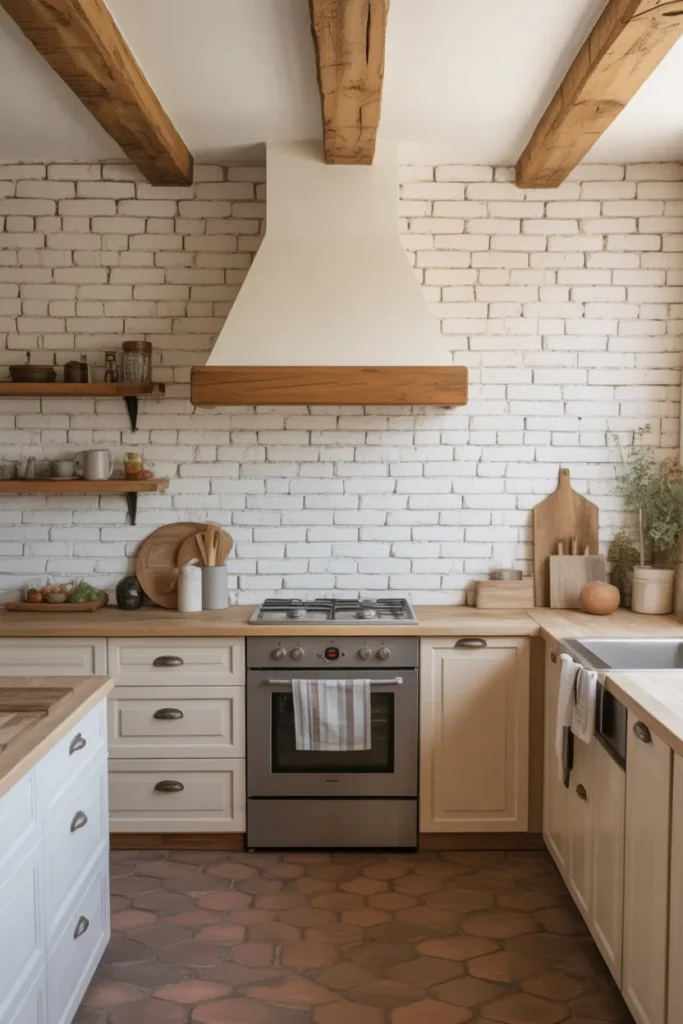
White brick with rustic wooden beams gives a bright farmhouse kitchen with real texture overhead. The beams frame the room and the white brick keeps the walls light. It works in high ceiling rooms where beams do not crowd the space.
Be honest about beams: Real beams are structural and heavy. Faux beams in light wood give the look without the building work, and most visitors cannot tell. Keep beam color close to your shelves or floor wood so the room ties together.
Keep white brick sealed: White and pale grout show cooking splashes fastest. Seal the brick and use a washable finish near the hob. A glass splash guard behind the hob is a practical extra that does not hide much brick.
- Consider faux beams for an easier fit
- Seal white brick and grout thoroughly
- Fit a glass guard behind the hob if you cook a lot
Shop This Look
7. Red Brick with Black Accents
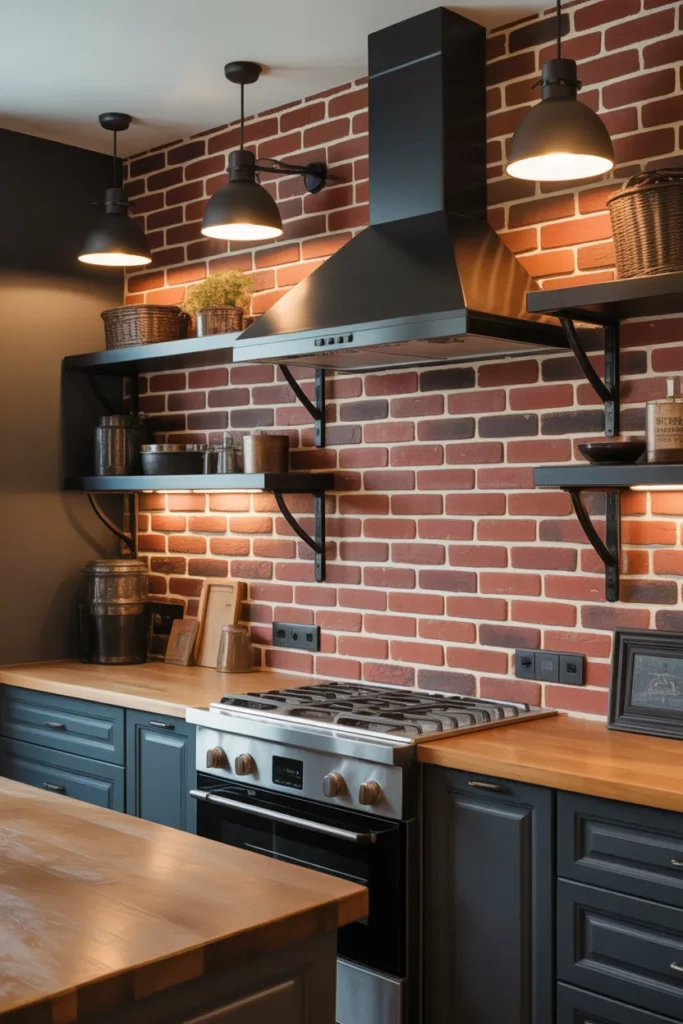
Red brick with black accents is a bold, high contrast scheme. Black handles, black taps, and black light fittings sharpen the rustic brick and stop it looking dated. It suits confident, modern rustic kitchens.
Repeat black evenly: Spread black across high and low points, for example pendants above and handles below, so the eye travels. Black only at one level looks unfinished. Matte finishes sit better with rough brick than glossy ones.
Watch the grout line: Dark accents plus dark grout plus red brick can get heavy. A mid gray grout keeps the wall readable. pale counters also help if the room lacks windows.
- Spread matte black from pendants to handles
- Use mid gray grout to keep the wall readable
- Add pale counters in low light rooms
Shop This Look
8. Patterned Brick Backsplash for Visual Interest
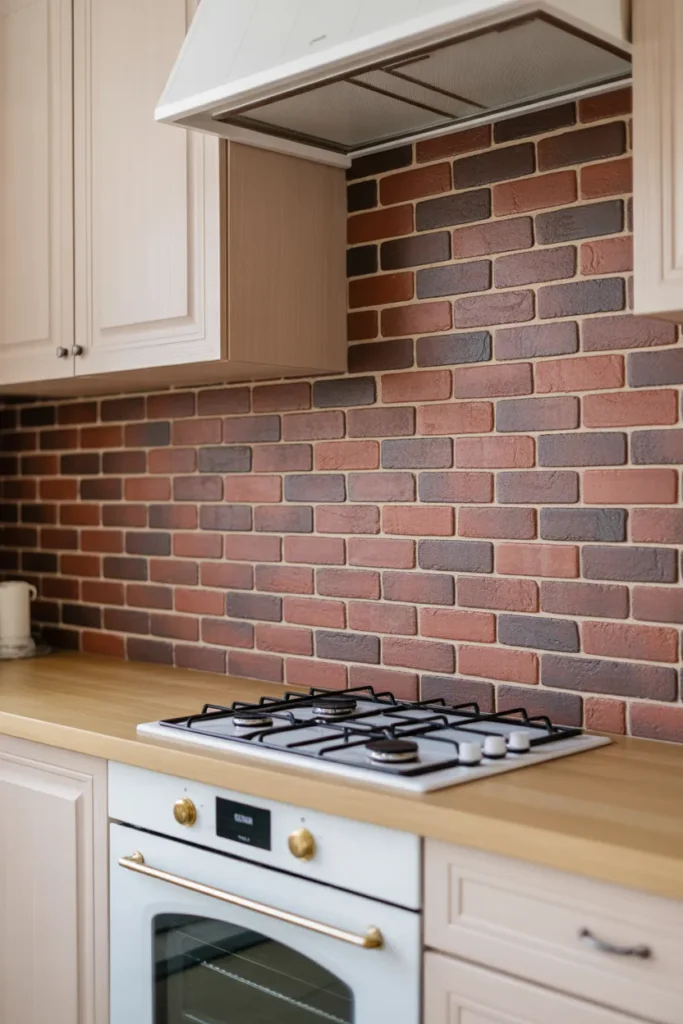
A patterned brick layout, such as herringbone or basket weave, turns a standard brick into the feature of the kitchen. It costs more in cutting and time, so many people use it behind the hob only, with plain running bond brick elsewhere.
Use pattern in one zone: Pattern everywhere is busy and expensive. One patterned panel framed by plain brick or trim looks deliberate and keeps costs down. Center the pattern on the hob or sink so it lines up with something.
Allow extra time and tiles: Patterned laying is slower and creates more waste. Order extra and use an experienced tiler if the wall is large. Dry lay a section first to agree the direction and spacing.
- Keep pattern to the hob or sink zone
- Order extra bricks for cuts and waste
- Dry lay a test section before fixing
Shop This Look
9. Exposed Brick with Neutral Modern Touches
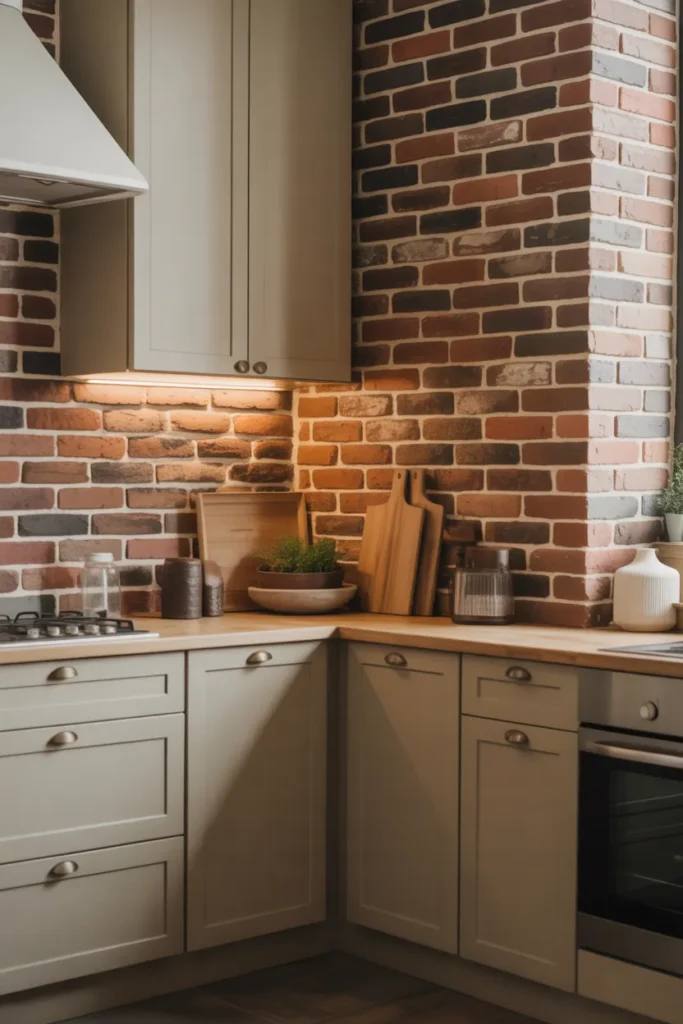
Exposed brick with neutral modern touches balances rustic walls with calm, simple fittings. Handleless cabinets, plain counters, and soft gray or beige details stop the brick dominating. This is a good route if you like brick but not full farmhouse style.
Let brick be the texture: When the wall has this much texture, everything else should be smooth. Flat doors, plain stone, and unpatterned textiles keep the room calm. One or two wood items are enough warmth.
Choose neutrals carefully: Greige and warm gray sit better with red brick than blue gray. Test paint and counter samples against the brick, not against each other. Natural light changes brick color through the day.
- Pair brick with flat, handleless cabinets
- Test neutrals directly against the brick
- Keep textiles plain and unpatterned
Shop This Look
10. Light Brown Brick with Open Shelving
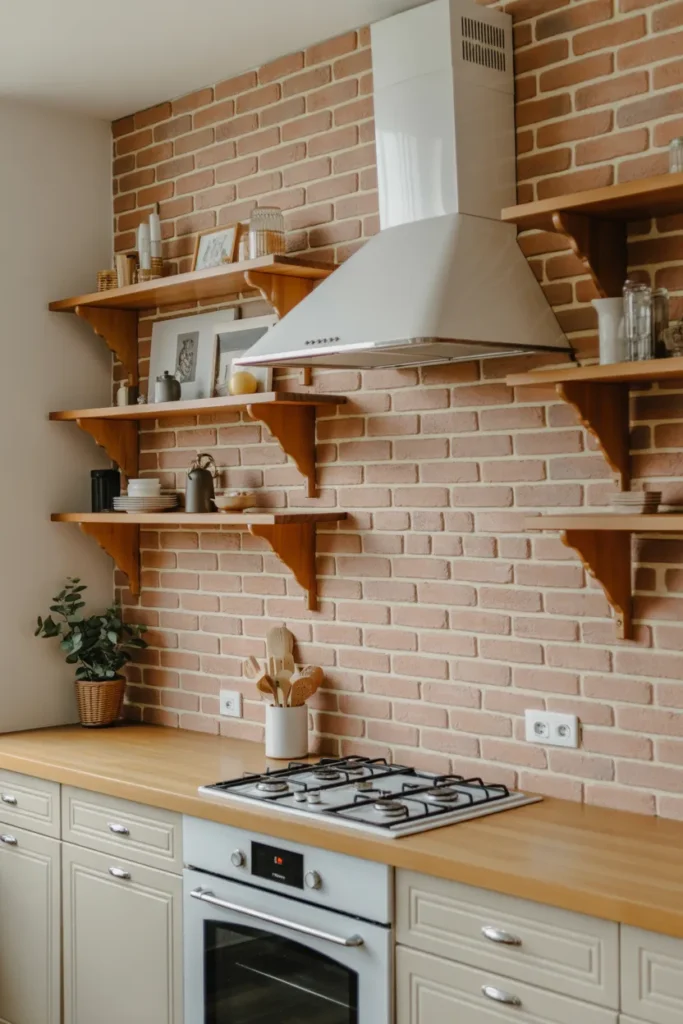
Light brown brick with open shelving feels relaxed and suits kitchens where the shelves hold daily dishes. The pale brick does not fight the items on display. Wood shelves in a similar tone keep the wall looking like one piece.
Fix shelves properly: Brick veneer over plasterboard is not strong enough to hold shelves on its own. Fix brackets through to studs or masonry behind. Heavy plates belong on the lowest shelf, glasses above.
Edit what you display: Open shelves over brick look best with plain dishes and jars. Too many colors compete with the brick variation. Leave some shelf space empty on purpose.
- Fix shelf brackets into studs or masonry
- Put heavy items on the lowest shelf
- Display plain dishes and leave some gaps
Shop This Look
11. Dark Red Brick with Vintage Lighting
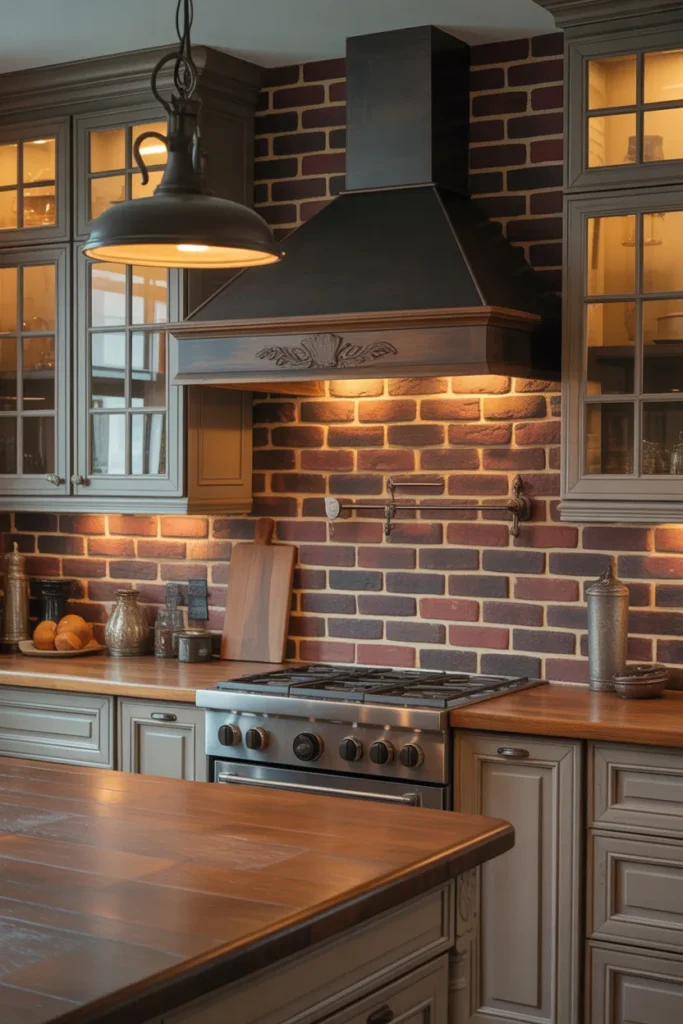
Dark red brick with vintage lighting suits kitchens that lean traditional. Edison style bulbs, aged brass fittings, and deep red brick work together in the evening light. During the day, keep counters and cabinets lighter so the room does not close in.
Pick bulbs that flatter brick: Warm bulbs around 2700K bring out the red in the brick. Exposed filament bulbs give the vintage look but poor task light, so add hidden under cabinet strips for cooking. Dimmers help the room shift from work to evening.
Keep daytime balance: Pale cabinet paint or light wood stops dark red brick feeling heavy at midday. Check the room on a dull morning before committing to dark cabinets as well. One dark element is usually enough.
- Use 2700K filament bulbs plus hidden task light
- Keep cabinets or counters light with dark red brick
- Fit dimmers for evening use
Shop This Look
12. White Brick with Matte Black Hardware
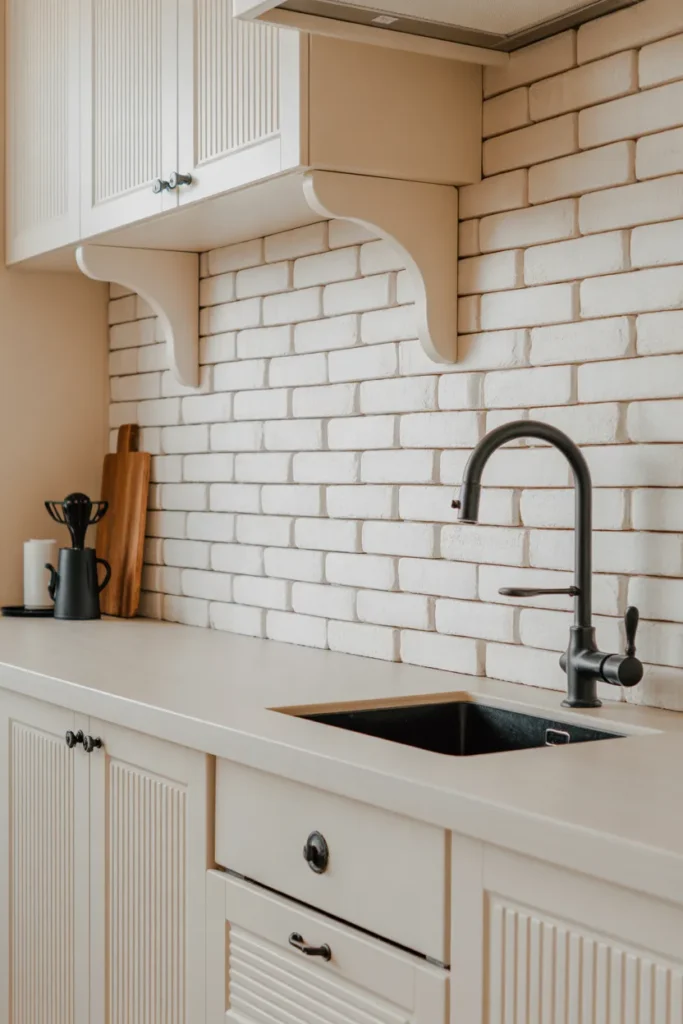
White brick with matte black hardware is a clean, graphic scheme. The black handles and taps stand out against pale brick and white or pale cabinets. It suits modern farmhouse and simple contemporary kitchens.
Keep the white warm: Bright blue white brick and cabinets can look cold and clinical. A warm white with black hardware reads clean but softer. Black grout gives a stronger grid effect, gray grout is calmer.
Maintain the contrast: Black hardware shows limescale and dust, white brick shows splashes. Both need a quick weekly wipe, which is the real cost of this look. Matte sealers on the brick make cleaning much easier.
- Choose warm white brick and cabinets
- Decide between black grout for impact or gray for calm
- Wipe hardware and hob area weekly
Shop This Look
13. Red and Brown Brick Mix with Wooden Accents
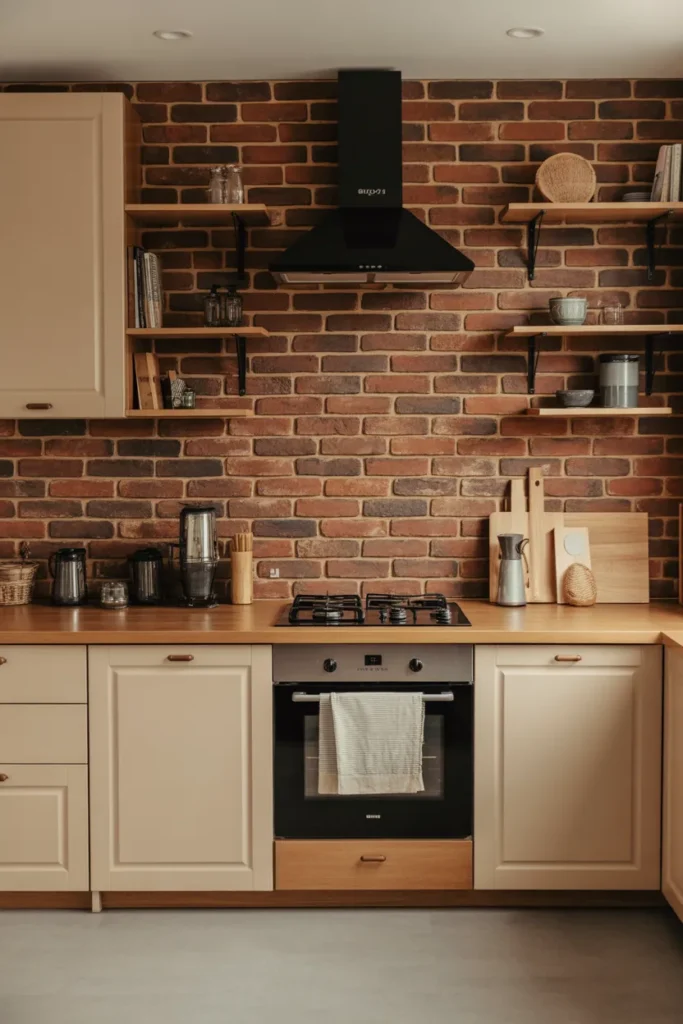
A red and brown brick mix with wooden accents doubles down on warm, natural materials. Wood shelves, wood counters, or a wood island top all sit comfortably against varied brick. Keep metal details simple so wood and brick stay in charge.
Balance wood and brick tones: If the brick leans red, choose wood with a neutral or warm tone, not orange. Lay wood samples on the brick before ordering shelves or counters. One wood type repeated is calmer than three different woods.
Protect wood near water: Wood counters by the sink need oil or sealant kept up. A stone section around the sink is a practical compromise. Keep chopping boards and trivets in use to protect the surface.
- Match wood tone to the brick undertone
- Repeat one wood type across the kitchen
- Seal wood counters and reseal as directed
Shop This Look
14. Exposed Brick with Neutral Stone Countertops
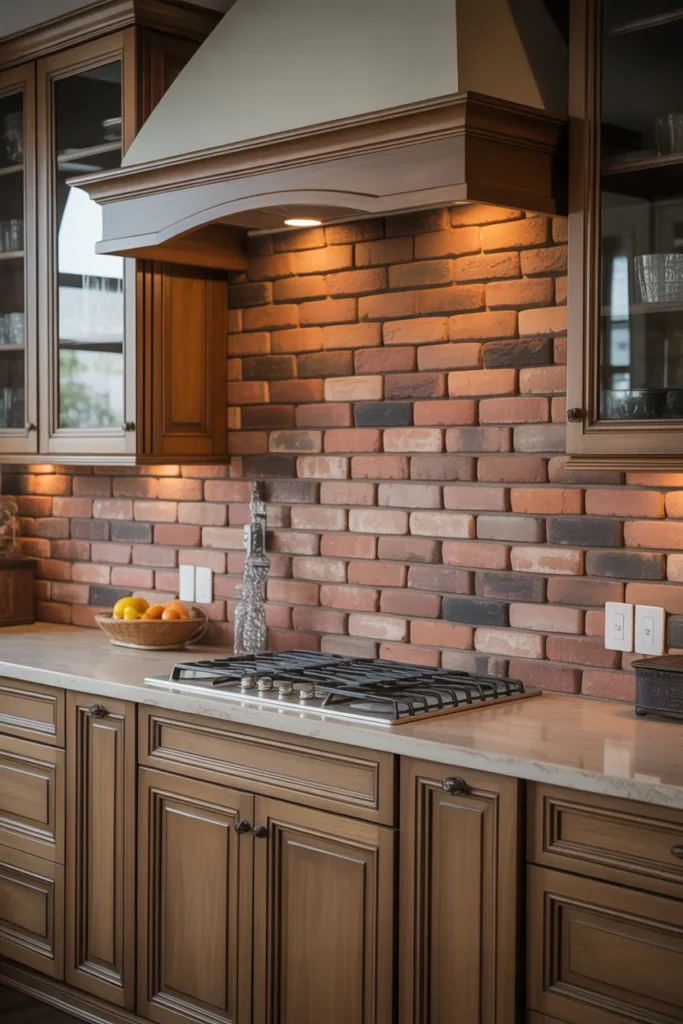
Exposed brick with neutral stone countertops is a durable, grounded combination. The stone gives you a smooth, cool work surface against the rough wall. Limestone, granite, and quartz in beige or gray tones all work.
Match stone tone to mortar: The mortar color is the bridge between brick and stone. A stone that matches the mortar tone makes the whole scheme feel settled. Take a brick and a mortar sample to choose the stone, not just photos.
Use stone as the calm area: Keep the stone plain even if it has natural movement. Busy stone plus busy brick is hard to live with at close range. Sample pieces need to be seen at counter distance, not across a showroom.
- Take brick and mortar samples to pick stone
- Choose plain stone against varied brick
- Seal natural stone counters on schedule
Shop This Look
15. Whitewashed Brick with Farmhouse Shelving
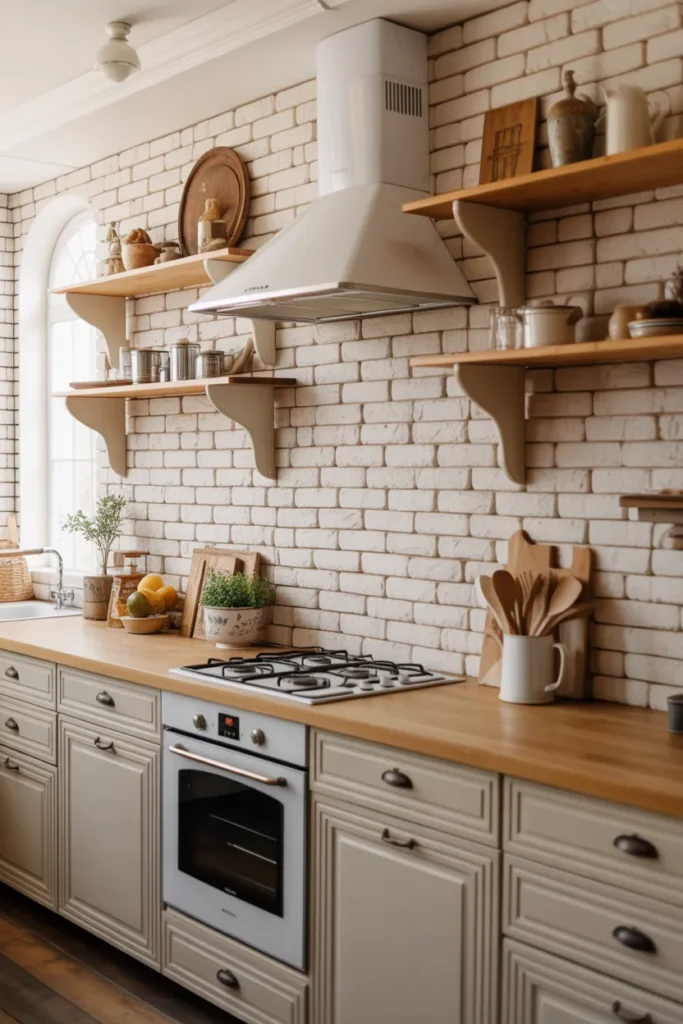
Whitewashed brick with farmhouse shelving is a soft, practical scheme for family kitchens. Wide wood shelves hold jars, bowls, and cookbooks where everyone can reach them. The pale brick keeps the wall light behind the display.
Size shelves for real use: Farmhouse shelves need depth for jars and bowls, usually 25cm to 30cm. Shallow shelves look fine in photos and fail in daily use. Strong brackets every 60cm or so stop sagging under jars.
Keep jars uniform: Matching jars make open storage look tidy even when contents vary. Label them simply and keep the most used items at the front. A small rail under one shelf can hold utensils and free counter space.
- Fit shelves 25cm to 30cm deep for jars
- Use matching jars for a tidy display
- Add brackets at least every 60cm
Shop This Look
16. Light Brown Brick with Copper Accents
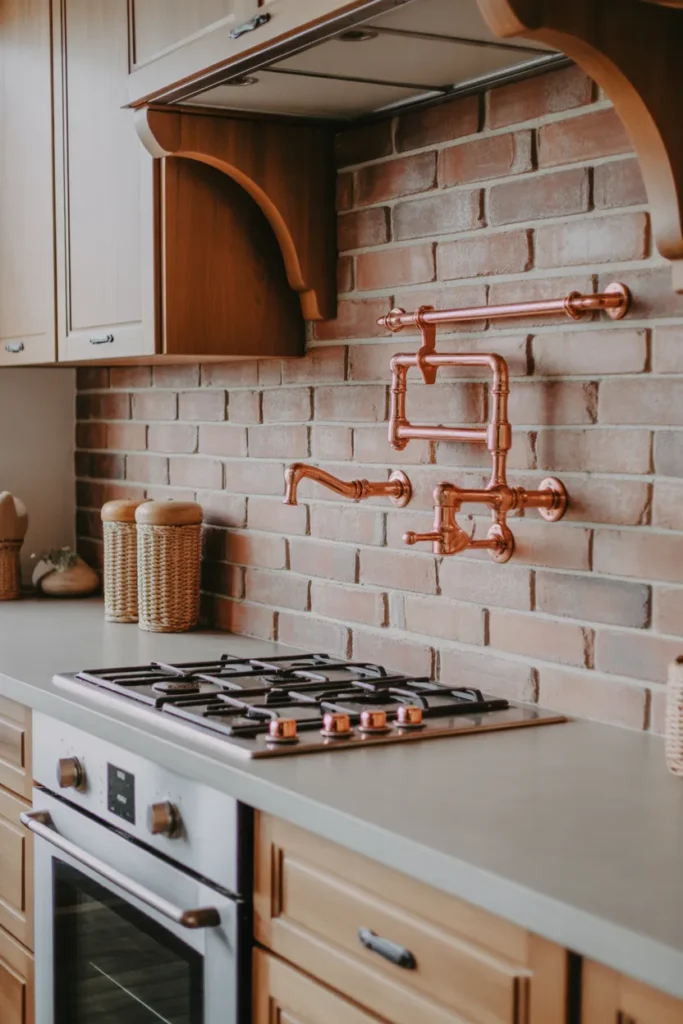
Light brown brick with copper accents is warm and a little unusual. Copper taps, handles, and pendant shades glow against pale brown brick. Real copper changes tone over time, which suits the natural variation in brick.
Decide how copper should age: Lacquered copper stays bright, unlacquered copper darkens and can spot where hands touch it. Choose based on how much polishing you will actually do. Mixing lacquered and unlacquered pieces looks untidy within months.
Use copper in a few places: Tap, handles, and one set of lights is enough copper for most kitchens. Copper pans on display can be one accent too many. Let the brick stay the background rather than competing with shiny metal everywhere.
- Pick lacquered or unlacquered copper and stay with it
- Repeat copper on tap, handles, and lights only
- Polish with a soft cloth, not abrasive pads
Shop This Look
17. Exposed Brick with White Shaker Cabinets
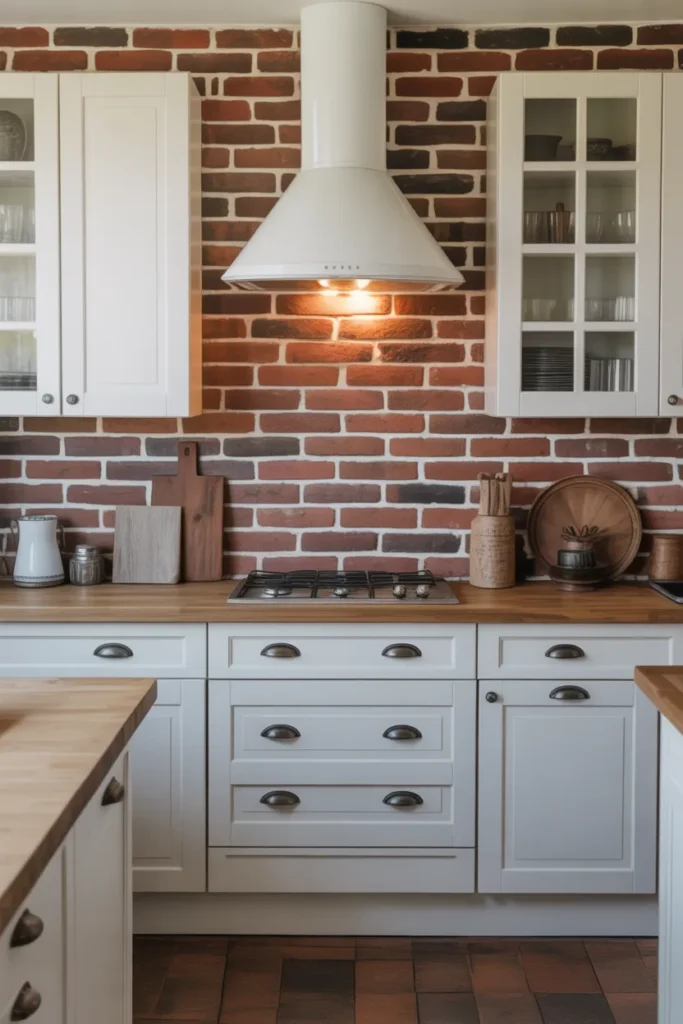
Exposed brick with white shaker cabinets is a proven mix of rustic and classic. The shaker frames give order, the brick gives texture, and the contrast makes both look better. It suits period homes and new builds alike.
Soften the white: A slightly warm white on the cabinets stops the scheme looking stark against red brick. Pure brilliant white can make brick look dirty by comparison. Paint a door sample and hold it against the brick in daylight.
Choose counters to bridge: Wood or light stone counters sit between white cabinets and brick and soften the jump. Black counters give a stronger, more modern edge. Either works, but decide which mood you want before ordering.
- Use warm white paint on shaker cabinets
- Bridge with wood or light stone counters
- Hold painted samples against the brick first
Shop This Look
18. Mixed Neutral Brick for Subtle Rustic Charm
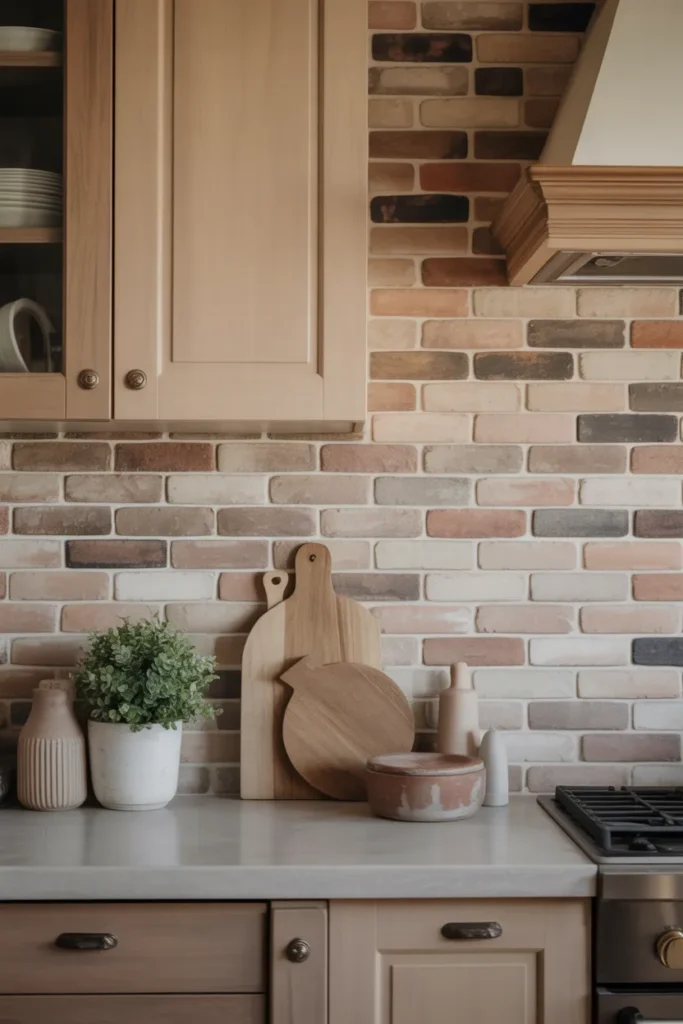
Mixed neutral brick in beige, gray, and pale brown gives rustic texture without strong color. It is the easiest brick to live with if you change accessories often. Neutral brick suits both wood and painted cabinets.
Check for hidden pink tones: Some neutral brick mixes lean pink in certain light. View a full sample board at home across a whole day. Pink brick with gray cabinets is a frequent regret.
Keep grout in the same family: Grout a shade close to the average brick tone keeps the wall calm. Strong contrast grout turns neutral brick into a busy grid. Seal the finished wall so the pale tones do not absorb stains.
- View a full sample board at home all day
- Use grout close to the average brick tone
- Seal pale brick well against stains
Shop This Look
19. Red Brick with Open Wood Shelving
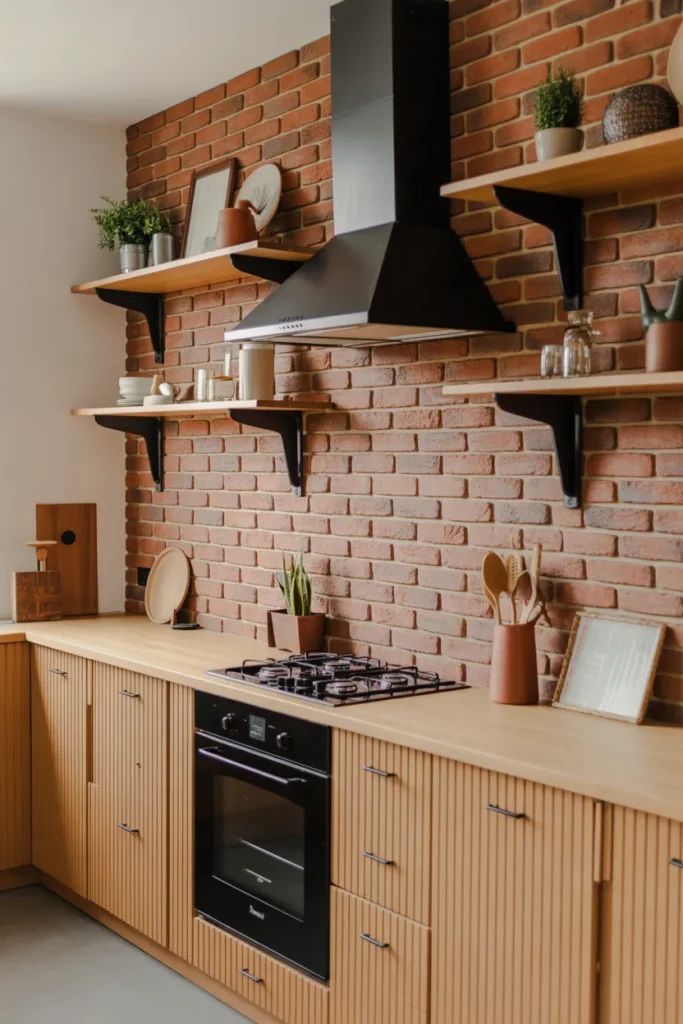
Red brick with open wood shelving keeps upper storage light and accessible. Without wall cabinets, the brick shows in full and the room feels wider. The trade off is dust and the need to keep shelves reasonably tidy.
Plan shelf contents honestly: Everyday plates and glasses earn their place. Rare items just gather dust and grease. If most of your storage is occasional use, keep some cabinets and only two shelves.
Protect shelves from steam: Shelves over or beside the hob get steam and grease. Keep them to the side where possible and wipe them weekly. Sealed wood shelves clean more easily than raw wood.
- Keep daily items only on open shelves
- Place shelves away from direct hob steam
- Wipe wood shelves weekly in busy kitchens
Shop This Look
20. Whitewashed Brick with Dark Wood Accents
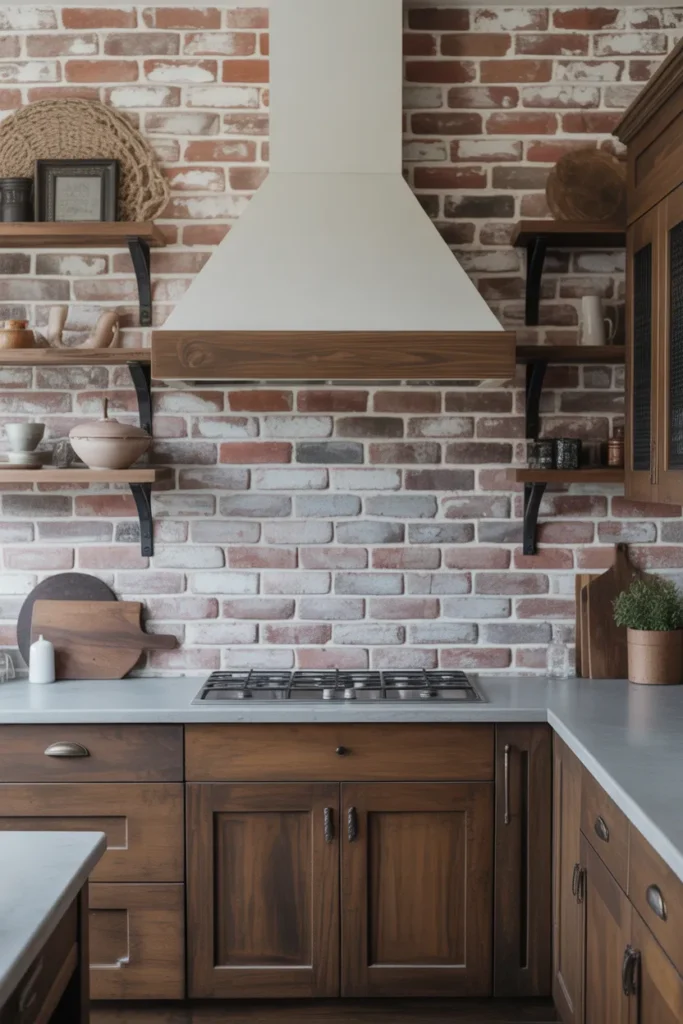
Whitewashed brick with dark wood accents gives contrast without black hardware. Walnut shelves, dark stools, or a dark island ground the pale wall. The result is warm rather than stark.
Repeat the dark wood: One dark wood item looks lost. Repeat it at least twice, for example shelves and stools, or island and beams. Keep the dark wood the same species or stain so it reads as a set.
Keep the wash consistent: Whitewash over brick varies with brick color underneath. Darker bricks need an extra coat for the same result. Work wall by wall and note your mix ratio so repairs match later.
- Repeat dark wood in at least two places
- Note your whitewash mix for future touch ups
- Add extra wash over darker bricks
Shop This Look
21. Dark Brown Brick with Antique Fixtures
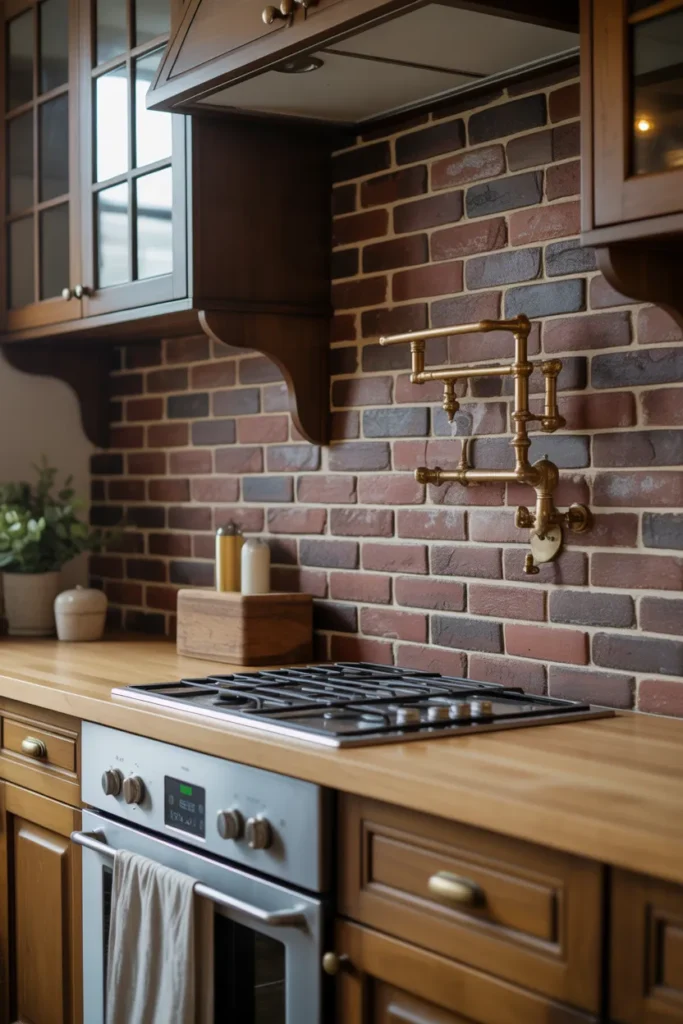
Dark brown brick with antique fixtures suits kitchens with history, or new kitchens that want some. Aged brass taps, porcelain handles, and vintage style lights sit naturally against deep brick. Keep modern appliances simple so they do not jar.
Buy fixtures as a family: Antique style pieces from different ranges can clash in tone. Choose one aged finish and buy taps, handles, and lights in it. Real antiques need checking for modern plumbing fittings before you plan around them.
Balance old and new: Let the fixtures and brick carry the vintage feel, and keep counters plain and practical. A modern stone counter in a quiet color stops the kitchen becoming a theme. Good task lighting matters more here than style lighting.
- Use one aged finish for all fixtures
- Keep counters plain to balance vintage details
- Add strong task light behind the scenes
Shop This Look
22. Red Brick with Stone Countertops
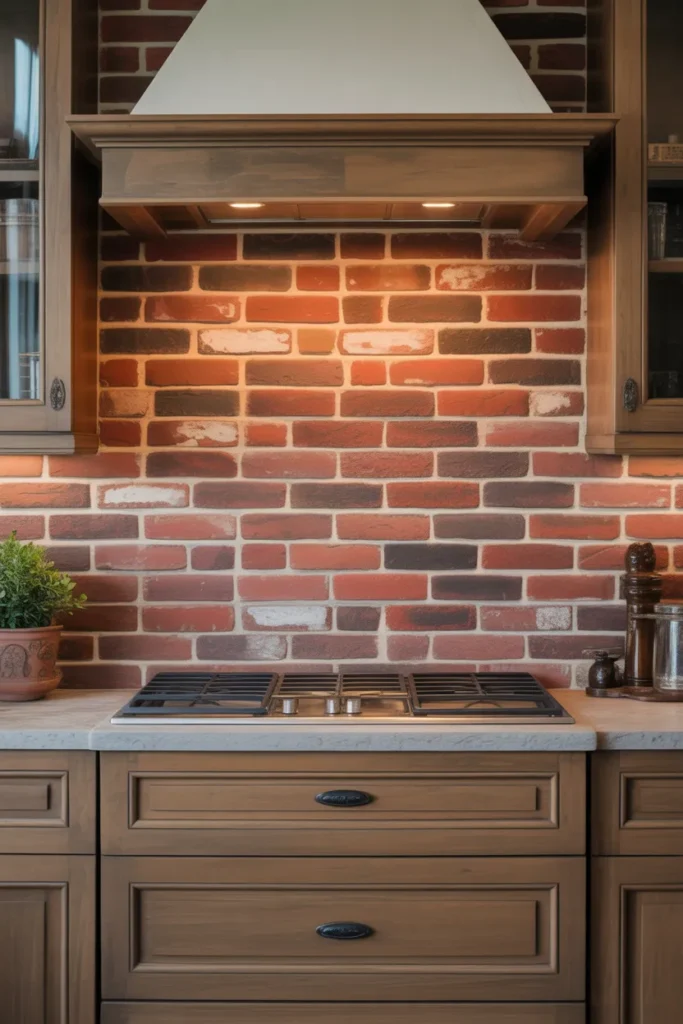
Red brick with stone countertops pairs two heavy, lasting materials. The stone work surface cools the warmth of the brick and gives a solid place to work. It suits kitchens that cook a lot and need surfaces that cope.
Choose stone that handles heat: Granite and quartzite cope well near hobs. Marble looks good with brick but marks more easily, so be honest about upkeep. Whatever you choose, trivets should still be a habit.
Mind the joint at the wall: Brick is uneven, so the counter edge against it needs careful sealing. A small upstand in the same stone gives a cleaner line and hides the uneven joint. Ask the fitter about this before the stone is cut.
- Add a stone upstand against uneven brick
- Use trivets even on heat resistant stone
- Seal the counter to wall joint carefully
Shop This Look
23. Whitewashed Brick with Open Shelving
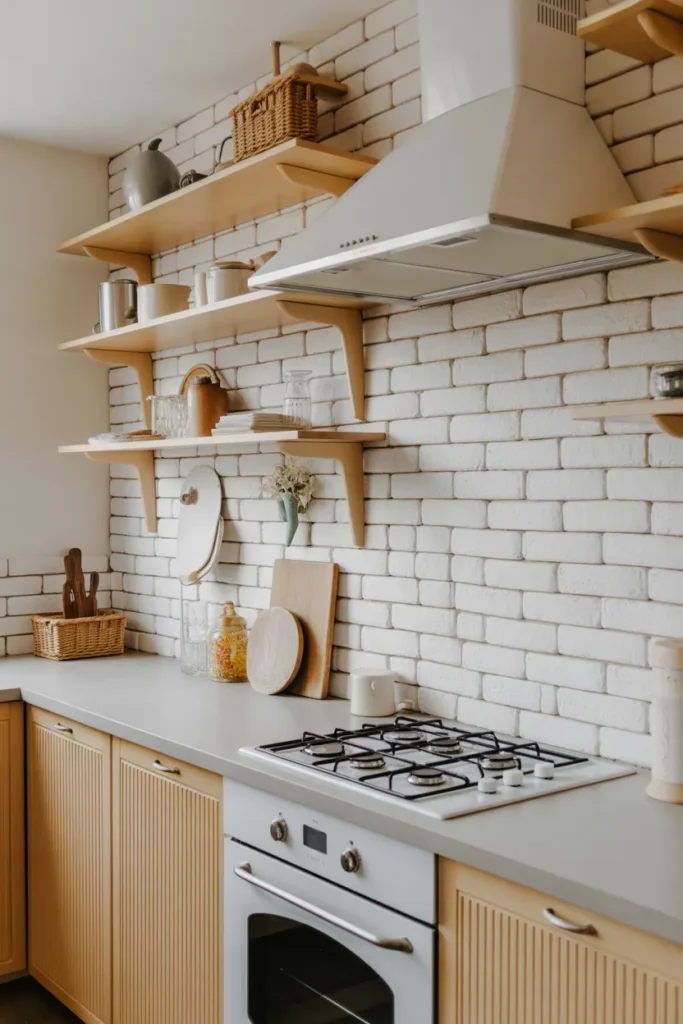
Whitewashed brick with open shelving is the lightest version of the brick and shelf idea. Pale walls and shelves full of plain dishes suit small kitchens and rented homes using brick panels. It feels bright without being plain.
Use panels where weight matters: Brick look panels and thin veneer suit walls that cannot take real brick weight. Seams matter, so plan panel joins behind shelves where they are hidden. Paint or wash panels before shelves go up.
Style shelves in pale tones: White and cream dishes, clear jars, and light wood keep the airy feel. A few green plants give life without adding visual weight. Dark items should be few and deliberate.
- Hide panel joins behind shelves
- Keep shelf items pale and simple
- Add plants for color without clutter
Shop This Look
How to Start
Start with the wall itself. Real brick needs a wall that can take the weight and a surface that is sound. Thin veneer and panels suit most kitchens and give the same look for less load and less mess.
Choose your brick type: Real brick, thin veneer, and brick panels differ in cost, weight, and how they feel to touch. Veneer is real clay cut thin, so it seals and cleans like brick. Panels are lightest and suit renters, but joins need hiding behind shelves or trim.
Plan sealing and grout early: Decide the grout color and sealer before laying starts, because both change the finished color. Make a sample board with your brick, grout, and sealer and live with it by the window for a few days. It is the cheapest decision you will make in the whole project.
- Check the wall can take the weight of real brick
- Make a sample board with brick, grout, and sealer
- Plan how the brick edge finishes at cabinets and ceiling
Shop This Look
Common Mistakes
Brick backsplashes usually fail on upkeep and finish, not on looks. These are the errors that show up again and again.
- Skipping sealer, so oil and sauce soak into the brick and cannot be removed
- Using bright white grout that turns gray and patchy within months
- Laying brick straight over weak plasterboard without checking fixings and weight
- Putting rough brick right behind the hob with no plan for grease cleaning
- Choosing brick from a single sample piece instead of a mixed sample board
- Mixing too many accent metals and wood tones against an already varied wall
- Leaving raw cut edges at the ends of the wall with no trim or return
Frequently Asked Questions
Is a brick backsplash hard to clean?
Sealed brick is easier than most people expect. Day to day, a soft brush and warm water handle splashes. The area behind the hob needs the most attention, and a glass guard there cuts the work down a lot. Unsealed brick is the version that becomes a problem.
Can I use real brick or should I choose veneer?
Thin veneer gives the real clay surface at a fraction of the weight and thickness, and it suits most kitchen walls. Full brick makes sense on a masonry wall or where the brick is already there under plaster. Panels are the budget and rental friendly option.
Does brick suit a modern kitchen?
Yes, if the rest of the room stays simple. Flat front cabinets, plain counters, and restrained lighting let brick add texture to a modern layout. Whitewashed and neutral brick are the easiest versions to use in a modern scheme.
How much does a brick backsplash cost?
Panels cost least, veneer sits in the middle, and real brick with building work costs most. Fitting often costs as much as materials, especially with patterned layouts. Get quotes that separate materials, fitting, sealing, and waste removal so you can compare fairly.
What should I pair with a brick backsplash?
Wood cabinets, white shaker doors, stone counters, and open shelving all pair well with brick. Plan the cabinet and counter colors with the brick sample in the room. For wider planning help, this overview of kitchen backsplash options covers how brick compares with tile and stone.
The Finishing Touch
Finish a brick kitchen with restraint. A few wood boards, plain jars, and one or two plants are enough against a textured wall. Keep the counter mostly clear so the brick, not the clutter, is what people notice.
For more layouts and color combinations, look through the kitchen photos on Houzz and filter for brick walls. Save examples where the cabinet color matches yours, because brick changes character completely depending on what sits below it.
Seal the brick, choose the grout with care, and the backsplash will look after itself for years. Most of the charm of brick is already in the material. Your job is mostly to protect it and not to cover it up with too much else.