23 Small Dining Room Decor Ideas for Tiny Spaces
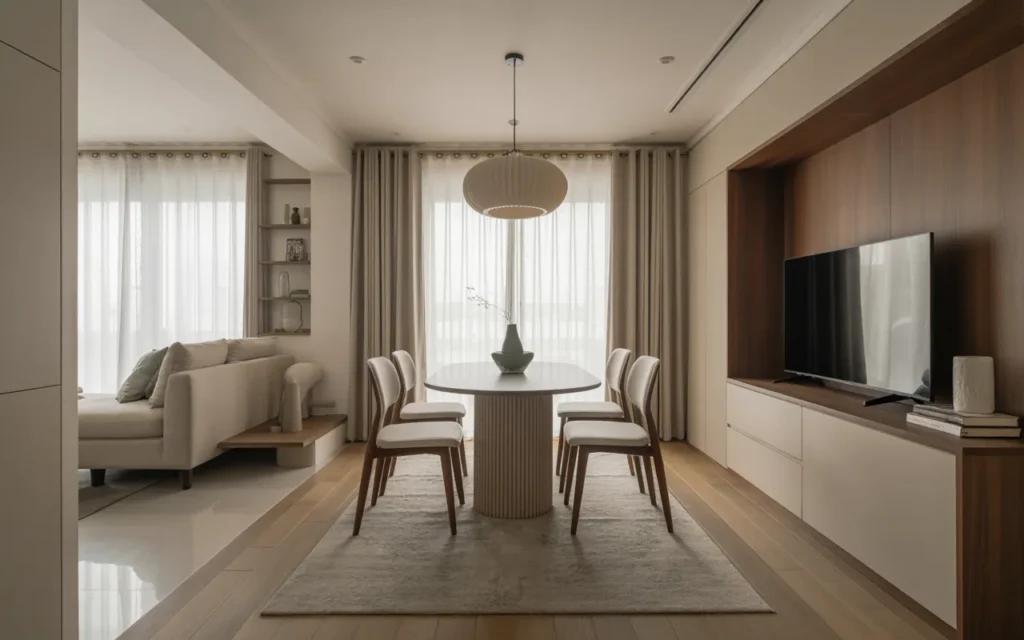
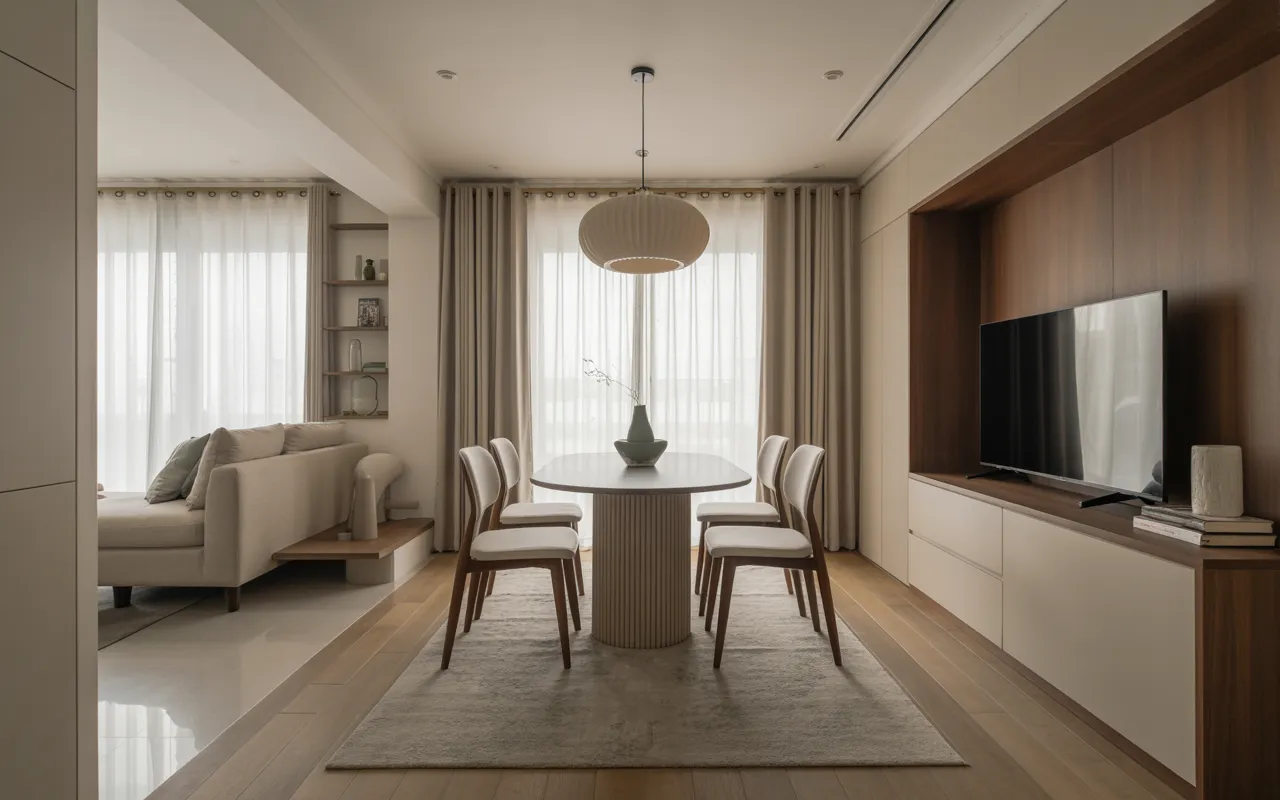
Small dining rooms can feel just as stylish and functional as larger spaces with the right design choices. By focusing on smart layouts, compact furniture, and clever storage solutions, even the tiniest dining area can become inviting and practical. From round tables that improve flow to wall-mounted options that save space, thoughtful details make a significant difference. Light color palettes, mirrors, and multi-functional pieces help create the illusion of openness while maintaining everyday comfort.
1. Round Dining Table for Better Flow
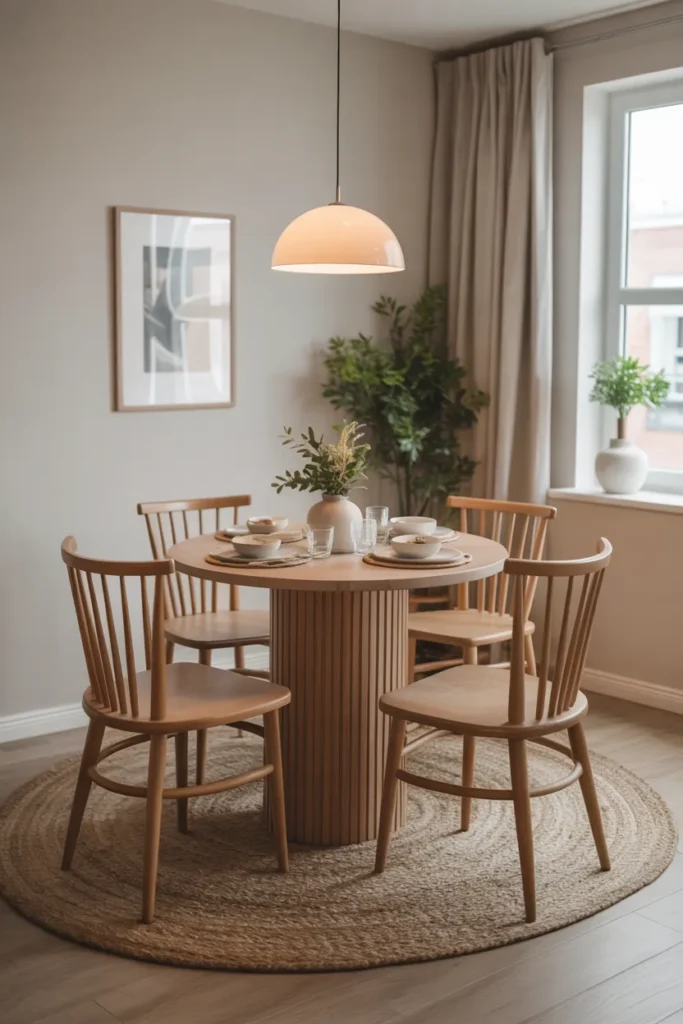
A round dining table is one of the smartest choices for tiny spaces because it improves movement and eliminates sharp corners. The curved edges create a smoother visual flow, making the room feel less cramped and more inviting. Unlike rectangular tables that can dominate a room, a round table keeps the layout flexible and allows chairs to tuck in neatly when not in use. This makes everyday dining more comfortable while maintaining a clean, open look.
Pairing the table with slim, armless chairs enhances the sense of space even further. Light-colored finishes, such as oak or white, reflect natural light and help the room feel brighter. A simple pendant light above the table defines the dining area without overwhelming it. Keeping décor minimal, such as a small vase or greenery, ensures the space feels stylish yet uncluttered.
2. Built-In Banquette Seating
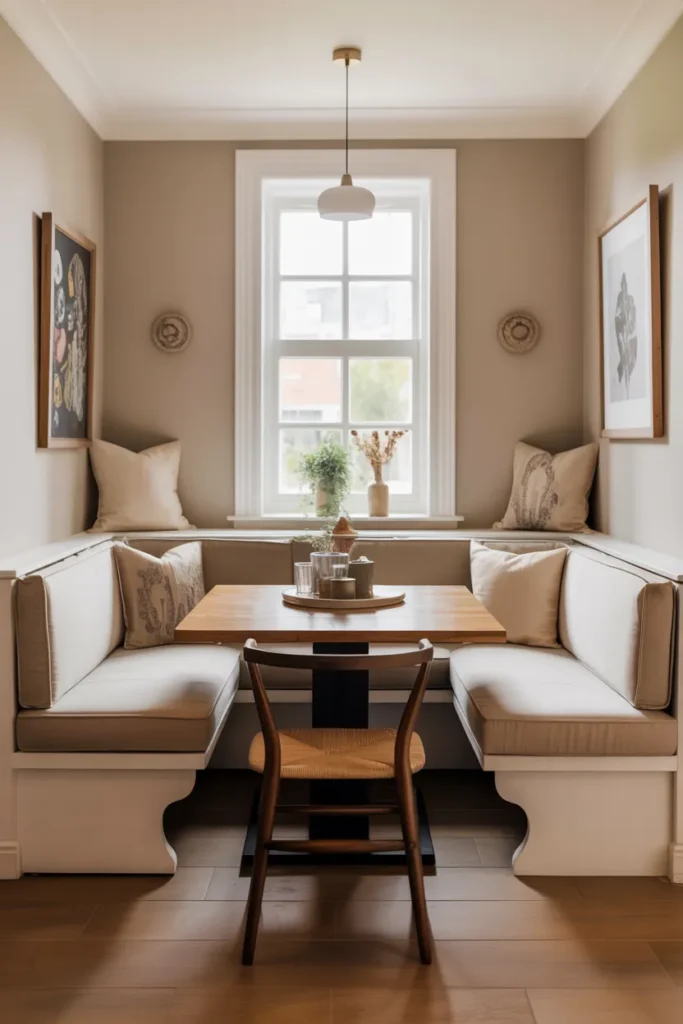
Built-in banquette seating is a game changer for small dining rooms. By utilizing corners efficiently, it maximizes seating without taking up unnecessary floor space. Unlike traditional chairs, a banquette fits flush against the wall, instantly freeing up walking room. It also creates a cozy, intimate atmosphere that makes even the tiniest dining area feel thoughtfully designed.
Adding storage beneath the bench makes it even more practical. Hidden compartments can store table linens, extra dishes, or seasonal décor. Soft cushions and textured throw pillows bring comfort and style, while a slim rectangular table keeps proportions balanced. This combination transforms a tight corner into a functional and charming dining retreat.
3. Wall-Mounted Foldable Dining Table
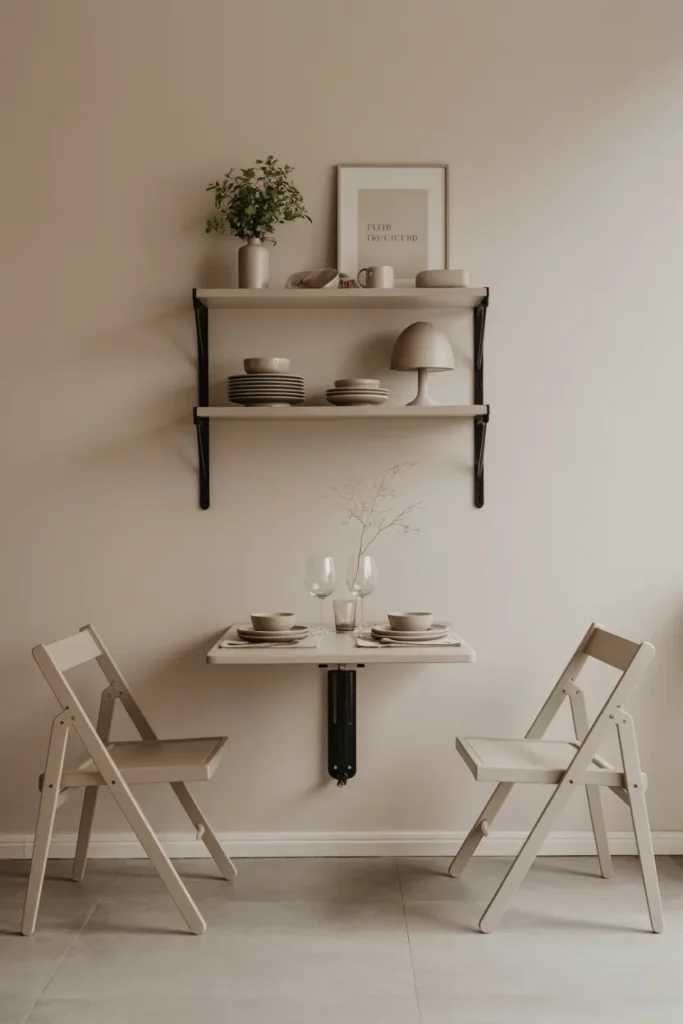
A wall-mounted foldable table is perfect for extremely compact dining areas. It can be expanded when needed and folded down to free up space when not in use. This flexibility makes it ideal for multipurpose rooms, especially in apartments or studio layouts. The design keeps the room open and prevents bulky furniture from crowding the space.
Pairing the foldable table with lightweight chairs ensures easy movement and adaptability. Floating shelves above the table provide storage without occupying floor space, keeping essentials within reach. Choosing a light color scheme enhances brightness and makes the small dining area feel airy, organized, and thoughtfully arranged.
4. Glass Dining Table for an Airy Look
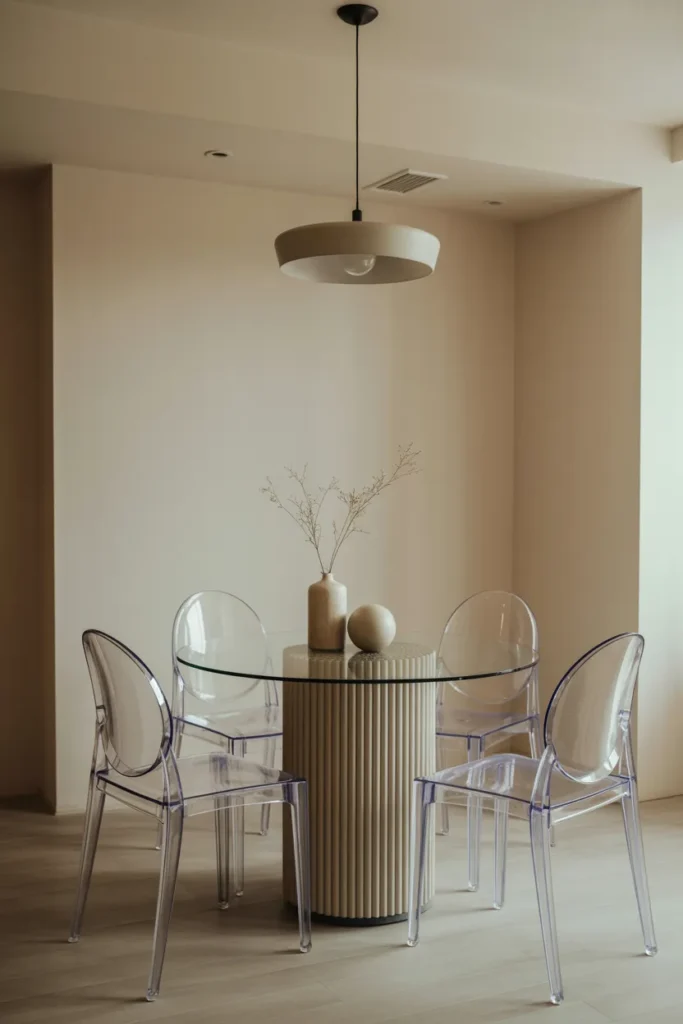
A glass dining table creates the illusion of more space by allowing light to pass through it. Unlike solid wood tables, glass surfaces appear lighter and less bulky, which helps reduce visual clutter. In tiny dining rooms, this transparency makes a significant difference, giving the impression of openness and flow. The sleek design also adds a modern and refined touch.
Pairing the glass table with slim metal or acrylic chairs keeps the look cohesive and uncluttered. A simple pendant light defines the dining zone without overwhelming it. Keeping accessories minimal, such as a small centerpiece or neutral rug, ensures the room feels balanced and sophisticated while still practical for daily use.
Also view: 24 Small Kitchen Decor Ideas for Modern Homes
5. Vertical Storage with Open Shelving
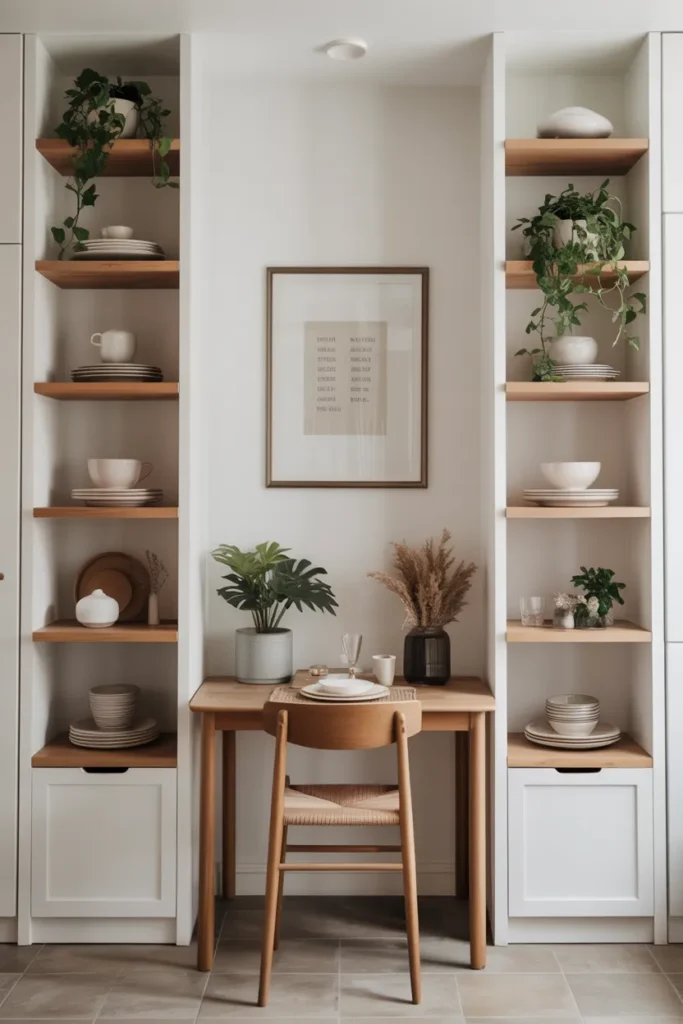
Vertical storage is essential in small dining rooms where floor space is limited. Tall open shelves draw the eye upward, making the ceiling appear higher and the room feel larger. They provide practical storage for dinnerware, glassware, and decorative accents without requiring bulky cabinets. This approach keeps everything accessible while maintaining an organized look.
Styling the shelves thoughtfully is key to preventing visual clutter. Mixing functional items with decorative elements like plants, baskets, or framed prints adds personality and warmth. Keeping a cohesive color palette ensures the space feels harmonious. With smart vertical storage, even the tiniest dining room can feel stylish, functional, and beautifully arranged.
6. Light Color Palette to Open Up the Space
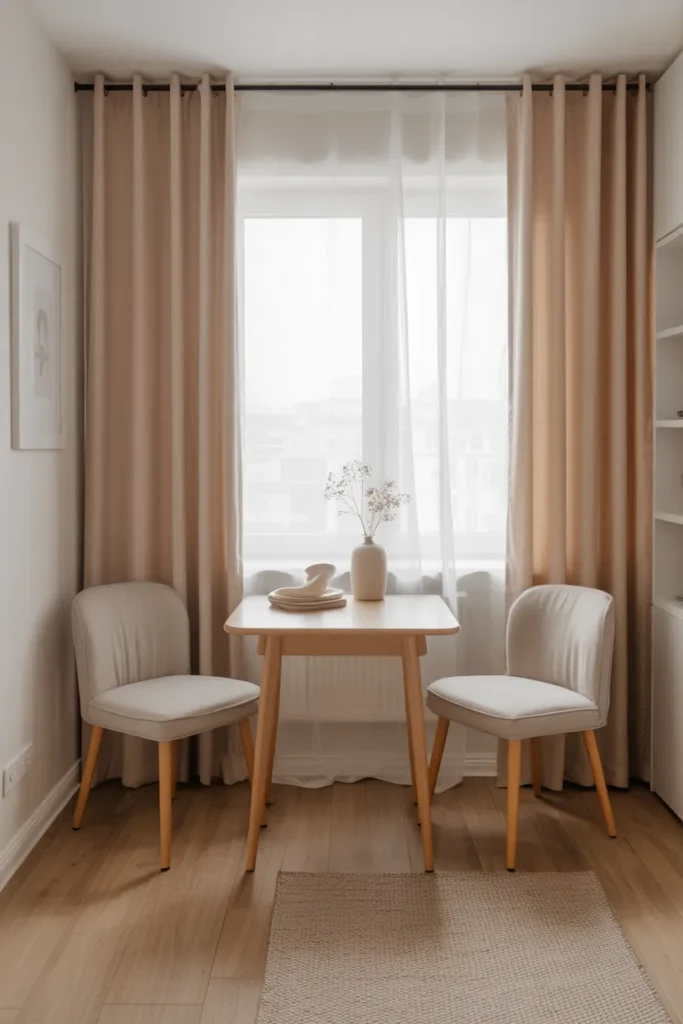
Using a light color palette is one of the simplest ways to make a small dining room feel larger. Shades like white, cream, soft gray, and pale wood reflect natural light and reduce visual heaviness. When walls, furniture, and décor stay within a similar soft range, the space appears more seamless and open. This creates a calm and welcoming atmosphere that feels far less cramped.
Layering subtle textures keeps the room from looking flat. Linen chair covers, woven rugs, or light wooden finishes add depth without overwhelming the space. A few carefully chosen decorative pieces, such as a ceramic vase or framed print, enhance the design while maintaining an uncluttered and balanced look.
7. Mirror Accent Wall for Depth
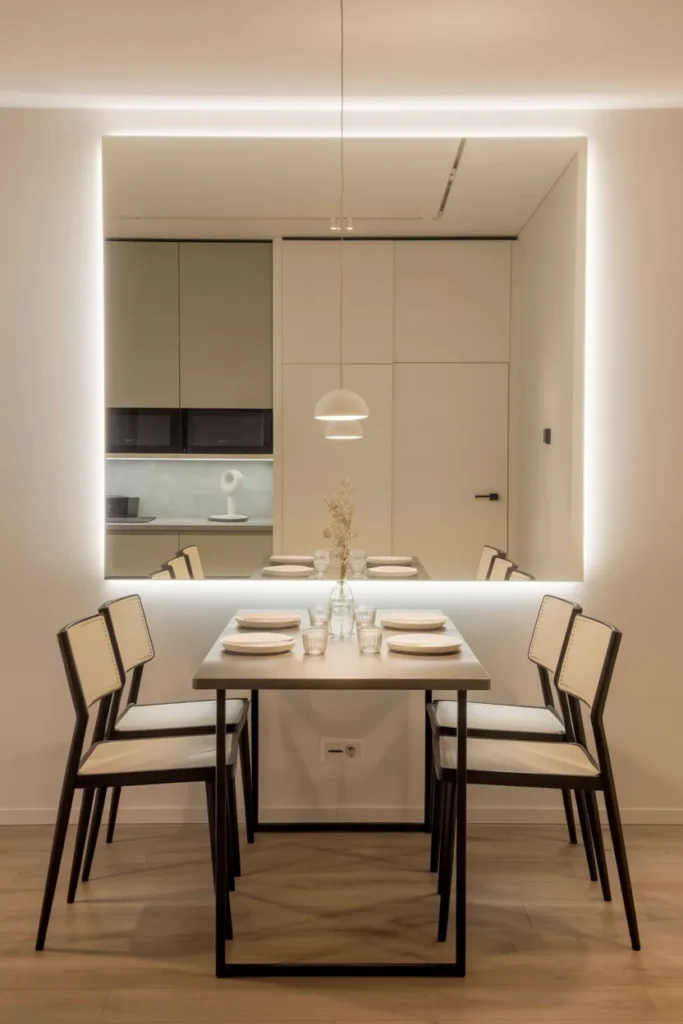
Mirrors are powerful design tools for tiny dining rooms. A large mirror placed strategically on one wall reflects light and visually expands the area, making it feel almost twice as large. This simple addition creates depth and brightness without requiring extra square footage. It also enhances the overall elegance of the space.
Framing the mirror in black, gold, or natural wood can complement the dining furniture and tie the design together. Keeping the surrounding décor minimal ensures the reflection doesn’t create visual clutter. With proper placement, a mirror transforms a compact dining area into a brighter and more open environment.
8. Slim Rectangular Table Against the Wall
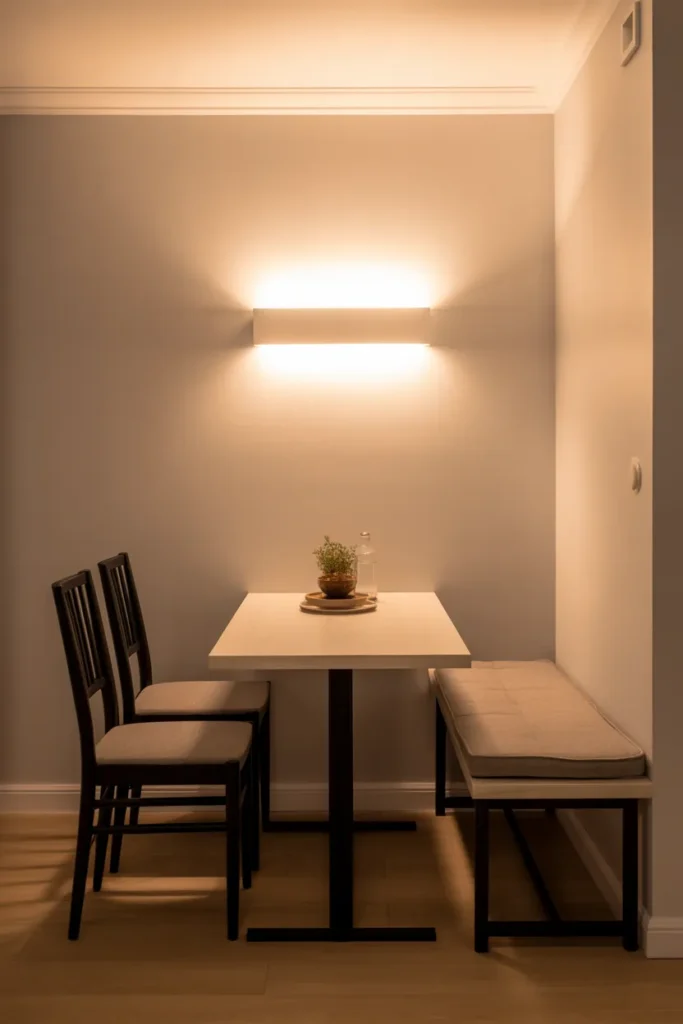
Positioning a slim rectangular table against the wall is a practical solution for narrow dining spaces. This layout frees up walking space and keeps the room from feeling overcrowded. When needed, the table can be pulled slightly away from the wall to accommodate more seating. It’s a flexible arrangement that works especially well in small apartments.
Pairing the table with a bench that tucks underneath maximizes efficiency. Wall-mounted lighting instead of floor lamps saves additional space. Keeping decorations minimal, such as a single centerpiece or framed art above the table, ensures the area remains stylish yet functional.
9. Multi-Functional Dining Furniture
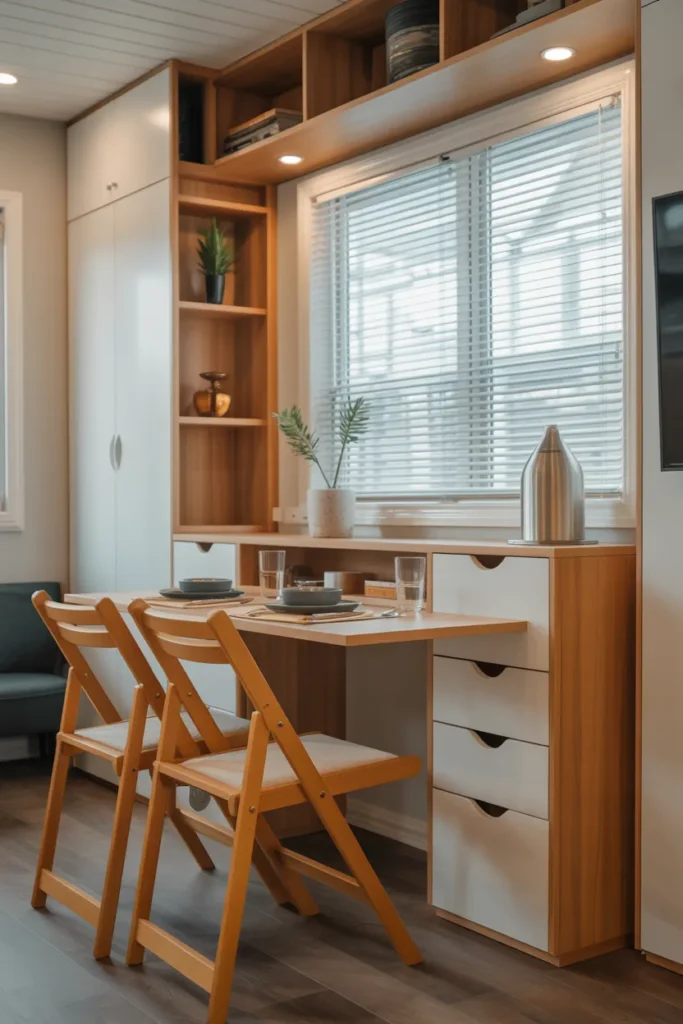
In small dining rooms, every piece of furniture should serve more than one purpose. Tables with built-in storage provide space for cutlery, placemats, or napkins without requiring extra cabinets. Stackable or foldable chairs can be stored away easily when not in use, freeing up valuable floor space. This smart approach keeps the room adaptable and clutter-free.
Choosing furniture with hidden compartments or dual functionality helps maintain a clean aesthetic. A sideboard that doubles as a serving station or storage unit adds convenience without crowding the room. With careful planning, multi-functional pieces make a tiny dining area feel organized, efficient, and stylish.
10. Statement Lighting to Define the Area
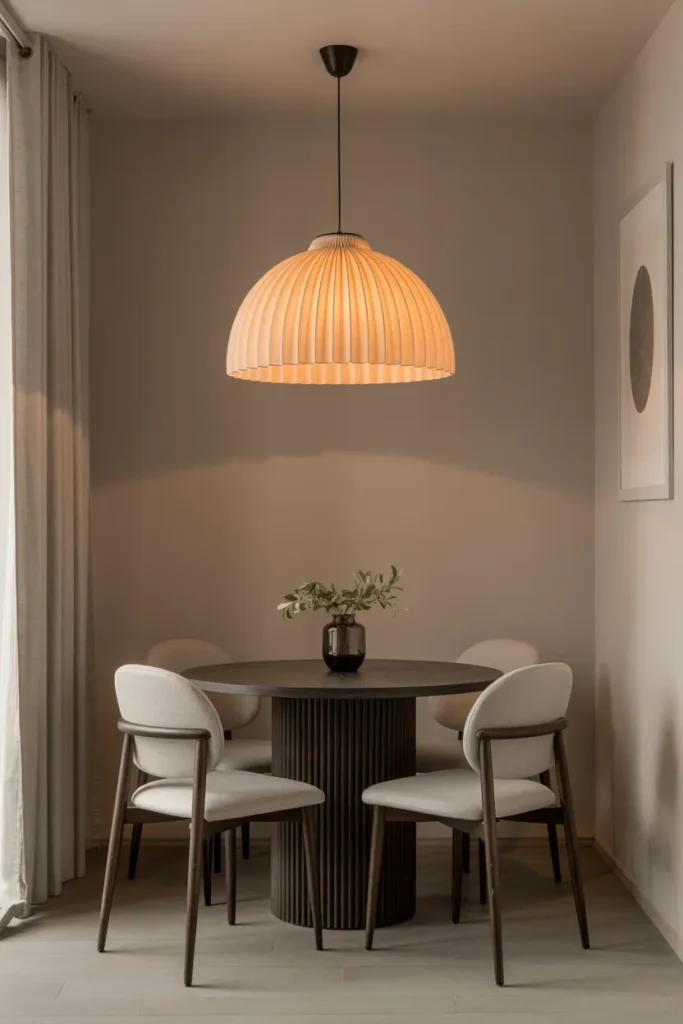
In a small dining room, statement lighting can define the space without adding clutter. A single pendant light or small chandelier draws attention upward and anchors the table visually. This creates a clear dining zone, especially in open-concept layouts or studio apartments. The right fixture adds personality while keeping the footprint minimal.
Choosing lighting that complements the size of the table is important. Oversized fixtures may overwhelm the space, while delicate designs maintain balance. Warm lighting enhances comfort and creates an inviting dining atmosphere. With the right statement piece, even the tiniest dining room can feel thoughtfully styled and complete.
11. Transparent Acrylic Chairs for a Lightweight Look
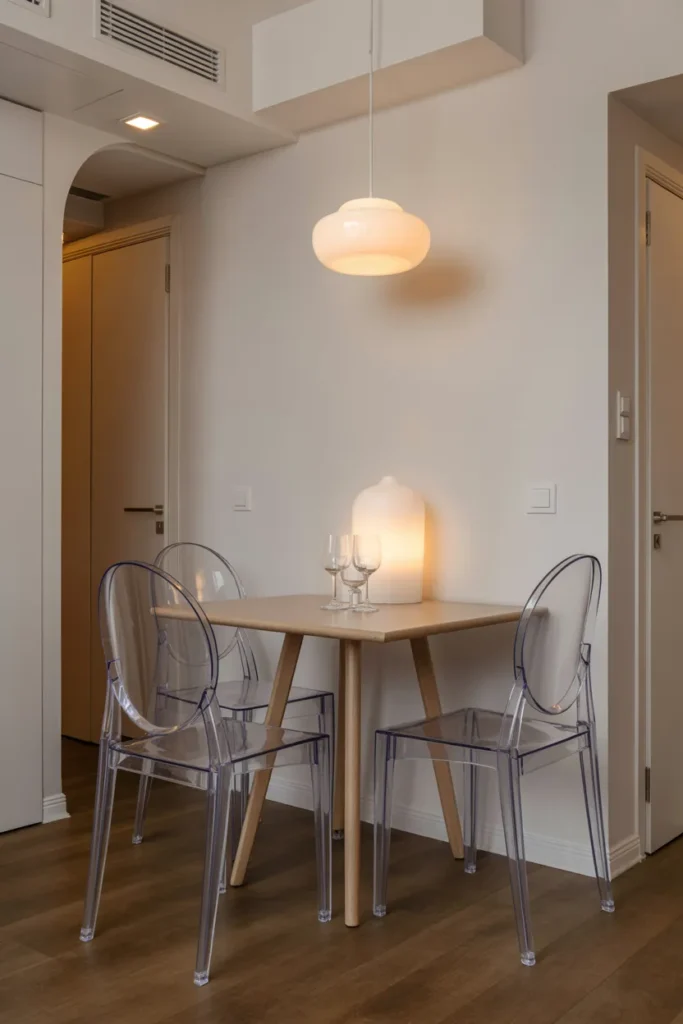
Transparent acrylic chairs are a smart choice for small dining rooms because they visually disappear into the space. Unlike bulky wooden or upholstered chairs, clear seating allows light to pass through, reducing visual weight and making the room feel larger. This creates a modern and airy atmosphere without sacrificing functionality or comfort.
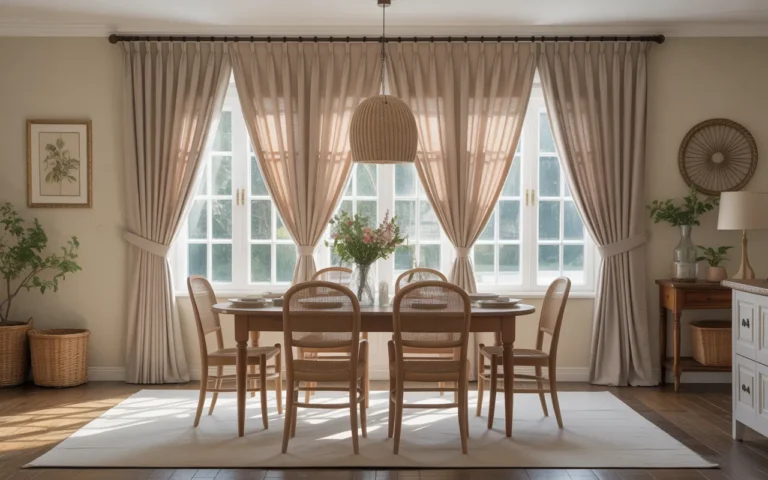
Pairing acrylic chairs with a compact wooden or glass table keeps the design balanced and stylish. Soft textiles, such as a neutral rug or linen curtains, add warmth without overwhelming the look. This combination maintains openness while ensuring the dining area feels inviting and thoughtfully designed.
12. Corner Dining Nook with Cozy Styling
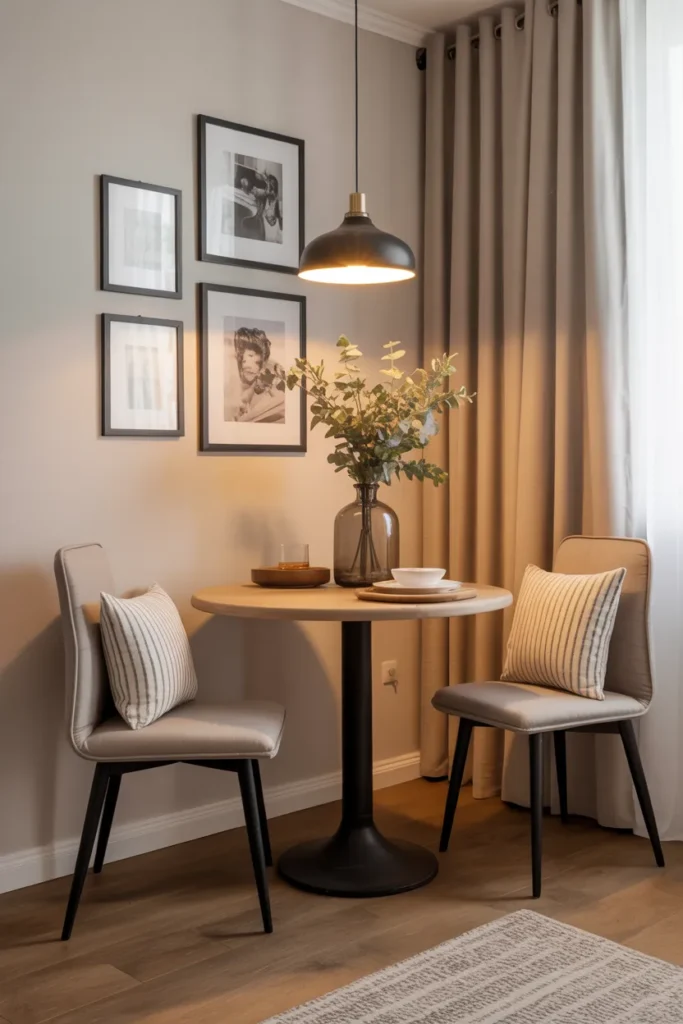
Transforming an unused corner into a dining nook is an efficient way to maximize space. A small round table fits perfectly into corners, making the layout feel intentional rather than cramped. This setup creates a cozy environment ideal for everyday meals or intimate gatherings, even in the smallest homes.
Adding soft cushions, textured fabrics, and warm lighting enhances comfort and charm. A gallery wall or floating shelf above the table brings character without taking up floor space. With careful styling, a simple corner can become a functional and visually appealing dining retreat.
13. Minimalist Dining Setup with Clean Lines
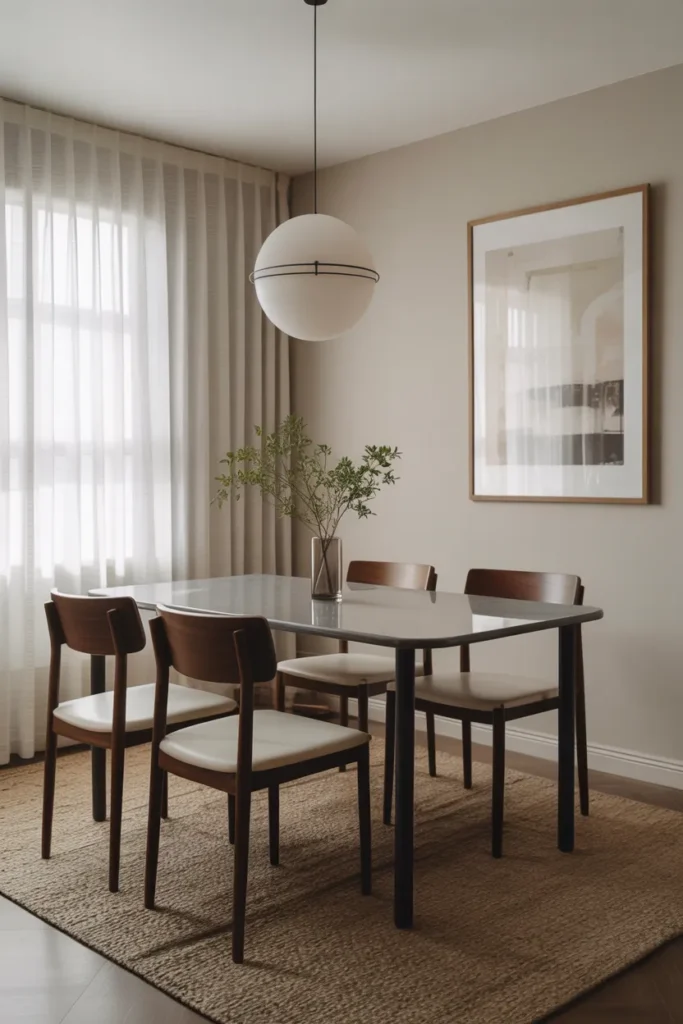
A minimalist approach works beautifully in tiny dining spaces. Clean lines, simple furniture, and a limited color palette prevent the room from feeling overcrowded. Choosing a table with slim legs and understated chairs creates an open visual flow, allowing the eye to move freely around the room.
Keeping decorations minimal is key. A single centerpiece, a framed print, or a subtle rug adds interest without clutter. This refined approach ensures the dining area feels calm, spacious, and intentionally designed, proving that less truly can be more in small interiors.
14. Floating Sideboard for Extra Storage
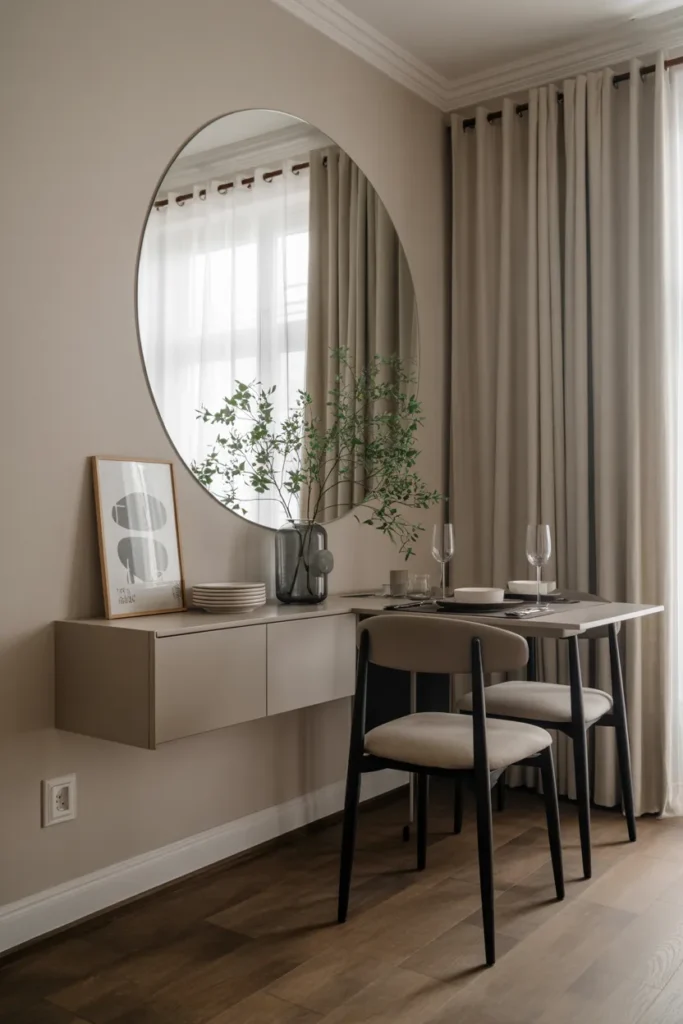
A floating sideboard provides storage without occupying valuable floor space. Mounted to the wall, it creates the illusion of openness while offering room for plates, glasses, and dining essentials. This solution keeps the dining area organized and prevents clutter from building up on the table.
Styling the top surface with minimal décor, such as a small lamp, plant, or artwork, adds personality without overwhelming the room. The elevated design allows light to flow underneath, making the space feel lighter and more spacious. It’s a practical and stylish upgrade for compact dining areas.
15. Small Dining Area with Area Rug Definition
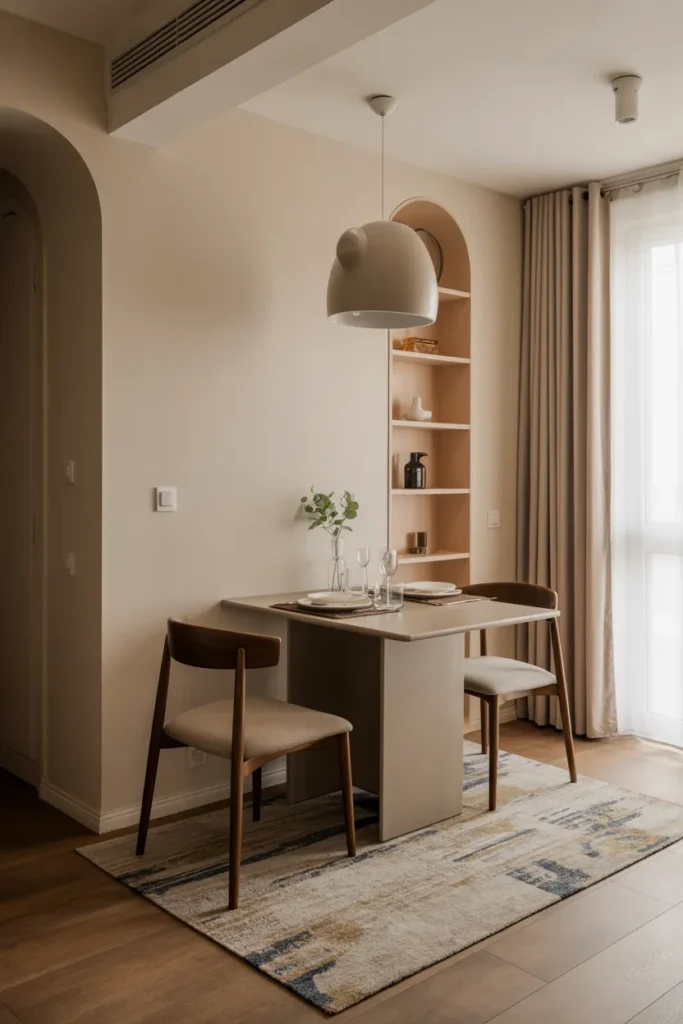
Using an area rug is a simple way to define a small dining space, especially in open layouts. The rug anchors the table and chairs, giving the area a clear boundary without using walls or bulky dividers. This makes the room feel structured and thoughtfully arranged.
Choosing a rug with subtle patterns or light tones enhances depth without making the space look busy. Ensuring the rug is proportionate to the table keeps the layout balanced. With the right rug, even a tiny dining area feels polished, cozy, and intentionally designed.
16. Extendable Dining Table for Flexibility
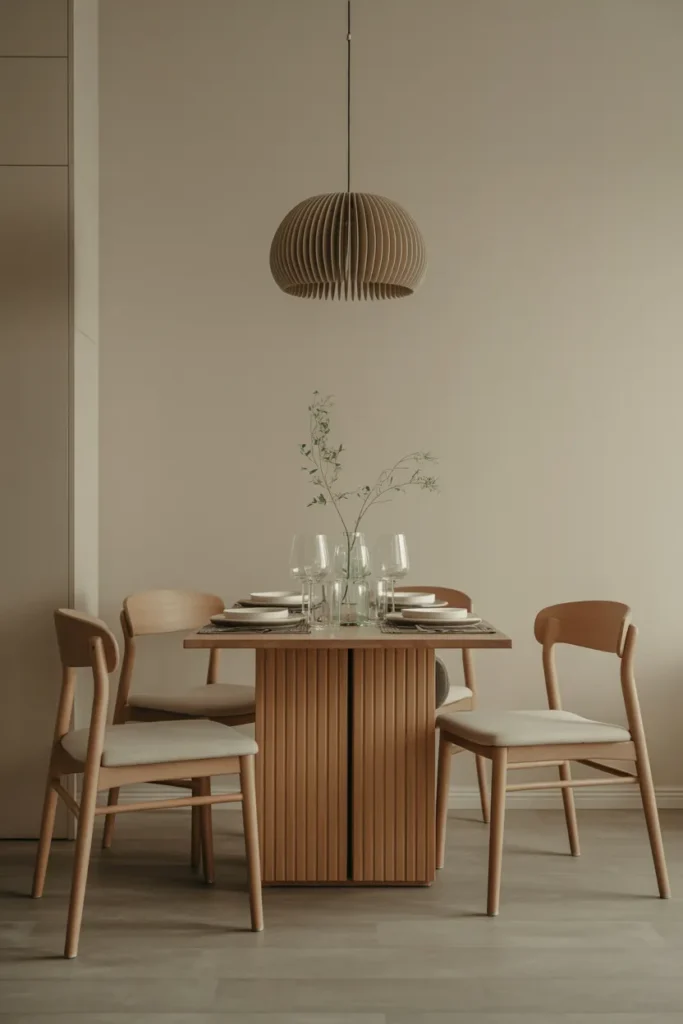
An extendable dining table is ideal for tiny spaces that need flexibility. It remains compact for daily use but can expand when guests arrive, making it both practical and space-efficient. This adaptability prevents the room from feeling crowded while still allowing for comfortable gatherings when needed.
Choosing a design with clean lines and slim legs keeps the table visually light. Pairing it with stackable or foldable chairs adds even more versatility. With thoughtful styling and neutral colors, an extendable table ensures your small dining area remains functional, organized, and ready for any occasion.
17. Wall Art to Add Personality Without Bulk
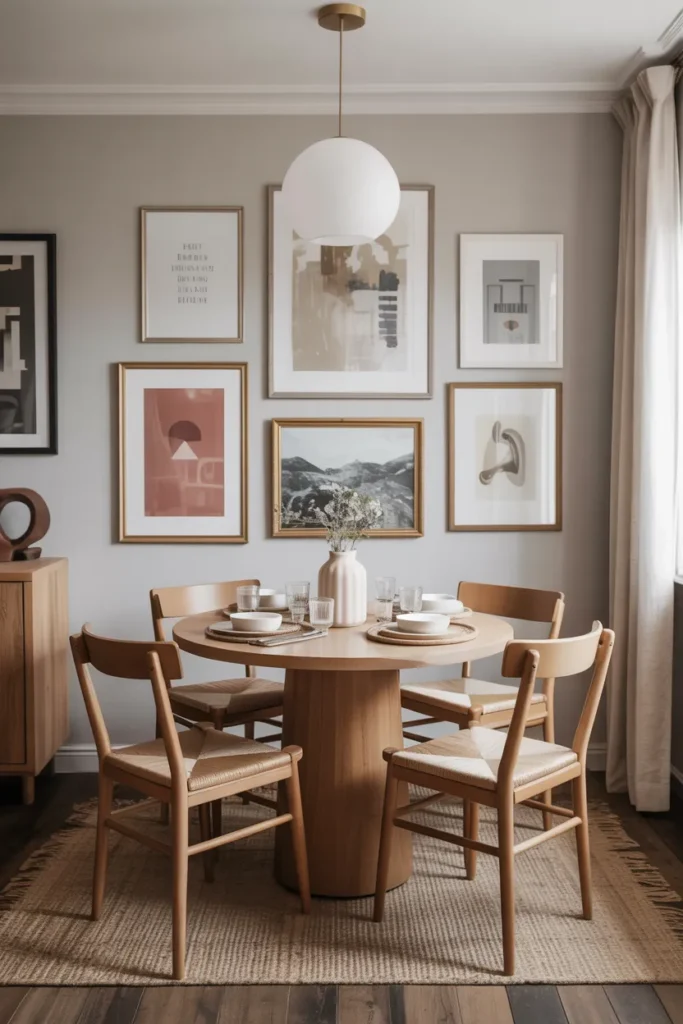
Decorating vertical surfaces is a smart way to enhance a small dining room without sacrificing floor space. Wall art draws the eye upward, adding personality and visual interest while keeping the layout open. A well-arranged gallery wall or oversized framed print can instantly elevate the space.
Sticking to a cohesive color palette ensures the room feels harmonious rather than busy. Lightweight frames and simple designs maintain a clean look. By focusing décor on the walls instead of additional furniture, the dining area feels stylish, expressive, and perfectly suited to tiny spaces.
18. Compact Bistro-Style Setup
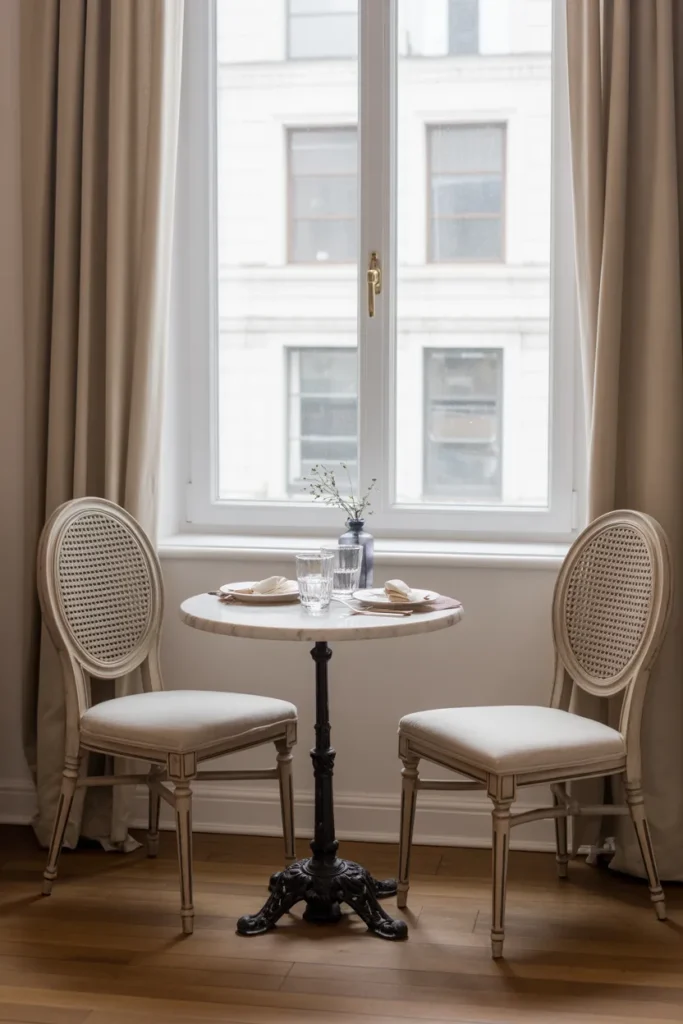
A bistro-style dining set is perfect for compact homes or apartments. Its small scale makes it ideal for tight corners, while the round shape improves flow and movement. This setup creates an intimate atmosphere that feels cozy and inviting without taking up unnecessary space.
Choosing lightweight chairs and a slim table base keeps the look airy and refined. Placing the set near a window maximizes natural light and enhances openness. With minimal accessories and soft textures, a bistro-style arrangement brings charm and practicality to even the smallest dining rooms.
19. Open-Concept Dining with Visual Separation
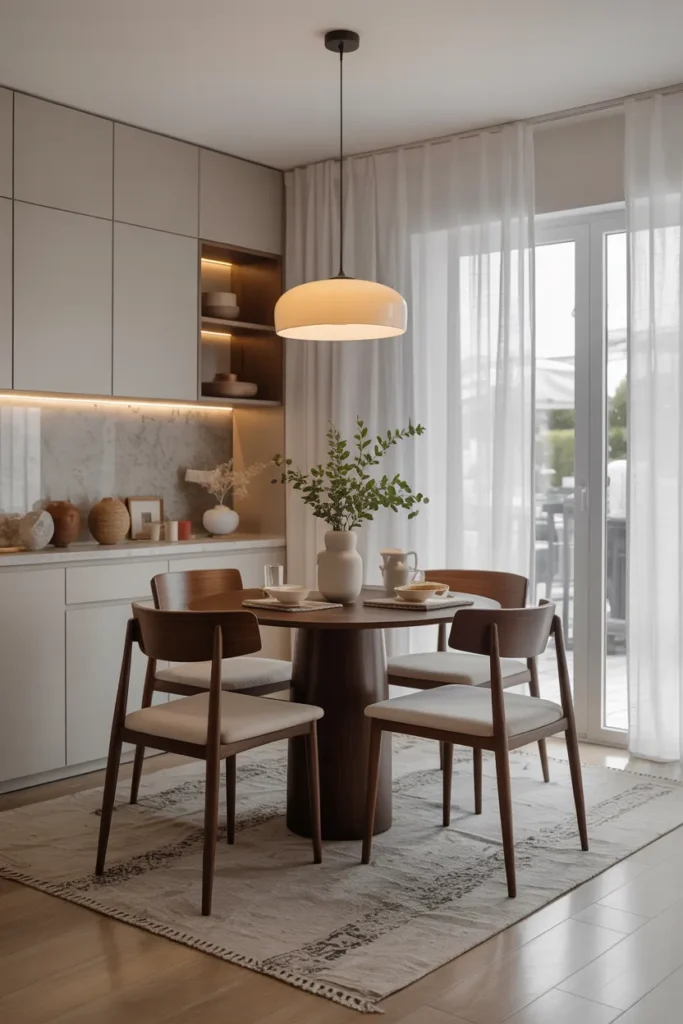
In open layouts, defining the dining space visually is essential. Using elements like a pendant light, rug, or contrasting wall color helps create a distinct dining zone without building physical barriers. This keeps the room feeling spacious while maintaining organization and structure.
Keeping furniture proportions balanced ensures the dining area blends seamlessly with the surrounding space. Matching color tones and materials throughout the room creates cohesion. With thoughtful visual separation, even a small open-concept layout can feel functional, stylish, and well-designed.
20. Slim Bench Seating for Space Efficiency
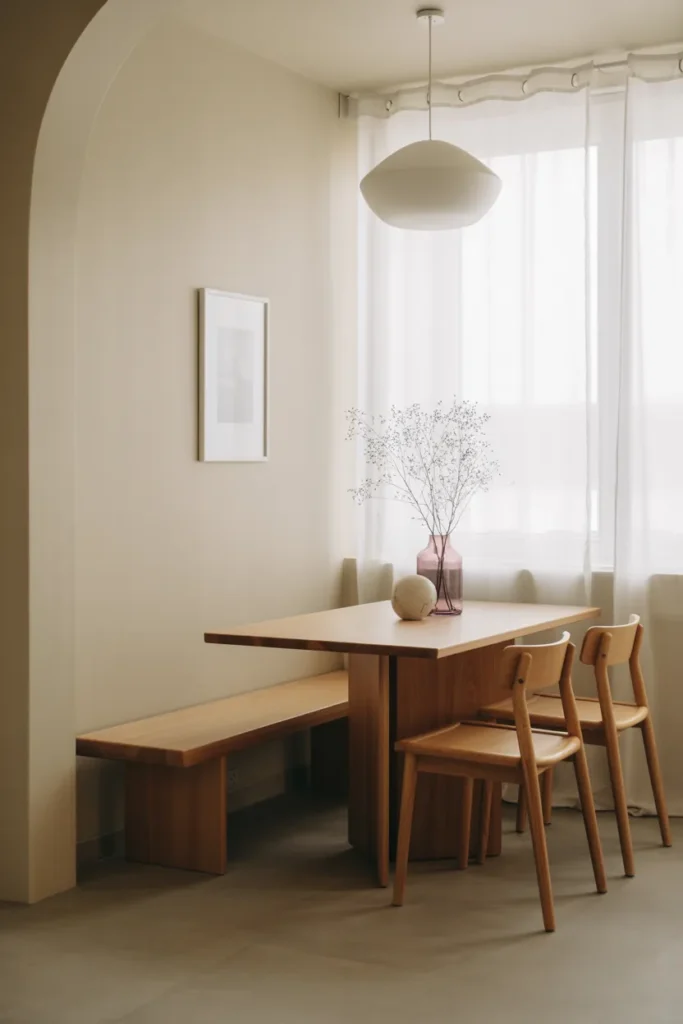
Slim bench seating is a clever alternative to traditional chairs in small dining rooms. Benches can be tucked completely under the table when not in use, freeing up walking space and reducing visual clutter. This makes the room feel more open and organized.
Adding cushions or upholstered padding increases comfort without adding bulk. Pairing the bench with lightweight chairs keeps the layout balanced and flexible. With this arrangement, a tiny dining room can feel efficient, modern, and surprisingly spacious while maintaining everyday practicality.
21. Drop-Leaf Table for Ultimate Space Saving
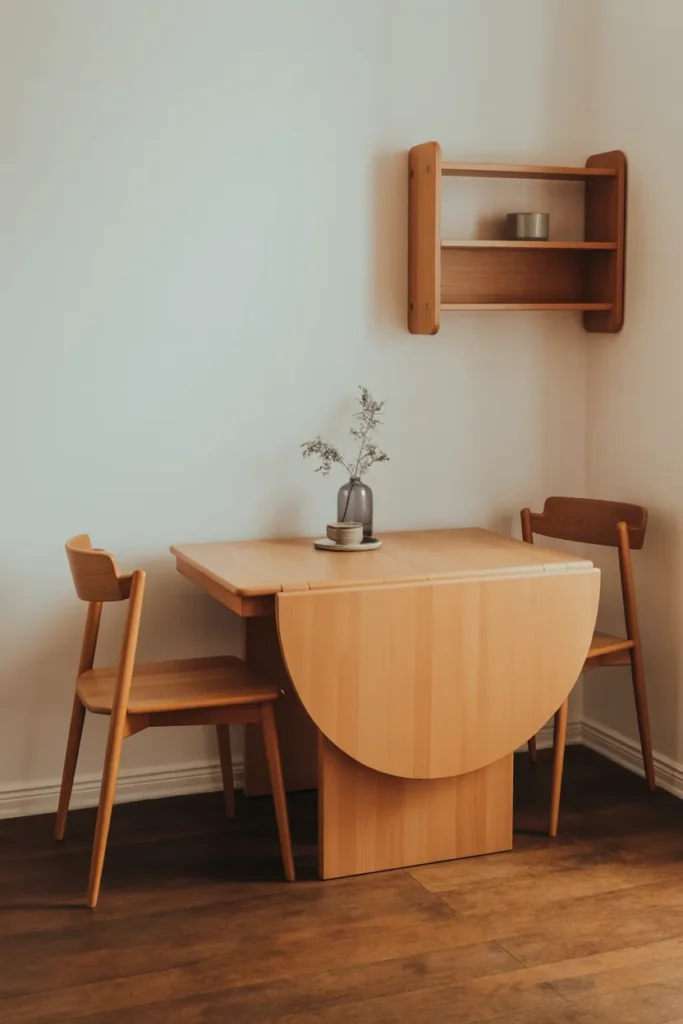
A drop-leaf table is one of the most efficient solutions for tiny dining rooms. It allows you to expand the surface when needed and fold it down when not in use, instantly freeing up valuable floor space. This makes it ideal for apartments or multipurpose rooms where flexibility is essential.
Choosing a design with clean lines and light finishes keeps the table from looking bulky. Pairing it with foldable or stackable chairs enhances convenience. With minimal décor and thoughtful placement, a drop-leaf table creates a dining area that feels adaptable, organized, and perfectly suited for compact living.
22. Monochrome Styling for a Cohesive Look

A monochrome color scheme can make a small dining room feel larger and more cohesive. When furniture and walls share similar tones, the boundaries of the room appear less defined, creating a seamless visual flow. This reduces contrast and helps the space feel calm and uncluttered.
Layering different textures within the same color family prevents the design from looking flat. Linen upholstery, woven rugs, and matte finishes introduce subtle variation while maintaining harmony. This approach results in a refined and airy dining space that feels modern, balanced, and effortlessly stylish.
23. Greenery to Bring Life Without Clutter
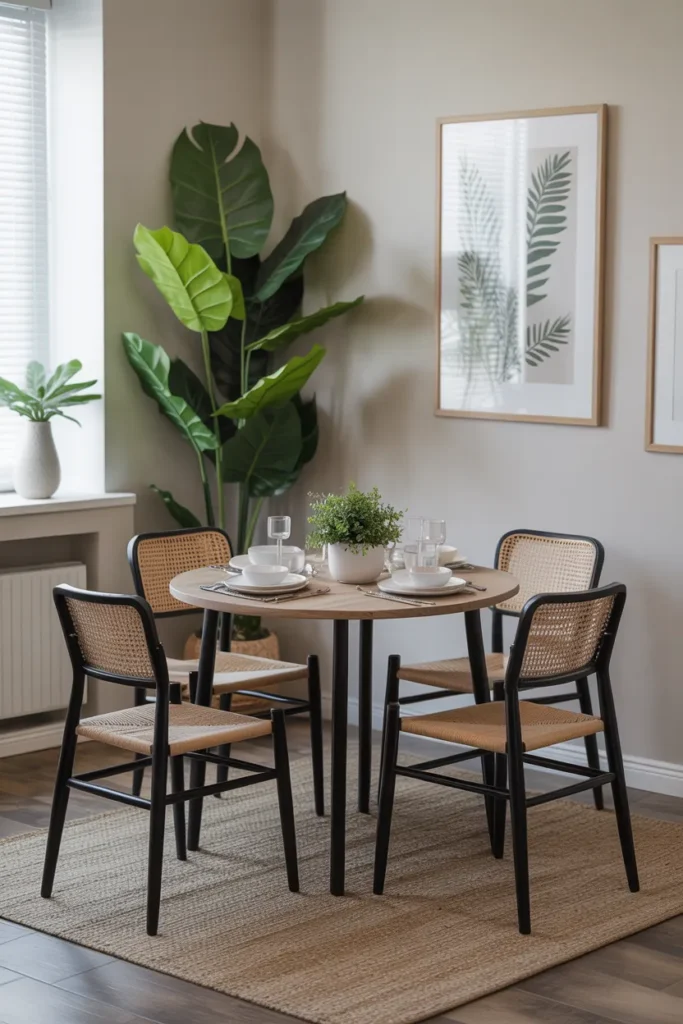
Incorporating greenery is a simple way to enhance a small dining room without adding bulk. Plants bring natural texture, color, and vibrancy to compact spaces, making them feel more inviting and alive. A small centerpiece or a slim floor plant can instantly elevate the atmosphere.
Choosing plants with vertical growth helps maximize space while keeping surfaces clear. Minimal planters in neutral tones maintain cohesion with the rest of the décor. With carefully placed greenery, even the smallest dining room can feel refreshed, stylish, and thoughtfully designed.
Conclusion
Decor plays an equally important role in transforming compact dining spaces. Vertical storage, statement lighting, and cohesive color schemes enhance the room without adding clutter. Choosing furniture with slim profiles and incorporating subtle textures ensures balance and warmth. With intentional styling and space-conscious decisions, a small dining room can feel organized, airy, and beautifully designed for both daily meals and intimate gatherings.