21 Aesthetic Living Room Designs Cozy Home Inspo
There is a reason the phrase “aesthetic living room” shows up in so many saved posts and Pinterest boards. It is not about a single style. It is about a room that feels put together without trying too hard, where the colors sit well next to each other and the textures make you want to sit down. You can walk into someone’s living room and feel it within seconds: calm, warm, personal. That feeling is not an accident. It comes from a handful of decisions about color, light, fabric, and layout that anyone can make, no design degree required.
This guide gathers 21 cozy aesthetic living room ideas that work in real homes, not just magazine shoots. Each idea comes with its own photo, practical tips you can actually use, and a short list of products that fit the look. You will find soft neutrals, warm minimalism, boho layers, earth tones, Scandinavian calm, and a few moody dark looks too. Some ideas suit small apartments. Others suit big family rooms. All of them share one goal: a living room that feels like you.
These ideas are for renters and homeowners, for people starting from a blank room and people who just want one corner to feel better. You do not need to buy everything new. Most of these looks build on what you already own with a few careful swaps: a different throw, warmer bulbs, a rug that actually fits the space. Read through, save the ideas you love, and start with the one that makes your room feel the most like home.
This post contains affiliate links. If you buy through them, I may earn a small commission at no extra cost to you.
1. Soft Neutral Aesthetic Living Room

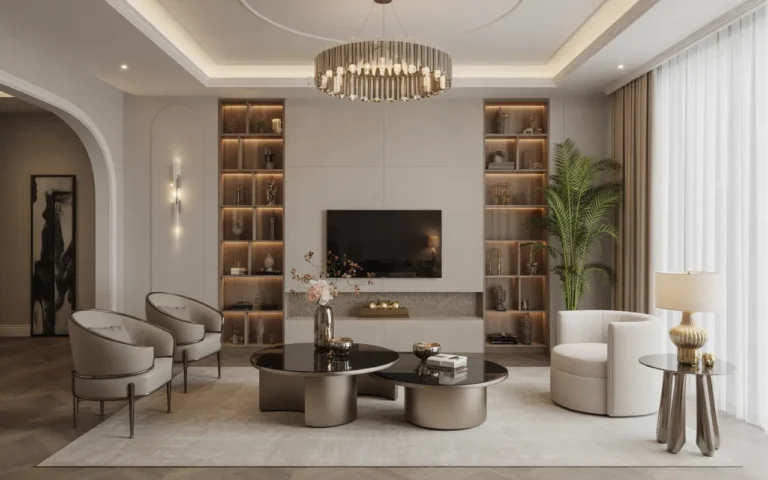
Soft neutral living rooms are the backbone of the whole cozy aesthetic trend. Ivory, beige, cream, and greige walls and furniture create a backdrop that calms the eye the moment you walk in. The magic of this look is in the restraint. When the color palette stays quiet, every texture shows up louder: the weave of a linen sofa, the pile of a wool rug, the grain of light wood. That is why neutral rooms often look expensive even when nothing in them is. You are not decorating with color, you are decorating with touch. A neutral base also forgives mistakes. If a throw is slightly the wrong shade of beige, nobody notices, because the whole scheme lives in the same family.
Layer the shades: One flat beige room can feel washed out, so work with at least three or four tones of neutral. Pair warm cream walls with a slightly darker oatmeal sofa, then add ivory cushions and a deeper taupe throw. The small steps between shades create depth that keeps the room from looking flat. This is the trick designers use to make neutral spaces feel rich instead of plain. Keep the undertone consistent, though. Mixing a cool gray-beige with a warm yellow-cream is what makes neutral rooms feel off. Pick one undertone, warm or cool, and stay loyal to it across every fabric.
Bring in texture: With color off the table, texture does all the talking. A nubby boucle chair next to a smooth leather ottoman gives the eye something to travel between. Add a jute rug under a soft cotton one, or a chunky knit throw draped over a linen sofa. Wood adds warmth that no fabric can: an oak coffee table or a walnut side table grounds all that softness. Even small things matter here. Ceramic vases with a matte finish, a woven basket for blankets, and dried grasses in a vase add quiet interest. The goal is a room you want to touch, because touch is what makes neutrals cozy.
- Choose one undertone (warm or cool) and keep every neutral in that family.
- Mix three or more textures, like linen, wool, jute, and wood, in every seating area.
- Swap in seasonal accent pieces, such as a rust throw in fall, without changing the base.
Shop This Look
2. Warm Minimalist Cozy Living Room

Warm minimalism is the answer for people who love clean spaces but do not want to live in a showroom. Classic minimalism can feel cold, all white boxes and hard surfaces. The warm version keeps the simplicity but trades the chill for wood, linen, and cream. Fewer things, better things. A room with only a sofa, a low oak coffee table, and one floor lamp can feel completely finished if every piece is the right scale and the right tone. The eye rests because there is nowhere cluttered to land. But it stays because the materials are inviting. This style works especially well in homes that get good daylight, since sun does half the warming work for you.
Edit ruthlessly: The minimalist part comes first. Take everything out of the room that does not earn its place, then add back only what you love or use daily. Open surfaces are the whole point, so shelves should hold a few objects, not rows of them. A single ceramic bowl on a coffee table says more than five small trinkets. Cord clutter kills this look fast, so route cables behind furniture or use a cord cover. The result is a room that feels larger than it is, because the eye moves across open space instead of stopping at stuff. Cleaning takes minutes, which is a daily reward.
Warm every surface: Once the room is edited, warmth comes from material choices. Choose wood over chrome, fabric over leather, matte over gloss. A boucle or wool upholstered chair reads cozy where a plastic shell chair would read office. Lighting is the biggest warmth lever: swap cool white bulbs for 2700K warm ones and watch the room change color. A paper or linen lamp shade diffuses light so it glows instead of glaring. Add one natural element, like a potted olive tree or a bowl of smooth stones, and the room feels alive without feeling busy.
- Remove non-essential items first; add back only daily-use or loved pieces.
- Use 2700K warm bulbs and fabric or paper shades for a soft glow.
- Hide cords and limit shelf decor to a few objects per surface.
Shop This Look
3. Cozy Boho Aesthetic Living Room

Boho living rooms are the most forgiving style in this whole list. The look is built on layers, and layers hide everything: a worn sofa arm disappears under a throw, a plain wall wakes up behind a macrame hanging, a basic floor gets interesting with two rugs on top of it. That is why boho suits renters and budget decorators so well. You build the room piece by piece, often from thrifted or handmade finds, and nothing has to match perfectly. The secret is that it still needs a color story. Pick two or three warm tones, like terracotta, mustard, and cream, plus green from plants, and repeat them around the room so the mix feels collected rather than random.
Stack the layers: Boho is a volume game. Start with the largest layer, the rug, and go bigger than you think, because a rug that touches the front legs of all the furniture makes the room feel settled. Then add seating layers: floor cushions, a pouf, a rattan chair with a cushion. Then textile layers: a throw on the sofa, a different one on the chair, a patterned blanket folded over the ottoman. Walls get layers too: hang a tapestry or macrame piece, lean a small mirror, add a shelf with trailing plants. Each layer is cheap on its own. Together they create the rich, lived-in feeling boho is known for.
Weave in nature: Plants are practically a boho requirement, and they do real work. A tall fiddle leaf or a cluster of hanging pothos adds height and life that no decor object can. Natural materials repeat the theme: rattan chairs, jute rugs, wooden bead garlands, clay vases. These textures keep the room grounded so the patterns do not feel chaotic. Light matters too. Boho rooms glow best with low, warm light: string lights, a paper lantern, candles on the coffee table. Keep overhead lights off in the evening and the whole room turns golden and calm.
- Repeat two or three warm colors plus green to keep the mix feeling intentional.
- Size the rug up so it reaches under the front legs of every seat.
- Use low warm lighting in the evening, like string lights or a paper lantern.
Shop This Look
4. Earth-Tone Aesthetic Living Room Design

Earth tones are colors you already know from outside: clay, sand, olive, rust, bark brown, warm stone. Bringing them indoors makes a living room feel settled, like it belongs to the landscape. These colors have a low, steady energy. They do not shout for attention, so the room relaxes around them. A rust-colored armchair or terracotta vase feels warm without the high pitch of bright red or orange. Olive greens calm a room without the iciness of some grays. This palette is especially kind to rooms with little natural light, because warm tones compensate for gray days and keep the space from feeling dull.
Anchor with one deep tone: Give the room a base note. It could be a deep olive sofa, a bark-brown leather chair, or even just a richly stained wood coffee table. That anchor lets the lighter earth tones, sand, cream, clay, sit on top of it comfortably. Without an anchor, earth tones can float and feel a bit washed. Spread the deep tone in at least three spots so it does not look isolated: if the sofa is olive, add an olive cushion on the other chair and a small olive vase on the shelf. Repetition is what makes a palette feel deliberate instead of accidental.
Finish with raw materials: Earth tones pair best with materials that look like they came from the ground. Unglazed terracotta pots, rough linen, woven wool, travertine side tables, and honey-colored wood all belong here. Skip anything too glossy or chrome; high shine breaks the natural mood. Plants are the obvious final layer, but choose them in the same spirit: snake plants, olive trees, and dried pampas grass fit better than tropical flowers. A few handmade or slightly irregular pieces, like a hand-thrown bowl, add the human touch that makes earth-tone rooms feel warm rather than staged.
- Pick one deep earth tone as the anchor and repeat it in three places.
- Choose raw, matte materials like terracotta, rough linen, and woven wool.
- Keep plant choices natural: snake plants, olive trees, or dried grasses.
Shop This Look
5. Modern Cozy Living Room with Soft Lighting

Lighting decides how cozy a room feels more than any sofa ever will. Modern furniture with its clean lines and low profiles can read sleek or cold, and the difference is almost always the light. Soft lighting means warm color temperature, multiple low sources, and no harsh overhead glare. When a modern living room is lit this way, the crisp lines of the furniture stop feeling sharp. Corners glow. Fabric looks richer. Faces look better. People stay longer. This is the look for anyone who loves modern design but wants the room to feel like evening even at noon: calm, low, and welcoming.
Build three light layers: Professional designers never rely on one ceiling light. Copy them: one ambient layer, one task layer, one accent layer. Ambient can be a dimmed floor lamp or wall sconces. Task is a reading lamp by the chair, aimed at the book, not the ceiling. Accent is the fun one: a small LED strip behind the TV console, a candle cluster on the shelf, or string lights along a plant. Each layer should be dimmable or low-wattage. When all three are on, you can turn any one off to change the mood. Three small lamps beat one big ceiling light every time.
Go warm and low: Warmth is a number on the bulb box: 2700K or lower, sometimes labeled “warm white” or “soft white.” Anything 3000K and above starts feeling like an office. Keep shades in fabric, paper, or frosted glass, which scatter light softly instead of throwing it. Point light at walls and ceilings, not straight down, because bounced light is gentler. If your room only has a harsh overhead fixture, the cheapest fix is to stop using it: plug in two floor lamps and one table lamp and never touch the ceiling switch again. The room will look twice as expensive instantly.
- Use three light layers: ambient, task, and accent, all dimmable or low-wattage.
- Choose bulbs at 2700K or lower, labeled warm or soft white.
- Bounce light off walls and ceilings with fabric or paper shades.
Shop This Look
6. Cozy Scandinavian Aesthetic Living Room

Scandinavian design is famous for surviving long dark winters, so it knows cozy. The style pairs pale woods, white and gray textiles, and simple shapes with an obsession for warmth, because in Nordic countries a cold-looking room is a failed room. The word “hygge” gets overused, but the idea is real: comfort is designed in, through candlelight, soft blankets, and places to curl up with a book on a gray afternoon. A Scandinavian living room feels airy in the day and snug at night, and it asks very little of you. Simple furniture, honest materials, and a palette so light it bounces around whatever daylight exists.
Keep the bones pale: Start with light floors and light walls. If your floors are dark, a large pale rug does the same job, covering most of the dark surface and reflecting light upward. Furniture stays simple: low sofas with slim legs, small-scale wooden tables, and storage that hides clutter. Avoid heavy visual pieces like bulky recliners or dark bookcases. The room should feel like it has room to breathe. One or two black accents, a lamp base or a frame, are classic in Scandi design; they sharpen the pale palette so it does not drift into blandness.
Pile on the softness: This is where Scandinavian design separates from plain minimalism. Every seat gets something soft: a sheepskin on the armchair, a knit throw on the sofa, a cushion in the reading corner. Layer rugs if the floor is cold, even over carpet. Candles are non-negotiable in real Nordic homes; a cluster of pillar candles or a few tea lights in glass holders changes the evening mood completely. Add one green plant for life, and keep window coverings sheer so daylight floods in. The result is a room that feels like a deep breath.
- Cover dark floors with a large pale rug to reflect light upward.
- Add one or two slim black accents to keep the pale palette crisp.
- Put a soft layer on every seat: sheepskin, knit throws, or cushions.
Shop This Look
7. Small Cozy Living Room Aesthetic

Small rooms have a secret advantage: they get cozy for free. A compact living room wraps around you in a way a big open space never does, so the job is not to fight the size but to use it. The mistakes people make in small rooms are all about scale: a rug that is too small, a sofa that eats the walkway, walls crowded with little frames. Fix the scale and a small room feels intentional, not cramped. Light colors help, but what really opens a small room is clear floor space. The more floor you can see, the bigger the room feels, so every furniture choice should earn the square footage it takes.
Choose small-scale pieces: Pick a loveseat or an apartment-size sofa instead of a full sectional, and look for raised legs, which let the eye travel underneath and trick it into seeing more floor. Nesting side tables beat one bulky end table because they tuck away when you do not need them. A storage ottoman is the small-room hero: footrest, extra seat, and blanket storage in one footprint. Mount what you can on walls: floating shelves, a wall-mounted lamp, a TV on a bracket. Every item lifted off the floor gives you back a little breathing room.
Fake the spaciousness: A large rug, big enough to sit under the front legs of all seating, paradoxically makes a small room feel larger, because it unifies the floor into one surface. Mirrors do the classic trick: place one across from a window to double the daylight. Keep the palette light and cohesive, since too many competing colors chop the room into pieces. Curtains hung high and wide make the window look bigger than it is. And resist pushing every piece of furniture against the walls; pulling the sofa even a few inches forward creates a sense of depth instead of a flat border.
- Choose raised-leg furniture so more floor stays visible underneath.
- Use a large rug under all seating and a mirror across from the window.
- Hang curtains high and wide to make the window look bigger.
Shop This Look
8. Vintage Cozy Aesthetic Living Room

Vintage living rooms have something new furniture cannot buy: history. A worn leather chair, a brass lamp with a patina, a rug that has faded in exactly the right places, these pieces carry stories, and the room feels deeper for it. The vintage aesthetic is not about recreating one era perfectly. It is about mixing finds across decades so the room feels collected over time. That is also why it is budget-friendly. The best vintage pieces come from thrift stores, flea markets, and family attics, not showrooms. A room full of finds costs less than a room full of new sets, and it looks more interesting.
Mix the decades: Pick one anchor era for the big pieces, maybe mid-century for the sofa shape or Victorian for the mirror, then layer smaller finds from other decades around it. A 1970s rattan chair works next to a 1950s side table as long as the wood tones speak to each other. Watch the wood tones: mixing warm walnut, honey oak, and dark mahogany in one room gets noisy, so stay within one or two wood families. Keep at least one modern element, like a plain linen sofa or a simple jute rug, so the room feels curated rather than like a museum.
Let patina shine: Do not refinish everything. The worn edge on a wooden table, the slight tarnish on brass, the fade on an old rug, that is the whole point. These imperfections are what make vintage rooms feel warm and human. What you should do is clean and repair: tighten wobbly legs, rewire old lamps for safety, and get rugs professionally cleaned. Then style with softness: a knit throw over the vintage chair, fresh flowers in a chipped vase, warm lamplight instead of overhead light. Old pieces plus soft light is the vintage cozy formula.
- Anchor the room in one era, then layer smaller finds from other decades.
- Keep wood tones to one or two families so the mix stays calm.
- Rewire old lamps for safety and have vintage rugs cleaned before styling.
Shop This Look
9. Neutral Cozy Living Room with Textures

This look is the texture-obsessed cousin of the soft neutral room. Same quiet palette, but turned up on the tactile side: every surface invites a hand. When color stays neutral, the eye starts noticing weave, pile, grain, and sheen, and a room that mixes them well feels layered and rich without a single bold color. Think of it as dressing the room in fabric the way you would dress yourself in layers: smooth linen, nubby wool, plush velvet, rough jute. Each one does a different job, and together they create depth. Neutral-plus-texture is also the easiest style to maintain, because there is no exact color to match when you add a piece later.
Contrast the weaves: The trick is pairing opposites. Put a smooth velvet cushion against a rough knit throw. Set a nubby boucle chair beside a sleek leather ottoman. Lay a flat-weave cotton rug over nothing, but add a high-pile sheepskin on top of the sofa arm. Your hand should meet a different surface every time it moves. Rough against smooth is what keeps neutral rooms from going flat. If everything is the same softness, the room blurs into one beige cloud. A little friction, literal texture friction, is what makes it interesting.
Add sheen carefully: A fully matte neutral room can feel chalky, so add a few reflective notes. A brass lamp base, a glass vase, a mirror with a thin metal frame, or silk-blend cushions catch light and wake the palette up. Keep these shiny moments small and scattered; one metallic tray on the coffee table and one glass vase on the shelf is plenty. The goal is sparkle, not glare. Warm metals like brass and brushed gold suit this palette better than chrome. Finish with one living element, a plant or fresh stems, because even the most textured neutral room needs something alive in it.
- Pair opposite textures: smooth velvet with rough knit, nubby boucle with sleek leather.
- Add small warm-metal accents, like a brass tray or brushed gold frame.
- Include one living element, such as a plant or fresh stems.
Shop This Look
10. Cozy Modern Rustic Living Room

Modern rustic is the handshake between two styles that used to argue: sleek modern lines and rough country materials. The modern side keeps the room from feeling like a cabin gift shop, with low-profile furniture and clean silhouettes. The rustic side keeps it from feeling like a gallery, with reclaimed wood, worn leather, and stone. Together they make a room that feels both current and grounded. This look suits homes with architectural character, exposed beams, brick walls, or stone fireplaces, but it works in new builds too. The wood and leather do the heavy lifting wherever the architecture is plain.
Balance rough and smooth: Every rustic piece needs a modern partner. A rough reclaimed-wood coffee table sits well next to a smooth, tailored sofa. A chunky stone fireplace pairs with a minimalist mantel and one simple piece of art. If the room tilts too rustic, it feels dated; too modern, and the rustic pieces look like props. Aim for roughly half and half in visual weight. Keep lines clean even on rustic pieces: a farmhouse table with simple legs, not turned spindles. The modern half of the room is what makes the rustic half feel like a choice instead of an accident.
Soften with textiles: Rustic rooms can feel hard, all wood and stone, so textiles are the cozy insurance. Drape a faux fur or chunky knit throw over the leather chair. Layer a patterned wool rug over the wood floor. Add linen curtains to soften the windows and a few oversized cushions in flannel or wool. Warm lighting completes it: table lamps with linen shades and a few candles turn wood grain golden in the evening. One or two black metal accents, like a floor lamp or curtain rod, give the room its modern edge and stop the palette from going too sweet.
- Pair each rustic piece with a modern partner for roughly half-and-half visual weight.
- Choose rustic furniture with clean, simple lines rather than ornate details.
- Soften hard surfaces with wool rugs, knit throws, and linen curtains.
Shop This Look
11. Cozy Japandi Aesthetic Living Room

Japandi is the meeting point of Japanese restraint and Scandinavian warmth, and it might be the calmest style on this list. From Japan it takes low profiles, natural materials, and the idea that empty space is part of the design. From Scandinavia it takes light woods, soft textiles, and the insistence that minimal should still feel warm. The result is a living room with very few things, but everything in it is beautiful. Low sofas, low tables, and floor-level seating keep the sightlines open. The palette is muted: warm whites, soft grays, pale wood, and the occasional deep accent like charcoal or clay.
Go low and open: Japandi rooms sit close to the floor. Choose a low-profile sofa, a low coffee table, and maybe a floor cushion or two. Low furniture makes ceilings feel taller and the room feel more spacious. Keep the floor mostly clear and let negative space do its job; a Japandi room should never feel full. Storage is closed and quiet: a low oak credenza hides everything. Resist the urge to fill empty corners. An empty corner with good light is a design choice here, not a problem waiting for a plant.
Choose honest materials: Every material should look like itself. Light oak, bamboo, rattan, linen, wool, paper, stone. No fake wood grain, no glossy plastic. A paper floor lamp casts the softest light in this style and is practically a signature piece. Add one or two crafted objects: a handmade ceramic vase, a stone bowl, a folded wool throw. Plants stay minimal and sculptural, one olive tree or a single branch in a vase, not a jungle. The coziness comes from touch and light, not from stuff. A warm throw on a low sofa in a sunlit room is the whole Japandi promise.
- Keep furniture low-profile to make ceilings feel taller and the room calmer.
- Leave negative space alone; an empty corner is part of the design.
- Use honest natural materials: oak, bamboo, linen, paper, and stone.
Shop This Look
12. Dark Cozy Aesthetic Living Room

Dark rooms get a bad reputation, but done right they are the coziest rooms in the house. Deep charcoal, forest green, or espresso walls wrap a room like an evening, and everything in front of them glows: lamplight, candlelight, the screen of a TV, faces. Dark colors also make a room feel intimate, which is exactly what a living room should be at night. The fear is that dark means gloomy, and that happens only when the lighting is wrong. A dark room with good warm lighting feels like a library or a jazz club. A dark room with one cold ceiling bulb feels like a basement. The color is not the problem; the light is.
Light it like evening: Dark walls swallow light, so you need more of it, and all of it warm. Plan on at least three warm lamps for a medium room: a floor lamp, a table lamp, and something small like a candle cluster or a picture light. 2700K bulbs are essential; anything cooler turns dark green into swamp and charcoal into concrete. Keep light at multiple heights, because a dark room lit only from above still feels heavy. Bounce light off the walls and ceiling so the color itself glows. Dim everything you can. A dark room at full brightness is just a room; a dark room dimmed low is a mood.
Balance with warm contrast: Dark walls need light furniture to sit against, or the room collapses into one dark mass. A cream or camel sofa pops beautifully against forest green. Warm wood tones, brass, and amber glass add glow. Texture matters even more here: velvet upholstery, a plush rug, and knit throws catch lamplight and create the variation dark rooms need. Add one or two plants for life, and a mirror to bounce light around. Avoid going dark on everything; dark walls with a light ceiling and light rug keep the room from feeling like it is closing in.
- Use at least three warm lamps at different heights; never rely on one ceiling light.
- Pair dark walls with light furniture, like a cream sofa, for contrast.
- Keep the ceiling and rug lighter than the walls to avoid a closing-in feeling.
Shop This Look
13. Cozy Living Room with Indoor Plants

Plants are the fastest way to make a living room feel alive. A room with no greenery can be perfectly decorated and still feel a little flat, like a display. Add plants and it breathes. The green breaks up neutrals, the shapes soften straight furniture lines, and the simple fact of something growing in the corner changes how the room feels. You do not need a jungle. Three to five well-placed plants do the job: one tall statement plant, a couple of medium ones, and a trailing plant on a shelf. The trick is placement, not quantity. A plant in the right spot does more than ten crowded in a corner.
Place for shape and height: Think of plants as sculpture. A tall fiddle leaf fig or bird of paradise fills an empty corner with presence. A snake plant or olive tree adds vertical lines next to a low sofa. Trailing pothos or philodendron softens the hard edge of a bookshelf or mantel. Vary the heights so the eye travels: floor plant, table plant, hanging plant. Group in odd numbers, which looks natural. And give each plant a pot that fits the room’s style: woven baskets for boho, white ceramic for minimal, terracotta for earthy. The pot is part of the decor, not an afterthought.
Keep them alive, simply: Dead plants are worse than no plants, so be honest about your habits. If you forget to water, choose snake plants, ZZ plants, or pothos, which forgive neglect. Match the plant to your light: most living rooms have medium light, which suits philodendron, peace lilies, and rubber plants. A simple routine beats fancy gear: check the soil with your finger once a week, water only when the top inch is dry. Dust the leaves occasionally so they can breathe. Healthy plants with glossy leaves do more for the aesthetic than any number of struggling ones.
- Use three to five plants: one tall, a couple medium, one trailing.
- Choose pots that match the room style: woven, ceramic, or terracotta.
- Match plants to your real habits and light; snake plants and pothos forgive neglect.
Shop This Look
14. Cozy Aesthetic Living Room with Fireplace

A fireplace is the original cozy technology. Before central heating, the hearth was where everyone gathered, and our brains still respond to that. Even an unused fireplace anchors a room: it gives the eye a destination, the furniture an arrangement logic, and the whole space a sense of occasion. The mantel is the room’s display shelf, and the hearth is its stage. If you have a working fireplace, the flicker does the decorating for you on cold nights. If you have a non-working one, it is still the best-looking spot in the room once you style it with intention instead of leaving it as a dark hole.
Arrange around the hearth: The fireplace should be the room’s focal point, so let the furniture admit it. Angle the sofa and chairs toward it, even slightly, rather than lining everything against the walls. Keep the mantel styling simple and asymmetrical: a piece of art or a mirror as the anchor, then smaller objects stepping down on one or both sides. Leave some breathing room; a crowded mantel fights the calm the fire creates. The hearth itself deserves attention too: a woven basket, a stack of logs, or a pair of candle lanterns fills the opening beautifully when there is no fire.
Style a non-working fireplace: If the fireplace does not work, do not hide it. Fill the firebox with pillar candles of different heights for a glow that mimics firelight. Or stack birch logs for a sculptural look. Paint the interior a dark matte color so it reads as intentional depth rather than a sooty void. For renters with no fireplace at all, an electric fireplace unit gives the same focal point and flicker without any installation. Whatever the type, keep the surrounding decor warm: wood, wool, and brass near a fireplace feel right in a way chrome and glass never will.
- Angle seating toward the fireplace so it works as the room’s focal point.
- Style the mantel simply: one anchor piece, smaller objects stepping down.
- Fill a non-working firebox with pillar candles or stacked logs.
Shop This Look
15. Cozy Aesthetic Living Room with Accent Wall

An accent wall is commitment without the full renovation. One wall in a deeper color or a real texture gives the whole room a center of gravity, and the other three walls get to stay calm. This is the cheapest way to make a living room feel designed rather than just furnished. The wall you choose matters: pick the one your eye lands on when you enter, usually the wall behind the sofa or the TV wall. That wall becomes the backdrop for everything in front of it. A deep green behind a cream sofa, a warm clay behind wood shelving, or a textured limewash behind simple furniture, each choice sets the room’s entire mood.
Pick the right wall: The accent wall should be the room’s natural focal point. Behind the sofa is the classic choice because it frames the seating area like a picture. The fireplace wall is another strong option; the fireplace already wants attention. Avoid accenting a wall with lots of doors or windows, since the interruptions chop up the color and waste the effect. If the room is small, a dark accent wall actually helps: it visually recedes, making the wall feel farther away, while the lighter walls bounce light. Test the color with a large painted sample board before committing, and look at it in morning and evening light.
Go beyond paint: Paint is the simplest accent wall, but texture takes it further. Peel-and-stick wallpaper gives renters the look with no risk, and modern patterns, from soft limewash effects to subtle botanical prints, read far more expensive than the price suggests. Wood slat panels add warmth and rhythm and are a weekend project with basic tools. A gallery wall of framed art can act as an accent wall too, especially with matching frames in one color. Whatever the material, keep the other walls quiet so the accent wall has room to be the star.
- Choose the wall your eye lands on when entering, usually behind the sofa.
- Test color with a large sample board in both morning and evening light.
- Try peel-and-stick wallpaper or wood slats for texture beyond paint.
Shop This Look
16. Cozy Aesthetic Living Room with Natural Light

Natural light is the one design element you cannot buy, and it flatters everything it touches. Colors look truer, textures look richer, and people look better. A living room with generous daylight feels bigger, cleaner, and calmer, even with the same furniture as a dark room. The cozy part comes from how you handle the light: softening it, bouncing it, and letting it move through the room instead of blasting one spot. Sheer curtains turn harsh sun into a glow. Mirrors carry light into corners it would never reach. Light-colored surfaces reflect it back into the room instead of swallowing it.
Maximize the windows: Start by getting out of the light’s way. Trim anything blocking the windows, inside or out. Choose sheer or light-filtering curtains over heavy drapes, and hang them high and wide so the full window shows when they are open. If privacy is a concern, a top-down bottom-up shade gives light from the top while blocking the street view. Keep the glass clean; it sounds basic, but dirty windows can cut light noticeably. Inside, place a mirror on the wall opposite or adjacent to the window to double the daylight, and choose light rugs and upholstery that reflect rather than absorb.
Soften and layer it: Direct sun is not always kind. It fades fabrics and creates harsh hot spots. Sheers diffuse it into the soft glow that makes rooms look dreamy in photos. Layer window treatments: sheers for the day, heavier curtains you can close for movie nights or harsh afternoon sun. Plants love bright rooms, so a sun-filled living room is the place for the light-hungry ones like fiddle leaf figs and olive trees. In the evening, when the natural light fades, have warm lamps ready to take over so the room transitions gently from day-glow to night-cozy without a harsh switch.
- Use sheer or light-filtering curtains hung high and wide to show the full window.
- Place a mirror opposite or beside the window to double daylight.
- Layer sheers with heavier curtains for harsh sun and evenings.
Shop This Look
17. Cozy Aesthetic Living Room with Layered Rugs

Layered rugs are the design world’s favorite trick for instant coziness, and they solve real problems too. One rug grounds the seating area; the second one adds pattern, softness, or color without the cost of a bigger rug. Layering lets you use a large inexpensive base, like a natural jute rug, and put a smaller, prettier rug on top. The combination looks collected and rich, and your feet get double the softness. It also hides sins: a stained section of the base rug disappears under the top layer. Designers layer rugs in every style from boho to Scandinavian, because the effect is always the same, warmth you can feel.
Start with a big base: The bottom rug should be large, flat, and neutral. Jute, sisal, or a simple flat-weave in a natural tone works for almost every style. Size it generously: it should extend under the front legs of all the seating, or the layering looks like a pile in the middle of the floor. The base rug’s job is texture and coverage, not beauty, so this is where you save money. Make sure it lies flat and does not curl at the edges; a rug pad underneath both layers keeps everything in place and adds cushioning.
Top with personality: The top rug is the one people notice, so this is where the pattern and color live. A vintage-style rug, a Moroccan print, or a soft shag, sized to sit centered on the base with a visible border of the base showing around it. The border matters: it frames the top rug like a mat frames a picture. Keep the top rug’s palette in the same family as the room so the layers feel intentional. Rotate or flip the top rug occasionally to even out wear. Two rugs also mean double the sound absorption, which makes the whole room feel quieter and calmer.
- Use a large, flat, neutral base rug, like jute, under the front legs of all seating.
- Center a smaller patterned rug on top with a visible border of base showing.
- Put a rug pad underneath to prevent slipping and add cushioning.
Shop This Look
18. Cozy Aesthetic Living Room with Statement Sofa

The sofa is the biggest thing in the living room, so it is the biggest design decision too. A statement sofa does the decorating work of five smaller pieces: its color sets the palette, its shape sets the style, and its presence makes the room feel finished. This is the piece to invest in, because a great sofa makes everything around it look better, while a dull one drags the whole room down. Statement does not have to mean loud. A curved boucle sofa in cream is a statement. A deep green velvet sofa is a statement. Even a perfectly tailored camel leather sofa counts, because it has presence.
Choose a shape with personality: Curved sofas are the current classic: they soften a room full of rectangles and invite conversation since everyone angles toward each other naturally. A low, deep sofa reads relaxed and lounge-y. A high-back traditional sofa reads formal. Pick the shape that matches how you actually live. If you nap on the sofa, depth and soft cushions matter more than looks. If it is mostly for sitting upright and talking, a firmer, more tailored shape works. Measure your doorways and the room before falling in love; a statement sofa that cannot get inside is just a sad story.
Let it lead the palette: Once the sofa is chosen, everything else follows. Pull one color from the sofa for the rug, echo its undertone in the curtains, and repeat its texture in a cushion or throw. Keep the surrounding pieces quieter so the sofa stays the star: simple side tables, a plain rug, minimal wall art. One bold piece plus calm surroundings is the formula. If the sofa is patterned, go solid everywhere else. If the sofa is a strong color, keep the walls neutral. The room should feel like it was built around the sofa, because it was.
- Pick a sofa shape that matches how you live: deep and soft for lounging, tailored for sitting.
- Measure doorways and the room before committing to a large piece.
- Keep surrounding pieces quieter so the sofa stays the focal point.
Shop This Look
19. Cozy Aesthetic Living Room with Soft Pastels

Pastels get dismissed as childish, which is unfair, because in a living room they read as gentle, not girly. Blush pink, powder blue, sage, lavender, and butter yellow bring color into a room without any of the visual noise of saturated hues. The effect is soft in every sense: soft on the eyes, soft in mood. Pastel rooms feel like morning light. They work beautifully in small or dark rooms, because pale colors reflect what light exists. And they pair with everything neutral, so you can add pastels to a beige room without repainting a thing. A few pastel cushions and a throw can shift the whole feeling.
Keep the base neutral: Pastels work best as guests, not hosts. Let creams, whites, and light woods carry the room, then add pastels in textiles and small decor. A blush throw on a cream sofa, sage cushions on a beige chair, a powder-blue vase on the shelf. This keeps the room feeling grown-up and calm. Limit yourself to two pastel colors plus neutrals; three or more pastels start competing and the room turns candy-like. Repeat each pastel at least twice so it looks deliberate: a blush cushion on the sofa and a blush art print on the wall, for example.
Ground with one deeper tone: All-pale rooms can float away, so anchor the pastels with something deeper. A medium wood coffee table, a jute rug, or one piece in a muted deeper shade, like dusty rose instead of blush, or olive instead of sage, gives the eye a place to rest. Warm metals like brass suit pastels beautifully. And do not forget texture: pastels in flat cotton can look thin, but pastels in velvet, boucle, or knit look rich. A blush velvet cushion has a completely different presence than a blush cotton one. Let the softness of the fabric match the softness of the color.
- Use pastels as accents over a neutral base, not as the main palette.
- Limit the room to two pastel colors plus neutrals to avoid a candy look.
- Choose rich fabrics like velvet or boucle so pale colors feel substantial.
Shop This Look
20. Cozy Aesthetic Living Room with Built-In Shelves

Built-in shelves make a living room feel like it was designed by an architect, even when it was designed by you and a drill. They turn blank walls into the room’s personality: books, art, plants, and objects arranged at eye level, right where guests look. The structure itself adds coziness. A wall of shelves with warm wood and soft lighting feels like a library, and libraries are the coziest rooms ever built. If real built-ins are out of reach, tall bookcases pushed together and trimmed with molding give the same effect. The look is the point, not the construction method.
Style in layers, not rows: The mistake is lining up books like a store. Instead, mix vertical book stacks with horizontal piles, and leave breathing room between groups. Add art leaning against the back of a shelf, a small plant trailing over the edge, and one or two sculptural objects per shelf section. Vary heights so the eye moves up and down. Keep a loose color story: if your books are a riot of color, face some spines inward or group them by tone. Step back often while styling. Shelves are styled for the view from the sofa, not for close inspection.
Light the shelves: Unlit shelves can look like a dark cave, especially with deep bookcases. Small LED puck lights or a slim strip under each shelf turns them into a glowing feature at night. Warm light, always. The glow on book spines and objects is what makes built-ins feel cozy instead of just storage-y. If wiring is a hassle, battery puck lights with a remote work fine. Add a couple of closed baskets on the lower shelves to hide the ugly necessities, chargers, remotes, board games, and the whole wall stays beautiful while doing real work.
- Mix vertical and horizontal book arrangements with art and plants between.
- Keep a loose color story; group books by tone or face some spines inward.
- Add warm LED strips or puck lights under shelves for an evening glow.
Shop This Look
21. Cozy Aesthetic Living Room with Soft Textiles

Soft textiles are the lowest-effort, highest-impact change in this entire guide. You can transform a stiff, formal living room in one afternoon with nothing but fabric: throws, cushions, a new rug, curtains. Textiles are what your body actually touches, so they decide whether the room feels welcoming or just looks it. A room with a beautiful sofa but scratchy cushions and no throw is a room nobody sinks into. Pile on the softness and the same room becomes the spot everyone fights for. This idea also has the smallest price tag and the biggest reversibility: if you hate it, you fold it up.
Drape, don’t place: Throws look best when they look tossed, not folded. Drape one over the sofa arm so it puddles a little, fold another in thirds across the ottoman, and let one spill off the reading chair. The casual placement is what makes it feel lived-in rather than staged. Mix weights: a chunky knit for winter coziness, a light cotton or gauze throw for warmer months. Cushions follow the same rule: an odd number, mixed sizes, and a little squashed rather than plumped to attention. The goal is a sofa that looks like someone was just napping on it, in the best way.
Soften the hard edges: Textiles are not just for the sofa. Curtains in linen or cotton soften the hard lines of windows. A plush rug underfoot changes how the whole room feels when you walk in barefoot. Even the dining chairs or a wooden bench get friendlier with a sheepskin or a cushion. Upholstered ottomans double as soft coffee tables. If your room has a lot of hard surfaces, wood, tile, glass, each textile you add is a small kindness. Start with the spots your body meets: the seat, the back, the feet, and the window light. Cover those and the room is cozy.
- Drape throws casually over arms and ottomans instead of folding them neatly.
- Mix throw weights by season: chunky knit for winter, light cotton for summer.
- Soften hard surfaces too: linen curtains, a plush rug, cushions on wooden seats.
Shop This Look
How to Start
Starting a cozy aesthetic living room refresh is easier when you work in order. First, clear the room back to its bones: take down the clutter, pull the small decor off the shelves, and look at the space empty. Notice the light, the traffic flow, and the one spot your eye goes to first. That spot is your focal point, and everything else arranges around it. Second, decide on your palette before buying anything. Pick three to five colors that make you feel calm, write them down, and hold every purchase against that list. A palette on paper stops impulse buys that do not match.
Third, fix the biggest surfaces first, because they set the tone for everything else. The rug, the sofa covering or throw, and the curtains are the three largest fabric areas in the room. Get those right and the small decor almost styles itself. Buy the rug first and in the right size; it anchors the seating and tells you exactly which colors and patterns have room to appear. Then add lighting: two or three warm lamps do more for coziness than any decor object. Only after the big pieces and the light are settled should you shop for the finishing touches.
Finally, live with it before calling it done. A room reveals its needs over a week of actual use: the chair that needs a lamp, the cold spot that needs a throw, the wall that needs one picture. Add those last pieces slowly instead of all at once. The best-looking rooms are the ones that were adjusted, not just installed. Keep a running list on your phone of the two or three things the room still wants, and buy them one at a time. Your living room will end up feeling collected and personal, which is the whole point of the aesthetic.
- Clear the room to its bones first and identify your natural focal point.
- Write down a three-to-five color palette and check every purchase against it.
- Buy big surfaces first: rug, sofa textiles, curtains, then lighting, then small decor.
Shop This Look
Common Mistakes
- Choosing a rug that is too small. A tiny rug floating in the middle of the seating area chops the room up and makes everything look disconnected. Size up so the front legs of all seating sit on it.
- Using only overhead lighting. One ceiling fixture creates harsh shadows and a flat, cold mood. Layer two or three warm lamps at different heights instead, and keep the overhead off in the evening.
- Matching everything in a set. A sofa, loveseat, and chair in the same fabric from the same store looks like a showroom. Mix pieces with a shared palette but different textures for a collected feel.
- Pushing all furniture against the walls. It seems like it creates space, but it actually makes the room feel like a waiting area. Pull seating even slightly inward to create a real conversation zone.
- Skipping the palette plan. Buying pieces you love individually without a shared color story is how rooms end up feeling random. Decide on three to five colors first and check everything against them.
- Forgetting texture in neutral rooms. All-smooth beige looks flat and unfinished. Every neutral seating area needs at least three contrasting textures, like linen, wool, wood, or jute, to feel layered.
- Over-styling shelves and surfaces. A shelf crammed with small objects reads as clutter, not decor. Leave breathing room between groups and style for the view from the sofa, not for close inspection.
Frequently Asked Questions
What is an aesthetic living room?
An aesthetic living room is one where the colors, textures, and layout feel intentional and pleasing together, usually with a calm, cozy mood. It is not one specific style. It can be neutral, boho, Scandinavian, or dark and moody. The common thread is that the room looks and feels put together, with a consistent palette and layered textures, rather than a random collection of furniture.
How can I make my living room cozy on a budget?
Start with the cheapest high-impact changes: warm light bulbs, a throw blanket, and rearranged furniture cost almost nothing. Thrift stores are goldmines for baskets, vases, and art frames. A large inexpensive jute rug under the seating area grounds the room instantly. If you want more structured ideas with product suggestions, our cozy living room guide walks through affordable ways to warm up each corner of the room.
What colors work best for a cozy aesthetic?
Warm neutrals are the safest foundation: cream, beige, oatmeal, and warm gray. From there, add depth with earth tones like terracotta, olive, rust, or clay. Soft pastels work as gentle accents. Dark colors like forest green or charcoal can be very cozy too, as long as the lighting is warm. The key is picking one undertone, warm or cool, and keeping every color in that family.
How many throw pillows should a sofa have?
For a standard three-seat sofa, five pillows is the sweet spot: two larger ones at the corners, two medium in front of them, and one smaller lumbar pillow in the center. Odd numbers look more natural than even ones. Mix sizes, shapes, and textures within your palette rather than buying a matching set. And they should look a little squashed and lived-in, not plumped to attention.
Can a small living room still look aesthetic?
Absolutely, and small rooms often get cozy faster because the space wraps around you. The rules are simple: choose small-scale furniture with raised legs, use one large rug instead of several small ones, hang curtains high and wide, and keep the palette light and cohesive. A mirror across from the window doubles the daylight. Small rooms reward editing, so keep surfaces clear and let a few good pieces do the work.
The Finishing Touch
A cozy aesthetic living room is never really finished, and that is the best part. The rooms that feel the most like home are the ones that keep evolving: a new art print, a plant that finally found its spot, a throw swapped for the season. Give yourself permission to adjust. Move the chair. Try the lamp on the other side. Take the picture down and lean it on the shelf instead. Small experiments cost nothing and they teach you what your room wants. The aesthetic is not a destination you arrive at; it is a habit of noticing.
If you take one principle from all 21 ideas, let it be this: comfort first, then beauty follows. Every room on this list works because someone thought about how it feels to sit in it, not just how it photographs. Warm light, soft textures, a palette that calms you, and a layout that fits your life. Get those four right and the details take care of themselves. Your living room does not need to impress anyone. It needs to welcome you at the end of the day, every day.
For more real-room inspiration, Houzz regularly features designer living rooms with the same warm, layered approach, like their roundup of casually stylish living rooms full of neutral palettes and cozy textures. Save the ideas you love, start with one corner this weekend, and let the rest of the room catch up. Your coziest living room is closer than you think.