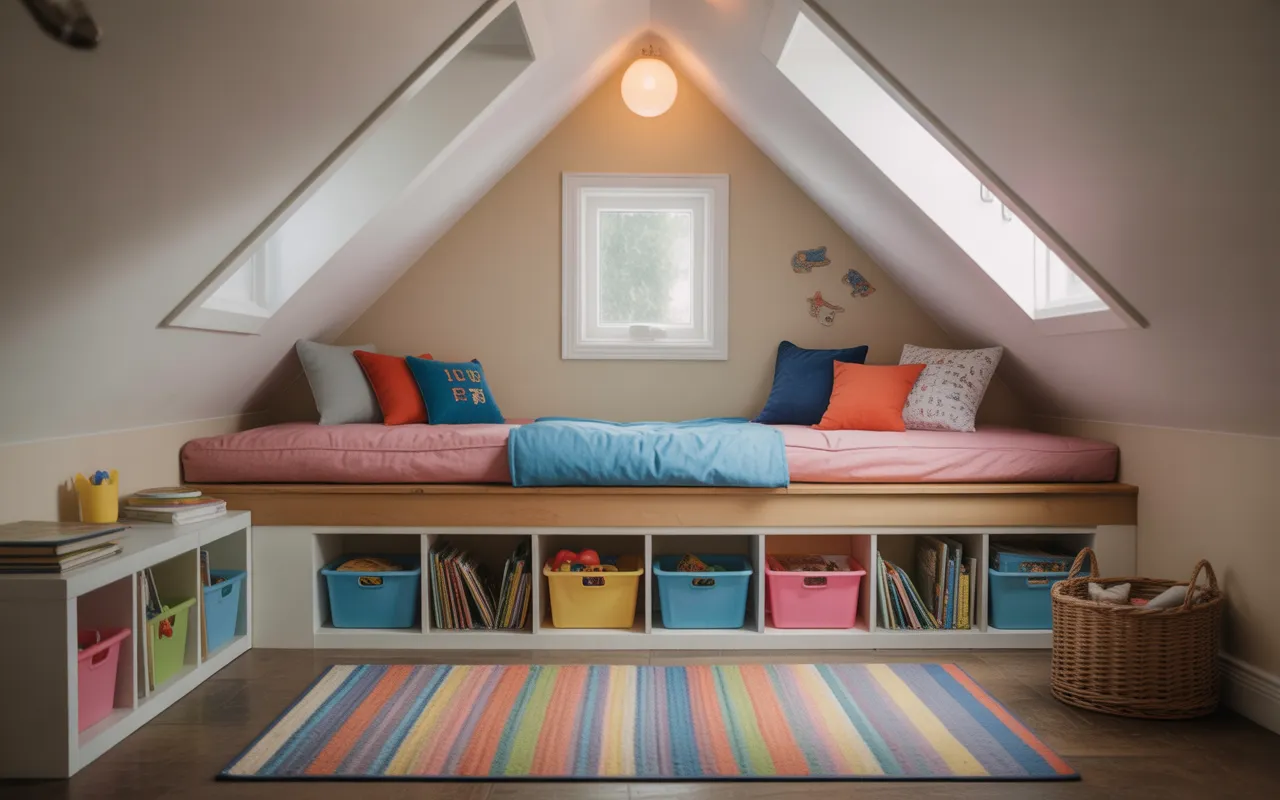
17 Attic Playroom Ideas for Smart Storage Style
Looking for ways to transform your attic into a fun and functional playroom? These 17 attic playroom ideas for smart storage style show you how to create a space that’s both playful and organized. Many attics are underused, but with the right design, you can turn sloped ceilings and awkward corners into creative zones where kids can play, learn, and explore. From foldable furniture to modular shelving, each idea is practical, visually appealing, and space-saving. In my experience, combining storage with interactive elements helps children stay engaged while keeping the room tidy. These tips make it easy to design an attic playroom that grows with your child.
1. Built-In Shelving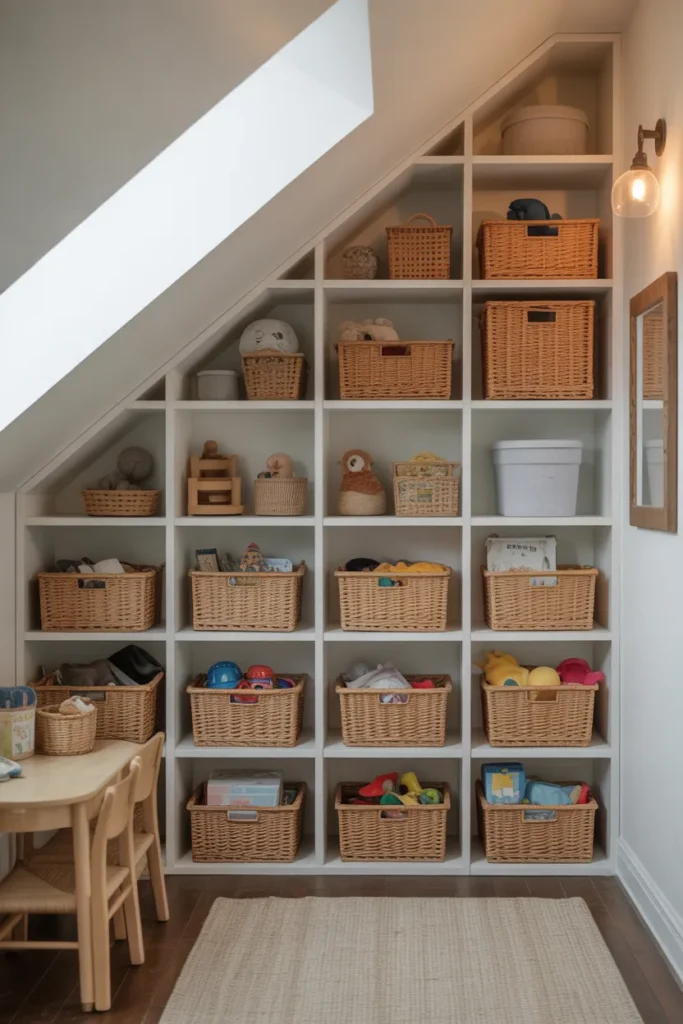
- Maximizes awkward attic wall spaces efficiently
- Keeps toys, books, and art supplies neatly organized
- Adds structure and clean lines to the room
- Encourages independent play and easy cleanup
- Works well with bright, cheerful colors
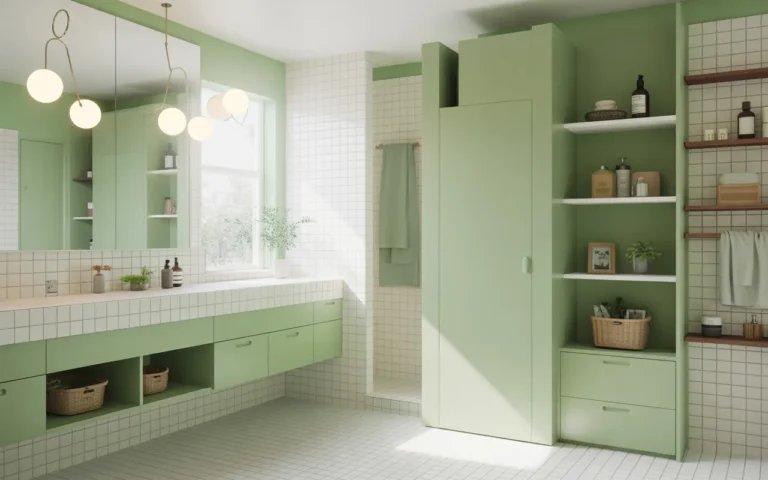
Built-in shelving is a smart way to optimize attic space while keeping everything organized. It transforms awkward sloped walls into functional storage areas without cluttering the floor. By using bins and baskets, each item has a place, making cleanups quick and stress-free. This setup keeps the room visually tidy while allowing children to see and access their toys easily, encouraging them to play independently.
I’ve noticed built-in shelving works particularly well in attics with low ceilings. In my experience, painting the shelves in a light or neutral tone keeps the room feeling spacious and airy. Many parents exploring attic playroom ideas find this method balances functionality and style effortlessly. The result is a bright, organized, and inviting playroom that supports both storage and creativity.
2. Lofted Reading Nook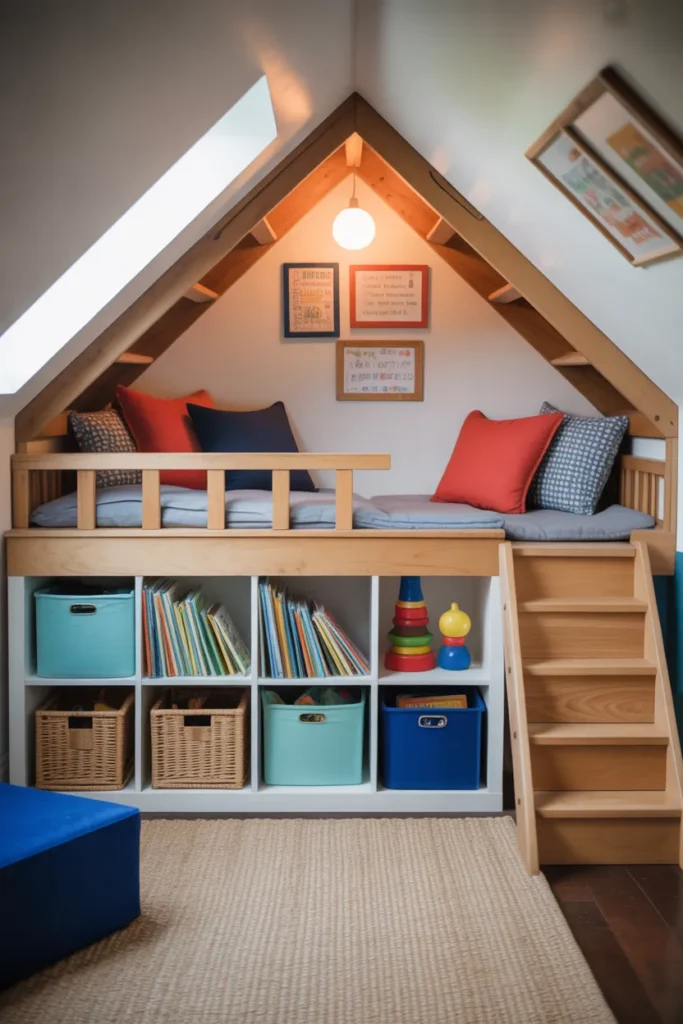
- Creates a dedicated quiet area for reading or relaxing
- Utilizes vertical space efficiently in small attics
- Adds a fun, adventurous element to the room
- Encourages reading habits and imaginative play
- Combines storage and comfort in one area
A lofted reading nook transforms an attic playroom by using vertical space creatively. The elevated area gives children a sense of adventure while providing a cozy spot for books or quiet time. Below the loft, low shelves or storage bins can keep books, toys, or craft supplies organized, combining functionality with playful design. This setup makes the most of limited square footage, turning the attic into a versatile, multi-purpose playroom that supports both learning and fun.
I’ve seen lofted reading nooks work especially well in attics with sloped ceilings. In my experience, adding cushions and soft lighting makes the space feel inviting and comfortable. Many families exploring attic playroom ideas appreciate how this design maximizes storage while creating a special retreat for children. The result is a charming, practical, and imaginative playroom feature.
3. Modular Storage Cubes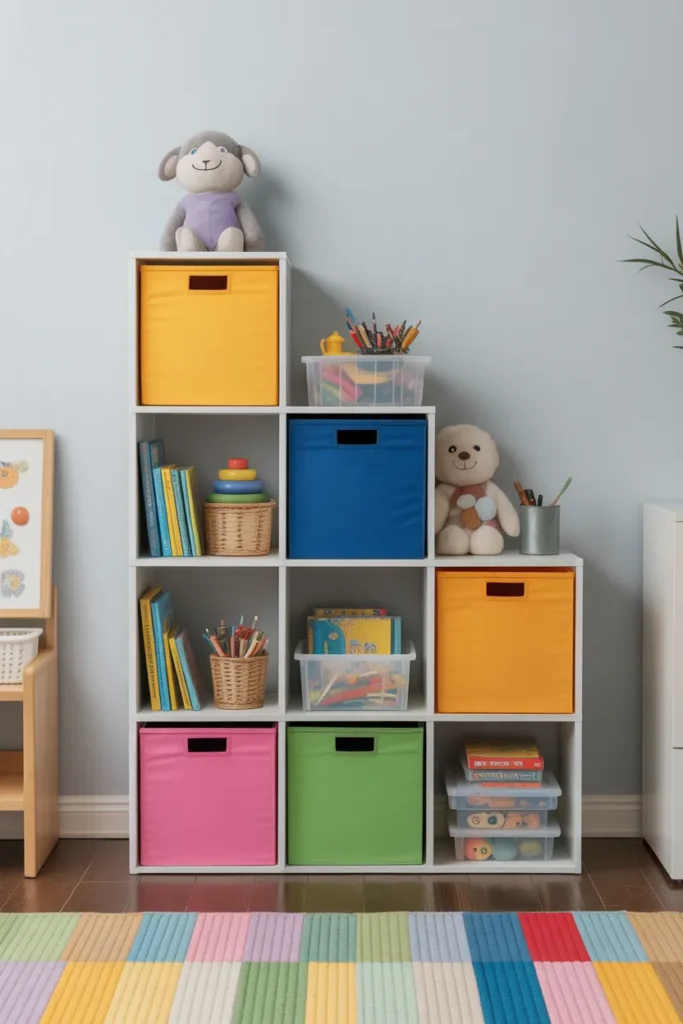
- Flexible storage system that can be rearranged as needed
- Keeps toys and books sorted while remaining accessible
- Adds pops of color and visual interest to the room
- Ideal for growing children with changing storage needs
- Encourages tidy habits through designated compartments
Modular storage cubes are perfect for attics that need flexible organization. Each cube serves as a separate compartment for toys, books, or art supplies, keeping everything visible and within reach. They can be stacked or arranged to fit awkward corners, making the most of limited floor space. With colorful cubes, the storage solution also becomes a playful design element, brightening the room while teaching kids how to organize their belongings efficiently.
In my experience, modular cubes are especially helpful in dynamic playrooms where storage needs evolve over time. I’ve noticed that labeling bins or adding fun baskets inside cubes encourages children to maintain order. Many parents exploring attic playroom ideas choose modular cubes for their versatility, bright aesthetic, and practicality. The result is a playful, organized space that grows with your children.
4. Window Seat Storage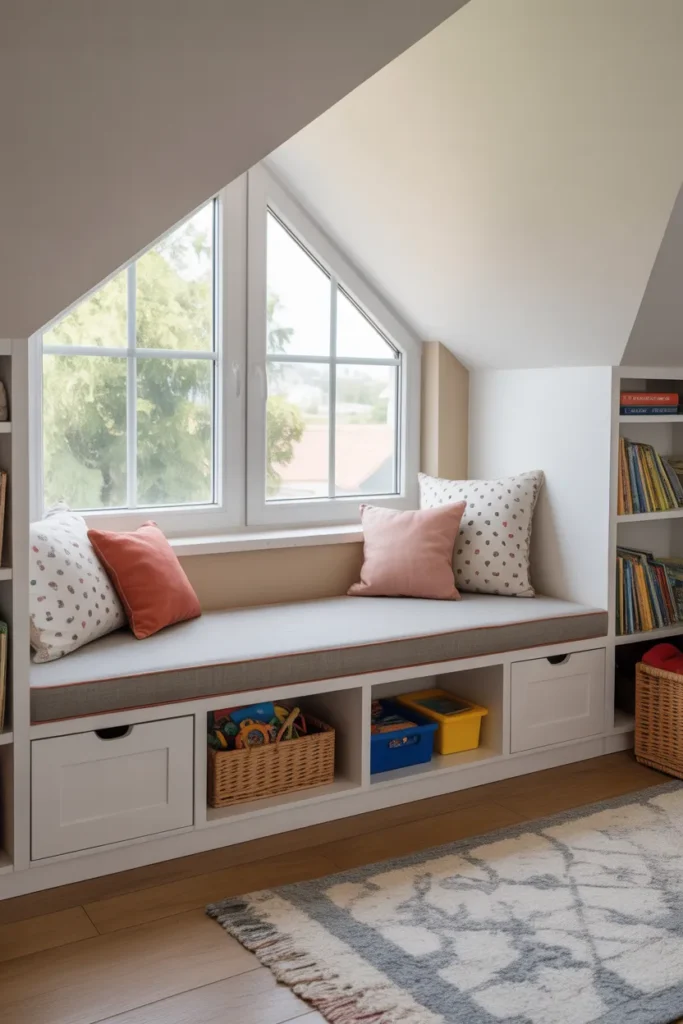
- Combines seating and storage efficiently in limited space
- Provides a cozy spot for reading or playing
- Keeps toys and supplies neatly tucked away
- Utilizes natural light from skylights effectively
- Adds charm and functionality to the attic
A window seat with storage is a clever solution for attic playrooms, turning a simple ledge into a multifunctional feature. The drawers or cabinets beneath the seat provide hidden storage for toys, books, and art supplies, keeping the space tidy. Meanwhile, the cushioned bench invites kids to relax, read, or play, creating a comfortable nook. This design maximizes both utility and comfort, making the attic more functional and visually appealing.
I’ve noticed that window seat storage works especially well in attics with sloped ceilings, as it makes the most of low wall areas. In my experience, adding colorful cushions and soft textiles keeps the nook inviting. Families exploring attic playroom ideas often choose this setup because it balances practicality with a cozy, playful vibe. The result is a bright, organized, and charming play area.
Also view: 15 Attic Library Ideas for Smart Storage Style
5. Pegboard Wall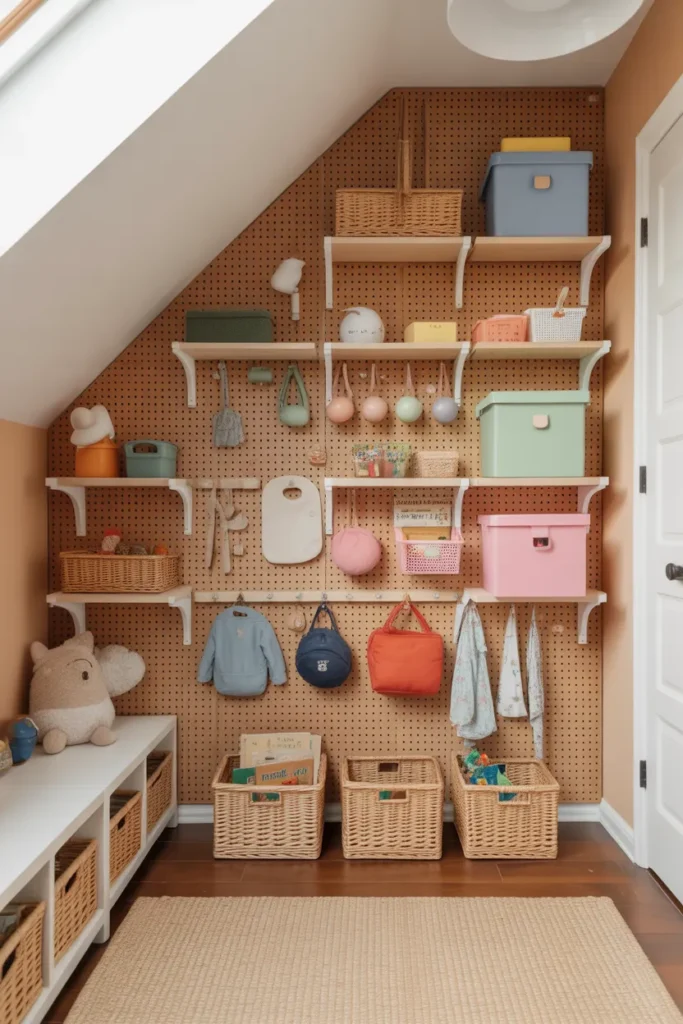
- Maximizes vertical wall space for storage and display
- Keeps toys, art supplies, and small items accessible
- Encourages kids to take ownership of their space
- Adds a dynamic, interactive element to the room
- Works well in compact attic layouts
A pegboard wall transforms an attic playroom by creating flexible, vertical storage that grows with your child. Hooks, baskets, and shelves can hold toys, craft supplies, or books, keeping items off the floor while remaining easy to reach. The customizable setup allows children to rearrange and organize their belongings themselves, fostering independence and responsibility. Visually, pegboards add texture and dimension to the room, making the space feel organized yet playful.
I’ve seen pegboard walls work especially well in small attics where floor space is limited. In my experience, pairing pegboards with colorful containers or labeled baskets makes it fun and functional. Many families exploring attic playroom ideas find this method balances organization with creativity. The result is a versatile, tidy, and visually engaging playroom feature.
6. Low Profile Cabinets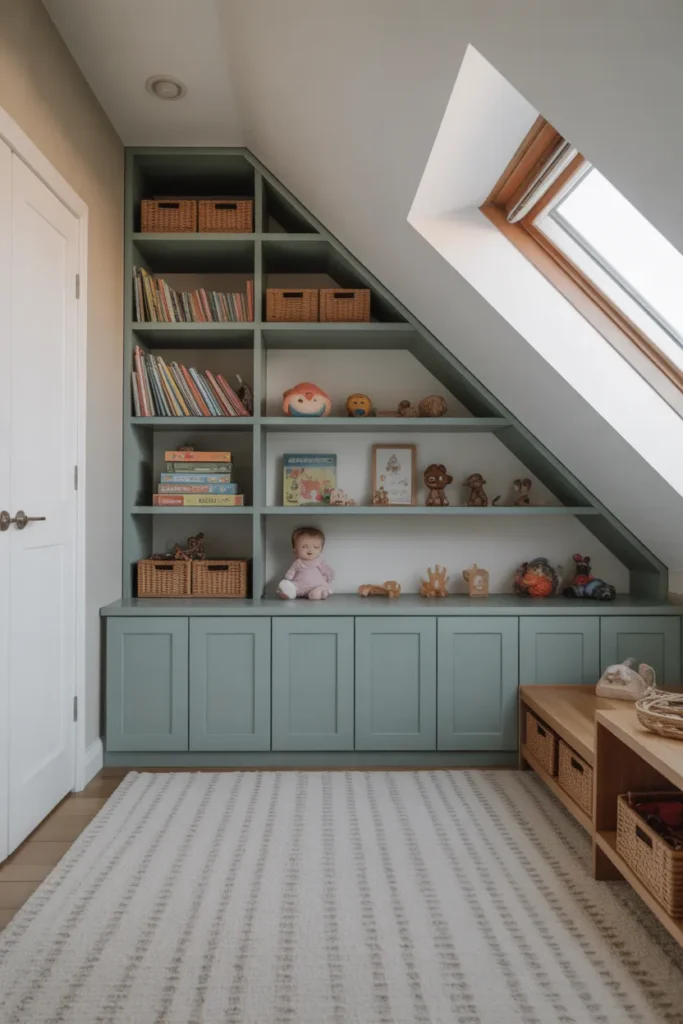
- Makes use of low attic walls for practical storage
- Keeps toys and books organized and out of sight
- Maintains open floor space for play activities
- Works with minimalistic or colorful designs
- Ideal for small or compact attic rooms
Low profile cabinets are perfect for utilizing the short walls in an attic playroom. They provide hidden storage for toys, books, and games while keeping the floor uncluttered for playtime. The cabinets’ clean lines maintain a neat aesthetic and allow for a cohesive room design. This approach is especially effective in sloped spaces where tall furniture would be impractical, maximizing every inch of the attic efficiently.
I’ve noticed that low profile cabinets pair well with playful floor rugs and colorful bins for a cheerful, organized look. In my experience, they make the attic feel spacious while keeping storage functional and accessible. Many parents exploring attic playroom ideas prefer this method for its balance of practicality and style. The result is a tidy, efficient, and inviting playroom.
7. Rolling Toy Carts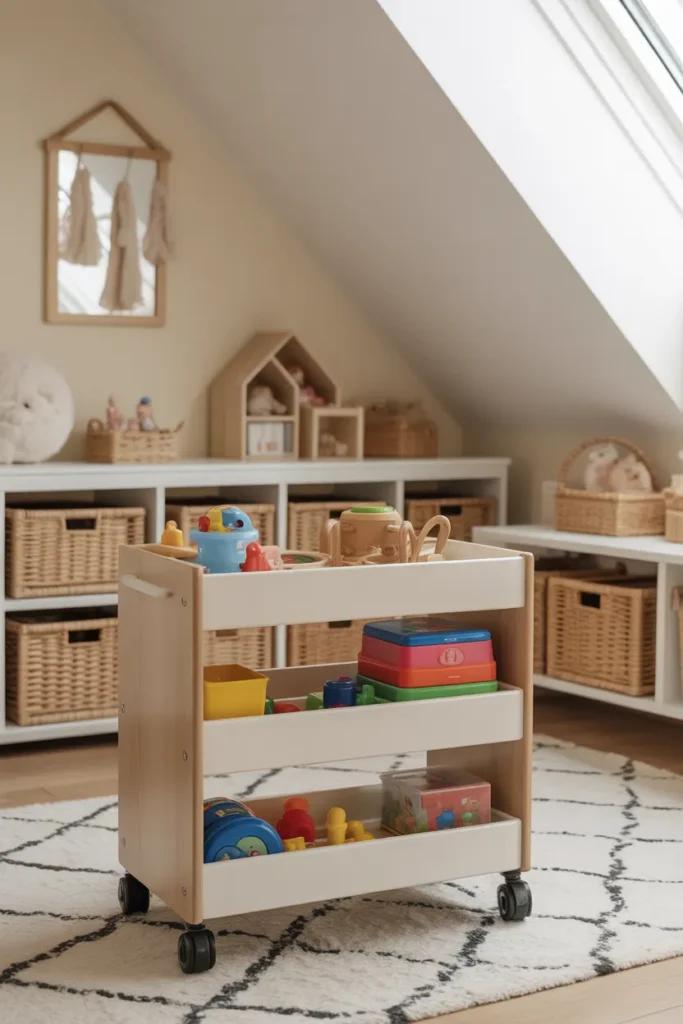
- Provides flexible, mobile storage that can move with play activities
- Keeps toys, crafts, and supplies organized and accessible
- Easy to rearrange for different activities or cleanup
- Adds a fun, dynamic element to the room
- Works well in small or multifunctional attic spaces
Rolling toy carts are ideal for an attic playroom that needs versatile storage solutions. They can be moved to different areas depending on the activity, allowing kids to play anywhere while keeping supplies close. The carts’ open design lets children see and grab what they need, making cleanup faster and easier. This flexibility makes playtime more engaging and functional, while also maintaining a neat and organized environment.
I’ve noticed rolling toy carts work especially well in homes where attic space is limited. In my experience, color-coded bins or baskets in the carts help children categorize and organize their toys. Many parents exploring attic playroom ideas choose rolling carts for their mobility, practicality, and playful appeal. The result is a dynamic, organized, and child-friendly playroom.
8. Loft Bed Play Area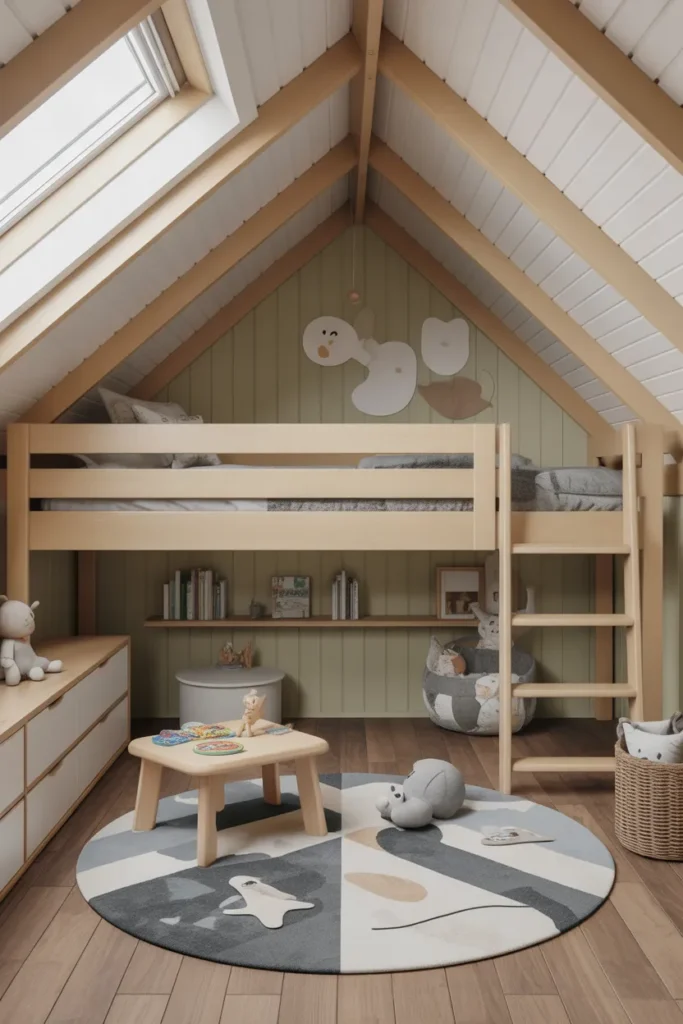
- Combines sleep or rest space with a play area underneath
- Maximizes vertical space in small attics
- Creates a fun and imaginative zone for children
- Provides storage options under the bed
- Perfect for multifunctional attic setups
A loft bed with an integrated play area underneath efficiently uses vertical attic space. Children can enjoy a cozy sleeping area above while the space below becomes a dedicated zone for toys, games, or reading. This setup encourages imaginative play and keeps the main floor area open for other activities. It also allows for hidden storage or low shelves beneath the loft, creating a neat and functional playroom that grows with your child’s needs.
I’ve seen loft bed play areas work particularly well in attics with sloped ceilings. In my experience, adding soft rugs and cushions beneath the bed makes it inviting and safe for younger kids. Many families exploring attic playroom ideas find this design combines fun, storage, and practical use of limited space. The result is a versatile and playful attic setup.
9. Hanging Storage Bins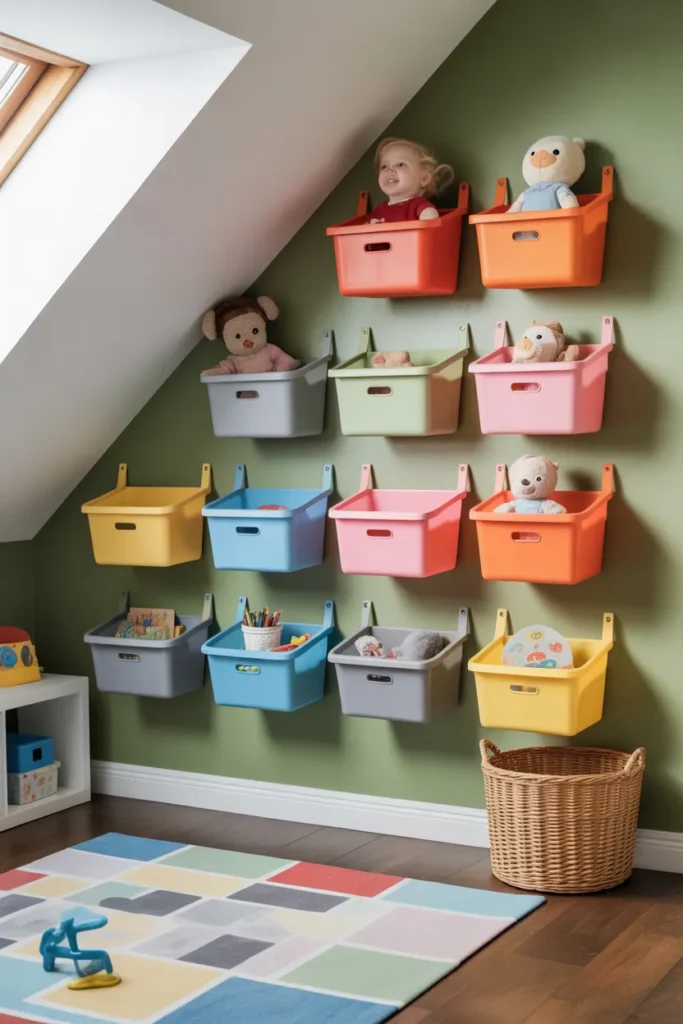
- Keeps small toys and stuffed animals off the floor
- Uses vertical wall space efficiently
- Easy for children to reach and put away items
- Adds colorful accents to the room
- Ideal for attics with limited floor space
Hanging storage bins are an excellent way to free up floor space in an attic playroom. They keep small toys, stuffed animals, or art supplies organized and easily accessible for kids. The colorful bins also contribute visually to the room, creating playful accents without cluttering the space. Using walls for storage makes the playroom feel larger while teaching children to organize their belongings. This setup is both practical and fun, encouraging kids to take responsibility for tidying up.
I’ve noticed hanging bins work best when installed at a child-friendly height. In my experience, labeling or color-coding each bin helps children know where to place items. Many families exploring attic playroom ideas choose hanging storage for its efficiency, accessibility, and cheerful design. The result is a tidy, organized, and inviting playroom space.
10. Foldable Play Tables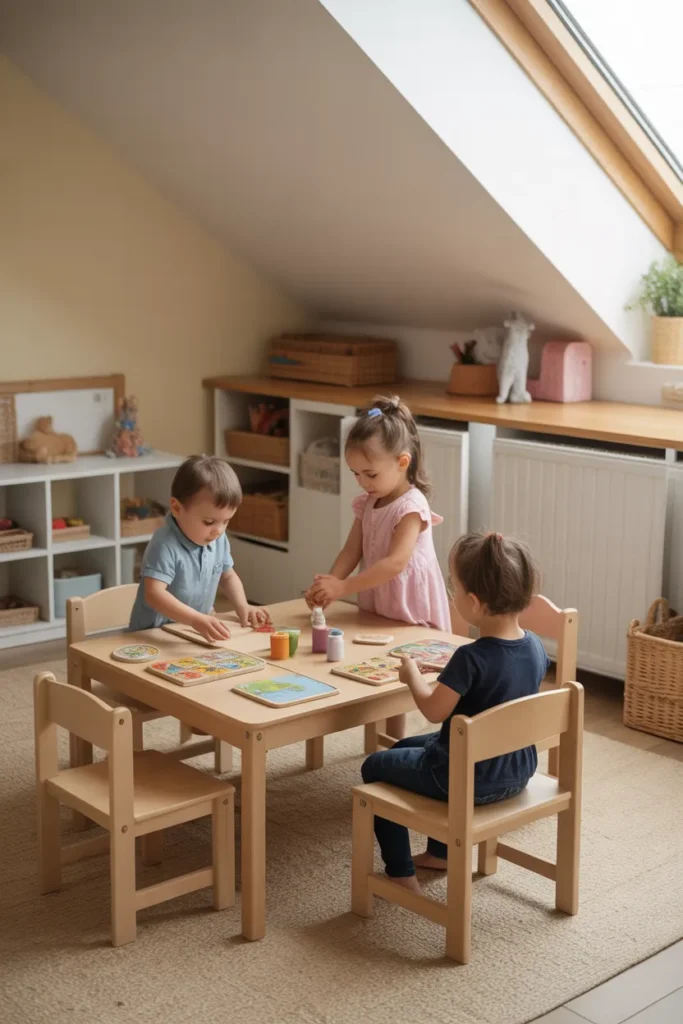
- Provides flexible workspace that can be stored when not in use
- Ideal for crafts, puzzles, or small group activities
- Saves valuable attic floor space
- Encourages organized and versatile play
- Works well for changing playroom needs
Foldable play tables are perfect for attic playrooms where space is limited. They can be unfolded for crafts, puzzles, or snack time and folded back when not in use, keeping the area open for free play. This design allows children to have a dedicated activity zone without compromising floor space, making the attic feel less cluttered and more organized. The table can be easily repositioned to suit different activities, adding flexibility and functionality to the room.
In my experience, foldable tables are particularly helpful in small or multifunctional attic playrooms. I’ve seen many families use them to rotate activities without creating clutter. Parents exploring attic playroom ideas often favor foldable tables for their practicality, adaptability, and ability to maximize open space. The result is a tidy, functional, and child-friendly area.
11. Chalkboard Wall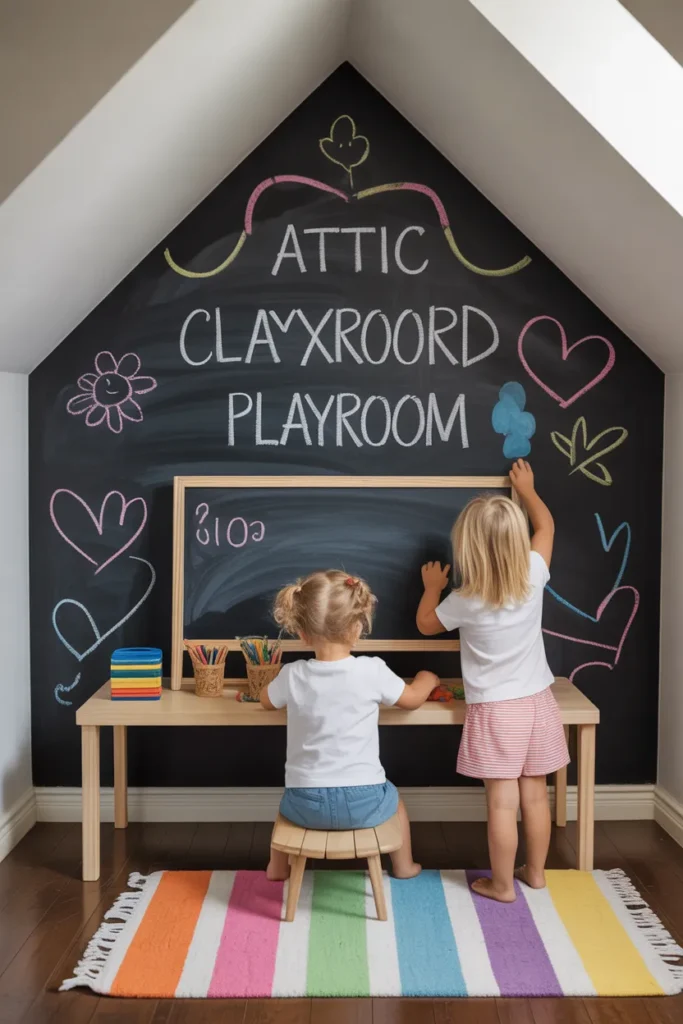
- Creates a dynamic and interactive creative space
- Encourages art, learning, and imaginative play
- Keeps drawings contained to one wall, reducing mess
- Provides endless customization for children
- Works well in compact attic layouts
A chalkboard wall transforms an attic playroom into a creative and interactive environment. Children can draw, write, or practice letters on the wall, channeling their creativity while keeping messes contained. This idea encourages learning, artistic expression, and imaginative play, all in a dedicated space. Chalkboards also provide a visual focal point, adding contrast and energy to the room. It’s a fun, low-cost solution that grows with your child’s evolving interests and keeps them engaged while maintaining a neat and organized play area.
I’ve noticed chalkboard walls work especially well in smaller attics because they eliminate the need for multiple paper surfaces. In my experience, pairing a chalkboard wall with storage for chalk and erasers keeps the space functional. Many families exploring attic playroom ideas choose this design for its creativity, interactivity, and practical benefits. The result is a playful and engaging playroom feature.
12. Corner Activity Station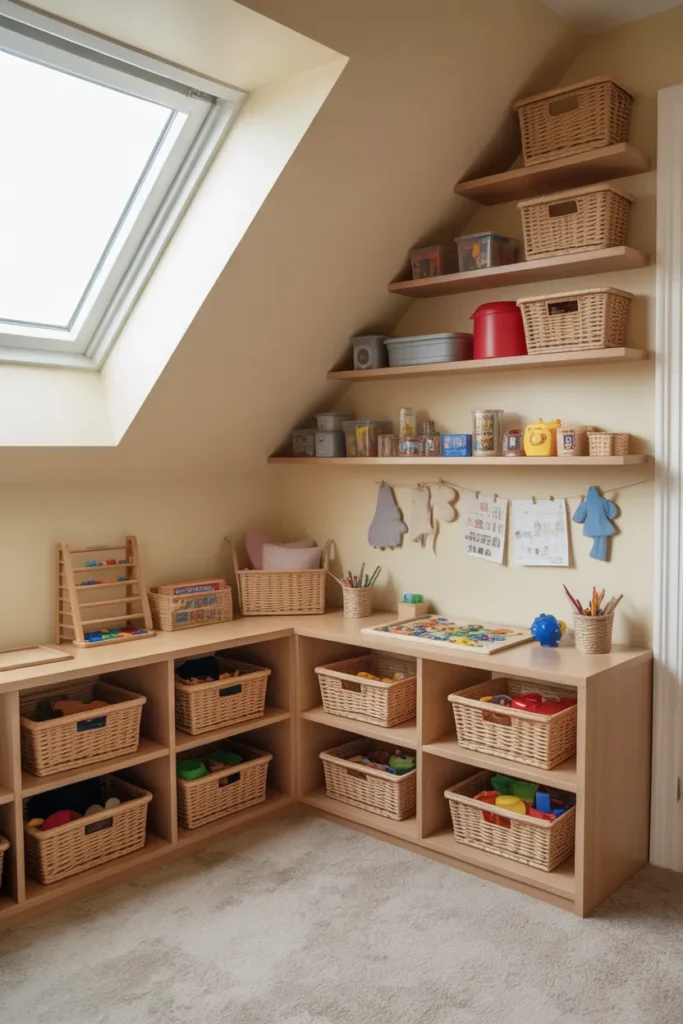
- Maximizes unused corner space efficiently
- Provides a focused area for crafts or building projects
- Keeps materials organized and accessible
- Encourages independent play and creativity
- Ideal for small or multifunctional attic rooms
A corner activity station makes the most of underused spaces in an attic playroom. By designating a small corner for crafts, building blocks, or other projects, children have a focused area that contains mess and promotes creative play. Shelves, bins, and containers help keep materials sorted and easy to reach. This setup transforms an overlooked corner into a functional and visually appealing part of the room, encouraging children to explore hobbies while maintaining overall organization and order.
I’ve seen corner activity stations work well for attics where floor space is limited. In my experience, adding colorful containers and a soft mat makes the area comfortable and inviting. Families exploring attic playroom ideas often appreciate how this design balances functionality and creativity. The result is a compact, organized, and inspiring play area.
13. Rope Swing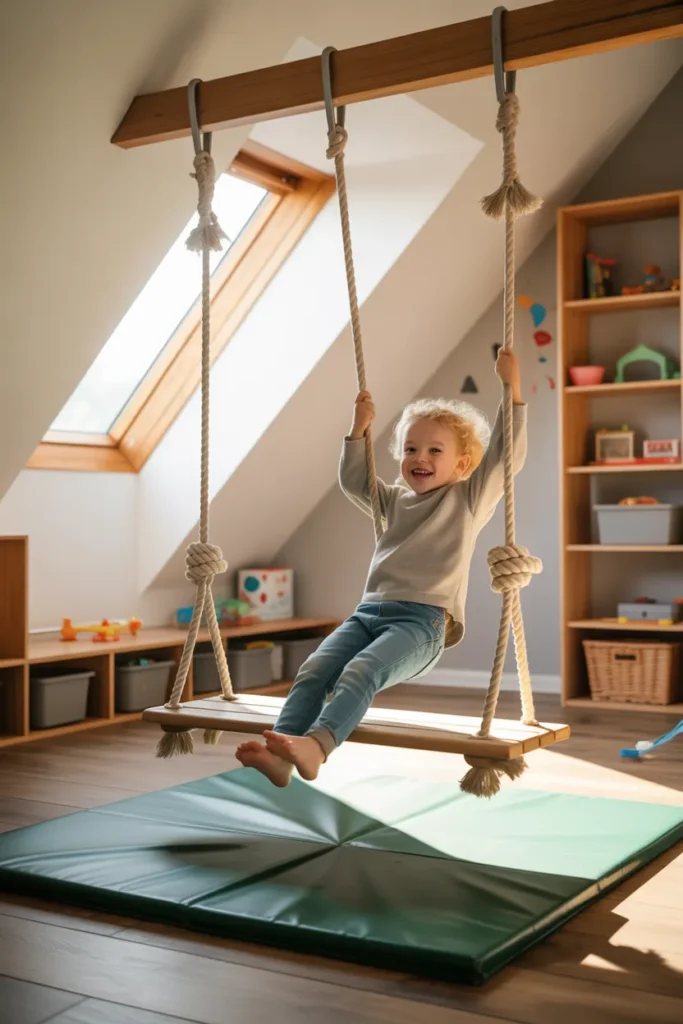
- Adds an active play element to the attic
- Encourages gross motor skills and physical activity
- Creates a fun and adventurous vibe
- Works in open areas without overcrowding
- Provides a unique and memorable feature
A rope swing brings excitement and movement to an attic playroom, allowing children to engage in physical play even indoors. Positioned over a soft mat, it ensures safety while adding a sense of adventure and fun. This feature can transform a simple attic into a lively, energetic space where children enjoy climbing, swinging, or imaginative games. Rope swings also enhance the visual appeal of the room, making it playful and memorable while keeping floor space mostly open for other activities.
I’ve noticed rope swings work best in attics with sturdy ceiling beams and sufficient vertical clearance. In my experience, adding a cozy seating area nearby creates a balanced mix of active and quiet zones. Many parents exploring attic playroom ideas appreciate this feature for its combination of fun, exercise, and design appeal. The result is a playful and engaging attic environment.
14. Fold-Down Desk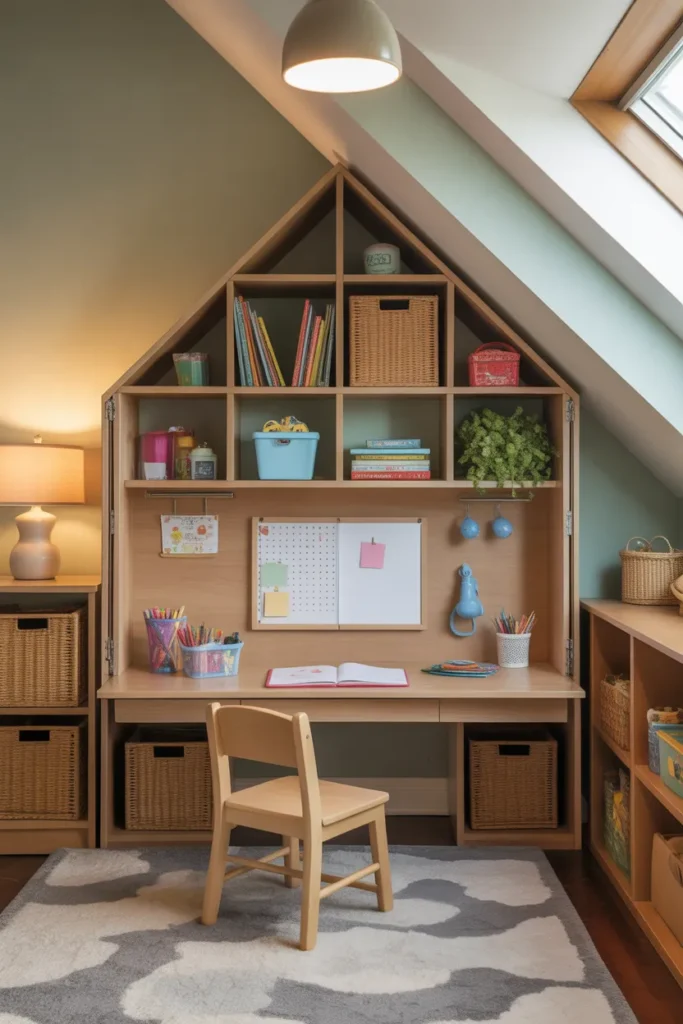
- Creates a dedicated study or craft area without taking permanent floor space
- Foldable design maximizes open play area
- Encourages independent learning and creativity
- Works well in compact or multifunctional attics
- Keeps materials organized and accessible
A fold-down desk is a smart solution for attics where space is at a premium. It provides a designated spot for homework, crafts, or drawing, and folds away when not in use to maintain an open play area. This setup ensures the attic remains versatile, functional, and uncluttered. Adding nearby storage cubbies keeps supplies organized and within reach, creating an efficient workspace for children. It’s a practical feature that combines learning, creativity, and space-saving design in one simple solution.
I’ve seen fold-down desks work best in sloped or small attics where permanent furniture would be limiting. In my experience, pairing a fold-down desk with labeled bins encourages kids to stay organized and maintain a tidy playroom. Families exploring attic playroom ideas often choose this option for its flexibility, practicality, and clever design. The result is a neat, functional, and inviting space.
15. Bean Bag Corner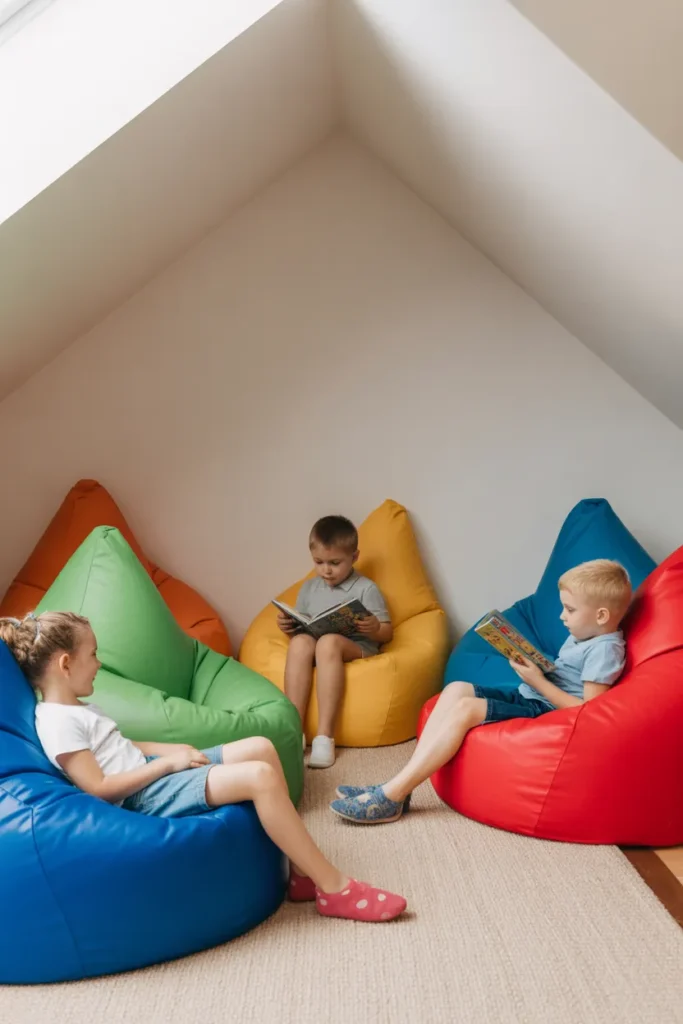
- Provides a soft, relaxing spot for reading or quiet play
- Adds color and comfort to the room
- Flexible seating that can be moved as needed
- Encourages children to take breaks and relax
- Works well in small or irregularly shaped attics
A bean bag corner is a simple way to create a cozy, comfortable retreat within an attic playroom. Children can lounge, read, or play quietly, giving them a dedicated area for relaxation amidst active play. The colorful bean bags add visual interest while maintaining a soft and inviting aesthetic. This flexible seating solution can be rearranged easily, making it ideal for multi-purpose attic spaces. It balances comfort, style, and practicality in a small footprint.
I’ve noticed that bean bag corners work especially well in attics with sloped ceilings. In my experience, combining soft rugs with a small bookshelf nearby creates an inviting and organized mini-retreat. Many families exploring attic playroom ideas appreciate this feature for its comfort, flexibility, and cozy charm. The result is a playful, relaxing, and visually appealing corner.
16. Modular Shelving Units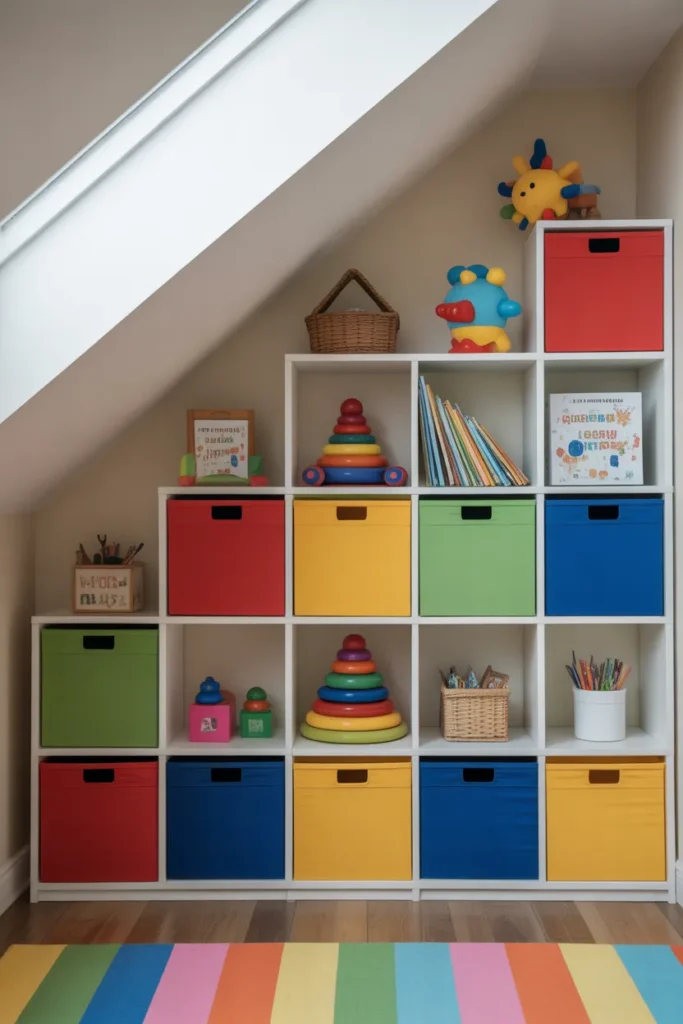
- Maximizes storage along low attic walls
- Allows customization for toys, books, and crafts
- Encourages children to organize their own items
- Flexible arrangement adapts as children grow
- Keeps the playroom neat and visually appealing
Modular shelving units are perfect for attic playrooms because they can be customized to fit sloped ceilings and unique layouts. Each cube or compartment can hold toys, books, or art supplies, making it easy for children to organize their belongings. These units provide both storage and display opportunities, keeping the room tidy while adding a colorful and playful visual element. The flexible design grows with the child, offering long-term functionality while maintaining a clean and organized aesthetic.
I’ve noticed modular shelving works particularly well in attics with irregular shapes. In my experience, adding labeled bins or baskets helps children learn to sort and store their toys independently. Families exploring attic playroom ideas often favor modular shelves for their adaptability, functionality, and visual appeal. The result is an organized, playful, and versatile attic playroom.
17. Open Floor Play Space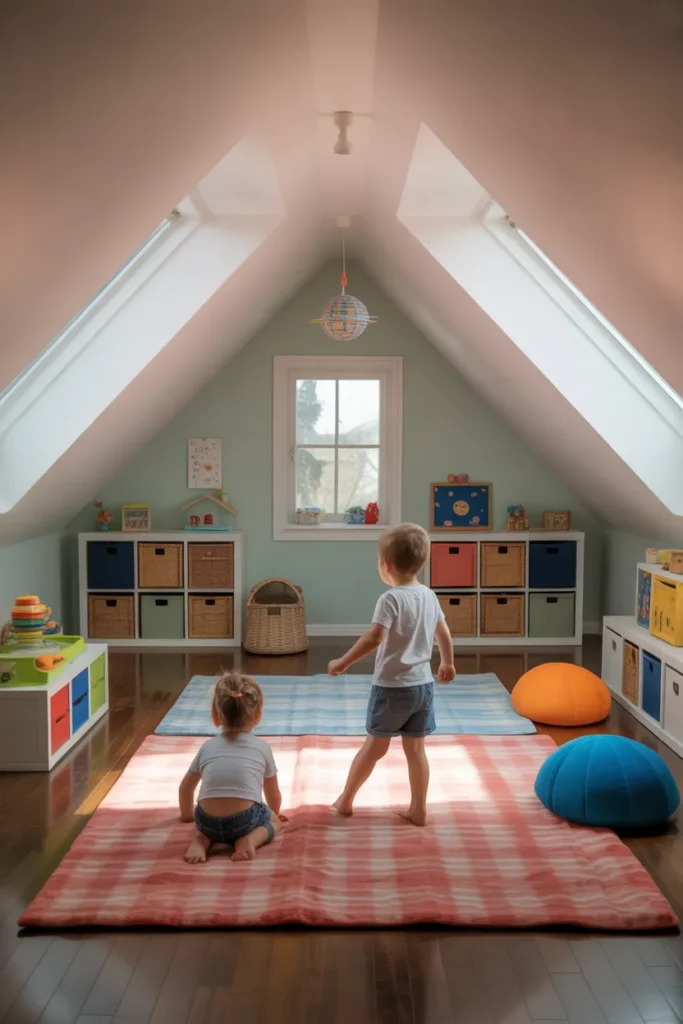
- Provides maximum room for free play, games, and movement
- Keeps floor space uncluttered and safe
- Flexible area accommodates various activities and age groups
- Highlights the attic’s airy and open feel
- Encourages active, imaginative play and social interaction
An open floor play space is essential in an attic playroom for encouraging free, active play. By keeping furniture and storage along the walls, children have a large, unobstructed area to run, play games, or engage in imaginative activities. Soft mats provide comfort and safety, while the uncluttered layout promotes creativity and movement. This design ensures the attic remains versatile, functional, and visually appealing while fostering an environment where children can explore and interact freely.
I’ve seen open floor layouts work best when combined with organized storage along walls. In my experience, rotating toys and activities keeps the space fresh and engaging. Families exploring attic playroom ideas often rely on open floor zones to balance activity, safety, and flexibility. The result is a spacious, playful, and inspiring attic environment for children of all ages.
Conclusion
With these 17 attic playroom ideas for smart storage style, you can transform any underused attic into a fun, organized, and inspiring space for children. Each idea combines creativity, functionality, and safety, helping kids enjoy playtime while keeping things tidy. I’ve seen how small changes like adding modular shelving or an open floor space can completely transform an attic into a versatile play haven. Save this post on Pinterest, try one or more ideas in your own home, and share with friends looking for practical and stylish attic solutions. Your dream playroom is just a few design choices away.