25 White Kitchen Backsplash Ideas for Modern Homes
A white backsplash is a common choice for a reason. It reflects light, it does not fight with cabinet colours, and it lets you change handles, paint and accessories later without redoing the wall.
White does not mean one look, though. The 25 ideas below cover subway tile in several layouts and finishes, marble and marble effect porcelain, glass, mosaic, hexagon and large format tiles. The differences are in texture, grout and sheen, and they change how the kitchen feels more than you might expect.
As you read, note two things for each idea: how much grout you will have to clean, and whether the finish reflects light or absorbs it. Those two points matter most in a white kitchen, where there is no strong colour to hide marks or lift a dark corner.
This post contains affiliate links. If you buy through them, I may earn a small commission at no extra cost to you.
1. Classic White Subway Tile Backsplash
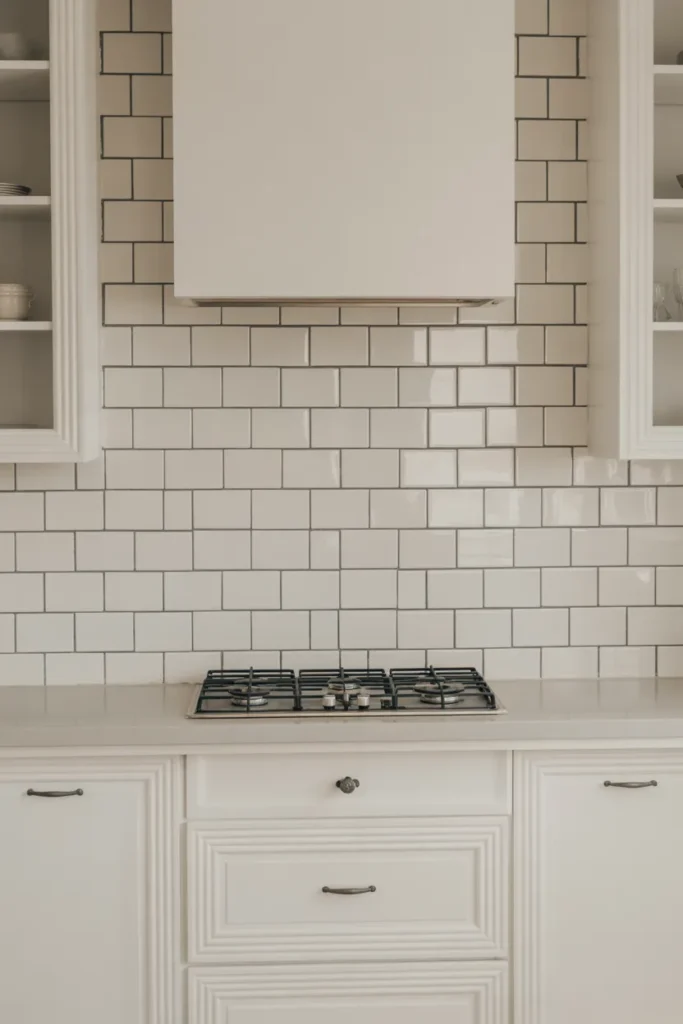
The standard white subway tile, usually 3 by 6 inches in a running bond, is the most forgiving white backsplash you can fit. It suits white, grey, wood and coloured cabinets and does not date the way strong patterns can.
Grout sets the tone: White grout gives a pale, joined up wall. Light grey grout outlines each tile slightly and hides marks better. Decide this before fitting, because it changes the whole effect.
Easy to live with: Glazed ceramic wipes clean with warm water and a cloth. If one tile chips, a single replacement is cheap and easy to find in the same size.
- Suits almost every cabinet colour
- Cheap single tile replacements
- Grout colour changes the whole look
Shop This Look
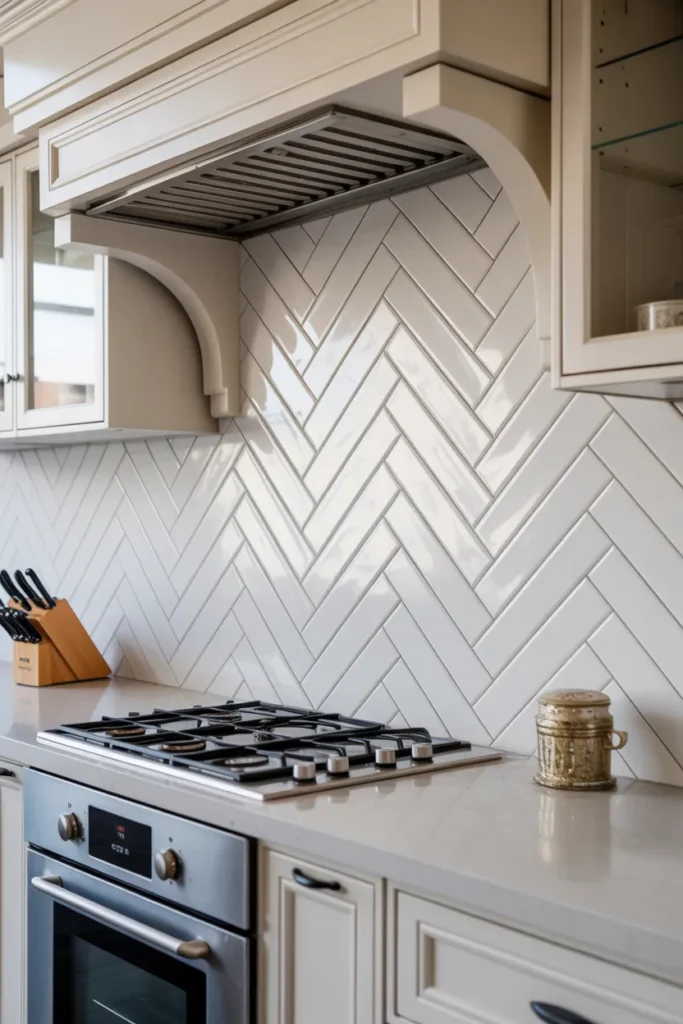
2. White Herringbone Tile Backsplash
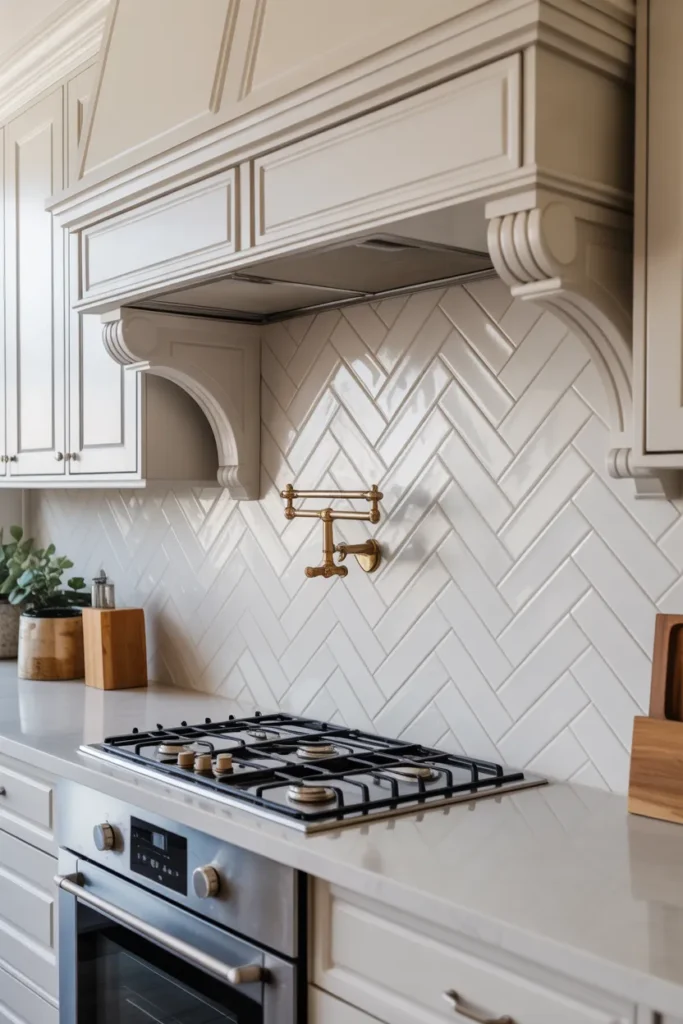
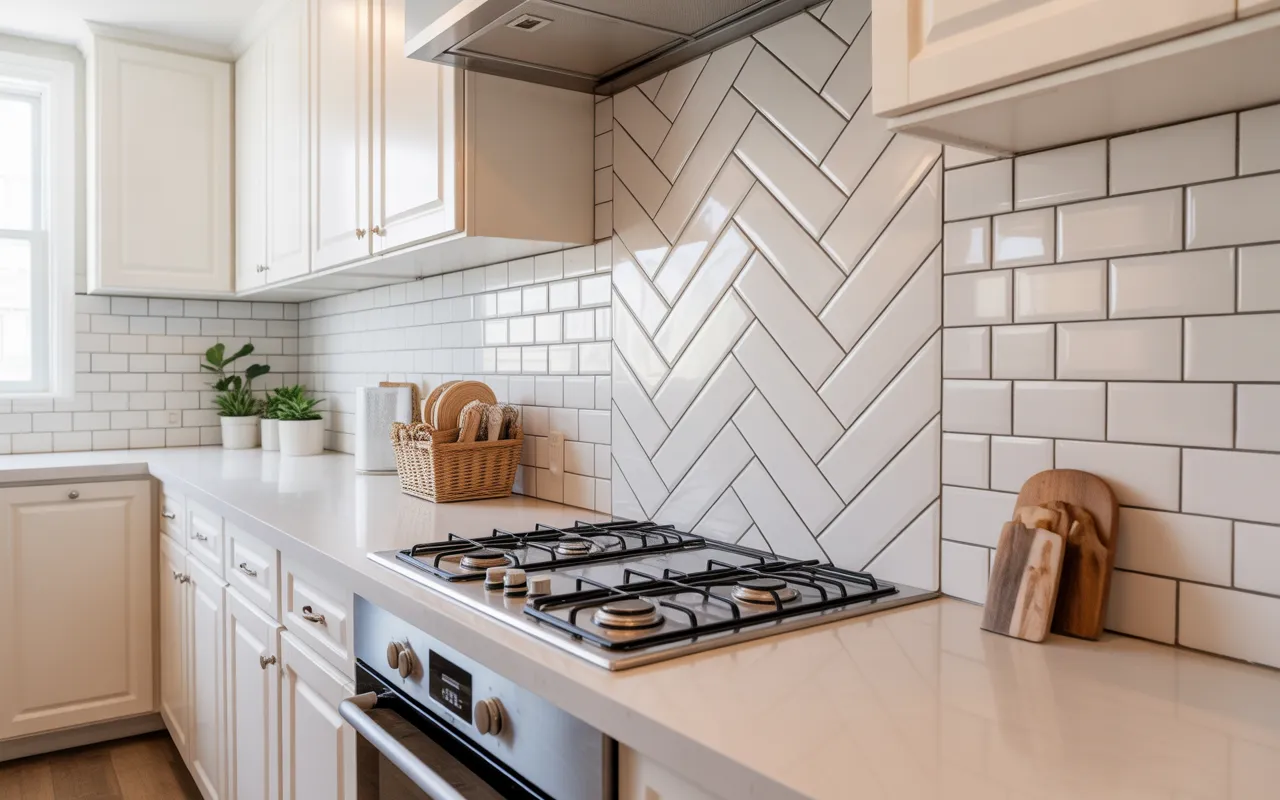
Laying the same white rectangular tile in herringbone turns a plain wall into a patterned one without adding colour. The zigzag catches light differently across the day, which keeps an all white kitchen from looking flat.
Centre the pattern: Start in the middle of the wall and work out so both ends finish evenly. This layout uses more tiles than a straight bond because of the angled edge cuts.
Fitting takes longer: Allow extra time or a higher fitting quote for herringbone. Rushing the cuts at the edges is where this layout usually goes wrong.
- Adds pattern while staying all white
- Needs centre out planning
- Higher waste and fitting time than straight layouts
Shop This Look
3. Glossy White Glass Backsplash
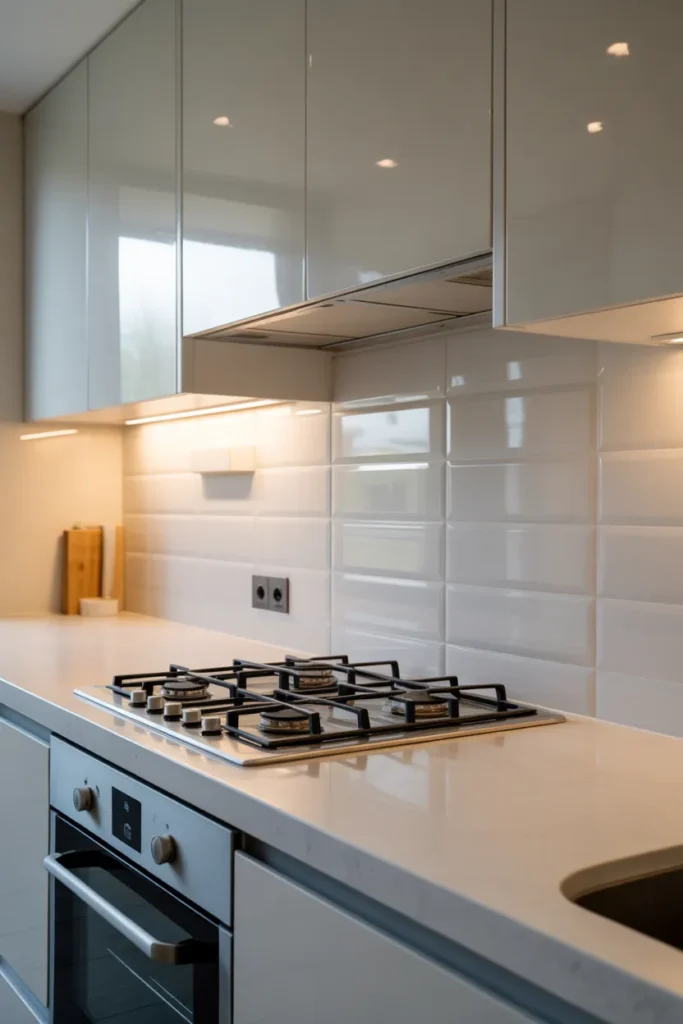
A glossy white glass backsplash, either as tiles or a single panel, reflects light across the room and has no porous surface for stains to sit in. It suits kitchens with little natural light particularly well.
Panel or tiles: A single toughened panel has no grout lines and wipes down in seconds, but must be measured exactly before it is made. Glass tiles are more flexible if your walls are uneven.
Watch the fittings: Chrome and black taps both read clearly against glossy white. Warm metal handles can look slightly yellow in the reflection, so check a sample against the glass first.
- Reflects light in darker kitchens
- Panel version has no grout lines
- Exact measuring needed for panels
Shop This Look
4. White Marble Backsplash with Subtle Veining
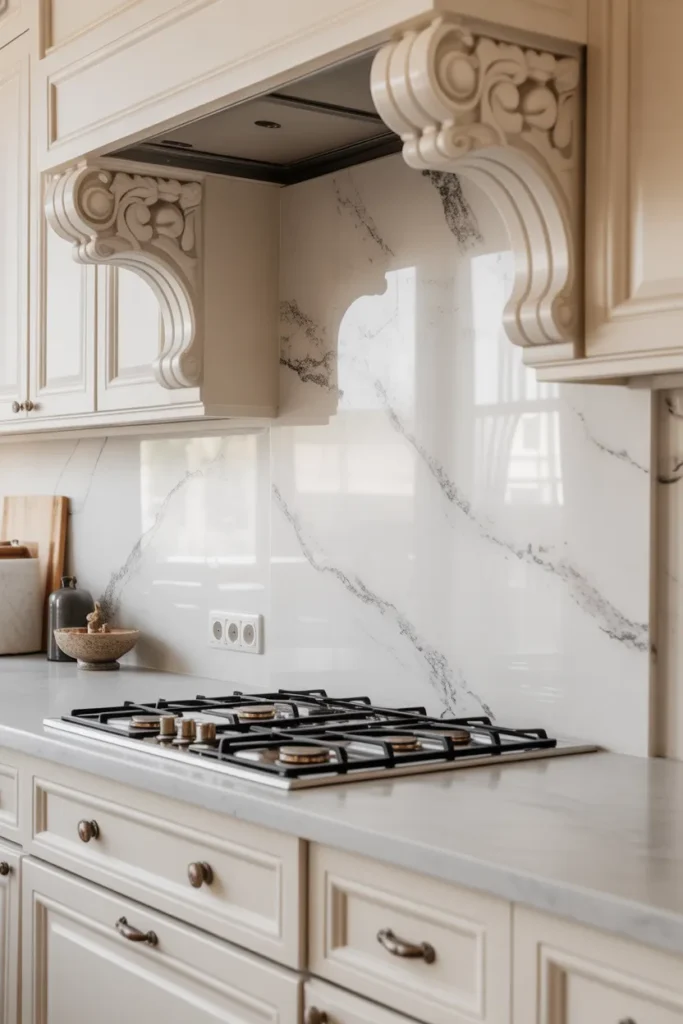
Real white marble with soft grey veining gives a white kitchen natural variation that printed tiles cannot fully copy. The stone is cut into slabs or tiles and needs sealing to cope with kitchen splashes.
Veining is not controllable: Each piece differs. If a calm wall matters to you, choose tiles with faint veining and view the batch before it is fitted.
Seal and wipe promptly: Seal on fitting and again as the supplier advises. Wipe lemon, vinegar and tomato spills quickly, as acids can dull the polished surface.
- Natural veining varies piece to piece
- Needs sealing and prompt spill wiping
- Faint veining gives a calmer wall
Shop This Look
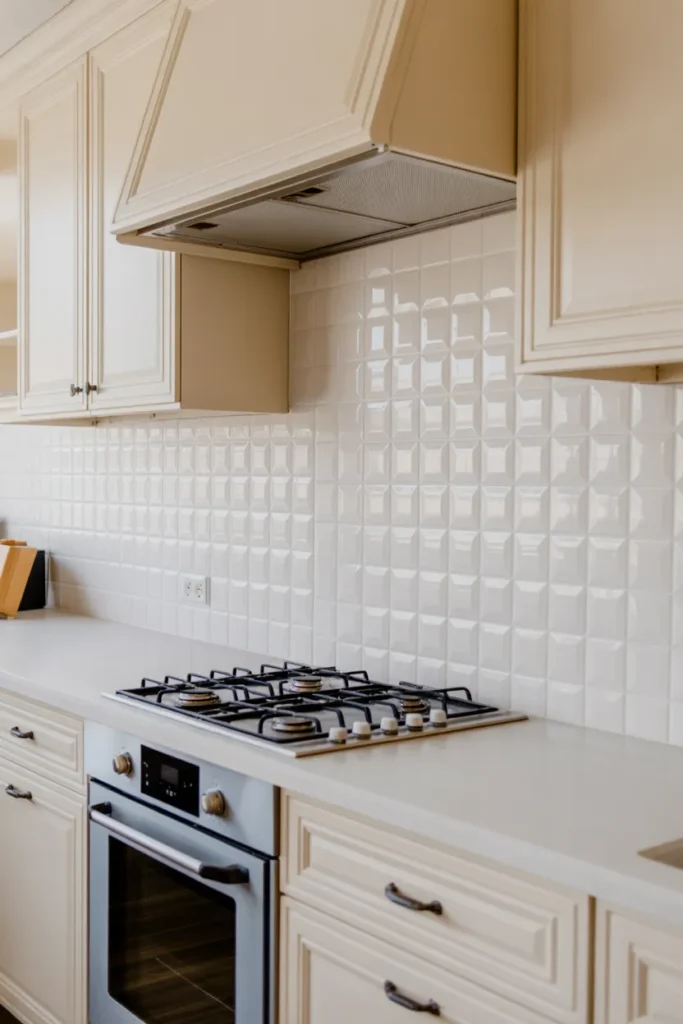
5. White Beveled Subway Tile Backsplash
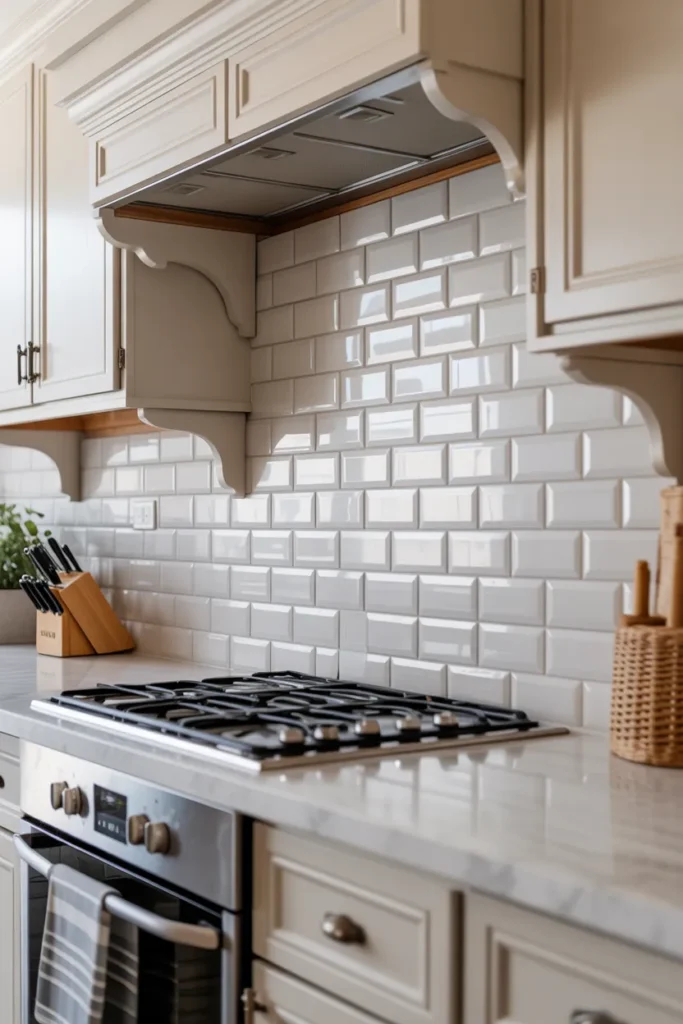
Beveled subway tiles have angled edges that catch light along every border, so a white wall gains shadow and depth without colour or pattern. Up close the effect is clear, from across the room it reads as simple white tile.
Light does the work: Under cabinet lighting shows the bevel best. Without it, in a dim kitchen, beveled tiles can look much like flat ones, so the extra cost may not be worth it.
Grout lines look deeper: The angled edge makes joints appear wider and deeper than flat tile. A white or very pale grout keeps that depth soft rather than stark.
- Angled edges add shadow and depth
- Shows best under cabinet lighting
- Pale grout keeps the effect soft
Shop This Look
6. White Subway Tiles with Dark Grout
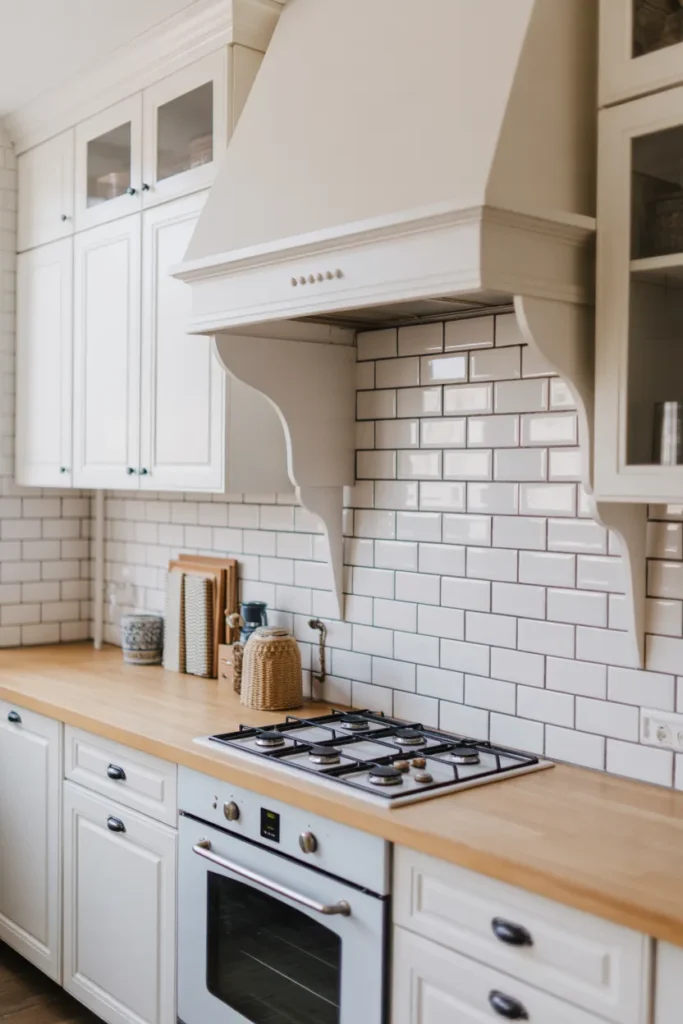
White subway tile with dark grout is the practical version of the classic look. The dark lines define every tile, forgiving small fitting imperfections less, but hiding cooking stains far better over time.
Straight lines are essential: Contrast shows every wobble. Use spacers throughout and check each row with a spirit level before the adhesive sets.
Pick the grout shade carefully: Charcoal reads softer than pure black and is a safer first step if you like the idea but worry it will feel too strong. Test on a board first.
- Dark grout hides stains well
- Needs very straight fitting
- Charcoal is softer than black
Shop This Look
7. White Mosaic Tile Backsplash
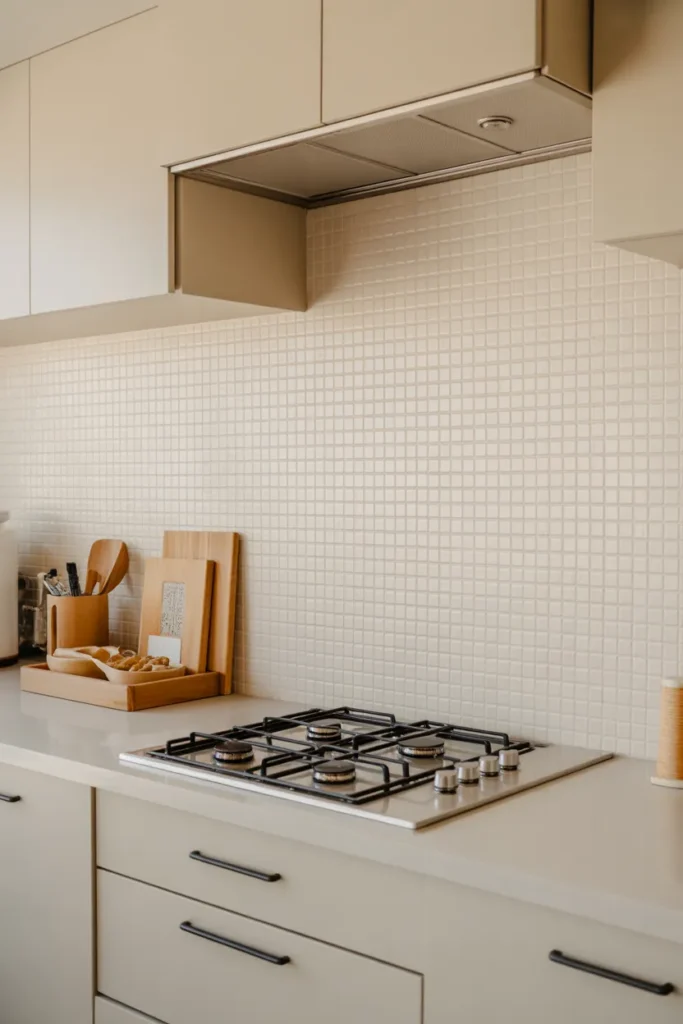
White mosaic tiles on mesh sheets add fine texture made up of hundreds of small pieces. The look suits a small area, such as a hob splashback panel, more than a very long wall of cabinets.
Many grout lines: More grout means more cleaning and more grout to seal. Keep that in mind if the mosaic will sit right behind a busy hob.
Sheet fitting is faster: Sheets go up quicker than individual small tiles, but each sheet must sit level with the next or the grid drifts. Check alignment every two sheets.
- Fine texture for small areas
- Many grout lines to clean and seal
- Check sheet alignment as you go
Shop This Look
8. White Textured Ceramic Backsplash
Textured white ceramic tiles have ridges, waves or a handmade style uneven surface under a white glaze. They keep the palette pale while stopping the wall looking flat or clinical.
Texture holds onto grease: Ridges near the hob collect more grease than flat tile and need a soft brush, not just a cloth. Fit textured tile away from the hob if you fry food often.
Variation is part of it: Handmade style tiles vary in thickness and edge. Your tiler will need wider grout joints to absorb that variation, which becomes part of the look.
- Pale colour with real surface texture
- Ridges need brush cleaning near the hob
- Wider joints suit uneven edges
Shop This Look
9. White Chevron Tile Backsplash
Chevron tiles meet in a continuous V and give a white wall a clear direction and rhythm. The shape is neater and more formal than herringbone, and it pairs well with plain slab cabinet doors.
Buy the shape ready cut: True chevron needs factory angled ends for the points to meet cleanly. Do not try to fake it by cutting rectangles on site.
Decide the direction: Points up is the usual choice and draws the eye upward, which helps low ceilings. Check the first full row dry before fixing anything.
- Neat continuous V pattern
- Factory cut tiles are essential
- Points up helps low ceilings feel higher
Shop This Look
10. White Marble-Effect Porcelain Backsplash
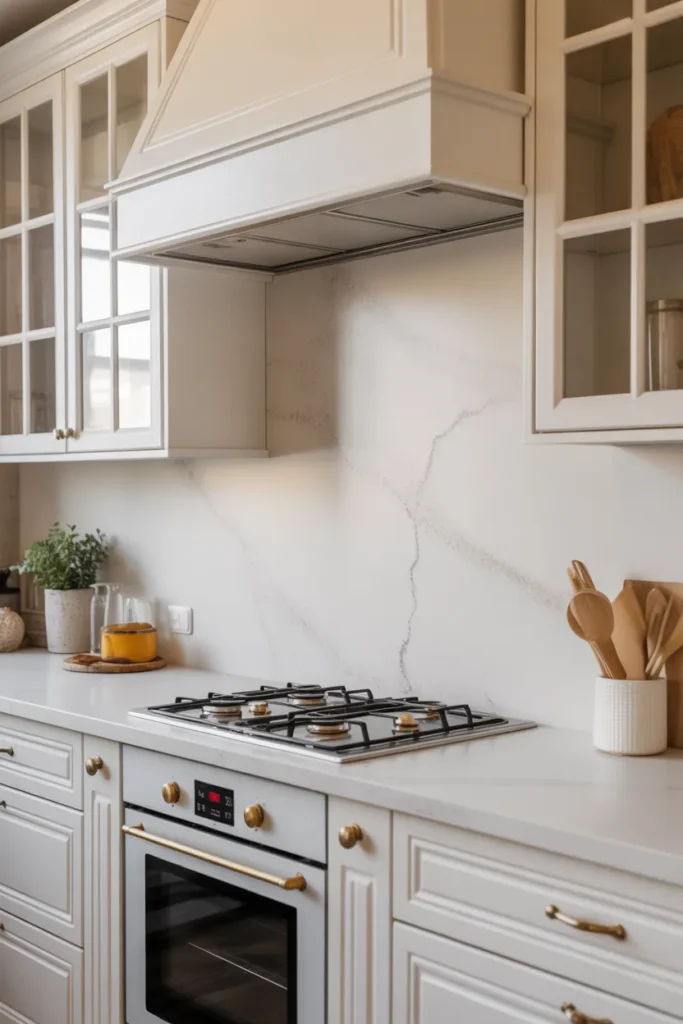
Marble effect porcelain copies the look of white marble with grey veining but needs no sealing and costs less than stone. Modern printing is convincing at normal viewing distance, especially in tile sizes rather than one huge slab.
Repeat patterns give it away: Cheap versions repeat the same vein every few tiles. Spread tiles from several boxes and turn some around so repeats are less obvious.
Practical for busy kitchens: Porcelain shrugs off heat, oil and acidic splashes that would mark real marble. For a family kitchen that cooks daily, that difference matters.
- Marble look without sealing
- Mix boxes to hide print repeats
- Handles heat and acid splashes well
Shop This Look
11. White Subway Tiles with Glossy Finish
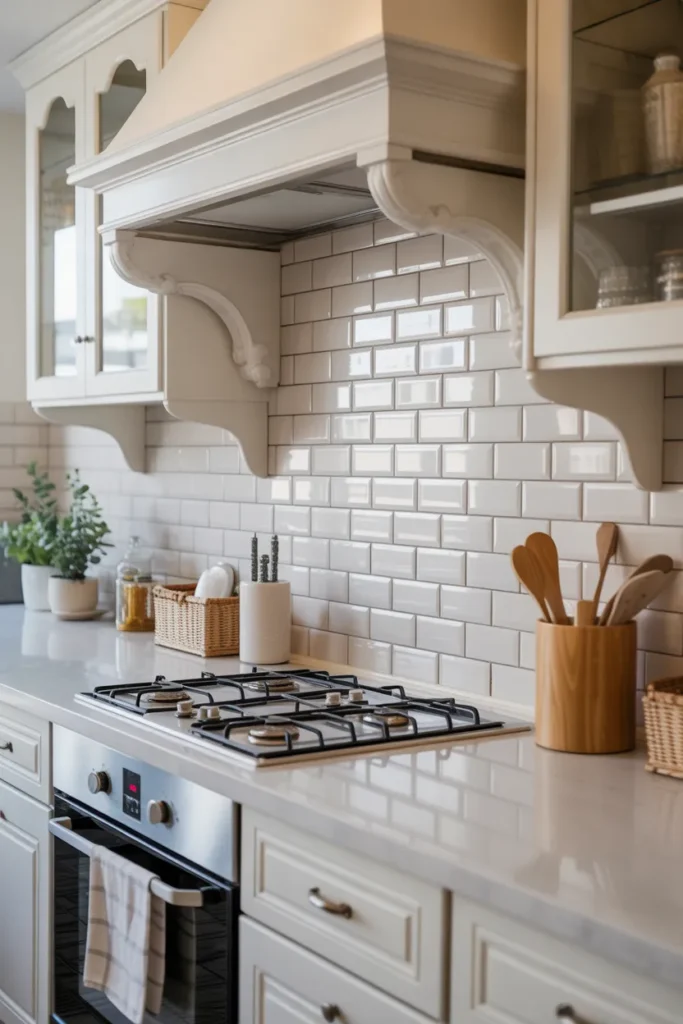
A glossy finish on standard white subway tile bounces light around and wipes clean with almost no effort. It is the finish to choose if your kitchen faces away from the sun or has one small window.
Gloss shows more, cleans easier: Every splash shows on gloss until you wipe it, but nothing sticks hard to it. A quick daily wipe keeps it looking freshly fitted.
Pair with matt elsewhere: If cabinets and worktops are also glossy, the room can feel hard and noisy visually. One matt surface, often the worktop, calms it down.
- Best finish for low light kitchens
- Splashes show but wipe off easily
- Balance with one matt surface
Shop This Look
12. White Brick Pattern Tiles
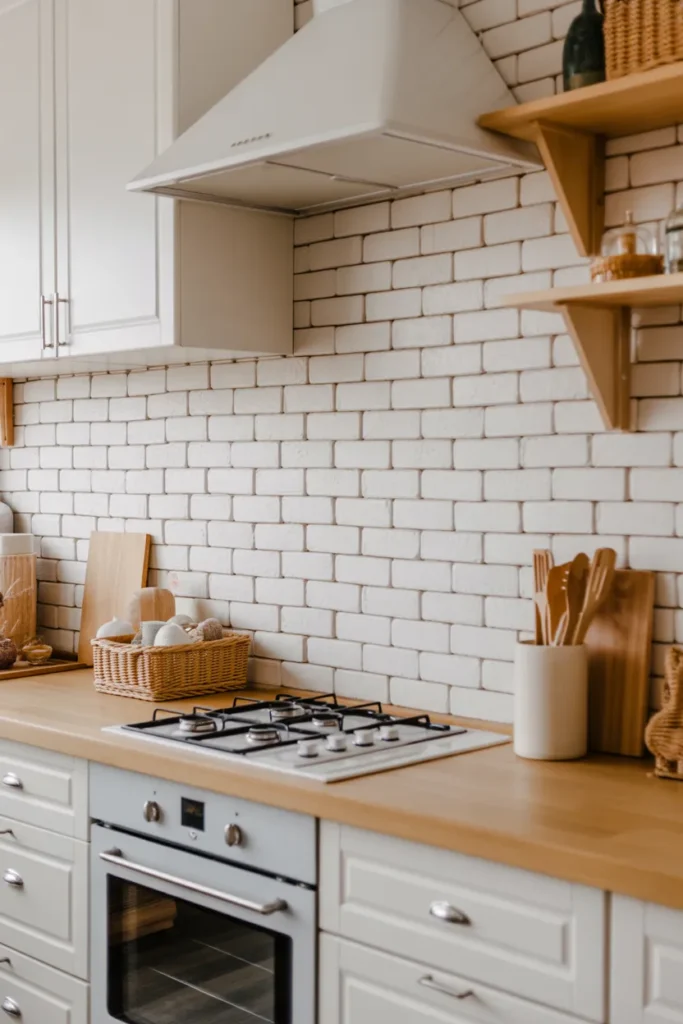
White brick pattern tiles copy the staggered layout and rough face of painted brick in a thinner, sealed tile. You get the texture of brick without painting and repainting real brickwork every few years.
Easier than real brick: The tiles are even in size, simple to cut, and glazed so splashes wipe off. Real brick needs sealing and still marks more easily.
Style it simply: Brick pattern suits wood worktops, black fittings and open shelves. Avoid adding other rough textures nearby or the wall becomes the only thing you notice.
- Brick texture in an easy clean tile
- Even sizing makes fitting simple
- Suits wood worktops and black fittings
Shop This Look
13. White Geometric Tiles with 3D Effect
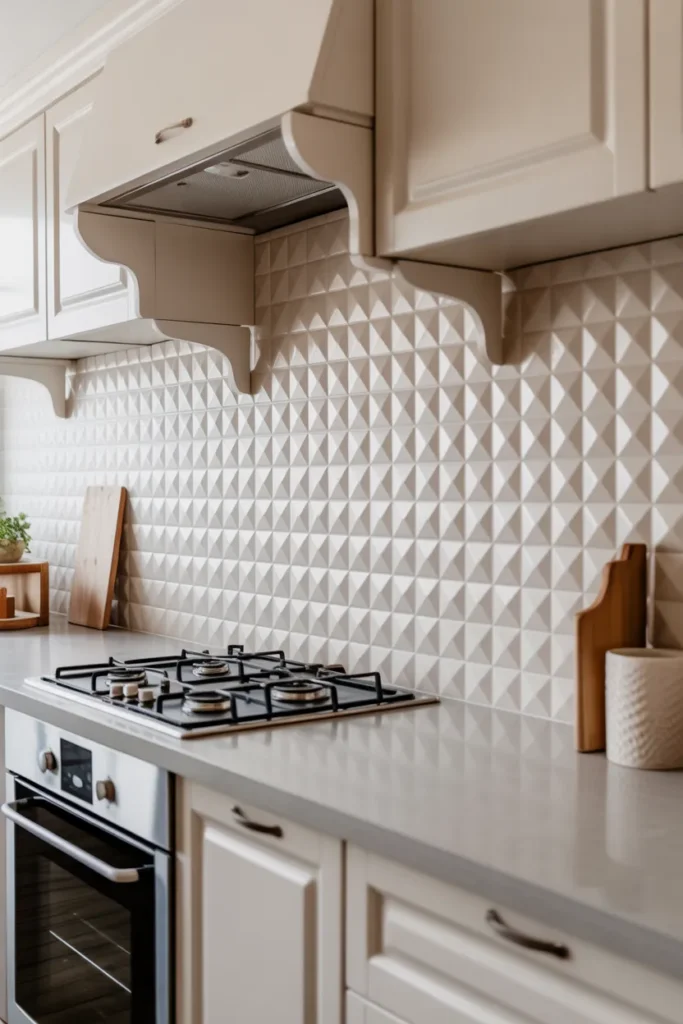
Three dimensional white geometric tiles cast small shadows across their raised faces, so the wall changes through the day as light moves. Cubes, hexagons and diamonds are the common shapes.
Keep the area contained: A full room of 3D tile is a lot of shadow and texture. Most kitchens suit it on one wall run, with flat tile or paint continuing around corners.
Dust sits on ledges: Raised shapes collect dust on their top edges. A soft brush or vacuum brush head every few weeks keeps them looking white rather than grey.
- Raised faces create moving shadows
- Best on one wall run only
- Needs regular dusting on ledges
Shop This Look
14. White Herringbone Marble Backsplash
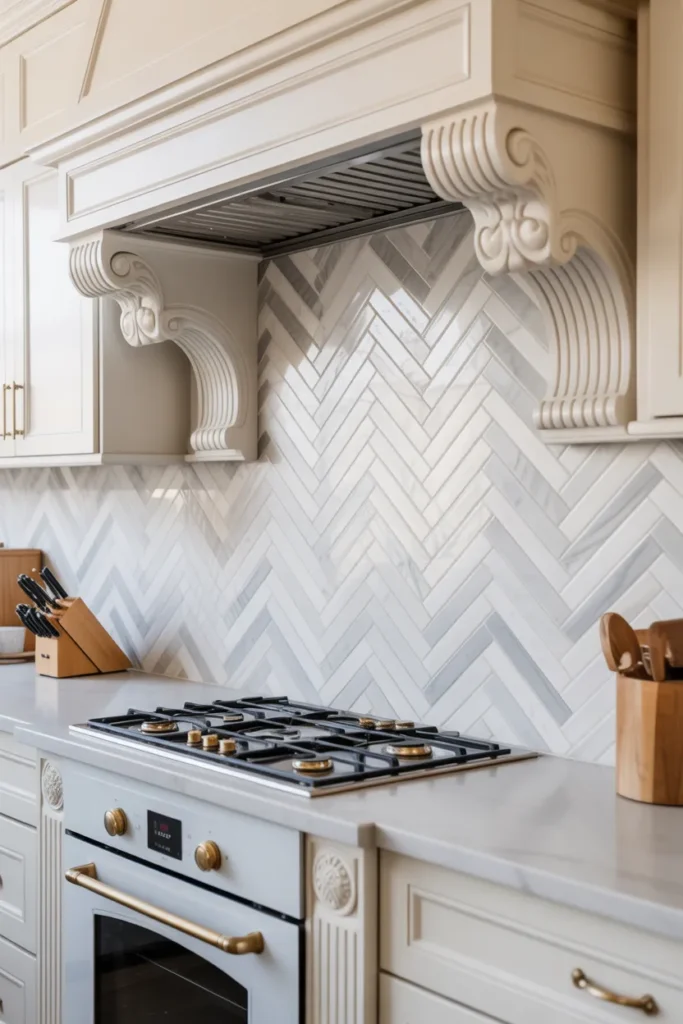
Herringbone in white marble combines the zigzag layout with natural stone, usually as a mosaic on mesh sheets. It is one of the more expensive white options, in both material and fitting time.
Use it where it will be seen: Behind the hob or on the main wall only is a sensible compromise. The rest of the room can use plain marble tiles in a straight layout from the same range.
Sealing still applies: It is real stone, so seal it before grouting and again as directed. The many joints in herringbone mean grout sealing matters here too.
- Premium look for a feature area
- Real stone, so sealing is required
- Plain marble can continue the rest of the wall
Shop This Look
15. White Ceramic Tiles with Subtle Pattern
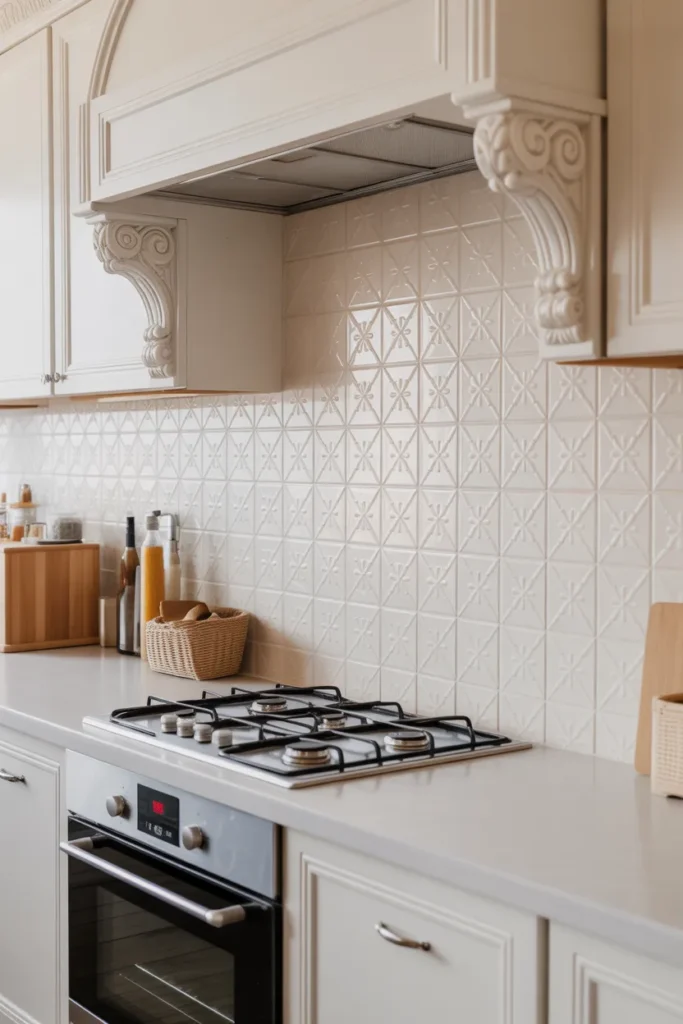
Subtle patterned white ceramic tiles carry a faint relief or printed motif in the same white as the base. From a distance the wall looks plain, up close there is detail to hold interest.
Check it at distance: Stand at your kitchen doorway with a sample fixed in place if you can. Some subtle patterns disappear completely at distance, others show more than expected.
One pattern, one place: Do not mix two subtle patterns on adjoining walls. The eye reads it as a fitting mistake rather than a choice.
- Detail shows up close, plain at distance
- Test the pattern from the doorway
- Never mix two patterns on adjoining walls
Shop This Look
16. White Subway Tiles with Diagonal Layout
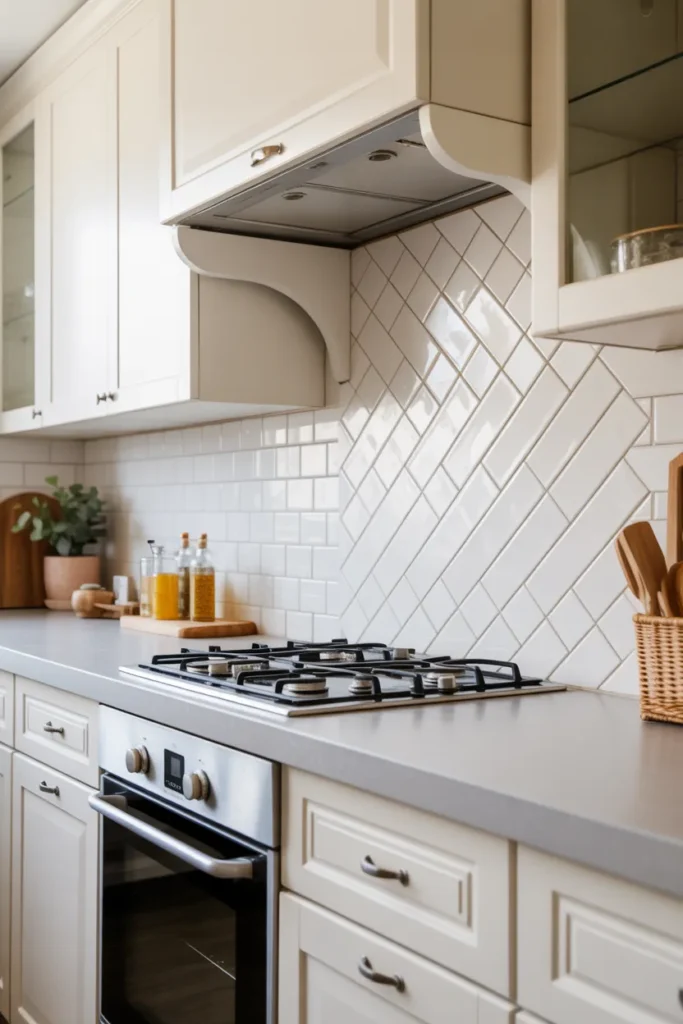
Turning subway tiles to run diagonally, at 45 degrees, makes a familiar cheap tile look deliberate and less standard. The layout draws the eye across the wall and suits long, low runs of cabinets.
More cuts, more waste: Every edge becomes a diagonal cut. Order well over the usual ten percent extra and confirm your tiler is comfortable with the layout before starting.
Ends need a border: A straight border tile or trim at each end gives the diagonal field a clean frame. Without it the cut edges can look untidy.
- Familiar tile in a less standard layout
- Allow extra waste for diagonal cuts
- Frame the field with a border or trim
Shop This Look
17. White Glass Mosaic Backsplash
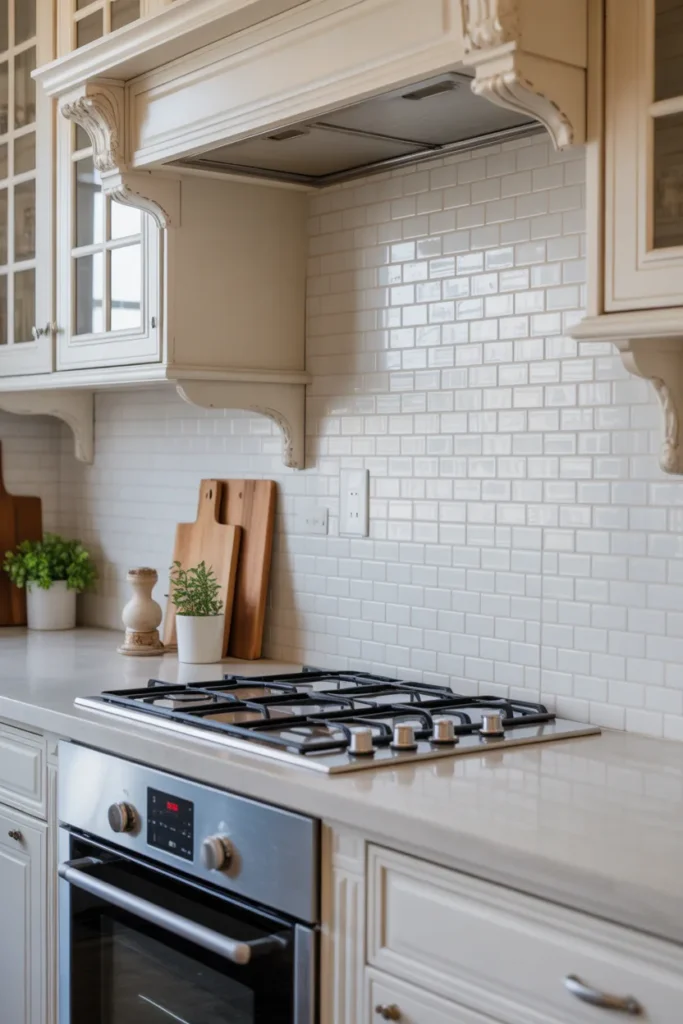
White glass mosaic mixes tiny glass pieces, sometimes with slight shade variation, on a mesh sheet. It sparkles under cabinet lights and works well as a narrow strip or a full splashback behind the hob.
Adhesive colour matters: Use white adhesive. Grey adhesive dulls clear and pale glass pieces and can make the finished wall look uneven in colour.
Shade variation is normal: Pieces are not identical, which gives the wall life. Lay sheets out first and swap any sheet that looks noticeably darker than the rest.
- Sparkles under cabinet lighting
- White adhesive keeps colours bright
- Lay sheets out to check shade first
Shop This Look
18. White Marble Subway Tiles
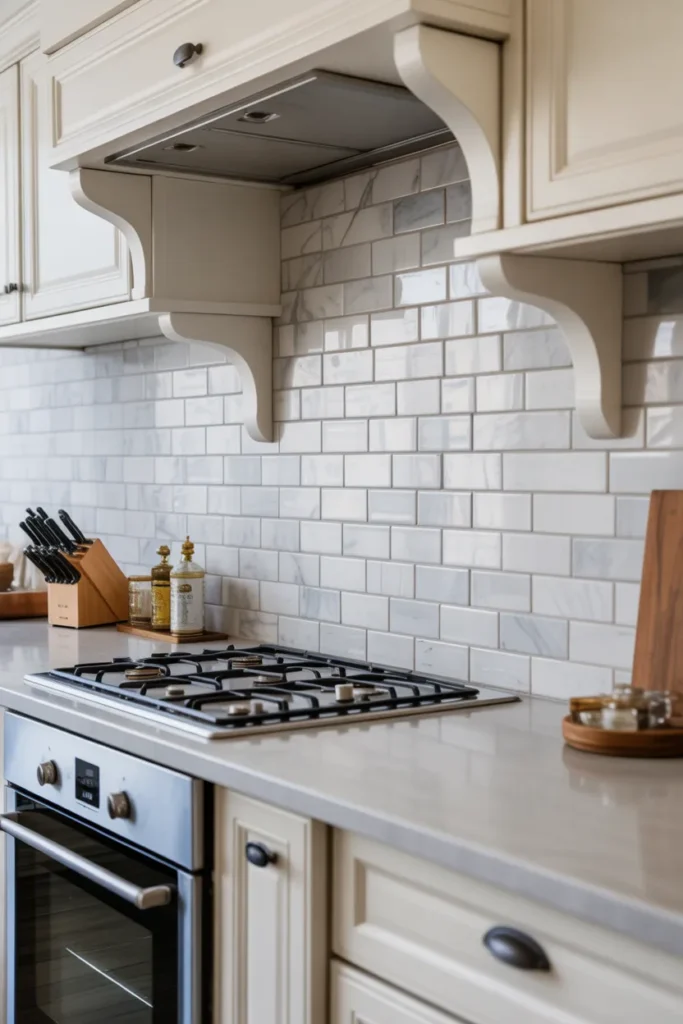
White marble cut into subway shapes gives you the brick layout with stone veining and a slightly softer edge than ceramic. It bridges classic and natural looks in one wall.
Mix the boxes: Veining strength varies a lot between tiles. Mix tiles from every box as you fit them so strong veins spread across the wall instead of clustering.
Costs sit in the middle: It costs more than ceramic subway and less than a full slab. For many kitchens that balance, plus easier fitting, makes it the sensible marble option.
- Brick layout with natural veining
- Mix boxes to spread strong veins
- Costs less than a full marble slab
Shop This Look
19. White Textured Chevron Tiles
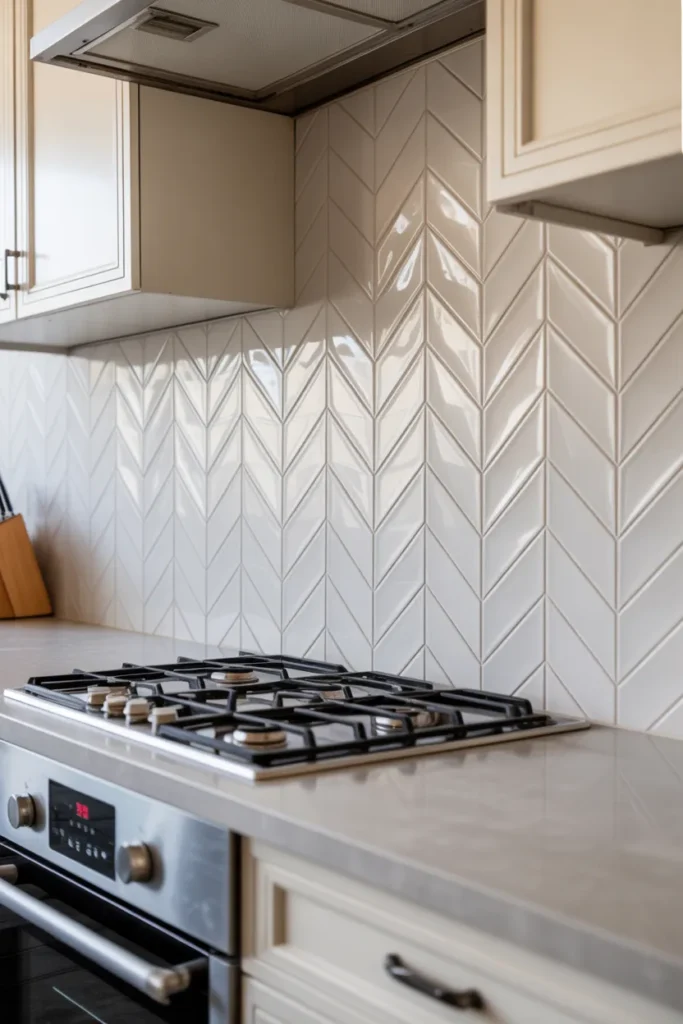
Textured chevron tiles combine the V layout with a ridged or uneven surface, so both pattern and texture are at work. In white, it stays calm enough for a full wall while still holding interest.
Two effects is the limit: Do not add a third effect such as dark grout or mixed colours on top. Pattern plus texture is already plenty for one wall.
Cleaning takes a brush: The texture traps more dust and grease than flat chevron. Keep a soft brush by the sink and give the hob area a weekly brush down.
- Pattern and texture in one tile
- Avoid adding dark grout as a third effect
- Brush clean the hob area weekly
Shop This Look
20. White Subway Tiles with Matte Finish
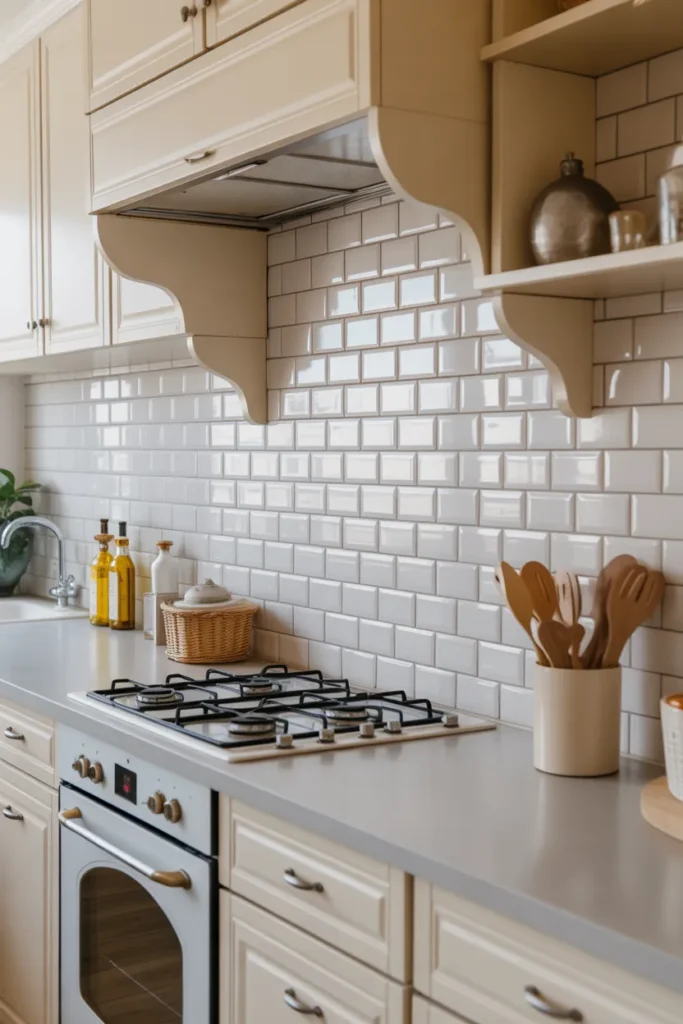
A matt finish on white subway tile gives a softer, chalkier wall that hides fingerprints and water marks better than gloss. It suits kitchens with plenty of natural light, where gloss can glare.
Matt shows grease differently: Oil marks can look darker on matt glaze and need a degreasing cleaner rather than plain water. Test your usual cleaner on a spare tile.
Light is not reflected: You lose the light bouncing benefit of gloss. If your kitchen is already bright, that trade is fine and the calmer finish is worth it.
- Hides fingerprints and water marks
- Grease needs degreasing cleaner
- Suits bright kitchens that do not need reflected light
Shop This Look
21. White Penny Round Tiles Backsplash
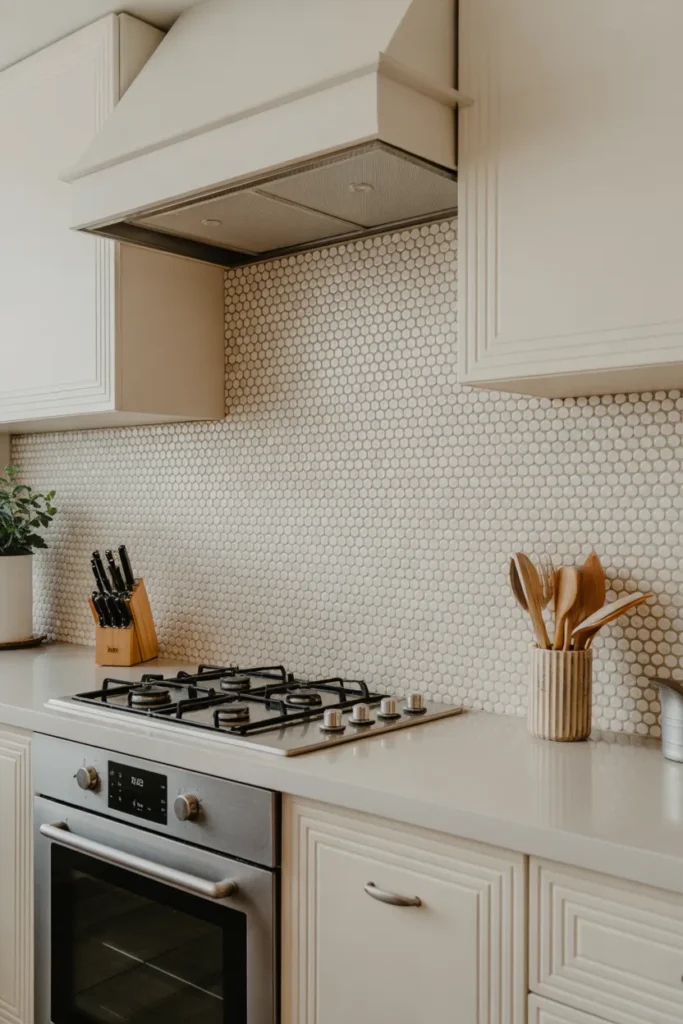
Penny round tiles are small circles on mesh sheets, a shape borrowed from older bathrooms that works well in kitchens with retro or simple shaker cabinets. In white, the interest is all in the repeated circles and grout lines.
Grout is half the look: With this many joints, grout colour decides whether the wall reads soft or graphic. Pale grey keeps it soft, charcoal makes every circle stand out.
Sheets must align: Circles reveal misalignment quickly where sheets meet. Take time at sheet joins and step back often to check the rows stay level.
- Retro circle shape on easy mesh sheets
- Grout colour decides soft or graphic
- Check sheet joins carefully
Shop This Look
22. White Brick-Style Tiles with Soft Texture
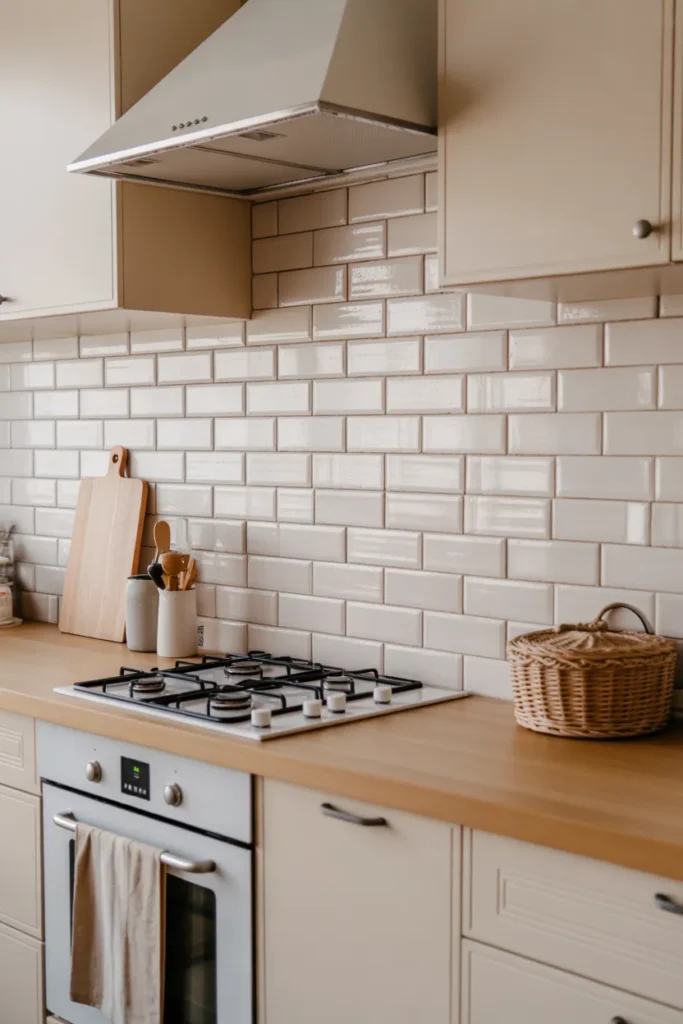
Brick style tiles with a soft, slightly uneven texture copy old painted brickwork without the weight or porosity of real brick slips. The surface is glazed, so it is a practical choice behind a sink.
Softer than split stone: The texture is gentle, with no sharp ridges to trap dirt. A cloth is enough for daily cleaning, unlike rough stone which needs a brush.
Works with warm materials: Wood shelves, brass handles and cream cabinets sit well against this texture. Stark black and chrome can make it look out of place, so check samples together.
- Gentle texture, easy cloth cleaning
- Suits wood, brass and cream cabinets
- Glazed surface handles sink splashes
Shop This Look
23. White Hexagon Tiles Backsplash
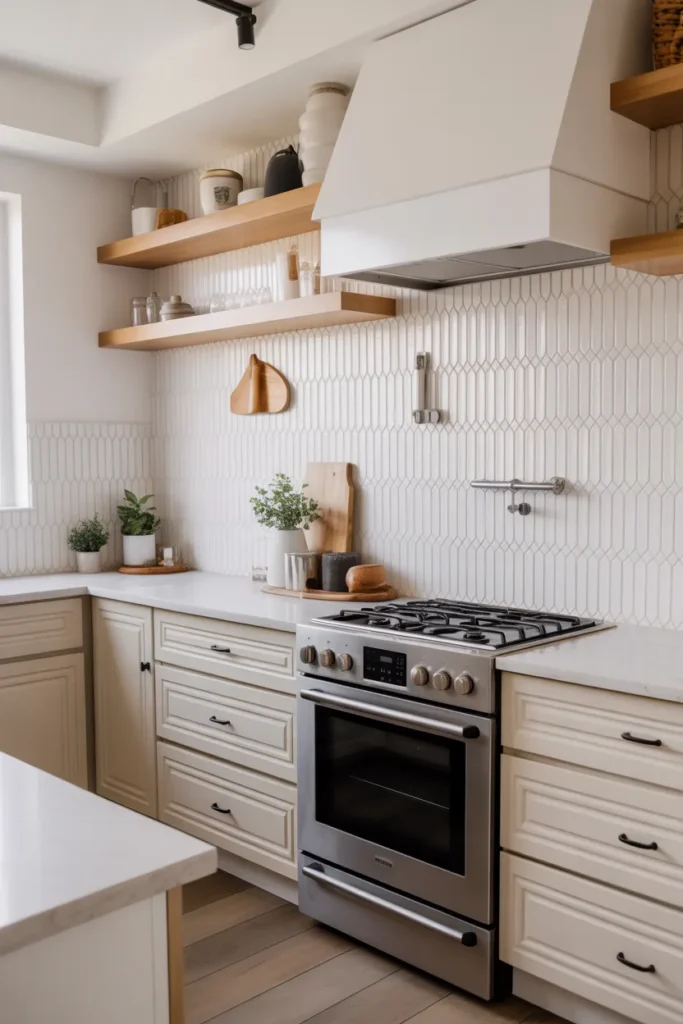
White hexagon tiles scale from tiny mosaics to large tiles that cover a wall quickly. The six sided shape is familiar enough to feel safe and different enough from subway tile to be a clear choice.
Size changes the feel: Small hexagons read as texture, large ones read as pattern. Decide which you want before ordering, because the grout amount and cleaning effort differ a lot.
Finish the top edge: Hexagons leave a stepped top edge. A straight trim or a cut line under the cabinets hides it, so plan that detail before the first tile goes up.
- Available from mosaic to large format
- Small reads as texture, large as pattern
- Plan the stepped top edge finish
Shop This Look
24. White Textured Subway Tiles with Gloss Finish
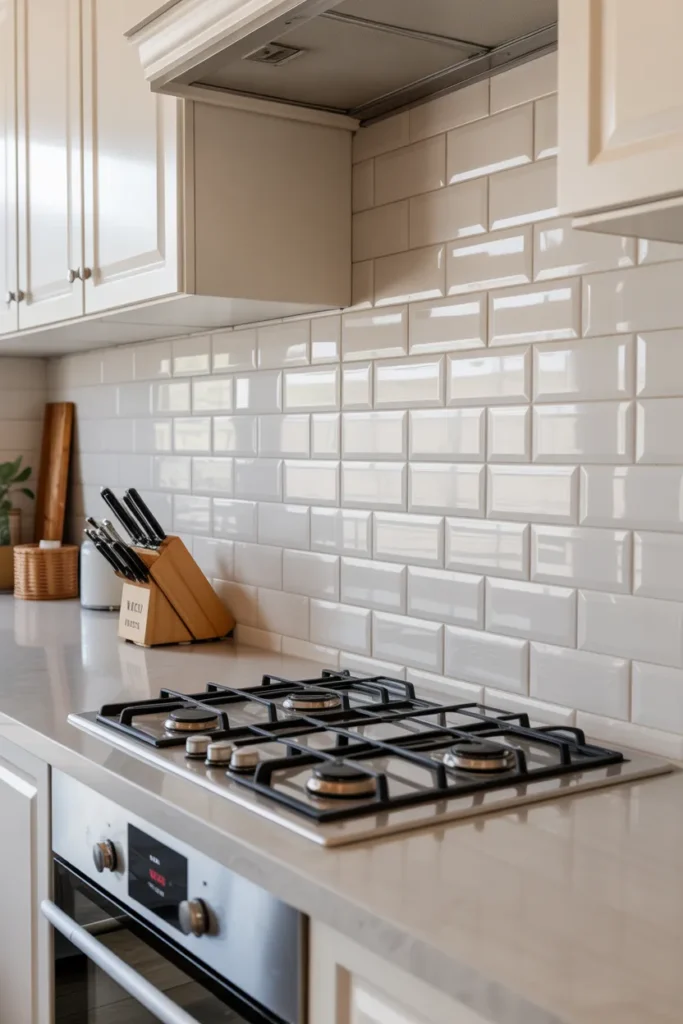
Textured subway tiles with a gloss finish combine an uneven, handmade style surface with a shiny glaze that still reflects light. No two tiles sit quite the same, which softens the grid of a standard subway layout.
Uneven is the point: If you want a perfectly flat, machine straight wall, choose standard tiles instead. These are made to vary, and grout joints will vary slightly with them.
Gloss helps with cleaning: Despite the texture, the gloss glaze releases grease more easily than a matt textured tile. Warm water and a cloth handle most marks.
- Handmade variation with an easy clean glaze
- Joints will vary slightly by design
- Reflects light like standard gloss tile
Shop This Look
25. White Large-Format Tiles Backsplash
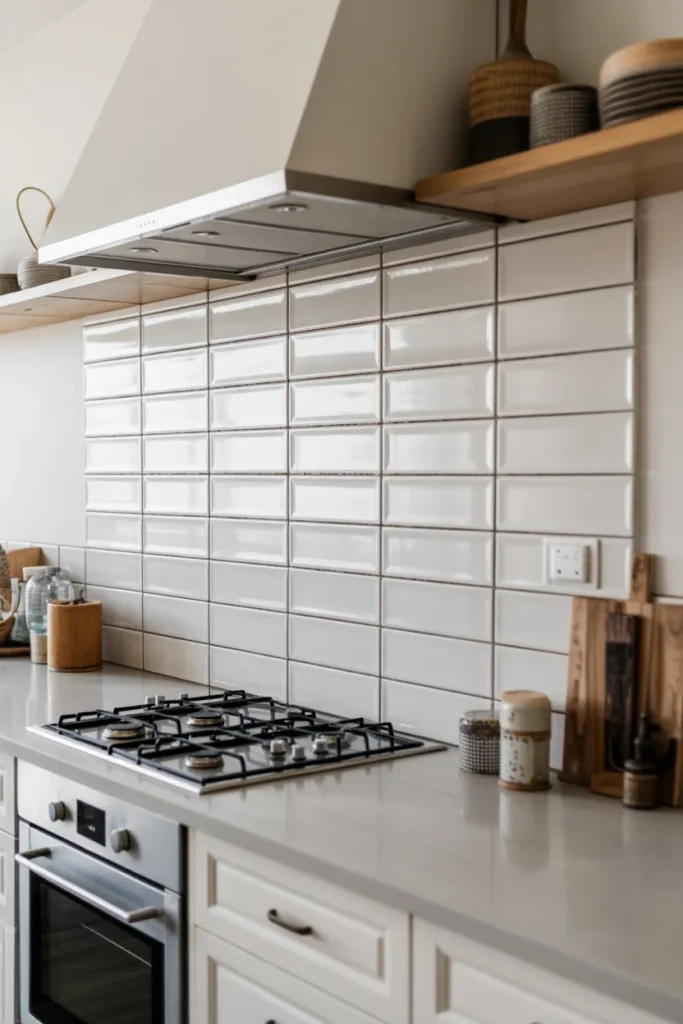
Large format white tiles, often 30 by 60 cm or bigger, cover the wall with very few grout lines and a calm, unbroken surface. They suit handleless cabinets and kitchens that already have pattern in the floor or worktop.
Walls must be flat: Big tiles show every bump in the wall beneath them. Check the wall with a long level and skim it flat first if needed, or edges will not sit flush.
Fewer lines, faster cleaning: With so few joints, weekly cleaning is quick and grout discolouration is barely an issue. That alone sells this format to a lot of busy households.
- Very few grout lines for a calm wall
- Wall must be flat before fitting
- Quickest white option to keep clean
Shop This Look
How to Start
Start by deciding what your white backsplash needs to do. If the kitchen is dark, put glossy and glass options at the top of the list. If it is already bright and you cook a lot, matt and large format tiles will be easier to live with.
Compare whites side by side: Whites differ more than sample cards suggest. Put your shortlisted tiles next to your cabinet door and worktop in your own light, because a tile that looks pure white alone can look cream or grey beside the real surfaces.
Choose grout with the tile: White, pale grey and charcoal grout give three different kitchens from the same tile. Mix a small amount of each on a board, let it dry, and decide from the dried colour, not the wet mix.
- Match the finish to how much light the room gets
- Compare tile, cabinet and worktop whites together
- Test grout colours dried, not wet
Shop This Look
Common Mistakes
- Assuming all whites match, then finding the tile looks cream against white cabinets.
- Choosing bright white grout behind the hob, where it yellows and stains quickly.
- Fitting small mosaic tiles over a long wall without realising how much grout there is to clean.
- Skipping sealant on real marble because it looks like the porcelain version.
- Using grey adhesive under white glass tiles, which dulls the finished colour.
- Picking a matt finish for a dark kitchen that needed the light reflection of gloss.
- Ordering patterned or 3D tiles for every wall instead of one contained run.
Frequently Asked Questions
Will a white backsplash make my kitchen look cold?
It can if every surface is glossy and flat. Textured, matt or handmade style white tiles, plus wood or warm metal handles, keep a white wall feeling softer without adding another colour.
How do I keep white grout looking white?
Seal it after fitting, wipe the hob area weekly, and avoid coloured cleaners that can leave a tint. If you know you will not keep up with that, choose pale grey grout from the start.
Is marble effect porcelain a good substitute for real marble?
For most kitchens, yes. It needs no sealing, handles acidic splashes and costs less. Real marble still has natural variation that printing cannot match exactly, so view both before deciding.
Which white backsplash suits a small kitchen best?
Glossy tiles, glass panels and large format tiles help most, because they reflect light and have fewer lines breaking up the wall. Small mosaics can make a tight space feel busier.
Where can I compare white backsplash ideas with other colours?
This broader guide to kitchen backsplash ideas shows white options alongside colour and pattern, which helps if you are still deciding whether to stay all white or add contrast.
The Finishing Touch
When the last tile is up, check the wall under your evening lighting and look along it at an angle. In an all white kitchen, uneven joints and lippage show more than colour faults, so this angled check is the one that matters.
For more photographs of white kitchens with different tile layouts, grout colours and cabinet pairings, browse the kitchen backsplash photos on Houzz and compare them against your own cabinet style.
Keep a few spare tiles, note the exact grout colour and brand in a kitchen drawer, and reseal grout or stone on schedule. A white backsplash stays white when small marks are dealt with early, not left for a yearly deep clean.