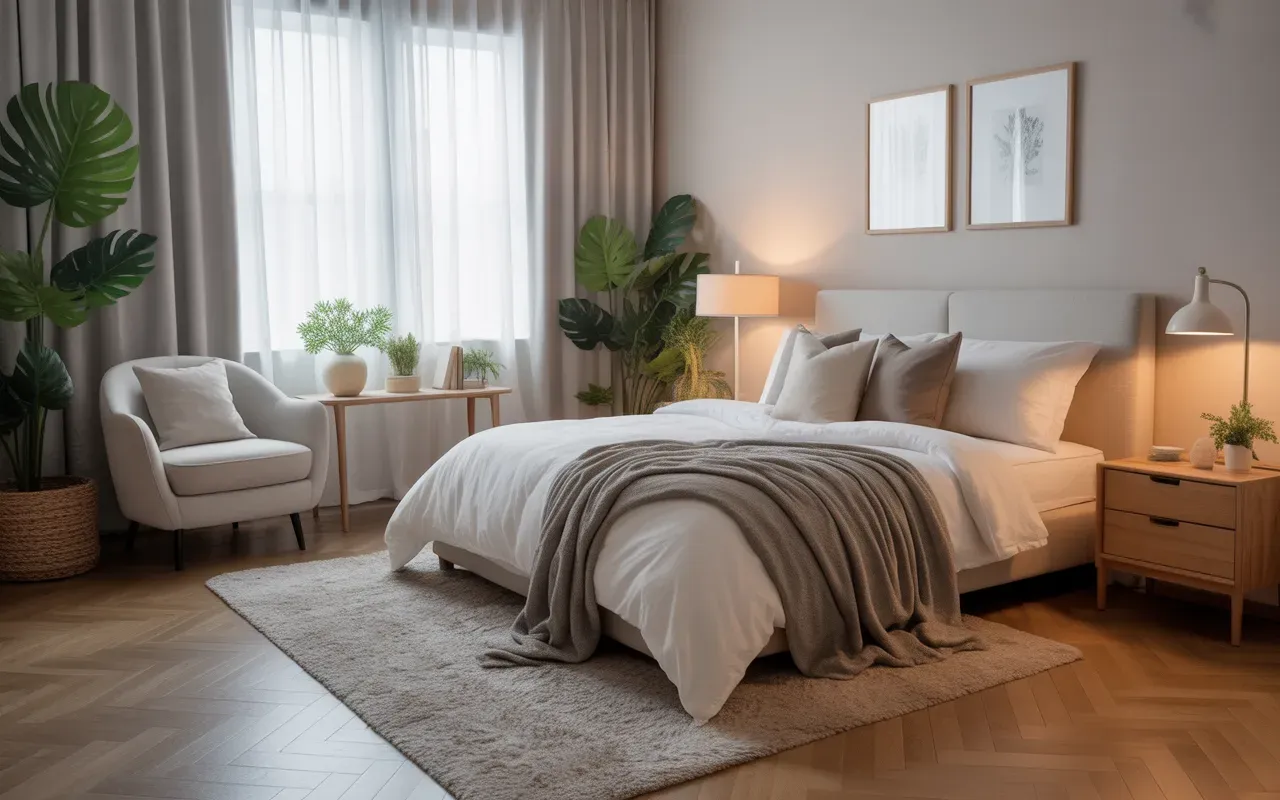
18 Relaxing Bedroom Sanctuary Ideas for Better Sleep
Struggling to fall asleep or unwind at the end of the day? A relaxing bedroom sanctuary can completely change how you rest, recharge, and feel in your space. With the right design choices, your bedroom can become a peaceful retreat that supports better sleep and daily calm.
This guide is all about simple, practical ideas that help you create a soothing environment without overwhelming your space. From soft lighting to calming textures and clutter-free layouts, each idea is designed to make your bedroom feel more restful and balanced. In my experience, even small changes—like adjusting lighting or simplifying decor—can have a big impact on how relaxed you feel at night.
Also view: 17 Preteen Girls Bedroom Ideas for Creative Spaces
1. Soft Neutral Bedding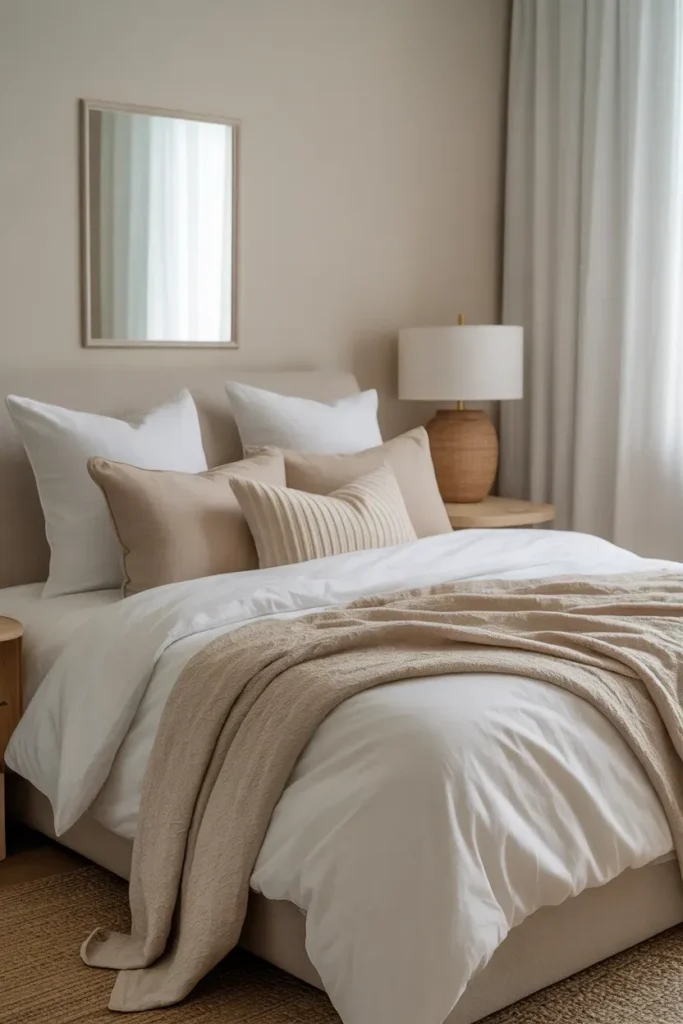
Creates a calm and restful environment
Soft neutral bedding can instantly turn your bedroom into a peaceful retreat. Layers of beige, cream, and white create a calming palette that feels both clean and comforting. This approach works especially well when you want a relaxing bedroom sanctuary without overwhelming the space with color. I’ve noticed that switching to softer tones makes the room feel quieter and more restful. It’s a simple upgrade that helps signal your mind that it’s time to unwind and relax.
The beauty of this idea lies in how it balances comfort and style. Instead of bold patterns, the focus is on texture and softness. That’s why many designers recommend neutral bedding for better sleep environments. In my experience, adding a few layered pillows and a cozy throw enhances the overall feel. This setup creates a bed that looks inviting while also supporting a calm and restful atmosphere every night.
2. Warm Ambient Lighting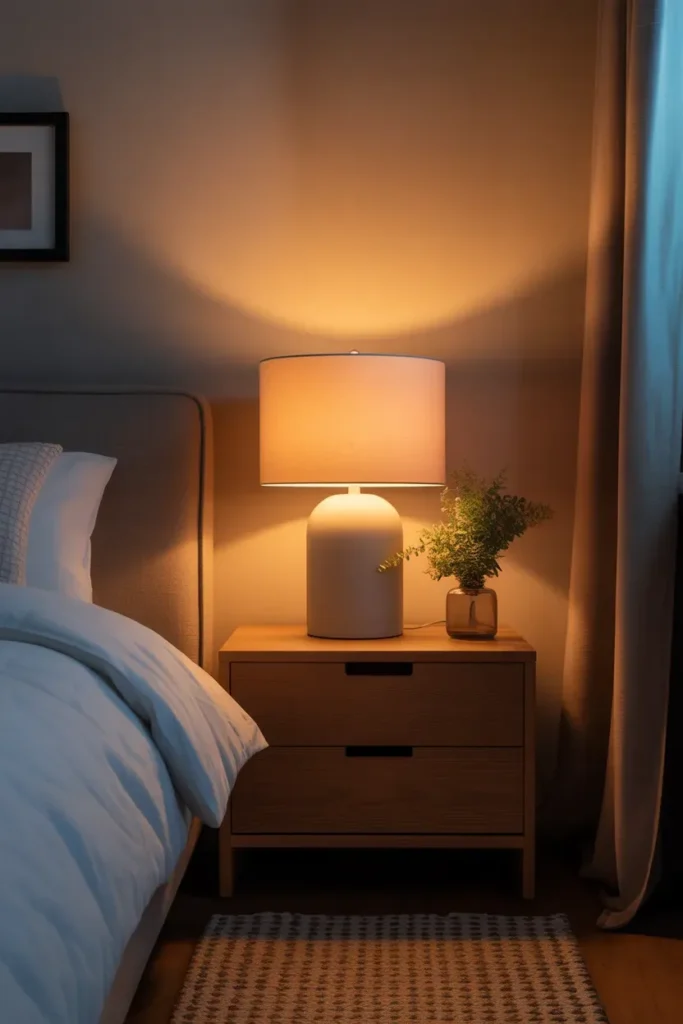
-
- Reduces harsh lighting before sleep
-
- Creates a calm nighttime atmosphere
-
- Improves relaxation and comfort
-
- Enhances overall bedroom mood
Warm ambient lighting can completely change how your bedroom feels at night. Instead of bright overhead lights, soft lamps create a gentle glow that helps your body relax. This works especially well when you want to wind down after a long day. I’ve noticed that lighting plays a big role in how quickly a space feels calm. It’s a simple adjustment that can improve both comfort and the overall mood of the room.
What makes this idea so effective is how it supports a more natural sleep routine. Lower, warmer light signals your brain that it’s time to rest. That’s why many designers recommend layered lighting in bedrooms. In my experience, using bedside lamps instead of overhead lights creates a much more peaceful atmosphere. This setup transforms the space into a cozy environment that feels perfect for relaxing and preparing for sleep.
3. Minimal Clutter Layout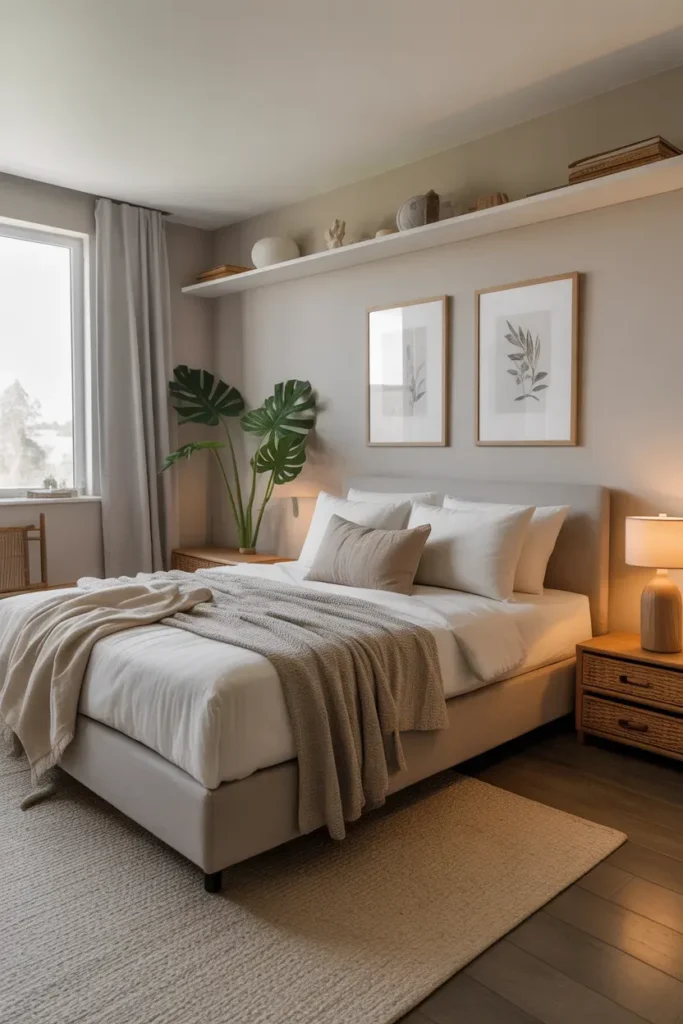
-
- Reduces visual stress
-
- Makes the room feel more open
-
- Easier to maintain daily
-
- Supports a calm sleep environment
A minimal clutter layout can instantly make your bedroom feel more peaceful and organized. Removing unnecessary items creates a clean and open space that feels easier to relax in. This works especially well if your room currently feels busy or overwhelming. I’ve seen this work well in many homes because less clutter naturally leads to less stress. It’s a simple but powerful way to improve both the look and feel of your bedroom.
The strength of this idea lies in its ability to create a sense of calm. Instead of focusing on decoration, the focus shifts to space and simplicity. That’s why many designers recommend keeping bedrooms minimal. In my experience, storing items out of sight helps maintain this look long-term. This setup creates a clear, peaceful environment that feels restful, organized, and perfect for better sleep.
4. Blackout Curtain Layers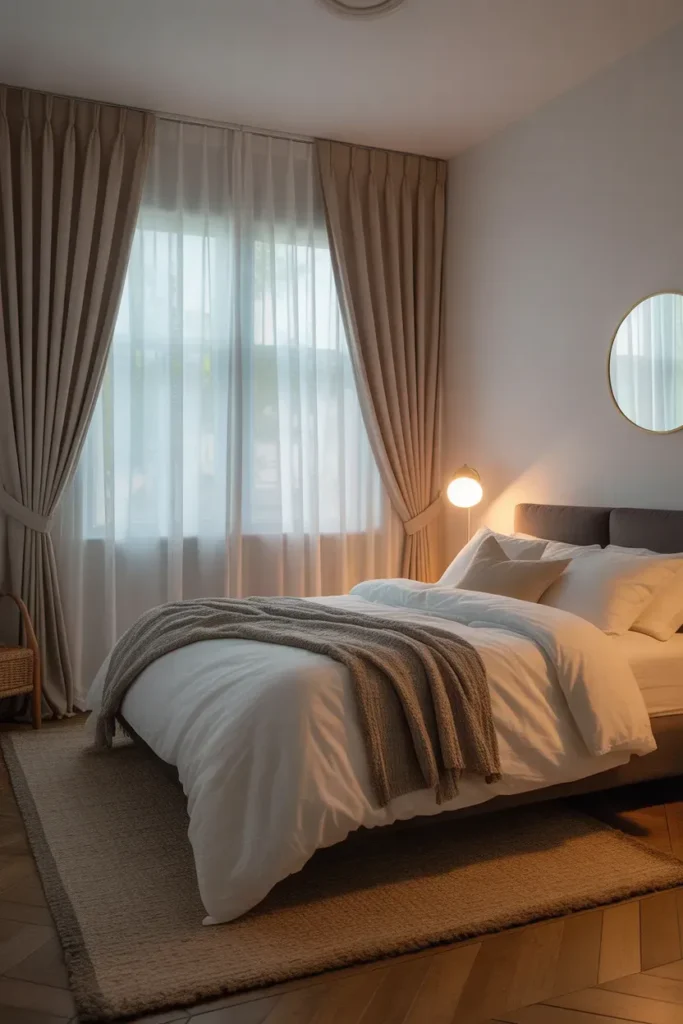
-
- Blocks outside light for better sleep
-
- Adds softness and layering to windows
-
- Improves room insulation and comfort
-
- Creates a cozy, enclosed feel
Struggling with early light or street glow at night? Blackout curtain layers can instantly make your bedroom darker, quieter, and more restful. Combining soft outer drapes with inner blackout panels gives you both style and function. This setup works especially well in urban homes or bright environments. I’ve noticed that reducing light distractions significantly improves sleep quality. It’s a simple change that transforms the room into a more controlled and peaceful environment.
The real strength of this idea lies in how it balances comfort with design. You still get a soft, elegant look during the day while maintaining full darkness at night. That’s why many designers recommend layered window treatments. In my experience, choosing neutral tones keeps the look calm and cohesive. This setup enhances relaxation while supporting a deeper, more uninterrupted sleep experience.
5. Upholstered Headboard Focus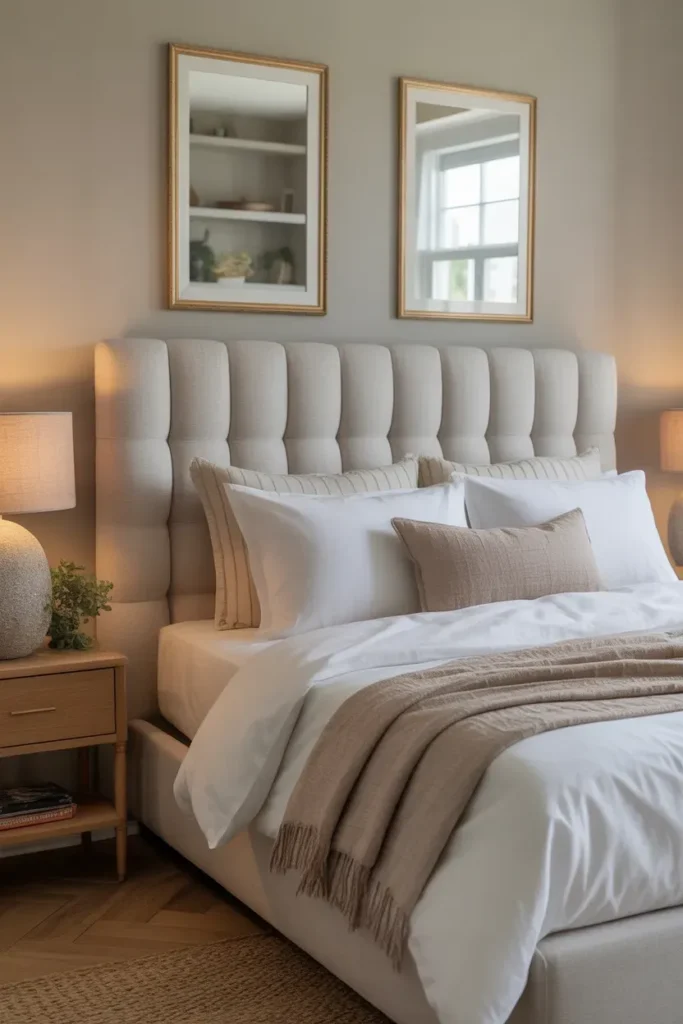
-
- Adds softness and comfort to the bed
-
- Creates a cozy focal point
-
- Enhances visual warmth
-
- Works well in modern bedrooms
An upholstered headboard can instantly make a bedroom feel softer and more inviting. The padded texture adds comfort while also creating a strong visual anchor for the bed. This works especially well in spaces designed for relaxation. I’ve seen this work well in many homes because it adds warmth without needing extra decor. It’s a simple upgrade that improves both comfort and overall style in one step.
What makes this idea so effective is how it enhances both form and function. The soft surface is perfect for leaning back while reading or unwinding. That’s why many designers recommend upholstered elements in sleep-focused spaces. In my experience, choosing neutral fabrics keeps the look calm and timeless. This setup creates a bedroom that feels cozy, balanced, and perfectly suited for rest.
6. Natural Wood Elements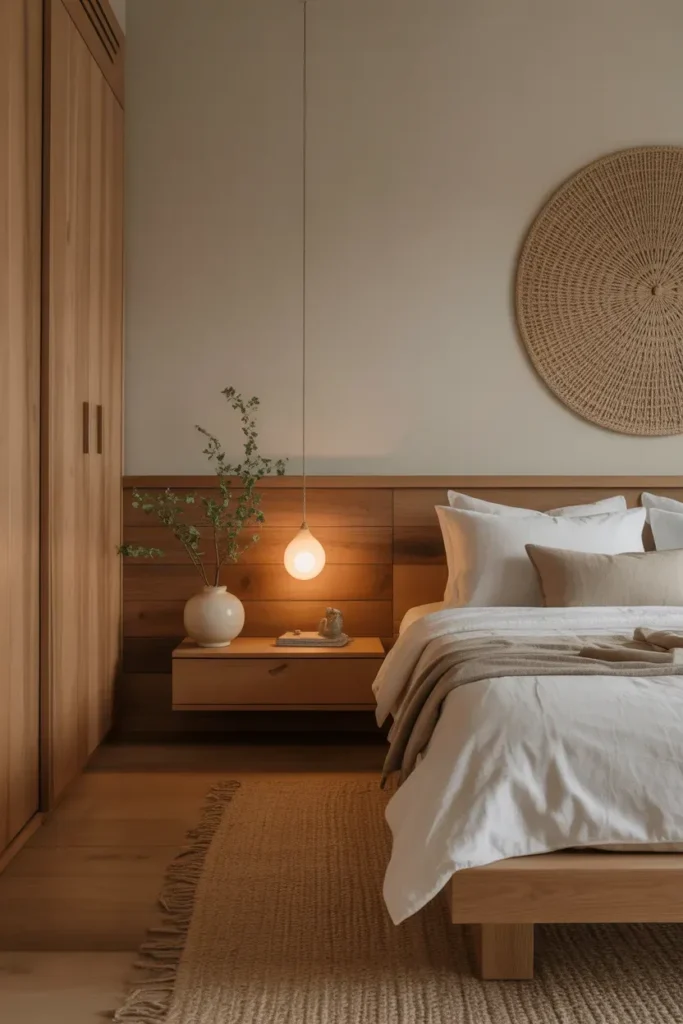
-
- Brings warmth and natural texture
-
- Creates a grounded, calming feel
-
- Balances modern minimal design
-
- Works with neutral palettes
Natural wood elements can instantly make a bedroom feel more grounded and relaxing. Incorporating materials like oak or walnut adds warmth without overpowering the space. This works especially well in rooms with neutral tones that need a bit of depth. I’ve noticed that natural textures create a more calming environment compared to synthetic finishes. It’s a subtle but impactful way to enhance the overall feel of the room.
The beauty of this idea lies in its ability to connect the space with nature. Organic materials naturally create a sense of calm and balance. That’s why many designers recommend wood for restful interiors. In my experience, mixing light wood with soft textiles creates the perfect combination. This setup transforms the bedroom into a space that feels warm, natural, and deeply relaxing.
7. Layered Cozy Textiles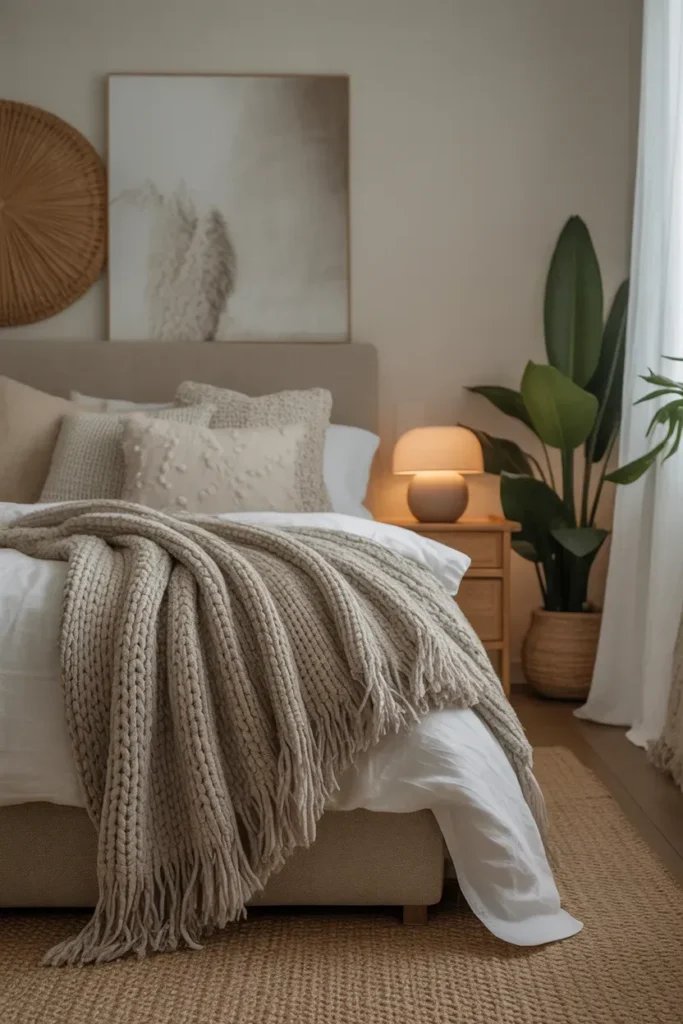
-
- Adds warmth and softness instantly
-
- Creates a more inviting sleep space
-
- Enhances visual depth without clutter
-
- Easy to switch seasonally
Nothing transforms a bedroom faster than soft, layered textiles that invite you to relax the moment you walk in. Combining knit throws, linen sheets, and plush cushions creates a comforting environment that feels warm and lived-in. This approach works especially well when building a relaxing bedroom sanctuary that supports better sleep. I’ve noticed that texture plays a bigger role than color in creating comfort. It’s a simple way to make your space feel cozy without adding visual noise.
The strength of this idea lies in how it blends comfort with effortless style. Instead of relying on bold decor, the focus shifts to softness and layering. That’s why many designers recommend mixing fabrics for a relaxed look. In my experience, keeping tones within the same palette creates a calm and cohesive feel. This setup enhances both the look and comfort of the room, making it easier to unwind at the end of the day.
8. Soft Area Rug Base
-
- Adds comfort underfoot
-
- Warms up hard flooring
-
- Defines the bed area visually
-
- Improves overall coziness
Stepping onto a soft area rug can instantly change how your bedroom feels, especially in the morning. A plush rug placed under or around the bed adds warmth and comfort while visually grounding the space. This works particularly well in rooms with wood or tile flooring. I’ve seen this work well in many homes because it creates a softer, more welcoming environment. It’s a simple upgrade that improves both comfort and design.
What makes this idea so effective is how it enhances both function and style at once. The rug helps define the sleeping area while also adding a layer of texture. That’s why many designers recommend rugs for bedroom comfort. In my experience, choosing a neutral tone keeps the look calm and balanced. This setup makes the space feel more complete, cozy, and perfectly suited for relaxation.
9. Scented Candle Corner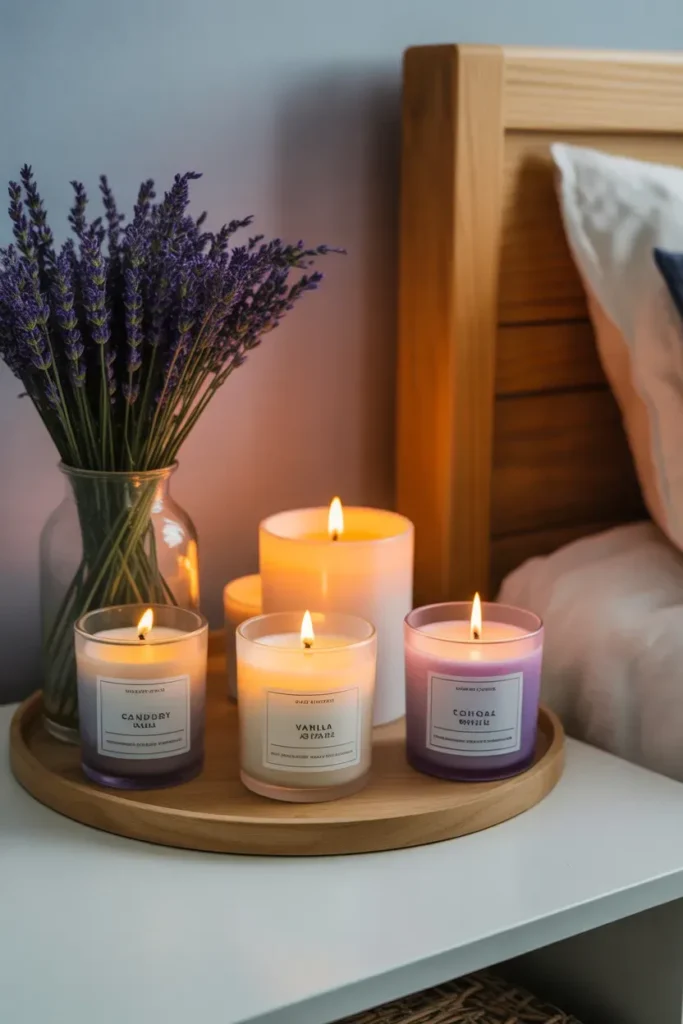
-
- Creates a relaxing sensory experience
-
- Adds a warm, calming glow
-
- Enhances nighttime routine
-
- Easy and affordable upgrade
A scented candle corner can add a calming sensory layer to your bedroom that goes beyond just visual design. Soft scents like lavender or vanilla can help signal your body that it’s time to unwind. This works especially well as part of a nighttime routine. I’ve noticed that even a small candle setup can shift the mood of the entire space. It’s an easy way to make your bedroom feel more peaceful and intentional.
The beauty of this idea lies in how it combines scent and lighting for a deeper relaxation experience. Instead of just decorating, you’re creating an atmosphere that supports rest. That’s why many designers recommend adding sensory elements to bedrooms. In my experience, keeping the setup simple prevents it from feeling cluttered. This arrangement enhances the overall ambiance, making the room feel calm, warm, and ready for sleep.
10. Calming Wall Colors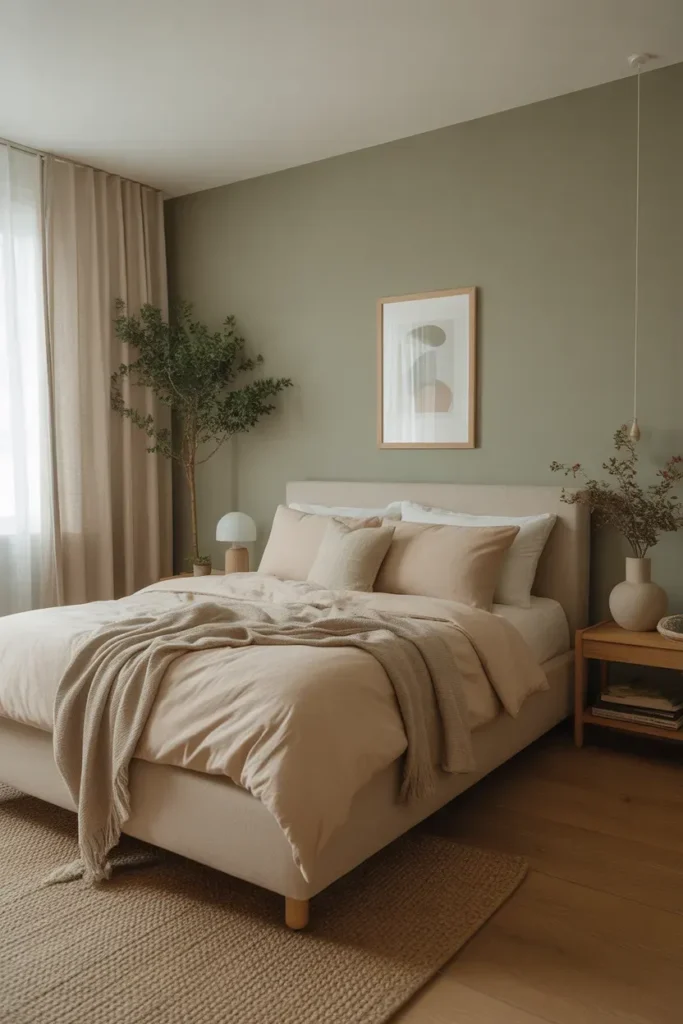
-
- Sets a peaceful mood instantly
-
- Reduces visual stress
-
- Makes the space feel softer and quieter
-
- Supports better relaxation
The right wall color can completely change how your bedroom feels the moment you walk in. Soft shades like warm beige, muted sage, or gentle gray create a calm backdrop that encourages relaxation. This works especially well if your current space feels too bright or overwhelming. I’ve noticed that soothing tones help the mind slow down naturally. It’s one of the simplest ways to create a relaxing bedroom sanctuary that truly supports rest.
What makes this idea so powerful is how it influences mood without adding extra decor. Instead of filling the room with items, the color itself sets the tone. That’s why many designers recommend choosing calming palettes for sleep spaces. In my experience, avoiding harsh contrasts keeps the room feeling more peaceful. This setup creates a gentle, balanced environment that feels quiet, cozy, and perfect for unwinding at the end of the day.
11. Bedside Simplicity Setup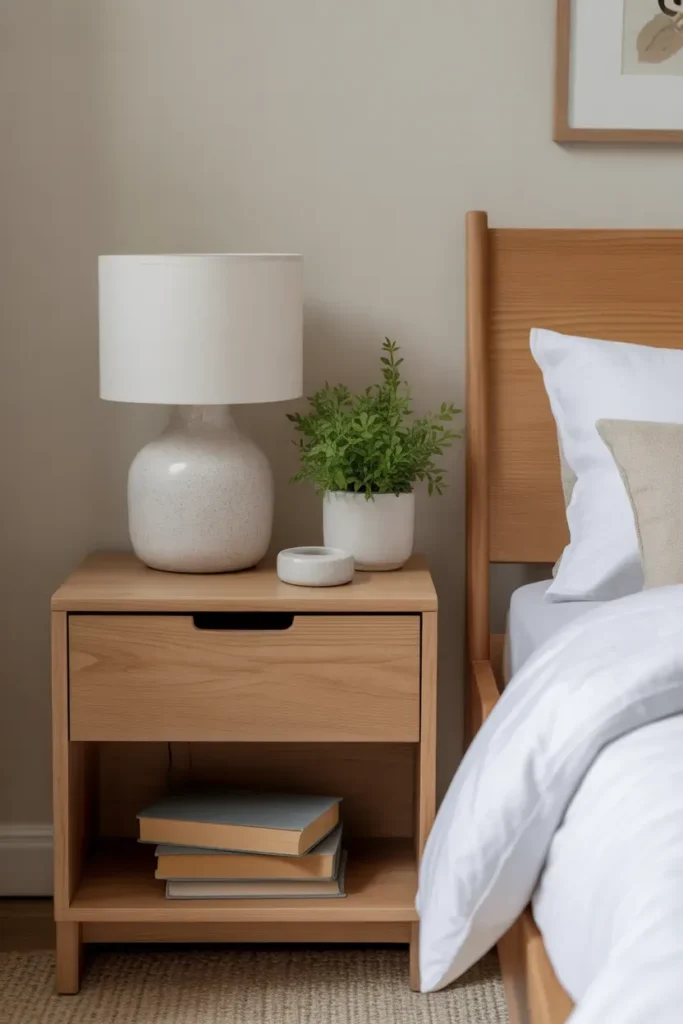
-
- Reduces clutter near sleeping area
-
- Keeps essentials within reach
-
- Creates a calm and organized feel
-
- Easy to maintain daily
A simple bedside setup can make a big difference in how restful your bedroom feels. Keeping only essentials like a lamp, a book, or a small decorative piece helps reduce visual noise. This works especially well if your nightstand tends to collect clutter. I’ve seen this work well in many homes because a clean surface instantly feels more calming. It’s a small change that supports a more peaceful and organized sleep environment.
The beauty of this idea lies in its focus on intention. Instead of filling the space, you choose only what truly adds value. That’s why many designers recommend minimal bedside styling. In my experience, keeping the setup consistent makes it easier to maintain over time. This arrangement enhances calmness, improves functionality, and helps create a bedroom that feels balanced, tidy, and ready for relaxation.
12. Light Filtering Curtains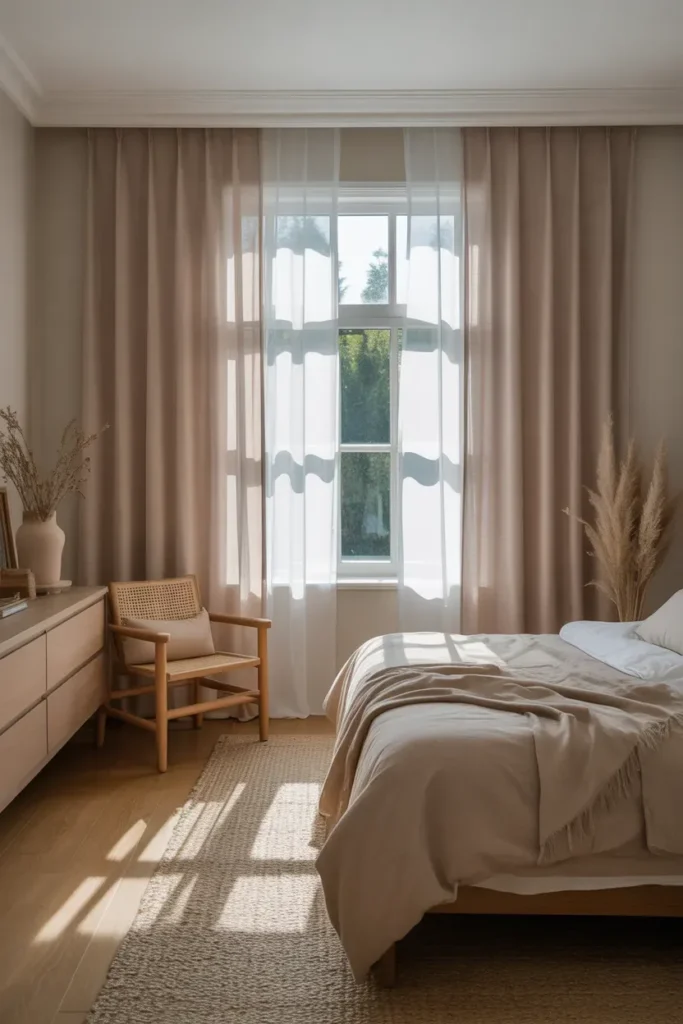
-
- Softens natural daylight beautifully
-
- Maintains privacy while staying bright
-
- Adds elegance without heaviness
-
- Enhances airy bedroom feel
Light filtering curtains can transform how natural light enters your bedroom. Instead of harsh sunlight, sheer fabrics gently diffuse the light, creating a soft and calming glow. This works especially well in bedrooms where you want brightness without losing comfort. I’ve noticed that filtered light makes the entire room feel more peaceful. It’s a subtle change that improves both the atmosphere and visual softness of the space.
What makes this idea so effective is how it balances brightness with privacy. You still get natural light while maintaining a sense of comfort and seclusion. That’s why many designers recommend sheer layers for bedrooms. In my experience, choosing neutral tones keeps the look cohesive and calm. This setup enhances the overall ambiance, making the bedroom feel open, serene, and perfectly suited for relaxation.
13. Upholstered Bench End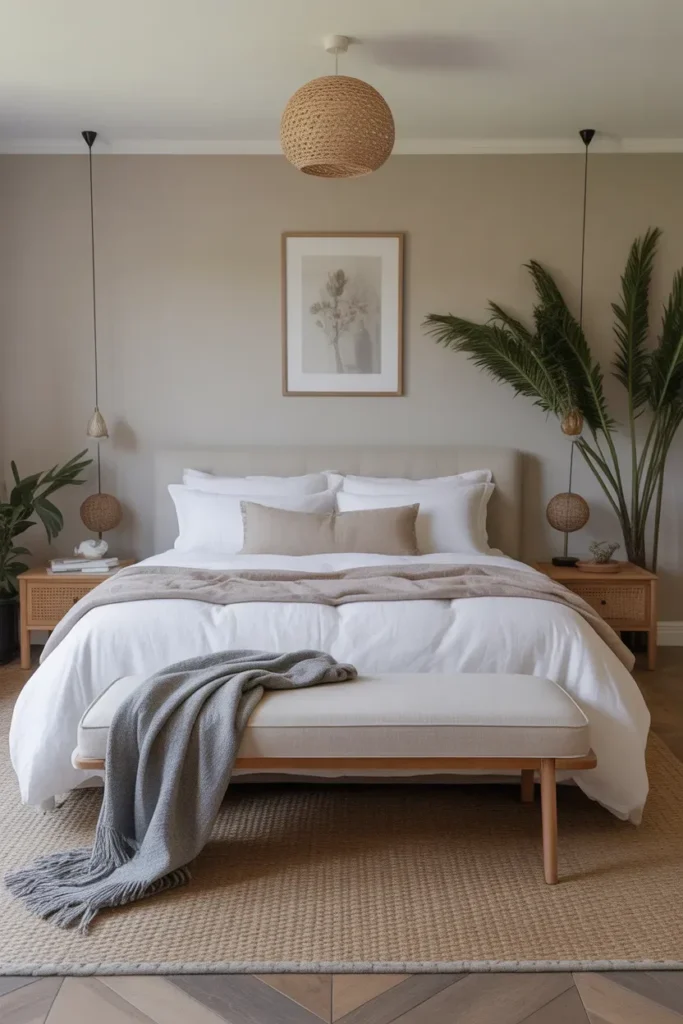
-
- Adds extra seating space
-
- Enhances comfort and functionality
-
- Completes the bed area visually
-
- Keeps layout balanced and polished
An upholstered bench at the end of the bed can instantly make your bedroom feel more complete and functional. It creates a soft place to sit, whether you’re getting ready in the morning or unwinding at night. This works especially well in bedrooms that feel slightly empty or unbalanced. I’ve noticed that adding a bench brings a sense of structure to the space. It’s a simple addition that improves both comfort and visual flow.
What makes this idea so effective is how it enhances usability without adding clutter. Instead of extra chairs, the bench blends seamlessly with the bed area. That’s why many designers recommend this piece for balanced layouts. In my experience, choosing a neutral fabric keeps the look calm and cohesive. This setup creates a bedroom that feels styled, comfortable, and thoughtfully designed for everyday living.
14. Indoor Plant Touch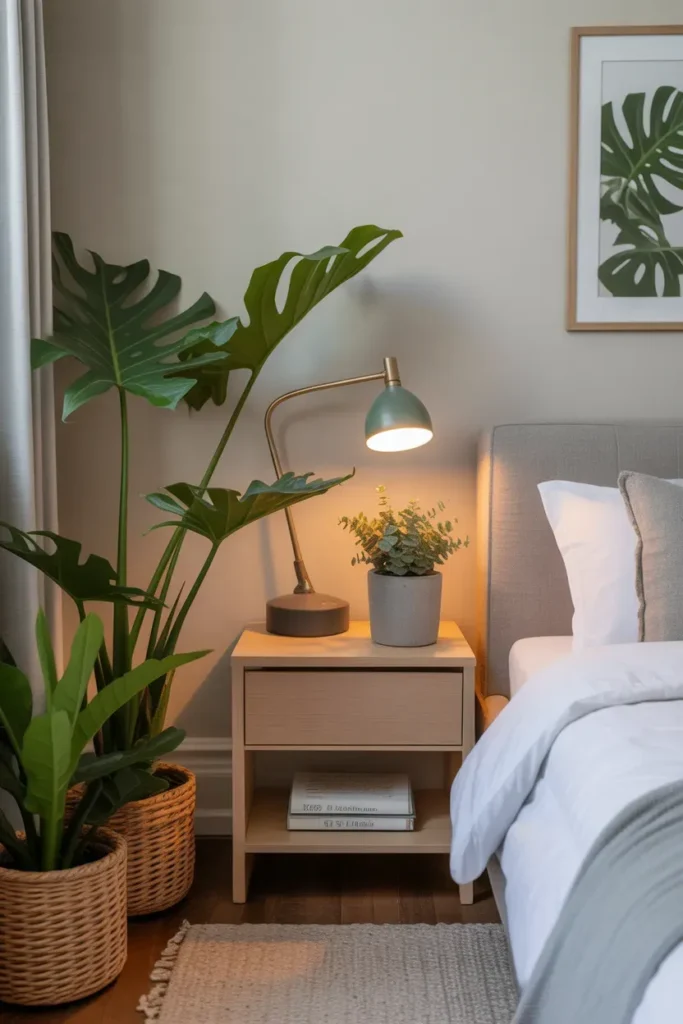
-
- Adds freshness and natural energy
-
- Improves air quality perception
-
- Brings life into neutral spaces
-
- Enhances calming atmosphere
Adding indoor plants can bring a refreshing and calming energy into your bedroom. Even a small plant on a bedside table or in a corner can make the space feel more alive and balanced. This works especially well in neutral rooms that need a natural touch. I’ve seen this work well in many homes because greenery softens the overall look. It’s an easy way to create a more peaceful and inviting environment.
The beauty of this idea lies in how it connects your space with nature. Plants naturally create a sense of calm and relaxation. That’s why many designers recommend incorporating greenery into bedrooms. In my experience, low-maintenance plants work best for long-term care. This setup enhances the room’s atmosphere, making it feel fresher, calmer, and more aligned with a restful lifestyle.
15. Noise Reducing Textures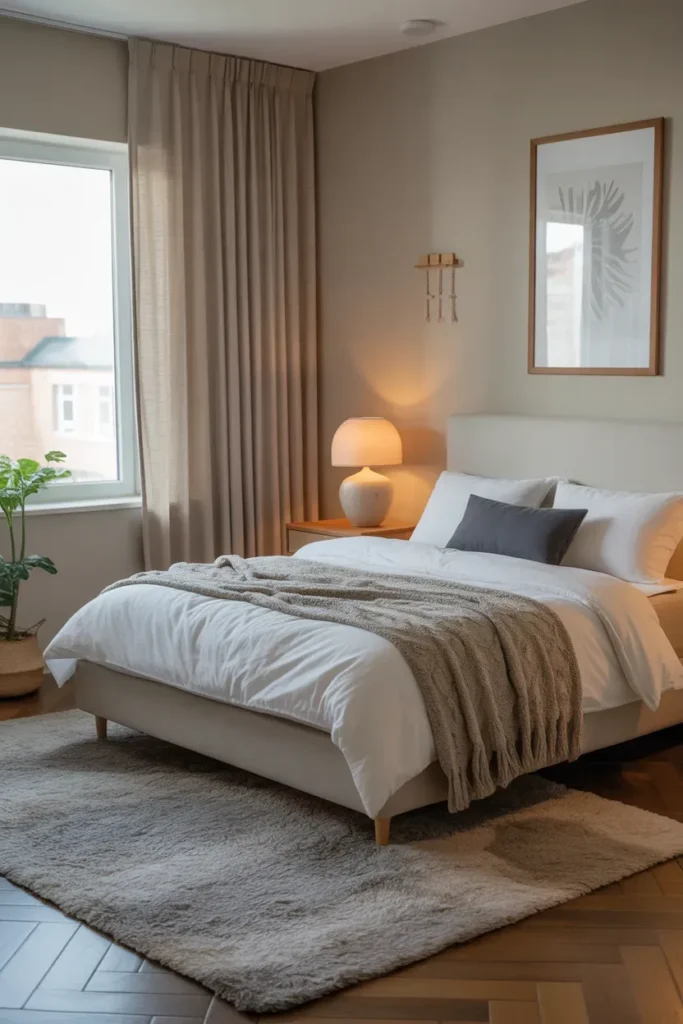
-
- Helps absorb sound for quieter space
-
- Improves sleep quality
-
- Adds comfort and softness
-
- Enhances cozy atmosphere
Noise-reducing textures can make a big difference in how peaceful your bedroom feels. Soft materials like thick curtains, rugs, and upholstered furniture help absorb sound and reduce echoes. This works especially well in busy homes or urban areas. I’ve noticed that quieter spaces feel instantly more relaxing and restful. It’s a practical way to improve sleep quality while also enhancing the room’s overall comfort.
What makes this idea so effective is how it combines function with design. Instead of adding noise barriers, you use soft decor to create a calmer environment. That’s why many designers recommend layered textures in bedrooms. In my experience, combining different materials creates the best results. This setup transforms the space into a quieter, more comfortable retreat that supports deeper relaxation and better sleep.
16. Soft Headboard Lighting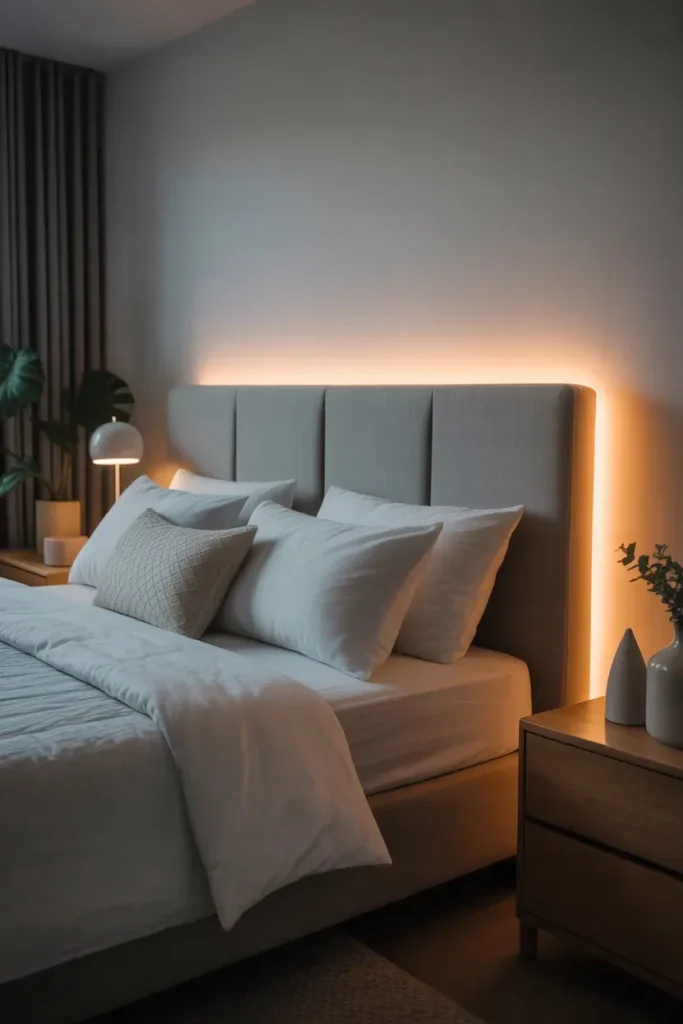
-
- Adds gentle nighttime lighting
-
- Reduces need for harsh overhead lights
-
- Creates a cozy, layered glow
-
- Enhances bedtime relaxation
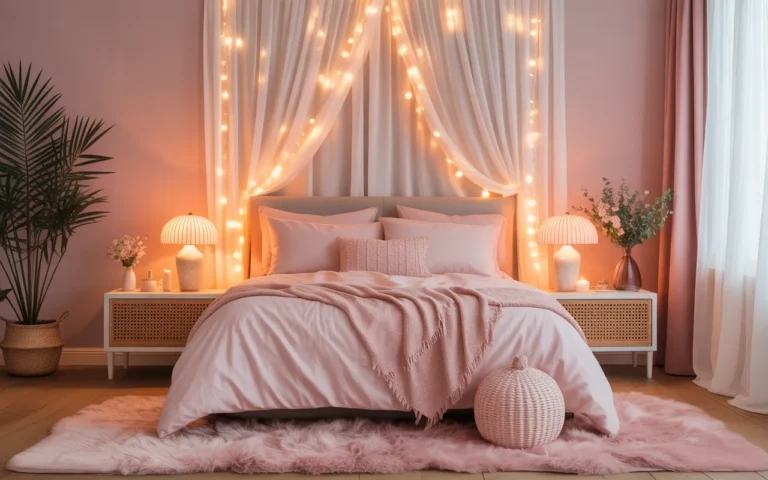
Soft headboard lighting can instantly make your bedroom feel more calming and restful, especially in the evening. A subtle glow behind the headboard creates a gentle light that doesn’t feel harsh or distracting. This works especially well when you want to wind down without bright overhead lighting. I’ve noticed that softer lighting helps create a more peaceful atmosphere before sleep. It’s a simple addition that supports both comfort and relaxation.
What makes this idea so effective is how it blends seamlessly into the design. Instead of adding visible fixtures, the light becomes part of the background. That’s why many designers recommend hidden lighting for bedrooms. In my experience, warm tones work best for creating a cozy feel. This setup enhances the ambiance, making the room feel calm, inviting, and perfectly suited for rest.
17. Neutral Layered Curtains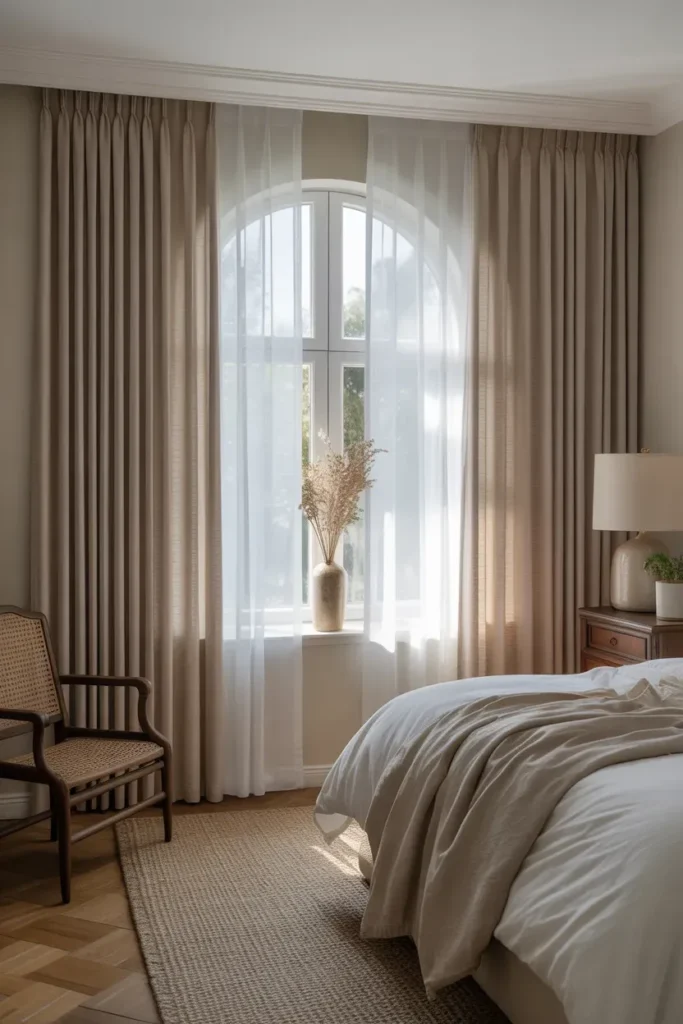
-
- Combines privacy and softness
-
- Adds depth to window styling
-
- Improves light control
-
- Enhances overall calm look
Neutral layered curtains can transform both the look and function of your bedroom windows. Combining sheer and heavier fabrics allows you to control light while maintaining a soft, elegant appearance. This works especially well in rooms where both privacy and brightness are important. I’ve seen this work well in many homes because it creates a more refined and balanced look. It’s a simple upgrade that enhances both style and practicality.
The beauty of this idea lies in its versatility and visual depth. Layering adds texture without making the space feel heavy or cluttered. That’s why many designers recommend combining different fabric weights. In my experience, sticking to neutral tones keeps everything cohesive and calming. This setup improves comfort, adds elegance, and helps create a bedroom environment that feels peaceful and well-designed.
18. Clean Air Space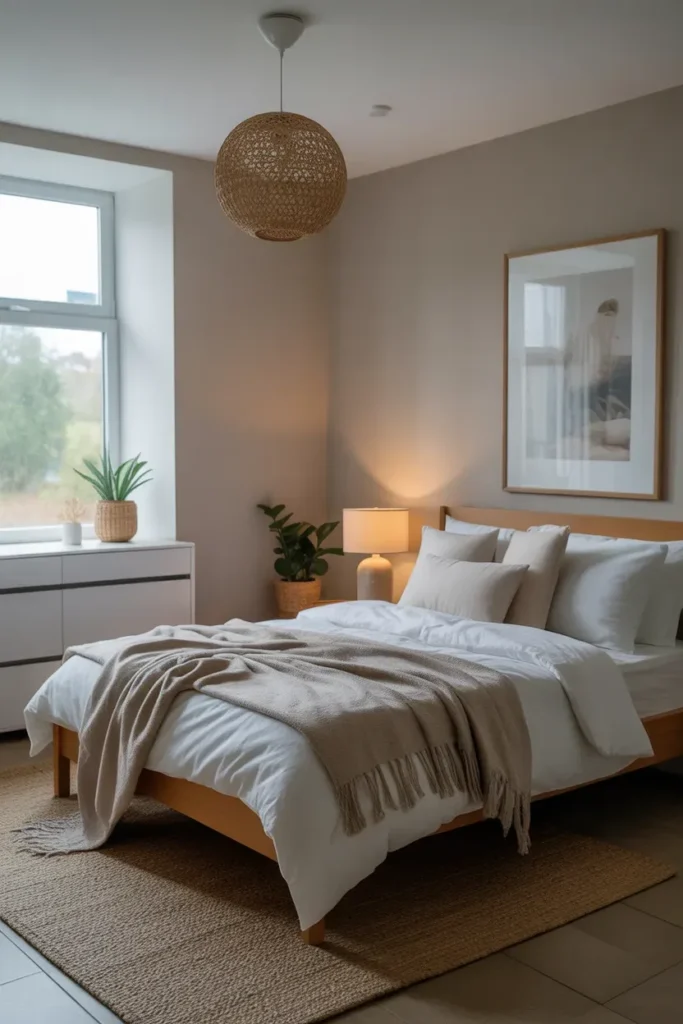
-
- Promotes a fresh and healthy environment
-
- Supports better sleep quality
-
- Reduces stuffiness and clutter
-
- Creates a light, breathable feel
A clean air space can make a noticeable difference in how your bedroom feels and functions. Keeping the room well-ventilated and uncluttered allows fresh air to circulate more freely. This works especially well for improving sleep comfort. I’ve noticed that a breathable environment feels instantly more relaxing and refreshing. It’s a simple but important step toward creating a space that truly supports rest.
What makes this idea so valuable is how it focuses on overall well-being. Instead of just visual design, it improves how the space feels physically. That’s why many designers recommend prioritizing air quality in bedrooms. In my experience, even small changes like opening windows regularly can help. This setup enhances comfort, supports better sleep, and creates a bedroom that feels fresh, calm, and easy to enjoy every day.
Conclusion
Creating a bedroom that truly supports rest doesn’t require a full makeover—just thoughtful changes that focus on comfort and calm. These relaxing bedroom sanctuary ideas show how small details can improve sleep, reduce stress, and make your space feel more peaceful. I’ve seen how simple updates like these can completely shift the mood of a room.
Now it’s your turn to create your own retreat. Save this post on Pinterest, try a few ideas that fit your space, and share it with someone who needs better sleep inspiration. Start small, stay consistent, and enjoy the comfort of a bedroom designed for true relaxation.