15 Bathroom Remodel Ideas for Small Space Makeovers
Small bathrooms are where smart design pays off the fastest. These bathroom remodel ideas are all about making a tight space feel bigger, work harder, and look like it belongs in a magazine. None of them require knocking down walls.
The budget range here is wide because bathrooms are. Cosmetic refreshes, like a new mirror, paint, and lighting, can land at roughly 300 to 800 dollars. A full small-bathroom remodel with a walk-in shower and new vanity typically runs roughly 8,000 to 15,000 dollars, and prices vary a lot by region and labor rates. Every idea below includes a realistic budget note so you can sort by what fits your wallet.
Below are 15 bathroom remodel ideas for small spaces, from walk-in showers to statement floor tiles. Pick the ones that fix your biggest daily annoyance first. A bathroom that works well always looks better than a pretty one that does not.
This post contains affiliate links. If you buy through them, I may earn a small commission at no extra cost to you.
1. Walk-In Shower with Clear Glass Panels
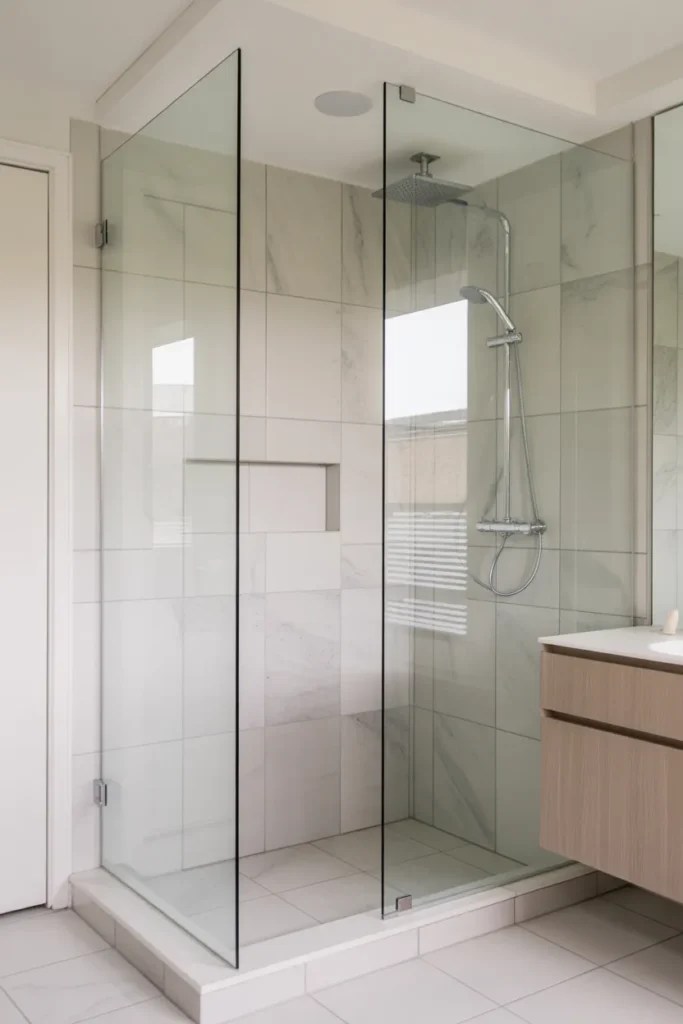
Replacing a tub or a framed shower with a walk-in shower and clear glass panels is the single biggest visual upgrade for a small bathroom. The glass disappears, so your eye travels the full depth of the room, and the continuous floor line makes the space feel twice as wide. Curbless entries are the premium version: the floor runs straight in with no step, which also helps with aging in place. Plan the slope: the shower floor needs a quarter-inch-per-foot slope toward the drain, or water will pool where you do not want it.
A tub-to-shower conversion typically costs roughly 5,000 to 12,000 dollars including tile, plumbing, and the glass panel, and prices vary by market and tile choice. If your budget is tighter, a prefabricated walk-in shower pan with glass panels drops that to roughly 1,500 to 3,000 dollars and still delivers most of the open look.
The honest warning: glass panels show every water spot. If your water is hard, you will be squeegeeing after every shower or living with spots. A quick daily squeegee takes 30 seconds and keeps the glass invisible. Go frameless for easy cleaning: skip the framed panel if you hate cleaning, since frameless glass has fewer edges for grime to collect.
- Ensure the shower floor slopes a quarter inch per foot toward the drain
- Choose frameless glass to minimize edges where grime collects
- Keep a squeegee in the shower for a 30-second daily wipe-down
Shop This Look
| GLASS | HEADS | SQUEEGEES |
|---|---|---|
| Frameless Glass Shower Panel | Rainfall Shower Head Set | Stainless Shower Squeegee |
| Shop → | Shop → | Shop → |
2. Floating Vanity with Drawer Storage
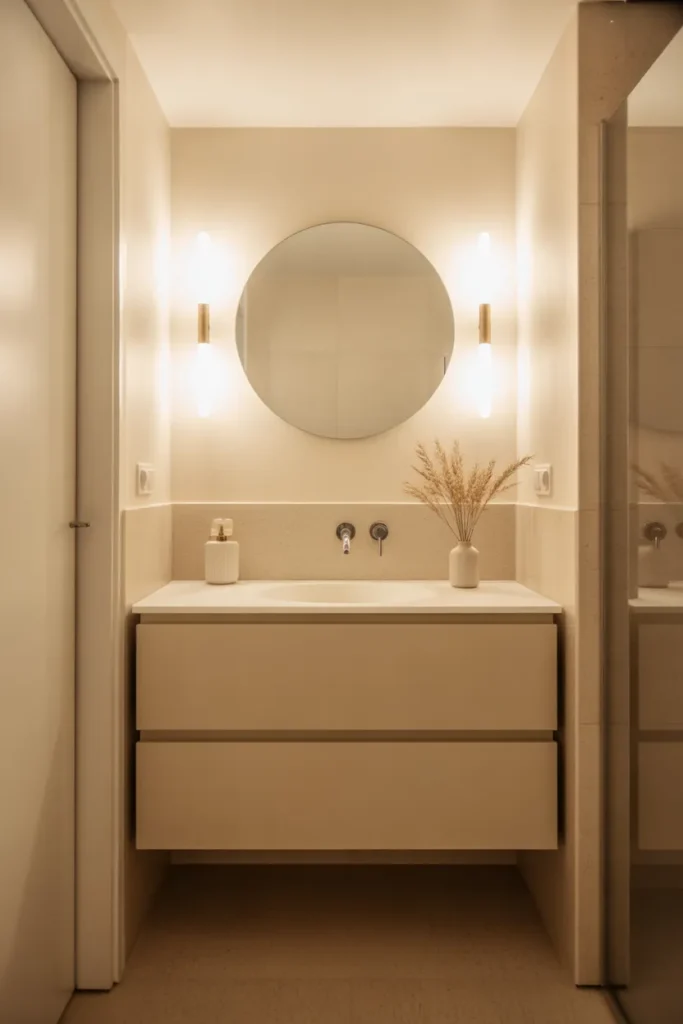
A floating vanity lifts the cabinet off the floor, and that visible floor underneath tricks your eye into reading the bathroom as larger. Drawers beat doors in a small bath because everything slides out where you can see it, instead of disappearing into a dark cabinet. Wall mounting also makes mopping the floor a two-minute job instead of a contortion act. Anchor to studs: a loaded vanity is heavy, so the mounting cleat must hit at least two studs or use rated blocking inside the wall.
Floating vanities run 200 to 800 dollars depending on size and finish, plus installation. The full swap lands at roughly 400 to 1,200 dollars with faucet and plumbing work, and prices vary. Drawers with dividers cost a bit more but are worth it for daily use.
The practical tip: check your plumbing before you fall in love with a low-profile vanity. Some drain lines sit too high for very shallow floating cabinets, which forces an expensive repipe. Measure the drain first: measure your drain height against the vanity’s interior depth before ordering anything.
- Mount the cleat into at least two wall studs or rated blocking
- Choose drawers with dividers so small items stay organized
- Measure drain line height against the vanity’s interior depth before ordering
Shop This Look
| VANITIES | FAUCETS | DIVIDERS |
|---|---|---|
| Wall Mount Floating Vanity | Single Hole Bathroom Faucet | Drawer Organizer Divider Set |
| Shop → | Shop → | Shop → |
3. Large Statement Mirror to Expand the Room
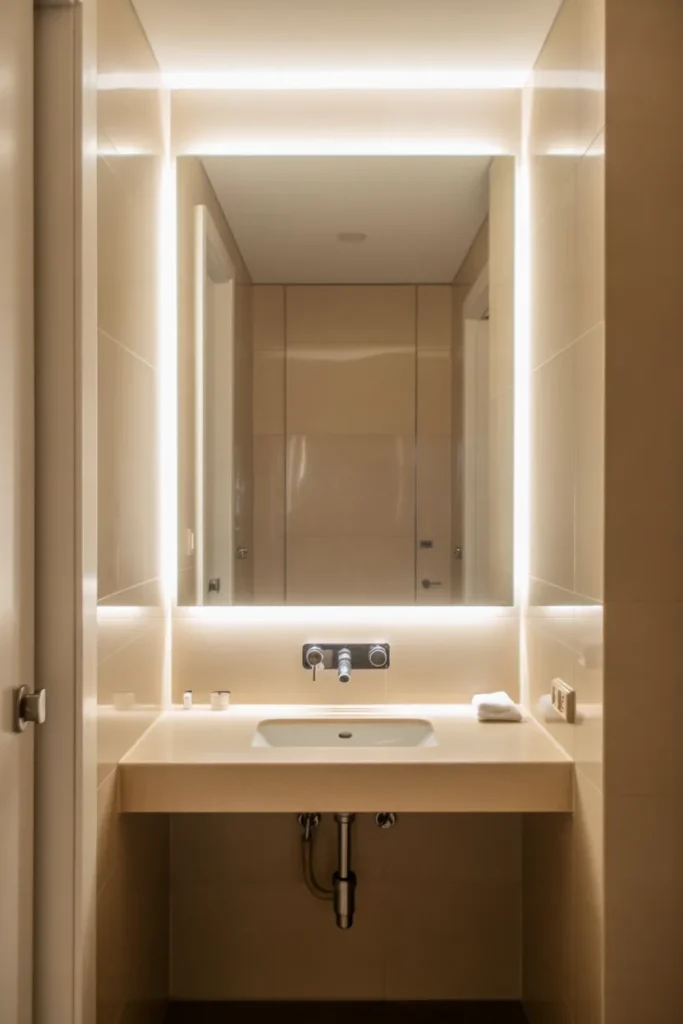
A big mirror is the cheapest square footage you will ever buy. It doubles the light in the room and pushes the walls back visually, which is why designers put the largest mirror the wall can take in every small bathroom. A round or arched mirror adds softness against all the hard tile and porcelain. Go wall to wall: a mirror that spans the full vanity width looks intentional and high-end, while a small mirror centered on a big wall looks like an afterthought.
Large bathroom mirrors cost 60 to 250 dollars depending on size and frame, and hanging one is a simple DIY job. The whole upgrade lands at roughly 60 to 300 dollars, and prices vary by frame material. It is the best dollars-per-impact change in this entire list.
The warning: a giant mirror also doubles the mess. Every water spot and toothpaste fleck shows up twice, so keep glass cleaner and a microfiber cloth in the vanity drawer. Mount for the shortest user: also mount the mirror at a height that works for the shortest daily user, not just the tallest.
- Size the mirror to span the full vanity width for a high-end look
- Mount at a height comfortable for the shortest daily user
- Keep glass cleaner and a microfiber cloth in the vanity drawer
Shop This Look
| MIRRORS | FRAMES | CLEANERS |
|---|---|---|
| Large Round Bathroom Mirror | Arched Wall Mirror Gold | Microfiber Glass Cleaning Cloths |
| Shop → | Shop → | Shop → |
4. Built-In Wall Niches for Storage
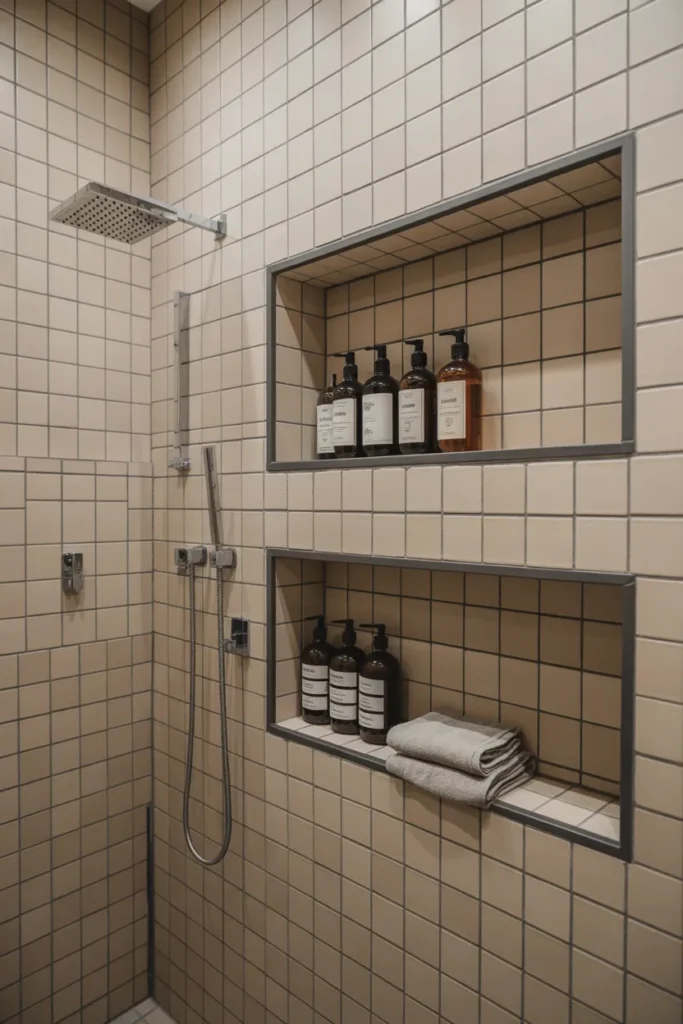
A recessed niche gives you shower storage without a single caddy hanging off the wall. Bottles sit inside the wall cavity, so the shower looks clean and nothing tips over onto your toes. Plan niches during the remodel, when the wall is open: adding one to a finished tile wall later is messy and expensive. Waterproof the niche: the niche needs the same waterproofing membrane as the rest of the shower, or water will find its way into the wall cavity.
Adding a niche during a tile job costs roughly 150 to 400 dollars in labor and materials, and prices vary by tile size and niche dimensions. Prefabricated waterproof niche boxes make the job simpler and more reliable than site-built versions. Already tiled? If the wall is already tiled, a surface-mounted shelf is the cheaper answer.
The practical tip: keep the niche shelf slightly sloped toward the shower so water drains instead of pooling around your bottles. And pick a niche height that works for the shortest user. A niche only the tallest person can reach is just decoration.
- Plan niches while the wall is open during the remodel
- Waterproof the niche with the same membrane as the shower walls
- Slope the niche shelf slightly toward the shower for drainage
Shop This Look
| NICHES | SHELVES | CADDIES |
|---|---|---|
| Prefabricated Shower Niche Box | Tile-Edge Shower Corner Shelf | Adhesive Shower Storage Caddy |
| Shop → | Shop → | Shop → |
5. Light Neutral Color Palette Makeover
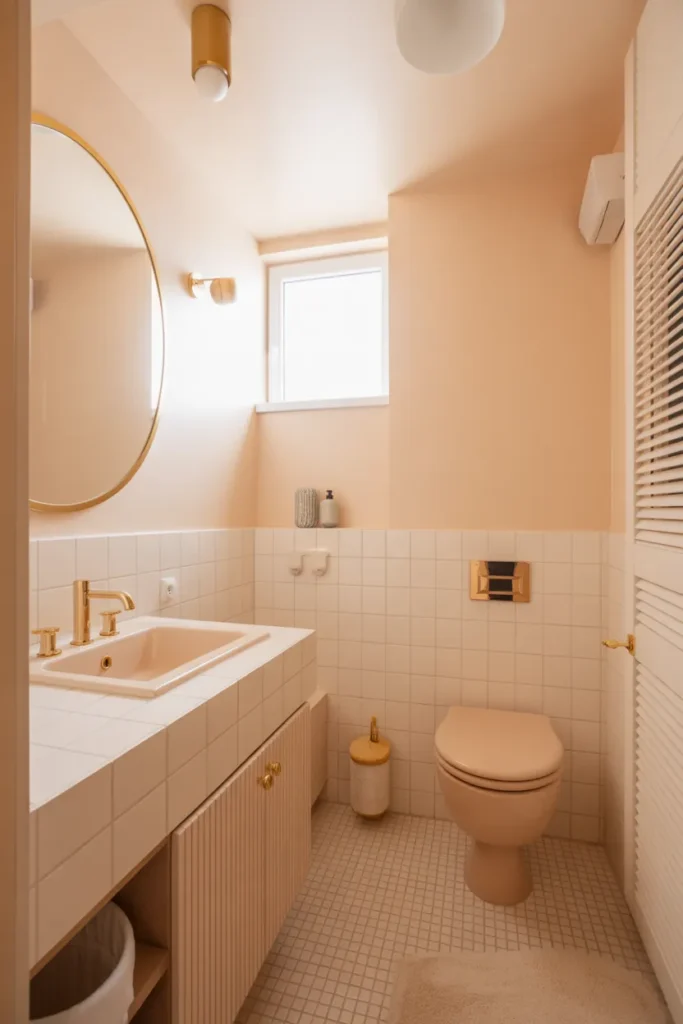
Light neutrals bounce every bit of light around a small bathroom, which is why white, warm beige, and soft gray make tight spaces feel airy. Paint is the fastest version of this idea, but it works even better when the tile, vanity, and textiles all stay in the same pale family. Contrast has its place, but in a small bath it chops the room into pieces. Sample in your light: neutrals shift color under bathroom lighting, so paint large swatches and check them morning and evening before committing.
A full repaint costs roughly 100 to 300 dollars in paint and supplies for a DIY job, and prices vary with paint quality. Refresh the textiles too: if you also swap towels, a shower curtain, and accessories into the palette, add another 80 to 150. It is the cheapest full-room transformation on this list.
The honest warning: an all-neutral bathroom can feel cold if every surface is cool-toned. Mix in one warm element, like a wood vanity top, a woven basket, or warm-white bulbs, so the room feels welcoming instead of clinical. Texture does the same job as color here.
- Paint large swatches and check them in morning and evening light
- Keep tile, vanity, and textiles in the same pale family to avoid chopping up the space
- Add one warm element like wood or warm-white bulbs to prevent a clinical feel
Shop This Look
| PAINT | TOWELS | BASKETS |
|---|---|---|
| Warm White Bathroom Paint | Soft Beige Bath Towel Set | Woven Seagrass Storage Basket |
| Shop → | Shop → | Shop → |
6. Pocket Door for Better Space Flow
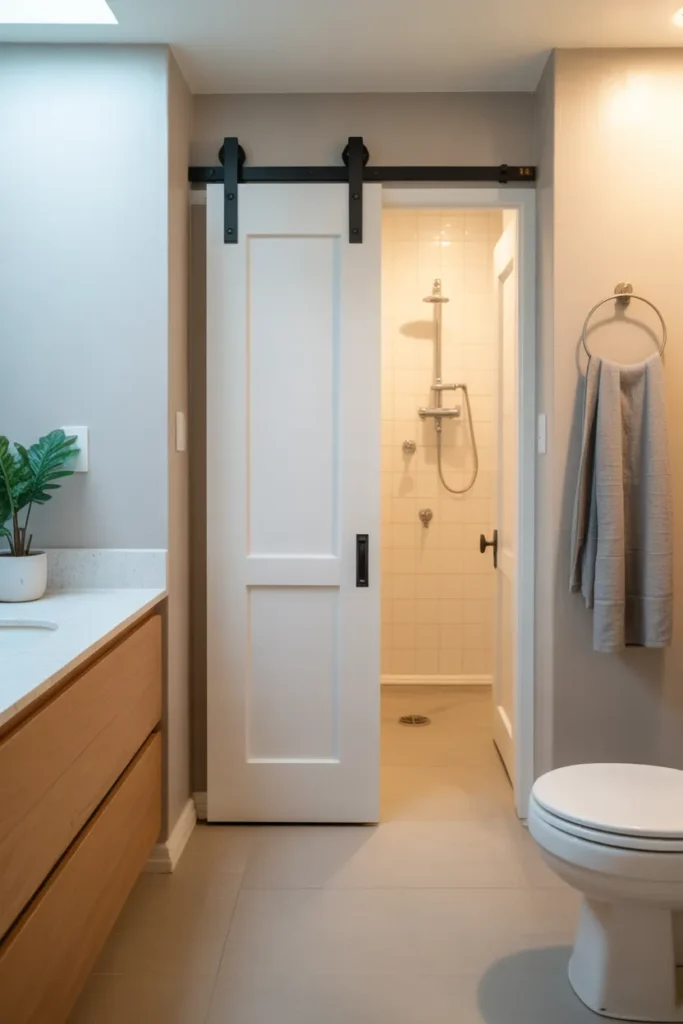
A standard bathroom door needs about 30 inches of swing space, and in a small bath that arc usually fights the toilet or the vanity. A pocket door slides into the wall and gives you that floor space back for free. The room instantly feels more open, and you stop doing the sidestep dance every time you enter. Check the wall first: pocket doors need a hollow wall with no plumbing, wiring, or load-bearing structure in the way.
Installing a pocket door during a remodel costs roughly 500 to 1,200 dollars including the door, track, and framing, and prices vary. It gets much more expensive if the wall holds pipes or wires that must move. Try a barn door instead: for a non-remodel shortcut, a surface-mounted sliding barn door gives a similar space saving without opening the wall.
The practical warning: pocket doors block less sound and offer less privacy than a solid swinging door. Choose a solid-core pocket door rather than hollow to cut noise, and add a proper privacy latch. A flimsy pocket door in a shared hallway bathroom will annoy everyone.
- Confirm the wall is hollow with no plumbing, wiring, or load-bearing structure
- Choose a solid-core door to reduce noise in shared bathrooms
- Install a proper privacy latch, not just a pull handle
Shop This Look
| DOORS | HARDWARE | LATCHES |
|---|---|---|
| Solid Core Pocket Door Slab | Pocket Door Track Kit | Privacy Pocket Door Lock |
| Shop → | Shop → | Shop → |
7. Compact Corner Sink Installation
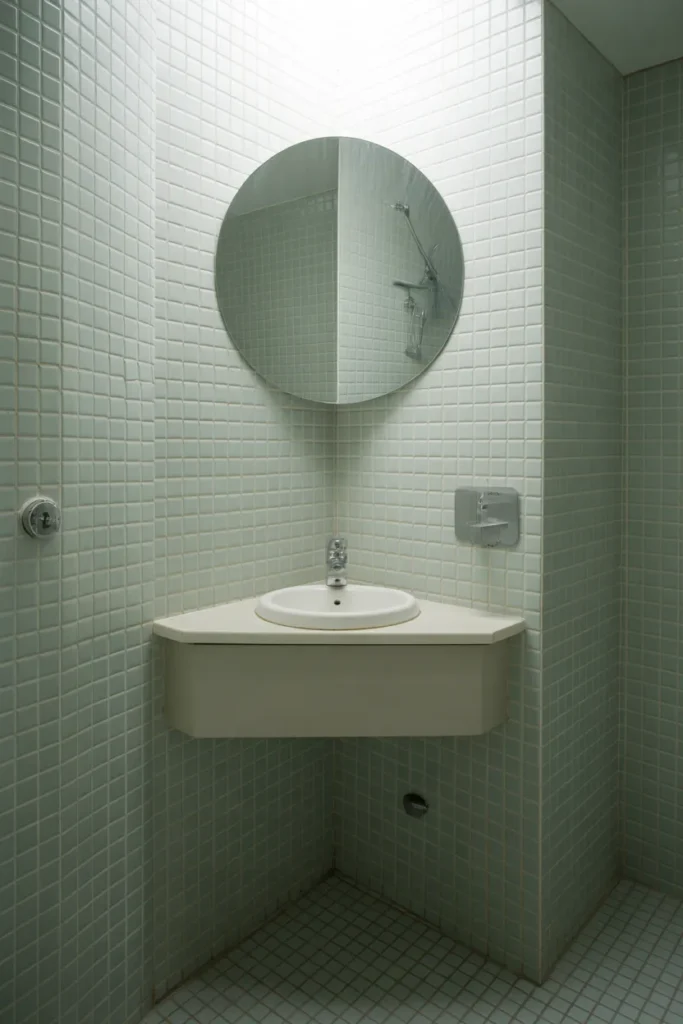
Corners are dead space in most small bathrooms, and a corner sink puts that space to work. Tucking the sink into the corner frees the main wall for the toilet and vanity to breathe, which improves traffic flow more than you would expect from such a small change. Wall-mounted corner sinks are the most space-saving version since they keep the floor fully clear. Mind the splash zone: corner sinks are small, so pair them with a faucet that has a short reach to keep water in the basin.
Corner sinks cost 80 to 300 dollars, with installation adding 200 to 500 if plumbing needs to move. The project lands at roughly 300 to 800 dollars total, and prices vary. If the corner already has a water line nearby, the cost drops a lot.
The honest warning: a corner sink is a hand-washing station, not a full vanity. There is no counter space, so plan where soap, toothbrushes, and daily items will live. Plan the storage now: a small wall shelf or mirrored cabinet above the sink solves this, but factor it into the plan from the start.
- Pair the sink with a short-reach faucet to control splashing
- Plan storage for daily items with a wall shelf or mirrored cabinet above
- Check that a water line runs near the corner before assuming easy installation
Shop This Look
| SINKS | FAUCETS | SHELVES |
|---|---|---|
| Wall Mount Corner Sink | Short Reach Bathroom Faucet | Small Glass Wall Shelf |
| Shop → | Shop → | Shop → |
8. Floor-to-Ceiling Vertical Tile Design
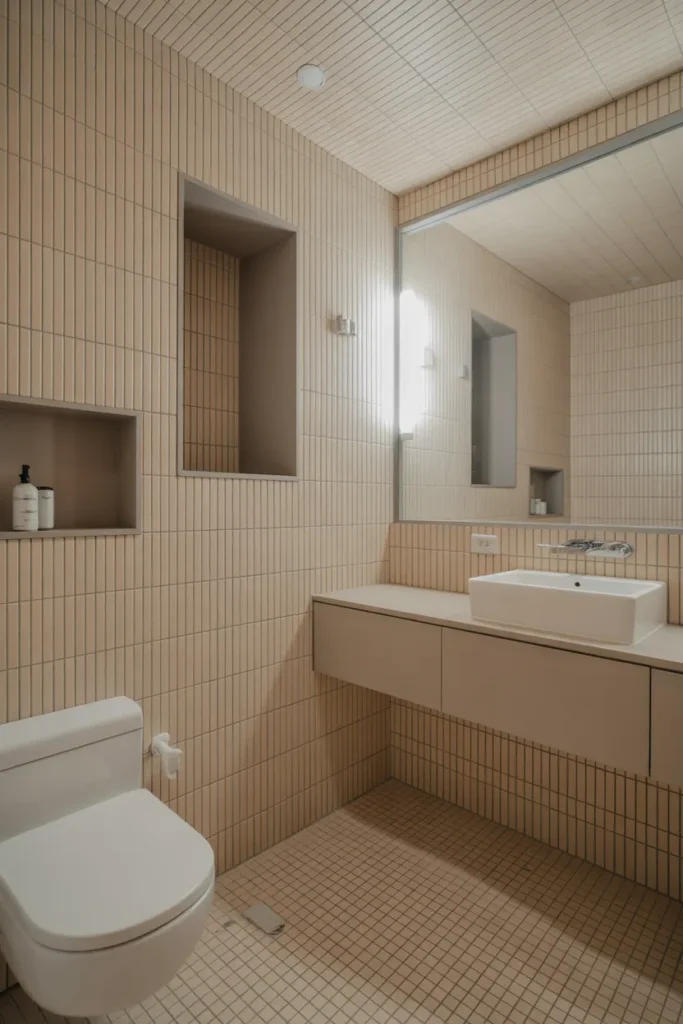
Running tile from floor to ceiling in a vertical stack draws the eye straight up and makes low ceilings feel taller. The vertical lines add rhythm to a small room without any visual clutter, and full-height tile in the shower zone means no painted drywall sitting in the splash zone. It looks custom and expensive even with budget tile. Match the grout: grout close to the tile color keeps the lines subtle and the room calm, while contrasting grout makes the pattern loud.
Tile itself runs 2 to 10 dollars per square foot, with labor often doubling that. A small bathroom accent wall lands at roughly 400 to 1,500 dollars, and prices vary with tile choice and local labor rates. Subway tile in a vertical stack is the budget sweet spot: classic look, low material cost.
The practical tip: vertical tile shows lippage, where one tile edge sits higher than its neighbor, more than horizontal layouts do. Hire a tile setter with good reviews and ask about leveling clips. Do not cheap out on labor: cheap installation on a statement wall is the fastest way to regret this idea.
- Choose grout close to the tile color for a calm, seamless look
- Use subway tile in a vertical stack for a classic look at a low material cost
- Hire an experienced tile setter and ask about leveling clips to avoid lippage
Shop This Look
| TILE | GROUT | SEALERS |
|---|---|---|
| White Subway Wall Tile | Sanded Tile Grout White | Grout Sealer Spray Bottle |
| Shop → | Shop → | Shop → |
9. Built-In Storage Cabinets Above the Toilet
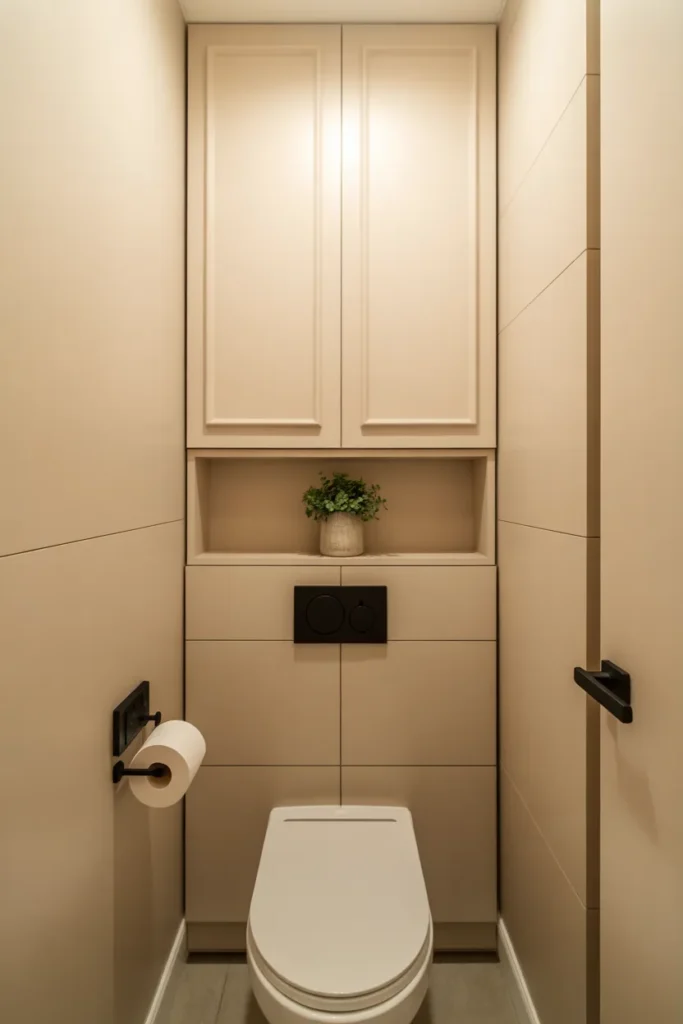
The wall above the toilet is prime real estate that most bathrooms waste. Built-in cabinets there hold towels, toilet paper, and cleaning supplies without taking a single inch of floor space. Recessing the cabinet into the wall cavity is the cleanest version, but a slim surface-mounted cabinet works too. Keep the depth slim: 8 to 12 inches is plenty for bathroom supplies, and anything deeper will feel like it looms over the toilet.
Over-toilet cabinets cost 60 to 250 dollars off the shelf, while a recessed built-in runs roughly 200 to 600 dollars installed. The full project lands at roughly 60 to 600 dollars depending on the approach, and prices vary. Freestanding over-toilet etageres are the cheapest and easiest option for renters.
The warning: do not store anything you grab daily at the very back of a deep cabinet, because it becomes a black hole. Bin everything: use small bins or baskets inside so everything pulls out in one motion. And mount securely into studs: a loaded cabinet above a toilet is not something you want coming down.
- Keep cabinet depth between 8 and 12 inches so it does not loom over the toilet
- Use bins or baskets inside so stored items pull out in one motion
- Mount into wall studs to secure a loaded cabinet safely
Shop This Look
| CABINETS | BINS | ETAGERES |
|---|---|---|
| Slim Over Toilet Cabinet | Fabric Storage Bin Set | Freestanding Over Toilet Etagere |
| Shop → | Shop → | Shop → |
10. Minimalist Lighting Upgrade
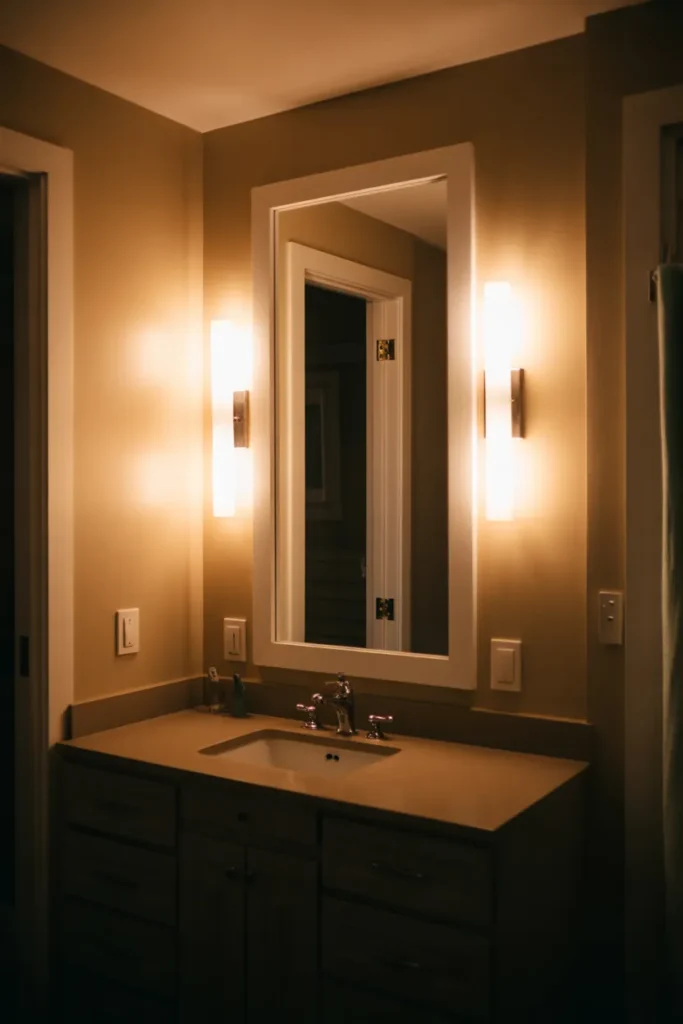
Most small bathrooms have one sad ceiling light doing all the work, and it flatters no one. A lighting upgrade means layers: a clean ceiling fixture for general light plus sconces at the mirror for faces. Side-mounted sconces at eye level eliminate the harsh shadows that overhead-only lighting casts on your face. Match the color temperature: keep all bulbs at the same Kelvin rating, ideally 3000K to 4000K, or the room will feel patched together.
Sconces run 30 to 120 dollars each, and a simple ceiling fixture adds 40 to 100. With bulbs and an electrician for new wiring, the project lands at roughly 150 to 600 dollars, and prices vary. DIY when wiring exists: if the wiring already exists, it is a straightforward DIY swap.
The practical tip: check your local code before adding fixtures near the shower or tub. Wet-location ratings matter, and a pretty living-room sconce has no business above a tub. When in doubt, buy fixtures rated for damp or wet locations and have an electrician confirm placement.
- Add sconces at eye level beside the mirror to eliminate facial shadows
- Keep all bulbs at the same color temperature, ideally 3000K to 4000K
- Use damp or wet rated fixtures near the shower and tub, per local code
Shop This Look
| SCONCES | FIXTURES | BULBS |
|---|---|---|
| Modern Bathroom Vanity Sconce | Flush Mount Ceiling Light | Daylight LED Vanity Bulbs |
| Shop → | Shop → | Shop → |
11. Frameless Glass Shower Door Upgrade
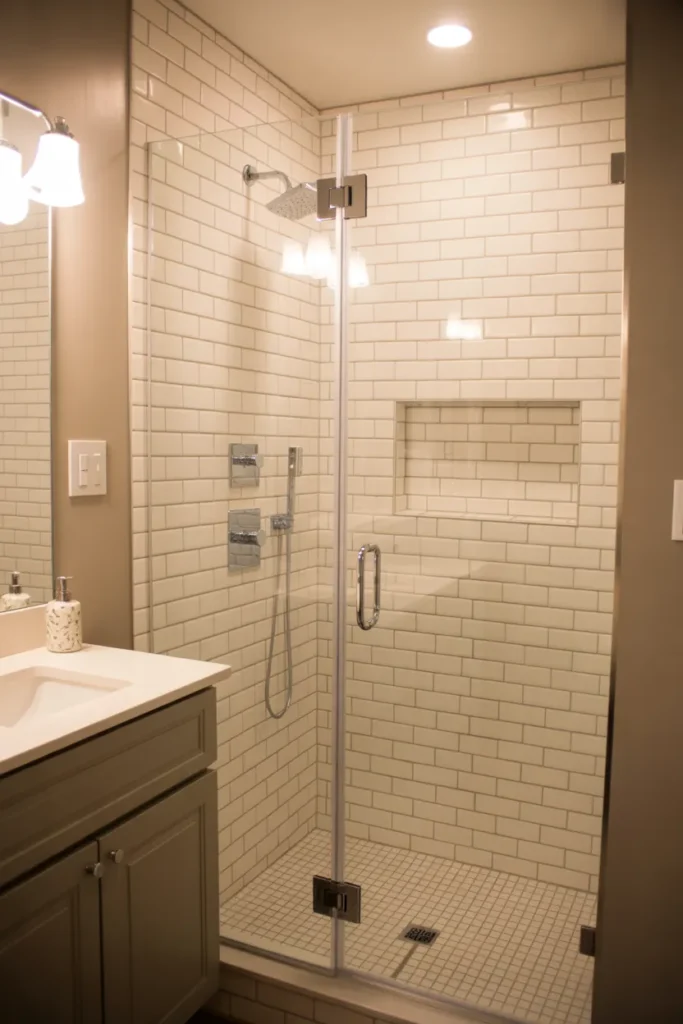
Swapping a framed shower door or a curtain for frameless glass removes the visual grid that chops a small bathroom in half. Thick tempered glass with minimal hardware reads as almost invisible, so the tile work behind it becomes part of the room. It is one of those upgrades that makes guests assume the whole bathroom was remodeled. Measure the opening twice: frameless doors have minimal adjustment, so the opening must be plumb and the measurements exact.
A frameless glass door or panel costs 300 to 900 dollars depending on size and glass thickness, with professional installation adding 200 to 500. The upgrade lands at roughly 500 to 1,400 dollars total, and prices vary by region and glass options. It is a mid-range change with a high-end payoff.
The honest warning: frameless does not mean watertight. These doors can let some water escape at the edges, especially with a strong shower head aimed at the door. Aim the head away: keep the shower head aimed away from the opening, and accept that a small bath mat outside the shower is part of the deal.
- Measure the opening carefully since frameless doors have minimal adjustment
- Aim the shower head away from the door opening to limit water escape
- Keep a bath mat outside the shower as part of the routine
Shop This Look
| DOORS | PANELS | MATS |
|---|---|---|
| Frameless Pivot Shower Door | Fixed Frameless Glass Panel | Quick Dry Bath Mat |
| Shop → | Shop → | Shop → |
12. Wall-Mounted Toilet for Extra Floor Space
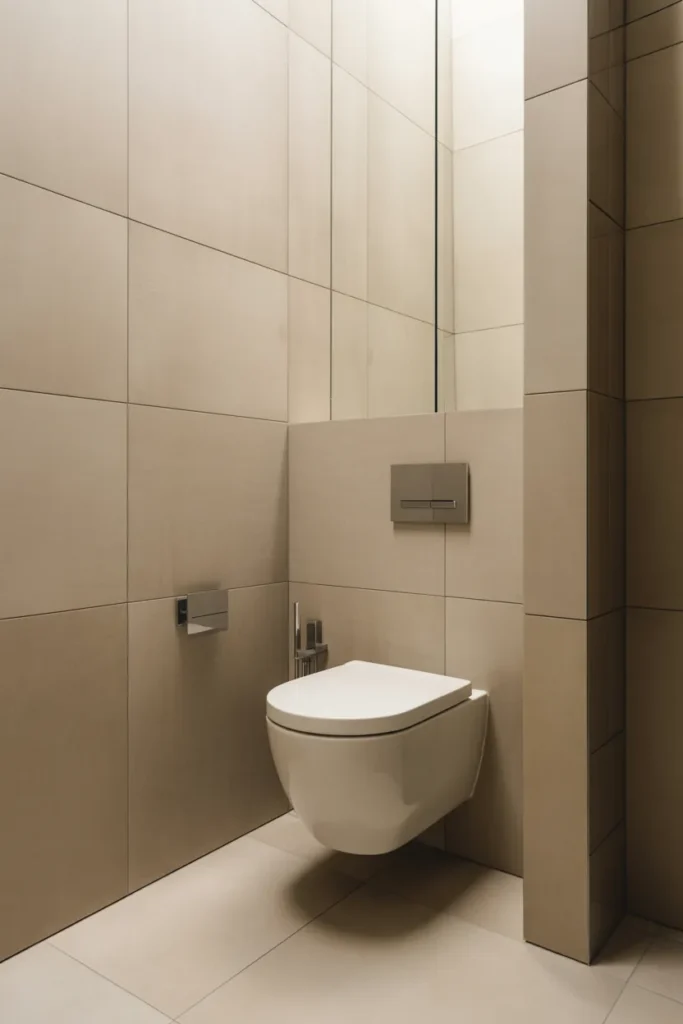
A wall-mounted toilet hides the tank inside the wall and puts the bowl off the floor, which frees about a foot of floor space and makes cleaning effortless. The room reads as larger because the floor runs uninterrupted beneath the bowl. It is a favorite trick in European small bathrooms for good reason. Plan for the carrier: the in-wall tank and steel support frame go in before the wall is finished, so this is a during-remodel decision, not an afterthought.
The toilet and in-wall carrier system cost 400 to 1,000 dollars, with installation adding 500 to 1,500 since it involves framing and plumbing work. The project lands at roughly 1,000 to 2,500 dollars total, and prices vary. It is not cheap, but no other fixture frees floor space like this one.
The practical warning: repairs mean opening the wall or using the access panel, so buy from a brand with parts that will still exist in ten years. Stick with major brands: repairs mean opening the wall, so stick with major manufacturers and keep the access panel reachable. A bargain no-name wall-hung toilet can become a very expensive problem later.
- Install the in-wall carrier frame before the wall is finished
- Choose a major brand with long-term parts availability
- Keep the access panel reachable for future maintenance
Shop This Look
| TOILETS | CARRIERS | SEATS |
|---|---|---|
| Wall Hung Toilet Bowl | In Wall Toilet Carrier System | Soft Close Toilet Seat |
| Shop → | Shop → | Shop → |
13. Sliding Barn-Style Bathroom Door
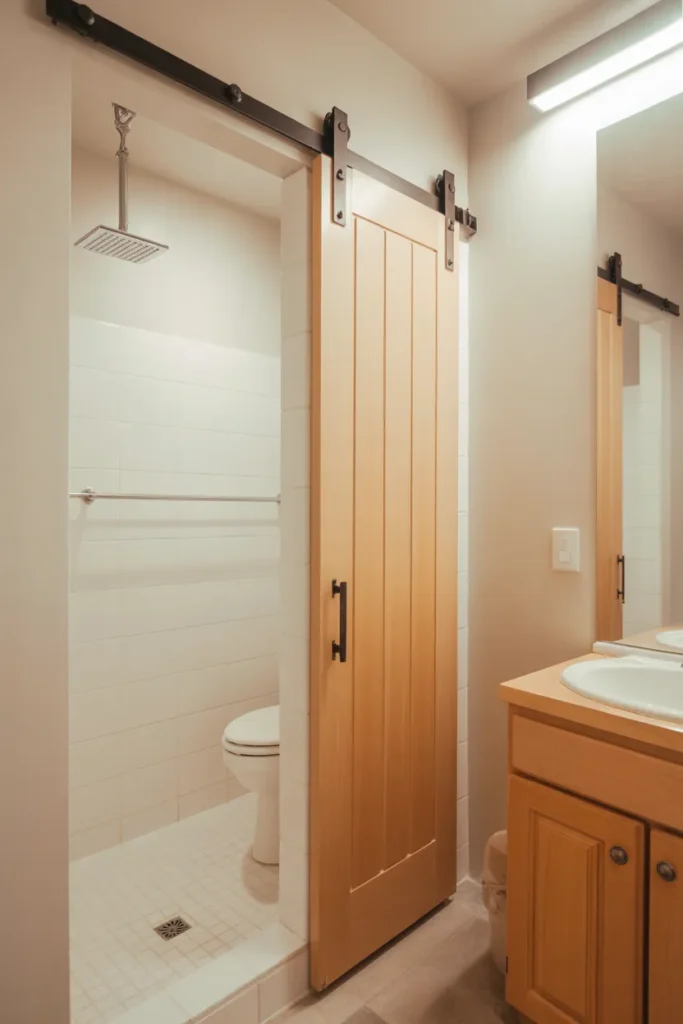
A sliding barn-style door gives you the swing-space savings of a pocket door without opening up the wall. The door glides along a track mounted above the opening, so the 30 inches of floor a swinging door needs stays usable. It also adds character: a barn door is a design feature, not just a space fix. Leave wall room: the door needs a clear stretch of wall beside the opening equal to its width, so plan for furniture and light switches on that wall.
Barn door kits cost 100 to 300 dollars, and the door slab adds 80 to 250. The project lands at roughly 200 to 600 dollars total, and prices vary with door style and hardware finish. Weekend-friendly project: it is a solid weekend DIY project for anyone comfortable with a level and a drill.
The honest warning: barn doors do not seal like swinging doors. There will be a gap, some sound will travel, and the lock is more of a suggestion than a deadbolt. In a main hallway bathroom shared by a family, that matters. It works best for powder rooms and primary suites where privacy expectations are lower.
- Keep the wall beside the opening clear for the full width of the door
- Use a level and solid mounting into studs for the track
- Accept the privacy trade-off: best for powder rooms and primary suites
Shop This Look
| DOORS | TRACKS | HANDLES |
|---|---|---|
| Sliding Barn Door Slab | Barn Door Hardware Track Kit | Matte Black Door Pull Handle |
| Shop → | Shop → | Shop → |
14. Compact Double-Duty Mirror Cabinet
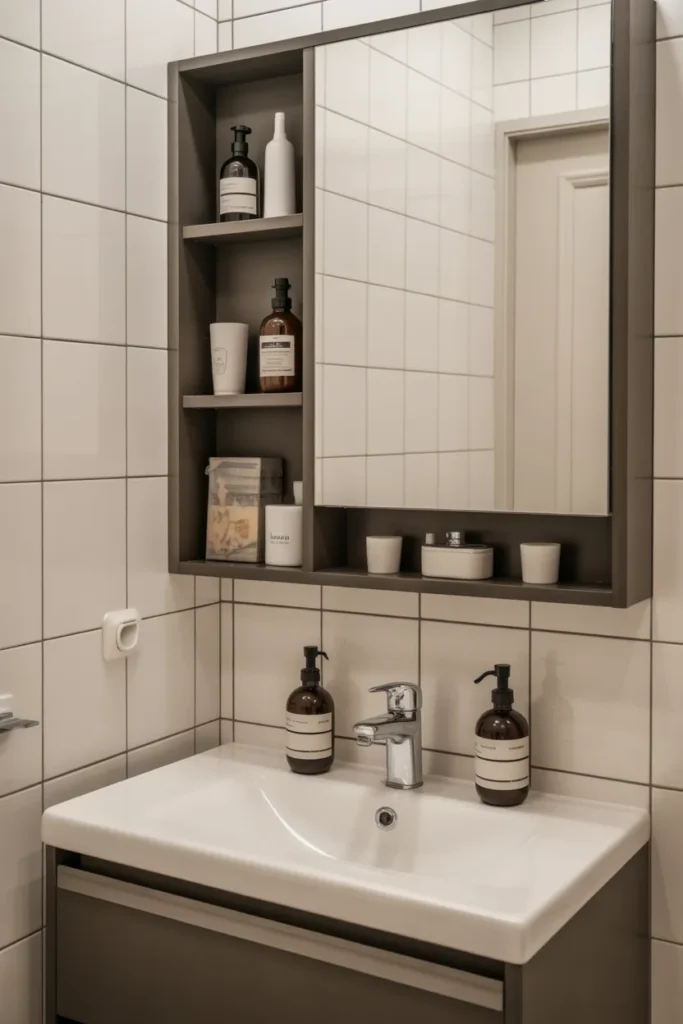
A mirrored medicine cabinet does two jobs in the space of one: it is your mirror and your storage. In a small bathroom, that efficiency matters. Recessed versions sit flush with the wall and look built-in, while surface-mounted ones are an easy swap for a flat mirror. Recess when you can: a recessed cabinet adds storage without pushing into the room at all, which is the whole point in a tight bath.
Mirror cabinets cost 60 to 300 dollars depending on size and features like lighting or defogging. Installation is usually simple, so the project lands at roughly 60 to 400 dollars, and prices vary. It is one of the fastest upgrades here: an hour of work for daily convenience.
The practical tip: measure your face-to-mirror distance before choosing depth. Watch the depth: a deep surface-mounted cabinet can push the mirror uncomfortably close in a narrow bathroom. If the room is very tight, go recessed or choose a slim-profile cabinet under 5 inches deep.
- Recess the cabinet into the wall when possible for zero room intrusion
- Choose a slim profile under 5 inches deep for very narrow bathrooms
- Check face-to-mirror distance before committing to a deep cabinet
Shop This Look
| CABINETS | MIRRORS | LIGHTS |
|---|---|---|
| Recessed Medicine Cabinet Mirror | Lighted Bathroom Mirror Cabinet | Battery LED Cabinet Light |
| Shop → | Shop → | Shop → |
15. Statement Floor Tiles for Visual Impact
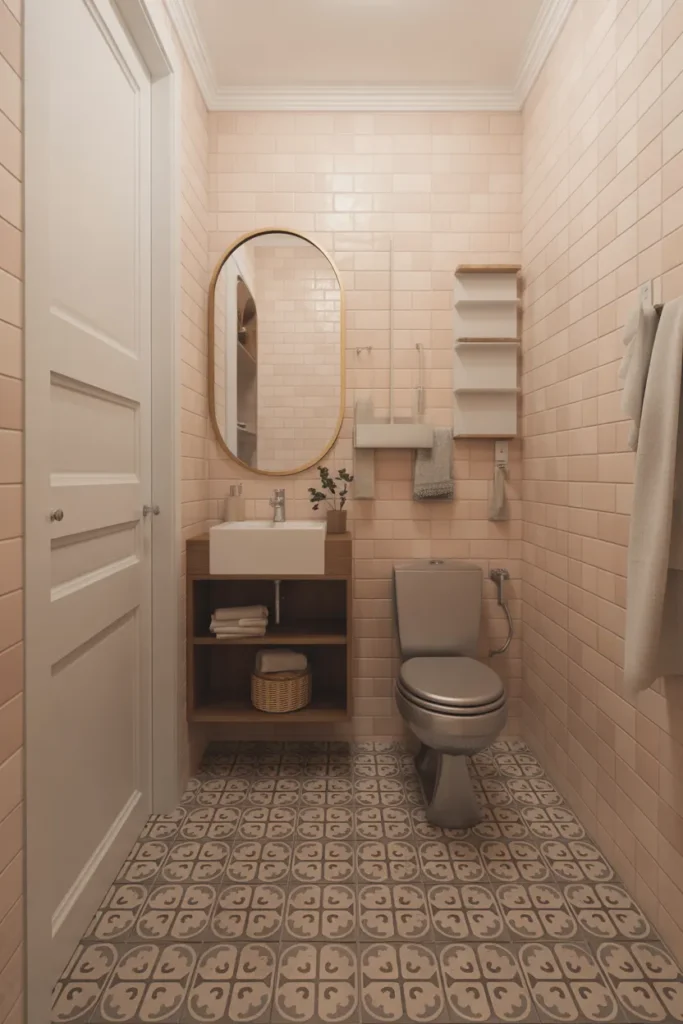
A bold floor tile gives a small bathroom a focal point without taking up any space at all. Patterned cement-look tiles, encaustic designs, or a striking geometric layout turn the floor into the star, which lets the walls stay simple. Because the floor area is small, you can afford a pricier tile per square foot than you could in a big room. Keep walls quiet: let the floor be the one loud element and keep everything else calm, or the small room will feel busy.
Statement tiles run 5 to 15 dollars per square foot, and a small bathroom floor is often under 40 square feet. With installation, the project lands at roughly 500 to 1,500 dollars, and prices vary with tile choice and local labor. It is a high-impact change for a moderate budget.
The warning: trendy patterns date faster than classic ones. A bold geometric that feels fresh today can feel tired in five years, and floors are expensive to redo. Choose a classic pattern: if you love pattern but fear commitment, basketweave or a simple black-and-white check has looked good for decades.
- Let the floor be the single bold element and keep walls calm
- Choose classic patterns like basketweave to avoid fast-dating trends
- Budget by square footage: small floors allow pricier tile per foot
Shop This Look
| TILES | MATS | GROUT |
|---|---|---|
| Patterned Cement Look Floor Tile | Non Slip Bath Rug Runner | Dark Gray Sanded Grout |
| Shop → | Shop → | Shop → |
How to Start
Start with the thing that bothers you every single day. If the lighting makes you squint, fix the lighting. If there is nowhere to put anything, add storage first. Remodels go wrong when people start with the prettiest item instead of the most annoying problem.
Next, set a firm budget ceiling and add a 15 percent cushion for surprises. Bathrooms hide water damage, old plumbing, and out-of-code wiring behind the walls. The cushion is not optional optimism; it is how you finish the project without panic.
Then do a small starter trip before any big decisions. A great first shopping trip stays under 60 dollars: a large mirror to test the bigger-room effect, new LED bulbs in the right color temperature, and a set of matching storage bins for the vanity. These three changes alone can make the bathroom feel halfway remodeled while you plan the bigger work.
- A large mirror to preview the bigger-room effect (about $25)
- LED bulbs in matching 3000K to 4000K color temperature ($15 or less)
- A set of matching storage bins to tame the vanity ($15 to $20)
Shop This Look
| MIRRORS | BULBS | BINS |
|---|---|---|
| Large Frameless Wall Mirror | LED Vanity Light Bulbs 4 Pack | Stackable Vanity Storage Bins |
| Shop → | Shop → | Shop → |
Common Mistakes
- Skipping the plan: buying fixtures one at a time without a full layout, then discovering the door hits the new vanity.
- Ignoring ventilation: remodeling everything but leaving a weak exhaust fan, which guarantees mold behind the pretty tile.
- Choosing oversized fixtures: squeezing in a deep vanity or a wide toilet that eats the walking space you were trying to create.
- Forgetting the grout: picking beautiful tile and then choosing a grout color that fights it or stains in a month.
- Under-lighting the mirror: installing one ceiling light and wondering why makeup and shaving are suddenly harder.
- Moving plumbing casually: relocating the toilet or shower drain without pricing it first, then blowing the budget on pipe work.
- Skipping the waterproofing: tiling over drywall in wet areas instead of using proper waterproofing, which fails within a few years.
Frequently Asked Questions
How much does a small bathroom remodel cost?
A cosmetic refresh runs roughly 300 to 800 dollars, while a full small-bathroom remodel with new shower, vanity, and tile typically costs 8,000 to 15,000 dollars. Prices vary by region, labor rates, and how much plumbing moves.
What is the cheapest way to make a small bathroom look bigger?
A large mirror, light paint, and clear glass in the shower deliver the most visual space per dollar. Together they cost under 200 dollars and can make the room feel noticeably larger in a single weekend.
Should I remove the tub in a small bathroom?
If it is the only tub in the house and you might sell soon, think twice, since families with small children want a tub. If you have another tub elsewhere, converting to a walk-in shower usually adds daily comfort and visual space.
Can I remodel a small bathroom myself?
Cosmetic work like painting, swapping mirrors, changing lighting, and installing accessories is very DIY-friendly. Leave plumbing moves, electrical additions, and full shower waterproofing to licensed pros. Water damage from a bad DIY shower is far more expensive than hiring it out.
How can I make my bathroom feel like a spa?
Soft lighting, eucalyptus on the shower head, plush towels, and a few bath products turn an ordinary bathroom into a retreat. These handmade self-care gift ideas include bath soaks and cozy extras that work perfectly as spa-style finishing touches.
The Finishing Touch
A small bathroom remodel is finished when the room feels easy to be in. The door does not hit anything, everything has a home, and the light flatters instead of interrogates. That feeling comes from the unglamorous decisions: the drain slope, the stud-anchored vanity, the fan that actually clears steam.
Give the new bathroom a week of real use before you call it done. You will notice the small things: a hook missing where you reach for a towel, a bulb that is too cool, a shelf that sits an inch too high. Fixing those tiny frictions is what turns a nice remodel into a room you love.
Then add the one thing that makes it yours, whether that is a plant that thrives in humidity, a piece of art you love, or just really good towels. For deeper guidance on layouts, clearances, and what actually works in tight spaces, read these small bathroom remodel ideas that actually work.