13 Small Bathroom Decor Ideas Space Saving Style
A small bathroom does not have to feel cramped or boring. With the right small bathroom decor choices, even the tiniest powder room can feel open, organized, and genuinely nice to use. Most of the ideas below cost roughly 30 to 200 dollars, and prices vary by brand and store, so you can mix and match without a full remodel.
This list walks through 13 space saving ideas that actually work in tight bathrooms. Floating vanities, corner sinks, tall mirrors, and smart wall storage all show up here. Every idea is rental friendly or easy to reverse, and none of them require tearing out walls.
Start with the one change that bothers you most each morning. A better mirror, more shelf space, or a door that stops banging into the sink. Small upgrades add up fast when the room is this size.
This post contains affiliate links. If you buy through them, I may earn a small commission at no extra cost to you.
1. Floating Vanity with Under-Storage Baskets
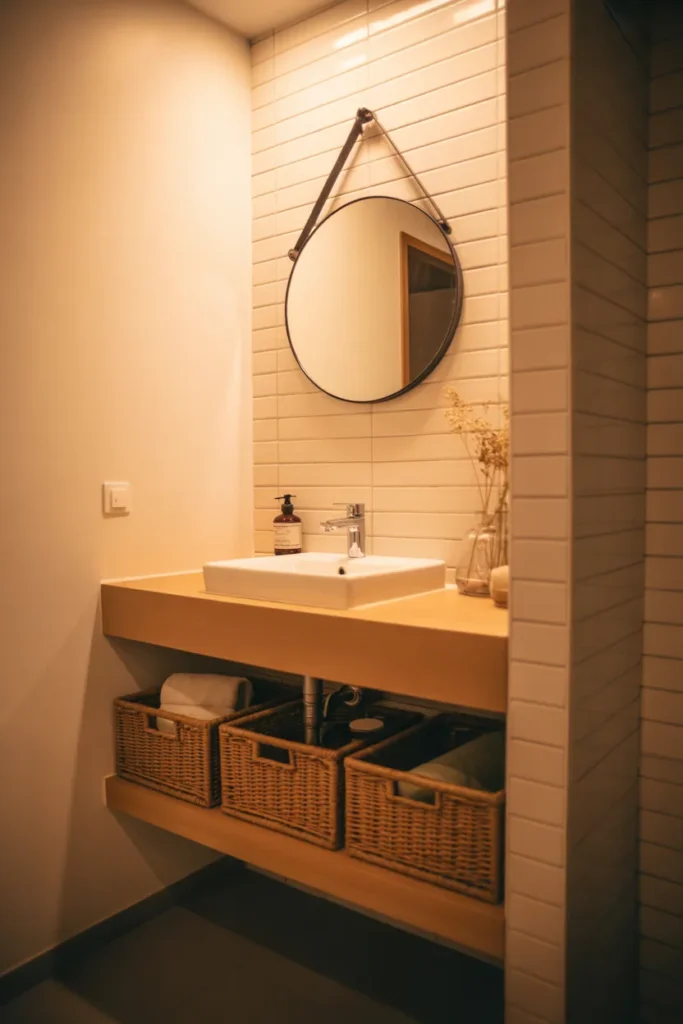
A floating vanity is one of the fastest ways to make a small bathroom feel bigger. Because it lifts off the floor, you see more tile, and your brain reads the room as larger. It is a simple visual trick, but it works every time. Check the plumbing first: your drain and supply lines need to line up with the vanity position, or you will pay a plumber to move them.
The open space underneath is not wasted. Slide in woven baskets for toilet paper, cleaning supplies, or extra towels. Baskets keep the area tidy while adding texture, which stops the room from feeling cold and clinical. A compact floating vanity costs roughly 150 dollars, and prices vary depending on size and material.
Honest warning: a floating vanity must anchor into wall studs, not just drywall. Confirm stud placement: use a stud finder before you drill, because a vanity full of toiletries is heavy. If you rent, pick a model that mounts with a French cleat so removal leaves only a few small holes.
- Choose a vanity between 18 and 24 inches wide for the smallest bathrooms.
- Pick baskets that are slightly narrower than the opening so they slide in easily.
- Keep a small tray on top for daily items and hide the rest in the baskets.
Shop This Look
| VANITIES | BASKETS | MIRRORS |
|---|---|---|
| 24-Inch Floating Bathroom Vanity | Seagrass Storage Baskets, Set of 2 | Round Bathroom Wall Mirror |
| Shop → | Shop → | Shop → |
2. Over-the-Toilet Ladder Shelf
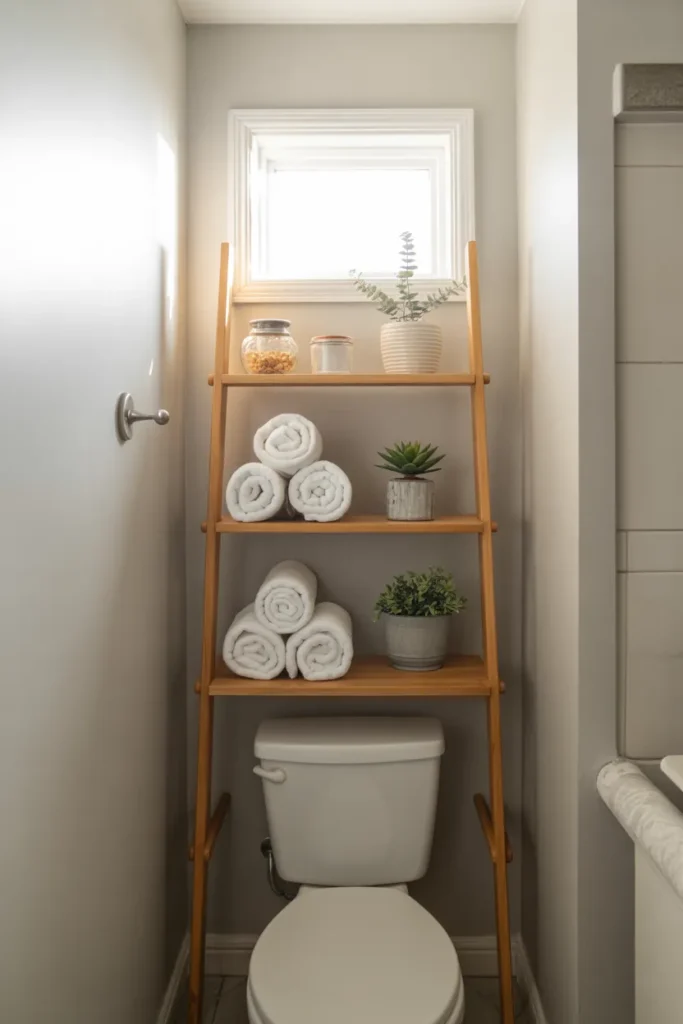
The wall above the toilet is dead space in most bathrooms, and a ladder shelf puts it to work. It leans or mounts there and gives you three or four open shelves for towels, baskets, and a little decor. Installation takes about twenty minutes with a drill. An over-the-toilet ladder shelf costs roughly 60 dollars, and prices vary by wood finish.
Open shelves force you to stay tidy, which is honestly a feature in a small room. Roll your towels instead of folding them so they fit the narrower shelves. Keep the bottom shelf practical: store the everyday stuff low and the pretty extras up high where guests see them.
Practical tip: check the clearance before you buy. Measure tank to wall: the shelf legs must sit flat behind the toilet tank, and some tanks sit closer to the wall than others. If the fit is tight, look for a wall-mounted version instead of a floor-standing one.
- Leave at least two inches between the shelf back and the tank for easy cleaning.
- Use matching baskets on the shelves so clutter stays hidden.
- Add one small plant or candle on the top shelf for a finished look.
Shop This Look
| SHELVES | TOWELS | PLANTS |
|---|---|---|
| Over-the-Toilet Ladder Shelf | Rolled Hand Towels, Set of 6 | Small Faux Eucalyptus Plant |
| Shop → | Shop → | Shop → |
3. Large Mirror to Expand Visual Space
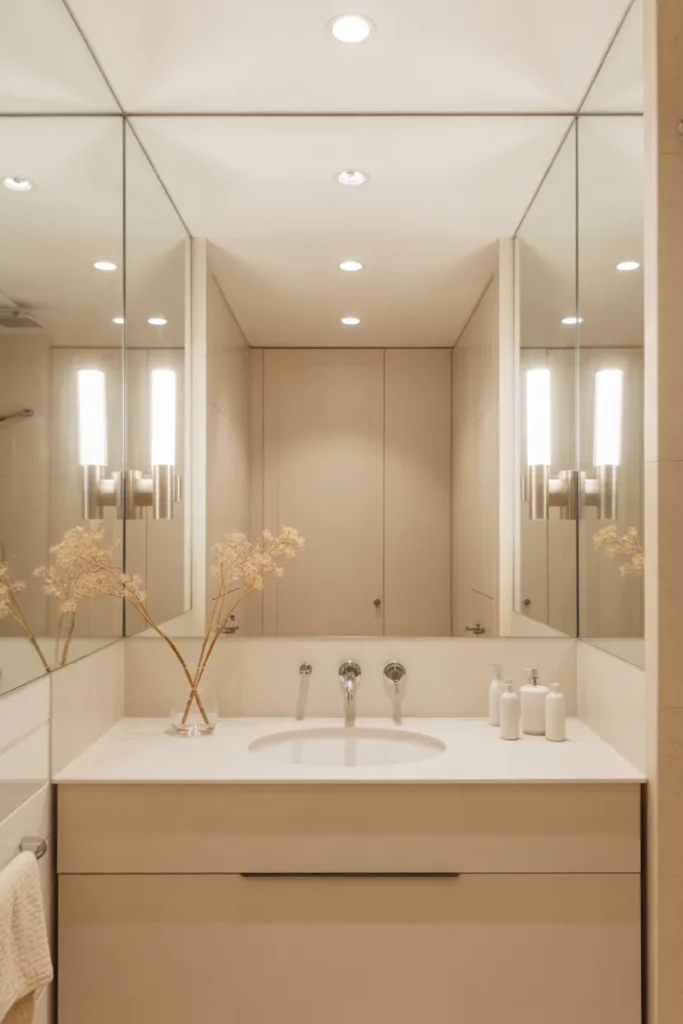
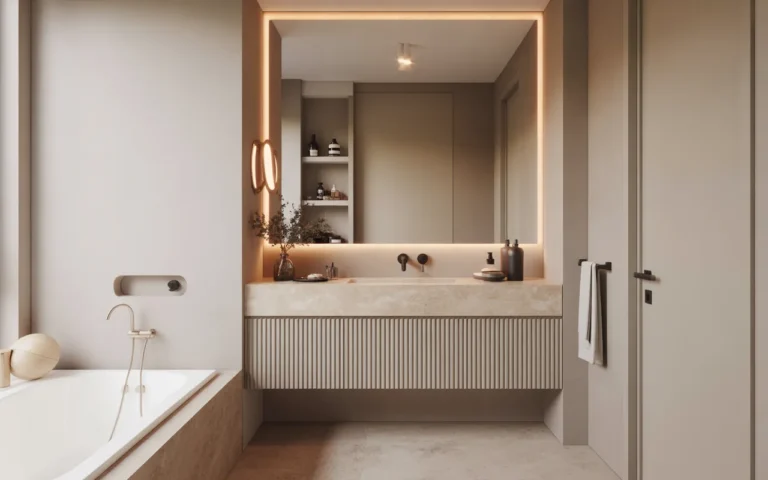
A big mirror is the oldest small bathroom trick there is, and it still works better than almost anything else. It bounces light around the room and doubles what the eye sees. Go bigger than you think. A mirror that spans most of the vanity wall changes the whole feel of the space. A large bathroom mirror costs roughly 80 dollars, and prices vary with frame style and size.
Pick frameless or thin frame: chunky frames eat visual space, while a slim edge keeps the mirror feeling like part of the wall. Round mirrors soften a boxy room, and rectangular ones suit narrow walls above the sink.
Honest warning: a huge mirror reflects clutter too. Declutter the counter first: if the sink area is messy, the mirror will double that mess. Keep daily items in a tray or drawer so the reflection looks clean and calm.
- Hang the mirror so its center sits at eye level, about 60 inches from the floor.
- Place it across from a window or light source to maximize the bounce.
- Use two mirror clips or a French cleat for heavier frameless panels.
Shop This Look
| MIRRORS | LIGHTS | TRAYS |
|---|---|---|
| Large Frameless Bathroom Mirror | LED Vanity Light Bar | Marble Bathroom Counter Tray |
| Shop → | Shop → | Shop → |
4. Wall-Mounted Storage Cabinets
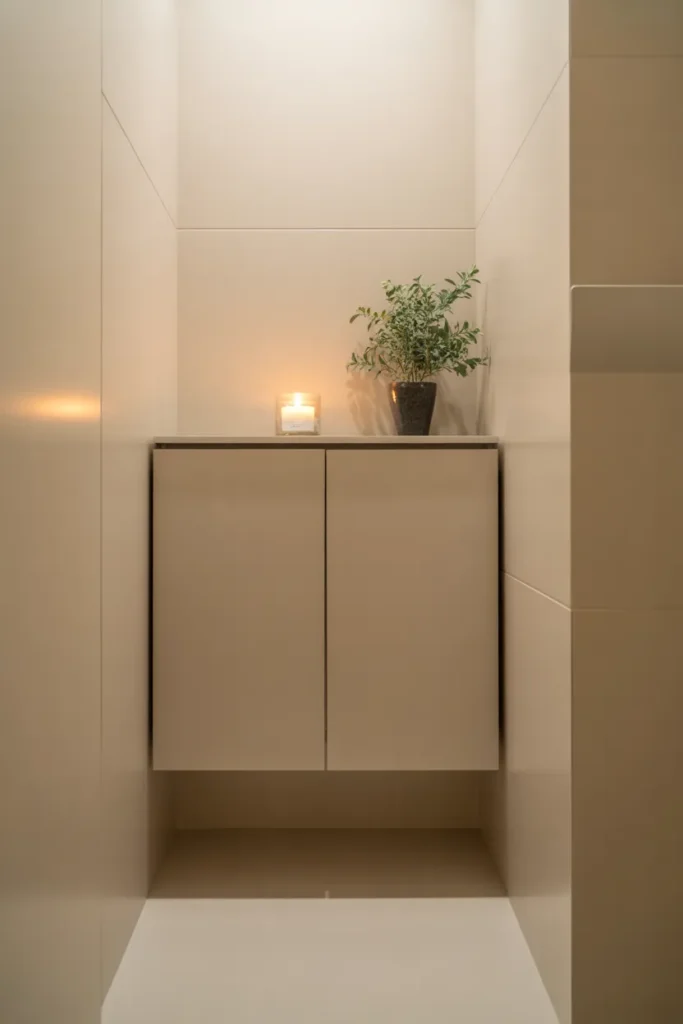
When the floor is full, go up. A wall-mounted cabinet adds closed storage without taking a single inch of floor space. It hides the visual noise of bottles and boxes behind doors, which matters more in a small room than in a big one. A compact wall cabinet costs roughly 70 dollars, and prices vary by material and finish.
Match the cabinet depth: keep it shallow, around 6 to 8 inches deep, so it does not jut out and bump you. A medicine cabinet with a mirrored front does double duty over the sink, giving you storage and a mirror in one.
Practical tip: think about what you reach for half asleep in the morning. Store daily items low: toothbrush, deodorant, and moisturizer belong at easy height, with backup supplies on the higher shelf. If you share the bathroom, give each person a door or a shelf.
- Mount the cabinet so the bottom edge sits about 48 inches from the floor.
- Choose moisture-resistant materials like coated MDF or metal for steamy bathrooms.
- Add small adhesive shelf liners inside so bottles do not slide around.
Shop This Look
| CABINETS | ORGANIZERS | LINERS |
|---|---|---|
| Shallow Wall-Mounted Bathroom Cabinet | Mirrored Medicine Cabinet | Non-Slip Shelf Liner Roll |
| Shop → | Shop → | Shop → |
5. Corner Sink for Tight Layouts
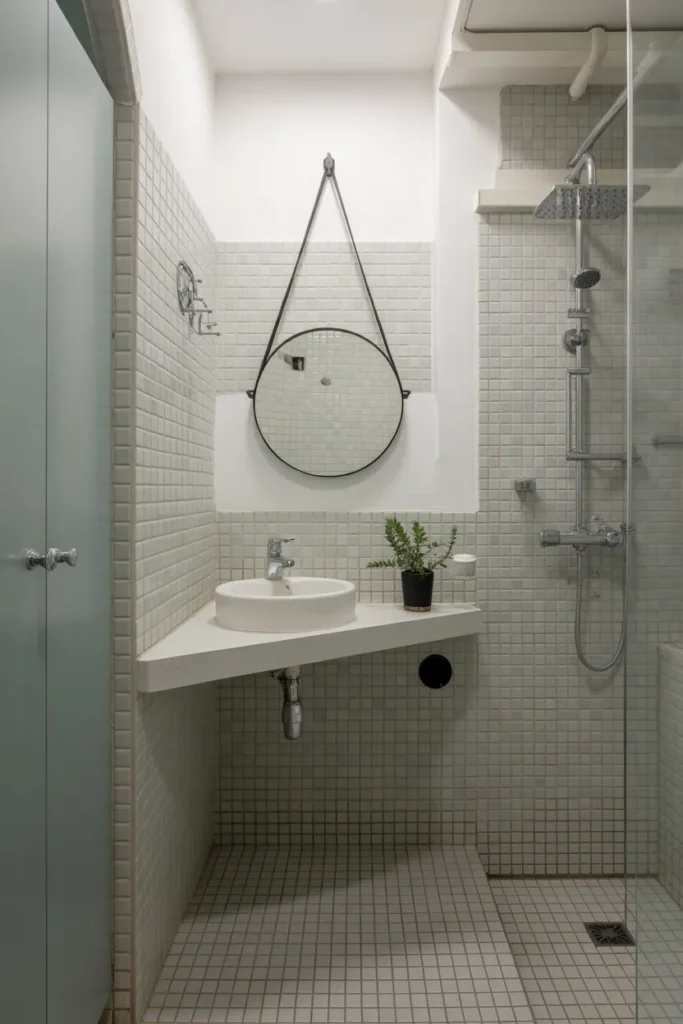
Some bathrooms are so tight that the sink blocks the door swing or the path to the shower. A corner sink fixes that by tucking into the one spot nobody walks through. It sounds like a small change, but reclaiming that square foot of walkway makes the whole room feel less like an obstacle course. A small corner sink costs roughly 90 dollars, and prices vary by style.
Pick wall-mounted or pedestal: both keep the floor clear underneath, which matters more than the basin shape. A tiny vanity cabinet under a corner sink usually wastes the space because the plumbing fills it anyway.
Honest warning: corner sinks are small, so splashing is real. Choose a low-flow faucet: less water pressure means less spray on the counter and the floor. Keep a hand towel nearby and accept that the area will need a quick wipe more often.
- Measure the corner diagonally to make sure the sink fits before ordering.
- Pair it with a wall-mounted faucet to free the tiny counter area.
- Add a corner shelf above for soap and a small plant.
Shop This Look
| SINKS | FAUCETS | SHELVES |
|---|---|---|
| Wall-Mount Corner Bathroom Sink | Single-Handle Mini Bathroom Faucet | Corner Floating Shelf for Bathroom |
| Shop → | Shop → | Shop → |
6. Glass Shower Partition for an Open Feel
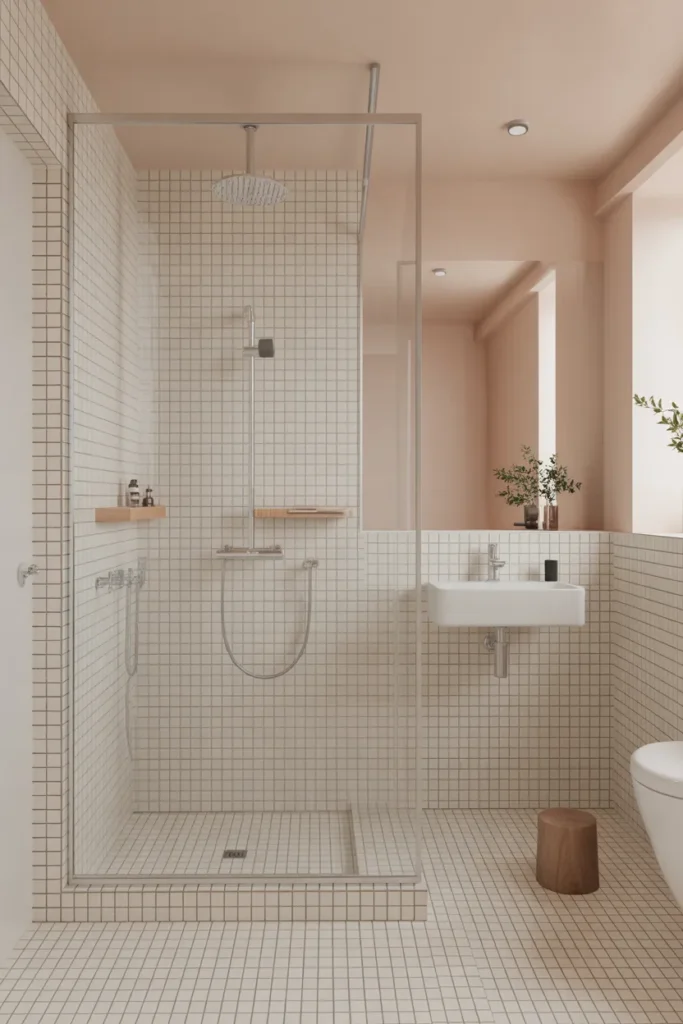
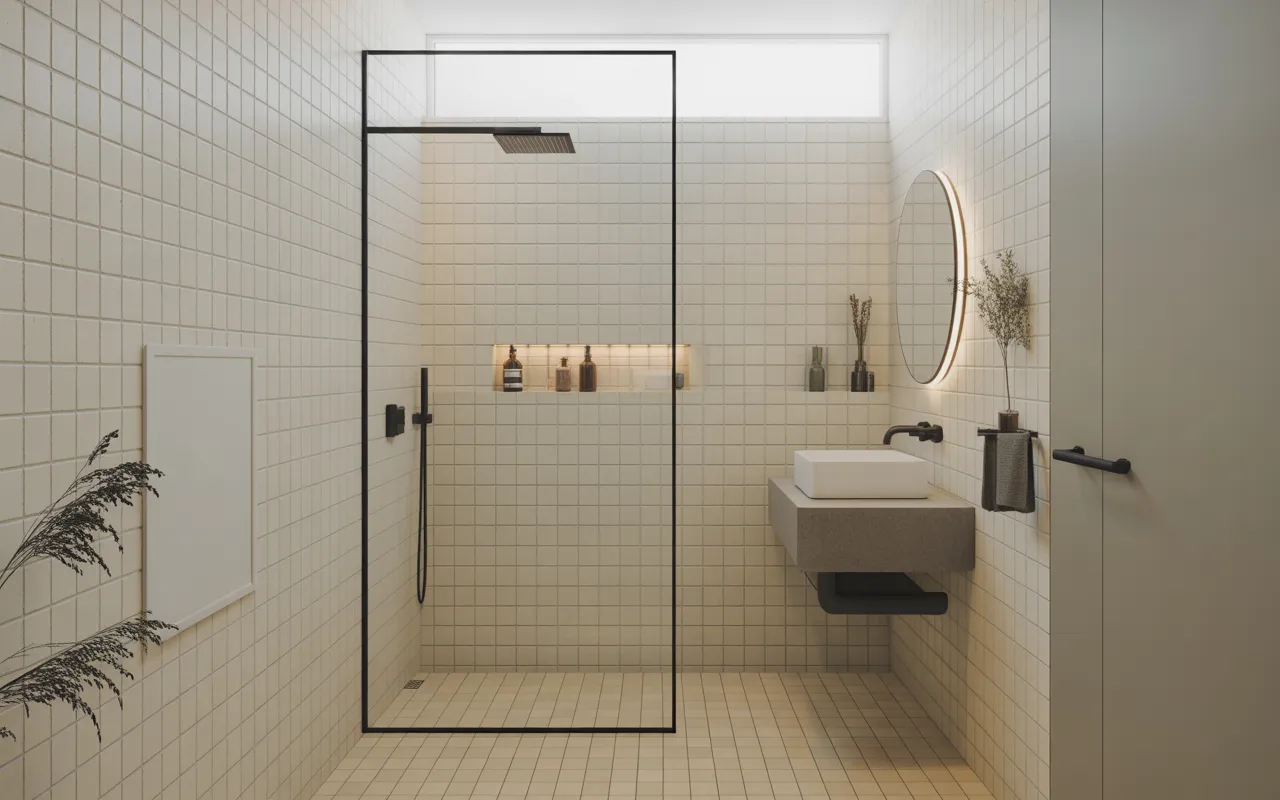
A shower curtain cuts the bathroom in half visually. Swap it for a clear glass partition and the room reads as one open space instead of two cramped ones. Light flows through, sightlines stay long, and the tile work you paid for actually shows. A frameless glass shower panel costs roughly 180 dollars, and prices vary by size and thickness.
Choose clear over frosted: frosted or textured glass still blocks sightlines, which defeats the purpose in a tiny room. Clear tempered glass keeps everything visible and bright.
Honest warning: glass shows water spots, and there is no hiding it. Keep a squeegee handy: a ten-second wipe after each shower prevents the mineral buildup that makes glass look cloudy. Skip this habit and the panel will look worse than a curtain within a month.
- Measure the opening twice, since glass panels are not adjustable.
- Look for panels with a water-repellent coating to cut down on spots.
- Use clear silicone sealant on edges to stop leaks without visible hardware.
Shop This Look
| PANELS | SQUEEGEES | SEALANT |
|---|---|---|
| Frameless Glass Shower Panel | Shower Door Squeegee with Hook | Clear Waterproof Silicone Sealant |
| Shop → | Shop → | Shop → |
7. Vertical Tile Design to Add Height
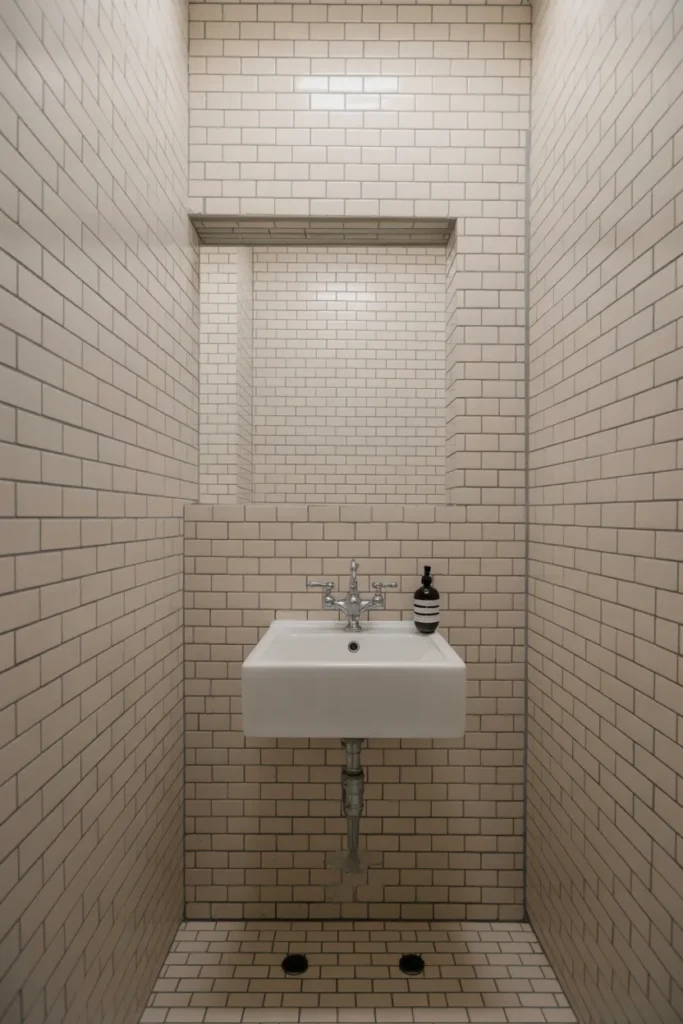
Tile direction changes how tall a room feels. Subway tile laid vertically pulls the eye upward, which makes low ceilings feel higher. It is the same tile you would buy anyway, just turned ninety degrees. The effect is subtle in photos but obvious in person. Vertical subway tile costs roughly 8 dollars per square foot, and prices vary by material and finish.
Run tile to the ceiling: stopping at shower height leaves a dead band of paint that breaks the line. Taking the tile all the way up keeps the upward pull going and actually protects the wall from steam.
Practical tip: grout color matters more than most people expect. Match grout to tile: same-color grout makes the wall read as one smooth surface, while dark grout chops it into a grid and kills the height effect. White on white is the safest choice here.
- Use 3×6 or 4×12 subway tile for the strongest vertical lines.
- Ask the tiler for a stacked pattern, not brick offset, for cleaner lines.
- Seal the grout after installation to keep it bright in a steamy room.
Shop This Look
| TILES | GROUT | SEALERS |
|---|---|---|
| White Glossy Subway Tile 4×12 | White Sanded Tile Grout | Grout Sealer Spray Bottle |
| Shop → | Shop → | Shop → |
8. Slim Rolling Storage Cart
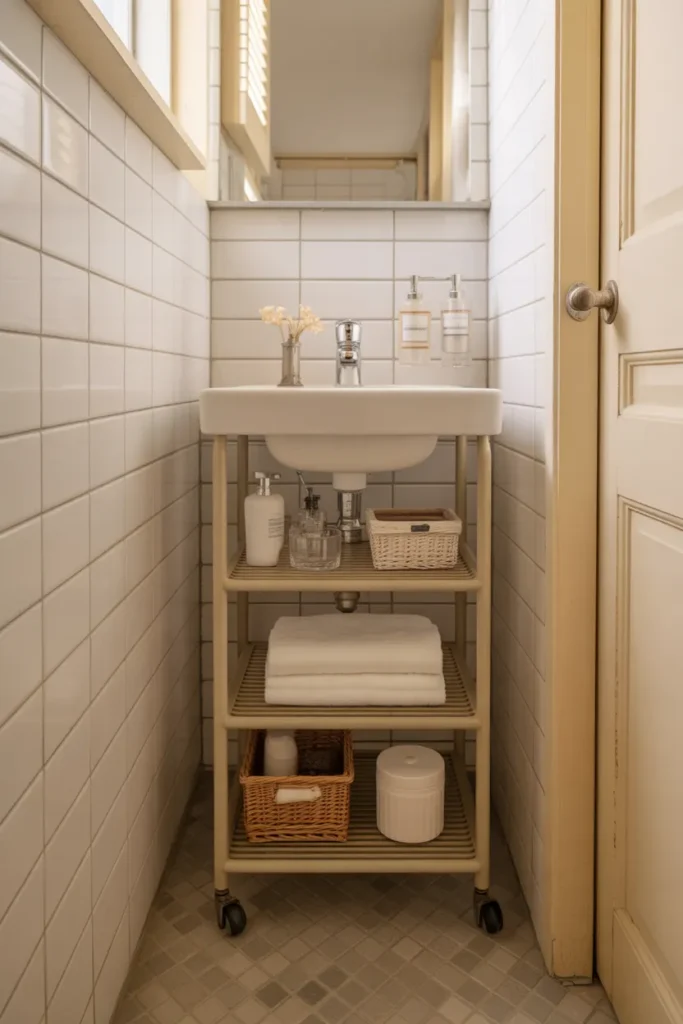
Every small bathroom has one awkward gap: between the toilet and the wall, beside the vanity, next to the tub. A slim rolling cart is built exactly for that gap. At six to eight inches wide, it slides in and holds toiletries, cleaning supplies, or backup rolls within reach. A slim rolling cart costs roughly 35 dollars, and prices vary by tier count.
Measure the gap first: write down the width before you shop, because carts come in a few standard sizes and returns are annoying. Leave a half inch of wiggle room so the cart rolls out without scraping the wall.
Honest warning: a narrow cart tips if you load the top shelf heavy. Keep heavy items low: cleaning bottles and spare shampoo go on the bottom tier, with light things like cotton pads up top. Lock the wheels once it is in place so it does not drift.
- Pick a cart with at least three tiers to make the narrow footprint count.
- Use small bins inside the tiers so items do not fall through the gaps.
- Wipe the cart down monthly, since bathroom humidity collects dust fast.
Shop This Look
| CARTS | BINS | CADDIES |
|---|---|---|
| Slim 3-Tier Rolling Storage Cart | Small Plastic Organizer Bins | Bathroom Cleaning Supply Caddy |
| Shop → | Shop → | Shop → |
9. Light Color Palette for Airy Vibes
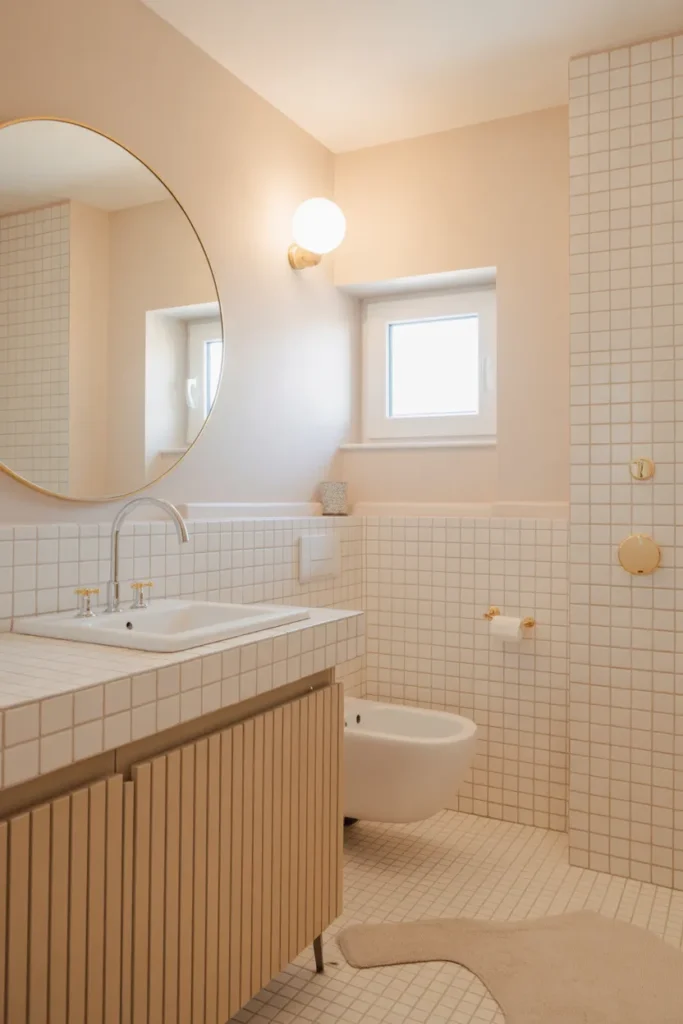
Dark colors shrink a room visually, and in a bathroom there is nowhere for that heaviness to go. Whites, soft creams, and pale grays reflect light and make the walls feel farther apart than they are. You do not need an all-white sterile box. Warm white paint with a cream towel and a light wood accent still reads bright. A gallon of quality bathroom paint costs roughly 40 dollars, and prices vary by brand.
Use one undertone: mixing warm whites with cool grays makes a small room look muddy and mismatched. Pick warm or cool and carry it through paint, towels, and tile grout.
Practical tip: light colors show less water spotting on walls but more on fixtures. Wipe chrome weekly: pale walls will make dull, spotty faucets stand out even more, so keep the metal polished for the palette to do its job.
- Choose satin or semi-gloss paint made for high-humidity rooms.
- Swap dark towels and rugs for white or cream versions first, cheapest change first.
- Add one warm accent, like wood or brass, so the room does not feel flat.
Shop This Look
| PAINT | TOWELS | RUGS |
|---|---|---|
| White Satin Bathroom Paint | Cream Bath Towels, Set of 4 | Light Beige Bath Mat |
| Shop → | Shop → | Shop → |
10. Hooks Instead of Towel Bars
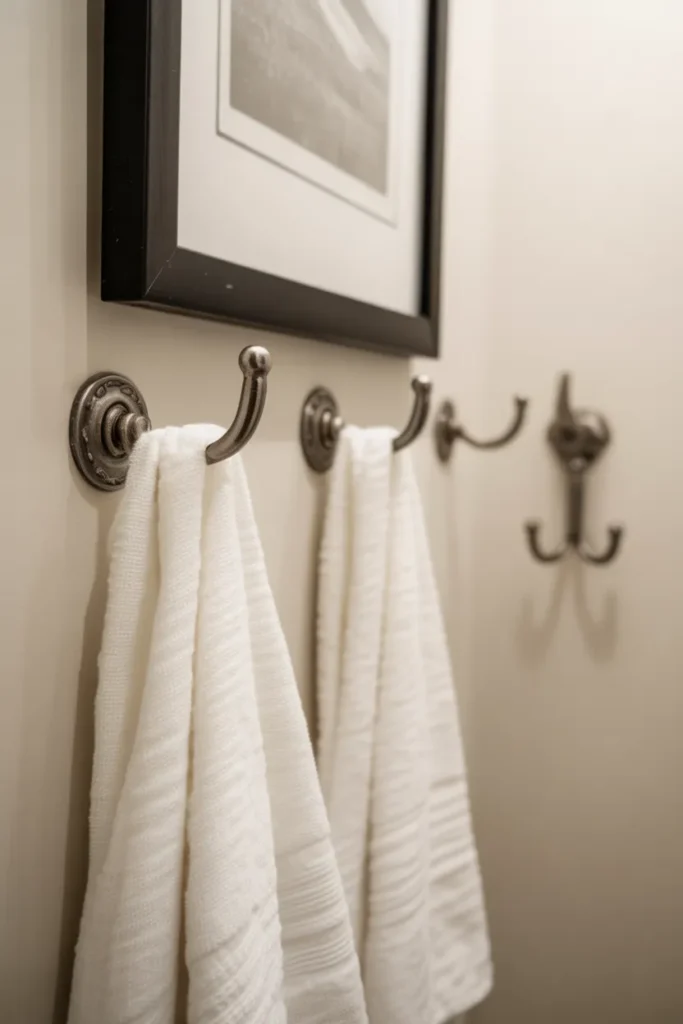
A towel bar needs about two feet of clear wall, which small bathrooms rarely have to spare. Hooks need almost none. One hook per person on the back of the door or a spare wall section handles daily towels just fine, and they dry faster on a hook anyway because air circulates around the folds. A set of sturdy bathroom hooks costs roughly 20 dollars, and prices vary by finish.
Use one hook per towel: doubling up towels on a single hook traps moisture and they start to smell. Give each towel its own hook and the problem disappears.
Practical tip: placement matters more than the hook itself. Hook behind the door: the back of the bathroom door is free real estate that costs nothing to use. Just check the door still closes fully with towels hanging, since thick bath sheets can jam a tight door.
- Choose hooks rated for at least 10 pounds so wet towels do not pull them down.
- Adhesive hooks work for renters, but drilled hooks hold up longer.
- Space hooks six inches apart so towels hang without touching.
Shop This Look
| HOOKS | RACKS | TOWELS |
|---|---|---|
| Brushed Nickel Bathroom Robe Hooks | Over-the-Door Towel Rack | Quick-Dry Bath Towels |
| Shop → | Shop → | Shop → |
11. Recessed Wall Niches for Hidden Storage
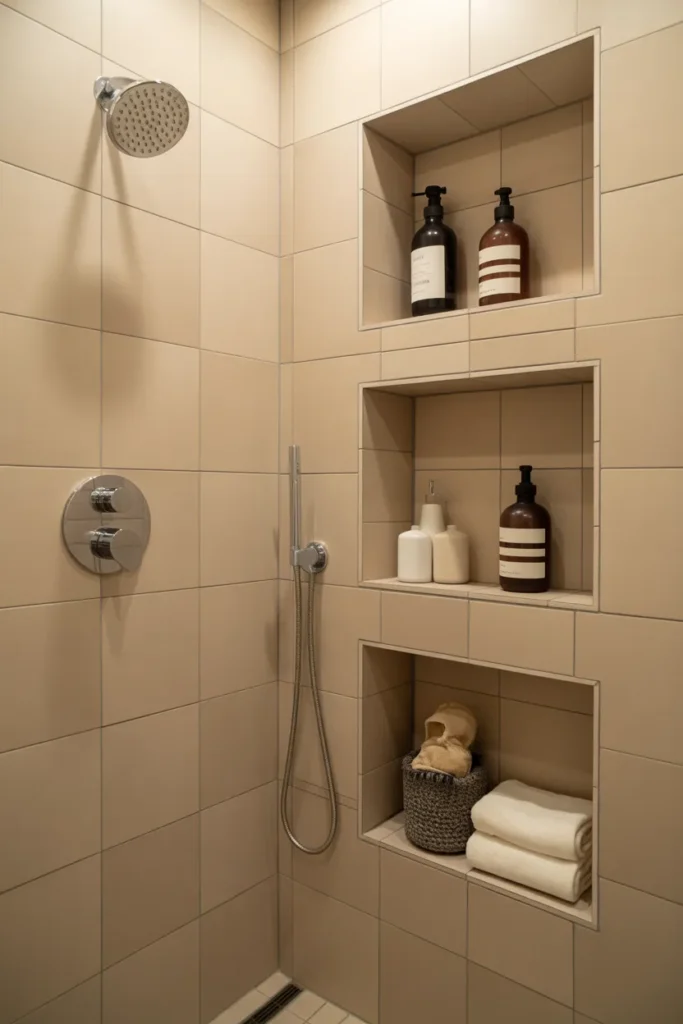
A recessed niche puts storage inside the wall instead of on top of it. In the shower it holds shampoo bottles without a caddy that rusts or a corner shelf that falls. Above the toilet or beside the vanity it works the same way: storage with zero footprint. A ready-made shower niche insert costs roughly 50 dollars, and prices vary by size.
Plan niches during a retile: cutting one into an existing tiled wall is possible but messy and risky. If you are already retiling, adding a niche is a small extra job for the tiler and a big daily upgrade for you.
Honest warning: niches collect water and soap scum in their corners. Slope the bottom shelf: the base tile should tilt slightly toward the room so water drains out instead of pooling. Without that slope you will be scrubbing mildew from a spot you cannot easily reach.
- Size the niche to fit your tallest bottle, usually around 12 inches high.
- Match the niche tile to the wall tile for a clean built-in look.
- Seal all edges with silicone during installation to keep moisture out of the wall.
Shop This Look
| NICHES | SHELVES | SILICONE |
|---|---|---|
| Ready-to-Tile Shower Niche | Recessed Wall Shelf Insert | Mold-Resistant Silicone Caulk |
| Shop → | Shop → | Shop → |
12. Compact Wall-Mounted Faucet
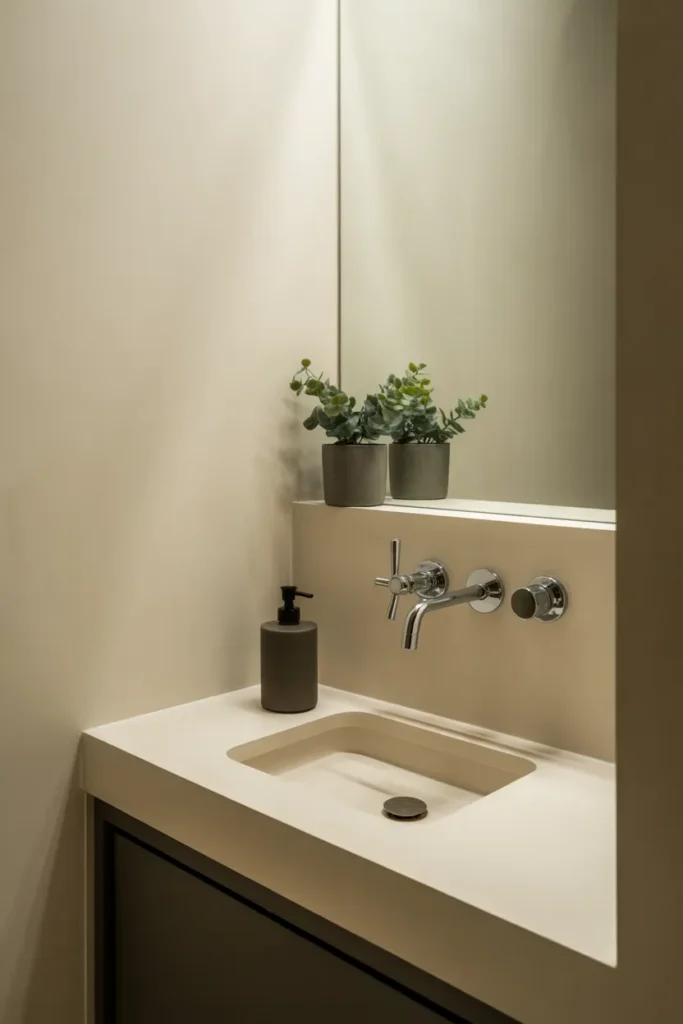
A wall-mounted faucet frees the entire sink deck. No faucet base means the full counter is usable for soap, a cup, and whatever else lands there each morning. It also makes wiping the sink area genuinely easy, since there is nothing to clean around. A compact wall-mounted faucet costs roughly 110 dollars, and prices vary by finish and brand.
Check your wall type: the faucet rough-in valve hides inside the wall, so this is a during-renovation job, not a weekend swap. If your sink wall is tile over cement board, installation is straightforward for a plumber.
Honest warning: the spout reach has to match the sink. Measure spout to drain: too short and water hits the back of the basin and splashes everywhere, too long and it overshoots a small sink. Get the spec sheet and measure twice before the plumber opens the wall.
- Pair it with a vessel or semi-recessed sink for the cleanest look.
- Choose a model with a ceramic disc cartridge for drip-free years.
- Install a shutoff valve in an accessible spot while the wall is open.
Shop This Look
| FAUCETS | SINKS | VALVES |
|---|---|---|
| Wall-Mounted Bathroom Faucet | Small Ceramic Vessel Sink | Bathroom Sink Drain Assembly |
| Shop → | Shop → | Shop → |
13. Pocket Door for Better Flow
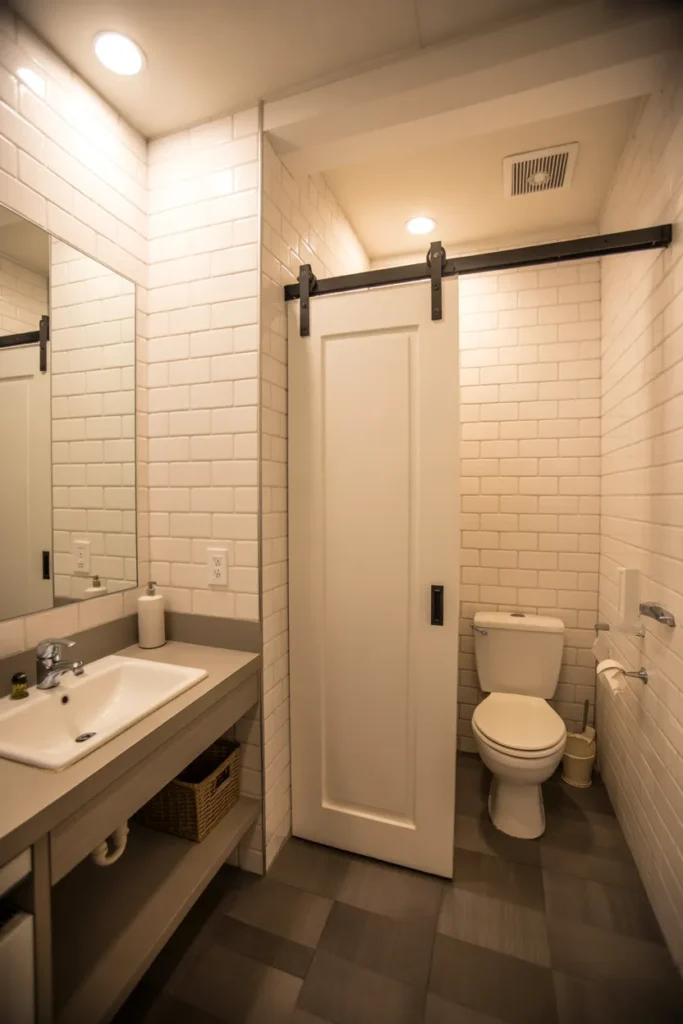
A swinging door needs about nine square feet of clear floor to open. In a small bathroom that is floor you cannot use for anything. A pocket door slides into the wall instead, and suddenly the space behind the door is usable for a hamper, a cabinet, or just walking. A pocket door frame kit costs roughly 130 dollars, and prices vary by door size.
Check the wall contents: pocket doors need an empty wall cavity, so plumbing, wiring, or a load-bearing stud wall can rule it out. An interior non-load-bearing wall is the ideal candidate.
Honest warning: pocket doors are harder to retrofit than they look. Plan for drywall repair: the wall has to open up to install the track, so budget for patching and paint on both sides. If that sounds like too much, a surface-mounted barn door gives most of the benefit with a weekend install.
- Choose a solid-core door for better sound privacy than hollow core.
- Install soft-close hardware so the door does not slam into the pocket.
- Add a recessed pull handle that sits flush when the door is open.
Shop This Look
| DOORS | HARDWARE | HANDLES |
|---|---|---|
| Pocket Door Frame Kit | Soft-Close Sliding Door Hardware | Recessed Pocket Door Pull |
| Shop → | Shop → | Shop → |
How to Start
You do not need a plan for all thirteen ideas. You need one afternoon and one problem solved. Pick the single thing that annoys you most, the towel pile on the floor or the cluttered sink, and fix that first. Momentum beats perfection in a small room because every change is visible immediately.
Start with the cheap wins. Hooks, a rolling cart, and a new shower curtain or glass cleaner cost less than dinner out and change how the room functions today. Measure your gaps and walls before you order anything. Small bathrooms punish guessing, and returns eat the savings fast.
If you have one weekend, do the paint and the mirror swap together. Fresh light paint plus a bigger mirror is the highest impact combo on this list for the money. Save the plumbing jobs, the wall faucet and the pocket door, for when you are already doing bigger work.
A first shopping trip under 60 dollars can cover real ground. Here is a starter list that fits the budget:
- A set of adhesive or screw-in wall hooks for towels and robes, around 15 dollars.
- A slim rolling cart or a pair of storage baskets for the dead gaps, around 30 dollars.
- A new light-colored shower curtain or a pack of microfiber cloths and glass cleaner, around 12 dollars.
Shop This Look
| HOOKS | CARTS | CLEANERS |
|---|---|---|
| Adhesive Bathroom Wall Hooks | Slim Rolling Storage Cart | Glass Cleaner Spray, 2-Pack |
| Shop → | Shop → | Shop → |
Common Mistakes
- Skipping the plan: buying storage before measuring is how small bathrooms end up with furniture that does not fit. Measure every gap and wall first.
- Going too dark: deep paint and dark tile shrink a small bathroom fast. Keep the big surfaces light and add color in towels and art.
- Ignoring the door swing: a new vanity or cabinet means nothing if the door bangs into it. Map the swing radius before placing anything.
- Choosing form over function: a pretty basket that holds nothing useful is clutter. Every piece in a small bathroom should earn its spot.
- Forgetting ventilation: more storage means less airflow around walls. Run the exhaust fan during and after showers or mildew will find the hidden corners.
- Overfilling open shelves: ladder shelves look great half full and stressful fully packed. Leave breathing room or switch to closed cabinets.
- Skimping on lighting: one dim ceiling light makes every upgrade look dull. Add a vanity light or brighter bulbs so the changes actually show.
Frequently Asked Questions
What is the cheapest way to make a small bathroom look bigger?
Paint it a light color and hang a larger mirror. Those two changes cost under 100 dollars combined and make the biggest visual difference. Decluttering the counters costs nothing and matters just as much.
How do I add storage to a bathroom with no floor space?
Use the walls and the dead zones. An over-the-toilet shelf, wall-mounted cabinets, and hooks on the door add storage without touching the floor. A slim rolling cart fills the narrow gaps beside the toilet or vanity.
Are floating vanities good for small bathrooms?
Yes, they are one of the best choices. The visible floor underneath tricks the eye into seeing a larger room, and the open space fits baskets for extra storage. Just make sure the vanity anchors into studs, since it carries real weight.
What color makes a small bathroom feel larger?
Whites, soft creams, and pale cool tones like light gray or pale blue. They reflect more light than dark colors. Keep one consistent undertone through paint, towels, and tile so the room reads as one calm space.
Where can I find more bathroom decorating ideas?
If you want to go beyond space saving tricks, our bathroom decor ideas collection covers styles, color schemes, and finishing touches for bathrooms of every size.
The Finishing Touch
A small bathroom rewards editing. Every item you remove does as much work as every item you add. Walk in with fresh eyes, take out anything you have not touched in a month, and notice how much calmer the room feels before you spend a dollar.
Then layer in the changes that fit your life. A floating vanity if the floor feels cramped. Hooks if towels are always on the floor. A bigger mirror if the room feels dark. You do not need all thirteen ideas. Three done well will transform the space.
Keep the finishes simple and consistent. One metal tone, one wood tone, one paint undertone. In a room this small, restraint reads as luxury, and mismatched pieces read as clutter no matter how nice each one is alone.
For more professional guidance on making tight bathrooms work harder, Houzz has a practical roundup of designer advice: 12 Designer Tips to Make a Small Bathroom Better. Pair those pro tips with the ideas above, and even the smallest bathroom can feel like it was designed on purpose.