24 Kitchen Layout Ideas That Transform Your Space
The layout of your kitchen decides how cooking feels every single day. A good layout makes dinner flow easily from fridge to counter to stove. A bad one turns every meal into an obstacle course of too many steps, blocked drawers, and nowhere to set a hot pan down.
In this roundup you will find 24 kitchen layout ideas for every kind of space and cooking style. There are open-concept designs, efficient galley kitchens, island-focused plans, smart storage layouts, and zoning tricks that make even a small kitchen work harder. Each idea includes practical tips and shoppable pieces to bring it to life.
Whether you are remodeling, building new, or just trying to make your current kitchen work better, these layouts give you a plan to start from. Save the ones that match your space, measure twice, and use the Shop This Look sections for the pieces that complete each design.
This post contains affiliate links. If you buy through them, I may earn a small commission at no extra cost to you.
1. Open-Concept Kitchen with Central Island
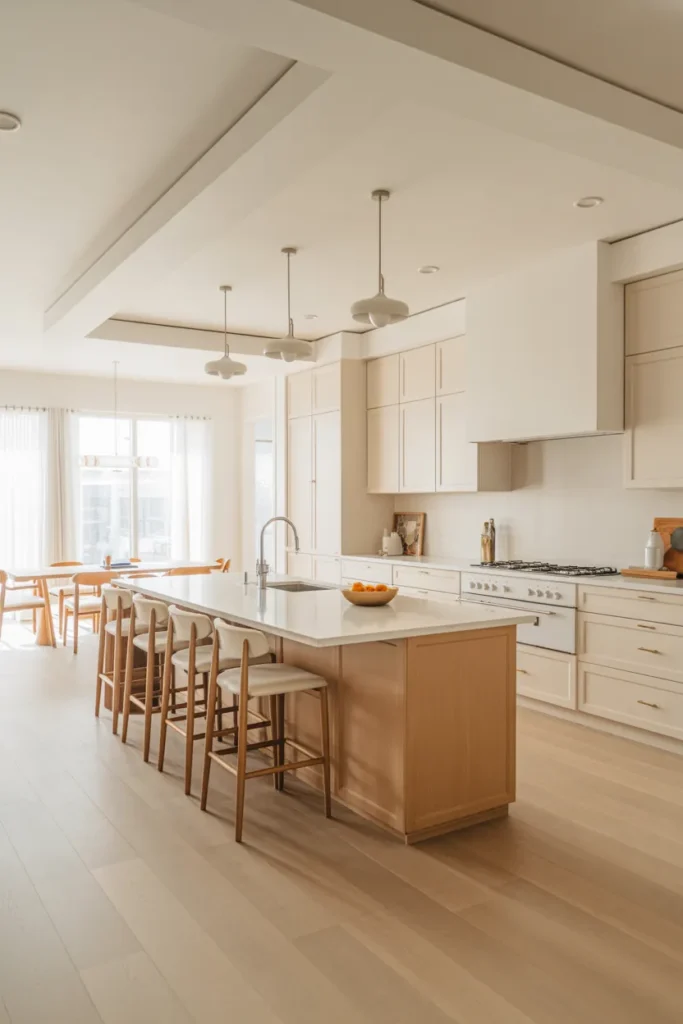
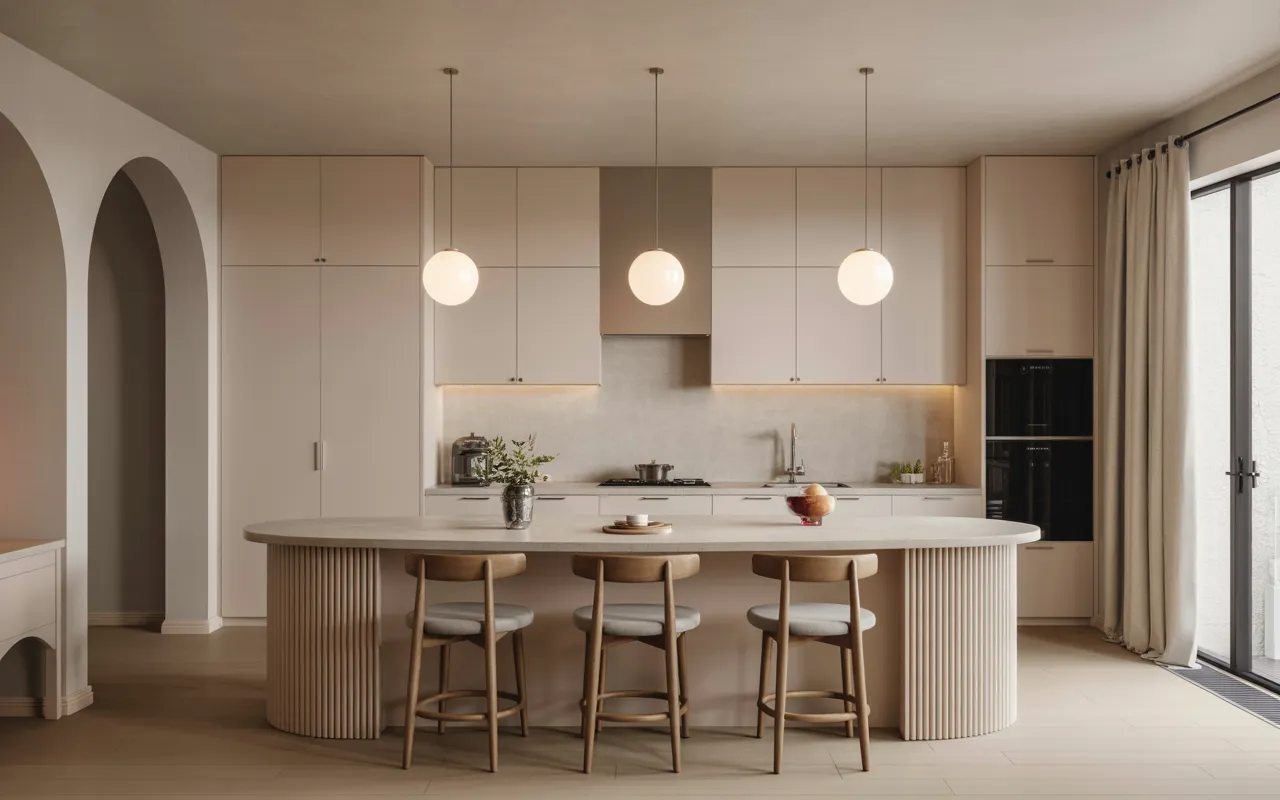
An open-concept kitchen with a central island is the modern classic for a reason. Removing the wall between kitchen and living space creates one big room for cooking, eating, and gathering. The island becomes the anchor: prep space, casual seating, and a natural divider between cooking and living zones.
Plan the island well: The island needs 36 to 42 inches of clearance on all sides so two people can pass and the dishwasher and oven doors can open. A 7-foot island seats three comfortably; go longer if you want four or five stools. Put the sink or cooktop in the island only if the plumbing and venting work without heroic measures.
Zone the open space: Without walls, you need other cues to define the kitchen. A rug under the living area, pendant lights over the island, and a change in flooring or ceiling treatment all mark the boundary. Keep the sightline from the sofa to the kitchen tidy, because you will see it all day.
- Keep 36 to 42 inches of clearance around all sides of the island.
- Use pendants, rugs, and flooring changes to define zones.
- Size the island for your seating needs: 7 feet seats three.
Shop This Look
2. Galley Kitchen with Smart Storage Solutions
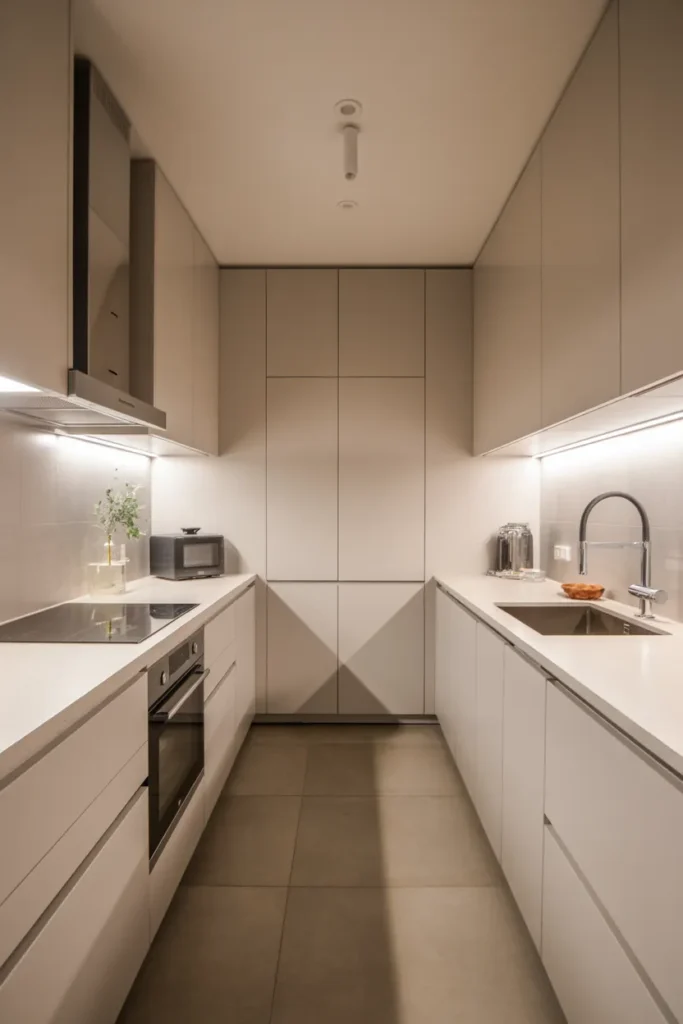
A galley kitchen with smart storage solutions proves that narrow can be mighty. Two parallel runs of cabinets put everything within a few steps, which makes cooking genuinely efficient. The challenge is storage and light, and both are solvable with the right choices.
Go vertical: In a galley, the walls are your best friends. Take cabinets to the ceiling, add a pot rail or magnetic knife strip, and use the full height. Open shelving on one side can keep a narrow galley from feeling like a tunnel, as long as you keep it styled and uncluttered.
Light every inch: Narrow kitchens get dark fast. Under-cabinet lighting on both runs, a bright backsplash, and the maximum ceiling light your space allows keep it cheerful. Light colors on cabinets and walls bounce what light you have.
- Take cabinets to the ceiling and use full wall height.
- Add under-cabinet lighting on both runs of the galley.
- Use open shelving on one side to avoid a tunnel feel.
Shop This Look
3. U-Shaped Kitchen for Maximum Efficiency
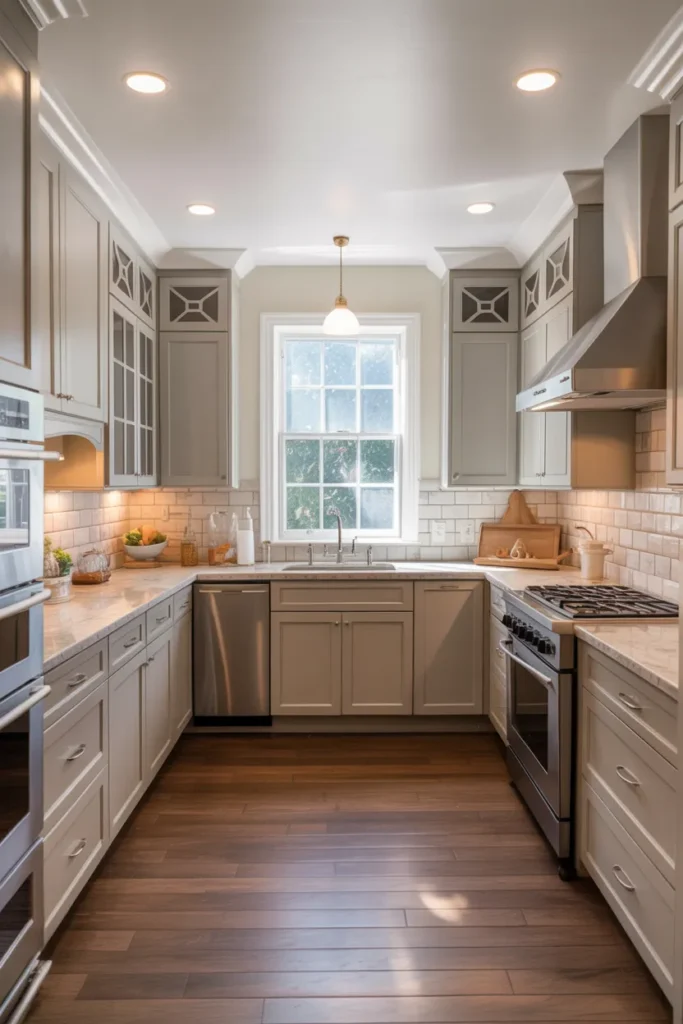
A U-shaped kitchen for maximum efficiency wraps three walls of cabinets around the cook. Everything is within reach, counter space is generous, and the layout naturally creates distinct zones for prep, cooking, and cleanup. For serious home cooks, it is hard to beat.
Mind the corners: Two corners in a U-shape can become dead space without the right hardware. Lazy Susans, LeMans shelves, or magic-corner pull-outs keep every inch usable. Plan these during the design phase, because retrofitting is harder.
Keep one side open: If the U feels closed in, leave one leg shorter or replace upper cabinets on one side with open shelving. That breathing room keeps the kitchen feeling open while preserving the efficiency of the three-wall layout.
- Fit corners with lazy Susans or pull-out hardware from the start.
- Shorten one leg of the U if the space feels closed in.
- Use open shelving on one wall to lighten the look.
Shop This Look
4. L-Shaped Kitchen with Breakfast Nook
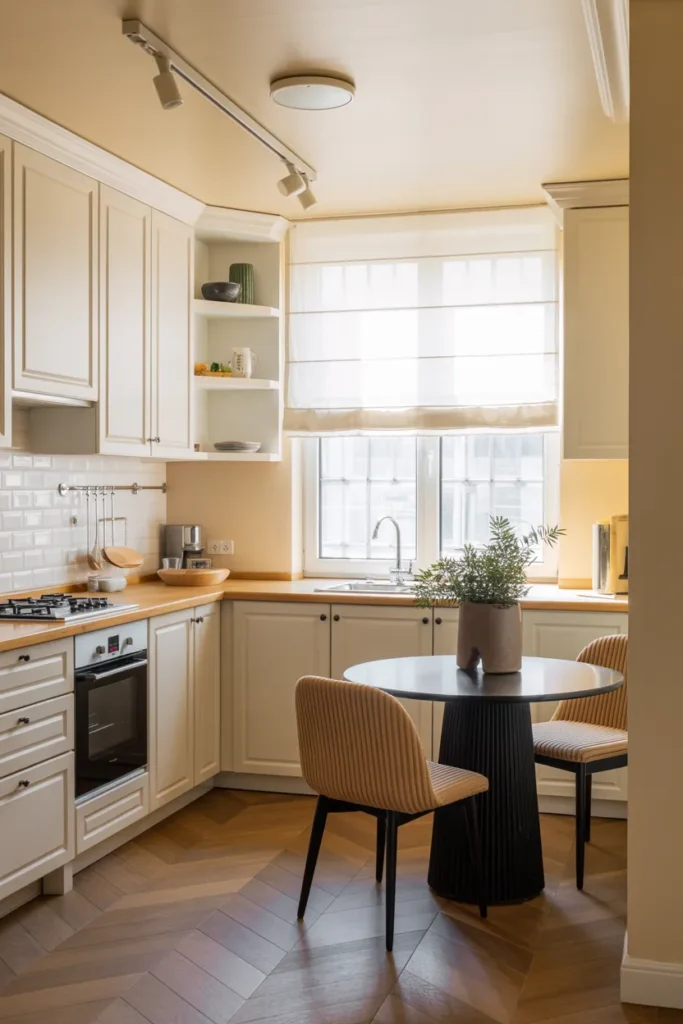
An L-shaped kitchen with a breakfast nook combines efficient cooking with a cozy eating spot. The L gives you the classic work triangle on two walls, and the open corner becomes a natural home for a small table or built-in banquette. It is a layout that works in both small and large homes.
Place the nook in the light: The breakfast corner is at its best near a window. Morning light makes it the happiest seat in the house. A banquette against the wall plus a small round table seats three or four without eating much floor space.
Keep traffic out: The nook should sit outside the main cooking path so diners are not in the cook’s way. If the L opens to the living room, the nook can bridge the two spaces. A pendant over the nook table marks it as its own little zone.
- Put the breakfast nook near a window for morning light.
- Keep the nook outside the main cooking traffic path.
- Use a banquette and round table to maximize corner seating.
Shop This Look
5. Island-Focused Layout with Statement Lighting
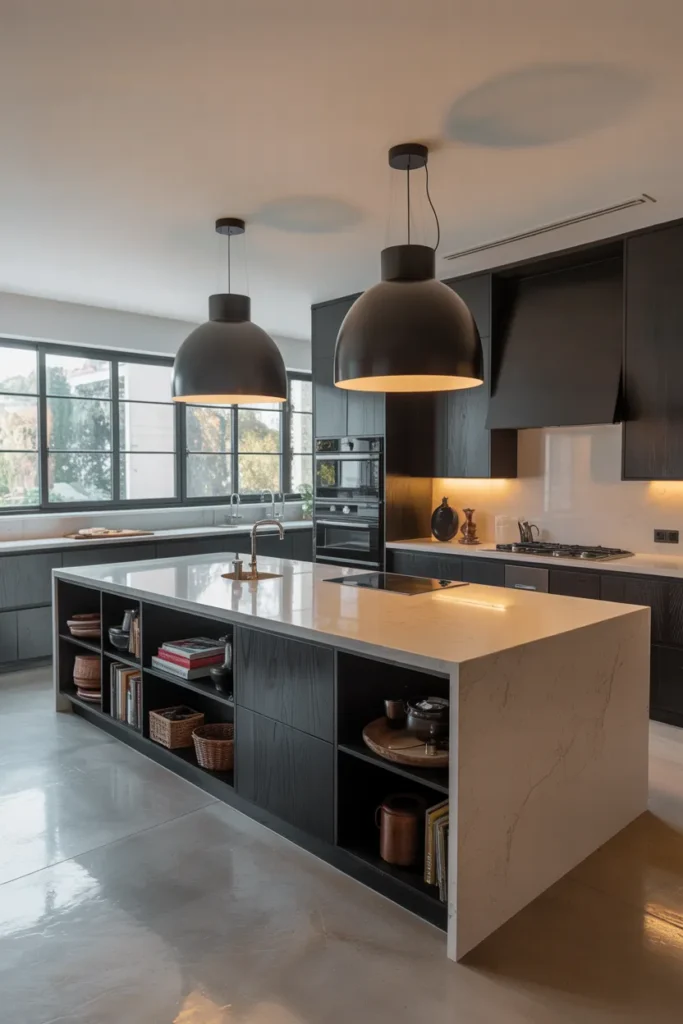
An island-focused layout with statement lighting makes the island the undeniable heart of the kitchen. The island is oversized, beautifully finished, and lit like a stage. Everything else in the kitchen plays a supporting role, which creates a clear hierarchy that feels calm and intentional.
Invest in the island: Since the island carries the design, spend your budget there: a waterfall countertop, furniture-grade cabinetry, or a distinctive finish. The perimeter can be simpler and quieter. This is where splurging shows the most.
Light it like art: Statement pendants, a dramatic linear fixture, or a cluster of sculptural lights turn the island into a focal point day and night. Put the island lighting on its own dimmer so you can set the mood separately from task lighting.
- Spend the design budget on the island; keep the perimeter simple.
- Choose waterfall edges or furniture-grade finishes for impact.
- Put island lighting on its own dimmer switch.
Shop This Look
6. Peninsula Kitchen for Extra Counter Space
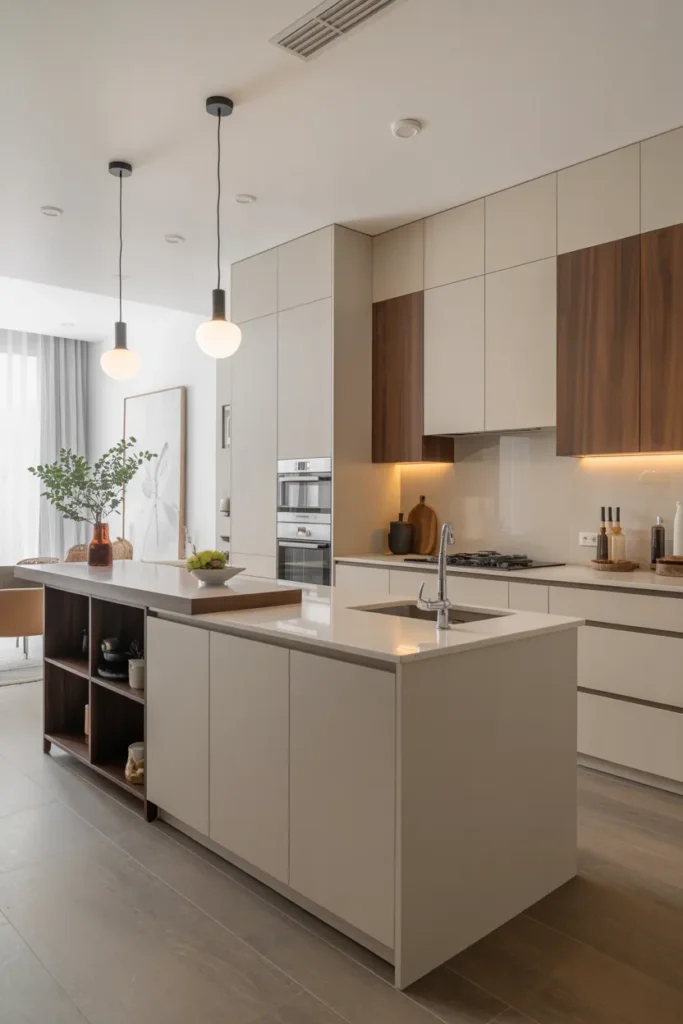
A peninsula kitchen for extra counter space gives you island benefits without needing island clearance. The peninsula attaches to the main counter at one end, creating a U-like work zone plus a casual eating spot. It is the right answer when the room is too narrow for a freestanding island.
Use the overhang: A 12 to 15 inch overhang on the outer side seats two or three on stools. That turns the peninsula into the breakfast bar, homework station, and party gathering point. Keep the overhang free of cabinets underneath so knees fit comfortably.
Define the end: The end of the peninsula is a natural focal point. A waterfall edge, a contrasting material, or a pair of great stools finishes it deliberately. Avoid letting it become a dumping ground; a small tray or bowl keeps daily items corralled.
- Allow a 12 to 15 inch overhang for comfortable stool seating.
- Keep knee space clear under the seating overhang.
- Finish the peninsula end with a waterfall edge or great stools.
Shop This Look
7. One-Wall Kitchen for Minimalist Homes
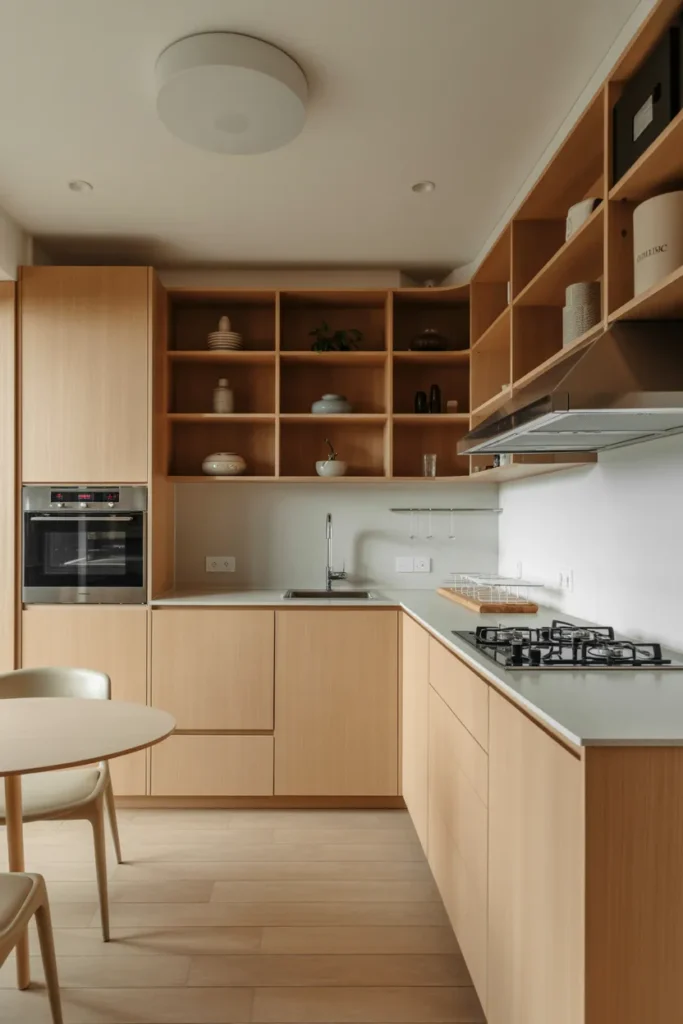
A one-wall kitchen for minimalist homes strips the kitchen down to a single run of cabinets. Everything lines up along one wall: sink, stove, fridge, and storage in one clean line. In studios and small apartments, this layout keeps the kitchen compact and the rest of the room free.
Order the run wisely: The classic sequence is fridge, sink, then stove, following the flow of food from storage to prep to cooking. Keep at least 24 inches of counter between each for landing space. A deep single-bowl sink maximizes the limited counter around it.
Hide what you can: One-wall kitchens are always visible, so integrated appliances and a simple backsplash keep the line clean. A tall pantry cabinet at one end adds storage without breaking the rhythm. Keep the counter as clear as daily life allows.
- Sequence the run as fridge, sink, then stove.
- Keep 24 inches of landing counter between each station.
- Use a tall pantry cabinet at one end for extra storage.
Shop This Look
8. Double Island Kitchen for Large Spaces
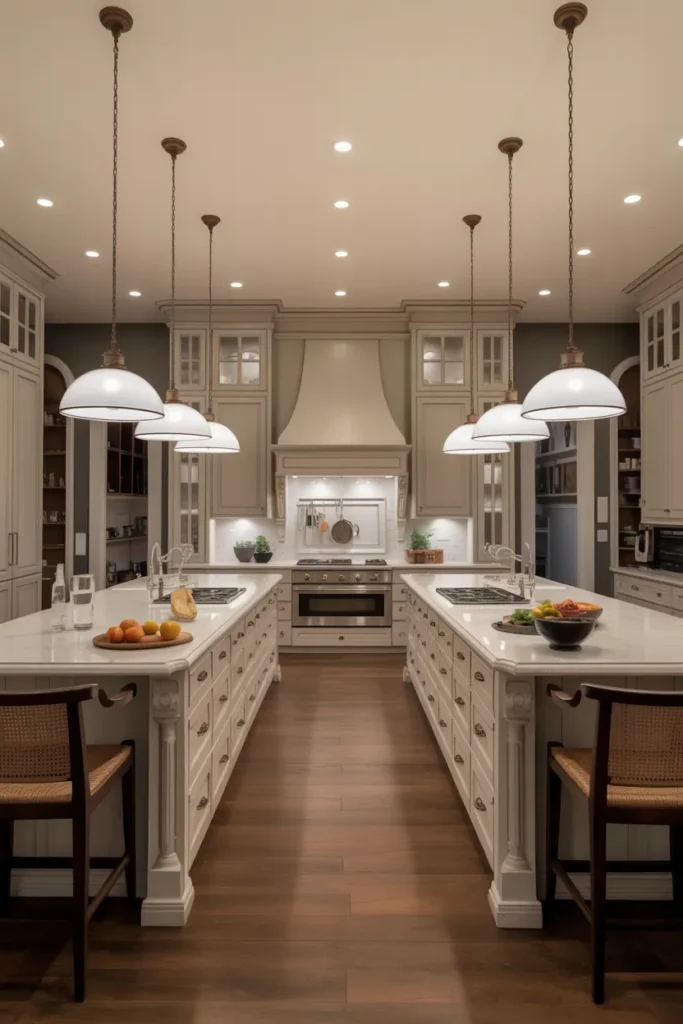
A double island kitchen for large spaces is the luxury layout for people who entertain and cook in groups. One island handles prep and cooking, the other handles serving and seating. Traffic flows around both, and two cooks can work without colliding. It is a professional-style setup for a home kitchen.
Separate the jobs: Give each island a clear role: a working island with the sink or cooktop, and a social island with seating and serving space. That division keeps guests out of the cooking zone while keeping them close to the action.
Light both equally: Each island needs its own lighting plan. Matching pendants over both create rhythm, or use statement fixtures on the social island and task lighting on the work island. Keep walkways between and around the islands at least 42 inches wide.
- Assign each island a role: working vs social.
- Keep 42 inch walkways between and around both islands.
- Give each island its own lighting plan and dimmer.
Shop This Look
9. Corner Kitchen with Diagonal Cabinet Design
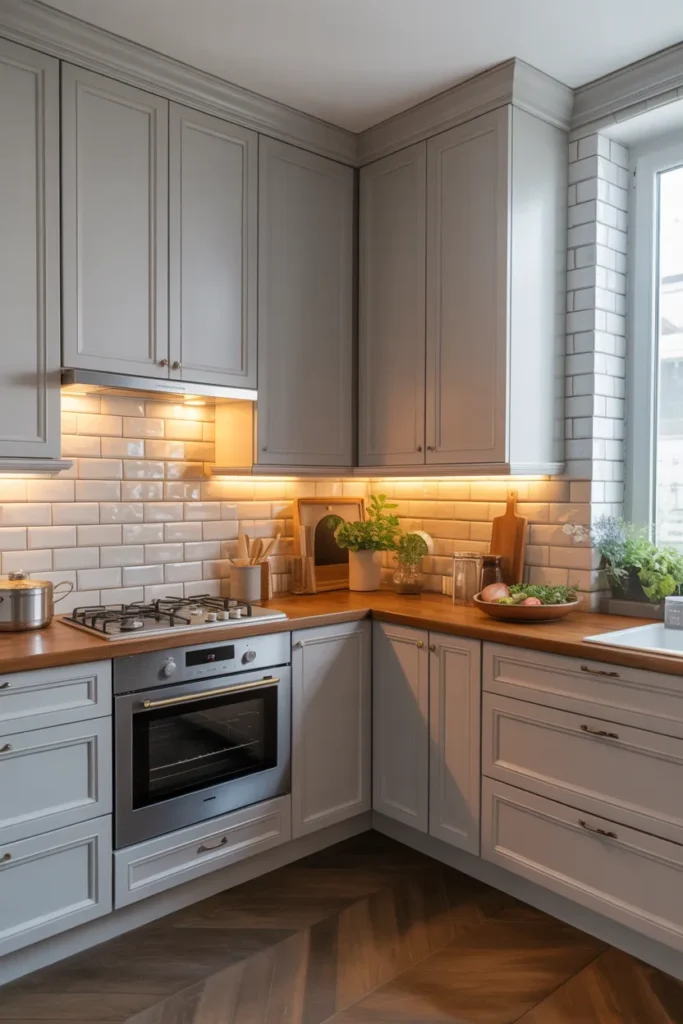
A corner kitchen with diagonal cabinet design softens the hardest-working corner in the room. Instead of a sharp 90-degree corner, a diagonal cabinet or angled sink base eases the transition between walls. The layout feels more open, traffic flows better, and the corner becomes usable instead of awkward.
Use the diagonal well: A diagonal corner cabinet with a lazy Susan inside turns the angle into prime storage. An angled sink under a corner window is another classic use. Keep the diagonal run short; one angled section is a feature, three is a funhouse.
Soften with lighting: Corners get dark, and diagonal corners are no exception. Under-cabinet lighting along both runs keeps the angle bright and welcoming. A light backsplash color through the corner prevents it from becoming a shadow trap.
- Fit diagonal corners with lazy Susan storage inside.
- Keep the diagonal section short: one angled run is enough.
- Light both runs to prevent dark shadow corners.
Shop This Look
10. Zoned Kitchen Layout with Distinct Work Areas
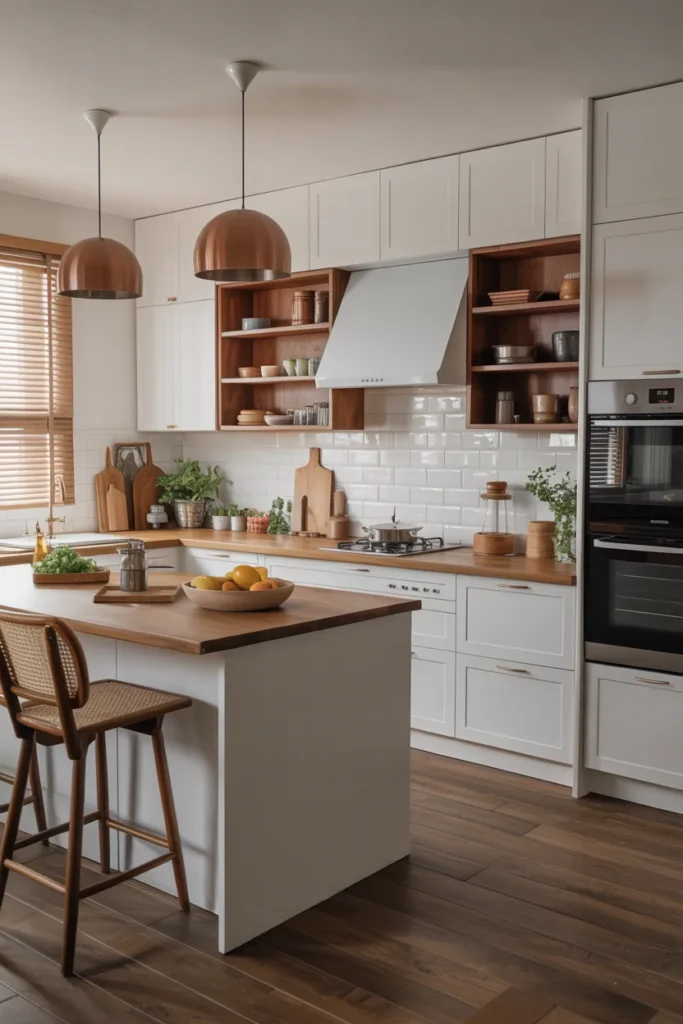
A zoned kitchen layout with distinct work areas treats the kitchen like a small professional workspace. Prep zone, cooking zone, baking zone, cleanup zone: each has its own counter, tools, and storage. Multiple people can work at once without getting in each other’s way.
Map your habits: Zones should match how you actually cook. If you bake weekly, the baking zone deserves real estate near the oven with flour, mixers, and sheet pans. If you mostly reheat, skip the elaborate zones and keep it simple. Honest habits beat aspirational ones.
Store at the point of use: The golden rule of zoning is that tools live where they are used. Knives and boards in the prep zone, pots near the stove, dish soap at the sink. When everything has a zone home, cleanup gets faster too.
- Design zones around your real cooking habits, not aspirations.
- Store every tool at its point of use.
- Give each zone its own landing counter space.
Shop This Look
11. Open Shelving Layout for Airy Appeal
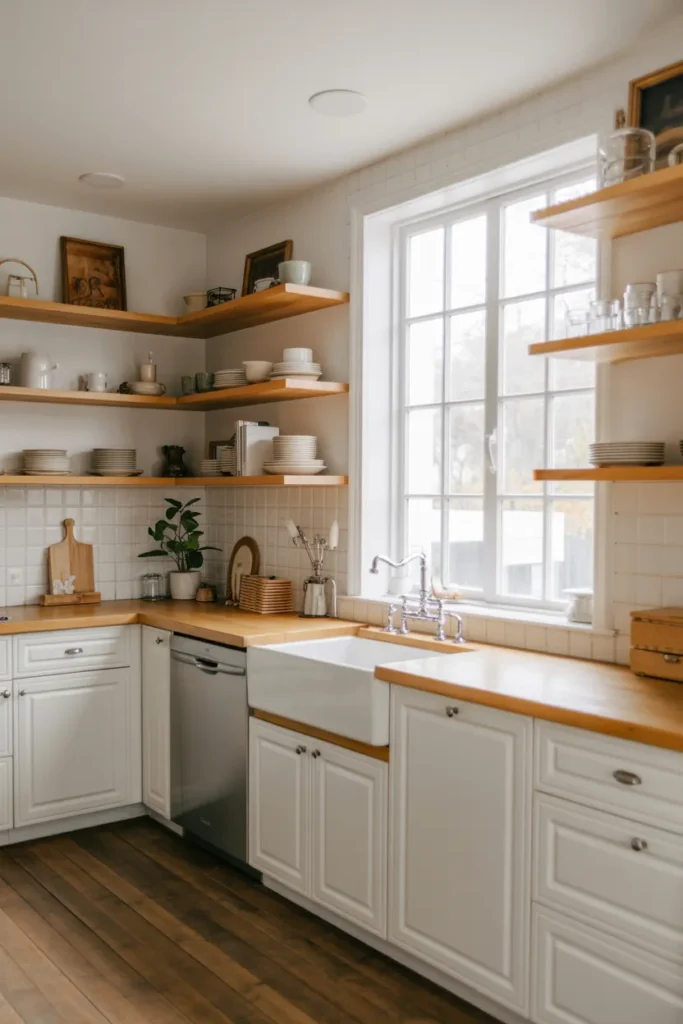
An open shelving layout for airy appeal replaces some or all upper cabinets with open shelves. The kitchen feels larger, brighter, and more personal, with dishes and glassware on display. It is the layout for people who love the look of a styled, lived-in kitchen.
Commit to the styling: Open shelves are a lifestyle choice as much as a design one. They need regular dusting and thoughtful arrangement. If that sounds like a chore rather than a joy, limit open shelves to one run and keep closed cabinets elsewhere.
Keep it practical: Put daily dishes on the lowest shelf at easy reach. Heavier items belong low; lighter decor goes high. Shelf brackets must anchor into studs, because loaded shelves are heavy. Leave breathing room between groups for the airy look to work.
- Limit open shelves to one run if full styling feels like a chore.
- Anchor heavy shelf brackets into wall studs.
- Keep daily dishes low and leave breathing room between groups.
Shop This Look
12. G-Shaped Kitchen for Extra Storage
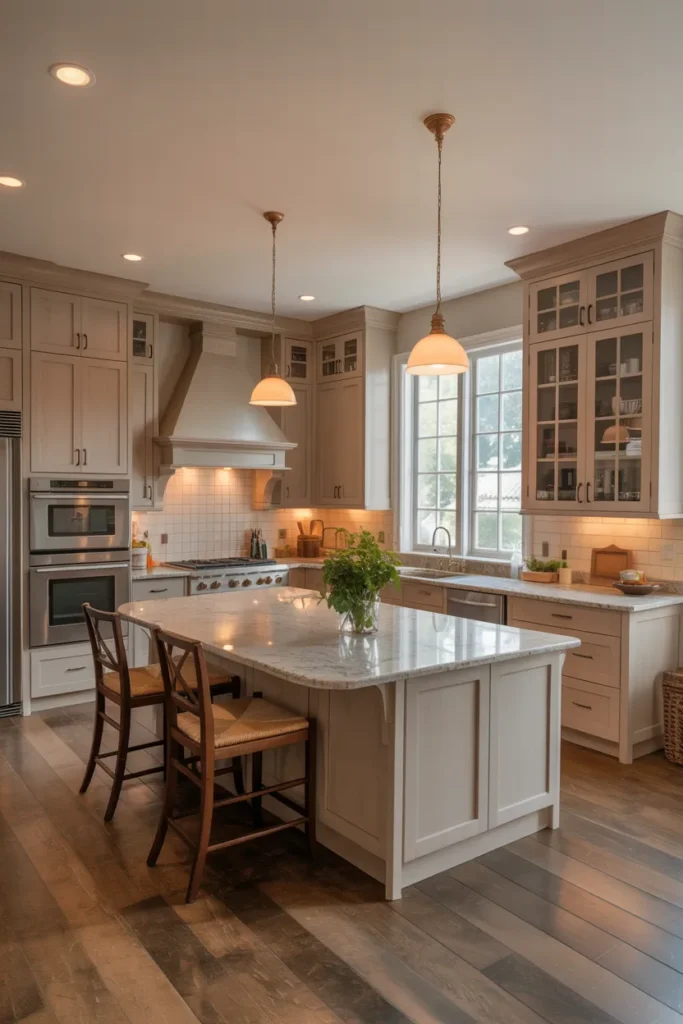
A G-shaped kitchen for extra storage adds a fourth leg to the U, creating a peninsula-like extension with even more counter and cabinet space. It is the maximum-storage layout for cooks who need every inch: more prep area, more seating, and more places to put things.
Watch the entrance: The fourth leg can trap the cook inside the G, so make sure the opening is generous, at least 36 inches. In smaller kitchens, a G-shape can feel closed in; it works best in medium to large spaces where the extra leg does not block flow.
Use the peninsula end: The end of the fourth leg is prime seating real estate. An overhang with two or three stools turns it into a casual dining spot. Keep the walkway past the stools clear so the kitchen stays navigable during parties.
- Keep the G opening at least 36 inches wide.
- Best for medium to large kitchens, not tiny ones.
- Add a seating overhang at the peninsula end.
Shop This Look
13. Kitchen with Integrated Dining Island
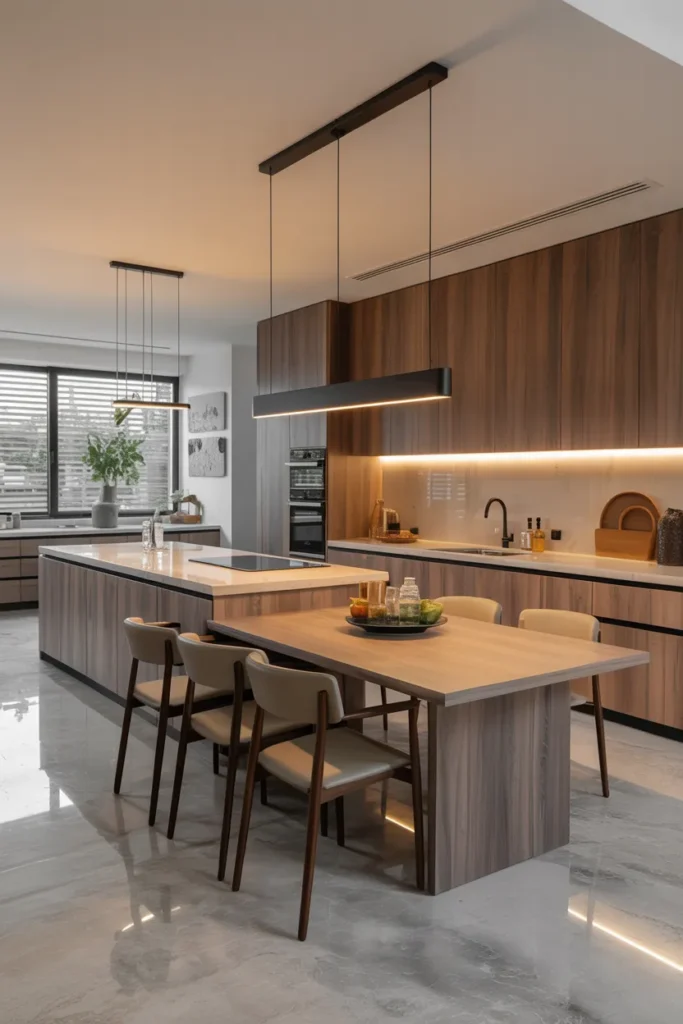
A kitchen with an integrated dining island merges eating and cooking into one piece of furniture. The island extends to dining height at one end, or a table-height section attaches seamlessly. Family meals happen right where the food is made, which suits busy households perfectly.
Handle the height change: The transition from 36-inch counter to 30-inch table needs a clean design solution: a stepped section, a waterfall drop, or a butcher-block table leaf. Make the joint look intentional, because a clumsy transition cheapens the whole piece.
Seat the ends: Dining-height sections work best at the end of the island, where diners face into the kitchen without blocking the work aisle. Allow 24 inches of width per person and keep the cook’s side clear. Pendant lights over the dining section mark it as the eating zone.
- Design a clean transition between counter and table heights.
- Seat diners at the island end, facing into the kitchen.
- Allow 24 inches of width per diner.
Shop This Look
14. Split-Level Kitchen Layout
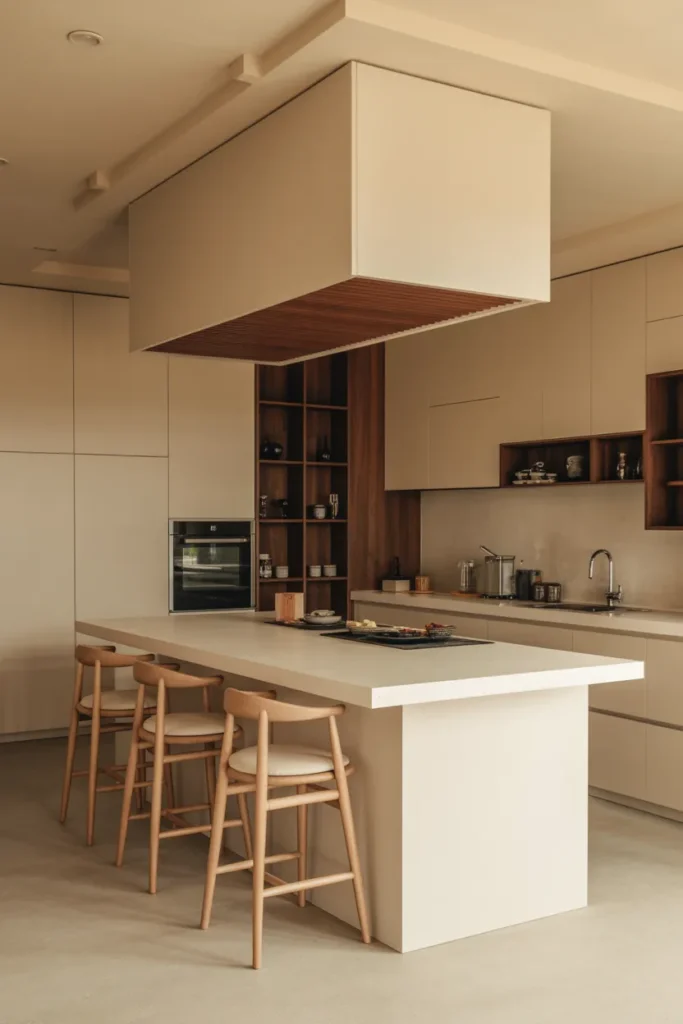
A split-level kitchen layout uses a step or two to separate cooking from dining or living areas. Common in older homes and split-level houses, it creates natural zoning without walls. The change in floor height defines the kitchen as its own space while keeping everything visually connected.
Light the step: Any change in floor level needs clear lighting and a visible edge for safety. Stair nosing strips or LED step lights mark the transition. Keep the step area clear of clutter, rugs that slide, and anything that could trip a guest carrying a hot dish.
Use the levels: The height difference is a design feature. A raised dining area overlooks the kitchen like a mezzanine; a sunken kitchen feels cozy and tucked in. Work with the level change rather than fighting it.
- Mark floor level changes with lighting or nosing strips.
- Keep step areas clear of clutter and sliding rugs.
- Treat the level change as a zoning feature, not a flaw.
Shop This Look
15. Window-Focused Kitchen Layout
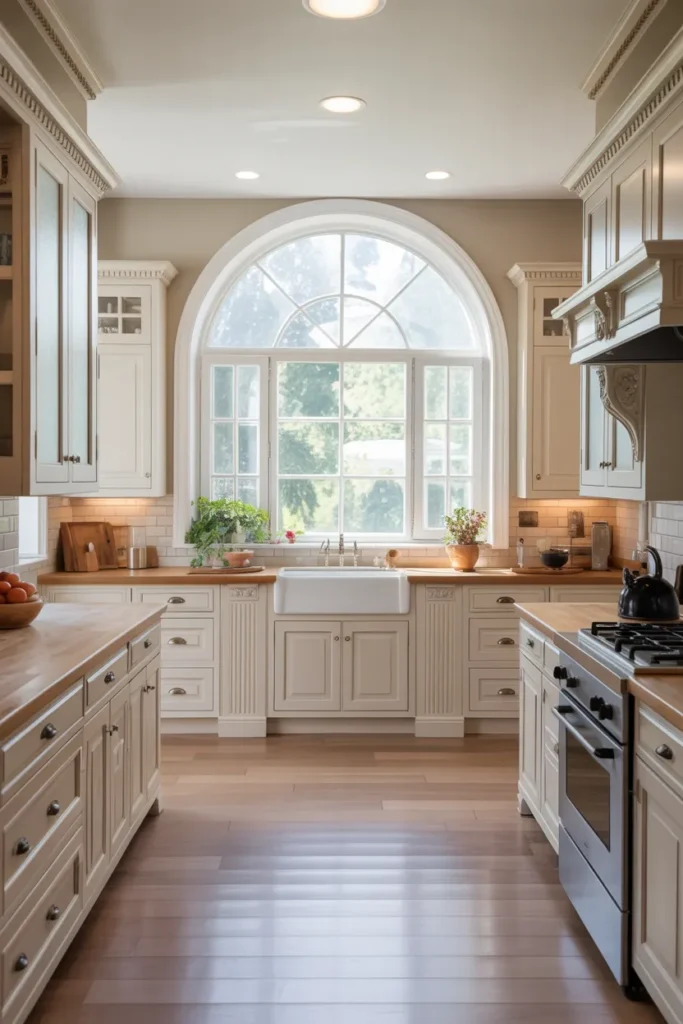
A window-focused kitchen layout puts the best view in the house above the sink. Washing dishes becomes almost pleasant when you are looking at a garden, a skyline, or just good daylight. This layout orients the whole kitchen around natural light and the outdoors.
Keep the window clear: Resist covering a kitchen window with heavy treatments. A simple roller shade or cafe curtain gives privacy without blocking light. Keep the sill clear of clutter so the view stays the star; one small plant is plenty.
Plan around the plumbing: A sink under the window fixes the plumbing location early, so plan the rest of the layout outward from there. Dishwasher beside the sink, dish storage within a step or two. The window wall becomes the cleanup zone by default.
- Keep window treatments minimal to protect the light and view.
- Plan the layout outward from the window sink location.
- Place the dishwasher and dish storage near the sink.
Shop This Look
16. Parallel Kitchen with Central Walkway
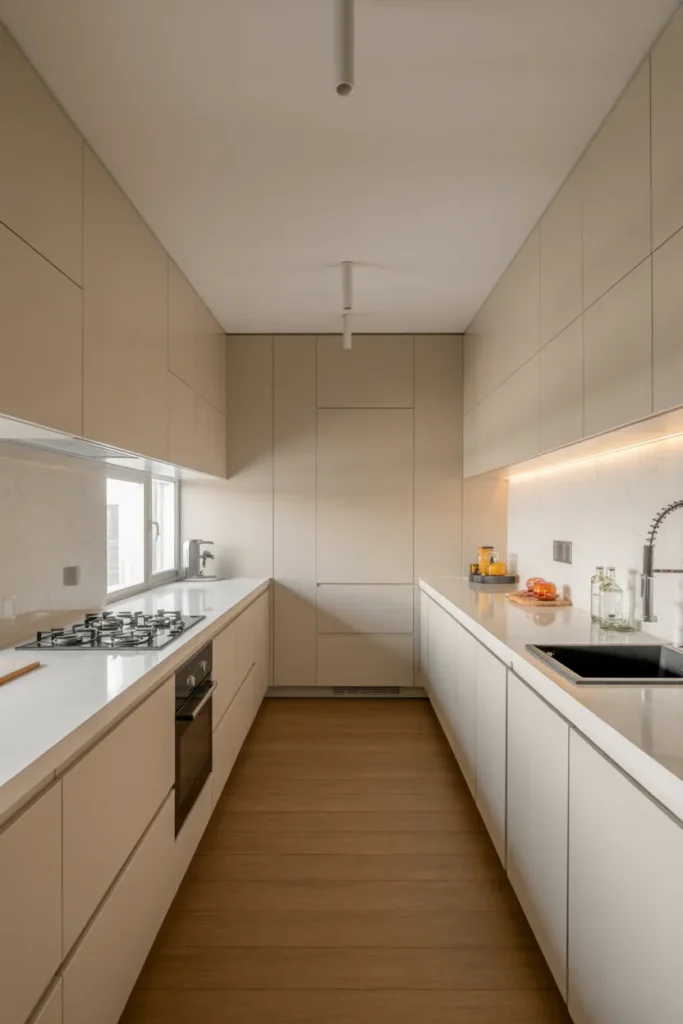
A parallel kitchen with a central walkway is the galley grown up: two full runs of counters with a generous aisle between them. It keeps the galley’s efficiency but adds enough width for two cooks, an island cart, or simply comfortable movement. It is a workhorse layout that suits serious cooking.
Size the aisle right: The walkway needs 42 to 48 inches for comfortable two-way traffic and open appliance doors. Less than 42 feels cramped; more than 48 starts to waste steps. Measure with appliances and drawers open, not just the empty room.
Break the tunnel: Long parallel runs can feel like a corridor. A window at the end, a contrasting backsplash, or open shelving on one side breaks the tunnel effect. Good lighting down the full length keeps it bright and welcoming.
- Keep the central aisle 42 to 48 inches wide.
- Measure with appliance doors and drawers open.
- Add a window, contrast backsplash, or open shelves to break the corridor feel.
Shop This Look
17. Kitchen with Hidden Pantry Wall
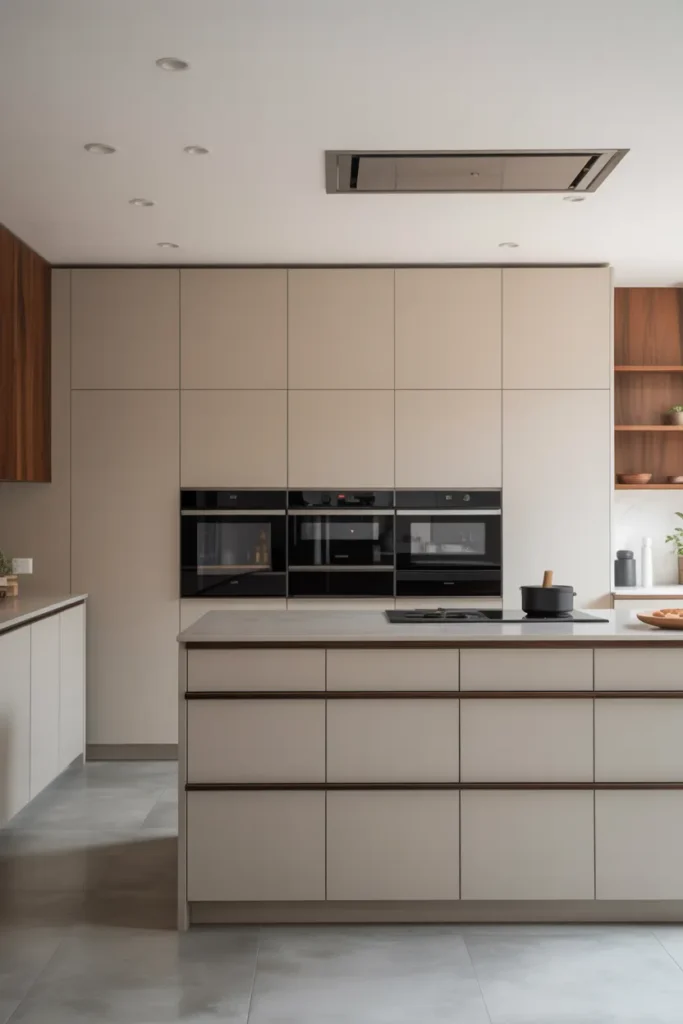
A kitchen with a hidden pantry wall looks like a clean run of cabinetry until you open it. Behind full-height doors hides a complete pantry: shelves, drawers, and counter space for small appliances. The kitchen stays visually calm while swallowing an enormous amount of storage.
Plan the interior first: The magic is inside, so design the pantry interior before the doors. Counter-height shelf for the coffee maker and toaster, outlets inside the cabinet, deep drawers below for bulk goods. Pocket or bifold doors keep the open pantry from blocking the aisle.
Match the exterior: The pantry doors should match the surrounding cabinetry exactly so the wall reads as one unit. Same door style, same finish, same hardware. The reveal, that someone opens a cabinet and finds a pantry, is half the fun.
- Design the pantry interior before choosing the doors.
- Add outlets and a counter shelf inside for small appliances.
- Match pantry doors exactly to surrounding cabinetry.
Shop This Look
18. Compact Kitchen with Tall Vertical Cabinets
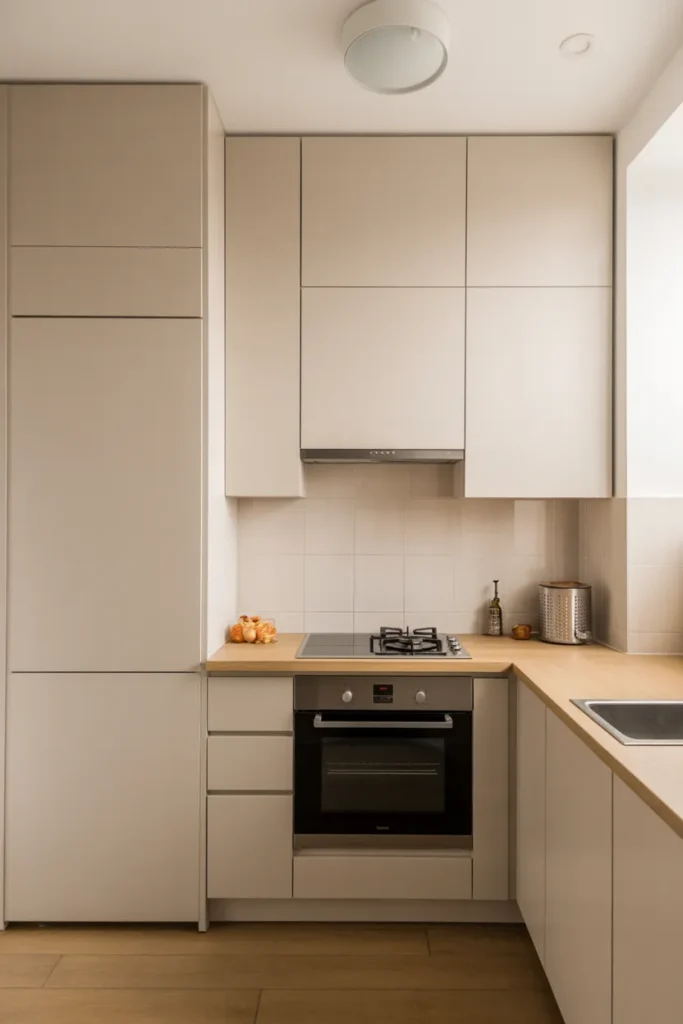
A compact kitchen with tall vertical cabinets makes a small footprint work overtime. Full-height cabinets on one wall provide the storage of a much larger kitchen: pantry, broom closet, and dish storage stacked vertically. In tiny kitchens, going up is the only way to go.
Zone by height: Daily items at counter and eye level, occasional items up high, heavy items down low. A folding step stool lives nearby for the top shelves. Pull-out shelves inside the tall units keep deep storage accessible.
Keep it light: A full wall of tall cabinets can loom, so choose light finishes and simple door fronts. One open niche or glass-front section breaks up the mass. Good lighting, especially under any wall cabinets, keeps the tall run from feeling like a fortress.
- Store daily items at counter height, occasional items up high.
- Use pull-out shelves inside tall units for accessibility.
- Choose light finishes and add one open niche to break the mass.
Shop This Look
19. Kitchen with Separate Prep and Cooking Zones
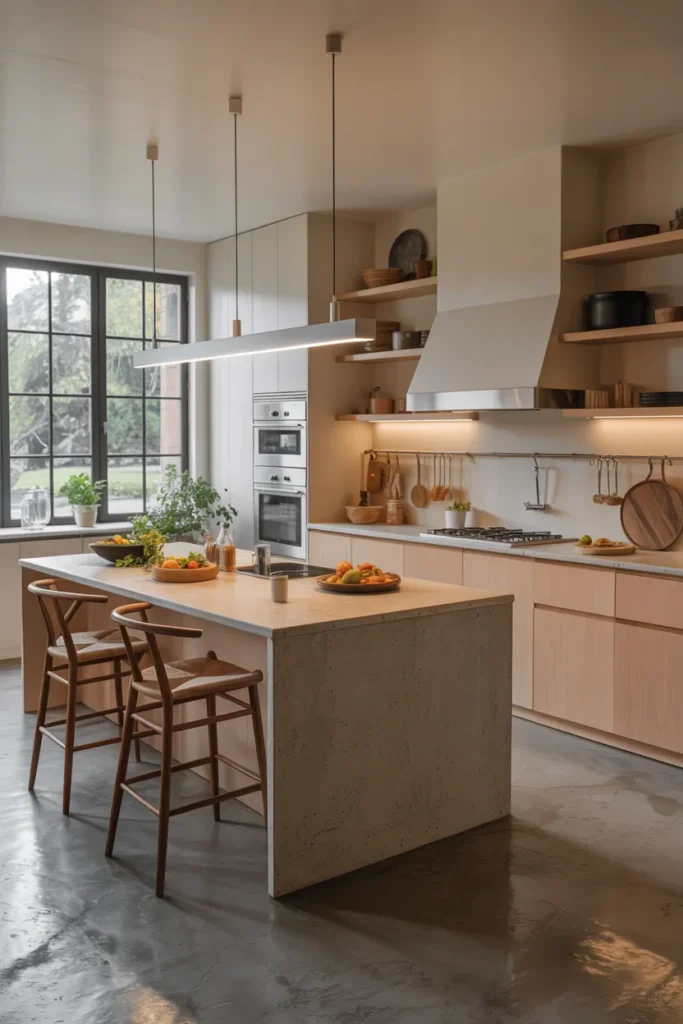
A kitchen with separate prep and cooking zones keeps the mess of chopping away from the heat of the stove. One counter handles washing and cutting, another handles cooking and plating. Two people can work simultaneously without elbowing each other, which changes the feel of cooking together.
Place them adjacently: Prep and cooking zones should be near each other but distinct: a few steps apart, not across the room. The classic arrangement is sink and prep counter on one side, range and landing counter on the other. A clear handoff point between them keeps the flow smooth.
Duplicate the basics: Each zone needs its own tools: knives and boards at prep, utensils and oils at cooking. A small trash or compost bin in the prep zone saves endless trips. Shared items like salt live at the boundary between the two.
- Keep prep and cooking zones a few steps apart, not across the room.
- Give each zone its own dedicated tools.
- Put a small trash bin in the prep zone.
Shop This Look
20. Modern Kitchen with Curved Island Design
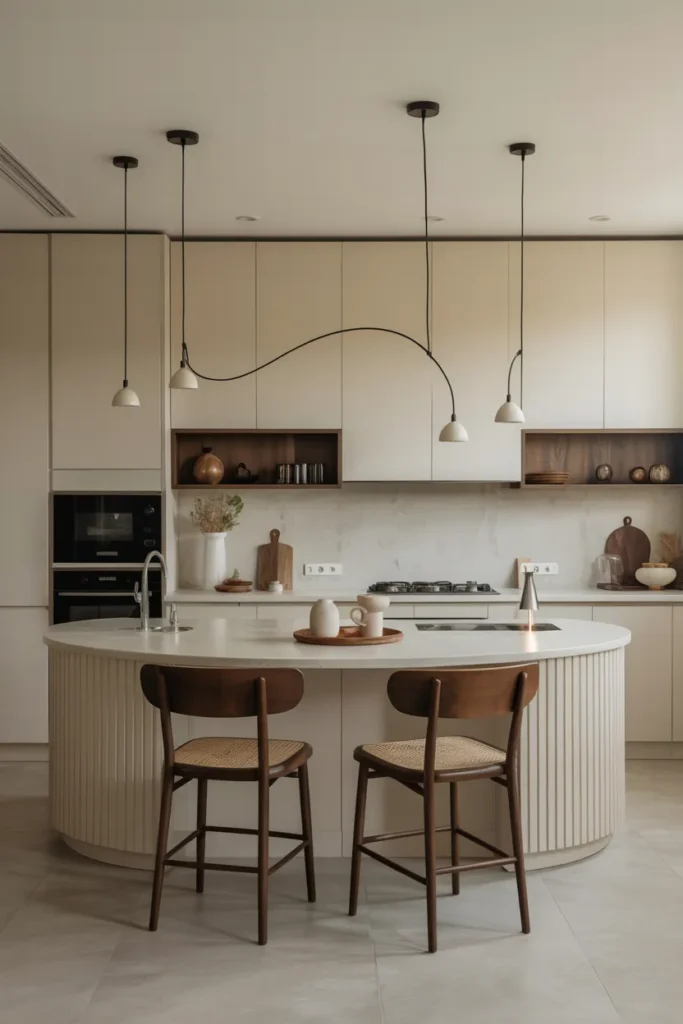
A modern kitchen with a curved island design softens the hardest edges in the room. A curved or rounded island end improves traffic flow, eliminates sharp corners, and adds a sculptural quality that rectangular islands cannot match. It is a small change with an outsized effect on how the kitchen feels.
Mind the curve cost: Curved cabinetry and countertops cost more than straight runs, so use the curve strategically: one curved end on an otherwise rectangular island gives you most of the benefit. Get quotes early so the curve does not blow the budget by surprise.
Let traffic flow: The real payoff of a curved island is circulation. Rounded ends let people move around the island naturally, which matters in open-concept kitchens where the island sits in a traffic path. Stools tuck neatly around a curve too.
- Use one curved end on a rectangular island for best value.
- Get countertop quotes early; curves cost more.
- Place curved islands where traffic flows around them.
Shop This Look
21. Kitchen with Dedicated Coffee Station
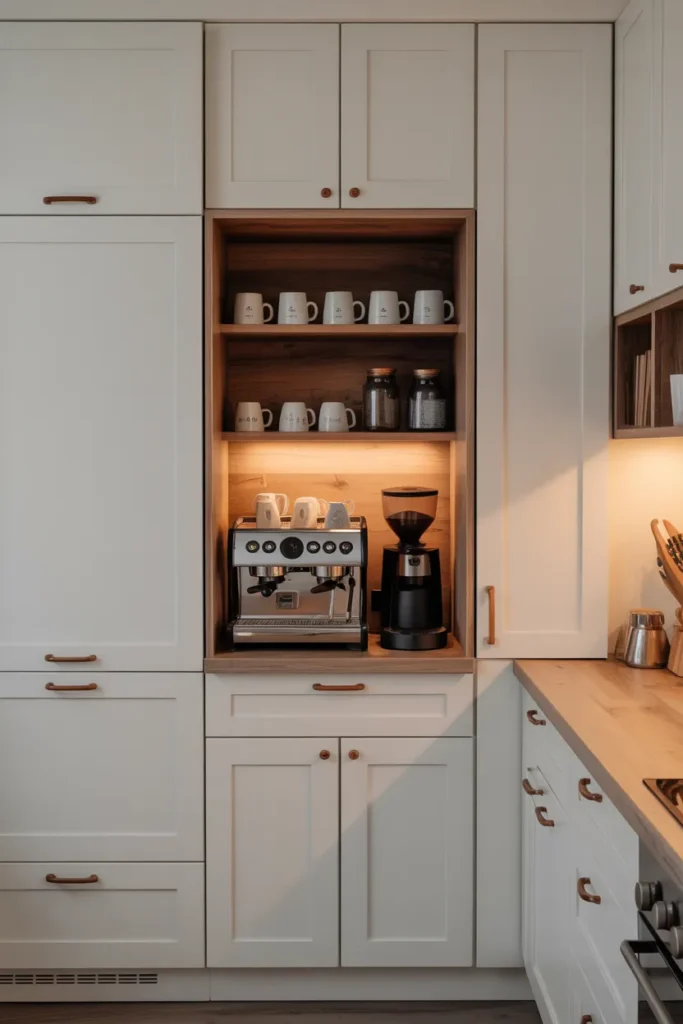
A kitchen with a dedicated coffee station keeps the morning ritual contained and calm. A section of counter, or a cabinet with an appliance garage, holds the coffee maker, grinder, mugs, and beans. Mornings run on autopilot, and the main counters stay clear of the daily coffee clutter.
Give it water and power: The perfect coffee station sits near the sink for easy water fills and cleanup, with enough outlets for the maker and grinder. An appliance garage with a lift-up door hides everything when the ritual is done.
Stock it completely: A coffee station only works if everything lives there: beans, filters, mugs, spoons, sugar. The moment you have to cross the kitchen for a mug, the station has failed. A small tray corrals the daily items beautifully.
- Place the station near the sink for water and cleanup.
- Provide enough outlets for maker, grinder, and extras.
- Stock every supply at the station so nothing requires a trip.
Shop This Look
22. Two-Tone Cabinet Kitchen Layout
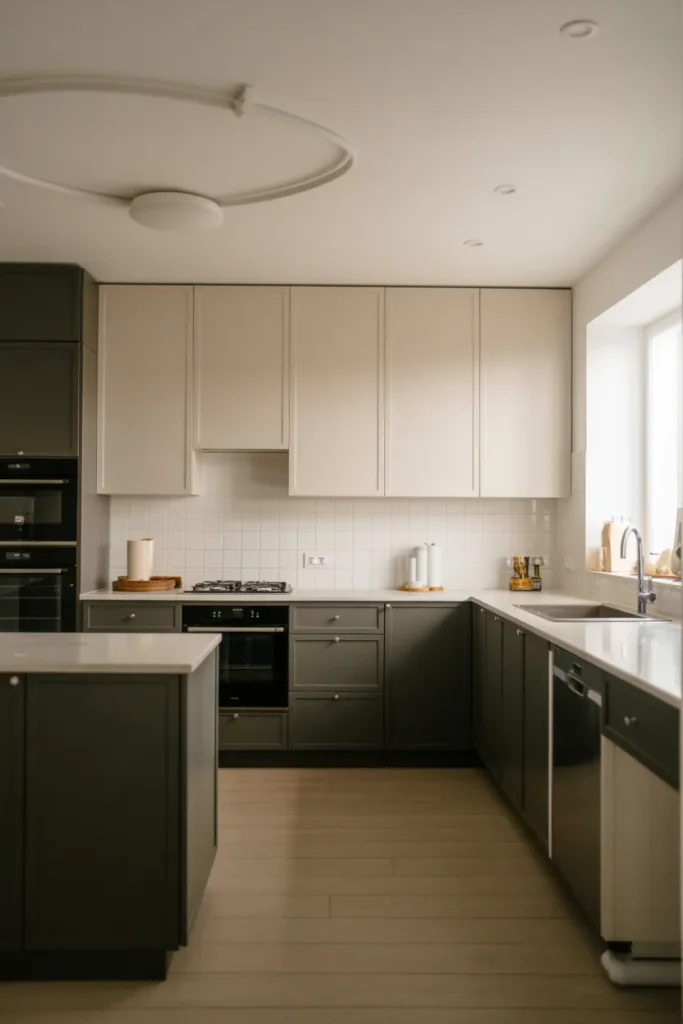
A two-tone cabinet kitchen layout uses color to define the zones of the room. Dark lowers with light uppers, a colored island against neutral perimeter cabinets, or wood tones mixed with paint. The color split adds depth and helps the eye read the kitchen’s organization at a glance.
Let color mark function: The most successful two-tone kitchens use color with purpose: the island in the accent color marks the social zone, or the cooking wall in a deeper tone marks the work zone. Random color placement looks indecisive; purposeful placement looks designed.
Unify with consistency: When cabinets are two colors, keep everything else consistent: one hardware finish, one countertop material, one backsplash. That restraint lets the two-tone scheme shine without competition.
- Use color purposefully to mark zones, not randomly.
- Keep hardware, counters, and backsplash consistent.
- Put the darker tone low and lighter tone high for balance.
Shop This Look
23. Kitchen with Built-In Banquette Seating
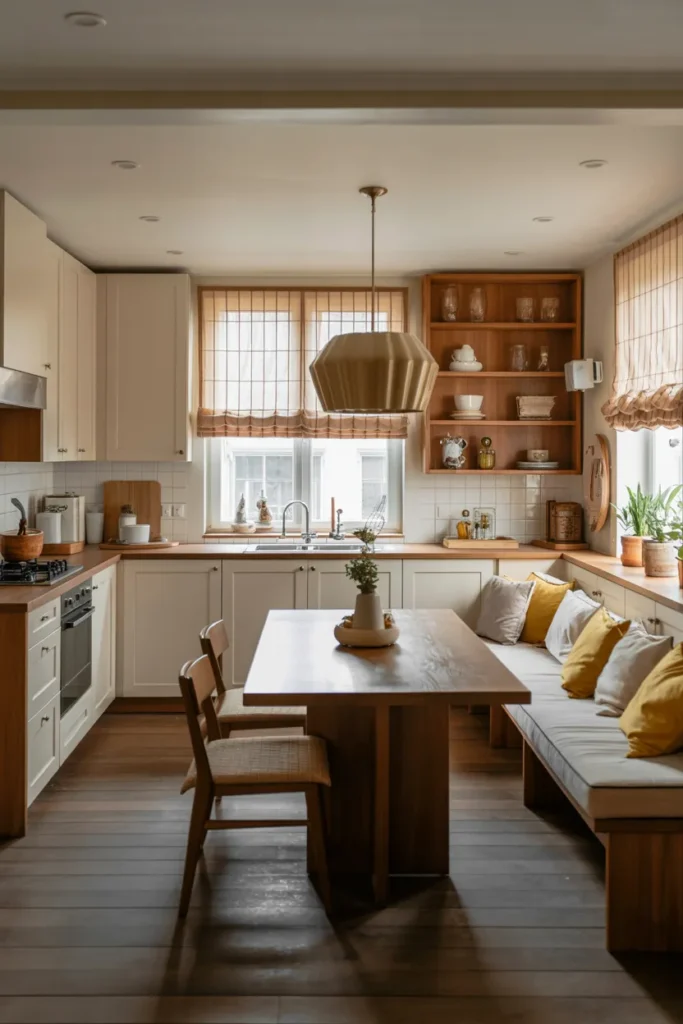
A kitchen with built-in banquette seating borrows the coziness of a restaurant booth. A bench built against the wall, paired with a table and chairs, creates a dining spot that feels tucked in and intentional. It seats more people in less space than freestanding chairs ever could.
Build it to fit: The banquette depth should be 18 to 20 inches for comfortable sitting, with the tabletop overlapping the bench slightly. A pedestal table base avoids leg collisions. Storage inside the bench base, through a hinged top or drawers, makes it work twice as hard.
Make it the morning spot: Banquettes near windows become the default coffee and homework station. A pendant over the table, washable cushions, and a view make it the seat everyone fights over. Plan for that popularity with durable, easy-clean fabrics.
- Build benches 18 to 20 inches deep for real comfort.
- Use a pedestal table to avoid leg collisions.
- Choose washable, durable fabrics for the cushions.
Shop This Look
24. Symmetrical Kitchen Layout with Center Focus
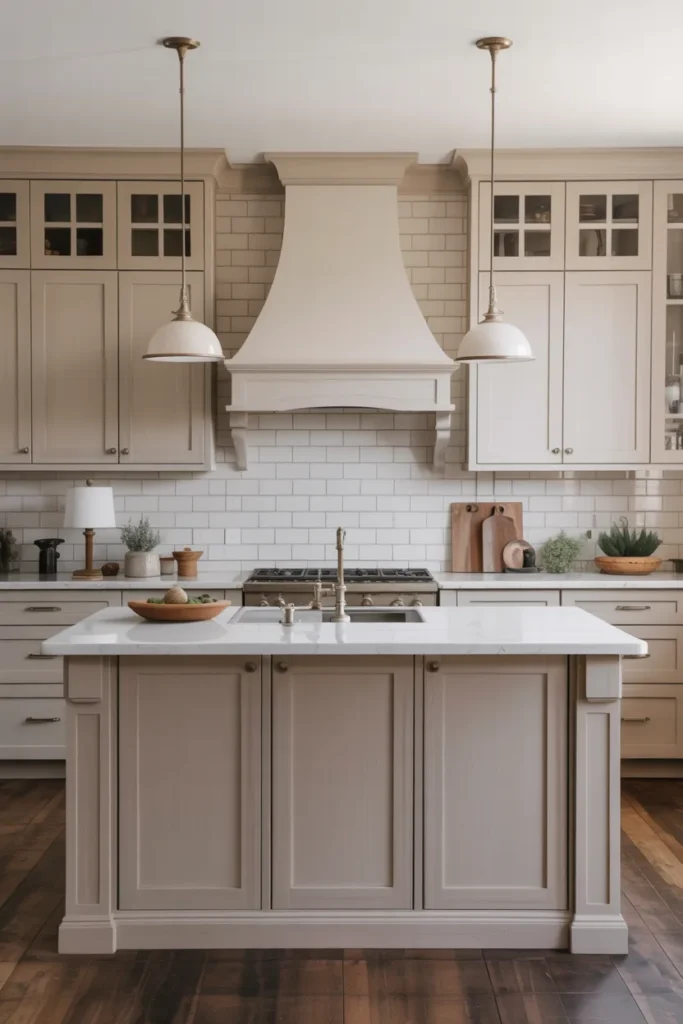
A symmetrical kitchen layout with center focus brings a sense of order that feels deeply calming. Range centered on the wall, matching cabinets on each side, a centered island with paired pendants. The mirror-image balance makes even a busy kitchen feel composed and intentional.
Center the hero: The range or range hood is the natural centerpiece; build the symmetry around it. Flanking windows, matching cabinet runs, and paired lighting reinforce the balance. The island centers on the range for a strong axis through the room.
Allow small breaks: Perfect symmetry can feel stiff, so let small things be imperfect: a plant on one side, cookbooks on the other. The architecture stays balanced while the styling stays human. Symmetry in the big moves, personality in the details.
- Center the range and build cabinet symmetry around it.
- Align the island on the same central axis.
- Keep architecture symmetrical but let styling be relaxed.
Shop This Look
How to Start
Start by studying how you move through your current kitchen. Notice where you get stuck, where you backtrack, and where things pile up. The classic work triangle of sink, stove, and fridge still matters, but your personal habits matter more. Design around your real routines, not an idealized version of cooking.
Next, match the layout to your space and your life. Measure carefully, including door swings, window positions, and where plumbing already runs. Choose the layout shape that fits the room: galley for narrow, L or U for corners, island for open space. Moving plumbing is possible but expensive, so work with it when you can.
Finally, plan storage and lighting before you fall in love with finishes. A beautiful kitchen with bad storage is a daily frustration. Sketch where everything will live, plan lighting for each zone, and only then choose colors and hardware. Function first, beauty layered on top.
- Track your movement for a week and design around real habits.
- Choose the layout shape that fits your room and existing plumbing.
- Plan storage locations and zone lighting before picking finishes.
Shop This Look
Common Mistakes
- Designing around a pretty photo instead of your actual cooking habits.
- Leaving less than 36 inches of clearance where two people need to pass.
- Placing the fridge far from the prep zone so every meal starts with laps.
- Forgetting landing space next to the stove, sink, and fridge for hot and heavy items.
- Skipping task lighting and relying on one ceiling fixture for the whole kitchen.
- Putting the dishwasher where its open door blocks the main walkway.
- Choosing the island size before checking that appliance and cabinet doors can still open.
Frequently Asked Questions
What is the most efficient kitchen layout?
The U-shaped kitchen is usually the most efficient for a dedicated cook: three walls of counter keep everything within reach. For narrow spaces, the galley is unbeatable for efficiency. The best layout is the one that shortens your personal work triangle of sink, stove, and fridge.
How much clearance do I need around a kitchen island?
Allow 36 inches minimum on all sides, and 42 to 48 inches where two people pass or appliance doors open. Measure with the dishwasher and oven doors open, not just the empty floor. Tight clearances turn a beautiful island into a daily obstacle.
Can I have an island in a small kitchen?
Sometimes. You need at least 36 inches of clearance on every side of the island, which means the room must be wide enough for the island plus 72 inches. If the math does not work, a peninsula gives you most of the benefits in less space.
Should the sink or stove go in the island?
It depends on your priorities. A sink in the island faces the room while you work, which is great for families. A cooktop in the island needs serious ventilation and keeps hot pans in the traffic zone. Many designers prefer keeping the island clear as pure prep and seating space. For how the rest of the home flows around the kitchen, see these house interior design ideas.
How do I plan kitchen zones?
Start with your habits: list what you cook and how often. Give each frequent activity a zone with its own counter space and tools stored at the point of use. Keep zones adjacent but distinct, and make sure each has landing space. Fewer, well-planned zones beat many cramped ones.
The Finishing Touch
Kitchen layout is the invisible architecture of daily life. Get it right and cooking feels effortless; get it wrong and no amount of pretty finishes can fix it. The 24 ideas above cover every common space and style, from compact one-wall kitchens to grand double islands. Find the shape that matches your room and your habits, and build from there.
Remember the order that prevents regret: layout first, then storage and lighting, then finishes and hardware. Measure everything twice, plan for how you actually live, and leave enough clearance for real life with its open dishwasher doors and busy mornings. A kitchen designed for your routines will serve you for decades.
For detailed layout guides, real kitchen floor plans, and designer Q&As, browse the kitchen design section on Houzz, where you can see how these layouts work in real homes. Then grab your tape measure, sketch your space, and start planning the kitchen you will love to cook in.