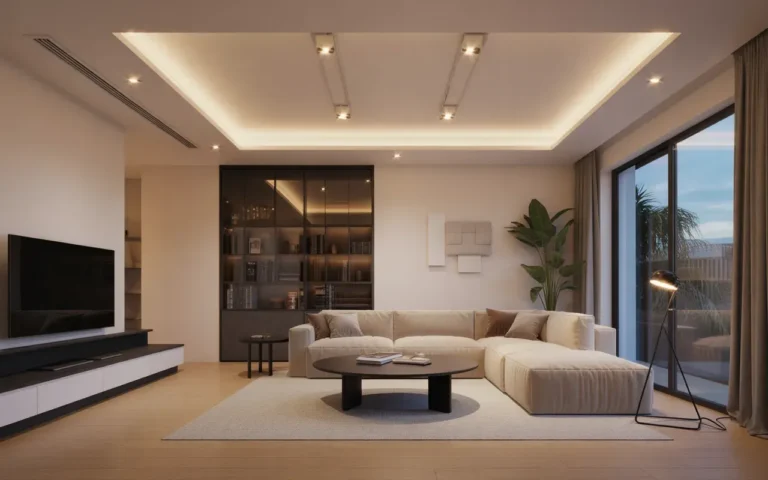
24 Minimalist Living Room Ideas Clean Modern Style
If you want a living room that feels calm the moment you walk in, minimalism is worth trying. This post contains affiliate links. If you buy through them, I may earn a small commission at no extra cost to you. These 24 ideas show how to build that calm without making the room feel empty or cold.
The trick is restraint with warmth. Pale neutrals, natural materials, and a few honest textures do all the work. Nothing here requires a renovation. Most ideas cost little and change the room fast.
Budget-wise, expect $30 to $300 per idea. Textiles and lighting sit at the low end. Rugs and furniture sit at the high end. Start with one change and live with it before adding more.
Work through the list in order or jump to the idea that fits your room. Each section ends with a short shopping list. Pick the idea that fixes your biggest complaint first.
1. Minimalist Living Room with Neutral Palette

A neutral palette is the backbone of minimalist design. White, ivory, warm beige, and soft gray give the room a calm base that never feels busy. These tones reflect light, which makes even a small living room feel open. Stick to two or three neutrals so the room reads as one quiet composition.
Limit the palette: Keep the palette to three tones max. Choose one light tone for walls, one mid tone for upholstery, and one slightly darker tone for accents. When every piece sits inside the same family, nothing fights for attention.
Warm it up: Neutrals can feel cold if they lean too gray. Choose warm undertones like creamy white or greige instead of stark blue-gray. One warm throw or a natural wood tray is enough to keep the room welcoming.
- Test paint swatches in daylight before committing, undertones shift a lot.
- Repeat each tone at least twice across the room so the palette looks planned.
- Keep window coverings in the same tone family as the walls.
Shop This Look
2. Minimalist Living Room with Open Space

Open space is the real luxury in a minimalist living room. Resist the urge to fill every corner. Leave clear floor area around the main seating so the room can breathe. The eye needs empty space to rest.
Edit the furniture: Keep only the pieces you use daily. A sofa, one chair, and a coffee table are often enough. Anything extra should earn its place by serving a clear purpose.
Protect the walkways: Leave at least 30 inches for main walkways. Push nothing into the path between the door and the seating. Clear routes make a small room feel twice as large.
- Remove one piece of furniture this week and live without it before deciding.
- Keep floor visible around the rug edges instead of covering wall to wall.
- If two pieces serve the same job, keep the smaller one.
Shop This Look
3. Minimalist Living Room with Statement Lighting

One strong light fixture can carry a minimalist room. A sculptural pendant or an oversized arc lamp adds drama without adding clutter. The fixture becomes the art. Choose one and let it lead.
Go big once: Pick a single fixture with presence. An oversized paper pendant or a tall arc lamp fills visual space that five small lamps never could. One bold piece keeps the room simple.
Keep the rest quiet: When the main fixture is bold, keep everything else plain. Simple flush mounts or hidden LED strips handle background light. The statement piece should be the only one shouting.
- Hang pendants 30 to 36 inches above the coffee table.
- Use 2700K warm bulbs so the room feels calm, not clinical.
- Put the main fixture on a dimmer for evening control.
Shop This Look
4. Minimalist Living Room with Textured Elements

Texture keeps minimalism from feeling flat. Linen, boucle, wool, and raw wood add depth without adding pattern. In a quiet room, the eye reads texture as detail. Layer it through every piece you touch.
Mix three textures: Combine at least three textures in the seating area. Smooth linen on the sofa, nubby boucle on a chair, rough jute underfoot. The contrast makes neutrals feel rich instead of plain.
Watch the weight: Heavy textures can crowd a minimal room. Balance a chunky knit throw with smooth cotton elsewhere. One or two bold textures per zone is plenty.
- Add a boucle pillow cover to a plain sofa for instant depth.
- Choose a jute or low-pile wool rug for the floor layer.
- Keep patterns out and let texture do the work.
Shop This Look
5. Minimalist Living Room with Natural Light

Natural light is the cheapest upgrade a minimalist room can get. Big windows and sheer coverings let daylight do the decorating. The room changes through the day, which keeps it alive. Protect the light first.
Keep windows clear: Move tall furniture away from windows. Keep sills empty. Even a few inches of blocked glass cuts the light noticeably. Let the full window do its job.
Bounce the light: Hang a mirror opposite the brightest window to double the daylight. Light-colored walls and floors bounce it further. Dark pieces near windows absorb light, so keep them across the room.
- Use sheer white curtains instead of heavy drapes.
- Clean windows inside and out each season, grime blocks more light than you think.
- Place the main seat where the light lands in the afternoon.
Shop This Look
6. Minimalist Living Room with Low-Profile Furniture

Low-profile furniture suits minimal rooms because it leaves the upper half of the room empty. The space above reads as calm. Choose sofas and chairs with low backs and slim legs. The room will feel taller.
Check the height: Look for sofa backs under 32 inches and coffee tables around 14 to 16 inches high. Low pieces keep sightlines open across the room. Tall backs chop a minimal room into pieces.
Show the floor: Pick pieces with visible legs so the floor runs under them. The room feels larger when the floor is continuous. Heavy skirted bases make minimal rooms feel stuffed.
- Measure seat height before buying, aim for 16 to 18 inches.
- Pair a low sofa with a low coffee table for one clean line.
- Avoid recliners and bulky sectionals in a minimal layout.
Shop This Look
7. Minimalist Living Room with Monochrome Styling

Monochrome styling is minimalism at its most disciplined. One color, several tones, nothing else. Black and white is classic, but warm gray on gray works too. The restraint is the point.
Work the tones: Use at least three tones of the same color. Light walls, mid-tone sofa, dark accents. The shifts in tone create depth without introducing a second color.
Add one break: Even strict monochrome needs one softener. A wood tray, a plant, or a linen throw stops the room feeling sterile. One natural element is enough.
- Pick warm black or soft white, not harsh extremes.
- Repeat the darkest tone at least three times so it looks deliberate.
- Photograph the room in black and white to check the tonal balance.
Shop This Look
| Black and White Throw Pillows See price on Amazon | Monochrome Abstract Wall Art See price on Amazon | Matte Black Floor Lamp See price on Amazon |
8.

Natural elements keep minimal rooms from feeling cold. Wood, stone, rattan, and living plants add warmth without adding visual noise. A single branch in a vase can be enough. Let nature soften the lines.
Choose honest materials: Pick materials that look like what they are. Solid wood, real stone, woven rattan. Fake finishes cheapen a minimal room fast because there is nothing else to hide behind.
Limit the greenery: One or two plants are plenty. A single olive tree or a tall snake plant adds life. A jungle of small pots becomes clutter, which defeats the whole idea.
- Add one large plant instead of five small ones.
- Use a stone or ceramic vase with a single branch for height.
- Keep wood tones consistent, warm with warm.
Shop This Look
9. Minimalist Living Room with Open Shelving

Open shelving fits minimalism when it stays curated. A few styled shelves replace bulky cabinets and keep the room airy. But every object on display must earn its spot. Empty space on the shelf is part of the design.
Curate hard: Keep each shelf to a few objects with breathing room between them. Books, one vase, one framed photo. If a shelf looks crowded, remove half. Negative space is the luxury here.
Stick to the palette: Objects on open shelves should sit inside the room’s palette. Mixed colors on display shelves read as clutter. Keep the shelf tones quiet and consistent.
- Leave at least a third of each shelf empty.
- Group objects in odd numbers for a natural look.
- Dust shelves weekly since everything shows on open display.
Shop This Look
10. Minimalist Living Room with Soft Contrast

Soft contrast gives a minimal room gentle depth. Instead of black against white, try charcoal against ivory or taupe against cream. The differences are subtle but the room feels layered. Harsh contrast can feel loud.
Pair close tones: Choose tones that sit near each other. Warm gray with greige, ivory with oatmeal. Close tones create calm contrast. Far-apart tones create drama, which minimal rooms rarely need.
Use it sparingly: Put the darker tone in a few places only. A charcoal throw on an ivory sofa, dark frames on light walls. Small doses of contrast go far in a quiet room.
- Keep the darkest tone under 20 percent of the room.
- Use textiles for contrast, they are easy to swap later.
- Check the contrast in evening light as well as daylight.
Shop This Look
11. Minimalist Living Room with Statement Rug

In a minimal room, the rug can be the one bold move. A single strong rug anchors the seating and gives the room identity. Everything else stays quiet around it. Let the rug speak.
Size it right: The rug must sit under the front legs of the sofa and chairs. In most living rooms that means at least 8 by 10 feet. A small rug floating in the middle ruins the effect.
Keep pattern simple: Even a statement rug should stay simple. One pattern, two colors max. A bold geometric or a textured solid works. Busy multicolor rugs fight the minimal calm.
- Measure the seating area before ordering, not after.
- Low-pile rugs are easier to keep clean in daily use.
- Use a rug pad underneath to stop sliding and add softness.
Shop This Look
12. Minimalist Living Room with Wall-Mounted Storage

Wall-mounted storage keeps floors clear, which is everything in a minimal room. Floating cabinets and wall shelves hold what you need without visual bulk. The floor runs uninterrupted underneath. The room feels bigger.
Mount at the right height: Keep floating cabinets around 16 to 20 inches off the floor. Too low looks like a mistake, too high breaks the line. One long low unit beats two small high ones.
Hide the clutter: Choose closed storage for the messy stuff. Open shelves are for display only. Remotes, chargers, and magazines go behind doors. What the eye cannot see does not count.
- Anchor floating units to studs, not just drywall.
- Keep the top of the unit clear or nearly clear.
- Run cables inside the wall or in a slim channel.
Shop This Look
13. Minimalist Living Room with Large Windows

Large windows are a minimalist’s best feature. Frame them simply and let the view be the art. Keep coverings minimal so the glass stays the star. The outdoors becomes part of the room.
Dress them lightly: Use simple roller shades or sheer panels. Avoid heavy valances and layered treatments. The window should look almost bare. Light control matters, decoration does not.
Frame the view: Keep furniture low near windows so the view stays open. Place one chair to face the glass. The view is free art, so give it a front-row seat.
- Hang curtain rods wide so panels clear the glass fully.
- Clean the glass seasonally, streaks show in bright light.
- Keep plants off the sill if they block the view.
Shop This Look
14. Minimalist Living Room with Floating Furniture

Floating furniture means pieces that hover visually. Wall-mounted consoles, floating shelves, and leggy chairs keep the floor visible. The room feels lighter. Gravity seems optional.
Lift the heavy pieces: Choose consoles and media units that mount to the wall. Pick sofas and chairs with tall slim legs. Every inch of visible floor adds to the airy feeling.
Keep it secure: Floating pieces must be mounted properly. Use studs for anything holding weight. A sagging floating shelf destroys the clean line it was meant to create.
- Leave 12 inches of clear floor under floating units.
- Keep the underside clean, it shows from seating height.
- Balance one floating piece with grounded seating nearby.
Shop This Look
15. Minimalist Living Room with Subtle Accent Colors

Minimal rooms can handle color if it stays subtle. One muted accent, sage, clay, or dusty blue, adds warmth without noise. Keep it to small doses. The neutrals still run the room.
Pick one accent: Choose a single muted color and repeat it twice. A sage throw and one clay vase is enough. Two accents start competing, which breaks the calm.
Keep it muted: Avoid bright or saturated colors. Muted tones sit quietly beside neutrals. If the accent shouts, the minimalism is gone.
- Test the accent in a pillow first, not in paint.
- Pull the accent from nature: stone, clay, leaves.
- Keep the accent under 10 percent of the room.
Shop This Look
16. Minimalist Living Room with Natural Wood Accents

Natural wood warms a minimal room like nothing else. A wood coffee table, oak legs, or a walnut tray adds life to pale spaces. The grain gives the eye something to rest on. Wood is never cold.
Keep tones consistent: Use one wood tone through the room. Light oak everywhere, or walnut everywhere. Mixed wood tones look accidental in a room this edited.
Let grain show: Choose pieces with visible grain and matte finishes. Glossy stained wood looks formal and dated. Raw or matte-sealed wood feels honest and current.
- Repeat the wood tone at least three times across the room.
- Pair wood with white for the cleanest look.
- Oil raw wood yearly to keep it rich.
Shop This Look
17. Minimalist Living Room with Open Layout

An open layout suits minimalism because there are no walls to fill. Living, dining, and kitchen flow as one calm space. Keep the palette continuous across zones. The whole floor reads as one room.
Zone with rugs: Use rugs to mark each zone. One rug under the living seating, another under the dining table. The rugs define areas without walls. Keep both rugs in the same tone family.
Repeat the palette: Carry the same neutrals through every zone. Different colors in each area chop the openness into pieces. One palette keeps the flow.
- Keep sightlines clear from one end of the space to the other.
- Use low furniture so zones connect visually.
- Match metal finishes across zones for cohesion.
Shop This Look
18. Minimalist Living Room with Floating Shelves

Floating shelves add storage without the weight of cabinets. A few well-placed shelves hold books and objects while the wall stays clean. They suit minimal rooms because they almost disappear. Style them lightly.
Space them well: Leave at least 12 inches between shelves and keep them level. Crowded shelves look like clutter. Two or three shelves with space between them read as design.
Style with restraint: Put a few books and one object per shelf. Leave empty stretches. The shelf itself is the design, not just what sits on it.
- Mount into studs for a true floating look.
- Keep shelf depth under 10 inches in living areas.
- Limit each shelf to one color family.
Shop This Look
19. Minimalist Living Room with Statement Artwork

One large artwork can define a minimal living room. A single bold piece on a quiet wall gives the room focus. It replaces a whole gallery wall. Choose something you love looking at daily.
Go large: Pick art that fills the wall properly. Over a sofa, the art should span about two-thirds of the sofa width. Small art on a big wall looks lost and timid.
Keep the frame simple: Use a thin black, white, or natural wood frame. Heavy ornate frames fight minimal rooms. The frame should disappear and let the art speak.
- Hang art so the center sits at eye level, about 57 inches.
- One large piece beats five small ones in a minimal room.
- Leave the surrounding wall completely bare.
Shop This Look
20. Minimalist Living Room with Soft Textures

Soft textures make minimal rooms comfortable. Wool throws, linen cushions, and plush rugs invite touch. A minimal room should still feel good to sit in. Comfort is not clutter.
Layer the softness: Combine textures at every seat. A linen cushion, a wool throw, a soft rug underfoot. Each layer adds comfort without adding visual noise. The room stays calm and cozy.
Stick to the palette: Keep all textiles inside the neutral palette. Soft textures in wild colors break the minimal spell. Quiet colors and rich textures is the formula.
- Choose washable fabrics for daily-use pieces.
- Rotate throws seasonally for a fresh feel.
- Fluff cushions weekly so they keep their shape.
Shop This Look
21. Minimalist Living Room with Black Accents

Black accents sharpen a minimal room. A black frame, a dark lamp, black hardware. The contrast gives pale rooms definition. Small doses of black act like punctuation.
Repeat the black: Use black in at least three places. A frame, a lamp base, a vase. Scattered single black objects look random. Repeated black looks intentional.
Keep it small: Black should be an accent, not a feature. Keep black pieces slim and few. Too much black heavies a minimal room fast.
- Match black finishes, matte with matte.
- Use black in lighting and frames first.
- Avoid large black furniture pieces in small rooms.
Shop This Look
22. Minimalist Living Room with Curved Furniture

Curved furniture softens minimal rooms. A curved sofa or round coffee table breaks up all the straight lines. The room feels welcoming instead of severe. Curves add comfort visually.
Add two curves: One curved piece can look like an accident. Add at least two, a round mirror plus a curved chair, for example. Repetition makes the curve feel planned.
Keep lines clean: Choose curves with simple profiles. Overstuffed round shapes look casual, not minimal. Slim curved frames keep the minimal edge.
- Pair a round coffee table with a curved sofa.
- Keep other lines straight for balance.
- Measure the curve’s footprint before buying, curves need room.
Shop This Look
23. Minimalist Living Room with Layered Lighting

Layered lighting keeps minimal rooms warm after dark. Overhead, task, and accent light each play a role. One ceiling light alone makes rooms feel flat. Three layers make them feel finished.
Build three layers: Start with dimmable overhead light. Add a floor or table lamp for tasks. Finish with a small accent like a candle or LED strip. Each layer should be dimmable if possible.
Keep fixtures simple: Every fixture should be plain and quiet. Paper shades, simple metal, clear glass. Decorative fixtures compete with each other in a minimal room.
- Use 2700K bulbs everywhere for consistency.
- Put each layer on its own switch or dimmer.
- Hide LED strips under shelves for a soft glow.
Shop This Look
24. Minimalist Living Room with Indoor Greenery

Indoor greenery is the finishing touch for minimal rooms. One sculptural plant adds life and shape. The green is the only color the room needs. Choose plants with strong silhouettes.
Pick one hero plant: Choose one large plant with presence. An olive tree, a fiddle leaf fig, or a tall snake plant. One hero beats a collection of small pots every time.
Keep the pot simple: Use a plain ceramic or concrete pot in a neutral tone. Decorative pots distract from the plant. The plant is the art, the pot is the frame.
- Place the plant where it gets the light it needs.
- Water on a schedule, not by guessing.
- Wipe large leaves monthly so they can breathe.
Shop This Look
How to Start
Start by removing, not buying. Take out one piece of furniture and a few small objects. Live with the emptier room for a week. You will see what the room actually needs.
Then add back with intention. Choose one idea from the list that fixes the biggest problem. Flat rooms need texture. Cold rooms need wood and warmth. Dark rooms need light.
Set a small budget for the first change. Pillows, a throw, or a plant cost little and show results fast. That early win makes the rest of the project feel easy.
- Photograph the room before you start so you can see the change.
- Measure twice before ordering any furniture.
- Buy the rug before the small accessories, it sets the scale.
Shop This Look
Common Mistakes
- Buying furniture before measuring the room.
- Choosing stark white that feels cold instead of warm neutrals.
- Adding too many small decor objects, which quietly becomes clutter.
- Skipping texture, which leaves the room feeling flat and empty.
- Using cool white bulbs that make neutrals look gray and lifeless.
- Hanging art too high or too small for the wall.
- Filling every corner instead of leaving breathing room.
Frequently Asked Questions
How do I keep a minimalist living room from feeling cold?
Layer warm neutrals, natural wood, and soft textures. A wool throw, an oak tray, and one green plant add all the warmth you need. If you want more warmth still, these earthy living room ideas pair well with a minimal base.
How many pieces of furniture does a minimalist living room need?
Fewer than you think. A sofa, one or two chairs, a coffee table, and one storage piece cover most rooms. Every extra piece should serve a clear daily purpose or leave the room.
What colors work best in a minimalist living room?
Warm neutrals: white, ivory, beige, greige, and soft gray. Add one muted accent like sage or clay if you want color. Keep bright or saturated colors out.
Can a minimalist living room still feel cozy?
Yes, coziness comes from texture and light, not from stuff. Soft throws, a plush rug, warm 2700K bulbs, and one plant make a minimal room feel inviting.
How do I style open shelves without creating clutter?
Keep each shelf to a few objects with empty space between them. Books, one vase, one framed photo is plenty. If a shelf looks busy, remove half of what is on it.
The Finishing Touch
Once the room is edited, add the living layer. A plant, a candle, a throw within reach. These small things make the calm feel human instead of staged.
For more real-room inspiration, this Houzz guide on the less-is-more approach to living rooms shows how paring back lets the space, light, and materials shine.
Live with the room for two weeks before changing anything else. Minimal rooms reveal what is missing slowly. Edit over time, not all at once.