24 Small Dinner Room Ideas with Smart Layouts
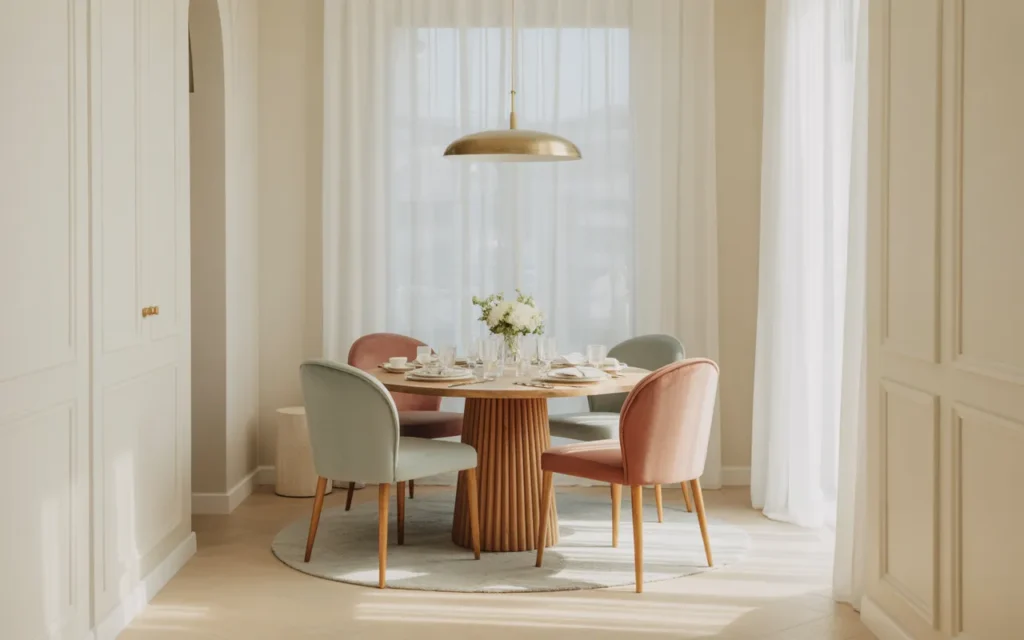
Designing a small dinner room requires smart layouts that balance comfort, function, and style. With limited space, every furniture choice and placement matters. From compact tables and built-in seating to light colors and flexible furniture, the right ideas can make a small dining area feel open and inviting. These small dinner room ideas focus on maximizing space, improving movement, and creating a cozy dining experience. Whether part of an open layout or a dedicated nook, smart planning helps transform small spaces into practical dining areas.
1. Compact Round Dining Tables
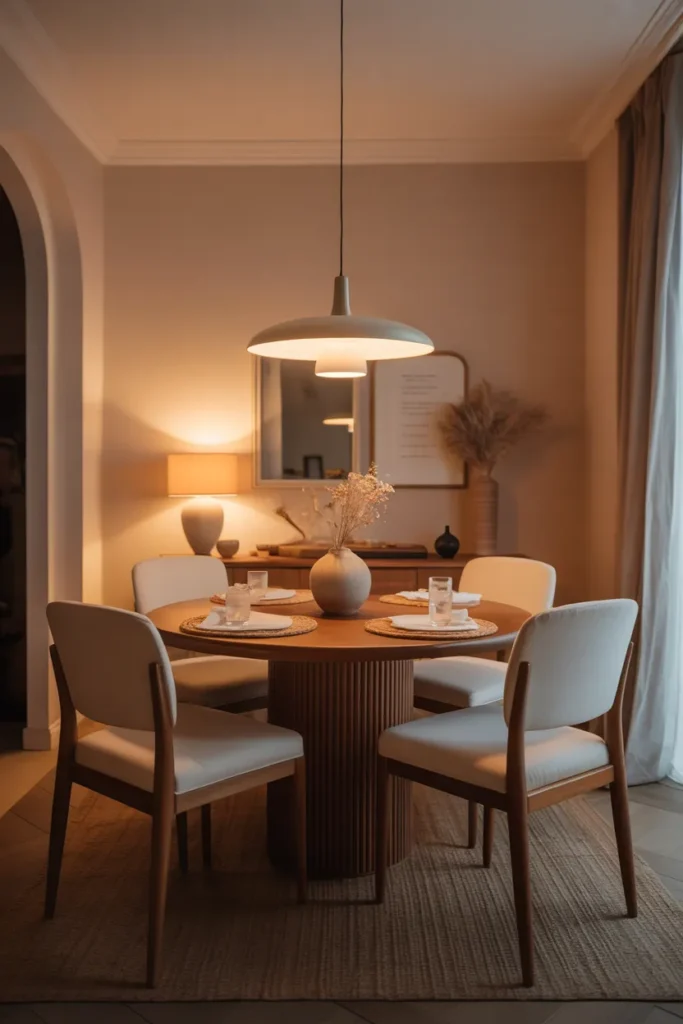
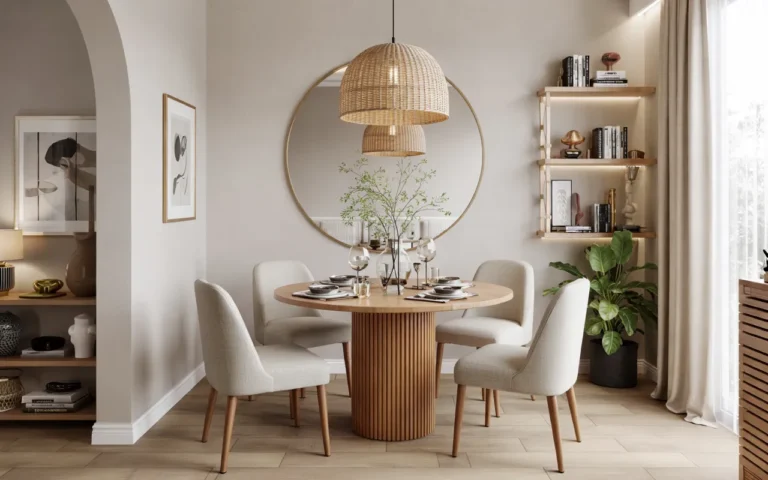
Round dining tables are one of the smartest choices for small dinner rooms. Their curved shape allows better movement and prevents the space from feeling cramped. Without sharp corners, the room feels more open and balanced, even in tight layouts. A compact round table also encourages conversation and creates a cozy dining experience.
This layout works especially well when paired with slim chairs or armless seating. Light wood or glass tabletops enhance the airy feel and reflect light beautifully. Round tables maximize seating while maintaining visual flow, making them a practical and stylish solution for small dining spaces.
2. Wall-Hugging Dining Layouts*
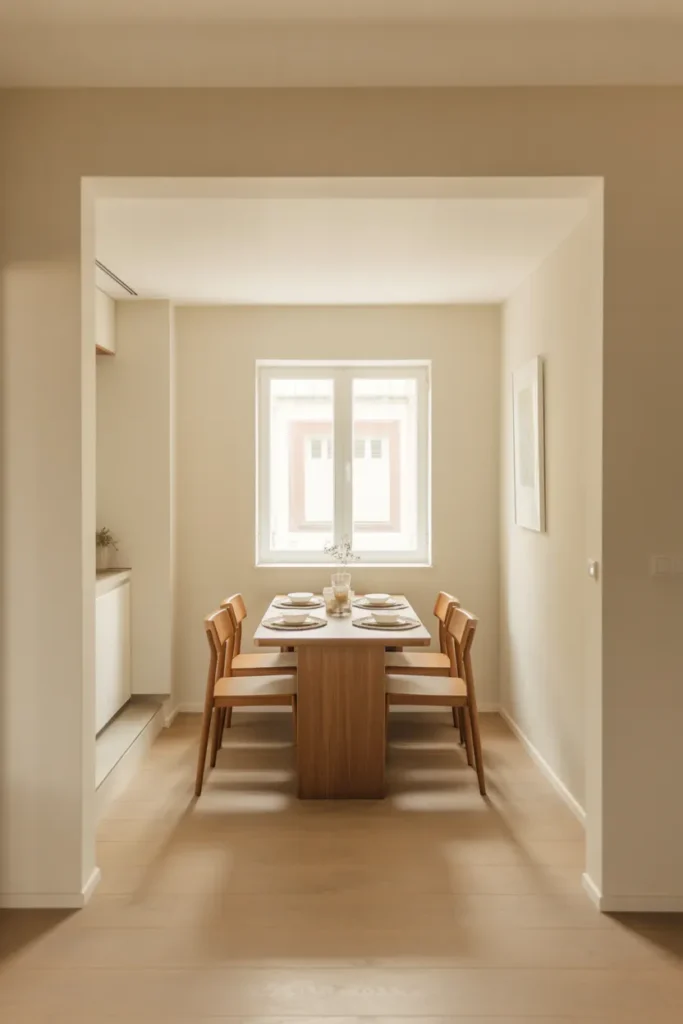
Placing the dining table closer to a wall is a smart way to save space in small dining rooms. This layout keeps the center area open, improving movement and preventing the room from feeling crowded. It works well in apartments or narrow dining zones where every inch matters.
Wall-hugging layouts pair perfectly with benches or slim-profile chairs. A bench against the wall reduces visual bulk and allows flexible seating. When styled with minimal décor and light colors, this arrangement creates a clean, organized look that feels both functional and inviting.
3. Built-In Bench Seating
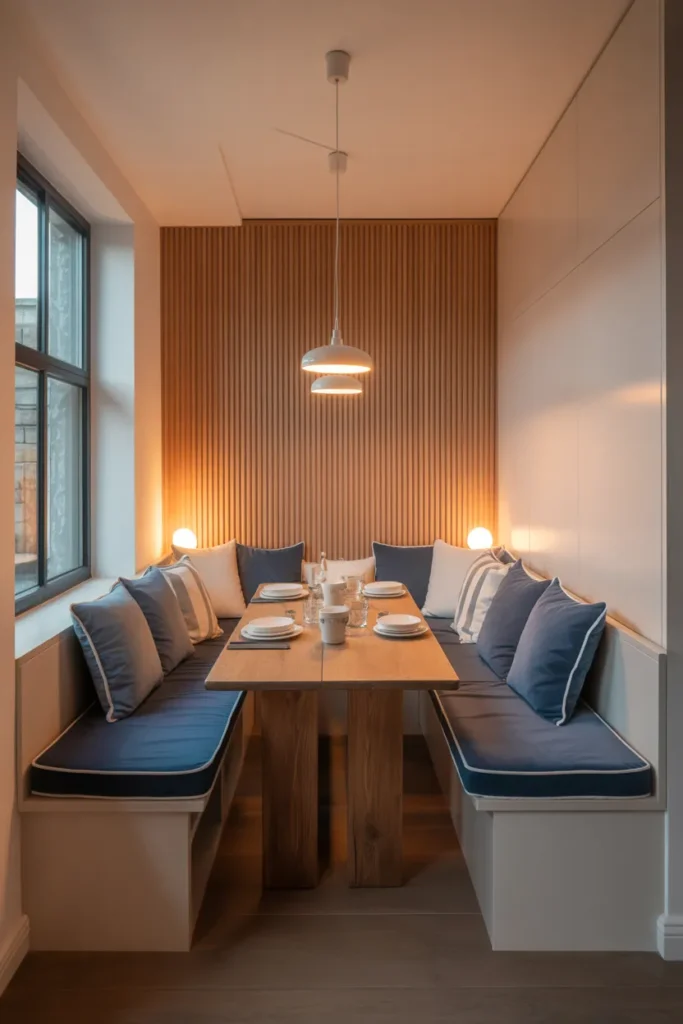
Built-in bench seating is a space-saving solution that adds comfort and style to small dining rooms. Benches fit neatly against walls or corners, eliminating the need for bulky chairs. This design creates a streamlined look while offering ample seating for family and guests.
Bench seating also provides an opportunity for hidden storage underneath, keeping the dining area clutter-free. Cushioned benches with neutral fabrics enhance comfort without overpowering the space. This smart layout transforms small dining rooms into cozy, efficient areas that feel thoughtfully designed.
4. Open-Concept Dining Corners
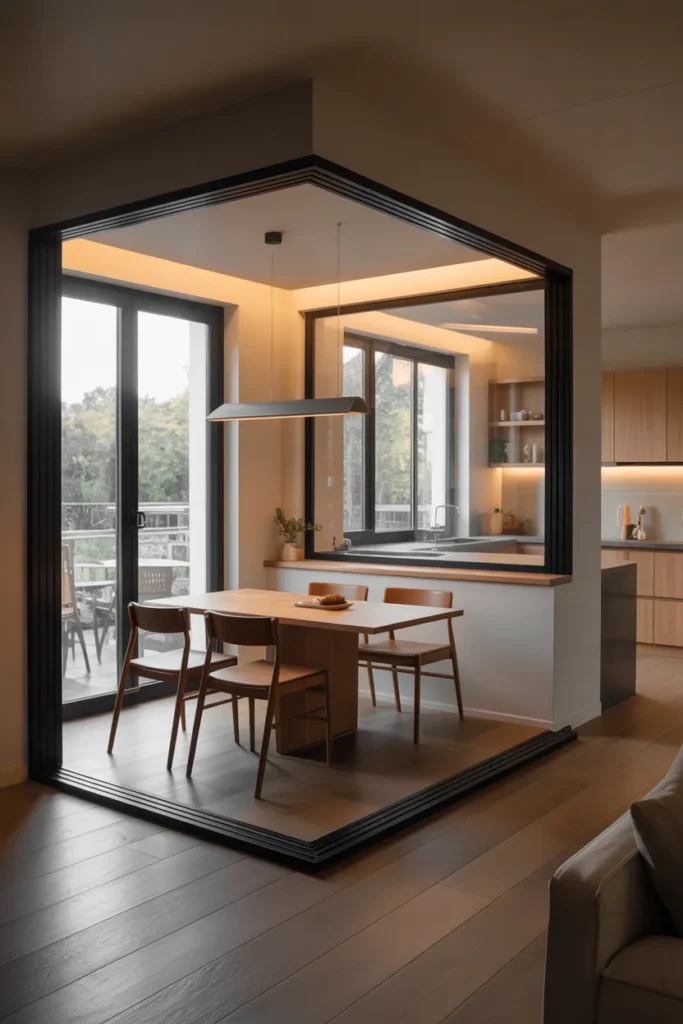
Small dining rooms benefit greatly from open-concept layouts that blend seamlessly with nearby spaces. A dining corner near the kitchen or living area makes the room feel larger and more connected. This approach eliminates unnecessary walls and allows natural light to flow freely.
Open dining corners work best with simple furniture and cohesive color palettes. A compact table and minimal chairs keep the area visually light. This layout creates a relaxed dining environment that feels integrated rather than confined, making small spaces feel more functional and welcoming.
5. Slim Rectangular Tables
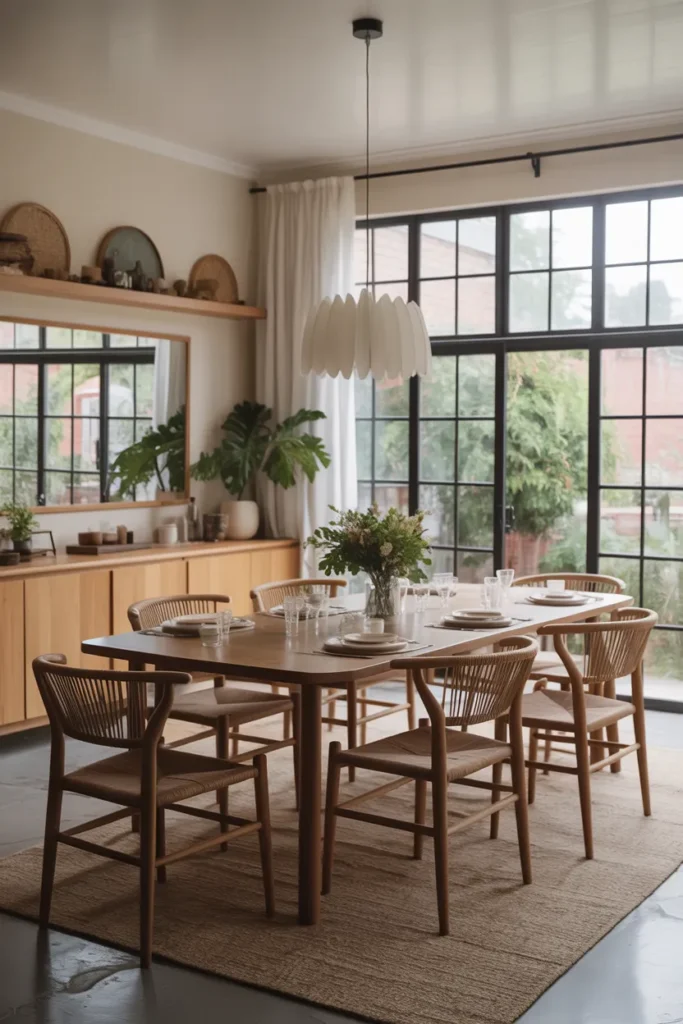
Slim rectangular dining tables are ideal for narrow dining rooms. Their elongated shape fits well along walls or windows while still providing enough surface area for meals. This layout maintains clear walkways and helps the room feel structured and organized.
Choosing a table with slender legs and a light finish enhances the sense of openness. Pairing it with stackable or tuck-in chairs further improves space efficiency. This smart layout offers a practical dining solution without sacrificing style or comfort in small spaces.
Also view: 22 Granny Chic Dining Room Ideas with Vintage Style
6. Drop-Leaf Dining Tables
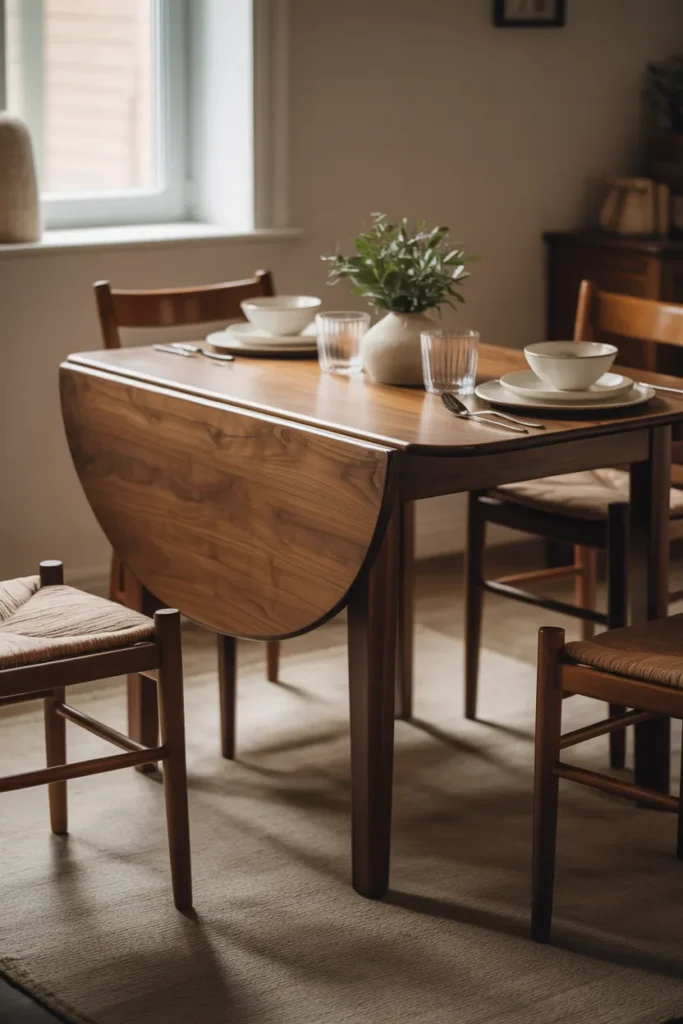
Drop-leaf tables are a flexible solution for small dining rooms where space is limited. Their foldable sides allow the table to expand only when needed, keeping the room open during everyday use. This smart layout adapts easily to both daily meals and occasional gatherings.
When paired with lightweight chairs, drop-leaf tables create a balanced and functional setup. Neutral finishes help maintain a clean look, while compact designs prevent visual clutter. This layout offers convenience without compromising style, making it ideal for small dining spaces.
7. Corner Dining Arrangements
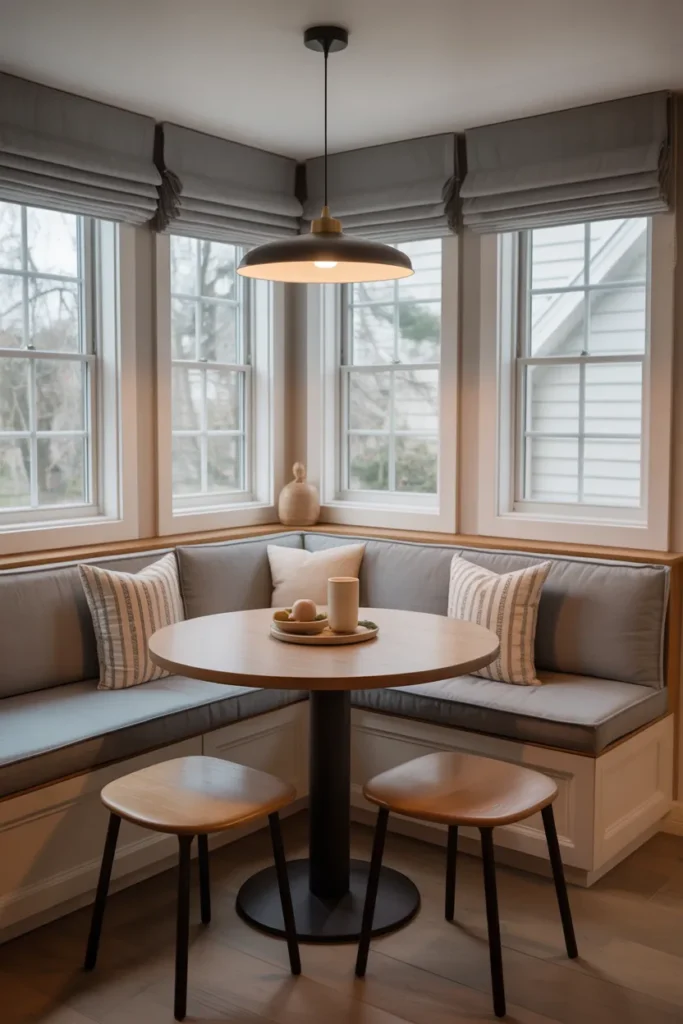
Using a corner for dining is an effective way to maximize unused space. Corner layouts create a cozy dining nook that feels intentional rather than cramped. This setup works well in small homes where dedicated dining rooms are limited.
A small table combined with corner seating or slim chairs enhances comfort and flow. Soft lighting and minimal décor help define the dining area without overwhelming it. Corner dining arrangements turn tight spaces into charming and practical eating areas.
8. Glass-Top Dining Tables
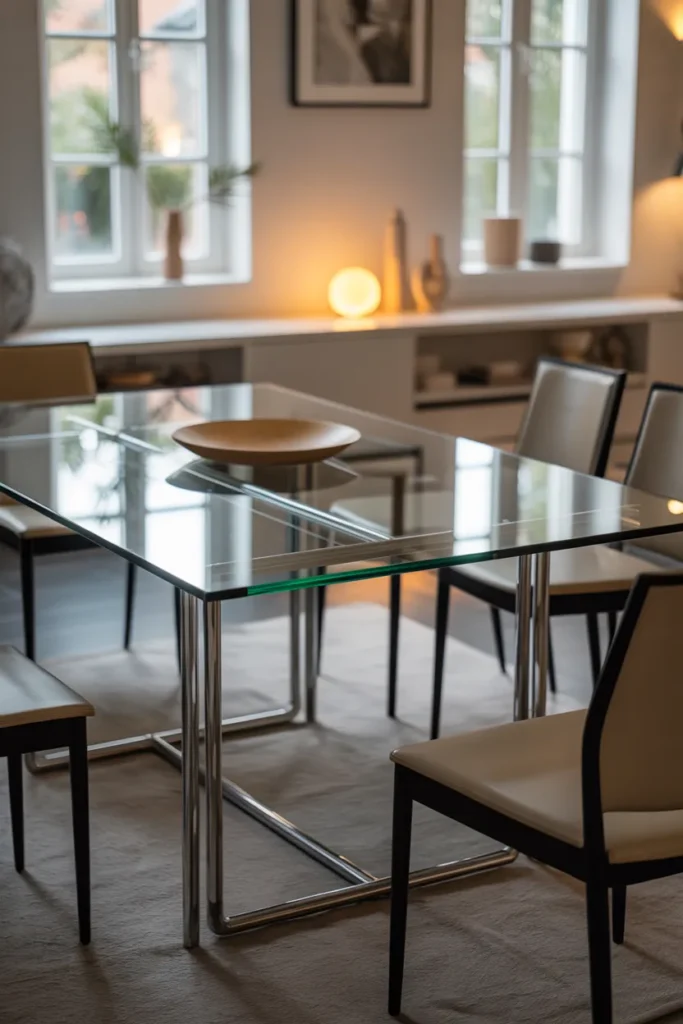
Glass-top dining tables are perfect for making small dining rooms feel more open. The transparent surface allows light to pass through, reducing visual weight and creating an airy atmosphere. This layout prevents the room from feeling boxed in or overcrowded.
Glass tables pair beautifully with metal or light wood bases for a modern look. When combined with neutral chairs, they maintain a sleek and uncluttered appearance. This smart layout enhances brightness and gives the illusion of a larger dining space.
9. Multi-Functional Dining Spaces
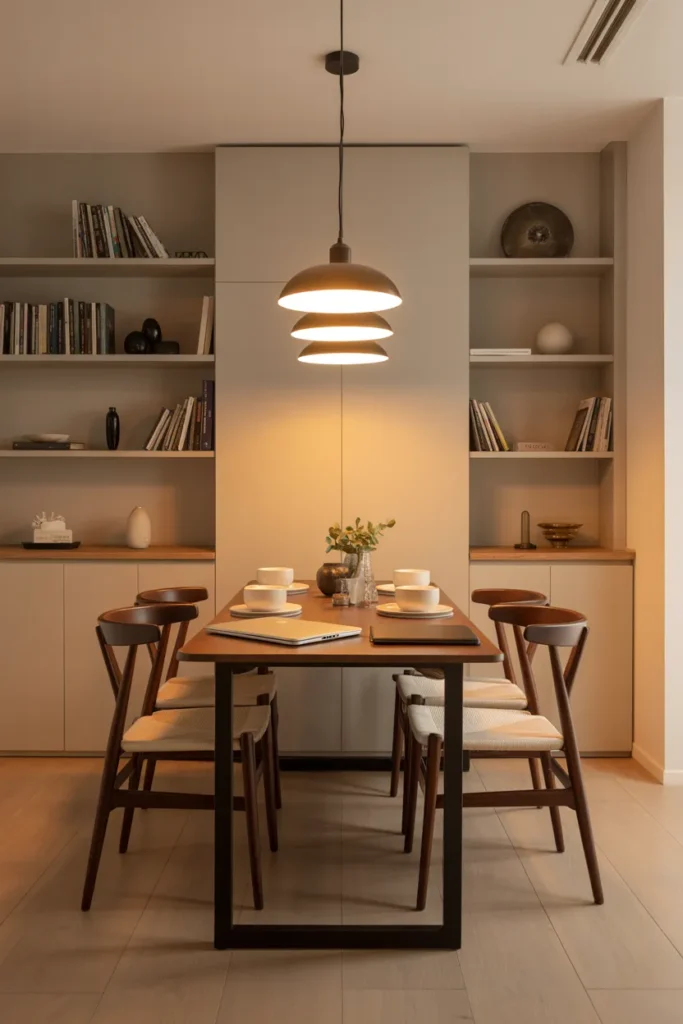
Small dining rooms benefit from layouts that serve more than one purpose. A dining table that doubles as a workspace or prep area increases functionality without adding extra furniture. This approach keeps the space efficient and practical.
Multi-functional layouts work best with simple furniture and smart storage solutions. Stackable chairs or stools allow flexibility throughout the day. This design supports modern living by adapting to daily needs while maintaining a clean and organized dining area.
10. Light Color Schemes for Openness
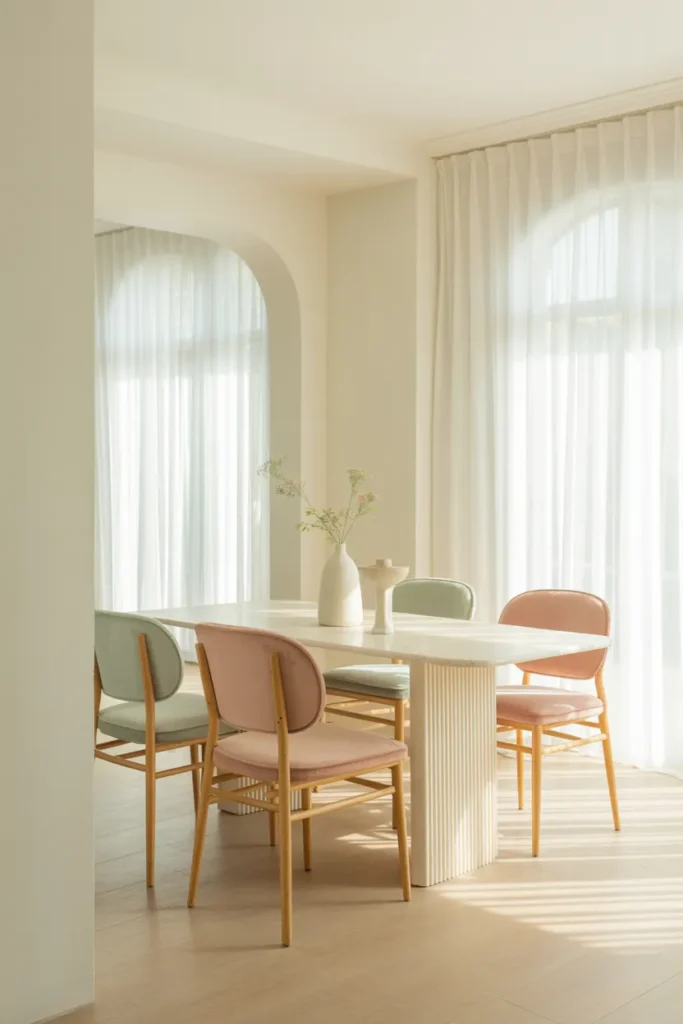
Light color schemes play a major role in making small dining rooms feel spacious. Soft whites, warm neutrals, and gentle pastels reflect light and reduce visual clutter. This approach enhances brightness and creates a welcoming dining atmosphere.
Pairing light walls with subtle textures adds depth without overpowering the space. Light-colored furniture maintains continuity and flow. This smart layout choice helps small dining rooms appear larger, more open, and effortlessly stylish.
11. Built-In Wall-Mounted Tables
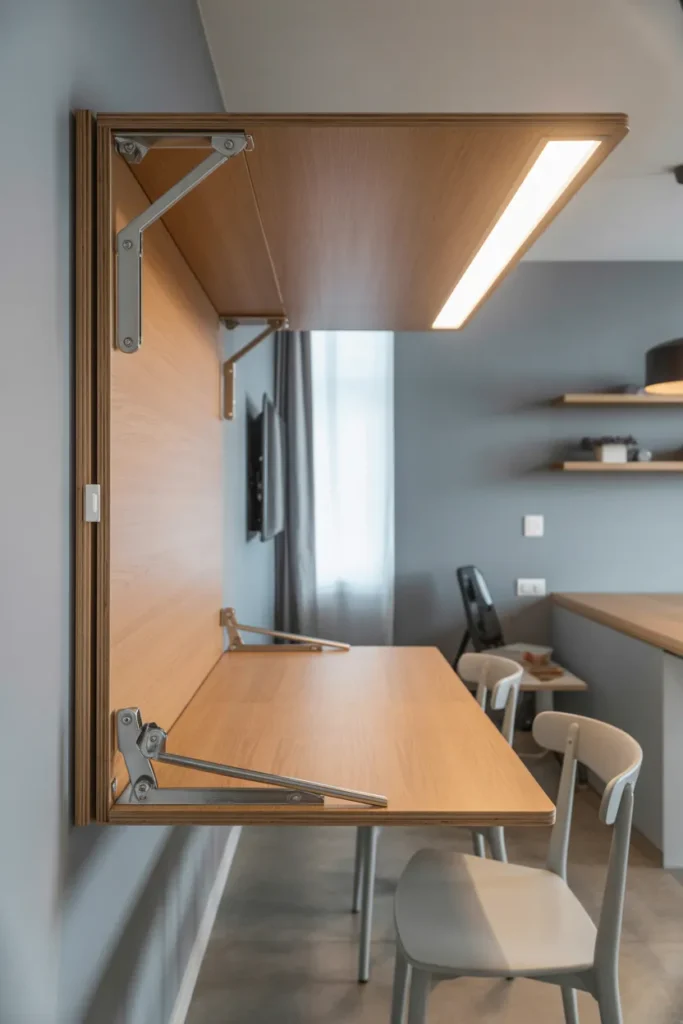
Wall-mounted dining tables are a smart solution for extremely small dining rooms. These tables can fold down when not in use, freeing up valuable floor space. This layout keeps the room flexible and uncluttered while still providing a functional dining surface.
Wall-mounted tables work best with lightweight chairs or stools that can be tucked away easily. Neutral finishes help them blend seamlessly into the wall. This smart layout is ideal for compact homes where efficiency and clean design are essential.
12. Vertical Storage Integration
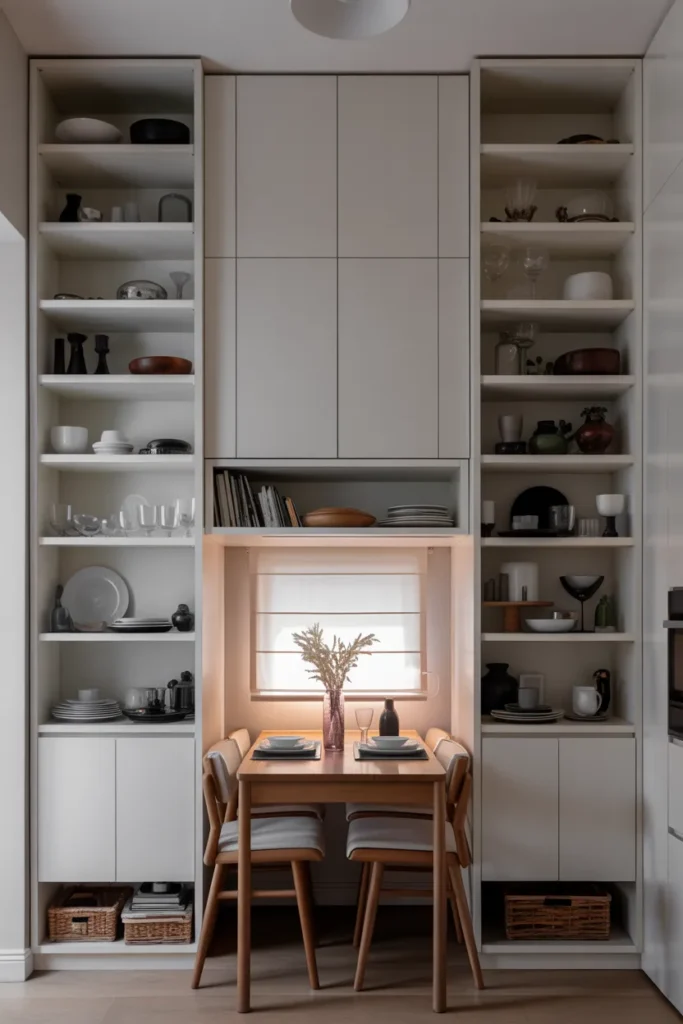
Using vertical space is key in small dining rooms. Tall shelves, wall cabinets, or open storage above the dining area provide extra storage without taking up floor space. This layout keeps essentials organized while maintaining a clean and structured look.
Vertical storage also helps define the dining zone visually. Open shelving styled with minimal décor prevents the area from feeling heavy. This approach balances functionality and aesthetics, making small dining rooms more practical and visually appealing.
13. Minimalist Dining Furniture
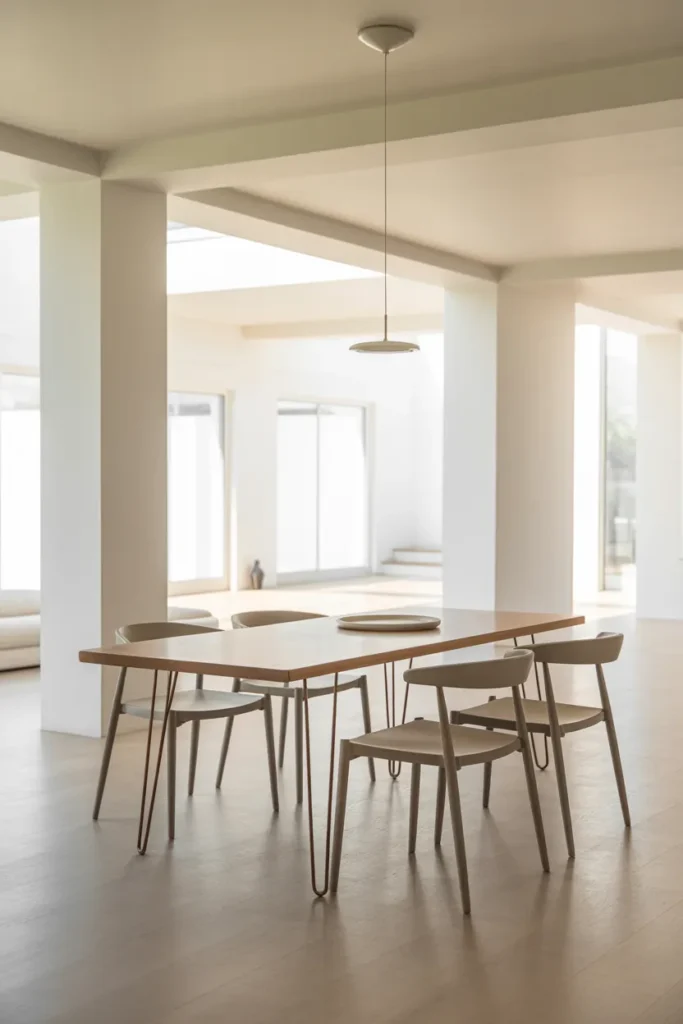
Minimalist furniture helps small dining rooms feel lighter and more open. Clean lines, slim legs, and simple shapes reduce visual clutter and improve flow. This layout focuses on essentials rather than oversized or decorative pieces.
Choosing fewer but well-proportioned items enhances balance and comfort. Neutral tones and smooth finishes keep the space cohesive. Minimalist dining furniture supports smart layouts by maximizing space while maintaining a modern and refined appearance.
14. Mirror Placement for Depth
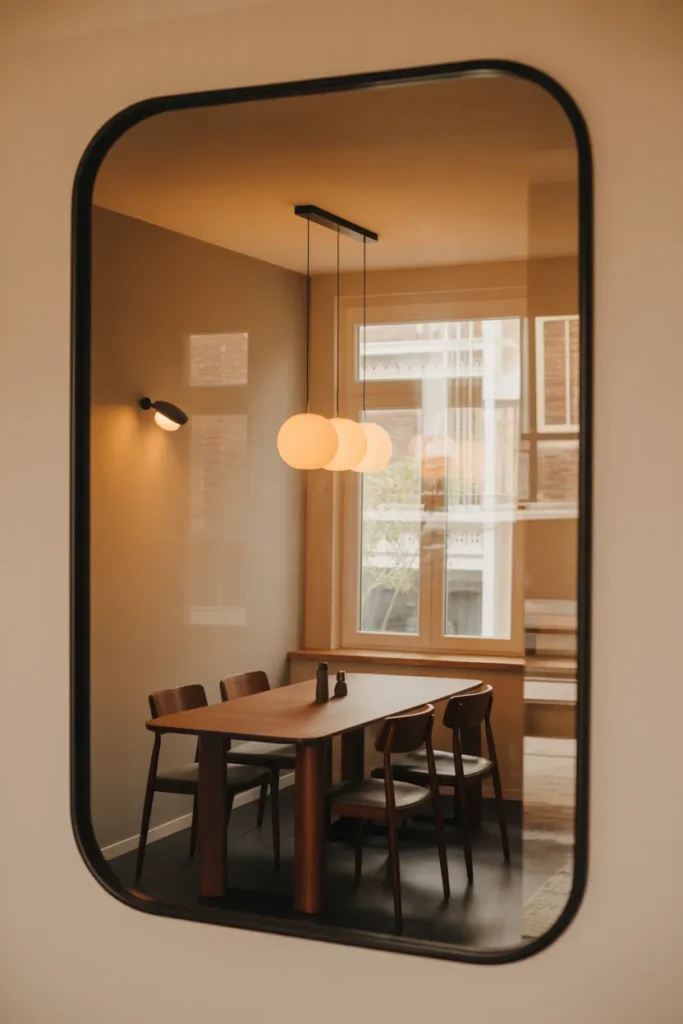
Mirrors are an effective way to visually expand small dining rooms. Placing a mirror on one wall reflects light and creates the illusion of depth. This layout makes the dining area feel brighter and more spacious.
Mirrors work especially well opposite windows or light sources. Simple frames maintain a clean look without overwhelming the space. This smart layout trick enhances openness while adding subtle elegance to small dining rooms.
15. Narrow Console-Style Tables
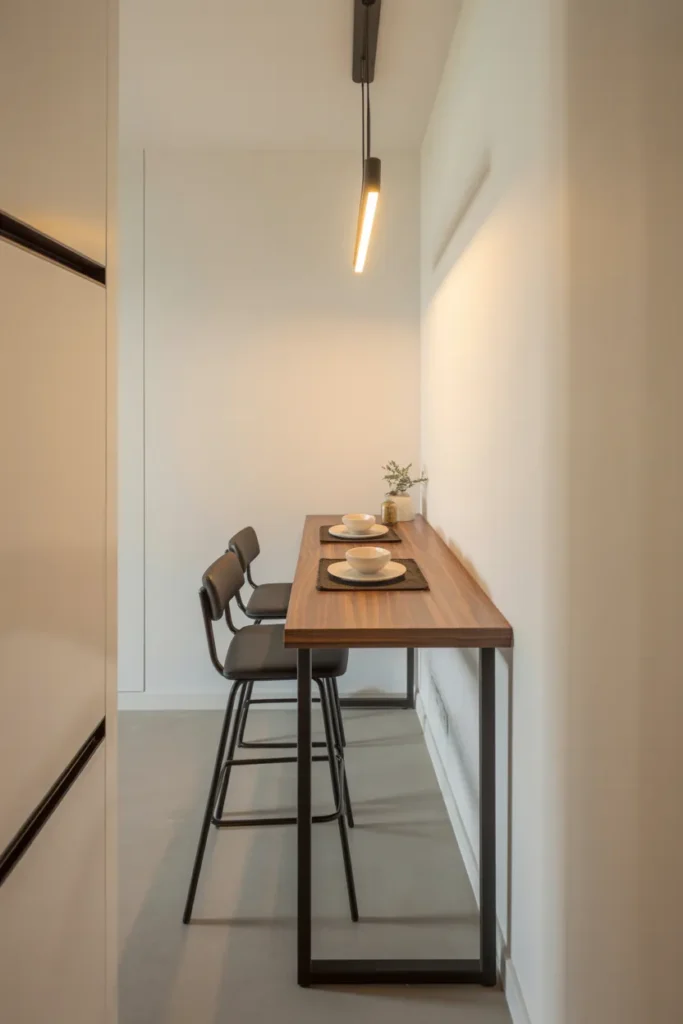
Console-style dining tables are ideal for tight spaces. Their narrow design allows placement along walls while still offering enough surface area for meals. This layout keeps walkways clear and maintains an organized appearance.
Paired with stools or slim chairs, console tables provide flexible seating options. Light finishes and clean lines enhance openness. This smart layout makes small dining rooms functional without sacrificing style or comfort.
16. Open Shelving Near the Dining Area
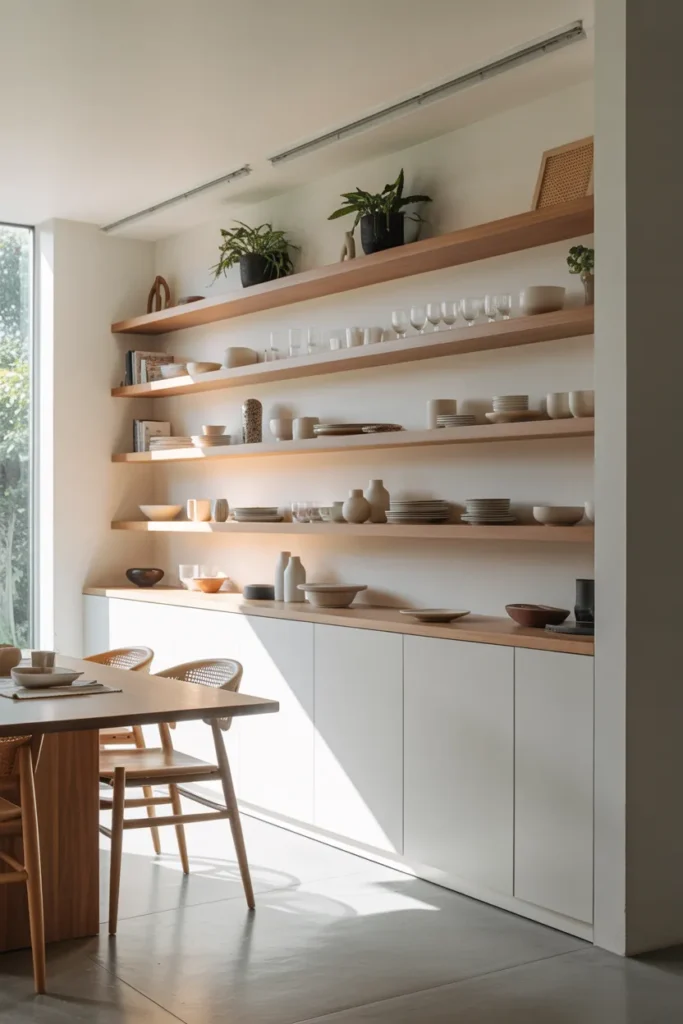
Open shelving near the dining space adds storage without closing in the room. Shelves can hold everyday dining items while keeping the layout light and accessible. This design keeps essentials within reach and reduces the need for bulky cabinets.
When styled minimally, open shelving enhances the room’s visual flow. Neutral shelves with simple décor prevent overcrowding. This smart layout supports both function and style, making small dining rooms feel organized and airy.
17. Compact Pendant Lighting
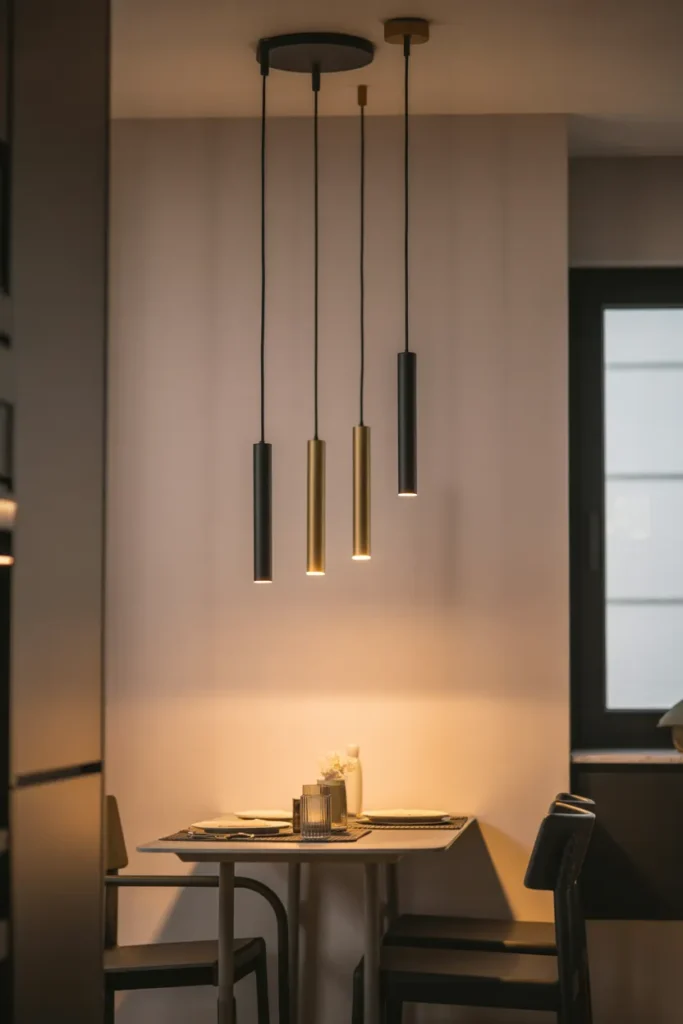
Compact pendant lights provide focused illumination without overwhelming small dining rooms. Their slim design draws the eye upward, creating a sense of height. This lighting choice defines the dining area while maintaining an open feel.
Soft, warm lighting enhances comfort and atmosphere. Choosing simple shapes and neutral finishes keeps the space cohesive. Compact pendants support smart layouts by adding function and style without taking up valuable space.
18. Dining Areas by Windows
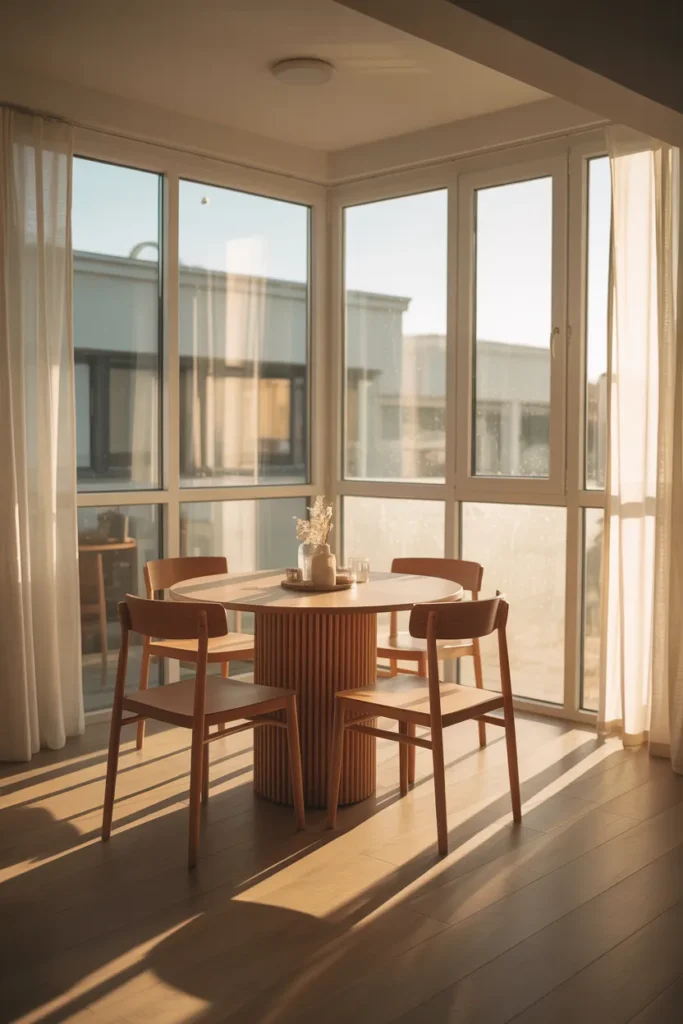
Placing the dining area near a window maximizes natural light in small spaces. This layout makes the room feel brighter and more open while creating a pleasant dining experience. Natural light enhances the overall sense of space.
Window-side dining works well with compact furniture and light fabrics. Simple window treatments maintain openness while offering privacy. This smart layout creates a refreshing and inviting dining environment in small rooms.
19. Stackable or Foldable Chairs
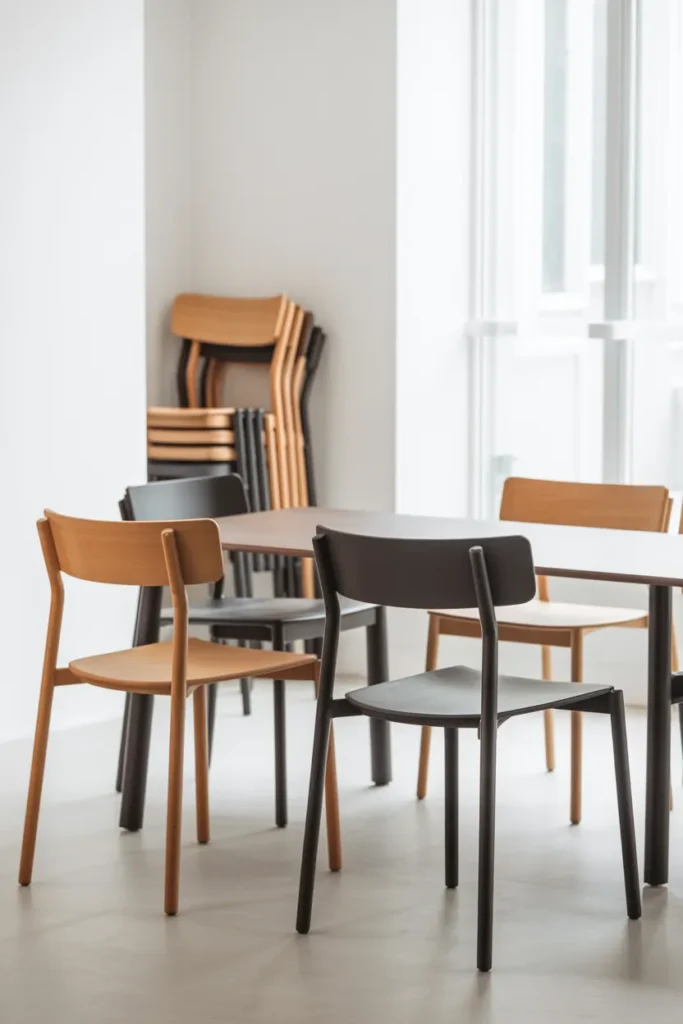
Stackable or foldable chairs are ideal for small dining rooms that require flexibility. These chairs can be stored away when not in use, keeping the space open and clutter-free. This layout adapts easily to changing needs.
Lightweight designs and neutral finishes maintain visual balance. Foldable seating allows for extra guests without permanent bulk. This smart layout solution enhances functionality while preserving a clean and organized dining area.
20. Defined Dining Zones with Rugs
Using a rug to define the dining area helps visually separate it from surrounding spaces. In small rooms, rugs add structure without physical barriers. This layout creates a clear dining zone while maintaining openness.
Choosing a properly sized rug enhances balance and comfort. Neutral or subtle patterns prevent visual clutter. This smart layout technique anchors the dining area and adds warmth without reducing space.
21. Built-In Corner Banquettes
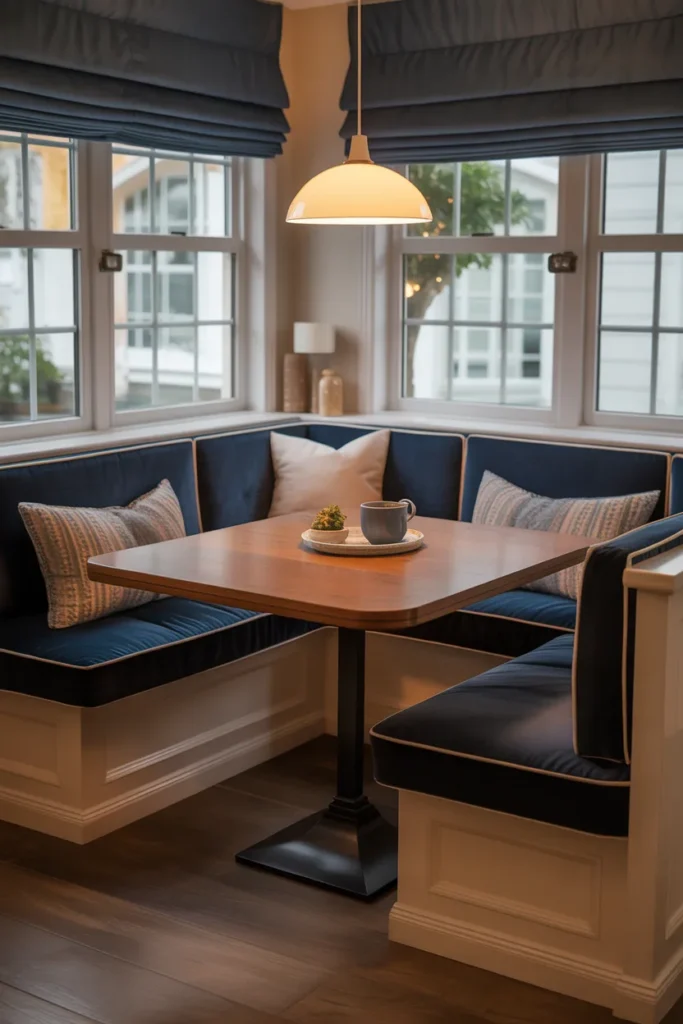
Corner banquettes are a smart way to maximize seating in small dining rooms. By fitting neatly into corners, they eliminate wasted space and create a cozy dining nook. This layout allows more room for movement while maintaining a comfortable seating arrangement.
Built-in banquettes can be customized with cushions and storage underneath. Neutral fabrics keep the look light and cohesive. This smart layout combines comfort and efficiency, making small dining rooms feel thoughtfully designed and inviting.
22. Extendable Dining Tables
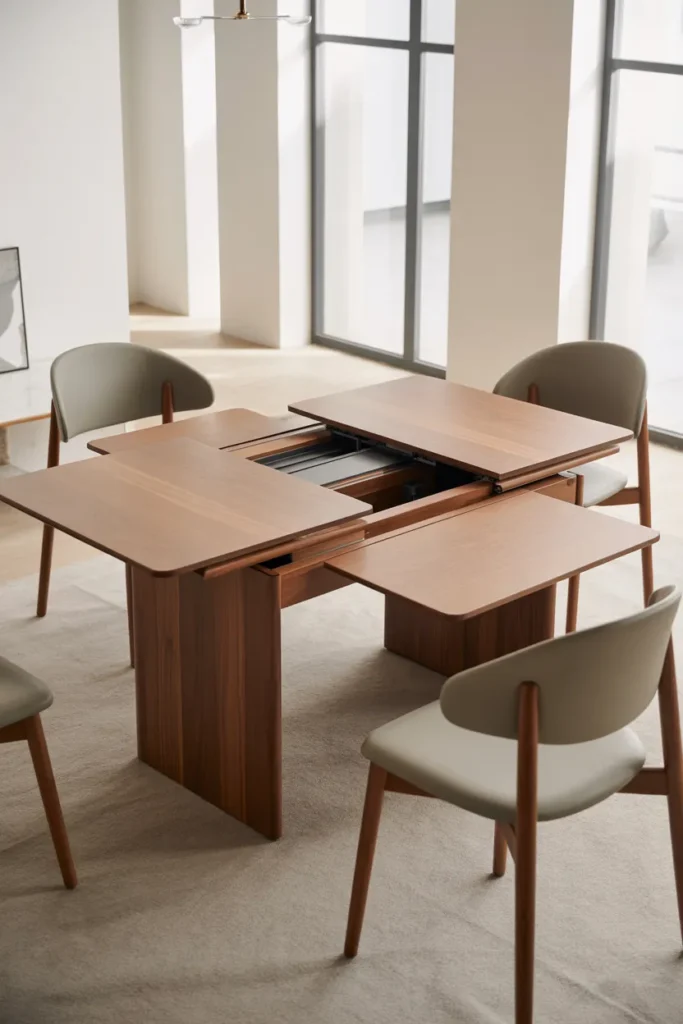
Extendable dining tables offer flexibility without taking up extra space daily. These tables stay compact for everyday meals and expand when guests arrive. This layout adapts easily to different needs while keeping the room organized.
Choosing a table with a simple design helps maintain visual balance. Extendable options provide practicality while preserving a clean aesthetic. This smart layout supports both functionality and style in small dining spaces.
23. Seamless Dining and Kitchen Layouts
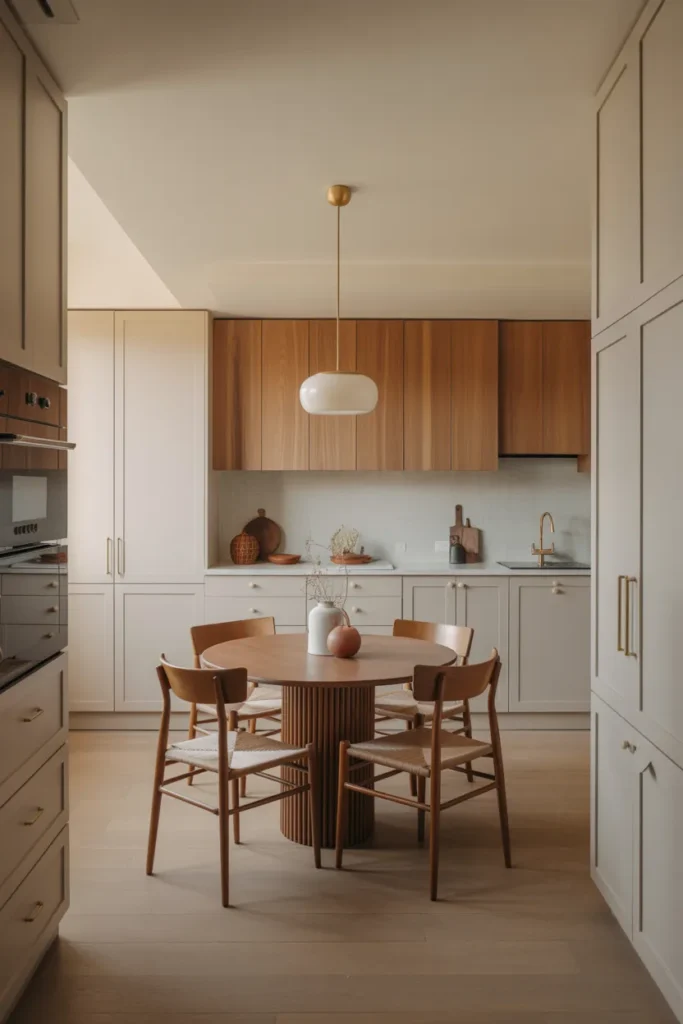
Small dining rooms benefit from layouts that blend seamlessly with the kitchen. Keeping materials, colors, and finishes consistent creates visual continuity. This approach makes the overall space feel larger and more connected.
A compact dining table placed near the kitchen improves convenience. Minimal transitions enhance flow and usability. This smart layout creates a unified space that feels open, efficient, and well-planned.
24. Clean, Clutter-Free Styling
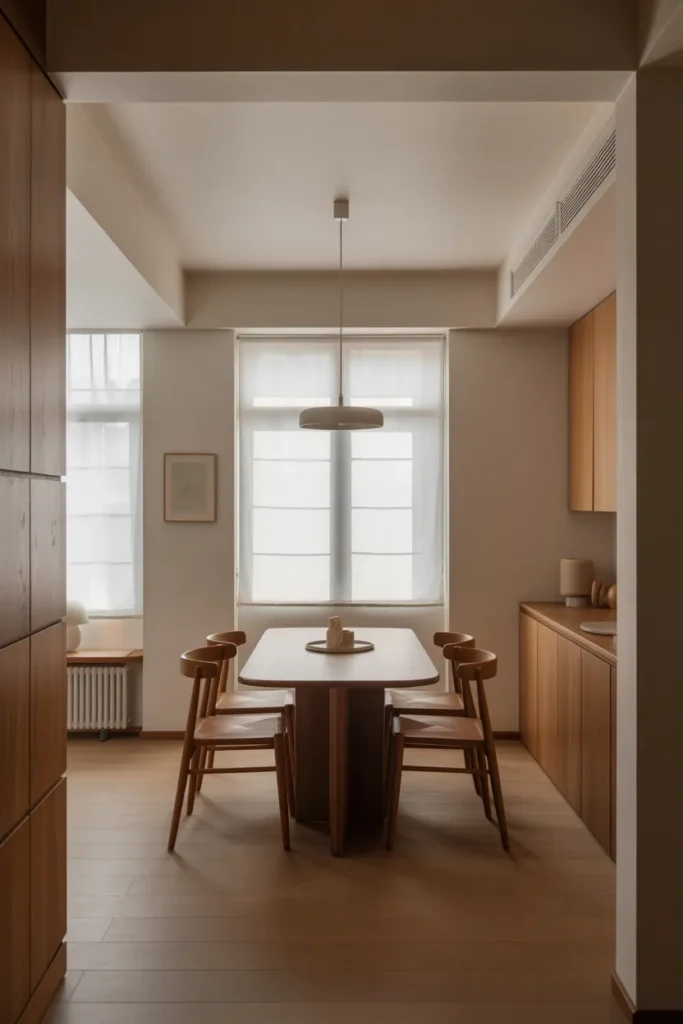
A clutter-free approach is essential for small dining rooms. Limiting décor and focusing on essential pieces helps maintain openness and balance. This layout allows the room to feel calm and visually spacious.
Simple centerpieces and hidden storage keep surfaces clear. Clean styling enhances functionality while supporting a refined look. This smart layout ensures small dining rooms remain comfortable, stylish, and easy to use every day.
Conclusion :
Small dinner rooms can feel spacious and comfortable with the right layout choices. Smart furniture, flexible seating, and clutter-free styling make a noticeable difference in how the space functions. By using light colors, compact designs, and efficient storage, even the smallest dining areas can look organized and inviting. These ideas prove that thoughtful planning and simple design choices can create a dining room that is both stylish and easy to use every day.