22 Zen Bedroom Ideas That Feel Soft and Serene
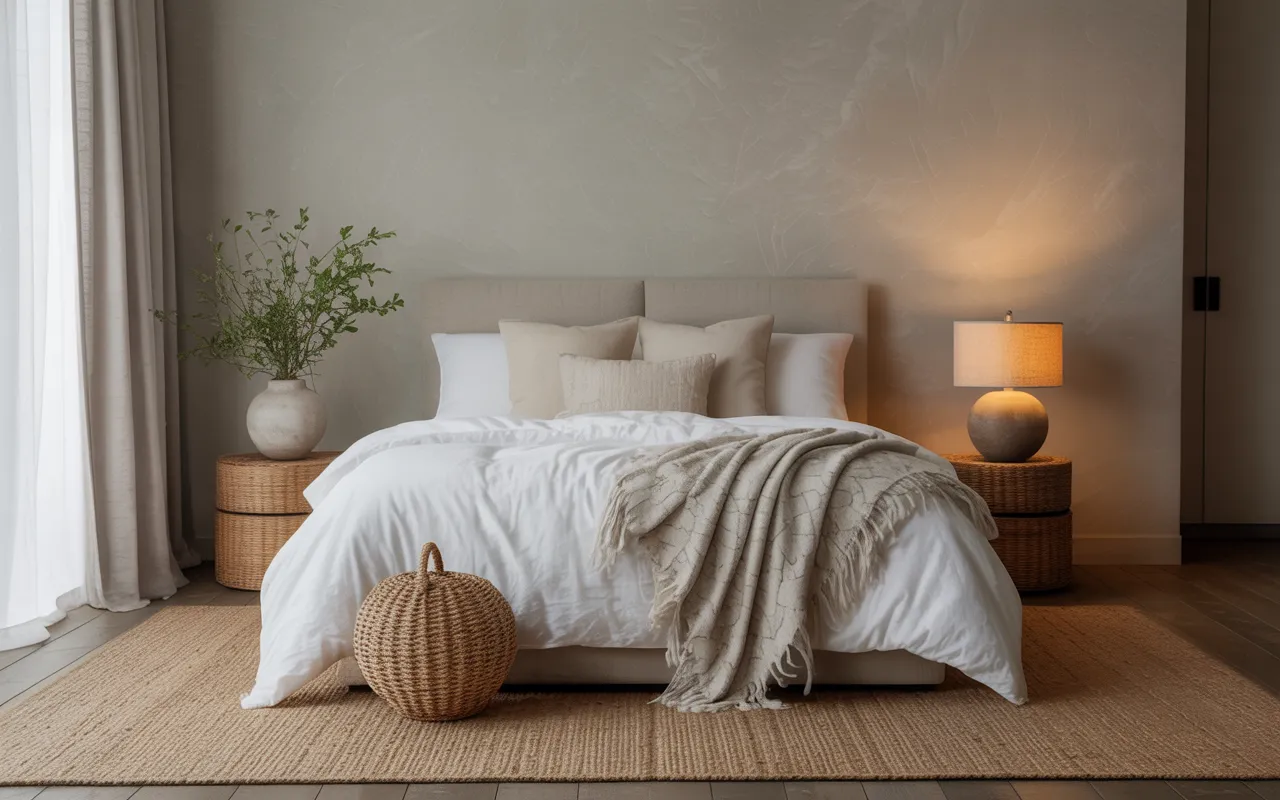
A zen bedroom is not about a specific style so much as a feeling. You walk in and your shoulders drop. Nothing demands your attention. The colors stay quiet, the furniture stays low, and there is space to breathe between things.
These 22 ideas borrow from Japanese minimalism and simple nature-based design. Low platform beds, natural wood, sheer curtains, and soft layered textures all work toward the same goal: a room that helps you slow down. None of them require a full renovation.
Start with whatever bothers you most about your current bedroom. If it is clutter, start with storage. If it is harsh light, start with the window treatments. One calm change makes the next one easier, and the room gets quieter step by step.
This post contains affiliate links. If you buy through them, I may earn a small commission at no extra cost to you.
1. Minimalist Neutral Palette
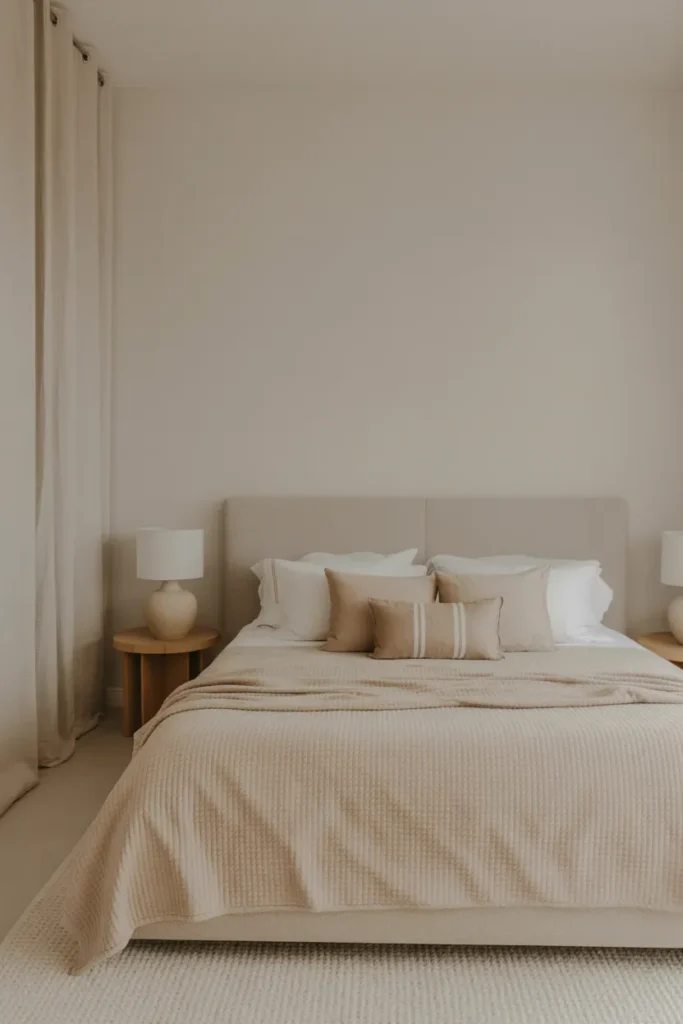
A neutral palette is the foundation of every calm bedroom. Warm whites, soft beiges, and pale greys recede instead of shouting, which lets your mind settle. When the walls and bedding stay quiet, the whole room feels slower.
Stay warm, not stark: Pure white walls can feel cold and clinical. Warm whites and creamy beiges feel calm without feeling empty. Test paint swatches on the wall and check them at night under your lamps.
Limit yourself to three tones: Pick a light wall color, a mid-tone for bedding, and one slightly deeper accent. More than three colors and the room starts feeling busy again.
- Warm white paint is more restful than cool white in a bedroom.
- Keep ceiling and trim in the same family as the walls.
- Repeat each tone at least twice so the palette feels intentional.
Shop This Look
2. Low Platform Beds
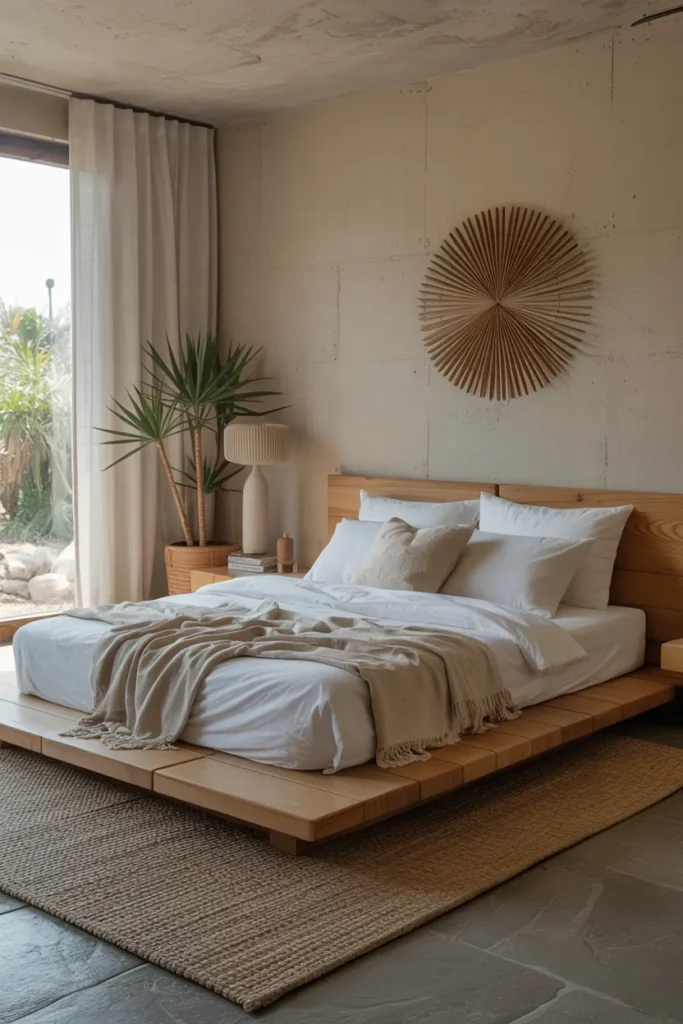
A low platform bed changes the whole posture of a bedroom. The room feels more grounded and a little more spacious because there is less furniture mass in your sightline. It is the single fastest way to get that Japanese-inspired calm.
Keep it simple: A plain wood platform with clean lines beats an ornate frame here. The bed should feel like a quiet stage for the bedding, not the star of the room.
Watch the mattress height: A thick mattress on a low platform defeats the purpose. Pair the frame with a medium-profile mattress so the top of the bed stays low.
- Solid wood platforms last longer than upholstered ones.
- Leave space under the bed clear or use it for hidden storage.
- A low bed makes a small bedroom feel taller.
Shop This Look
3. Natural Light and Sheer Curtains

Harsh daylight fights a zen bedroom. Sheer curtains soften the sun into a glow instead of a glare, and the room feels wrapped in light rather than hit by it. It is a small change with an outsized effect on mood.
Layer sheers over blinds: Sheers alone give privacy in daylight but not at night. A simple roller blind behind them handles evenings while the sheers do the softening all day.
Hang them high and wide: Mount the rod near the ceiling and extend it past the window frame. The window looks bigger and the light spreads more evenly.
- White or ivory sheers keep the light neutral.
- Wash sheers regularly; dust dulls the glow.
- Linen-look sheers add texture while staying translucent.
Shop This Look
4. Soft Layered Textures
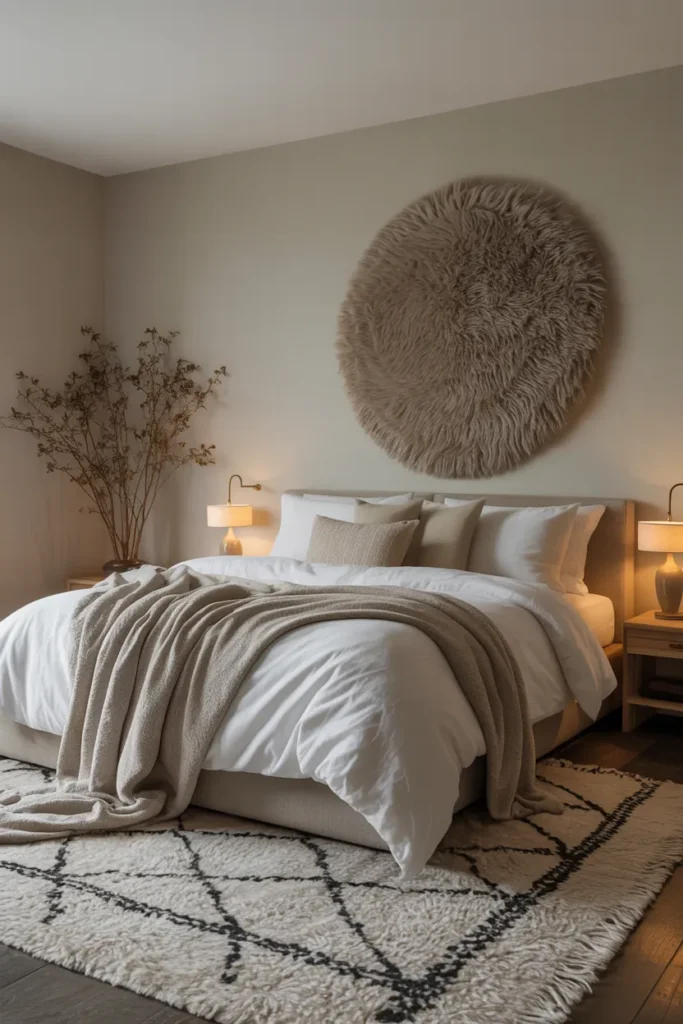
Texture is what keeps a neutral bedroom from feeling boring. Linen, cotton, wool, and knit all in soft tones give your hands and eyes something to notice without any loud color. Layers of texture read as comfort.
Mix three textures minimum: Try smooth cotton sheets, a nubby linen duvet, and a chunky knit throw. The contrast between them is what makes the bed look inviting.
Keep the palette tight: Texture works best when the colors stay close together. Cream, oatmeal, and soft grey layers feel rich. Add one dark color and the calm breaks.
- A knit throw at the foot of the bed adds instant coziness.
- Linen gets softer with every wash.
- Stick to natural fibers for the most calming feel.
Shop This Look
5. Neutral Artwork and Wall Accents
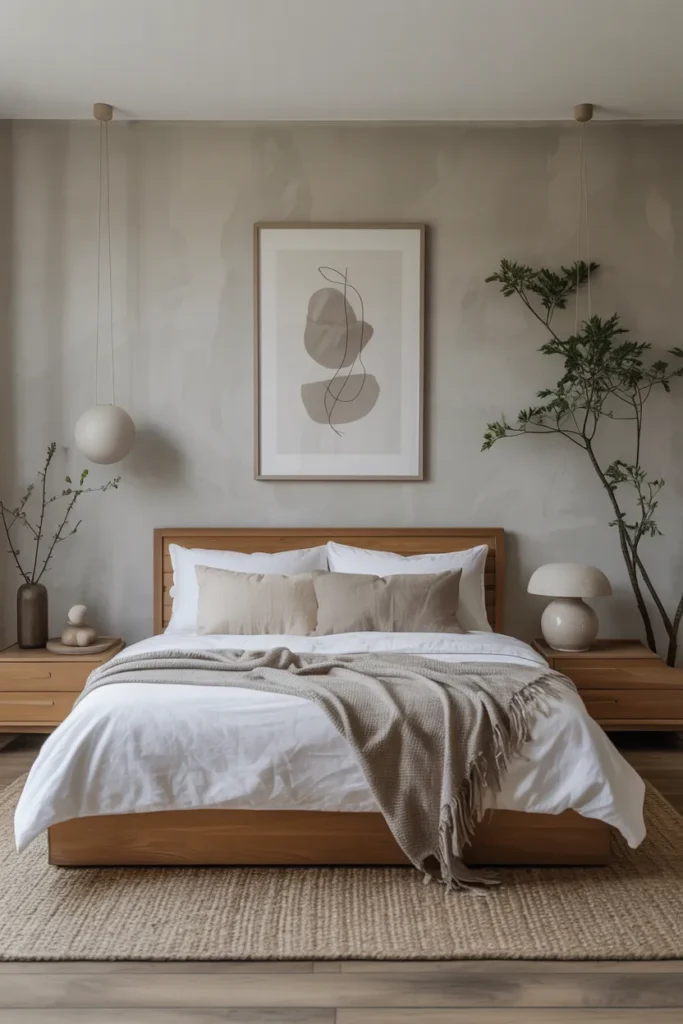
Bare walls can feel empty, but busy art ruins the calm. Neutral artwork, abstract washes, simple line drawings, soft landscapes, fills the wall without adding noise. It gives the eye somewhere gentle to rest.
Go big and simple: One large quiet piece beats a gallery wall here. A single oversized print above the bed anchors the room without cluttering it.
Frame it in natural wood: Light oak or walnut frames warm up neutral art. Black frames can work but they add contrast, so use them sparingly.
- Abstract beige art is the safest choice for a zen wall.
- Hang art at eye level, roughly 57 inches to center.
- Leave plenty of empty wall around the piece.
Shop This Look
6. Sliding Shoji Screens

Shoji screens bring the most recognizable piece of Japanese design into the bedroom. The wood grid and rice paper glow softly and divide space without closing it off. They work as closet doors, room dividers, or window coverings.
Use them to hide clutter: A shoji screen in front of an open shelf or a messy corner instantly calms that part of the room. Out of sight really does help here.
Check the paper quality: Cheap screens tear easily. Look for reinforced rice paper or fiberglass-reinforced panels if you have kids or pets.
- Shoji screens also work well as closet door replacements.
- Keep them away from direct water and steam.
- Dust the paper gently with a dry cloth.
Shop This Look
7. Natural Wood Elements

Wood warms up a neutral bedroom in a way nothing else does. A simple oak nightstand or a walnut shelf adds life to all those soft whites and beiges. Natural grain gives the room an organic feel that painted furniture cannot match.
Stick to one or two wood tones: Mixing five different woods looks accidental. Pick a light wood and maybe one darker accent, then repeat them around the room.
Let the grain show: Clear finishes and light stains show off the wood’s character. Heavy dark stains hide the grain and can feel too formal for a zen room.
- Acacia and oak are durable and look great with light finishes.
- A single wooden bench at the foot of the bed adds warmth.
- Avoid high-gloss wood finishes; matte feels calmer.
Shop This Look
8. Soft Ambient Lighting
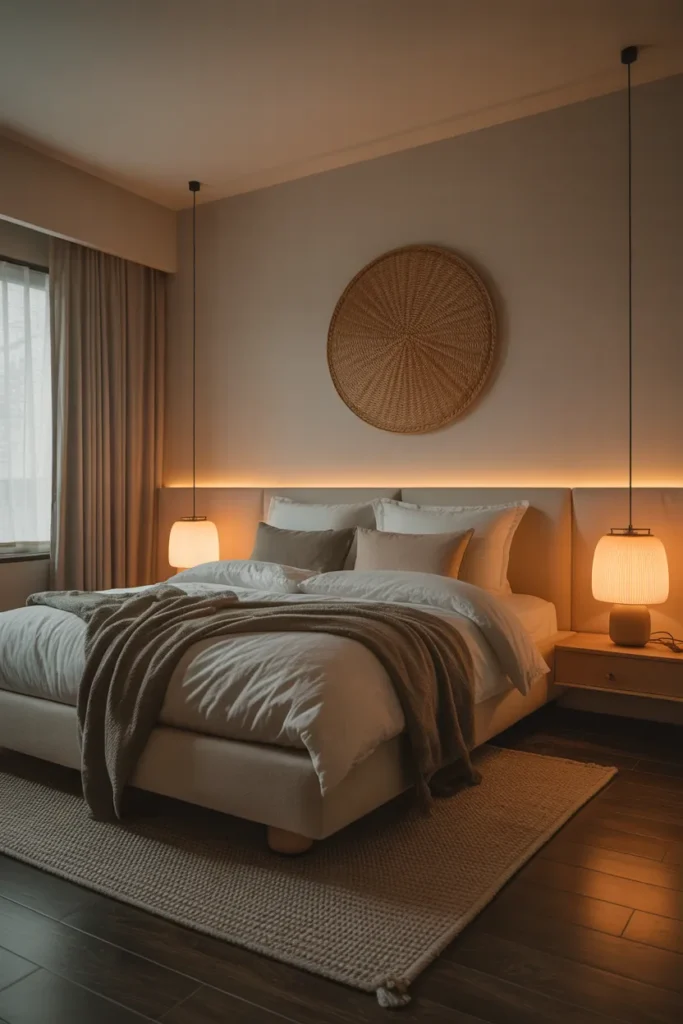
Overhead lighting kills a zen mood fast. Soft ambient light from lamps and dimmers lets the bedroom glow instead of glare. Evening light should feel like candlelight, warm and low.
Put dimmers everywhere: A dimmer on the overhead light and on bedside lamps gives you full control. Bright for cleaning, low for winding down.
Use warm bulbs only: Look for 2700K or lower. Cool white bulbs feel like an office and undo all your calming work.
- Paper lantern lamps give the softest, most diffused light.
- Keep bedside lamps at a height where the shade sits near eye level.
- Smart bulbs let you dim from bed.
Shop This Look
9. Indoor Plants and Greenery.

One or two plants bring a living, breathing quality to a zen bedroom. Green is naturally restful, and the organic shapes soften all the straight lines of furniture. You do not need a jungle; restraint is the point.
Pick easy plants: Snake plants, pothos, and ZZ plants survive low light and missed waterings. A dead plant on the nightstand is the opposite of zen.
Give each plant space: One sculptural plant in a nice pot beats five crowded ones. Negative space around the plant is part of the calm.
- Snake plants also release oxygen at night.
- Keep plants off the bed and away from pillows for allergies.
- A simple ceramic pot matters as much as the plant.
Shop This Look
10. Low Seating Areas
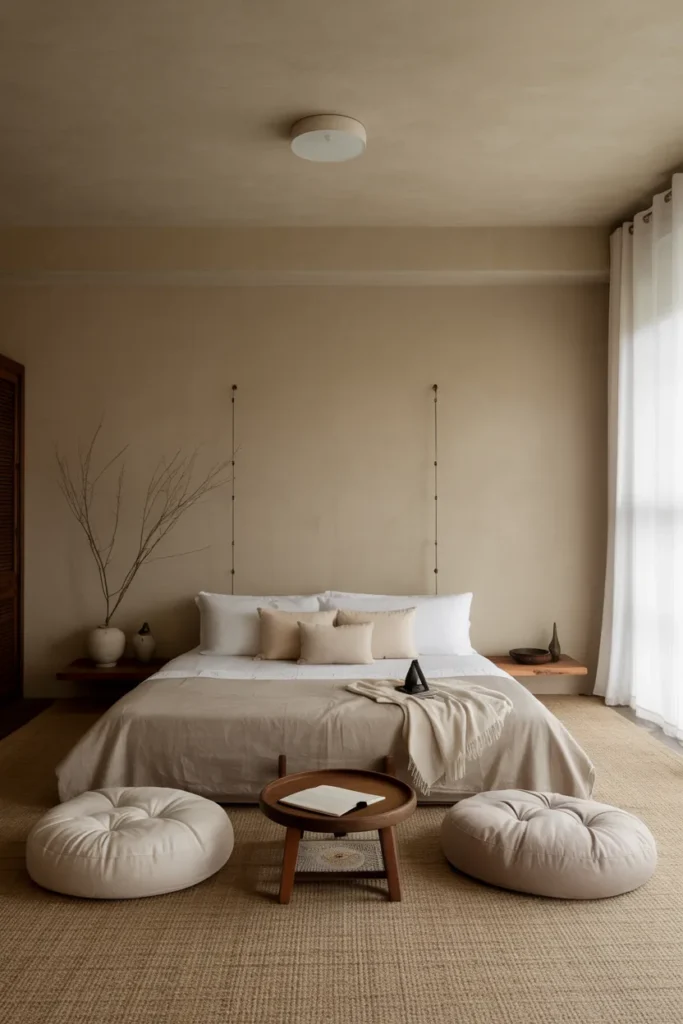
A low seating corner gives the bedroom a purpose beyond sleep. A floor cushion or a low chair creates a spot for reading, stretching, or morning tea. It makes the room feel like a retreat, not just a place with a bed.
Keep it minimal: One cushion or one low chair plus a small side table is enough. A full seating set crowds a bedroom and adds visual weight.
Place it near light: A reading spot by the window gets natural light all day. Add a small lamp and it works in the evening too.
- Floor cushions store easily when not in use.
- A round cushion softens a room full of rectangles.
- Choose washable covers for floor seating.
Shop This Look
11. Soft Layered Bedding

The bed is the biggest thing in the room, so its bedding sets the tone. Soft layers in whites and creams look cloud-like and invite you in. Crisp, flat bedding in a bold color does the opposite.
Layer three pieces: Sheets, a duvet or comforter, and a throw at the foot. Three layers look plush without looking fussy, and you can adjust for temperature.
Choose soft over stiff: Washed linen and well-worn cotton feel better and look more relaxed than crisp percale. A zen bed should look touchable, not starched.
- White bedding makes the room feel brighter and calmer.
- Wash new linen a few times to soften it up.
- A duvet one size larger than the bed drapes better.
Shop This Look
12. Zen-Inspired Wall Niches

A wall niche is a shallow recessed shelf that holds one or two beautiful objects. It turns storage into display and keeps surfaces clear. A small vase or a candle in a niche feels intentional in a way clutter never does.
Limit it to one object: The power of a niche is restraint. One ceramic vase or one small sculpture. Two is the maximum before it becomes a shelf.
Add a tiny light: A small LED strip or puck light inside the niche makes the object glow in the evening. It becomes a little focal point after dark.
- Floating box shelves mimic the niche look without construction.
- Keep niche objects simple: ceramics, stones, small plants.
- Dust niches monthly since they catch dust.
Shop This Look
13. Textured Accent Wall
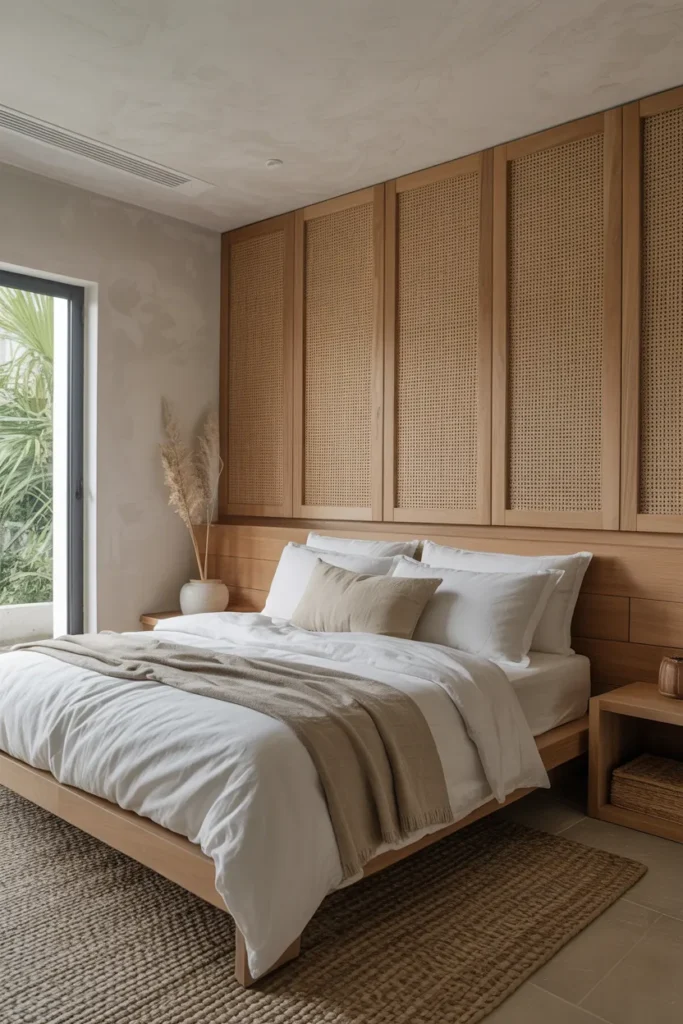
One textured wall adds depth without adding color. Limewash, grasscloth, or subtle plaster texture gives the wall movement that flat paint lacks. Behind the bed, it creates a headboard-like backdrop for the whole room.
Keep it behind the bed: The wall behind the bed is the natural accent wall. Texturing it frames the bed and gives the room a clear focal point.
Stay in the neutral family: A textured wall in warm white or pale beige adds interest quietly. A dark textured wall changes the whole mood, so choose carefully.
- Limewash paint is DIY friendly and very forgiving.
- Grasscloth wallpaper adds real natural texture.
- Test texture samples in your lighting before committing.
Shop This Look
14. Aromatherapy and Natural Scents
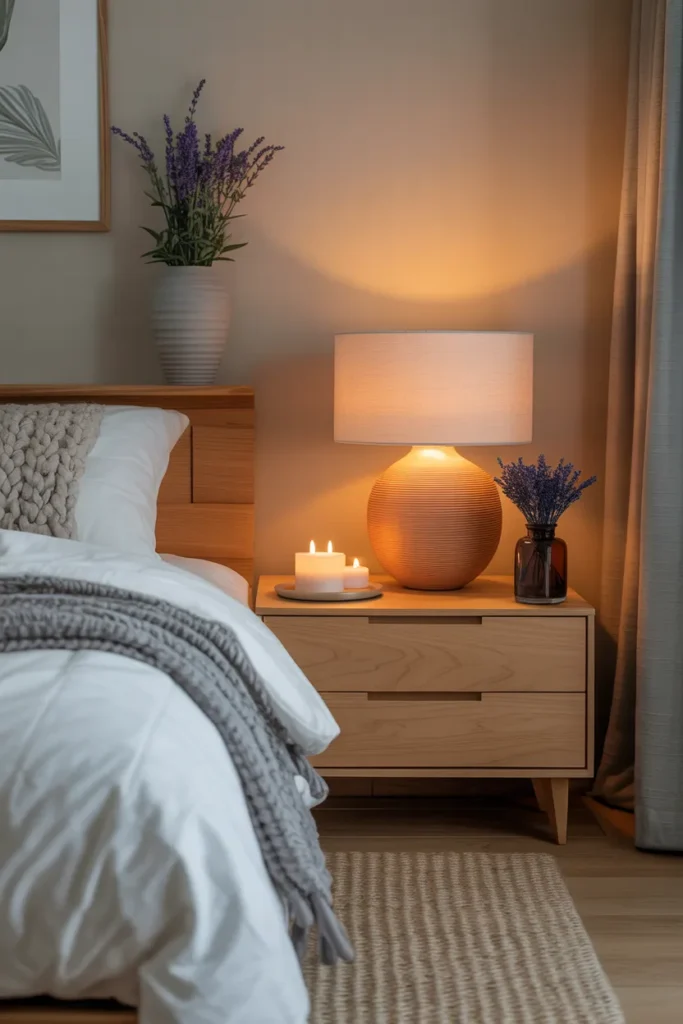
Scent shapes how calm a room feels more than most people realize. Lavender, cedarwood, and sandalwood all signal rest to the brain. A bedroom that smells peaceful feels peaceful.
Use a diffuser, not plugins: An ultrasonic diffuser with real essential oils gives a natural scent. Plug-in air fresheners smell artificial and can be overpowering in a small room.
Keep it subtle: You should notice the scent when you walk in, then stop noticing it. If you can smell it strongly after ten minutes, use less oil.
- Lavender oil is the classic sleep-friendly scent.
- Clean the diffuser weekly to prevent musty smells.
- A soy candle works too; just blow it out before sleep.
Shop This Look
15. Balanced Symmetry
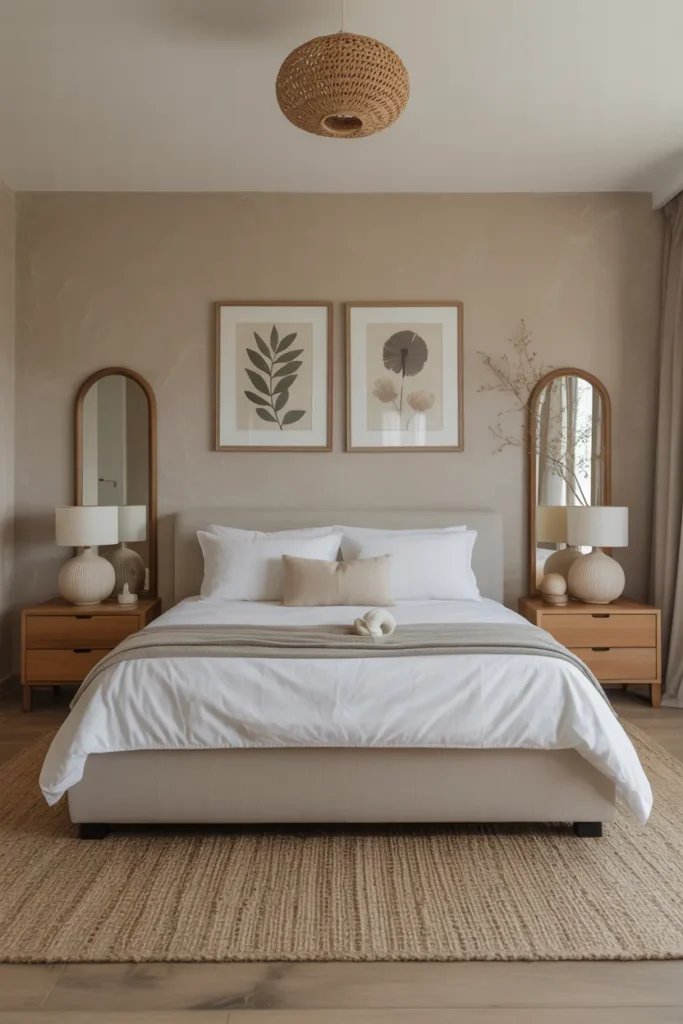
Symmetry feels orderly, and order feels calm. Matching nightstands, matching lamps, and centered art tell the brain that everything is in its place. It is one of the simplest psychological tricks in decorating.
Mirror the bedside: Identical nightstands and lamps on both sides of the bed is the core move. It frames the bed and makes the whole wall feel composed.
Do not overdo it: Full-room symmetry can feel stiff. Keep the bed wall symmetrical and let the rest of the room relax a little.
- Matching lamps are the easiest symmetry win.
- Center the bed on the wall before arranging anything else.
- Symmetrical art pairs work well above matching nightstands.
Shop This Look
16. Natural Fiber Rugs

A natural fiber rug softens the floor and adds warmth underfoot. Jute, wool, and cotton rugs in undyed tones fit the zen palette perfectly. The texture grounds the room, literally and visually.
Size it generously: The rug should extend well past the sides of the bed so your feet land on softness. A too-small rug looks like an afterthought.
Choose low pile: Flatweave and low-pile rugs suit the minimal look and are easier to clean. Deep shag collects dust and fights the simple aesthetic.
- Jute rugs are affordable and very durable.
- Layer a small wool rug over jute for extra softness.
- Rug pads prevent slipping and add cushion.
Shop This Look
17. Soft Window Treatments
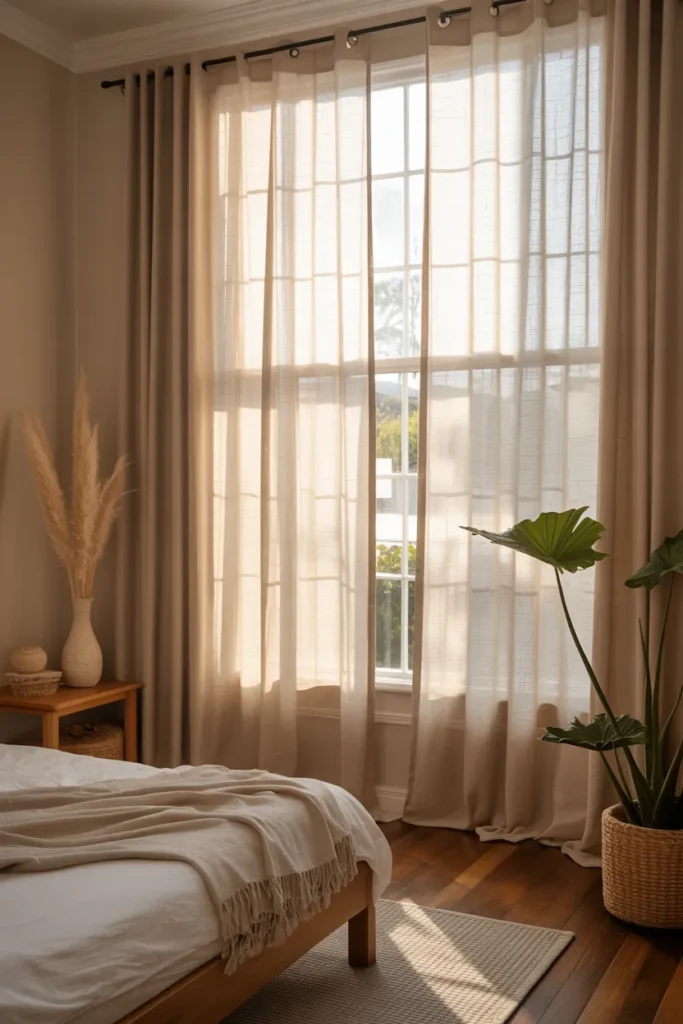
Window treatments control both light and privacy, the two things that make or break bedroom calm. Soft options like linen curtains or woven shades filter light gently instead of blocking it harshly. The window becomes a soft glow, not a hard rectangle.
Consider woven wood shades: Bamboo and woven wood shades filter light beautifully and add natural texture. They suit the zen look better than vinyl blinds.
Layer for flexibility: Shades for daytime filtering plus curtains for nighttime privacy give you full control. Each layer is simple on its own.
- Cordless shades are safer and look cleaner.
- Linen curtains soften even when fully closed.
- Match the shade tone to your wood furniture.
Shop This Look
18. Minimal Clutter Storage
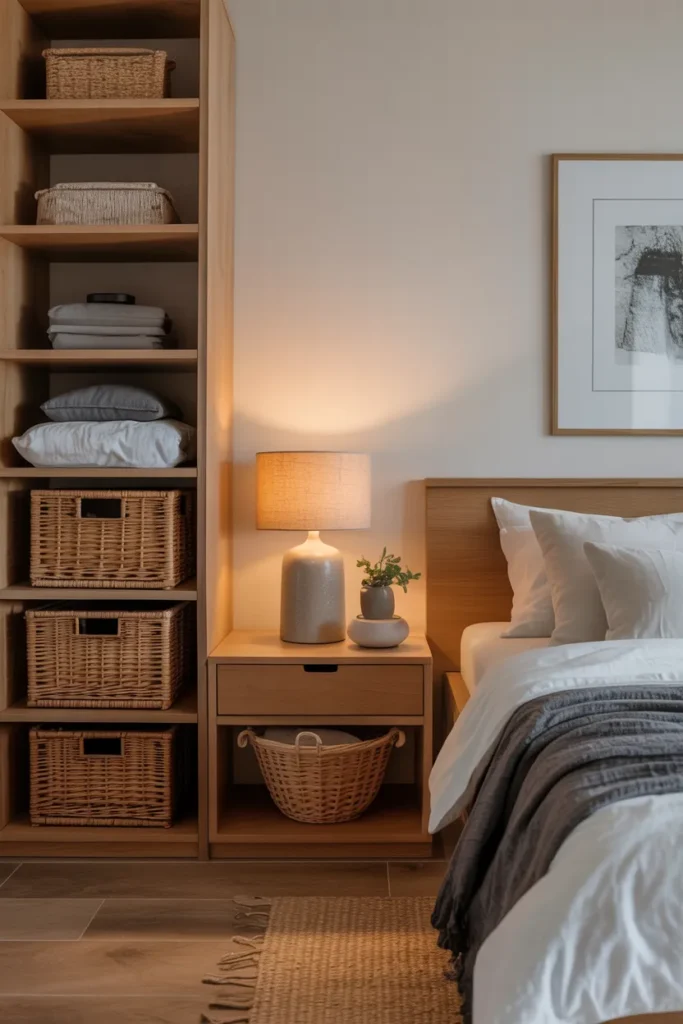
Clutter is the enemy of calm, but most bedrooms need real storage. The trick is closed storage that hides things: baskets, bins, and drawers instead of open piles. What you cannot see cannot stress you.
Give everything a home: Clutter is usually just stuff without a place. A basket for chargers, a box for jewelry, a bin for books. Once everything has a spot, tidying takes minutes.
Use natural containers: Woven baskets and linen bins look good even sitting out. Plastic bins do the job but they do not add anything to the room.
- Underbed boxes use dead space well.
- A lidded basket by the bed hides the nightly clutter.
- Declutter first; storage cannot fix too much stuff.
Shop This Look
19. Soft, Rounded Furniture
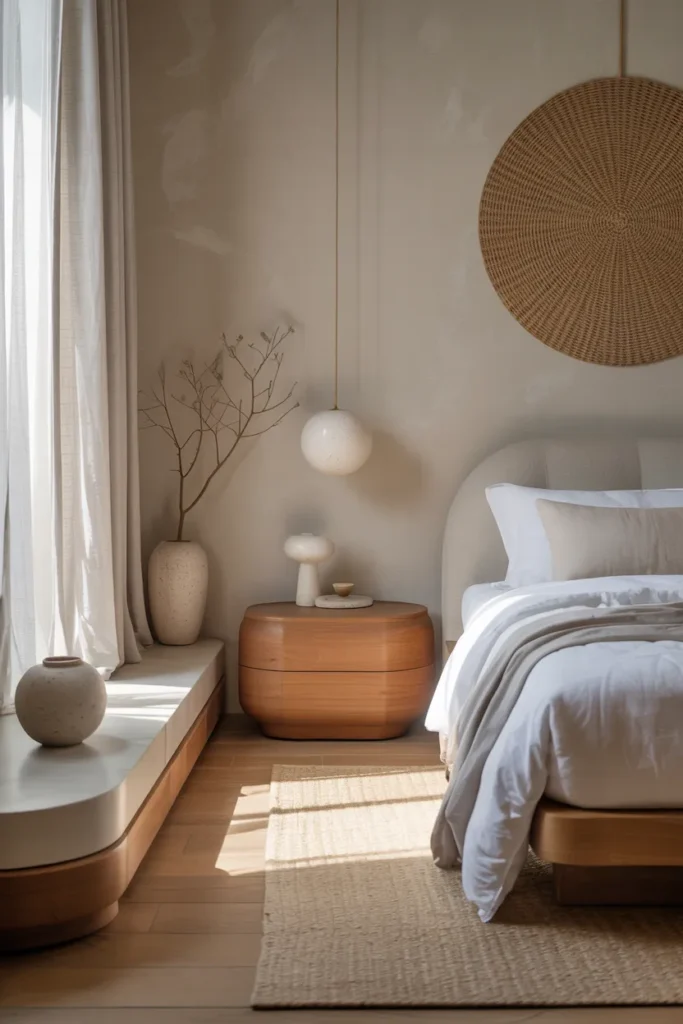
Sharp corners feel alert; curves feel relaxed. Rounded furniture, a curved headboard, an oval mirror, a round side table, softens the whole room. It is a subtle change that your nervous system notices.
Start with one curve: A round mirror or a curved accent chair is enough to shift the room’s geometry. You do not need to replace everything.
Watch the edges you touch: Rounded nightstand corners and soft chair arms matter most where your body meets the furniture daily.
- An oval or round mirror softens a boxy room fast.
- Curved boucle chairs are cozy and very on-trend.
- Round side tables are easier to move around.
Shop This Look
20. Statement Headboard

One strong headboard can carry the whole bedroom. It gives the bed presence and the wall a focal point, which means everything else can stay simple. In a zen room, the headboard should be the one piece with a little personality.
Keep the material natural: Linen upholstery, rattan, or solid wood all fit the calm palette. A loud color or mirrored headboard fights the zen mood.
Size it right: The headboard should be wider than the mattress and tall enough to show above the pillows. A skimpy headboard looks like an afterthought.
- Upholstered headboards are the most comfortable for reading in bed.
- Rattan adds texture without adding color.
- Wall-mounted headboards save floor space.
Shop This Look
21. Gentle Color Accents
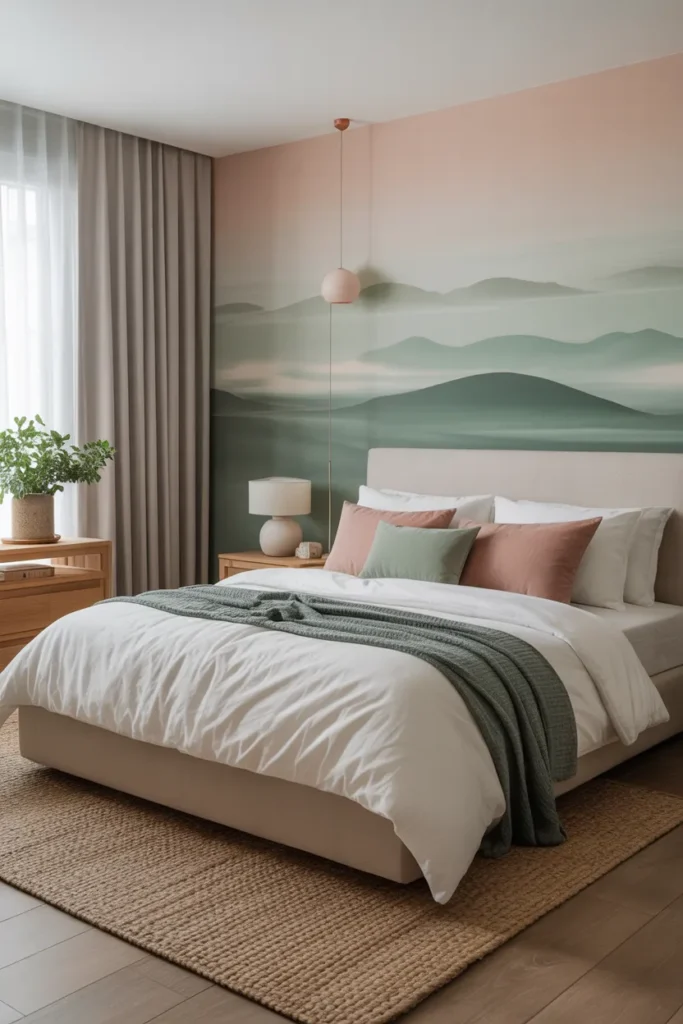
A zen bedroom does not have to be colorless. One or two gentle accents, sage, clay, dusty blue, keep the room from feeling washed out. The key is muted tones that whisper instead of shout.
Pick colors from nature: Sage green, warm clay, soft stone blue. These read as calm because we associate them with the outdoors. Neon or primary colors do the opposite.
Use the 90-10 rule: Keep ninety percent of the room neutral and let ten percent carry the accent. A throw pillow and a vase is plenty.
- Sage green is the easiest accent for a zen palette.
- Repeat the accent color twice so it looks deliberate.
- Swap accents seasonally for a cheap refresh.
Shop This Look
22. Mindful Accessory Placement

Accessories in a zen bedroom should be few and deliberate. Each object earns its place by being beautiful or useful, ideally both. A single tray that corrals your nightly items looks calmer than the same items scattered.
Follow the rule of three: Group objects in odd numbers, usually three. A candle, a small plant, and a book on a tray looks composed without trying.
Leave empty surfaces: An empty nightstand corner or a clear dresser top is a design choice, not a missing piece. Empty space is what makes the placed objects feel special.
- A bedside tray keeps small items looking tidy.
- Choose accessories you actually like looking at daily.
- Rotate a few pieces seasonally to keep it fresh.
Shop This Look
How to Start
Start by clearing every surface in the bedroom. Take everything off the nightstands, the dresser, and the floor, then put back only what you use or love. This one reset shows you how calm the room can feel and motivates the rest.
Next, fix the light. Swap cool bulbs for warm ones, add dimmers or a soft lamp, and hang sheers if the daylight feels harsh. Lighting changes the mood faster than any furniture swap.
Finally, add one natural element at a time: a plant, a wood tray, a jute rug, a linen throw. Live with each addition for a few days before adding the next. Building slowly keeps the room intentional instead of decorated.
- Make the bed every morning; it sets the calm tone for the room.
- Remove one thing from the bedroom each week until it feels right.
- Keep the floor clear; visual floor space equals mental space.
Shop This Look
Common Mistakes
- Adding too many plants. One or two is calming; ten is a greenhouse that needs constant care.
- Keeping the overhead light as the main light source. Harsh ceiling light ruins every other calming choice.
- Choosing stark white everything. Without warm tones and texture, all-white feels clinical, not calm.
- Buying storage before decluttering. Containers organize clutter; they do not remove it. Purge first.
- Mixing too many wood tones. Three or more different woods look accidental instead of natural.
- Over-accessorizing the nightstand. A lamp, a book, and water is plenty. Seven objects is clutter.
- Forgetting scent and sound. A calm-looking room with harsh smells or noise still will not feel restful.
Frequently Asked Questions
What colors work best in a zen bedroom?
Warm whites, soft beiges, pale greys, and muted greens form the classic zen palette. These colors recede visually and remind the brain of natural settings. Avoid saturated colors and stark contrasts, which stimulate instead of soothe.
How do I make a small bedroom feel zen?
Small bedrooms actually suit the zen style well because the look favors simplicity. Use a low platform bed, keep the floor visible, limit the palette to two or three tones, and hide storage in closed baskets and underbed boxes. Less furniture makes the room feel bigger.
Do I need Japanese furniture for a zen bedroom?
No. The principles matter more than the origin of the pieces: low profiles, natural materials, simple shapes, and minimal clutter. A plain wood bed and linen bedding from anywhere can create the feeling. Japanese-inspired pieces help, but they are not required.
What kind of lighting is best for a calm bedroom?
Warm, dimmable, and layered. Use bedside lamps and maybe a floor lamp instead of relying on the ceiling light, and choose bulbs at 2700K or lower. The goal is a soft evening glow that tells your body it is time to wind down.
Where can I find more calm bedroom ideas?
If you want to explore more restful bedroom styles beyond zen, this collection of bedroom decor inspirations covers cozy, minimal, and nature-inspired looks with practical tips for each. It is a good next read once your zen foundation is in place.
The Finishing Touch
Once the room is simplified, sit in it for a while before deciding what is missing. Often the answer is nothing. A truly calm bedroom can feel almost empty at first if you are used to visual noise, and that empty feeling is the point.
For more professional takes on peaceful bedrooms, Houzz has a thoughtful piece on 9 design recipes for a peaceful bedroom that walks through real rooms, from urban wabi-sabi to modern farmhouse calm. Seeing how designers layer texture and light can spark ideas for your own space.
Then protect the calm you built. Make the bed each morning, keep surfaces mostly clear, and resist the urge to fill the empty corners. A zen bedroom is maintained by what you choose not to add.