
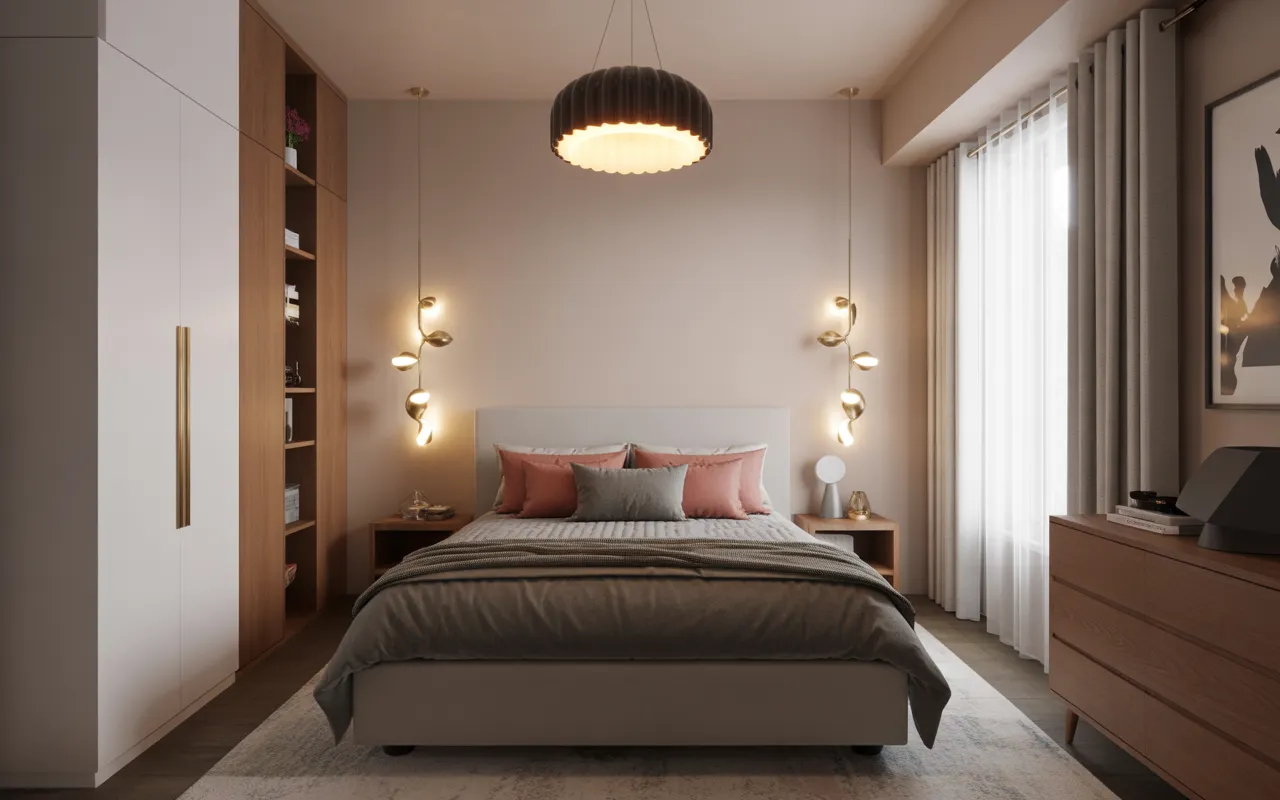
23 Mix & Maximalist Tiny Bedroom Ideas You’ll Love
A tiny bedroom does not have to mean plain walls and one safe colour. Maximalist styling works in small rooms when the colour, pattern and texture all point in the same direction instead of competing at random.
The ideas below cover walls, bedding, lighting, storage and the small corners that usually get ignored. Each one is sized for a compact room, so nothing here needs a big floor plan to work.
Start with one or two ideas that suit the room you already have. You can add more layers over time, and the room will still feel pulled together at every stage.
This post contains affiliate links. If you buy through them, I may earn a small commission at no extra cost to you.
1. Bold Pattern Mixing for a Tiny Maximalist Bedroom
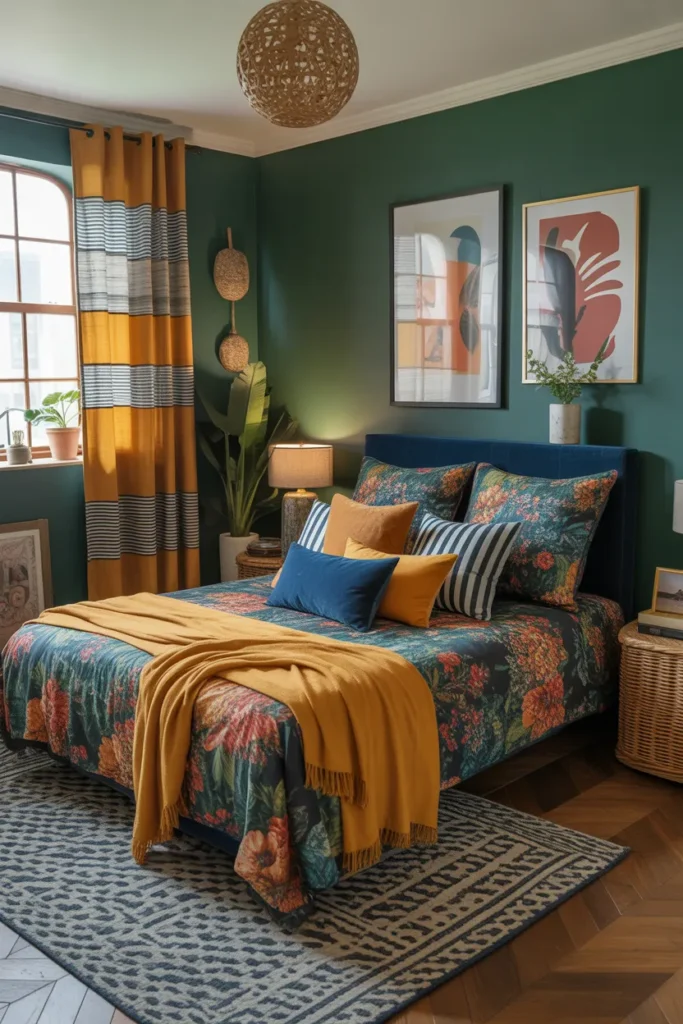
A small room can carry more pattern than most people expect. Put a large floral or geometric print on the bedding, a smaller stripe on the cushions and a plain colour in between to rest the eye. The mix reads as deliberate because the colours repeat.
Keep one colour in charge: Pick a lead colour, such as deep teal or rust, and make sure it shows up in every pattern you use. That single repeat is what stops three or four prints from looking like a jumble sale.
Scale matters: Pair one large scale print with one or two small ones. Two large prints at the same size fight each other, while a big pattern with a small pattern beside it looks balanced even in a tight space.
- Choose three patterns at most to start
- Repeat the lead colour in each print
- Leave one plain surface, such as a solid throw
Shop This Look
2. Color-Soaked Walls with Eclectic Decor
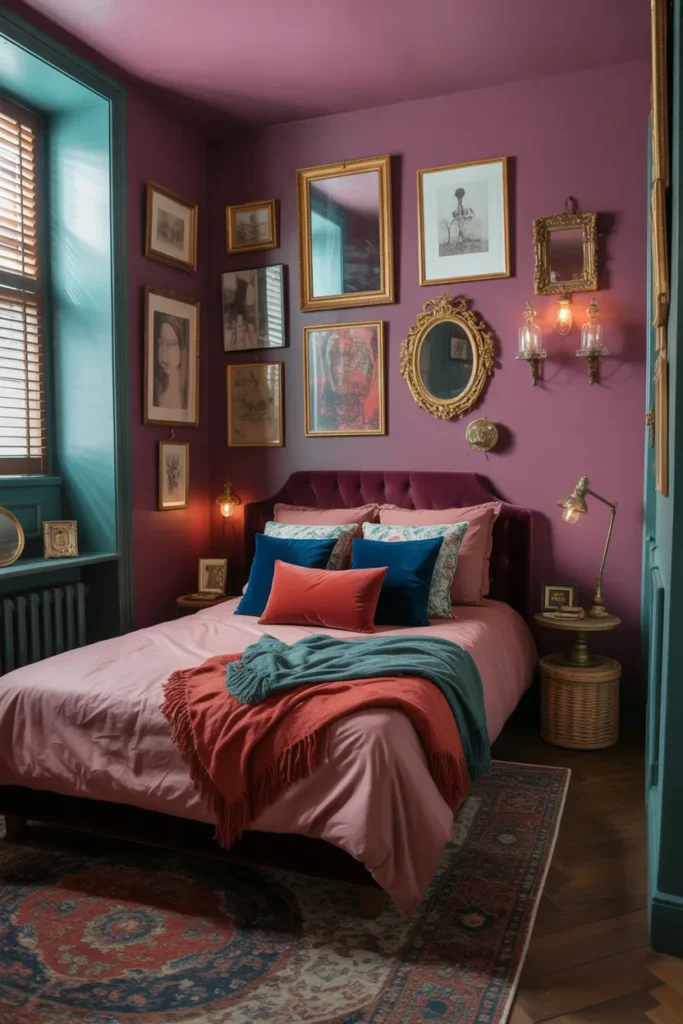
Painting all four walls in one rich colour makes a tiny room feel finished rather than unfinished. Deep green, plum or navy wraps the space, and the eclectic pieces on top, from brass lamps to framed prints, stand out against it.
Test the colour first: Paint a large swatch and look at it in morning and evening light. Dark colours shift a lot through the day, and a small chip on a card rarely matches how the wall will actually look.
Balance the dark walls: Add one lighter layer, such as pale bedding or a cream rug, so the room stays cosy instead of gloomy. Warm light bulbs also help, since cool white light can make dark paint look flat.
- Paint the skirting boards the same colour for a wrapped look
- Use warm white bulbs in every lamp
- Hang one large piece of art rather than several small ones
Shop This Look
3. Layered Textiles That Add Warmth and Drama
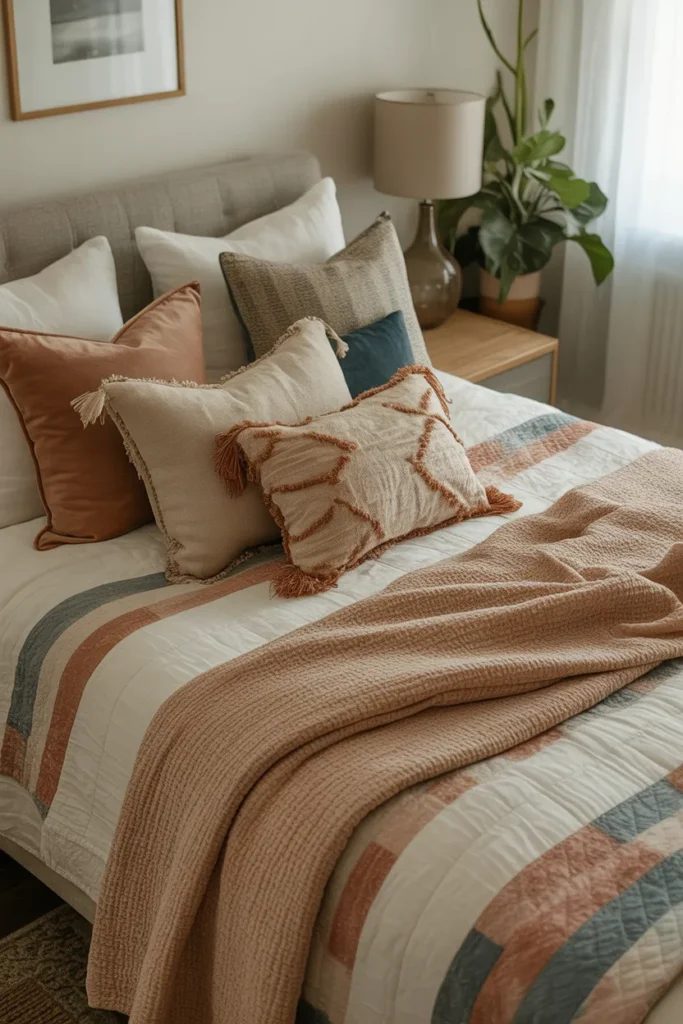
A bed with several layers is the easiest place to add drama in a small room. Start with a plain sheet set, add a quilt or coverlet, then fold a textured throw across the foot. Each layer adds warmth without taking any extra floor space.
Mix textures, not just colours: Combine one smooth fabric, one nubby weave and one soft pile, such as cotton, linen and a knitted throw. The contrast is what your hand and eye notice, and it works even in a single colour.
Keep the layers usable: Every layer should be light enough to pull back at night. If the bed takes five minutes to unmake, the layers will end up on the floor within a week.
- Use three layers at the foot of the bed
- Wash throws and covers on rotation so they stay fresh
- Store spare layers in a basket, not on the bed
Shop This Look
4. Gallery Walls in a Maximalist Tiny Bedroom
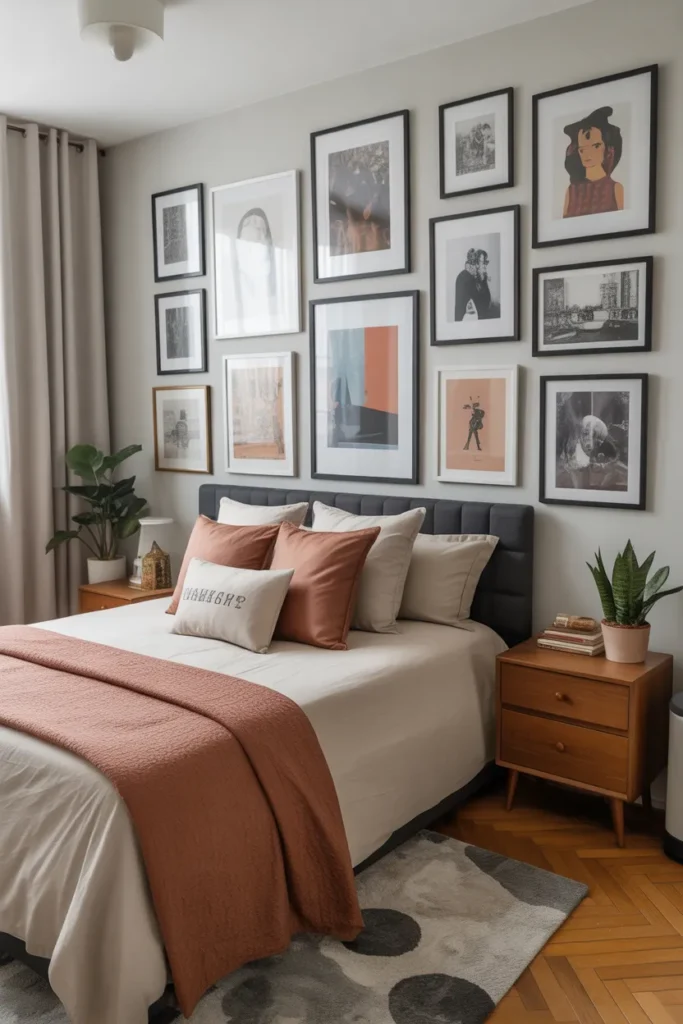
A gallery wall uses vertical space, which a tiny bedroom has more of than floor space. Mix framed prints, photos and one or two small objects, and hang them close together so the group reads as one piece.
Plan it on the floor first: Lay the whole arrangement out on the bed or floor and take a photo before you drill anything. It is much easier to move a frame an inch on the floor than to fill extra holes in the wall.
Keep frames linked: Use two frame colours at most, such as black and natural wood, and repeat them across the wall. The art inside can vary widely and the wall will still look organised.
- Start the lowest frame about 20 cm above the furniture below
- Leave 3 to 5 cm between frames
- Add one mirror or small shelf to break up flat frames
Shop This Look
5. Statement Headboards with Maximalist Flair
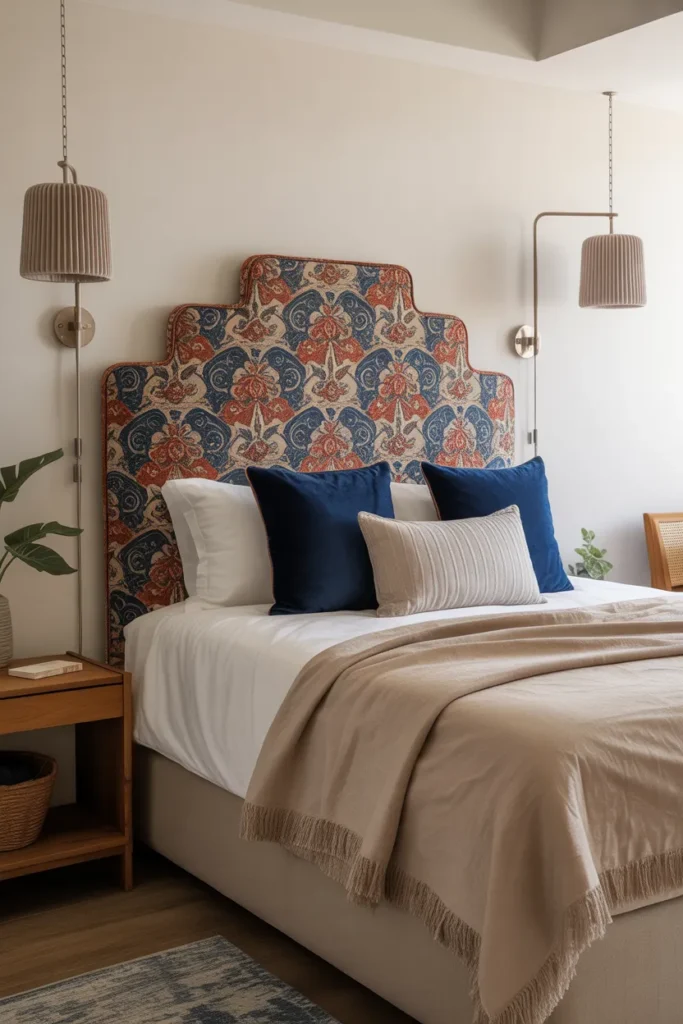
In a small room the headboard is often the largest thing you see, so it may as well be the best thing in it. A tall tufted, rattan or brightly upholstered headboard gives the room a clear focal point and lets the rest stay simple.
Size it to the wall: A headboard that runs a little wider than the mattress looks generous, while one that is too narrow looks lost. Measure the wall first, since a tall design can overwhelm a low ceiling.
Let it set the palette: Pull two colours out of the headboard fabric and repeat them in the bedding and curtains. That gives you a colour scheme without any guesswork.
- Choose a washable or wipe-clean fabric if possible
- Check the height against your ceiling before ordering
- Keep bedside art minimal so the headboard stays the focus
Shop This Look
6. Vintage Finds Mixed with Modern Pieces
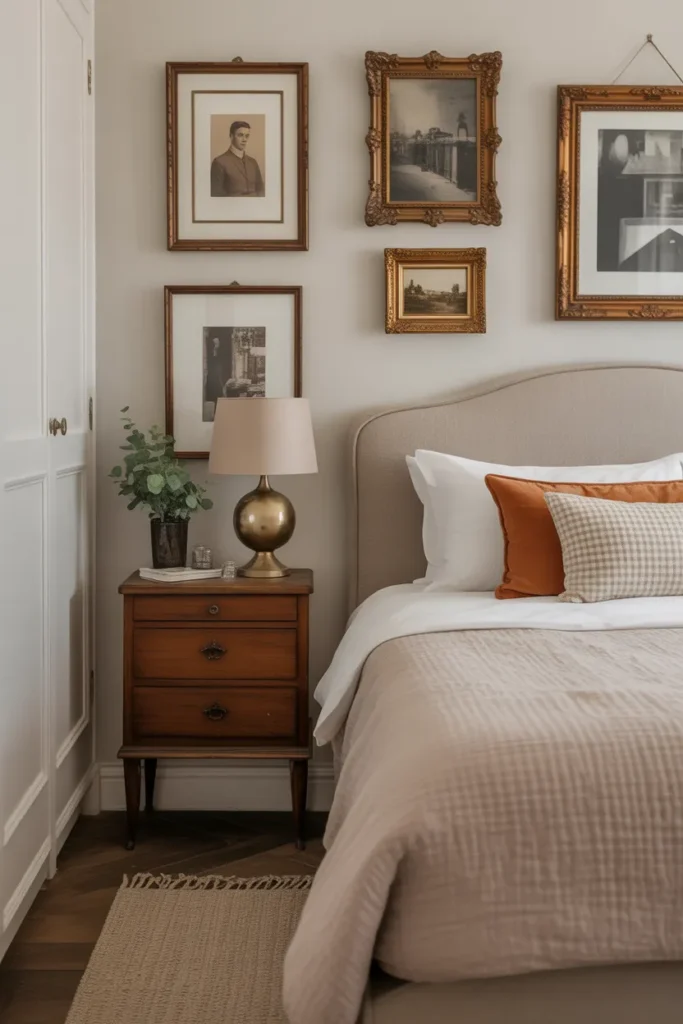
An old wooden dresser beside a clean lined modern lamp is the kind of contrast that makes a room feel collected over time. Flea market and charity shop finds bring wear and history that new pieces do not have.
Give old and new a link: Repeat one material or colour between the vintage and modern pieces, such as brass handles on an old dresser and a brass frame on a new mirror. One shared detail is enough to tie them together.
Check vintage pieces properly: Smell drawers, check for woodworm in older wood and test that drawers run smoothly before you buy. A quick clean and new handles fix most cosmetic problems.
- Sand and oil worn wood rather than painting over it
- Replace dated handles with simple modern ones
- Keep one modern light fitting to stop the room feeling dated
Shop This Look
7. Maximalist Nightstands with Decorative Storage
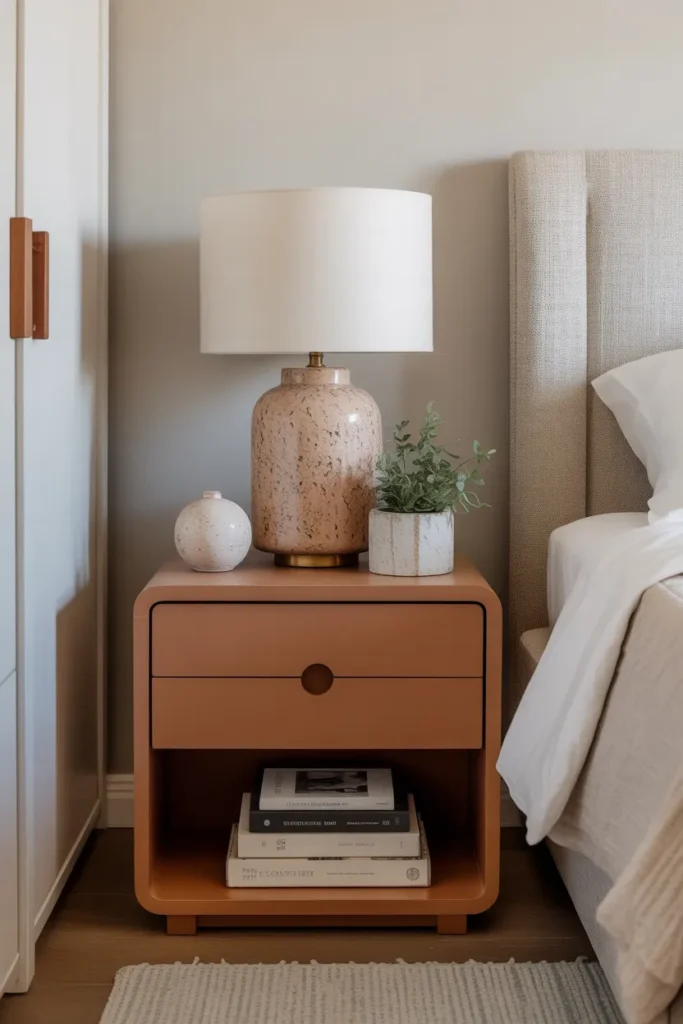
A nightstand in a maximalist room has to work hard, because there is rarely room for a second one. Choose a small chest or a stand with drawers and a shelf, then style the top with a lamp, a small tray and one personal object.
Hide the everyday clutter: Books, chargers and hand cream go in the drawer, not on top. A tray on the surface keeps the few visible items grouped, so the top looks styled instead of crowded.
Use the wall above it: A small shelf or wall light above the nightstand frees the whole surface. In a tiny room that reclaimed patch is often where your water glass and book actually fit.
- Pick a stand with at least one drawer
- Corral small items on a tray
- Charge phones inside the drawer with a cable hole or gap
Shop This Look
8. Ceiling-to-Floor Curtains for Drama
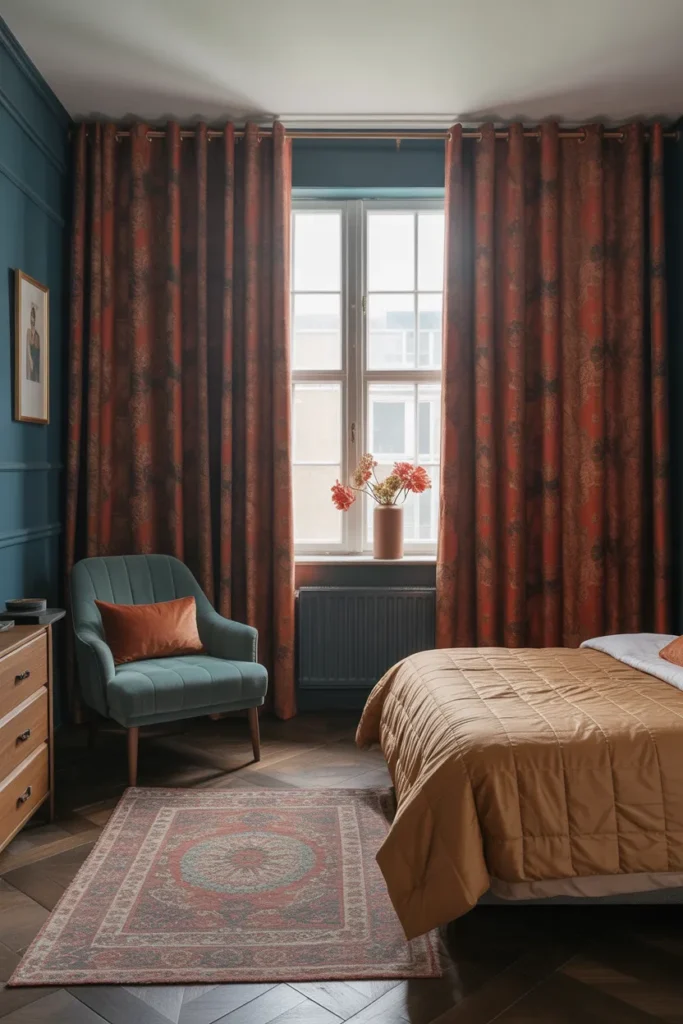
Curtains hung just below the ceiling and falling to the floor make a low room feel taller. A rich colour or a bold print also adds a large block of pattern without using any floor space at all.
Hang them high and wide: Fix the rail close to the ceiling and extend it past the window frame on both sides. The window looks bigger, and the curtains can sit clear of the glass when open so you lose no light.
Choose the right weight: Heavy lined curtains suit a cold, draughty room, while a lighter lined pair gives the same full look in a warmer one. Either way, they should just touch the floor, not pool or hover.
- Measure from ceiling to floor, not from the window top
- Use two panels per window for full folds
- Steam them after hanging to drop the creases
Shop This Look
9. Maximalist Lighting with Personality
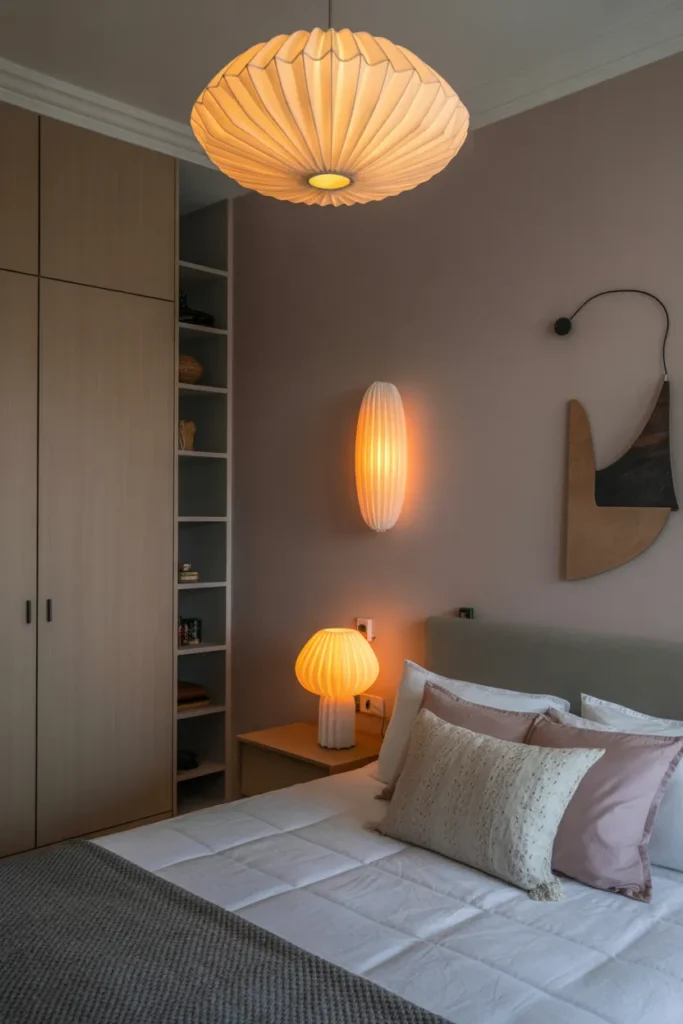
One plain ceiling light wastes a chance in a maximalist room. A beaded pendant, a coloured glass shade or a lamp with a patterned shade adds pattern overhead and gives the room a warmer, lower light in the evening.
Layer the light: Use at least two sources, such as a pendant and a bedside lamp, on separate switches if you can. A single bright overhead light flattens all the colour and texture you have added.
Watch the bulb colour: Warm bulbs around 2700K suit rich colours and wood. Cool bulbs can turn jewel tones grey, so test one bulb before you replace the lot.
- Pick a shade that diffuses light, not a bare bulb
- Add a plug in dimmer if rewiring is not an option
- Keep pendant drops clear of head height over walkways
Shop This Look
10. Open Shelving Styled the Maximalist Way
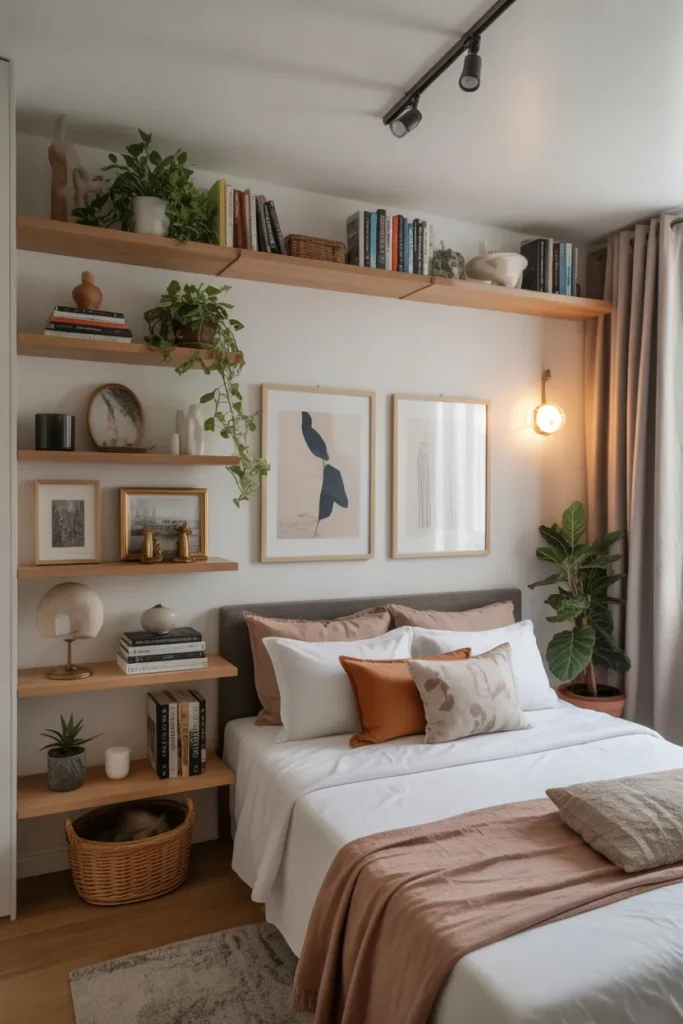
Open shelves show off books, plants and collected objects, but they need editing or they look like storage. Group items in threes, leave small gaps, and put the largest pieces at the back.
Style in groups: A stack of two books, a plant and one object per section is a reliable formula. Repeating that rhythm along the shelf makes a lot of small things look like a display.
Keep dust under control: Open shelves collect dust, there is no way around it. Keep a small brush nearby and give them a quick pass weekly, and avoid shelves directly above the pillow end of the bed.
- Put everyday items on the lowest shelf within reach
- Use bookends to stop rows leaning
- Leave about a third of each shelf empty
Shop This Look
11. Maximalist Wallpaper in a Tiny Bedroom
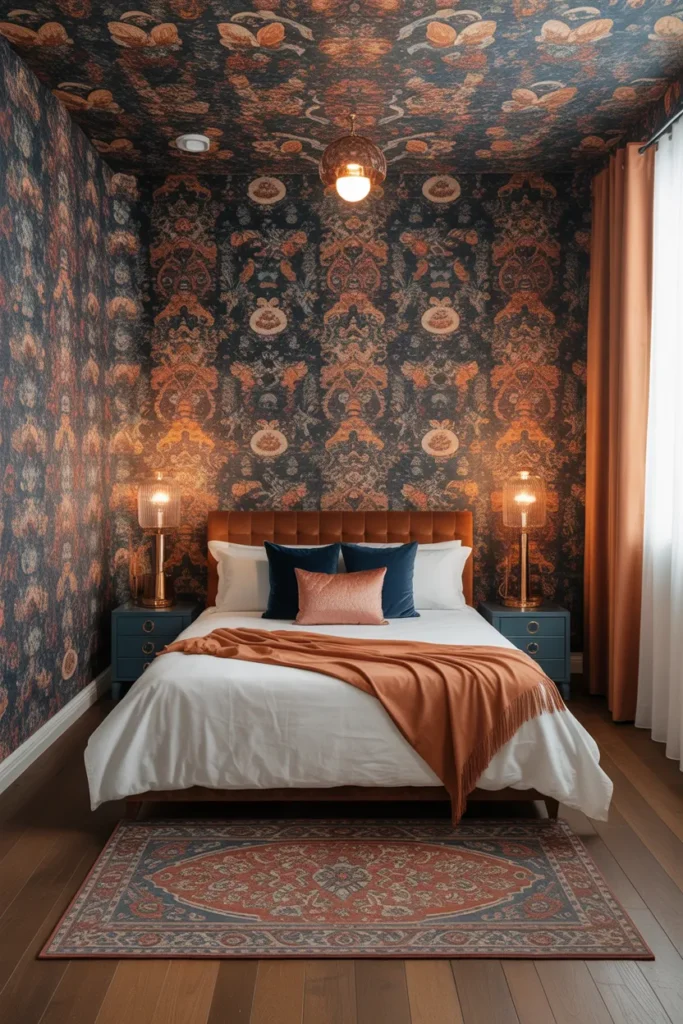
Peel and stick wallpaper has made a full patterned wall realistic for renters and small rooms alike. A large botanical or geometric print behind the bed gives you the maximalist look in one decision.
Start behind the bed: The wall you see least up close and most from the door is the bed wall, and the bed hides the lower half anyway. One papered wall plus painted walls in a picked out colour is enough for a tiny room.
Order a sample first: Colours on a screen are unreliable, and pattern scale is hard to judge from a product photo. A sample taped to the wall for two days will tell you more than any review.
- Check the pattern repeat before you order the quantity
- Smooth each strip slowly to avoid bubbles
- Keep leftover paper for lining drawers or backing shelves
Shop This Look
12. Plants Layered for a Lush Maximalist Look
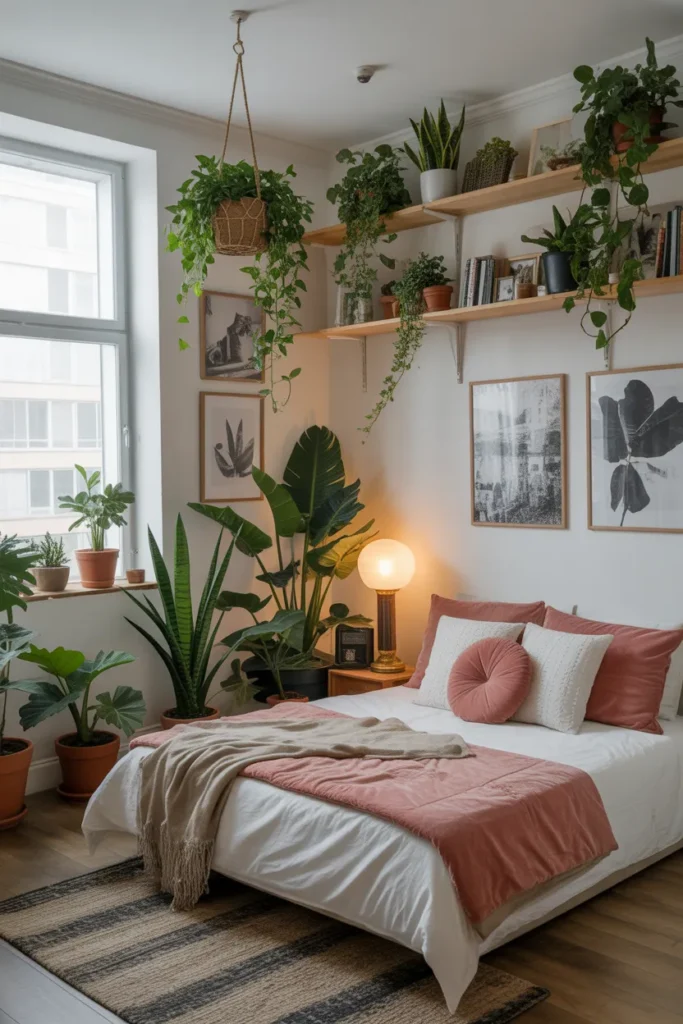
Plants add colour and shape that no fabric can copy. In a tiny room, trail one plant down from a shelf, put one upright plant on the dresser and hang one if you have a hook, so the green is spread at different heights.
Match plants to your light: A north facing small room will not keep a sun loving plant happy. Pothos, snake plants and ferns cope with lower light and forgive irregular watering, which suits most bedrooms.
Use pots as decor: A terracotta pot, a brass pot and a woven basket used as a pot cover give you three more textures. Keep saucers under everything so watering does not mark furniture.
- Trail plants away from the pillow if you have allergies
- Group plants together to make watering quicker
- Choose faux plants for shelves you cannot reach easily
Shop This Look
13. Mixing Metallics for Visual Interest
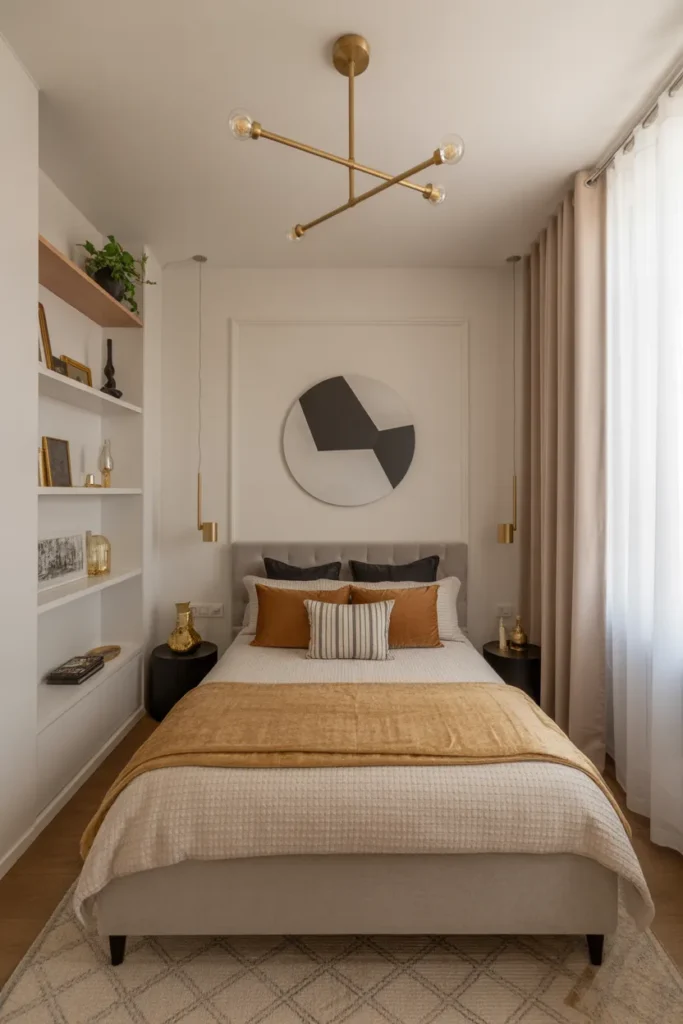
Brass, copper and black metal can all sit in the same room if each one appears more than once. A brass lamp, copper toned frame and black curtain rail look planned when the finishes repeat around the space.
Repeat each finish twice: A single brass object looks like an accident. Two or three pieces in the same finish, spread across the room, look like a choice, so add small items like handles or frames to back up a lamp.
Keep the balance warm or cool: Brass and copper are warm, chrome and nickel are cool. Mixing one warm with one cool finish is fine, but four different finishes in a tiny room usually looks unsettled.
- Use metallic frames to repeat a lamp finish
- Clean brass with a soft cloth, not abrasive pads
- Limit yourself to three finishes in total
Shop This Look
14. Maximalist Bedding as the Main Statement
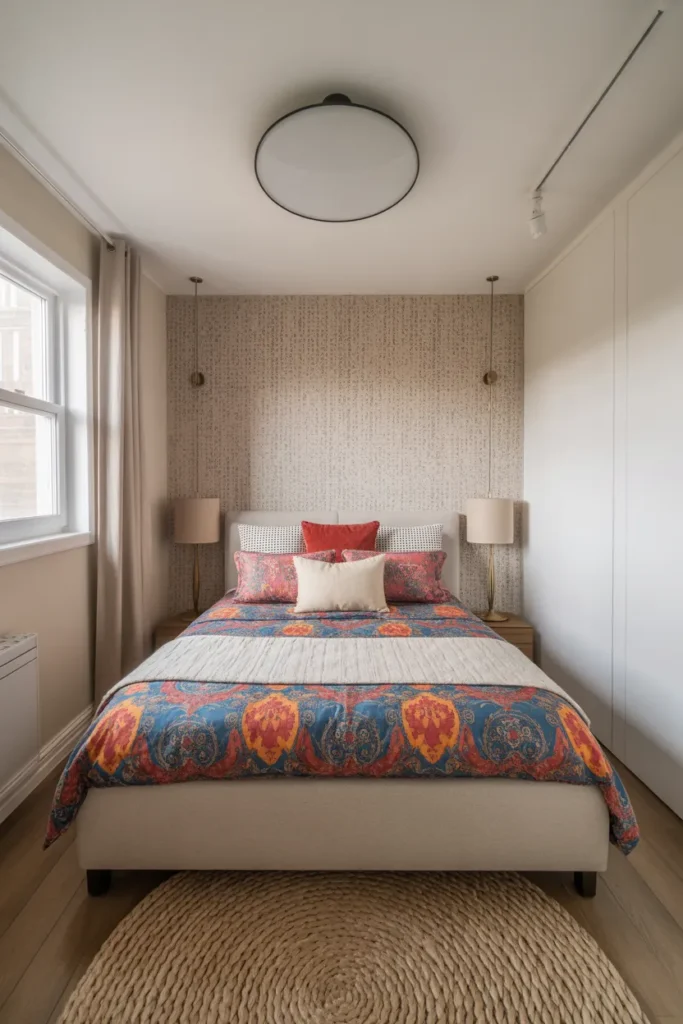
If you change nothing else, change the bedding. A reversible patterned duvet set gives you two looks, and it covers the largest surface in the room, so the whole space feels different in ten minutes.
Build around the duvet: Let the bedding carry the strongest pattern and keep the curtains and rug plainer, in colours taken from it. That order, bold bed first, stops the room tipping into visual noise.
Buy for washing, not just looks: Bedding gets washed more than anything else in the room. Cotton and cotton blends hold colour well and soften with washing, while cheap microfibre can pill after a few months.
- Keep a plain spare set for wash days
- Fold the duvet back to show the sheet colour
- Add one contrasting cushion to break up the pattern
Shop This Look
15. Art-Filled Corners That Feel Intentional
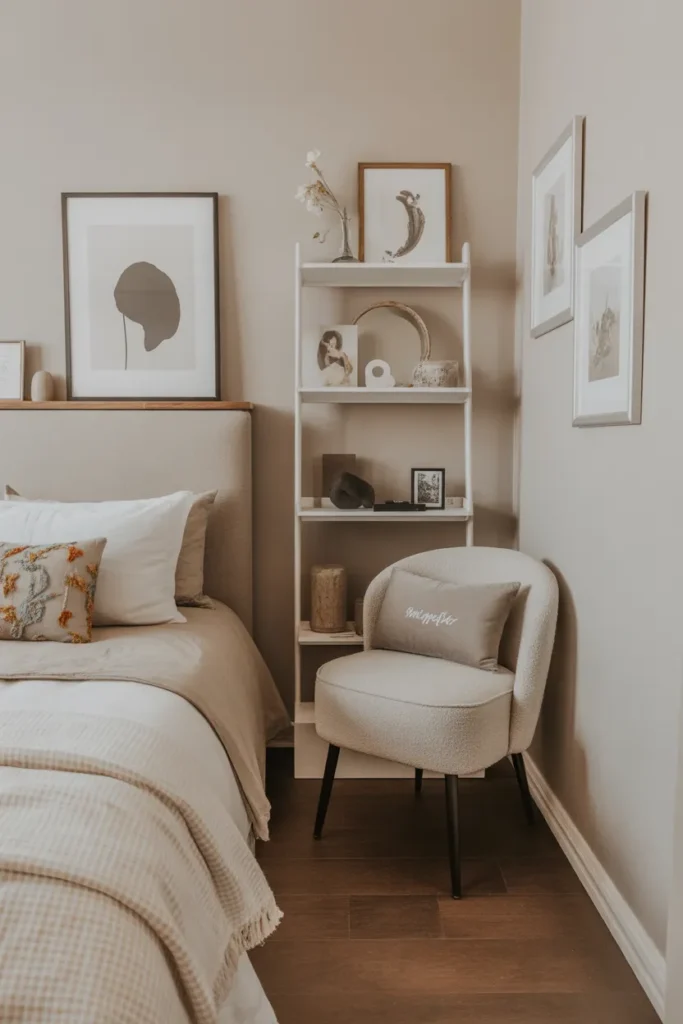
The corner by the door or window often ends up as a dumping spot. A small chair or floor cushion, a stack of art books and one framed piece leaning on the wall turns it into a deliberate spot instead.
Give the corner a job: A reading corner, a dressing corner with a mirror, or a plant corner all work. A corner with a purpose stays tidy far longer than one that is only decorative.
Anchor it with light: A small lamp or a candle style light marks the corner out in the evening. Without its own light source, a styled corner disappears once the main light is on.
- Use a floor cushion if a chair will not fit
- Lean large art instead of hanging it for flexibility
- Keep the floor area under it clear so it reads as space
Shop This Look
16. Maximalist Accent Walls in Small Bedrooms
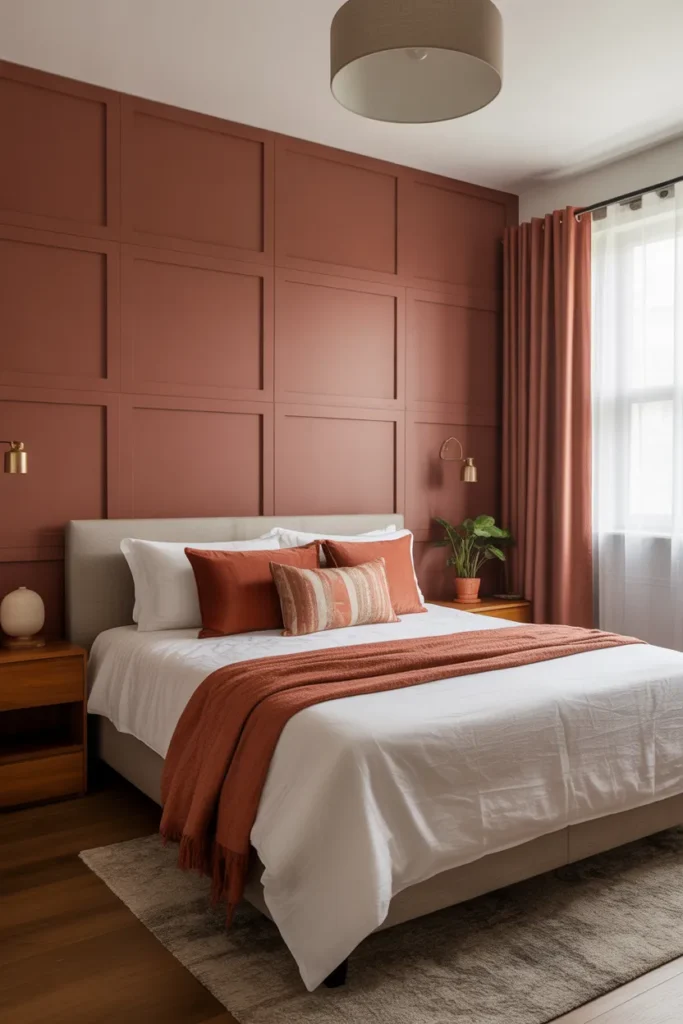
One accent wall in a strong colour or print gives a tiny room a clear direction without closing it in. Paint or paper the bed wall, then keep the other walls lighter so the room still feels open.
Pick the right wall: The wall behind the bed is the safest choice because you face it from the door and it is partly covered. Avoid the wall with the window, since strong colour around bright light is hard to look at.
Tie it to the rest of the room: Take one colour from the accent wall into the bedding and one cushion. Without that link, an accent wall can look like it belongs to a different room.
- Use a good quality paint, dark colours show every flaw
- Cut in carefully, a wobbly edge ruins the effect
- Test with a big painted board you can move around
Shop This Look
17. Mixing Wood Tones for a Collected Look
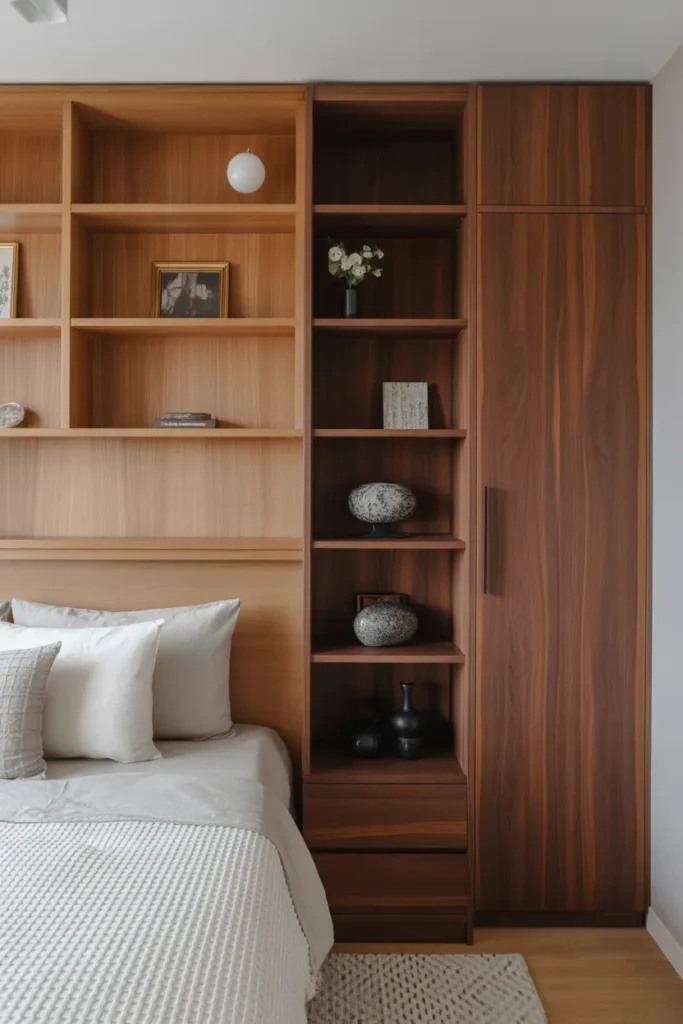
Matching every piece of furniture to the same wood finish makes a small room look flat and showroom like. A dark dresser, a pale oak stool and a mid tone bed frame look better together because real rooms are gathered over time.
Watch the undertones: Woods with warm, reddish undertones clash with grey toned woods. Hold pieces, or photos of them, side by side in daylight before you commit to a large item.
Repeat each tone once: A dark bed frame plus a dark picture frame, or a pale stool plus pale storage boxes, stops any single piece looking out of place. Small repeats do the job.
- Mix no more than three wood tones in a small room
- Use a rug to separate very different floor and furniture tones
- Oil pale wood occasionally so it does not dry grey
Shop This Look
18. Maximalist Rugs That Anchor the Space
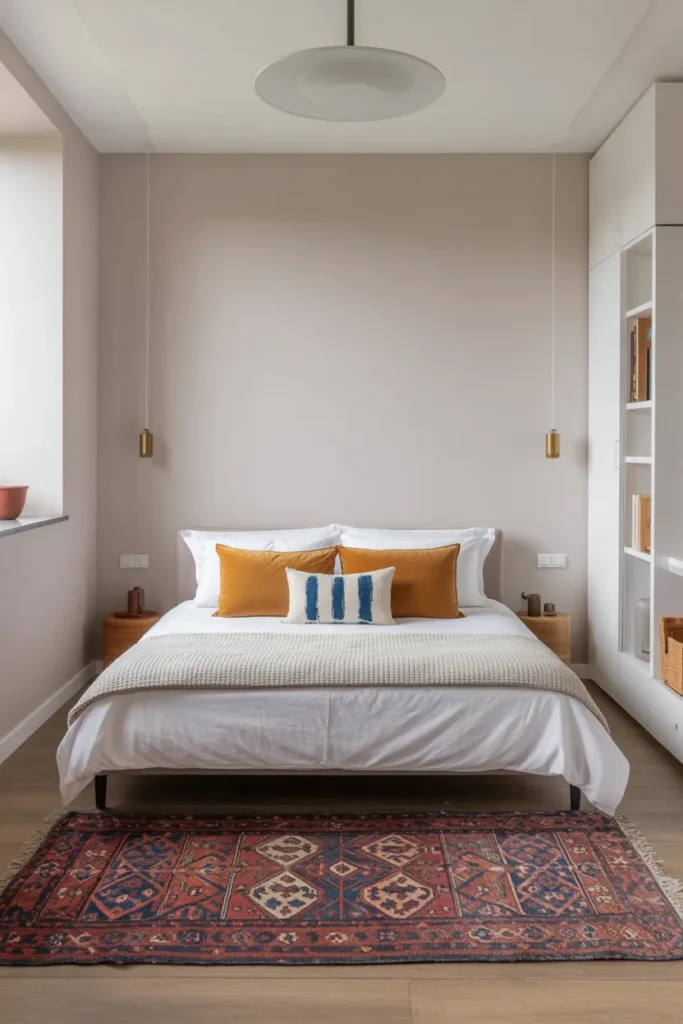
A rug that covers most of the floor pulls a busy room together. A Persian style or richly patterned rug hides the joins between furniture, adds warmth underfoot and can carry several of your room colours at once.
Go bigger than you think: A small rug floating in the middle makes a tiny room look smaller. Choose one that goes under the bed and extends on both sides, so your feet land on it when you get up.
Check the pile height: High pile feels good but traps dust and makes doors stick if the rug sits under one. A low, dense pile in a busy pattern is the practical choice for a small bedroom.
- Use a non slip underlay on hard floors
- Vacuum patterned rugs weekly, dirt dulls the colours
- Rotate the rug twice a year for even wear
Shop This Look
19. Displaying Collections with Maximalist Style
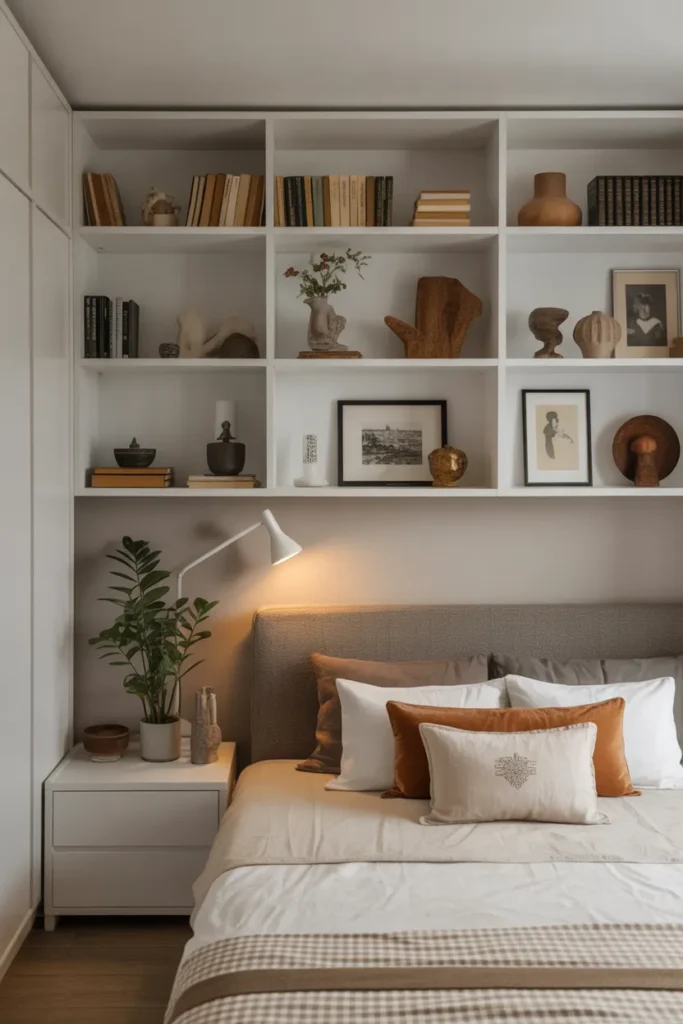
Collections are what separate a maximalist room from a decorated one. Records, postcards, small ceramics or travel souvenirs displayed together tell people who sleeps here, and they cost nothing if you already own them.
Display, do not scatter: A collection spread thinly around a room reads as clutter. Grouped on one shelf, in one frame or along one wall, the same objects read as a collection, so keep them together.
Leave room to grow: If you collect, the group will get bigger. Choose a shelf or tray with spare space, and move the display when it outgrows the spot rather than squeezing more in.
- Group by colour for an orderly look
- Use clear boxes for small fragile items
- Photograph the arrangement before dusting so you can reset it
Shop This Look
20. Layered Wall Decor Beyond Art
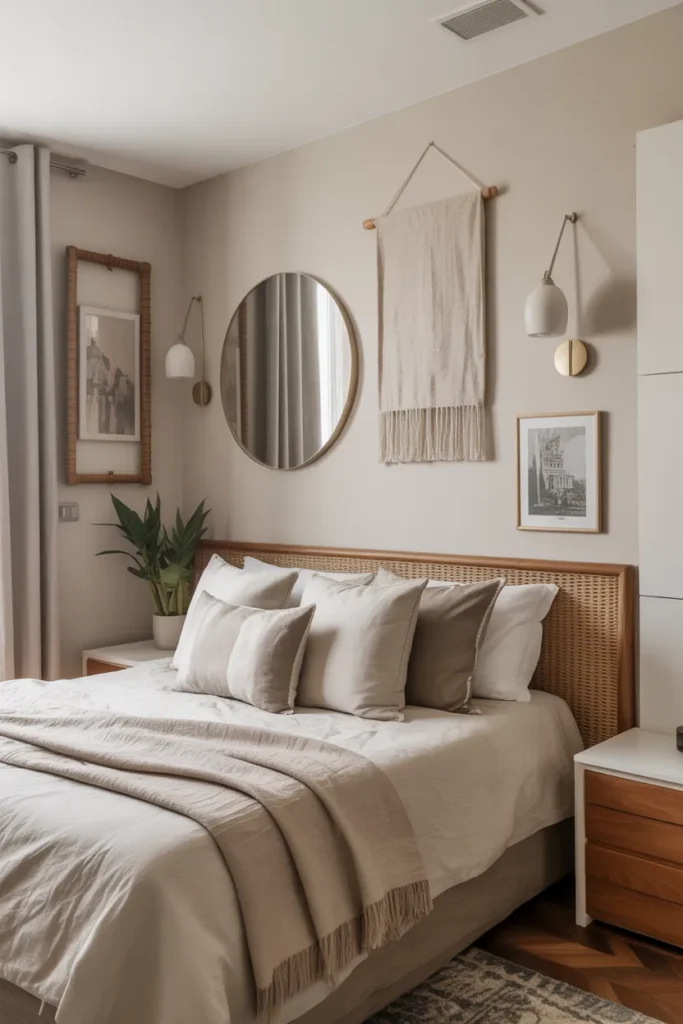
Walls can hold more than framed prints. Woven hangings, plates, hats, a small tapestry or a string of postcards add texture and shape, and they are light enough for any wall.
Mix shapes on purpose: A round plate or mirror among rectangular frames stops a wall looking like a grid. Plan the mix on the floor first, as you would a gallery wall, and photograph it before hanging.
Mind the weight and fixings: Textiles and plates are light, but use proper plate hangers and check what your wall is made of. In rented rooms, adhesive hooks rated for the weight avoid holes entirely.
- Hang textiles from a simple wooden dowel
- Space objects closer than you would frames
- Keep paper items away from direct sun so they do not fade
Shop This Look
21. Maximalist Mirrors to Expand a Tiny Bedroom
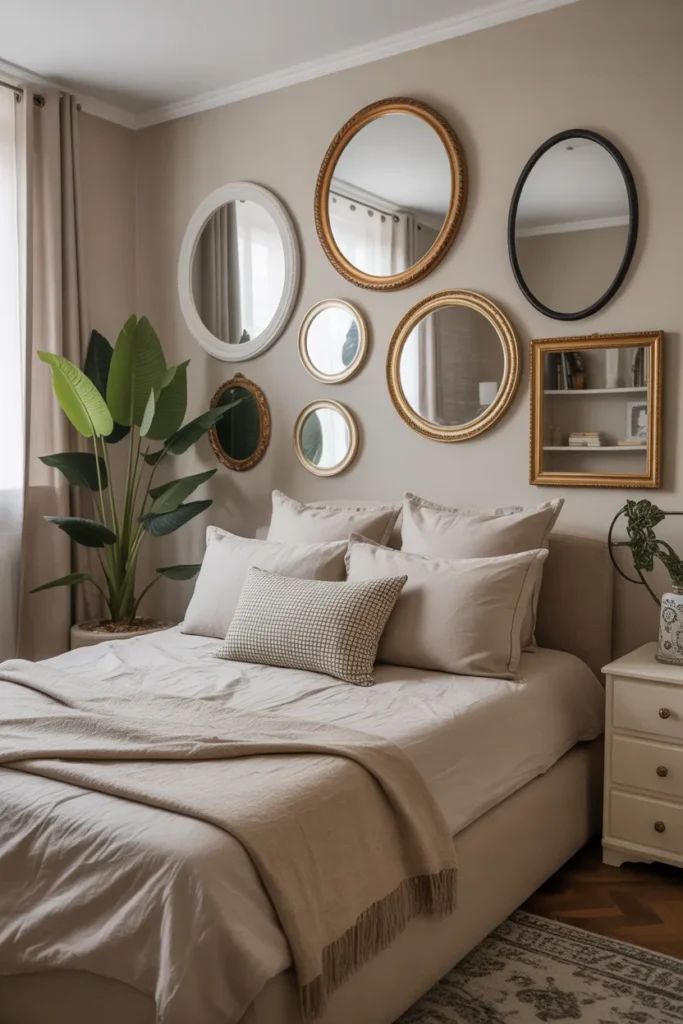
A mirror bounces light around a small room and doubles the colour and pattern it faces. An ornate or brightly framed mirror does that job while adding the kind of detail maximalist rooms run on.
Place it opposite colour: Hang the mirror so it reflects the bed, a plant or your gallery wall rather than a blank wall or the door. What it reflects matters more than the mirror itself.
Lean a large one if you can: A big mirror leaning against the wall, safely secured, feels relaxed and needs no drilling. It also catches more light than a small one hung high.
- Secure leaning mirrors to the wall at the top
- Clean with a microfibre cloth to avoid streaks
- Avoid placing a mirror directly facing the bed if it disturbs your sleep
Shop This Look
22. Maximalist Styling with Books Everywhere
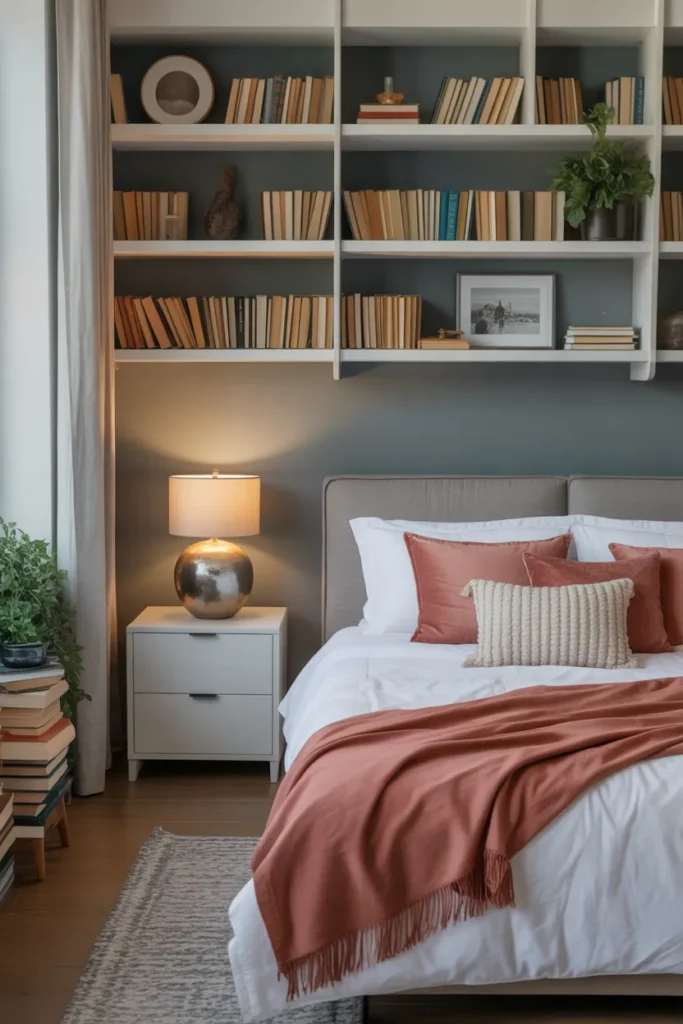
Books are free decor with colour built in. Stacks on the floor by the bed, a row on the windowsill and a small pile on the dresser soften a room and make it feel lived in straight away.
Style the stacks: Alternate horizontal stacks with one upright row so it does not look like a library clear out. Turning some spines inward, or grouping by cover colour, calms a very mixed set.
Keep it honest: Books you actually read look right and get moved around naturally. A stack bought purely for looks tends to stay dusty and untouched, so start with what is already in the house.
- Put the largest books at the bottom of a stack
- Use a stack as a plant or lamp stand to save surface space
- Keep one book by the bed and rotate it as you read
Shop This Look
23. Personal Touches That Complete the Maximalist Look
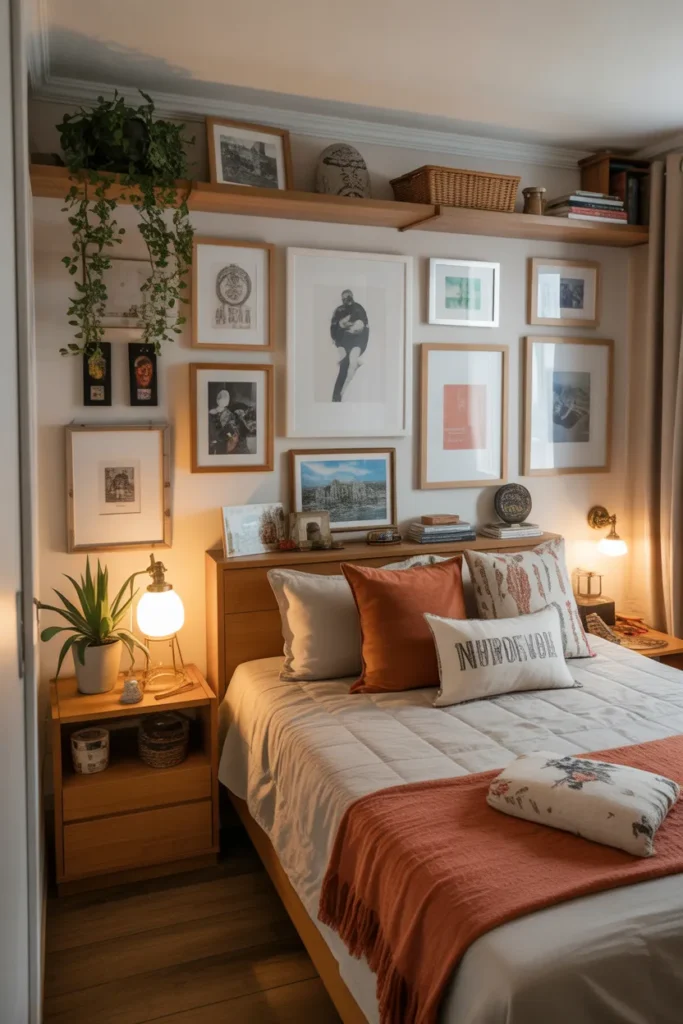
The last layer is the personal one, and it is the layer you cannot buy in one go. A photo in a good frame, a scarf draped over the headboard, a handmade cushion or a souvenir from a trip finishes a room in a way no matching set can.
Edit once, then stop: Add your pieces, live with them for a week, then remove one thing. Maximalist rooms look best just before they tip over, and taking one item out usually sharpens everything else.
Rotate with the seasons: Swap a throw, a cushion cover and one piece of art between summer and winter. The room feels renewed twice a year without buying a whole new scheme.
- Frame one personal photo properly rather than pinning several
- Keep handmade or gifted pieces where you see them daily
- Store the pieces you rotate out in one labelled box
Shop This Look
How to Start
Start with the room as it is and clear everything off the surfaces. Maximalist styling fails when it is added on top of existing clutter, so give yourself a clean base first, even if the furniture stays exactly where it is.
Choose your anchor first: Pick one anchor, usually the bedding or a wall colour, and decide it properly before buying anything else. Every later choice gets tested against that anchor, which is what keeps a layered room coherent.
Add in layers over weeks: Add pattern, then texture, then objects, with a few days between each layer. Living with each stage shows you what the room actually needs next, and it spreads the cost as well.
- Measure the room and the bed wall before ordering anything
- Buy the anchor piece first and live with it for a week
- Keep receipts until the whole scheme is settled
Shop This Look
Common Mistakes
- Adding pattern everywhere at once with no lead colour to link it, so the room looks random instead of layered.
- Buying lots of small ornaments instead of a few larger pieces, which makes a tiny room feel cluttered fast.
- Painting one dark wall and leaving the bedding and curtains pale and plain, so the wall looks disconnected.
- Ignoring lighting and relying on one ceiling light that flattens all the colour and texture.
- Choosing a rug that is too small, leaving it floating in the middle of the floor.
- Blocking the only window with heavy furniture or thick curtains and losing the natural light.
- Copying a photo exactly instead of adapting the idea to your own room size, light and furniture.
Frequently Asked Questions
Can a tiny bedroom really suit maximalist style?
Yes, as long as the colour palette is limited. Pick two or three main colours, repeat them in the bedding, walls and accessories, and the room can carry a lot of pattern and objects without feeling chaotic.
How many patterns can I mix in a small room?
Three is a safe number to start with, in different scales. One large print, one medium and one small, all sharing a colour, gives you the layered look without the clash.
What if I rent and cannot paint or paper the walls?
Put the colour into the bedding, curtains and rug instead, and use peel and stick wallpaper or large fabric hangings that come down cleanly. The bed alone covers enough of the room to carry the scheme.
How do I stop a maximalist room looking messy?
Keep surfaces grouped rather than spread out, hide everyday items in drawers and baskets, and leave a few clear patches of floor and wall. Mess comes from clutter, not from colour or pattern.
Where can I find more small bedroom ideas?
Start with the room you have and work through one layer at a time. For more layouts and colour ideas, see these moody bedroom inspirations and adapt the darker palettes to a smaller space.
The Finishing Touch
A maximalist tiny bedroom is finished when you stop noticing individual pieces and start feeling the room as a whole. Step back from the doorway, which is the view you get most often, and check that the colours repeat and nothing jars.
For more small room layouts and real examples before you commit to a wall colour, browse the maximalist bedroom photos on Houzz and save the ones closest to your room shape. Looking at rooms with the same window position as yours is more useful than saving large rooms you like.
Then make the bed properly, clear the floor and put one personal object where you will see it from the pillow. That is the view the room was built for, and it is the one that decides whether the scheme works.
5 Comments