16 Zero Waste Interior Design Ideas for Smart Spaces
What if your home could feel more beautiful, organized, and eco-friendly at the same time? That’s exactly what zero waste interior design helps you achieve—without sacrificing style or comfort.
In today’s busy world, many homes feel cluttered, overfilled, and hard to manage. I’ve noticed that when spaces are simplified with intentional choices, they instantly feel lighter and more peaceful. This article is all about smart, creative ideas that reduce waste while making your home look modern and inviting.
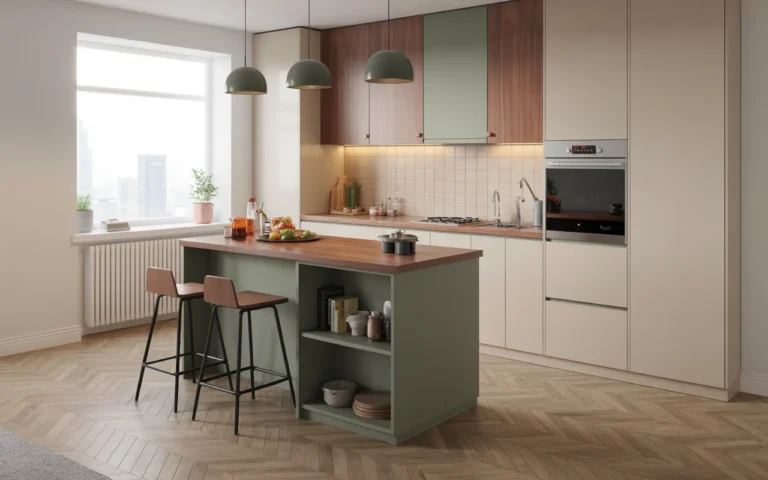
You’ll discover practical ways to reuse, repurpose, and design with purpose—without needing a full makeover. In my experience, even small changes like switching materials or decluttering zones can completely shift how a space feels. If you’re looking for a home that’s stylish, functional, and mindful, these ideas will inspire you to create a space that truly works for you.
1. Reclaimed Wood Accents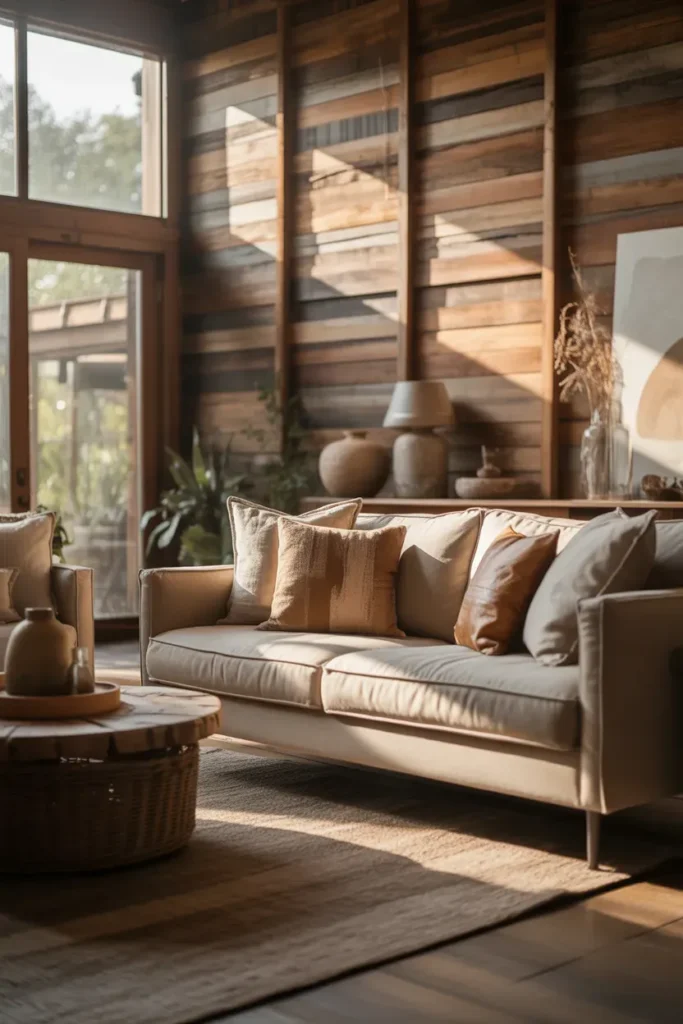
• Adds warmth and natural texture to any room
• Reuses materials instead of buying new decor
• Creates a cozy, grounded atmosphere
• Works beautifully with modern or rustic styles
Warm textures instantly change how a space feels, and reclaimed wood does this effortlessly. Whether it’s a feature wall, shelving, or a coffee table, it brings character that new materials simply can’t replicate. In my experience, even a small addition like a wooden bench or frame can make a room feel more intentional and lived-in. It’s not just about style—it’s about storytelling through materials that already had a life before your home.
Using reclaimed wood is also a smart step toward zero waste interior design because it reduces demand for new resources. I’ve noticed that spaces with reused materials feel more authentic and layered compared to overly polished interiors. The natural imperfections, grain patterns, and aged finishes create visual interest without extra decoration. This approach helps you design a space that feels both stylish and responsible at the same time.
2. Upcycled Furniture Pieces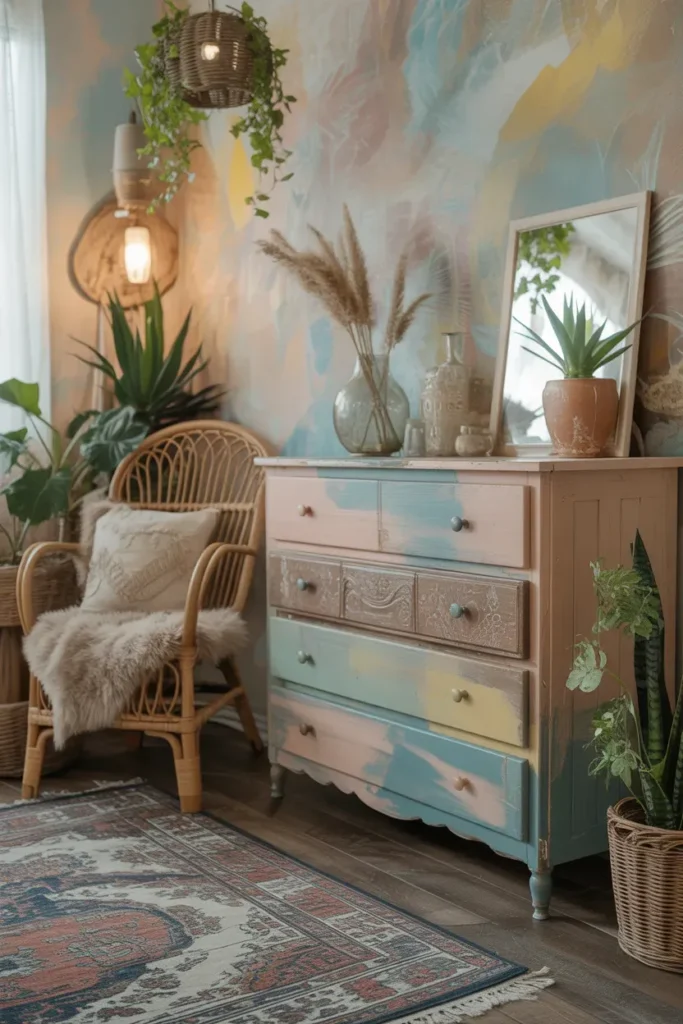
• Transforms old furniture into statement pieces
• Saves money while adding personality
• Reduces landfill waste creatively
• Encourages unique, one-of-a-kind interiors
Old furniture doesn’t have to be thrown away—it can be reimagined into something beautiful. A simple coat of paint, new handles, or a fresh finish can completely transform a tired piece into a focal point. I’ve tried this with an old side table, and the result felt more meaningful than buying something new. It adds a personal touch that reflects creativity rather than just following trends.
Upcycling also plays a key role in reducing unnecessary waste at home. Instead of constantly replacing items, you learn to see potential in what you already have. I’ve seen this work especially well in smaller spaces where every piece needs to feel intentional. By giving furniture a second life, you create a home that feels curated, sustainable, and full of personality without contributing to excess consumption.
3. Minimalist Open Shelving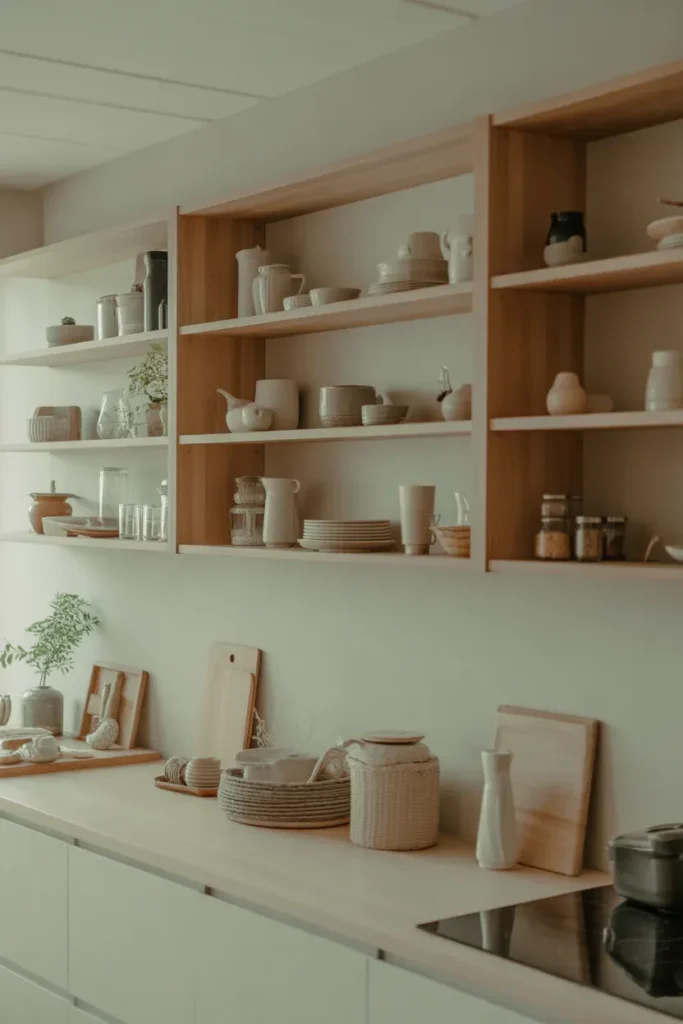
• Reduces clutter and encourages mindful storage
• Highlights only essential, beautiful items
• Makes small spaces feel larger and lighter
• Supports a more intentional lifestyle
Open shelving naturally encourages you to keep only what you truly use and love. Instead of hiding everything behind cabinets, it creates a visual reminder to stay organized and clutter-free. I’ve noticed that when shelves are visible, people tend to buy less and use more of what they already have. This small shift can completely change how a kitchen or living area feels—lighter, calmer, and more functional.
This approach aligns perfectly with sustainable living because it limits overconsumption and promotes intentional choices. When everything has a place and purpose, your space becomes easier to maintain and more enjoyable to live in. In my experience, minimalist shelving also creates a sense of calm that busy, overcrowded spaces simply don’t offer. It’s a simple design choice that delivers both visual beauty and practical benefits
Also view: 19 Attic with Sloped Ceilings Ideas for Storage Hacks
4. Multi-Functional Furniture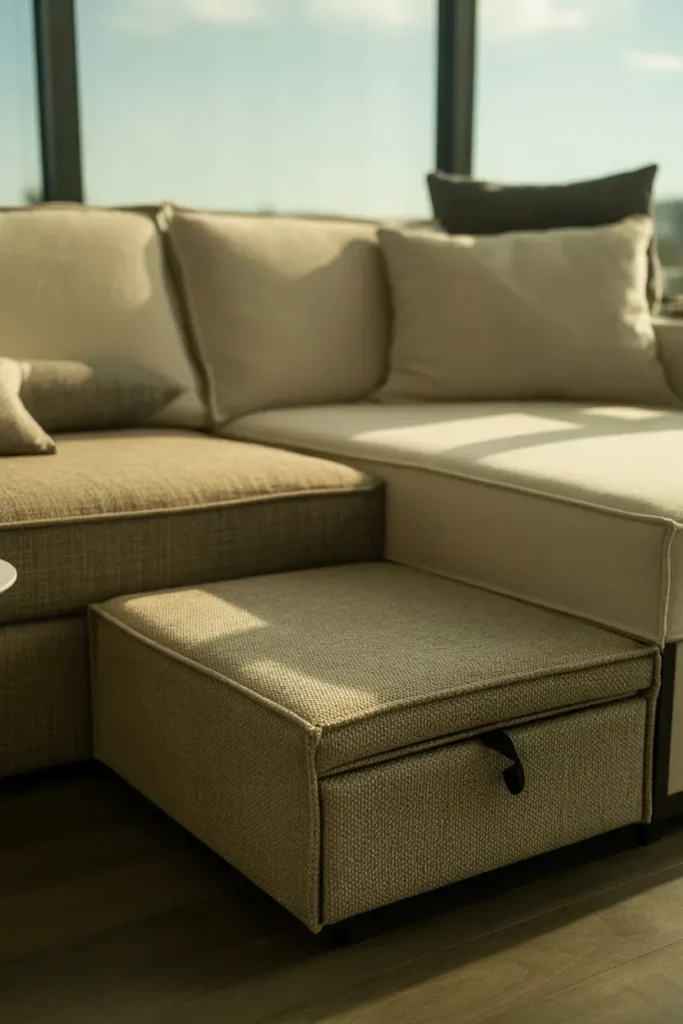
• Maximizes small spaces without overcrowding
• Combines multiple uses into one piece
• Reduces the need for extra furniture
• Keeps the room clean and organized
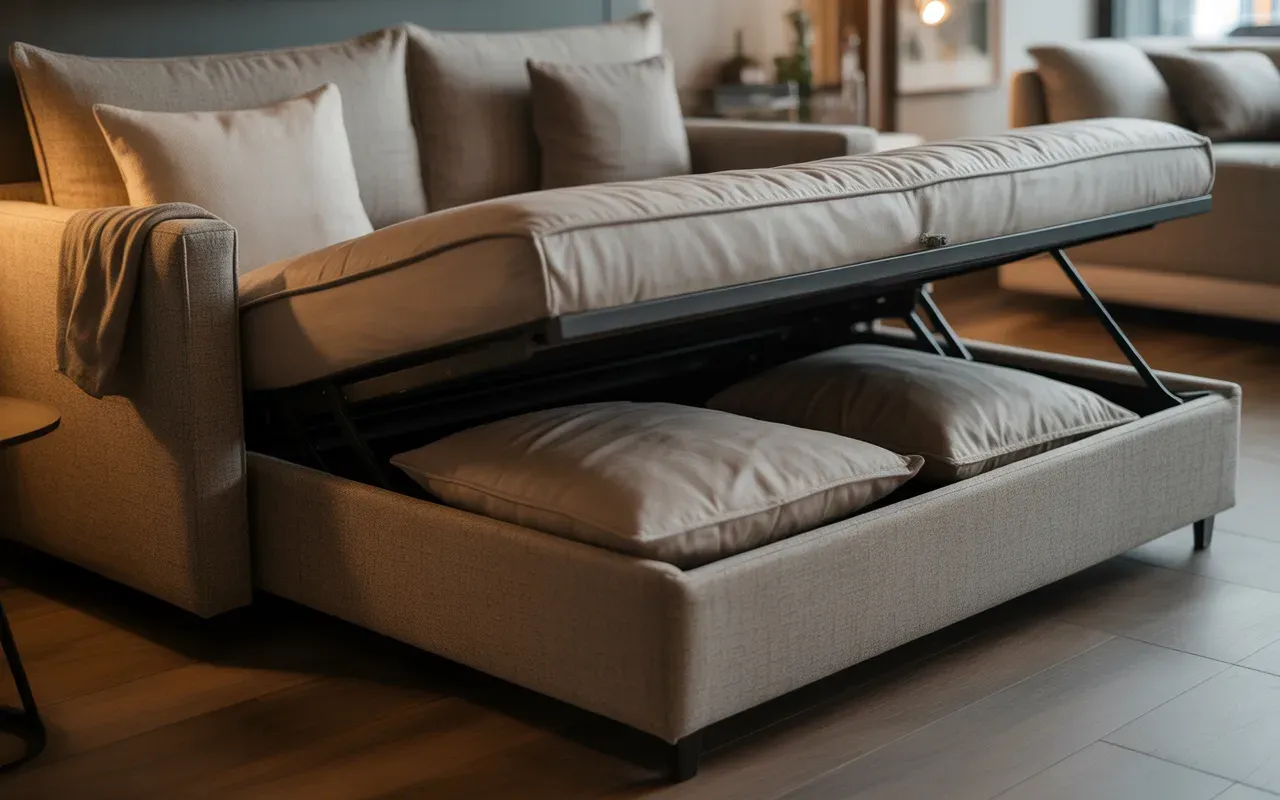
Smart furniture can completely transform how a space functions without making it feel crowded. A sofa that turns into a bed or a table with hidden storage allows you to do more with less. I’ve noticed that these pieces are especially helpful in smaller homes where every inch matters. They make the room feel open while still being practical, which is something many modern homes truly need.
This approach supports zero waste interior design by minimizing unnecessary purchases and maximizing what you already own. Instead of filling a room with separate items, you rely on fewer, more versatile pieces. In my experience, this not only reduces clutter but also creates a cleaner, more intentional look. The result is a space that feels calm, functional, and thoughtfully designed.
5. Natural Fiber Textiles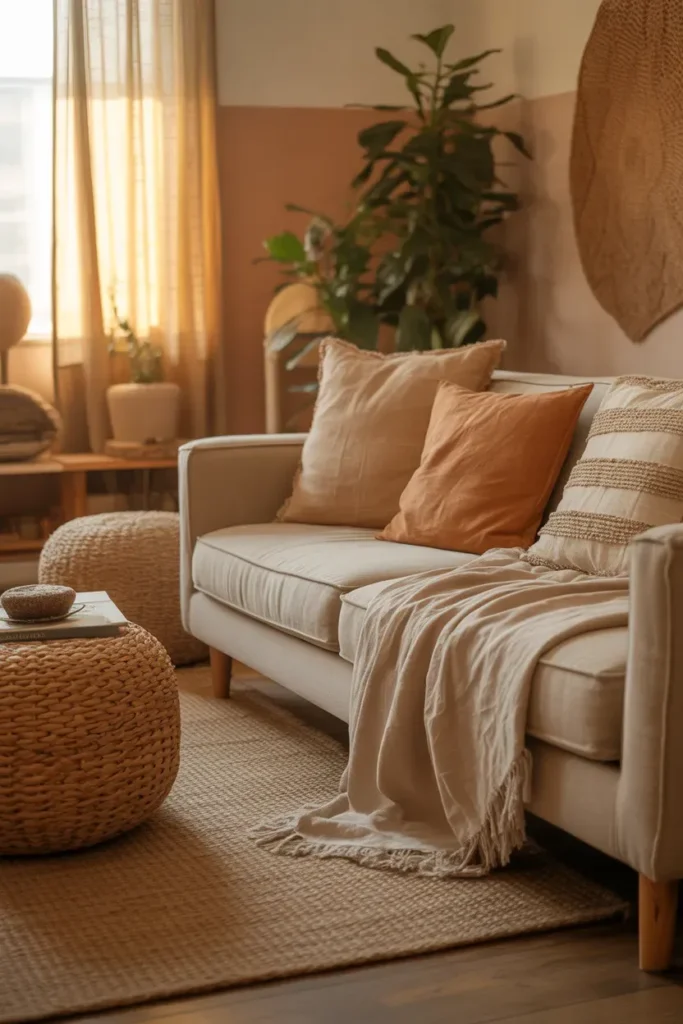
• Brings softness and comfort naturally
• Uses breathable, eco-friendly materials
• Adds texture without visual clutter
• Enhances a warm, cozy ambiance
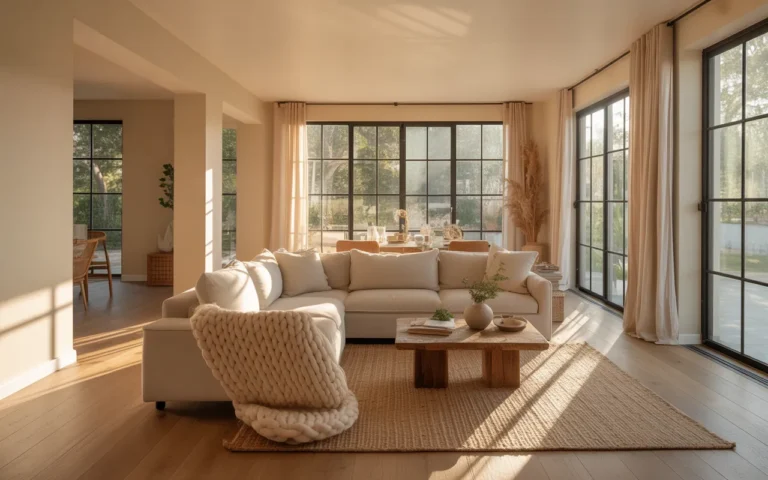
Textiles play a big role in how a room feels, and natural fabrics instantly create comfort. Linen curtains, cotton cushions, and jute rugs bring a soft, relaxed vibe that synthetic materials often lack. I’ve noticed that rooms styled with these fabrics feel more breathable and inviting. The textures add depth without making the space look heavy, which is perfect for creating a calm and welcoming environment.
Choosing natural fibers is also a simple way to make your home more eco-conscious. These materials are often biodegradable and longer-lasting, reducing the need for frequent replacements. In my experience, investing in quality fabrics means you don’t have to keep buying new ones every season. It’s a small change that supports a more sustainable lifestyle while enhancing the overall look of your space.
6. Glass Jar Storage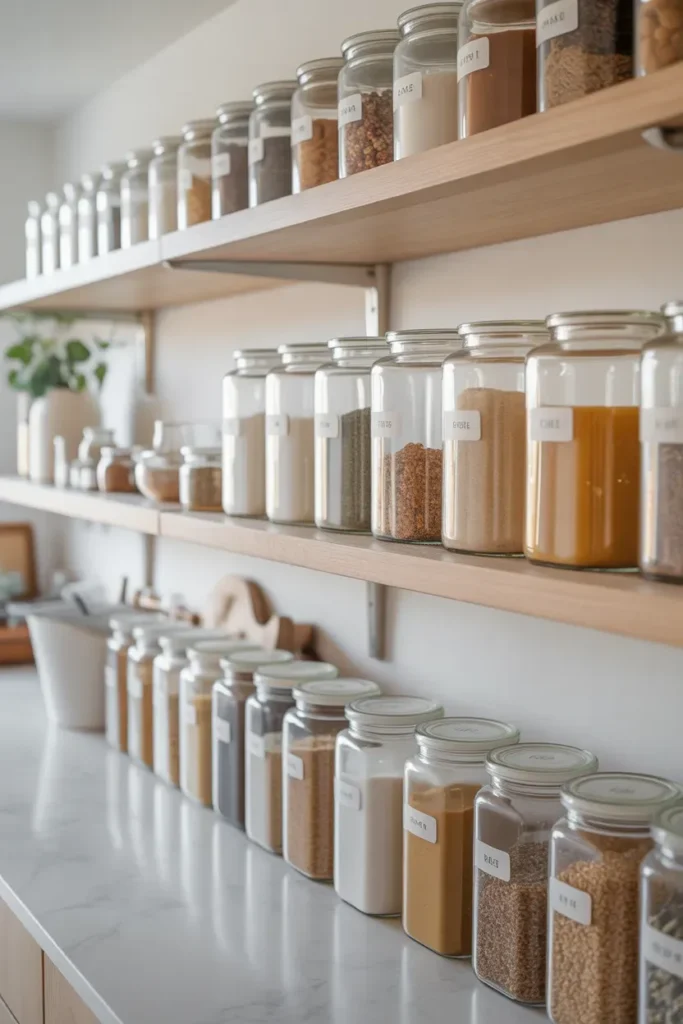
• Replaces plastic containers with reusable options
• Keeps essentials visible and organized
• Adds a clean, aesthetic kitchen look
• Encourages mindful consumption habits
Simple storage solutions can make a big difference, and glass jars are both practical and beautiful. They keep your pantry items visible, which helps reduce waste by reminding you what you already have. I’ve seen this work especially well in kitchens where clutter can easily build up. When everything is neatly displayed, the space feels more organized and easier to maintain.
Switching to reusable containers also supports a more sustainable lifestyle. Instead of constantly buying plastic packaging, you rely on long-lasting alternatives that look better over time. In my experience, this small shift changes how you shop and store food. You become more aware of your habits, leading to less waste and a cleaner, more intentional kitchen environment.
7. Indoor Plant Corners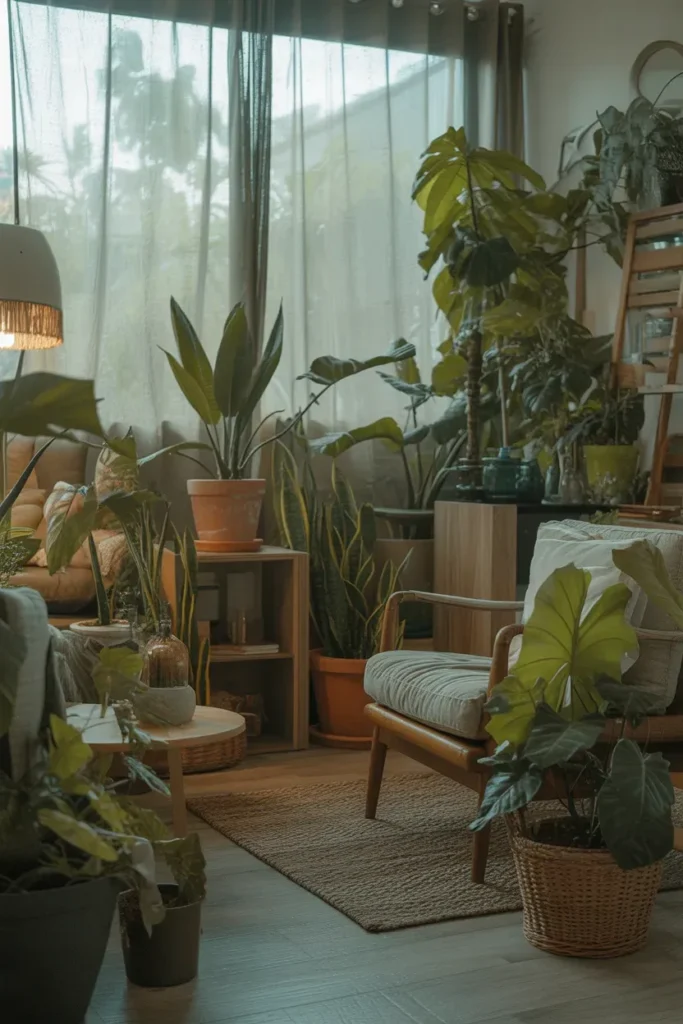
• Brings life and freshness into the space
• Improves air quality naturally
• Reduces need for artificial decor
• Creates a calming, nature-inspired vibe
Nothing transforms a space faster than greenery placed thoughtfully in a corner. Plants add movement, color, and a sense of calm that artificial decor often lacks. I’ve noticed that even a small cluster of plants can make a room feel more alive and welcoming. By layering different heights and leaf shapes, you create a visually rich setup without needing extra decorative items.
This idea also supports zero waste interior design by replacing synthetic decor with living elements. Plants grow, evolve, and last longer when cared for properly, making them a sustainable choice. In my experience, they also encourage better daily habits, like watering and sunlight awareness. The result is a space that feels fresh, intentional, and deeply connected to nature.
8. Vintage Decor Touches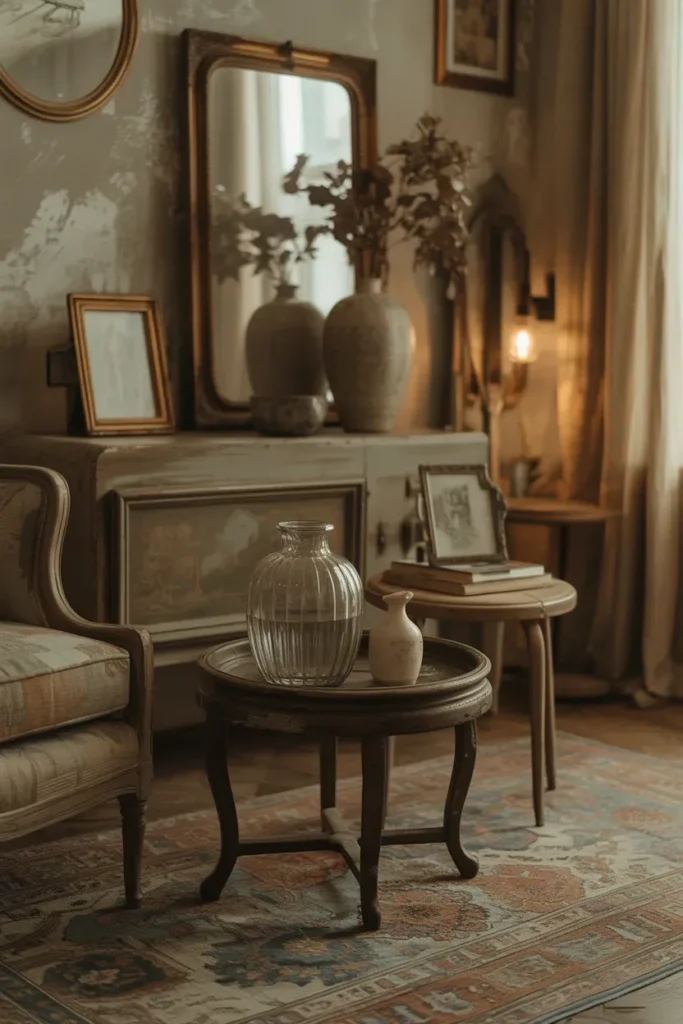
• Adds character and history to interiors
• Reduces need for newly manufactured items
• Creates a unique, curated look
• Blends beautifully with modern styles
Vintage pieces bring a sense of history that modern decor often lacks. Whether it’s an old mirror, a retro lamp, or antique frames, these items tell a story and add depth to your space. I’ve seen this work beautifully when mixed with modern elements, creating a balanced and curated look. It feels personal rather than overly styled or store-bought.
Choosing second-hand decor also helps reduce waste and unnecessary production. Instead of constantly buying new items, you give older pieces a new life. In my experience, vintage finds often feel more meaningful and durable compared to mass-produced decor. This approach not only saves resources but also creates a home that feels authentic, warm, and full of character.
9. Neutral Color Layers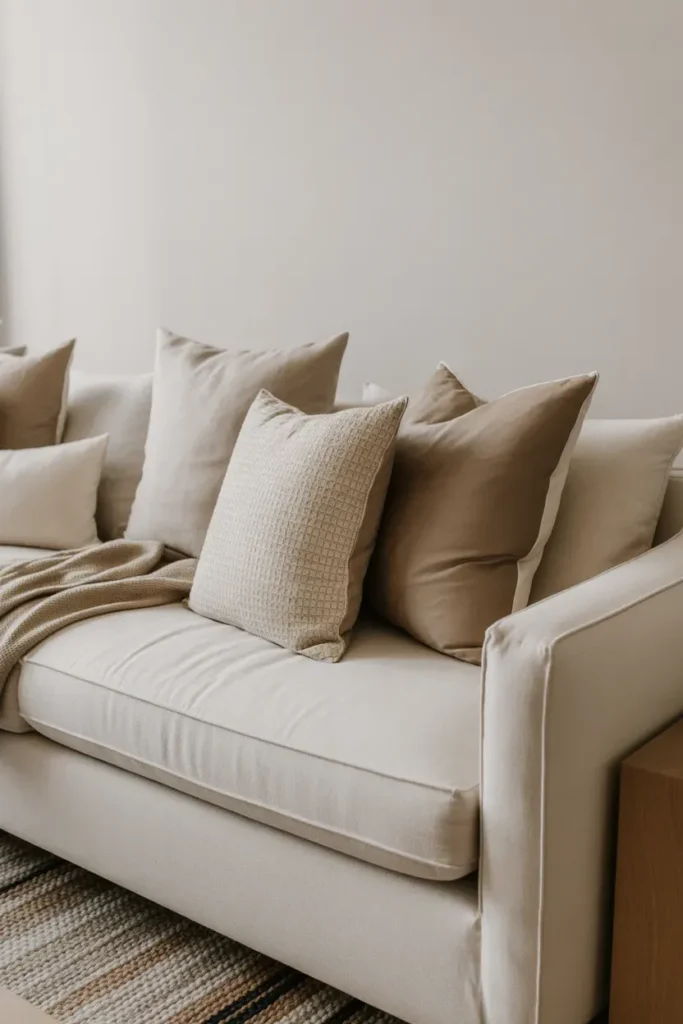
• Creates a calm and cohesive look
• Reduces need for excessive decor items
• Makes spaces feel bigger and brighter
• Works well with any design style
Neutral tones are powerful because they create harmony without overwhelming the space. By layering shades like beige, white, and soft gray, you add depth while keeping everything visually calm. I’ve noticed that rooms with neutral palettes feel more open and timeless. Instead of relying on bold decor, the focus shifts to textures and subtle variations, which makes the space feel more refined.
This approach also supports sustainable design by reducing the need for constant updates. Trendy colors often go out of style quickly, but neutral tones remain relevant for years. In my experience, this means fewer replacements and less waste over time. It’s a smart way to create a beautiful, long-lasting space that feels both modern and effortless.
10. Modular Storage Units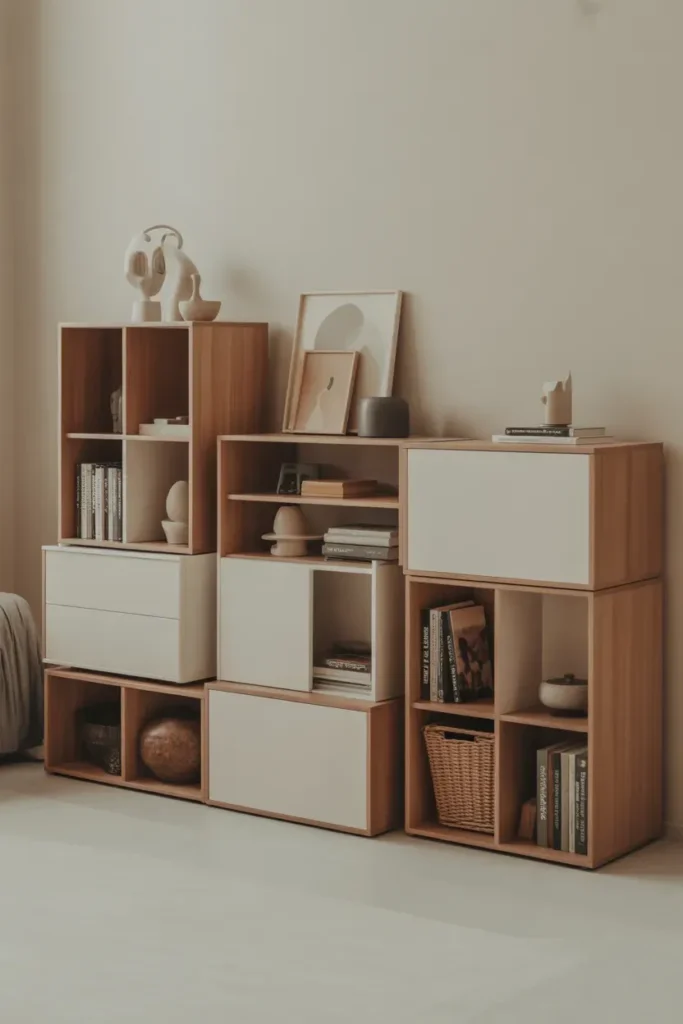
• Adapts easily to changing needs
• Keeps spaces organized without excess furniture
• Reduces long-term waste from replacements
• Works in small and large rooms
Flexible storage makes a home feel more functional without adding clutter. Modular units can be rearranged, expanded, or reduced depending on your needs, which makes them incredibly practical. I’ve noticed that this type of setup grows with your lifestyle instead of forcing you to replace furniture. It keeps everything organized while maintaining a clean and modern look that feels effortless.
This idea fits perfectly into zero waste interior design because it reduces the need for constant upgrades. Instead of buying new storage every time your needs change, you simply adjust what you already have. In my experience, this not only saves money but also creates a more thoughtful and long-lasting interior. The result is a space that feels flexible, efficient, and intentionally designed.
11. Recycled Glass Decor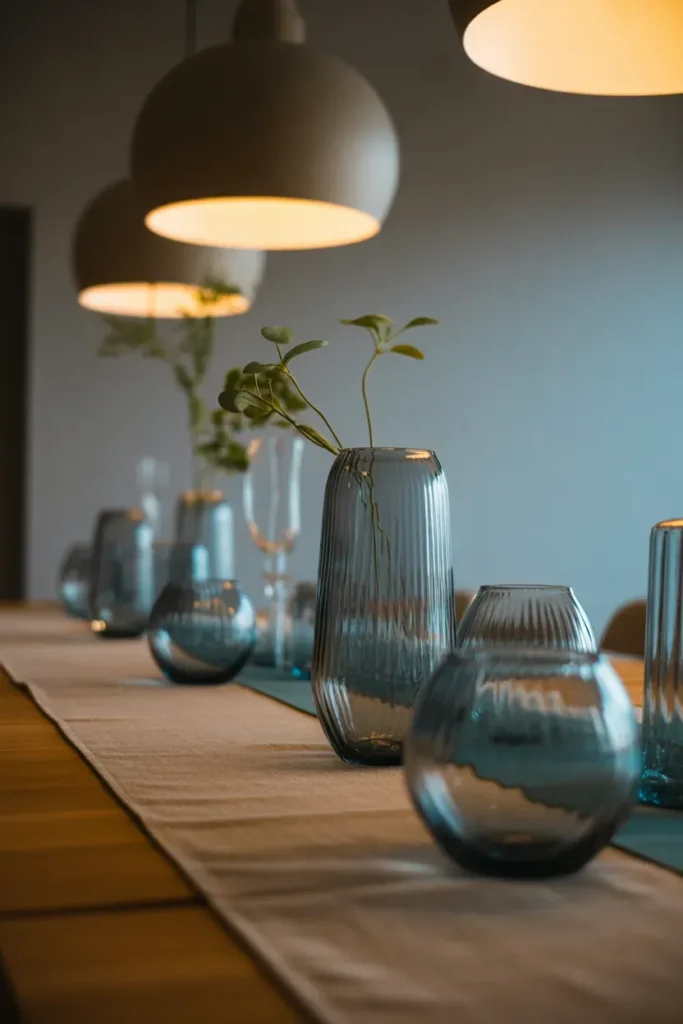
• Adds light and elegance to interiors
• Reuses materials in a stylish way
• Reflects light to enhance brightness
• Creates a refined, modern feel
Glass decor instantly elevates a room by adding light and subtle shine. Recycled glass pieces, like vases or lighting fixtures, bring the same elegance while being more environmentally conscious. I’ve seen this work especially well in dining areas and living rooms where light reflection enhances the overall atmosphere. It makes the space feel brighter and more open without adding visual clutter.
Using recycled materials is a simple way to make your home more sustainable without sacrificing style. In my experience, glass decor lasts longer and adapts easily to different design updates. Instead of replacing items often, you can reuse and restyle them in new ways. This approach creates a balance between beauty and responsibility, resulting in a space that feels both modern and mindful.
12. Compact Dining Setups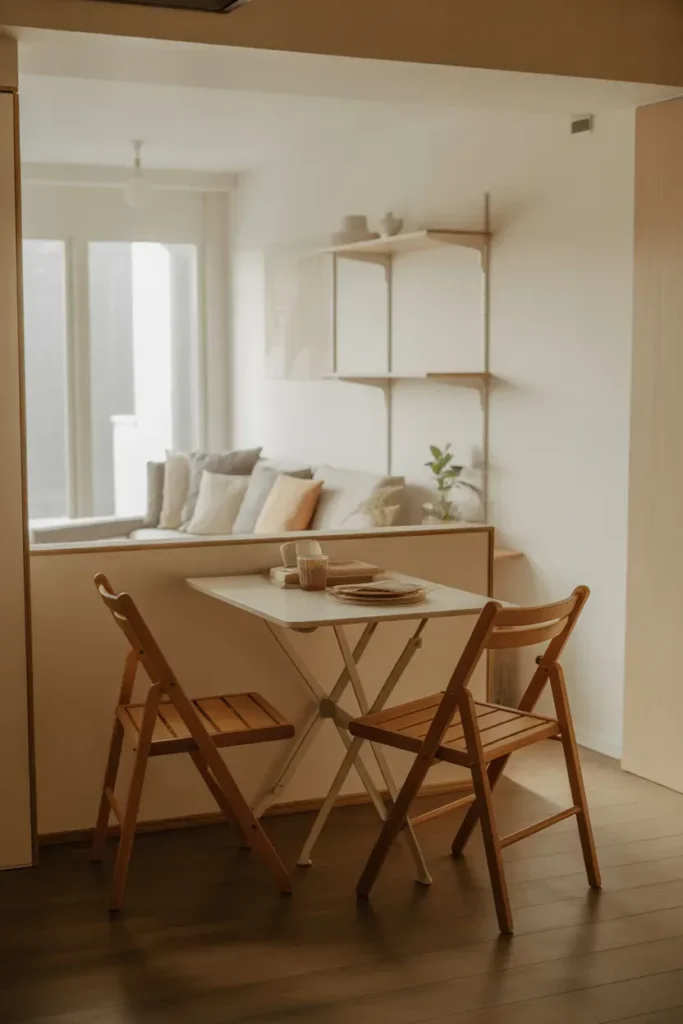
• Saves space in small homes or apartments
• Reduces unnecessary furniture bulk
• Keeps layout open and breathable
• Maintains functionality without clutter
Dining areas don’t need to be large to feel functional and stylish. Compact setups with foldable tables or slim furniture make it easier to maintain an open layout. I’ve noticed that smaller dining areas often feel more intimate and practical, especially in modern homes. By choosing pieces that fit the space, you avoid overcrowding and create a more comfortable environment.
This approach also helps reduce waste by limiting excess furniture. Instead of buying oversized pieces, you invest in designs that truly fit your needs. In my experience, this leads to fewer replacements and better long-term use. It’s a smart way to design a dining space that feels efficient, stylish, and perfectly balanced for everyday living.
13. Low-Waste Lighting Choices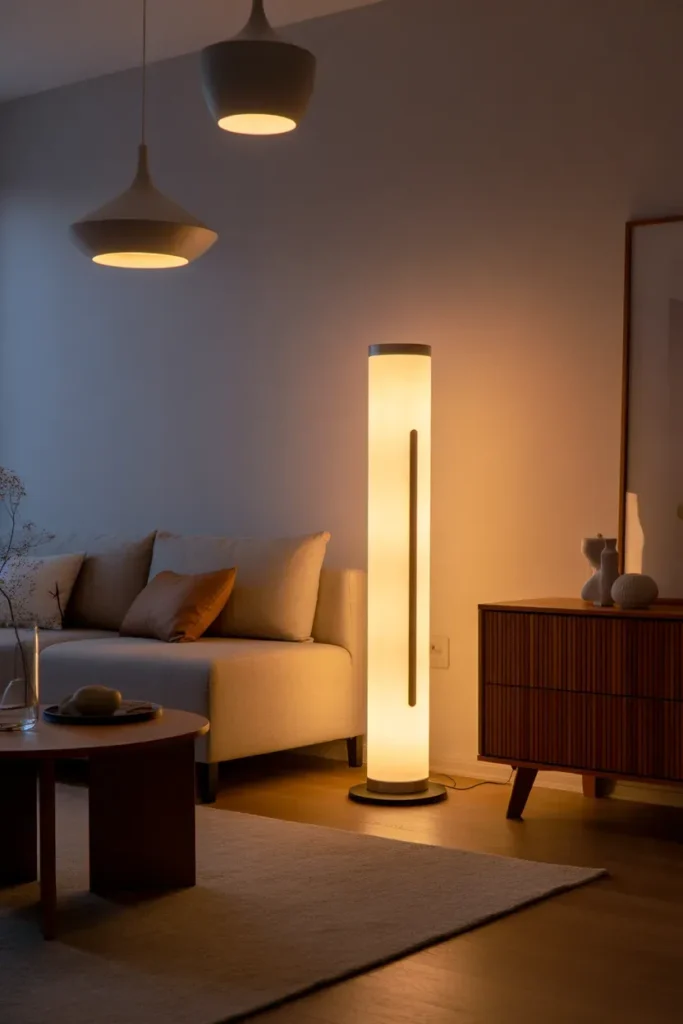
• Reduces energy consumption and waste
• Creates a warm and inviting atmosphere
• Lasts longer than traditional lighting
• Enhances overall room mood
Lighting has a powerful impact on how a space feels, and choosing efficient options makes a real difference. LED bulbs and long-lasting fixtures not only save energy but also provide consistent, warm lighting. I’ve noticed that switching to better lighting instantly makes a room feel more polished and comfortable. It’s one of the easiest upgrades that delivers both visual and practical benefits.
This choice supports zero waste interior design by reducing the need for frequent replacements and lowering energy use. In my experience, investing in quality lighting pays off over time, both financially and environmentally. It allows you to create a cozy atmosphere while being mindful of resources. The result is a space that feels warm, efficient, and thoughtfully designed.
14. Reusable Wall Decor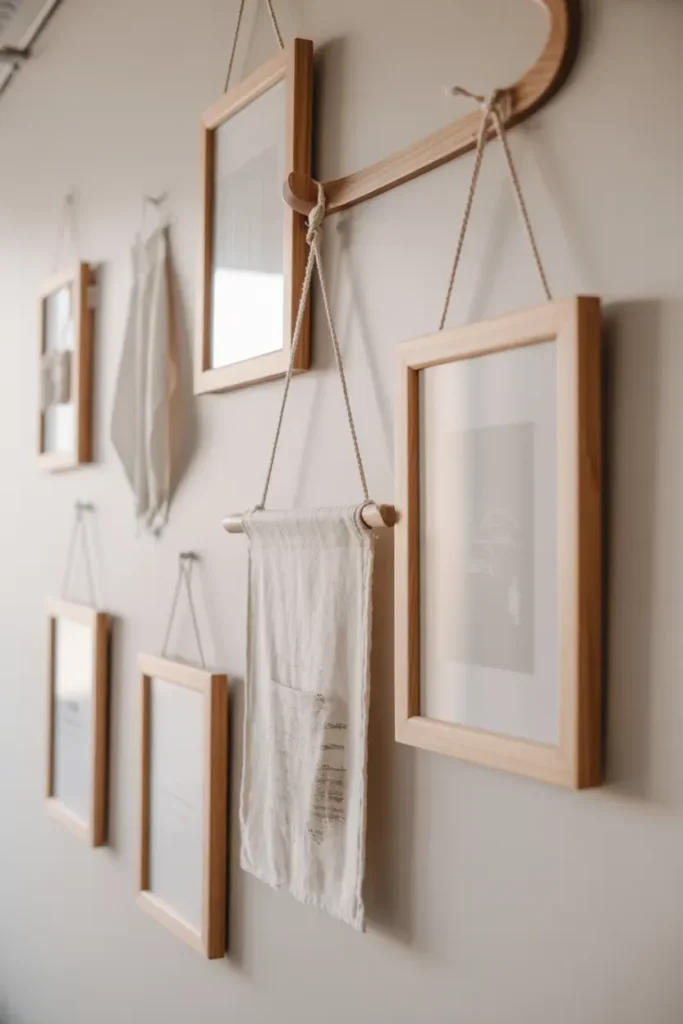
• Allows easy updates without waste
• Keeps decor flexible and interchangeable
• Reduces need for disposable wall items
• Maintains a clean, minimal look
Wall decor doesn’t have to be permanent to look beautiful. Reusable frames, fabric hangings, or interchangeable prints allow you to refresh your space without creating waste. I’ve seen this work especially well for people who like changing their decor seasonally. Instead of buying new items every time, you simply switch what you display, keeping the look fresh and exciting.
This approach also helps reduce unnecessary consumption over time. By investing in versatile decor pieces, you avoid constantly replacing items. In my experience, this makes decorating feel more intentional and less overwhelming. It creates a balance between creativity and sustainability, allowing your space to evolve while still staying mindful of waste and long-term impact.
15. Second-Hand Statement Pieces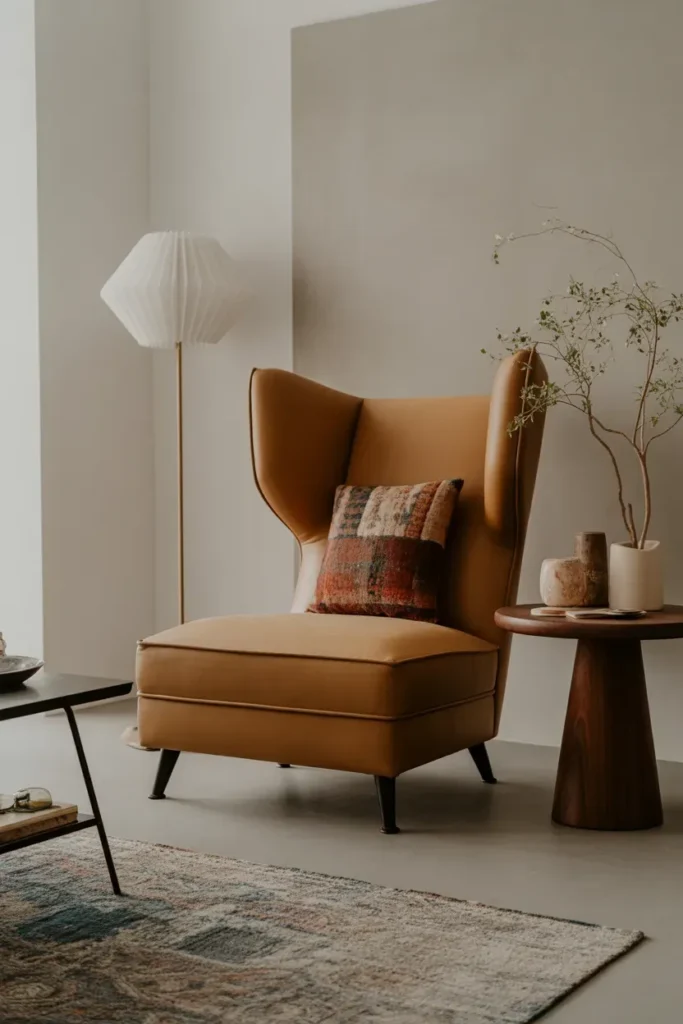
• Adds a unique focal point to the room
• Reduces demand for new furniture production
• Brings individuality and charm
• Often more durable than mass-produced items
Statement pieces don’t always have to be new to stand out. A vintage chair, table, or cabinet can instantly become the highlight of your space. I’ve noticed that second-hand finds often feel more special because they’re not widely available. They bring a sense of uniqueness that makes your home feel more personal and thoughtfully styled.
Choosing pre-owned furniture also supports a more sustainable lifestyle. Instead of contributing to mass production, you give existing items a new purpose. In my experience, these pieces are often better made and last longer than modern alternatives. This approach helps create a home that feels stylish, meaningful, and aligned with conscious living.
16. Smart Declutter Zones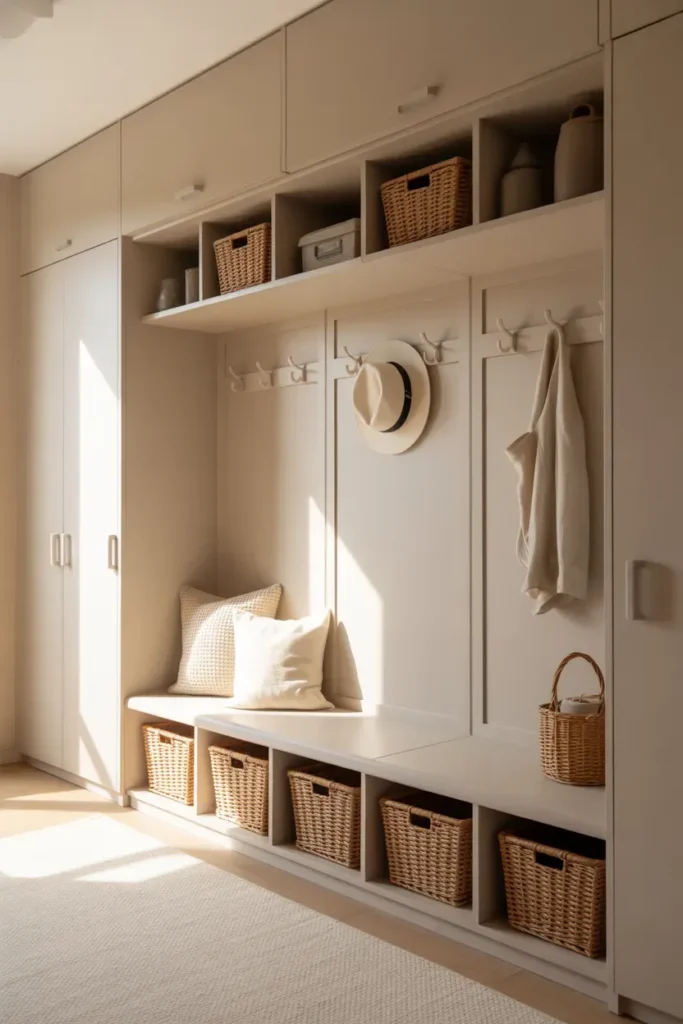
• Keeps everyday clutter under control
• Creates a designated space for essentials
• Makes cleaning and organizing easier
• Promotes a calm, tidy environment
Clutter often builds up in the same areas, and creating a dedicated zone can completely change how your home feels. A simple setup with baskets, hooks, and a small bench helps keep everything in place. I’ve noticed that when there’s a clear spot for daily items, mess doesn’t spread throughout the house. It makes routines smoother and spaces easier to manage.
This idea supports zero waste interior design by encouraging mindful organization instead of constant buying. In my experience, decluttering zones reduce the urge to add more storage or unnecessary items. You learn to work with what you have and keep only what you need. The result is a space that feels lighter, more peaceful, and effortlessly organized.
Conclusion
Creating a home that feels calm, functional, and beautiful doesn’t have to mean constant buying or waste. With the right ideas, zero waste interior design can transform your space into something more intentional and inspiring. I’ve seen how small, thoughtful changes can make a big difference in both style and everyday living.
Start with one idea that feels easy and build from there. Save this post on Pinterest so you can come back to it anytime, and try a few ideas in your own home. Don’t forget to share it with others who want a smarter, more sustainable space too.