24 Small Living Room Dining Room Combo Layouts
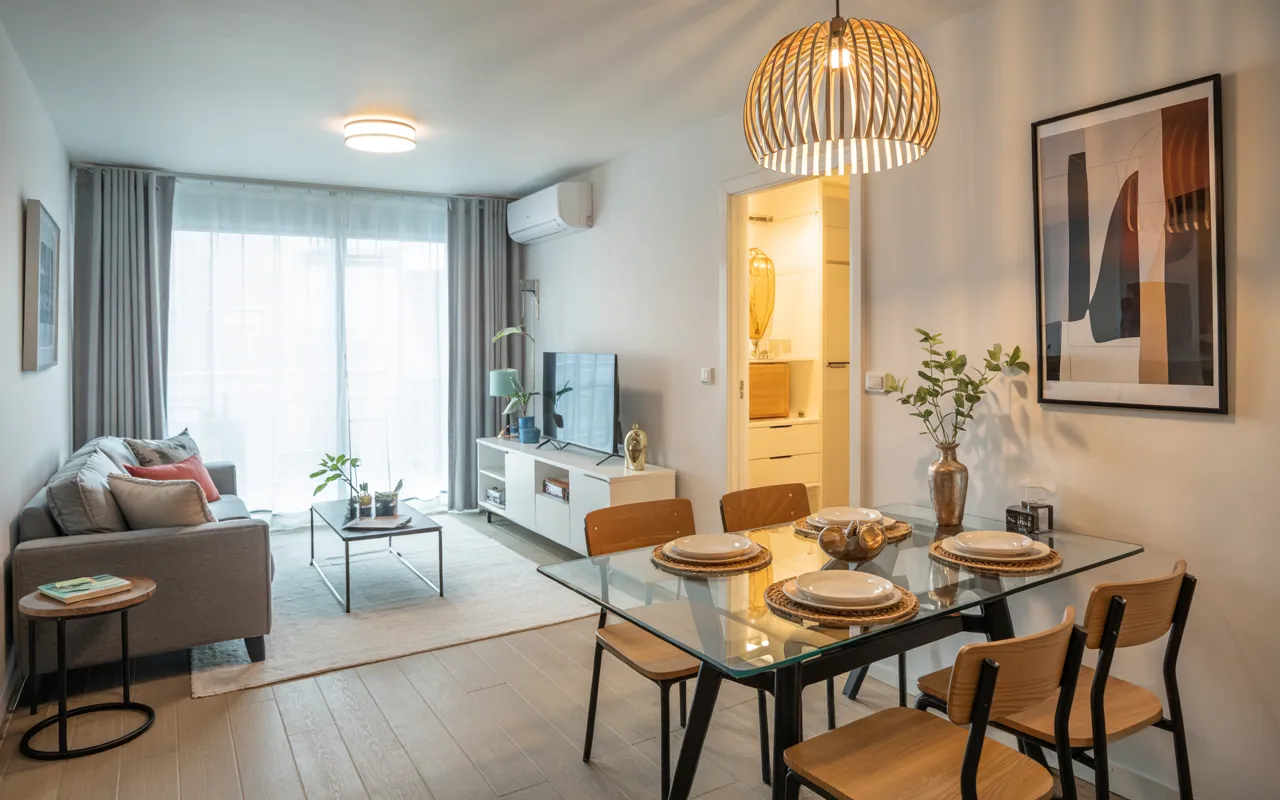
A small living room dining room combo layout is a smart interior approach that combines two essential zones—relaxing and dining—into one cohesive, space-efficient design. It focuses on smart zoning, compact furniture, and visual flow to make limited square footage feel open and functional.
In this guide, you’ll discover 24 Small Living Room Dining Room Combo Layouts for 2026, featuring space-saving arrangements, modern zoning tricks, and multifunctional furniture ideas that transform even the smallest homes into stylish, livable spaces.
These layouts feel like calm, organized living—where every piece has purpose, light moves freely across the room, and dining and lounging coexist without clutter or confusion. It’s about balance, flow, and creating comfort in compact spaces.
Here are 24 layouts worth saving—and rethinking for your own home.
Why Small Living Room Dining Room Combo Layout Works So Well
¶1 — WHAT IS IT?
The small living room dining room combo layout is a modern space-planning concept designed for apartments, studios, and compact homes where separate rooms aren’t possible. It became popular with urban living trends and minimalist design movements, especially in Scandinavian and Japanese interiors where efficiency is prioritized. The idea focuses on blending function zones without visually cluttering the space.
¶2 — CORE MATERIALS & COLORS
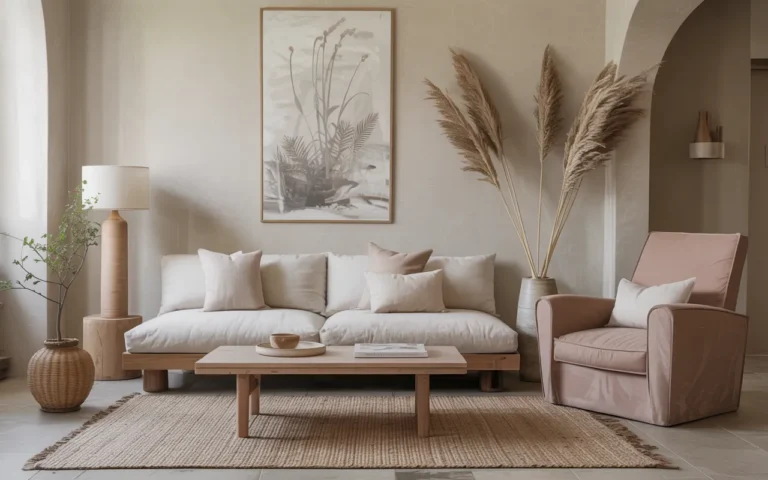
This layout style relies heavily on light-reflecting and space-enhancing materials like oak wood, glass, linen, rattan, and matte metal finishes. Color palettes usually include warm whites, soft greige, muted taupe, dusty beige, and occasional charcoal accents to create contrast without heaviness. The goal is visual continuity across both living and dining zones.
¶3 — WHY IT’S TRENDING NOW
With rising urban housing costs and smaller apartments becoming the norm, multifunctional spaces are more important than ever. Pinterest searches for “small space living ideas” and “apartment combo layouts” continue to rise. People now prioritize flexibility—rooms that can adapt for work, dining, relaxation, and hosting without needing more square footage.
¶4 — CAN SMALL SPACES REALLY WORK?
Yes—but only if zoning is intentional. The key is defining areas without walls using rugs, lighting, and furniture placement. Prioritize scale-first furniture: compact sofas, round dining tables, and vertical storage instead of bulky pieces.
| Element | Small Living Room Dining Room Combo Layout |
|---|---|
| Philosophy | Functional minimalism + visual flow |
| Key Materials | Wood, glass, linen |
| Key Colors | Warm white, greige, soft beige |
Main Ideas
1. Open-Concept Sofa Divider Layout
Vibe: Structured and airy
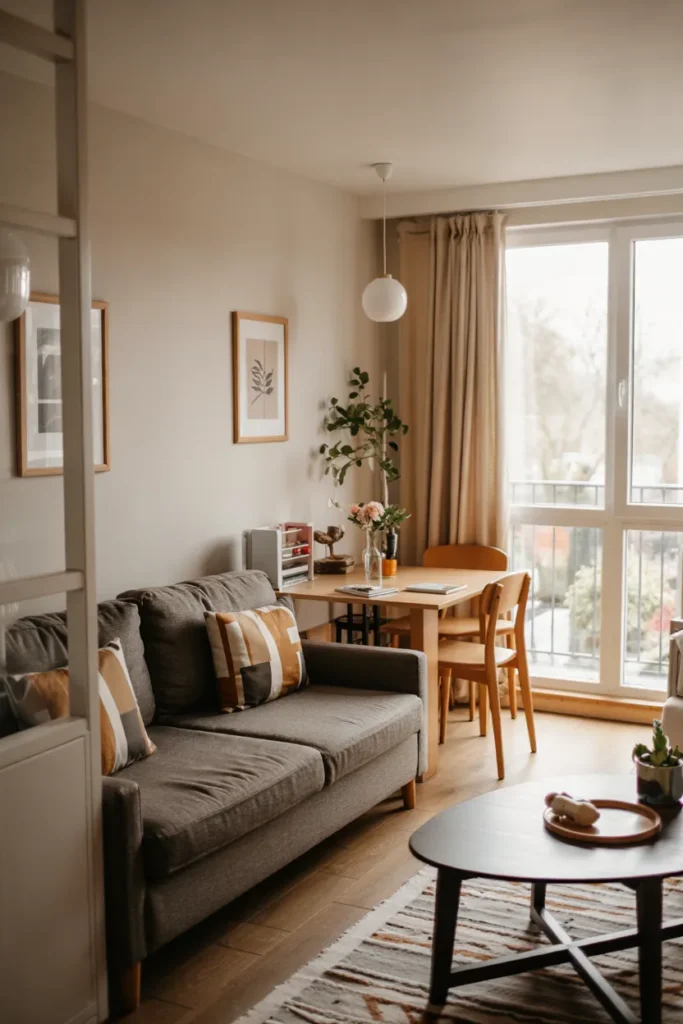
Why it works: The sofa acts as a natural divider between living and dining zones, creating separation without blocking light or airflow. This maintains openness while still defining function.
How to get it: Place your sofa centrally with its back facing the dining table, and anchor each zone with separate rugs.
Shop The Look
- Neutral L-shaped sofa
- Round oak dining table
- Beige area rug
- Black metal floor lamp
- Linen curtain panels
2. Round Dining Table Space-Saving Layout
Vibe: Soft and balanced
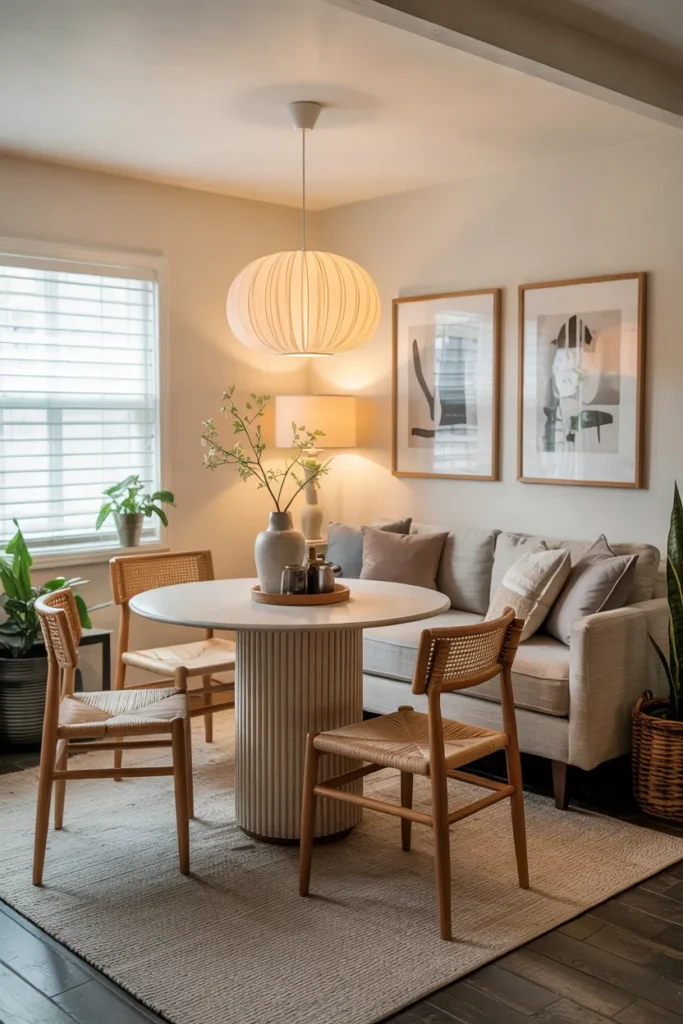
Why it works: Round tables improve movement flow and eliminate sharp edges, making tight spaces feel more open and safer visually.
How to get it: Use a compact 2–4 seater round table near a corner or window to maximize light exposure.
Shop The Look
- Small round wooden dining table
- Upholstered dining chairs
- Wall-mounted mirror
- Soft pendant light
- Minimal ceramic centerpiece
3. Wall-Mounted Dining Table Layout
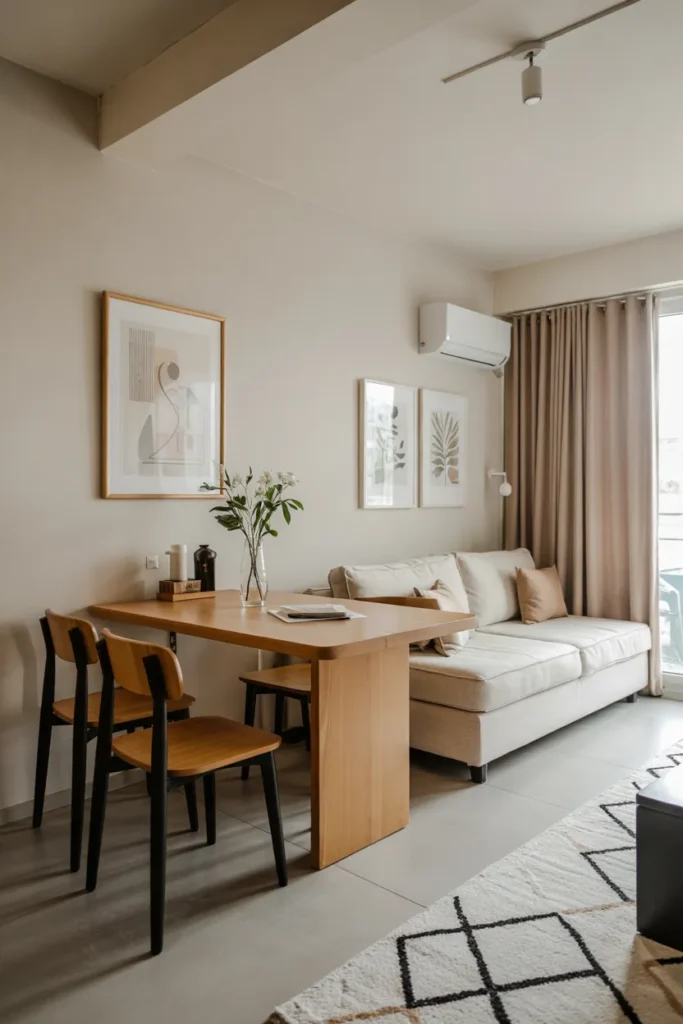
Vibe: Minimal and functional
Why it works: Foldable wall-mounted tables save floor space while maintaining dining functionality when needed.
How to get it: Install a fold-down wooden table with slim folding chairs that tuck away completely.
Shop The Look
- Foldable wall dining table
- Slim wooden chairs
- Floating wall shelves
- Minimal wall lamp
- Neutral placemats set
4. Area Rug Zoning Layout

Vibe: Defined and cozy
Why it works: Rugs visually separate spaces without physical barriers, maintaining flow while creating structure.
How to get it: Use one large rug under the living area and a contrasting smaller rug under the dining zone.
Shop The Look
- Large neutral living room rug
- Small jute dining rug
- Linen sofa
- Oak dining table
- Black metal coffee table
Also view: 23 Small Dinner Room Ideas to Maximize Space & Style
5. Bench Seating Dining Layout

Vibe: Compact and social
Why it works: Bench seating reduces visual bulk and allows more seating in less space compared to individual chairs.
How to get it: Place a built-in or freestanding bench against a wall and pair it with lightweight chairs.
Shop The Look
- Wooden dining bench
- Rectangular dining table
- Upholstered side chairs
- Wall art set
- Pendant light fixture
6. Compact Sectional with Adjacent Dining Area
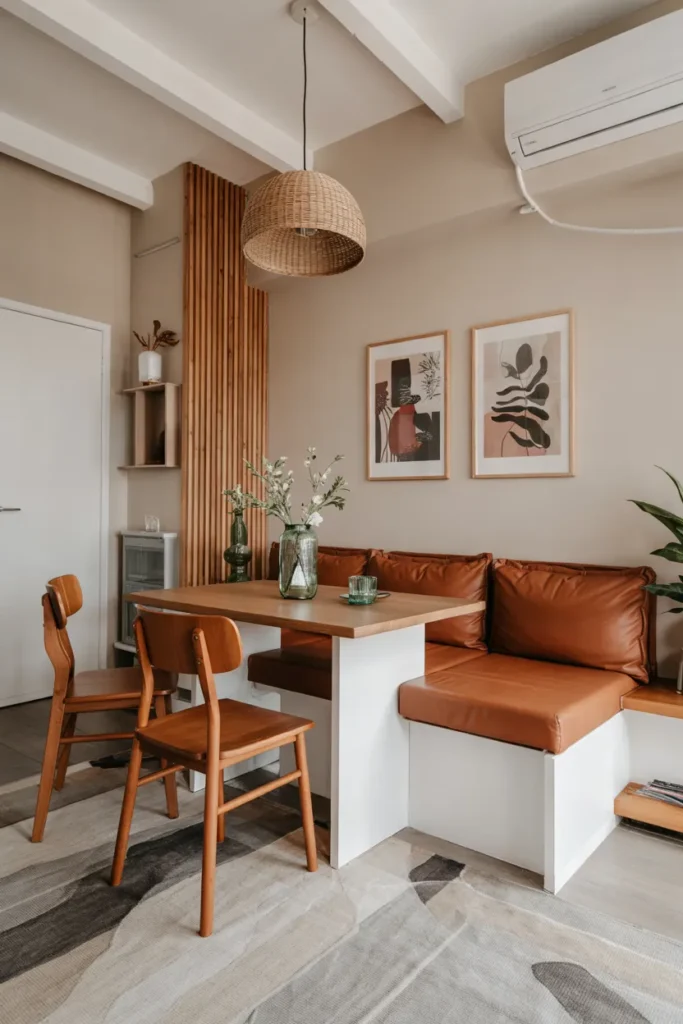
Vibe: Functional and cozy
Why it works: A sectional defines the living zone while leaving a clean path to the dining area.
How to get it: Choose a compact L-shaped sofa and position dining furniture behind it for natural separation.
Shop The Look
- Compact sectional sofa
- Small oval dining table
- Neutral throw pillows
- Table lamp
- Soft jute rug
7. Window-Side Dining Nook Layout
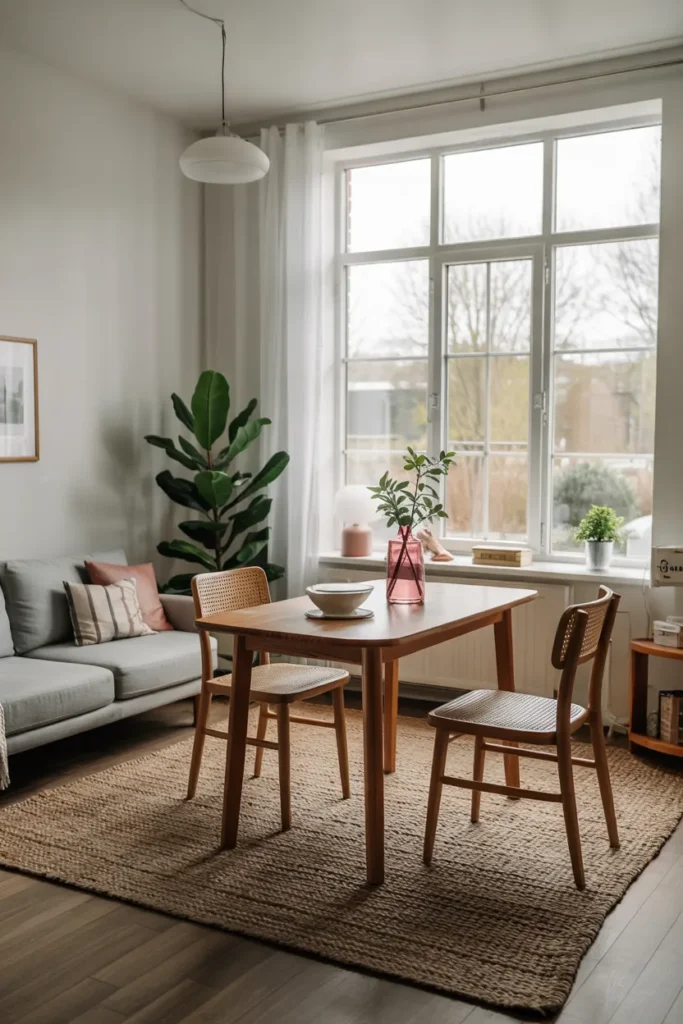
Placing the dining area near a window instantly makes a small room feel brighter and more open. Natural light enhances the dining experience and visually expands the space. A compact table with lightweight chairs keeps the area functional without feeling crowded.
Vibe: Bright and refreshing
Why it works: Natural light enhances dining comfort and makes the space feel larger and more inviting.
How to get it: Position a small dining table directly beside a window with sheer curtains.
Shop The Look
- Wooden bistro table
- Linen dining chairs
- Sheer white curtains
- Ceramic vase set
- Warm pendant light
8. Corner Dining Layout

Vibe: Efficient and smart
Why it works: Corners are underused spaces that become functional dining zones without interrupting flow.
How to get it: Fit a square or round table snugly into a corner with wall-mounted lighting.
Shop The Look
- Corner dining table set
- Wall-mounted sconce light
- Minimal dining chairs
- Floating shelf
- Neutral table runner
9. Rectangular Room Linear Layout
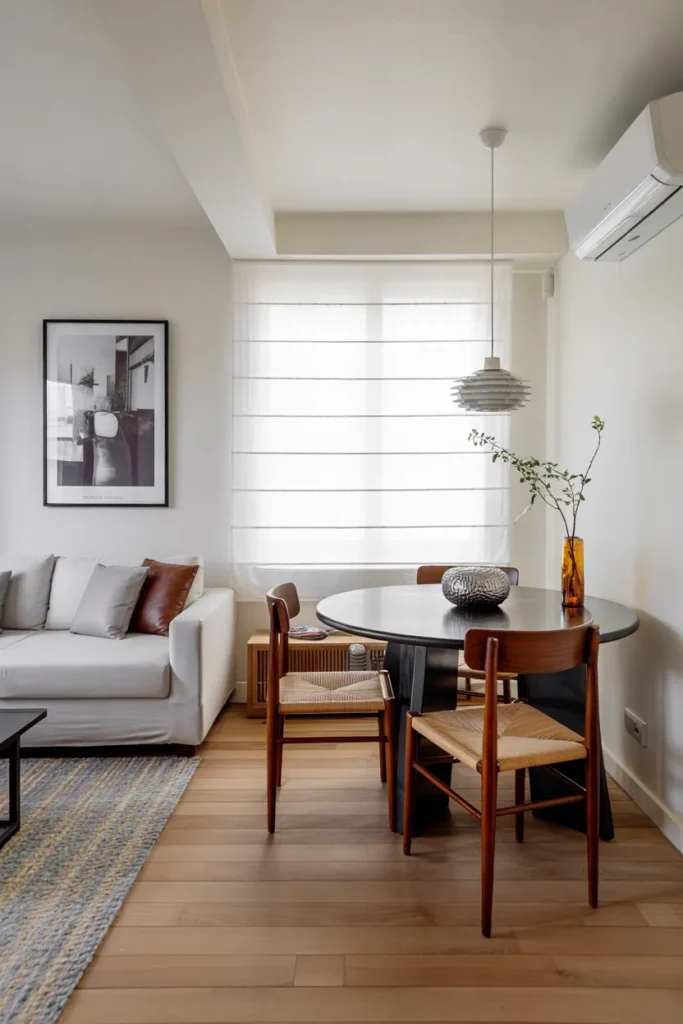
Vibe: Streamlined and structured
Why it works: A linear layout uses strong directional flow to organize narrow rectangular rooms, preventing visual clutter. By placing living and dining zones in a straight alignment, it enhances movement efficiency and keeps sightlines open from one end of the room to the other.
How to get it: Position your sofa along one long wall and place the dining table directly across or at the opposite end, maintaining a clear walking path in between. Keep furniture slim and low-profile to avoid visual heaviness.
💡 Quick Win: Use a long neutral runner rug to visually connect both zones and unify the space.
Shop The Look
- Slim fabric sofa in greige tone
- Rectangular oak dining table
- Long neutral runner rug
- Minimal black metal floor lamp
- Abstract wall art set
10. Floating Dining Table Layout
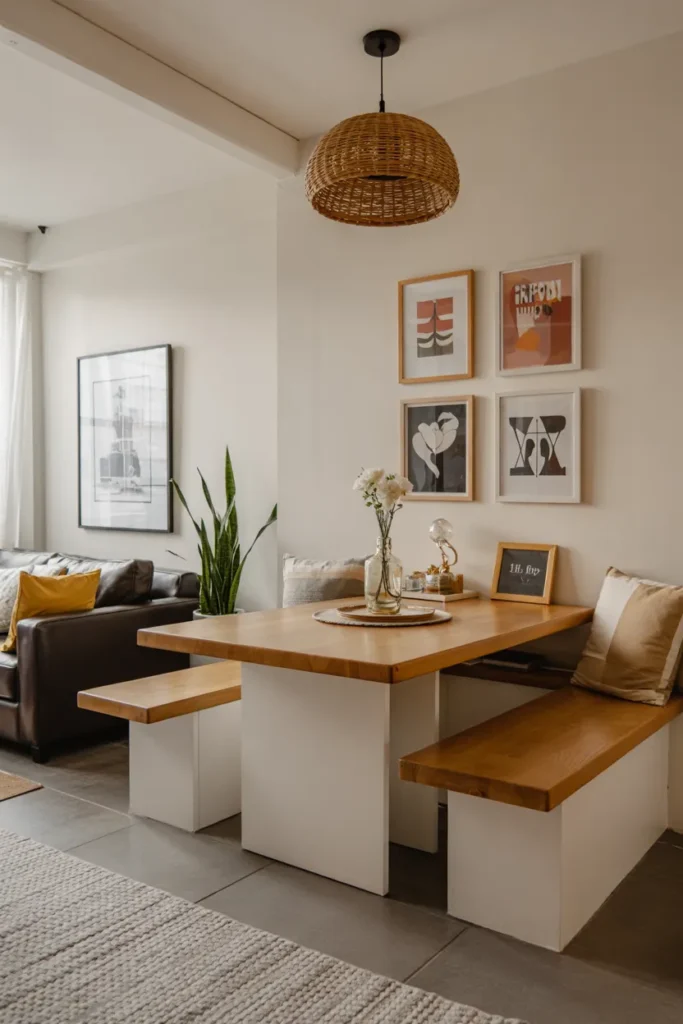
Vibe: Airy and balanced
Why it works: Floating furniture placement prevents the room from feeling cramped against the walls. It allows negative space to work as a design element, improving light flow and visual breathing room in compact layouts.
How to get it: Pull your dining table slightly away from the wall and center it within the dining zone rather than pushing it into corners. Pair with light-colored chairs to maintain openness.
💡 Quick Win: Add a glass or light oak tabletop to enhance visual transparency.
Shop The Look
- Round glass dining table
- Light oak dining chairs
- Soft white pendant light
- Neutral textured rug
- Minimal ceramic vase
11. Minimalist Scandinavian Layout
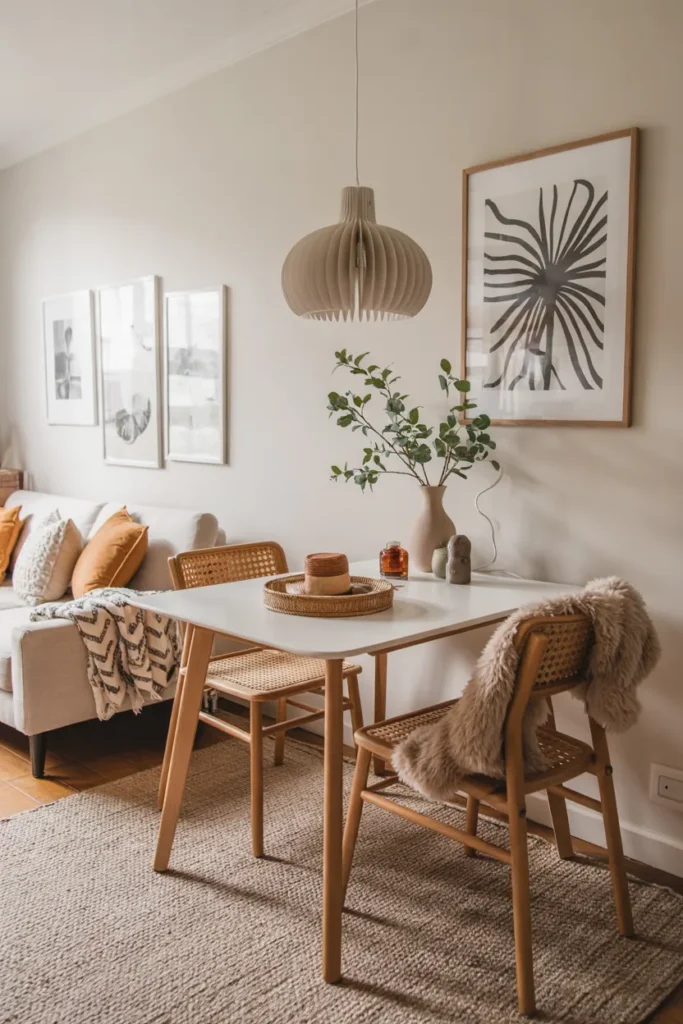
Vibe: Calm and light-filled
Why it works: Scandinavian design emphasizes simplicity, natural materials, and functional spacing. This reduces visual noise and makes even small combined spaces feel larger and more breathable.
How to get it: Stick to a restrained palette of white, soft beige, and light oak. Avoid heavy furniture and keep decor intentional and minimal.
💡 Quick Win: Replace bulky storage with slim open shelving in natural wood.
Shop The Look
- Light oak dining table
- White linen sofa
- Wool blend area rug
- Minimal ceramic tableware set
- Matte black pendant light
12. Dining Table Behind Sofa Layout
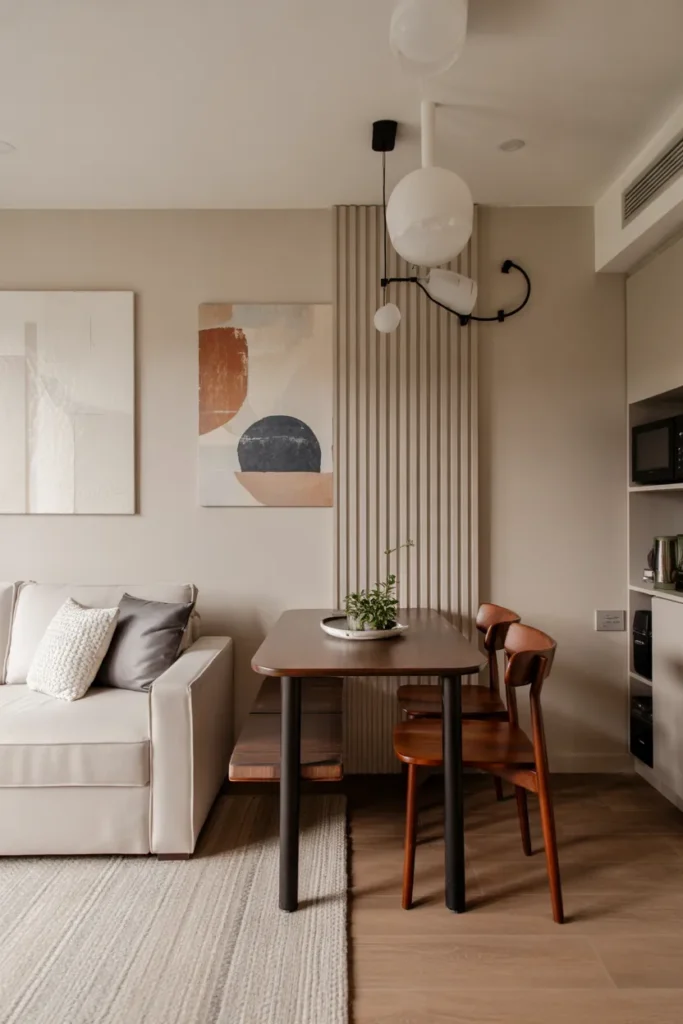
Vibe: Practical and seamless
Why it works: Using the back of the sofa as a divider naturally separates dining and living zones without adding walls or partitions. It keeps the layout cohesive while maintaining functional distinction.
How to get it: Align the sofa so its back faces the dining table, leaving enough walking space between them. Match wood tones or fabric textures to keep both zones visually connected.
💡 Quick Win: Use a console table behind the sofa for extra storage and styling space.
Shop The Look
- Neutral upholstered sofa
- Rectangular wooden dining table
- Upholstered dining chairs
- Slim console table
- Warm table lamp
13. Studio Apartment Combo Layout
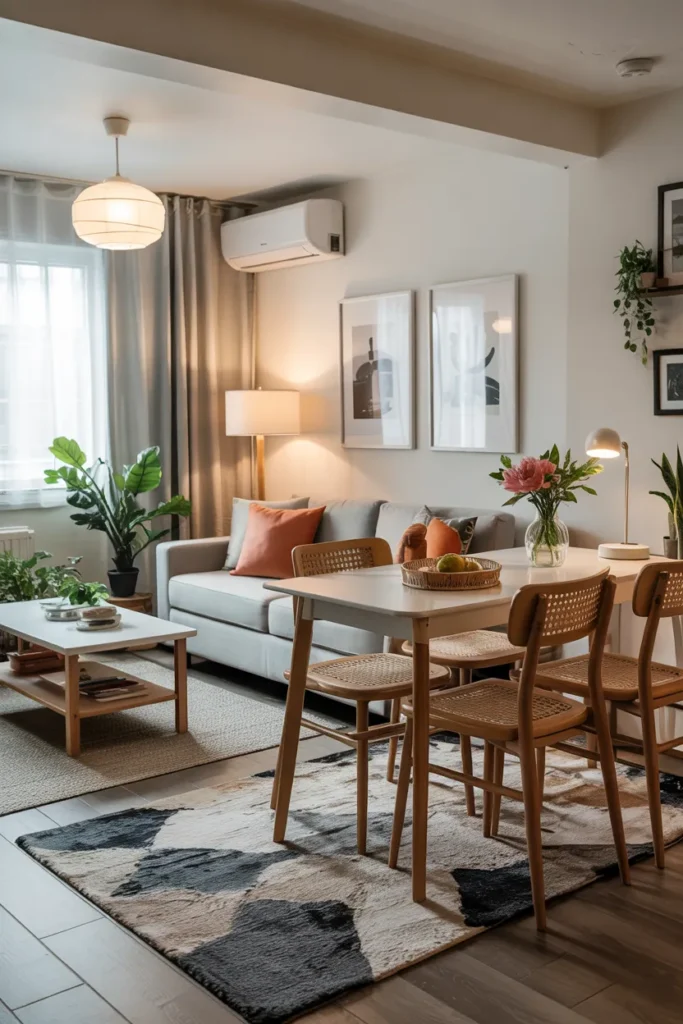
Vibe: Compact and multifunctional
Why it works: Studio layouts rely on multi-use zones where every piece must serve more than one function. Smart zoning replaces walls with furniture, lighting, and rugs to define living and dining areas.
How to get it: Choose space-saving furniture like nesting tables or extendable dining tables. Keep circulation paths open and avoid oversized pieces.
💡 Quick Win: Use a foldable dining table that expands only when needed.
Shop The Look
- Convertible sofa bed
- Drop-leaf dining table
- Stackable chairs
- Wall-mounted shelves
- Neutral jute rug
14. Drop-Leaf Dining Table Layout

Vibe: Flexible and efficient
Why it works: Drop-leaf tables adapt to changing needs, making them ideal for small living room dining combos. They allow you to expand or minimize surface area based on daily use.
How to get it: Keep the table folded for everyday movement and extend it only during meals or gatherings. Pair with lightweight chairs that can be easily moved.
💡 Quick Win: Choose a light oak finish to keep the visual weight minimal.
Shop The Look
- Light oak drop-leaf table
- Foldable dining chairs
- Wall-mounted storage shelf
- Linen curtain panels
- Minimal pendant light
15. L-Shaped Living with Dining Zone
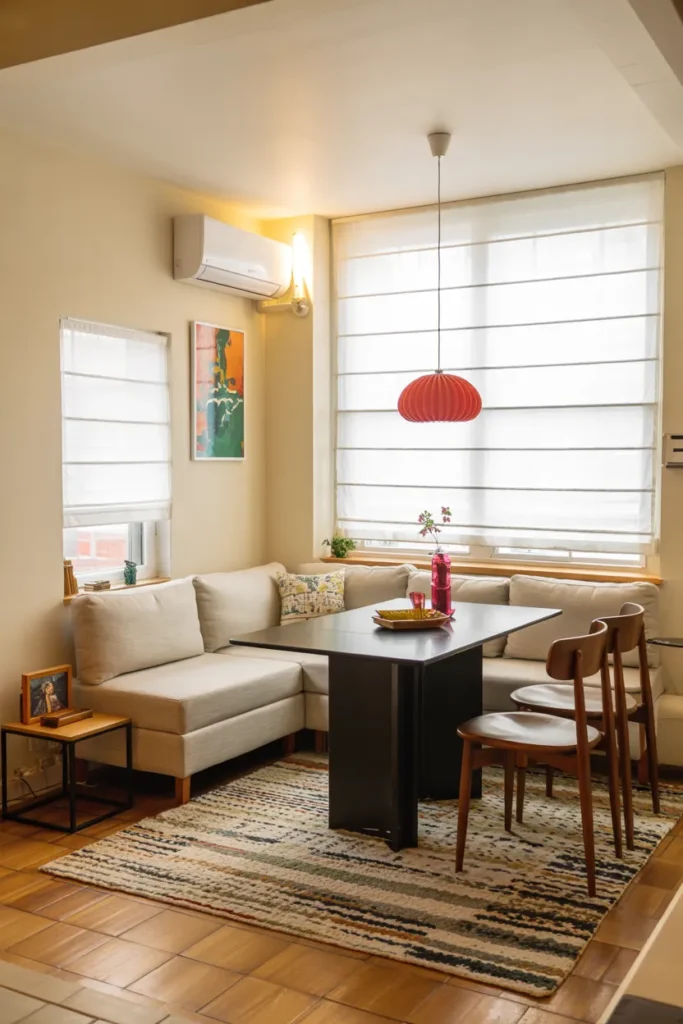
Vibe: Defined and cozy
Why it works: An L-shaped furniture arrangement naturally separates living and dining areas while keeping the layout open. It uses corner space efficiently without breaking flow.
How to get it: Place the sofa along one wall and extend seating along the adjacent wall, with the dining table positioned in the open corner space.
💡 Quick Win: Use a corner rug to visually anchor the living zone.
Shop The Look
- L-shaped sectional sofa
- Wooden dining table set
- Neutral corner rug
- Wall art set in soft tones
- Brushed metal floor lamp
16. Monochrome Space-Enhancing Layout
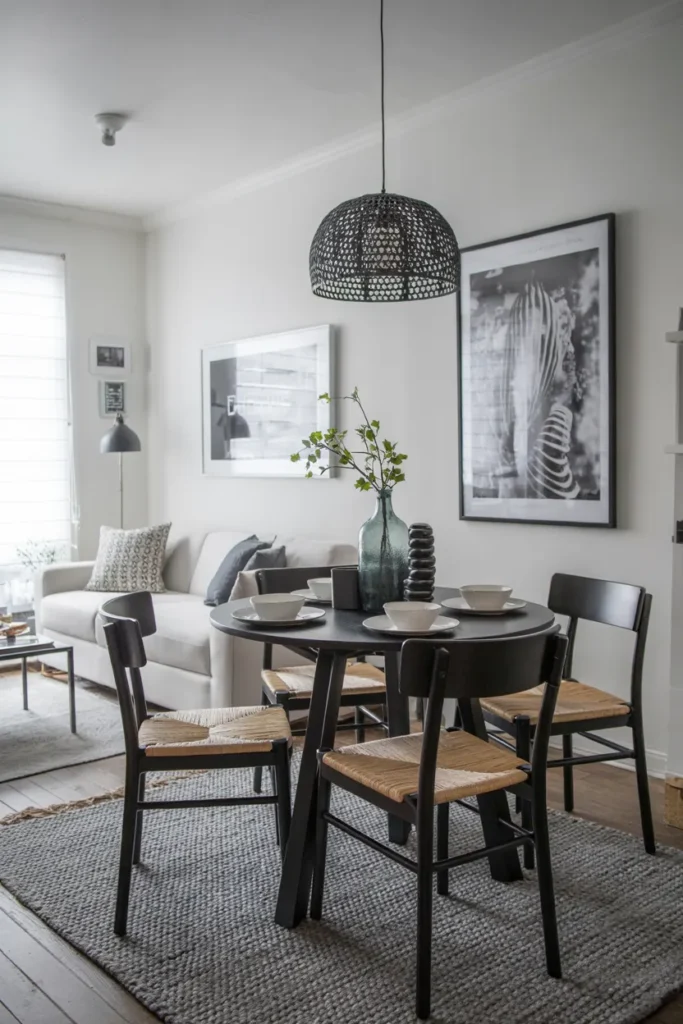
Vibe: Sleek and unified
Why it works: A monochrome palette removes visual breaks, making the room feel larger and more cohesive. The eye flows smoothly across both living and dining areas.
How to get it: Stick to one color family—such as warm beige or soft grey—and vary texture instead of color for depth.
💡 Quick Win: Mix matte and linen finishes within the same tone to prevent flatness.
Shop The Look
- Beige linen sofa
- Light taupe dining chairs
- Wool blend rug
- Ceramic vase set
- Minimal pendant light
17. Glass Dining Table Layout

Vibe: Light and airy
Why it works: Glass surfaces visually disappear, reducing clutter and allowing light to pass through the dining zone. This makes small spaces feel more open.
How to get it: Place a tempered glass dining table near natural light and pair it with slim-frame chairs for a floating effect.
💡 Quick Win: Use clear acrylic chairs to amplify the transparency effect.
Shop The Look
- Glass top dining table
- Acrylic dining chairs
- Brushed steel pendant light
- Neutral area rug
- Minimal centerpiece bowl
18. Built-In Banquette Seating Layout
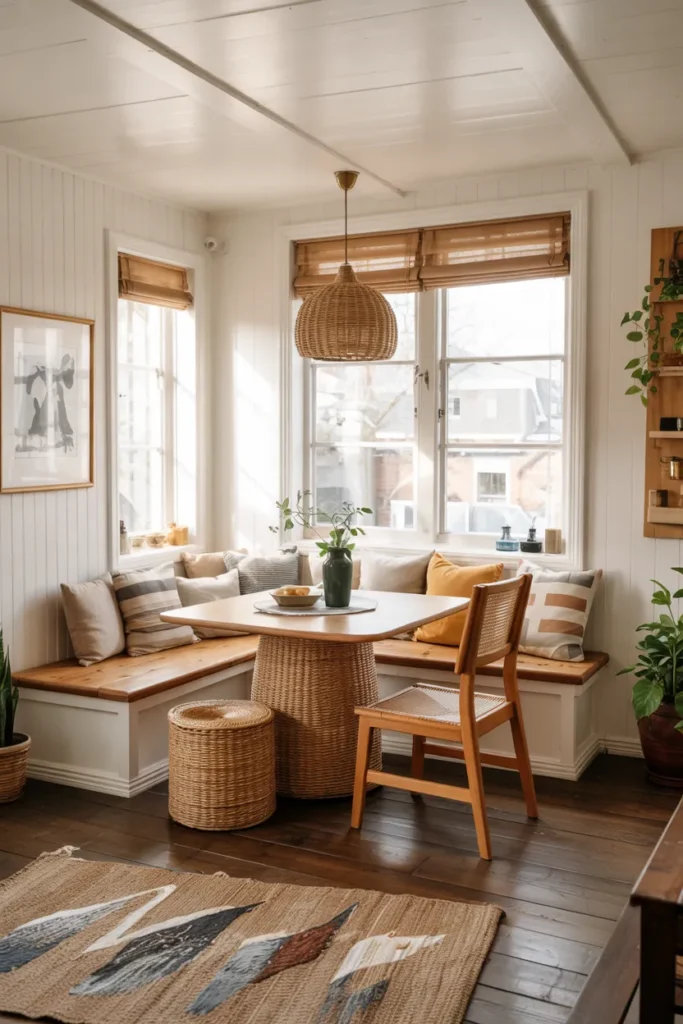
Vibe: Warm and space-saving
Why it works: Banquette seating maximizes wall space and removes the need for bulky chairs, improving circulation in tight layouts.
How to get it: Install an L-shaped built-in bench along a wall or corner and pair it with a compact dining table.
💡 Quick Win: Add hidden storage under the bench for extra functionality.
Shop The Look
- Upholstered banquette bench
- Wooden dining table
- Pendant lantern light
- Linen cushions set
- Wall-mounted shelves
19. Vertical Storage Combo Layout

Vibe: Organized and efficient
Why it works: Vertical storage draws the eye upward, making ceilings feel higher while freeing up floor space for living and dining zones.
How to get it: Install tall shelving units or wall-mounted cabinets to store dining essentials and decor vertically.
💡 Quick Win: Keep lower shelves open and upper shelves closed for a balanced visual weight.
Shop The Look
- Tall wooden shelving unit
- Compact sofa set
- Round dining table
- Neutral storage baskets
- Wall-mounted lighting
20. Neutral Cozy Combo Layout

Vibe: Soft and calming
Why it works: Neutral tones create visual continuity between zones, making the combined space feel warm and unified.
How to get it: Use soft beige, cream, and warm white across furniture and textiles, layering textures for depth.
💡 Quick Win: Add linen curtains to soften natural light and enhance warmth.
Shop The Look
- Cream fabric sofa
- Oak dining table
- Beige jute rug
- Linen curtain panels
- Ceramic table decor
21. Compact Round Table Center Layout

Vibe: Balanced and inviting
Why it works: A centered round table improves circulation and avoids sharp edges, which is ideal for tight combo spaces.
How to get it: Place a small round dining table in the center of the dining zone and surround it with evenly spaced seating.
💡 Quick Win: Choose pedestal base tables to maximize legroom.
Shop The Look
- Round pedestal dining table
- Upholstered dining chairs
- Soft pendant light
- Neutral rug
- Minimal centerpiece bowl
22. Open Shelf Divider Layout
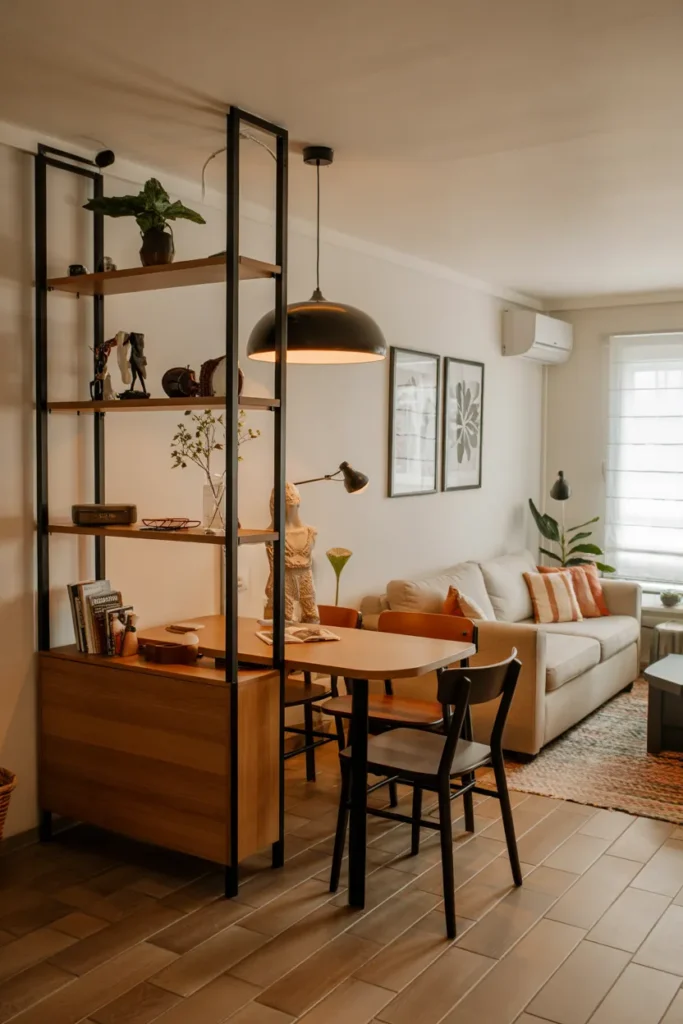
Vibe: Light and semi-open
Why it works: Open shelving divides space without blocking light, acting as a functional and decorative partition.
How to get it: Position a low or mid-height open shelf between living and dining zones and style it minimally.
💡 Quick Win: Leave 40% of shelving empty to maintain visual openness.
Shop The Look
- Open wooden shelving unit
- Neutral sofa set
- Rectangular dining table
- Ceramic decor objects
- Soft table lamp
23. Cozy Apartment Combo Layout
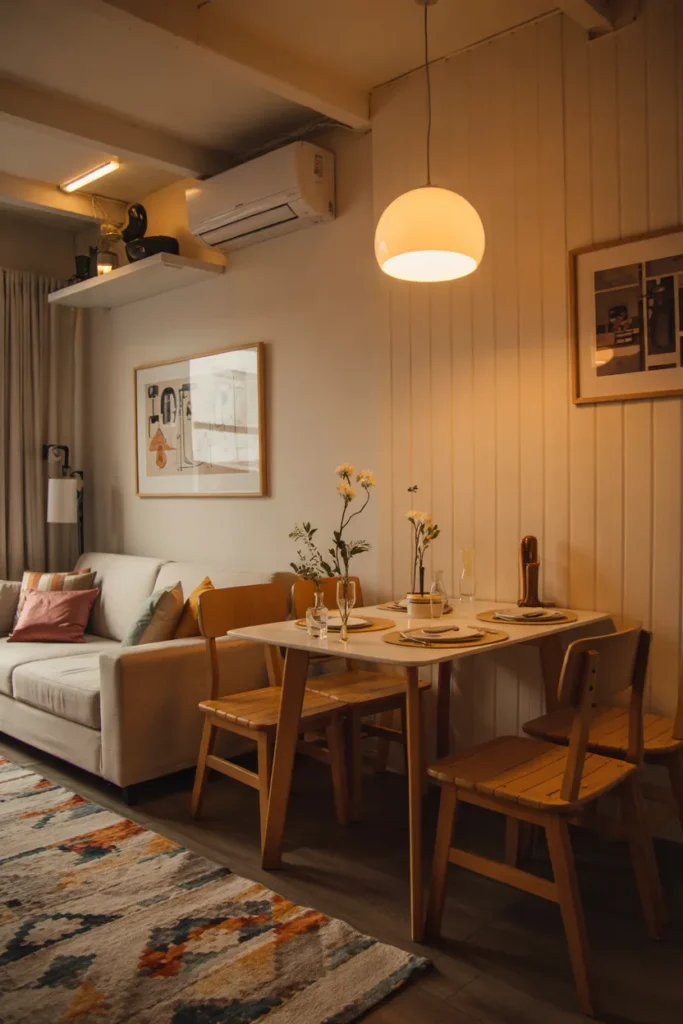
Vibe: Warm and intimate
Why it works: This layout focuses on soft edges, warm lighting, and compact furniture to make small apartments feel inviting and personal.
How to get it: Use rounded furniture shapes, warm lighting, and layered textiles to connect both zones visually.
💡 Quick Win: Add a single oversized floor cushion for flexible seating.
Shop The Look
- Compact fabric sofa
- Small wooden dining table
- Warm table lamps
- Soft textured rug
- Neutral throw pillows
Conclusion
These 24 Small Living Room Dining Room Combo Layouts for 2026 highlight how thoughtful zoning, compact furniture, and visual balance can completely reshape even the smallest interiors. From L-shaped seating and glass dining tables to vertical storage and banquette layouts, each idea shows a different way to make living and dining areas feel connected yet clearly defined.
What matters most is not the size of your space, but how intentionally you use it. When you rely on flow, proportion, and layered functionality, a single room can comfortably serve multiple purposes without feeling crowded or chaotic.
Start with one simple change today—shift your dining table, introduce a rug to define a zone, or swap bulky furniture for lighter, space-saving pieces. Small adjustments often create the biggest visual impact.
In the end, a well-designed combo layout feels calm, efficient, and naturally livable, where every corner has purpose and every zone supports your daily rhythm. Save your favorite ideas and begin building a home that feels open, balanced, and beautifully functional in 2026 and beyond.