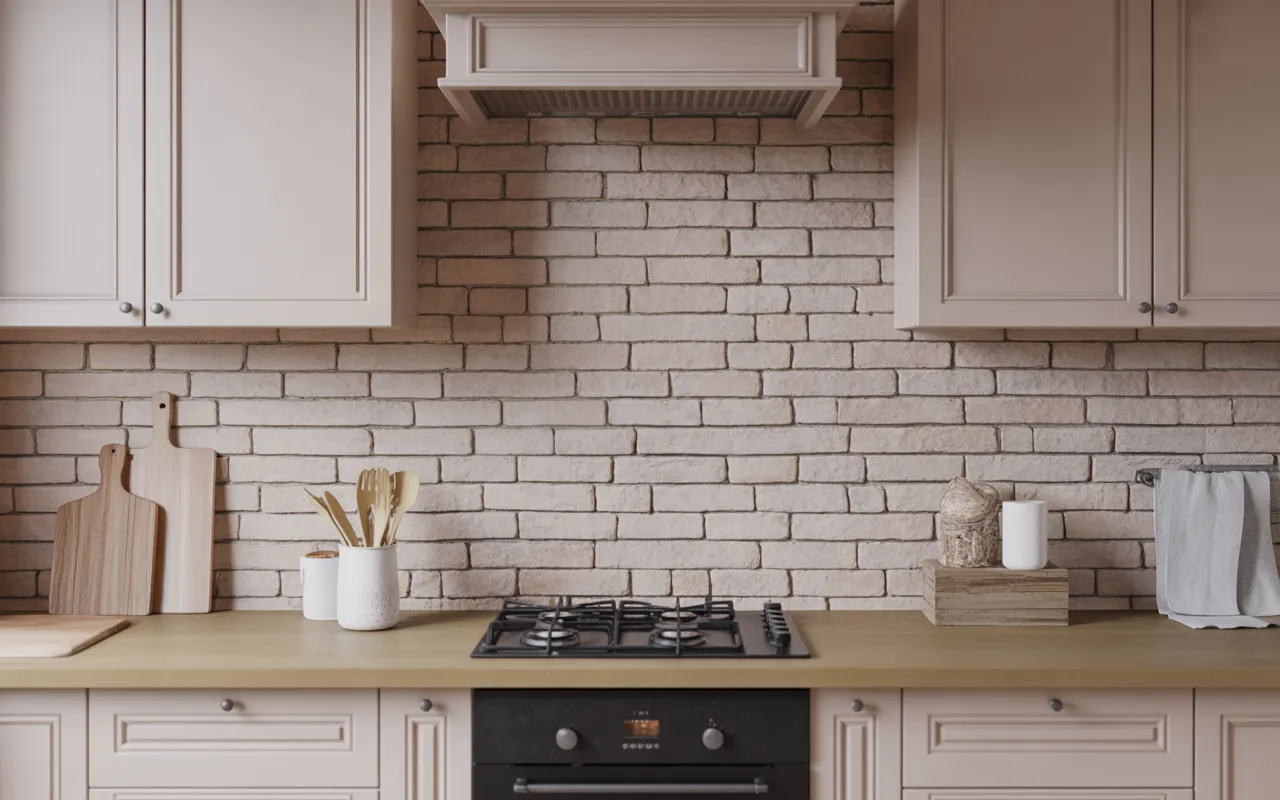
23 Stone Backsplash Kitchen Ideas with Rustic Charm
A stone backsplash brings real variation in color and texture that printed tile cannot copy. Stacked stone, rough cut pieces, river stone, slabs, and mosaics all behave differently with light and cleaning. The shared strength is depth. The shared need is proper sealing.
The 23 kitchens below focus on rustic stone looks, from warm stacked stone and country browns to cream, beige, and light gray versions that suit softer rooms. Most pair stone with wood cabinets, open shelves, or farmhouse details, and the stone does most of the visual work.
Before you choose by photo alone, think about grout, sealing, and how rough a surface you want behind the hob. Those three decisions decide how the backsplash ages. They come up in every idea that follows.
This post contains affiliate links. If you buy through them, I may earn a small commission at no extra cost to you.
1. Classic Stacked Stone Backsplash for Warm Kitchens

Classic stacked stone uses thin, even layers of cut stone to build a textured wall with regular lines. It suits warm kitchens with wood cabinets because the layers echo timber tones. The regular pattern keeps roughness under control.
Keep layers level: Stacked stone looks best when the horizontal lines stay true across the wall. A laser level and patience at the first rows decide the result. Small shims behind uneven pieces stop the wall wandering as it rises.
Seal the whole surface: Stone and grout both absorb, so seal after grouting and repeat yearly in the splash zone. Matte sealer keeps the natural finish. Keep a note of the product used so the next coat matches.
- Use a level on the first rows and check often
- Seal stone and grout after fitting
- Keep cabinets and counters plain against the texture
Shop This Look
2. Rough Cut Stone Backsplash with Wooden Cabinets

Rough cut stone with wooden cabinets is the fullest rustic version here. Uneven faces catch shadow, and warm wood stops the wall feeling like a cave. It suits country homes and kitchens with beams, range cookers, and solid furniture.
Balance rough with smooth: The counter should be smooth and plain so you have one calm surface to work on. Smooth cabinet doors, even in wood, also help. If everything is rough and grained, the room becomes hard to read.
Plan cleaning honestly: Rough stone behind the hob traps grease in its dips. A removable glass or steel guard in front of the hob section is a sensible compromise. Brush the rest of the wall with a soft brush when you clean.
- Pair rough stone with a smooth plain counter
- Fit a guard behind the hob for grease
- Clean with a soft brush, not scouring pads
Shop This Look
3. Light Gray Stone Backsplash for Rustic Modern Style

Light gray stone gives a rustic texture in a cooler, calmer color. It suits kitchens moving toward modern rustic, where wood is pale and metals are black or stainless. The gray also hides dust and light marks well.
Warm it up slightly: Pure gray stone with gray cabinets can feel flat. Pale wood shelves, warm lighting, or brass handles add the warmth the stone lacks. Test the stone in your own light, because some grays lean blue.
Choose grout close in tone: Grout near the stone color keeps the wall soft. White grout makes each piece stand out and the wall busier. A mid gray is the safe middle ground for most light gray stone.
- Add pale wood or brass to warm gray stone
- Use grout close to the stone tone
- Check stone samples for blue undertones
Shop This Look
4. Natural River Stone Backsplash for Organic Appeal

Natural river stone uses rounded pebbles and smooth stones for an organic, uneven surface. It feels softer than cut stone and suits kitchens with plants, wood, and natural textiles. The look is relaxed and works well in smaller feature areas.
Use it where hands go less: River stone is bumpy, so wiping is slower. It suits the sink wall or a coffee area better than right behind the hob. Mesh backed sheets make fitting faster and spacing more even.
Grout does the heavy work: With rounded stones, grout fills much of the surface and decides the color balance. A grout close to the stone tones looks natural. Seal well, because the wide grout area absorbs splashes.
- Fit river stone away from the hob where possible
- Choose mesh backed sheets for even spacing
- Seal wide grout areas thoroughly
Shop This Look
5. Dark Stone Backsplash with Vintage Rustic Details

Dark stone with vintage rustic details creates a moody kitchen that suits evening cooking and traditional homes. Aged metal, porcelain, and wood sit well against deep stone. Daylight balance matters, so pale counters or a light floor help.
Light the work area well: Dark stone swallows light. Under cabinet strips and a bright hob light are essential. Pale counters bounce some light back and make the prep area practical.
Keep vintage details few: Two or three aged pieces read as character. Too many turn the kitchen into a theme. Let plain modern storage work quietly behind the vintage front.
- Fit strong under cabinet task lighting
- Add a pale counter or floor for balance
- Limit aged details to a few pieces
Shop This Look
6. Beige Stone Backsplash with Soft Rustic Texture

Beige stone with soft rustic texture is an easy background for warm kitchens. It adds interest without strong color, so cabinets, counters, and accessories can change over time. Beige also hides light dust and splashes better than white.
Avoid a one tone room: Beige stone, beige cabinets, and beige counters together go flat. Add wood, black handles, or a colored textile to give the room steps in tone. The stone should be the middle tone, not the only tone.
Check beige in daylight: Beige stone can lean pink or yellow. View samples by your window across a day before ordering. The wrong lean is hard to fix once the wall is up.
- Make the stone the middle tone of the room
- View beige samples across a full day
- Add black or wood accents for contrast
Shop This Look
7. Rustic Stone Backsplash with Exposed Brick Feel

Rustic stone with an exposed brick feel combines the color variation of brick with the depth of stone. It suits kitchens that cannot decide between the two, and pairs well with wood and black metal. Keep other patterns out of the room.
Let the wall be the pattern: This surface has color and texture in one. Counters, cabinets, and floors should stay plain. One strong wall plus calm surroundings is the formula that works.
Blend grout into the mix: Grout in a mid tone taken from the stones keeps the brick like effect. Very light or dark grout breaks the illusion into a grid. Sample a small area first and let it dry fully before judging.
- Keep all other surfaces plain
- Use mid tone grout from the stone colors
- Judge grout only when fully dry
Shop This Look
8. Warm Brown Stone Backsplash for Country Kitchens

Warm brown stone suits country kitchens with wood cabinets, open shelves, and range cookers. The brown layers echo timber and make the room feel settled. It is forgiving with marks and dust, which helps in busy homes.
Vary the browns slightly: Cabinets, stone, and floor in the exact same brown merge into one block. Keep one lighter and one darker so each material reads clearly. Cream paint or pale counters can be the light step.
Use warm light: Warm bulbs bring out the best in brown stone. Cool white light turns it gray and dull. Keep all bulbs in the room at the same warm temperature.
- Keep one element lighter than the stone
- Use warm bulbs throughout the kitchen
- Repeat brown stone tones in small accessories
Shop This Look
9. Textured Stone Backsplash with Neutral Rustic Tones

Textured stone in neutral rustic tones gives interest without committing to a color. It works with most cabinet colors, which makes it a safe long term choice. The texture changes with light through the day, so the wall never looks flat.
Sample the texture at home: Texture looks stronger in real light angles than in flat photos. Tape sample pieces to the wall and watch them morning and evening. Very deep texture near the hob is harder to keep clean.
Keep the scheme flexible: Neutral stone lets you change textiles, stools, and small appliances for a new feel later. That flexibility is its main value. Choose cabinets you like for a decade, not a season.
- Tape stone samples up and watch them all day
- Keep texture shallower behind the hob
- Use accessories for color, not the wall
Shop This Look
10. Natural Stone Slab Backsplash with Rustic Elegance

A natural stone slab backsplash uses one large piece of stone, so there are no grout lines and the veining runs unbroken. It reads more refined than stacked stone while keeping a natural feel. The same stone as the counter gives the calmest result.
Budget for the slab honestly: Slabs cost more per area than tile, and cutting and fitting need specialists. Get the stone templated after cabinets are fitted, not before. Keep the offcut if you can, it is useful for shelves or a small board.
Enjoy the easy cleaning: No grout means a simple wipe down, which makes slab stone the practical choice behind hobs. Seal natural stone slabs on fitting and as the supplier advises. Use trivets and boards as you would on a stone counter.
- Template the slab after cabinets are fitted
- Seal slab stone on fitting
- Keep slab offcuts for shelves or boards
Shop This Look
11. Cream Stone Backsplash for Soft Rustic Kitchens

Cream stone gives a soft rustic kitchen that feels light without going white. It pairs well with pale wood, cream cabinets, and brass details. Cream also shows less dust than darker stone in bright rooms.
Layer cream tones: Cream stone, cream cabinets, and cream counters need small differences between them or the room blurs. Wood shelves or a darker floor give the eye a rest. Brass handles add a warm step in tone.
Protect pale stone: Pale stone and grout show turmeric and tomato fast. Seal carefully and wipe splashes the same day. A hob guard earns its place in a cream kitchen.
- Vary cream tones slightly between surfaces
- Seal pale stone and grout well
- Wipe strong colored splashes the same day
Shop This Look
12. Mixed Stone Backsplash with Earthy Color Variations

Mixed stone with earthy color variations brings browns, grays, rust, and beige into one wall. It hides marks brilliantly and suits rustic rooms with simple cabinets. The mix needs calm surroundings to avoid visual noise.
Mix before you fix: Blend pieces from every box before fitting so colors spread evenly. Lay out a square metre on the floor first. Move strong colored pieces away from eye level center if they dominate.
Pull one color for accents: Pick one tone from the stone, such as rust or gray, and repeat it in stools, textiles, or handles. That link makes the varied wall look planned. Do not try to match every color in the stone.
- Blend stone from all boxes before fitting
- Dry lay a test area first
- Repeat just one stone color in accents
Shop This Look
13. Stone Tile Backsplash with Handcrafted Rustic Feel

Stone tile with a handcrafted rustic feel has uneven edges, slight size variation, and a surface that is not machine flat. It suits kitchens that want character without full rough stone. The irregular lines soften modern cabinets too.
Use wider grout joints: Handcrafted tiles need wider joints to absorb size differences. Trying for thin modern lines with uneven tiles ends in frustration. Sanded grout in a warm gray suits the style and hides variation.
Expect variation in delivery: Order all tiles in one batch so dye and clay lots match. Keep spares from the same batch for future repairs. A few pieces will be more uneven than others, so grade them and use the roughest in low corners.
- Plan wider grout joints for uneven tiles
- Order one batch and keep spares
- Grade tiles and place roughest pieces low
Shop This Look
14. Weathered Stone Backsplash for Vintage Rustic Style

Weathered stone has a softened, aged surface that suits vintage rustic kitchens. Edges look worn rather than cut, and colors are muted. It pairs with painted cabinets, old wood furniture, and simple iron hardware.
Keep new items quiet: Shiny new fittings fight weathered stone. Brushed and aged finishes sit better. If appliances are modern stainless, keep them plain and let the stone and furniture carry the age.
Seal without shine: Some sealers add gloss that ruins the weathered effect. Choose a matte, natural look product and test it on a spare piece. The stone should look the same after sealing, just protected.
- Choose brushed or aged metal finishes
- Test matte sealer on a spare piece first
- Keep modern appliances plain and simple
Shop This Look
15. Stone Mosaic Backsplash with Natural Rustic Patterns

A stone mosaic uses small pieces on mesh sheets to build pattern and texture at a finer scale. It suits smaller kitchens where large stone would overwhelm. Mosaics also bend around slight wall unevenness better than big tiles.
Respect the grout ratio: Mosaics have a lot of grout, so grout color shapes the whole wall. Test two grout colors on a spare sheet and let them dry. Sealing is more important here than with large tiles.
Keep the area contained: Mosaic behind the hob and sink, with plain stone or tile elsewhere, controls cost and visual weight. Sheet joins need care so the pattern does not jump at the seams. A good tiler is worth it for mosaics.
- Test grout colors on a spare mosaic sheet
- Use mosaic in the main splash zones
- Seal grout thoroughly after fitting
Shop This Look
16. Stone Backsplash with Natural Earthy Veins

Stone with natural earthy veins, such as travertine or veined marble in warm tones, brings movement without a busy pattern. The veins lead the eye along the wall. It suits simple wood cabinets and plain counters.
Direct the veins: Decide whether veins run across or up the wall before fitting, because it changes the feel. Horizontal veins widen a room, vertical veins add height. Keep the direction consistent across the whole run.
Fill and seal travertine: Travertine has natural holes that trap dirt in a kitchen. Filled travertine is the practical choice for a backsplash. Seal it well and wipe with pH neutral cleaner so the surface does not dull.
- Fix one vein direction for the whole run
- Choose filled travertine for kitchen use
- Clean with pH neutral products only
Shop This Look
17. Rustic Stone Backsplash Paired with Open Shelving

Rustic stone paired with open shelving lets the wall show in full while shelves hold daily items. The stone becomes the backdrop, so dish colors matter. Wood shelves suit the stone and keep the wall feeling like one system.
Fix through the stone carefully: Drilling stone for shelf brackets needs the right bits and a slow speed. Plan bracket positions before the stone goes up if you can, and fix into the wall structure, not just the stone. Heavy shelves on veneer alone will fail.
Style against the texture: Plain white or cream dishes read clearly against busy stone. Glass jars disappear a bit, which some people like. Keep shelf items in a tight color range so the wall does not look cluttered.
- Plan shelf fixings before stone is fitted
- Use masonry bits and fix into the structure
- Keep shelf dishes in one pale color range
Shop This Look
18. Soft Brown Stone Backsplash with Cozy Rustic Vibes

Soft brown stone gives a cozy rustic kitchen without the weight of dark stone. It sits between beige and mid brown, so it works with most wood cabinets. The color hides everyday marks and suits family kitchens.
Build gentle contrast: Soft brown stone with mid brown cabinets needs a lighter counter or floor to separate them. Cream quartz or pale wood both do the job. Black handles give a small sharp note that helps too.
Keep lighting warm and even: Soft brown looks best in warm, even light. Shadows in rough stone can look like dirt, so spread light across the wall with wide beam under cabinet fittings. Avoid one harsh spotlight.
- Add a light counter to separate brown tones
- Use wide beam under cabinet lights
- Add black handles for definition
Shop This Look
19. Stone Backsplash with Uneven Rustic Texture

Stone with uneven rustic texture is the boldest surface here. Deep relief catches strong shadows and feels handmade. It belongs in kitchens with simple cabinets and plenty of light, and it is best kept away from the heaviest grease zone.
Use it selectively: One wall or the area outside the hob zone is enough for very rough stone. Covering every wall in deep texture closes a room in. Balance it with a smooth slab or tile section where cooking happens.
Clean with the right tools: Cloths snag on rough stone. A soft brush and spray cleaner work better. Vacuum the wall gently with a brush attachment now and then to lift dust from the dips.
- Keep deep texture away from the hob zone
- Clean with a soft brush and spray
- Balance rough stone with one smooth section
Shop This Look
20. Neutral Stone Backsplash for Balanced Rustic Design

Neutral stone for a balanced rustic design mixes pale grays, beiges, and soft browns in even proportions. Nothing dominates, so the kitchen can lean warm or cool with accessories. It is a steady long term choice for resale minded owners too.
Keep the mix even: When fitting mixed neutral stone, avoid clusters of one tone. Spread pieces as you go and step back often. An even spread is what makes this version feel calm rather than patchy.
Use it as a base for change: Neutral stone stays while stools, textiles, and paint colors rotate around it. That is the practical case for choosing it. Keep spare pieces stored flat for future repairs.
- Spread neutral tones evenly as you fit
- Step back often to check the balance
- Store spare pieces flat for repairs
Shop This Look
21. Stone Backsplash with Warm Rustic Lighting

Stone with warm rustic lighting shows how much light changes a stone wall. Warm light rakes across texture and deepens color in the evening. The same wall can look flat under cool light, so lighting is part of the design, not an afterthought.
Graze the wall with light: Under cabinet strips placed toward the front of the cabinet base throw light across the stone and show its texture. Lights at the back waste the effect on the counter. Test positions with a temporary strip before fixing.
Warm bulbs only: Bulbs around 2700K to 3000K suit stone and wood. Mixed temperatures across pendants and strips look messy. Buy all fittings together if you can, from one range.
- Position light strips to graze the stone
- Keep all bulbs between 2700K and 3000K
- Test light position with a temporary strip
Shop This Look
22. Rustic Stone Backsplash with Farmhouse Charm

Rustic stone with farmhouse charm pairs the wall with apron sinks, wood shelves, beadboard, and simple painted cabinets. The stone grounds the softer farmhouse pieces and stops them looking twee. It suits family kitchens that get used hard.
Let stone do the heavy work: Farmhouse details are light in feel, stone is heavy in feel, and the mix balances. Keep the stone color mid tone so it supports rather than dominates. One stone wall is usually enough with this many details.
Choose practical farmhouse pieces: Apron sinks and wood shelves earn their keep daily. Purely decorative items gather grease near a hob. Keep decoration above shelf height and working items below.
- Use one mid tone stone wall
- Keep farmhouse items practical near the hob
- Put decoration high and work items low
Shop This Look
23. Stone Backsplash with Timeless Rustic Elegance

Stone with timeless rustic elegance is the refined end of this list. Even cuts, muted colors, and careful grout make the wall feel settled rather than rough. It suits kitchens that mix rustic texture with good furniture and quiet colors.
Invest in the finish work: At this end of the style, neat grout lines and clean edges matter more than the stone itself. A skilled tiler and mitred or trimmed edges lift the whole wall. Rushed finishing undoes expensive stone.
Keep colors muted for good: Muted stone works with many cabinet colors over the years, from wood to painted green or cream. That staying power is the point of this choice. Avoid strong colored stone if you want the kitchen to last unchanged.
- Spend on skilled fitting and neat edges
- Choose muted stone for long term flexibility
- Finish edges with trim or mitres, not raw cuts
Shop This Look
How to Start
Start by choosing the stone format that suits your wall and your cleaning habits. Stacked and rough stone give the most texture, tiles and mosaics are neater, and slabs are easiest to clean. Decide that first, because format drives cost, weight, and fitting method.
Order samples and live with them: Stone varies piece to piece, so one sample is not enough. Order a small box, tape pieces to the wall, and check them in morning and evening light against your cabinets. Note how deep the texture is where the hob will sit.
Plan sealing from day one: Ask the supplier when to seal, before or after grouting, and which product suits your stone. Write the product name and date on a note inside a cupboard. Future you will be glad when the yearly reseal comes around.
- Order a sample box, not a single stone piece
- Decide grout color with samples taped on the wall
- Record the sealer product and date inside a cupboard
Shop This Look
Common Mistakes
Stone backsplash problems are usually about water, grease, and weight. Avoid these and the wall will age well.
- Skipping sealer or sealing only once and never repeating it in the splash zone
- Putting the roughest stone directly behind the hob where grease is hardest to remove
- Guessing grout color instead of testing it dry on a sample area
- Fitting heavy stone on weak boards without checking the wall structure
- Using acidic cleaners like vinegar or lemon sprays that dull and etch stone
- Mixing several strong stone colors with patterned counters and busy cabinets
- Leaving raw cut edges exposed at the ends of the run instead of trimming them
Frequently Asked Questions
Does a stone backsplash need sealing?
Yes, almost all natural stone does. Seal after fitting and grouting, then repeat every year or so in the area behind the hob and sink. Engineered stone look tiles may not need it, so check the product guidance for what you bought.
Is stone hard to keep clean in a kitchen?
Smooth stone and slabs wipe clean easily. Rough stacked stone takes more work, mainly behind the hob, and a glass or steel guard there solves most of it. A soft brush and pH neutral cleaner handle the rest without damaging the surface.
What cabinets go best with a stone backsplash?
Wood cabinets are the classic partner because both materials are natural and warm. Painted shaker cabinets in cream, sage, or soft gray also work well. Keep the cabinet style simple so the stone texture stays the feature.
Can I fit stone veneer myself?
Confident DIYers can fit mesh backed mosaic and some veneer panels on a sound, flat wall. Heavy stone, slabs, and uneven walls are better left to a tiler. The cost of fixing a failed heavy fitting is higher than the cost of fitting it once, properly.
How do I choose between stone, brick, and tile?
Stone gives the most texture and natural variation, brick gives regular rustic pattern, and tile gives the widest color range and easiest cleaning. Compare them side by side in this guide to kitchen backsplash ideas before you order samples.
The Finishing Touch
Finish a stone kitchen by keeping the counter calm. Wood boards, one plant, and your most used utensils are enough. Stone already gives the room plenty to look at, and clear work space makes cooking easier too.
If you want to compare stone with other rustic finishes in real rooms, the Houzz backsplash ideas guide is a useful place to check layouts and grout choices. Look at how close the stone sits to the hob in the photos you save, and whether a guard is used.
Choose the format you can clean, seal it properly, and stone will outlast most other parts of the kitchen. It is one of the few backsplash materials that looks better with a little age on it.