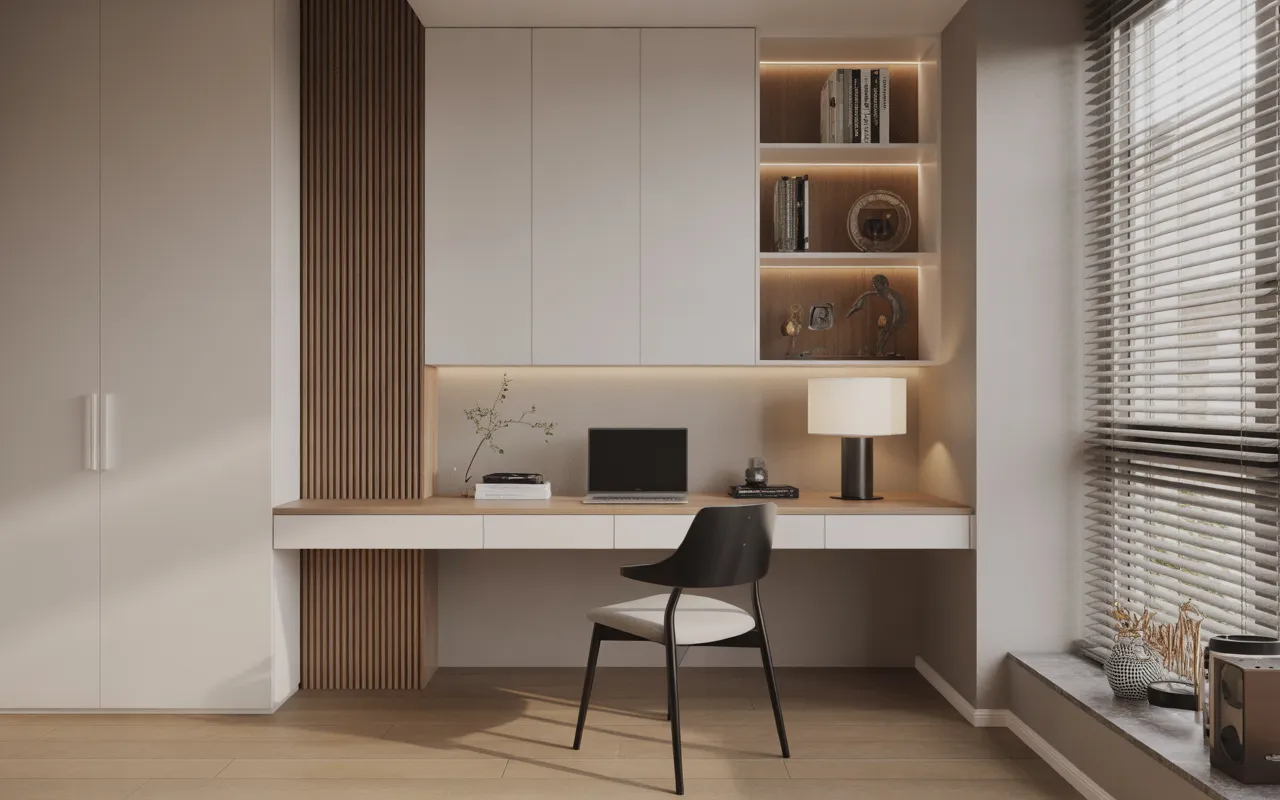
22 Tiny Apartment Home Office Ideas That Save Space
Working from a tiny apartment does not mean working from the couch. With the right desk setup, even the smallest corner can become a productive home office. These 22 ideas prove it.
Every idea here is built for small spaces: wall-mounted desks, folding designs, and storage that goes vertical instead of wide. Some need a drill and a free afternoon. Others just need the right piece of furniture. All of them respect your square footage.
I focused on setups that real people use in real small apartments. Each idea includes practical steps and three shoppable picks. Your tiny home office is closer than you think.
This post contains affiliate links. If you buy through them, I may earn a small commission at no extra cost to you.
1. Compact Wall-Mounted Desk with Storage
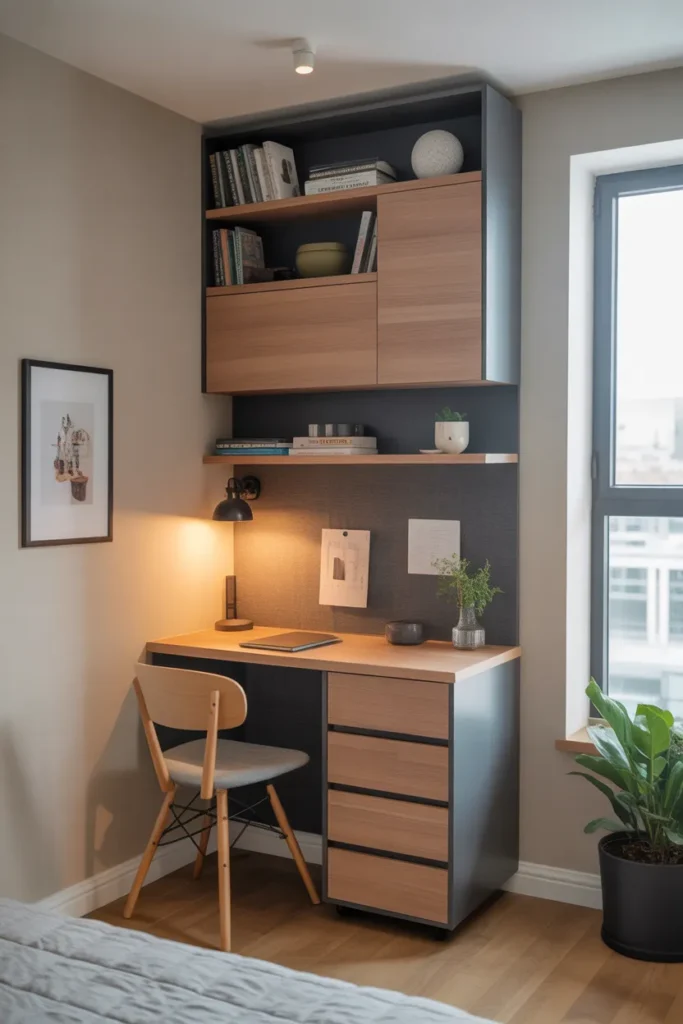
A wall-mounted desk with storage is the classic tiny apartment solution. It gives you a real work surface without eating floor space. The built-in storage keeps supplies off the desk itself.
Mount it at the right height: Standard desk height is 28 to 30 inches, so mount the work surface in that range. If you use a bar-height chair, go higher. Anchor into studs, not just drywall, because a desk holds real weight. A small level during install saves you from a lifetime of rolling pens.
Use the storage well: Keep daily supplies in the desk cubbies and archive the rest elsewhere. A wall-mounted desk has limited depth, so go vertical with your storage. Small bins inside the cubbies keep things from sliding out. If the desk starts collecting clutter, that is your cue to edit, not to add more storage.
- Anchor the desk into wall studs since it holds real weight.
- Mount the work surface at 28 to 30 inches for standard chairs.
- Use small bins inside cubbies to keep supplies organized.
Shop This Look
2. Foldable Desk with Minimalist Chair
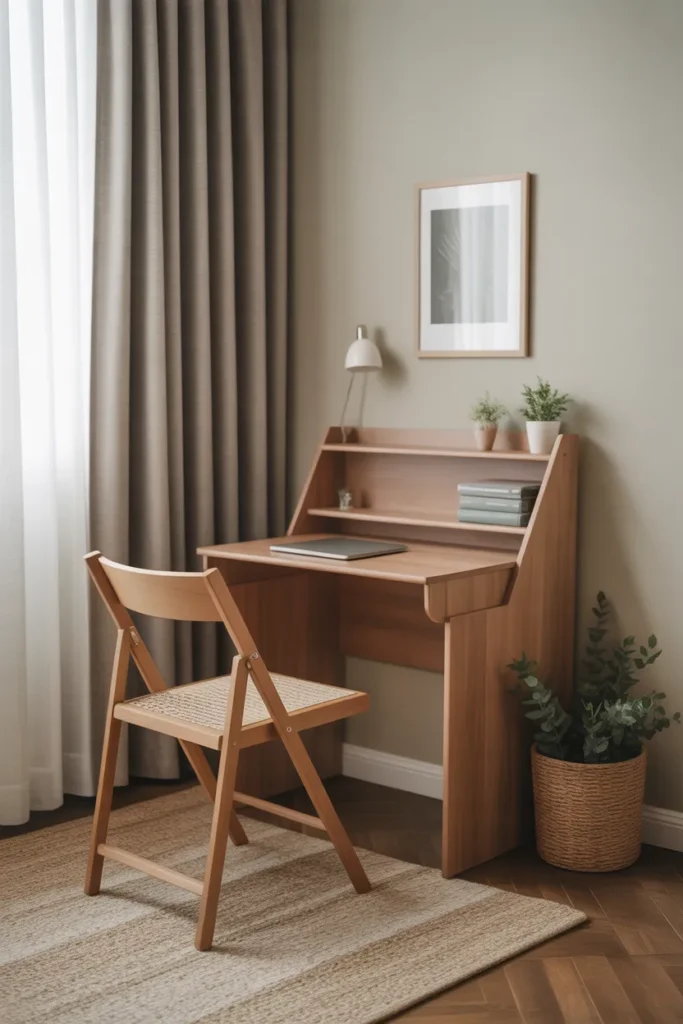
A foldable desk with a minimalist chair disappears when you are done working. This is ideal for studio apartments where the desk sits in the living area. Folded up, the room goes back to being a living room.
Pick a sturdy folding mechanism: Cheap folding desks wobble, and wobble kills productivity. Look for locking hinges and a solid top at least an inch thick. Test the fold mechanism in reviews before buying. The desk should fold flat against the wall with one smooth motion.
Pair it with a light chair: A minimalist chair that stacks or folds keeps the whole setup portable. When the desk is folded away, the chair can tuck into a closet. Keep the chair light enough to move daily without dreading it. Comfort still matters, so sit in the style before you commit if you can.
- Choose locking hinges so the desk never wobbles while you work.
- Pick a chair light enough to move daily without effort.
- Fold the desk away each evening to reclaim the room.
Shop This Look
3. Floating Shelves Above a Slim Desk
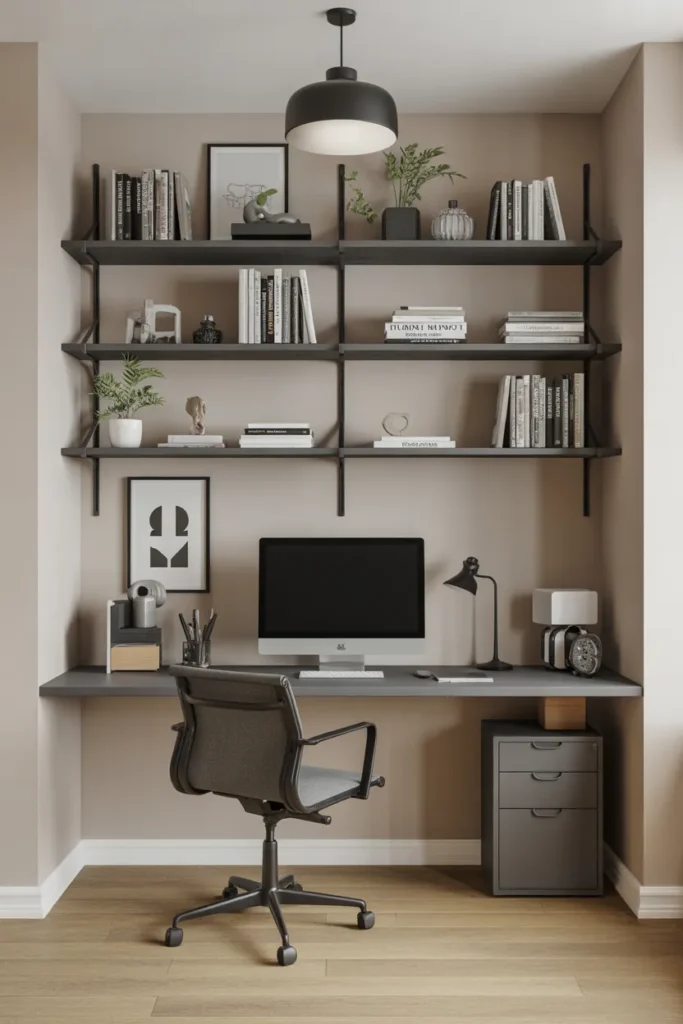
Floating shelves above a slim desk multiply your storage without touching the floor. The desk stays clear for actual work. Everything you need lives within arm’s reach above.
Set the shelf heights: Leave 18 to 20 inches between the desk surface and the first shelf so your monitor and head clear it. Space the shelves 12 to 15 inches apart for books and bins. Keep the heaviest items on the lowest shelf. Two or three shelves are the sweet spot; more than that gets hard to reach.
Style them for work, not display: These shelves are tools, not a gallery. Keep reference books, chargers, and supplies here. Use matching bins so the wall looks calm. Leave some open space so the shelves do not feel like a wall of stuff. If you have not touched something in a month, move it to deeper storage.
- Leave 18 to 20 inches of clearance above the desk surface.
- Keep heavy items on the lowest shelf for safety.
- Use matching bins so the wall looks calm and organized.
Shop This Look
4. Corner Desk with Built-In Drawers
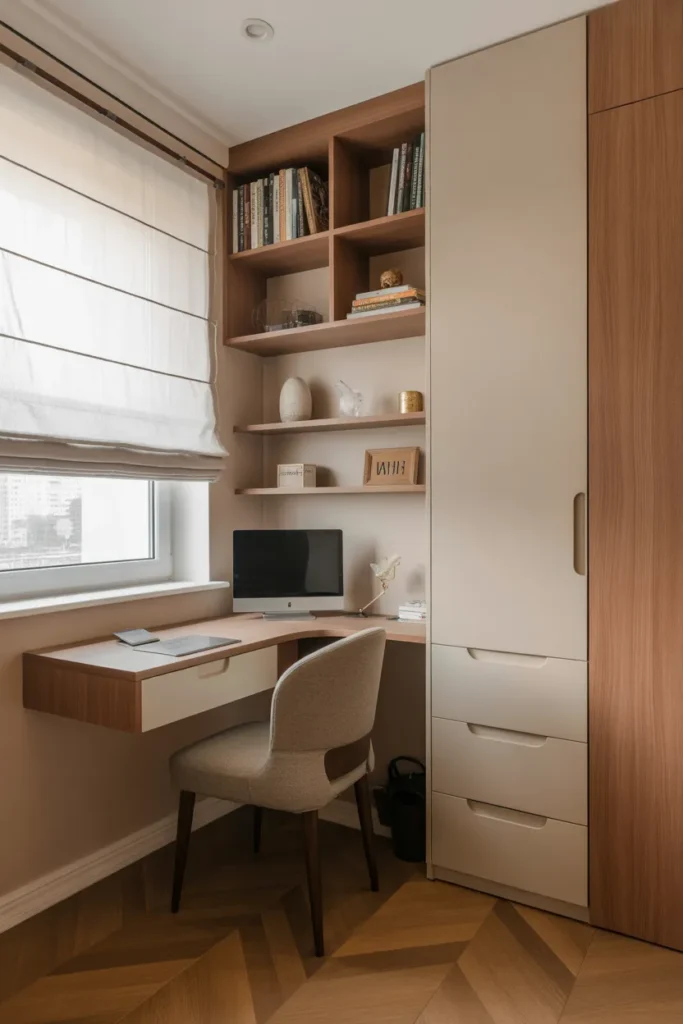
A corner desk with built-in drawers turns dead corner space into a proper workstation. Corners are wasted in most apartments. This setup reclaims them and adds drawer storage in the bargain.
Measure the corner first: Measure both walls and check for baseboards, outlets, and vents that affect fit. An L-shaped desk needs clearance on both sides for your chair to move. Built-in drawers should open fully without hitting the wall. Bring the measurements when you shop so you buy once.
Organize the drawers: Shallow drawers are for pens, chargers, and small tools. Deep drawers hold paper, notebooks, and tech accessories. Drawer dividers turn one big drawer into useful compartments. Label the dividers if you share the desk with a partner.
- Measure both walls, including baseboards and outlets, before buying.
- Check that drawers open fully without hitting the wall.
- Use drawer dividers to create compartments in deep drawers.
Shop This Look
5. Floating Desk with Fold-Down Seating
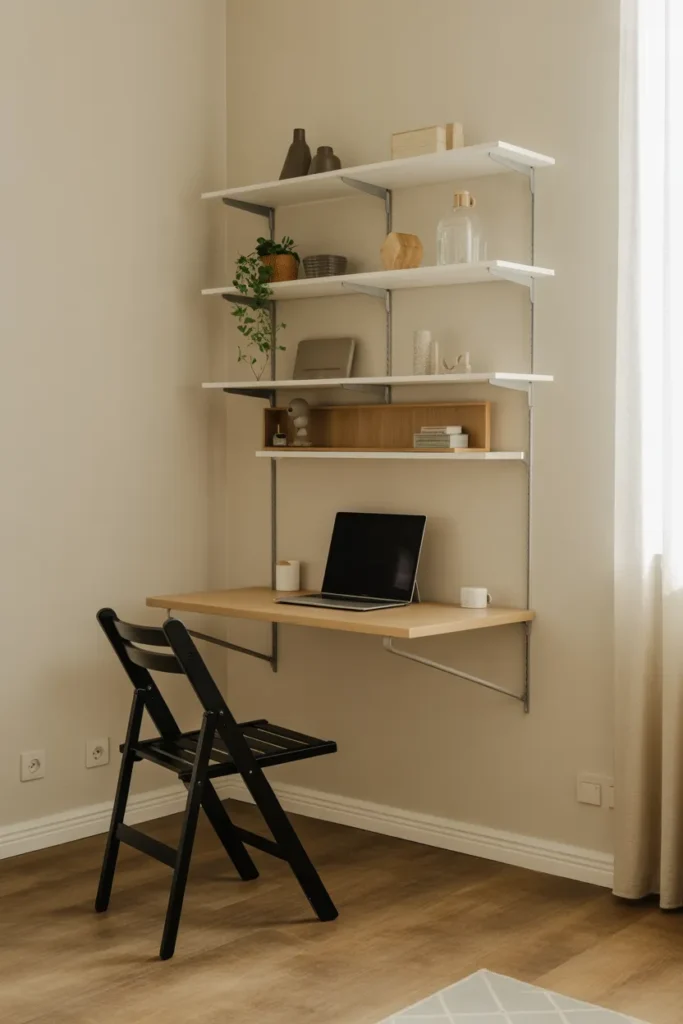
A floating desk with fold-down seating is the ultimate space saver. The desk mounts to the wall and the seat folds down only when you need it. When both are up, the wall is completely clear.
Install both pieces solidly: The desk and the seat both need stud mounting. A fold-down seat must hold your full weight safely, so do not skimp on brackets. Test the seat with your weight before trusting it for daily use. The desk surface should be deep enough for a laptop, about 16 to 20 inches.
Build a routine around it: This setup works best when folding it away is part of your day. Fold the seat up when you stand, fold the desk when work ends. The ritual marks the end of the workday, which matters when you work where you live. Keep a small cushion on the seat for comfort.
- Mount both desk and seat into studs for safety.
- Test the fold-down seat with your full weight first.
- Fold everything away at day’s end to mark work hours over.
Shop This Look
6. Multi-Functional Desk with Storage Cubes
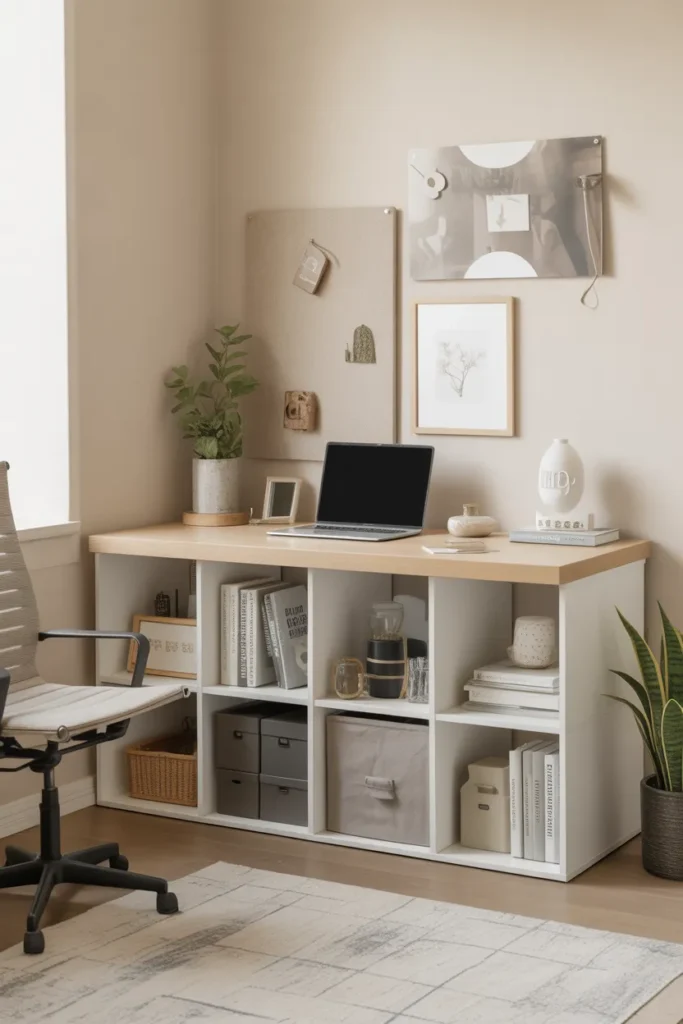
A multi-functional desk with storage cubes does two jobs in one footprint. The cubes hold supplies, books, or even clothes. The desk surface stays free because everything has a cube.
Choose the right cubes: Fabric cubes are light and cheap but sag over time. Wood or sturdy plastic cubes last longer and stack better. Size the cubes to what you store: small for supplies, large for books. A mix of open cubes and lidded bins hides the messy stuff.
Arrange for daily use: Put daily supplies in the cubes closest to your dominant hand. Archive boxes go in the bottom cubes you rarely open. Label the front of each cube so you grab the right one. Once a season, pull every cube out and purge what you no longer need.
- Mix open cubes with lidded bins to hide messy items.
- Keep daily supplies in the cubes nearest your dominant hand.
- Purge cube contents once a season to prevent buildup.
Shop This Look
7. Fold-Out Wall Desk with Overhead Shelving
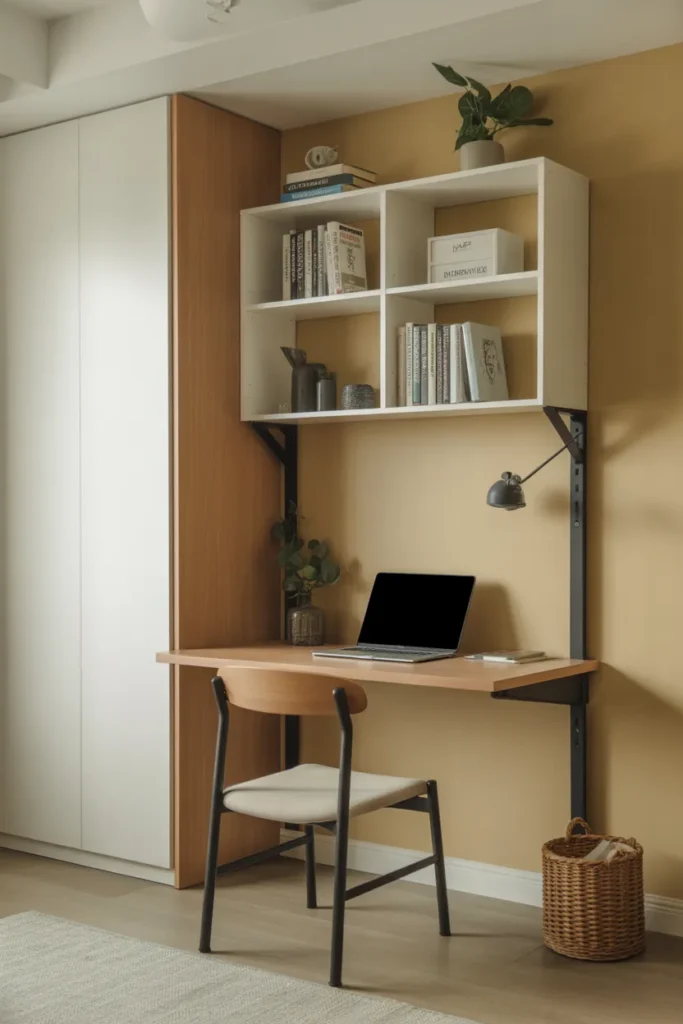
A fold-out wall desk with overhead shelving is a full office that vanishes. Open the desk to work, fold it away to live. The overhead shelves stay put and keep your supplies ready.
Pick a desk with real depth: Many fold-out desks are too shallow for comfortable work. Look for at least 20 inches of depth when open. The writing surface should lock flat and feel solid. Check the weight rating and compare it to your laptop plus books. A wobbly desk is a desk you will stop using.
Use the overhead shelves smartly: Keep work supplies on the shelves so setup takes seconds. A small lamp on the top shelf lights the desk when open. Do not overload the shelves, since the whole unit hangs on the wall. Keep decorative items elsewhere; these shelves are for work.
- Choose at least 20 inches of desk depth for comfortable work.
- Keep work supplies on the shelves for fast setup.
- Do not overload wall-mounted shelves beyond their rating.
Shop This Look
8. Narrow Console Desk with Vertical Storage
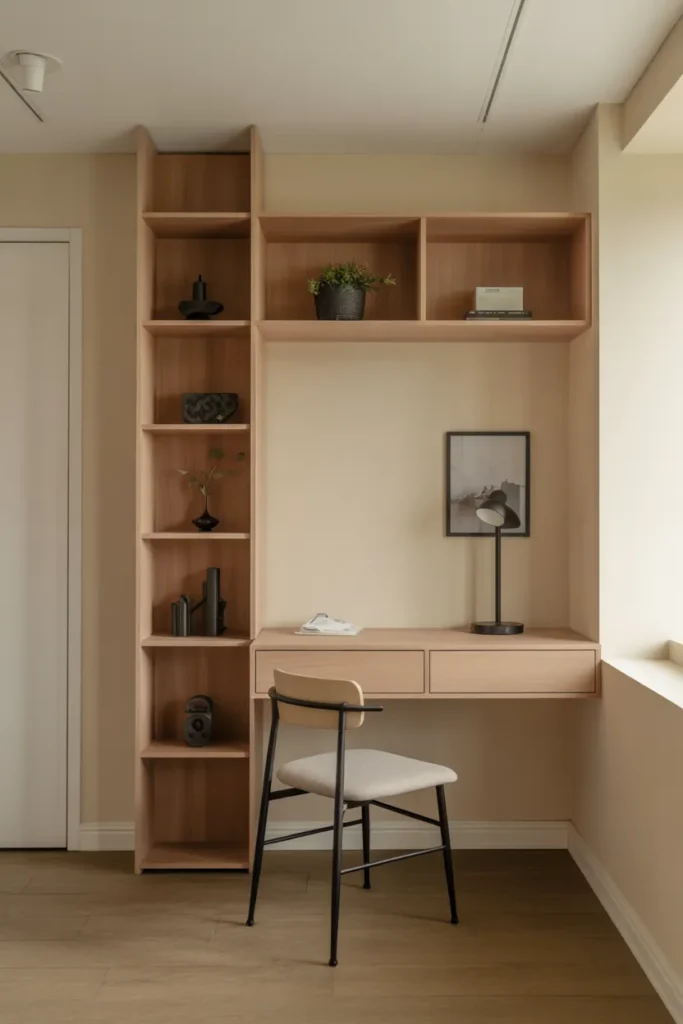
A narrow console desk with vertical storage fits in hallways, behind sofas, and in other odd spots. When your apartment has no room for a real office, a console desk creates one. Vertical storage makes the narrow footprint work.
Find your spot: Measure the narrow spaces in your apartment: behind the sofa, in the hallway, beside the bed. A console desk is usually 12 to 16 inches deep, so it fits where normal desks cannot. Make sure you have an outlet nearby for your laptop. Good light matters too, so a spot near a window is ideal.
Go vertical with storage: Stack storage upward: shelves, a pegboard, or a tall narrow bookcase above the desk. Keep the desk surface clear for work only. Vertical storage holds as much as a wide desk’s drawers. Anchor tall pieces to the wall so they cannot tip.
- Measure narrow spots like hallways and behind sofas for fit.
- Keep the desk surface clear and store everything vertically.
- Anchor tall storage pieces to the wall for safety.
Shop This Look
9. Floating Corner Desk with Minimal Chair
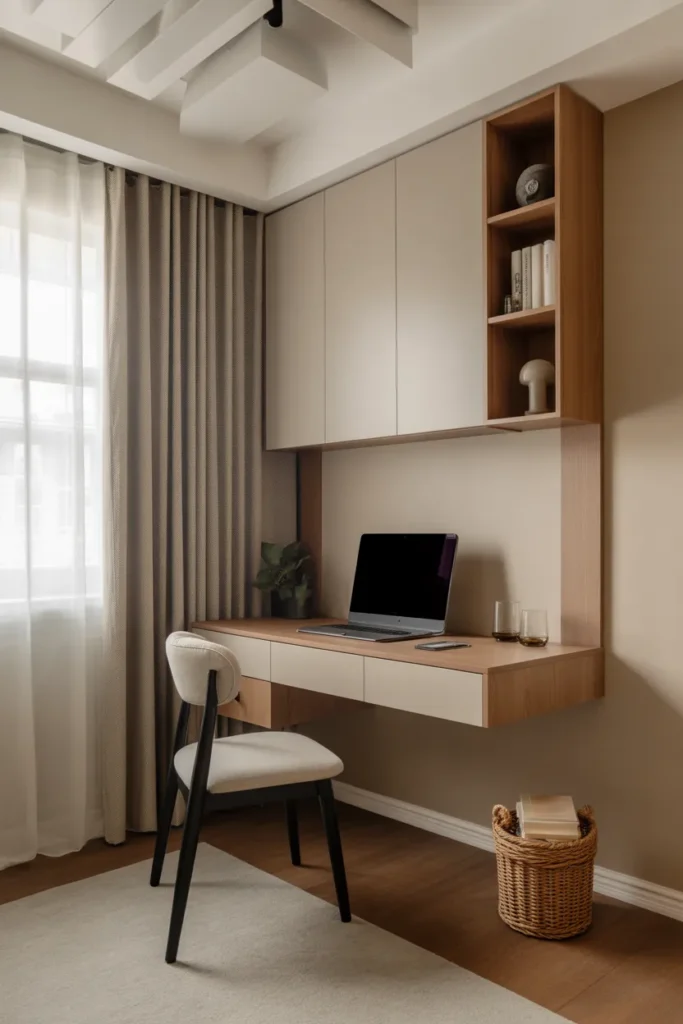
A floating corner desk with a minimal chair makes a tiny work nook feel intentional. The desk floats, the chair is light, and the corner finally earns its keep. It is a full workstation in about four square feet.
Float it at the right height: Mount the desk at 28 to 30 inches for a standard chair. A corner desk needs support on both walls, so find studs in each. Use a level across both sides before drilling. The desk should feel rock solid when you lean on it.
Keep the chair minimal: A light, armless chair tucks fully under a floating desk. Armless matters because arms catch on the desk edge. Choose a chair you can lift with one hand. When work is done, the chair slides under and the corner looks clean.
- Find studs in both walls before mounting a corner desk.
- Use a level across both sides so the desk sits flat.
- Choose an armless chair that tucks fully under the desk.
Shop This Look
10. Wall-Mounted Desk with Pegboard Organizer
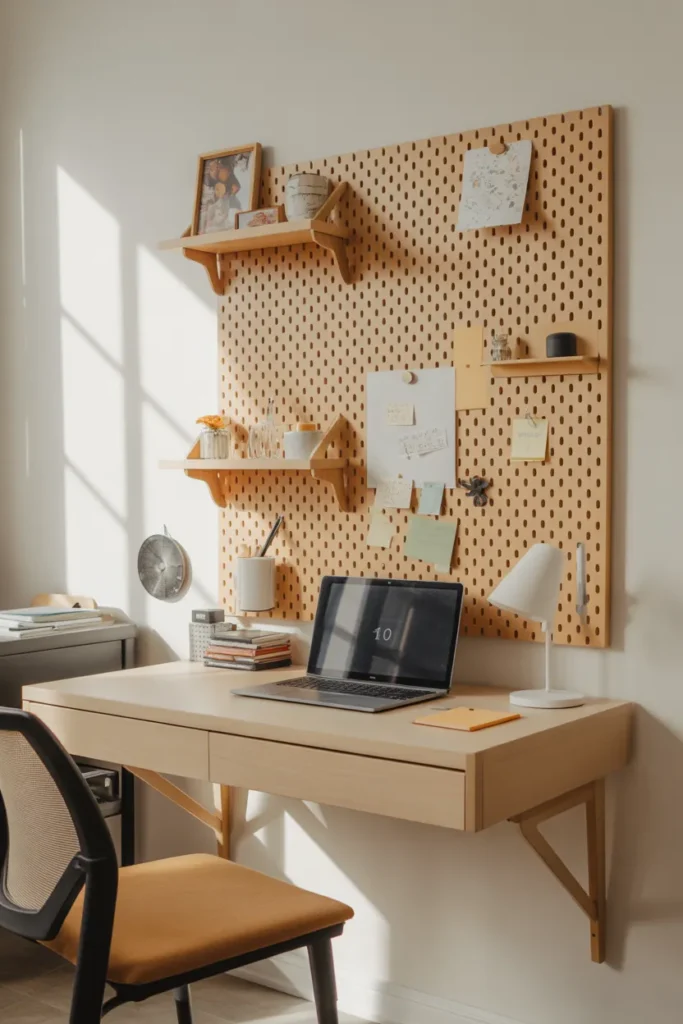
A wall-mounted desk with a pegboard organizer keeps every tool visible and within reach. Pegboards are endlessly adjustable. Your setup evolves as your work does.
Mount the pegboard right: Hang the pegboard above the desk with spacers so hooks fit behind it. Standard pegboard hooks work, but locking hooks stay put better. Arrange the most-used tools at arm’s height. Leave some empty pegs so the board can grow with you.
Choose the desk to match: The desk should be deep enough for your work but no deeper. Sixteen to twenty inches handles a laptop and a notebook. Keep the desk surface clear since the pegboard holds the supplies. A small shelf on the pegboard can hold a plant or a photo.
- Use spacers behind the pegboard so hooks fit properly.
- Keep most-used tools at arm’s height on the board.
- Leave empty pegs so the setup can grow.
Shop This Look
11. Compact Desk with Rolling Storage Cart
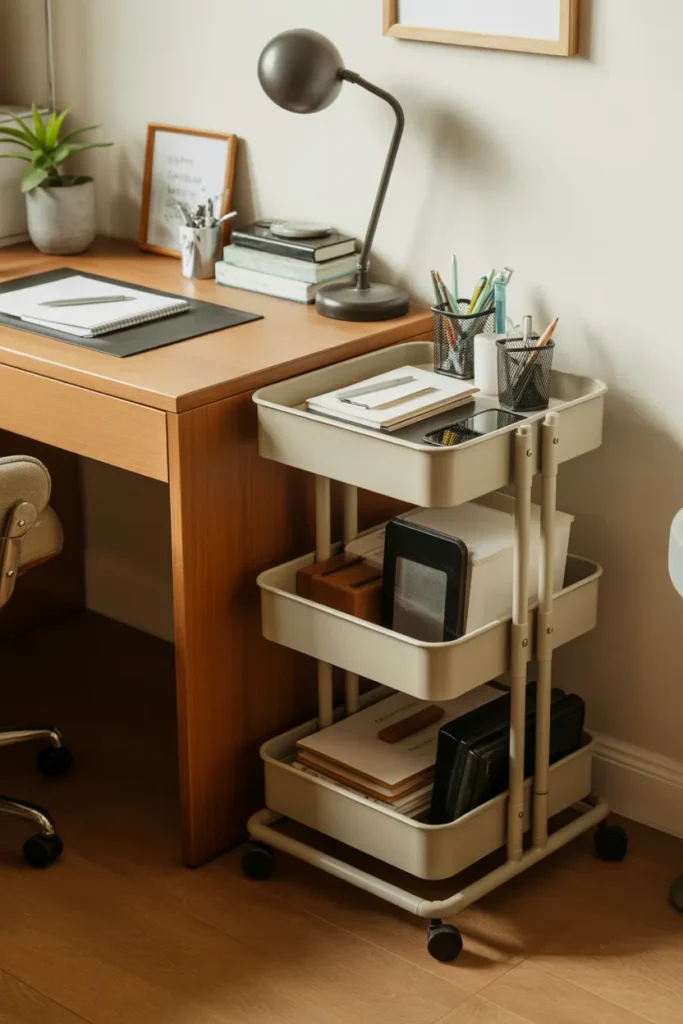
A compact desk with a rolling storage cart gives you mobile storage. Roll the cart out to work, tuck it under the desk when you are done. It is storage that moves with your day.
Pick the right cart: A three-tier rolling cart fits under most desks. Look for locking wheels so it stays put while you work. Metal carts last longer than plastic ones. Measure the clearance under your desk before buying so the cart actually fits.
Organize by tier: Top tier for daily supplies you grab constantly. Middle tier for reference materials and notebooks. Bottom tier for backup supplies and things you rarely need. The cart works best when every tier has a job. Purge it monthly since carts attract clutter.
- Measure under-desk clearance before buying the cart.
- Choose locking wheels so the cart stays put while you work.
- Assign each tier a job and purge monthly.
Shop This Look
12. Murphy Desk with Fold-Down Seating
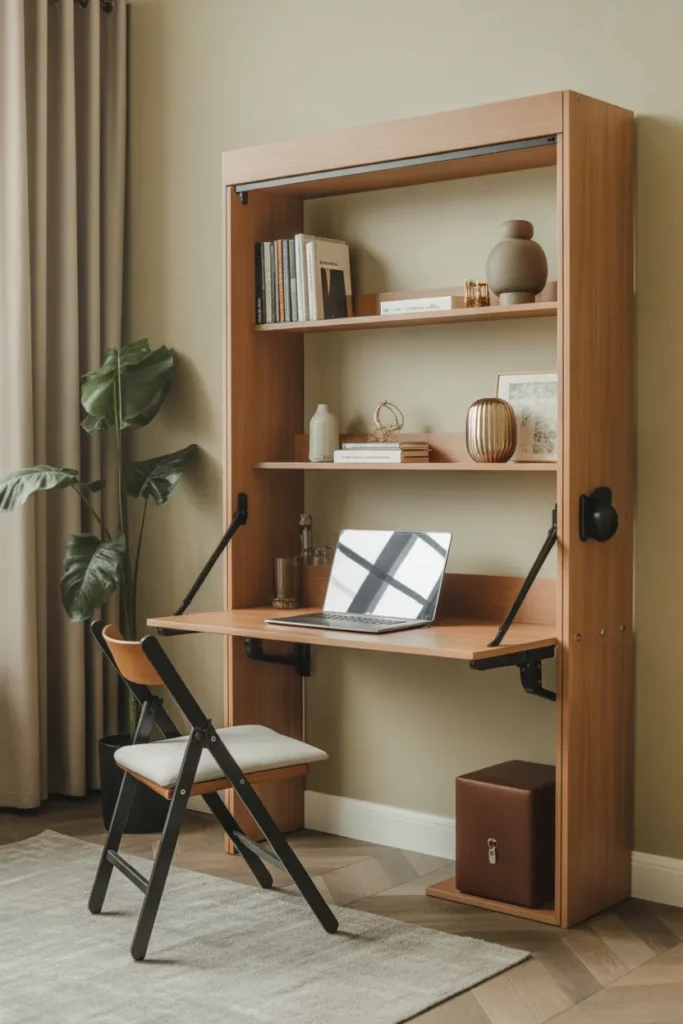
A Murphy desk with fold-down seating folds completely flat against the wall. It is the most invisible home office you can build. Guests will never know it is there.
Invest in the hardware: Murphy desk hardware kits include the pivot mechanism and folding legs. Buy the kit first, then build or buy the cabinet to fit it. The mechanism must operate smoothly hundreds of times. Cheap pivots get stiff and annoying within months.
Plan the folded look: When folded, the unit should look like a cabinet or a piece of art. Some designs include a chalkboard or picture frame on the outer face. Keep the surrounding wall clear so the desk folds without hitting anything. The magic is in how normal it looks when closed.
- Buy the pivot hardware kit before building the cabinet.
- Keep the surrounding wall clear for smooth folding.
- Choose a design that looks like furniture when closed.
Shop This Look
13. Narrow L-Shaped Desk in Corner Nook
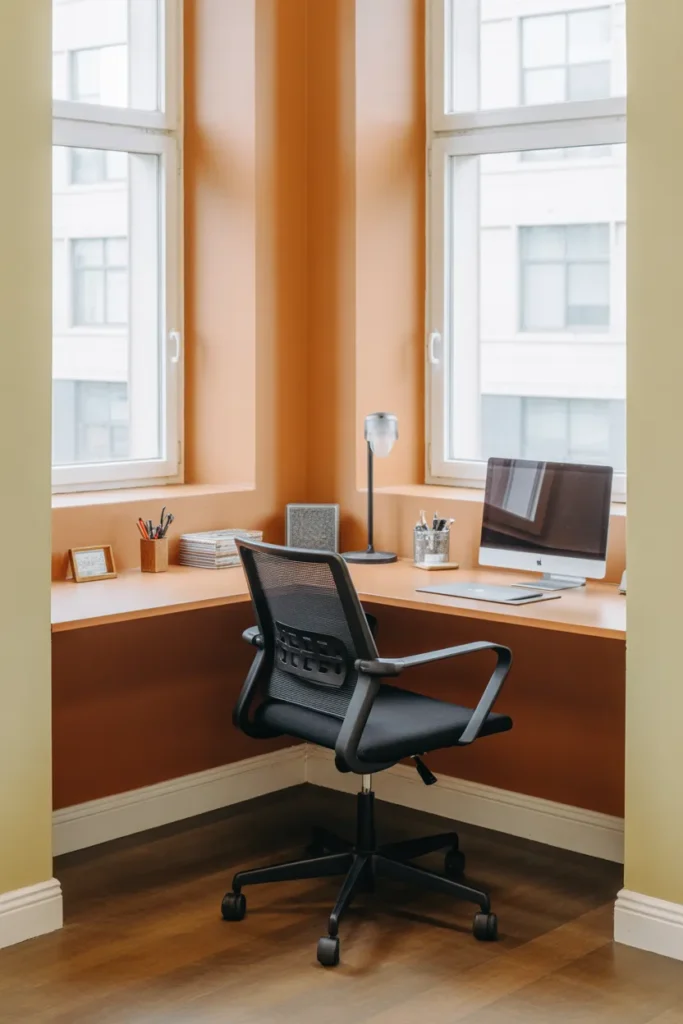
A narrow L-shaped desk in a corner nook gives you two work surfaces in tight quarters. One side for the computer, one side for writing or crafts. The L shape wraps you in workspace.
Fit it to the nook: Measure the nook on both walls and subtract an inch for clearance. Many L-desks are reversible, so check which side the return goes on. Make sure your chair fits in the corner without hitting either side. A nook with a window is the dream setup for natural light.
Zone the two sides: Keep the computer side clean and cable-managed. Use the return side for papers, crafts, or a second project. Do not let the zones bleed into each other. A small desk lamp on the return side marks it as its own space.
- Measure the nook on both walls and subtract an inch for clearance.
- Check which side the desk return goes on before ordering.
- Zone each side of the L for a different task.
Shop This Look
14. Foldable Wall Desk with Minimalist Design
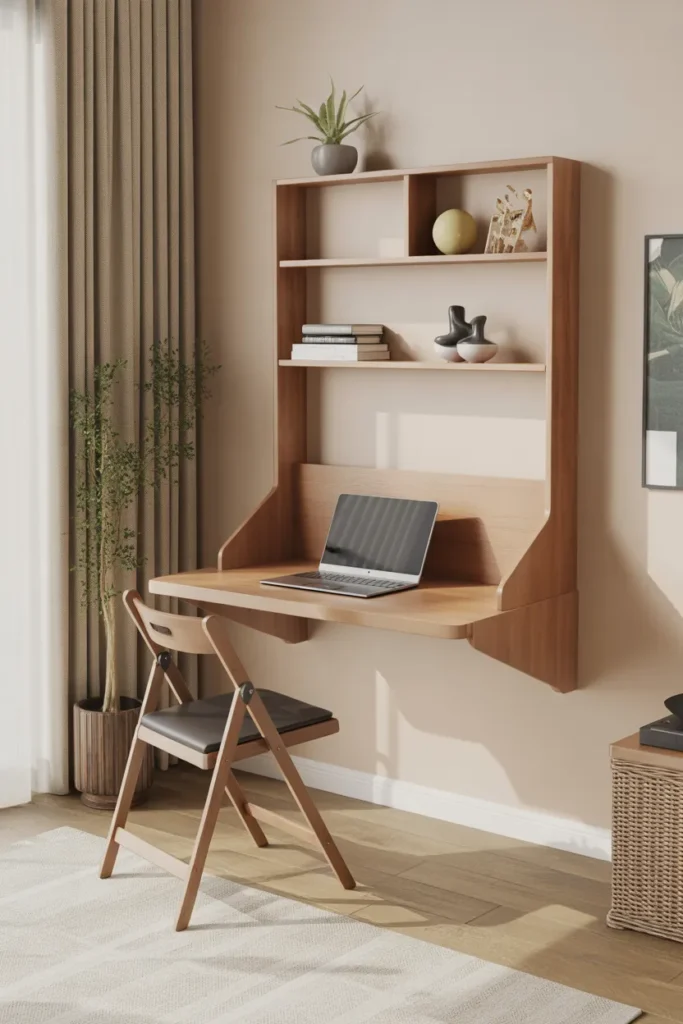
A foldable wall desk with a minimalist design looks like wall art when closed. Open it and you have a real workstation. It is the best option for apartments where the desk lives in the main living space.
Choose a clean design: Look for desks with hidden hinges and a flat front when closed. White or light wood finishes blend into most walls. The desk should open with one hand and lock open securely. Avoid designs with visible brackets that ruin the clean look.
Keep the styling minimal: When closed, the desk is decor, so keep it simple. A small frame or print on the front face looks intentional. Do not hang things on it that block the fold mechanism. Inside, keep only what you need so opening it feels calm, not chaotic.
- Choose hidden hinges for a clean look when closed.
- Make sure the desk locks open securely.
- Keep the closed face simple, like wall art.
Shop This Look
15. Desk with Vertical File Storage
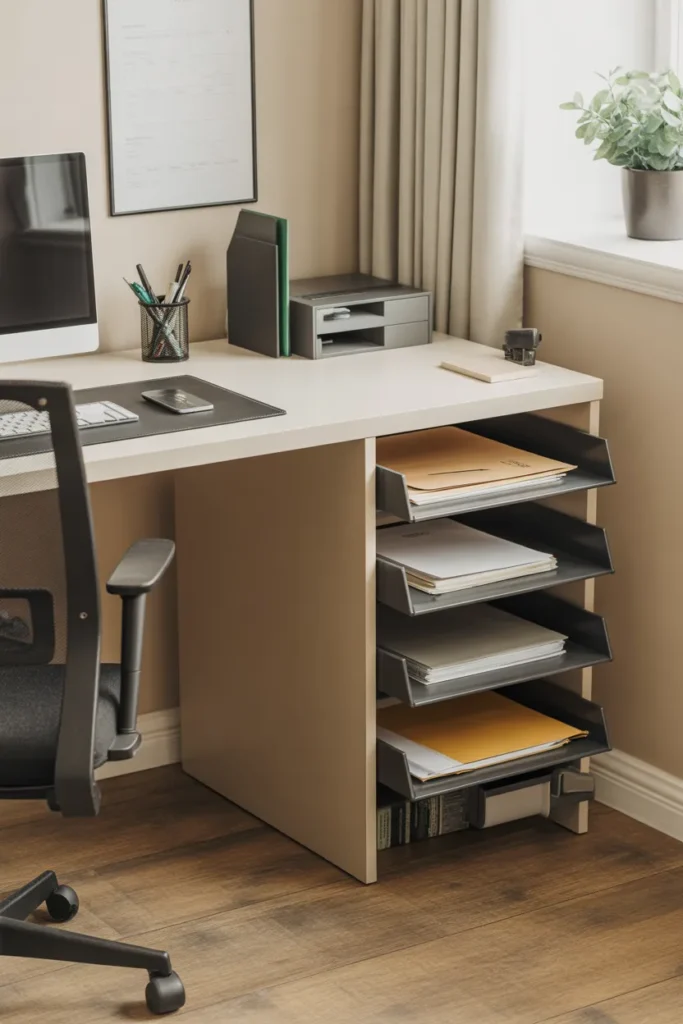
A desk with vertical file storage keeps papers upright and visible. Piles are the enemy of small desks. Vertical files turn piles into a system.
Set up the file system: Sort papers into action, reference, and archive. Action files live on the desk in a vertical sorter. Reference goes in a nearby file box. Archive leaves the apartment entirely: scan it or store it elsewhere. Touch each paper once and file it in the right place.
Keep it current: A file system only works if you maintain it. Spend five minutes every Friday clearing the action file. Shred what is done, file what remains. An overflowing sorter is a sign the system needs attention, not more storage.
- Sort papers into action, reference, and archive.
- Keep action files on the desk, archive off-site or scanned.
- Clear the action file every Friday in five minutes.
Shop This Look
16. Wall-Mounted Desk with Floating Drawers
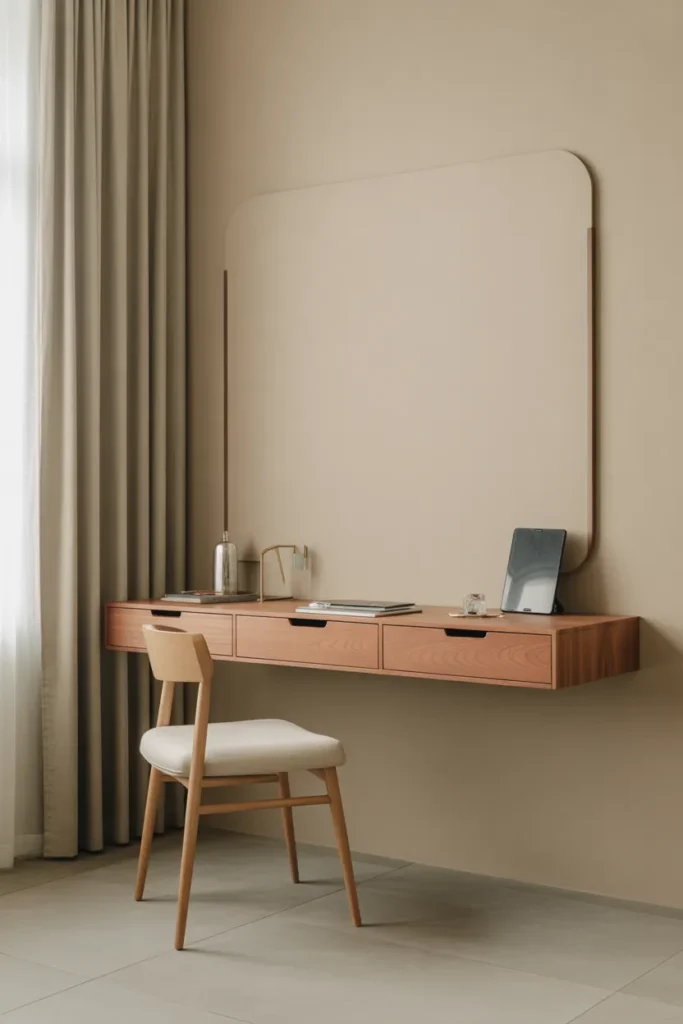
A wall-mounted desk with floating drawers gives you drawer storage without legs. The drawers float under the desk like they are part of it. The floor stays clear, which makes the room feel bigger.
Mount drawers to match the desk: Floating drawers hang from the desk or the wall beneath it. Match the drawer finish to the desk for a built-in look. Keep the drawers shallow so they do not eat knee room. Soft-close slides are worth the small upgrade here.
Limit what the drawers hold: Floating drawers are small, so be selective. Pens, chargers, earbuds, and a notebook are the usual residents. If a drawer will not close easily, it holds too much. These drawers are for daily tools, not long-term storage.
- Match drawer finish to the desk for a built-in look.
- Keep drawers shallow to protect knee room.
- Store only daily tools, not long-term supplies.
Shop This Look
17. Minimalist Desk with Laptop Stand
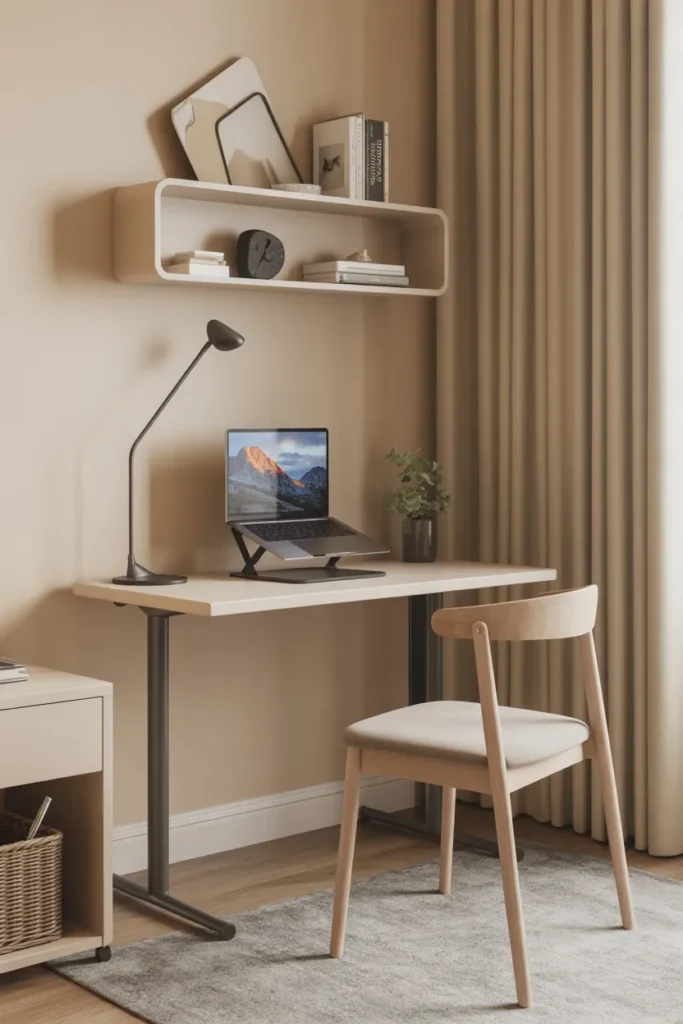
A minimalist desk with a laptop stand is the simplest productive setup. The stand raises your screen to eye level. Your neck and back will thank you within a week.
Pick an adjustable stand: Look for a stand that adjusts to your eye height when you sit up straight. Aluminum stands are sturdy and dissipate heat. Make sure it fits your laptop size with room for a mouse beside it. A stand with cable routing keeps the setup clean.
Add an external keyboard: A laptop stand only works ergonomically with a separate keyboard and mouse. Otherwise your shoulders hunch up to the raised keyboard. A compact wireless keyboard keeps the desk minimal. This one change fixes the biggest ergonomic problem of laptop work.
- Adjust the stand so the screen top is at eye level.
- Pair the stand with an external keyboard and mouse.
- Choose aluminum stands for sturdiness and heat dissipation.
Shop This Look
18. Corner Floating Desk with Shelves
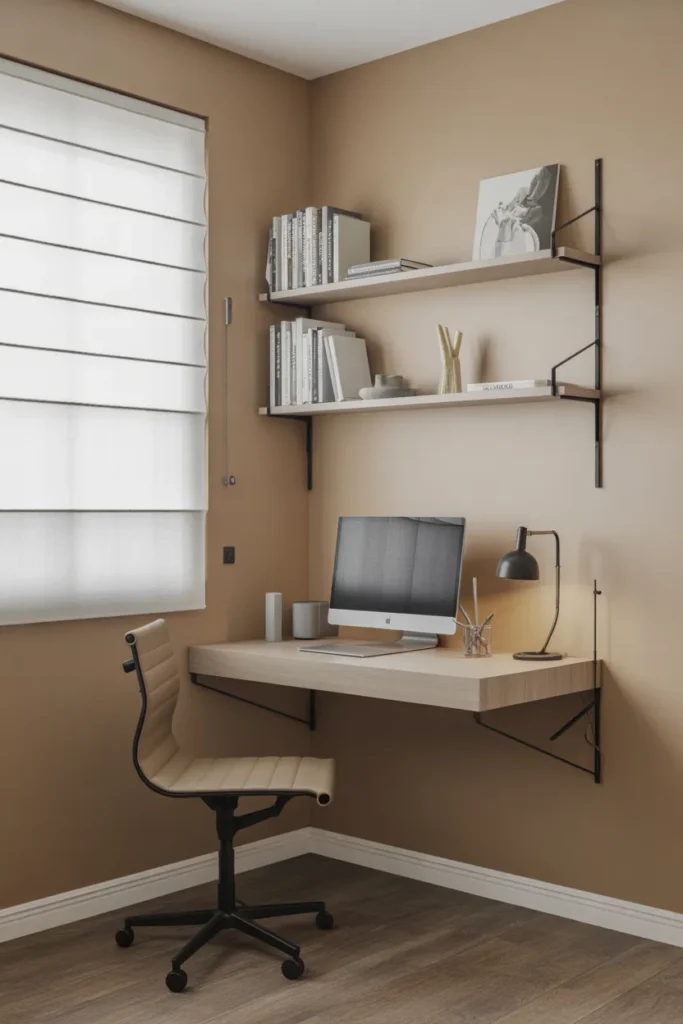
A corner floating desk with shelves turns an empty corner into a workstation with storage above. The desk floats, the shelves float, and the floor stays open. It is a clean, modern look for small apartments.
Align desk and shelves: Mount the shelves directly above the desk so everything is in one vertical zone. Keep the same finish on desk and shelves for a unified look. Space the shelves for what you actually store, not for looks. The whole unit should feel like one piece of furniture.
Keep the corner tidy: Corners collect clutter because they are out of the sightline. Fight this with a weekly reset: everything off, wipe down, put back only what belongs. A small trash bin nearby catches the paper that piles up. Tidy corners make the whole apartment feel bigger.
- Mount shelves directly above the desk in one vertical zone.
- Match desk and shelf finishes for a unified look.
- Do a weekly corner reset to fight clutter buildup.
Shop This Look
19. Foldable Desk with Built-In Storage Compartments
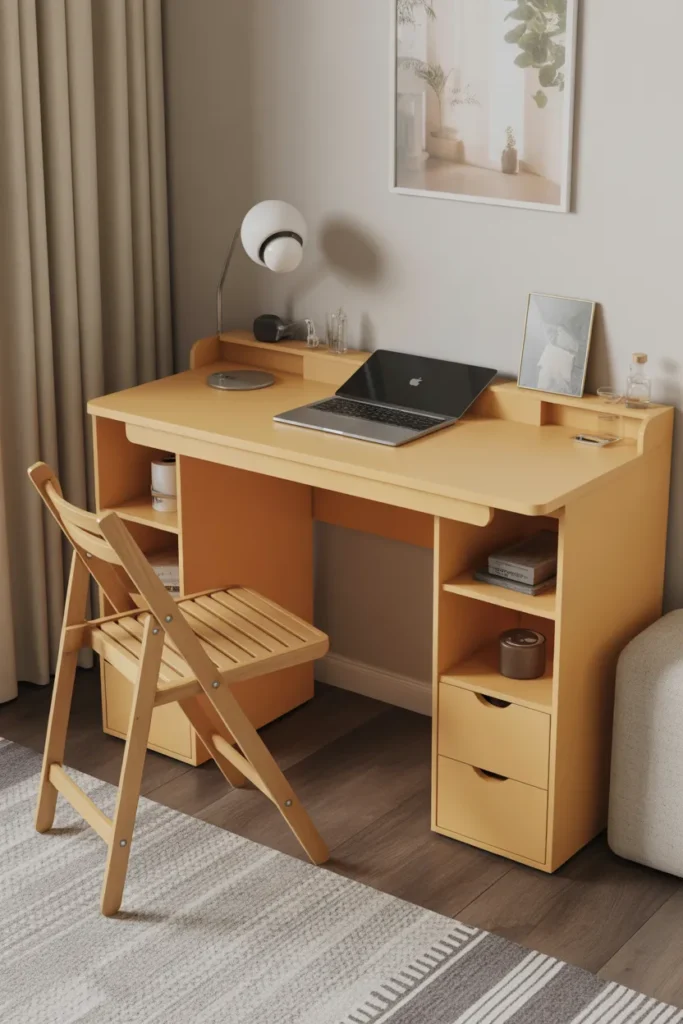
A foldable desk with built-in storage compartments folds away with your supplies inside. No packing up, no unpacking. Open it and you are ready to work in seconds.
Check the compartment design: Look for compartments that hold items securely when the desk folds. Magnetic catches or small lips keep things from sliding. Test with your actual supplies before relying on it. Shallow compartments work best; deep ones let things shift.
Keep supplies minimal: This desk rewards a small kit: laptop, charger, notebook, pen. If your compartments overflow, you are carrying too much. The beauty of this desk is the instant setup. Protect that by keeping the kit lean.
- Test that compartments hold items when the desk folds.
- Keep the supply kit lean: laptop, charger, notebook, pen.
- Choose magnetic catches that keep compartments shut.
Shop This Look
20. Slim Desk with Pegboard Organizer
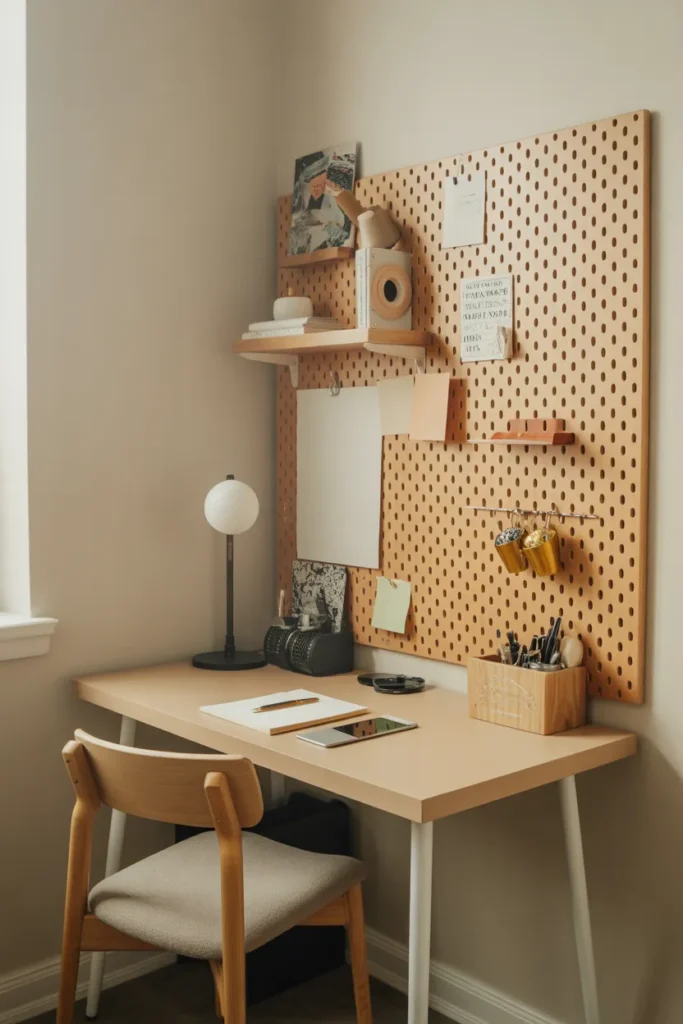
A slim desk with a pegboard organizer pairs a narrow work surface with endlessly flexible wall storage. The desk handles the laptop. The pegboard handles everything else.
Size the desk to your work: Slim desks run 12 to 18 inches deep. That is enough for a laptop and a notebook, nothing more. If you need more surface, look at a different idea on this list. The slim desk works because it asks for so little space.
Load up the pegboard: With a slim desk, the pegboard does the heavy lifting. Hang headphones, chargers, scissors, and small bins. Use the full height of the wall. A well-loaded pegboard keeps the tiny desk surface completely clear for work.
- Accept the slim depth: laptop and notebook only.
- Use the full height of the pegboard for storage.
- Keep the desk surface completely clear for work.
Shop This Look
21. Floating Desk with Compact Chair
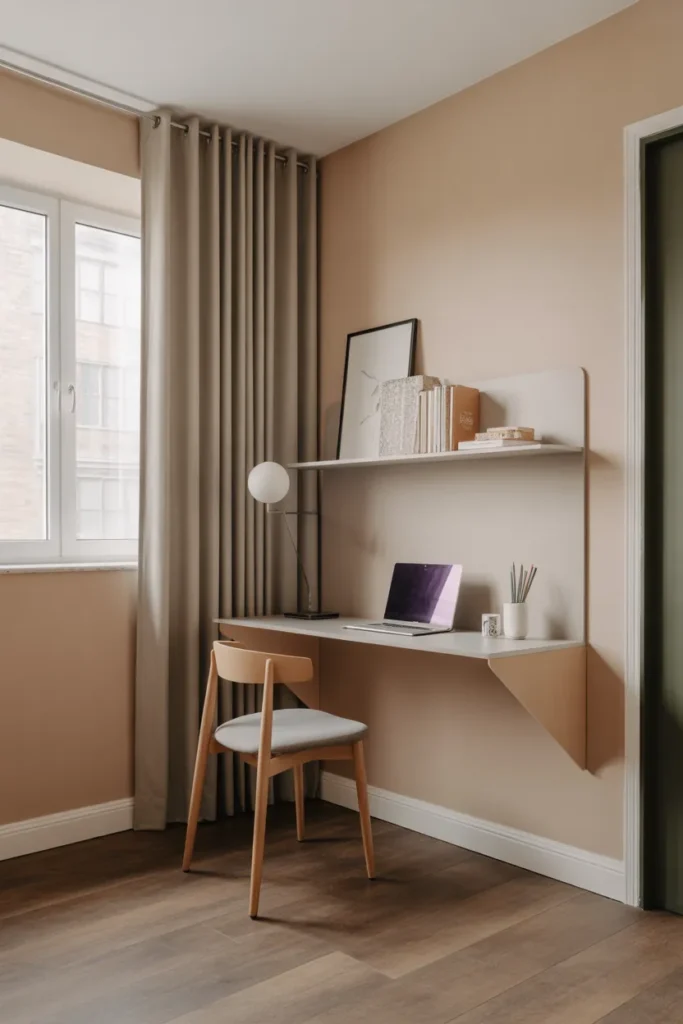
A floating desk with a compact chair is the pared-down home office. Nothing touches the floor except the chair legs. The room feels open even with a full workstation in it.
Choose a truly compact chair: The chair should tuck fully under the floating desk. Look for a small footprint and a low back that slides under easily. Armless designs tuck best. If the chair sticks out, it ruins the floating effect.
Keep the palette light: Light finishes enhance the floating illusion. White, light wood, or pale gray keep the setup airy. Dark pieces anchor visually, which fights the floating look. A light rug under the chair defines the zone without adding weight.
- Choose a chair that tucks fully under the desk.
- Prefer armless designs for the smallest footprint.
- Keep finishes light to enhance the floating effect.
Shop This Look
22. Slim Desk with Under-Desk Rolling Storage
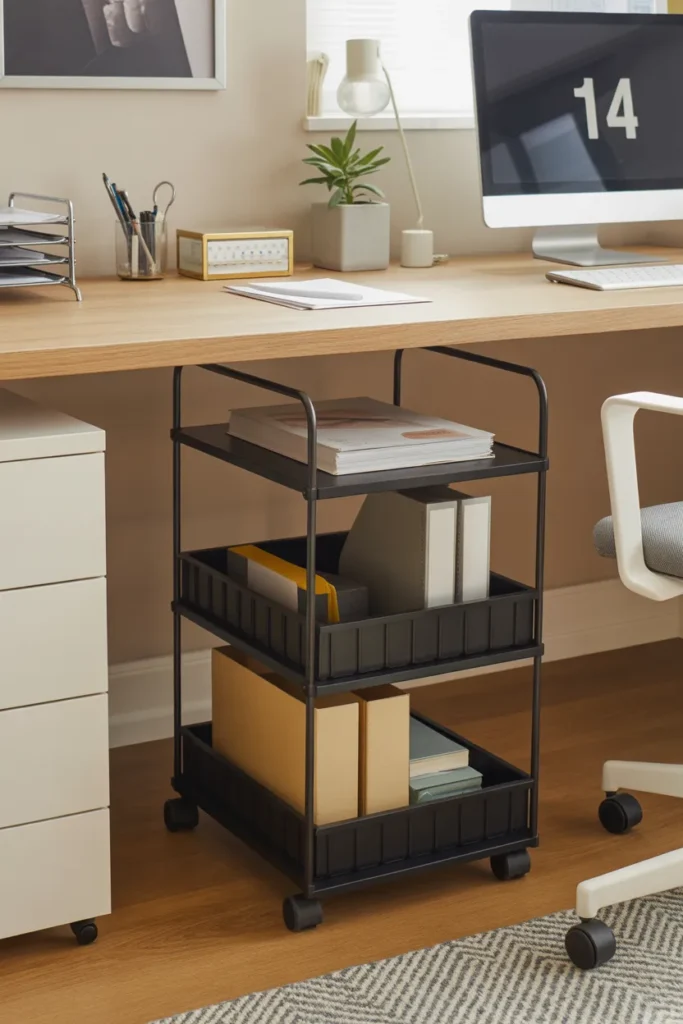
A slim desk with under-desk rolling storage hides your supplies in a cart that slides away. The desk stays minimal. The storage rolls out only when you need it.
Match the cart to the desk: The cart should slide fully under the desk when not in use. Measure the knee clearance and buy a cart that fits with room to spare. Narrow carts designed for under-desk use work best. Locking casters keep it in place while you work.
Organize the cart once: Set up the cart with your real workflow: top drawer for daily tools, lower drawers for supplies. Once it is organized, maintain it with a quick weekly tidy. A cart that stays organized is a cart you will actually use.
- Measure knee clearance so the cart slides fully under.
- Use locking casters to keep the cart in place.
- Organize by workflow: daily tools on top, supplies below.
Shop This Look
How to Start
Start by measuring the space you actually have. Note the width, the height, and where the outlets are. A desk that does not fit is worse than no desk at all. Take photos of the spot so you can compare while shopping.
Then decide how permanent you want the setup to be. Renters should lean toward folding and freestanding options that leave no marks. Owners can mount into studs for the sturdiest result. Either way, start with the desk before buying storage or accessories.
Build the setup in layers. Desk first, then the chair, then storage and lighting. Test each layer for a few days before adding the next. A home office that grows with your actual needs beats one bought all at once.
- Measure your space, outlets, and light before shopping.
- Renters: choose folding or freestanding; owners: mount into studs.
- Build in layers: desk, chair, storage, lighting, in that order.
Shop This Look
Common Mistakes
- Buying a desk that is too deep for the space and blocks walkways.
- Skipping the stud finder and mounting a desk into drywall alone.
- Choosing a chair that does not tuck under the desk, wasting floor space.
- Letting the desk surface become storage instead of keeping it clear for work.
- Forgetting task lighting, which makes evening work miserable.
- Overloading wall-mounted shelves beyond their weight rating.
- Buying storage before the desk, then finding nothing fits together.
Frequently Asked Questions
What is the best desk for a really tiny apartment?
A wall-mounted or folding desk is usually the best choice. It gives you a real work surface without taking floor space permanently. Look for at least 16 inches of depth so a laptop fits comfortably. Mount into studs for safety, and pair it with a chair that tucks away.
How do I set up a home office in a studio apartment?
Zone it: pick one corner or wall and treat it as the office. A folding desk that disappears after hours keeps the studio feeling like home. Use a rug or a shelf to mark the boundary. The ritual of setting up and packing away helps separate work from rest.
Can I work comfortably at a wall-mounted desk all day?
Yes, if the ergonomics are right. Mount the desk at 28 to 30 inches and use a laptop stand with an external keyboard. Take the same breaks you would at any desk. A good chair matters more than the desk type for all-day comfort.
How much should I spend on a small home office setup?
A solid setup costs less than you think. Budget for the desk and chair first, since those affect your body daily. Storage and accessories can be added cheaply over time. Many of the ideas in this guide need only one good purchase to work.
Where can I find more small-space decorating ideas?
A home office is just one zone of a small apartment, and the same principles apply everywhere: go vertical, choose multi-functional pieces, and keep surfaces clear. For more inspiration, see our small apartment decorating guide. It covers the whole apartment, room by room.
The Finishing Touch
A tiny apartment does not have to mean a compromised workspace. The ideas in this guide show that the right desk in the right spot changes everything. Pick the setup that fits your space, your lease, and your work style.
For more small home office inspiration from real homes, this Houzz collection of small home office ideas shows how designers fit real workstations into tight spaces. It is worth a look before you buy.
Measure your spot, order the desk, and set it up this weekend. Your back, your focus, and your apartment will all be better for it.