17 Small Apartment Decorating Ideas for Tiny Spaces
Small apartment decorating is really about making every square foot do two jobs. A cottage style fits small spaces beautifully because it was born in small houses, low shelves, multipurpose furniture, and rooms that feel collected rather than staged.
You do not need a big budget to make a tiny apartment feel like home. Most of the ideas below cost roughly 50 to 400 dollars each, and prices vary with what you already own. Thrift stores and online marketplaces are your best friends here, cottage style loves a piece with a past.
This guide covers 17 ideas, from window seats to pantry nooks, each with real costs and honest warnings about what actually goes wrong. Start with the spot that bothers you most every day, fix that first, and the rest of the apartment gets easier.
This post contains affiliate links. If you buy through them, I may earn a small commission at no extra cost to you.
1. Cozy Cottage Living Room with Built-In Window Seat

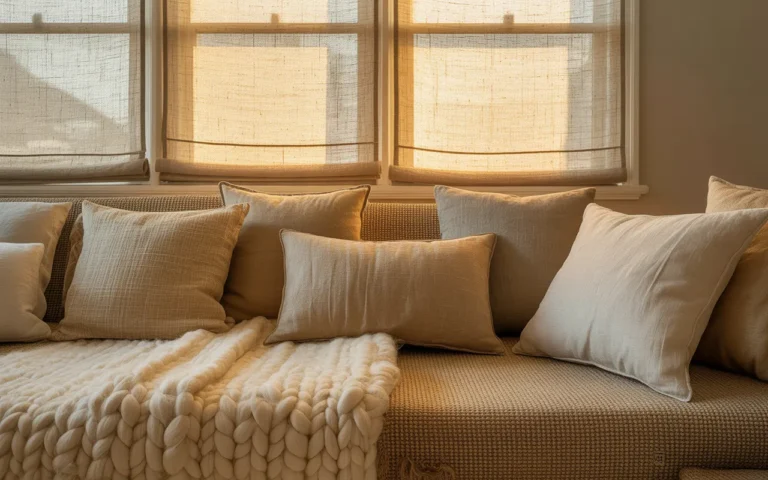
A window seat might be the single best use of space in a small apartment. It turns a window you only looked through into a seat you use every day. In a cottage living room, a simple plywood bench with a thick cushion reads as built-in charm, not a compromise.
Build the base from stock cabinets: two or three low kitchen wall cabinets screwed together make a rock-solid window seat base with storage inside. Top it with a 3/4 inch plywood lid and a custom cushion. Paint the base the same color as the trim so it looks original to the apartment.
A DIY window seat costs roughly 150 to 400 dollars in materials, prices vary with cushion fabric. Check the window first: make sure the seat height does not block a window that needs to open for egress or ventilation. In rentals, build it freestanding so you can take it with you, and never block a radiator without leaving airflow gaps.
- Seat height around 18 inches feels right with a 3 to 4 inch cushion.
- Hinged tops beat drawers here, you get full access to the storage.
- A washable cushion cover is worth every penny near a window.
Shop This Look
2. Cottage-Style Kitchen with Open Wooden Shelves

Open wooden shelves make a small kitchen feel bigger because they remove the visual weight of upper cabinets. In a cottage-style kitchen, simple pine or oak boards on black brackets hold daily dishes where you can actually reach them. Everything you use stays visible, which means it stays used.
Keep shelves shallow: 10 to 12 inches deep holds plates and glasses without jutting into your workspace. Hang the lowest shelf about 18 inches above the counter, the same clearance as a cabinet. Stagger two short shelves instead of one long one if studs are awkwardly spaced.
Two solid wood shelves with brackets cost roughly 60 to 150 dollars, prices vary. Anchor into studs: shelves full of dishes are heavy, and drywall anchors alone will eventually sag or pull out. A stud finder is non-negotiable. If you truly have no studs where you need them, use a French cleat spread across two studs.
- Edit ruthlessly, open shelves punish clutter.
- Group by use, not by color, so cooking stays efficient.
- Wipe shelves weekly, kitchens are greasy and open shelves show it.
Shop This Look
| SHELVES | BRACKETS | DISHWARE |
|---|---|---|
| Solid Wood Floating Shelves | Black Shelf Brackets | Stoneware Dinnerware Set |
| Shop → | Shop → | Shop → |
3. Rustic Cottage Bedroom with Soft Layered Textiles

Soft layered textiles are what make a rustic cottage bedroom feel like a retreat instead of just a small room. A quilt over a duvet, a throw across the foot, linen shams in front of sleeping pillows. Layers add the coziness that square footage cannot.
Work in three layers: base layer of simple cotton or linen sheets, a middle layer with texture like a quilt or coverlet, and a top layer for looks, a throw or folded blanket. Stick to two or three colors total so the layers read as calm, not busy. Cream, sage, and natural wood is a combination that never fails.
A full layered bedding refresh costs roughly 120 to 300 dollars, prices vary with fabric. Wash before you judge: linen and cotton quilts soften a lot after two or three washes. Do not return bedding that feels stiff out of the package. Also check the return policy, some bedding cannot be returned once washed.
- Fold the top throw in thirds at the foot for a styled look.
- Euro shams add height behind standard pillows on small beds.
- Keep one warm layer, wool or flannel, for cold nights.
Shop This Look
4. Cottage Entryway with Wooden Bench and Hooks

An entryway with a wooden bench and hooks solves the two biggest small-apartment problems at the door, somewhere to sit while you put on shoes and somewhere for coats that is not the floor. Even a 3-foot stretch of wall can hold both.
Mount hooks at two heights: adult height around 65 inches and a lower row around 40 inches for kids or bags. Four to six hooks handle a surprising amount. A bench 12 to 14 inches deep is enough to sit on without blocking the walkway. Add a tray or basket underneath for shoes.
A simple bench and hook rail cost roughly 80 to 200 dollars, prices vary. Mind the door swing: measure how far your front door opens before placing anything. A bench that the door hits every day will drive you crazy within a week. In very tight entries, hooks alone plus a slim wall-mounted fold-down seat work better.
- One hook per person plus one for guests is the right count.
- A small mirror above the hooks doubles as a last look check.
- Keep a donation bag by the door, entries collect clutter fast.
Shop This Look
5. Cottage Reading Corner with Vintage Armchair

A reading corner needs exactly three things, a comfortable chair, good light, and a surface for your drink. A vintage armchair brings character that new furniture cannot fake, and in a small apartment one great chair beats a forgettable sofa.
Test the sit before you buy: vintage chairs vary wildly in comfort. Seat depth around 20 to 22 inches suits most readers. Check that the frame is solid, springs do not sag through, and the chair does not rock on uneven legs. Reupholstering a great frame costs less than a mediocre new chair.
A vintage armchair costs roughly 50 to 250 dollars at thrift stores or online marketplaces, prices vary by condition. Sniff and inspect: musty or smoky upholstery is very hard to fix. Check seams and crevices for bedbugs on any used upholstered piece, and steam-clean before bringing it inside. A beautiful chair is not worth an infestation.
- Position the chair near, not in front of, the window for the best light.
- A floor lamp behind the shoulder beats an overhead light for reading.
- A small side table within arm’s reach completes the corner.
Shop This Look
6. Cozy Cottage Dining Nook in a Tiny Apartment

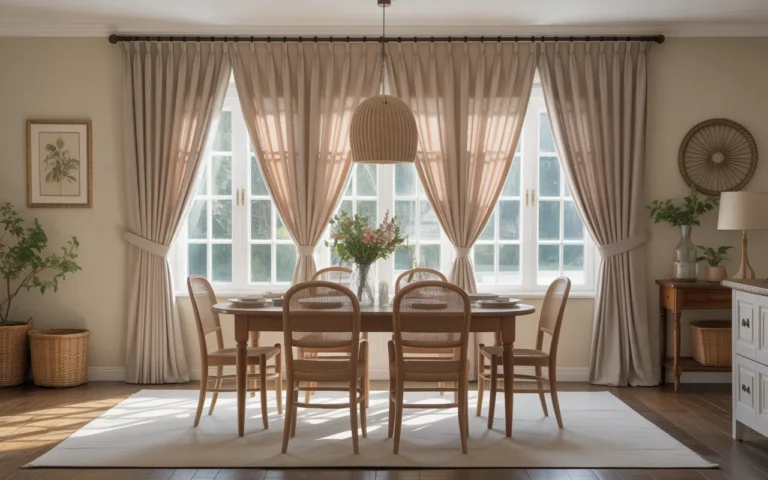
A dining nook proves you do not need a dining room to have a real place to eat. A small round table tucked into a corner or against a window seats two comfortably and four in a pinch. Round is the key shape, no corners to bruise hips in tight quarters.
Choose a 30 to 36 inch round table: 30 inches seats two generously, 36 inches can squeeze four. A pedestal base beats four legs because chairs tuck fully underneath. Banquette seating on one side saves even more room and adds hidden storage under the seat.
A small round dining set costs roughly 150 to 400 dollars, prices vary. Measure chair pull-out space: you need about 24 inches behind each chair to sit down comfortably. Tape the table footprint on the floor and actually sit in the space before buying. A nook that looks fine empty can feel impossible once chairs are in.
- Two chairs plus a bench flexes from daily two to occasional four.
- A pendant hung low over the table defines the nook as its own zone.
- Wipeable table surfaces matter more in a nook you eat at daily.
Shop This Look
7. Cottage-Inspired Bedroom with Soft Layered Textiles

A cottage-inspired bedroom with layered textiles follows the same recipe as its rustic cousin but leans softer, more floral prints, lighter woods, and airier fabrics. The goal is a bedroom that feels like morning light even on a gray day.
Mix patterns at different scales: one large floral, one medium stripe or check, one small dot or solid texture. Same color family ties them together. This is the classic cottage formula and it works because the eye reads variety without chaos. Keep the largest pattern on the duvet or quilt.
Expect roughly 100 to 250 dollars to layer a bed this way, prices vary. Do not buy the whole set at once: bedding sets with seven matching pieces look flat. Build the look piece by piece, starting with the quilt, then shams, then the throw. It takes longer but looks collected instead of packaged.
- White sheets keep busy patterns feeling fresh.
- A ruffled or scalloped edge on one piece adds cottage charm fast.
- Rotate throws seasonally, heavier in winter, lighter in summer.
Shop This Look
8. Compact Cottage Kitchen with Open Shelving

A compact cottage kitchen with open shelving is about honesty, beautiful everyday things stored in the open. When cabinets are few, shelves keep cooking tools within reach and turn storage into decor. The trick is keeping it edited.
Zone the shelves: everyday dishes near the dishwasher, cooking oils and spices near the stove, pretty but rarely used pieces up high. This keeps the open storage functional instead of decorative theater. Corral small items on trays so shelves read as tidy groups, not scattered clutter.
Outfitting a small kitchen wall with shelves and brackets runs roughly 80 to 200 dollars, prices vary. Grease is real: shelves near the stove collect a sticky film. If you cook often, keep open shelves away from the range or commit to wiping them weekly. A small range hood or even a fan pointed at the window helps more than you would think.
- Decant pantry staples into matching jars for instant order.
- Leave 20 percent of shelf space empty, full shelves feel chaotic.
- One small plant softens a wall of hard kitchen goods.
Shop This Look
9. Cottage Living Room with Built-In Storage Bench

A living room with a built-in storage bench gets you seating and storage in one footprint. Against a wall or under a window, a long bench holds blankets, games, and the clutter that small living rooms always produce. Topped with cushions, it is the best seat for movie night.
Size it like a sofa: 16 to 18 inches high, at least 16 inches deep, and as long as the wall allows. A 5-foot bench seats two adults comfortably. Use a hinged top for toy and blanket storage, or front cubbies with baskets for things you grab daily.
A storage bench costs roughly 120 to 350 dollars ready-made, or 100 to 250 in materials to build, prices vary. Ventilate closed storage: blankets and textiles stored in a sealed bench can go musty. Drill a few discreet air holes in the back panel or leave the lid slightly propped when the room is humid. Cedar lining helps too.
- Cushions in outdoor fabric survive pets and spills.
- Baskets inside cubbies keep categories separated.
- Anchor tall-adjacent bookcases, but benches this low are stable.
Shop This Look
| BENCH | BASKETS | CUSHIONS |
|---|---|---|
| Long Storage Bench | Fabric Storage Baskets | Outdoor Bench Cushions |
| Shop → | Shop → | Shop → |
10. Cottage Entryway Corner with Smart Storage

A cottage entryway corner with smart storage is about making 4 square feet work like 40. Wall-mounted organizers, a narrow console, and vertical hooks turn an overlooked corner into a hardworking drop zone for keys, mail, and bags.
Go vertical: a wall-mounted cabinet or a tall narrow shelf uses air space instead of floor space. Magnetic strips hold keys, small wall pockets sort mail, and a single row of hooks handles coats. Keep the floor footprint under 12 inches deep so the corner never blocks traffic.
A corner setup costs roughly 60 to 180 dollars, prices vary. Do not mount on a whim: entry walls often hide electrical runs near the door for lights and intercoms. Use a stud finder with AC detection before drilling. In rentals, lean toward freestanding narrow towers and adhesive hooks that remove cleanly.
- A small tray on top catches keys and sunglasses.
- Label mail slots so paper stops piling.
- A motion-sensor light makes a dark corner welcoming.
Shop This Look
11. Cottage-Style Bathroom with Vintage Touches

A cottage-style bathroom with vintage touches is proof that small bathrooms have the most charm per square foot. A salvaged mirror, a wooden stool, brass fixtures, and soft textiles warm up the hardest-working room in the apartment.
Start with the mirror: swapping a builder-grade mirror for a vintage-framed one changes the whole room in twenty minutes. Add a small wooden stool for towels or plants, and switch the shower curtain to something with texture like waffle weave. These three moves cost little and read as a full refresh.
Budget roughly 80 to 220 dollars for mirror, stool, and textiles, prices vary. Protect wood from water: any wood in a bathroom needs sealing or it will swell and stain. Use marine varnish or teak oil on stools and frames, and keep wood pieces away from direct splash zones. Ventilate after showers, steam is relentless.
- Brass or bronze fixtures warm up white tile instantly.
- Eucalyptus on the shower head adds scent and spa feeling.
- Rolled towels in a basket beat a crowded towel bar.
Shop This Look
12. Cottage Reading Corner with Built-In Bookshelves

A reading corner with built-in bookshelves is a book lover’s answer to small space living. Floor-to-ceiling shelves around a chair turn one corner into a personal library. In a cottage apartment, painted shelves with a little trim look original to the building.
Use adjustable shelves: books come in different heights, and fixed shelves waste space. Adjustable pins let art books and paperbacks share one unit. Keep shelves 10 to 12 inches deep, deeper shelves swallow books and collect dust behind them. Leave the top shelf for display, not books you will never reach.
A basic built-in look with stock bookcases and trim costs roughly 150 to 400 dollars, prices vary. Anchor everything: tall bookcases must be secured to studs, full stop. Books are shockingly heavy, a loaded bookcase can weigh hundreds of pounds. Anti-tip straps are cheap and take ten minutes. Do not skip this, especially with kids or in earthquake country.
- Face some books outward for a curated look.
- A library light or picture light makes shelves glow at night.
- Dust shelves quarterly, books trap a lot of it.
Shop This Look
13. Cottage Balcony with Soft Garden Details

A cottage balcony with soft garden details extends your apartment by a whole room in good weather. Even a 4-foot-deep balcony fits a bistro set, railing planters, and string lights. The goal is a green view from inside, even when you are not out there.
Work the railing: railing planters and hanging pots use zero floor space. A compact bistro set folds flat against the wall when not in use. Outdoor-rated string lights on a timer make the balcony glow every evening, and from inside it reads as a lit garden beyond the glass.
A cozy balcony setup costs roughly 100 to 300 dollars, prices vary. Check building rules first: many apartments restrict what can hang on railings, ban open flames, and limit weight on balconies. Read the lease before buying anything. Water carefully too, drainage dripping onto the neighbor below starts wars.
- Self-watering planters forgive forgetful waterers.
- An outdoor rug defines the space instantly.
- Bring cushions inside in heavy rain, they last years longer.
Shop This Look
14. Cottage Workspace with Vintage Desk

A cottage workspace with a vintage desk makes working from a small apartment feel intentional instead of improvised. A real desk, even a small one, tells your brain it is work time in a way the kitchen table never does. Vintage desks have the added bonus of drawers that actually fit things.
Measure your chair clearance: you need about 30 inches of depth for a desk plus chair pushback in a tight spot. A 40-inch-wide desk fits a laptop, a notebook, and a lamp without crowding. Corner desks or secretary desks with fold-down tops are made for small apartments.
A vintage desk costs roughly 75 to 300 dollars secondhand, prices vary. Check the wobble: old desks often have loose joints. Sit at it, lean on it, open every drawer before buying. Tightening joints with wood glue and corner brackets is easy, but a cracked leg or warped top is a pass. Measure your doorways too, vintage desks do not disassemble.
- Face the desk toward the room, not the wall, if space allows.
- A desk lamp with warm light beats overhead fluorescents.
- Cable clips under the desk keep cords from tangling.
Shop This Look
15. Cottage Hallway with Gallery Wall Charm

A cottage hallway with gallery wall charm turns the most boring square footage in the apartment into a feature. Hallways are usually dead space, but a thoughtful arrangement of art makes them feel like a gallery you walk through daily.
Plan on the floor first: lay the frames out on the floor and arrange until it feels right, then transfer to the wall. Keep 2 to 3 inches between frames and center the whole arrangement at eye level, about 57 inches. Mixed frame styles work in cottage decor as long as the art shares a color thread.
Framing and hanging a gallery wall costs roughly 50 to 200 dollars, prices vary with frame count. Use the right hangers: plaster and drywall need different anchors, and heavy frames need studs or toggle bolts. Paper templates taped to the wall let you audition the layout without extra holes. In rentals, use high-quality removable strips rated for the actual frame weight.
- Start with the largest piece slightly off-center.
- Include one mirror to bounce hallway light.
- Picture lights or a runner draw the eye down the hall.
Shop This Look
16. Cottage Loft Bed Setup for Studio Apartments

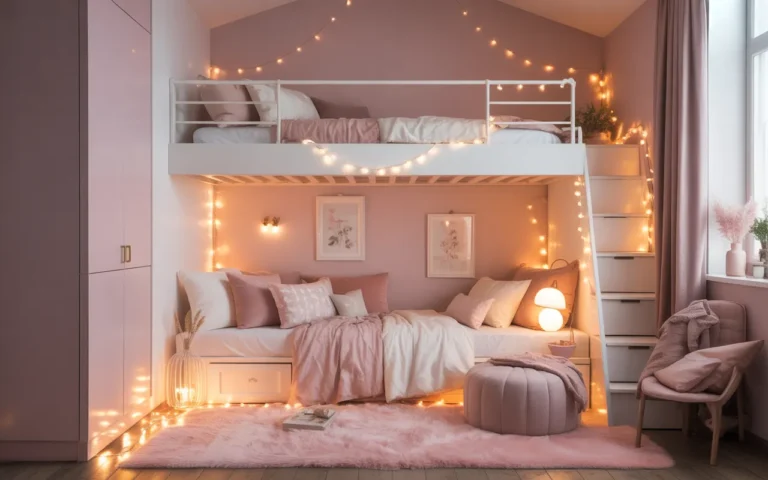
A cottage loft bed setup for studio apartments is the ultimate small-space power move. Raising the bed frees the entire footprint underneath for a desk, a reading chair, or storage. In a studio, that is like gaining a whole extra room.
Check your ceiling height: you need at least 33 to 36 inches between the top of the mattress and the ceiling to sit up comfortably. That means a ceiling of 8 feet or higher for most adults. Measure sitting on your mattress on the floor, then add the loft height. If the math does not work, a low loft or a daybed with storage is the safer pick.
A sturdy loft bed frame costs roughly 200 to 600 dollars, prices vary. Buy for safety, not just price: the frame must be rated for adult weight, have guard rails on both sides, and a ladder that does not wobble. Cheap loft beds sway, and swaying at height is frightening. Assemble exactly per instructions and retighten bolts every few months.
- A rug underneath defines the new zone.
- A clip-on light at the pillow end beats reaching for a switch.
- Keep a small fan up there, heat rises.
Shop This Look
17. Cottage Pantry Nook with Open Storage

A cottage pantry nook with open storage turns an awkward corner or closet into a hardworking food station. Open shelves, baskets, and jars keep everything visible, which means less food waste and faster cooking. In a small apartment, a pantry you can see beats a pantry you forget.
Use a narrow freestanding shelf: a 12 to 18 inch deep etagere or baker’s rack fits almost anywhere and needs no installation. Baskets corral snacks and produce, jars hold dry goods, and hooks on the side hold aprons or tote bags. In rentals this whole setup moves with you.
A pantry nook setup costs roughly 80 to 250 dollars, prices vary. Keep food away from heat and sun: an open pantry near the oven or in direct sun will spoil food faster. Oils go rancid, potatoes sprout, chocolate blooms. Pick the coolest, darkest corner you have, and use opaque containers for anything light-sensitive.
- Label jars, you will thank yourself later.
- First in, first out, new groceries go behind old ones.
- A small step stool makes high shelves actually usable.
Shop This Look
How to Start
Start with the one spot that annoys you daily. The cluttered entry, the chair you never sit in, the corner that collects junk. Fixing your biggest daily frustration first gives you energy for the rest. Do not start with the room guests see, start with the room you live in.
Your first shopping trip should stay under 60 dollars. Buy a pack of adhesive hooks, a storage basket, and a warm LED bulb for your darkest corner. These three things immediately reduce clutter and improve light, which are the two fastest wins in any small apartment.
Measure your doorways, hallways, and elevator before buying any furniture. Small apartments punish impulse buys. A beautiful vintage desk that does not fit through the door is just a story about the one that got away.
Work in this order, declutter first, then lighting, then storage, then decor. Decor last is the rule. Pretty things in a cluttered dark room just look like more clutter.
- A multi-pack of heavy-duty adhesive hooks, roughly 10 to 15 dollars.
- Two medium woven storage baskets, roughly 20 to 30 dollars.
- Two warm white LED bulbs for your darkest lamps, roughly 10 to 15 dollars.
Shop This Look
| HOOKS | BASKETS | BULBS |
|---|---|---|
| Adhesive Hook Multi Pack | Woven Storage Baskets | Warm White LED Bulbs |
| Shop → | Shop → | Shop → |
Common Mistakes
- Skipping the plan: buying cute things with no measurements leads to furniture that does not fit and a return process you will avoid for months. Measure first, always.
- Buying oversized furniture: a full-size sectional in a 400 square foot apartment eats the room. Choose apartment-scale pieces with visible legs so you can see the floor.
- Ignoring vertical space: small apartments have the same wall height as big ones. Shelves, hooks, and tall storage use the space you are not standing in.
- One overhead light per room: a single ceiling light makes small rooms feel flat and harsh. Three small warm light sources beat one bright one every time.
- No landing zone: without a spot for keys, shoes, and bags, clutter spreads through the whole apartment in a day. Even a tray and two hooks count.
- Blocking the windows: tall furniture in front of windows steals your best asset, natural light. Keep window walls low and clear.
- Keeping everything: small spaces demand editing. If you have not used it in a year and it has no storage job, it is costing you square footage. Let it go.
Frequently Asked Questions
How can I make my small apartment look bigger?
Light colors, mirrors opposite windows, and furniture with visible legs all help. Keep the floor as visible as possible and use one large rug instead of several small ones. If your bedroom is the tightest room, our small bedroom ideas go deeper on layouts that open up cramped sleeping spaces.
What furniture is best for a tiny apartment?
Multipurpose pieces win, storage benches, drop-leaf tables, sleeper sofas, and nesting tables. Every large piece should do at least two jobs. Measure everything, and favor pieces you can move alone for cleaning and rearranging.
How do I add storage without making it cluttered?
Closed storage for ugly necessities, open storage for pretty everyday things. Baskets inside shelves hide categories without looking messy. The rule is simple, everything needs a home, and the home should be within arm’s reach of where you use the thing.
Can I decorate a rental apartment?
Yes. Focus on removable changes, adhesive hooks, freestanding shelves, rugs, curtains on tension rods, and furniture you own. Avoid drilling where the lease forbids it, and keep paint decisions to what you can repaint or get approved in writing.
How do I keep a small apartment from feeling dark?
Three warm light sources per room, mirrors to bounce daylight, and light-colored textiles. Clean your windows, it sounds basic but dirty glass cuts a surprising amount of light. Sheer curtains instead of heavy drapes keep daylight flowing.
The Finishing Touch
Small apartment decorating rewards patience more than money. The best tiny homes look collected over time, one good thrift find and one solved storage problem at a time. Give each change a week before deciding what is next.
Remember the order that works, declutter, light, storage, then decor. Skip ahead and you end up styling clutter. Follow the order and even a studio can feel calm and intentional.
For more ideas from people who live in genuinely small spaces, Apartment Therapy’s guide on maxing out a small space collects tricks from designers who practice what they preach. Borrow what fits your apartment and leave the rest.