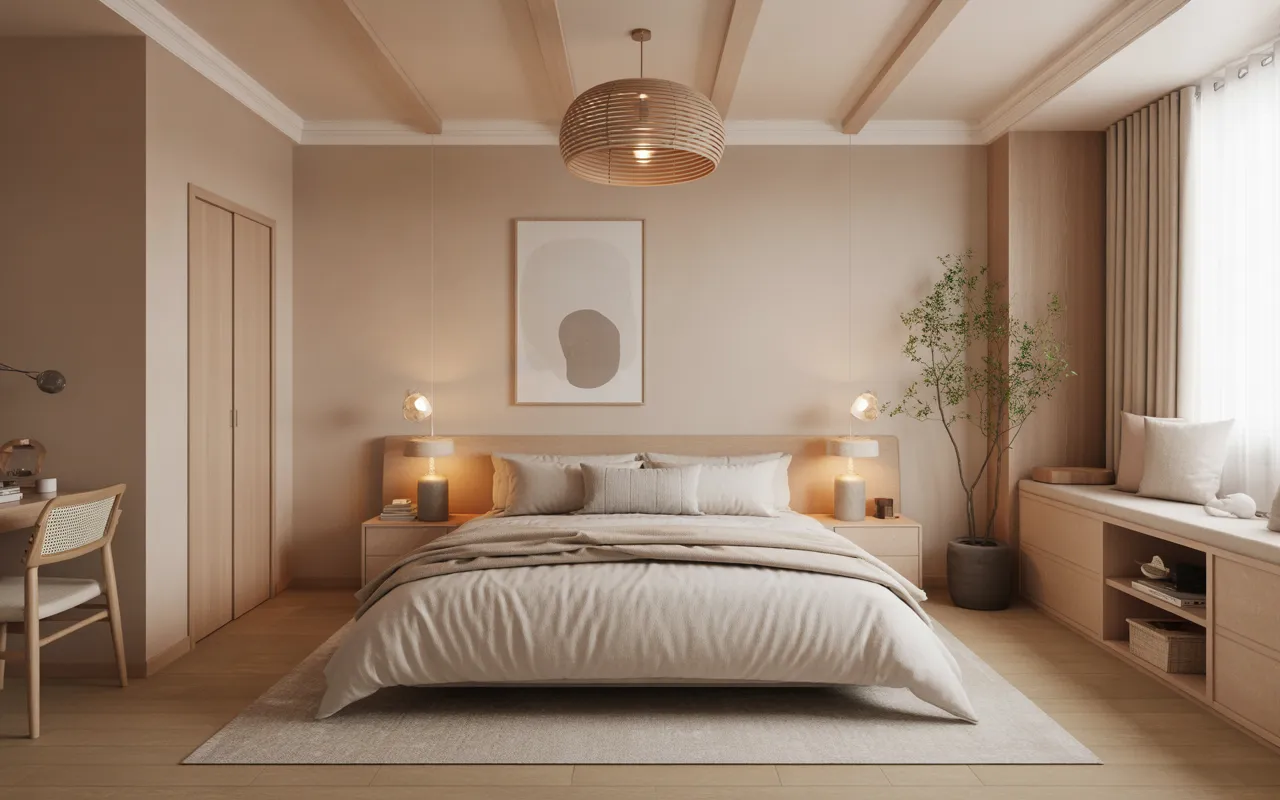
23 Japandi Bedroom Designs for Minimal Comfort
Japandi bedroom design brings together Japanese minimalism and Scandinavian warmth to create calm, comfortable living spaces. Defined by clean lines, natural materials, and neutral tones, this style focuses on balance, simplicity, and function. From low-profile beds and layered textiles to soft lighting and thoughtful storage, Japandi bedrooms feel peaceful without appearing cold or empty. These 23 designs highlight how minimal comfort can be achieved through warm textures, intentional layouts, and uncluttered spaces that support relaxation and everyday well-being.
1. Neutral Japandi Bedroom with Low Platform Bed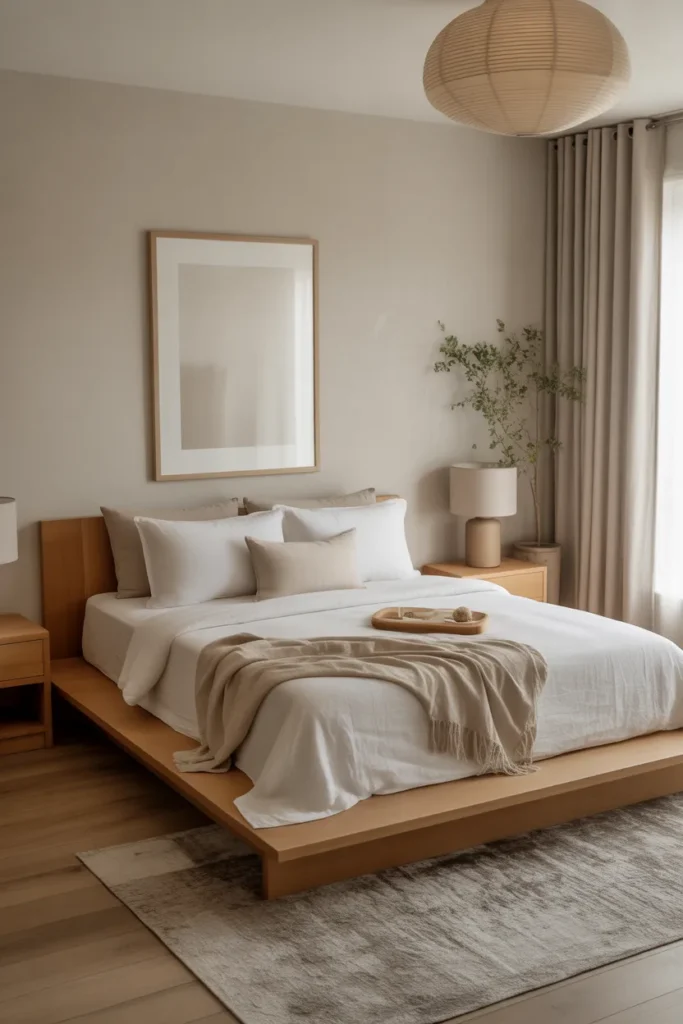
This bedroom design focuses on simplicity and grounding elements. The low platform bed keeps the room visually open, while neutral tones promote relaxation and mental clarity. Natural materials like wood and linen add warmth without overwhelming the space. Clean lines and uncluttered surfaces reflect Japandi principles, making the bedroom feel peaceful and intentional rather than sparse.
Subtle styling enhances comfort without excess. Soft bedding layers provide coziness, while minimal décor maintains balance. The result is a bedroom that feels restful, practical, and thoughtfully designed for everyday comfort and calm living.
2. Japandi Bedroom with Soft Wood Tones and Textured Walls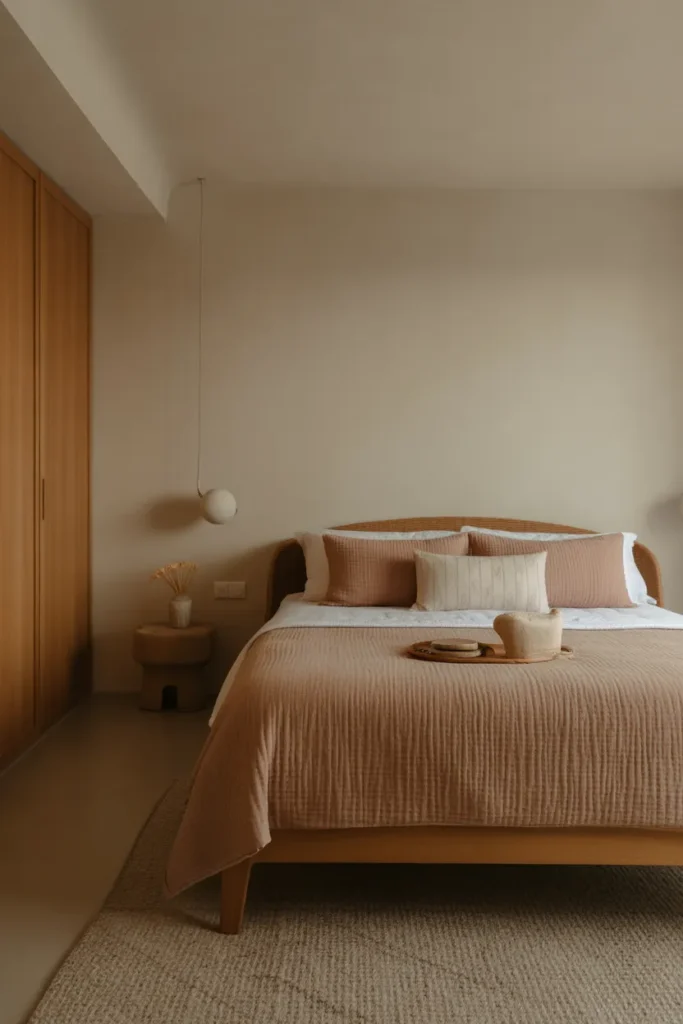
This Japandi bedroom blends warmth and simplicity through carefully selected materials. Soft wood tones create a welcoming atmosphere, while textured walls add visual interest without clutter. The muted color palette keeps the space calm and cohesive, allowing the room to feel grounded and restful. Every element has a purpose, supporting a minimalist yet comfortable lifestyle.
Comfort is enhanced through thoughtful layering rather than excess décor. Natural fabrics, soft lighting, and balanced proportions create a soothing environment. This design is ideal for those seeking a minimalist bedroom that still feels warm, inviting, and deeply relaxing.
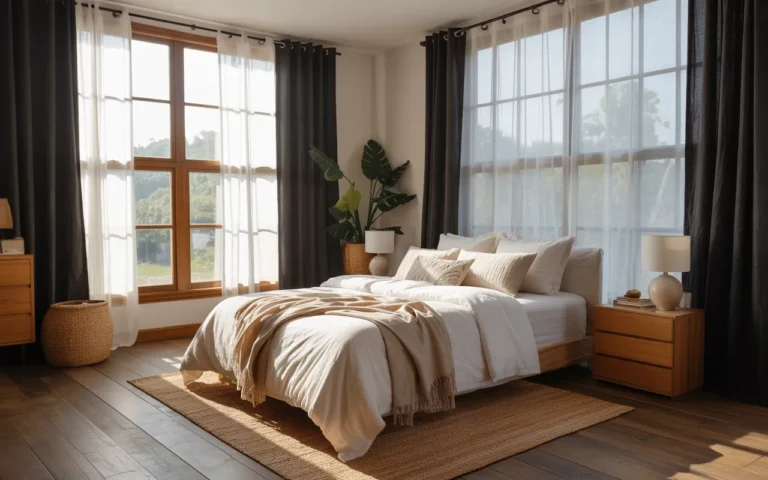
3. Minimal Japandi Bedroom with Natural Light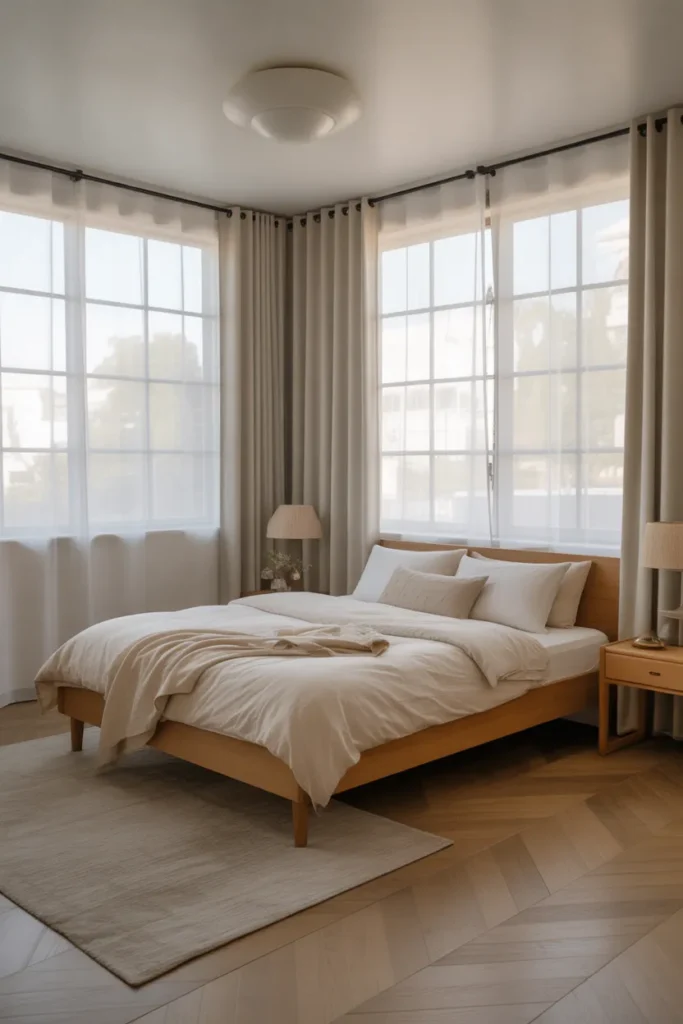
This bedroom design prioritizes openness and calm. Natural light becomes the main feature, highlighting clean lines and organic materials. The simple furniture layout keeps the room functional and breathable, while neutral tones support a sense of balance and restfulness. The absence of unnecessary décor allows the space to feel calm rather than empty.
Soft textiles and subtle contrasts add comfort without disrupting the minimalist aesthetic. The overall result is a bedroom that feels light, airy, and restorative, perfectly aligned with Japandi design principles of simplicity and natural harmony.
4. Cozy Japandi Bedroom with Earthy Accents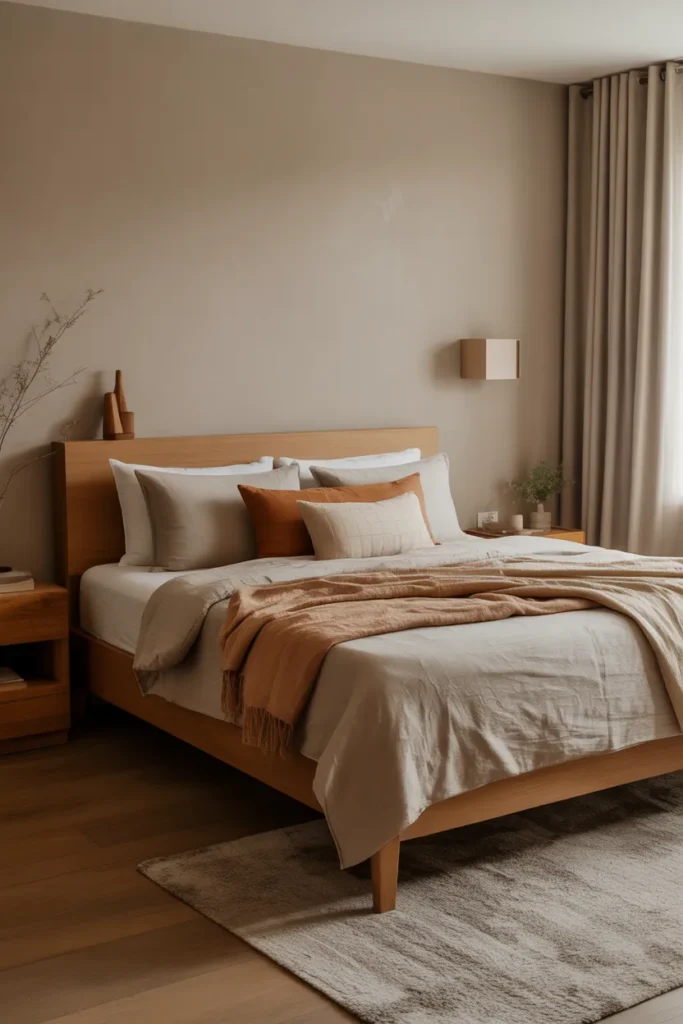
This design emphasizes comfort through warmth and balance. Earthy shades such as beige, taupe, and soft brown ground the space, while wooden furniture adds a natural, calming presence. The layout remains simple, allowing the bedroom to feel organized and intentional rather than busy.
Layered bedding and soft textiles introduce coziness without excess. Every detail supports relaxation, making this Japandi bedroom ideal for winding down. It perfectly demonstrates how minimal design can still feel warm, comfortable, and deeply inviting.
5. Japandi Bedroom with Built-In Storage and Clean Lines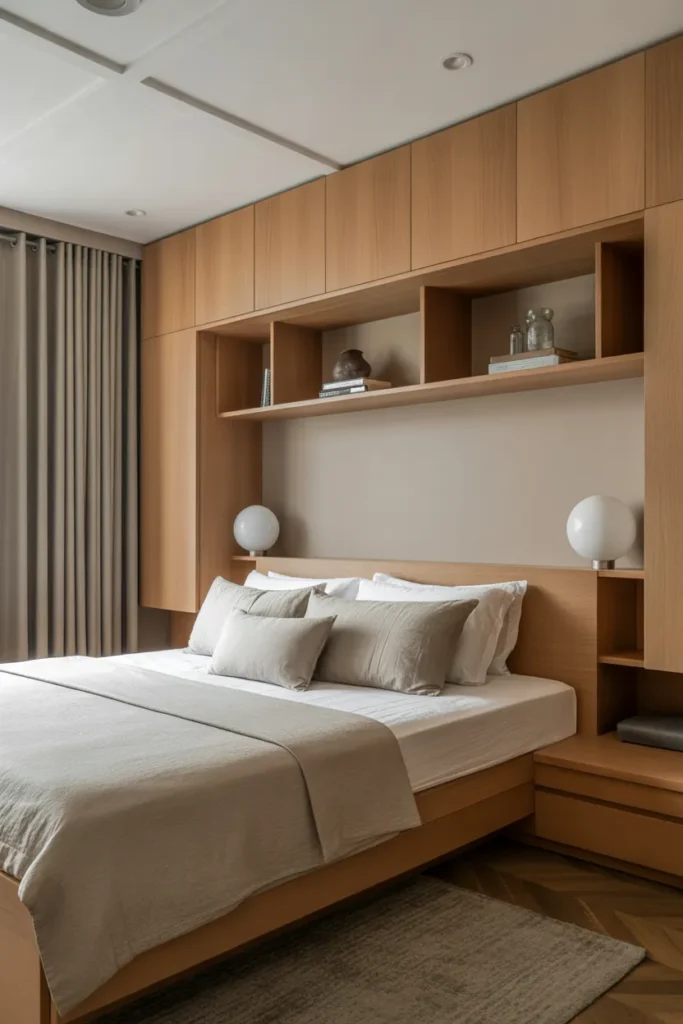
This bedroom design focuses on functionality and visual clarity. Built-in storage reduces clutter, allowing the room to feel spacious and peaceful. The low-profile bed and streamlined furniture reinforce simplicity while maintaining comfort. Neutral colors keep the space timeless and soothing.
The balance between form and function defines this design. Practical storage solutions blend seamlessly into the aesthetic, supporting minimal living without sacrificing comfort. This Japandi bedroom is perfect for those who value organization, calmness, and understated elegance.
Also view: 23 Bedroom Aesthetic Inspirations for Every Style
6. Japandi Bedroom with Tatami-Inspired Flooring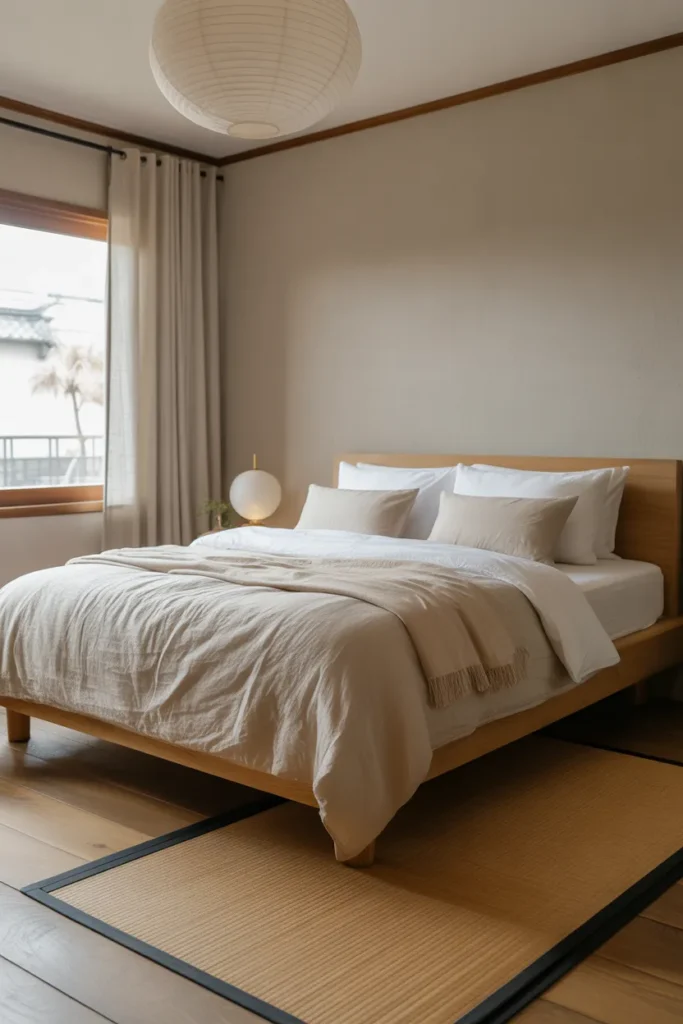
This bedroom design draws inspiration from traditional Japanese interiors while maintaining modern comfort. Tatami-style flooring adds warmth underfoot and enhances the natural feel of the space. The low bed keeps the room visually open, encouraging a relaxed and uncluttered environment. Neutral tones help maintain balance and harmony.
Soft textures and simple furnishings complete the look. The focus on natural materials and clean lines creates a bedroom that feels restorative, making it ideal for rest, mindfulness, and everyday comfort.
7. Japandi Bedroom with Dark Wood Contrast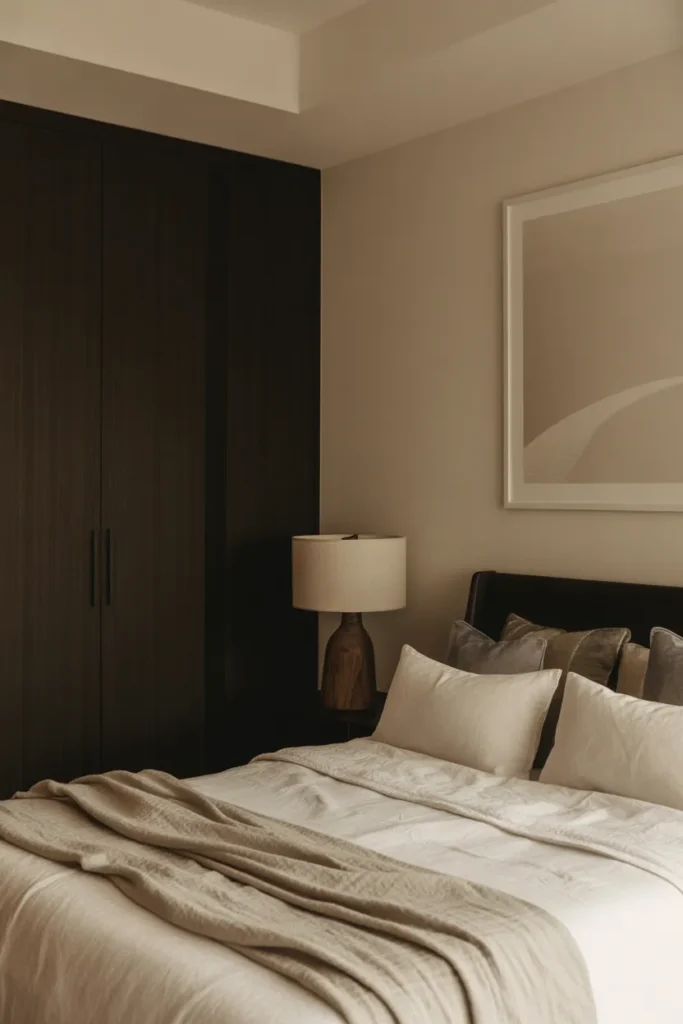
This design highlights balance through contrast. Dark wood brings richness and grounding energy, while light walls and bedding prevent the room from feeling heavy. The furniture remains minimal and functional, allowing each piece to stand out without visual clutter.
Comfort comes from thoughtful proportions and materials rather than excess decoration. Soft textiles and subtle lighting ensure the bedroom feels warm and inviting, proving that Japandi design can be both bold and serene.
8. Small Japandi Bedroom with Smart Layout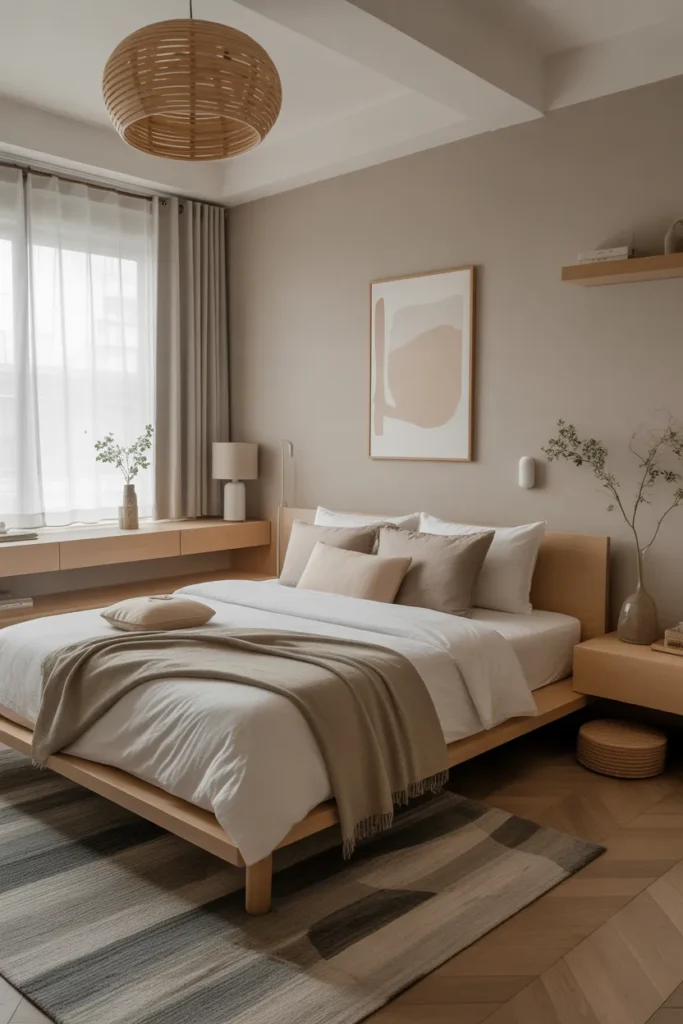
This bedroom design is perfect for smaller spaces. The low-profile bed and streamlined furniture help maximize visual space, while neutral tones keep the room light and airy. Every element is intentionally chosen to serve a purpose without overwhelming the layout.
Natural materials and soft fabrics add comfort without clutter. The result is a cozy, minimalist bedroom that feels peaceful, practical, and thoughtfully designed for modern living.
9. Japandi Bedroom with Linen Textiles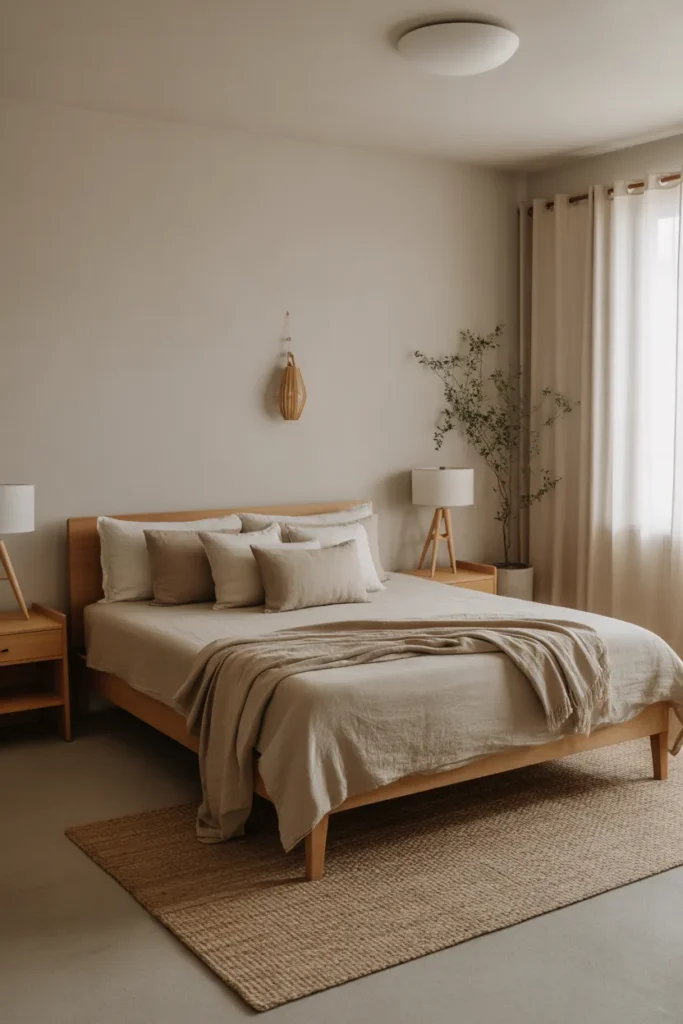
This design emphasizes comfort through texture. Linen fabrics add softness and a casual elegance, while wood elements provide warmth and structure. The muted color palette supports calmness, making the bedroom ideal for rest and relaxation.
Simple styling keeps the space uncluttered and balanced. By focusing on high-quality materials and subtle details, this Japandi bedroom achieves minimal comfort without sacrificing warmth or personality.
10. Japandi Bedroom with Statement Wooden Headboard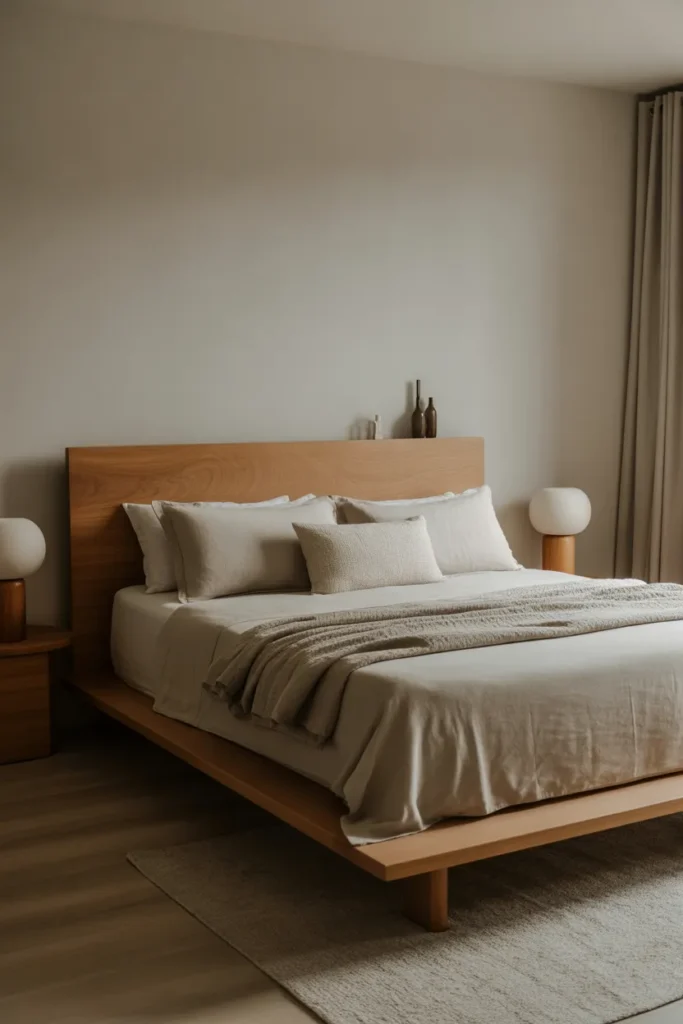
This bedroom design uses one strong focal point to anchor the space. The wooden headboard adds character and texture while keeping the rest of the room understated. Neutral tones allow the natural grain of the wood to stand out without visual noise.
Soft lighting and simple accessories enhance comfort. This approach proves that Japandi bedrooms can feel complete and inviting with just a few well-chosen elements.
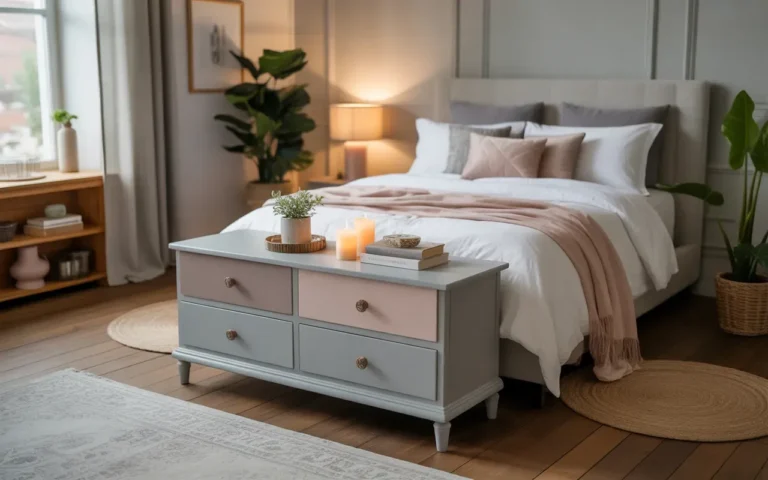
11. Japandi Bedroom with Soft Gray Palette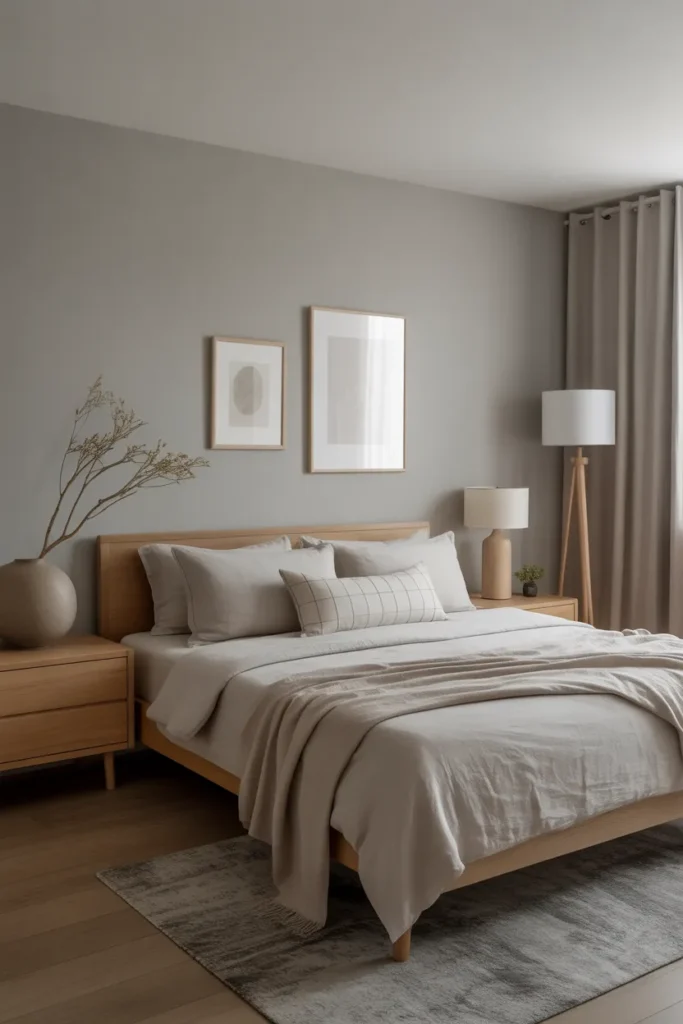
This design focuses on subtle color harmony. Soft gray creates a soothing backdrop, while wood tones add warmth and balance. The furniture remains low and minimal, reinforcing the Japandi principle of visual calm.
Layered textiles and gentle lighting enhance comfort. The result is a bedroom that feels peaceful, modern, and perfectly suited for restful living.
12. Japandi Bedroom with Floor Seating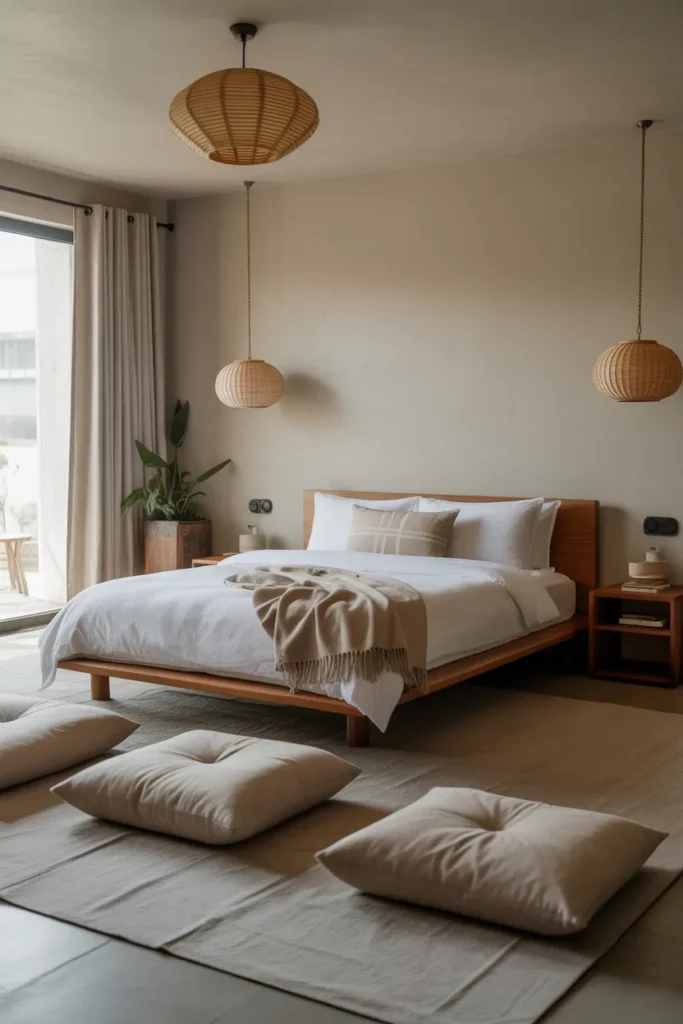
This bedroom design emphasizes closeness to the floor, a key element of Japandi style. Floor seating encourages relaxation and mindfulness, while the low bed maintains visual flow. Neutral colors keep the space cohesive and calming.
Natural textures and uncluttered surfaces enhance comfort. This design is ideal for those who value simplicity, balance, and a deeply calming sleeping environment.
13. Japandi Bedroom with Wabi-Sabi Touches
This design embraces imperfection as beauty. Slightly uneven textures and natural finishes add character without disrupting simplicity. The muted palette keeps the room restful, while handcrafted elements add warmth and authenticity.
Comfort comes from the room’s honesty and restraint. This Japandi bedroom feels deeply personal, calm, and timeless, perfect for those who appreciate understated elegance.
14. Japandi Bedroom with Sliding Panels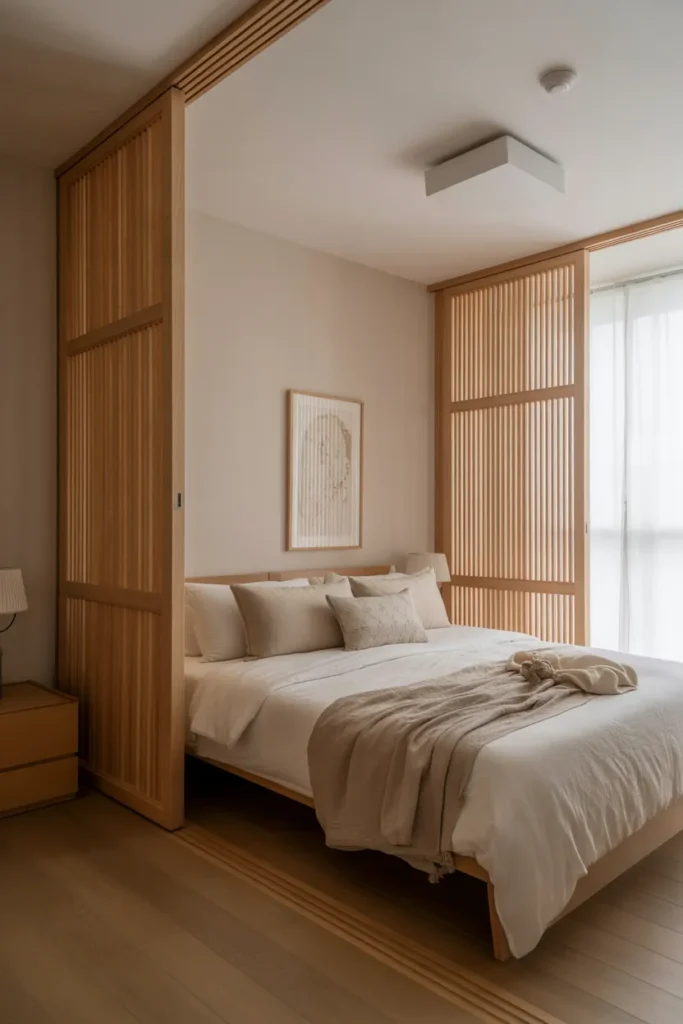
This bedroom layout promotes adaptability and flow. Sliding panels allow the space to feel open or private as needed, while minimal furniture maintains balance. Natural materials keep the room grounded and warm.
Soft lighting and simple textures enhance comfort. This design showcases how Japandi bedrooms can be functional, flexible, and serene at the same time.
15. Japandi Bedroom with Warm Minimal Lighting
This design highlights the importance of lighting in Japandi interiors. Warm, indirect light enhances relaxation and softens the minimalist layout. Clean lines and natural materials keep the space uncluttered and balanced.
Comfort is achieved through atmosphere rather than excess. This bedroom feels peaceful, intimate, and perfectly designed for winding down at the end of the day.
16. Japandi Bedroom with Neutral Layered Textiles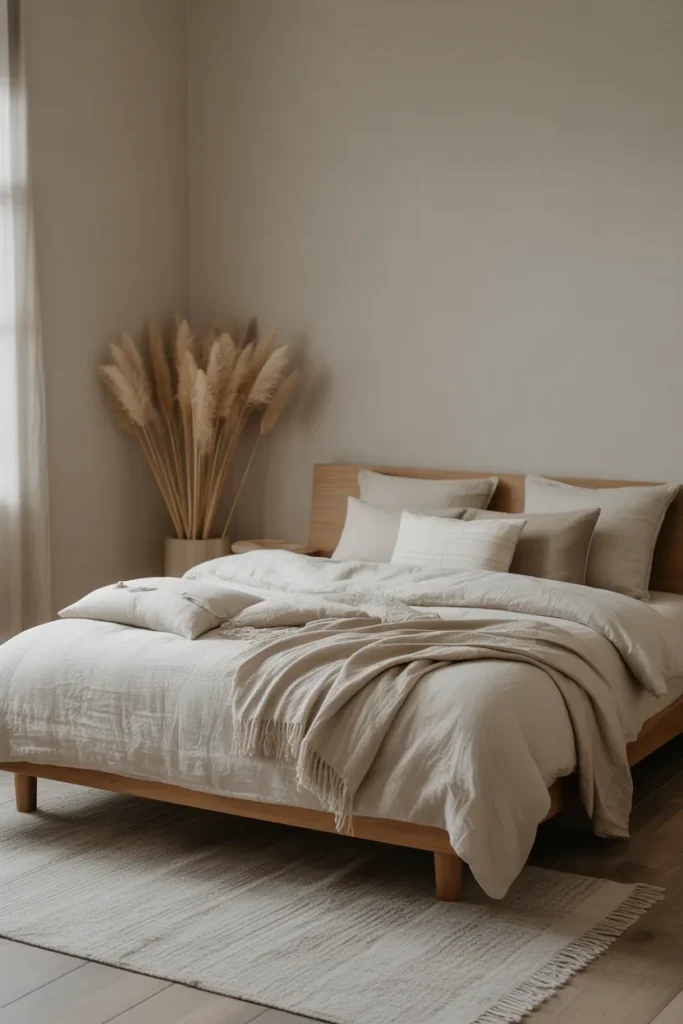
This bedroom design focuses on comfort through subtle layering. Neutral textiles add depth without visual clutter, while the low bed keeps the space grounded and open. Natural fabrics enhance breathability and softness, supporting a restful sleeping environment. The restrained color palette maintains balance and harmony throughout the room.
Minimal décor and clean lines allow the textures to stand out. This Japandi bedroom proves that thoughtful layering can bring warmth and comfort while preserving a clean, minimalist aesthetic.
17. Japandi Bedroom with Built-In Wooden Headboard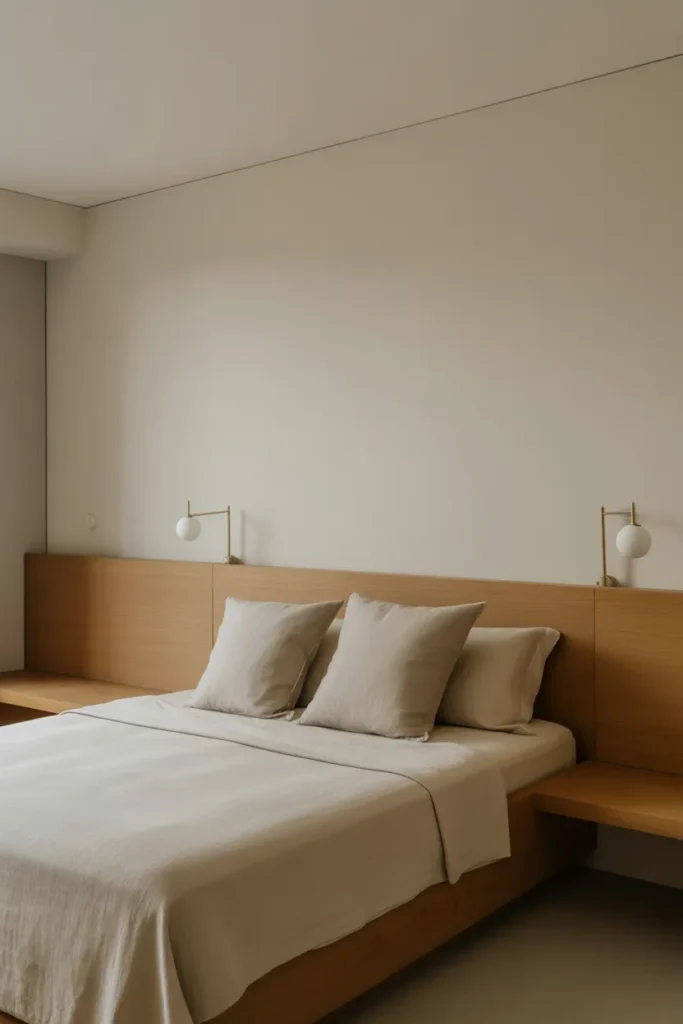
This design emphasizes structure and simplicity. The integrated headboard adds warmth and function while eliminating the need for extra décor. Clean lines and natural wood tones create a sense of continuity, making the room feel organized and serene.
Soft lighting and uncluttered surfaces enhance comfort. This Japandi bedroom is ideal for those who appreciate functional design that feels warm, balanced, and intentionally minimal.
18. Japandi Bedroom with Soft Beige Palette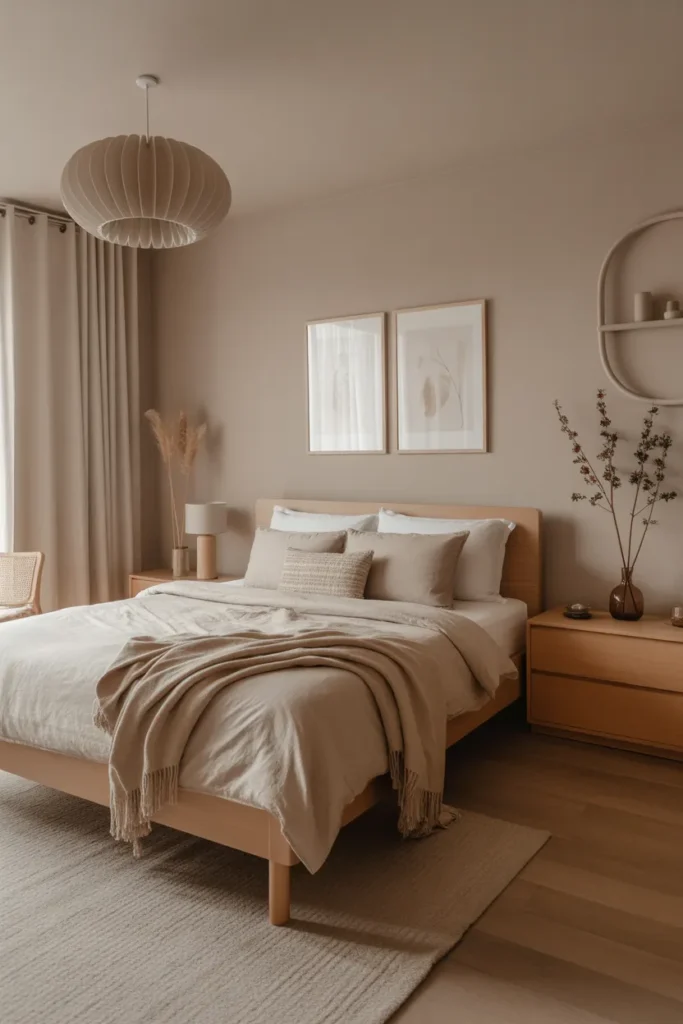
This bedroom design uses a monochromatic palette to promote calmness. Beige tones create visual harmony, while wood elements prevent the space from feeling flat. The low-profile furniture maintains openness and balance.
Comfort is achieved through softness and simplicity. Gentle textures, warm lighting, and clean lines combine to create a peaceful bedroom that supports rest and relaxation without unnecessary distraction.
19. Japandi Bedroom with Minimal Art and Negative Space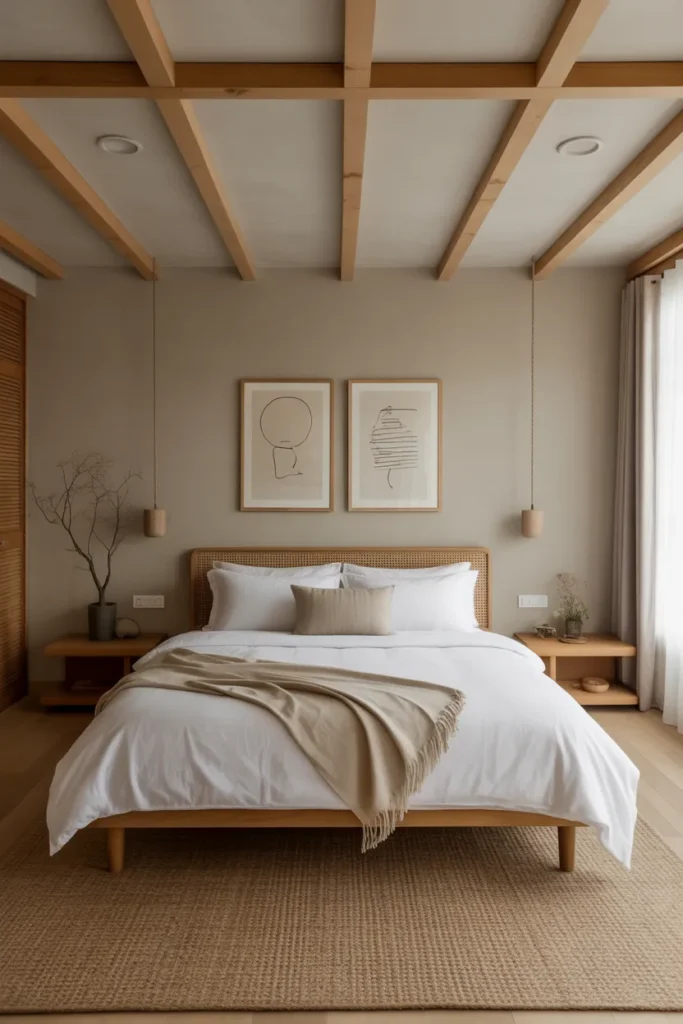
This bedroom focuses on negative space as a design feature. Limited décor allows the room to breathe, creating a calm and uncluttered environment. Natural wood furniture and neutral textiles maintain warmth while supporting the minimalist layout.
The sense of openness enhances mental clarity and comfort. This Japandi bedroom demonstrates how less can truly feel more when each element is thoughtfully chosen.
20. Japandi Bedroom with Indoor Greenery
This design blends nature directly into the sleeping space. Indoor plants soften the minimalist structure and improve the overall atmosphere. Wood textures and neutral tones create balance, ensuring the greenery feels integrated rather than decorative.
Comfort comes from the connection to nature. This Japandi bedroom feels calm, fresh, and restorative, making it ideal for creating a peaceful retreat centered on minimal comfort and natural harmony.
21. Japandi Bedroom with Soft Contrast Neutrals
This bedroom design uses gentle contrast to add depth while preserving a minimalist feel. Warm and cool neutrals work together to create visual interest without overwhelming the senses. Low-profile furniture and simple forms maintain openness, helping the room feel peaceful and well-proportioned.
Comfort comes from harmony rather than excess. Soft textiles, natural materials, and thoughtful spacing make this Japandi bedroom ideal for restful sleep and everyday relaxation.
22. Japandi Bedroom with Floating Nightstands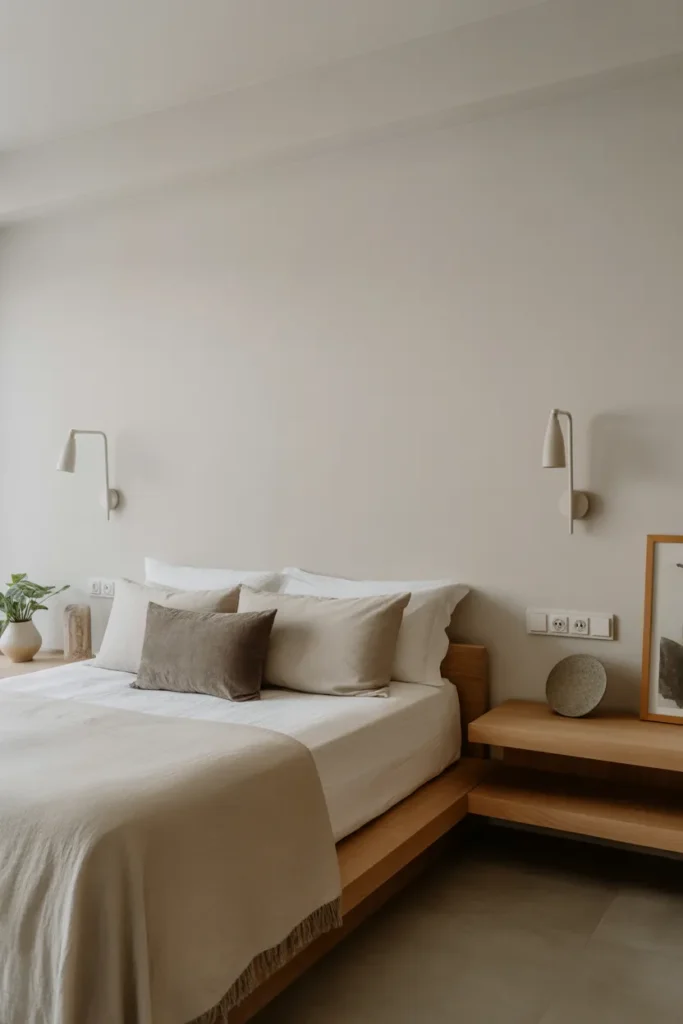
This design emphasizes visual lightness and functionality. Floating nightstands reduce visual clutter while maintaining practicality, keeping the floor area open and breathable. Natural wood tones add warmth, preventing the minimalist layout from feeling cold or empty.
Soft lighting and uncluttered surfaces enhance comfort and calm. This Japandi bedroom is perfect for those who appreciate modern simplicity paired with warm, natural details.
23. Japandi Bedroom with Balanced Symmetry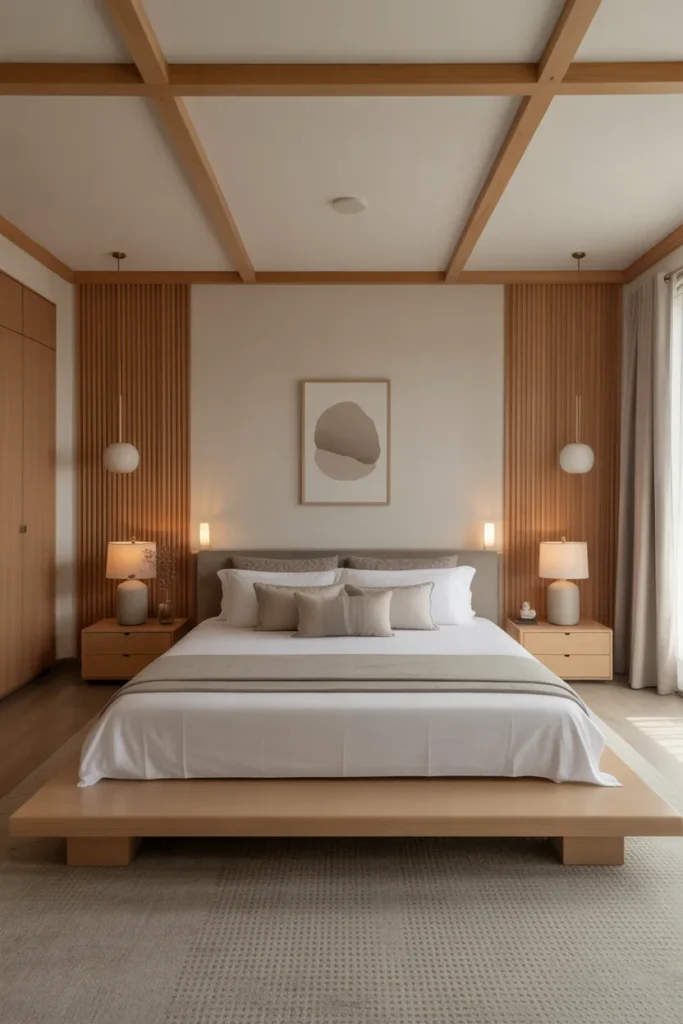
This bedroom design focuses on balance and harmony. Symmetry brings a sense of structure, helping the space feel grounded and visually restful. Natural materials and a neutral palette support relaxation while keeping the design timeless.
Comfort is achieved through proportion and restraint. This Japandi bedroom feels calm, intentional, and effortlessly elegant, completing the collection with a design rooted in minimal comfort and quiet sophistication.
Conclusion :
These 23 Japandi bedroom designs show how minimalism and comfort can exist beautifully together. By combining natural materials, soft neutral palettes, and purposeful layouts, each space promotes calm and balance. Whether through layered textiles, low furniture, or subtle contrast, Japandi bedrooms create restful environments without excess. This design approach proves that simplicity, when done thoughtfully, can deliver warmth, functionality, and timeless comfort for modern living.